
World War Two
Published 9 Apr 2022Adolf Hitler meets with Benito Mussolini to hopefully restore his flagging morale and convince him that the Axis can hold out in North Africa, but the situation there grows more precarious and this week there the Allies advancing from the west and the east link up for the first time. The Axis are also holding out in the Caucasus, as new Soviet attacks to take Krymskaya begin.
(more…)
April 10, 2022
Mussolini is Tired of War – WW2 – 189 – April 9th , 1943
Comments Off on Mussolini is Tired of War – WW2 – 189 – April 9th , 1943
April 9, 2022
Bicycle – Can You Put a Gun on It? – WW2 Special
World War Two
Published 8 Apr 2022“Bicycling to victory! Soldiers were moved by trucks and trains to the front, transported on the backs of tanks and armoured vehicles into combat. But sometimes they also went by using the good old bicycle. Pedaling over the paved roads of Western Europe and East Asia, specialised bicycle-companies surprised through mobility and independence. Bikes were comparatively cheap to mass produce and did not need fuel nor fodder. So they proved a real alternative to those nations that had to budget their oil resources.”
(more…)
Comments Off on Bicycle – Can You Put a Gun on It? – WW2 Special
Tank Chats #142 | Humber Scout Car | The Tank Museum
The Tank Museum
Published 17 Dec 2021Our Patreons have already enjoyed Early Access and AD free viewing of our weekly YouTube video! Consider becoming a Patreon Supporter today: https://www.patreon.com/tankmuseum
Join David Fletcher this week for a Tank Chat on Humber Scout Car which is a relative of the Daimler Dingo.
Timestamp:
00:00 – Intro
00:26 – What is the Humber Scout Car
4:23 – The Humber post war
(more…)
Comments Off on Tank Chats #142 | Humber Scout Car | The Tank Museum
April 8, 2022
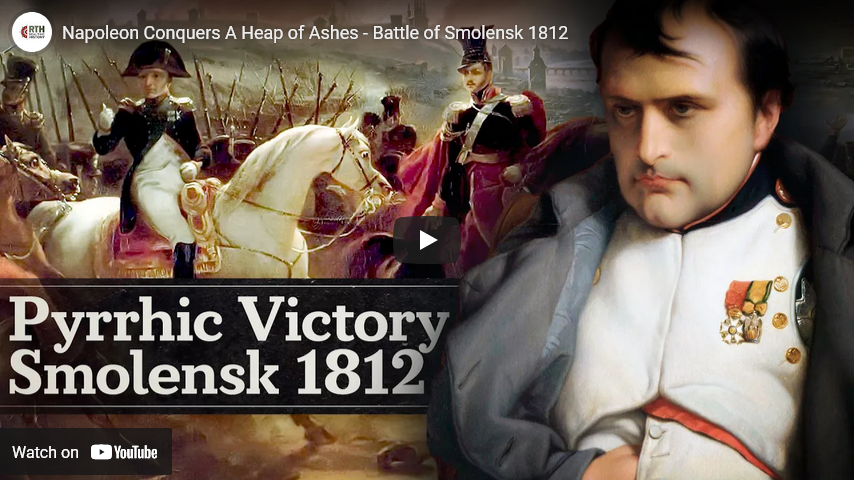
Napoleon Conquers A Heap of Ashes – Battle of Smolensk 1812
Real Time History
Published 7 Apr 2022Sign up at https://curiositystream.com/realtimeh… and get Nebula bundled in.
Smolensk is an important symbolic city to the Russians in 1812, for Napoleon it’s a strategic objective he wants to conquer to improve is deteriorating supply situation. The Battle of Smolensk leads to an inferno in the city, it gets virtually destroyed and nearly all residents flee.
» SUPPORT US ON PATREON
https://patreon.com/realtimehistory» THANK YOU TO OUR CO-PRODUCERS
John Ozment, James Darcangelo, Jacob Carter Landt, Thomas Brendan, Kurt Gillies, Scott Deederly, John Belland, Adam Smith, Taylor Allen, Rustem Sharipov, Christoph Wolf, Simen Røste, Marcus Bondura, Ramon Rijkhoek, Theodore Patrick Shannon, Philip Schoffman, Avi Woolf,» SOURCES
Der Feldzug der Österreicher gegen Rußland im Jahre 1812. Aus offiziellen Quellen von Ludwig Freiherrn von Welden, Wien 1870.
Vojtêch Kessler: Der österreichische Pyrrhos – Der Feldzug des österreichischen Auxiliar-Korps im Jahre 1812 in den Briefen des Oberbefehlshabers Karl Fürst von Schwarzenberg an seine Frau.
Boudon, Jacques-Olivier. Napoléon et la campagne de Russie en 1812. 2021.
Holzhausen, Paul. Die Deutschen in Russland 1812. Leben und Leiden auf der Moskauer Heerfahrt. Berlin 1912.
Lieven, Dominic. Russia Against Napoleon. 2010.
Rey, Marie-Pierre. L’effroyable tragédie: une nouvelle histoire de la campagne de Russie. 2012.
Zamoyski, Adam. 1812: Napoleon’s Fatal March on Moscow. 2005.» OUR STORE
Website: https://realtimehistory.net»CREDITS
Presented by: Jesse Alexander
Written by: Jesse Alexander
Director: Toni Steller & Florian Wittig
Director of Photography: Toni Steller
Sound: Above Zero
Editing: Toni Steller
Motion Design: Toni Steller
Mixing, Mastering & Sound Design: http://above-zero.com
Digital Maps: Canadian Research and Mapping Association (CRMA)
Research by: Jesse Alexander
Fact checking: Florian WittigChannel Design: Simon Buckmaster
Contains licensed material by getty images
Maps: MapTiler/OpenStreetMap Contributors & GEOlayers3
All rights reserved – Real Time History GmbH 2022
Comments Off on Napoleon Conquers A Heap of Ashes – Battle of Smolensk 1812
Chinese C96 “Wauser” Broomhandle
Forgotten Weapons
Published 10 Nov 2016Cool Forgotten Weapons Merch! http://shop.bbtv.com/collections/forg…
The C96 Mauser was a very popular handgun in China in the 1920s and 30s, which naturally led to a substantial number of domestically-produced copies of it. These ran the full range of quality, from dangerous to excellent. This particular example falls into the middle, appearing to be a pretty fair mechanical copy of the C96 action. However, it does exhibit classic Chinese misspelled markings — the workers who made these guns often did not actually read English (or German), and made best-guess attempts at copying the markings on authentic firearms. The result was sometimes something like the Wauser.

Comments Off on Chinese C96 “Wauser” Broomhandle
QotD: The fearlessness of De Gaulle
Like many monsters — for he could be a monster to those who defied him, and was often cruel and unfair to his most devoted supporters — he had enormous charm when he chose to turn it on. He was deeply mischievous and enjoyed puzzling and wrong-footing others. When he did not wish to give ground, he could be obtuse, an experience described by one victim as like “being confined … with a cormorant who spoke only cormorant.”
The evidence suggests that he was one of those dangerous people who simply do not know what fear is, and that he discovered this quite early in his long life. If a sergeant had not fallen dead on top of the young Lieutenant de Gaulle when he first went into battle at Dinant in August 1914, he would probably have died in some useless, gallant sacrifice and never have been heard of again. If he had not been knocked unconscious by the blast of a grenade at Verdun in March 1916, it is hard to believe that he would have allowed himself to be taken prisoner by the Germans. In that case he would almost certainly have died in that frightful battle, or not long afterward, another silent shade in that huge legion of shades who marched off into the dark during that appalling war.
Only his wife Yvonne was unimpressed by his grandeur, more than once urging him to retire, or puncturing his ambition. During the long, frustrating wilderness years between his wartime glory and his final presidential triumph, he mused to her that he might one day repeat his great rallying call of 1940. Using the rather patronizing endearment “Pauvre Ami,” she declared flatly, “Nobody will follow you.” He snapped back, “Shut up, Yvonne! I am old enough to know what I want to do!” In fact, on that occasion he was wrong and she was right. She even mocked his soldierly abilities. When the general’s aides suggested that they might install a machine gun at their remote, forbidding country home in Colombey, in case of an attack by communists, Yvonne scoffed that her husband would have no idea how to use it. Perhaps she would have.
Peter Hitchens, “A Certain Idea of France”, First Things, 2019-04.
Comments Off on QotD: The fearlessness of De Gaulle
April 7, 2022
Republic to Empire: The Triumph of Caesar
seangabb
Published 5 Mar 2021In 120 BC, Rome was a republic with touches of democracy. A century later, it was a divine right military dictatorship. Between January and March 2021, Sean Gabb explored this transformation with his students. Here is one of his lectures. All student contributions have been removed.
(more…)
Comments Off on Republic to Empire: The Triumph of Caesar
April 6, 2022
How To Build a Nazi Fortress – WW2 Special
World War Two
Published 5 Apr 2022Few things of the Second World War are more intimidating than the iconic German bunker. Made out of reinforced concrete with a thickness of up to 3.5 meters, these casemates and pillboxes were incredibly tough to destroy. Built to withstand shells and bombs, they provided shelter to troops and civilians alike. But there were also some even larger super-structures. From giant U-Boat shelters and fearsome Flak-Towers, to the ultimate Führerbunker, the Germans perfected the art of bunker building.
(more…)
Comments Off on How To Build a Nazi Fortress – WW2 Special
April 5, 2022
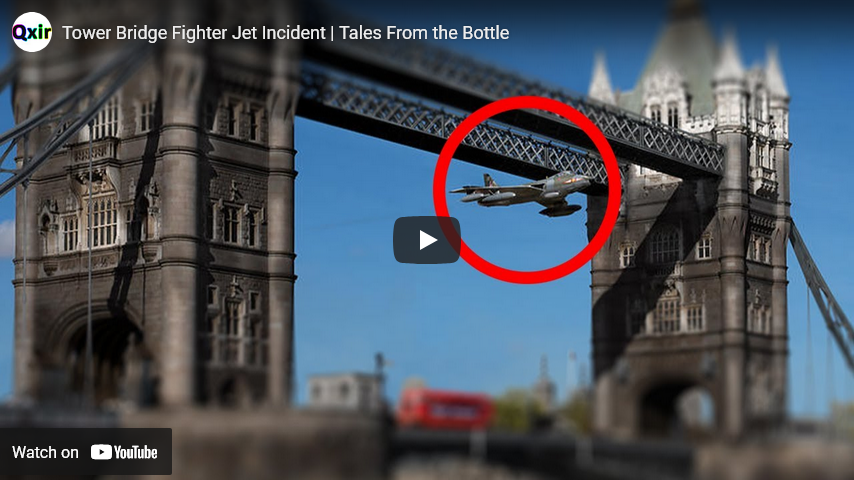
Tower Bridge Fighter Jet Incident | Tales From the Bottle
Qxir
Published 26 Nov 2021This jet pilot decided to stage a protest in the skies of London, but his actions became more well known for an incident that occurred on his journey home.
“The Hawker Hunter Tower Bridge incident occurred on 5 April 1968 when Royal Air Force (RAF) Hawker Hunter pilot Alan Pollock performed unauthorised low flying over several London landmarks and then flew through the span of Tower Bridge on the Thames. His actions were to mark the 50th anniversary of the founding of the RAF and as a demonstration against the Ministry of Defence for not recognising it.
Upon landing he was arrested and later invalided out of the RAF on medical grounds, which avoided a court martial.”
More on Wikipedia:
https://en.wikipedia.org/wiki/Hawker_…Merch: teespring.com/stores/qxir
Patreon: https://www.patreon.com/qxir
Twitter: https://twitter.com/QxirYT
Discord: https://discord.gg/jZzvvwJ
Twitch: https://www.twitch.tv/qxiryt/
Subreddit: https://www.reddit.com/r/Qxir/
From the comments:
Qxir
3 weeks ago (edited)
Yes, I know it’s pronounced “Tems” lol
Comments Off on Tower Bridge Fighter Jet Incident | Tales From the Bottle
April 4, 2022
The Falklands War — the first postmodern war or the last colonial war?
Dominic Sandbrook in UnHerd says Britain “needed the Falklands War”:
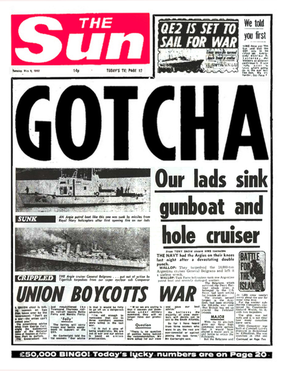
On the morning of Monday, 5 April 1982, the aircraft carrier Invincible slipped its moorings and eased into Portsmouth Harbour, bound for the South Atlantic. It was barely ten o’clock, yet the shoreline was packed with tens of thousands of flag-waving onlookers, singing and cheering for all they were worth, many of them in tears. From every building in sight flew the Union Jack, while well-wishers brandished dozens of homemade banners: “God Bless, Britannia Rules”, “Don’t Cry for Us, Argentina”. In the harbour, a flotilla of little boats, crammed with spectators, bobbed with patriotic enthusiasm. And as the band played and the ship’s horn sounded, red flares burst into the sky.
It is 40 years now since the outbreak of the Falklands War, one of the strangest, most colourful and most popular conflicts in British military history. Today this ten-week campaign to free the South Atlantic islands from Argentine occupation seems like a moment from a vanished age. But that was how it felt at the time, too: a scene from history, a colossal costume drama, a self-conscious re-enactment of triumphs past.
On the day the Invincible sailed, Margaret Thatcher quoted Queen Victoria: “Failure? The possibilities do not exist.” In the Sun, executives put up Winston Churchill’s portrait. And as the travel writer Jonathan Raban watched the departure of the Task Force on television, he thought it was like a historical pageant, complete with “pipe bands, bunting, flags, kisses, tears, waved handkerchiefs”. He regarded the whole exercise with deep derision, until the picture blurred and he realised that, despite himself, he was crying.
For many people the Falklands War was only too real. There were serious issues and genuine lives at stake, not just for the 1,813 islanders who had woken to find military vehicles roaring down their little streets, but for the tens of thousands of Argentine conscripts and British servicemen who were soon to be plunged into the nightmare of combat. And although polls suggest that about eight out of ten Britons strongly supported it, there were always those who considered it a mistake, a tragedy, even a crime. A certain Jeremy Corbyn thought it a “Tory plot to keep their money-making friends in business”. The novelist Margaret Drabble considered it a “frenzied outburst of dying power”. A far better writer, Argentina’s Jorge Luis Borges, famously called it “two bald men arguing over a comb”. That seems an odd analogy, though, for almost 2,000 blameless sheep farmers, who had no desire to be ruled by a junta that threw dissenters out of helicopters.
One common view of the Falklands campaign is that it was Britain’s last colonial war. But this strikes me as very unpersuasive. When we think of colonial wars, we think of wars of conquest by white men in pith helmets against brown-skinned underdogs. We think of embattled imperialists struggling to stave off a nationalist uprising, or fighting in defence of white settlers against a native majority. But the Falklands War was none of those things. There was no oppressed indigenous majority — except perhaps for the islanders themselves, some of whom had been there since the 1830s. As for the Argentines, their Spanish and Italian surnames were a dead giveaway. Indeed, few countries in the Americas had done a more thorough job of eliminating their original inhabitants.
Comments Off on The Falklands War — the first postmodern war or the last colonial war?
The Congress of Vienna (Part 2) (1814 to 1815)
Historia Civilis
Published 2 Apr 2022Patreon | http://historiacivilis.com/patreon
Donate | http://historiacivilis.com/donate
Merch | historiacivilis.com/merch
Mailing List | http://historiacivilis.com/mailinglist
Twitter | http://historiacivilis.com/twitter
Website | http://historiacivilis.comSources:
Eric Hobsbawm, The Age of Revolution, 1789-1848
Adam Zamoyski, Rites of Peace: The Fall of Napoleon and the Congress of Vienna
Richard J. Evans, The Pursuit of Power: Europe 1815-1914
Wolfram Siemann, Metternich: Strategist and Visionary
A. Wess Mitchell, The Grand Strategy of the Habsburg Empire
Robert K. Massie, Dreadnought: Britain, Germany, and the Coming of the Great War
Adam Hochschild, Bury the Chains: Prophets and Rebels in the Fight to Free an Empire’s Slaves
Harry Dickinson, Public Opinion and the Abolition of the Slave Trade | https://bit.ly/2XRMLJC
The History of Parliament: The 5th Parliament of the United Kingdom | https://www.historyofparliamentonline…Music:
“Past,” by Nctrnm
“While She Sleeps (Morning Edit),” by The Lights Galaxia
“Mell’s Parade,” by Broke For Free
“Day Bird,” by Broke For Free
“Thomas Neutrality,” by Enrique Molano
“Infados,” by Kevin MacLeod
“The House Glows (With Almost No Help),” by Chris Zabriskie
“Hallon,” by Christian Bjoerklund

Comments Off on The Congress of Vienna (Part 2) (1814 to 1815)
April 3, 2022
Patton Has a Plan, and it’s Bad – WW2 – 188 – April 2, 1943
World War Two
Published 2 Apr 2022American attacks in Tunisia meet with local disaster, but in general the Axis forces are withdrawing there. The Allies learn about the German rocketry plans this week, and both sides are making plans for action in the Pacific.
(more…)
Comments Off on Patton Has a Plan, and it’s Bad – WW2 – 188 – April 2, 1943
April 2, 2022
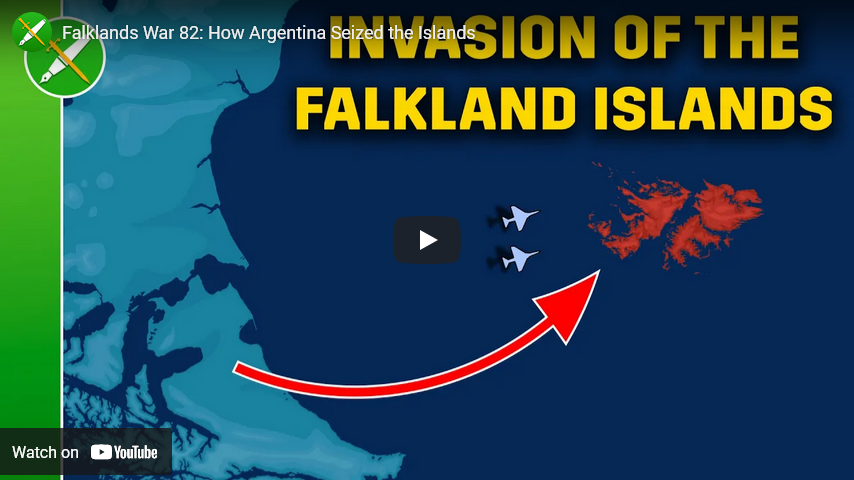
Falklands War 82: How Argentina Seized the Islands
Historigraph
Published 31 Mar 2022For up to 60% off a subscription to Babbel, head over to https://bit.ly/historigraph_babbel
To help support the creation of the rest of the Falklands series, consider supporting on Patreon:
https://www.patreon.com/historigraphCome join the historigraph discord: https://discord.gg/ygypfs3BEB
Buy Historigraph Posters here! historigraph.creator-spring.com
This video was sponsored by Babbel.
► Twitch: https://www.twitch.tv/historigraph
► Second Channel: https://www.youtube.com/channel/UCpIj…
► Twitter: https://twitter.com/historigraph
► Instagram: https://www.instagram.com/historigraphSources for the Falklands War Series (so far):
Max Hastings & Simon Jenkins, Battle for the Falklands
https://archive.org/details/battlefor…
Martin Middlebrook, Operation Corporate
Martin Middlebrook, Battle for the Malvinas
Mike Norman, The Falklands War There and Back Again: The Story of Naval Party 8901
Kenneth Privratsky, Logistics in the Falklands War
Sandy Woodward, One Hundred Days
Paul Brown, Abandon Ship
Julian Thompson, No Picnic
John Shields, Air Power in the Falklands Conflict
Edward Hampshire, The Falklands Naval Campaign 1982
Hugh McManners, Forgotten Voices of the Falklands
Cedric Delves, Across an Angry Sea: The SAS in the Falklands War
Rowland White, Vulcan 607
Vernon Bogdanor, “The Falklands War 1982” lecture https://www.youtube.com/watch?v=a9bWw…
Arthur Gavshon, The sinking of the Belgrano https://archive.org/details/sinkingof…
Gordon Smith, Battle Atlas of the Falklands War 1982 by Land, Sea and Air
http://www.naval-history.net/NAVAL198…
Hansard – https://api.parliament.uk/historic-ha…
Recording of Margaret Thatcher’s statement to the commons is from https://www.youtube.com/watch?v=HvbhV…Music Credits:
“Rynos Theme” Kevin MacLeod (incompetech.com)
Licensed under Creative Commons: By Attribution 4.0 License
http://creativecommons.org/licenses/b…“Crypto” Kevin MacLeod (incompetech.com)
Licensed under Creative Commons: By Attribution 4.0 License
http://creativecommons.org/licenses/b…“Stay the Course” Kevin MacLeod (incompetech.com)
Licensed under Creative Commons: By Attribution 4.0 License
http://creativecommons.org/licenses/b…Other music and SFX from Epidemic Sound
From the comments:
Historigraph
1 day agoThis series has been about four months in the making, and is by far the most ambitious project I’ve set out to complete on Historigraph. It’s going to be 8 (possibly 9) videos over the next three months, charting the course of the Falklands War as it happened 40 years ago.
If you liked this video and want to help support the creation of the remaining seven videos, it would meant the world to me if you could consider supporting on Patreon https://www.patreon.com/historigraph, become a channel member, or even just share this video far and wide.
Comments Off on Falklands War 82: How Argentina Seized the Islands
Lessons from Operation Unifier — Canada’s military training mission in Ukraine (2015-present)
In The Line, Paul Wells talks to Lieutenant Colonel Melanie Lake, Royal Canadian Engineers, who commanded Operation Unifier from March to September, 2021:
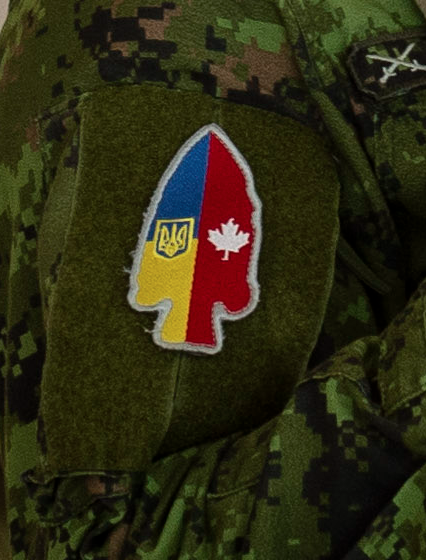
Operation Unifier shoulder patch for Canadian troops in Ukraine.
Detail from a photo in the Operation Unifier image gallery – https://www.canada.ca/en/department-national-defence/services/operations/military-operations/current-operations/operation-unifier.html
Lake has had a hell of a career, as high-ranking soldiers usually have, though I cover soldiers rarely enough that I always manage to be surprised. She’s from Churchill Falls, Labrador and has a degree in chemical engineering from the Royal Military College. She served three tours in Afghanistan, including one collecting HUMINT, or human intelligence — interviewing Afghans in Kandahar for information on the insurgency. Later she led an explosives-clearance operation at Winisk, ON, way up north on Hudson Bay, where a DEW Line outpost had been shut down so quickly in the 1960s that large quantities of TNT had been left buried too close to the ground for comfort. This involved a lot of camping and trying to figure out how to explode only those parts of the landscape they wanted to explode, while trying not to explode one another. Canadian Forces Rangers worked with Lake’s team, keeping polar bears away. She really is a problem solver.
Lake confirmed both of my hunches about Op Unifier, at least in part. She sees a Ukrainian army that is performing well for specific important reasons, and a Russian army that is having serious trouble its commanders should have expected. She does think she and her colleagues in Op Unifier and other Western training missions — the United States, United Kingdom and Lithuania — can take some satisfaction in contributing to the substantial improvement of the Ukrainian defence effort since 2014. But she was careful to put a low ceiling over that effect.
“Certainly what the training missions provided have helped,” she said. “But I want to be really careful about taking credit for the performance that we’re seeing right now. We can’t teach courage. And [the Ukrainians] are showing that in spades.”
Where did training help? “The area where I think we had a really big influence is in helping them understand or institutionalize the idea of mission command. And decentralized decision-making — pushing authority and decision-making power down to lower levels. And helping them build a professional senior NCO corps. Those are things that, you know, when you look at the old Soviet system were certainly non-existent.”
Let’s unpack this. “Mission command” is a term of art in Western militaries. It holds commanders, down to quite junior levels, accountable for results while leaving them wide latitude to decide methods. How junior? “Senior NCO” refers to sergeants — career soldiers who’ve risen from the enlisted ranks and who are responsible for a section, which is between 6 and 20 soldiers. Canadian doctrine, American doctrine, NATO standards dictate that it should be routine for higher echelons to trust a section sergeant to figure out how to accomplish a task, and that’s something the Canadians have passed on to their Ukrainian colleagues.
The Russians haven’t built that trust into their system. This is an understatement. “A lot of what you’re seeing on the Russian side — you know, we keep talking about these general officers who are getting picked off, because they’re so far forward. They have no decentralized decision-making and their communication chain is breaking down. So you’ve got these generals going forward, way too far forward, trying to sort things out. And they’re just getting picked off left, right and centre. So training matters. Training matters an awful lot.”
To an Ottawa political reporter in the Trudeau era, there is a metaphor here as big as a billboard about what happens when too much decision-making is too centralized. But maybe just this once, I’ll resist the urge to jump in, more than I just did, and I’ll let Lake keep telling her story.
Comments Off on Lessons from Operation Unifier — Canada’s military training mission in Ukraine (2015-present)
Afghan Traditional Jezail
Forgotten Weapons
Published 1 Feb 2017The Jezail is the traditional rifle of the Afghan tribal fighter, although it originated in Persia (Iran). Distinctive primarily for its uniquely curved style of buttstock, these rifles still maintain a symbolic importance although they are utterly obsolete.
Every jezail is a unique handmade weapon, but they all share some basic traits. They are typically built around complete lock assemblies, from captured guns or bought/traded parts. The barrel is typically quite long and rifled, and the caliber is generally .50 to .75 inch. Unlike the domestic American flintlock long rifles, the jezail is meant for war and not hunting.
http://www.patreon.com/ForgottenWeapons
Cool Forgotten Weapons merch! http://shop.bbtv.com/collections/forg…
If you enjoy Forgotten Weapons, check out its sister channel, InRangeTV! http://www.youtube.com/InRangeTVShow

Comments Off on Afghan Traditional Jezail


