Quotulatiousness

March 3, 2022

The amazing luck of Canada’s own cockwomble

Filed under: Cancon, Military, Russia, USA — Tags: , , , — Nicholas @ 05:00

Larry Correia in his monthly round-up post:

C. Okay, the big one. WW3. Last time I did an update post about this I said I’m not an expert on global geopolitics, and unlike most of the internet I’m not going to pretend to be one. And the only thing I know about military issues is how the contracts work and how to fix the DOD’s terrible spreadsheets. So, just personal opinion, while recognizing my strategic limitations so all the self anointed Von Clauswitzes don’t come yell at me AGAIN, real brief version … fuck Vladmir Putin. I’m rooting for the little guy and I hope the clock is ticking towards when some oligarchs get pissed off enough Putin “commits suicide” by thirty rounds of 5.45 to the back or drinks a polonium milkshake.

C2. By root for, I mean I think we should have a 4 for $10 Javelin missile blow out sale. We’ve got ATGMS! We’ve got Stingers! We’ve got bombs and more bombs! You’ve got Russians? NOT ANYMORE! Because at Crazy Lockeheeds, everything must go!

C3. By root for, what I don’t mean is that I’m going to be a hypocritical scumbag like Stephen King, and expect my countrymen to kill and die so I can proclaim my virtue because I Care So Hard. If you feel that strongly there’s a Ukranian Foreign Legion and they’re taking volunteers … Oh wait … No. He didn’t mean like that. He meant your sons need to “take those punches” (i.e. get shot or burned to death). Not him.

[…]

E. On propaganda and the fog of war. Duh. Of course it exists. Its always existed. Every side does it. The internet just makes it faster.

However all those “legends” the deboonkers are so smugly debunking … You kind of miss the point. That emotional manipulation exists for a reason, and it’s important. You just need to try and recognized when it is aimed at swaying YOU, rather than to motivate the people doing the fighting.

[…]

O. Justin Trudeau is really super lucky WW3 rolled around to push his stupid doughy face out of the news cycle. Justin Trudeau makes Mitt Romney look like a vertebrate. What a scummy little wannabe tyrant.

P. But for Americans, the real lesson there is the tactics that dirt bag used against the people who stood up to him. In the old days they’d just kill you to shut you up. Now they freeze your bank accounts and make it so you can’t work or feed your family, until you comply. They take away your voice and your legal ability to push back, taking options off the table until only the worst apocalyptical options are left … and if you use those, then they’ve got an excuse to kill you.

P1. All of these effeminate little sneering leftists are one bad day away from being Pol Pot. All of them. Never forget that. Once they reveal who they are they need to be driven from office and never let anywhere near any sort of authority ever again. They will happily destroy you and everyone you love.

The Raid on St Nazaire – How to make an explosive entrance

Filed under: Britain, France, Germany, History, Military, WW2 — Tags: , , , , — Nicholas @ 04:00

Drachinifel
Published 23 Feb 2022

Today we take a look at the famous raid to destroy the Normandie Drydock. With apologies for starting off with the right pronunciation of St Nazaire and slipping back into my old incorrect way later on!

Sources:
www.amazon.co.uk/Storming-St-Nazaire-James-G-Dorrian/dp/0850528070
www.amazon.co.uk/St-Nazaire-1942-Commando-Campaign/dp/1841762318
www.amazon.co.uk/Operation-Chariot-Nazaire-Forces-Operations/dp/1844151166
www.amazon.co.uk/Into-Jaws-Death-Legendary-Saint-Nazaire/dp/1782064478

Free naval photos and more – www.drachinifel.co.uk

Want to support the channel? – https://www.patreon.com/Drachinifel

Want a shirt/mug/hoodie – https://shop.spreadshirt.com/drachini…

Want a poster? – https://www.etsy.com/uk/shop/Drachinifel

Want to talk about ships? https://discord.gg/TYu88mt

Want to get some books? www.amazon.co.uk/shop/drachinifelDrydock

If wars could be won by propaganda alone, Ukraine would already be staging a virtual victory parade

Filed under: Media, Military, Russia, Technology — Tags: , , , , , — Nicholas @ 03:00

I’ve gotten a bit tired of reminding people on social media that almost everything we think we know about the fighting in Ukraine is — to a greater or lesser extent — propaganda by one side or the other. That said, Ukraine’s propaganda efforts have been far more effective than the Russian equivalents. In The Line, Jen Gerson rounds up some of the best-known stories that have flashed across Twitter and other social media platforms since the combat began:

Perhaps it’s simply the inevitable consequence of protracted news overload, but the war in Ukraine feels surreal. Pulling up the news, following Twitter, none of it feels like reality, but rather like we’re all collectively remembering an event that was always destined to happen. Perhaps I’m the only one suffering from this dissociative state? Or perhaps not; is anyone else feeling as if our daily life has taken on this faded quality of a simulacrum?

Maybe this is the inevitable sensation of watching a war play out on Twitter and TikTok. It has a participatory quality that offers the sensation of being a part of the conflict without the dose of necessary, reality-evoking risk.

Did you see the viral video of the Ukrainian babushka demanding the Russian soldier keep sunflower seeds in his pocket so that he leaves behind flowers when he dies? Or the one of the soldiers on Snake Island telling the Russian warship to “go fuck yourself” when asked to surrender? Reportedly, 13 died after that ship blew the station apart — though it appears that this was false and they in fact were taken alive.

Did you watch the Twitter video of Ukrainian Volodymyr Zelensky filming himself on the streets of Kyiv to thwart rumours that he had fled? Or the guy who moved an anti-tank mine from the road with a cigarette drooping out of his mouth?

Did you hear about the Ghost of Kyiv, a mysterious fighter pilot who has allegedly scored more kills than any other in recent memory?

Or the TikTok video of the young woman teaching her contemporaries how to operate an abandoned Russian tank; the stranded artillery towed by Ukrainian farmers; the men stuffing polystyrene into Molotov cocktails to make peasants’ napalm?

Oh, and in case you missed it: an official music video lionizing the Ukrainian drone, Bayraktar.

I can’t assess the reality of any of this — and I presume some or all of it is staged. That’s what propaganda is, after all. All I can do is examine the transparent unreality of it all, to take note of the ephemeral, the narrative. And from here, the Ukrainians are absolutely crushing the propaganda war.

On Monday, David Patrikarakos also came to the same conclusion in UnHerd after viewing the online echoes of the war:

The internet is a chaotic place, but it is nonetheless ruled by a series of iron laws, especially when it comes to what we put on it. Perhaps the most important one is that whatever you post, try to make it visual. Once that’s established it’s about what sort of image will best hoover up those likes and shares and retweets. Well, that’s down to where you are and who your audience is. But as a rule of thumb there are two things that generally never fail: blondes and guns.

Over the past few days, the very brave and very blonde Ukrainian MP Kira Rudik has been tweeting various pictures of herself posing with an AK47. She began last Friday:

What is striking about the photos is not that Rudik posted them: she is a people’s representative in a time of war — it’s exactly the sort of thing she should be posting. What’s so interesting, and smart, is how she did it. Rudik does not pose in a uniform, or even in camouflage fatigues. She does not salute or lift the AK triumphantly; in fact, the way she holds it makes it clear that she’s not used to holding a weapon of any sort. The photo is taken not in a base or even in an office, but clearly in the living room of her home, just by a window that looks out onto a small patio.

The final touch though — and it’s a genius one — is that she doesn’t have shoes on; instead she stands barefoot, her toes painted a delicate pink.

In one sense, this all seems irretrievably amateurish — but that’s the point. Of the many things the internet craves, authenticity is sacrosanct. And this is a model of the genre. The tweet is designed to do two things: first, to show that Ukrainians will stand and fight for their homeland; and second, to humanise those whom we are told will be doing the fighting. And it does this by showing them to be the most ordinary of people; people standing in their bare feet, vulnerable and ordinary — just like civilians across the world. As such, they stand in total contrast to the stormtroopers invading their lands. It’s pink toenails versus mud-encrusted jackboots; smiling mothers versus bearded Chechens — all shorthand for the battle playing out between Ukraine and Russia.

As Kurt Schlichter said, “The first report is always wrong and nobody knows nothing”:

The battle in Ukraine seems to be one of the most covered and worst covered events in history. You cannot spend more than two minutes on social media without crossing paths with a snippet of shaky cell phone footage of a Russian tank burning or some heroic story of sturdy Ukrainian resistance. You have experts on TV trying to tell you what’s happening but no one is actually giving you any real information. Maybe you think the Ukrainians are winning, that their counterattacks are driving out the Russian invaders. There are plenty of sources saying 2800 or 5300 or some other oddly large and specific number of Russian soldiers are dead. All hail the coming victory!

Well, we’ll see.

Don’t believe a damn thing you see or hear right now. I’d like to. I want the Ukrainians to win. But I understand that I, like you, am a target of information operations by Ukrainians, Russians, and even Americans. Get woke to it.

All that exciting footage? What do you know about where it was shot, or when? Nada. Zip. Zero. We’ve seen people trying to pass off simulator footage as real battle footage. We’ve seen explosions and fires without context. What caused them? Who knows when all you have is the label on the video? All those Russian tanks on fire? Well, guess what kind of equipment the Ukrainians use.

I don’t know if the Ukrainians are winning or losing, but I know that a lot of people in the media want them to win. So do I, but simply because I would prefer they send the Russkies packing does not mean that I am blind to what is an obvious and effective propaganda campaign designed to keep the West in Ukraine’s corner. And it has worked, with a few sketchy, wacky exceptions. I am impressed by the information operation designed to get resonant stories out there, like the defiant guardians of Snake Island, the “Ghost of Kyiv”, or that Ukrainian marine who was forced to blow himself up to take out the bridge. It’s like they were designed to appeal to us.

In short, we don’t know what’s happening — for excellent military reasons on both sides — and much of what we’re being told is almost certainly pure fiction. Keep your bullshit filters up and re-calibrate ’em if and when you get genuine information, but good luck on finding any of that in the immediate future.

MKb-42(W) – The Sturmgewehr That Never Was

Filed under: Germany, History, Military, Weapons, WW2 — Tags: , , , — Nicholas @ 02:00

Forgotten Weapons
Published 6 Jul 2018

http://www.patreon.com/ForgottenWeapons

Cool Forgotten Weapons merch! http://shop.bbtv.com/collections/forg…

When the German military first requested rifles in the new 8x33mm Kurz cartridge, there were two companies that provided designs. One was Haenel, who would eventually win the competition. The other was Walther, who submitted this rifle — the MKb-42(W). Where the Haenel gun fired from an open bolt and used a tilting-bolt locking system, the Walther rifle fired from a closed bolt and used a rotating bolt to lock. It also used an unusual annular gas piston. In competition, the Walther’s closed bolt operation made it more accurate in semiauto fire and less susceptible to ingress of dirt. However, it was substantially more complex and more expensive than the Haenel gun.

In total, just 200 of the MKb-42(W) were made before being cancelled in late 1942. Needless to say, very few survive today, and it was a great privilege to be able to disassemble and present this one to you. Thanks to the Association of Maltese Arms Collectors and Shooters for the invitation to do so!

If you enjoy Forgotten Weapons, check out its sister channel, InRangeTV! http://www.youtube.com/InRangeTVShow

Contact:
Forgotten Weapons
6281 N Oracle #36270
Tucson, AZ 85704

QotD: Diversity was Rome’s strength … as is true of almost every empire in history

The actual Roman Empire was fantastically diverse and more importantly, its military success hinged on its diversity at every stage of its existence. In many games and cultural products, that diversity is obscured because we lose sight of ethnic, religious, linguistic and cultural divisions which were very important at the time, but no longer matter to us very much. Let’s take a snapshot of Roman territory in 218 B.C. to give a sense of this.

Quite a few people look at a map like that, classify most of Rome’s territories as “Italian” and assume there is a large, homogeneous ethnic core there (except, I suspect, anyone who has actually been to Italy and is aware that Italy is hardly homogeneous, even today!). But Roman Italy in 218 B.C. was nothing like that.

Peninsular Italy (which doesn’t include the Po River Valley) contained a bewildering array of cultures and peoples: at least three distinct religious systems (Roman, Etruscan, Greek), half a dozen languages (some completely unrelated to each other) and many clearly distinct cultural and ethnic groups divided into communities with strong local identities and fierce local rivalries (if you want more on this, check out Salmon, The Making of Roman Italy (1982), Fronda, Between Rome and Carthage (2010), and Keaveney, Rome and the Unification of Italy (2005)).

The Roman army was by no means entirely Roman – it was split between Roman citizens and what the Romans called the socii (lit: “allies”) – a polite term for the communities they had subjugated in Italy (a periphery!). Rome demanded military service – this was the resource they would extract – from these communities; the socii pretty much always made up more than half of the army. Diversity was literally the Roman strength, in terms of total military force. Without it, Rome would have remained just one city-state in Italy, and not a particularly important one besides.

(As an aside: while citizenship is extended to nearly all of Italy in the 80s B.C., by then Rome is making extensive use of non-Italian troops in its armies. by the early empire, half of the army – the auxilia – were non-Roman citizens recruited from the provinces. Roman armies were essentially never majority “Roman” in any period, save possibly for the third century. And before anyone asks what about even earlier than my snapshot – it is quite clear – both archaeologically and in the Romans’ own foundation myths – that Rome was a fusion-society, culturally diverse from the city’s foundation. Indeed, sitting at the meeting point of Latin and Etruscan cultural zones as well as upland and coastal geographic zones was one of the great advantages Rome enjoyed in its early history, as near as we can tell.)

Outside of Italy, narrowly construed, the diversity only increases. Sicily’s population included Greeks, Punic (read: Carthaginian) settlers, and the truly native non-Greeks. Sardinia and Corsica had their own local culture as well. Cisalpine Gaul – the Po River Valley – was, as the name implies, mostly Gallic! As the Romans expended into Spain during the Second Punic War, they would add Iberians, Celt-Iberians, and yet more Punic settlers to their empire. And even those descriptions mask tremendous diversity – Iberians and Celt-Iberians were about as diverse among themselves as the Italians were; a quick read of Strabo reveals a wonderful array of sub-groups in all of these regions, with their own customs, languages, and so on.

Even if the Romans didn’t raise military force directly from any one of these groups, they do need to raise revenue from them – remember, the entire point of having the empire is to raise revenue from it, to make other people do the farming and mining and other labor necessary to support your society from the proceeds of their tribute. To keep that revenue flowing – revenue that, as the Roman army professionalized in the late second century B.C., increasingly paid for Roman military activity which held the empire together – you need to be good at managing those groups. Empires that are bad at handling a wide array of different cultures/religions/languages do not long remain empires.

Bret Devereaux, “Collections: Why Are There No Empires in Age of Empires?”, A Collection of Unmitigated Pedantry, 2019-11-22.

March 2, 2022

Duck Tape – WW2 Secret Weapon – WW2 Special

Filed under: Britain, Food, Germany, History, Military, USA, WW2 — Tags: , , — Nicholas @ 04:00

World War Two
Published 1 Mar 2022

This war has seen a huge amount of scientific and technological innovation. New ways of taking lives, and new ways of saving lives abound. But what about the more ordinary, everyday, products of the war? Would you be surprised to hear that people in the 21st century will still be using WWII inventions in daily life.
(more…)

“Somehow, the Ukrainians proceeded to launch the greatest PR operation of our times”

Filed under: Media, Military, Russia — Tags: , , , — Nicholas @ 03:00

In The Critic, Ben Sixsmith on the plight of Ukraine under Russian attack and the rather surprising success they have been having on western social media and in legacy media coverage:

Soon after the Russians invaded Ukraine, President Zelensky released a video to the world. Filmed on his mobile phone, it looked as if he could have been anyone else in the 21st century. He was tired and sad, and the skin was red around his eyes. Whatever a strong leader looks like, President Zelensky looked like the opposite.

That feels like a long time ago now. Somehow, the Ukrainians proceeded to launch the greatest PR operation of our times. How many people had heard of Zelensky, a veteran comic actor whose most significant action on the world stage since his electoral triumph in 2019 had been listening to Donald Trump’s ramblings, until a few days ago? How many people even knew there had been fighting in Donbass?

You have to wonder if the Russians, having seen the capitulation of the Afghan government, thought a Western ally would hightail it at the first opportunity. Zelensky, on the other hand, announced that he was staying in Kiev. His speech, addressed to the Russian people, was measured, dignified and eloquent. His little updates from the Kiev streets were mischievous and bold.

A weak country invaded by a powerful aggressor is naturally sympathetic. But the Ukrainian cause projected a uniquely irresistible combination of victimhood and strength. Theirs is not a tale of mere persecution but of underdog resolve.

What happened on Snake Island, for example, remains mysterious. The Ukrainians reported that their soldiers were killed after delivering a “go fuck yourself” to a Russian warship. The Russians claim they are alive. Still, the emerging image of unbreakable defiance, spreading across the vortex of social media, has won hearts and minds across the world.

What has been crucial is that people are not just pitying. They are inspired. We have heard relatively few tales of atrocities, because the Russians were attempting to minimise casualties, but also because the Ukrainians have attempted to maximise their triumphs. Did the “Ghost of Kiev” exist? Almost certainly not. But when such urban legends were combined with undeniably tough Ukrainian resistance in cities like Kharkiv, foreign sympathisers were encouraged to think that the Ukrainians, while embattled, had a fighting chance. This has been translated into sanctions on Russia and massive donations of arms and equipment.

David Warren reports that the Chinese government has accused the Ukrainians of trouble-making in Hong Kong:

This did not happen yesterday, I should explain, but some months ago. How did those clever Ukrainians do this, my reader may ask, naïvely. They did it by secular inspiration, when they uttered the phrase, “Slava Ukraini!” — which they had been doing in their own nationalist cause since the nineteenth century — and more aggressively since they fought for independence from the Leninist regime of the Soviet Union, during 1917–21.

Since 2014, the phrase has been in the air again, just as truck horns are in the air here in the Canadas. The Hong Kongois, who tend to be well-informed to a fault, picked up on it in 2019. They began to declare, “Glory to Hong Kong!” in multiple languages, from Cantonese to English; or rather, to sing it, for this phrase and its variants are often set to music, in both countries. (The Canadian trucker’s “Honk Honk” makes its own music.)

Wi Jinping, Vladimir Putin, and little Justin Trudeau, all get quite offended by the use of such phrases; and all have gone to the trouble of manufacturing bare-faced lies to resist the respective sovereignty movements. Readers will gather that I am unsympathetic with any of these dictators, or Mr Would-Be.

Because I (or more exactly, my father) was also unfavourably inclined to the dictatorship of Mr Adolf Hitler, it may be incumbent upon me to specify of what my disapproval consists. For granted, Hitler was a nationalist of a sort. I have long been an enemy of nationalism, when it is rudely proclaimed, though with mysterious moments of enthusiasm for nationalisms of other sorts.

February 28, 2022

Roman Republic to Empire 03 Inequality and Corruption

Filed under: Europe, History, Italy, Military — Tags: , , , , , , — Nicholas @ 04:00

seangabb
Published 5 Feb 2021

[Update 2023-03-02 – Dr. Gabb took down the original posts and re-uploaded them.]

Here is the third lecture, which describes the decay of the Roman Constitution as a result of changes in patterns of land tenure in Italy after the Second Punic War, and as a result of the flood of foreign money into Rome from military victories and war indemnities and bribes.
(more…)

February 27, 2022

“Putin finally called our bluff. The question to me is when and if Xi will decide to do the same”

Filed under: China, History, Military, Russia, USA — Tags: , , , — Nicholas @ 05:00

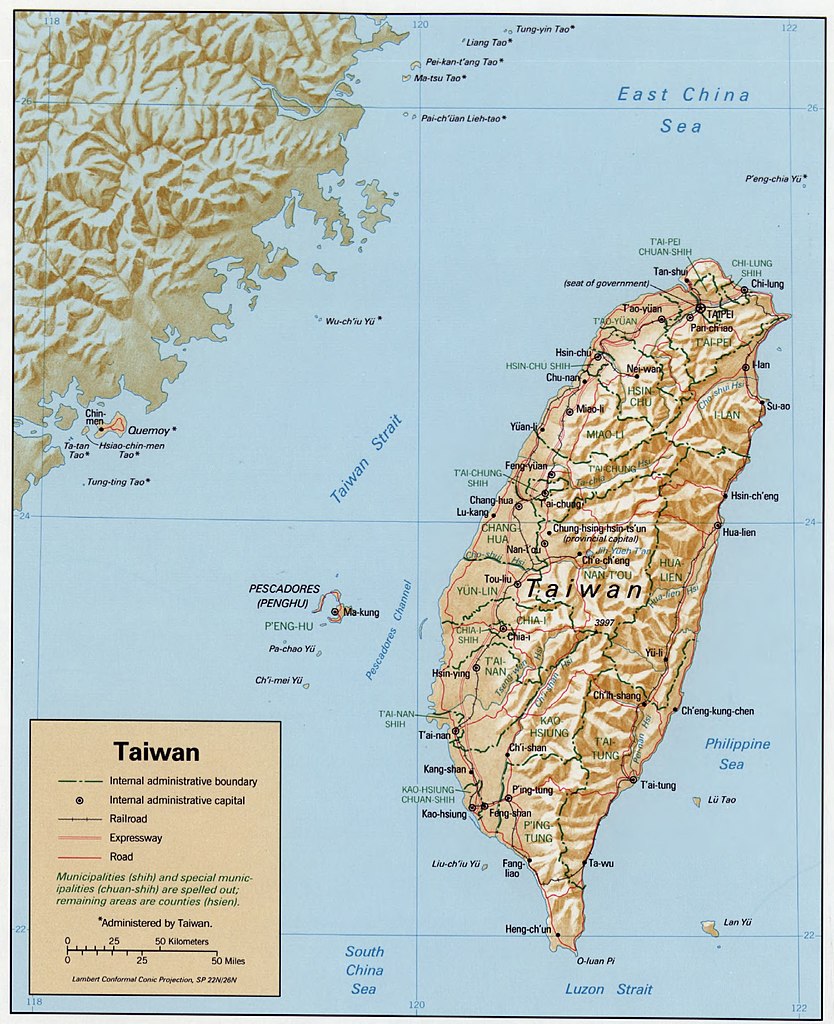
Andrew Sullivan on what Winston Churchill referred to as “the historic life-interests of Russia”, the inability (and unwillingness) of the western nations to do more than send hopes and prayers to Ukraine, and the parallels between the Russia-Ukraine situation and the China-Taiwan potential conflict:

Taiwan relief map.
Library of Congress Geography & Map Division via Wikimedia Commons.

… in one crucial sense, Putin has already won a victory. A nuclear-armed great power has invaded and occupied a neighboring country in Europe, and there is nothing anyone else has been able to do to stop it. Many in the West assumed Putin wouldn’t go that far — surmising that international law, universal condemnation, economic sanctions, and the lack of any serious threat from Ukraine to Russia would restrain him. But he has called our bluff. He has even hinted at Russia’s nuclear capacity to intimidate other states from intervening. And so we have a precedent. Ukraine is a Russian possession. A fact on the ground. All we have been able to do is watch.

All of which brings us to what seems to me to be the larger dimension of this clash: how it will resonate in Beijing and Taiwan. With apologies to Mitt Romney, China is easily the greater geostrategic challenge. And the parallels with Russia are as striking as they are unnerving. China sees Taiwan as part of its national identity in a similar way to how Russia sees Ukraine as part of its. And we are committed to the defense of Taiwan the way we have committed to the defense of Ukraine: kinda, but not really. In the face of this underlying Western ambiguity, the fall of Kiev is news that Xi will be watching closely.

The parallels are not exact, but nonetheless striking. Taiwan is next door to and deeply entangled with China in its history and culture, just as Ukraine is uniquely entangled with Russia. Seeing Taiwan and China (like Ukraine and Russia) as simply random sovereign states with a right to self-determination under international law is correct, so far as it goes. It’s also moral — as majorities of both Ukrainians and especially Taiwanese want independence and have constructed nascent democracies in the wake of autocracy.

But the nationalist passion Russia feels about Ukraine and China feels about Taiwan is real, visceral, and hard for outsiders to understand intuitively. The sense of a rogue region that somehow got away from the homeland is vivid among Russian and Chinese nationalists. This kind of understanding — claiming a “sphere of influence” — is now deemed reactionary by the West’s foreign policy elites, as, perhaps, it should be. But that doesn’t mean that everyone, especially China and Russia, have actually moved past it. Even Americans have very different emotional responses to perceived threats in our own hemisphere compared with the rest of the world. So this is also a culture clash of sorts — globalism and the nation state vs nationalism and spheres of influence.

I’m not saying that this belief in a sphere of influence is a universal view in Russia or China — or that it is justifiable. I’m just saying it is real. And I’m not excusing Putin or Xi from taking a particularly zealous view of this irredentist nationalism, which they both do, for their own personal and political advantage. I’m just noting how national pride deeply informs them, that resentment of the West consumes them, that a sense of historical grievance spurs them on — and that they are not outliers among their compatriots. It is crazy to underestimate the power of this kind of revanchist nationalism — among rulers and ruled. And I fear we underestimated it in the case of Putin.

This means, as Barack Obama once insisted, that Russia will always care much more about Ukraine than we do; and China will always care much more about Taiwan than we do. In those cases, the last thing we should do is promise support that we do not seriously — truly seriously — intend to provide. The vague pledge by the Western powers not to rule out future NATO membership for Ukraine was the worst of all worlds: poking the bear, with no serious intention of fighting it.

The fall of Afghanistan was a margin call … and Ukraine is the point where airy western “guarantees” will have to be backed up with actual force. But western leaders have grown very comfortable in a world where gestures were taken seriously and few if any such gestures actually had to be followed-through with meaningful action. And now, the geopolitical pantomime is over and we’re back in a world where gestures are seen as signs of weakness and do nothing to deter adventurism.

The Blitzkrieg is Back – WW2 – 183 – February 26 1943

Filed under: Africa, Britain, Germany, History, Italy, Military, Russia, USA, WW2 — Tags: , , , — Nicholas @ 04:00

World War Two
Published 26 Feb 2022

Erich von Manstein’s Axis counterattack on the Eastern Front begins this week and right away smashes through the Red Army lines, threatening all the recent Soviet gains. The Allies — the Americans — also suffer a big defeat in Tunisia at the Kasserine Pass, though in the Pacific it is the Americans who occupy the Russell Islands.
(more…)

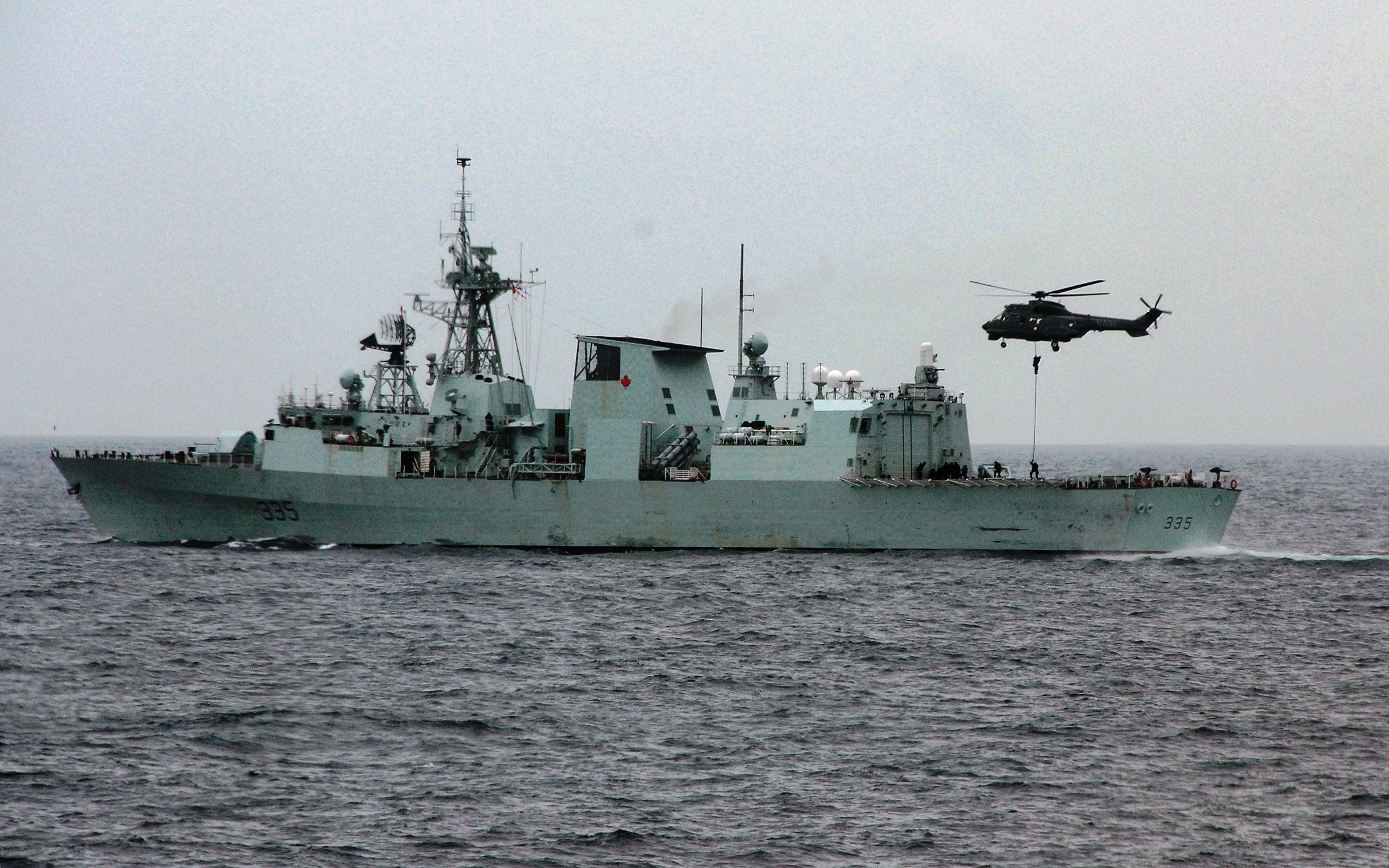
Canada couldn’t intervene in a modern war even if we wanted to

Filed under: Cancon, Military, Weapons — Tags: , , , — Nicholas @ 03:00

In The Line, Matt Gurney considers the state of the Canadian Armed Forces, which have been systematically starved of resources since, oh, 1968 (we started cashing in the “peace dividend” long before there was one):

Canadian Army LAV III convoy near Khadan, Afghanistan – 2010-01-25
Photo by Staff Sgt. Christine Jones via Wikimedia Commons

We assumed that we’d never need the heavy, nasty stuff — history had ended. We cut our budgets and our force levels again and again, until many of our critical capabilities really exist on paper only. Canada’s fighter jet fleet of alarmingly elderly CF-18s is large enough to technically meet the requirements of keeping a few jets on alert for NORAD missions, intercepting the odd plane near our airspace, and showing the flag on NATO missions. We can even hurl some bombs on enemy groups that are annoying us, as we did with the Islamic State, because, well, they can’t shoot back. Our navy is much the same: we have a fleet large and capable enough to more-or-less patrol parts of our own coast and contribute to the odd international patrol mission abroad, because doing so buys us some diplomatic credibility — it is table stakes for being a sorta-paid-up member of the Western alliance. Our army has enough men and equipment to help out with domestic missions at home or to contribute in small missions to broader coalition efforts, though it’s a struggle to do both at the same time. That’s basically all we assumed we’d need, and we “rationalized” our budget and capabilities accordingly.

Again, yes, this made sense for a time. But it was obvious a decade or so ago — around when Obama was mocking Romney — that China was a power on the rise. Russia invaded Ukraine the first time in 2014. That was another wakeup call we ignored. For the last decade, certainly for the last five years, we’ve indulged in a kind of make-believe defence policy planning, where we were enthralled to an increasingly obsolete and dangerous post-Cold War mindset that was as narrow and misguided as the “Cold War thinking” the soft-power advocates of the post-1991 era disdained among the old guard.

We defence hawk weirdos who sweated blood with each abandoned capability were right, though. History wasn’t over. We hadn’t seen the end of great power war, or at least the real danger of it. The world is a dangerous place. This might be a surprise in the corridors of power in Ottawa, but it’s not like they weren’t warned. I’ve got 15 years of National Post bylines to prove it.

We are missing critical capabilities that our troops would need — need — in order to not get wiped out in a conflict with a relatively modern opponent. The Canadian Army has very good armoured vehicles for infantry. That’s good! Our LAVs are genuinely excellent. But we don’t have self-propelled artillery. We have only a few dozen tanks, and very little anti-tank missile capability (anti-tank missiles can be fired by infantry on foot or from vehicles; we don’t have a ton of missiles to go around in any case). Recruitment has lagged, and we are notoriously slow at actually processing an applicant into service. Perhaps most alarmingly in the current context, the Canadian military has basically zero air defence capability. If under air attack by helicopters, attack aircraft or, increasingly, drones, our guys could fire wildly into the air and hope to get lucky. That’s about it.

It’s a classic Canadian procurement story, of course, and perfectly emblematic of the bigger problem. We used to have mobile air defence. We didn’t have a ton, but we had 36 M113 armoured vehicles — an older vehicle, but a proven workhorse — that came armed with eight missiles that could be used against attacking air threats or tanks (given our paltry anti-tank capability, that’s two birds with one stone!). We procured the “ADATS” vehicles right at the end of the Cold War, never ended up needing them on any of our missions during the 1990s and early 2000s, and scrapped them without replacement in 2012, because Stephen Harper had a budget to balance and didn’t want to spend a bunch of bucks either modernizing the system or buying something new. We realized by 2019 that that was a bad idea, and began a procurement process to replace them, and the earliest we could expect delivery is … the end of this decade.

So for now, we try to buddy up with allies that have anti-air defences, or expect our troops in the field to put their faith in the Lord and mediocre Russian targeting systems. But even if we rush a procurement of some air-defence systems, that would just plug one gap among many. Why the hell haven’t we picked a fighter jet by now? Oh, yeah: Because no leader wants to spend the money and assumed we’d never need them, anyway. Oops! Why haven’t we gotten the new navy ships under construction, or begun work on the next-generation submarines? Huh, that’s weird — it’s the same reason: we’re cheap and assumed we wouldn’t need them, so flaking out wasn’t risky. Why aren’t we pushing ahead with NORAD radar modernization? Why was buying trucks such an ordeal? Why are we still incapable of buying a new 9mm pistol? Same, same and same.

For the politicians, military spending is a boring and distracting waste of money they’d rather spend on something they think voters would like. This is a mindset that is deeply set in among Canadian politicians, and it applies basically evenly across Liberals and Conservatives alike (the others are even worse). There has been a massive failure of imagination across not just our political class, but our society more generally. We have dropped the ball, and are now at the mercy of events.

Who is Springfield Armory? A Tale of Two Entities

Filed under: Business, Government, History, Military, USA, Weapons — Tags: , , , , — Nicholas @ 02:00

Forgotten Weapons
Published 20 Feb 2018

Today we will take a look at the history of Springfield Armory – both the American national arsenal founded in the 1770s and the commercial entity founded in the 1970s.

http://www.patreon.com/ForgottenWeapons

Cool Forgotten Weapons merch! http://shop.bbtv.com/collections/forg…

If you enjoy Forgotten Weapons, check out its sister channel, InRangeTV! http://www.youtube.com/InRangeTVShow

QotD: Tactics, operations, strategy, grand strategy … let’s call the whole thing off

Filed under: History, Military, Quotations — Tags: — Nicholas @ 01:00

I watched this video by Military History (not) Visualized on the distinction between tactics, operations and strategy a couple of years ago, but I ran across it again, and I think it is interesting, although I do not entirely agree with the taxonomy. The are a few linked major changes I would have made – and these aren’t really corrections (he isn’t wrong), so much as preferences. First, I think it should probably be more strongly stressed that “grand strategy” is often not broken out in this taxonomy; MHnV is very much presenting a taxonomy with grand strategy as its own distinct entity (and consequently, the space for regular strategy is dramatically shrunk). He notes this, but doesn’t note strongly enough that in selecting grand strategy out, he is effectively presenting not a three-part taxonomy (as his title and structure implies), but a four-part taxonomy, with the fourth part removed. That’s a pretty important difference to leave out!

That in turn leads him to under-emphasize the massive difference between the two definitions of strategy he presents (though he seems aware of its significance, a viewer might not be): one of which confines itself to how to achieve policy ends by military force and the other of which includes the decision not to use force to achieve those ends. I very much prefer the latter definition of strategy, to the point that I am fond of saying that “any game which doesn’t let you declare peace is merely Real Time or Turn Based Tactics.” A definition of strategy that includes only “how to use military force to achieve policy ends” risks fading rapidly into operations and […] mistaking operations for strategy is a classic and disastrous planning blunder.

It’s still a very useful video, especially as a starting point for thinking about these terms, but those are points I think could have done with a touch more clarification; again, not a critique per se – nothing MHnV says is wrong, just a preference.

Bret Devereaux, “Fireside Friday: August 14th, 2020”, A Collection of Unmitigated Pedantry, 2020-08-14.

February 26, 2022

In The Highest Tradition — Episode 3

Filed under: Asia, Britain, History, Military — Tags: , , , — Nicholas @ 04:00

British Army Documentaries
Published 27 Oct 2021

This third episode in a six-part series delving into the world of regimental tradition looks Gurkhas’ history and commitment to the British Army. They swear their oath of allegiance directly to Her Majesty the Queen and continue to revere “The Queen’s Truncheon”, which was awarded to them by Queen Victoria in recognition of their service during the Indian Mutiny.

© 1989

This production is for viewing purposes only and should not be reproduced without prior consent.

This film is part of a comprehensive collection of contemporary Military Training programmes and supporting documentation including scripts, storyboards and cue sheets.

All material is stored and archived. World War II and post-war material along with all original film material are held by the Imperial War Museum Film and Video Archive.

Tank Chats #140 | M24 Chaffee | The Tank Museum

Filed under: Europe, France, History, Military, USA, Weapons, WW2 — Tags: , , , , — Nicholas @ 02:00

The Tank Museum
Published 19 Nov 2021

Our Patreons have already enjoyed Early Access and AD free viewing of our weekly YouTube video! Consider becoming a Patreon Supporter today: https://www.patreon.com/tankmuseum

David Fletcher is back with another Tank Chat on the M24 Chaffee. Learn all about this American light tank and how it was used at the end of the Second World War and in post-WW2 conflicts.
(more…)

« Newer PostsOlder Posts »

Powered by WordPress