HistoryMatters
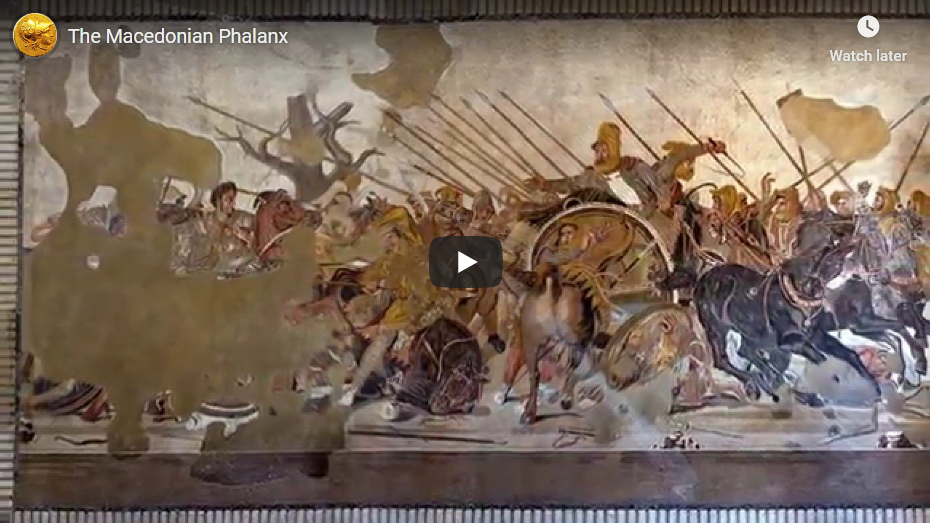
Published 30 Jan 2016A short introduction to the Macedonian phalanx, from conception to demise.

HistoryMatters
Published 30 Jan 2016A short introduction to the Macedonian phalanx, from conception to demise.
Ted Campbell suggests that the Canadian government most recent brainfart is a “Tea Party moment” for Canadians:
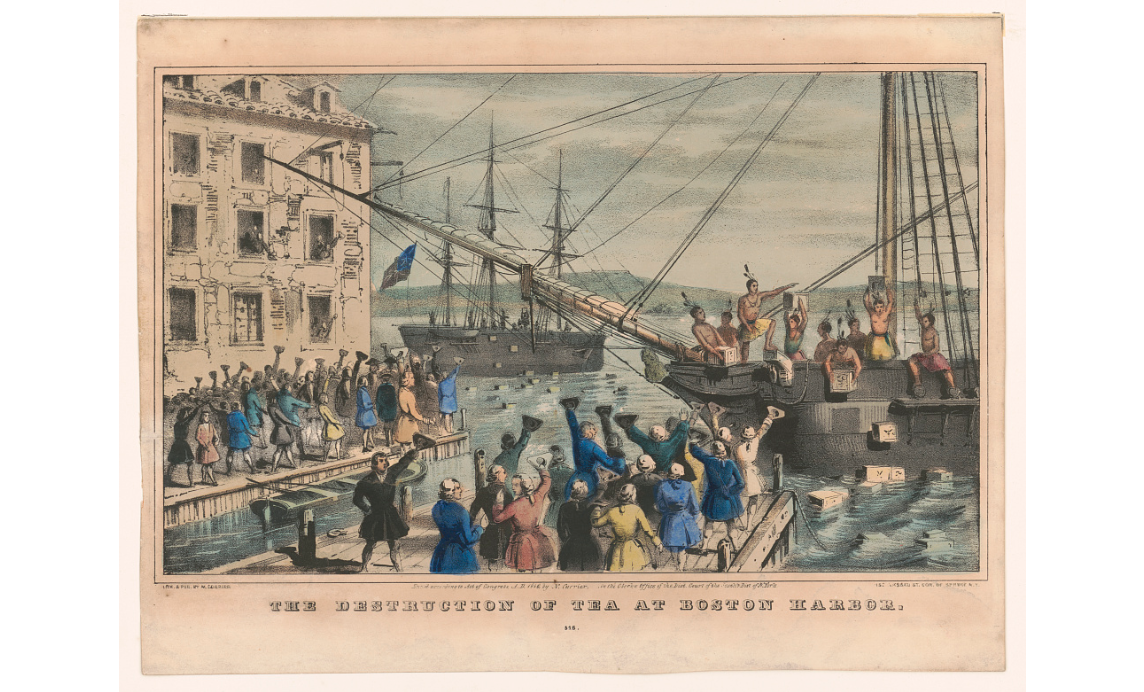
One commentator on social media dubbed this […] the moment when Heritage Minister Steven Guilbeault said that the Trudeau regime plans to license news websites as a “Boston Tea Pary moment.”
N. Currier. Destruction of tea at Boston Harbor, 1846. [New York: N. Currier]
Retrieved from the Library of Congress – https://www.loc.gov/item/91795889/She was referring to the protest, in December of 1773, when angry American colonists (many dressed as Native Americans to try and hide their true identities) dumped several hundred chests of tea, imported by the East India Company, into Boston harbour to protest the taxes, on almost everything, that had been imposed, by Westminster to pay for the Seven Years War. Westminster felt it was only fair to tax the colonists equally, along with the people of the British Isles, because much of the war, called the French-Indian War, now, by Americans, was fought to protect them and their vital commercial interests. The American colonists disagreed, many on the principle that they should not be taxed without being represented in parliament. We know where it all ended.
It’s a good question. Most commentators seem to agree with me that the Trudeau regime has seriously overreached in supporting the Broadcasting and Telecommunications Legislative Review Panel’s recommendations that, somehow, the distribution of “news” should be regulated by the government. That is a far, far greater intrusion into the liberty of free Canadian citizens than a tax on staples was to Americans in 1773.
Andrew Coyne, writing in the Globe and Mail, opines that “The whole thing is just breathtaking – a regulatory power grab without precedent, either in Canada or the democratic world. Nobody elsewhere is proposing anything like it, and for good reason: because it’s insane. This kind of bureaucratic micromanagement, with its obsession with ‘cultural sovereignty’ and ‘telling ourselves our own stories,’ would have been hopelessly outdated in 1990. In 2020, it’s just embarrassing.” He’s right to use the word “insane,” ~ the proposal is quite possibly unconstitutional, just for a start, it is, certainly based on a deeply mistaken idea of what the internet actually is ~ and he’s equally right to say that every Canadian who doesn’t, actively, protest against this must be embarrassed because each is, for no good reason at all that I can see, supporting a proposal that makes Canada less, far less, of a liberal democracy and more like Ethiopia and Senegal (both with scores below 6.0, the threshold for a Flawed Democracy in the well regarded Economist Intelligence Unit’s latest democracy index) where he will visit this week … perhaps to learn from the leaders of authoritarian regimes what his next steps should be to embarrass Canada further.
Michael Geist on the jaw-dropping performance of Trudeau’s Canadian Heritage Minister last weekend:
In June 2017, the Standing Committee on Canadian Heritage committee recommended implementing tax on Internet services in a report on media. Within minutes, Prime Minister Justin Trudeau was asked about the proposal at a press conference in Montreal. Trudeau’s answer – which literally came as committee chair Hedy Fry was holding a press conference on the report – was unequivocal: No. The government was not going to raise costs of Internet services with an ISP tax. The committee recommendation was minutes old and the government wasted absolutely no time in killing the proposal.
Last week, the Broadcasting and Telecommunications Legislative Review Panel proposed a far broader regulatory vision for the Internet. Indeed, it is difficult to give the full breadth of this plan its due. I will be posting this week on some of the most harmful aspects of the plan, including regulating media organizations around the world with penalties in the hundreds of thousands of dollars for failing to obtain licences, regulating streaming companies despite their massive investment in Canada, regulating everything from app stores to operating systems, creating liability for harmful content that violates Canada’s commitments in the USMCA, undermining net neutrality, and increasing the costs of Internet-based services for Canadian consumers.
Over the weekend, Canadian Heritage Minister Steven Guilbeault was asked about the proposal. In particular, he was asked about the proposal to licence foreign news sites (the example used was Breitbart but it could just as easily have been the New York Times, BBC, CNN, Fox or MSNBC). The answer should have been easy: no.
Instead of “no”, Minister Guilbeault’s response was that it was “no big deal.”
On Monday morning, the minister appears to have reconsidered being quite so blatant in indulging his inner authoritarian control freak:
Guilbeault walked back the comments on Monday, stating that the government had “no intention to impose licensing requirements on news organizations,” nor will the government “regulate news content.”
“… Our focus will be and always has been that Canadians have diversity to high-quality news sources,” said Guilbeault to reporters in Ottawa.
This announcement comes after deep criticism of a previous announcement by the Liberal government, where they said they would force news organizations to apply for a licence.
Guilbeault’s announcement faced intense scrutiny from across the political spectrum with some commentators suggesting that it would be a dangerous attack on the freedom of the press.
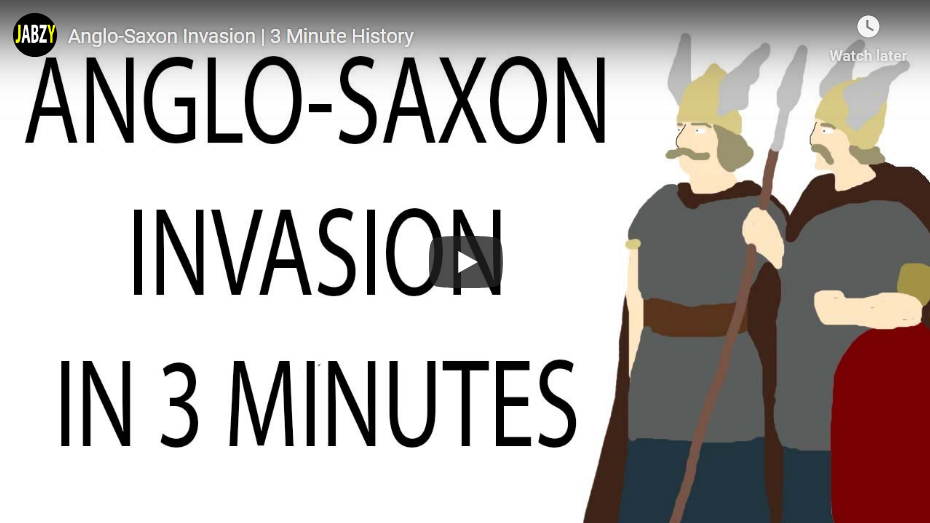
Jabzy
Published 22 May 2017
Apologists and defenders of brutalism often use astonishing arguments. Here, for example, is what an Australian wrote recently:
Unrefined concrete was an honest expression of [brutalist architects’] intentions, while plain forms and exposed structures were similarly sincere.
This is like saying that the Gulag was an honest expression of Stalin’s intentions. Sincerity of intentions is not a virtue irrespective of what those intentions are, and as a matter of fact those of the inspirer and founder of brutalism were clearly evil, as the slightest acquaintance with his writings will convince anyone of minimal decency. And what exactly is “sincerity of form and exposed structures”? Is it meant to imply that anything other than brutalism is insincere?
The same article continues:
Beyond their architectural function, Brutalist buildings serve other uses. Skateboarders, graffiti artists and parkour practitioners, for example, have all used Brutalism’s concrete surfaces in innovative ways.
Dear God! I have nothing against playgrounds — they are socially commendable, especially for children — but to regard the urban fabric as properly an extended playground is surely to infantilize the population. As for graffiti artists, to regard the extension of their “canvas” to large public buildings is an abject surrender to vandalism. No one, I presume, would say of a wall, “And in addition it would make an excellent place for a firing squad.”
Theodore Dalrymple, “The Brutalist Strain”, Taki’s Magazine, 2019-11-02.
Forgotten Weapons
Published 31 Jan 2020http://www.patreon.com/ForgottenWeapons
https://www.floatplane.com/channel/Fo…
Cool Forgotten Weapons merch! http://shop.bbtv.com/collections/forg…
One of the very early clients of the Ross Rifle Company was the Royal North West Mounted Police (later merged with the Dominion Police to form the RCMP). The Mounties purchased 500 Ross MkI carbines, which were actually the only factory-made Ross carbines ever produced. The guns were made in 1904 and delivered in 1905 — and quickly began to show problems. In particular, the bolt stops were unreliable and many springs had poor temper and lost strength. The RNWMP complained to Ross, who agreed to replace the carbines with new MkII Ross rifles.
Those new rifles did not arrive until 1909, and in the intervening years the police went back to issuing their old Lee Metford carbines. When they did finally get new rifles, the police commissioner was leery of their quality, and chose to hold them in storage at Regina headquarters and used for training and marksmanship competition only until he was confident that they were suitable for issue to his troopers. Before that confidence could be gained, however, a fire in the Regina warehouse destroyed all but 34 of them. Ultimately, the force was able to purchase Lee Enfield carbines from the British government in 1914, and never did successfully issue a Ross.
Many thanks to the collector who provided these original RNWMP guns for me to show you!
Contact:
Forgotten Weapons
6281 N. Oracle #36270
Tucson, AZ 85740

Ted Campbell on the recent peace plan proposed by US president Donald Trump:
On the subject of the Trump Mideast Peace Plan, I agree with both The Economist which says, “as a blueprint for a two-state solution it was dead on arrival,” and with the Globe and Mail‘s Mark MacKinnon who writes that “President Donald Trump’s Middle East peace plan … aims to resolve the Israeli-Palestinian conflict almost completely on Israel’s terms [and, while] Mr. Trump’s allegiances came as no surprise [to the Palestinian leaders, but] some of [their] bitterness was reserved for the leaders of Arab states that Palestinians see as quietly going along with the designs of the U.S. President and Israeli Prime Minister Benjamin Netanyahu.”
I think that is because President Trump, and much of the world, has lost patience with the Palestinians who still demand a right of return that, if ever seriously considered by anyone, would destroy Israel. Only Iran really wants that.
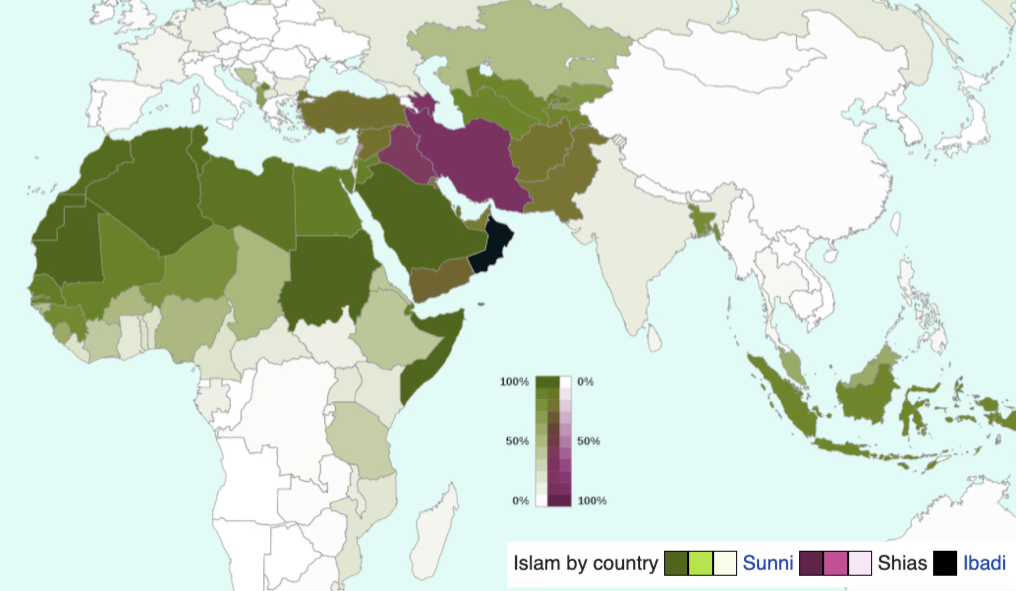
The strategic situation in the region, indeed in the entire Islamic Crescent which stretches from Mauritania and Morocco on the Atlantic coast of West Africa to Indonesia in East Asia, has changed in the past 70 years. There is no longer a unified Muslim “world” that opposes the very existence of a Jewish state in the Middle East. Indeed, a few Arab and Islamic states have correct, even friendly relations with Israel and others trade with the Jewish state (without having diplomatic relations) to their mutual advantage. The current problems in the region are centred on a power struggle between the Shia Islamic community, centred in Iran and the larger but socially and politically fragmented Sunni Islamic community …
… the differences are more than just religious. Iran, backed by China and Russia, and Saudi Arabia, backed by the USA, are engaged in something close to a real shooting war while Egypt and Turkey egg them both on. All four have some claim to dominance in the region and none is a real “friend” to any of the others and none gives a damn about Palestine or the Palestinian people.
[…]
President Trump has done a big political favour for Benjamin Netanyahu … but, ultimately it is probably pointless, and he and his successor and her (or his) successor, too, will likely still be seized with this issue in 2025 and 2030 and beyond.
Eventually, a solution will be found … it will, I suspect, involve Israel ceding a bit of territory to a new Palestinians state and, perhaps, establishing some sort of controlled, limited access corridor from the West Bank, possibly across the Northern Negev Desert. More importantly, it will involve Israel and Jordan, working in tandem, helping the new state to grow and prosper and live in peace with its neighbours. It’s a dream, of course, but it’s better, better for everyone, than is another war.
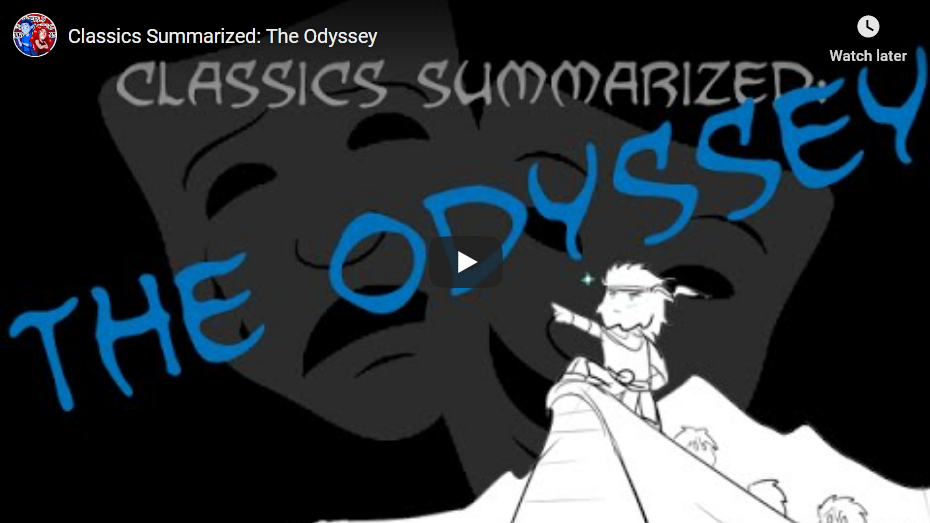
Overly Sarcastic Productions
Published 3 Feb 2015Funny story. Exporting this monster was almost as difficult as getting back to Ithaca was for our intrepid hero, who — as viewers of The Iliad may note — has inexplicably lost his Solid Snake voice in this production.
PATREON: http://www.patreon.com/user?u=4664797
Find us on Twitter @OSPYouTube!
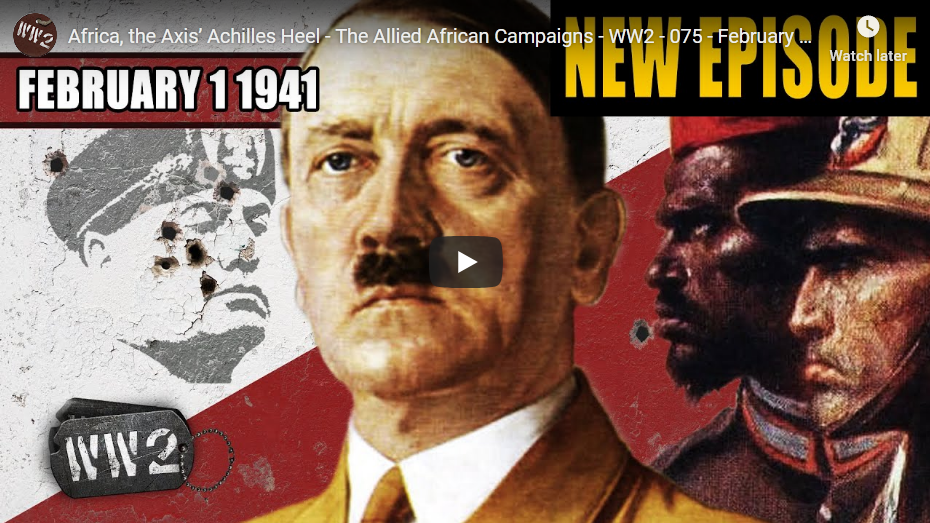
World War Two
Published 1 Feb 2020Greek Prime Minister Ioannis Metaxas dies this week as Italy is still uncomfortably wrapped up in the Albanian Mountains. Italy also finds itself in a pickle on other fronts, as Allied troops in Africa move into Italian territory with three offensives this week.
Join us on Patreon: https://www.patreon.com/TimeGhostHistory
Or join The TimeGhost Army directly at: https://timeghost.tvFollow WW2 day by day on Instagram @World_war_two_realtime https://www.instagram.com/world_war_t…
Join our Discord Server: https://discord.gg/D6D2aYN.
Between 2 Wars: https://www.youtube.com/playlist?list…
Source list: http://bit.ly/WW2sourcesWritten and Hosted by: Indy Neidell
Produced and Directed by: Spartacus Olsson and Astrid Deinhard
Executive Producers: Bodo Rittenauer, Astrid Deinhard, Indy Neidell, Spartacus Olsson
Creative Producer: Joram Appel
Post-Production Director: Wieke Kapteijns
Research by: Indy Neidell
Edited by: Mikołaj Cackowski
Map animations: Eastory (https://www.youtube.com/c/eastory)Colorizations by:
Dememorabilia – https://www.instagram.com/dememorabilia/
Adrien Fillon – https://www.instagram.com/adrien.colo…
Julius Jääskeläinen – https://www.facebook.com/JJcolorization/Sources:
IWM (IND 883); (IND 2405); (E 3661); (E6661)
Vatican by Made by Made from the Noun Project
king crown by ProSymbols from the Noun Project
tick by akash k from the Noun Project
Artillery by Creative Mania from the Noun ProjectSoundtrack from the Epidemic Sound:
Christian Andersen – “Disciples of Sun Tzu”
Reynard Seidel – “Deflection”
Fabien Tell – “Last Point of Safe Return”
Johan Hynynen – “Dark Beginning”
Bonnie Grace – “Imperious”
Johannes Bornlof – “Last Man Standing 3”Archive by Screenocean/Reuters https://www.screenocean.com.
A TimeGhost chronological documentary produced by OnLion Entertainment GmbH.
Forgotten Weapons
Published 28 Mar 2018Sold for $4,888.
In the world of converted semiautomatic “machine guns,” the Browning 1919 is a happy example of one of the most iconic and historically important US machine guns and also one of the cheapest semiautomatic belt fed guns available. This stems from two factors, primarily. One is that the Browning 1919, being developed from the water-cooled M1917 Browning, is a closed bolt system. Open bolt semiautomatic designs are not allowed by ATF, and so most semiauto machine gun conversions require substantial alteration to convert from open bolt to closed bolt — which the M1919 does not need. Second, the IDF used the Browning M1919 for many years and in large numbers, and surplussed many of them in the late 1990s. These guns came into the United States as parts kits in large numbers. This meant a glut of cheap guns, easily built as semi autos, and in an easily shootable caliber — 7.62mm NATO (as converted by Israel from their original .30-06 chambering).
Today, we are looking at an example of a semiautomatic converted M1919, and specifically at the various changes made by Israel to both improve the design and convert it successfully to the NATO cartridge.
http://www.patreon.com/ForgottenWeapons
Cool Forgotten Weapons merch! http://shop.bbtv.com/collections/forg…
If you enjoy Forgotten Weapons, check out its sister channel, InRangeTV! http://www.youtube.com/InRangeTVShow

Don Boudreaux, “Bonus Quotation of the Day…”, Café Hayek, 2017-11-25.
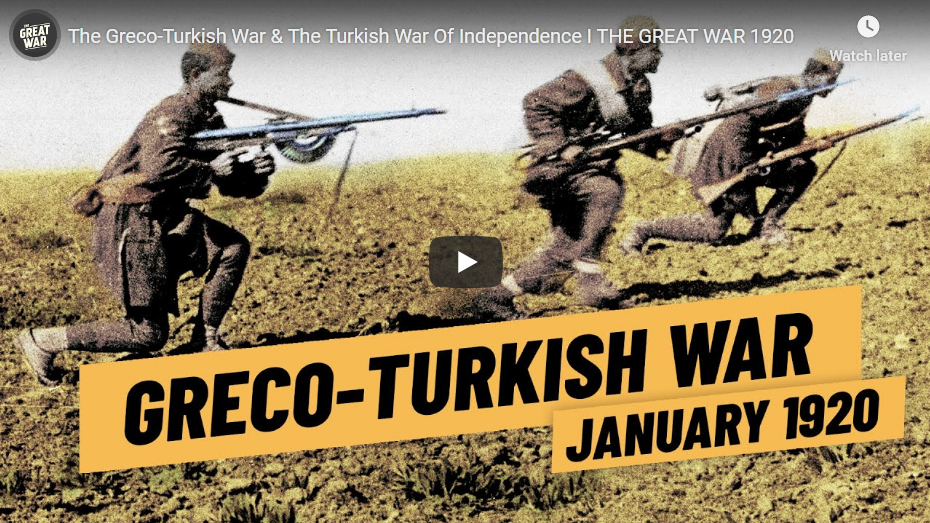
The Great War
Published 31 Jan 2020Sign up for Curiosity Stream and Nebula: https://curiositystream.com/thegreatwar
The Ottoman Empire was among the losing powers of World War 1 and left a power vacuum after the armistice of Mudros. The Great Powers had already made plans for the territory beforehand and now Greece had ambitions to take over the parts of Turkey where Greeks lived.
» SUPPORT THE CHANNEL
Patreon: https://www.patreon.com/thegreatwar
Merchandise: https://shop.spreadshirt.de/thegreatwar/» SOURCES
Criss, Nur Bilge: “Occupation during and after the War (Ottoman Empire)”, in: 1914-1918-online. International Encyclopedia of the First World War, ed. by Ute Daniel, Peter Gatrell, Oliver Janz, Heather Jones, Jennifer Keene, Alan Kramer, and Bill Nasson, issued by Freie Universität Berlin, Berlin 2015-08-05 https://encyclopedia.1914-1918-online…Leonhard, Jörn. Der überforderte Frieden. Versailles und die Welt 1918-1923 (CH Beck, 2018).
Macmillan, Margaret. The Peacemakers: Six Months that Changed the World (London: John Murray, 2001).
Karsh, Efraim and Inari Karsh. Empires of the Sand (London: Harvard UP, 1999).
Llewllyn Smith, Michael. Ionian Vision: Greece in Asia Minor (London: Hurst, 2016 (1973))
Gerwarth, Robert. The Vanquished. Why the First World War Failed to End, 1917-1923 (Penguin, 2017).
Fromkin, David. A Peace to End All Peace (New York: Avon, 1989)
McMeekin, Sean. The Ottoman Endgame (Penguin, 2015)
» SOCIAL MEDIA
Instagram: https://instagram.com/the_great_war
Twitter: https://twitter.com/WW1_Series
Reddit: https://reddit.com/r/TheGreatWarChannel»CREDITS
Presented by: Jesse Alexander
Written by: Jesse Alexander
Director: Toni Steller & Florian Wittig
Director of Photography: Toni Steller
Sound: Toni Steller Editing: Toni Steller
Mixing, Mastering & Sound Design: http://above-zero.com
Maps: Daniel Kogosov (https://www.patreon.com/Zalezsky)
Research by: Jesse Alexander
Fact checking: Florian Wittig ChannelDesign: Alexander Clark
Original Logo: David van Stephold
A Mediakraft Networks Original Channel
Contains licensed material by getty images
All rights reserved – Real Time History GmbH 2019
Overly Sarcastic Productions
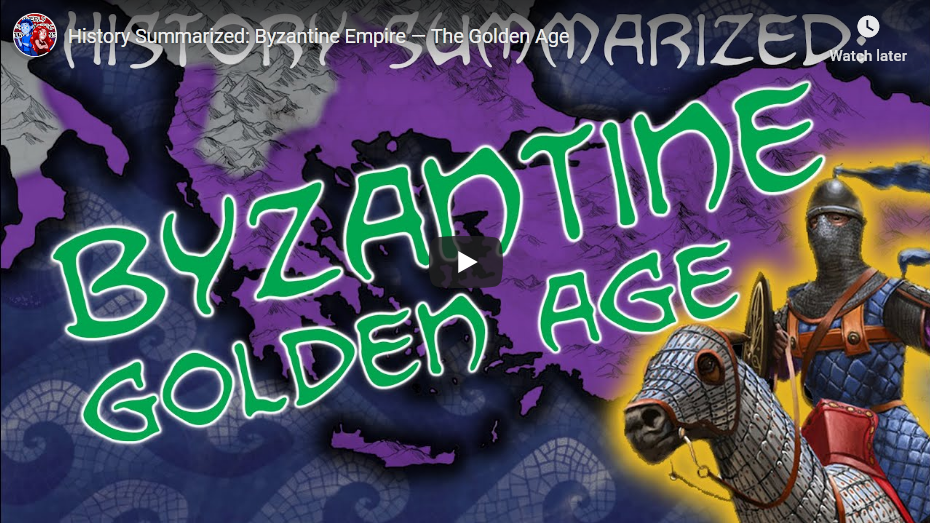
Published 31 Jan 2020What do you do when life takes away half of your empire? Well, if you’re the Medieval Byzantines, you make comprehensive structural reforms to better manage a changing geopolitical landscape — And then you make an absolute crapload of mosaics.
Our content is intended for teenage audiences and up.
This video was edited in part by Sophia Ricciardi, AKA “Indigo”.
FURTHER SOURCES: A Short History of Byzantium by John Julius Norwich.
PATREON: https://www.Patreon.com/OSP
DISCORD: https://discord.gg/h3AqJPe
MERCH LINKS: https://www.redbubble.com/people/OSPY…
OUR WEBSITE: https://www.OverlySarcasticProductions.com
Find us on Twitter https://www.Twitter.com/OSPYouTube
Find us on Reddit https://www.Reddit.com/r/OSP/
Historia Civilis
Published 18 May 2015Patreon: https://www.patreon.com/HistoriaCivilis
Website: https://www.historiacivilis.com
Twitter: https://twitter.com/HistoriaCivilisMusic is “The Life and Death of a Certain K. Zabriskie, Patriarch” by Chris Zabriskie. (http://chriszabriskie.com/)

TimeGhost History
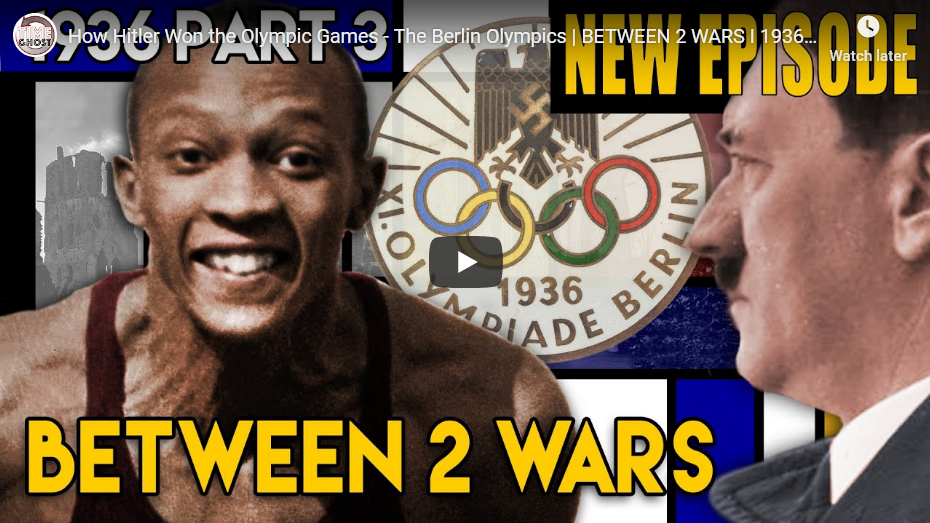
Published 30 Jan 2020The Berlin Olympics in 1936 were a masterfully played piece of Nazi propaganda, where they framed their race as physically superior and their ideology as modern, organised and cultured while also ostensibly downplaying their anti-internationalism racism and anti-semitism. But the Germans didn’t embrace sports for friendly competition. They did so for something very different.
Join us on Patreon: https://www.patreon.com/TimeGhostHistory
Hosted by: Indy Neidell
Written by: Joram Appel
Directed by: Spartacus Olsson and Astrid Deinhard
Executive Producers: Bodo Rittenauer, Astrid Deinhard, Indy Neidell, Spartacus Olsson
Creative Producer: Joram Appel
Post-Production Director: Wieke Kapteijns
Research by: Joram Appel
Edited by: Daniel Weiss
Sound design: Marek KaminskiSources:
Bundesarchiv_Bild:
183-G00372, 102-08105, 145_Bild-P017100, 183-R96374, 146-
1998-020-00A, 146-1976-033, 183-G00978, 183-1992-0421-500,
146-2005-0017, 183-G00352, 146-1976-116-08A, 146-1988-106-
29, 146II-728, 8076_Bild-0008
Modern Olympic Photos:
Photo from illang https://www.flickr.com/photos/ilan_sr…,
Photo by Agência Brasil http://agenciabrasil.ebc.com.br/rio-2…Colorizations by:
Daniel Weiss
Norman Stewart
Joram AppelSoundtracks from Epidemic Sound:
– “First Responders” – Skrya
– “The Inspector 4” – Johannes Bornlöf
– “Heroes On Horses” – Gunnar Johnsén
– “Split Decision” – Rannar Sillard
– “Not Safe Yet” – Gunnar Johnsen
– “Thunder Storm 01” – Fredrik Ekstrom
– “Dawn Of Civilization” – Jo Wandrini (1)
– “March Of The Brave 4” – Rannar Sillard
– “Magnificent March 3” – Johannes Bornlöf
– “Imperious” – Bonnie Grace
– “The Charleston 3” – Håkan ErikssonA TimeGhost chronological documentary produced by OnLion Entertainment GmbH.
From the comments:
TimeGhost History
2 days ago (edited)
The 1936 Berlin Summer Olympics and Garmisch-Partenkirchen Winter Olympics were the first true modern Olympic games. Many of the now staples of the Olympic games were introduced for the first time by the Nazis. But magnificent as they might have been, the intent of the Germans was not really to advance the vision of the internationalist and pacifist goals of the Olympic games. And while we do realise that many of the characteristics of the 1936 Olympics – how it was used to push a certain national image or to strengthen nationalism, could be said of more recent editions of the Olympics as well. And while sports and international institutions are still today being used to push alternate agendas, we’d rather not discuss them in the comment section here as this is a history channel – not a current affairs channel.
Cheers, Joram
Sabaton History
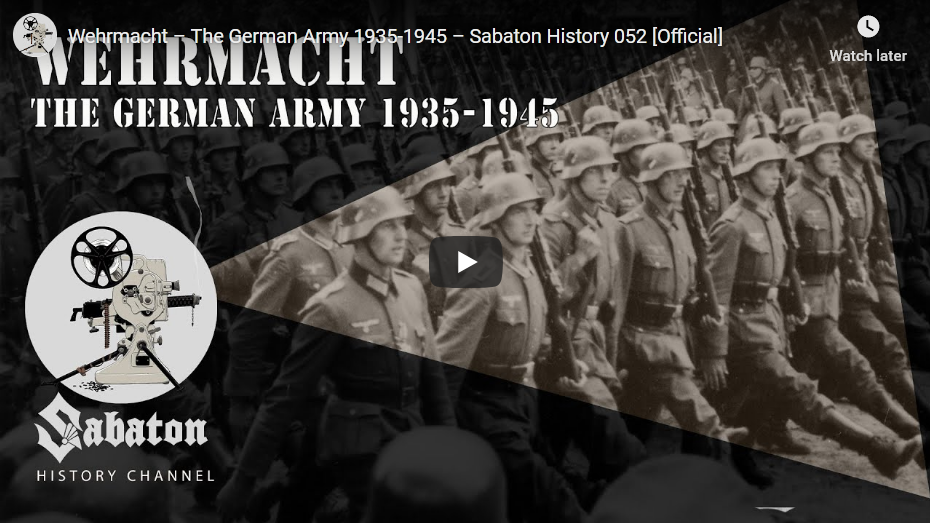
Published 30 Jan 2020From 1935 onwards, the German Wehrmacht was expanding rapidly. Millions of men joined the army, the Luftwaffe and the Kriegsmarine to fulfill Adolf Hitler’s visions for the 3rd Reich.
Highly motorized Panzergrenadiers, elite parachute- and resilient mountain-infantry troops were trained and and led with the utmost combat-efficiency in mind, supported by state of the art Panzers and aircraft. If it came to war, they would break the enemy and break them fast, achieving fast victories in a series of devastating hits. However, succumbing to the ideological influence of National-Socialism, the Wehrmacht found itself soon to be both culprit and accomplice to a self-reinforcing cycle of violence and atrocities.
Support Sabaton History on Patreon: https://www.patreon.com/sabatonhistory
Listen to “Wehrmacht” here:
CD: http://bit.ly/CoatOfArmsStore
Spotify: http://bit.ly/CoatOfArmsSpotify
Apple Music: http://bit.ly/CoatOfArmsAppleMusic
iTunes: http://bit.ly/CoatOfArmsiTunes
Amazon: http://bit.ly/CoatOfArmsAmzn
Google Play: http://bit.ly/CoatOfArmsGooglePlayCheck out the trailer for Sabaton’s new album The Great War right here: https://www.youtube.com/watch?v=HCZP1…
Listen to Sabaton on Spotify: http://smarturl.it/SabatonSpotify
Official Sabaton Merchandise Shop: http://bit.ly/SabatonOfficialShopHosted by: Indy Neidell
Written by: Markus Linke and Indy Neidell
Directed by: Astrid Deinhard and Wieke Kapteijns
Produced by: Pär Sundström, Astrid Deinhard and Spartacus Olsson
Creative Producer: Joram Appel
Executive Producers: Pär Sundström, Joakim Broden, Tomas Sunmo, Indy Neidell, Astrid Deinhard, and Spartacus Olsson
Post-Production Director: Wieke Kapteijns
Edited by: Iryna Dulka
Sound Editing by: Marek Kaminski
Maps by: Eastory – https://www.youtube.com/c/eastoryArchive by: Reuters/Screenocean https://www.screenocean.com
Music by Sabaton.Sources:
– Bundesarchiv
– IWM: H 21907- Bundesarchiv
– IWM: H 21907An OnLion Entertainment GmbH and Raging Beaver Publishing AB co-Production.
© Raging Beaver Publishing AB, 2019 – all rights reserved.



Powered by WordPress