Quotulatiousness

June 19, 2020

What Actually Is Blitzkrieg? – WW2 Special

Filed under: Germany, History, Military, Weapons, WW2 — Tags: , , , , , — Nicholas @ 06:00

World War Two
Published 18 Jun 2020

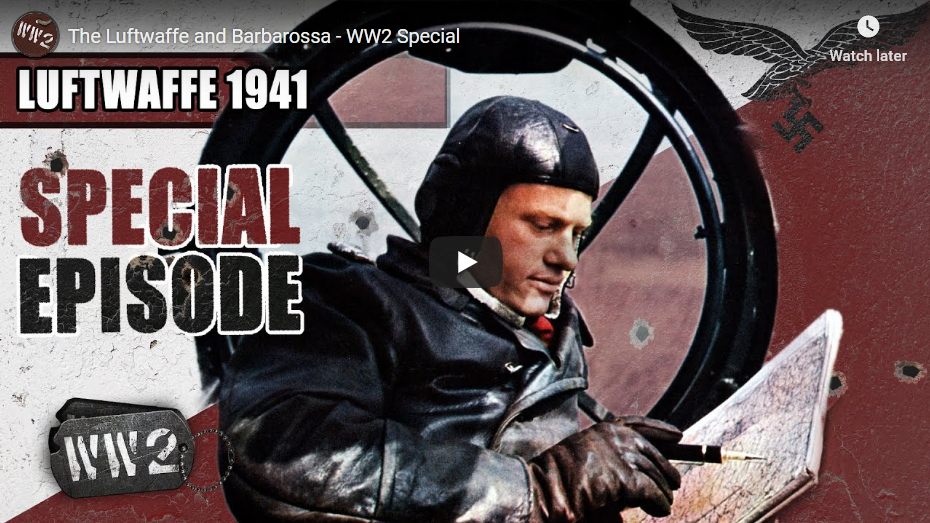
When the Nazi war machines tears through Poland, France, and the Soviet Union, people will call it Blitzkrieg. But what is Blitzkrieg and is it anything that unique?

Join us on Patreon: https://www.patreon.com/TimeGhostHistory
Or join The TimeGhost Army directly at: https://timeghost.tv

Follow WW2 day by day on Instagram @World_war_two_realtime https://www.instagram.com/world_war_two_realtime
Between 2 Wars: https://www.youtube.com/playlist?list…
Source list: http://bit.ly/WW2sources

Hosted by: Indy Neidell
Written by: Francis van Berkel
Director: Astrid Deinhard
Producers: Astrid Deinhard and Spartacus Olsson
Executive Producers: Astrid Deinhard, Indy Neidell, Spartacus Olsson, Bodo Rittenauer
Creative Producer: Joram Appel
Post-Production Director: Wieke Kapteijns
Research by: Adam Adkins
Edited by: Mikołaj Cackowski
Sound design: Marek Kamiński
Map animations: Eastory (https://www.youtube.com/c/eastory)

Colorizations by:
Jaris Almazani (Artistic Man) – https://instagram.com/artistic.man?ig… (edited)
Carlos Ortega Pereira, BlauColorizations – https://www.instagram.com/blaucoloriz…
Julius Jääskeläinen – https://www.facebook.com/JJcolorization/
Dememorabilia – https://www.instagram.com/dememorabilia/
Musvage https://commons.wikimedia.org/wiki/Fi…
Klimbim https://www.flickr.com/photos/2215569…

Sources:
Portrait of Basil Liddell-Hart, courtesy National Portrait Gallery
Portrait of Douglas McGarel Hogg, courtesy National Portrait Gallery
IWM H 20697, Q 6337, D 1966
Bundesarchiv
from the Noun Project: Target by RITASYA, documents by DinosoftLab, Tank by mbok sumirna, Armored Car by Martin, Plane by Graphic Enginer, transceiver by Eucalyp
Breaking A Wall Down (With A Hammer) by scampsie https://freesound.org/people/scampsie…

Soundtracks from the Epidemic Sound:
Johannes Bornlof – “Last Man Standing 3”
Reynard Seidel – “Deflection”
Fabien Tell – “Last Point of Safe Return”
Hakan Eriksson – “Epic Adventure Theme 4”
Johannes Bornlof – “The Inspector 4”
Johannes Bornlof – “Death And Glory”
Bonnie Grace – “The Dominion”
Bonnie Grace – “Imperious”

Archive by Screenocean/Reuters https://www.screenocean.com.

A TimeGhost chronological documentary produced by OnLion Entertainment GmbH.

“Hill 3234” – The Soviet-Afghan War – Sabaton History 072 [Official]

Filed under: Asia, History, Media, Military, Russia — Tags: , , , , — Nicholas @ 04:00

Sabaton History
Published 18 Jun 2020

It happened during the last stage of the Soviet-Afghan War.

Already withdrawing its forces, Soviet High Command needed to display its might one last time by recapturing the vital Satukandav Pass. But to achieve that goal, the commanding heights surrounding the pass had to be held against continuous Mujahideen attacks.

In the Battle for Hill 3234, an outnumbered force of Soviet paratroopers held their own against relentless attacks from the Afghan rebels.

Support Sabaton History on Patreon: https://www.patreon.com/sabatonhistory

Listen to “Hill 3234” on the album The Last Stand here:
CD: http://bit.ly/TheLastStandStore
Spotify: http://bit.ly/TheLastStandSpotify
Apple Music: http://bit.ly/TheLastStandItunes
iTunes: http://bit.ly/TheLastStandItunes
Amazon: http://bit.ly/TheLastStandAmz
Google Play: http://bit.ly/TheLastStandGooglePlay

Watch the Official Lyric Video of “Hill 3234” here:
https://www.youtube.com/watch?v=K1Xkp…

Listen to Sabaton on Spotify: http://smarturl.it/SabatonSpotify
Official Sabaton Merchandise Shop: http://bit.ly/SabatonOfficialShop

Hosted by: Indy Neidell
Written by: Markus Linke and Indy Neidell
Directed by: Astrid Deinhard and Wieke Kapteijns
Produced by: Pär Sundström, Astrid Deinhard and Spartacus Olsson
Creative Producer: Joram Appel
Community Manager: Maria Kyhle
Executive Producers: Pär Sundström, Joakim Broden, Tomas Sunmo, Indy Neidell, Astrid Deinhard, and Spartacus Olsson
Post-Production Director: Wieke Kapteijns
Edited by: Iryna Dulka
Sound Editing by: Marek Kaminski
Maps by: Eastory – https://www.youtube.com/c/eastory

Archive by: Reuters/Screenocean https://www.screenocean.com
Music by Sabaton.

Sources:
– Abramov Andrey, ALDOR46, Fdutil, P.Fisxo; from Wikimedia
– E.Kuvakin
– Erwin Franzen
– Archive of S.V. Rozhkova
– Photos of 350th airborne regiment, courtesy of the 5th airborne company trooper Sergey Novikov
– Archive of the 345th airborne parachute regiment
– Library of Congress, Geography and Map Division.

An OnLion Entertainment GmbH and Raging Beaver Publishing AB co-Production.

© Raging Beaver Publishing AB, 2019 – all rights reserved.

From the comments:

Sabaton History
1 day ago
They were only 39
They were told to hold the line…

I’m sure most of you know the rest of those lyrics. And after watching this episode of Sabaton History, you also know the real historical events behind those words.

What some of you might not know though, is the story of the guitar solo in Hill 3234. As usual when Joakim had written the song, he sent it out to the rest of the band. Much to his surprise though, this time Thobbe Englund – lead guitarist at the time – sent a file back within the hour. Thobbe had just plugged his guitar in and hit play. He was literally listening to Hill 3234 for the first time when the solo spontaneously popped into his head, and he recorded it on the spot. And to make this solo even more special: it is that very first recording Thobbe made that ended up on the album!

Not one single re-take.

Talk about a blessing from the Muses…

Anglo-Dutch Wars | 3 Minute History

Filed under: Britain, Europe, History, Military — Tags: , , , , , , — Nicholas @ 02:00

Jabzy
Published 25 Apr 2015

First, Second and Third Anglo-Dutch Wars. I left out the Fourth War because it really wasn’t connected to the previous 3.

Also – I hope you don’t mind I used ‘Netherlands’ throughout the video despite the fact the term didn’t come until much later.

QotD: We call it the Corded Ware culture, not the Battle Axe culture to make it less interesting to boys

Filed under: History, India, Quotations, Science — Tags: , , , , — Nicholas @ 01:00

India played a large role in the development of European conceptions of race. In 1786 British judge William Jones delivered a lecture in Calcutta suggesting that Sanskrit, Greek, and Latin were all descended from the same lost language, a ghost tongue now called Proto-Indo-European.

Jones went on to hypothesize that an ancient invasion of Dravidian-speaking India by Proto-Indo-European-speaking Aryans from Iran could help explain the curious distribution of language, skin color, and caste within the Hindu world today.

Jones’ ideas had unfortunate influence. Reich writes:

    To the Nazis and others, the distribution of the Indo-European language family, linking Europe to India … spoke of an ancient conquest moving out of an ancestral homeland, displacing and subjugating the peoples of the conquered territories, an event they wished to emulate.

Hitler thus culturally appropriated the Hindu swastika.

Since 1945, the notion of Aryan invaders has been unsurprisingly unpopular.

In Europe, anthropologists have promoted the “pots not people” theory to argue that trade and changes in fashion must explain why Corded Ware pots suddenly showed up all over Europe about 4,900 years ago. (So did battle axes; indeed, early scientists called this the Battle Axe Culture. But that sounded too awesome. Hence, more recent academics renamed it after its pottery style to make these brutal barbarians sound dweebier and thus less interesting to boys.)

In India, the notion of Hindu culture as a giant conspiracy by Aryan invaders to enshrine their descendants at the top of the social order for the rest of eternity perhaps struck a little too close to home.

Steve Sailer, “Reich’s Laboratory”, Taki’s Magazine, 2018-03-28.

June 18, 2020

The origins of Antifa

Filed under: Germany, History, Politics, USA — Tags: , , , , , — Nicholas @ 05:00

Kyle Shideler outlines the history of Antifa from the Weimar Republic to the streets of cities all over the western world:

“antifa 8973ag” by cantfightthetendies is licensed under CC BY 2.0

With riots and civil unrest metastasizing across the United States, the president declared he intends to designate Antifa as a terrorist group. Predictably, the talking heads rushed out to declare that Antifa doesn’t really exist, and even if it did the president couldn’t possibly target it using that legal designation. They argue Antifa is an amorphous blob of discontents, not a functioning organization, and certainly not one which could be designated and targeted for concentrated counterterrorism enforcement.

As usual, the Twitterati don’t know what they are talking about. Reality is both simpler and more complex.

To begin at the beginning: Antifa — real name: Antifaschisitsche Aktion — was born during the street-fights of the 1932 Weimar Republic. It was founded by the Stalinist Communist Party of Germany (KPD), although various Communist “anti-fascist defense” units were associated with the KPD much earlier.

Anti-fascist Action’s sole purpose was to help the KPD combat other political parties for control of the streets in the revolutionary politics of the rapidly failing Weimar Republic.

And yes, they fought the Nazis.

But they also fought liberal parties, conservative parties, and anyone and everyone who got in their way. While these early antecedents were short-lived, it is useful to view Antifa in this context. More than anything, Antifa exists to serve as a tool of revolutionary politics in a failed (or failing) state.

Antifa would reestablish itself in the early 1980s, also in Germany, out of Autonomism. Autonomism is an anti-authoritarian anarcho-Marxist ideology associated with the Communist urban guerilla organizations of 1970s and ’80s Europe like Red Army Faction and the Red Brigade. Autonomism would find a home among the young punks of Germany’s squatters’ rights movement. Around this time, Antifa tactics like the “black block,” where large numbers of rioters dress in black and move together in formation as part of a larger protest, were developed.

H/T to Rafe Champion for the link.

Black Death and the Failure of Pandemic Lockdowns – Pandemic History 03

Filed under: Europe, Health, History, Science — Tags: , , , , , — Nicholas @ 04:00

TimeGhost History
Published 17 Jun 2020

Starting in 1347 and for three centuries, the second plague pandemic provides ample time to learn how to deal with the recurring outbreaks. And yet, fears of ruining the economy, political expediency, and refusal to accept reality leaves those trying to implement protection measure to fight an uphill battle. The result is even worse economic consequences, and unfathomable death.

Join us on Patreon: https://www.patreon.com/TimeGhostHistory

Hosted by: Indy Neidell and Spartacus Olsson
Written by: Indy Neidell and Spartacus Olsson
Directed by: Astrid Deinhard
Executive Producers: Astrid Deinhard, Indy Neidell, Spartacus Olsson, Bodo Rittenauer
Creative Producer: Joram Appel
Post-Production Director: Wieke Kapteijns
Research by: Spartacus Olsson, Indy Neidell, and James Currie
Edited by: Karolina Dołęga
Sound Engineer: Marek Kamiński
Graphic Design: Ryan Weatherby

Visual Sources:
Wellcome Images
Patrick Gray on Flickr: https://www.flickr.com/photos/1360415…
Paul K on Flickr: https://www.flickr.com/photos/bibliod…
Quinto Tiberio Angelerio and New Measures for Controlling Plague in 16th-Century Alghero, Sardinia digitalized by Google, original from Universidad Complutense de Madrid

Icons from The Noun Project by: Ben Mullins, parkjisun, Muhamad Ulum & Adrien Coquet

Music:
“A Far Cry” – Flouw
“Fire Building Ext 3” – SFX Producer
“Last Point of Safe Return” – Fabien Tell
“London” – Howard Harper-Barnes.mp3
“Please Hear Me Out” – Philip Ayers
“Scream Female 3” – SFX Producer
“Scream Male 6” – SFX Producer
“Superior” – Silver Maple
“Symphony of the Cold-Blooded” – Christian Andersen
“Barrel” – Christian Andersen

Archive by Screenocean/Reuters https://www.screenocean.com.

Research Sources:
Quinto Tiberio Angelerio and New Measures for Controlling Plague in 16th-Century Alghero, Sardinia Raffaella Bianucci, Ole Jørgen Benedictow, Gino Fornaciari, and Valentina Giuffra
“The Path to Pistoia: Urban Hygiene Before the Black Death”, G. Geltner, Past & Present, Volume 246, Issue 1, February 2020, Pages 3–33
Encyclopedia of the Black Death, Joseph Patrick Byrne
“Epidemiological characteristics of an urban plague epidemic in Madagascar, August–November, 2017: an outbreak report”, The Lancet, Rindra Randremanana, PhD, *Voahangy Andrianaivoarimanana, PhD, Birgit Nikolay, PhD, Beza Ramasindrazana, PhD, Juliette Paireau, PhD, Quirine Astrid ten Bosch, PhD, et al
Yersinia pestis, the cause of plague, is a recently emerged clone of Yersinia pseudotuberculosis, Mark Achtman, Kerstin Zurth, Giovanna Morelli, Gabriela Torrea, Annie Guiyoule, and Elisabeth Carniel
Insights into the evolution of Yersinia pestis through whole-genome comparison with Yersinia pseudotuberculosis, P.S.G. Chain, E. Carniel, F.W. Larimer, J. Lamerdin, P.O. Stoutland, W.M. Regala, A.M. Georgescu, L.M. Vergez, M.L. Land, V.L. Motin, R.R. Brubaker, J. Fowler, J. Hinnebusch, M. Marceau, C. Medigue, M. Simonet, V. Chenal-Francisque, B. Souza, D. Dacheux, J.M. Elliott, A. Derbise, L.J. Hauser, and E. Garcia
Distinct Clones of Yersinia pestis Caused the Black Death, Stephanie Haensch, Raffaella Bianucci, Michel Signoli, Minoarisoa Rajerison, Michael Schultz, Sacha Kacki, Marco Vermunt, Darlene A. Weston, Derek Hurst, Mark Achtman, Elisabeth Carniel, and Barbara Bramanti

A TimeGhost chronological documentary produced by OnLion Entertainment GmbH.

From the comments:

TimeGhost History
2 days ago
As you have seen in this episode collective learning takes time. Some of you might infer one to one parallels between the situation during the second plague pandemic and our current pandemic in 2020. That would not be entirely correct and definitely not our intention. History doesn’t as much repeat itself as it echos into the present. While there are similarities between all pandemics, and we continue to struggle to find the correct response and countermeasures, our times are very different from the medieval and renaissance world. Science has developed further, society has evolved, and we have much more than one form of response to disease available. Moreover the pandemic that started in 1347 is in relative numbers (percentage of lethality) the worst pandemic to hit humanity in known history.

In the end we are historians, not health professionals or epidemiologists. Our contribution can never be what to do about COVID 19, that is too complex an issue for us to digest. What we can contribute is a historical perspective on what went wrong back then, and how we developed from there. The main takeaway from the Black Death should from that long term historical perspective be positive. The response lay the foundation of modern health care in hospitals. It helped create the beginnings of professional, trained, and vetted doctors, it changed the view on sanitation, and it started to shift our collective view on disease from superstition and conspiracy myths to factual analysis and a scientific response.

And there in that very last point lies perhaps the one and only thing that we can say with certainty that we need to remember in 2020 — listen to the scientists, not the hacks and politicians on all sides that base their rhetoric on, self interest, political expediency, and populism.

Never forget!

Spartacus

PS apologies for the audio problems on my mic during the first half of the video — it was scratching against my jacket and no one noticed, sadly we can’t get it out in post.

The fall of olde timey “liberalism”

Filed under: Books, Britain, Education, History, Liberty, Politics, USA — Tags: , , , , — Nicholas @ 03:00

David Warren on the way “liberalism” was dissected, consumed, digested, and excreted by progressivism:

From different angles, from Tocqueville to Schumpeter to a thousand reporters on the ground, it has been observed that liberalism defeats itself. I mean by this real liberalism, not the poison candy version that is offered to children by our academic Left. The real thing celebrates liberty as the central political good, and equality of opportunity versus equality of result. It frees up economies and societies, by cancelling hidebound rules and regulations. When much younger and under the influence of my father and his war-veteran generation (his was World War II), I considered myself a “liberal,” for views that activist mobs would now consider to be deeply “conservative,” or as they say, “fascist.”

Opposition to totalitarianism was a key to that generation. They weren’t shy about using arms. A true liberal was an enthusiast for the War in Vietnam, and other global initiatives. Liberals were “open society” in an explicitly anti-communist, 1950s way. They loved “civil rights,” and opposed the Nanny State, although incoherently. They wished to accommodate the women’s movement. Their instinctive suspicion of social programmes, and revulsion for “ideology,” were slipping away; or had already slipped, to a longer historical view.

To be tediously economic, they were intoxicated by the view that, “now we are rich we can afford to have some fun.” They had long been bored with the absolute moral judgements that their ancestors (to whom neither divorce nor contraception were thinkable) took for granted — based on a Protestant Christianity that had been abandoned by sophisticated intellectuals a century before. “Church versus State” was no longer an issue, and because it wasn’t, morality became a statist “construct,” even without action from the Marxists.

When Ross Douthat writes a book on “decadence,” he is treating it as a temporal trend: something that comes and goes through the decades. His arguments are themselves decadent: something for the chattering classes to play, in the spirit of badminton. It is a topic for upmarket wit; no horror lurks beneath it. The old Gibbonesque “decline and fall” narrative has evaporated with classical culture, and been replaced by a dry happyface from which the wrinkles of serious history are botoxed. The “whig view of history” survives, but only by cliché.

What isn’t defended, is soon killed off, in nature but also in metaphysics. Leftism flourishes today, not because it has won any argument, but by eating everything on the liberal side. Even the word, “liberal,” went down with a soft burp. It now represents the denial, or reversal, of everything that liberals once stood for. Gentle reader may prove this to himself, by reading old magazines.

Shooting the Thompsons: Comparing the 1921, 21/28, and M1A1

Filed under: History, Military, USA, Weapons, WW2 — Tags: , , — Nicholas @ 02:00

Forgotten Weapons
Published 17 Oct 2018

http://www.forgottenweapons.com/shoot…

http://www.patreon.com/ForgottenWeapons

Cool Forgotten Weapons merch! http://shop.bbtv.com/collections/forg…

Having gone through the whole series of Thompson submachine guns, now it’s time to take them out to the range! I was quite curious to see how the different variations would handle side by side, since they have several significant differences. The Cutt’s Compensator and the changing rate of fire can both be expected to have a noticeable impact on the shootability of the guns.

I went in expecting to prefer the World War Two M1A1 pattern, and was rather surprised to find myself actually liking the 1921 model best. Its very high rate of fire actually worked very well, with less noticeable vibration and sight disruption than either of the other types. Its sights are close to useless, and it is both heavy and awkward to handle — but I can see why it developed the following it has!

Contact:
Forgotten Weapons
PO Box 87647
Tucson, AZ 85754

If you enjoy Forgotten Weapons, check out its sister channel, InRangeTV! http://www.youtube.com/InRangeTVShow

June 17, 2020

Alcibiades, the first recorded iconoclast, but far from the last

James Heartfield on the modern day resurgence of iconoclasm:

“Drunken Alcibiades interrupting the Symposium”, an engraving from 1648 by Pietro Testa (1611-1650)
Via Wikimedia Commons.

… far more often, the attacks on public symbols are indicative of a breakdown in social solidarity — often with alarming consequences. For activists seeking to win popular support, knocking down statues is a high-risk strategy that can provoke the opposite sentiments to those hoped for. The futurist Marinetti’s proposal to fill in the canals of Venice with concrete to make modern roads is a witty way to make a point, but not a sound policy.

Alcibiades was perhaps the first recorded statue vandal. One night in 415 BC he knocked all the stone cocks off the statues of Hermes in Athens. In 1497, the friar Girolamo Savonarola launched a Bonfire of the Vanities in which artworks, books and statues were destroyed out of a fear they would tempt people away from God. As any lover of old English churches knows, the furies of the Puritan revolution led to the destruction and defacing of Catholic saints’ statues and paintings.

In the modern era, the temptation to destroy monuments has been strong. In the First World War, Britain’s local authorities changed German-sounding names of streets like Bismarck Road — now Waterlow Road — while bully boys attacked German-owned shops. In 1933, Nazi students in Germany organised bonfires of subversive books, while the Reich organised an exhibition of “degenerate” modernist art. The burning of books only served as a trial run for the extermination of people, as the symbolic slaughter failed to yield the results of a “cleansed” Germany.

People often make the point that there are no statues of Hitler in Germany — though those were not taken down by Germans, but by the Allied occupiers. You can still see Albert Speer’s Zeppelinfeld and grandstand in Nuremberg, where many of Hitler’s rallies took place, though not much else of his Nazi architecture survives. Mussolini’s architects, Giuseppe Terragni and Marcello Piacentini, did better — much of their absurdly grandiose work survives. The model of an Allied-led “denazification” was in the minds of the US-led forces that overthrew Saddam Hussein in 2003. The destruction of his statue in Baghdad was largely staged by the allies.

Under the Maoist regimes in China and the Khmer Rouge in Cambodia, some of the worst atrocities after the Nazis were carried out. Mao’s “Cultural Revolution” against the “four olds” led to the destruction of books and artworks. Later, there were showtrials and the politically incorrect were battered by the mob. In the wreckage of Cambodia, Pol Pot led a terrifying war on alleged capitalist-roaders and even intellectuals — who could be handily identified by the fact they wore glasses — that led to millions being killed. Pol Pot declared a “year zero” — that all civilisation before the Khmer Rouge took power would be cancelled. Tragically, the wholesale wiping out of Cambodian culture was only a prelude to the extermination of much of its population. The sentiment of wiping out the wrong history was repeated in the war that al-Qaeda-inspired regimes in Afghanistan and Mali conducted against books and statues that did not match their own Islamist views.

In Soviet Russia, when the communist-allied artists of the Proletkult organisation argued that all Tsarist culture should be expunged, the Bolshevik leader Lenin took them to task for “rejecting the most valuable achievements of the bourgeois epoch”. Instead, he said, they should assimilate and re-work “everything of value in the more than 2,000 years of the development of human thought and culture”. Sadly, Lenin’s wise advice was lost on the Stalinist regimes that followed, during which the policy oscillated between futurist iconoclasm and maudlin Russian sentimentality. History got its revenge in eastern Europe when most of the ubiquitous Lenin and Marx statues came down in the 1990s.

The Tanks of Operation Barbarossa – WW2 Special

Filed under: Germany, History, Military, Russia, WW2 — Tags: , , , — Nicholas @ 04:00

World War Two
Published 16 Jun 2020

We take a look at the types and numbers of tanks available to the German and Soviet armies on the eve of Barbarossa.

Join us on Patreon: https://www.patreon.com/TimeGhostHistory
Or join The TimeGhost Army directly at: https://timeghost.tv

Follow WW2 day by day on Instagram @World_war_two_realtime https://www.instagram.com/world_war_t…
Between 2 Wars: https://www.youtube.com/playlist?list…
Source list: http://bit.ly/WW2sources

Written and Hosted by: Indy Neidell
Director: Astrid Deinhard
Producers: Astrid Deinhard and Spartacus Olsson
Executive Producers: Astrid Deinhard, Indy Neidell, Spartacus Olsson, Bodo Rittenauer
Creative Producer: Joram Appel
Post-Production Director: Wieke Kapteijns
Research by: Indy Neidell
Edited by: Mikołaj Cackowski
Sound design: Marek Kamiński
Map animations: Eastory (https://www.youtube.com/c/eastory)

Colorizations by:
Julius Jääskeläinen – https://www.facebook.com/JJcolorization/
Dememorabilia – https://www.instagram.com/dememorabilia/

Sources:
RIA Novosti archive, image #2567 / Samaryi Guraryi / CC-BY-SA 3.0
Picture of Soviet KV-1 tanks on parade at the Palace Square in Leningrad, Russia, 1 May 1942, courtesy Boris Kudoyarov, Russian International News Agency
IWM HU 81216
Bundesarchiv
Narodowe Archiwum Cyfrowe
RIA Novosti archive, image #669663
from the Noun Project: Shield by Nikita Kozin, Game by Ecem Afacan
Pz.Kpfw. 35(t) of 6th Panzer Division Russian front, courtesy ConnorMac12 https://commons.wikimedia.org/wiki/Fi…

Soundtracks from the Epidemic Sound:
Phoenix Tail – “At the Front”
Reynard Deidel – “Deflection”
Fabien Tell – “Last Point of Safe Return”
Philip Ayers – “Trapped in a Maze”
Johannes Bornlof – “The Inspector 4”
Rannar Sillard – “March Of The Brave 4”
Max Anson – “Ancient Saga”
Johannes Bornlof – “Deviation In Time”

Archive by Screenocean/Reuters https://www.screenocean.com.

A TimeGhost chronological documentary produced by OnLion Entertainment GmbH.

From the comments:

World War Two
23 minutes ago (edited)
This video is one of a number of specials we’re doing on the military context to Operation Barbarossa. You can check out Indy’s video about transport vehicles and logistics here: https://youtu.be/4lSCnOltYdY. If you want to help us make a complete documentary series on World War Two through more specials just like this one, you can join the TimeGhost Army on www.patreon.com/timeghosthistory or https://timeghost.tv.
Take care,
Joram

Tank Chats #73 Sentinel | The Tank Museum

Filed under: Australia, History, Military, Weapons, WW2 — Tags: , , — Nicholas @ 02:00

The Tank Museum
Published 26 Apr 2019

As Australia and New Zealand mark ANZAC day this week, The Tank Museum presents a Tank Chat on the Australian Sentinel tank.

The AC1 Sentinel cruiser tank was designed by Australia during the Second World War. Only 65 of these tanks were produced during WW2, as the Australians were eventually supplied with Allied tanks.

Support the work of The Tank Museum on Patreon: ► https://www.patreon.com/tankmuseum

Visit The Tank Museum SHOP: ► https://tankmuseumshop.org/
Twitter: ► https://twitter.com/TankMuseum
Tiger Tank Blog: ► http://blog.tiger-tank.com/
Tank 100 First World War Centenary Blog: ► http://tank100.com/ #tankmuseum #tanks #tankchats

June 16, 2020

Plague and the Bronze Age Collapse ~ Dr. Louise Hitchcock

The Study of Antiquity and the Middle Ages
Published 16 May 2020

Ladies and Gentlemen, welcome to the series NAUE II SWORDS, GERMS, & IRON brought to us by none other than Dr. Louise Hitchcock and this episode is going to be about plague and the Bronze Age collapse. This episode will also be drawing on modern parallels such as “What Covid-19 Can Tell Us About the Bronze Age (12th cent) Collapse?”

It will dive into the Bronze Age and discuss was plague a contributing factor in decline of the Bronze Age and the birth of the Iron Age? How familiar were the ancient peoples with plague and epidemics and what do the ancient literary sources tell us? From discussing plague in ancient Mesopotamia to the Philistine Plague to a Hittite King who falls prey to a deadly disease we explore new thoughts, theories and research involving a period that we all love and a subject that could not be more relevant and that is plague.

Check out the awesome work of Dr. Hitchcock at these links below!

Academia profile where you can access her work that is free to the public. https://unimelb.academia.edu/LouiseHi…

Get her books here!

Aegean Art and Architecture: https://global.oup.com/ukhe/product/a…
Minoan Architecture: A Contextual Analysis: http://www.astromeditions.com/books/b…
Theory for Classics: https://www.routledge.com/Theory-for-…
DAIS: The Aegean Feast https://www.peeters-leuven.be/detail….
Tell It In Gath: Studies in the History and Archaeology of Israel. Essays in Honor of Aren M. Maeir on the Occasion of his Sixtieth Birthday https://www.zaphon.de/epages/83179382…

Follow her on Twitter: https://twitter.com/ashlarblocks

To support the channel, become a patron and make history matter!

Patreon: https://www.patreon.com/the_study_of_…

Donate directly to paypal: https://paypal.me/nickbarksdale

Enjoy history merchandise? Check out our affiliate link to spqr emporium! http://spqr-emporium.com?aff=3
*disclaimer, the link above is an affiliate link which means we will earn a generous commission from your magnificent purchase, just another way to help out the channel! join our community!

twitter: https://twitter.com/nickbarksdale
instagram: https://www.instagram.com/study_of_an…

Image credits: Manna Nader, Gabana Studios Cairo

Hittite 3D City and intro footage credits: 3D reconstruction of Imperial Hittite Karkemish by Giampaolo Luglio, Turco-Italian Archaeological Expedition to Karkemish directed by Nicolò Marchetti (University of Boologna)

KARKEMISH (Carchemish) 1300 BC (3D) – The Southern Capital of the Empire Hittite https://youtu.be/RsTdoY__F4U

Music Attribution: Herknungr – Megaliths | Dark Neolithic Meditive Shamanic Ambient Music https://youtu.be/oc8FQwNjPu0

Footage of Ugarit Credit goes to Ruptly. Video Title : Syria: Ancient city of Ugarit freed from Islamic State control https://youtu.be/XKzbk0PFvg0

Andrew Sullivan on Puritanism in the Current Year

Filed under: History, Liberty, Politics, USA — Tags: , , , — Nicholas @ 03:00

Andrew Sullivan wonders if there’s any room for debate any more:

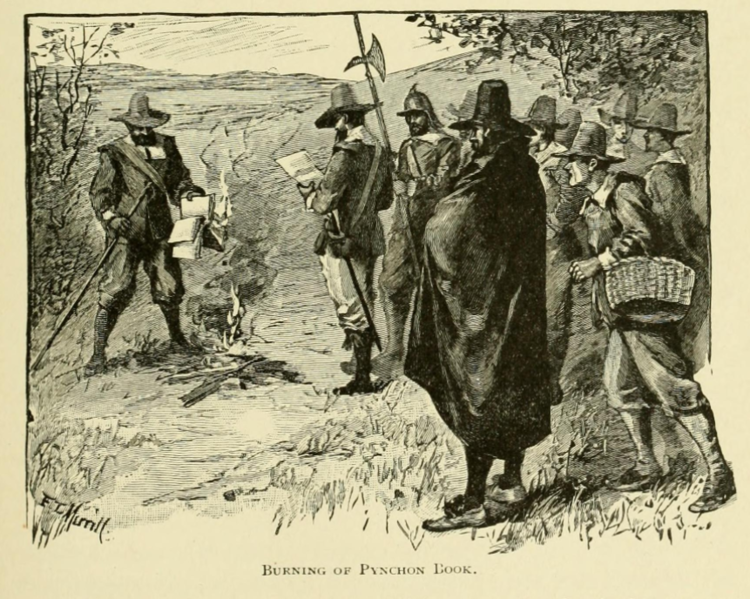
Portrayal of the burning of copies of William Pynchon’s book The Meritous Price of Our Redemption by early colonists of the Massachusetts Bay Colony, who saw his book as heresy; it was the first-ever banned book in the New World and only 4 original copies are known to survive today.
Engraving by F.T. Merrill in The History of Springfield for the Young by Charles Barrows, 1921.

In the last couple of weeks, as the purges of alleged racists have intensified in every sphere, and as so many corporations, associations, and all manner of civic institutions have openly pledged allegiance to anti-racism, with all the workshops, books, and lectures that come with it, I’m reminded of a Václav Havel essay, “The Power of the Powerless.”

It’s about the dilemma of living in a world where adherence to a particular ideology becomes mandatory. In Communist Czechoslovakia, this orthodoxy, with its tired slogans, and abuse of language, had to be enforced brutally by the state, its spies, and its informers. In America, of course, with the First Amendment, this is impossible. But perhaps for that very reason, Americans have always been good at policing uniformity by and among themselves. The puritanical streak of shaming and stigmatizing and threatening runs deep. This is the country of extraordinary political and cultural freedom, but it is also the country of religious fanaticism, moral panics, and crusades against vice. It’s the country of The Scarlet Letter and Prohibition and the Hollywood blacklist and the Lavender Scare. The kind of stifling, suffocating, and nerve-racking atmosphere that Havel evokes is chillingly recognizable in American history and increasingly in the American present.

The new orthodoxy — what the writer Wesley Yang has described as the “successor ideology” to liberalism — seems to be rooted in what journalist Wesley Lowery calls “moral clarity.” He told Times media columnist Ben Smith this week that journalism needs to be rebuilt around that moral clarity, which means ending its attempt to see all sides of a story, when there is only one, and dropping even an attempt at objectivity (however unattainable that ideal might be). And what is the foundational belief of such moral clarity? That America is systemically racist, and a white-supremacist project from the start, that, as Lowery put it in The Atlantic, “the justice system — in fact, the entire American experiment — was from its inception designed to perpetuate racial inequality.” (Wesley Lowery objected to this characterization of his beliefs — read his Twitter thread about it here.)

This is an argument that deserves to be aired openly in a liberal society, especially one with such racial terror and darkness in its past and inequality in the present. But it is an argument that equally deserves to be engaged, challenged, questioned, interrogated. There is truth in it, truth that it’s incumbent on us to understand more deeply and empathize with more thoroughly. But there is also an awful amount of truth it ignores or elides or simply denies.

It sees America as in its essence not about freedom but oppression. It argues, in fact, that all the ideals about individual liberty, religious freedom, limited government, and the equality of all human beings were always a falsehood to cover for and justify and entrench the enslavement of human beings under the fiction of race. It wasn’t that these values competed with the poison of slavery, and eventually overcame it, in an epic, bloody civil war whose casualties were overwhelmingly white. It’s that the liberal system is itself a form of white supremacy — which is why racial inequality endures and why liberalism’s core values and institutions cannot be reformed and can only be dismantled.

This view of the world certainly has “moral clarity.” What it lacks is moral complexity. No country can be so reduced to one single prism and damned because of it. American society has far more complexity and history has far more contingency than can be jammed into this rubric. No racial group is homogeneous, and every individual has agency. No one is entirely a victim or entirely privileged. And we are not defined by black and white any longer; we are home to every race and ethnicity, from Asia through Africa to Europe and South America.

Legends Summarized: The Journey To The West (Part VI)

Filed under: Books, China, History, Humour, Religion — Tags: , , , , — Nicholas @ 02:00

Overly Sarcastic Productions
Published 14 Dec 2018

JOURNEY TO THE WEST KAI, EPISODE 3: FAMILY FEUD!

Action! Excitement! Faces from the past! Kuan Yin discovers an exciting new acupuncture technique! Pigsy is unexpectedly skilled at CPR!

PATREON: https://www.patreon.com/user?u=4664797

MERCH LINKS:
Shirts – https://overlysarcasticproducts.threa…
All the other stuff – http://www.cafepress.com/OverlySarcas…

Find us on Twitter @OSPYouTube!

QotD: A thumbnail history of the English language

Filed under: Britain, France, History, Humour, Law, Quotations — Tags: , , , , , — Nicholas @ 01:00

Languages are anything but static. Some change very slowly, like French — which owes much of its ponderousness to a government department specifically tasked with rooting out heretic words that creep in from the outside. Other languages undergo periods of very rapid change — the English of Chaucer (late 1300s) would be very confusing to Shakespeare (late 1500s and early 1600s). Two hundred years seems like a long period of time, but in the history of an entire country, it’s a drop in the bucket.

English doesn’t just borrow words; it lifts whole phrases and grammatical ideas from other languages without so much as a by-your-leave. With the coming of the Saxons to Britain, Germanic languages crashed headlong into Brythonic and became Old English. Then the Vikings went for a multi-century beer run starting in the late 700s and left behind a bunch of Norse words, because who doesn’t invent a new language every time they go out carousing? In 1066, William the Bastard decided he didn’t like his name, and brought Norman French with him when he went to the town clerk’s office to have his name legally changed to William the Conqueror.

For the next two hundred years, the English upper classes spoke French and the lower classes spoke a zillion dialects of Middle English (travel was difficult for poor people, so regional variations survived). All legal business was done in French, which was often translated on the spot into Latin for the official records. A person couldn’t even submit a legal plea in English until 1362. But with the start of the Hundred Years’ War in 1337, Edward III decided that speaking French was très passé, and began encouraging English as a spoken and written language, with a little French thrown in, just to keep things interesting. And ever since, English has been debating how sophisticated it wants to be, while making rude gestures across the Channel at France and grumbling when the French sneer northwards.

Blake Smith, “A Brief History of English and Why it Matters”, Mad Genius Club, 2018-03-07.

« Newer PostsOlder Posts »

Powered by WordPress