More generally, though, do we have any historical evidence of groups whose alcohol consumption was documented with any confidence, to see how they fared?
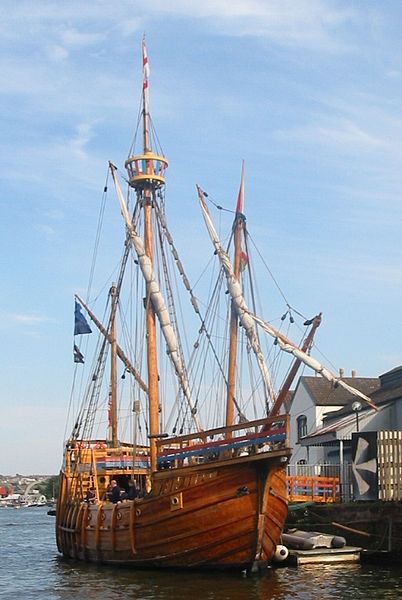
Actually, we do, at least as a floor: we know the quantity of the Royal Navy’s spirit ration, which until 1823 was based on half a pint of rum (284 millilitres in foreign) per man per day. We also know its minimum strength, since it was tested by trying to ignite gunpowder soaked in it: it had to be over 57% alcohol by volume (“proof strength”) to pass. That’s sixteen units of alcohol – not per week, but per day – or north of a hundred units a week, just for the issued ration before sailors bought any extra from the purser. (No wonder Jack Tar was jolly back in those days!)
But clearly, we would expect a body of men consuming such suicidally destructive quantities of booze to be physical wrecks, raddled by cirrhosis and disease? As Dr James Lind (he of the discovery that citrus fruits were a sovereign remedy for scurvy) put it,
It is an observation, I think, worthy of record that fourteen thousand persons, pent up in ships, should continue, for six or seven months, to enjoy a better state of health upon the watery element, than it can well be imagined so great a number of people would enjoy, on the most healthful spot of ground in the world.
(For context, around this point the Navy won the battle of Quiberon Bay, with twenty ships – who had less than one man sick per ship).
The ration was halved in 1823, and again in 1850, but for a hundred and twenty years until Black Tot Day in 1970, the Navy still issued nearly thirty units of alcohol a week to everyone on the lower deck (junior rates got theirs diluted, seniors got neat rum). Either folk were hardier back then, or Britannia managed to rule the waves and keep her sailors reasonably healthy despite being a pack of hopelessly addicted alcoholics.
Jason Lynch, “How Much Is ‘Too Much’?”, Continental Telegraph, 2018-05-08.
July 29, 2020
QotD: Grog in the Royal Navy
July 28, 2020
Roman kit: featuring armour, swords, spears, artillery, rations, deckchairs, and of course shoes
Lindybeige
Published 27 Jul 2020Go to https://expressvpn.com/lindybeige and find out how you can get three months free.
A video of re-enactors and their Roman kit. Sorry about the wind noise.
Support me on Patreon: https://www.patreon.com/Lindybeige
Here’s a link to the Ermine Street Guard – Britain’s foremost imperial Roman re-enactment group: http://www.erminestreetguard.co.uk
Was your re-enactment group featured? Ask for a link here!
Buy the music – the music played at the end of my videos is now available here: https://lindybeige.bandcamp.com/track…
Buy tat (merch):
https://outloudmerch.com/collections/…Lindybeige: a channel of archaeology, ancient and medieval warfare, rants, swing dance, travelogues, evolution, and whatever else occurs to me to make.
▼ Follow me…
Twitter: https://twitter.com/Lindybeige I may have some drivel to contribute to the Twittersphere, plus you get notice of uploads.
My website:
http://www.LloydianAspects.co.uk
Tank Chats #76 Tetrarch Tank | The Tank Museum
The Tank Museum
Published 31 May 2019Tetrarch tanks were flown over on D-Day, 6th June, 1944, for the invasion of France during WW2. Find out more with David Fletcher.
Originally adopted by the British Army as a light tank it became the first British airborne tank.
Many thanks to Vitaly Kuzmin for providing the image of the Tetrarch at Kubinka https://www.vitalykuzmin.netSupport the work of The Tank Museum on Patreon: ► https://www.patreon.com/tankmuseum
Visit The Tank Museum SHOP: ► https://tankmuseumshop.org/
Twitter: ► https://twitter.com/TankMuseum
Tiger Tank Blog: ► http://blog.tiger-tank.com/
Tank 100 First World War Centenary Blog: ► http://tank100.com/ #tankmuseum #tanks #DDay75 #tankchats
July 27, 2020
The Bronze Age Collapse (approximately 1200 B.C.E.)
Historia Civilis
Published 25 Jul 2020Just casually thinkin bout the end of the world. No, no reason, why?
Patreon | http://patreon.com/HistoriaCivilis
Donate | http://www.paypal.com/cgi-bin/webscr?…
Merch | teespring.com/stores/historiacivilis
Twitter | http://twitter.com/HistoriaCivilis
Website | http://historiacivilis.comSources:
The Medinet Habu Inscription | https://bit.ly/2Ba2Lvf
David O’Connor & Stephen Quirke, Mysterious Lands | https://amzn.to/3jdQOWu
—
Eric H. Cline, 1177 B.C.: The Year Civilization Collapsed | https://amzn.to/2ClWgpO
Robert Drews, The End of the Bronze Age: Changes in Warfare and the Catastrophe ca. 1200 B.C. | https://amzn.to/2CkJ7NC
Paul Kriwaczek, Babylon: Mesopotamia and the Birth of Civilization | https://amzn.to/2Wra8G4
Oliver Dickinson, The Aegean From Bronze Age to Iron Age: Continuity and Change Between the Twelfth and Eighth Centuries B.C. | https://amzn.to/3h8ar0rMusic:
“Mell’s Parade,” by Broke For Free
“Sad Cyclops,” by Podington Bear
“Infados,” by Kevin MacLeod
“Heliograph,” by Chris Zabriskie
“Deluge,” by Cellophane SamWe are a participant in the Amazon Services LLC Associates Program, an affiliate advertising program designed to provide a means for us to earn fees by linking to Amazon.com and affiliated sites.
From the comments:
ka v
1 day ago
I got Sea People Return in the December slot of my 2020 Apocalypse bingo card.
H.L. Mencken
In the latest Libertarian Enterprise, Eric Oppen (with whom I’ve had a few brief email conversations) discusses the work of the “Sage of Baltimore”:
I would say that, on the whole, Mencken is still quite readable and enjoyable, and many of his observations on the American scene are still as valid as when he made them. He has his weaknesses. He’s not much of an historian, which limits him when he takes up historical subjects. He never got over what he saw as the unfair treatment the German cause got in the American press between 1914 and the entry of the US into World War One. He also often identifies people as Jewish or black when it’s not really relevant to what he’s saying, but this was more a custom of his time than out-and-out bigotry. While he often has uncomplimentary things to say about Jews, and blacks, his greatest scorn is reserved for “the lintheads” — his term for the poor whites of the South. He regarded them as barely worthy of human status.
[…] his views on most subjects were quite compatible with libertarian positions. He was an inveterate opponent of government overreaching (which was behind a lot of his ferocious opposition to Prohibition) and while I don’t think he’d approve of drug use, he’d see our War on (Some Unpopular) Drugs as the assault on the Constitution that it is. While he was by no means hostile to blacks, and went out of his way to promote black writers (many of the figures in the “Harlem Renaissance” owed a lot to his support), he’d also denounce affirmative action and our current frenzy of “anti-racism” in scathing terms. His views on the Civil Rights Act of 1964 and how it has been turned into an alternate, and superior, Constitution would probably scorch the paint off the walls.
Mencken’s views on people’s private lives would have infuriated many of his contemporaries. While he disapproved of homosexuality, referring to it negatively in entries in his private diaries, he was by no means a howling “homophobe.” His writings on the travails of Oscar Wilde are very sympathetic to Wilde’s sufferings, which Mencken thought were wholly disproportionate to what he was known to have done. Mencken referred to Lord Alfred Douglas, in a review of Douglas’ book about Wilde, as a Tartuffe — that is to say, a posturing hypocrite.
Having been a reporter for years in Baltimore, back when reporters were very like the old film noir view of them, Mencken was very much a man of the world, and inclined to great tolerance on others’ sex lives. When he wrote of prostitutes, he refrained from the sort of pious moralizing that was expected in his time. He said that prostitutes often actively preferred their profession to other work available to them, and that most of them ended up respectably married. He kept his own love life very private, and was a faithful husband to his wife throughout their brief marriage, but he does mention, here and there, having had other lovers, whom he does not name even in writings designated to come to light only long after everybody involved was dead. By his own account in his Diary, he lost his virginity at age fourteen to a girl of his own age, who had already had other experiences before him. He felt that such experiences, unless pregnancy happened, did no one any harm.
While he was an atheist, Mencken had no particular hostility to religion per se, no matter what the Fundamentalists of his day thought. His book Treatise on the Gods makes interesting reading, although it is marred, in my view, by Mencken’s lack of knowledge of languages. He praises Christianity for having “the most gorgeous poetry,” but as far as I know, he could not read Hebrew, Aramaic or Greek, and was thinking in terms of the King James Bible and the Book of Common Prayer. However, the book is still worth reading, although a serious student of the subject would find it limited.
If you’ve been a regular visitor to the blog, you’ll know I have a huge regard for H.L. Mencken’s work and there are many Mencken quotes that have done duty as QotD entries over the years.
Food in Ancient Rome – Garum, Puls, Bread, and Moretum
SandRhoman History
Published 7 Jul 2019Food in ancient Rome – the cuisine of ancient Rome is probably not everybody’s cup of tea. Food in ancient Rome was consumed at the mensa, the dining table of the ancient Romans. A usual ancient Roman meal for the upper classes could look like this: puls, one of the main ancient Roman meals. This was essentially a form of porridge, along with that they might have eaten bread, refined with olives and figs. Bread was often eaten with moretum, a spread, made of sheep cheese, a lot of garlic and herbs. Most Roman meals would have been spiced with garum, a fermented fish sauce, to go along with such a meal, the Romans drank water or wine. Beer, called cervisia, in contrast would have been considered barbaric. The wine was usually diluted with water and sometimes spiced with herbs and vinegar. Water with vinegar was called posca, another variant was mulsum, wine spiced with honey.
Ancient Roman food had even more variety, but for now we just made the recipes below. We might make some more ancient Roman food in the future though.
Ancient Roman recipes:
First off: Put garum into everything. That’s actually what the Romans used, usually instead of salt and/or other condiments. [Consider it the ketchup of the ancient world.]
Garum recipe
– 1000 g small fish (sardines, anchovies or similar, fresh or frozen but uncooked)
– 500 g sea salt
– 2 1∕2 tbsp. dried oregano
– 1 tbsp. dried mint
– 1,5 litres water
– 5 tbsp. honey
Put everything in a pot and cook it until the fish falls apart (ca. 15 minutes). Pestle it with a spoon or similar and reduce this broth for at least 20 minutes. Then strain it, let it cool and strain it again. Additionally, you can pour it through a filter cone to refine the garum even further. Keep the garum in the fridge and throw it away if it gets dreggy.Moretum recipe
– 300 g of ricotta
– 100 g pecorino (or similar hard sheep cheese)
– 3 tbsp. white wine vinegar
– 3 tbsp. sea salt
– 3 cloves of garlic
– a bunch of thyme
– a bunch of rosemary
– a bunch of estragon [tarragon]
– a bunch of coriander
– garum
Press the garlic, grind the pecorino and stir all the ingredients until you get a consistent mass. Done!
Pro tip: You might want to be careful with the amount of salt and especially garlic you add. Three cloves make it very intense.Puls recipe
– 500 g rolled oats
– 1.5 litres of water
– 1 tbsp. olive oil
– 100 g pecorino (or similar hard sheep cheese)
– 1 onion
– 2 carrots
– 150 g mushrooms
– 100 g streaked pork
– garum
Chop all the vegetables and cut the pork into strips. Then roast it gently in a bit of olive oil and put it aside. Cook the rolled oats with some water and add continuously as it disperses until you get a porridge-like consistency. Then add the prepared vegetables and meat and fold in the ground pecorino.
If you want to stay somewhat authentic to the Roman recipe use white, violet or yellow carrots: orange ones weren’t known in the occident until the Middle Ages.Panis militaris castrensis (Roman bread) recipe
Ingredients for one loaf (4 – 6P):
– 500 g spelt flour (whole grain)
– ½ tsp. of salt
– olives
– figs
– 3 tbsp. olive oil
– 1 tsp. honey
– 3 dl water (hand-hot)
– 15 g yeast (or one package of dry yeast)Mix everything up and knead it for at least 15 minutes. Then let it rise for an hour in a bowl covered with a towel (preferably in a warm spot). Form a loaf, cut six pieces (halfway through) and bake it for 35 minutes at 180°C.
Pro tip: take big olives and lots of them because the whole grain flour will be so dense that they kind of disappear.
Those recipes are taken from a cookbook which has been written about 2,000 years ago. Taking this into account you should be rather careful applying these cooking techniques. We are not to be held responsible for any damage resulting, neither for smelly apartments, nor for health issues.
#food #ancientrome #history #ancienthistory #rome
Twitter: https://twitter.com/Sandrhoman
July 26, 2020
French War In Syria – British War Against The Iraqi Revolution I THE GREAT WAR 1920
The Great War
Published 25 Jul 2020Sign up for Curiosity Stream and get Nebula bundled in: https://curiositystream.com/thegreatwar
The French and British colonial powers had their own plans on how to rule the Middle East after the costly campaigns of World War 1. National self-determination for the different groups in Syria, Iraq, Palestine and Arabia were not part of these plans. And so in the summer of 1920 the situation in Iraq and Syria escalated and the French-Syrian War and the Iraqi Revolt broke out.
» SUPPORT THE CHANNEL
Patreon: https://www.patreon.com/thegreatwar» OUR PODCAST
https://realtimehistory.net/podcast – interviews with World War 1 historians and background info for the show.» BUY OUR SOURCES IN OUR AMAZON STORES
https://realtimehistory.net/amazon *
*Buying via this link supports The Great War (Affiliate-Link)» SOURCES
Kadhim, Abbas. Reclaiming Iraq: the 1920 revolution and the founding of the modern state (U of Texas Press, 2012).
Allawi, Ali. Faisal I of Iraq (Yale University Press, 2014).
Fromkin, David. A Peace to End All Peace (Macmillan, 2009 [1989]).
Naaman, Abdullah. Le Liban: histoire d’une nation inachevée.
Karsh, Efraim & Karsh, Inari. Empires of the Sand: The Struggle for Mastery in the Middle East 1789-1923, (Cambridge, MA : Harvard University Press, 1999)» MORE THE GREAT WAR
Website: https://realtimehistory.net
Instagram: https://instagram.com/the_great_war
Twitter: https://twitter.com/WW1_Series
Reddit: https://reddit.com/r/TheGreatWarChannel»CREDITS
Presented by: Jesse Alexander
Written by: Jesse Alexander
Director: Toni Steller & Florian Wittig
Director of Photography: Toni Steller
Sound: Toni Steller
Editing: Toni Steller
Motion Design: Philipp Appelt
Mixing, Mastering & Sound Design: http://above-zero.com
Maps: Daniel Kogosov (https://www.patreon.com/Zalezsky)
Research by: Jesse Alexander
Fact checking: Florian WittigChannel Design: Alexander Clark
Original Logo: David van StepholdContains licensed material by getty images
All rights reserved – Real Time History GmbH 2020
Hagia Sophia
Lars Brownworth (author of the excellent Lost to the West: The Forgotten Byzantine Empire That Rescued Western Civilization) on the building of the Hagia Sophia by Eastern Roman Emperor Justinian in Constantinople:

Illustration of the Hagia Sophia from European History: An outline of its development by George Burton Adams, 1899.
Wikimedia Commons
The Hagia Sophia was the brainchild of a unique figure in history. At birth, Justinian was a nobody among nobodies in a grindingly poor part of what is today North Macedonia. By his mid-40s, he was a Byzantine emperor. His appetites were large, his dreams larger. The man who knew what it was like to have nothing gave new meaning to the idea of luxury. For one memorable celebration, he spent almost two tons of gold on decorations.
Justinian had no time for small things. By the second year of his reign, he had decided to codify all of Roman law, founded several new cities, and had started construction on at least eight new churches.
The money for all these projects inevitably came from the public. And by the fifth year of his reign, his subjects had had enough. Already upset by rampant corruption, an inefficient bureaucracy, and crushing taxes, they hit the boiling point when Justinian severely restricted public games. A mob tore through the streets, overwhelming the unprepared police forces. Several stores were set on fire, and the wind quickly spread the flames to a nearby hospital, which burned down with its patients inside. An inferno raged. For five long days, Constantinople burned.
By the time Justinian reasserted control, more than 30,000 citizens were dead, and perhaps a third of the city was a blackened shell. It looked as if some barbarian horde had sacked the capital. The fact that its own people had inflicted such a wound hovered like a black cloud over the streets.
Characteristically, Justinian saw a perfect opportunity within the ashes. This was a blank canvas on which to create a new city in his image. The transformation would begin with the cathedral. The original building, known simply as the Magna Ecclesia — the Great Church — had been built by a son of Constantine the Great in the fourth century, but had burned down a few decades later. Since it was a standard Roman basilica — a large hall with square walls and angled wooden roof — it had been fairly easy to rebuild along the same lines.
But of course, Justinian had no intention of following the tired plans of an earlier age. This was a chance to remake the cathedral on a new scale, something worthy of the ages. It was to be nothing short of a revolution, equal parts art and architecture, the enduring grandeur of the emperor himself frozen in physical form.
Everything about this project was audacious, including his selection of architects. Instead of choosing a traditional builder, he picked two teachers who — like himself — had more vision than practical experience. This was a lifelong pattern with Justinian. He had a habit of plucking genius out of the common crush; his wife was a reformed prostitute, and his greatest generals were an elderly eunuch and a former bodyguard.
The emperor’s instructions to Isidore of Miletus, a physics teacher, and Anthemius of Tralles, a mathematician, should have terrified them. They merely had to design and successfully build a church unlike anything else the world had seen. Sheer scale wasn’t enough — the empire was full of grand monuments and immense sculpture. This had to be something different, something fitting for the new golden age that was dawning. Expense wasn’t an issue, but speed was. Justinian was already in his 50s, and he didn’t intend to have some successor apply the final coat of paint and claim the project as his own.
Gewehr 98: The German WWI Standard Rifle
Forgotten Weapons
Published 11 Jun 2016Sold at auction for $1,840 (w/ 5 other rifles).
The Gewehr 1898 was the product of a decade of bolt action repeating rifle improvements by the Mauser company, and would be the standard German infantry rifle through both World Wars. Today we are looking at a pre-WWI example (1905 production) that shows all the features of what a German soldier would have taken to war in 1914.
July 25, 2020
“The Ballad of Bull” Pt.2 – Combat Medics – Sabaton History 077 [Official]
Sabaton History
Published 24 Jul 2020Sometimes war is killing, sometimes war is saving lives.
In the first episode we have seen Leslie “Bull” Allen become a hero, not through the death of his enemies, but by saving his comrades’ lives. And there were others like him. Soldiers and medics, whose first duty it was to preserve lives during war, even when it meant endangering their own safety. Here are three short stories of men and women, who served as medics at the front line of the Second World War, and became heroes to their country.
Support Sabaton History on Patreon: https://www.patreon.com/sabatonhistory
Listen to “The Ballad of Bull” on the album Heroes:
CD: http://bit.ly/HeroesStore
Spotify: http://bit.ly/HeroesSpotify
Apple Music: http://bit.ly/HeroesAppleMusic
iTunes: http://bit.ly/HeroesiTunes
Amazon: http://bit.ly/HeroesAmz
Google Play: http://bit.ly/HeroesGooglePListen to Sabaton on Spotify: http://smarturl.it/SabatonSpotify
Official Sabaton Merchandise Shop: http://bit.ly/SabatonOfficialShopHosted by: Indy Neidell
Written by: Markus Linke and Indy Neidell
Directed by: Astrid Deinhard and Wieke Kapteijns
Produced by: Pär Sundström, Astrid Deinhard and Spartacus Olsson
Creative Producer: Joram Appel
Community Manager: Maria Kyhle
Executive Producers: Pär Sundström, Joakim Broden, Tomas Sunmo, Indy Neidell, Astrid Deinhard, and Spartacus Olsson
Post-Production Director: Wieke Kapteijns
Edited by: Iryna Dulka
Sound Editing by: Marek Kaminski
Maps by: Eastory – https://www.youtube.com/c/eastoryArchive by: Reuters/Screenocean https://www.screenocean.com
Music by SabatonColorizations:
– Olga Shirnina, a.k.a. Klimbim – https://klimbim2014.wordpress.com/Sources:
– Photos of Desmond Doss Courtesy of the Desmond Doss Council
– Frame vector created by milano83 – www.freepik.com
– Arkiv i Nordland
– P.Fisxo from WikimediaAn OnLion Entertainment GmbH and Raging Beaver Publishing AB co-Production.
© Raging Beaver Publishing AB, 2019 – all rights reserved.
From the comments:
Sabaton History
2 days ago
The medical staff in war — combat medics, field surgeons and nurses, ambulance drivers and medevac crews — are often the unsung heroes of war, literally and figuratively.That doesn’t mean that they don’t deserve to be remembered and their sacrifices honored. There are undoubtedly many instances of exceptional bravery among the medical staff of wars throughout history — for which they rightly should be praised. But they should also be remembered for their everyday work in trenches or field hospitals, in jungles and deserts, at sea or in mid-air. Treating a seemingly endless stream of incoming wounded, trying to give relief to those in pain, comfort to those in agony, and hope to to those who have lost theirs — day in and day out, for as long as the war will last.
If you missed part one of “The Ballad of Bull” you can see it right here.
Walter Duranty, Stalin’s tame “journalist”
Francis X. Maier makes the case that the Holodomor — the Soviet Union’s deliberate starvation of millions of its own people in Ukraine and surrounding regions — killed even more than the better-known Nazi Holocaust, then identifies one of the key apologists who lied serially and deliberately to hide the genocide:
[S.J.] Taylor’s 1990 article was timed to the release of Stalin’s Apologist, her withering biography of journalist Walter Duranty. A Pulitzer Prize winner, celebrated political analyst, and Moscow correspondent for the New York Times during the 1930s, Duranty interviewed Stalin twice. He also played a significant role in securing American diplomatic recognition for the Soviet regime. Less publicly, he was a prodigious womanizer, longtime opium buddy of Satanist Aleister Crowley, compulsive exploiter of friends, a spendthrift, occasional drunk, and an inventive, always-reliable flack for the Soviet regime.
One of Duranty’s lifelong memories involved his religious grandmother who, after catching the adolescent Duranty in a lie, had warned him that “liars go to hell.” He never forgot or forgave the correction. As an adult, he simply erased all family ties and falsely claimed in his autobiography that he’d been orphaned at age ten. Massaging the truth became one of his core skills. Brilliant, engaging, and widely respected at the time, he was, in the words of Malcolm Muggeridge, who also reported from Moscow and saw Duranty in action, “the greatest liar of any journalist I have met in 50 years of journalism.”
Committed to protecting his own influence and to a future “greater good” promised by the Soviet regime, Duranty at first dismissed rumors of the Ukrainian Famine. Then he downplayed them. Then he claimed that Ukraine’s “food shortages” were the result of local mismanagement and the work of “wreckers” and “spoilers” intent on undermining Soviet progress. He repeatedly denied the mass starvation in his reporting. But he did suggest that “you can’t make an omelet without breaking eggs” … especially when the omelet is the task of modernization, and the cooks are tough-minded Bolsheviks intent on a better tomorrow.
As Taylor notes in her book, Western powers struggling with the Great Depression and the rise of Hitler in Germany had little interest in rumors from Ukraine that might antagonize Stalin as a potential ally. Muggeridge had arrived in Russia in 1932 to string for the Manchester Guardian. A convinced socialist at the time, he intended to stay in Russia and renounce his British passport for Soviet citizenship. Reality interfered. By March 1933, he was reporting on Ukraine’s famine as “one of the most monstrous crimes in history,” and his disillusionment with the Soviet paradise was complete. But back in England, thanks in part to Duranty’s counter-reporting and Soviet propaganda, Muggeridge’s work was dismissed as “a hysterical tirade.” Muggeridge himself was slandered, vilified, and unable to find employment. And that might have buried the Holodomor story successfully, except for one man.
Welshman Gareth Jones was a young Russian Studies graduate of Cambridge and a former secretary to British Prime Minister Lloyd George. Stringing for the same Manchester Guardian as Muggeridge, he eluded Soviet press controls and spent three weeks on his own, walking through the hellish conditions of a starvation-ravaged Ukraine. Then he wrote about it in the spring of 1933, confirming and compounding the impact of Muggeridge’s recent work. Walter Duranty led the ferocious, Soviet-prodded attack on Jones’s credibility. He also bullied most other Moscow-based Western journalists — to their enduring disgrace — into doing the same, lest they lose their visas. Jones, however, had a spine. He did not back off. He continued writing and speaking about the famine in Ukraine with lasting effect, until his death under suspicious circumstances two years later.
July 24, 2020
Winston Churchill and the 1943 Bengal famine
Christopher Howarth on a recent BBC production that threw facts out the window in a rush to condemn British Prime Minister Winston Churchill for the famine in Bengal during 1943:

A 1945 map of Bengali districts as of 1943.
Famine Inquiry Commission (1945): Report on Bengal via Wikimedia Commons.
This argument was put forward by the BBC’s own Yogita Limaye, an Indian engineer and reporter on Women’s safety, based on the book Inglorious Empire by Shashi Tharoor, who was interviewed to give his opinion that Churchill was an “odious figure of reprehensible views and racist attitudes.”
No doubt the narrative of British evil and oppression is believed in India and elsewhere, but that does not make it true or worthy of the BBC reporting it as fact without any semblance of balance. The BBC failed its licence fee paying audience in two main regards, namely, conceptually and factually.
The British ruled India, one of the largest populations on earth, for well over two centuries. Good and bad things happened, just like everywhere else ever. You can join the dots to create whatever picture you like – Dr Tharoor chose the picture he wished to create. Why is the Bengal famine uniquely interesting to a BBC audience in 2020 over say a mini-series on British Railways and development in India? BBC presenters are demonstrably more interested in the first narrative: this is a major conceptual failing on their part. Being equal mixtures primitivism and solipsism. Always the borderline racist Western assumption is that “we” did things to “them”: we had agency, they were passive brutes. They are boring, we are endlessly interesting. Let’s talk about us. However even the slightest knowledge of the British-in-India teaches one that “we” did nothing without them. How on earth could we? There were famously few of us.
Yet it’s the second great BBC failing – over accuracy – which is so especially galling. On the actual allegation the BBC is plain wrong. Churchill was not responsible for the Bengal famine as any actual delving into the facts would have shown. Note well that they didn’t even try.
In 1943 Britain was at war with Japan, who were at the gates of India having occupied Burma, a major supplier of grain to Bengal. Important facts. Bengal was in the grips of a famine, nobody disputes that. But Churchill was not responsible, neither for the weather nor the agriculture nor the Japanese aggression.
Even the BBC did not allege that Churchill instigated the famine, the charge sheet is that he refused to help when he could. There were “stockpiles [of food] in the UK” and shipping which was retained in the northern hemisphere, prioritised for use there. Stockpiles of food in the UK in 1943? Even if there was the food and shipping, transporting US corned beef to Bengal would have been ludicrous. If there was shipping and protection from Japanese naval assault the food would have come from the rest of India. So why was food not transported from other parts of India to Bengal?
War Diplomats, Japanese/Soviet Neutrality, and why not Sweden? – WW2 – OOTF 015
World War Two
Published 23 Jul 2020What happened to Allied ambassadors? And how did Hitler react to the Soviet-Japanese Neutrality Pact? And why didn’t he invade Sweden? Once again, Indy is in the Chair of Infinite Knowledge answering all your exciting questions about World War Two!
Join us on Patreon: https://www.patreon.com/TimeGhostHistory
Or join The TimeGhost Army directly at: https://timeghost.tvFollow WW2 day by day on Instagram @World_war_two_realtime https://www.instagram.com/world_war_two_realtime
Between 2 Wars: https://www.youtube.com/playlist?list…
Source list: http://bit.ly/WW2sourcesHosted by: Indy Neidell
Written by: Rune Væver Hartvig
Director: Astrid Deinhard
Producers: Astrid Deinhard and Spartacus Olsson
Executive Producers: Astrid Deinhard, Indy Neidell, Spartacus Olsson, Bodo Rittenauer
Creative Producer: Joram Appel
Post-Production Director: Wieke Kapteijns
Research by: Rune Væver Hartvig
Edited by: Mikołaj Cackowski
Sound design: Marek Kamiński
Map animations: Eastory (https://www.youtube.com/c/eastory)Colorizations by:
Jaris Almazani (Artistic Man), https://instagram.com/artistic.man?ig…
Norman Stewart – https://oldtimesincolor.blogspot.com/
Daniel WeissSources:
Bundesarchiv
Narodowe Archiwum Cyfrowe
Portrait of Charles Howard Smith, courtesy National Portrait GallerySoundtracks from the Epidemic Sound:
Howard Harper-Barnes – “London”
Fabien Tell – “Other Sides of Glory”
Johannes Bornlof – “The Inspector 4”Archive by Screenocean/Reuters https://www.screenocean.com.
A TimeGhost chronological documentary produced by OnLion Entertainment GmbH.
QotD: A death in the Roman Empire
The women who came to tend the tomb in the garden had no doubt that their Lord was dead. They had personally arrayed his body in shining white vestments, and then, when all was ready, laid his physical remains to rest. Rejected as he had been by his own people, legally condemned as an enemy of Rome, brought to a squalid and ignominious end, his defeat had seemed total. What victory could there possibly be in the wake of such a death?
Yet then something miraculous happened. Spreading from east to west across the Mediterranean, travelling along the great network of roads and shipping lanes that constituted the arteries of the Roman Empire, news began to spread that this man whose mortal remains supposedly lay entombed in the grave had been seen alive. Most people, of course, scoffed at such reports — but there were some, small communities of believers, who did not. These, even as the decades passed, kept the faith: the conviction that their saviour would come again, that he would reign, in the words of a widely circulated prophecy, as “the king of Jerusalem”, that he would bring to groaning humanity a universal peace.
In the event, Nero did not come again. Despite the various imposters who appeared in the wake of his death in AD 68, and the fact that, centuries later, there were cities in the eastern reaches of the Roman Empire that still honoured his memory, his fate was to be commemorated, not as a saviour, but as a monster. And so, in numerous ways, he was. His readiness to have members of his own family — mother, brother, wife — put to death ensured that when he himself died the dynasty of the Caesars perished with him.
His sex games were notorious. He was darkly rumoured to have set fire to Rome. By the time that Suetonius, half a century after his death, came to write his biography, the details of his life could be structured almost entirely as a catalogue of deviancies and crimes. “Insolence, an uninhibited sexual appetite, dissipation, greed, cruelty: these were the vices which, to begin with — because he gave expression to them only secretly and incrementally — might well have been chalked up as the excesses of youth, had it not been manifest to everyone even at the time that they were failings, not of age, but of character.”
Nero’s rule had become one protracted blasphemy against the customs of the Roman state. These, hallowed by the centuries, enabled the people of a city that had conquered most of the known world to feel a sense of communion still with the mos maiorum: the customs of their distant ancestors. To no class of society was this more important than the Senate, which still, despite the collapse of Rome’s venerable republican order and its replacement by the autocracy of the Caesars, cherished its time-honoured role as the guardians of tradition.
Tom Holland, “When Christ conquered Caesar”, UnHerd, 2020-04-10.