
Atun-Shei Films
Published 28 Apr 2020Checkmate, Lincolnites! Debunking the Lost Cause myths that Abraham Lincoln was a tyrant, that nobody in the North cared about slavery or abolitionism, and that the warmongering Union invaded the South without provocation or just cause during the Civil War. Featuring some special guest appearances from your favorite kooky historical characters!
[Update, 8 Feb, 2023: Here’s a Vlogging Through History reaction video that amplifies several of the points Atun-Shei makes – https://www.youtube.com/watch?v=rTQzXG15QsU]
(more…)
April 13, 2021
Was it REALLY the WAR of NORTHERN AGGRESSION?!?!?!
Comments Off on Was it REALLY the WAR of NORTHERN AGGRESSION?!?!?!
QotD: The Hundred Years’ War and information velocity
One of the reasons the “Hundred Years’ War” lasted so long, they’ll tell you first off, was that it was punctuated by long periods of (relative) peace. Another was the inability of medieval militaries to conquer and hold territory — the feudal system really doesn’t work for garrisons. Most important, though, was the fact that the “countries” fighting were no such thing. In medieval parlance, “France” and “England” meant “the person of the monarch, plus his immediate feudal retinue.” Your average peasant might’ve been aware, in some vague theoretical way, that his lord’s lord’s lord owed homage to some guy called “Edward III” or “Jean II,” but unless ol’ Whatzisface was actually marching through with an army, it didn’t matter in the slightest. “France” was as abstract a notion as “Christendom” …
… at least in the early phases of the war. Low information velocity meant that even big changes at the top — the capture of the King at Poitiers, say — didn’t have much impact out in the sticks. By the time you found out about it, you’d been “subjects” of “England” for months, years, decades. Whatever, it didn’t matter, since the whole thing worked like loan sharking in Mob movies. Does it matter if it’s Rocco or Vito who’s collecting the vig this week? Maybe the Godfather got rubbed out, and now all the under-bosses from the Solozzo family report to the new capos of the Corleone family. None of that matters to you. All you know is, the new guy is going to break your legs if you don’t pay, same as the old guy would’ve done.
By the war’s later phases, though, the velocity of information had dramatically increased. Necessity is the mother of invention, and the French have always had a knack for cultural propaganda. Joan of Arc wasn’t worth much, militarily, but it’s one hell of a story, the kind that rallies troops. Nobody cares who the legal King of France is — that is, the guy whose name the lawyers finally hack out of the undergrowth of however-many family trees. The guy who is divinely anointed, though, by a prophet, in person? That’s a big deal. That’s the kind of story that spreads like lightning; the kind of story that makes “France” far more than just the name at the top of the org chart.
Moreover, the new guy — the divinely ordained guy — is competent. You can tell, because he’s winning. Your average feminist scholar knows as much about strategy as she does about heterosexuality, so we can ignore all their claims about Joan’s military genius. There are times when total incompetence is, in fact, a virtue, and this was one of them. Joan’s military strategy didn’t make any sense, because she wasn’t thinking in military terms — which is why it worked. Victory followed victory, until the English got wise … by which point it didn’t matter, because the Dauphin had been crowned as Charles VII and had solidified power behind him. In fact, you don’t have to be Machiavelli to see that Joan’s capture and execution by the English were all to Charles’s benefit — Charles gained a martyr to his cause, but only after Henry VI finally managed to beat a little girl. Information velocity guaranteed that both stories were all over France almost from the minute they happened.
Over in England, meanwhile, it was their turn to have an insane, incompetent king, and we know how that turned out. The point is, you can have a bad king. You can have a mad king. You can even have a bad, mad king and things can still work out ok — see Charles VI, who remained King of France for 42 years of the Hundred Years’ War despite believing he was made of glass — provided your mad, bad king reigns in a period of low information velocity. Not that things were hunky-dory in France from 1380-1422 — you know, Agincourt and all that — but the Charles VII who was anointed by God via Joan of Arc was the mad, bad guy’s direct lineal descendant. Charles VII’s main antagonist, Henry VI, was also a mad, bad king, and his successor, Henry Tudor … well, you know. I don’t think it’s an accident that the printing press was invented in the 1440s and made its first appearance in England in 1476, in the nastiest part of the Wars of the Roses.
Severian, “Crises”, Rotten Chestnuts, 2020-12-25.
Comments Off on QotD: The Hundred Years’ War and information velocity
April 12, 2021
The Constitution of the Spartans
Historia Civilis
Published 11 Sep 2017Patreon | http://historiacivilis.com/patreon
Donate | http://historiacivilis.com/donate
Merch | http://historiacivilis.com/merch
Mailing List | http://historiacivilis.com/mailinglist
Twitter | http://historiacivilis.com/twitter
Website | http://historiacivilis.comSources:
The Constitution of the Spartans, by Xenophon: http://amzn.to/2j7JXTB
The Moralia, by Plutarch: http://amzn.to/2gNMYHU
Parallel Lives: The Life of Lycurgus, by Plutarch: http://amzn.to/2xS29nI
Politics, by Aristotle: http://amzn.to/2wMq5ss
Rhetoric, by Aristotle: http://amzn.to/2xS3niO
Laws, by Plato: http://amzn.to/2wLpsiN
On the Republic, by Cicero: http://amzn.to/2j7Flgg
The Histories, by Herodotus: http://amzn.to/2xdH4a7
The Spartan Regime, by Paul A. Rahe: http://amzn.to/2vPmRqS
Property and Wealth in Classical Sparta, by Stephen Hodkinson: http://amzn.to/2xdV7MS
The Rise of Athens, by Anthony Everitt: http://amzn.to/2j69uMS
Persian Fire, by Tom Holland: http://amzn.to/2vPyCxEWe are a participant in the Amazon Services LLC Associates Program, an affiliate advertising program designed to provide a means for us to earn fees by linking to Amazon.com and affiliated sites.
Music:
“Air Hockey Saloon,” by Chris Zabriskie
“Candlepower,” by Chris Zabriskie
“CGI Snake,” by Chris Zabriskie
“Heliograph,” by Chris Zabriskie
“Hallon,” by Christian Bjoerklund
From the comments:
Temporary Fakename
3 years ago
You know, i thought the Roman political system was pretty odd and arcane. But the Spartans have a dual monarchy that has absolute power, except when it doesn’t, an elected Senate that is chosen partially randomly that can pass whatever the hell they want with a public assembly and punish kings, except when an all-male aristocracy decided no, a female aristocracy that is overwhelmingly rich but can’t vote, and a population so terrified of its own slaves that it ritually committed atrocities against them. Compared to that Roman politics look simple and elegant.
I found the presentation quite interesting and informative, but I felt that some discussion of the differences between the terrible plight of the Helots and the not-quite-free status of the Perioikoi was merited. I also felt that the final segment on the eventual decline of Sparta missed a major factor — Spartan military defeats in the Battle of Leuctra in 371 BC and the Battle of Mantinea in 362 BC — but reading down in the comments, I saw someone else had already brought this up:
xelena
2 years ago (edited)
This is a good video, but is missing a super important point at the end: The cause for the decline of Spartan power was its defeat by Epaminondas of Thebes and his freeing of Messenia (the land of the Helots). He also founded Messene in Messenia and Megalopolis in Arcadia for the Helots, which became a powerful check to Sparta. Spartan power never recovered from this death blow to its slave economy and continued to wither away into the nothingness you describe.Epaminondas is mostly forgotten today, but he was one of the greatest men of antiquity. It was him and Pelopidas who put to bed the myth of Spartan invincibility and freed an entire people who had been enslaved for centuries. So in a way, the crippling blow did come from other Greeks, and the Helots did participate in it.
Comments Off on The Constitution of the Spartans
“War Communism” in the Soviet Union, 1917-1921
J.W. Rich outlines the economic and humanitarian disaster of Soviet “War Communism” that eventually forced Lenin to bring back some limited elements of capitalism to save the country:
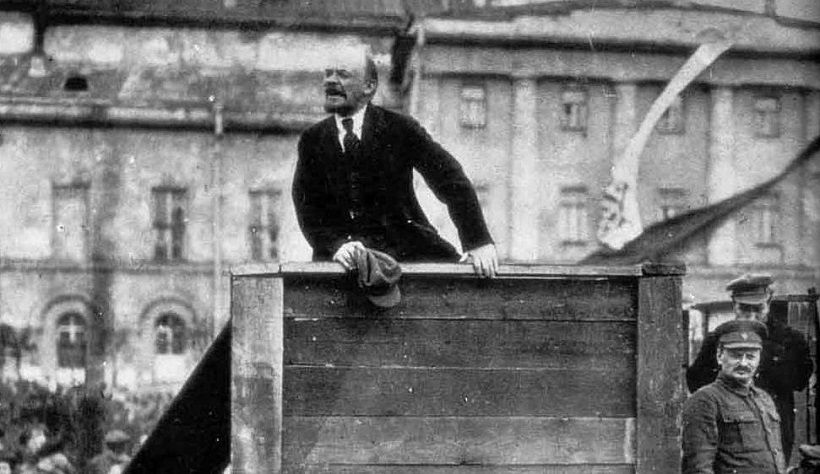
In 1917, the Bolsheviks seized power in Moscow after the deposition of the democratic provisional government which had replaced the Tsar. However, the Bolsheviks’ hold on power was far from secure. There was little affection anywhere for the Tsar, but there was no agreement on what form of government should replace the monarchy. Bolshevism had been on the rise for years, but ideas of democracy and liberalism were gaining popularity as well. Shortly after the 1917 revolution, the Russian Civil War broke out between the Reds, the Bolsheviks, and the Whites, a coalition of anti-Bolsheviks that were generally democratic.
Through the course of the civil war, the Bolsheviks gained more power and control over increasingly large amounts of Russia. With this control, they began to implement their Marxist economic ideas into reality. On January 28, 1918, it was decreed that all factories should be directed by state-appointed managers. In effect, this amounted to a near-complete nationalization of industry. In one fell swoop, the vast majority of the production of Russia’s consumer goods was now under the purview and direction of the state.
On May 9, 1918, a grain monopoly was announced over grain production in the country. All grain harvested across the country was now the property of the state. This was extended even further when a general food levy was announced in January 1919. Any and all food was now the property of the state. In addition, local farm authorities were no longer allowed to set the levy based on harvest estimates. In essence, the state would take however much it wanted from the peasants without any concern if they had enough food to feed themselves and their families.
It was at this point that large-scale forced rationing was introduced. Money was made worthless overnight as ration cards were mandated to the entire population. No longer could you buy whatever you wished with the money you had. The goods allocated for you were predetermined on your ration card.
By late 1920, going into 1921, the Russian Civil War was all but over. The Whites had been soundly defeated by the Reds, giving the Bolsheviks control of nearly the entirety of the country. However, despite the victory in the Civil War, the economy at home was beginning to fall apart. Industrial production was at 20% of pre-war levels by 1920. As a result of this lagging production, there were few goods in the cities available. This resulted in a flight from the cities to the countryside. From 1918 to 1920, eight million people emigrated from the cities to the villages, where there was better hope of finding food or some goods. In Moscow and Petrograd, the population declined by 58.2%
The agricultural situation was not much better. Sheldon Richman records that from 1909-1913, gross agricultural output averaged 69 million tons. By 1921, it was just 31 million. From 1909-1913, sown area was over 224 million acres. In 1921, only 158 million acres were sown. This lack of food resulted in a mass loss of population. From 1917 to 1922, the entire population declined by 16 million, not counting immigration and deaths from the civil war.
War Communism was now fully implemented and the Marxist aspirations of Lenin and the Bolsheviks were now fulfilled. For the people that had to live under War Communism, however, the conditions had become intolerable. In February 1921, labor strikes began to emerge all over Russia. With the end of the civil war and living standards continuing to fall, resistance to the Bolsheviks began to spread throughout the country. Moscow was the first city to strike, with other large cities, such as Petrograd, following. The protestors demanded an end to War Communism and a restoration of private enterprise and civil liberties, such as the freedom of speech and assembly.
The protests escalated when the Kronstadt Naval Base mutinied against the government. Once a bastion of Bolshevik support and fervor, the sailors joined with the laborers in demanding reform and change. A force led by Trotsky was dispatched to deal with the mutiny, but Lenin knew that change was needed. The writing was on the wall for War Communism.
Comments Off on “War Communism” in the Soviet Union, 1917-1921
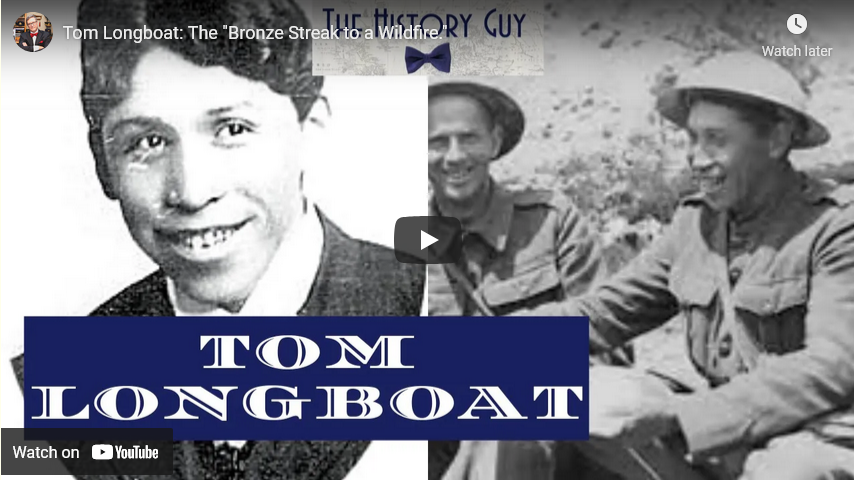
Tom Longboat: The “Bronze Streak to a Wildfire”
The History Guy: History Deserves to Be Remembered
Published 6 May 2019Tom Longboat has been called Canada’s first professional athlete. But amid his setting records and gaining accolades, he served his country in the Great War and fought discrimination. His life is history that deserves to be remembered.
This is original content based on research by The History Guy. Images in the Public Domain are carefully selected and provide illustration. As images of actual events are sometimes not available, images of similar objects and events are used for illustration.
All events are portrayed in historical context and for educational purposes. No images or content are primarily intended to shock and disgust. Those who do not learn from history are doomed to repeat it. Non censuram.
Patreon: https://www.patreon.com/TheHistoryGuy
The History Guy: History Deserves to Be Remembered is the place to find short snippets of forgotten history from five to fifteen minutes long. If you like history too, this is the channel for you.
Awesome The History Guy merchandise is available at:
teespring.com/stores/the-history-guyScript by HCW
#wwi #thehistoryguy #canada
Comments Off on Tom Longboat: The “Bronze Streak to a Wildfire”
April 11, 2021
America Surrenders – The Fall of Bataan – 137 – April 10, 1942
World War Two
Published 10 Apr 2021After holding out since the beginning of the year, the American and Filipino defenders at Bataan can do so no more, and they surrender to the Japanese — the Bataan Death March for the 75,000 prisoners begins. Meanwhile, the Japanese carrier fleet launches a raid on Colombo and shipping in the Bay of Bengal, wrecking Britain’s Eastern Fleet in the process and forcing them to move to African coastal bases. Adolf Hitler issues the directive outlining his plans for a summer offensive against the USSR that aim south toward the Caucasus.
Join us on Patreon: https://www.patreon.com/TimeGhostHistory
Or join The TimeGhost Army directly at: https://timeghost.tvCheck out Indy’s Tie Barn to get your own tie right here: https://www.youtube.com/c/IndysTieBar…
Follow WW2 day by day on Instagram @ww2_day_by_day – https://www.instagram.com/ww2_day_by_day
Between 2 Wars: https://www.youtube.com/playlist?list…
Source list: http://bit.ly/WW2sourcesWritten and Hosted by: Indy Neidell
Director: Astrid Deinhard
Producers: Astrid Deinhard and Spartacus Olsson
Executive Producers: Astrid Deinhard, Indy Neidell, Spartacus Olsson, Bodo Rittenauer
Creative Producer: Maria Kyhle
Post-Production Director: Wieke Kapteijns
Research by: Indy Neidell
Edited by: Iryna Dulka
Sound design: Marek Kamiński
Map animations: Eastory (https://www.youtube.com/c/eastory)Colorizations by:
– Mikołaj Uchman
– Daniel Weiss
– Norman Stewart – https://oldtimesincolor.blogspot.com/Sources:
– IWM A 25477, A 10499Soundtracks from Epidemic Sound:
– Rannar Sillard – Easy Target
– Jo Wandrini – Dragon King
– Farrell Wooten – Duels
– Andreas Jamsheree – Guilty Shadows 4
– Howard Harper-Barnes- Underlying Truth
– Johan Hynynen – Dark Beginning
– Gunnar Johnsen – Not Safe Yet
– Flouw – A Far Cry
– Brightarm Orchestra – On the Edge of ChangeArchive by Screenocean/Reuters https://www.screenocean.com.
A TimeGhost chronological documentary produced by OnLion Entertainment GmbH.
Comments Off on America Surrenders – The Fall of Bataan – 137 – April 10, 1942
HMCS Warrior (R31) – Colossus-class Light Aircraft Carrier
canmildoc
Published 30 Mar 2013HMS Warrior (R31) was a Colossus-class light aircraft carrier which served in the Royal Canadian Navy from 1946 to 1948 (as HMCS Warrior). She was transferred to the Royal Canadian Navy, commissioned as HMCS Warrior and placed under the command of Captain Frank Houghton. She entered Halifax harbour on 31 March 1946, a week after leaving Portsmouth. She was escorted by the destroyer HMCS Micmac and the minesweeper HMCS Middlesex. The RCN experienced problems with the unheated equipment during operations in cold North Atlantic waters off eastern Canada during 1947. The RCN deemed her unfit for service and, rather than retrofit her with equipment heaters, made arrangements with the Royal Navy to trade her for a more suitable aircraft carrier of the Majestic class which became HMCS Magnificent (CVL 21) on commissioning. [Original text from Wikipedia]
Tags: Colossus Class Light Aircraft Carrier, HMCS Warrior, HMCS, RCN, Royal Canadian Navy, aircraft carrier, CV, Halifax
From the Wikipedia description of HMCS Warrior:
Warrior was a Colossus-class light aircraft carrier that was 630 feet 0 inches (192.0 m) long between perpendiculars and 695 feet 0 inches (211.8 m) overall with a beam at the waterline of 80 feet 0 inches (24.4 m) and an overall width of 112 feet 6 inches (34.3 m). The ship had a mean draught of 23 feet 3 inches (7.1 m). Warrior had a standard displacement of 13,350 long tons (13,560 t) when built and a full load displacement of 18,300 long tons (18,600 t). The aircraft carrier had a flight deck 690 feet 0 inches (210.3 m) long that was 80 feet 0 inches (24.4 m) wide and was 39 feet 0 inches (11.9 m) above the water. The flight deck tapered to 45 feet (14 m) at the bow. For takeoffs, the flight deck was equipped with one BH 3 aircraft catapult capable of launching 16,000-pound (7,257 kg) aircraft at 66 knots (122 km/h). For landings, the ship was fitted with 10 arrestor wires capable of stopping a 15,000-pound (6,804 kg) aircraft, with two safety barriers rated at stopping a 15,000-pound aircraft at 40 knots (74 km/h). Warrior had two aircraft elevators located along the centreline of the ship that were 45 by 34 feet (13.7 by 10.4 m) and could handle aircraft up to 15,000 pounds on a 36-second cycle. The aircraft hangar was 275 by 52 feet (83.8 by 15.8 m) with a further 57 by 52 feet (17.4 by 15.8 m) section beyond the aft elevator, all with a clearance of 17 feet 6 inches (5.3 m). The hangar was divided into four sections by asbestos fire curtains. The hangar was fully enclosed and could only be entered by air locks and the lifts, due to the hazardous nature of aviation fuel and oil vapours. The vessel had stowage for 98,600 Imperial gallons (448,244 l; 118,414 US gal) of aviation fuel.
The ship was powered by steam created by four Admiralty 3-drum type boilers driving two Parsons geared turbines, each turning one shaft. The machinery was split into two spaces, each containing two boilers and one turbine, separated by 24-foot (7.3 m) spaces containing aviation fuel. The spaces were situated en echelon within the ship to prevent a single disabling torpedo strike. The engines were rated at 42,000 shaft horsepower (31,319 kW) and the vessel had a capacity for 3,196 long tons (3,247 t) of fuel oil, with an range of 8,300 nautical miles (15,372 km) at 20 knots (37 km/h). The ship’s maximum speed was 25 knots (46 km/h). There was no armour aboard the vessel save for mantlets around the torpedo storage area. There were no longitudinal bulkheads, but the transverse bulkheads were designed to allow the ship to survive two complete sections of the ship being flooded.
Warrior was designed to handle up to 42 aircraft. The aircraft carrier carried a wide range of ordnance for their aircraft from torpedoes, depth charges, bombs, 20 mm cannon ammunition and flares. For anti-aircraft defence, the aircraft carrier was initially armed with four twin-mounted and twenty single-mounted 40 mm Bofors guns. The original radar installation included the Type 79 and Type 281 long-range air search radars, the Type 293 and Type 277 fighter direction radar and the “YE” aircraft homing beacon. The ship had a maximum ship’s company of 1,300, which was reduced in peacetime.
After service with the RCN, Warrior was returned to the Royal Navy, and subsequently sold to Argentina, entering service as ARA Independencia until 1971 when she was struck from the Argentinian navy list and scrapped.
Comments Off on HMCS Warrior (R31) – Colossus-class Light Aircraft Carrier
April 10, 2021
The monarchy is a weird anachronism from our history … but it’s better than any likely replacement
I’m a very soft monarchist myself, largely for the same reasons that The Line articulates here:
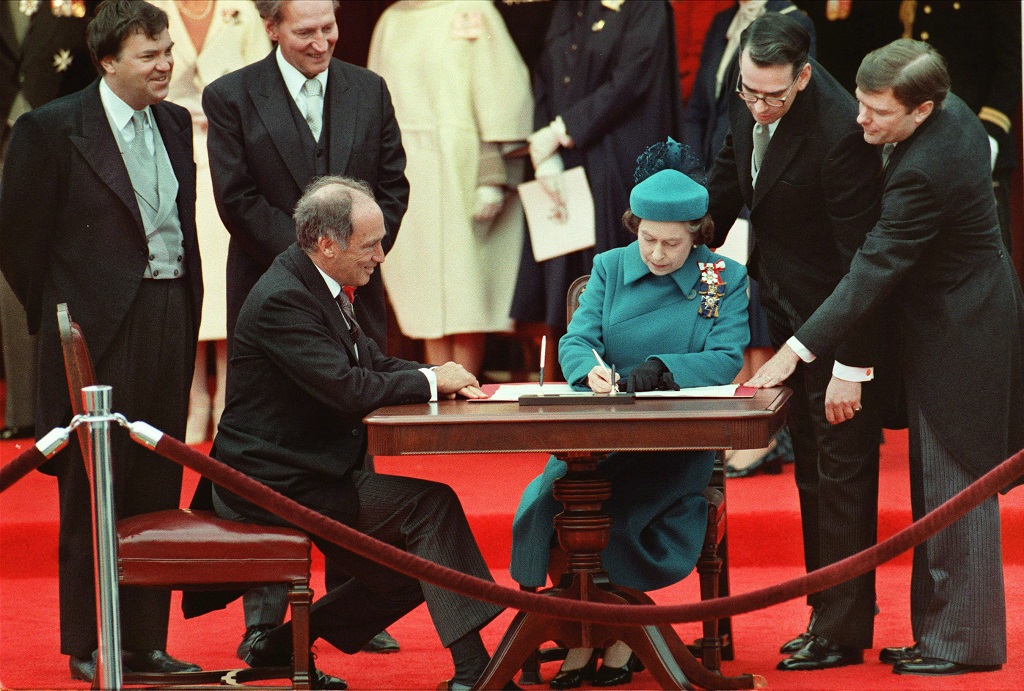
Queen Elizabeth II signs Canada’s constitutional proclamation in Ottawa on April 17, 1982 as Prime Minister Pierre Trudeau looks on.
THE CANADIAN PRESS/Stf-Ron Poling
A little more seriously, though your Line editors wouldn’t describe themselves as ardent monarchists, we do believe that we shouldn’t invest much time and energy into trying to fix what ain’t broke. Canada’s system of government doesn’t always deliver optimal outcomes — we mean, look around, folks — but it is stable, reliable and proven. Given our track record at big new policies, those are three things we have absolutely zero confidence any successor system to the monarchy would be, even in the fantastically unlikely chance we could design and implement one.
Is it weird putting a ton of our reserve powers and our very sovereignty inside the living essence of an old woman on an island across the ocean? Yes. Does it work? Also yes. Would we botch any effort to replace said old lady with literally any other system? A resolute yes. The monarchy is weird, and it’s not how we’d design Canada if we were starting Canada from scratch today, but it works, folks, and these days, there’s not much else we can say that about. Further, it’s hard not to like Her Majesty. Our thoughts are with her today. Whatever your qualms with royalty or the royals may be, surely you can spare a thought to a woman who lost her husband … oh, who are we kidding? Lots of people can’t or won’t.
Miscellaneous Myths: Loki
Overly Sarcastic Productions
Published 9 Apr 2021I started researching this goddamn video in june of 2019. I was so young. So innocent. This video is a precious relic of The Before Times, and unlike those inconsiderate vikings, I went out of my way to take *actual notes!*
Our content is intended for teenage audiences and up.
PARTIAL TRACKLIST: Starfall, Hall Of The Mountain King, Sky Becomes Water, Flight Of The Silverbird, Lacrimosa, Reign Of Vengeance, He Who Brings The Night
“Scheming Weasel” Kevin MacLeod (incompetech.com)
Licensed under Creative Commons: By Attribution 3.0
http://creativecommons.org/licenses/b…“Elevator” Kevin MacLeod (incompetech.com)
Licensed under Creative Commons: By Attribution 3.0
http://creativecommons.org/licenses/b…PATREON: https://www.Patreon.com/OSP
PODCAST: https://overlysarcasticpodcast.transi…
DISCORD: https://discord.gg/osp
MERCH LINKS: http://rdbl.co/osp
OUR WEBSITE: https://www.OverlySarcasticProductions.com
Find us on Twitter https://www.Twitter.com/OSPYouTube
Find us on Reddit https://www.Reddit.com/r/OSP/
Comments Off on Miscellaneous Myths: Loki
Galen of Pergamon
Scott Alexander asked some of his readers to submit book reviews that he’ll be publishing anonymously to allow the rest of the readership to vote on. Friday’s submission was a review of the work of Galen of Pergamon … to help determine if he deserves all the kicks he’s received from other writers over the last two millennia:
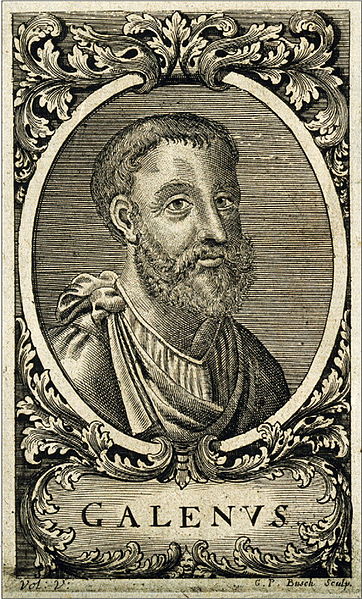
Portrait of Galen from The Lancet.
Engraving by Georg Paul Busch via Wikimedia Commons.
Aelius Galenus or Claudius Galenus (henceforth “Galen”) was born in Pergamon, a town in modern-day Turkey, in 129 CE. At the time, it was a part of the Roman empire, and a major intellectual center. Galen’s father was an architect; while rich, he was not considered to be particularly high status. Since there was little pressure for his son to go into a traditional career, instead of the “safe” subjects of literature and rhetoric that most Romans studied, Galen got an unusual education in mathematics and geometry.
(His father’s patient encouragement has its foil in his mother, who “flew into rages and bit her servants, a practice of which Galen disapproved.”)
When Galen was a teenager, however, his father had a dream where the god of medicine appeared and told him that his son should study medicine, so Galen started training as a doctor.
During this training Galen became familiar with the writings of Hippocrates, who had lived about 600 years earlier. Hippocrates had introduced the idea of the four humors to medicine — four fluids that congeal together to form our flesh and organs, and which co-mingle in our veins in their liquid form. Hippocrates came up with this system, but Galen would be the one to make it world-famous.
I could try to describe the theory myself, but actually Hippocrates does a great job on his own:
The Human body contains blood, phlegm, yellow bile and black bile. These are the things that make up its constitution and cause its pains and health. Health is primarily that state in which these constituent substances are in the correct proportion to each other, both in strength and quantity, and are well mixed. Pain occurs when one of the substances presents either a deficiency or an excess, or is separated in the body and not mixed with others.
All disease and illness, in this system, were the result of an imbalance in the four humors. From this perspective, treatments like bloodletting make perfect sense. By opening up the veins, the excessive humors drain away, leaving the patient more balanced — in better humors.
Long-term trends towards any of the humors were responsible for what we would call personality. Hence the terms sanguine, phlegmatic, melancholy and so on for different personal traits and emotional conditions.
This is the theory that he would put his weight behind, and which he would eventually be responsible for bringing to the majority of the western world.
When Galen was 19, his father died, leaving him independently wealthy. Hippocrates wrote that a good doctor should travel, so Galen ended up spending a decade studying with medical experts from various schools in cities all around the Mediterranean, including Alexandria.
After this, he came back to Pergamon where he got a job as the doctor treating the gladiators of the city. This was an unusual step for someone of his wealth and education, because despite their popularity as a form of entertainment, gladiators at the time were considered extremely low-class.
It’s not clear why he took this job, but it seems likely that it influenced how he thought about medicine. Spending long hours stitching gladiators back together gave him a detailed knowledge of human anatomy, which other doctors of the time lacked. It sounds like he did a great job, too, because only five of the gladiators died during his time there — compared to 60 under the guy who had the job before.
Eventually all roads lead to Rome, of course, and Galen arrived in 162 CE. His lectures and demonstrations made such an impression, and ruffled so many feathers, that he was afraid of getting poisoned by the Roman doctors and eventually left to save his life. In 169 CE, however, a great plague (probably smallpox) broke out, and Marcus Aurelius summoned him back to Rome to serve as court physician. Marcus Aurelius died the next year (according to some sources, of the plague), but Galen ended up with a longterm post in Rome as physician to the new Emperor, Commodus.
Galen himself died some time between 199 and 216 CE, at the the ripe old age of between 70 and 87.
Comments Off on Galen of Pergamon
Britain’s Only Repeating Enfield Trainer: the No7 Mk I
Forgotten Weapons
Published 12 Jun 2018http://www.forgottenweapons.com/brita…
http://www.patreon.com/ForgottenWeapons
Cool Forgotten Weapons merch! http://shop.bbtv.com/collections/forg…
Developed by BSA immediately after World War Two, the No7 MkI training rifle was the only one of the British Enfield trainers to use a magazine. Only 2500 of these rifles were produced, contracted by the Royal Air Force and delivered in 1948. Their magazine is a commercial BSA 5-round magazine modified slightly to latch into a housing inside a regular No4 Enfield magazine body. This makes them a particularly enjoyable rifle for range shooting, as well as one of the scarcest of the standard British trainers.Note that Canada also developed and adopted a No7 MkI .22 rimfire trainer, but that type is a single shot design, and does not share any parts with the British No7 MkI.
If you enjoy Forgotten Weapons, check out its sister channel, InRangeTV! http://www.youtube.com/InRangeTVShow
Contact:
Forgotten Weapons
6281 N Oracle #36270
Tucson, AZ 85704

Comments Off on Britain’s Only Repeating Enfield Trainer: the No7 Mk I
QotD: “Too proud to fight”
Woodrow Wilson, speech in Philadelphia, 1915-05.
Comments Off on QotD: “Too proud to fight”
April 9, 2021
Leading the Resistance – WW2 – Gallery 03
World War Two
Published 8 Apr 2021Under the violent occupation by Axis forces, dozens all over the globe resisted or took up arms to fight for the survival of their nation, ethnicity, ideology or ideals.
Join us on Patreon: https://www.patreon.com/TimeGhostHistory
Or join The TimeGhost Army directly at: https://timeghost.tvFollow WW2 day by day on Instagram @ww2_day_by_day – https://www.instagram.com/ww2_day_by_day
Between 2 Wars: https://www.youtube.com/playlist?list…
Source list: http://bit.ly/WW2sourcesHosted by: Spartacus Olsson
Written by: Spartacus Olsson and Joram Appel
Director: Astrid Deinhard
Producers: Astrid Deinhard and Spartacus Olsson
Executive Producers: Astrid Deinhard, Indy Neidell, Spartacus Olsson, Bodo Rittenauer
Creative Producer: Maria Kyhle
Post-Production Director: Wieke Kapteijns
Research by: Joram Appel
Edited by: Miki Cackowski
Sound design: Marek Kamiński
Map animations: Eastory (https://www.youtube.com/c/eastory)Colorizations by:
Mikołaj Uchman
Dememorabilia – https://www.instagram.com/dememorabilia/Sources:
Marxist Internet Archive
Picture of Tito during a Partisan gathering, courtesy of Музеј Старе Херцеговине
Yad Vashem 75FO4, 4613/899, 4248/20, 1605/91
Bundesarchiv
USHMM
IWM NA 15129Soundtracks from the Epidemic Sound:
Phoenix Tail – “At the Front”
Reynard Seidel – “Deflection”
Hakan Eriksson – “Epic Adventure Theme 4”
Johannes Bornlof – “The Inspector 4”
Fabien Tell – “Last Point of Safe Return”
Howard Harper-Barnes – “London”
Rannar Sillard – “March Of The Brave 10”Archive by Screenocean/Reuters https://www.screenocean.com.
A TimeGhost chronological documentary produced by OnLion Entertainment GmbH.
Comments Off on Leading the Resistance – WW2 – Gallery 03
April 8, 2021
Vladimir Lenin and the Communist War On Religion | B2W: ZEITGEIST! I E.15 – Spring 1922
TimeGhost History
Published 7 Apr 2021Vladimir Lenin founded the Bolshevik Party, orchestrated the October Revolution, and led the world’s first communist state to victory in the Russian Civil War. He is now gravely ill and close to death, but he still has one more enemy he wants to crush.
Join us on Patreon: https://www.patreon.com/TimeGhostHistory
Hosted by: Indy Neidell
Written by: Francis van Berkel
Director: Astrid Deinhard
Producers: Astrid Deinhard and Spartacus Olsson
Executive Producers: Astrid Deinhard, Indy Neidell, Spartacus Olsson, Bodo Rittenauer
Creative Producer: Maria Kyhle
Post-Production Director: Wieke Kapteijns
Research by: Francis van Berkel and Lewis Braithwaite
Image Research by: Daniel Weiss
Edited by: Daniel Weiss
Sound design: Marek KamińskiColorizations:
Daniel Weiss – https://www.facebook.com/TheYankeeCol…Sources:
Painting of Tikhon by Moskvitin Philip
Photos from Color by Klimbim
Bundesarchiv_Bild – 183-R14433 (Vertrag von Rapallo)Soundtracks from Epidemic Sound
– “One More for the Road” – Golden Age Radio
– “Not Safe Yet” – Gunnar Johnsen
– “Dark Shadow” – Etienne Roussel
– “Explaining Gravity” – Silver Maple
– “Far Far Far” – Hector Posser
– “Dawn Of Civilization” – Jo Wandrini
– “Ominous” – Philip Ayers
– “Walk With Legends” – Bonnie Grace
– “What Now” – Golden Age Radio
– “Weapon of Choice” – Fabien TellArchive by Screenocean/Reuters https://www.screenocean.com.
A TimeGhost chronological documentary produced by OnLion Entertainment GmbH.
From the comments:
TimeGhost History
2 days ago (edited)
The Russian Orthodox Church was once an all-mighty institution throughout what was the Russian Empire. But now in a matter of years, it has been completely swept aside by the new Soviet government in the name of progress and reason. This is just one — particularly violent — example of what has been a common theme of this era: the conflict between religion and modernity.It has already come a few times in the series and will continue to do so, but it’s not always a story of retreating faith like it is in this episode. As you will see in later episodes, organized religion often fights back against modernity and even sometimes tries to accommodate it. You’ll have to stay tuned to find out exactly why.

Comments Off on Vladimir Lenin and the Communist War On Religion | B2W: ZEITGEIST! I E.15 – Spring 1922
Fallen Flag — the Duluth, Missabe & Iron Range Railway
The Merritt family of Minnesota (known as the “Seven Iron Brothers“) discovered a large iron ore deposit in the Mesabi Range and created the largest iron ore mine in the world (as of the 1890s) and tried to persuade the DMN to build a 70-mile rail connection to get their ore to harbour and out to the iron and steel foundries around the Great Lakes. The DMN was unwilling to commit, so the Merritt family borrowed money to build the line from, among other financiers, John D. Rockefeller. The line — called the Duluth, Missabe and Northern — got built and began operations in 1892, but the Merritts expanded too quickly at the wrong moment — the financial panic of 1893 — losing financial control and leaving ownership of both the mine and the railway in Rockefeller’s hands by 1894.
Charlemagne Tower sold the Duluth & Iron Range to Illinois Steel in 1887, which was succeeded by Federal Steel, then U.S. Steel. By 1901, both the D&IR and DM&N were under U.S. Steel control. USS upgraded both railroads with heavy rail and double track, ordered bigger locomotives and larger cars, and built sizeable shops and roundhouses at Proctor and Two Harbors.
In 1915 DM&N leased the Spirit Lake Transfer Railway, a link between DM&N at Adolph, near Proctor, and the Interstate Transfer Railway at Oliver, Wis., across from Steelton, Minn. The Interstate Transfer ran from Oliver to Itasca, in eastern Superior, giving the DM&N connections with large railroads including Northern Pacific, Chicago & North Western’s “Omaha Road”, and three members of the Canadian Pacific family: Minneapolis, St. Paul & Sault Ste. Marie (“Soo Line”); Wisconsin Central; and Duluth, South Shore & Atlantic.
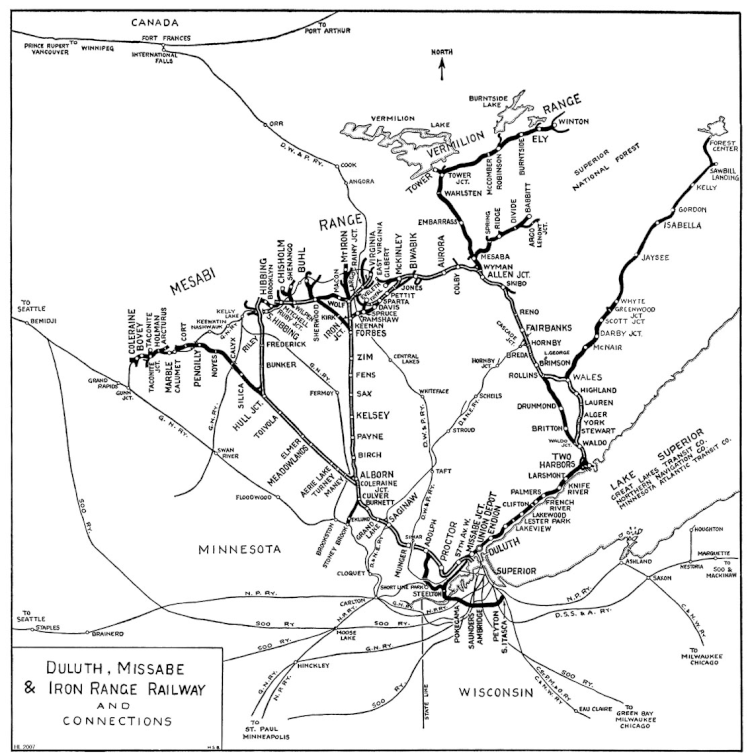
DM&N and D&IR remained separate until January 1, 1930, when the DM&N leased the D&IR and consolidated operations. Then on July 1, 1937, the DM&N merged with the Spirit Lake Transfer to form the Duluth, Missabe & Iron Range Railway. DM&IR then acquired ownership of D&IR and Interstate Transfer, and they became part of the new corporation on March 22, 1938. Reminders of the two big predecessors remained in the DM&IR’s two operating divisions, named Iron Range and Missabe, made up primarily of the predecessors’ tracks.
The Great Depression drastically reduced ore traffic. In 1932, not a single all-ore train was run — the small amount of ore that had to be shipped was carried in mixed freights. World War II reversed the road’s fortunes, of course, and the postwar boom resulted in an even higher demand for ore, with an all-time tonnage record being set in 1953.
Missabe had minimal passenger service. Into the 1950s, handsome Pacifics pulled heavyweight steel RPOs and coaches, two with solarium observation sections. At the end of World War II, the Missabe still provided service between Duluth and Ely (Winton), and Duluth and Hibbing, with the Hibbing train connecting with one from Iron Junction to Virginia.
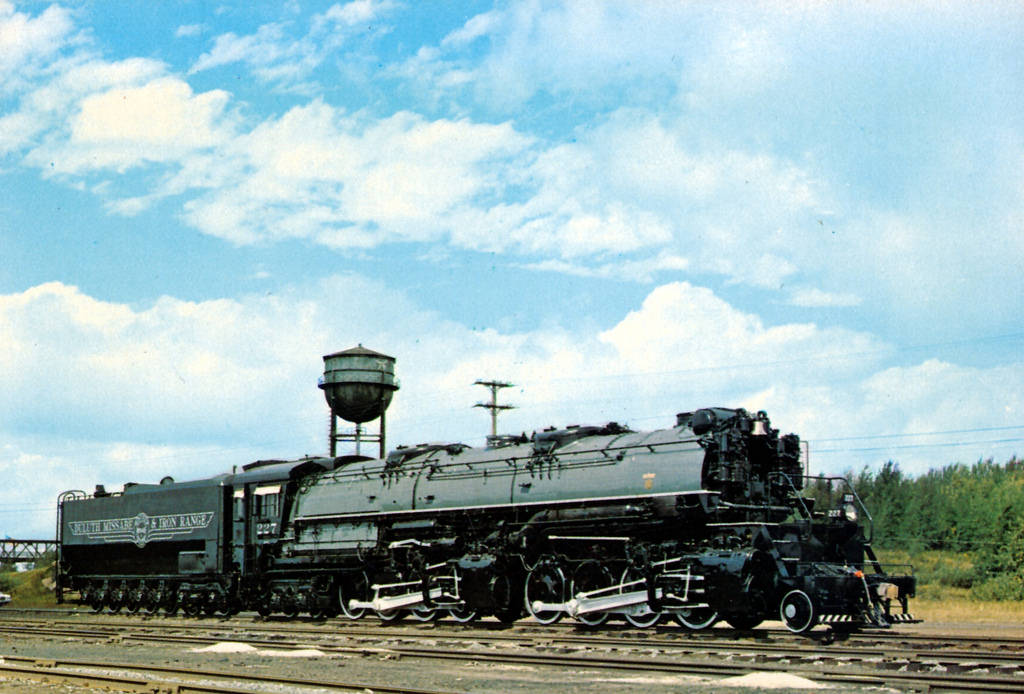
Duluth, Missabe & Iron Range M-3 locomotive no. 227.
Photo by “GavinTheGazelle” via Wikimedia Commons.
U.S. Steel spun off the DM&IR and its other ore railroads and shipping companies to subsidiary Transtar in 1988, selling majority control to the Blackstone Group. In 2001, DM&IR and other holdings were moved from Transtar to Great Lakes Transportation, fully owned by Blackstone, so for the first time in a century, DM&IR was no longer associated with U.S. Steel. On October 20, 2003, Canadian National announced it would buy Great Lakes Transportation, which also owned Bessemer & Lake Erie, Pittsburgh & Conneaut Dock Co. in Ohio, and Great Lakes Fleet, Inc. The purchase was finalized on May 10, 2004, and the independent Missabe Road vanished.
CN retired all but 10 of the SD40-3s, most of the SD38s, and all the rebuilt SD9s and 18s. Major locomotive work shifted from Proctor to other shops, and train dispatchers moved to Wisconsin, then Illinois. CN invested in new ore cars for the Missabe, gradually replacing those that dated to when steam still ruled the railroad. DM&IR existed on paper until December 31, 2011, when CN merged subsidiaries DM&IR and Duluth, Winnipeg & Pacific into Wisconsin Central.
Comments Off on Fallen Flag — the Duluth, Missabe & Iron Range Railway


