
World War Two
Published 18 Jan 2021Tens of thousands of Japanese soldiers were fighting over the jungles and beaches of Guadalcanal. To supply them with food, ammunition and medicine, the Japanese Navy had to resort to a series of daring supply runs — nicknamed the “Tokyo Express”. In the face of overwhelming American air superiority, the Tokyo Express had to find a tactic to overcome their enemy’s advantage, or it would doom its soldiers stranded on the island.
(more…)
January 19, 2022
Triumph by Sea, Tragedy by Land – Supplying Guadalcanal – WW2 Special
Comments Off on Triumph by Sea, Tragedy by Land – Supplying Guadalcanal – WW2 Special
Neville Chamberlain, the “great appeaser”
Alexander Larman considers an attempt to paint British Prime Minister Neville Chamberlain in a much more positive light than his popular image after appeasement failed:
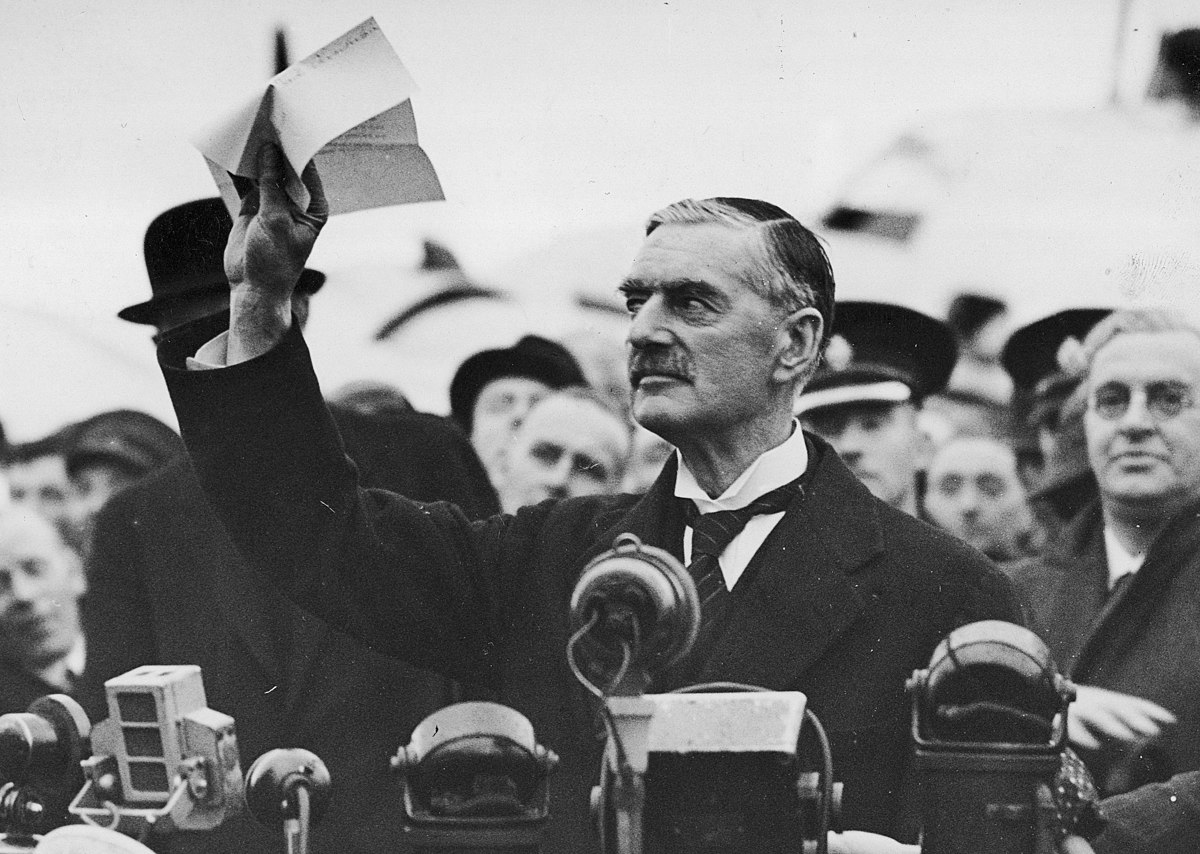
Prime Minister Neville Chamberlain at Heston Aerodrome, holding up a copy of the Anglo-German Declaration he had negotiated with Adolf Hitler, 30 September, 1938.
Narodowe Archiwum Cyfrowe via Wikimedia Commons.
On 30 September 1938, the Prime Minister Neville Chamberlain waved a piece of paper in his hand and declared “My good friends, for the second time in our history, a British Prime Minister has returned from Germany bringing peace with honour. I believe it is peace for our time.” He was, of course, incorrect. Less than a year later, Britain was at war with Germany, and the piece of paper was rendered meaningless.
Posterity has been hard on Chamberlain, regarding him as one of the least effective British premiers, and he has been entirely overshadowed by his more charismatic and successful replacement, Winston Churchill. Yet the bestselling author Robert Harris took a more sympathetic view of Chamberlain, and suggested in his 2017 novel Munich that, far from the Prime Minister being a hapless blunderer, he was in fact a canny tactician who bought his country an invaluable extra year to prepare for the coming conflict. This novel has now been filmed by Netflix, and has attracted particular attention for Jeremy Irons’ sympathetic and warm portrayal of Chamberlain.
Harris has even suggested that “I could perhaps show him as a tragic hero rather than merely the gullible old fool of popular myth … it is a mark of maturity to be able to hold two competing views in one’s head at the same time: that Churchill was vital to the defeat of Germany, and so, in a different way, was Neville Chamberlain.” Does he have a point, or is this just the canny spin of a novelist who has found a new and profitable angle to bring a well-worn story to life?
For my forthcoming book The Windsors at War, dealing with the royals in WWII and their relationships with the politicians of the day, I researched many letters and documents written by Chamberlain, members of the Royal Family and those around him in Downing Street. Several things came to light. There was residual antipathy between Chamberlain, who was an instinctive appeaser, and Churchill, who was not, and the Prime Minister privately derided the other politician as “a bandit” and “a pirate”. He also despised Attlee’s Labour party, calling them experts in “sob-stuff” sentimentality. He can undeniably be accused of high-handedness and complacency. Yet the charge of incompetence is a more deadly one.
Chamberlain himself came from a distinguished political family. His father Joseph was a ruthless Liberal parliamentarian who was said to have originated the phrase “you cannot teach old dogs new tricks”, and his elder brother Austen, one-time Chancellor of the Exchequer and leader of the Conservative Party, demonstrated a confidence in his intellectual abilities that his sibling did his best to emulate. He was not universally popular with his own side – the Conservative MP and diarist Harold Nicolson called him “a bourgeois shit” – but he generally had the support of his party in pursuing his policy of appeasement towards Hitler and Germany, believing – correctly – that Britain could not win the conflict outright.
Comments Off on Neville Chamberlain, the “great appeaser”
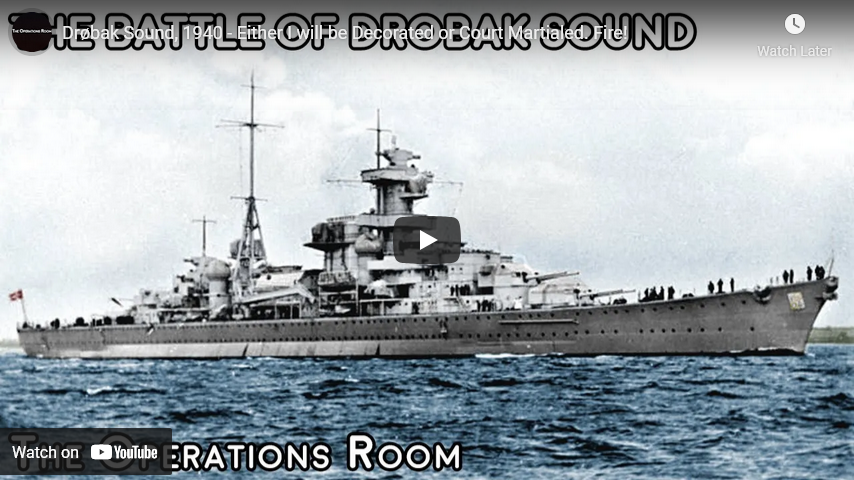
Drøbak Sound, 1940 – “Either I will be Decorated or Court Martialed. Fire!”
The Operations Room
Published 22 May 2021Peering through the darkness, Colonel Birger Eriksen spots a dark and menacing shape on the water. He can’t tell if its a friendly or enemy warship, but there’s no time to find out for sure. The dark and silent ship threatens his beloved Oslo. He must make his decision whether or not to fire. The German invasion of Norway has begun.
My “Group Captain” tier Patreons vote on my next video subject. If you’d like to have your say on my next video, please check out my Patreon at the link below:
https://www.patreon.com/TheOperations…https://twitter.com/The_Ops_Room
Special thanks to my Patreons: Abusemtex, Alexander K Leach, András Csányi, Bill Luster, Bryant Miano, Chris Faehl, Cody, dan, Dave Lombard, Dullis, e 141, Eric M, Flavio Ribeiro, Harmen, imfromthe808, Jeff Phillips, John Smaha, JONATHAN Vallett, Kole Pulley, libor riska, Luke Graham, Michael Choi, Miyama1018, omega21, PS, Richard Bejtlich, Shay Kneupper, Stephen James, wilbs43, Yurnero, Zachery Plaice, Aaron, Aaron Weisenburger, Alex Bell, Alex Pickworth, Andrew Ringquist, Axel Essbaum, Ben Harazim, Bodo Nuber, Brett VanBuren, Caleb DeArmas, Casual Observer, Christopher Cardona, Connor Kunihiro, Damien Dec, Darius Cosby, Dayan, Douglas, Ekstasis, Erick Velez, Escipio Sumski, Fredrick Wilson Nordby. Gaute, Geir Morten Soerensen, Graeme McEvoy, Gunship Sequel, Hanne Kortegaard Støchkel, Harrison A Tamke, Hunter Thornsberry, Innominate, Jack Baylor, Jack Mermod, Jack Parkin, Jackie Carson, Jason Wemyss, Jeffery Barnes, Jerry Xiao, Jessica Tiger, Jingold, Joe Robinson, John Harrison Herndon, John Walters, John Hesketh, Jordan Hedges, Joseph Sullivan, Justin Smith, Kurt Fox, Leo Maltoni, Luffylink, Luke Graham, LVE, Manfred Breuner, Michael J Jacobsen, Mike Thompson, Nick, Olufemi Adediwura, piranha45, Reese Spector, Richard Woodard, Rick Y-Bobby, Riley Matthews, Robby Gottesman, Robert Evans, Roderick Russell, Rory Weden, Ryan March, Siddharth Ahuwalia, Squerdle, The Man They Call Asher, Thomas Burton, Timothy Bucklin, UnicornStampede, Walter Kim, Warren Rudkin, Weston Hullander, Will Merrill, William Lydon, zintho9, Aaron Roberts, Alex Mackinnon, bascommander, Chris Roybal, Dave, Dylan Gilstein, e, Henry Buckley, Jack Lazarus, James Rosengrove, Johan West, john boland, Keven Guimaraes, Kristian Klibo, Marcelo Avila, Mark L., Mason, Matt, Matt Gonzales, Matthew Pulitano, Miguel, No Gods No Masters, Nicole Johnson, Peter S., The Rainmaker, Tommy Gates, Shikhir, Wolfgang Seitz, Wyatt Flynn Wilgus, Kelson Ball
Comments Off on Drøbak Sound, 1940 – “Either I will be Decorated or Court Martialed. Fire!”
January 18, 2022
Decadence
In the latest Libertarian Enterprise, Sarah Hoyt considers the old Soviet put-down of all of western culture (especially the American one) … that it was decadent:
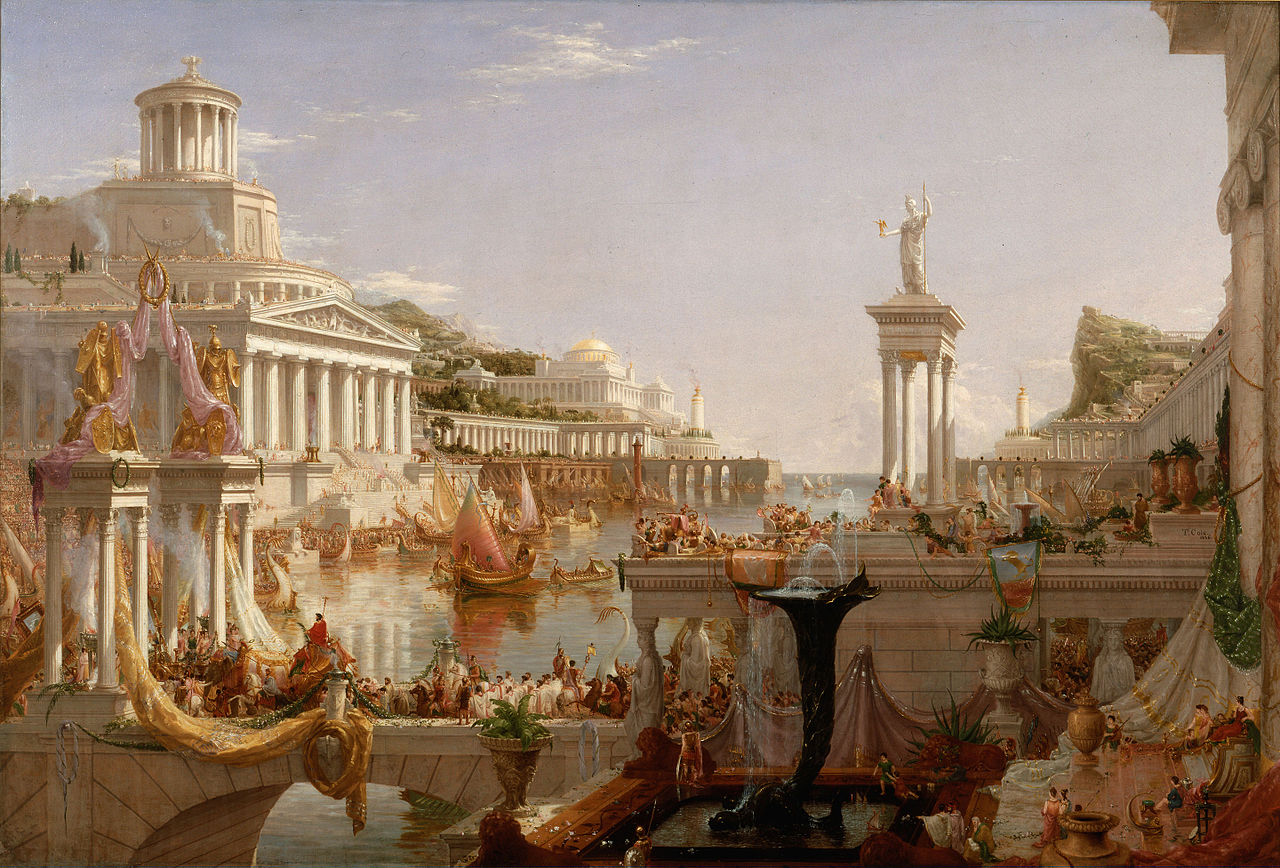
“The Consummation of Empire” from the painting series “The Course of Empire” by Thomas Cole (1801-1848).
New York HIstorical Society collection via Wikimedia Commons.
Yes, sure. I hear any number of you gnashing your teeth on that side of the screen: the soft living, the snowflakery in — mostly — our universities, the demands that everyone cater to them, people being completely terrified of a bad cold. Oh, yeah, rampant crime and bad sexual morals. We’re OBVIOUSLY decadent. How can I make fun of it?
Very easily.
For one your gnashing of teeth rhymes eerily with Romans gnashing of teeth for millennia, long before Rome was anywhere near ripe to fall, and in fact while Rome was the bad ass of the world. Second, it echoes even more eerily all of the Christian explanations of why Rome fell, which curiously also echoed the Christian beliefs in the loss of paradise.
“Decadence is sinfulness, and then comes the end and only G-d can save you” is the narrative there. Which is fine, in a spiritual sense, and completely bonkers insane when it applies to cultures and history. But it served the nascent theocracy that replaced Rome quite well. One of the things it served was to explain why life was now much, much harder. Because you know, abundance is what leads to decadence. Life is too soft, you don’t work hard enough and … bam! suddenly you’re in the middle of an orgy or worshiping a goat or something. Never you mind that the Romans pretty much did that all along, even when they were the badasses of the world. It’s really easy to shape the history of a fallen civilization so it suits the purposes of its successor.
Which brings us to the fact that Communism is a Christian heresy, complete with paradise — the supposed egalitarian and property-free pre-history (it’s also really easy to shape a period that left no account of itself that we can find) — until greed — and in one version PATRIARCHY and in another “whiteness” WTF that means — kicked us out of it. Now we must force the perfect human (Homo Sovieticus!) to emerge, so we can go back to living in caves in (sing it) perfect harmony. (Yeah.)
The complaints of decadence I heard as a young woman were mostly Soviet Agit Prop. Yes, yours were too. They ranged from incoherent to frigging insane. Some of it was a very old rhyming chorus: Americans were decadent because they were too rich. They had too many choices. They were too immoral. They never had enough, and would commit crimes to be richer. They ate too much, drove too much, slept in too comfortable a bed, and in general were DECADENT. Just like Rome before it fell. (If you realize the actual structure of Imperial Rome was closer to the Soviet Union’s, a plunder culture that could only survive by stealing, the whole thing will take your breath away with its chutzpah.
The fact that our (even though at the time it was your, as I was a foreigner at least in some ways) entertainment and art echoed these crazy accusations only made the whole thing stick, so even the right, American loving side (which anyway always has a vast side of puritanism in America. And speaking of puritans, let’s talk about what some of them did to … turkeys? If weird sexual kinks are a sign of decadence, we’ve never been non-decadent) bought into it. I mean Spartacus (the novel) portrait of the decadence of Rome was meant to echo how bad America was. What’s that I hear? The author was a communist? You. Don’t. Say. I think I sent my shocked face out to be mended, but I won’t be a sec while I retrieve it.
In a more personal sense, my own family told me Portugal too was decadent. Why, unlike mom, I didn’t have to walk beside the train line to pick up enough coal for the family to cook. We had butane bottles delivered, even if they were super expensive, so we often cooked on a petrol lamp in the patio, if the weather was fine.
Decadent and soft living, I tell you. Sure, the bathroom was outside, but it was a bathroom, with running water included. JUST like Rome before the fall. How much longer till we started screwing Nightingales’ Tongues, eating Bear Sausages and electing horses to congress (I think in America we’ve been doing that all along, too. Though I’d prefer if every now and then we elected the front half of the horse.)
Comments Off on Decadence
David Starkey – The Churchills episode 1
Whitehall Moll History Clips
Published 7 Jan 2019David Starkey weaves the stories of two great British war leaders: John and Winston Churchill. Hear how John Churchill rose from obscurity to be King James II’s right-hand man.

Comments Off on David Starkey – The Churchills episode 1
Ishapore No6 Jungle Carbine SMLE Prototype
Forgotten Weapons
Published 21 Nov 2018https://www.forgottenweapons.com/isha…
http://www.patreon.com/ForgottenWeapons
Cool Forgotten Weapons merch! http://shop.bbtv.com/collections/forg…
In 1943, the British government began a program to develop a shortened and lightened version of the No1 SMLE rifle, for production in India and Australia — where the national ordnance factories had not converted to production of the No4 rifle. This prototype is the first pattern produced by the Ishapore Arsenal for testing. Its barrel is cut down to 16.5 inches (plus a 2.8 inch long conical flash hider), it has a unique 3-position flag style of rear aperture sight, and has had its sling swivels repositioned. This rifle was tested in the UK, and some modifications were recommended. A second pattern from Ishapore was then provisionally approved as the No6 MkI on September 1st, 1944, but cancelled before production could begin. The Australian pattern of No6 was approved a year late in September 1945, but then declared obsolete before it could be put into production. With the end of World War Two and Indian independence in 1947, the funding and impetus for a new short rifle were lost, and instead Ishapore would end up converting its production to No1 pattern rifles in 7.62mm NATO a few years later.
Contact:
Forgotten Weapons
PO Box 87647
Tucson, AZ 85754

Comments Off on Ishapore No6 Jungle Carbine SMLE Prototype
January 17, 2022
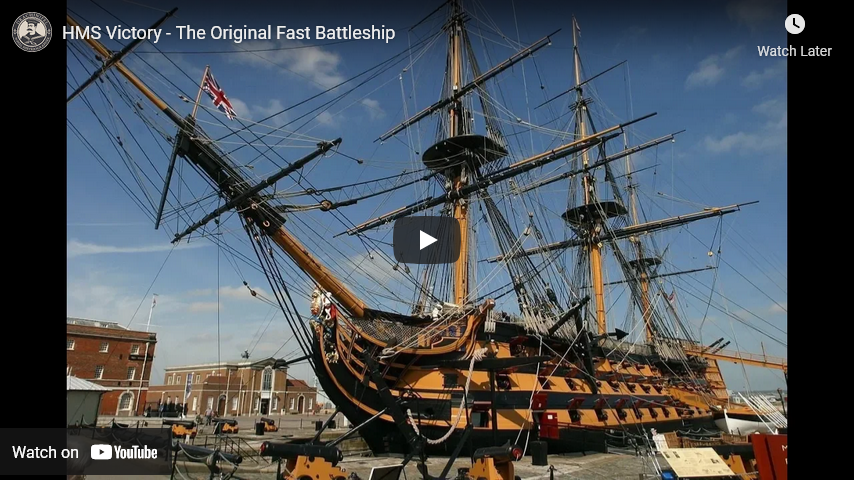
HMS Victory – The Original Fast Battleship
Drachinifel
Published 3 Jul 2019Today we look at the world’s oldest commissioned warship, the first rate ship of the line HMS Victory.
Want to support the channel? – https://www.patreon.com/Drachinifel
Want to talk about ships? https://discord.gg/TYu88mt
Music – https://www.youtube.com/c/NCMEpicMusic
Comments Off on HMS Victory – The Original Fast Battleship
QotD: The British ruling class reaction to fascism and communism
They could not struggle against Nazism or Fascism, because they could not understand them. Neither could they have struggled against Communism, if Communism had been a serious force in western Europe. To understand Fascism they would have had to study the theory of Socialism, which would have forced them to realize that the economic system by which they lived was unjust, inefficient and out of date. But it was exactly this fact that they had trained themselves never to face. They dealt with Fascism as the cavalry generals of 1914 dealt with the machine gun – by ignoring it. After years of aggression and massacres, they had grasped only one fact, that Hitler and Mussolini were hostile to Communism. Therefore, it was argued, they must be friendly to the British dividend-drawer. Hence the truly frightening spectacle of Conservative M.P.s wildly cheering the news that British ships, bringing food to the Spanish Republican government, had been bombed by Italian aeroplanes. Even when they had begun to grasp that Fascism was dangerous, its essentially revolutionary nature, the huge military effort it was capable of making, the sort of tactics it would use, were quite beyond their comprehension. At the time of the Spanish Civil War, anyone with as much political knowledge as can be acquired from a sixpenny pamphlet on Socialism knew that, if Franco won, the result would be strategically disastrous for England; and yet generals and admirals who had given their lives to the study of war were unable to grasp this fact. This vein of political ignorance runs right through English official life, through Cabinet ministers, ambassadors, consuls, judges, magistrates, policemen. The policeman who arrests the “Red” does not understand the theories the “Red” is preaching; if he did, his own position as bodyguard of the monied class might seem less pleasant to him. There is reason to think that even military espionage is hopelessly hampered by ignorance of the new economic doctrines and the ramifications of the underground parties.
The British ruling class were not altogether wrong in thinking that Fascism was on their side. It is a fact that any rich man, unless he is a Jew, has less to fear from Fascism than from either Communism or democratic Socialism. One ought never to forget this, for nearly the whole of German and Italian propaganda is designed to cover it up. The natural instinct of men like Simon, Hoare, Chamberlain, etc. was to come to an agreement with Hitler. But – and here the peculiar feature of English life that I have spoken of, the deep sense of national solidarity, comes in – they could only do so by breaking up the Empire and selling their own people into semi-slavery. A truly corrupt class would have done this without hesitation, as in France. But things had not gone that distance in England. Politicians who would make cringing speeches about “the duty of loyalty to our conquerors” are hardly to be found in English public life. Tossed to and fro between their incomes and their principles, it was impossible that men like Chamberlain should do anything but make the worst of both worlds.
One thing that has always shown that the English ruling class are morally fairly sound, is that in time of war they are ready enough to get themselves killed. Several dukes, earls and what-not were killed in the recent campaign in Flanders. That could not happen if these people were the cynical scoundrels that they are sometimes declared to be. It is important not to misunderstand their motives, or one cannot predict their actions. What is to be expected of them is not treachery or physical cowardice, but stupidity, unconscious sabotage, an infallible instinct for doing the wrong thing. They are not wicked, or not altogether wicked; they are merely unteachable. Only when their money and power are gone will the younger among them begin to grasp what century they are living in.
George Orwell, “The Lion And The Unicorn: Socialism and the English Genius”, 1941-02-19.
Comments Off on QotD: The British ruling class reaction to fascism and communism
January 16, 2022
Food for Leningrad, Breaking the Siege! – WW2 – 177- January 15th, 1943
World War Two
Published 15 Jan 2022Soviet attacks are launched this week to destroy the Hungarians, all while the German desperation at Stalingrad and Velikie Luki continues, but in the far north the Soviets have broken through the siege of Leningrad after 16 months. And the Casablanca Conference begins, a meeting to guide the war’s future progress.
(more…)
Comments Off on Food for Leningrad, Breaking the Siege! – WW2 – 177- January 15th, 1943
QotD: Once “discovered”, colonization of the Americas was inevitable
This is not a joke. Political reality has a way of crashing in on the pipe dreams of liberal academics. The reality is, if the English had not colonised, then the French or the Dutch would have. If the Spanish had not colonised, the Portuguese would have. This would have shifted the balance of power at home, and any European country which had not colonised, would have been relegated to secondary status. And it is easy to overestimate the amount of control that European governments actually had. As soon as the New World was discovered, many fisherman and traders sailed across the Atlantic on their own, in hopes of circumventing tax authorities and scoring a fortune. Long before colonies were established in most regions, the New World was crawling with Europeans whose superior technology gave them an edge in combat. Nonetheless, it was extremely dangerous for Europeans to provoke fights with Native Americans, and most of them tried to avoid this when possible. In retrospect, one could in theory be impressed that so many European governments showed a genuine concern to rein in the worst excesses of their subjects, with an express eye to protecting the Indians from depredation. The logic was simple: they attempted to protect their subjects at home, in order to secure good order and a better tax base. So they would do the same to their subjects in the New World. For a long time, few Europeans harboured any master plan of pushing the Native Americans out of their own lands. In more densely populated regions such as Mexico, such an idea must have seemed an absurdity. Reality tends to occur ad hoc. Boundaries often took generations to move, and would have seemed fixed at the time. For several centuries, many Europeans assumed that they would long be a minority on the North American continent. In Mexico and Peru, they always have been.
Population density mattered, a lot, when it came to pre-modern global migrations. China and India were “safe” from excessive European colonisation because they had the densest populations in the world, and they were likewise largely immune to any diseases brought by Europeans. SubSaharan Africa had a lower population density depleted by slave raiding, but they still outnumbered European colonists by a large margin throughout the colonial era — again because European contact did not decimate their numbers through disease the way it did in the Americas. It is worth noting that no one claims that Europeans committed genocide in India, Asia or even Africa, although their technological advantages gave them every opportunity had they actually been of a genocidal mindset (as were for example the Mongols). In fact, the European track record shows them to be almost shockingly un-genocidal, given their clear technological advantages over the rest of the world for a period of several centuries. Few other civilisations, given similar power over so much of the world’s people, would have behaved in a less reprehensible manner. This is not to give Europeans a pat on the back. Rather it is to point out that Europeans are regularly painted as the very worst society on Earth, when in fact they had the power to do far, far more evil than they actually did. Let us at least acknowledge this fact.
Jeff Fynn-Paul, “The myth of the ‘stolen century'”, Spectator Magazine, 2020-09-26.
Comments Off on QotD: Once “discovered”, colonization of the Americas was inevitable
January 15, 2022
Constantinople: The Capital of Eastern Rome
Thersites the Historian
Published 13 May 2020In this video, we look at the new capital city of the Eastern Roman Empire built by Constantine. We start out by briefly exploring the history of the Megarian colony of Byzantion and also how the city was patronized by the emperor Septimius Severus before looking at the late antique origins and medieval history of Constantinople.
Patreon link: https://www.patreon.com/thersites
PayPal link: paypal.me/thersites
Twitter link: https://twitter.com/ThersitesAthens
Minds.com link: https://www.minds.com/ThersitestheHis…
Steemit/dtube link: https://steemit.com/@thersites/feed
BitChute: https://www.bitchute.com/channel/jbyg…

Comments Off on Constantinople: The Capital of Eastern Rome
Vietnam Mk18 Mod0 Hand-Crank Grenade Launcher
Forgotten Weapons
Published 20 Dec 2017http://www.patreon.com/ForgottenWeapons
The Mk18 Mod0 grenade launchers was developed by the Honeywell corporation in 1962, and was the first weapon in what would became a category of high volume grenade launchers used by the US military. The modern iterations are all self-loading, but this first example was fired by a manual crank handle, like a Gatling gun. The Mk18 used the same 40x46mm grenade cartridge as the single shot M79 launcher, and this round’s low pressure allowed the Mk18 to use a rather unusual breech mechanism.
Unlike most belt-fed weapons, the cartridges in the Mk18 never left the belt. Instead, the breech consisted of two rotating spindles which would form the top and bottom halves of the chamber, closing around each shell as the handle was cranked. As a result, a loaded belt of grenades fed into the weapon, and a belt of empty cases came out the other side. Another effect of the low pressure cartridge was a rather short effective range, which limited adoption of the weapon to the US Navy, which bought 1200 and used them primarily on riverine patrol boats. In this application, the short effective range was not much of a hindrance, and the volume of high explosive firepower was a significant asset.
Armament Research Services (ARES) is a specialist technical intelligence consultancy, offering expertise and analysis to a range of government and non-government entities in the arms and munitions field. For detailed photos of this very cool early grenade launcher, don’t miss the ARES companion blog post:
Cool Forgotten Weapons merch! http://shop.bbtv.com/collections/forg…

Comments Off on Vietnam Mk18 Mod0 Hand-Crank Grenade Launcher
QotD: “Jack Ketch as Eugenist”
The murder rate is very low in England, perhaps the lowest in the world. It is low because nearly all the potential ancestors of murderers were hanged or exiled in the Eighteenth Century. Why is it so high in the United States? Because most of the potential ancestors of murderers, in the late Eighteenth and early Nineteenth Centuries were not hanged. And why did they escape? For two plain reasons. First, the existing government was too weak to track them down and execute them, especially in the West. Second, the qualities of daring and enterprise that went with their murderousness were so valuable that it was socially profitable to overlook their homicides. In other words the job of occupying and organizing the vast domain of the new Republic was one that demanded the aid of men who, among other things, occasionally butchered their fellow men. The butchering had to be winked at in order to get their help. Thus the murder rate, on the frontier, rose to unprecedented heights, while the execution rate remained very low. Probably 100,000 men altogether were murdered in the territory west of the Ohio between 1776 and 1865; probably not 100 murderers were formally executed. When they were punished at all, it was by other murderers — and this left the strain unimpaired.
H.L. Mencken, “Miscellaneous Notes: Jack Ketch as Eugenist”, Prejudices: Fifth Series, 1926.
Comments Off on QotD: “Jack Ketch as Eugenist”
January 14, 2022
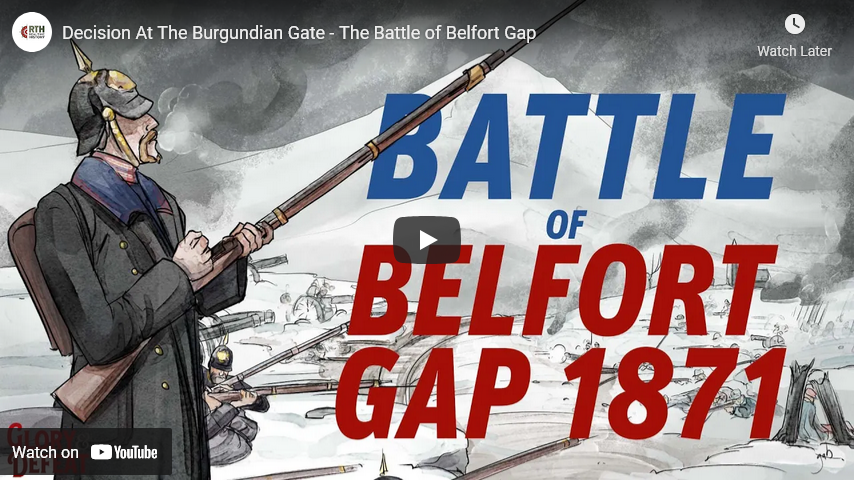
Decision At The Burgundian Gate – The Battle of Belfort Gap
Real Time History
Published 13 Jan 2022Support us on Patreon: https://patreon.com/realtimehistory
In minus 20 degrees the ragtag French Armée L’Est still tries to relieve Belfort — which is under siege by the Baden Corps under General von Werder. Belfort’s resistance against the siege is later immortalized in the Lion of Belfort.
» THANK YOU TO OUR CO-PRODUCERS
John Ozment, James Darcangelo, Jacob Carter Landt, Thomas Brendan, Kurt Gillies, Scott Deederly, John Belland, Adam Smith, Taylor Allen, Rustem Sharipov, Christoph Wolf, Simen Røste, Marcus Bondura, Ramon Rijkhoek, Theodore Patrick Shannon, Philip Schoffman, Avi Woolf,» OUR PODCAST
https://realtimehistory.net/podcast – interviews with historians and background info for the show.» LITERATURE
Arand, Tobias: 1870/71. Der Deutsch-Französische Krieg erzählt in Einzelschicksalen. Hamburg 2018Barry, Quintin: The Franco-Prussian War 1870-71. Vol 2 After Sedan. Solihull, 2007
Bartmann, Dominik (Hrsg.): Ausst.-Kat DHM Berlin‚ Anton von Werner. Geschichte in Bildern. München 1993
Bauer, Gerhard u.a. (Hrsg.): Ausst.-Kat. MHM Dresden‚ Krieg – Macht – Nation. Wie das deutsche Kaiserreich entstand. Dresden 2020
Howard, Michael: The Franco-Prussian War. London, 1961
Mény, Edouard: Le siège de Belfort 1870-71. 2013
Robichon, François: Alphonse de Neuville 1835-1885, Paris 2010
» SOURCES
Bernardt, Sarah: Ma double vie. Mémoires. Paris 1907Fontane, Theodor: Der Krieg gegen Frankreich. Bd. 4. Berlin 1876
Goncourt, Edmond de: Journal des Goncourts. II.1. 1870-1871. Paris 1890
Seigneur, Daniel: Carnets d’un infirmier d’une guerre oubliée. De la Savoie à la Franche-Comté. Divonnes-les-bains 2014
Werner, Anton von: Erlebnisse und Eindrücke 1870-1890. Berlin 1913
Zeitz, Karl: Kriegserinnerungen eines Feldzugsfreiwilligen aus den Jahren 1870 und 1871. Altenburg 1905
» OUR STORE
Website: https://realtimehistory.net»CREDITS
Presented by: Jesse Alexander
Written by: Cathérine Pfauth, Prof. Dr. Tobias Arand, Jesse Alexander
Director: Toni Steller & Florian Wittig
Director of Photography: Toni Steller
Sound: Above Zero
Editing: Toni Steller
Motion Design: Philipp Appelt
Mixing, Mastering & Sound Design: http://above-zero.com
Maps: Battlefield Design
Research by: Cathérine Pfauth, Prof. Dr. Tobias Arand
Fact checking: Cathérine Pfauth, Prof. Dr. Tobias ArandChannel Design: Battlefield Design
Contains licensed material by getty images
All rights reserved – Real Time History GmbH 2022
Comments Off on Decision At The Burgundian Gate – The Battle of Belfort Gap
The Revenge Bombing of Germany – WAH 050 – January 1943, Pt. 1
World War Two
Published 13 Jan 2022While Nazi Germany keeps on escalating its War Against Humanity, the United Nations alliance decides that they will escalate their war on Germany.
(more…)
Comments Off on The Revenge Bombing of Germany – WAH 050 – January 1943, Pt. 1


