Whitehall Moll History Clips
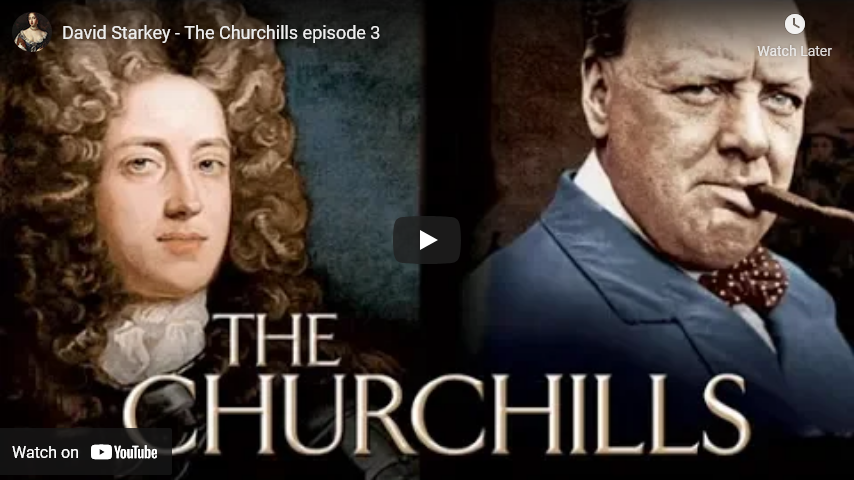
Published 29 May 2019How did Winston Churchill draw on the lessons of his ancestor John Churchill to fight World War II? The Duke of Marlborough’s influence is apparent as Dr David Starkey explains

Whitehall Moll History Clips
Published 29 May 2019How did Winston Churchill draw on the lessons of his ancestor John Churchill to fight World War II? The Duke of Marlborough’s influence is apparent as Dr David Starkey explains
Forgotten Weapons
Published 14 Sep 2021http://www.patreon.com/ForgottenWeapons
https://www.floatplane.com/channel/Fo…
Cool Forgotten Weapons merch! http://shop.forgottenweapons.com
In July of 1918, the British military formally adopted a Parker-Hale system of adapting .303-caliber arms to .22 rimfire for short range training. The system involved lining standard barrels with .22 caliber blanks that were machined with full size .303 chambers. Special cartridge inserts were used which had the external dimensions of .303 cartridges, but held .22LR cartridges inside. This allowed the weapon to use the same feeding system as it normally would, and to duplicate the handling and trigger mechanism of a standard .303 caliber gun while only firing a small rimfire cartridge.
Parker-Hale built kits of this type for the Lee Enfield rifle, the Lewis LMG, and the Vickers HMG, and all were used by the British military. In the Lewis and Vickers, there was no accommodation made to actually cycle the guns; this sort of .22 practice drill was done by manually cycling the actions after each shot. Still, it was a good way to practice basic drill (loading, unloading, etc) as well as basic marksmanship without the noise of full power cartridges and without the need for a full-power-rated backstop.
The system for the Lee Enfield was replaced in 1920 (after only about 2 years of use) with the No2 MkIV* rifle, a dedicated .22 conversion of an SMLE. Parker-Hale kept the system in their commercial catalog into the 1930s, however.
Contact:
Forgotten Weapons
6281 N. Oracle 36270
Tucson, AZ 85740

World War Two
Published 22 Jan 2022This is a rough week for the Germans — their trapped garrison at Velikie Luki is liquidated, and their trapped army at Stalingrad is … well, it isn’t going well for them. In fact, it isn’t going well for the Axis anywhere this week, being pushed back or retreating in New Guinea, the Caucasus, North Africa, and on Guadalcanal. Berlin is even bombed this week as well.
(more…)
Tom Scott
Published 6 Jul 2020Old Sarum, in Wiltshire, is a now-desolate hillfort run by English Heritage. But it was once one of the most important sites in southern England: so important that it had two members of Parliament. Then, it became a “rotten borough”: and a warning about power.
Thanks to English Heritage: more information and how to visit: https://www.english-heritage.org.uk/v…
Research and script assistance from Jess Jewell
Drone camera by Jamie Bellinger
Edited by Michelle Martin: https://twitter.com/mrsmmartin
Audio mix by Graham Haerther: https://haerther.netFilmed safely, following all local and national guidance: https://www.tomscott.com/safe/
SOURCES:
Corfield, P. (2000). Power and the professions in Britain 1700-1850. London: Routledge.Dodsworth, W. (1814). An historical description of the cathedral church of Salisbury: including an account of the monuments, chiefly extracted from Gough’s “Sepulchral Monuments,” and other authentic documents: also, biographical memoirs of the Bishops of Salisbury, from the earliest period by W. Dodsworth, verger of the Cathedral
English Heritage’s own research page: https://www.english-heritage.org.uk/v…
http://www.historyhome.co.uk/c-eight/…
I’m at https://tomscott.com
on Twitter at https://twitter.com/tomscott
and on Instagram as tomscottgo

It follows that British democracy is less of a fraud than it sometimes appears. A foreign observer sees only the huge inequality of wealth, the unfair electoral system, the governing-class control over the Press, the radio and education, and concludes that democracy is simply a polite name for dictatorship. But this ignores the considerable agreement that does unfortunately exist between the leaders and the led. However much one may hate to admit it, it is almost certain that between 1931 and 1940 the National Government represented the will of the mass of the people. It tolerated slums, unemployment and a cowardly foreign policy. Yes, but so did public opinion. It was a stagnant period, and its natural leaders were mediocrities.
In spite of the campaigns of a few thousand left-wingers, it is fairly certain that the bulk of the English people were behind Chamberlain’s foreign policy. More, it is fairly certain that the same struggle was going on in Chamberlain’s mind as in the minds of ordinary people. His opponents professed to see in him a dark and wily schemer, plotting to sell England to Hitler, but it is far likelier that he was merely a stupid old man doing his best according to his very dim lights. It is difficult otherwise to explain the contradictions of his policy, his failure to grasp any of the courses that were open to him. Like the mass of the people, he did not want to pay the price either of peace or of war. And public opinion was behind him all the while, in policies that were completely incompatible with one another. It was behind him when he went to Munich, when he tried to come to an understanding with Russia, when he gave the guarantee to Poland, when he honoured it, and when he prosecuted the war half-heartedly. Only when the results of his policy became apparent did it turn against him; which is to say that it turned against its own lethargy of the past seven years. Thereupon the people picked a leader nearer to their mood, Churchill, who was at any rate able to grasp that wars are not won without fighting. Later, perhaps, they will pick another leader who can grasp that only Socialist nations can fight effectively.
George Orwell, “The Lion And The Unicorn: Socialism and the English Genius”, 1941-02-19.
Epic History TV
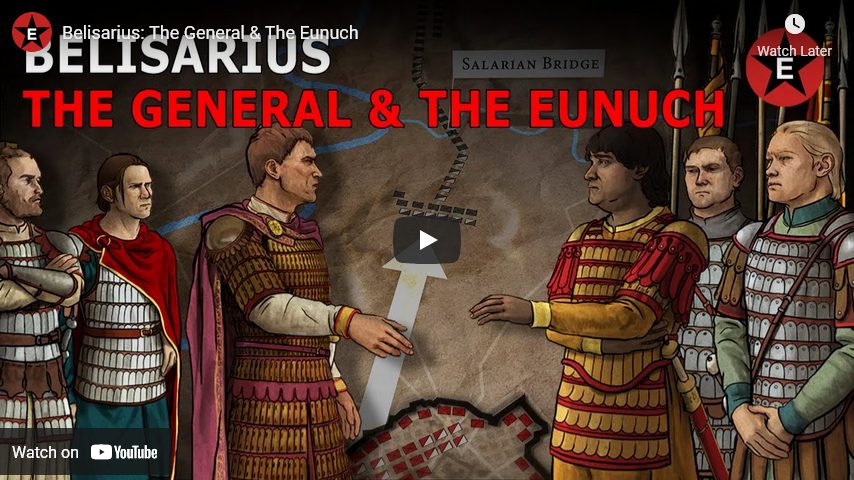
Published 21 Jan 2022Download Fishing Clash for FREE and play today! https://fishingclash.onelink.me/dkOM/…
Big thanks to Legendarian for Total War: Attila gameplay footage, check out his YouTube channel here: https://www.youtube.com/channel/UCOI2…
Big thanks also to our series consultant Professor David Parnell of Indiana University Northwest, who you can follow on Twitter here: https://twitter.com/byzantineprof
Total War: Attila gameplay footage used with kind permission of Creative Assembly – buy the game here: https://geni.us/qDreR
Support Epic History TV on Patreon from $1 per video, and get perks including ad-free early access & votes on future topics https://www.patreon.com/EpicHistoryTV
🎨 Original artwork by Miłek Jakubiec https://www.artstation.com/milek
📚 Recommended reading (as an Amazon Associate I earn from qualifying purchases):
📖 Procopius, History of the Wars https://geni.us/L3Pgc
📖 The Wars of Justinian by Michael Whitby https://geni.us/Xxrd3
📖 Rome Resurgent by Peter Heather https://geni.us/ZFoU1
📖 The Armies of Ancient Persia: the Sassanians by Kaveh Farrokh https://geni.us/jMQo3z
📖 Late Roman Cavalryman AD 236–565 (Osprey) by Simon MacDowall https://geni.us/XMGl👕 Buy EHTV t-shirts, hoodies, mugs and stickers here! teespring.com/en-GB/stores/epic-histo…
🎶 Music from Filmstro: https://filmstro.com/?ref=7765
Get 20% off an annual license with this exclusive code:EPICHISTORYTV_ANN#EpicHistoryTV #RomanEmpire #EasternRomanEmpire #Justinian #Belisarius #ByzantineEmpire #Romans #Ostrogoths
In the latest Age of Invention newsletter, Anton Howes explains why King James I grew frustrated in his dealings with Parliament and decided to avoid calling that body into session and ruling the kingdom directly:
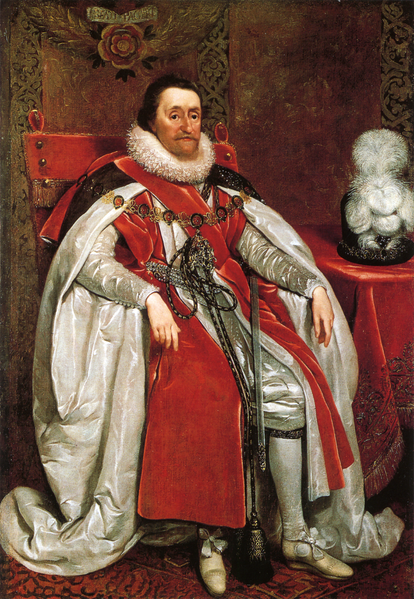
King James I (of England) and VI (of Scotland)
Portrait by Daniel Myrtens, 1621 from the National Portrait Gallery via Wikimedia Commons.
By the end of 1610, James’s disillusionment with the House of Commons was complete — it was, he said, after six years of fruitlessly wrangling for parliamentary taxes, like a “House of Hell”.
So, despite failing to reach a permanent financial settlement, James decided to try to rule without it. His debts were huge, and his deficit substantial. But after the failure of 1610 he would do everything he could to never have to summon a Parliament again. Although he couldn’t actually afford it, he decided to try ruling as an absolutist monarch anyway — to embark on “personal rule”.
This extraordinary decision, to be an absolutist ruler without adequate financial support, would have dramatic consequences for England’s foreign policy, and perhaps on the whole balance of Europe too. James had already tried to reduce the costs of war when he came to the throne in 1603, by immediately concluding a peace with the vast Spanish Empire. Yet peace now became a necessity — if he couldn’t even plug the deficit during peacetime, he could not possibly pay for a war. Recognising this, Spain intervened freely in the affairs of the Protestant German states, confident that England would not be able to come to their aid.
To make matters worse, James’s financial woes made him especially susceptible to foreign influence. A poor king could be bought. Some of the smaller but wealthier European dynasties began to offer James large sums for his children’s hands in marriage. In 1611, the duke of Savoy offered a vast dowry of £210,000 for his daughter to marry James’s eldest son and heir, Prince Henry. The notoriously wealthy grand duke of Tuscany even put in a bid for £300,000. France then offered £240,000 — not as high, but it had the greater status as a kingdom. Any of these amounts would have plugged the deficit for a few years, even if they were nowhere near to eliminating James’s debt. Yet Henry died in 1612 at the age of eighteen, before any match was agreed, and James’s new heir Charles was much younger and sickly. There was now no rush, so the bidding war ceased. Indeed, by 1616 Charles had given England’s rivals yet another way to influence its king. The Spanish Hapsburgs dangled the prospect of a gigantic dowry of £600,000, but dragged their feet in negotiations, keeping James focused for as long as they could on trying to keep them sweet.
In the meantime, with Henry’s death denying him an immediate windfall, James in 1613 turned [to] Ireland. The Irish Parliament had not been summoned for over a quarter of a century, but it could be a way to reduce the costs of the occupation of Ireland and even raise some funds. The Parliament was initially a disaster. James had flagrantly gerrymandered a Protestant majority by chartering dozens of new towns, particularly in the English plantations in Ulster. Each new town was a borough constituency able to choose its own MPs, and James could even select their initial members — especially in cases where the towns were actually only tiny villages. In protest, the Catholic MPs refused to even recognise the new borough MPs, so each side elected their own Speaker. The Catholic Speaker was only forced out of the chair when the Protestant Speaker was hoisted onto his lap. Nonetheless, although James was legally entitled to create as many new boroughs as he liked, he soon compromised and in 1615 the Irish Parliament ended up voting him some cash.
But the delays forced James’s hand, and in 1614 he briefly suspended his foray into personal rule by summoning the English Parliament again. He needn’t have bothered. Having embarked on personal rule, James had doubled down on legally dubious ways of raising cash, like imposing new customs duties without parliamentary approval — measures that had already been deeply unpopular with MPs in 1610. This time, the Parliament lasted just two months and two days before James dissolved it in a rage — the House of Hell had proved even more impudent than before. One of the veteran opposition leaders, Sir Edwin Sandys, went so far as to explicitly compare James’s impositions on trade to tyranny, before reminding the Commons that tyrants often met a bloody end. When the Parliament was dissolved, the king had MPs’ notes on impositions burned, and a few of the ringleaders were even briefly imprisoned. But with the dissolution of Parliament, which had not voted him any cash, he was still none the richer.
The Great War
Published 21 Jan 2022Get the Smartest Bundle in Streaming: https://smartbundle.com/thegreatwarsb
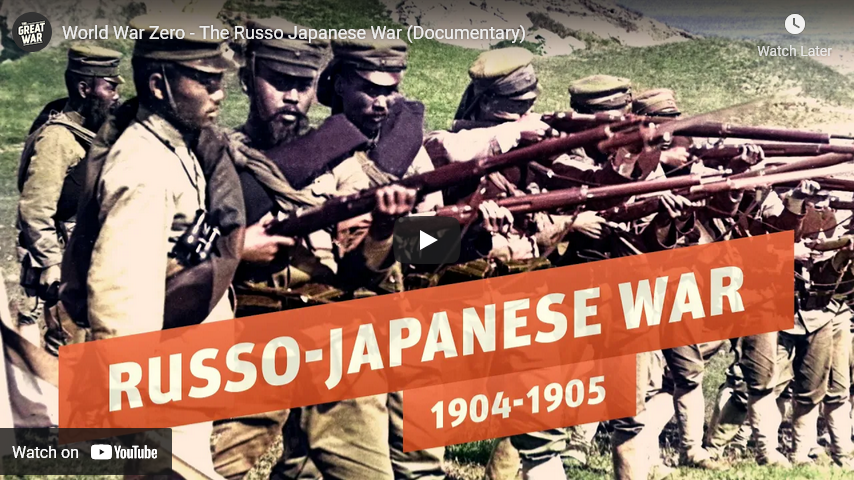
The Russo-Japanese War is nicknamed World War Zero – it was a clash between two world powers that foreshadowed war on an industrial scale as seen just 10 years later again. Gigantic land battles like the Battle of Mukden showed the true cost in manpower and materiel when modern armies clashed and the naval side of the war showed the strategic importance of modern navies.
» SUPPORT THE CHANNEL
Patreon: https://www.patreon.com/thegreatwar» THANKS TO OUR CO-PRODUCERS
John Ozment, James Darcangelo, Jacob Carter Landt, Thomas Brendan, Kurt Gillies, Scott Deederly, John Belland, Adam Smith, Taylor Allen, Rustem Sharipov, Christoph Wolf, Simen Røste, Marcus Bondura, Ramon Rijkhoek, Theodore Patrick Shannon, Philip Schoffman, Avi Woolf,» BIBLIOGRAPHY
Akiyama Saneyuki, Gundan (Tokyo: Jitsugyō no Nihonsha, 1917)Atsuo Yokoyama; Toshikatsu Nishikawa & Ichō Konsōshiamu, Heishitachi ga mita Nichi-Ro sensō, (Tokyo: Yūzankaku, 2012)
Corbett, Julian S., Maritime Operations in the Russo-Japanese War, 1904-1905, Volume I, (Annapolis, MD: Naval Institute Press, 2015)
Corbett, Julian S., Maritime Operations in the Russo-Japanese War, 1904-1905, Volume II, (Annapolis, MD: Naval Institute Press, 2015)
Деникин А. И. Путь русского офицера. (Нью-Йорк: Изд. им. А. Чехова, 1953)
Forczyk, Robert, Russian Battleship vs Japanese Battleship: Yellow Sea 1904-05, (Oxford: Osprey Publishing Ltd, 2009)
Hamby, Joel E, “Striking the Balance: Strategy and Force in the Russo-Japanese War” Armed Forces & Society, Vol. 30, No. 3 (2004)
Hosokawa Gentarō, Byōinsen Kōsai Maru kenbunroku (Tokyo: Hakubunkan Shinsha, 1993)
Ivanov, A & Jowett P, The Russo-Japanese War 1904-05, (Oxford: Osprey Publishing Ltd, 2004)
Jacob, Frank, The Russo-Japanese War and its Shaping of the Twentieth Century, (London: Routledge, 2017)
Jukes, Geoffrey, The Russo-Japanese War 1904-1905, (Oxford: Osprey Publishing Ltd, 2014)
Kowner, Rotem (ed), Rethinking the Russo-Japanese War, 1904-5, Volume 1: Centennial Perspectives, (Folkestone: Global Oriental, 2007)
Lynch, George & Palmer, Frederick, In Many Wars By Many War Correspondnets, (Tokyo: Tokyo Printing Co. 1904)
Mozawa Yusaku, Aru hohei no Nichi-Ro Sensō jūgun nikki (Tokyo: Sōshisha, 2005)
Murakami Hyōe, Konoe Rentai ki (Tokyo: Akita Shoten, 1967)
Paine, S. C. M., The Japanese Empire: Grand Strategy from the Meiji Restoration to the Pacific War, (Cambridge: Cambridge University Press, 2017)
Steinberg, John W; Meaning, Bruce W; Schimmelpennick van der Oye, David; Wolff, David & Yokote, Shinji (eds.), The Russo-Japanese War in Global Perspective: World War Zero, (Leiden: Brill, 2005)
Stille, Mark, The Imperial Japanese Navy of the Russo-Japanese War, (Oxford: Osprey Publishing Ltd, 2016)
Takagi Suiu, Jinsei hachimenkan (Tokyo: Teikoku Kyōiku Kenkyūkai, 1927)
van Dijk, Kees, Pacific Strife: The Great Powers and Their Political and Economic Rivalries in Asia and the Western Pacific, 1870-1914, (Amsterdam: Amsterdam University Press, 2015)
Warner, Denis & Warner, Peggy, The Tide at Sunrise: A History of the Russo-Japanese War 1904-1905, (London: Angus & Robertson, 1974)
»CREDITS
Presented by: Jesse Alexander
Written by: Jesse Alexander
Director: Toni Steller & Florian Wittig
Director of Photography: Toni Steller
Sound: Toni Steller
Editing: Jose Gamez
Motion Design: Philipp Appelt
Mixing, Mastering & Sound Design: http://above-zero.com
Research by: Jesse Alexander
Fact checking: Florian Wittig
Channel Design: Yves ThimianContains licensed material by getty images
All rights reserved – Real Time History GmbH 2022
The History Guy: History Deserves to Be Remembered
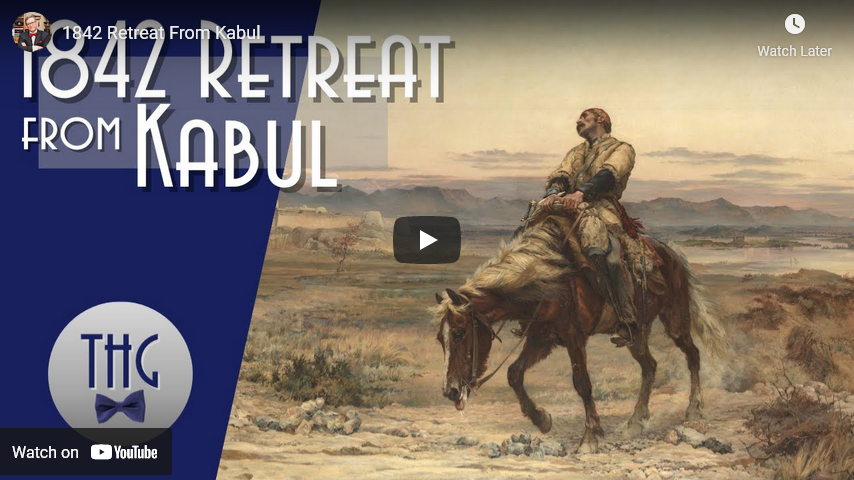
Published 22 Sep 2021On January 13, 1842, a single man on horseback approached the British garrison at Jalalabad, where soldiers were waiting for a retreating army of several thousand. Exhausted, the man had part of his skull shaved off by a sword and his horse was so exhausted that it would soon perish. As he was brought into the walls of the city the lone man was asked where the rest of the army was. “I am the army,” he replied. Thus ended a disastrous retreat from Kabul, where a British force of some 4,500 soldiers and thousands of civilians was almost entirely destroyed.
This is original content based on research by The History Guy. Images in the Public Domain are carefully selected and provide illustration. As very few images of the actual event are available in the Public Domain, images of similar objects and events are used for illustration.
You can purchase the bow tie worn in this episode at The Tie Bar:
https://www.thetiebar.com/?utm_campai…All events are portrayed in historical context and for educational purposes. No images or content are primarily intended to shock and disgust. Those who do not learn from history are doomed to repeat it. Non censuram.
Find The History Guy at:
Patreon: https://www.patreon.com/TheHistoryGuy
Please send suggestions for future episodes: Suggestions@TheHistoryGuy.netThe History Guy: History Deserves to Be Remembered is the place to find short snippets of forgotten history from five to fifteen minutes long. If you like history too, this is the channel for you.
Awesome The History Guy merchandise is available at:
https://teespring.com/stores/the-hist…Script by JCG
#history #thehistoryguy #Afghanistan
(I should note I am using “railroad networks” as a catch-all for a lot of different kinds of communications and logistics networks. The key technologies here are railroads, regular roads (which might speed along either leg infantry, horse-mobile troops and logistics, or trucks), and telegraph lines. That last element is important: the telegraph enabled instant, secure communications in war, an extremely valuable advantage, but required actual physical wires to work. Speed of communication was essential in order for an attack to be supported, so that command could know where reserves were needed or where artillery needed to go. Radio was also an option at this point, but it was very much a new technology and importantly not secure. Transmissions could be encoded (but often weren’t) and radios were expensive, finicky high technology. Telegraphs were older and more reliable technology, but of course after a barrage the attacker would need to be stringing new wire along behind them connecting back to their own telegraph systems in order to keep communications up. A counter-attack, supported by its own barrage, was bound to cut these lines strung over no man’s land, while of course the defender’s lines in their rear remained intact.)
Bret Devereaux, “Collections: No Man’s Land, Part II: Breaking the Stalemate”, A Collection of Unmitigated Pedantry, 2021-09-24.
Real Time History
Published 20 Jan 2022Get the Smartest Bundle in Streaming: https://smartbundle.com/thegreatwarsb
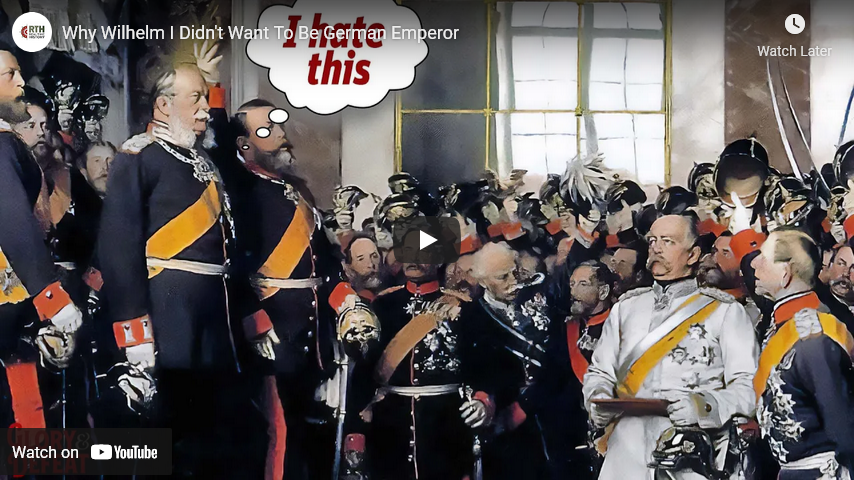
The proclamation of the German Empire on 18 January 1871 is usually portraited as a glorious ceremony. Most people associated it with the famous paintings from Anton von Werner. But the ceremony itself was far from well organized and the soon-to-be Emperor Wilhlem I himself was not to thrilled about the whole affair.
» THANK YOU TO OUR CO-PRODUCERS
John Ozment, James Darcangelo, Jacob Carter Landt, Thomas Brendan, Kurt Gillies, Scott Deederly, John Belland, Adam Smith, Taylor Allen, Rustem Sharipov, Christoph Wolf, Simen Røste, Marcus Bondura, Ramon Rijkhoek, Theodore Patrick Shannon, Philip Schoffman, Avi Woolf,» OUR PODCAST
https://realtimehistory.net/podcast – interviews with historians and background info for the show.» LITERATURE
Arand, Tobias: 1870/71. Der Deutsch-Französische Krieg erzählt in Einzelschicksalen. Hamburg 2018Bartmann, Dominik (Hrsg.): “Ausst.-Kat. DHM‚ Anton von Werner. Geschichte in Bildern.” Berlin 1993
Bauer, Gerhard u.a. (Hrsg.): Ausst.-Kat. MHM Dresden “Krieg – Macht – Nation. Wie das deutsche Kaiserreich entstand”. Dresden 2020
Bühl-Gramer, Charlotte: Anton von Werner – “Die Proklamierung des Deutschen Kaiserreichs 1871”, in: Der Europäische Bildersaal. Europa und seine Bilder, hrsg. v. Michael Wobring und Susanne Popp. Schwalbach/Ts. 2014. S. 86-97
Gouttman, Alain: La grande défaite. 1870-1871. Paris 2015
» SOURCES
Deuerlein, Ernst: Die Gründung des Deutschen Reichs 1870/71 in Augenzeugenberichten. Gerlingen 2011 (Neuauflage)Goncourt, Edmond de: Journal des Goncourts. II.1. 1870-1871. Paris 1890
Meisner, Heinrich Otto (Hrsg.): Kaiser Friedrich III. Das Kriegstagebuch von 1870/71. Berlin, Leipzig 1926
Merkelbach, Thea (Hrsg.): Ferdinand Viebig. Der Krieg 1870/71. Aus den Erinnerungen eines preußischen Offiziers. Zell/Mosel 2021
N.N. (Hrsg.): Bismarcks Briefe an seine Gattin aus dem Kriege 1870/71. Stuttgart, Berlin 1903
Werner, Anton von: Erlebnisse und Eindrücke 1870-1890. Berlin 1913
» OUR STORE
Website: https://realtimehistory.net»CREDITS
Presented by: Jesse Alexander
Written by: Cathérine Pfauth, Prof. Dr. Tobias Arand, Jesse Alexander
Director: Toni Steller & Florian Wittig
Director of Photography: Toni Steller
Sound: Above Zero
Editing: Toni Steller
Motion Design: Philipp Appelt
Mixing, Mastering & Sound Design: http://above-zero.com
Maps: Battlefield Design
Research by: Cathérine Pfauth, Prof. Dr. Tobias Arand
Fact checking: Cathérine Pfauth, Prof. Dr. Tobias ArandChannel Design: Battlefield Design
Contains licensed material by getty images
All rights reserved – Real Time History GmbH 2022
Forgotten Weapons
Published 6 Sep 2021http://www.patreon.com/ForgottenWeapons
https://www.floatplane.com/channel/Fo…
Cool Forgotten Weapons merch! http://shop.forgottenweapons.com
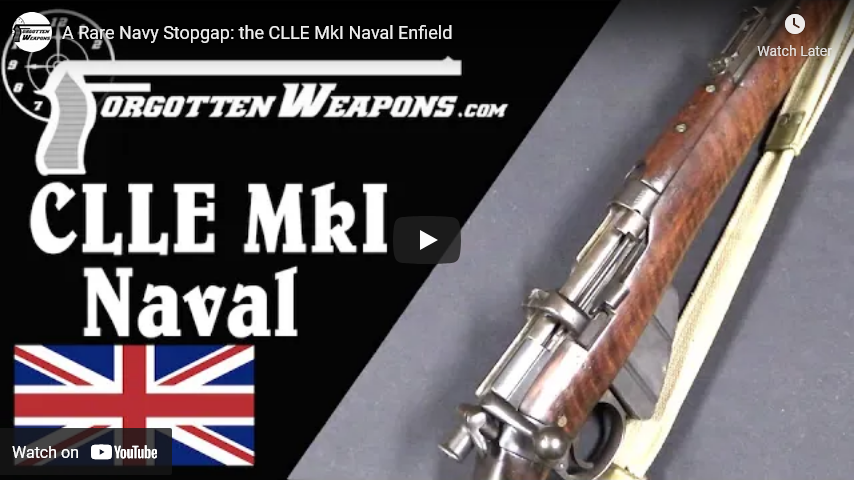
The British Royal Navy tended to accumulate some of the obsolescent patterns of Enfield rifles around the turn of the 19th century, as the Army had higher priority for the new types of rifle. This resulted in a rather odd and poorly-documented pattern, the Charger-Loading Lee Enfield (CLLE) MkI Naval.
Produced around 1910-1912, these guns began as original production Long Lee (or Metford) rifles. In 1910, the new MkVII high velocity Spitzer ammunition was adopted, and it was largely issued on charger clips for use in the new SMLE rifles. The Royal Navy decided that it wanted to be able to use this ammunition, and so it converted some (exact numbers are unclear) of the old Long Lees with a mishmash of updates.
The rear sights were recalibrated for MkVII ammunition, but not changed in style. So, no windage adjustment was possible on either the front or rear.
A charger bridge was added, including a channel cut to allow a sight picture on the old-style sights. This also involved removing the early pattern dust covers on the bolts.
The resulting guns were marked “HV” for “high velocity” in front of their rear sights. The right side of the receiver socket retained the original production markings, and “CLLE MkI” was added to the left side of the sockets.
Contact:
Forgotten Weapons
6281 N. Oracle 36270
Tucson, AZ 85740
Whitehall Moll History Clips
Published 11 Feb 2019Dr David Starkey reveals how Winston Churchill’s biography of his ancestor John Churchill marked out Winston as the only politician who truly understood war — just as WWII loomed.
PeriscopeFilm
Published 19 Oct 2021Want to support this channel and help us preserve old films? Visit https://www.patreon.com/PeriscopeFilm
Visit our website www.PeriscopeFilm.comThis episode of the television show Discovery ’70 is hosted by Virginia Gibson. “A Tale of Two Forts” focuses on two important historic forts from the War of 1812, Fort Niagara and Fort George, which are located between the United States and Canada on the Niagara River. The episode contains re-enactments of the activities at the forts, a bitter battle for control of the Niagara River valley, and the Battle of Queenston Heights — the first major battle of the war. Fort Niagara was an important American post near the outlet of the Niagara River into Lake Ontario. During the early days of the war, it launched artillery fire against the British at Fort George on the other side of the river. On 27 May 1813, the Americans won the Battle of Fort George, and held the enemy fortification. Later that same year, after the burning of Newark and with American forces in disarray, the British advanced on Fort George, forcing the American garrison to abandon it. The artillery could not be withdrawn from Fort George and was thrown into the ditch surrounding the fort. The American garrison at Fort Niagara was then taken by surprise in a night assault by a select force of British regular infantry. Fort Niagara remained in British possession until the end of the war, until they relinquished it under the terms of the Treaty of Ghent. The War of 1812 was won by the British, and was the last military conflict between the two countries.
In 1812, the U.S. Army’s Fort Niagara stood near the British Army’s Fort George in Canada. The introduction of the film begins with a re-enactment of U.S. soldiers in Revolutionary era dress advancing by canoe on the river at :12. British Redcoat soldiers and cannons at Fort George. Main title. At 1:16 the film shows small vessels near Lake Ontario, which was Indian land in 1812. At 1:27 a cannon. At 1:43 the American Fort Niagara, made of stone and brick. At 2:17 the French “stone house” is shown. This was actually a disguised fort with cannon positions. Defenses and the outside of the fort at 2:52. At 4:08, to show the seizure of the fort by the British, a Redcoat is shown triumphantly walking past the fort. The fort served as a refuge for English loyalists at 4:55. At 5:57 an American drummer, and Continental type soldiers. At 6:59 a woman and her daughter go to the well to fetch water. A type of oven is shown that heated cannonballs, so that they could not be re-used by the enemy. At 8:07 an overhead view of Fort George. Houses, log stockades, ladders, saws. British soldiers on parade and marching. At 11:20 British soldiers firing, and the Union Jack being raised. At 12:20 English and American officers dine together. The generals of both Fort George and Fort Niagara are shown in the re-enactment — Major-General Sir Isaac Brock for the British and American General Stephen Van Rensselaer. A Redcoat rides a horse toward the house where the dinner takes place, bearing news that the U.S. has declared war on the British. U.S. soldiers canoe past the island at 14:34, attempting to establish a foothold on the Canadian side of the Niagara River. The American assault on October 13, known as the Battle of Queenston Heights — the first major battle in the War of 1812 — takes place. American soldiers attempting plant “Old Glory” at 15:58. At 16:48 at Fort George, General Brock writes dispatches requesting reinforcements, then leads his men into battle as part of the counter attack. General Brock is fatally hit by sniper fire 17:51. The forts firing cannons at each other 18:13. At 19:17 British soldiers firing at American soldiers, the British prevail. At 19:49 the Americans retreating in defeat. At 20:07 The British salute their fallen general. The Americans salute Brock as well. The film ends at 21:04.
We encourage viewers to add comments and, especially, to provide additional information about our videos by adding a comment! See something interesting? Tell people what it is and what they can see by writing something for example: “01:00:12:00 — President Roosevelt is seen meeting with Winston Churchill at the Quebec Conference.”
This film is part of the Periscope Film LLC archive, one of the largest historic military, transportation, and aviation stock footage collections in the USA. Entirely film backed, this material is available for licensing in 24p HD, 2k and 4k. For more information visit http://www.PeriscopeFilm.com
World War Two
Published 18 Jan 2021Tens of thousands of Japanese soldiers were fighting over the jungles and beaches of Guadalcanal. To supply them with food, ammunition and medicine, the Japanese Navy had to resort to a series of daring supply runs — nicknamed the “Tokyo Express”. In the face of overwhelming American air superiority, the Tokyo Express had to find a tactic to overcome their enemy’s advantage, or it would doom its soldiers stranded on the island.
(more…)



Powered by WordPress