Quotulatiousness

March 4, 2022

Why Napoleon Invaded Russia in 1812

Filed under: France, History, Military — Tags: , , , , — Nicholas @ 04:00

Real Time History
Published 3 Mar 2022

» SUPPORT US ON PATREON: https://patreon.com/realtimehistory

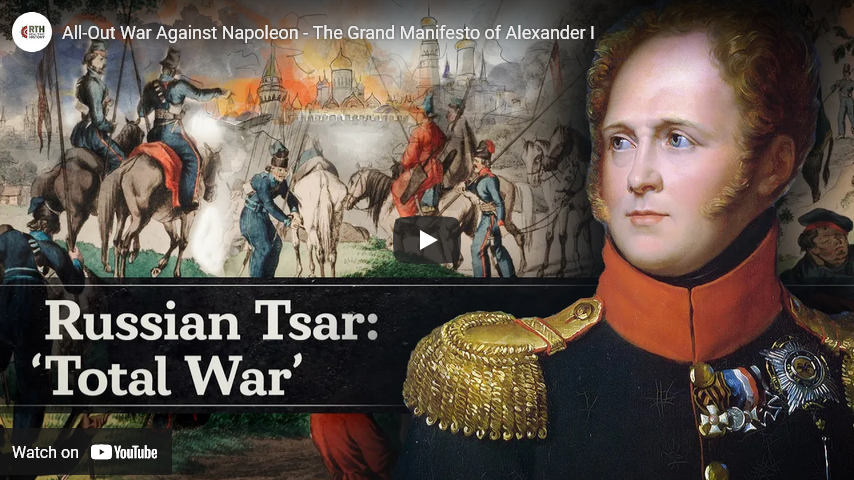
When Napoleon’s Grande Armée crossed the Nemen river into the Russian Empire in 1812, the die had been cast. In the years between the peace of Tilsit and the war against Russia, Tsar Alexander I and Emperor Napoleon had praised each other and Russia had even joined the continental blockade of Napoleon’s arch enemy Great Britain. Still, in 1811 both sides saw war as inevitable.

» THANK YOU TO OUR CO-PRODUCERS
John Ozment, James Darcangelo, Jacob Carter Landt, Thomas Brendan, Kurt Gillies, Scott Deederly, John Belland, Adam Smith, Taylor Allen, Rustem Sharipov, Christoph Wolf, Simen Røste, Marcus Bondura, Ramon Rijkhoek, Theodore Patrick Shannon, Philip Schoffman, Avi Woolf,

» SOURCES
Boudon, Jacques-Olivier. Napoléon et la campagne de Russie en 1812. 2021.
Lieven, Dominic. Russia Against Napoleon. 2010.
Rey, Marie-Pierre. L’effroyable tragédie : une nouvelle histoire de la campagne de Russie. 2012.
Zamoyski, Adam. 1812: Napoleon’s Fatal March on Moscow. 2005.

» OUR STORE
Website: https://realtimehistory.net

»CREDITS
Presented by: Jesse Alexander
Written by: Jesse Alexander
Director: Toni Steller & Florian Wittig
Director of Photography: Toni Steller
Sound: Above Zero
Editing: Toni Steller
Motion Design: Toni Steller
Mixing, Mastering & Sound Design: http://above-zero.com
Digital Maps: Canadian Research and Mapping Association (CRMA)
Research by: Jesse Alexander
Fact checking: Florian Wittig

Channel Design: Simon Buckmaster

Contains licensed material by getty images
All rights reserved – Real Time History GmbH 2022

From the comments:

Real Time History
10 hours ago

» SUPPORT US ON PATREON: https://patreon.com/realtimehistory

Dear RTH supporters and new time viewers,

as I am writing this the Russian invasion of Ukraine is a week old. Our thoughts are with our friends and family in Ukraine as we watch this historic tragedy unfold before our eyes. At the same time we have been working hard to launch our series about Napoleon’s Invasion of Russia in 1812. Most of you will know us for our approach to military history, we don’t just follow the “great men of history” and take the armchair general position that is just moving abstract markers on a map. To the best of our abilities, we are showing the ugly truth of war and the cost for the people on the ground. This will be no different for our Napoleon series.

At the end of this series, you will see that the Russian Empire emerges victorious and indeed 1812 is called “The Patriotic War” in Russia. We began work on the series long before the current phase of the war began, and, as those of you who are familiar with our work already know, this series is in no way a statement of support for the actions of the current Russian government. In our series, we will show how the 1812 campaign was another step towards the totalization of warfare as a whole. We will also show how the question of independence for non-Russians in the Russian Empire was already a thorn in Russia’s side over 200 years ago.

War is never glorious and after studying the 1812 campaign, we can say with certainty that this war was one of the ugliest wars in history. The cost for the common people between Moscow and the Berezina was immense and so was the cost for the French and non-French soldiers in the Grande Armée – and of course for the Russian soldiers too.

Lastly, current events always shape our understanding of history. A crude, perverted version of history has even been used by Vladimir Putin to justify this war of aggression against Ukraine. Undoubtably, this current war will also cause us to see 1812 in a different light. Napoleon’s Invasion of Russia is rightfully considered as one of the most important events in European history and it needs to be remembered for generations to come. With our series, we hope we can contribute to this understanding.

Thank you for your support and keeping a critical view of history alive with us. No to war!

Florian Wittig and the entire Real Time History team

Germany is finally being forced to adapt to 21st century realities

Filed under: Germany, History, Military, Russia — Tags: , , , , — Nicholas @ 03:00

In The Line, Matt Gurney outlines German history since the end of WW2 and why German governments have allowed the Bundeswehr to shrivel to almost Canadian Armed Forces status and why they have also been eager to scrap local power options in favour of imported Russian oil and gas:

A Bundeswehr Marder 1A3 Infantry Fighting Vehicle during an exercise at the Munster Training Centre, 1 September, 2010.
Photo by Bundeswehr-Fotos via Wikimedia Commons.

After 1990, the newly combined German military largely evaporated. Manpower levels plummeted; huge quantities of equipment were mothballed or sold off. German military spending fell well below that of other large European NATO allies. Indeed, despite their military history and economic clout, Germany, on a per capita basis, is more a Canada to NATO than a France or Britain.

And not by accident. Germany’s partial demilitarization was driven by a series of considerations, all of which reflected deliberate choices. Germany is still haunted by its Nazi-era history, and even its peacekeeping contribution to Afghanistan was controversial, marking the country’s first major foreign mission since 1945. A smaller, little-used military is a balm to the nation’s wounded psyche. Further, a small German military, and a Germany broadly and overtly uninterested in military affairs, did much to ease concerns of wary allies with living memories of life under the Luftwaffe and Wehrmacht.

And, well, yeah: the Germans also cut their force levels like crazy because, as noted in my recent column here, it saved them a ton of money.

It’s important to understand, though, that it’s not just about the German military, though that’s perhaps the most stark symbol. The country has emerged as a leading force for European unity and liberal-democratic values. Not for nothing was recently retired chancellor Angela Merkel touted as a leader of the free world during the rocky Trump presidency in Washington. Under Merkel, the country tried to live the ideal of the modern Europe, including by letting in a million refugees fleeing fighting in the Middle East, a decision that has opened up political fissures in Germany that remain a problem today.

Much has also been made of the country’s decision to shut down its nuclear plants and rely instead on imports of Russian natural gas for energy. Dismissed by many as foolhardy — and it was foolhardy — it’s also not hard to read a whiff of almost pathetic desperation into the move. If we are just nice enough, if we buy enough Russian gas, if we perfectly model the new amiable European ideal, maybe, just maybe, could Germany cast off some of its historical taint?

If that was the plan, it hasn’t worked, and gosh, it hasn’t worked with a vengeance. Since the Cold War ended — paused? changed? — the Germans have remained minimally armed and resolutely affable and committed to European unity. The country did increase military spending after Putin’s 2014 annexation of Crimea, but it almost had to — the German military had fallen into a state of neglect and non-functionality that any Canadian would find instantly recognizable. Hundreds of billions of Euros were budgeted, and tens of thousands of new enlistments authorized, in the first expansion of German military power since reunification. Even while embarking on this effort, though, Germany continued to shut down its nuclear plants and increase its use of Russian energy imports.

That’s over. Deader than East Germany, as much as a relic as the bits of the Berlin Wall that tourists now collect (I have a fragment myself somewhere in a file in my office, though damned if I could find it when I went searching today while procrastinating on this column). On top of the many billions of Euros already pledged to military modernization, Chancellor Olaf Scholz has committed a supplemental fund of a further €100 billion for immediate shoring up of military capabilities, and has also committed to substantially raise Germany’s baseline defence spending to the two per cent NATO target — an effectively permanent annual boost of roughly a third over the already higher level achieved since 2015.

Checkpoint Charlie – Berlin’s Cold War Frontier

Filed under: Germany, History, Military, Russia, USA — Tags: , , , , , , , — Nicholas @ 02:00

Mark Felton Productions
Published 4 Dec 2018

The history of Checkpoint Charlie, the most famous of Berlin’s East-West crossing points and the focus of a serious standoff between the US and Soviet Union in 1961 that could have led to World War III.

Support Mark at Patreon for $1 a Month!
https://www.patreon.com/markfeltonpro…

March 3, 2022

The Raid on St Nazaire – How to make an explosive entrance

Filed under: Britain, France, Germany, History, Military, WW2 — Tags: , , , , — Nicholas @ 04:00

Drachinifel
Published 23 Feb 2022

Today we take a look at the famous raid to destroy the Normandie Drydock. With apologies for starting off with the right pronunciation of St Nazaire and slipping back into my old incorrect way later on!

Sources:
www.amazon.co.uk/Storming-St-Nazaire-James-G-Dorrian/dp/0850528070
www.amazon.co.uk/St-Nazaire-1942-Commando-Campaign/dp/1841762318
www.amazon.co.uk/Operation-Chariot-Nazaire-Forces-Operations/dp/1844151166
www.amazon.co.uk/Into-Jaws-Death-Legendary-Saint-Nazaire/dp/1782064478

Free naval photos and more – www.drachinifel.co.uk

Want to support the channel? – https://www.patreon.com/Drachinifel

Want a shirt/mug/hoodie – https://shop.spreadshirt.com/drachini…

Want a poster? – https://www.etsy.com/uk/shop/Drachinifel

Want to talk about ships? https://discord.gg/TYu88mt

Want to get some books? www.amazon.co.uk/shop/drachinifelDrydock

MKb-42(W) – The Sturmgewehr That Never Was

Filed under: Germany, History, Military, Weapons, WW2 — Tags: , , , — Nicholas @ 02:00

Forgotten Weapons
Published 6 Jul 2018

http://www.patreon.com/ForgottenWeapons

Cool Forgotten Weapons merch! http://shop.bbtv.com/collections/forg…

When the German military first requested rifles in the new 8x33mm Kurz cartridge, there were two companies that provided designs. One was Haenel, who would eventually win the competition. The other was Walther, who submitted this rifle — the MKb-42(W). Where the Haenel gun fired from an open bolt and used a tilting-bolt locking system, the Walther rifle fired from a closed bolt and used a rotating bolt to lock. It also used an unusual annular gas piston. In competition, the Walther’s closed bolt operation made it more accurate in semiauto fire and less susceptible to ingress of dirt. However, it was substantially more complex and more expensive than the Haenel gun.

In total, just 200 of the MKb-42(W) were made before being cancelled in late 1942. Needless to say, very few survive today, and it was a great privilege to be able to disassemble and present this one to you. Thanks to the Association of Maltese Arms Collectors and Shooters for the invitation to do so!

If you enjoy Forgotten Weapons, check out its sister channel, InRangeTV! http://www.youtube.com/InRangeTVShow

Contact:
Forgotten Weapons
6281 N Oracle #36270
Tucson, AZ 85704

QotD: Diversity was Rome’s strength … as is true of almost every empire in history

The actual Roman Empire was fantastically diverse and more importantly, its military success hinged on its diversity at every stage of its existence. In many games and cultural products, that diversity is obscured because we lose sight of ethnic, religious, linguistic and cultural divisions which were very important at the time, but no longer matter to us very much. Let’s take a snapshot of Roman territory in 218 B.C. to give a sense of this.

Quite a few people look at a map like that, classify most of Rome’s territories as “Italian” and assume there is a large, homogeneous ethnic core there (except, I suspect, anyone who has actually been to Italy and is aware that Italy is hardly homogeneous, even today!). But Roman Italy in 218 B.C. was nothing like that.

Peninsular Italy (which doesn’t include the Po River Valley) contained a bewildering array of cultures and peoples: at least three distinct religious systems (Roman, Etruscan, Greek), half a dozen languages (some completely unrelated to each other) and many clearly distinct cultural and ethnic groups divided into communities with strong local identities and fierce local rivalries (if you want more on this, check out Salmon, The Making of Roman Italy (1982), Fronda, Between Rome and Carthage (2010), and Keaveney, Rome and the Unification of Italy (2005)).

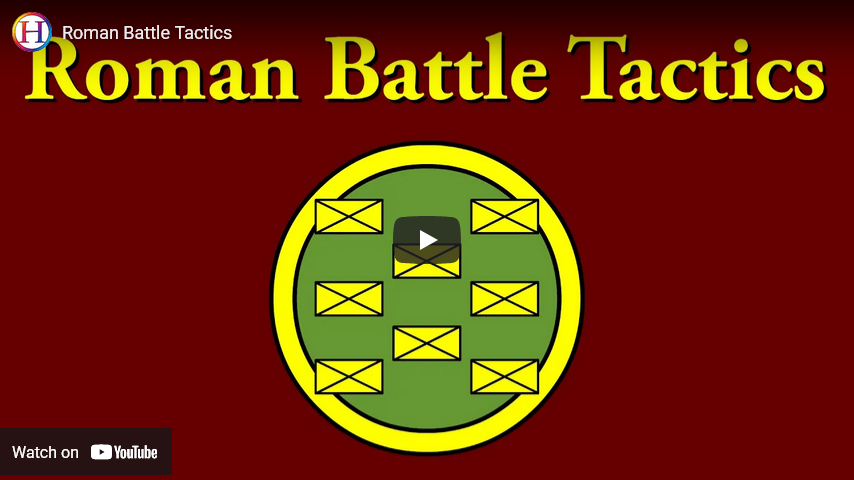
The Roman army was by no means entirely Roman – it was split between Roman citizens and what the Romans called the socii (lit: “allies”) – a polite term for the communities they had subjugated in Italy (a periphery!). Rome demanded military service – this was the resource they would extract – from these communities; the socii pretty much always made up more than half of the army. Diversity was literally the Roman strength, in terms of total military force. Without it, Rome would have remained just one city-state in Italy, and not a particularly important one besides.

(As an aside: while citizenship is extended to nearly all of Italy in the 80s B.C., by then Rome is making extensive use of non-Italian troops in its armies. by the early empire, half of the army – the auxilia – were non-Roman citizens recruited from the provinces. Roman armies were essentially never majority “Roman” in any period, save possibly for the third century. And before anyone asks what about even earlier than my snapshot – it is quite clear – both archaeologically and in the Romans’ own foundation myths – that Rome was a fusion-society, culturally diverse from the city’s foundation. Indeed, sitting at the meeting point of Latin and Etruscan cultural zones as well as upland and coastal geographic zones was one of the great advantages Rome enjoyed in its early history, as near as we can tell.)

Outside of Italy, narrowly construed, the diversity only increases. Sicily’s population included Greeks, Punic (read: Carthaginian) settlers, and the truly native non-Greeks. Sardinia and Corsica had their own local culture as well. Cisalpine Gaul – the Po River Valley – was, as the name implies, mostly Gallic! As the Romans expended into Spain during the Second Punic War, they would add Iberians, Celt-Iberians, and yet more Punic settlers to their empire. And even those descriptions mask tremendous diversity – Iberians and Celt-Iberians were about as diverse among themselves as the Italians were; a quick read of Strabo reveals a wonderful array of sub-groups in all of these regions, with their own customs, languages, and so on.

Even if the Romans didn’t raise military force directly from any one of these groups, they do need to raise revenue from them – remember, the entire point of having the empire is to raise revenue from it, to make other people do the farming and mining and other labor necessary to support your society from the proceeds of their tribute. To keep that revenue flowing – revenue that, as the Roman army professionalized in the late second century B.C., increasingly paid for Roman military activity which held the empire together – you need to be good at managing those groups. Empires that are bad at handling a wide array of different cultures/religions/languages do not long remain empires.

Bret Devereaux, “Collections: Why Are There No Empires in Age of Empires?”, A Collection of Unmitigated Pedantry, 2019-11-22.

March 2, 2022

Duck Tape – WW2 Secret Weapon – WW2 Special

Filed under: Britain, Food, Germany, History, Military, USA, WW2 — Tags: , , — Nicholas @ 04:00

World War Two
Published 1 Mar 2022

This war has seen a huge amount of scientific and technological innovation. New ways of taking lives, and new ways of saving lives abound. But what about the more ordinary, everyday, products of the war? Would you be surprised to hear that people in the 21st century will still be using WWII inventions in daily life.
(more…)

The Passenger Train, 1954

Filed under: History, Railways, USA — Tags: , — Nicholas @ 02:00

travelfilmarchive
Published 12 Nov 2008

An educational film about train travel in the 1950s. To purchase a clean DVD or digital download of this film for personal home use or educational use contact us at questions@archivefarms.com. To license footage from this film for commercial use visit: www.travelfilmarchive.com

QotD: George Orwell was a dedicated socialist

Filed under: Britain, Economics, History, Quotations, WW2 — Tags: , , — Nicholas @ 01:00

I began this book to the tune of German bombs, and I begin this second chapter in the added racket of the barrage. The yellow gun-flashes are lighting the sky, the splinters are rattling on the house-tops, and London Bridge is falling down, falling down, falling down. Anyone able to read a map knows that we are in deadly danger. I do not mean that we are beaten or need be beaten. Almost certainly the outcome depends on our own will. But at this moment we are in the soup, full fathom five, and we have been brought there by follies which we are still committing and which will drown us altogether if we do not mend our ways quickly.

What this war has demonstrated is that private capitalism – that is, an economic system in which land, factories, mines and transport are owned privately and operated solely for profit – does not work. It cannot deliver the goods. This fact had been known to millions of people for years past, but nothing ever came of it, because there was no real urge from below to alter the system, and those at the top had trained themselves to be impenetrably stupid on just this point. Argument and propaganda got one nowhere. The lords of property simply sat on their bottoms and proclaimed that all was for the best. Hitler’s conquest of Europe, however, was a physical debunking of capitalism. War, for all its evil, is at any rate an unanswerable test of strength, like a try-your-grip machine. Great strength returns the penny, and there is no way of faking the result.

When the nautical screw was first invented, there was a controversy that lasted for years as to whether screw-steamers or paddle-steamers were better. The paddle-steamers, like all obsolete things, had their champions, who supported them by ingenious arguments. Finally, however, a distinguished admiral tied a screw-steamer and a paddle-steamer of equal horsepower stern to stern and set their engines running. That settled the question once and for all. And it was something similar that happened on the fields of Norway and of Flanders. Once and for all it was proved that a planned economy is stronger than a planless one.

George Orwell, “The Lion And The Unicorn: Socialism and the English Genius”, 1941-02-19.

March 1, 2022

Genocide in Ukraine: The Holodomor | Into Context | War in Ukraine 01

Filed under: Economics, History, Russia — Tags: , , , , , — Nicholas @ 06:00

TimeGhost History
Published 28 Feb 2022

What do you get when you combine vigorous grain-tax policies, bad harvests with Stalin’s fear and animosity for the rural population of Ukraine? A man-created murder famine, designed to kill millions of Ukrainian men, women and children.
(more…)

One of the amazing features of Trudeau the lesser’s reign has been the Liberal Party’s abandonment of Canadian nationalism

Filed under: Cancon, History, Media, Politics — Tags: , , , — Nicholas @ 05:00

In The Line, Andrew Potter points out an interesting historical quirk where Canadian practice has long been at odds with most other western democracies:

On social media, it was common to see people lamenting this co-optation of the Canadian flag, with some wondering if it was even acceptable to fly the flag any more.

The reason this has been so disconcerting for so many is that a long-standing feature of the Canadian political landscape has been that the nationalists were predominantly on the left. As the author Stephen Henighan noted years ago in his essay “Free Trade Fiction”, this made Canada close to unique among industrialized, developed countries in the West, where the nationalists tend to be on the right. Left-wing nationalism is typically a feature of post-colonial states, where the fight for independence or liberation from colonial oppressors gets wrapped up into a nationalist narrative.

The reason left-wing nationalism has been so appealing to Canadians was precisely because of our weak identity and ongoing concerns over assimilation, first into the British empire, then later into the American continentalist project. If there’s a founding document of this tendency it is Margaret Atwood’s Survival, but it is prefigured by books like George Grant’s Lament for a Nation and finds its popular expression in everything from Heritage Minutes to the famous Joe Canada ad for Molson beer.

The left-wing focus of Canadian nationalism held sway from the end of the Second World War until about five years ago, and it was hugely consequential for Canadian politics. Most obviously, it helped establish the Liberals as the natural governing party. By making support for Liberal policies synonymous with defending Canadian independence, and by treating Liberal values as Canadian values, the Liberals were able to effectively frame their conservative opponents as un-Canadian.

On the continental policy front, it served to place a pretty clear barrier to deep political integration with the United States. In a 2005 essay that looked at the prospects for political co-operation between Paul Martin’s Liberals and George W. Bush’s Republicans, Joe Heath noted that the big obstacle to Canadian participation on things like Ballistic Missile Defence was the fact there was virtually no ideological overlap between nationalist groups in Canada and the U.S.

[…]

Today, things have completely reversed. A major catalyst for this shift was the decision by Justin Trudeau, when he came to power in 2015, to make denigrating Canada central to his Liberalism. It began when he started issuing formal apologies for past wrongs, at an unprecedented rate for Canadian federal governments. Then there was his acceptance of one of the findings of the National Inquiry into Missing and Murdered Indigenous Women and Girls, that Canada committed genocide against Indigenous peoples. Then there was his decision last spring to order all federal flags to fly at half-mast after the reports of the unmarked graves of hundreds of Indigenous children who died while in the supposed care of the residential school system. The flags remained lowered for months, until pressure from veterans groups and the approach of Remembrance Day forced his hand and he ordered the flags raised.

Whatever the merits of any of these initiatives taken on their own, taken as a whole they set a recurring tone from the government, that Canadians were a fallen people. There is no question that dumping on Canada is a deliberate strategy for the Trudeau Liberals. What is less clear is whether, in persuading Canadian leftists to dislike their country, the prime minister realizes the forces he has unleashed in the process.

Mycenaean Greece

Filed under: Architecture, Europe, Greece, History, Science — Tags: , , , , — Nicholas @ 04:00

Thersites the Historian
Published 25 Jan 2018

In this video, I look at the Mycenaean civilization in Greece, which lasted from 1600-1100 BCE.

What was lost when the Library of Alexandria burned?

Filed under: Africa, Books, Education, Greece, History — Tags: , , , , — Nicholas @ 02:00

Kings and Generals
Published 18 Nov 2021

⚔️Myth of Empires is out in Early Access on Steam, check it out and make sure to wishlist it https://click.fan/KingsGenerals-MoE

Kings and Generals’ historical animated documentary series on the history of Ancient Civilizations and Ancient Greece continue with a video on the Library of Alexandria, as we ask what was lost when the library burned.

Support us on Patreon: http://www.patreon.com/KingsandGenerals or Paypal: http://paypal.me/kingsandgenerals … We are grateful to our patrons and sponsors, who made this video possible: https://docs.google.com/document/d/1o…

The video was made by animator Waily Romero and illustrator Simone González, while the script was researched and written by David Muncan. This video was narrated by Officially Devin (https://www.youtube.com/user/OfficiallyDevin).

✔ Merch store ► teespring.com/stores/kingsandgenerals
✔ Podcast ► Google Play: http://bit.ly/2QDF7y0 iTunes: https://apple.co/2QTuMNG
✔ Twitter ► https://twitter.com/KingsGenerals
✔ Instagram ► http://www.instagram.com/Kings_Generals

Production Music courtesy of EpidemicSound

#Documentary #AncientGreece #Alexandria

QotD: The Great Library of Alexandria

Filed under: Africa, Books, History, Quotations, Religion — Tags: , , , — Nicholas @ 01:00

… we don’t know exactly who founded the Library and we aren’t clear on precisely when. What is clear is that it was quite early in the history of what was to become the great city of Alexandria and that its establishment made the city a centre of learning for centuries to come. What should also be made clear, however, is that it was not actually a “library” that was established at all. The “Great Library” that we refer to was a collection of books associated with a religious shrine – the Musaeum or Mouseion. This institution was, as the name implies, dedicated to the Nine Muses: Clio (history), Urania (astronomy), Calliope (epic poetry and song), Euterpe (lyric song), Polyhymnia (sacred song), Erato (erotic song), Melpomene (tragedy), Thalia (comedy) and Terpsichore (dance). The temple to the Muses had a dedicated priest appointed by the Ptolemaic kings and was the centre of a complex that included an exhedra, or hall, with recesses and seats for lectures and private study. According to the only and rather brief surviving description, given by Strabo in the early first century AD, it also included a communal dining hall with kitchens, a dormitory and other residential apartments, extensive gardens decorated with statues and a shaded walk. What we call the “Great Library” was a collection of books gathered to service the scholars who were housed and worked in the Mouseion and it was stored partially in the complex itself and, later, on other sites including at least three “daughter libraries”. The popular image of the Great Library as an echoing hall lined with shelves of scrolls with desks and tables for scholars is almost certainly inaccurate. That kind of library, which is still the model for many traditionally-styled libraries today, was developed much later by the Romans and the Mouseion would instead have had “a colonnade with a line-up of rooms behind … the rooms would serve for shelving the holdings and the colonnade provide space for the readers.” (Lionel Casson, Libraries of the Ancient World, Yale University Press, 2001, p. 34)

The Mouseion at Alexandria was far from the only shrine to the Muses in the ancient world, nor was it the only one with an associated centre of study. Pythogoras had recommended the establishment of a shrine to the Muses for the promotion of learning on his first arrival on Croton, for example and the Seleucid kings built one at Antioch in the late second century BC, with an attendant centre for study and a library. The fact that the Great Library was actually associated with a religious shrine is something that is ignored or glossed over in many modern accounts. [Carl] Sagan […] mentions about how one of the “daughter libraries” was the Serapeum, which was the temple of Serapis, but he skips around this in a rather gingerly manner. He says the Serapeum was “once a temple, but was later reconsecrated to knowledge”. This is nonsense. The Serapeum was always a temple and was not “reconsecrated” to anything. Libraries were often established as adjuncts to temples but it seems Sagan was attempting to distance the “annex” of the Great Library from the temple in which it sat because this did not quite fit his theme of secular knowledge’s superiority to “mysticism”. Like the Serapeum, the Mouseion was a temple with a research institution and a book collection associated with it.

This aside, the Mouseion really was primarily a research institution and its associated book collection – which we will continue to refer to by the shorthand expression the “Great Library” – was clearly one of if not the most extensive in the ancient world (more on that below). Many famous ancient scholars worked in the Mouseion, including Eratosthenes and probably Ptolemy. But several who are often claimed as working there (or even as being “librarians” of the Great Library, no less) clearly did not. Sagan’s hymn of praise says that Hipparchus studied there, but he seems to have only used some of the books from the collection and there is no evidence he ever even visited from his home on Rhodes. Likewise Sagan says Archimedes worked there, but there is no clear evidence for this and what little we know of Archimedes’ life indicates he spent it in Syracuse. Of the others Sagan mentions, Euclid and Herophilos may have studied there, depending on when the Mouseion was established and Dionysius of Thrace is another maybe, though more likely. On the whole, Sagan’s roll call of great scholars is mainly hyperbole and speculation rather than historical fact. The other figure who is regularly invoked as being associated with the Great Library, and even presented as its “last librarian”, is (again) Hypatia. This is despite the fact that both the Great Library and its daughter library in the Serapeum had ceased to exist by her time.

Tim O’Neill, “The Great Myths 5: The Destruction Of The Great Library Of Alexandria”, History for Atheists, 2017-07-02.

February 28, 2022

Roman Republic to Empire 03 Inequality and Corruption

Filed under: Europe, History, Italy, Military — Tags: , , , , , , — Nicholas @ 04:00

seangabb
Published 5 Feb 2021

[Update 2023-03-02 – Dr. Gabb took down the original posts and re-uploaded them.]

Here is the third lecture, which describes the decay of the Roman Constitution as a result of changes in patterns of land tenure in Italy after the Second Punic War, and as a result of the flood of foreign money into Rome from military victories and war indemnities and bribes.
(more…)

« Newer PostsOlder Posts »

Powered by WordPress