seangabb
Published 5 Feb 2021[Update 2023-03-02 – Dr. Gabb took down the original posts and re-uploaded them.]
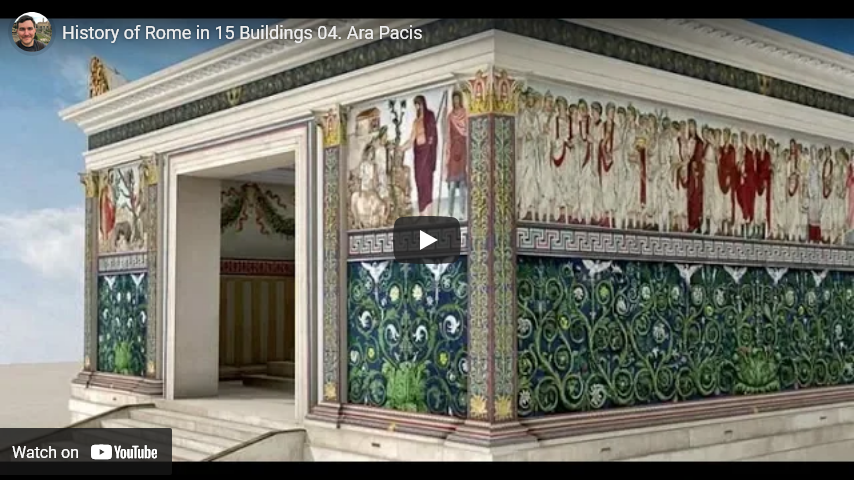
Here is the fourth lecture, which discusses the nature and extent of slavery in the Roman Empire. It begins with legal definitions and the attempted justifications by philosophers, then proceeds, via the use of slaves as workers in all occupations, including as sex objects, to the great slave revolts of the Late Republic. There is also a section on the valuation of slaves.
In this series, Sean Gabb will explain how the Roman Constitution was transformed, in just over a century, from an oligarchical republic with strong elements of democracy to a divine right military dictatorship.
(more…)
March 14, 2022
Roman Republic to Empire 04 Slavery in the Roman Republic and Empire
“Mister, we could use a man like Herbert Hoover Warren Harding again …”
Kind words for the oft-maligned 29th president of the United States? Daniel J. Mitchell is all over it:
Today, we’re going to celebrate the fiscal achievements of Warren Harding.
Most notably, as illustrated by this chart based on OMB data, he presided over a period of remarkable spending discipline.
Harding also launched very big — and very effective — reductions in tax rates.
And his agenda of less government and lower tax rates helped bring about a quick end to a massive economic downturn (unlike the big-government policies of Hoover and Roosevelt, which deepened and lengthened the Great Depression).
In an article for National Review last year, Kyle Smith praised President Harding’s economic stewardship.
In a moment of national crisis, Warren G. Harding restored the economic health of the United States … America in 1921 was in a state of crisis, reeling from the worst recession in half a century, the most severe deflationary spiral on record … Unemployment, it is now estimated, stood somewhere between 8.7 and 11.7 percent as returning soldiers inflated the size of the working-age population.
Between 1919 and August of 1921 the Dow Jones average plummeted 47 percent. Harding’s response to this emergency was largely to let the cycle play out … The recession ended in mid-year, and boom times followed. Harding and Congress cut federal spending nearly in half, from 6.5 percent of GDP to 3.5 percent. The top tax rate came down from 73 percent to 25, and the tax base broadened. Unemployment came down to an estimated 2 to 4 percent … Harding was a smashing success in a historically important role as the anti-Wilson: He restored a classically liberal, rights-focused, limited government, and deserves immense credit for the economic boom that kicked off in his first year and continued throughout the rest of the 1920s.
Smith’s article also praises Harding for reversing some of Woodrow Wilson’s most odious policies, such as racial discrimination and imprisoning political opponents (Wilson also had a terrible record on economic issues).
Of course, Harding’s term is much more often remembered for the scandals, and as most modern historians are far more interested in Woodrow Wilson’s bold progressivism they almost always decry Harding and then Coolidge for dismantling a lot of Wilson’s more enthusiastic progressive projects. Even H.L. Mencken — very much not a Wilson fan — found Harding to be not to his taste in turn:
On the question of the logical content of Dr. Harding’s harangue of last Friday, I do not presume to have views … But when it comes to the style of the great man’s discourse, I can speak with … somewhat more competence, for I have earned most of my livelihood for twenty years past by translating the bad English of a multitude of authors into measurably better English. Thus qualified professionally, I rise to pay my small tribute to Dr. Harding. Setting aside a college professor or two and half a dozen dipsomaniacal newspaper reporters, he takes the first place in my Valhalla of literati. That is, he writes the worst English that I have ever encountered. It reminds me of a string of wet sponges; it reminds me of tattered washing on the line; it reminds me of stale bean soup, of college yells, of dogs barking idiotically through endless nights. It is so bad that a sort of grandeur creeps into it. It drags itself out of the dark abysm … of pish, and crawls insanely up to the topmost pinnacle of posh. It is rumble and bumble. It is flap and doodle. It is balder and dash.
Legends Summarized: Journey To The West (Part IX)
Overly Sarcastic Productions
Published 26 Nov 2021Journey to the West Kai, episode 6: Two Weddings And An Asskicking
FIRST EPISODE: https://www.youtube.com/watch?v=61nuX…
PREVIOUS EPISODE: https://youtu.be/xFD_0PIfHHA
FULL SERIES: https://www.youtube.com/playlist?list…Our content is intended for teenage audiences and up.
PATREON: https://www.Patreon.com/OSP
PODCAST: https://overlysarcasticpodcast.transi…
DISCORD: https://discord.gg/osp
MERCH LINKS: http://rdbl.co/osp
OUR WEBSITE: https://www.OverlySarcasticProductions.com
Find us on Twitter https://www.Twitter.com/OSPYouTube
Find us on Reddit https://www.Reddit.com/r/OSP/
QotD: Crime and (lenient) punishment
A few years ago, an eminent British criminologist said, or admitted, that criminology was a century-old conspiracy to deny that punishment had any effect whatever on criminal behavior.
And certainly, no intellectual ever earned kudos from his peers by arguing that punishment was necessary, let alone that current punishments were too lenient. In general, the more lenient he was in theory, and the more willing to forgive wrongs done to others, the better person he was thought by his peers to be.
In a way, this was understandable. The history of punishment is so sown with sadism and cruelty that it is hardly surprising that decent people don’t want to be associated with it.
Often, horrific punishments were carried out in public, half as deterrence and half as entertainment. Clearly, they failed to result in a law-abiding society, from which it was concluded that what counted in the deterrence of crime was not severity of punishment but the swiftness and certainty of detection.
While the latter are important, however, they are obviously not sufficient. It is not the prospect of detection that causes people to refrain from parking in prohibited places, but that of the fine after detection.
This is so obvious that it would not be worth mentioning, had not so much intellectual effort gone into the denial of the efficacy of punishment as such. Despite this effort, I doubt whether anyone, in his innermost being, has ever really doubted the efficacy of, or necessity for, punishment.
In Britain, leniency has co-existed with a very large prison population. This is not as contradictory as it sounds: for the fact is that something must eventually be done with repeat offenders, who do not take previous leniency as a sign of mercy and an invitation to reform but as a sign of weakness and an invitation to recidivism. Instead of nipping growth in the bud, the British system fertilises the plant.
Theodore Dalrymple, “Our Leniency, and the Necessity of Punishing Crime”, The Iconoclast, 2021-11-29.
March 13, 2022
Rommel Leaves Africa – WW2 – 185 – March 12, 1943
World War Two
Published 12 Mar 2022Erwin Rommel loses his command and leaves Tunisia, while change in American command there puts George Patton in charge. On the ground the Axis lose the Battle of Medenine, but in the Soviet Union, Axis forces are on the move and heading for Kharkov.
(more…)
The amazing railroad movie that damaged Buster Keaton’s career – The General
Train of Thought
Published 26 Nov 2021In this video, we take a look at the tragedy of The General and how, what is now considered a classic of the silent era, was panned by audiences upon its release. Yes, I have been watching a lot of Buster Keaton films recently, how can you tell.
The General (Give it a watch): https://youtu.be/iHlBMKtgPOA
Please subscribe for more
This video falls under the fair use act of 1976
QotD: The Kaiser’s army and their Auftragstaktik innovations
Auftragstaktik is German for “mission-type tactics” or “mission-oriented tactics”, and it’s the main non-genetic reason they were so fearsome in battle back in the 20th century. Basically the idea is to delegate command authority to the lowest possible level, because the guys who are actually in the shit have a much better sense of the tactical realities than the guys back at headquarters. So long as the guys at the front are adequately briefed about command’s strategic objectives, they can, and should, make the tactical decisions in their areas of responsibility.
They started developing it before WWI, but proof of concept was in the trenches, and it succeeded spectacularly. It’s hard to exaggerate just how outmanned and outgunned the Germans were in that conflict, and I don’t have the exact numbers to hand, but one especially fearsome measure was “artillery density”. On the German side, the preparatory barrage before an attack averaged, at best, something like 1 shell per square foot (this is from memory, so doubtless incorrect, but you get the idea). The Allies achieved something like one shell per square inch, and there you have it …
… or there you should’ve had it, if the Allies had anything close to German-level command-and-control. But they didn’t. British WW1 memoirs, especially, are full of the kinds of ludicrous fuckups that Joseph Heller wouldn’t dare put in his novels. Robert Graves (yeah, I know, not the world’s most trustworthy source) had an especially funny scene where his company got this elaborate set of orders to move to such-and-such coordinates, build an elaborate strongpoint (laid out in minute detail), then move on to some other coordinates and do something else, again spelled out to the nth degree.
Those coordinates were, of course, a mile and a half behind enemy lines.
Or consider that silly movie 1917. If you haven’t seen it, don’t. If you have, and you know a little bit about WWI, you’ll remember how ludicrous the premise was. You don’t need to send a squad, Saving Private Ryan-style, to get a message to a distant dugout where they’re waiting to jump off for an attack. For one thing, there’s this little gadget called a “radio”, and by 1917 they were portable enough to get there. But even if not, there’s this other gadget called a “telephone”, and any C-and-C bunker anywhere along the line would have one, no matter how fast the advance was moving. Finally, even if they didn’t have either of those, the supporting artillery park sure as hell would’ve — just ring them up and call off the preparatory barrage, and I promise you, none of those troops would’ve moved an inch, even if it meant shooting Colonel Sherlock Holmes right in his prissy, pencil-mustached mug.
If you know a bit more about WWI, that kind of ludicrous, plot-ruining stupidity seems like the most accurate thing in the movie, because that kind of bullshit happened all the time. Telephone wires were always getting cut by shellfire, for instance, and since none of the red tabs [staff officers] back at the base would dream of seeing the situation for themselves, field soldiers were always getting scads of contradictory orders, sent at bewildering times. More than one advance was held up by frontline troops having to send runners back to check the orders of other runners, which had been countermanded by yet other runners, coming up with telephone messages …
The guys in the opposing trenches, meanwhile, were just getting on with it. Graves again (and again, I know), quoting from memory, wondered what the High Command would’ve done had they known that for the better part of a year, the entire sector opposite the Royal Welch Fusiliers had been held by no one higher than a corporal.
Severian, “Auftragstaktik: Logic and Anti-Logic”, Founding Questions, 2021-11-18.
March 12, 2022
So much for all that “end of history” hopefulness
I admit I never bothered to read Fukuyama’s The End of History and the Last Man, because I strongly disagreed with the notion — whether advanced by the author or imputed by critics and reviewers — that there ever could be an “end” to history, as long as there are still human beings around. Russia’s latest invasion of Ukraine seems to have also broken the spell for many other westerners, as Jen Gerson points out:
[After recounting the tale of the very first McDonald’s to open in Moscow in 1990] by all accounts, Russians went wild for McDonald’s — as did much of the world — and hundreds have since opened, including one within walking distance of the Red Square. Nothing could better symbolize the end of the bad, old Soviet era than this. A Russia that is peaceful, prosperous and at least a little open to the West was one in which a worker from the Kremlin could grab an American hamburger at lunch.
At least, they once could.
McDonald’s this week was one of several Western companies to announce that it was temporarily halting operations in Russia in response to its invasion of Ukraine. Coca-Cola, Starbucks, KFC, Pizza Hut, Ikea, Shell, BP, Exxon, credit card companies, accounting firms, even airline companies are cutting Russia off, to greater or lesser extents.
I pick on McDonald’s because that chain became so ubiquitous that it has served as a kind of foreign policy truism: For a generation, it was said that no two countries that possessed a McDonald’s had ever gone to war. And so, it was assumed, this would likely remain the case. We’re not talking about skirmishes or civil wars, or local incursions or proxy wars, mind you. But the general theory largely held: as economies globalized and became more interdependent, the costs of one country truly going to war with another would grow so insurmountable that it would soon be unthinkable. Shared prosperity would reduce the need for wars of resources; meanwhile, the more economically interdependent nations became, the more self-defeating and even suicidal the prospect would grow. Economic liberalization and globalization would therefore undoubtedly bolster the long peace. For a generation this has, mostly, held true.
It is this same logic that has underpinned Europe’s growing dependence on Russia’s oil market, for example. After all, no one would risk — well — what Russia is now risking. It is certainly not in that country’s best interest to retreat into a hermit kingdom, to suffer incredible privations, and to revert to a quality of life akin to what its people knew in the ’50s. And for what? Glory? Honour? Territorial expansion? What, does Russia need more land?
This is why the war in Ukraine has caught Westerners off guard, and shook countries that once existed in the Soviet sphere of influence.
History was supposed to be over, when the Western democracies reached their ideal end-state of civilizational evolution. War — true, grand, civilizational war — was far too costly to seriously contemplate. So we allowed our military capacity to atrophy and our strategic dependencies on hostile nations grew.
With hindsight we can see the glaring flaw in the logic adopted by some of the world’s most powerful people. Those wingnuts and lunatics who warned about the danger of making ourselves more dependent on Putin proved correct. Note how quickly Canada’s safe, reliable, democratic oil supply is enjoying a rebrand. Shared prosperity is no panacea to war.
Napoleon’s Grand European Army Marches Against Russia
Real Time History
Published 11 Mar 2022Get Nebula and CuriosityStream in a great bundle deal: https://curiositystream.com/realtimeh…
When Napoleon marched his Grande Armée into Russia in 1812, he had assembled the biggest army in modern European history. Only half of his troops came from territories of the expanded French Empire. Tens of thousands of troops also came from Poland, Prussia, Austria, and the German States as well as Southern Europe.
» SUPPORT US ON PATREON
https://patreon.com/realtimehistory» THANK YOU TO OUR CO-PRODUCERS
John Ozment, James Darcangelo, Jacob Carter Landt, Thomas Brendan, Kurt Gillies, Scott Deederly, John Belland, Adam Smith, Taylor Allen, Rustem Sharipov, Christoph Wolf, Simen Røste, Marcus Bondura, Ramon Rijkhoek, Theodore Patrick Shannon, Philip Schoffman, Avi Woolf,» SOURCES
Boudon, Jacques-Olivier. Napoléon et la campagne de Russie en 1812. 2021.
Brun, Jean-François. “Le cheval dans la Grande Armée“, Revue historique des armées (249), 2007.
Del Negro, Piero. “Les Italiens dans la Grande Armée. La campagne de Russie et le patriotisme italien“, Revue historique des armées (250), 2008.
Elting, John. Swords Around a Throne: Napoleon’s Grande Armée. 1997.
Lieven, Dominic. Russia Against Napoleon. 2010.
Nieuwazny, Andrzej. “Les Polonais de la Grande Armée“, in Rey, Marie-Pierre and Thierry Lentz, eds. 1812, la campagne de Russie. 2012.
Rey, Marie-Pierre. L’effroyable tragédie: une nouvelle histoire de la campagne de Russie. 2012.
Zamoyski, Adam. 1812: Napoleon’s Fatal March on Moscow. 2005.» OUR STORE
Website: https://realtimehistory.net»CREDITS
Presented by: Jesse Alexander
Written by: Jesse Alexander
Director: Toni Steller & Florian Wittig
Director of Photography: Toni Steller
Sound: Above Zero
Editing: Toni Steller
Motion Design: Toni Steller
Mixing, Mastering & Sound Design: http://above-zero.com
Digital Maps: Canadian Research and Mapping Association (CRMA)
Research by: Jesse Alexander
Fact checking: Florian WittigChannel Design: Simon Buckmaster
Contains licensed material by getty images
Maps: MapTiler/OpenStreetMap Contributors & GEOlayers3
All rights reserved – Real Time History GmbH 2022
Portuguese Army Lugers: From Manuel II to World War Two
Forgotten Weapons
Published 10 Nov 2021http://www.patreon.com/ForgottenWeapons
https://www.floatplane.com/channel/Fo…
Cool Forgotten Weapons merch! http://shop.forgottenweapons.com
Portugal first tested the Luger pistol in 1901, and its commission on self-loading pistols recommended the design for adoption in 1904. No money was available at the time, but a second commission again recommended the Luger in 1907, and it was formally adopted and purchased in 1908. The initial batch was 5,000 pistols chambered for the 7.65mm Parabellum cartridge with 120mm (4.75″) barrels and “M2” crests for then-king Manuel II. They were designated m/908, and numbered from 1 to 5000.
These pistol would satisfy Portuguese Army needs until 1935, then the Guarda National Republicana ordered another 564 pistols in the same configuration. These came from Mauser at this point, and had “GNR” crests. These were taken from Mauser commercial production, and have serial numbers between 1900v and 2500v.
The final purchase of Portuguese Army Lugers came in 1943, another 4,578 guns from Mauser. Of course, Germany was deep into the Second World War by this time, and there was no option for Portugal to order its specific configuration. Instead, the Portuguese m/943 pattern was identical to the German standard P08, with the Portuguese guns coming right off the same production line — Waffenamt markings and all. They are numbered between 150m and 5330m.
Contact:
Forgotten Weapons
6281 N. Oracle 36270
Tucson, AZ 85740
QotD: Defining an empire
… an empire is a state where the core ruling population exercises control and extracts resources from a periphery which is composed of people other than the core group (linguistically/culturally/ethnically/religiously distinct). So an empire is a state where one set of people (the core) extract resources (typically by force) from another set of people (the periphery).
That definition goes back to the root of the word in Latin: imperium, literally meaning a command or control; imperium comes from the Latin verb imperio (lit: “to order or command”). Thus imperium was a sphere of command over others. In Roman politics, this could mean an individual had the authority to command an army or to set up courts (consuls, praetors and dictators had this sort of imperium), but the Romans understood their empire as a sort of command exercised by the Senate and People of Rome over non-Roman people, thus they called that too imperium – an imperium of the Roman people (imperium populi Romani), crucially over the non-Roman people; once cannot, after all, have imperium over one’s self. An imperium of the Roman people must be an imperium over someone else.
Contrary to the venerable Wikipedia, empire does not require a monarchy. Rome was an empire while it was still a Republic, and France continued to hold an empire after it stopped being a monarchy. Athens, famously, converted the Delian League into an Athenian Empire (the Greek word used is ἀρχή (“arche“, pronounced ar-KHAY) while it was still, internally, a democracy. Often, when discussing the internal politics of these states (especially for Rome and France) we will distinguish between a period of “empire” and “republic” to note the shift from a republic to a monarchy or vice-versa, but that sort of nomenclature should not be taken to disguise the fact that, for instance, the Roman Republic in 150 B.C. was very much possessed of an empire, while still functioning as a republic.
Empire, I should note, seems to be one of – if not the – dominant form of large-scale human social organization since at least the bronze age (which is to say: since as far back as our sources let us see clearly). Ideas like loose federations of states (e.g. the EU) or nation-states are relatively new; in many cases, our modern nation-states are merely the consolidated form of what were originally empires of various sizes (e.g. China, Russia, but also France (see: Crusade, Albigensian), etc.). We don’t think about them that way anymore, because the steady application of state power created the shared culture that subsequently formed the foundation for the nation […] In many respects, empire is normal (which, please note, does not mean it is good), whereas this modern world composed primarily of nation-states is an unusual aberration.
Bret Devereaux, “Collections: Why Are There No Empires in Age of Empires?”, A Collection of Unmitigated Pedantry, 2019-11-22.
March 11, 2022
A Life Between Shells and Shelter – On the Homefront 015
World War Two
Published 10 Mar 2022Right from the start of World War Two, there has been little distinction between combatant and civilian. While bombs keep falling, people in Great Britain and in Germany are sitting in bunkers, basements and underground tunnels. We are taking a look at life inside those shelters.
(more…)
New Rome by Paul Stephenson
In The Critic, Daisy Dunn reviews a new history of the Eastern Roman Empire (called the Byzantine Empire by later scholars) that sounds quite interesting:
[Paul] Stephenson, a prolific scholar of Byzantium, has a wonderfully sharp eye for data and detail. His book examines the journey by which the Roman Empire progressed from being ruled from several different cities in the fifth century, among them Alexandria, Antioch, Constantinople and Rome itself, to just Constantinople, home to Procopius, and the “New Rome” of the book’s title.
I sat down expecting a narrative history of the fall of Rome, but was pleasantly surprised to find a portrait of the changing empire populated by statistics and technical hypotheses of a kind one would usually encounter in a copy of the Economist. The first ten pages alone contain references to cosmogenic radionuclides, the Maunder Minimum and the Early Anthropocene. I confess I needed a dictionary.
It is hard to think of another historian who applies such a scientific approach to ancient history, except perhaps the Stanford professor Josiah Ober, who has applied political theory and modern economic modelling to information garnered from classical sources to equally eye-opening effect. The terminology is not off-putting because Stephenson proves able to weave it succinctly and fluidly into his account of how the Late Empire functioned.
Constantinople, formerly Byzantium, was the principal base of the emperors from Theodosius I (“The Great”) in the final quarter of the fourth century onwards. The city was beautified with a wide variety of art and architecture, including the famous Egyptian obelisk, the arrival of which in the late fourth century is seemingly as mysterious as the appearance of the monolith in 2001: A Space Odyssey.
[…]
Attempts to answer the time-old question of why Rome fell have been characterised in recent years by a new awareness of the role that factors including pollution and climate change played. Anyone who has shrugged at the suggestion that the weather had anything to do with the demise of such a mighty empire will, I think, come away from this book persuaded that climate change and natural disasters provide an important part of the answer. Far from being moralistic and attempting to apply the examples of the past as a warning, Stephenson lays down the evidence unemotionally, and lets it speak for itself.
The causes of change were not purely driven by human behaviour, though smelting and, even more so, heavy warfare in the era of invading Huns and Vandals, had a significant environmental impact. Pollen records reveal a dramatic decline in the growing of cereals in Greece by about 600AD and, from the seventh century, pollination was happening predominantly through nature rather than agriculture.
The root cause of this was the destruction of arable land following invasions and the decline in human settlements. Add to this diminishing sunlight — measurements of “deposited radionuclides” indicate a significant reduction of light between the midfourth and late seventh centuries — and we are looking at a radically different landscape in this period from that of the High Empire.
Natural disasters (or were they?) also played a part. The later fifth and early sixth centuries witnessed a number of major volcanic eruptions. Vesuvius, which famously buried Pompeii when it awoke from seven centuries of dormancy in 79AD, erupted in 472 and 512, bookending, as Stephenson notes, the overthrow of the last Roman emperor, Romulus Augustulus.
Anti-Tank Chats #3 | Boys Anti Tank Rifle | The Tank Museum
The Tank Museum
Published 26 Nov 2021Our Patreons have already enjoyed Early Access and AD free viewing of our weekly YouTube video! Consider becoming a Patreon Supporter today: https://www.patreon.com/tankmuseum
Join Archive and Supporting Collections Manager Stuart Wheeler with his next instalment of Anti-Tank Chats on the “Boys Anti-tank Rifle”. It was a British anti-tank rifle in use during the Second World War.
0:00 – Intro
0:23 – Creation of the Boys Anti-Tank Rifle
4:43 – Features of the Rifle
(more…)
QotD: In 1939, Stalin never imagined Finland would refuse his demands
The one thing Stalin had not reckoned on was that any of these neighbors might object. Certainly he did not expect resistance from the Baltic states. As early as September 24th, 1939, three days before Warsaw surrendered to Germany, Soviet Foreign Minister Vyacheslav Molotov had advised the Estonian foreign minister, Karl Selter, to “yield to the wishes of the Soviet Union in order to avoid something worse.” Latvia was next in line. When Lithuania’s foreign minister, Juozas Urbšys, objected that Soviet occupation would “reduce Lithuania to a vassal state,” Stalin replied brutally, “You talk too much.”
[…]
When Molotov summoned a Finnish delegation to the Kremlin on October 12th, 1939, Stalin made a personal appearance to heighten the intimidation factor, and he handed the Finns a brutal ultimatum demanding, among other things, “that the frontier between Russia and Finland in the Karelian Isthmus region be moved westward to a point only 20 miles east of Viipuri, and that all existing fortifications on the Karelian Isthmus be destroyed.” Stalin made it clear that this was the price that Finland had to pay to avoid the fate of Poland.
Aggressive and insulting as the Soviet demands on Finland were, Stalin and Molotov fully expected them to be accepted. As the Ukrainian party boss and future general secretary Nikita Khrushchev later recalled, the mood in the Politburo at the time was that “all we had to do was raise our voice a little bit and the Finns would obey. If that didn’t work, we could fire one shot and the Finns would put up their hands and surrender.” Stalin ruled, after all, a heavily armed empire of more than 170 million that had been in a state of near-constant mobilization since early September. The Red Army had already deployed 21,000 modern tanks, while the tiny Finnish Army did not possess an anti-tank gun. The Finnish Air Force had maybe a dozen fighter planes, facing a Red Air armada of 15,000, with 10,362 brand-new warplanes built in 1939 alone. Finnish Army reserves still mostly drilled with wooden rifles dating to the 19th century. By contrast, the Red Army was, in late 1939, the largest in the world, the most mechanized, the most heavily armored, and the most lavishly armed, even if surely not — because of Stalin’s purges — the best led.
One can imagine, therefore, Stalin’s shock when the Finns said no. Stunned by this unexpected resistance, Stalin and Molotov did not, at first, know quite what to do. With his highly placed spies in London, Stalin must have known that the mood in foreign capitals was becoming agitated by Soviet moves in the Baltic region. On October 31st, 1939, the British war cabinet took up the question of “Soviet Aggression Against Finland or Other Scandinavian Countries”. And earlier in the month, FDR had written to Moscow, demanding clarification of the Soviet posture on Finland. At this point, the Finnish cause seemed to have the potential to transform the so-far desultory and hypocritical British-French resistance to Hitler alone into a principled war against armed aggression by both totalitarian regimes.
On November 3rd, after yet another encounter in the Kremlin had gone sour with the Finns, Molotov warned the delegates that “we civilians can’t seem to do any more. Now it seems to be up to the soldiers. Now it is their turn to speak.” However, the truth was that, in November 1939, neither side was ready to wage war. Having expected the Finns to come around, Stalin had issued no orders to begin invasion preparations until after talks had finally broken down.
Sean McMeekin, “Stopped Cold: Remembering Russia’s Catastrophic 1939 Campaign Against Finland”, Quillette, 2021-04-20.