World War Two
Published 8 Apr 2022“Bicycling to victory! Soldiers were moved by trucks and trains to the front, transported on the backs of tanks and armoured vehicles into combat. But sometimes they also went by using the good old bicycle. Pedaling over the paved roads of Western Europe and East Asia, specialised bicycle-companies surprised through mobility and independence. Bikes were comparatively cheap to mass produce and did not need fuel nor fodder. So they proved a real alternative to those nations that had to budget their oil resources.”
(more…)
April 9, 2022
Bicycle – Can You Put a Gun on It? – WW2 Special
Tank Chats #142 | Humber Scout Car | The Tank Museum
The Tank Museum
Published 17 Dec 2021Our Patreons have already enjoyed Early Access and AD free viewing of our weekly YouTube video! Consider becoming a Patreon Supporter today: https://www.patreon.com/tankmuseum
Join David Fletcher this week for a Tank Chat on Humber Scout Car which is a relative of the Daimler Dingo.
Timestamp:
00:00 – Intro
00:26 – What is the Humber Scout Car
4:23 – The Humber post war
(more…)
April 8, 2022
Napoleon Conquers A Heap of Ashes – Battle of Smolensk 1812
Real Time History
Published 7 Apr 2022Sign up at https://curiositystream.com/realtimeh… and get Nebula bundled in.
Smolensk is an important symbolic city to the Russians in 1812, for Napoleon it’s a strategic objective he wants to conquer to improve is deteriorating supply situation. The Battle of Smolensk leads to an inferno in the city, it gets virtually destroyed and nearly all residents flee.
» SUPPORT US ON PATREON
https://patreon.com/realtimehistory» THANK YOU TO OUR CO-PRODUCERS
John Ozment, James Darcangelo, Jacob Carter Landt, Thomas Brendan, Kurt Gillies, Scott Deederly, John Belland, Adam Smith, Taylor Allen, Rustem Sharipov, Christoph Wolf, Simen Røste, Marcus Bondura, Ramon Rijkhoek, Theodore Patrick Shannon, Philip Schoffman, Avi Woolf,» SOURCES
Der Feldzug der Österreicher gegen Rußland im Jahre 1812. Aus offiziellen Quellen von Ludwig Freiherrn von Welden, Wien 1870.
Vojtêch Kessler: Der österreichische Pyrrhos – Der Feldzug des österreichischen Auxiliar-Korps im Jahre 1812 in den Briefen des Oberbefehlshabers Karl Fürst von Schwarzenberg an seine Frau.
Boudon, Jacques-Olivier. Napoléon et la campagne de Russie en 1812. 2021.
Holzhausen, Paul. Die Deutschen in Russland 1812. Leben und Leiden auf der Moskauer Heerfahrt. Berlin 1912.
Lieven, Dominic. Russia Against Napoleon. 2010.
Rey, Marie-Pierre. L’effroyable tragédie: une nouvelle histoire de la campagne de Russie. 2012.
Zamoyski, Adam. 1812: Napoleon’s Fatal March on Moscow. 2005.» OUR STORE
Website: https://realtimehistory.net»CREDITS
Presented by: Jesse Alexander
Written by: Jesse Alexander
Director: Toni Steller & Florian Wittig
Director of Photography: Toni Steller
Sound: Above Zero
Editing: Toni Steller
Motion Design: Toni Steller
Mixing, Mastering & Sound Design: http://above-zero.com
Digital Maps: Canadian Research and Mapping Association (CRMA)
Research by: Jesse Alexander
Fact checking: Florian WittigChannel Design: Simon Buckmaster
Contains licensed material by getty images
Maps: MapTiler/OpenStreetMap Contributors & GEOlayers3
All rights reserved – Real Time History GmbH 2022
Chinese C96 “Wauser” Broomhandle
Forgotten Weapons
Published 10 Nov 2016Cool Forgotten Weapons Merch! http://shop.bbtv.com/collections/forg…
The C96 Mauser was a very popular handgun in China in the 1920s and 30s, which naturally led to a substantial number of domestically-produced copies of it. These ran the full range of quality, from dangerous to excellent. This particular example falls into the middle, appearing to be a pretty fair mechanical copy of the C96 action. However, it does exhibit classic Chinese misspelled markings — the workers who made these guns often did not actually read English (or German), and made best-guess attempts at copying the markings on authentic firearms. The result was sometimes something like the Wauser.
QotD: The fearlessness of De Gaulle
Like many monsters — for he could be a monster to those who defied him, and was often cruel and unfair to his most devoted supporters — he had enormous charm when he chose to turn it on. He was deeply mischievous and enjoyed puzzling and wrong-footing others. When he did not wish to give ground, he could be obtuse, an experience described by one victim as like “being confined … with a cormorant who spoke only cormorant.”
The evidence suggests that he was one of those dangerous people who simply do not know what fear is, and that he discovered this quite early in his long life. If a sergeant had not fallen dead on top of the young Lieutenant de Gaulle when he first went into battle at Dinant in August 1914, he would probably have died in some useless, gallant sacrifice and never have been heard of again. If he had not been knocked unconscious by the blast of a grenade at Verdun in March 1916, it is hard to believe that he would have allowed himself to be taken prisoner by the Germans. In that case he would almost certainly have died in that frightful battle, or not long afterward, another silent shade in that huge legion of shades who marched off into the dark during that appalling war.
Only his wife Yvonne was unimpressed by his grandeur, more than once urging him to retire, or puncturing his ambition. During the long, frustrating wilderness years between his wartime glory and his final presidential triumph, he mused to her that he might one day repeat his great rallying call of 1940. Using the rather patronizing endearment “Pauvre Ami,” she declared flatly, “Nobody will follow you.” He snapped back, “Shut up, Yvonne! I am old enough to know what I want to do!” In fact, on that occasion he was wrong and she was right. She even mocked his soldierly abilities. When the general’s aides suggested that they might install a machine gun at their remote, forbidding country home in Colombey, in case of an attack by communists, Yvonne scoffed that her husband would have no idea how to use it. Perhaps she would have.
Peter Hitchens, “A Certain Idea of France”, First Things, 2019-04.
April 7, 2022
Republic to Empire: The Triumph of Caesar
seangabb
Published 5 Mar 2021In 120 BC, Rome was a republic with touches of democracy. A century later, it was a divine right military dictatorship. Between January and March 2021, Sean Gabb explored this transformation with his students. Here is one of his lectures. All student contributions have been removed.
(more…)
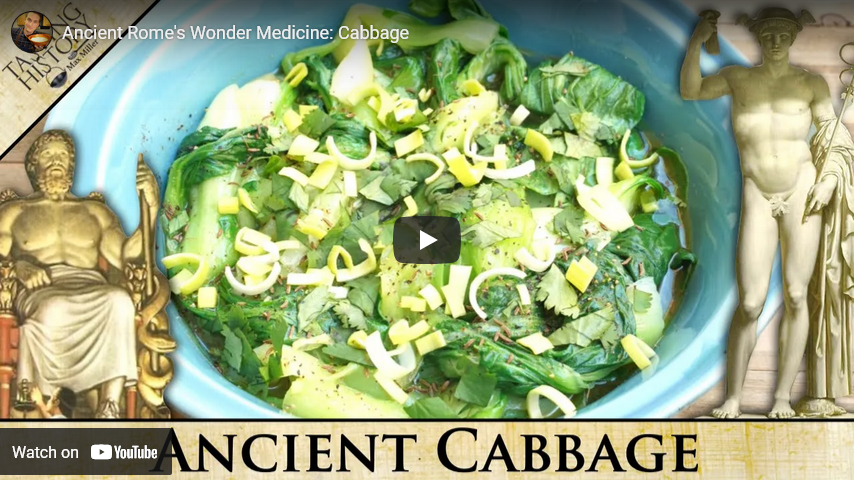
The Titanic‘s Crew Member Experience
Tasting History with Max Miller
Published 5 Apr 2022Use code TASTINGHISTORY16 for up to 16 FREE MEALS + 3 Surprise Gifts across 6 HelloFresh boxes plus free shipping at https://bit.ly/32fHZYT
Support the Channel with Patreon ► https://www.patreon.com/tastinghistory
Merch ► crowdmade.com/collections/tastinghistory
Instagram ► https://www.instagram.com/tastinghist…
Twitter ► https://twitter.com/TastingHistory1
Tiktok ► TastingHistory
Reddit ► https://www.reddit.com/r/TastingHistory/
Discord ► https://discord.gg/d7nbEpy
Amazon Wish List ► https://amzn.to/3i0mwGtSend mail to:
Tasting History
PO Box 766
Burbank, CA 91503LINKS TO INGREDIENTS & EQUIPMENT**
Sony Alpha 7C Camera: https://amzn.to/2MQbNTK
Sigma 24-70mm f/2.8 Lens: https://amzn.to/35tjyoW
Brown Stock: https://amzn.to/3K4Prq8
Tarragon Vinegar: https://amzn.to/3iV2HBNLINKS TO SOURCES**
Guide to the Crew of Titanic by Günter Bäbler: https://amzn.to/3IUiYS8
Last Dinner on the Titanic: https://amzn.to/3u8M6RH
The Last Night on the Titanic by Veronica Hinke: https://amzn.to/3qUH5tPRECIPE
Sirloin Steak
1lb small golden potatoes
2 tablespoons clarified butter
Brown Stock: https://amzn.to/3K4Prq8
(100ml) White wine
(100ml) Tarragon Vinegar: https://amzn.to/3iV2HBN
2 tablespoons chopped Shallots
1 cup (15g) tarragon leaves, roughly chopped
2 teaspoons (2.5g) Whole Peppercorns, roughly pounded
Pinch of Salt
3 large Egg yolks
2 ¼ sticks (250g) Butter
3/4 tablespoon finely chopped tarragon
Pinch of CayenneSlowly reduce the brown stock until it coats the back of a spoon.
Wash then carve the potatoes into small olive shapes. Melt the clarified butter with a little salt and pepper then, over a very low heat, add the potatoes and cook until golden brown.
Prepare the Béarnaise sauce using Escoffier’s recipe below. I have cut the ingredients in half and still had more than 2 cups of sauce.
Escoffier’s Béarnaise:
Sauce Béarnaise
“Place 2 dl each of white wine and tarragon vinegar in a small pan with 4 tbs chopped shallots, 20g chopped tarragon leaves, 10g chopped chervil, 5g crushed peppercorns and a pinch of salt. Reduce by two thirds and allow to cool.
“Add 6 egg yolks to the reduction and prepare the sauce over a gentle heat by whisking in 500g of ordinary or melted butter. The cohesion and emulsification of the sauce is effected by the progressive cooking of the egg yolks which depends to a great extent on its preparation over a slow heat.
“When the butter has been completely incorporated, pass the sauce through a fine strainer; correct the seasoning, add a little Cayenne and finish by mixing in 1 tbs chopped tarragon and ½ tbs chopped chervil.”**Some of the links and other products that appear on this video are from companies which Tasting History will earn an affiliate commission or referral bonus. Each purchase made from these links will help to support this channel with no additional cost to you. The content in this video is accurate as of the posting date. Some of the offers mentioned may no longer be available.
Subtitles: Jose Mendoza | IG @ worldagainstjose
#tastinghistory #titanic
Look at Life – Taxi Taxi – The Knowledge (1960)
April 6, 2022
How To Build a Nazi Fortress – WW2 Special
World War Two
Published 5 Apr 2022Few things of the Second World War are more intimidating than the iconic German bunker. Made out of reinforced concrete with a thickness of up to 3.5 meters, these casemates and pillboxes were incredibly tough to destroy. Built to withstand shells and bombs, they provided shelter to troops and civilians alike. But there were also some even larger super-structures. From giant U-Boat shelters and fearsome Flak-Towers, to the ultimate Führerbunker, the Germans perfected the art of bunker building.
(more…)
QotD: Haruspicy and Augury in Roman religious observances
Perhaps the most important form of divination in Rome was haruspicy (which spell-check insists is not a word, but is). Performed by a haruspex, haruspicy was the art of determining the will of the gods by examining the entrails of animals – particularly sacrificed animals and most commonly (but not exclusively) the liver. The most common thing haruspicy might tell you is if the sacrifice was accepted: a malformed or otherwise ill-omened liver might indicate that the ritual had failed and that the god had refused the sacrifice.
Remember that the do ut des system is essentially one of bargaining with the gods, and the god you are bargaining with always has the option of simply refusing the bargain. This might mean some failure in the mechanics of the ritual (necessitating it be performed again), or that the god had been offended in some way, but it might also mean something more. A lot of sacrificial rituals were done at the outset of important tasks – before battles, political events, etc. What the god might be telling you then with a failed sacrifice is “DO NOT PROCEED”.
The practitioner is given a bit of wiggle room on how to interrupt a failed sacrifice in this way: it might mean “don’t attack at all”, but it might also mean “don’t attack now”. Roman generals, ready to attack, might repeat the same ritual over and over again, like a runner at the start of a race waiting for the “go” signal.
But more information was potentially available, because the exact nature of the liver and its quality might signal more things. In Rome, it was understood that the very best knowledge in this regard came from the Etruscans (an example of how antiquity lends credibility to ritual – Etruscan religion was old even to the Romans, and thus had acquired a strong reputation). The reading of a liver could be complex: we find “liver models” from both Italy and the Near East with guidance on how to interpret different parts of the liver of a sacrificed animal. This could be fairly specific: famously, it was haruspex who warned Caesar about the danger of the Ides of March (Seut. Caes. 81.2).
Another key system for divining the will of the gods in Rome was augury, the reading of the flights of birds (mostly, there are actually other categories of auspicia); doing so is called taking the auspices, and the men who do so are the augurs. Augurs were particularly important in political matters, taking the auspices for elections and the like. Unfavorable auspices could invalidate even a consular election: the gods get a vote too.
Bret Devereaux, “Collections: Practical Polytheism, Part III: Polling the Gods”, A Collection of Unmitigated Pedantry, 2019-11-08.
April 5, 2022
Tower Bridge Fighter Jet Incident | Tales From the Bottle
Qxir
Published 26 Nov 2021This jet pilot decided to stage a protest in the skies of London, but his actions became more well known for an incident that occurred on his journey home.
“The Hawker Hunter Tower Bridge incident occurred on 5 April 1968 when Royal Air Force (RAF) Hawker Hunter pilot Alan Pollock performed unauthorised low flying over several London landmarks and then flew through the span of Tower Bridge on the Thames. His actions were to mark the 50th anniversary of the founding of the RAF and as a demonstration against the Ministry of Defence for not recognising it.
Upon landing he was arrested and later invalided out of the RAF on medical grounds, which avoided a court martial.”
More on Wikipedia:
https://en.wikipedia.org/wiki/Hawker_…Merch: teespring.com/stores/qxir
Patreon: https://www.patreon.com/qxir
Twitter: https://twitter.com/QxirYT
Discord: https://discord.gg/jZzvvwJ
Twitch: https://www.twitch.tv/qxiryt/
Subreddit: https://www.reddit.com/r/Qxir/
From the comments:
Qxir
3 weeks ago (edited)
Yes, I know it’s pronounced “Tems” lol
April 4, 2022
The Falklands War — the first postmodern war or the last colonial war?
Dominic Sandbrook in UnHerd says Britain “needed the Falklands War”:
On the morning of Monday, 5 April 1982, the aircraft carrier Invincible slipped its moorings and eased into Portsmouth Harbour, bound for the South Atlantic. It was barely ten o’clock, yet the shoreline was packed with tens of thousands of flag-waving onlookers, singing and cheering for all they were worth, many of them in tears. From every building in sight flew the Union Jack, while well-wishers brandished dozens of homemade banners: “God Bless, Britannia Rules”, “Don’t Cry for Us, Argentina”. In the harbour, a flotilla of little boats, crammed with spectators, bobbed with patriotic enthusiasm. And as the band played and the ship’s horn sounded, red flares burst into the sky.
It is 40 years now since the outbreak of the Falklands War, one of the strangest, most colourful and most popular conflicts in British military history. Today this ten-week campaign to free the South Atlantic islands from Argentine occupation seems like a moment from a vanished age. But that was how it felt at the time, too: a scene from history, a colossal costume drama, a self-conscious re-enactment of triumphs past.
On the day the Invincible sailed, Margaret Thatcher quoted Queen Victoria: “Failure? The possibilities do not exist.” In the Sun, executives put up Winston Churchill’s portrait. And as the travel writer Jonathan Raban watched the departure of the Task Force on television, he thought it was like a historical pageant, complete with “pipe bands, bunting, flags, kisses, tears, waved handkerchiefs”. He regarded the whole exercise with deep derision, until the picture blurred and he realised that, despite himself, he was crying.
For many people the Falklands War was only too real. There were serious issues and genuine lives at stake, not just for the 1,813 islanders who had woken to find military vehicles roaring down their little streets, but for the tens of thousands of Argentine conscripts and British servicemen who were soon to be plunged into the nightmare of combat. And although polls suggest that about eight out of ten Britons strongly supported it, there were always those who considered it a mistake, a tragedy, even a crime. A certain Jeremy Corbyn thought it a “Tory plot to keep their money-making friends in business”. The novelist Margaret Drabble considered it a “frenzied outburst of dying power”. A far better writer, Argentina’s Jorge Luis Borges, famously called it “two bald men arguing over a comb”. That seems an odd analogy, though, for almost 2,000 blameless sheep farmers, who had no desire to be ruled by a junta that threw dissenters out of helicopters.
One common view of the Falklands campaign is that it was Britain’s last colonial war. But this strikes me as very unpersuasive. When we think of colonial wars, we think of wars of conquest by white men in pith helmets against brown-skinned underdogs. We think of embattled imperialists struggling to stave off a nationalist uprising, or fighting in defence of white settlers against a native majority. But the Falklands War was none of those things. There was no oppressed indigenous majority — except perhaps for the islanders themselves, some of whom had been there since the 1830s. As for the Argentines, their Spanish and Italian surnames were a dead giveaway. Indeed, few countries in the Americas had done a more thorough job of eliminating their original inhabitants.
The Congress of Vienna (Part 2) (1814 to 1815)
Historia Civilis
Published 2 Apr 2022Patreon | http://historiacivilis.com/patreon
Donate | http://historiacivilis.com/donate
Merch | historiacivilis.com/merch
Mailing List | http://historiacivilis.com/mailinglist
Twitter | http://historiacivilis.com/twitter
Website | http://historiacivilis.comSources:
Eric Hobsbawm, The Age of Revolution, 1789-1848
Adam Zamoyski, Rites of Peace: The Fall of Napoleon and the Congress of Vienna
Richard J. Evans, The Pursuit of Power: Europe 1815-1914
Wolfram Siemann, Metternich: Strategist and Visionary
A. Wess Mitchell, The Grand Strategy of the Habsburg Empire
Robert K. Massie, Dreadnought: Britain, Germany, and the Coming of the Great War
Adam Hochschild, Bury the Chains: Prophets and Rebels in the Fight to Free an Empire’s Slaves
Harry Dickinson, Public Opinion and the Abolition of the Slave Trade | https://bit.ly/2XRMLJC
The History of Parliament: The 5th Parliament of the United Kingdom | https://www.historyofparliamentonline…Music:
“Past,” by Nctrnm
“While She Sleeps (Morning Edit),” by The Lights Galaxia
“Mell’s Parade,” by Broke For Free
“Day Bird,” by Broke For Free
“Thomas Neutrality,” by Enrique Molano
“Infados,” by Kevin MacLeod
“The House Glows (With Almost No Help),” by Chris Zabriskie
“Hallon,” by Christian Bjoerklund
Reconsidering the legacy of conservative activist Mary Whitehouse
Mary Whitehouse was a figure of mockery and abuse for much of her time on the public stage, a one-woman British equivalent to the American “Moral Majority” in the 1980s, without the performative religious connections. Even those who agreed with her concerns were careful to distance themselves from her, yet Alexander Larman wonders if she wasn’t more right than wrong after all:
I was surprised to find few public domain images of Mary Whitehouse available, so here is a selection of thumbnails (hopefully this won’t violate any copyright restrictions)
“The Queen of Clean”. “The Archangel of Anti-Smut”. Whatever you thought of the campaigner and activist Mary Whitehouse, she was hard to ignore. From her heyday in the 60s until her gradual decline in both relevance and physical faculties in the late 80s, she became the physical embodiment of social conservatism, loudly demanding that “family values” be placed at the heart of the national conversation, and that national evils (including pornography, abortion, swearing, homosexuality and the BBC in general) should be either tamed or dispensed with altogether.
Whitehouse died in 2001, and the obituaries trod a fine line between acknowledging her impact — even, at times, her importance — and denigrating her as someone who was almost driven insane by her campaign to clean up Britain’s screens. The Daily Telegraph, a newspaper that one might have assumed was a natural ally, sighed “[she was] seemingly as concerned to eliminate the occasional ‘damn’ or ‘bloody’ as to prevent the worst excesses of pornography or violence” and the Guardian, a long-standing and probably inevitable bête noire, marked her passing by calling her “a self-appointed and much-derided guardian of public morals”, sneered at her “simplistic and nannyish” views and approvingly cited Ned Sherrin’s comment that “If she had been ignored for the last 30 years the world would have been a better place”.
It also, with some reluctance, admitted that “it was possible for many middle-of-the-roaders to think she was just possibly right”. The debate continues as to whether Whitehouse was an oddly prurient figure, whose apparently endless campaigning was dictated by some sort of strange mental imbalance (she boasted about her “direct line to God”, as if the Almighty were responsible for guiding her attempts to rail against the likes of Dennis Potter) or an ahead-of-her-time master of both media relations and social understanding. And now, for some reason, Whitehouse has once again returned to our screens and airwaves, two decades after her death.
The journalist Samira Ahmed recently presented a Radio 4 documentary, Disgusted, Mary Whitehouse, that attempted to ask whether Whitehouse had somehow anticipated the rise of the internet, social media and society’s concomitant, and doomed, attempts to preserve the nation’s innocence amidst the ready availability of virtually every human depravity imaginable at the jab of an eager finger. This was followed by another two-part documentary on television, Banned! The Mary Whitehouse Story, in which various luminaries debated whether Whitehouse was simply a bigot who should best be forgotten about, or if she had a salient point that has, if anything, become more relevant since her death.
On the one hand, there is little doubt that Whitehouse was a proudly ignorant and even destructive figure when it came to arts and culture. She refused to watch most of the programmes that she organised campaigns against, announcing, “I have too much respect for my mind,” and declined to consider such things as artistic merit, creative intentions or context. For her, nudity, violence and sex were things that had no place in British public life, and she was happy to roll up her sleeves and lead well-organised campaigns against things that she disapproved of. It was partly because of her that Kubrick withdrew A Clockwork Orange from exhibition in Britain for two decades, and her private prosecutions of Gay News and the director Michael Bogdanov for, respectively, blasphemous libel and staging a homosexual rape scene in The Romans in Britain, were vindictive and viciously closed-minded. The first was successful, the second was not, and its failure in 1983 saw the beginning of her decline from public relevance.
April 3, 2022
Patton Has a Plan, and it’s Bad – WW2 – 188 – April 2, 1943
World War Two
Published 2 Apr 2022American attacks in Tunisia meet with local disaster, but in general the Axis forces are withdrawing there. The Allies learn about the German rocketry plans this week, and both sides are making plans for action in the Pacific.
(more…)