
… places that will be serving up the “hand-wrapped garbage disposal delight” known as the “Burrito” (so named because it contains scraps of otherwise inedible food that was, in the past, fed only to Burros.) Touted by the poor and the brain-dead alike as a “tasty snack,” the Burrito violates the primary rule of dining, “Never eat anything bigger than your head,” while recycling stuff usually found in the dumpsters of good restaurants through the innards of a human host who should know better and — shortly — will.
This last item is probably why the Burrito (AKA “Tomorrow’s Turd Today”) remains popular with liberal medheads hooked on keeping human ethnic pets on their progressive political plantations. After all, if you can only afford to eat or to feed people once a day, the Burrito is your huckleberry. And if you can also reduce food scraps that would otherwise go straight to the landfill into human waste, you also have a food object that “walks lightly on the planet.”
Gerard VanderLeun, “GRINGO DE MAYO!: A Counter-Celebration for May 7”, American Digest, 2018-05-04.
July 21, 2020
QotD: Burritos
July 9, 2020
Victorian Banana Candy or why does banana candy typically not taste like bananas?
Lofty Pursuits
Published 8 Aug 2017Buy these candies at http://www.pd.net
Watch banana candies being formed by hand using Victorian techniques and discover why banana candy typically does not taste like what you think a banana should taste like. Also explore the weirdness of the banana plant and the correct way to peel a banana.
More information about the Secret Life of the City Banana:
https://www.nytimes.com/2017/08/04/ny…Banana with seeds photo By Warut Roonguthai – Own work, CC BY-SA 3.0, https://commons.wikimedia.org/w/index…

July 7, 2020
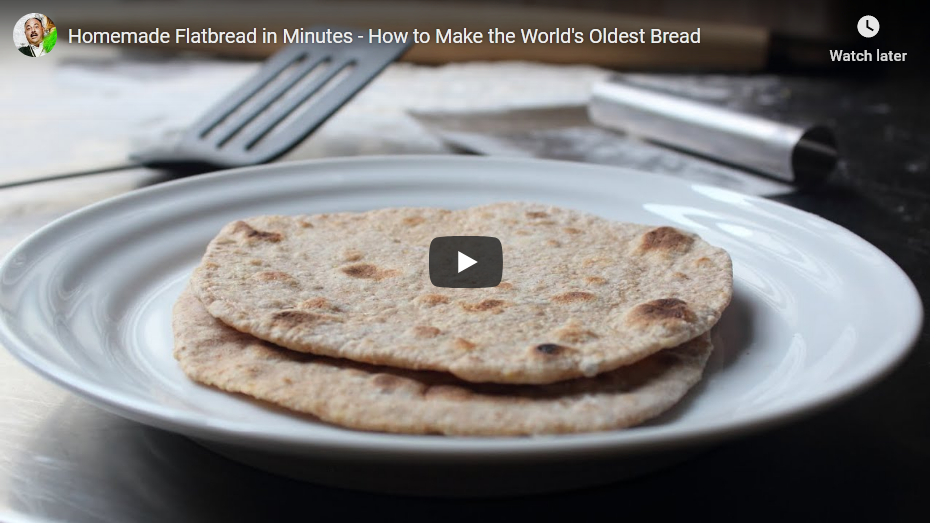
Homemade Flatbread in Minutes – How to Make the World’s Oldest Bread
Food Wishes
Published 17 Nov 2014Learn how to make Homemade Flatbread in minutes! Visit http://foodwishes.blogspot.com/2014/1… for the ingredients, more information, and many, many more video recipes. I hope you enjoy this easy, homemade flatbread technique!
July 6, 2020
Sober Sailors – Rum Rations In The Navy: Grog
Townsends
Published 24 Feb 2020Visit Our Website! ➧ http://www.townsends.us/ ➧➧
Help support the channel with Patreon ➧ https://www.patreon.com/townsend ➧➧
Instagram ➧ townsends_official

June 1, 2020
Buffalo Cauliflower Wings with Blue Cheese Dip – You Suck at Cooking
You Suck At Cooking
Published 5 Feb 2020Buffalo Cauliflower, also known as Buffalo Cauliflower Wings, is based on Buffalo Wings, which are Chicken Wings in Hot Sauce. Who knew that combining food with hot sauce would taste good? Nobody did.
YSAC Book and merch: http://yousuckatcooking.com
http://instagram.com/yousuckatcooking
https://twitter.com/yousuckatcookinRECIPE
• To make this Buffalo Cauliflower, you can start with a small or medium sized cauliflower.
Rip it apart while making loud grunting sounds.
• Combine two tablespoons of olive oil, 1 tablespoon of water, 2 teaspoons of garlic powder, and some salt in a bowl and wangjangle it until there’s no need for further wangjangling because you did a good job.
• Combine the pre-buffalish elixir to the cauliflower in a bigger bowl and gallop around the house. Alternatively, you could have made the elixir in that big bowl to begin with. Now you’re thinking
Throw that cauliflower onto a parchment papered pan and bake it at 450 for 15 minutes.
• Meanwhile, make the Buffalo sauce: two tablespoons of melted butter and ½ cup of pepper sauce.
• Take that cauliflower out of the oven (unless you have an Automated Oven Sauce Dispenser), and put that sauce on the cauliflower in one way or another. You can brush it, spoon it, slather it, or whatever you want.
• Bake it for another 8 minutes or until it’s the texture you like. A bit less for more of the natural cauliflower crunch, a bit more to make it soggier. The choice is yours, even if you make a bad one.

May 25, 2020
The Ingenious Design of the Aluminum Beverage Can
engineerguy
Published 14 Apr 2015Bill details the engineering choices underlying the design of a beverage can He explains why it is cylindrical, outlines the manufacturing steps needed to created the can, notes why the can narrows near it lid, show close ups of the double-seam that hold the lid on, and details the complex operation of the tab that opens the can.

May 7, 2020
QotD: Chestnuts
Which is why they have been fed to pigs, these last few hundred years; that, and the appalling propaganda mounted against chestnuts by our culinary elites. The European poor once ate them in quantity, as their filler; made bread from chestnut flour. Italians, harder to intimidate by fashion than most others, still adore their subtle flavours.
These thoughts were occasioned by a sealed bag of peeled chestnuts, casually purchased the other day as a snack while walking. They were candied in a rather disagreeable way. But worse, I unfortunately failed to read the label attentively, or would have noticed that the contents were “organic”. No intelligent consumer will buy anything on which this warning is prominently displayed. Quite apart from the doubling or tripling of the price, the product itself may be missing some important ingredient.
Children raised on “organic” food become weak and sickly. Those raised “vegan” as well are likely to die. If you find a child perishing in this way, be merciful and fill him with meat and chestnuts.
David Warren, “Chestnuts”, Essays in Idleness, 2018-01-29.
May 4, 2020
Government “problem solving” is an oxymoron
Antony Davies and James R. Harrigan explain why you should back away quickly when you hear a variant of “We’re from the government and we’re here to help”:

A central theme of our recent book, Cooperation & Coercion, is that all governments are hamstrung when they attempt to fix problems. Policymakers suffer from the knowledge problem: they don’t know enough to foresee every eventuality that will follow from what they do. Politicians see a problem, speak in sweeping statements, then declare what will happen, assuming their edicts will settle matters. But that is always just the beginning. More often than not, all manner of unintended consequences emerge, often making things worse than they were before their policies went into effect.
Consider the United States’ three high-profile wars against common nouns over the past half-century. Lyndon Johnson declared a War on Poverty in the 1960s, Richard Nixon a War on Drugs in the 1970s, and George W. Bush declared a War on Terror in the early 2000s.
How are those wars working out? Because a back-of-the-envelope calculation indicates that we have spent somewhere in the neighborhood of $23 trillion in our attempt to eradicate poverty, drugs, and terror. Not only have we not won any of these wars, it is unclear that any of them can be won. These three so-called wars have managed to saddle future generations of taxpayers with unprecedented debt. And, as is the case with all coercive endeavors, policymakers ask us to imagine how bad things would have been had we not spent the trillions we did spend. And then they ask for even more money. So now we have unwinnable wars along with institutionalized boondoggles to support them.
We see the same sort of thing happening now in the face of the COVID-19 threat that has induced the largest panic attack in world history. In the name of safety, policymakers have shut down myriad productive endeavors. And there will be a raft of unintended consequences to follow. We are already seeing them manifest, and they portend potential disaster as supply chains fail.
The first cracks in US supply chains appeared in the meat industry. Smithfield Foods, reacting to a number of workers contracting the virus, shut down its Sioux Fall plant. Kenneth M. Sullivan, President and CEO, explained in a press release that, “the closure of this facility, combined with a growing list of other protein plants that have shuttered across our industry, is pushing our country perilously close to the edge in terms of our meat supply.” But it’s not just the meat plant that’s implicated. It’s everyone from the cattle farmer to the person who cooks dinner, and there are a number of people who have a place in that process who might first escape attention. The people who make packing materials needed to ship food, the maintenance workers who service machines up and down the supply chain, the truck drivers who move product from one place to another, the grocers who sell the product, the daycare workers who care for the grocers’ children so the grocers can work, and many, many more are all at risk.
[…]
In declaring some jobs “necessary” and others not, in focusing on one supply chain versus another, policymakers show how little they know about the nation’s economy. In their view, they can simply declare things they want to happen, and then those things will happen. But that is not how economies work. An economy is the sum total of everyone’s activities, and when the government declares that something must happen, all kinds of other things happen too.
Consider how all the “non-essential workers” have been sent home for the past two months. Who gets to declare which workers are non-essential to the economy, and by what standard? Most assumed that politicians had the correct answers to these questions. But, as we are discovering, there is no such thing as “non-essential” workers. All workers are essential. How do we know? Because their jobs existed. Profit-driven businesses do not create non-essential jobs. Those people’s jobs were essential to their employers. Further, those people’s jobs were incredibly essential to the people themselves. They need their wages to pay the rent, buy their food, make their car payments, and for everything else that makes their lives livable.
But policymakers simply declared them non-essential, as if there would be no fallout from that decision.
May 3, 2020
How To… Drink Tea in a Tank | The Tank Museum
The Tank Museum
Published 30 Apr 2020In the 1st episode of The Tank Museum’s brand new “How To” series, Wargaming’s Richard Cutland and historian James Holland explore how British tank crews managed to drink tea, while in a tank!
Download World of Tanks for free and claim your exclusive £15 starter kit: https://tanks.ly/2SiJPje
You can also share the invite code1TANKIEwith your friends.
Starter kit: Matilda Black Prince Tier V tank, 7 days of World of Tanks premium account & T-34-85M rental. Valid for new players only.Using a WW1, WW2 and modern tank from The Tank Museum’s collection, the duo will discover how tea was made while soldiers were at war.
Support the work of The Tank Museum on Patreon: ► https://www.patreon.com/tankmuseum
Visit The Tank Museum SHOP & become a Friend: ► https://tankmuseumshop.org/Twitter: ► https://twitter.com/TankMuseum
Instagram: ► https://www.instagram.com/tankmuseum/
Tiger Tank Blog: ► http://blog.tiger-tank.com/
Tank 100 First World War Centenary Blog: ► http://tank100.com/

Scottish army ration (MRE) with radioactive heater
bigclivedotcom
Published 17 Jan 2020A review of a VERY rare Scottish army ration. Carbohydrate-rich to match the Scottish diet and protect against the harsh cold environment of war and Scotland in general.
It appears to be made of all the key Scottish, Irish and Canadian food groups with the bonus of a slightly dangerous ration heater based on radioactive components also used by the Russian army.
It almost seems to be engineered to encourage fighting.
If you enjoy these videos you can help support the channel with a dollar for coffee, cookies and random gadgets for disassembly at:-
http://www.bigclive.com/coffee.htm
This also keeps the channel independent of YouTube’s advertising algorithms allowing it to be a bit more dangerous and naughty.

April 16, 2020
QotD: Nietzsche’s ideas
These principal ideas all go back to two, the which may be stated as follows:
- Every system of morality has its origin in an experience of utility. A race, finding that a certain action works for its security and betterment, calls that action good; and, finding that a certain other action works to its peril, it calls that other action bad. Once it has arrived at these valuations it seeks to make them permanent and inviolable by crediting them to its gods.
- The menace of every moral system lies in the fact that, by reason of the supernatural authority thus put behind it, it tends to remain substantially unchanged long after the conditions which gave rise to it have been supplanted by different, and often diametrically antagonistic conditions.
In other words, systems of morality almost always outlive their usefulness, simply because the gods upon whose authority they are grounded are hard to get rid of. Among gods, as among office-holders, few die and none resign. Thus it happens that the Jews of today, if they remain true to the faith of their fathers, are oppressed by a code of dietary and other sumptuary laws — i.e., a system of domestic morality — which has long since ceased to be of any appreciable value, or even of any appreciable meaning, to them. It was, perhaps, an actual as well as a statutory immorality for a Jew of ancient Palestine to eat shell-fish, for the shell-fish of the region he lived in were scarecly fit for human food, and so he endangered his own life and worked damage to the community of which he was a part when he ate them. But these considerations do not appear in the United Sates of today. It is no more imprudent for an American Jew to eat shell-fish than it is for him to eat süaut;ss-und-sauer. His law, however, remains unchanged, and his immemorial God of Hosts stands behind it, and so, if he would be counted a faithful Jew, he must obey it. It is not until he definitely abandons his old god for some modern and intelligible god that he ventures upon disobedience. Find me a Jew eating oyster fritters and I will show you a Jew who has begun to doubt very seriously that the Creator actually held the conversation with Moses described in the ninteenth and subsequent chapters of the Book of Exodus.
H.L. Mencken, “Transvaluation of Morals”, The Smart Set, 1915-03.
March 29, 2020
Can we keep a few of these innovations after the Wuhan Coronavirus outbreak is over?
Chris Selley finds a few of the changes to business practice in Ontario to be definite improvements that we should retain once the panic subsides:

“The Beer Store” by Like_the_Grand_Canyon is licensed under CC BY-NC 2.0


Prepping my urban coronavirus hermitage involved packing my freezer with comforting made-ahead delights: pulled pork, chili, various pasta sauces including a life-altering Bolognese ragout recipe from Marie in Quebec City, who runs foodnouveau.com. Mostly, however, I’ve found myself wanting to eat … a bit more downscale. Supplies of Pogos and Bagel Bites are shamefully depleted, well ahead of schedule. And I do love that chicken from Popeye’s.
My superb local fried chicken joint has come up with a very simple and reassuring way to fill walk-up orders. It’s explained on the locked door: You phone in your order from outside, then retreat eight feet; an employee comes to the door with the credit/debit machine, makes eye contact, demonstratively puts on a fresh pair of gloves, opens the door and places the machine on a stool outside, along with the box of gloves. The customer dons a pair of the gloves, completes the transaction, discards the gloves in the waste basket provided, and retreats eight feet again. The employee, wearing fresh gloves, returns with the order and places it, with a smile, on the stool.
This is neither particularly ingenious nor unique. The food-delivery industry has taken to calling it “contactless delivery,” which is an amusingly jargon-y term for “pay in advance and we’ll leave it wherever you tell us and run.” I found myself weirdly impressed, though. Popeye’s system might not scale to Ronald’s place across the street, and I’m certainly not questioning McDo’s decision to shut down everything in Canada except delivery and drive-through. But especially living in a city where most everyone seems to be treating COVID-19 with suitable respect, it’s nice to appreciate the ingenuity that will keep those of us lucky enough to be sentenced to house arrest as comfortable as possible.
And it has been striking to see governments getting out of the way. Ontario, where change is generally about as welcome as a dry cough and fever, is all of a sudden a jurisdiction where licensed foodservice establishments can sell alcoholic beverages with takeout or delivery meals. It’s a place where supermarkets licensed to sell booze can do so as of 7 a.m. British Columbia made the same call on booze delivery and takeout. Alberta has allowed restaurants to sell their booze, period.
It’s hard not to notice that these loosened restrictions come as government-run bottle shops in Ontario and Quebec shorten hours. In Ontario, the Beer Store, a foreign-owned quasi-monopoly, has reduced hours and refuses to refund empty bottles. (There is no other place to refund empty bottles in Ontario.) They say you find out in a crisis who your friends are.
blogTO shows how some Toronto restaurants are getting creative with wine and food delivery options.
March 18, 2020
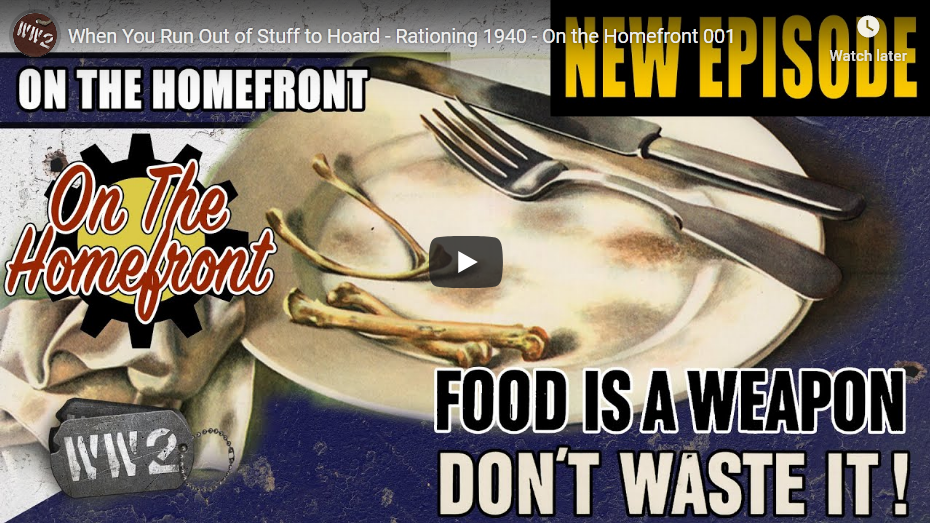
When You Run Out of Stuff to Hoard – Rationing 1940 – On the Homefront 001
World War Two
Published 17 Mar 2020In this first episode of On the Homefront, Anna tells you about division of labour, food production and rationing in the early years of the war.
Join us on Patreon: https://www.patreon.com/TimeGhostHistory
Or join The TimeGhost Army directly at: https://timeghost.tvFollow WW2 day by day on Instagram @World_war_two_realtime https://www.instagram.com/world_war_t…
Between 2 Wars: https://www.youtube.com/playlist?list…
Source list: http://bit.ly/WW2sourcesHosted by: Anna Deinhard
Written by: Spartacus Olsson
Produced and Directed by: Spartacus Olsson and Astrid Deinhard
Executive Producers: Bodo Rittenauer, Astrid Deinhard, Indy Neidell, Spartacus Olsson
Creative Producer: Joram Appel
Post-Production Director: Wieke Kapteijns
Research by: Spartacus Olsson
Edited by: Mikołaj Cackowski
Map animations: Eastory (https://www.youtube.com/c/eastory)Sources:
IWM A 1699, A 7812, A 19891, D 6773, A 11856, A 11857, D 10565, D 9366, D 15530, D 10465, D 20087, D 20079, D 7958, D 2373, D 14667, D 7966
Taking blood pressure (SC 191775), National Museum of Health and Medicine https://www.flickr.com/photos/medical…
Picture of Elsie Widdowson and Robert McCance with their staff, courtesy of British Nutrition Foundation
Pie Chart by Ates Evren Aydinel from the Noun Project
Pie Diagram Half by Trevor Dsouza from the Noun Project
Farm by Symbolon from the Noun Project
Meat by chiccabubble from the Noun Project
Fish by Vectors Market from the Noun Project
butter by Nick Bluth from the Noun Project
potatoes by Vectors Point from the Noun Project
Vegetable by Eucalyp from the Noun Project
Poop by Jordan Díaz Andrés from the Noun Project
shelf by Zach Bogart from the Noun Project
Tea box by Tomas Knopp from the Noun Project
Jam by Vichanon Chaimsuk from the Noun Project
Biscuits by John Burraco from the Noun Project
Cheese by Erin Agnoli from the Noun Project
eggs by Oleksandr Panasovskyi from the Noun Project
butter by Imogen Oh from the Noun Project
can by Anniken & Andreas from the Noun ProjectSoundtracks from the Epidemic Sound:
Gavin Luke – “Seasons of Change”
Johan Hynynen – “Dark Beginning”
Anthony Earls – “The Songs We Sing”
Fabien Tell – “Last Point of Safe Return”
Reynard Seidel – “Deflection”
Farell Wooten – “Blunt Object”
Johannes Bornlof – “The Inspector 4”
Howard Harper-Barnes – “Prescient”
Howard Harper-Barnes – “London”
Philip Ayers – “Under the Dome”Archive by Screenocean/Reuters https://www.screenocean.com.
A TimeGhost chronological documentary produced by OnLion Entertainment GmbH.
From the comments:
World War Two
57 minutes ago (edited)
This is the first episode of On the Homefront. For those of you who haven’t watched our trailer or have seen the Between Two Wars episode on the Home Revolution, let me introduce you to Anna. She will be telling us all about the homefronts and the people on them in these monthly sub-series. Now, we know that this episode might seem to be playing on the Corona related hoarding that is going on, but this was already produced before any of that made the news. In any case, as many of you are sitting in your own homefronts, I hope this episode offers some relief and perspective. If you like it, do make sure to Join the TimeGhost Army to keep us running! You can do so at https://timeghost.tv or patreon.com/timeghosthistory
Cheers, Joram
March 11, 2020
QotD: Orthorexia
Our culture accepts as a scientific fact that organic food is healthier than non-organic food. You can watch TV, read popular magazines, or listen to healthy-living gurus, and overwhelmingly you will be told that organic food is healthier than non-organic food. Recipes tend to call for organic produce and ingredients. And it goes beyond organic foods. Genetically-modified foods are slandered as “frankenfoods” concocted by mad scientists in a laboratory. Further, we are admonished to avoid anything that is not “natural.”
OK then. Vaccines are genetically modified, lab-made, and certainly not natural. Being anti-vax seems a logical extension of the natural, organic lifestyle.
I know several people — including family members — who have so completely bought into the natural-organic hype that they genuinely believe GMO and non-organic foods are poisonous. They would rather starve themselves and their children to death than ingest a gram of non-organic food. They look at the shelves of a regular grocery store and see rows and rows of poison. There is a medical term for this fear of safe healthy food — it’s called “orthorexia.” I am not shocked that some of these individuals are anti-vaxxers. Instead, I am shocked (and relieved) that some of the orthorexics I know actually do vaccinate themselves and their children.
Buck Throckmorton, “Organic Food & Anti-Vaxxers – Does The Fear of Safe Food Lead to Fear of Safe Vaccines”, Ace of Spades H.Q., 2019-12-08.
March 3, 2020
Michael Bloomberg, self-appointed nanny
Via Instapundit, Karen Kataline shares a look at the things that bother Michael Bloomberg about you:

Former New York City Mayor Mike Bloomberg speaking with supporters at a campaign rally in Phoenix, Arizona on 1 February, 2020.
Photo by Gage Skidmore via Wikimedia Commons.
Take Michael Bloomberg … please! What drives this man with the freedom to enjoy his wealth in 65 billion different ways, to spend his time trying to curtail the freedoms and choices of others, even down to the size soda they drink and the amount of salt they ought to be allowed to sprinkle on their spinach?
Coloradans know all too well that the former New York Mayor and Democratic Presidential Candidate spent boatloads of cash pushing state legislators to clamp down on their God-given right to defend themselves and their families. He has pushed freedom-sucking and blatantly biased “Red Flag” bills in numerous other states around the country.
Mayor Busybody simply can’t stop telling others what to do. It seems to be an obsession with him — or maybe, a compulsion too. I gained insight into this when I returned to a New York Times article from 2009 that described Bloomberg’s eating habits.
“He dumps salt on almost everything, even saltine crackers. He devours burnt bacon and peanut butter sandwiches. He has a weakness for hot dogs, cheeseburgers, and fried chicken, washing them down with a glass of merlot. And his snack of choice? Cheez-Its.”
Obsessive-Compulsive Disorder (OCD) is about control. Controlling one’s out-of-control thoughts, feelings, and behavior by attempting to control his external environment. Consciously or unconsciously, those afflicted do this in vain, to the point where they feel unable to control the compulsion as well (as in excessive hand-washing).
Most sufferers aren’t dangerous unless they have 65 billion dollars and a God-complex.
The Times went on to report this delicious insight:
“… he (Bloomberg) is known to grab food off the plates of aides and, occasionally, even strangers. (‘Delicious,’ he declared recently, after swiping a piece of fried calamari from an unsuspecting diner in Staten Island.)”
Behavior like this exhibits a staggering and extreme lack of boundaries. The Times seems to only snicker at this, but it’s painfully clear that Bloomberg has great difficulty respecting the basic boundaries of civil society. No wonder it’s so easy for him to help himself to your freedoms and your choices when he can’t stop helping himself to your calamari.


