
Although it was in every way more pardonable, the attitude of the Left towards the Russian régime has been distinctly similar to the attitude of the Tories towards Fascism. There has been the same tendency to excuse almost anything “because they’re on our side”. It is all very well to talk about Lady Chamberlain photographed shaking hands with Mussolini; the photograph of Stalin shaking hands with Ribbentrop is much more recent. On the whole, the intellectuals of the Left defended the Russo-German Pact. It was “realistic”, like Chamberlain’s appeasement policy, and with similar consequences. If there is a way out of the moral pigsty we are living in, the first step towards it is probably to grasp that “realism” does not pay, and that to sell out your friends and sit rubbing your hands while they are destroyed is not the last word in political wisdom.
George Orwell, “Who are the War Criminals?”, Tribune, 1943-10-22.
November 11, 2020
QotD: Appeasement and shifting allegiances between the wars
November 8, 2020
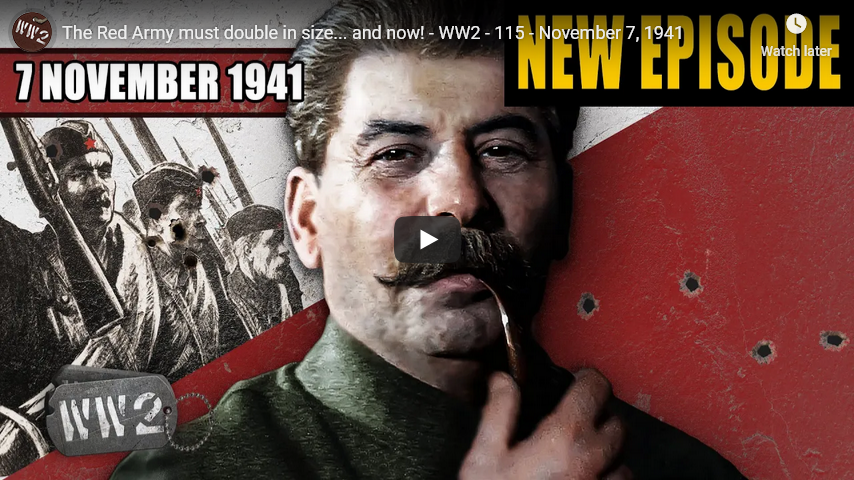
The Red Army must double in size… and now! – WW2 – 115 – November 7, 1941
World War Two
Published 7 Nov 2020Don’t miss the special announcement of our new exciting collaboration at the end of this episode!
Register for free at World of Warships here: https://wo.ws/PearlHarbor and receive a special in-game package worth €25, including the ships USS St. Louis, Japanese Cruise Tenryū – and more bonuses.
In this episode:
There is a lull now on the Eastern Front, and Adolf Hitler uses the time to plan another drive on Moscow and points beyond, but he’ll be facing a larger Red Army, as reinforcements and recruits hope to nearly double its size in a matter of weeks. The British are counting down the days to their upcoming North African offensive, and the Japanese are sending out orders that will change the world dramatically in a single morning.Listen to Josef Stalin’s November 6th speech here: https://www.marxists.org/reference/ar…
Join us on Patreon: https://www.patreon.com/TimeGhostHistory
Or join The TimeGhost Army directly at: https://timeghost.tvFollow WW2 day by day on Instagram @ww2_day_by_day – https://www.instagram.com/ww2_day_by_day
Between 2 Wars: https://www.youtube.com/playlist?list…
Source list: http://bit.ly/WW2sourcesWritten and Hosted by: Indy Neidell
Director: Astrid Deinhard
Producers: Astrid Deinhard and Spartacus Olsson
Executive Producers: Astrid Deinhard, Indy Neidell, Spartacus Olsson, Bodo Rittenauer
Creative Producer: Maria Kyhle
Post-Production Director: Wieke Kapteijns
Research by: Indy Neidell
Edited by: Miki Cackowski
Sound design: Marek Kamiński
Map animations: Eastory (https://www.youtube.com/c/eastory)Colorizations by:
Dememorabilia – https://www.instagram.com/dememorabilia/
Cassowary Colorizations – https://www.flickr.com/photos/cassowa…
Klimbim – https://www.flickr.com/photos/2215569…
Daniel Weiss
Julius Jääskeläinen – https://www.facebook.com/JJcolorization/
Carlos Ortega Pereira, BlauColorizations – https://www.instagram.com/blaucolorizations
Mikołaj UchmanSources:
Bundesarchiv
Arkiv i Nordland
Narodowe Archiwum Cyfrowe
IWM C 4748, E 6661, WPN 298, E 6724, MH 9292, E 3469E, E 7008, E 759C
Picture of Alfred Godwin-Austin, courtesy of Berserker276 https://commons.wikimedia.org/wiki/Fi…
from the Noun Project: company soldiers by Andrei Yushchenko, Bell by wahyakupSoundtracks from the Epidemic Sound:
Reynard Seidel – “Deflection”
Johannes Bornlof – “Deviation In Time”
Rannar Sillard – “March Of The Brave 4”
Bonnie Grace – “The Dominion”
Johan Hynynen – “Dark Beginning”
Johannes Bornlof – “The Inspector 4”
Fabien Tell – “Last Point of Safe Return”
Hakan Eriksson – “Epic Adventure Theme 3”Archive by Screenocean/Reuters https://www.screenocean.com.
A TimeGhost chronological documentary produced by OnLion Entertainment GmbH.
From the comments:
merdiolu81
22 hours ago (edited)
Meanwhile, on 30 October, Stalin had raised a casual question. “How are we going to do the military parade?” That was the great, traditional 7 November Red Square parade, the celebration of the 1917 “October” Revolution, which had taken place on 24-5 October, Old Style — 6-7 November, New Style. General Pavel Artem’ev, who had been commander of the Moscow Military District and had taken command of the Moscow defence zone as the critical phase began, on 12 October, said it could not happen. Yes, it would, said Stalin. If there was a German air raid, the dead and wounded should be removed quickly, he added. It would happen. The risk was considerable. The potential political response was devastatingly positive, and worth the risk. The “Boss” had his faults (aside being a brutal tyrant) , but this was the decision of a leader. The parade would take place, and the troops, guns and armoured vehicles would then proceed straight to the front. It was a stroke of genius. The military effect would be compounded by the media and political effect. As always, everything was kept secret until the last moment. The officers involved did not receive their final briefing until 02.00. Stalin liked surprises, as most dictators do.On 7 November, at 08.00 hours, just after dawn, under a steely, overcast Russian sky, with rimy air on the brink of freezing and snow beginning to fall, the troops marched south-east down the “square”, towards St Basil’s Cathedral and the Moskva river, beyond. Red Square, which owes its name to the old Slavic word for “beautiful”, and not to communism at all, is not really a square, either. It is a wide cobbled boulevard, running past the north-east wall of the red-brick, triangular Renaissance fortress. St Basil’s Cathedral is the onion-domed fantasy built for Ivan the Terrible. He was so delighted with it that he had the architect’s eyes put out, so that he could not build for anybody else anything so whimsically fantastic and beautiful. Stalin admired Ivan. The Germans were coming from the north-north-west, so, once the troops, guns and armoured vehicles had passed Lenin’s Mausoleum and reached St Basil’s, they would turn smartly about and head in the opposite direction, up Gor’kiy Street, and then north-west, to face the Germans.
The stars of the show were the new T-34 and KV tanks. But one of the heavy KV tanks screeched to a halt and then turned the wrong way. Another followed. The tanks were all armed, ready for battle, and if anybody wanted to take out the Politburo standing on Lenin’s Mausoleum, that would have been an ideal opportunity. Given the paranoia which prevailed in Moscow at the time, overreaction might have been the order of the day. Artem’ev demanded to know what had happened. The first tank, it turned out, had suffered a mechanical problem, and its commander did not want to cause any embarrassment on the big parade, so he got out of the way. Following the standard operating procedures the newly trained crews had been taught, the second tank went to its aid. This was starting to look like a professional army. The boss classes gathered on the Mausoleum found it amusing, and no one was reprimanded. The big parade was an iconic image of the war, and a stroke of public-relations genius. And, that night, earlier than usual, the Russian winter snow really began to fall.
Absolute War, Soviet Russia in the Second World War – Chris Bellamy
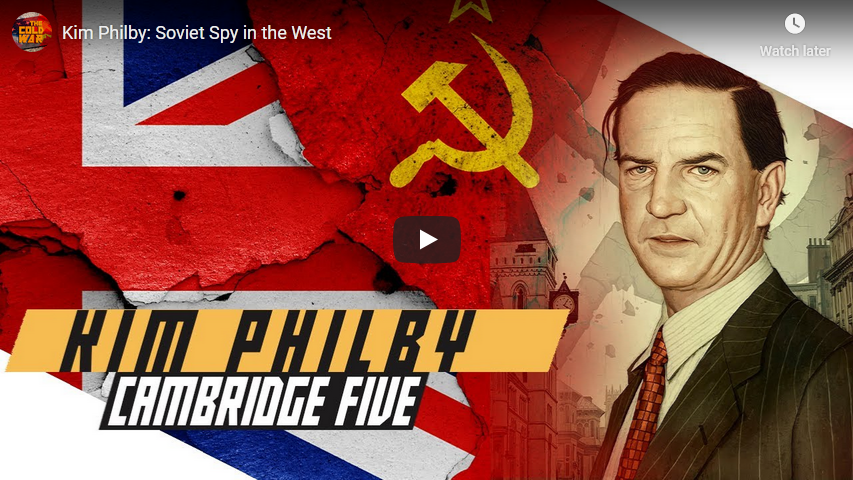
Kim Philby: Soviet Spy in the West
The Cold War
Published 8 Aug 2020Our historical documentary series on the history of the Cold War continues with a video on the famous Cambridge Five and Donald Maclean in particular – a real Cold War-era spy story
Support us on Patreon: https://www.patreon.com/thecoldwar or Paypal: http://paypal.me/TheColdWar
✔ Merch store ► https://teespring.com/stores/thecoldwar
✔ Instagram ► http://www.instagram.com/thecoldwartv#ColdWar #Philby #CambridgeFive
November 4, 2020
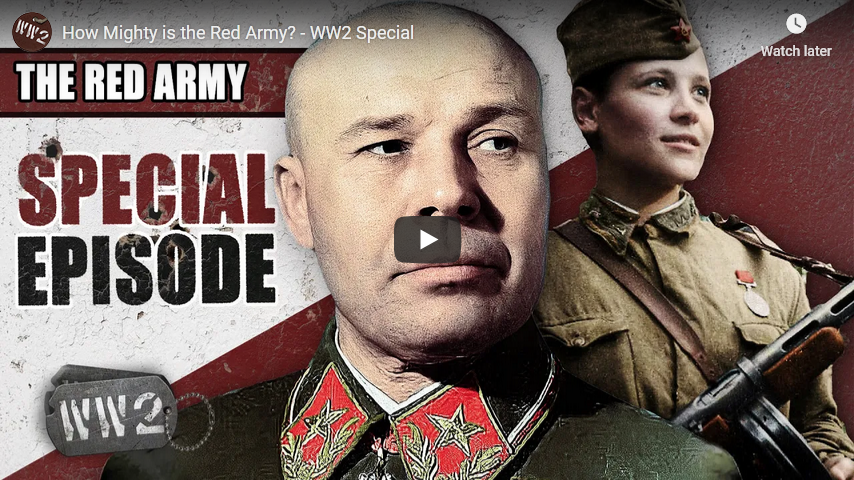
How Mighty is the Red Army? – WW2 Special
World War Two
Published 3 Nov 2020Hitler and German High Command had expected the invasion of the Soviet Union to be an easy victory and for the Red Army to quickly collapse. Yet here we are, with millions of Soviet soldiers captured, wounded or killed and the Red Army still holding fast.
Join us on Patreon: https://www.patreon.com/TimeGhostHistory
Or join The TimeGhost Army directly at: https://timeghost.tvFollow WW2 day by day on Instagram @ww2_day_by_day – https://www.instagram.com/ww2_day_by_day
Between 2 Wars: https://www.youtube.com/playlist?list…
Source list: http://bit.ly/WW2sourcesHosted by: Indy Neidell
Written by: Francis van Berkel, Ian Irungu, Shaun Harrison, Dennis Stepanov
Director: Astrid Deinhard
Producers: Astrid Deinhard and Spartacus Olsson
Executive Producers: Astrid Deinhard, Indy Neidell, Spartacus Olsson, Bodo Rittenauer
Creative Producer: Maria Kyhle
Post-Production Director: Wieke Kapteijns
Research by: Francis van Berkel, Ian Irungu, Shaun Harrison, Dennis Stepanov
Edited by: Karolina Dołęga
Sound design: Marek KamińskiColorizations by:
– Klimbim
– Norman Stewart – https://oldtimesincolor.blogspot.com/
– Julius Jääskeläinen – https://www.facebook.com/JJcolorization/
– Carlos Ortega Pereira, BlauColorizations – https://www.instagram.com/blaucolorizationsVisual Sources:
– Mil.ru
– ANRM, Fototeca, 24945
– Map from December 1941 provided with GNU Free Documentation License by WikimediaArchive by Screenocean/Reuters https://www.screenocean.com.
A TimeGhost chronological documentary produced by OnLion Entertainment GmbH.
November 1, 2020
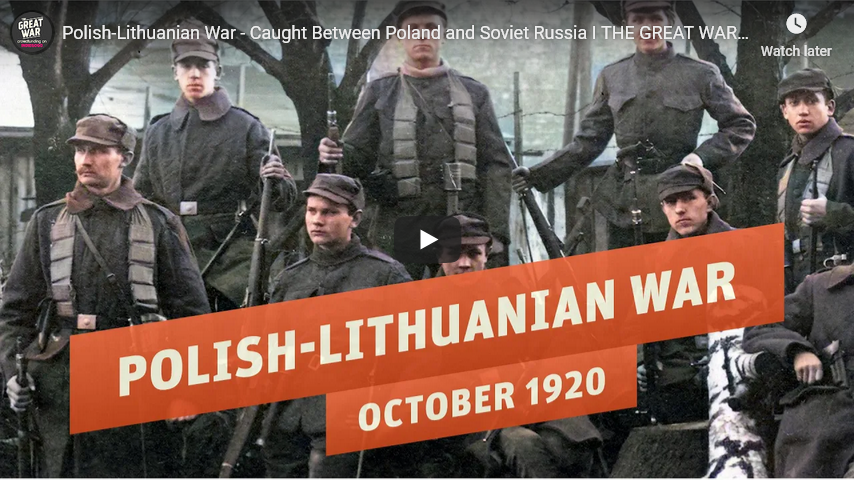
Polish-Lithuanian War – Caught Between Poland and Soviet Russia I THE GREAT WAR 1920
The Great War
Published 31 Oct 2020Sign up for Curiosity Stream and get Nebula bundled in: https://curiositystream.com/thegreatwar
Like the other Baltic states, Lithuania declared independence at the end of World War 1 and was caught in the chaotic and violent situation of 1919 and 1920 when much of Eastern Europe was in turmoil. Territories that today belong to Lithuania were claimed by Poland and Soviet Russia alike — while these two were waging a war in the direct vicinity of Lithuania.
» SUPPORT THE CHANNEL
Patreon: https://www.patreon.com/thegreatwar» OUR PODCAST
https://realtimehistory.net/podcast – interviews with World War 1 historians and background info for the show.» BUY OUR SOURCES IN OUR AMAZON STORES
https://realtimehistory.net/amazon *
*Buying via this link supports The Great War (Affiliate-Link)» SOURCES
Balkelis, Tomas, “From Self-Defense to Revolution: Lithuanian Paramilitary Groups in 1918 and 1919”, in Fleishman, Lazar & Weiner, Amir (eds.) War, Revolution and Governance: The Baltic Countires in the Twentieth Century, (Boston: Academic Studies Press, 2018)Balkelis, Tomas, “Turning Citizens into Soldiers: Baltic Paramilitary Movements after the Great War” in Gerwarth, Robert & Horne, John (eds.), War in Peace: Paramilitary Violence in Europe after the Great War, (Oxford: Oxford University Press, 2012)
Gerutis, Albertas, “Independent Lithuania” in Gerutis, Albertas (ed.) Lithuania: 700 Years, (Woodhaven: Manyland Books, Inc, 1969)
Lieven, Anatol, The Baltic Revolution: Estonia, Latvia, Lithuania and the Path to Independence, (New Haven: Yale University Press, 2005)
Mačiulis, Dangiras and Staliūnas, Darius, Lithuanian Nationalism and the Vilnius Question, 1883-1940, (Marburg: Verlag Herder-Institut, 2015)
Senn, Alfred Erich, The Great Powers, Lithuania and the Vilna Question 1920-1928, (Leiden: E. J. Brill, 1966)
Snyder, Timothy, The Reconstruction of Nations: Poland, Ukraine, Lithuania, Belarus, 1569–1999, (New Haven: Yale University Press, 2008)
Leonhardt, Joern. Der Ueberfordete Frieden, (CH Beck, 2018).
Borzecki, Jerzy. The Polish-Soviet Peace of 1921 and the Creation of Interwar Europe, (New Haven and London: Yale University Press, 2008)
Lehnstaedt, Stephan. Der Vergessene Sieg. Der Polnisch-Sowjetische Krieg 1919-1921 und die Entstehung des modernen Osteuropa, (CH Beck, 2019)
Davies, Norman. White Eagle Red Star, (Random House, 2003 (1972))
Böhler, Jochen. Civil War in Central Europe, 1918-1921, (Oxford University Press, 2019)
» MORE THE GREAT WAR
Website: https://realtimehistory.net
Instagram: https://instagram.com/the_great_war
Twitter: https://twitter.com/WW1_Series
Reddit: https://reddit.com/r/TheGreatWarChannel»CREDITS
Presented by: Jesse Alexander
Written by: Jesse Alexander
Director: Toni Steller & Florian Wittig
Director of Photography: Toni Steller
Sound: Toni Steller
Editing: Toni Steller
Motion Design: Philipp Appelt
Mixing, Mastering & Sound Design: http://above-zero.com
Maps: Daniel Kogosov (https://www.patreon.com/Zalezsky)
Research by: Mark Newton
Fact checking: Florian WittigChannel Design: Yves Thimian
Contains licensed material by getty images
All rights reserved – Real Time History GmbH 2020
From the comments:
The Great War
1 day ago
As you can see and hear we are back in the Emergency Lockdown Studio Also Known As Jesse’s Living Room (ELSAKAJLR™) and we know the sound isn’t ideal. Starting with the next episode, Jesse will have a better mic that should improve things dramatically. Next step we will also make a few more improvements to Jesse’s overall recording setup. Recording TGW episodes remotely while Jesse is in his ELSAKAJLR™ and we are in Berlin is not easy, but that bloody pandemic will not stop us.
Winter is Coming – WW2 – 114 – October 31, 1941
World War Two
Published 31 Oct 2020Operation Typhoon is halted until the coming winter can freeze enough ground to increase mobility. But the ever colder weather is a disaster waiting to happen for an already over-stretched German supply line.
Join us on Patreon: https://www.patreon.com/TimeGhostHistory
Or join The TimeGhost Army directly at: https://timeghost.tvFollow WW2 day by day on Instagram @ww2_day_by_day – https://www.instagram.com/ww2_day_by_day
Between 2 Wars: https://www.youtube.com/playlist?list…
Source list: http://bit.ly/WW2sourcesWritten and Hosted by: Indy Neidell
Director: Astrid Deinhard
Producers: Astrid Deinhard and Spartacus Olsson
Executive Producers: Astrid Deinhard, Indy Neidell, Spartacus Olsson, Bodo Rittenauer
Creative Producer: Maria Kyhle
Post-Production Director: Wieke Kapteijns
Research by: Indy Neidell
Edited by: Miki Cackowski
Sound design: Marek Kamiński
Map animations: Eastory (https://www.youtube.com/c/eastory)Colorizations by:
Mikolaj Uchman
Dememorabilia – https://www.instagram.com/dememorabilia/
Jaris Almazani (Artistic Man) – https://instagram.com/artistic.man?ig…Sources:
Bundesrchiv
Narodowe Archiwum Cyfrowe
Yad Vashem 7283/146Soundtracks from the Epidemic Sound:
Johannes Bornlof – “Death And Glory 2”
Johan Hynynen – “Dark Beginning”
Johannes Bornlof – “The Inspector 4”
Hakan Eriksson – “Epic Adventure Theme 4”
Farell Wooten – “Blunt Object”
Fabien Tell – “Last Point of Safe Return”Archive by Screenocean/Reuters https://www.screenocean.com.
A TimeGhost chronological documentary produced by OnLion Entertainment GmbH.
October 31, 2020
The Banality of Death – War Against Humanity 021 – October 1941 Pt. 2
World War Two
Published 29 Oct 2020French resistance members liquidate a high-ranking German officer, triggering a series of retaliatory actions by the German occupiers. Meanwhile, actions in the “Holocaust of Bullets” continue in the east as German forces move further into the USSR, taking Odessa.
Join us on Patreon: https://www.patreon.com/TimeGhostHistory
Or join The TimeGhost Army directly at: https://timeghost.tvFollow WW2 day by day on Instagram @ww2_day_by_day – https://www.instagram.com/ww2_day_by_day
Between 2 Wars: https://www.youtube.com/playlist?list…
Source list: http://bit.ly/WW2sourcesHosted by: Spartacus Olsson
Written by: Joram Appel
Director: Astrid Deinhard
Producers: Astrid Deinhard and Spartacus Olsson
Executive Producers: Astrid Deinhard, Indy Neidell, Spartacus Olsson, Bodo Rittenauer
Creative Producer: Maria Kyhle
Post-Production Director: Wieke Kapteijns
Research by: Joram Appel
Edited by: Miki Cackowski
Sound design: Marek Kamiński
Map animations: Eastory (https://www.youtube.com/c/eastory)Colorizations by:
Mikołaj Uchman
Julius Jääskeläinen – https://www.facebook.com/JJcolorization/
Norman Stewart – https://oldtimesincolor.blogspot.com/
Jaris Almazani (Artistic Man) – https://instagram.com/artistic.man?ig…
Carlos Ortega Pereira – BlauColorizations, https://www.instagram.com/blaucolorizations
Tzo15 – https://commons.wikimedia.org/wiki/Fi…Sources:
– Berkhoff, Karel (ed.), Basic Historical Narrative of the Babi Yar Holocaust Memorial Center (2018).
– Cobb, Matthew, The Resistance (2009).
– Desbois, Patrick, The Holocaust by Bullets: A Priest’s Journey to Uncover the Truth Behind the Murder of 1.5 Million Jews (2008).
– Fox, Holquist and Martin, The Holocaust in the East: Local Perpetrators and Soviet Responses (2014).
– Kay, Alex and David Stahel, Mass Violence in Nazi-Occupied Europe (2018).
– Klee, Dressen and Reiss, The Good old Days: The Holocaust as Seen by Its Perpetrators and Bystanders (1991).
– Longerich, Peter, The Unwritten Order: Hitler’s Role in the Final Solution (2001)
– Longerich, Peter, Holocaust: The Nazi Persecution and Murder of the Jews (2010).
– Mitter, Rana, Forgotten Ally: China’s World War II, 1937-1945 (2013).
– Müller, “The Brutalisation of Warfare, Nazi Crimes and the Wehrmacht”, In: Erickson & Dilks, Barbarossa: The Axis and the Allies.
– Parrish, Michael, The Lesser Terror Soviet State Security, 1939-1953.
– Rutherford, Jeff, Combat And Genocide on the Eastern Front: The German Infantry’s War, 1941-1944 (2014).
– Snyder, Timothy, Bloodlands: Europe Between Hitler and Stalin (2010).
– United States Holocaust Memorial Museum, Encyclopaedia of Camps and Ghettos, 1933-1945, volume II, Part A (2012).
– United States Holocaust Memorial Museum, Encyclopaedia of Camps and Ghettos, 1933-1945, volume II, Part B (2012)Visual sources:
Yad Vashem 75EO4, 933/3/5, 94DO1, 75FO4, 75DO3, 3065/2, 4359/45, 2725/6, 86FO2, 3199/5, 7904/172, 3745/138, 90FO3, 4359/83, 4359/21, 4359/55, 4216/34, 86DO8, 3150/129, 4613/89, 142BO7, 3150/122
Bundesarchiv
Visuotinė lietuvių enciklopedija
Narodowe Archiwum Cyfrowe
Picture of Lavrentiy Beria in court, courtesy of Фотограф – Ист.доки https://commons.wikimedia.org/wiki/Fi…
Picture of Gilbert Brustlein, courtesy of Fbrustlein https://commons.wikimedia.org/wiki/Fi…
Picture of Jewish officials of the Vilnius ghetto, courtesy of United States Holocaust Memorial Museum, William Begell
Picture of Jewish and Lithuanian police guarding the entrence to the Vilnius ghetto, courtesy of United States Holocaust Memorial Museum, William Begell
from the Noun Project: Skull by Muhamad Ulum, students by Piotrek Chuchla, person by Adrien Coquet, Injury by Adraino Emerick, Man by Milinda Courey, Woman by Maxim Kulikov, Child by RocketDictionSoundtracks from Epidemic Sound:
Reynard Seidel – “Deflection”
Johannes Bornlof – “The Inspector 4”
Johannes Bornlof – “Deviation In Time”
Farell Wooten – “Blunt Object”
Peter Sandberg – “Document This 1”
Gunnar Johnsen – “Not Safe yet”
Jon Bjork – “For the Many”Archive by Screenocean/Reuters https://www.screenocean.com.
A TimeGhost chronological documentary produced by OnLion Entertainment GmbH.
October 25, 2020
Martial Law in Moscow, but is the Cavalry coming? – WW2 – 113 – October 24, 1941
World War Two
Published 24 Oct 2020The Germans draw ever closer to Moscow, but Soviet reinforcements have begun to arrive from Siberia and the city’s defenses have grown stronger. Meanwhile in the south, the Germans are sweeping into the Crimea and looking hungrily at the Caucasus.
Join us on Patreon: https://www.patreon.com/TimeGhostHistory
Or join The TimeGhost Army directly at: https://timeghost.tvFollow WW2 day by day on Instagram @ww2_day_by_day – https://www.instagram.com/ww2_day_by_day
Between 2 Wars: https://www.youtube.com/playlist?list…
Source list: http://bit.ly/WW2sourcesWritten and Hosted by: Indy Neidell
Director: Astrid Deinhard
Producers: Astrid Deinhard and Spartacus Olsson
Executive Producers: Astrid Deinhard, Indy Neidell, Spartacus Olsson, Bodo Rittenauer
Creative Producer: Maria Kyhle
Post-Production Director: Wieke Kapteijns
Research by: Indy Neidell
Edited by: Miki Cackowski
Sound design: Marek Kamiński
Map animations: Eastory (https://www.youtube.com/c/eastory)Colorizations by:
Julius Jääskeläinen – https://www.facebook.com/JJcolorization/
Mikolaj Uchman
Klimbim – https://www.flickr.com/photos/2215569…
Daniel Weiss
Carlos Ortega Pereira, BlauColorizations – https://www.instagram.com/blaucolorizations
Dememorabilia – https://www.instagram.com/dememorabilia/
Norman Stewart – https://oldtimesincolor.blogspot.com/Sources:
Mil.ru
Bundesarchiv
Narodowe Archiwum Cyfrowe
Yad Vashem 90FO3
from the Noun Project: Skull by Muhamad Ulum, Horse by RIZCA, Injury by Adriano Emerick, Oil Tank by MangsaabguruSoundtracks from the Epidemic Sound:
Johannes Bornlof – “The Inspector 4”
Reynard Seidel – “Deflection”
Johannes Bornlof – “Death And Glory 3”
Johan Hynynen – “Dark Beginning”
Hakan Eriksson – “Epic Adventure Theme 4”
Gunnar Johnsen – “Not Safe Yet”
Andreas Jamsheree – “Guilty Shadows 4”Archive by Screenocean/Reuters https://www.screenocean.com.
A TimeGhost chronological documentary produced by OnLion Entertainment GmbH.
October 24, 2020
Napoleon’s Masterpiece: Austerlitz 1805
Epic History TV
Published 28 Jun 2018Napoleonic Wars Part 1: Napoleon’s brilliant 1805 campaign culminates in victory at Austerlitz.
Start your FREE trial with The Great Courses Plus here: http://ow.ly/t5FO30kFTfy
Get early access and a vote on future topics by supporting Epic History TV on Patreon: https://www.patreon.com/epichistorytv
With thanks to HistoryMarche, check out his channel here: https://www.youtube.com/channel/UC8MX…
Learn more about the Napoleonic Wars with titles from our co-production partner Osprey Publishing (as an Amazon Associate I earn from qualifying purchases):
Austerlitz 1805 http://geni.us/DlxI
Trafalgar 1805 http://geni.us/4zBYD
French Napoleonic Infantry Tactics 1792 – 1815 http://geni.us/lodnYmMusic from Filmstro: https://filmstro.com/?ref=7765
Get 20% off an annual license with this exclusive code:EPICHISTORYTV_ANN“The Great Courses Plus is currently available to watch through a web browser to almost anyone in the world and optimized for the US market. The Great Courses Plus is currently working to both optimize the product globally and accept credit card payments globally.”
#EpicHistoryTV #NapoleonicWars #Napoleon
Music track “Heavy Interlude” by Kevin MacLeod (incompetech.com)
Licensed under Creative Commons: By Attribution 3.0
http://creativecommons.org/licenses/b…
October 23, 2020
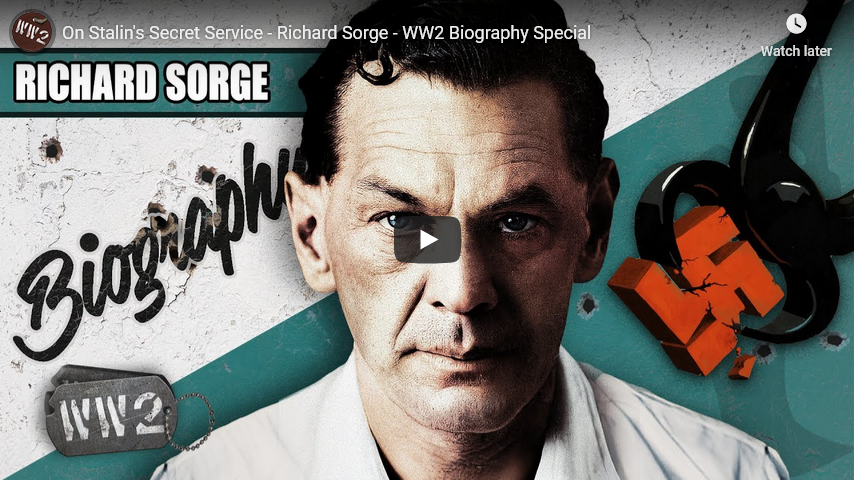
On Stalin’s Secret Service – Richard Sorge – WW2 Biography Special
World War Two
Published 22 Oct 2020A spy who is famous for warning Stalin about Hitler’s plan to invade the Soviet Union. But he was so much more than that. His fascinating life begins in the Caucasus and eventually leads him to Tokyo.
Join us on Patreon: https://www.patreon.com/TimeGhostHistory
Or join The TimeGhost Army directly at: https://timeghost.tvFollow WW2 day by day on Instagram @ww2_day_by_day – https://www.instagram.com/ww2_day_by_day
Between 2 Wars: https://www.youtube.com/playlist?list…
Source list: http://bit.ly/WW2sourcesWritten and Hosted by: Indy Neidell
Director: Astrid Deinhard
Producers: Astrid Deinhard and Spartacus Olsson
Executive Producers: Astrid Deinhard, Indy Neidell, Spartacus Olsson, Bodo Rittenauer
Creative Producer: Joram Appel
Post-Production Director: Wieke Kapteijns
Research by: Indy Neidell
Edited by: Monika Worona
Sound design: Marek KamińskiColorizations by:
Carlos Ortega Pereira
Daniel Weiss
Mikołaj UchmanSources:
Bundesarchiv
Milu.ru
Archive.orgArchive by Screenocean/Reuters https://www.screenocean.com.
A TimeGhost chronological documentary produced by OnLion Entertainment GmbH.
From the comments:
World War Two
16 hours ago (edited)
More fascinating World War Two spy stuff we know you love. We’ve already spoken about Popov, Enigma, and much more, but what makes Sorge particularly stand out is the amount of praise he has consistently received. Both Tom Clancy and Ian Fleming have said they consider him one of the world’s greatest spies, and other espionage workers, including ones who worked on the opposing side to him, have admitted their admiration for the man.
October 22, 2020
Winchester Lever Action Development: Model 1895
Forgotten Weapons
Published 19 Jun 2017We have reached the final iteration of the Winchester lever action rifle development story today, the Model 1895. This was another John Browning design, although the locking system is basically the same as the 1894 but with the bolt extending over the top of the locking block and hiding it from sight.
The new feature of the Model 1895 was the replacement of the traditional tube magazine with a single stack box magazine located under the action. By this time, spitzer (pointed) bullets were becoming commonplace, to exploit the new high velocities made possible by the new smokeless powders. In a tubular magazine, these pointed bullets would rest on the primer of the next cartridge in the magazine, and ran the risk of causing rounds to detonate in the magazine tube under recoil. The box magazine, of course, negated this danger completely.
The Model 1895 was built around the .30-40 military cartridge, although was initially released in two black powder chamberings. It would eventually be offered in a wide variety of chamberings, including .30-03, .30-06, .303 British, and the .405 Winchester — Theodore Roosevelt’s “Big Medicine”. In addition, more than half of the total production (nearly 300,000 rifles) would be for the Russian military, with the rifles chambered for 7.62x54R and fitted with stripper clip guides.
Cool Forgotten Weapons merchandise! http://shop.bbtv.com/collections/forg…
http://www.patreon.com/ForgottenWeapons
If you enjoy Forgotten Weapons, check out its sister channel, InRangeTV! http://www.youtube.com/InRangeTVShow

October 18, 2020
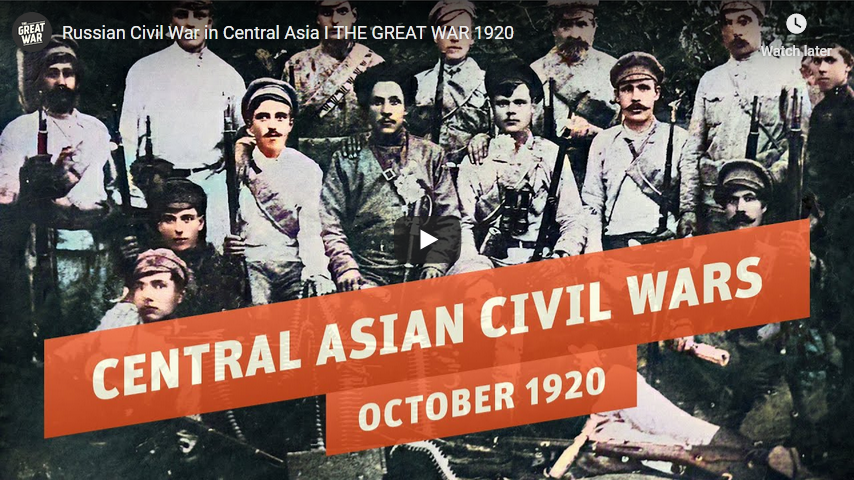
Russian Civil War in Central Asia I THE GREAT WAR 1920
The Great War
Published 17 Oct 2020Sign up for Curiosity Stream and get Nebula bundled in: https://curiositystream.com/thegreatwar
By the fall of 1920, the Russian Civil War had unleashed three years of ethnic and internal conflict in Central Asia, and there was no end in sight. In this episode we’ll catch up on the dramatic events of the former Russian imperial lands in Central Asia from the revolution right up to the end of 1920, 100 years ago.
» SUPPORT THE CHANNEL
Patreon: https://www.patreon.com/thegreatwar» OUR PODCAST
https://realtimehistory.net/podcast – interviews with World War 1 historians and background info for the show.» BUY OUR SOURCES IN OUR AMAZON STORES
https://realtimehistory.net/amazon *
*Buying via this link supports The Great War (Affiliate-Link)» SOURCES
Baumann, Robert F. Russian-Soviet Unconventional Wars in the Caucasus, Central Asia, and Afghanistan, Combat Studies Institute, 2010.Becker, Seymour. Russia’s Protectorates in Central Asia: Bukhara and Khiva, 1865-1924, RoutledgeCurzon, 2004.
Brower, Daniel R. Turkestan and the Fate of the Russian Empire, Routledge, 2010.
Buttino, M. “Study of the Economic Crisis and Depopulation in Turkestan, 1917–1920”, Central Asian Survey, no. 4, 1990, pp. 59-74, doi:10.1080/02634939008400725.
Campbell, Ian W. Knowledge and the Ends of Empire: Kazak Intermediaries and Russian Rule on the Steppe, 1731-1917, Cornell University Press, 2017.
Everett-Heath, Tom. Central Asia: Aspects of Transition, Routledge, 2003.
Hiro, D. Inside Central Asia, Abrams, 2011.
Keller, Shoshana. Russia and Central Asia: Coexistence, Conquest, Convergence, University of Toronto Press, 2020.
Khalid, A. “Central Asia Between the Ottoman and the Soviet Worlds”, Kritika: Explorations in Russian and Eurasian History, no. 2, 2011, pp. 451-76, doi:10.1353/kri.2011.0028.
Khalid, Adeeb. “The Bukharan People’s Soviet Republic in the Light of Muslim Sources”, Die Welt Des Islams, no. 3, 2010, pp. 335-61, doi:10.1163/157006010×544287.
Khalid, Adeeb. Making Uzbekistan: Nation, Empire, and Revolution in the Early USSR, Cornell University Press, 2019.
Khalid, Adeeb. The Politics of Muslim Cultural Reform: Jadidism in Central Asia, Oxford University Press, 2000.
Loring, B. “‘Colonizers With Party Cards’: Soviet Internal Colonialism in Central Asia, 1917–39”, Kritika: Explorations in Russian and Eurasian History, no. 1, 2014, pp. 77-102, doi:10.1353/kri.2014.0012.
Olcott, M. B. “The Basmachi or Freemen’s Revolt in Turkestan 1918–24”, Soviet Studies, no. 3, 1981, pp. 352-69, doi:10.1080/09668138108411365.
Poujol, Catherine. “Jews and Muslims in Central Asia”, A History of Jewish-Muslim Relations: From the Origins to the Present Day, edited by Abdelwahab Meddeb, Benjamin Stora, Jane Marie Todd and Michael B. Smith, Princeton University Press, Princeton; Oxford, 2013, pp. 258–268.
Sahadeo, Jeff. Russian Colonial Society in Tashkent: 1865-1923, Indiana University Press, 2010.
Sokol, Edward D. The Revolt of 1916 in Russian Central Asia, Johns Hopkins University Press, 2016.
» MORE THE GREAT WAR
Website: https://realtimehistory.net
Instagram: https://instagram.com/the_great_war
Twitter: https://twitter.com/WW1_Series
Reddit: https://reddit.com/r/TheGreatWarChannel»CREDITS
Presented by: Jesse Alexander
Written by: Jesse Alexander
Director: Toni Steller & Florian Wittig
Director of Photography: Toni Steller
Sound: Toni Steller
Editing: Toni Steller
Motion Design: Philipp Appelt
Mixing, Mastering & Sound Design: http://above-zero.com
Maps: Daniel Kogosov (https://www.patreon.com/Zalezsky)
Research by: Jesse Alexander
Fact checking: Florian WittigChannel Design: Yves Thimian
Original Logo: David van StepholdContains licensed material by getty images
All rights reserved – Real Time History GmbH 2020
Panic in Moscow! The Germans are here! – WW2 – 112 – October 17, 1941
World War Two
Published 17 Oct 2020Moscow panics as the Germans edge closer and take prisoners by the hundreds of thousands, even as the temperature drops far below freezing. At home in Germany, Josef Goebbels has a problem – he’s promised victory too soon and too often. And in Japan, a government falls.
Join us on Patreon: https://www.patreon.com/TimeGhostHistory
Or join The TimeGhost Army directly at: https://timeghost.tvFollow WW2 day by day on Instagram @ww2_day_by_day – https://www.instagram.com/ww2_day_by_day
Between 2 Wars: https://www.youtube.com/playlist?list…
Source list: http://bit.ly/WW2sourcesWritten and Hosted by: Indy Neidell
Director: Astrid Deinhard
Producers: Astrid Deinhard and Spartacus Olsson
Executive Producers: Astrid Deinhard, Indy Neidell, Spartacus Olsson, Bodo Rittenauer
Creative Producer: Joram Appel
Post-Production Director: Wieke Kapteijns
Research by: Indy Neidell
Edited by: Monika Worona
Sound design: Marek Kamiński
Map animations: Eastory (https://www.youtube.com/c/eastory)Colorizations by:
Jaris Almazani
Daniel Weiss
Mikołaj Uchman
Carlos Ortega Pereira
Julius Jääskeläinen
Adrien Fillon
Norman StewartSources:
Bundesarchiv
Archive.orgArchive by Screenocean/Reuters https://www.screenocean.com.
A TimeGhost chronological documentary produced by OnLion Entertainment GmbH.
From the comments:
World War Two
2 days ago
Japan’s immediate future seems decided with a new government that certainly has no issue with the war in China or with extending that war to the south, meanwhile Moscow panics as the Germans approach. What does all this mean for the men and women in the occupied territory? What does it mean for those at home?To learn more about that check out our sub-series “War Against Humanity” and “On the Homefront”:
War Against Humanity playlist: https://www.youtube.com/playlist?list=PLsIk0qF0R1j4cwI-ZuDoBLxVEV3egWKoM
On the Homefront playlist: https://www.youtube.com/playlist?list=PLsIk0qF0R1j5Ug9lCaxygenFf3lzuGXap

October 16, 2020
The Wehrmacht is Not Clean! – War Against Humanity 020 – October 1941 Pt 1
World War Two
Published 15 Oct 2020The Wehrmacht is deeply involved with the Nazis’ War Against Humanity. They are complicit in the murder of thousands of Jews in the “Holocaust of Bullets”, and the severe treatment of Soviet Prisoners of War. In October 1941, Wehrmacht General Walther von Reichenau issues the “Severity Order”, taking away any ambiguity there may be as to the Wehrmacht‘s vision.
Join us on Patreon: https://www.patreon.com/TimeGhostHistory
Or join The TimeGhost Army directly at: https://timeghost.tvFollow WW2 day by day on Instagram @ww2_day_by_day – https://www.instagram.com/ww2_day_by_day
Between 2 Wars: https://www.youtube.com/playlist?list…
Source list: http://bit.ly/WW2sourcesHosted by: Spartacus Olsson
Written by: Joram Appel and Spartacus Olsson
Director: Astrid Deinhard
Producers: Astrid Deinhard and Spartacus Olsson
Executive Producers: Astrid Deinhard, Indy Neidell, Spartacus Olsson, Bodo Rittenauer
Creative Producer: Maria Kyhle
Post-Production Director: Wieke Kapteijns
Research by: Joram Appel
Edited by: Miki Cackowski
Sound design: Marek Kamiński
Map animations: Eastory (https://www.youtube.com/c/eastory)Colorizations by:
Mikolaj Uchman
Klimbim – https://www.flickr.com/photos/2215569…
Jaris Almazani (Artistic Man) – https://instagram.com/artistic.man?ig…
Julius Jääskeläinen – https://www.facebook.com/JJcolorization/
Norman Stewart – https://oldtimesincolor.blogspot.com/Sources:
Berkhoff, Karel (ed.), Basic Historical Narrative of the Babi Yar Holocaust Memorial Center (2018).
Desbois, Patrick, The Holocaust by Bullets: A Priest’s Journey to Uncover the Truth Behind the Murder of 1.5 Million Jews (2008).
Fox, Holquist and Martin, The Holocaust in the East: Local Perpetrators and Soviet Responses (2014).
Kay, Alex and David Stahel, Mass Violence in Nazi-Occupied Europe (2018).
Longerich, Peter, The Unwritten Order: Hitler’s Role in the Final Solution (2001)
Longerich, Peter, Holocaust: The Nazi Persecution and Murder of the Jews (2010).
Mitter, Rana, Forgotten Ally: China’s World War II, 1937-1945 (2013).
Müller, “The Brutalisation of Warfare, Nazi Crimes and the Wehrmacht”, In: Erickson & Dilks, Barbarossa: The Axis and the Allies.
Paine, S. C. M., The Wars for Asia, 1911-1949 (2012).
Pieper, Henning, Fegelein’s Horsemen and Genocidal Warfare: The SS Cavalry Brigade in the Soviet Union (2015).
Rutherford, Jeff, Combat And Genocide on the Eastern Front: The German Infantry’s War, 1941-1944 (2014).
Snyder, Timothy, Bloodlands: Europe Between Hitler and Stalin (2010).
United States Holocaust Memorial Museum, Encyclopaedia of Camps and Ghettos, 1933-1945, volume II, Part A (2012).
United States Holocaust Memorial Museum, Encyclopaedia of Camps and Ghettos, 1933-1945, volume II, Part B (2012).
Porter, Thomas Earl, “Hitler’s Forgotten Genocides: The Fate of Soviet POWS”, in: Elon Law Review 5/259
Walter E. Grunden, “No retaliation in Kind: Japanese Chemical Warfare Policy in World War Two”, in: One Hundred Years of Chemical Warfare: Research, Deployment, Consequences (2017) 259-271.Visual sources:
Yad Vashem 4216/18, 4360/123, 7904/245, 143BO2, 6584677, 4147/65, 1044/148, 75FO4, 4220/2, 1249/67, 3745/140, 5705/34, 2725/23, 5705/47
USHMM
Bundesarchiv
www.auschwitz.org
FOTO:Fortepan — ID 73897, ID 28024
Picture of corpses of Auschwitz prisoners in Block 11 (Auschwitz I), courtesy of USHMM, Instytut Pamięci Narodowej
from the Noun Project: Skull by Muhamad Ulum, can by CCCHOI, gas bomb by Mete Eraydın from the Noun Project, Injury by Adriano EmerickSoundtracks from the Epidemic Sound:
Fabien Tell – “Never Forget”
Wendel Scherer – “Growing Doubt”
Jon Bjork – “Icicles”
Farrell Wooten – “Blunt Object”
Peter Sandberg – “Document This 1”
Gunnar Johnsen – “Not Safe Yet”
Andreas Jamsheree – “Guilty Shadows 4”Archive by Screenocean/Reuters https://www.screenocean.com.
A TimeGhost chronological documentary produced by OnLion Entertainment GmbH.
From the comments:
World War Two
7 hours ago (edited)
Two years into the World War Two channel, we’re still often confronted with stubborn myths regarding the responsibility for the crimes committed against humanity during the Second World War. We have already seen time and time again how the Wehrmacht is actively and passively complicit to the harsh treatment of civilians, the mishandling and killing of PoWs, the murder of local non-combatants, and the genocides committed by Nazi Germany. Let this episode be nail in that myth’s coffin. There is, unambiguously and unequivocally, no doubt about the Wehrmacht‘s awareness, intentions, actions, effects and complicity in the War Against Humanity.For our Polish speakers: while Spartacus’ less than perfect pronounciation of Polish names is usually at least an attempt, the pronounciation of Belzec is on pupose the English way of saying it, since the Polish pronounciation is not familiar to almost all non-Polish speakers, and it needs to be clear of what place he is speaking of.
October 15, 2020
This is what happens when politicians delegate too much of their powers to the courts
At the Foundation for Economic Education, Lawrence W. Reed recounts the stunning injustice of Soviet “justice”, in the person of Nikolai Krylenko:
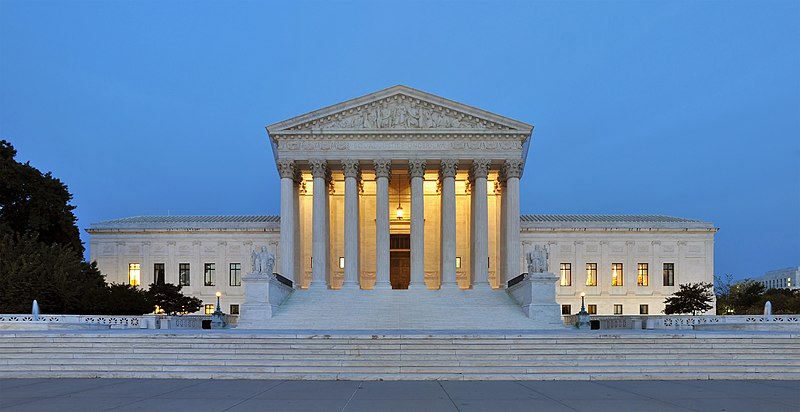
Panorama of the west facade of United States Supreme Court Building at dusk in Washington, D.C., 10 October, 2011.
Photo by Joe Ravi via Wikimedia Commons.
As I watched the first day of hearings on Judge Barrett’s nomination, I was reminded of a largely forgotten Soviet legal theoretician from decades ago. His name was Nikolai Krylenko. Judge Barrett is being given the Krylenko treatment by Democrat senators like Cory Booker and Kamala Harris, meaning this: The only thing that matters is whether she will vote their party line in future cases.
Under the communist dictatorship of Lenin and then Stalin, Krylenko (1885-1938) rose through the Soviet Union’s legal system to become People’s Commissar for Justice and a Prosecutor General. He was a leading practitioner of the theory of “socialist legality,” which held that an accused person’s innocence or guilt depended on that person’s politics (real or imagined). It sounds nuts and indeed, it was. It was the stuff of Orwell’s nightmare, and one of the reasons the Soviet Union thankfully perished of its own poison.
In The Gulag Archipelago, the famous Soviet dissident and Nobel laureate Aleksandr Solzhenitsyn recounted an episode involving Krylenko. Shortly after Lenin’s Bolsheviks assumed power in 1917, an admiral named Shchastny was sentenced by one of the regime’s judges “to be shot within 24 hours.” When some in the courtroom expressed shock, it was Krylenko who responded thusly: “What are you worrying about? Executions have been abolished. But Shchastny is not being executed; he is being shot.”
To Krylenko, the only morality was what served the Party and the State, which of course in the Soviet Union were one and the same. If your politics were not correct, you would be “corrected,” one way or the other. In Richard Pipes’ authoritative book, The Russian Revolution, Krylenko is quoted as exclaiming, “We must execute not only the guilty. Execution of the innocent will impress the masses even more.”
At the Senate hearings for the Barrett nomination, it was apparent the first day that the Judge was being Krylenkoed. Hostile senators pronounced their verdicts before she had uttered a word, and those verdicts had nothing to do with Barrett’s stellar qualifications or keen legal mind. Legal analyst and George Washington University Law School professor Jonathan Turley commented,
What they were suggesting is that they will be voting against her because of what they expected her vote would be in a pending case, and that is a conditional confirmation … Here, the senators seem to be saying, “I’m not even going to listen; I’m going to vote against you because I don’t think you’re going to vote the right way …”
Judge Barrett clearly articulated her judicial philosophy, borne out by the way she has ruled at the US Court of Appeals for the Seventh Circuit: She believes the role of a judge or justice is to follow the Constitution and the law as written, not make stuff up in the service of a political agenda. How ironic that this is a point of fiery contention. Senators who swore an oath to uphold the Constitution and the law hate the guts of a judge who does just that!


