
“Literature as we know it”, Orwell wrote in “Inside the Whale”, “is an individual thing, demanding mental honesty and a minimum of censorship”. It’s the “product of the free mind, of the autonomous individual”. This is why Orwell argued that “a writer does well to keep out of politics. For any writer who accepts or partially accepts the discipline of a political party is sooner or later faced with the alternative: toe the line, or shut up.”
According to Orwell, “As early as 1934 or 1935 it was considered eccentric in literary circles not to be more or less ‘left’, and in another year or two there had grown up a left-wing orthodoxy that made a certain set of opinions absolutely de rigueur on certain subjects”. In other words, many writers became communists, which meant they constantly had to decide whether to toe the line or shut up, depending on the circumstances: “Every time Stalin swaps partners”, Orwell wrote, “‘Marxism’ has to be hammered into a new shape … Every Communist is in fact liable at any moment to have to alter his most fundamental convictions, or leave the party. The unquestionable dogma of Monday may become the damnable heresy of Tuesday, and so on.”
Orwell also explained how communism replaced the patriotic and religious feelings that members of the English intelligentsia believed they had transcended: “All the loyalties and superstitions that the intellect had seemingly banished could come rushing back under the thinnest of disguises. Patriotism, religion, empire, military glory — all in one word, Russia. Father, king, leader, hero, savior — all in one word, Stalin”. Is it any wonder that Orwell, witnessing these endless intellectual and moral contortions, the shameless propaganda, and the constant stream of wartime lies and distortions, was drawn to a writer who didn’t regurgitate any orthodoxies or toe any lines? Miller gave his readers “no sermons, merely the subjective truth”.
Matt Johnson, “George Orwell, Henry Miller, and the ‘Dirty-Handkerchief Side of Life'”, Quillette, 2020-10-05.
May 3, 2026
QotD: Communism, nationalism and literature
May 2, 2026
Cancelled chancellor?
The German Chancellor’s future looks unhappy, and eugyppius notes that even the lapdog mainstream media outlets who praised him last year are now publishing calls for his ouster:
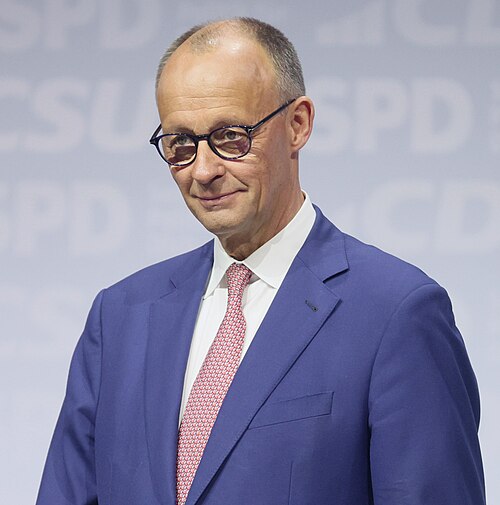
German Chancellor Friedrich Merz, 5 May 2025.
Photo by Sandro Halank for Wikimedia Commons.
Merz has always been just some loser. He’s a third-rate talentless politician and in this much like his predecessor, Olaf Scholz. Both are mere caricatures, what happens when you mimeograph overmuch the last century’s tired political styles. These kinds of chancellors will continue to exist only so long as they can be sold to the geezers of the Federal Republic’s care homes by the amateurish marketing campaigns of a complicit state media as the incarnation of far-sighted competence and (more importantly) bourgeois respectability.
Early in 2025, Merz had the chance to seize a measure of power for himself and make facts. He could have forged a deal with Alternative für Deutschland on the most important questions, established a minority government and set about force-marching the obese German state through necessary reforms. It might’ve torn his party apart, he might’ve failed, there would’ve been a huge fight, but whatever happened nobody would ever forget Chancellor Merz. Instead, the Pigeon Chancellor let a lot of deranged Antifa street protesters and screeching women with parareligious concerns about atmospheric carbon dioxide concentrations dissuade him from the only reasonable path. Instead of making history, he chose to spend the first year of his chancellorship making the Social Democrats fat and happy at the expense of the nation. Most don’t even hate Merz, because hate like love has to be be earned. He inspires nothing more than mildly scornful indifference.
Everyone who was not a complete idiot knew that Merz’s mad coalition with the Social Democrats could never work. Yet the man has been lionised in the international press and even in centre-right domestic papers like the Frankfurter Allgemeine Zeitung as a serious reformer. These people told us Merz would rebuild the Bundeswehr, reduce insane social spending, impose fiscal discipline, solve the migroid problem and restore economic growth. Even if the leftoid half of the German establishment press didn’t embrace all these myths, they nevertheless worked hard to make Merz seem presentable, serious and viable. He was worth a shot, he would do his best, and after the crazy Scholz years Germany was back on solid footing.
Now, in the the space of about two weeks, the entire myth of Chancellor Merz has collapsed. Major papers that used to defend his government and praise his prospects are suddenly saying it’s over. They’re writing front-page editorials in the spirit of stuff I was posting here over a year ago. Merz appears at town-hall meetings where he gets asked how he’s made life better in Germany and before he can answer the audience just laughs at his stupid ass. His coalition partners say he’s doing a terrible job. Back-benchers from his own party are calling his political strategy a failure to his face and leaking it afterwards to the press so everyone knows what they said.
Still worse, people from the Chancellery are talking to the tabloids. They’re explaining that Merz’s government has been hanging by a thread since at least last December; that his party thinks he’s a pushover whom the SPD constantly manipulates; that often Merz just absorbs the opinions of whatever person he last talked to and so his handlers have to limit his contacts to keep him from going off-message in insane ways; that Merz is now almost totally isolated, having burned through most of his close confidants; and that nobody has any solutions or ideas and increasingly everybody doubts that the Chancellor has the talents to save himself.
Making Real English Toffee from 1881
Tasting History with Max Miller
Published 5 Dec 2025Rich, sweet pieces of Victorian Era toffee
City/Region: Everton, England
Time Period: 1881Around Christmas, my house is full of candy and baked goods, and for me, toffee is one of the quintessential Christmas treats. Possibly invented by Molly Bushell in 1753 in Everton, just outside of Liverpool, toffee can be hard like the recipe we’re making here or of a softer, chewier variety.
While either option is delicious, this recipe is specifically for the hard style of Everton toffee. It’s a really simple recipe (the hardest part is waiting for it to come up to temperature), and is such a rich, decadent treat. The lemon extract adds a layer of acidic complexity to the toffee, but it doesn’t taste of lemon.
Feel free to dress yours up by adding some nuts to the dish before you pour the toffee over it, or sprinkle some chocolate chips over the toffee while it’s still hot so that they melt.
Everton Toffee.
Put one pound of brown sugar and one tea-cupful of cold water into a pan well rubbed with good fresh butter. Set it over a slow fire, and boil until the sugar has become a smooth, thick syrup, then stir into it half a pound of butter, and boil for half an hour. When sufficiently boiled, it may be tested by dropping some on a plate, and if it dries hard and can easily be removed, the toffee is ready for flavouring. For this purpose, add twenty or thirty drops of essence of lemon. Pour the toffee into a wide well-buttered dish. If liked, vinegar may be substituted for the water, then the lemon may be omitted.
— Cassell’s Dictionary of Cookery, England, 1881
May 1, 2026
Spain joins the awkward squad
At The Conservative Woman, Bepi Pezzulli outlines a few ways that the Spanish government is moving in quite different directions than their NATO allies and fellow EU members:
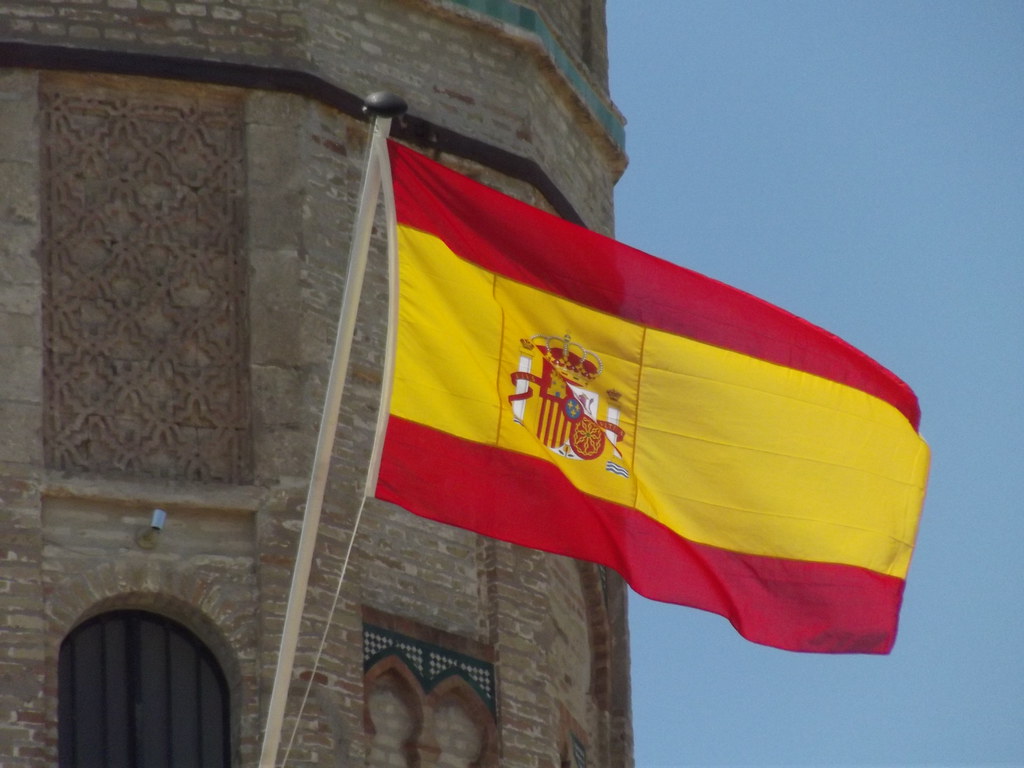
Torre del Oro (Tower of Gold) – Calle Almirante Lobo, Seville – Spanish flag” by ell brown is licensed under CC BY-SA 2.0 

 .
.
Spain’s Prime Minister Pedro Sánchez wants the privileges of alliance without the duties of one. Madrid remains in Nato, hosts critical American military infrastructure, and speaks the language of Atlantic solidarity – but only when convenient. On the central strategic questions of the age – Russia, Israel, and the wider Western posture in the Mediterranean – it increasingly behaves like a spoiler. What is troubling is that Spain is not merely posturing: it is rewriting its entire conception of statecraft, treating alliance as a shield, hostility as leverage, and strategic ambiguity as a governing doctrine.
When Washington needed alignment, Sánchez offered obstruction. When Israel faced existential war, Madrid offered moral lectures. When the West sought energy discipline against Moscow, Spain found room for Russian gas. All while preserving the old imperial obsession with Gibraltar and extracting advantages from London over the Rock.
Spain has discovered the pleasures of consequence-free hostility. That needs to end.
Anti-Americanism with diplomatic immunity
Sánchez has carefully cultivated the old European left’s anti-American reflexes: Nato when subsidised, moral neutrality when sacrifice is required. His government publicly resisted support for American military operations linked to Iran escalation and signalled clear reluctance to facilitate use of Spanish bases such as Rota and Morón for operations that might implicate Madrid politically. The message was unmistakable: American security guarantees are welcome but strategic co-operation is negotiable. The rhetoric matched the policy. “No to war” was not merely a slogan for domestic consumption. Sánchez is deliberately positioning Spain as the righteous dissenter against Washington’s harder strategic line.
At the same time, Spain maintained substantial imports of Russian gas well into the European sanctions era. While pipeline politics consumed Brussels, Madrid benefited from a convenient moral distinction: condemning Moscow loudly while continuing commercial accommodation where useful. The formal sanctions architecture left open some loopholes, and Spain was happy to live inside them.
An ally that profits from ambiguity while others bear the strategic burden is not an ally in the full sense. As US War Secretary Pete Hegseth noted, “An alliance cannot be ironclad if in reality or perception it is seen as one-sided”.
From criticism of Israel to open diplomatic hostility
On Israel, Sánchez has moved beyond criticism into active diplomatic confrontation. Recognition of Palestine was presented as humanitarian principle. In practice, it rewarded maximalism at the worst possible moment. Madrid helped transform October 7 from a terrorist massacre demanding strategic clarity into another European seminar on Israeli restraint. Spain became one of the loudest governmental amplifiers of the anti-Zionist campaign in Western Europe. Ministers normalised rhetoric that blurred the distinction between criticism of Israeli policy and systematic delegitimisation of the Jewish state itself. Arms restrictions followed. Then diplomatic actions. Symbolism became policy.
Gibraltar: Madrid’s imperial nostalgia
Spain’s sanctimony would be easier to tolerate if it were not paired with its own colonial fixation. For decades, Madrid has pursued sovereignty claims over Gibraltar with theological persistence. Brexit offered a fresh opening. With Brussels behind it, Spain extracted a remarkably favourable negotiating posture over the future relationship of the Rock with both the European Union and the United Kingdom. London, in the hands of the most Europhile government in recent history, conceded far more than many British voters imagined when they heard the word “sovereignty”. Spain never abandoned the long game. It simply learned to play it through institutions until a weaker opponent appeared. Madrid insists Gibraltar is unfinished history. Fair enough: is it not time then to conclude the same about Ceuta and Melilla?
April 30, 2026
Where did Dovetails come from?
Rex Krueger
Published 29 Apr 2026All my plans!: https://www.rexkrueger.com/
Patrons saw this video early: / rexkrueger
Join the Mailing List: http://eepurl.com/g3rkmv
Take a course: https://www.rexkrueger.com/courses
Get my woodturning book: http://www.rexkrueger.com/book
Get My Book, Everyday Woodworking: https://amzn.to/3oyjC0E
Follow me on Instagram: @rexkruegerLost Art Press: https://lostartpress.com/
The History of BROWN SAUCE: HP Sauce, A1 Sauce, OK Sauce and Chef Sauce
Tweedy Misc
Published 7 Nov 2025Have you ever wondered how British “brown sauce” came about? What is it made from? Who invented it? When was it invented? Which brown sauce is the oldest? When did we start calling it “brown sauce”?
In this video we look into what exactly brown sauce is (and isn’t), we look into ingredients of a number of iconic brands (and some supermarket own brands) and explore the history of the five brown sauces which defined the category: A1 Sauce, OK Sauce, HP Sauce, Daddies Favourite Sauce and Chef Sauce.
Some links to Wikipedia etc in case it helps figure out what this is all about:
https://en.wikipedia.org/wiki/Brown_s…
https://en.wikipedia.org/wiki/HP_Sauce
https://en.wikipedia.org/wiki/A.1._Sauce
https://en.wikipedia.org/wiki/Daddies
https://en.wikipedia.org/wiki/OK_Sauce
https://en.wikipedia.org/wiki/Chef_Br…If you’re finding the wobbling bottles are a problem for you, here’s a version of the video without any wobbling: • History of Brown Sauce (No Wobbling!)
This video was made using Davinci Resolve 20, with a lot of the still images made using Canva.
Chapters:
0:00 Introduction
0:16 What is brown sauce?
2:33 Supermarket own brand brown sauces
4:02 History of brown sauce
4:48 A1 Sauce
10:49 OK Sauce
15:31 HP Sauce
17:06 Daddies Favourite Sauce
19:06 Chef Sauce
23:50 Conclusion
April 28, 2026
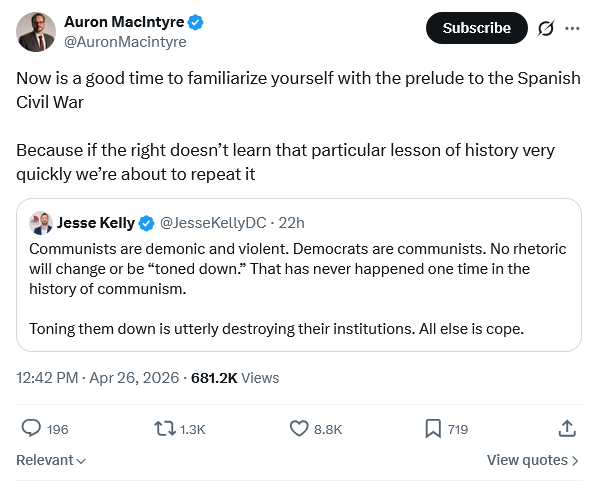
Echoes of Spain in the 1930s
On the social media site formerly known as Twitter, Christian Heiens discusses how the Spanish Republic disintegrated in the lead up to the Spanish Civil War:
After the Spanish Right won the 1933 elections, Communists in Asturias launched a revolution, killing thousands before the army was deployed to finally put an end to the chaos.
They did the same thing in Catalonia, and when that too was quelled, they engaged in a low-level terrorist campaign all over the country, planting bombs, sabotaging infrastructure, assassinating newspaper editors and political figures, and staging general strikes all over Spain.
They kept doing this until they finally won the 1936 election, at which point the Left went full mask-off and began unleashing thousands of criminals into the streets, ransacking businesses, dragging conservatives out of their homes to beat them, and going into the countryside to expropriate private property. The entire country descended into a state of near-total anarchy in a matter of months.
The Left spent years agitating for a Marxist revolution in Spain and refused to obey the legal system because they saw the Spanish Republic as a mechanism to achieve Leftism, not as a neutral system intended to uphold democracy, the constitution, or the rule of law.
And thus, any deviation from the march towards Leftism was seen as an illegitimate act of treason and proof of an imminent fascist takeover of the state. As a result, ANY electoral victory by the Right was inherently treated as illegal by the Left, and ANY attempt to actually govern in accordance with Right-wing principles was seen as just cause to engage in violent insurrection.
You cannot have a country like this for long. If one side treats the process as illegitimate unless it produces their desired ideological outcome, they will inevitably win unless they’re physically stopped.
April 26, 2026
How to Stage (and Win) an International Crisis – Death of Democracy 13 – Q1 1936
World War Two and Spartacus Olsson
Published 25 Apr 2026In early 1936, Adolf Hitler took one of the greatest risks of his rule — sending German troops into the demilitarized Rhineland in direct violation of the Treaty of Versailles and the Locarno Pact. It was a gamble that could have triggered immediate war. Instead, it became a turning point that transformed Hitler from a powerful dictator into a figure many Germans saw as a national savior.
In this episode of Death of Democracy, we examine how the re-militarization of the Rhineland, combined with the propaganda spectacle of the 1936 Winter Olympics in Garmisch-Partenkirchen, helped cement Hitler’s popularity at home while exposing the paralysis of Britain and France abroad. Through contemporary voices like William L. Shirer and Victor Klemperer, we explore the uneasy mix of fear, relief, and growing enthusiasm among ordinary Germans — alongside the continued escalation of repression against Jews and political opponents.
This quarter reveals a crucial dynamic: how foreign policy success, propaganda, and public sentiment fused to elevate Hitler into something approaching a political messiah — while simultaneously closing the space for resistance.
History is not inevitable — but moments like this show how easily it can be shaped.
The Ancient Greeks: 01 – What Made Them Special? (a): Origins, Collapse, and Reinvention
seangabb
Published 31 Jan 2026This section introduces the Greek world and challenges common assumptions about Greek civilisation.
It examines who the Greeks were, where they came from, and how fragmented their political and cultural world was. It then explores the collapse of Bronze Age Greece around 1200 BC and the long Greek Dark Age that followed, during which writing disappeared, monumental architecture ceased, and long-distance trade declined.
When Greek civilisation recovered around 800 BC, it did not restore the Mycenaean world. Instead, it reinvented itself, drawing on epic poetry and myth rather than historical memory.
A central argument of this section is that the later Greeks knew less about their own early history than we do, and that Greek civilisation was rebuilt not on continuity, but on reinvention.
April 25, 2026
Frank Furedi’s In Defence Of Populism
On his Substack, Frank Furedi explains why he wrote his new book In Defence Of Populism with especial reference to the recent Hungarian election results:
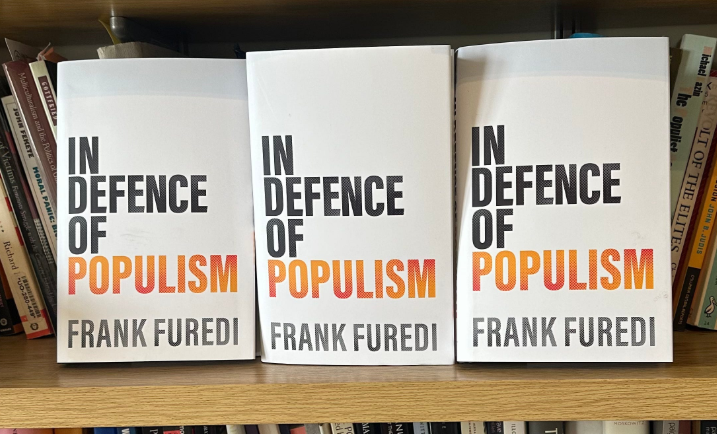
Photo from Roots & Wings with Frank Furedi
Have you noticed the flood of commentaries and articles appearing in the mainstream media dwelling on the topic of how to crush populism once and for all? The recent electoral defeat of Viktór Orbán’s Fidesz Party in Hungary has emboldened the European centrist technocratic elite to hope that this result spells the end of populist surge on both sides of the Atlantic.
The “is this the end of populism?” literature has been around for some time. To this day, mainstream commentators frequently express the hope that populism is a passing phenomenon. “Has Europe reached peak populism?”, asked a commentator in Politico in 2019, before expressing the hope that “the tide could be turning against the anti-establishment nationalist movements that have upended politics across the Continent, leaving the barbarians howling in frustration at the gates”.1 “We seem to have passed peak populism”, predicted Andrew Adonis, a leading British anti-Brexit voice.2
The outcome the Hungarian elections has led to an explosion of commentaries that are driven by the anti-populist dream of a world where populism is forced back into the margins of society. Polly Toynbee of The Guardian noted that “Viktor Orbán inspired rightwingers across the EU and in Britain. His defeat could represent a turning of the tide”.3
[…]
The main reason why I wrote In Defence of Populism is because it is necessary to counter the anti-populist hysteria about populism. Populism is surrounded by ceaseless hostility and mystification. Just about everything you are likely to read about populism in the specialist academic literature is motivated by their authors’ animosity and contempt towards their subject matter. Their sentiments are reproduced in an intensely polemical form by the mainstream media which habitually dismisses populists as far right and even fascists. According to the dominant media narrative, populists are racist xenophobes, homophobes and a variety of other phobes. At times the media hysteria regarding the so-called populist threat echoes the Red Scare of the 1920s and 1950s in the United States.
The populist voice has been systematically distorted by its opponents. I argue that this movement has been subjected to ideological warfare and recast through a teleology of evil. It is important to grasp the systematic attempt to demonise populism because, in the media and public life, a distorted and fundamentally flawed characterisation of populism prevails. What’s remarkable about this subject is that virtually everything that is communicated in the media and in the literature about populism is framed by individuals who are external to it. The definitions authored by these individuals communicate their bias and suspicion towards populism. Consequently, the way that populism is represented in public life is an invention of its opponents. Those who are ascribed the label populist do not get to decide who they are nor what populism means.
So although the populist movement is in the ascendancy, its actual definition is still unresolved and remains interpreted though the medium of a modern mythology. Almost everything you are likely to read about contemporary populism bears little relationship to the real impulses that drive this movement forward. In Defence of Populism offers an antidote to the confusions and distortions peddled by the anti-populist idealogues. I look forward to getting your feedback regarding what you think about the case for populism advanced in my book.
- Paul Taylor, “Has Europe reached peak populism?”, Politico, 5 September 2019 https://www.politico.eu/article/europe-reached-peak-populism-far-right-anti-european-government-election/
- Andrew Adonis, “We seem to have passed peak populism”, Prospect, 11 January 2023 https://www.prospectmagazine.co.uk/politics/peak-populism-donald-trump-boris-johnson-jair-bolsonaro
- https://www.theguardian.com/commentisfree/2026/apr/14/viktor-orban-europe-britain-hard-right-populism
Steyr M1912/16 Automatic “Repetierpistole“
Forgotten Weapons
Published 8 Dec 2025In the latter half of World War One the Austro-Hungarian military experimented with a number of select-fire pistol type weapons. One of these was the Steyr Repetierpistole M1912/16, an automatic adaptation of the regular M1912 pistol. It was given a 16-round fixed magazine (loaded via two 8-round stripper clips) and a selector switch. A total of 200 were produced, each supplied with a shoulder stock to help make the blistering 1200 rpm rate of fire somewhat usable. The design was not made from scratch, but rather adapted form the existing 1912 fire control system, which makes for a rather unorthodox system.
In addition to 200 of these pistols, the Austro-Hungarian military also acquired 50 twin-gun systems, which two of these pistols were attached to a frame with a single shoulder stock between them (no surviving examples of those are known today).
Frommer Pistolen-MG Model 1917 video:
• Frommer Pistolen-MG Model 1917: A Crazy Vi…Many thanks to the VHU — the Czech Military History Institute — for giving me access to these two fantastic prototypes to film for you. The Army Museum Žižkov is a part of the Institute, and they have a 3-story museum full of cool exhibits open to the public in Prague. If you have a chance to visit, it’s definitely worth the time! You can find all of their details (including their aviation and armor museums) here:
QotD: Goethe, the lost German master
Today, the texts are almost all recent and appear to be chosen partly with the film of the book in mind. In particular, Goethe has disappeared from the syllabus, presumably because the language is considered too archaic. Yet I recall the immense pleasure and satisfaction of mastering a Goethe play — Egmont. The story of the dashing Dutchman and his martial defiance of the sinister Duke of Alba, the courage of his beloved, Klärchen, who fantasises in song about how wonderful it would be to be a man and fight the Spaniards — “ein Glück sondergleichen ein Mannsbild zu sein“. Somehow I even obtained an LP of Beethoven’s incidental music for Egmont: seldom heard apart from the overture, but brilliantly evoking the grandeur of the drama.
Like Homer, Dante and Shakespeare, Goethe belongs not just to German literature, but to world literature, Weltliteratur — a term he coined. I am told that even in German Gymnasien, Goethe is little studied now. He is certainly a rare bird in English schools — or even universities. It is tragic that educated people, including students of literature, so seldom encounter the greatest of Germans even in translation. We might get on better with Germany if we did.
Daniel Johnson, “How I discovered Germany”, The Critic, 2020-08-02.
April 24, 2026
Britain’s Green Party … not your weird cousin’s old Green Party
The Green Party have been more of a punchline than a party for decades in British politics, but the Green Party of today shares only a name with its earlier incarnations (the old UK party is now split into three separate Green Parties for England and Wales, Scotland, and Northern Ireland). Now, it’s become a significant threat to the Labour Party thanks to its unlikely fusion of socialist and green policies with strong support from Britain’s growing Muslim community:

The Green Party is a growing force in British politics. In February, they gained the Parliamentary constituency of Gorton and Denton in a by-election — a supposedly “safe” seat for the Labour Party. Local elections in May see them set to make big gains — perhaps sweeping to power in several town halls in London, perhaps including Camden, where Sir Keir Starmer is one of the local MPs. Opinion polls often show them roughly level with Labour and the Conservatives.
This is quite a change from previous decades when they were indulged as eccentrics on the political fringe. The Green Party (or the Ecology Party, as it was earlier named) were the sandal-wearing, muesli-munching environmentalists who wanted to go back to nature. They opposed economic growth — but their supporters tended to be affluent enough that they could afford to do so. Its leader was the aristocrat Sir Jonathon Porritt.
They were the breed George Orwell was thinking of when he wrote: “One sometimes gets the impression that the mere words ‘Socialism’ and ‘Communism’ draw towards them with magnetic force every fruit-juice drinker, nudist, sandal-wearer, sex-maniac, Quaker, ‘Nature Cure’ quack, pacifist, and feminist in England”.
Great fun. But there was a darker side to the quackery then and now. A totalitarian mentality which, as Orwell also vividly described, proves horrific when it prevails.
Increasingly, the Green Party has shifted its focus away from the environment. In the few towns and cities where it has gained power locally, such as in Bristol and Brighton, it has proved ineffective at practical work in this respect. Typical behaviour would be to pass a motion declaring a “climate emergency” but then perform lamentably when it comes to recycling or tree planting or any of the relevant matters they have the power to deal with.
There was always a distortion in its supposed concern for sustainability in that it was really an excuse to denounce capitalism. The Property and Environment Research Center, a US think tank which champions free-market environmentalism, has shown a more enlightened approach. Their work has included a comparison of privately-owned and state-owned forests. Another applies property rights to marine assets. But the role of property rights as a means of good stewardship of our planet is dismissed by the Green Party out of hand.
In any case, much of the campaigning by the Green Party now is on non-green issues. Its leadership talks a lot about foreign policy and a broader economic pitch focusing on class war rhetoric and an extreme programme of state control. Taxing the rich is always seen as the panacea, despite the reality that many entrepreneurs are already fleeing the United Kingdom due to its hostile fiscal environment.
Its Manifesto for the last election two years ago proposed a Wealth Tax, a pensions tax, and a big increase in Capital Gains Tax. A £90 billion carbon tax would have closed down much of British industry, which was probably the idea.
April 23, 2026
They put out propaganda because it works
I often find myself commenting on social media posts that the Canadian government’s direct subsidies to most of the mainstream media in Canada has created one of the most effective propaganda machines since 1930s Germany. “eLbOwS uP!” They keep doing it because it clearly is working fantastically well on a large enough share of Canadian voters that the polls (which may or may not be biased) keep touting that Dear Leader Carney and the Natural Governing Party are ever more popular. And most of the people consuming the propaganda message have their preferences re-inforced and the cycle starts again.
At Cracking Defence, Matthew Palmer discusses wartime propaganda during the 20th century, emphasizing that it’s the use to which it is put rather than the mechanism itself that has a moral value:
Propaganda is an absolute favourite subject of mine — probably not surprising considering that one of my roles in the military was psychological operations.1 Despite its very negative connotations thanks to the work of interwar writers like Frederick Ponsonby,2 propaganda really should be seen as a neutral term, perhaps best defined as “the deliberate attempt to persuade people to think and behave in a desired way”.3 Nor does it need to be state-driven; propaganda can come be generated from below as much as being driven top-down from the state or elites.
Some of the best propaganda comes out of wartime, and the First and Second World Wars were absolute goldmines. I also have a particular weakness for propaganda drawn up in early modernist and art deco styles, for which the first half of the 20th century was the high watermark. As such, here are a few of my all-time favourites for your delectation.4
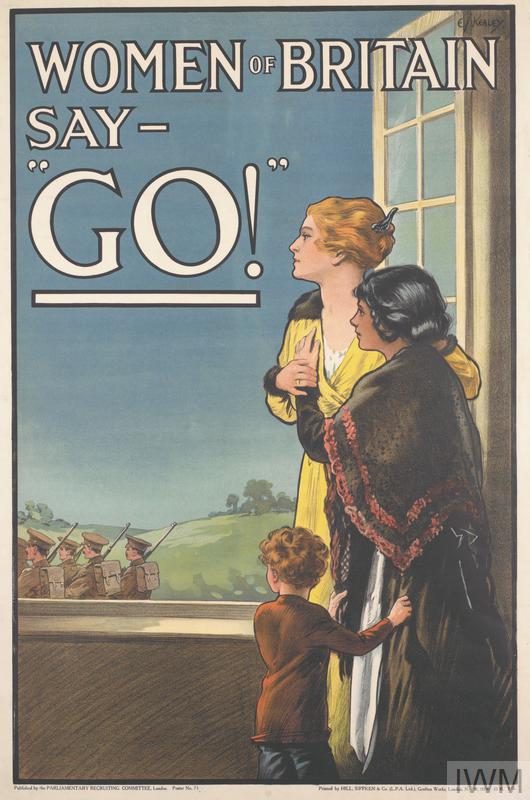
Women of Britain Say — Go!
Women of Britain Say ‘Go!’
Copyright: © IWM. Original Source: http://www.iwm.org.uk/collections/item/object/14592A true classic that has reverbrated through the ages. Despite First World War propaganda having the reputation of being crudely jingoistic, much of it was in fact consciously aware of the pain and sacrifice being endured by the warring population, and did not try to hide it. This one acknowledges the sacrifice undertaken by the women and children left behind, while the background reminds the viewer of the green and pleasant land of ‘old England’ that they are fighting for.
[…]
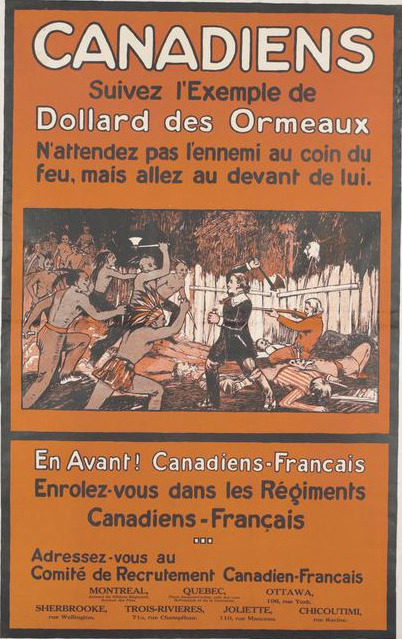
Canadiens, Suivez l’Exemple de Dollard des Ormeaux
Canadiens, Suivez l’Exemple de Dollard des Ormeaux [Canadians, Follow the Example of Dollard des Ormeaux] a depiction of Adam Dollard resisting an attack by Iroquois tribesmen. Dollard’s dead comrades lie at his feet.
Copyright: © IWM. Original Source: http://www.iwm.org.uk/collections/item/object/31027I find this one intriguing, not because I think it is actually a brilliant poster but for what it tells you about historical context and how propaganda was often tailored explicitly for local sensibilities. While Canadian support for the Allies in the First World War was generally fierce, the major exception was Quebec, which saw relatively poor levels of recruitment for overseas service. As such, propaganda aimed at Quebecois often tapped deeply into local traditions, in this case the (extremely dodgy!) myth of Adam Dollard, venerated in the period as a Catholic martyr who died defending Quebec from native Iroquois.5
[…]
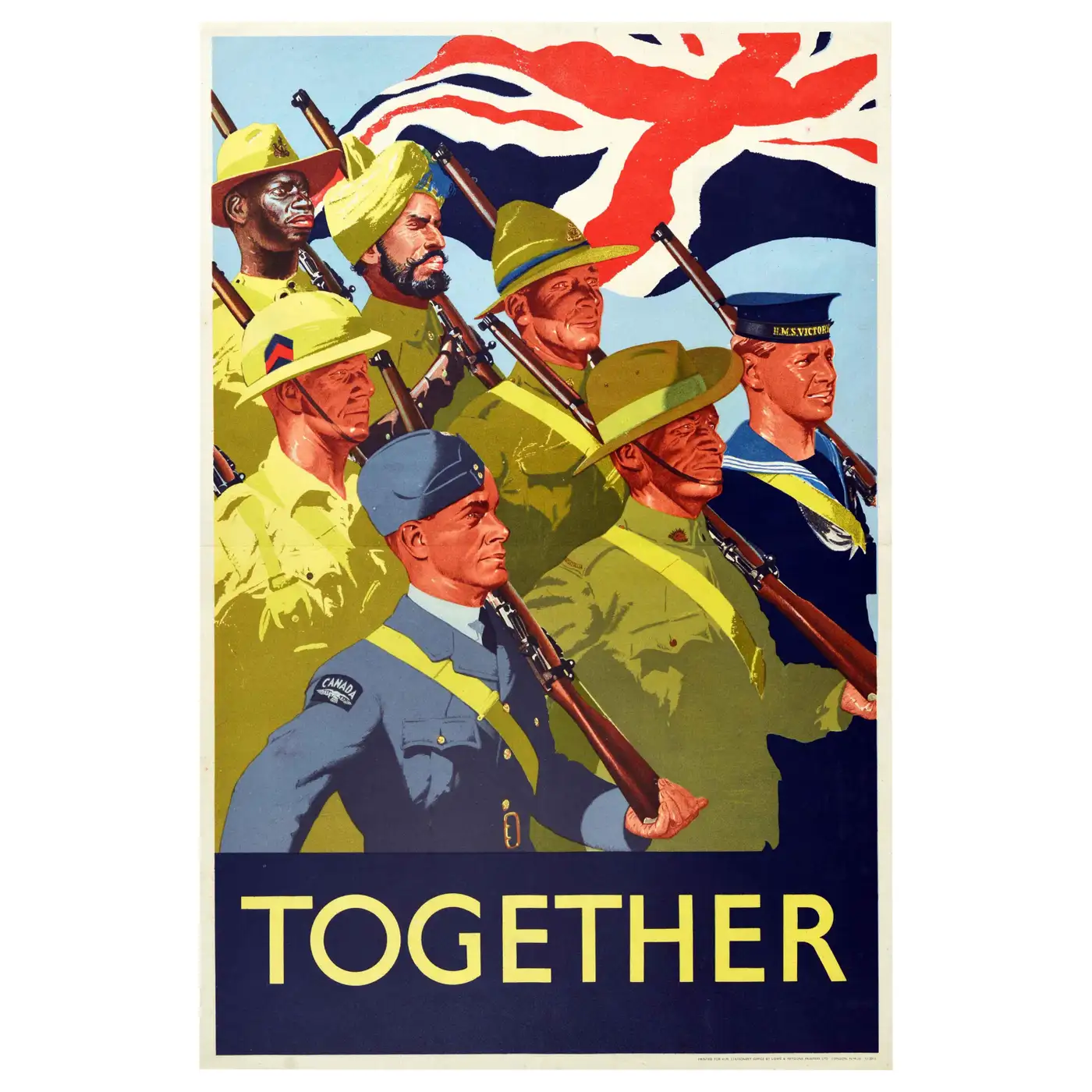
Together
Image courtesy of the IWM.
One can of course criticise the imperialism inherent in this poster, but I think it still works exceptionally well as a bold call for unity between the different nations of the British Empire. It shows how British propagandists took pains to highlight the Second World War as a global conflict against fascism.
- A job which, if I do say so myself, I was pretty bloody good at.
- Ponsonby wrote Falsehood in Wartime in which ironically he basically made up stories about British propagandists in a book supposedly about manufactured atrocity propaganda!
- Phillip Taylor, Munitions of the mind: A history of propaganda (Manchester University Press, 2013).
- I’m only going to present Allied propaganda. Because, frankly, fuck fascism.
- The story of Dollard is mostly myth, and he was more likely an idiot fur-trapper who got himself killed through stupidity.
Alexander the Great and Julius Caesar
Adrian Goldsworthy. Historian and Novelist
Published 1 Oct 2025The first of this year’s video’s in answer to viewers’ questions — today we think about and compare Alexander and Caesar. This is not new, for in the ancient world the pair were often connected, even though they lived centuries apart. Appian compared and contrasted them, Plutarch paired his biographies of them, while Suetonius and others told stories about Caesar’s admiration for the famous Macedonian.


