
According to the Collge Fix, labor-based grading “involves assigning grades based on the ‘labor’ students put into their assignments, rather than the grammar, style and quality of their work.”
At last, we know the answer to the question almost no one was asking: What happens when Karl Marx’s labor theory of value gets tenure?
The labor theory of value is very popular on the Left, probably because it makes no sense. Marx — who never labored once in his entire life — proposed that “labor” has inherent value, that “if we disregard the use-value of commodities, they have only one property left, that of being products of labor.”
I assure you it sounds even stupider in the original German.
The short version is that “labor” determines a product’s value, not the competitive marketplace.
It’s a crackpot theory, easily demolished.
Take the example of a skilled pastry chef and … me.
Give a few dollars worth of flour, sugar, butter, etc., to that chef and after a couple of hours of his labors, he can sell you a gorgeous and tasty cake that you would be happy to pay a lot of money to buy.
I don’t bake and have no interest in baking. Let me labor on those same ingredients for the same two hours, and you’ll get a hot mess worth less than the value of the ingredients that went into it.
(Apologies: This is not my example, but I can’t find an online resource listing the original author. [I first encountered this in a Robert Heinlein novel, but he may have been paraphrasing someone else])
It’s not the “labor,” it’s the results.
Now we’re supposed to apply this same thinking to grading English papers.
We’re supposed to accept that one student’s craptaculently-written essay has the same value as another student’s beautifully written paper because they both put the same amount of labor into writing them.
What Inoue wants college instructors to do is apply crackpot Marxist theory to those who will be disadvantaged the most if they aren’t taught proper English.
Stephen Green, “Fight ‘White Language Supremacy,’ Prof Will Grade on ‘Labor’ Not Results”, Vodkapundity, 2021-11-10.
February 13, 2022
QotD: Marx’s labour theory of value gets tenure
February 9, 2022
QotD: Paper or plastic?
This point is illustrated in microcosm by those trying to get rid of single use plastic bags. The 5p charge for plastic bags has meant the sale of billions of so-called bags for life, which use twice as much plastic as the cheaper alternative. All those bags for life mean we use more plastic than we started with and even, possibly, more bags themselves. This was something that was warned about before the plastic bag charge was introduced, with some observing that even “single use” bags did tend to get used more than once.
So far, then, we have learnt that the planning deployed to reduce plastic has had the opposite effect. That, however, has not stopped the central planners from redoubling their efforts. The necessary charge for a bag is to double, the system is to be expanded to the tens of thousands of small shops that don’t currently have to charge. “It doesn’t work, let’s have more of it”, the cry of bureaucracies through the ages.
But this is the blending of government planning with the fashionable nostrums of our day so of course it gets worse. It’s not even true that the bags for life – and especially not the cotton ones, even less so the organic cotton – are more environmentally friendly than the single use ones. Even recycled ones use more resources than single-use ones – for yes, recycling is an industrial activity using energy and other resources.
We can even construct a little spectrum here. How many times do we need to reuse a bag for it to have as little resource use – and thus environmental effect – as just the one use of those thin single use plastic ones? Obviously enough, the single use that we’re told not to use has a value of one here. The bag for life must be reused 35 times. A bag for life from recycled plastic 84 times. A paper bag must be reused 43 times – yes, paper. A cotton bag 7,100 times and an organic cotton? 20,000.
Which is the environmentally friendly option here? Clearly and obviously the one that everyone insists we must not use. So much for fashionable nostrums then.
Tim Worstall, “Plastic bags and the problem with central planning”, CapX, 2019-01-02.
January 30, 2022
“I stand corrected. All retail sucks, not just book retail”
Following up to the issue of book store-to-publisher returns last week (here), Kenneth Whyte discovered that other retailers are not that different from the book business after all:

“Indigo Books and Music” by Open Grid Scheduler / Grid Engine is licensed under CC0 1.0

Last week I wrote about the horrible, wasteful publishing-wide policy of booksellers returning unsold books for full refunds rather than putting them on sale. Some 30 percent of books in stores are sent back to publishers who bury, pulp, or remainder them. I compared this practice to other retail sectors:
If I were in the ugly sweater business, I’d sell 500 ugly sweaters to Saks at $200-a-piece. Saks pays me 500x$200=$100,000, marks the ugly sweaters up to $500, and lays them out on tidy glass shelves under track lighting. Whatever is left after the Christmas season is marked down to half price on crowded sales racks. If Saks still has some ugly sweaters in January, it will ship them to the outlet store where they’re offered at still greater discounts.
Our friend, author and regular SHuSH reader Ken McGoogan, sent my comments to a mature student he teaches. She comes from the fashion industry and says it’s not so simple:
The reality is, if Saks cannot sell that ugly sweater, they will ask for mark-down money from the brand (the wholesaler) who sold them that ugly sweater. If the brand is not willing to give Saks that mark-down money, they will never carry anything from the brand again. Is mark-down money better than returns? Honestly, it’s not that much better. The amount of the mark-down money is an often shocking figure. And this is not just for Saks, all big retailers do it, without exception.
Barnes & Noble or Chapters are just like department stores. The business model is the same. The only thing is, if the readers found out how much waste the book returns are generating every year, it’ll be a big turn off for the customers. They’d rather force themselves to read e-books or audio books than be part of the wasteful culture. Especially for the younger generation, they are buying less garments because of the fashion industry’s wasteful level. Fyi, a lot of new clothes and unsold inventories are burned every year as they are running out of storage spaces.
I stand corrected. All retail sucks, not just book retail. And the book industry had better sort this out before the aforementioned younger generation begins to focus on it.
January 25, 2022
The fantasy of a modern economy without money
Jon Hersey and Thomas Walker-Werth consider the claim that we’d all be better off without money in a truly modern, egalitarian society:
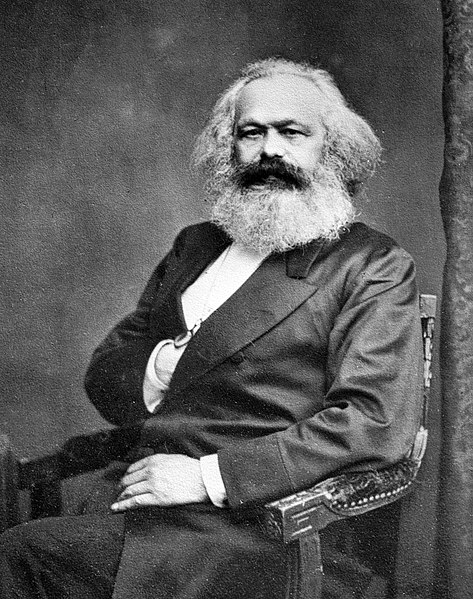
Capitalism, to the extent it has existed, has been incredibly successful at lifting most of humanity out of poverty, incentivizing the creation of incredible, life-enhancing technologies, such as those Maezawa used to make his fortune — not to mention, travel to space. But it’s long had its critics, and he is far from the first to propose a sort of Garden-of-Eden world where everything is plentiful and free. Karl Marx envisioned a similar utopia. Communism, he said, ultimately would bring about a world without money:
In the case of socialised production the money-capital is eliminated. Society distributes labour-power and means of production to the different branches of production. The producers may, for all it matters, receive paper vouchers entitling them to withdraw from the social supplies of consumer goods a quantity corresponding to their labour-time. These vouchers are not money. They do not circulate.
And although “society distributes labour-power” — meaning government planners tell people what to do to ensure that things (such as “free” Ferraris) get made — workers could also all pursue whatever hobbies or occupations strike their fancy. “[I]n communist society,” Marx explained,
where nobody has one exclusive sphere of activity but each can become accomplished in any branch he wishes, society regulates the general production and thus makes it possible for me to do one thing today and another tomorrow, to hunt in the morning, to fish in the afternoon, rear cattle in the evening, criticize after dinner, just as I have in mind, without ever becoming hunter, fisherman, shepherd or critic.
[…]
Although Marx considered himself a social scientist and economist — and although his ideas are still some of the most widely taught — they aren’t much taught in social science or economics departments, except as foils. That’s because virtually all of Marx’s hypotheses have been debunked. For one, who’s going to build the free Ferraris that Maezawa has dreamed up, never mind tackle more mundane tasks, with no incentive? But for those who don’t find such commonsense thought experiments convincing — or who think, as Marx did, that human nature will somehow mysteriously change — the impracticality of Marx’s moneyless state was demonstrated by what Austrian economists have come to call the calculation problem. Ludwig von Mises once explained the problem as follows:
If a hydroelectric power station is to be built, one must know whether or not this is the most economical way to produce the energy needed. How can he know this if he cannot calculate costs and output?
We may admit that in its initial period a socialist regime could to some extent rely upon the experience of the preceding age of capitalism. But what is to be done later, as conditions change more and more? Of what use could the prices of 1900 be for the director in 1949? And what use can the director in 1980 derive from the knowledge of the prices of 1949?
The paradox of “planning” is that it cannot plan, because of the absence of economic calculation. What is called a planned economy is no economy at all. It is just a system of groping about in the dark.
In short, without prices, people have no relatable, quantifiable means of comparing and contrasting options about how to spend time and capital, which is vital for determining how best to use these naturally scarce resources. “New Scientist magazine reported that in the future, cars could be powered by hazelnuts,” said comedian Jimmy Fallon, in a skit that captures this point hilariously. “That’s encouraging, considering an eight-ounce jar of hazelnuts costs about nine dollars. Yeah, I’ve got an idea for a car that runs on bald eagle heads and Fabergé eggs.”
January 23, 2022
The oddity of the bookselling business
Unlike so many other retail operations, book stores have a different sales cycle because they can generally return unsold books (in good condition) to the publisher for a full refund. This means that 30% or more of the books on the shelf at Christmas will be shipped back to the publisher early in the new year, only to appear again on the discount shelves a year or two later for a fraction of the original retail price (and often in rather worse shape for all the additional handling). In the latest SHuSH newsletter, Kennethy Whyte calls this the worst problem in book publishing:
“Indigo Books and Music” by Open Grid Scheduler / Grid Engine is licensed under CC0 1.0
Book publishing doesn’t work like most other retail businesses. If I were in the ugly sweater business, I’d sell 500 ugly sweaters to Saks at $200-a-piece. Saks pays me 500x$200=$100,000, marks the ugly sweaters up to $500, and lays them out on tidy glass shelves under track lighting. Whatever is left after the Christmas season is marked down to half price on crowded sales racks. If Saks still has some ugly sweaters in January, it will ship them to the outlet store where they’re offered at still greater discounts.
What happens to them if they don’t sell at the outlet doesn’t interest me because I’ve got my $100,000. If Saks ordered far too many ugly sweaters, that’s Saks’ problem.
In the book world, I sell 1,000 copies of a book to a retail chain like Barnes & Indigo for $15-a-piece, half the retail price. Barnes & Indigo pays me 1,000x$15=$15,000 and maybe puts some of the books on a front table, or maybe buries them on a bottom shelf in the darkest corner of the store. I might sell a two hundred, four hundred, or six hundred copies.
Let’s be generous and say 600 sell at Barnes & Indigo through the autumn and over the holidays. Come January, the store doesn’t put the remaining stock on sale: it packs up the unsold 400 and ships them back to me for a full refund. The 400 returns, or at least those of them that aren’t crumpled or coffee-stained, go back into the warehouse, which charges me fees to process the returns and more fees to store them. Sometime later, I get a notice of the returns and regret that extra glass of wine I ordered at dinner the night I thought I sold Barnes & Indigo $15,000 worth of books when, in fact, I only sold $9,000 worth of books, perhaps leaving me under-water on that particular title. I also regret boasting of the $15,000 sale to the author, who probably did some royalty math in his head and thought he was getting 40% more than he’ll actually receive.
Returns at publishing houses run somewhere between 25% and 30% annually, across all titles. That’s despite Amazon with its ruthlessly efficient algorithms seldom buying many more copies than it needs, and despite ebooks and audiobooks (which amount to a quarter of sales for many publishers) having almost zero returns.
Millions of books are returned to publishers at this time of year. Sales are slower in January and February, so bookstores hurriedly return all their remaining holiday-season stock and whatever else hasn’t moved to keep themselves in cash. Some of the returns go back into storage. Eventually, most are remaindered, or pulped, or buried. It’s a colossal waste of paper and ink, a headache in terms of shipping/handling/accounting, and dispiriting as heck. You might think you had a great year, hit all your sales targets, exceeded them, even, and then in about the third week of January begins the drip drip drip of returns, and it continues steadily through March. That’s if you’re lucky and it’s drips, not waves. And while the returns are concentrated in the first quarter, your books are returnable year-round, so even a pleasant summer afternoon can be ruined by the unexpected arrival of a pallet of unwanted stock.
January 18, 2022
Decadence
In the latest Libertarian Enterprise, Sarah Hoyt considers the old Soviet put-down of all of western culture (especially the American one) … that it was decadent:
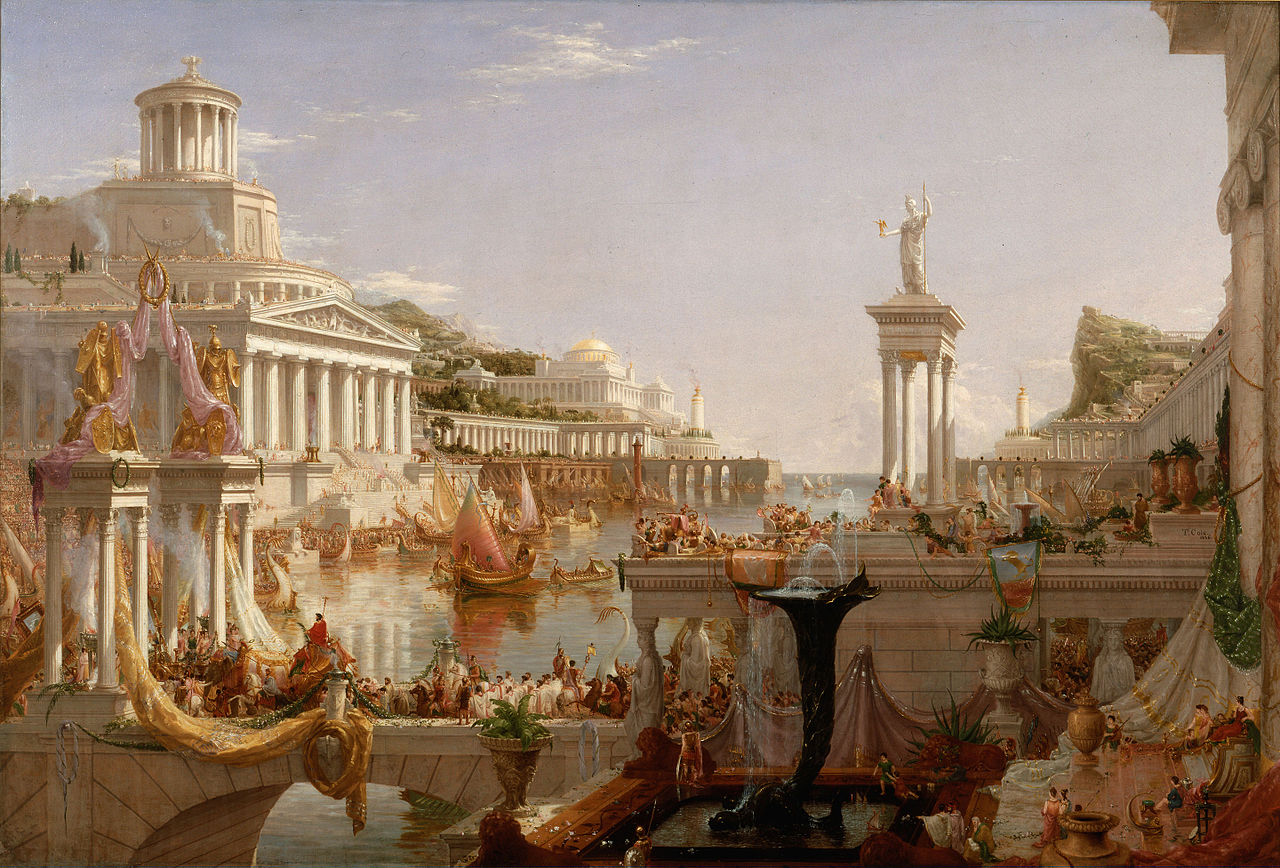
“The Consummation of Empire” from the painting series “The Course of Empire” by Thomas Cole (1801-1848).
New York HIstorical Society collection via Wikimedia Commons.
Yes, sure. I hear any number of you gnashing your teeth on that side of the screen: the soft living, the snowflakery in — mostly — our universities, the demands that everyone cater to them, people being completely terrified of a bad cold. Oh, yeah, rampant crime and bad sexual morals. We’re OBVIOUSLY decadent. How can I make fun of it?
Very easily.
For one your gnashing of teeth rhymes eerily with Romans gnashing of teeth for millennia, long before Rome was anywhere near ripe to fall, and in fact while Rome was the bad ass of the world. Second, it echoes even more eerily all of the Christian explanations of why Rome fell, which curiously also echoed the Christian beliefs in the loss of paradise.
“Decadence is sinfulness, and then comes the end and only G-d can save you” is the narrative there. Which is fine, in a spiritual sense, and completely bonkers insane when it applies to cultures and history. But it served the nascent theocracy that replaced Rome quite well. One of the things it served was to explain why life was now much, much harder. Because you know, abundance is what leads to decadence. Life is too soft, you don’t work hard enough and … bam! suddenly you’re in the middle of an orgy or worshiping a goat or something. Never you mind that the Romans pretty much did that all along, even when they were the badasses of the world. It’s really easy to shape the history of a fallen civilization so it suits the purposes of its successor.
Which brings us to the fact that Communism is a Christian heresy, complete with paradise — the supposed egalitarian and property-free pre-history (it’s also really easy to shape a period that left no account of itself that we can find) — until greed — and in one version PATRIARCHY and in another “whiteness” WTF that means — kicked us out of it. Now we must force the perfect human (Homo Sovieticus!) to emerge, so we can go back to living in caves in (sing it) perfect harmony. (Yeah.)
The complaints of decadence I heard as a young woman were mostly Soviet Agit Prop. Yes, yours were too. They ranged from incoherent to frigging insane. Some of it was a very old rhyming chorus: Americans were decadent because they were too rich. They had too many choices. They were too immoral. They never had enough, and would commit crimes to be richer. They ate too much, drove too much, slept in too comfortable a bed, and in general were DECADENT. Just like Rome before it fell. (If you realize the actual structure of Imperial Rome was closer to the Soviet Union’s, a plunder culture that could only survive by stealing, the whole thing will take your breath away with its chutzpah.
The fact that our (even though at the time it was your, as I was a foreigner at least in some ways) entertainment and art echoed these crazy accusations only made the whole thing stick, so even the right, American loving side (which anyway always has a vast side of puritanism in America. And speaking of puritans, let’s talk about what some of them did to … turkeys? If weird sexual kinks are a sign of decadence, we’ve never been non-decadent) bought into it. I mean Spartacus (the novel) portrait of the decadence of Rome was meant to echo how bad America was. What’s that I hear? The author was a communist? You. Don’t. Say. I think I sent my shocked face out to be mended, but I won’t be a sec while I retrieve it.
In a more personal sense, my own family told me Portugal too was decadent. Why, unlike mom, I didn’t have to walk beside the train line to pick up enough coal for the family to cook. We had butane bottles delivered, even if they were super expensive, so we often cooked on a petrol lamp in the patio, if the weather was fine.
Decadent and soft living, I tell you. Sure, the bathroom was outside, but it was a bathroom, with running water included. JUST like Rome before the fall. How much longer till we started screwing Nightingales’ Tongues, eating Bear Sausages and electing horses to congress (I think in America we’ve been doing that all along, too. Though I’d prefer if every now and then we elected the front half of the horse.)
January 16, 2022
QotD: Once “discovered”, colonization of the Americas was inevitable
This is not a joke. Political reality has a way of crashing in on the pipe dreams of liberal academics. The reality is, if the English had not colonised, then the French or the Dutch would have. If the Spanish had not colonised, the Portuguese would have. This would have shifted the balance of power at home, and any European country which had not colonised, would have been relegated to secondary status. And it is easy to overestimate the amount of control that European governments actually had. As soon as the New World was discovered, many fisherman and traders sailed across the Atlantic on their own, in hopes of circumventing tax authorities and scoring a fortune. Long before colonies were established in most regions, the New World was crawling with Europeans whose superior technology gave them an edge in combat. Nonetheless, it was extremely dangerous for Europeans to provoke fights with Native Americans, and most of them tried to avoid this when possible. In retrospect, one could in theory be impressed that so many European governments showed a genuine concern to rein in the worst excesses of their subjects, with an express eye to protecting the Indians from depredation. The logic was simple: they attempted to protect their subjects at home, in order to secure good order and a better tax base. So they would do the same to their subjects in the New World. For a long time, few Europeans harboured any master plan of pushing the Native Americans out of their own lands. In more densely populated regions such as Mexico, such an idea must have seemed an absurdity. Reality tends to occur ad hoc. Boundaries often took generations to move, and would have seemed fixed at the time. For several centuries, many Europeans assumed that they would long be a minority on the North American continent. In Mexico and Peru, they always have been.
Population density mattered, a lot, when it came to pre-modern global migrations. China and India were “safe” from excessive European colonisation because they had the densest populations in the world, and they were likewise largely immune to any diseases brought by Europeans. SubSaharan Africa had a lower population density depleted by slave raiding, but they still outnumbered European colonists by a large margin throughout the colonial era — again because European contact did not decimate their numbers through disease the way it did in the Americas. It is worth noting that no one claims that Europeans committed genocide in India, Asia or even Africa, although their technological advantages gave them every opportunity had they actually been of a genocidal mindset (as were for example the Mongols). In fact, the European track record shows them to be almost shockingly un-genocidal, given their clear technological advantages over the rest of the world for a period of several centuries. Few other civilisations, given similar power over so much of the world’s people, would have behaved in a less reprehensible manner. This is not to give Europeans a pat on the back. Rather it is to point out that Europeans are regularly painted as the very worst society on Earth, when in fact they had the power to do far, far more evil than they actually did. Let us at least acknowledge this fact.
Jeff Fynn-Paul, “The myth of the ‘stolen century'”, Spectator Magazine, 2020-09-26.
January 15, 2022
The futility of “ethical” divestment agitation
In C2C Journal, William McNally explains why activists are demanding that university investments be moved away from fossil fuel companies in favour of “green” investment, and why it won’t work the way they expect:
A recent press release announced that 100 faculty and other staff at three Ontario postsecondary institutions have petitioned the University Pension Plan (UPP) to divest from the fossil fuel sector. The UPP manages the pension funds for over 30,000 employees at the University of Toronto, Queen’s and Guelph. The press release was issued by Shift Action, an organization that helps activist pension members agitate for divestment from what it calls “high-carbon, high-risk fossil fuel investments” such as oil producers and pipeline companies, and shift investments to a “decarbonized” portfolio focused on climate solutions.
I highlighted the UPP petition to draw attention to its activist source, but it is not unique, as it reflects a broader trend of politically driven or, as proponents prefer, “ethical” investing. The motivating claim for divestment in the Shift press release is that we are experiencing a “worsening climate crisis”. That too is a common sentiment nowadays. Because it is a crisis, we have a moral duty to mitigate the threat. The underlying reasoning is that divestment will starve fossil fuel companies of capital and less capital means less production which, in turn, means less CO2 emitted and ultimately slower climate change.
All campaigns of this sort trigger some immediate questions, such as, why choose a strategy as indirect as divestment? Why not reduce fossil fuel use in one’s own backyard, in this case the universities? Looking more broadly, Shift’s argument is more wishful thinking than sound economic analysis. Investors should feel free to hold any portfolio they want, but they should do so without illusions. In particular, they shouldn’t expect divestment to influence climate change by starving oil and natural gas companies of capital.
The first thing wrong is the underlying motivation: there is no climate crisis. As well-known author Bjorn Lomborg states in his most recent book, False Alarm: How Climate Change Panic Costs Us Trillions, Hurts the Poor, and Fails to Fix the Planet: “Climate change is real, but it’s not the apocalyptic threat that we’ve been told it is.” One of the clearest ways to see this is through climate economics. Scenarios set out by the Intergovernmental Panel on Climate Change (IPCC) forecast that over the next 80 years worldwide GDP per capita will likely increase to 450 percent of today’s level.
Lomborg estimates that climate damages will reduce this anticipated increase to 434 percent. Climate change is a problem. Accepting all of the assumptions that went into this modelling, climate change is likely to leave us somewhat less well off than we otherwise would be, by modestly slowing humanity’s overall progress. But judging by these figures, it is not a crisis.
H/T to Robert at SDA for the link.
January 14, 2022
Industry with 1% profit margins accused of earning “record profits”
Joe Lancaster on Senator Elizabeth Warren’s renewed assault on the top-hatted, monocle-wearing robber barons of the grocery business:

“Piggly Wiggly” by afiler is licensed under CC BY-SA 2.0


… Warren could hardly have picked a worse industry to use as an example: Grocery stores consistently have among the lowest profit margins of any economic sector. According to data compiled this month by New York University finance professor Aswath Damodaran, the entire retail grocery industry currently averages barely more than 1 percent in net profit. In its most recent quarter, Kroger reported a profit margin of 0.75 percent, during a time in which Warren claims that the chain was “expanding profits” due to its “market dominance.”
In actuality, for much of the last year, grocery stores have seen enormous boosts in revenue, but not increased profitability, for the simple reason that everything has been costing more: not just products, but transportation, employee compensation, and all the extra logistical steps needed to adapt to shopping during a pandemic. Couple that with persistent inflation — which Warren also recently blamed on “price gouging” — and it is no wonder that things seem a bit out of balance.
Warren has had an itchy trigger finger for antitrust laws for some time. In 2019, as part of her presidential platform, she called for using the laws to forbid retailers from selling their own products. This would affect industry leaders like Amazon and Walmart, but ironically, it would have a devastating impact on grocery stores as well: Grocers increasingly rely on their own proprietary goods to stock cheaper alternatives alongside name brands. This provides not only less expensive options for consumers, but lower costs to the stores themselves. Store brands also help fill gaps created by external supply shortages.
January 12, 2022
QotD: Baumol’s cost disease in architecture and furniture
If stonemasonry is a low-tech industry, and new high-tech industries are arising all around it, stonemason wages could get prohibitively high (compared to everything else) until nobody wants to hire them anymore. This would create pressure for architectural styles that require as little masonry (or, generalized, human labor) as possible.
This has gotten me thinking about furniture.
I got a new place recently and have been looking for furnishings. Sometimes I look at people’s furniture Pinterests. If Pinterest is any kind of representative window into the soul of the modern furniture-enthusiast, people really like Art Nouveau. […] As far as I can tell, you can’t buy any of these anywhere — they’re a combination of antiques and concept pieces. The people who pin these and pine after these end up getting minimalist Scandinavian furniture with names like UJLIBLÖK, just like everyone else.
Anything that even comes close to the above costs high four to five digits. I don’t know if this is because it’s antique, because it requires more labor, or both.
I’m harping on furniture because it avoids a lot of the complicating factors in architecture. There isn’t some vague collection of “elites” making our furniture decisions. It’s a pretty free market! There are lots of normal middle-class people spending big chunks of money on furniture, lots of them really really like the old stuff, and the old stuff is still either unavailable or unaffordable. It seems like it used to be affordable — it wasn’t just kings and dukes who had the old Art Nouveau stuff — but for some reason that’s changed. I think Baumol effects offer a tidy explanation here, and if we use them to explain furniture, then they start looking really attractive for architecture.
I want this one to be true, because it exonerates our civilization. If we could make things like the Art Nouveau furniture above, or the Taj Mahal, relatively cheaply and easily, then the question of why we aren’t doing that demands an answer. If it’s just a quirk of basic economics, then our civilization is fine, and maybe we can hope that stoneworking technology advances to the point where we can do this kind of thing again cheaply.
Scott Alexander, “Highlights From The Comments On Modern Architecture”, Astral Codex Ten, 2021-10-04.
January 6, 2022
QotD: The centre cannot hold … because there’s barely any “centre” remaining
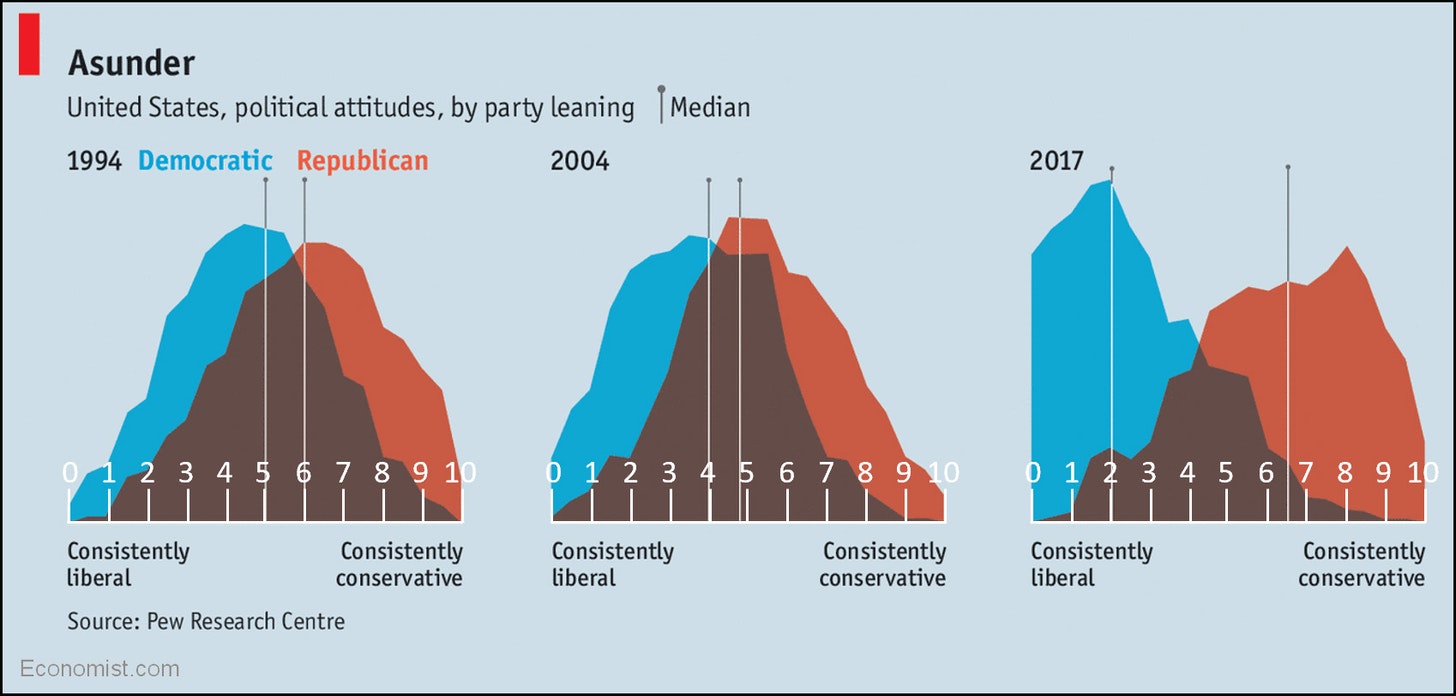
On immigration, Republicans have moved around five points to the right; the Democrats 35 points to the left. On abortion, Republicans who advocate a total ban have increased their numbers a couple of points since 1994; Democrats who favor legality in every instance has risen 20 points. On guns, the GOP has moved ten points right; Dems 20 points left.
It is also no accident that, as Drum notes and as David Shor has shown: “white academic theories of racism — and probably the whole woke movement in general — have turned off many moderate Black and Hispanic voters.” This is why even a huge economic boom may not be enough to keep the Democrats in power next year.
We are going through the greatest radicalization of the elites since the 1960s. This isn’t coming from the ground up. It’s being imposed ruthlessly from above, marshaled with a fusillade of constant MSM propaganda, and its victims are often the poor and the black and the brown.
Andrew Sullivan, “What Happened To You?”, The Weekly Dish, 2021-07-09.
January 2, 2022
Eat the bugs, peasants! Leave the meat for your betters!
Andrew Orlowski on the self-imagined elite attitudes to the environment and — as a direct result — the growing chorus of journalists pushing the idea of substituting plant-based synthetics and/or insects in place of meat for us proles:

In recent years, media messaging has been emphatically bossy about what we should eat. State micromanagement of taste has increased, too. After government intervention, British staples ranging from sticky-toffee pudding to Sugar Puffs have been reformulated beyond recognition. But the anti-meat crusade demands that something far more radical should happen – it seeks to stigmatise something central to many of our lives, and demands a shift in how we regard nature. As part of this, our media now seek to normalise lab-grown Frankenmeats, and strangest of all, adopt entomophagy – the practice of eating insects.
So what’s behind the war on meat? The apparent justification is the political elite’s great preoccupation of our time – climate change. We’re told that rearing livestock for meat is bad for the environment, and that cows are the worst offenders of all. That’s the assumption behind hit YouTube videos like Mark Rober’s “Feeding Bill Gates a fake burger (to save the world)”, a promotional video for Gates’ synthetic-meat investments, which has racked up nearly 46million views.
But the environmental argument doesn’t look so robust on closer examination. Agricultural CO2 emissions are small – so small that if the United States turned entirely vegan this decade, it would lower US emissions by just 2.6 per cent. In reality, a cow is a highly efficient protein-conversion system, turning protein that we can’t eat into protein that we love to eat. Three quarters of livestock, on balance, improve the environment, enhancing the yield of the land through fertiliser, which would otherwise need to be made synthetically. For example, one of the crimes regularly levelled against beef is water consumption. But the cow loses most of this water the same day – it’s returned to nature. So with environmental claims so weak, there must be some other rationale for the war on meat.
Much of today’s war on meat appears to be driven by venture capitalists, and their client journalists in the media. Ever eager for the next dot-com boom, Silicon Valley has made a bet on lab-grown, synthetic meat. This requires an industrial bioreactor – an expensive chemical process. But lab-grown meat doesn’t seem to be going anywhere. Business Insider recently reported that scepticism about the sector is growing, as costs remain higher than those for real meat – and this is before one single laboratory-meat formula has received regulatory approval, let alone passed the consumer test.
Another factor driving the war on meat is the academic blob. For example, Professor Peter Smith, an environmental scientist at Aberdeen University and a leading contributor to the UN’s Intergovernmental Panel on Climate Change (IPCC), likes to insist that “we’re not telling people to stop eating meat”, before adding that “it’s obvious that in the West we’re eating far too much”. Have a guess who defines what is “too much”. It’s Smith and his colleagues, not you or me making informed consumer choices.
But the oddest spectacle of all is the relentless promotion of entomophagy at the posh end of the media. The posher the paper, the keener they are on normalising bug-eating.
This is a campaign that has a high hurdle to overcome in most markets, where insects are associated with disease. “Deeply embedded in the Western psyche is a view of insects as dirty, disgusting and dangerous”, a group of academics found in 2014. Many bugs, such as cockroaches, carry disease. Flies like shit, as the saying goes. “Individuals vary in their sensitivity to disgust”, another academic paper acknowledges. “This sensitivity extends to three dimensions of disgust: core, animal reminder and contamination.” Only seven per cent of the US population would countenance the idea of eating insects, even in powdered form, according to one academic study in 2018. Processing insects also raises practical problems, with e-coli and salmonella. “Spore-forming bacteria and enterobacteriaceae have been reported in mealworms and crickets, with higher levels found in insects that had been crushed – likely due to the release of bacteria from the gut”, another study found. It’s easier to clean a cow’s stomach than a cockroach’s.
It should be no surprise, then, that the edible-insect movement has hit a few snags. Blythman recalls the startup, Eat Grub (geddit?), providing the snacks for an insect pop-up in London’s hipster East End. On the menu were “Thai-inspired” creations such as spicy cricket rice cakes and buffalo worms wrapped in betel leaf. “It tasted disgusting, and so I swallowed it whole. Then the legs stuck in my throat”, she recalls. The pop-up hasn’t returned. The following year, Sainsbury’s tapped Eat Grub for its first range of insect products – barbeque-flavoured crickets. Today, the only crickets you can buy at Sainsbury’s are cigarette lighters.
December 29, 2021
Theodore Dalrymple reviews the latest work from Thomas Piketty, Time for Socialism
Thomas Piketty has been a big name among progressives since his first book hit the bestseller lists, so the release of his latest work calls for some consideration from Theodore Dalrymple:
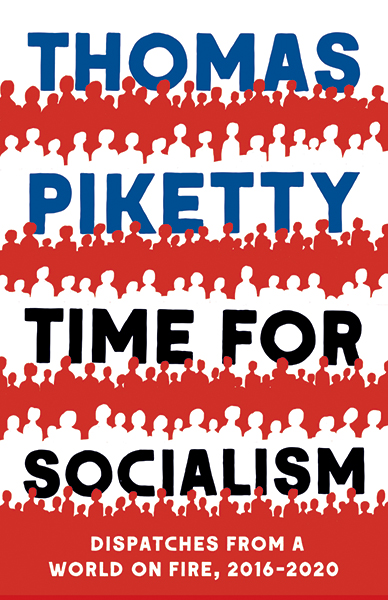
Piketty still writes clearly, though without much imaginative verve, and he has obviously consulted a lot of data. He is intelligent, knowledgeable, and decent, with a very firm grasp of unreality. He believes in a world in which economic levers act frictionlessly, or to borrow the description a doctor of my acquaintance has used with regard to his own medico-legal reports: “You turn the handle and the sausage comes out.”
There is no difference in his world between investment and expenditure. Thus, when he correctly ascribes low productivity in Britain to the low educational level of the general population (such that, in a predominantly service economy, much of it is unable even to answer the telephone properly or with reasonable courtesy), he ascribes it to lack of expenditure on education. If only this were the case! But lack of expenditure cannot possibly explain why about a fifth of children leave school barely literate. Incidentally, France seems to be progressing, if that is quite the word, in this direction.
We read that “Research in the social sciences, of which economics is an integral part, whatever some may think, is and always will be hesitant and imperfect. It is not designed to produce ready-made certainties … we have to examine patiently to endeavour to draw some provisional and uncertain lessons.” Amen to that! But modesty or tentativeness is not Professor Piketty’s main characteristic, nor does prudence once enter into his proposals.
There is no awareness that deterioration is possible as well as improvement, or of the fragility of things. Nothing counts for him but equality. He is to taxation policy what Le Corbusier was to architecture: he wants to prescribe (and proscribe) for the whole world. Above all, no variation! He would tell us how much we may possess, how much we may leave to our descendants or receive from our ancestors, how much we may earn in a year.
As an egalitarian and firm anti-nationalist, he does not explain why redistribution should stop at national borders. But try telling the average Frenchman that from now on he must forgo half his wealth in order to raise up Somalia or South Sudan! The book sometimes reads as if it were written by an electoral propagandist for Éric Zemmour, acting as an agent provocateur.
Uniformity is for him the price of unity (his countryman, Frédéric Bastiat, did not make the same mistake). He has little regard for, or even awareness of, the potential political consequences of some of his proposals. In his European Assembly, for example, which would have real power (unlike the current European Parliament), France, Spain, and Italy could and probably would outvote Germany with regard to economic policy. It does not occur to him that there could be few better ways of arousing dormant German nationalism than this. Nothing is certain, but much is possible; and while he mentions the internationalism of Jean-Luc Mélanchon, the left-wing French politician, he might also have mentioned that M. Mélenchon wrote a book about Germany and Germans that could easily have been written by a patriotic Frenchman in 1916.
Piketty is a strong believer in taxes as tools to make people more equal, and objects to the elimination of the wealth tax by the French government recently. Were he given the power, he would not only re-implement it, but vastly expand the taxes demanded of the wealthy.
[…] To all this, Professor Piketty has one sovereign remedy: tax the rich.
He thinks this is democratic because many, perhaps a majority, would vote for it. He has no problems with majoritarian democracy (provided the majority agrees with him): How can democracy be tyrannous? Thus, he sees no drawbacks in Senator Warren’s proposal to set a wealth tax and to provide — provide! — “an exit tax equal to 40% of total wealth for those who choose to leave the country and relinquish American citizenship.” Moreover, “the tax would apply to all assets, with no exemptions, with dissuasive sanctions for persons and governments who do not transmit appropriate information on assets held abroad.” Not only is this tyrannous with regard to individuals, but it is tyrannous with regard to international relations, providing a justification for American jurisdiction over the whole world. Needless to say, China, Russia, and India would never accept this, and might find allies. Conflict could become endless.
The answer to this little problem is obvious to Professor Piketty: a wealth tax worldwide, such that there would be nowhere for anyone to hide. There might be a few little teething problems with implementation — for example, who is to oversee it all — but think of the benefits: lie back and think of England! Professor Piketty has found the elixir of life, and it is taxation.
December 26, 2021
Repost – The market failure of Christmas
Not to encourage miserliness and general miserability at Christmastime, but here’s a realistic take on the deadweight loss of Christmas gift-giving:

Christmas gifts under the tree.
Photo by Kelvin Kay via Wikimedia Commons.
In strict economic terms, the most efficient gift is cold, hard cash, but exchanging equivalent sums of money lacks festive spirit and so people take their chance on the high street. This is where the market fails. Buyers have sub-optimal information about your wants and less incentive than you to maximise utility. They cannot always be sure that you do not already have the gift they have in mind, nor do they know if someone else is planning to give you the same thing. And since the joy is in the giving, they might be more interested in eliciting a fleeting sense of amusement when the present is opened than in providing lasting satisfaction. This is where Billy Bass comes in.
But note the reason for this inefficient spending. Resources are misallocated because one person has to decide what someone else wants without having the knowledge or incentive to spend as carefully as they would if buying for themselves. The market failure of Christmas is therefore an example of what happens when other people spend money on our behalf. The best person to buy things for you is you. Your friends and family might make a decent stab at it. Distant bureaucrats who have never met us — and who are spending other people’s money — perhaps can’t.
So when you open your presents next week and find yourself with another garish tie or an awful bottle of perfume, consider this: If your loved ones don’t know you well enough to make spending choices for you, what chance does the government have?
December 23, 2021
Repost — The lousy economics of gift-giving
Tim Worstall explains why gift-giving at Christmas is so economically inefficient:
Christmas gifts under the tree.
Photo by Kelvin Kay via Wikimedia Commons.
The point being made is dual, that individuals have agency and that utility is entirely personal.
To unravel that jargon.
Individuals, peeps, are able to make choices. We delight in making choices in fact, “agency” is the opposite of “anomie”, that feeling that society determines what we may or can do that so depresses the human spirits. We get to choose to get up at 6 am or 8. Have coffee or tea when we do. Go buy the latest platters from the newly popular beat combo, pay the ‘leccie bill or have the coffee out at an emporium.
Having choices, making them, makes people happier.
Secondly, utility. The result of those choices, which of them will maximise happiness, is different for each and every individual. Sure, we can aggregate some of them – food is usually pretty high up everyones’ list, that first litre of water a day tops most. But the higher up Maslow’s Pyramid we go the more tastes – and thus happiness devoured – differ.
So, we make humans happier by their having the choice to do what they want, not what others think they should want or have.
Thus, give people cash at Christmas not socks.
Balancing that is the obvious point that the care and attention with which a present is considered is part of that consumption of happiness. The boyfriend who actually listens to the type of clothing desired and goes gets it provides that joy that a bloke has, for once, been listening. Or the book that would never have been individually considered but was chosen because it might – and does.
Sure.
But the point isn’t about Christmas at all. That’s a way of wrapping the point so it can be left underneath the tree of knowledge.


