
World War Two
Published 18 Sep 2021It’s a big week, but by now they all are. The fighting in Stalingrad is intense, the fighting on Guadalcanal is intense, and the US loses a carrier in the Pacific. And the German quest for oil in the Caucasus … how’s that going again?
(more…)
September 19, 2021
Stalingrad Falls? – WW2 – 160 – September 18, 1942
Comments Off on Stalingrad Falls? – WW2 – 160 – September 18, 1942
A communist-party-connected publisher reprinted Justin Trudeau’s 2014 book Common Ground
Aha! I thought … yet more scandal! This time with direct pay-offs to Trudeau from his Beijing paymasters! Sadly, for the conspiracy minded among us, it’s not much more significant or scandalous than Barack Obama’s endorsement of Trudeau, as Kenneth Whyte explains:
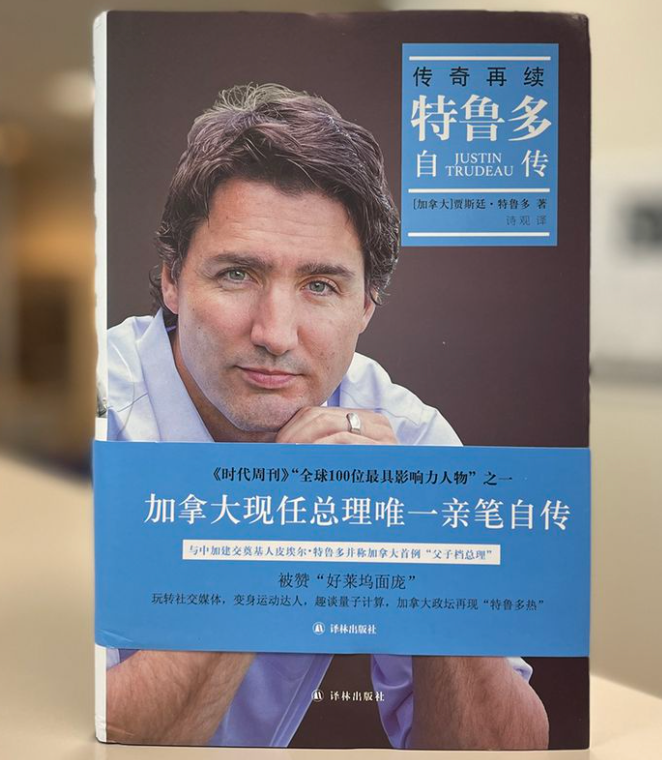
… the Globe & Mail reported that Justin Trudeau’s 2014 memoir Common Ground was republished in a Chinese edition in 2016.
Doesn’t sound like much of a story, does it? Foreign editions of Canadian books are released all the time.
What’s different in this case, says the Globe, is that the Chinese publisher is Yilin Press of Nanjing, part of the state-owned enterprise Jiangsu Phoenix Publishing and Media, which “takes operational direction from the propaganda department of the Jiangsu provincial communist party committee.”
Why would a propaganda wing of the communist party make such a deal? The Globe quotes foreign policy experts who say that the republication of Trudeau’s book is “a classic ploy” by Beijing to flatter a foreign leader. “They are trying to do anything they can to encourage him to look positive on China and the Chinese state,” according to one of the experts.
Says another: “Clearly, by publishing his biography they wanted to please him. They are the masters of propaganda.”
What do the Chinese hope to get out of courting Trudeau? “Beijing had high hopes it could persuade Canada to sign a free-trade agreement and was seeking Canada’s help in its global campaign Operation Fox Hunt to track down people it called criminals, many of whom were Chinese dissidents,” writes the Globe.
The Globe also finds it notable that the Liberals, at the time, were trotting Trudeau out to private events at the homes of wealthy Chinese-Canadians. The PM would do a little dance and the money would flow:
Chinese billionaire and Communist Party official Zhang Bin attended a May 19, 2016, fundraiser at the home of Benson Wong, chair of the Chinese Business Chamber of Canada. A few weeks later, Mr. Zhang and his business partner, Niu Gensheng, donated $200,000 to the Pierre Elliott Trudeau Foundation and $50,000 to erect a statue of Mr. Trudeau’s father.
So it all looks a bit unseemly.
I poked around and was reliably informed by someone in a position to know that Trudeau and his agent sold worldwide rights to Common Ground to HarperCollins Canada. That means it was up to HarperCollins to publish the book in Canada and also sell rights to its republication in as many foreign markets as possible. Trudeau would get a cut of revenues from those sales.
Except, as he further reveals, Trudeau had long since assigned any profits from the book to a charity, so he’s not being secretly bribed by copious amounts of money from the Chinese Communist Party’s propaganda budget (at least, not in this case, hedging just a bit …).
Should the PM, or someone in his office, have asked questions about Yilin Press and its connections to the communist party? Maybe, but it’s not like there was a free-market alternative down the street from Yilin. Every publisher in China is accountable to the communist party in one way or another. To get an ISBN number in the Chinese market, you have to go through the state, not because the state provides the service, but because it monitors all publications. Si Limin, chairman of the China Book Publishing Industry Association, is the former director of the News and Newspapers Department of the State Administration of Press, Publication, Radio, Film and Television. And so on.
As for the trade deal the Chinese were supposedly eager for Trudeau to sign? It was more the other way around. In 2017, the Liberals tried to convince Beijing to adopt Trudeau-style progressivism in return for free-trade with Canada. They were laughed out of town. The Chinese couldn’t even be bothered to pretend an interest in human rights to get a deal signed.
I have all kinds of problems with the ethical standards of the Liberal party, Trudeau’s personal judgment, those cash for access meetings, and his Chinese policy, but there’s nothing much to see here.
Comments Off on A communist-party-connected publisher reprinted Justin Trudeau’s 2014 book Common Ground
September 18, 2021
What if Pearl Harbor Never Happened, Life in Cyprus, and Peasant Armies of China – WW2 – OOTF 024
World War Two
Published 17 Sep 2021Ever wonder what would have happened if Japan just never attacked Pearl Harbor but invaded the Indies anyway? Or how the people of Cyprus are faring in the war? Or if the Chinese armies had any specialized combat forces? Find out in this Out of the Foxholes!
(more…)
Comments Off on What if Pearl Harbor Never Happened, Life in Cyprus, and Peasant Armies of China – WW2 – OOTF 024
September 17, 2021
Australia, the UK, and the US join in a military alliance … Canada of course is nowhere in sight
News broke the other day about a new three-nation military arrangement clearly aimed at containing Chinese ambitions in the Pacific, involving Australia, Britain, and the United States, to be known as AUKUS (or AUUKUS, depending on the reporting source). These three countries are already tightly linked in the “Five Eyes” intelligence sharing network which also includes Canada and New Zealand. As more than one wit noted on Twitter after the announcement, it’s a good thing Canada doesn’t have a Pacific coast or any economic interests in that ocean…
Ted Campbell, who recently emerged from a blogging hiatus to comment on the ongoing federal election, felt this new pact cemented the idea that Canada is “no longer a serious country” in military terms:
It is now abundantly clear that the USA, inter alia, puts Justin Trudeau’s Canada in the same league as (anti-nuclear) New Zealand. Canada is no longer one of the most trusted allies … Australia is; Britain is: India is; Japan is … Canada is NOT.
Prime Minister Justin Trudeau has, in six short years, moved Canada from one of America’s best friends to, de facto, a Chinese puppet state. He has done this with his own (and his many advisors’) eyes wide open. Canada, Justin Trudeau’s Canada is no longer a serious nation … perhaps we don’t really deserve to be. After all, we (almost 40% of the almost 70% who bothered to vote at all) elected him … then we did it again. Maybe the world is just concluding that we are not serious people who can be relied upon when the going gets tough.
He followed this up with a bit more concern on the sinking Canadian international profile:
Just take a look at those technologies ~ AI, quantum computing, cyber warfare ~ those are all areas vital to Canada’s security and prosperity and what are we focused on? Climate change and Québec’s latest attempts to make Canada into an illiberal state. China spews out more carbon in a week than Canada does in a year. China is aiming to displace America as the global guarantor of peace, security and trade. Do any of the dimwits in the Liberal government understand that? Why in hell is Prime Minister Trudeau attacking Alberta’s (relatively clean) oil industry rather than, for example, concentrating on making Canadian nuclear energy work for us?
A few days ago I said that Canada needs nuclear powered submarines to assert and protect our sovereignty in the waters we claim as our own. No one contradicted me. No one ever raises any serious, well-founded objections to nuclear submarines for Canada. It’s a no brainer. But, look at the last line in the quote above. Who is getting nuclear submarines? Australia … because it is a serious country with adult political leadership.
Prime Minister Justin Trudeau’s regime has sidelines Canada. Our strongest, most traditional allies have abandoned us. We have been sold out … to China.
I use that term “sold out”, intentionally. I do NOT believe that Justin Trudeau is a traitor … for heaven’s sake, he’s not smart enough to betray anything. He’s barely able to memorize his lines. But a lot of people have invested a lot in China ~ the Desmarais family (of Power Corporation fame) and former Prime Minister Jean Chrétien and Bob Rae, Canada’s Ambassador to the UN, for example, are all closely tied together and even more closely tied to the Canada-China trade file. I assert that the “China lobby” in Canada is very, very powerful, very, very rich and extraordinarily well connected to Canada’s political leadership ~ Liberal and Conservative, alike. I further assert that it, not Justin Trudeau and Marc Garneau and the mandarins in Ottawa, drives Canada’s foreign, trade and fiscal policies. Prime Minister Justin Trudeau is NOT a traitor … but he is puppet and people whose vital interests are centred on China, not Canada, pull the strings.
Why is Canada excluded from the AUKUS pact?
One reason Canada isn’t involved is certainly the distraction of the federal election, and there would have been no way that Justin Trudeau would have wanted to answer questions on the campaign trail about anything geostrategic or military, and he especially doesn’t want Canadians looking closely at his servile deference to the Chinese government. Of course, given that he’s literally bribed the major newspaper chains and TV networks with “subsidies” right before the election was called, he might well have been safe from any hint of an awkward question from his unofficial PR branches in Montreal, Toronto, and Vancouver.
Over at the Thin Pinstriped Line, Sir Humphrey looks at the military and technical implications of the new alliance:
The Royal Australian Navy is likely to become the next nation to join the nuclear submarine operators club. This is the key headline emerging from the surprise tri-lateral announcement on Wed 15 September by the Prime Ministers of Australia and the UK, and the President of the United States.
The move, forming a new “three eyes” club known as AUKUS is a genuinely significant development intended to provide a significant uplift in capability in the Indo-Pacific region. For the first time in nearly 70 years, the US has agreed to share some of its most sensitive technology with a third party, to help Australia become a “naval power underway on nuclear power”.
There are several ramifications of this decision, that will be felt for many years to come. The first is that from an American perspective, this is a good opportunity to take steps to increase burden sharing in the Pacific.
[…]
From a wider diplomatic perspective, there are three distinct groupings to consider. Firstly, the remaining 5-EYES members (Canada and New Zealand). Its unlikely that this will do much damage to 5-EYES – for example New Zealand would never have been approached as the acquisition of a nuclear submarine would be vastly beyond the budget, or needs, of the small but incredibly professional Royal New Zealand Navy.
Canada may be feeling slightly raw about this – particularly those with long memories who recall the 1980s and the doomed plan to acquire nuclear submarines for the RCN. But who knows, in terms of timelines these vessels may be entering service in the same timeframe as Canada seeks to replace the Upholder/Victoria class – it is not beyond the realm of possibility that they may seek to join in later on.
Given 5-EYES is more than just an Indo-Pacific focus, it would be wrong to read much into this as a statement on the future of that Alliance. Rather it is better to see this as a subgrouping of a very successful international alliance.
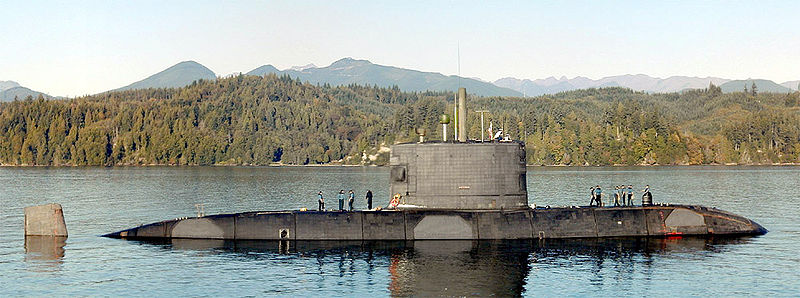
HMCS Victoria
Image via Wikimedia Commons.
Comments Off on Australia, the UK, and the US join in a military alliance … Canada of course is nowhere in sight
September 15, 2021
Narendra Modi apparently doesn’t inspire mere biographies … he gets hagiographies
Scott Alexander reviews Andy Marino’s gushingly admiring Modi: A Political Biography:
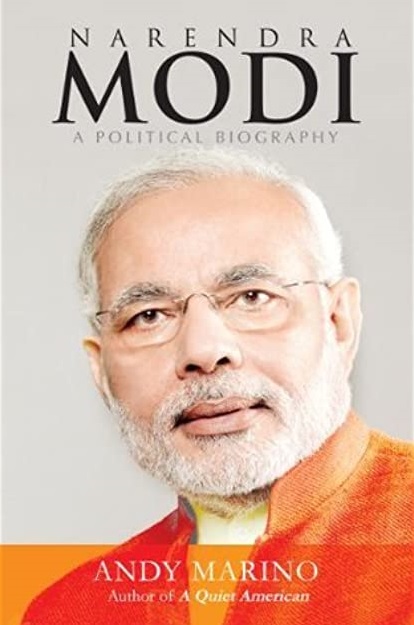
The author begins by writing about how Modi let him ride with him in his private helicopter and gave him unprecedented access to have “open-ended conversations” about “every aspect of his life”. The cover promises an objective evaluation, but on page 2, the author notes that “Objectivity does not mean flying in the face of incontrovertible evidence”, adding that “Modi has been the subject of the longest, most intense — and probably the most vituperative — campaign of vilification.” Marino promises to replace this campaign with “a narrative that is balanced, objective, and fair — but also unsparingly critical of [Modi’s] foibles” — which is an interesting construction, given how it contrasts criticism with fairness — and also pre-emptively declares the flaws he will be criticizing “foibles”. I’m not sure we ever get around to the criticism anyway, so it doesn’t really matter.
I am still going to summarize and review this book, but I recommend thinking of it as Modi’s autobiography, ghost-written by Andy Marino. I hope to eventually find another book which presents a different perspective, and an update for the past six years (M:APB ends in 2014, right when Modi was elected PM). Until then, think of M:ABP as a look into how Modi sees himself, and how he wants you to see him.
[…]
In 1975 the Emergency happened.
For thirty years, since its independence, India had been a socialist state. Not the cool kind of socialist where you hold May Day parades and build ten zillion steel mills. The boring kind of socialist where the government makes you get lots of permits, then taxes you really heavily, and nothing really ever gets done. “Even today the Representation of the People Act requires all Indian political parties to pledge allegiance not only to the Constitution but also to socialism.” The RSS [Rashtriya Swayamsevak Sangh] and its collection of associated right-wing nationalist parties supported Hindu nationalism plus socialism. Their arch-enemy, the center-left-to-confused-mishmash Congress Party, supported secularism plus socialism. Non-socialism was off the table.
In unrelated news, there was a food shortage. Indians took to the streets protesting Prime Minister Indira Gandhi (no relation to Mahatma Gandhi). Gandhi was heavy-handed in crushing the protests, which caused more protests, one thing led to another, and finally Gandhi declared martial law, a period which has gone down in history as the Emergency.
Gandhi immediately moved to arrest all her political enemies and shut down all newspapers that criticized her. The RSS was one of Gandhi’s main enemies and had to go underground quickly. Gujarat became a center for the resistance. So Modi, as an official in Gujarat’s RSS, ended up right in the middle of this. He remained a paper-pusher, but now he was a paper-pusher for freedom, scheduling meetings of resistance leaders, maintaining a master list of safe houses and trusted operatives, and keeping lines of communication open.
During a capital-e Emergency even paper-pushers can have greatness thrust upon them, and Modi ended up with responsibilities way outside his formal job description:
Chhayanak Mehta tells of how, after Deshmukh’s arrest, it was discovered that the papers he was carrying were still with him. These contained plans for the future actions of the [resistance], and it was essential to somehow retrieve them. To this end, Modi planned a distraction with the help of a female swayamsevak from Maningar. They went to the police station where Deshmukh was being held. While she posed as a relative and contrived a meeting with the prisoner, Modi somehow took the documents from under the noses of the police.
Or:
Modi was also responsible for transportation and travel to Gujarat of those opponents of Indra still at liberty … Modi too, in the course of his duties, was compelled to travel, often with pamphlets that could have got him arrested. To minimize the risk he became a master of disguise, something that came naturally to one who always paid attention to his appearance. On one outing, he would appear as a saffron-robed sanyasi; on another, as a turbaned Sikh. One time he was sitting in a railway carriage, hiding behind a thick black beard, when his old schoolteacher sat down next to the grown-up “urchin”. The disguise worked perfectly, but some years afterwards the teacher attested that as Narendra disembarked, he introduced himself and offered a hearty saluation.
Still, the Emergency ground on. One aspect the book doesn’t stress, but which I was surprised to read about when Googling the period, was the forced sterilizations. Under pressure from the US and UN to control exponentially rising populations, Indira had started various population control efforts in the 60s, all ambiguously voluntary. Over time, the level of pressure ratcheted up, and during the Emergency the previously-ambiguous coercion became naked and violent. “In 1976-1977, the programme led to 8.3 million sterilisations, most of them forced”.
How did this end? Gandhi called an election — during which she was predictably voted out completely and her party lost more thoroughly than any party has ever lost anything before. Her opponents’ campaign was based on things like “she just forceably sterilized 8 million people and you could be next”, which is honestly a pretty compelling platform. The real question is why she gave up her emergency dictatorship and called an election at all. According to the book:
It is more likely that in ending the Emergency Indira was thinking of herself, not India. She was aware of her growing international reputation as a tyrant, the daughter of a great democratic leader whose legacy she had damaged. As the journalist Tavleen Singh points out, the pressure to end the Emergency came simply from Indira Gandhi finding it unbearable that “the Western media had taken to calling her a dictator.”
(but before you interpret this as too inspiring a story of the victory of good over evil, Indira Gandhi was voted back in as prime minister three years later. We’ll get to that.)
Modi came out of the Emergency a rising star, appreciated by all for his logistical role in the Resistance. In the newly open political climate, the RSS was devoting more attention to their political wing and asked Modi to come on as a sort of campaign-manager-at-large, who would travel all around India and help friendly politicians get elected. He turned out to be really good at this, and rose through the ranks until he was one of the leading lights of the new BJP (Bharatiya Janata Party, “Indian People’s Party”). He spent the next two decades running campaigns, traveling the country, and getting involved in internal backstabbing (which he had a habit of losing in ways that got him kicked out of the party just before something terrible happened, leaving him as the only person untarnished by the terrible thing when they inevitably invited him back). Finally some of Modi’s political enemies failed badly in the leadership of Gujarat — one was expelled for corruption, another suffered several natural disasters which he responded to poorly. Modi had been accepted back into the party. He was beloved by Gujaratis, who still remembered his heroic work during the Resistance. He was the only person untarnished by various terrible things. By the rules of Indian politics, it was the party’s choice who would replace the resigning incumbent as Chief Minister of Gujarat, and as Modi tells it, everyone else just kind of agreed he was the natural choice (his enemies say he did various scheming and backstabbing at this point). So on October 7 2001, Narendra Modi was sworn in as Chief Minister of Gujarat, India’s fifth-largest state.
Comments Off on Narendra Modi apparently doesn’t inspire mere biographies … he gets hagiographies
September 13, 2021
How Is Worcestershire Sauce Made? | How Do They Do It?
DCODE by Discovery
Published 25 Sep 2018Worcestershire Sauce was invented in 1835 when a posh army officer went to India to help run the British Empire. He fell in love, not with a woman, but with a fish sauce. DCODE how the iconic sauce is made in England today.
#DCODE, #HowDoTheyDoIt, #WorcestershireSauce
Comments Off on How Is Worcestershire Sauce Made? | How Do They Do It?
September 12, 2021
Hitler Finally Fed Up with his Army – WW2 – 159 – September 11, 1942
World War Two
Published 11 Sep 2021Adolf Hitler sacks Wilhelm List, Army Group Commander in the Caucasus. His replacement does not have military command experience. The fighting there is still successful this week, though, as is the advance through the suburbs of Stalingrad. The Japanese are advancing along the Kokoda Trail and on Guadalcanal, but the Axis attacks in North Africa have failed badly.
(more…)
Comments Off on Hitler Finally Fed Up with his Army – WW2 – 159 – September 11, 1942
Ocean travel without losing half the crew to scurvy
In the most recent Age of Invention newsletter, Anton Howes discusses the scurvy dogs of the Spanish Main, or any other ocean before Europeans discovered how to fight off scurvy:
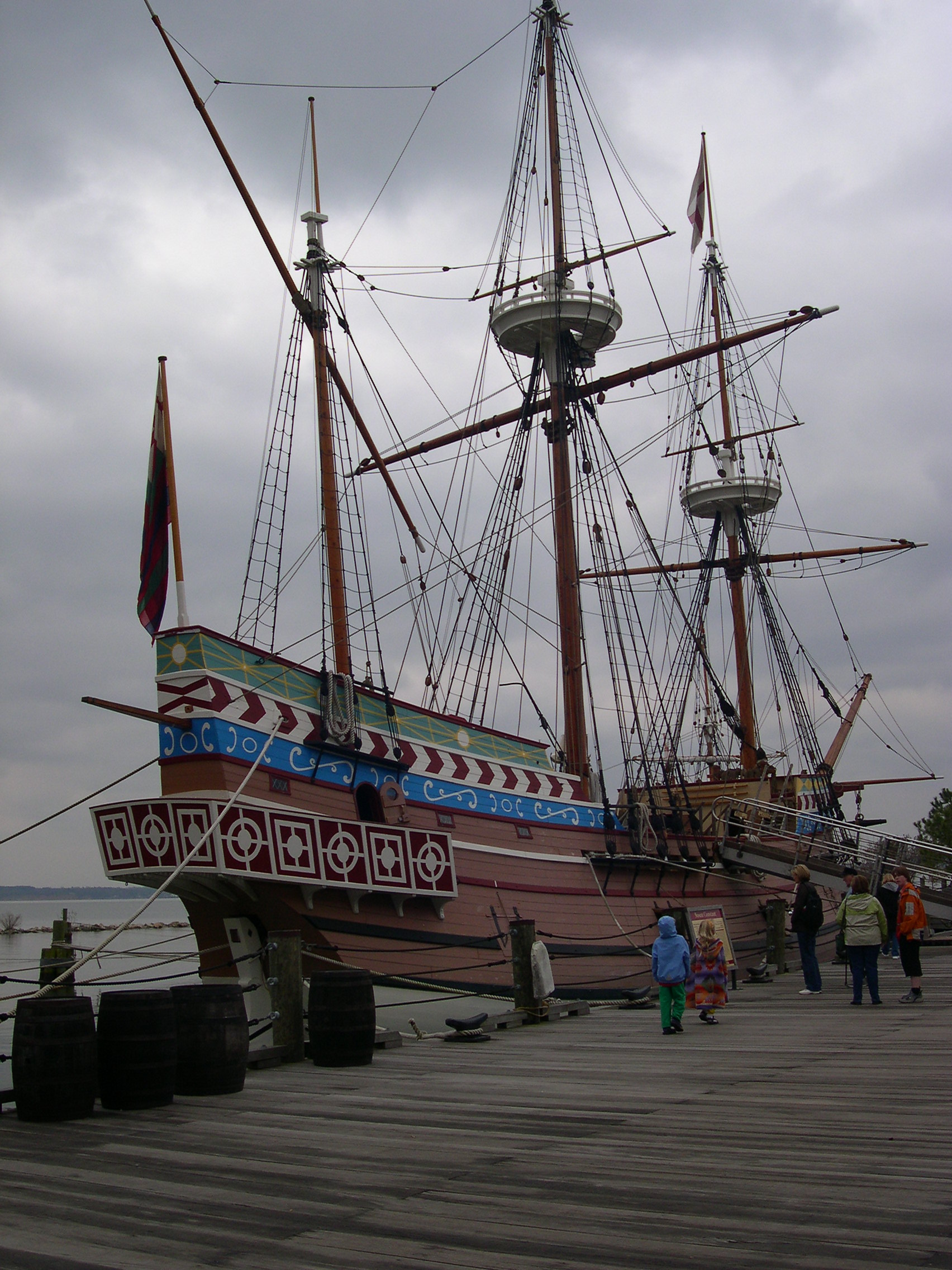
An English ship of the late 16th/early 17th century: this is a replica of the Susan Constant at the Jamestown Settlement in Virginia. The original ship was built sometime before 1607 and rented by the Virginia Company of London to transport the original settlers to Jamestown.
Photo by Nicholas Russon, March 2004.
For as long as humans have suffered severe food shortages, scurvy has been known. The first record of it appears to date to ancient Egypt, in 1550BC, and it was especially familiar to the inhabitants of northern climates, with fresh vegetation every winter becoming scarce. Our word for scurvy almost certainly comes from the old Norse skyrbjugr — the skyr being a sort of soured cow’s milk that was thought to have caused the disease by going bad. In mid-sixteenth-century sources, scurvy was often referred to as though it was endemic to the Netherlands — a flat land assailed by the North Sea each winter, that had suffered long sieges and devastation thanks to the Dutch Revolt, and where fishing and merchant shipping employed an especially large proportion of the workforce. The Dutch thus had a perfect storm of factors to make vitamin C deficiencies more common, even though they abounded in fresh-caught fish and imported Baltic grain.
And so, over the centuries, the people of the northern climes had discovered the cure. Or rather, cures. The Iroquois ate the bark, needles or sap of evergreen trees — most likely white cedar, or some other kind of spruce, fir, juniper or pine, all rich in vitamin C. Their remedy saved the lives of Jacques Cartier’s colonists based near modern-day Quebec City in the winter of 1536. It’s the reason white cedar is known as arborvitae, the tree of life. And the Saami of northern Scandinavia prized cabbages and other leafy greens, in the summertime filling up casks of reindeer milk with crowberries and cloudberries, to be ready for winter.
[…]
Still more remedies were discovered by accident, as European ships began to range farther and farther abroad. The very first Portuguese voyagers around the Cape of Good Hope almost immediately discovered the value of orange and lemons — especially effective sources of vitamin C, as their acidity helps to preserve it. The voyage of Vasco da Gama, having been the first to round the Cape and reach the eastern coast of Africa, was then stricken with scurvy. They were only inadvertently saved when they traded with some Arabian ships laden with oranges, before landing at Mombasa. There, the ruler sent them a sheep and some sugar-cane, the gift also happening to include some oranges and lemons. Although the Portuguese couldn’t stay there long — they learned of a conspiracy to capture their ship — one of the voyagers later reported in wonder how the climate there must have been especially healthful to have cured them all.
Fortunately, at least some of the crew suspected the citrus instead. On the return journey from India, after a fatally slow three-month crossing of the Indian Ocean, some of the newly scurvy-ridden sailors asked their captain to procure them some oranges at Malindi. At least a few of the crew must certainly have been saved by this request, though perhaps the excitement of their imminent deliverance induced a few fatal aneurysms: “our sick did not profit”, was the report, “for the climate affected them in such a way that many of them died here.” By the time the fleet limped home back to Lisbon in 1499, scurvy had still managed to claim the lives of over two thirds of the original crew.
Nonetheless, the status of oranges as a scurvy wonder-cure had entered sailors’ lore. When Pedro Alvares Cabral repeated da Gama’s feat of rounding the Cape of Good Hope in 1500, his crew purposefully treated their scurvy using oranges. And by the 1560s, if not earlier, the news of the cure had spread beyond the Portuguese. Sailors from the Low Countries, on the eve of the Dutch Revolt from Spain, were said to be staving off scurvy by eating oranges in large quantities, skins and all. (Orange peel is in fact especially rich in vitamin C, so they were onto something.) Their value was certainly appreciated by the Dutch explorer Jacob Corneliszoon van Neck by the time of his second expedition to the Indian Ocean in 1598. Not long after setting out, he purchased 10,000 oranges from a passing ship off the coast of Spain, rationing them out to all his crew. And on the return journey via St Helena they were dismayed when initially “we found no oranges, whereof we had most need, for those that were troubled with the scurvy disease.”
The account of van Neck’s journey was translated into English for the first voyage of the East India Company in 1601, which may be why its commander, James Lancaster, directed his crew to drink three spoonfuls of lemon juice every morning. Lancaster doesn’t appear to have paid any special attention to oranges and lemons ten years earlier, when he first attempted the voyage, although other English mariners like the privateer Sir Richard Hawkins had in the 1590s already been extolling their virtues. We don’t know many of the details of Lancaster’s lemon juice trial, but his flagship’s crew was not entirely saved. Contrary to common report, at least a third of them had died by the time they left their first landing at Table Bay, South Africa — a proportion similar those on the other ships of his fleet, though we don’t know how many actually died of scurvy or of other causes. But upon the expedition’s return, the experience placed lemon juice firmly on the list of known scurvy cures — “the most precious help that ever was discovered against the scurvy” as the East India Company’s surgeon-general put it.
Comments Off on Ocean travel without losing half the crew to scurvy
September 7, 2021
How William Fairbairn Created the Modern SWAT Team in Warlord Era Shanghai
Forgotten Weapons
Published 1 Jun 2021William E. Fairbairn is best known for his work with Eric Sykes and their “Commando” knife design during World War Two. However, Fairbairn spent some 33 years in the Shanghai Municipal Police, working his way up from a beat constable to Assistant Commissioner. There he was responsible for the SMPD adopting truly forward-thinking fighting methods, and he essentially invented the modern SWAT team (the “Reserve Unit”, which Fairbairn led for 10 years). He combined expertise in formal marksmanship, instinctive practical shooting, and hand-to-hand combat schools (including jiu-jitsu and judo) into a comprehensive training program like no other on earth at the time.
Book references:
The World’s First SWAT Team, by Leroy Thompson:
https://amzn.to/2TrYiNvGentleman & Warrior, by Peter Robins:
https://amzn.to/3vuODn9http://www.patreon.com/ForgottenWeapons
https://www.floatplane.com/channel/Fo…
Cool Forgotten Weapons merch! http://shop.forgottenweapons.com
Contact:
Forgotten Weapons
6281 N. Oracle 36270
Tucson, AZ 85740
Comments Off on How William Fairbairn Created the Modern SWAT Team in Warlord Era Shanghai
September 6, 2021
Arms for the Taliban
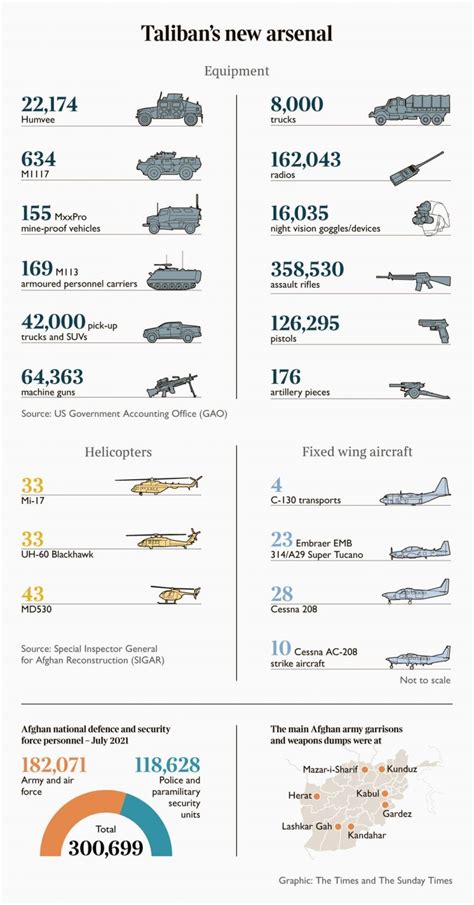
Mark Steyn points out an absolutely unbelievable statistic about the military equipment windfall the US military presented to the Taliban in their rush for the exits out of Afghanistan (in bold, below):
Denyse O’Leary, whom I always read with great interest in our Comments section, chides me for diagnosing our present woes but not proposing solutions.
That ought to be easy. In Afghanistan what needed to be done is almost as old as man. As Victor David Hanson pointed out to Tucker, “This is the greatest loss of military equipment in the history of warfare by one power.”
He’s right. Because US government is so drunkenly profligate, the numbers sound blah-blah to jaded American ears. But $85-90 billion is larger than the annual military budget for every nation around the world except the US and China. For those partial to the International Jewish Conspiracy theory of history, what America has just given the Taliban is equivalent to 85 per cent of all the military aid Washington has given Israel since 1948. The Taliban now possess more Black Hawk helicopters than almost all America’s allies; they own near to a tenth of all Humvees on the planet. That’s aside from less obvious items, such as over 160,000 radios and over 16,000 night-vision goggles that will come in mighty handy for wiping out the remnants of resistance in the Panjshir Valley.
The “solution” to this is to do what every army has known to do down through the millennia: a retreat means not just preventing your men from falling into the hands of the enemy but also their weapons – including, if necessary, your allies’ weapons. As many readers will know, at the beginning of July 1940, just a week after France threw in the towel and signed its armistice with Germany, the Royal Navy attacked and disabled the French fleet, then the largest and most powerful in Continental Europe.
The British priority was to prevent the ships falling into the hands of Germany and Italy, who would put them to very good use. In a few days of urgent negotiation, the French commander resisted London’s “suggestion” that he either place the fleet under British command or take it to the French West Indies. So the Royal Navy struck and over 1,300 French sailors were killed.
But the Germans didn’t get hold of France’s most powerful battleships — and the following day, when the French ambassador complained about it to FDR during Washington’s Fourth of July observances, the President said he would have done exactly the same.
Yet Roosevelt’s successor did not do the same — in far more propitious circumstances and on a timeline created by the commander-in-chief and his advisors.Is the Pentagon total crap? Yes, but, like so many other rackets in Washington, it works for its principal beneficiaries: the defense contractors made over two trillion bucks off the Afghan war, so a mere eighty-five billions’ worth of materiel winding up with the goatherds is way below the lobbyists’ pay grade. The official position of America’s National Security Advisor, Jake Sullivan (a fetching twelve-year-old lad whose pressers give the vague feeling he’s auditioning for the Dancing Boys of Kandahar), has conceded:
We don’t have a complete picture, obviously, of where every article of defense materials has gone, but certainly a fair amount of it has fallen into the hands of the Taliban.
Functioning armies know how many pencils they have. As I said, I take it as read that Thoroughly Modern Milley and the Chiefs of Staff are total crap — all ribbons and no chest, the self-garlanded buffoons of a way of war that has not worked for decades: I see David Horowitz and Daniel Greenfield are calling for the Joint Chiefs to be court-martialed, which is the very least one would expect for gifting a Nato-level military to one’s enemies. But the fact that every commander on the ground went along without apparent objection suggests that Milley-style degeneracy runs very deep in the US military.
Comments Off on Arms for the Taliban
September 5, 2021
This War is Three Years Old – WW2 – 158 – September 4, 1942
World War Two
Published 4 Sep 2021As the war turns three there is is no slacking in the fighting. Erwin Rommel launches another Axis attack in North Africa, but it is foiled in only days, though the Axis are advancing in the Caucasus as well as on Stalingrad, where the fight for the suburbs is now beginning. They’re also advancing in the South Pacific, as the Japanese fight their way along the Kokoda Trail.
(more…)
Comments Off on This War is Three Years Old – WW2 – 158 – September 4, 1942
September 4, 2021
Recreating the original India Pale Ale
In The Critic, Henry Jeffreys discusses the rebirth of the original IPA:
From an early age Jamie Allsopp had wanted to bring back the beer that made his family name. It was his ancestor Samuel Allsopp who made the very first Burton IPA, and created a style that is now a global phenomenon. Hell, there are even brewers in Germany making IPA these days.
Though IPA is most associated with Burton-on-Trent, it was originally brewed in London by Hodgson’s, the nearest brewery to East India Dock. Here East India Company servants would buy beer to sell at a vast profit in India. The beer of choice was a strong, heavily-hopped ale designed to last through the winter months. On the six-month voyage through the tropics, it was found to have matured splendidly, rather like wine from Madeira did. Shipped in the early-nineteenth century, this was the first India Pale Ale, though it wasn’t known as such.
Frederick Hodgson then got greedy and tried to cut out the East India Company by shipping directly. So, Campbell Majoribanks, a director at the Company, approached Burton brewer Samuel Allsopp to make a rival beer. Allsopp brewed a sample in a teapot which met with approval and the beer was shipped to India from 1823.
Burton-on-Trent had an advantage over London in that the water contained gypsum, calcium sulphate, which made the beer brighter and clearer with a pronounced acidic bite. It suited a pale crisp beer, made possible by the recent invention of pale malt, very different to the heavy dark porter that London was famed for.
Other Burton brewers such as Bass & Ratcliff got in on the act. This new beer wasn’t just a hit in India; it became all the rage back in Britain. Railways meant that Burton beer could be sent to London cheaply, and the porter that had dominated the capital began to die out, displaced by this new refreshing beer. Some time in the 1830s the name IPA began to be used.
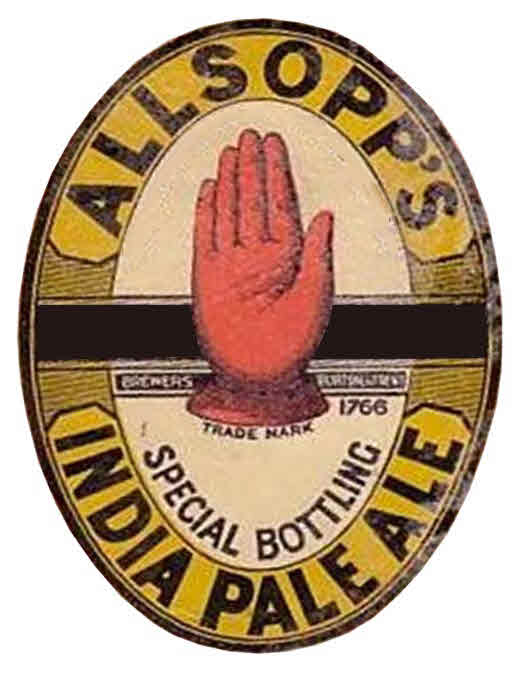
It was the drink of the aspirant middle class. It would have sold for twice as much as ordinary beer. So popular were Burton beers that by 1877 the Bass brewery was the largest in the world. Bass had the red triangle trademark whereas Allsopp’s symbol was the red hand.
The Allsopp family, like many of the great brewing families, moved into politics. Samuel’s son Henry was elevated to the peerage as 1st Baron Hindlip. In fact, so great was the political influence of brewing families that they were known as “the beerage”. Gladstone attributed the liberal defeat in the 1874 election to this powerful faction: “We have been borne down in a torrent of gin and beer”, he wrote.
But the Allsopp’s brewing heyday did not last long. According to Jamie Allsopp, in 1897, the family “built a big lager brewery and nobody wanted lager and it finished the company”. They were pushed out in 1911 when the firm went into receivership. It soldiered on before merging with another Burton brewer, Ind Coope, in 1934. Following waves of mergers and acquisitions, the name and the famous red hand disappeared in 1959.
Comments Off on Recreating the original India Pale Ale
September 2, 2021
Road to WWII: A Basic Causal Analysis
Thersites the Historian
Published 19 Nov 2019This video is a primer for undergraduates in broad history survey courses that will hopefully help make sense of the interwar years between World War I and World War II.
Patreon link: https://www.patreon.com/thersites
PayPal link: paypal.me/thersites
Twitter link: https://twitter.com/ThersitesAthens
Minds.com link: https://www.minds.com/ThersitestheHis…
Steemit/dtube link: https://steemit.com/@thersites/feed
BitChute: https://www.bitchute.com/channel/jbyg…
Backup Channel: https://www.youtube.com/channel/UCUrD…
Comments Off on Road to WWII: A Basic Causal Analysis
August 30, 2021
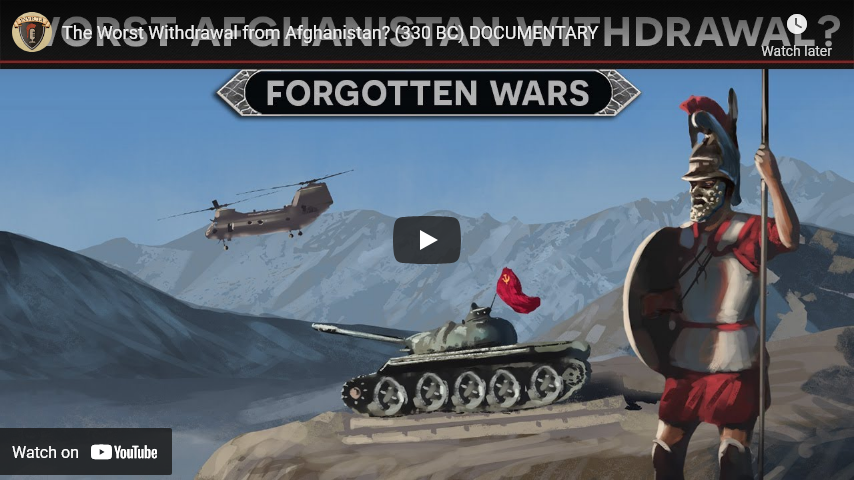
The Worst Withdrawal from Afghanistan? (330 BC)
Invicta
Published 28 Aug 2021Afghanistan has a long history of foreign invasions and withdrawals. Today we explore the first of these chapters with the campaigns of Alexander the Great. Signup for your FREE trial to Wondrium here: http://ow.ly/C3xs30rNLaU
As the last chapter of the US war in Afghanistan appears to draw to a close, the world watches armed and civilian forces alike conduct their final evacuations. However in these moments we hear echoes of the past. The history of the so-called “Graveyard of Empires” is filled with many chapters that tell of yet another major power that has been forced to withdraw after years of spilled blood and treasure. The most well-known instances have occurred in recent memory. However the pages of Afghan history go back thousands of years. Today I wanted to take a look at one of these first major military withdrawals that may just be the most FUBAR one on record; The evacuation of Alexander the Great’s Macedonian army from Afghanistan.
In order to contextualize this conflict we first begin with a quick overview of the history of Afghanistan. No country existed by that name or with those borders in antiquity and it was instead made up of a variety of tribal coalitions and minor kingdoms for much of its early history. However it would first see foreigners begin to claim its lands with the rise of the Median Empire and the succeeding Achaemenid Empire. The lands of modern Afghanistan would now be carved into a series of Satrapies such as Bactria, Gandara, Arakhosia, Drangaian, and Areia.
Following the Ionian Revolt and the Greco Persian Wars, the Kingdom of Macedon would rise to power and take on this ancestral conflict as a way to unify the Hellenic world behind its rule. Phillip II first began to plan and invasion of the Achaemenid Empire but it would be Alexander the Great who carried out this vision. He would campaign for several years through Anatolia, the Levant, Egypt, and Mesopotamia, consuming vast swaths of the enemy’s domains. However King Darius would escape to the east. Alexander initially pursued the Great King but when he was killed by his own Lieutenant, Bessus, Alexander set off against this traitor.
In this chase, Alexander the Great would be sucked into a multi-year war to subdue the eastern satrapies that made up modern Afghanistan. We cover the most significant events of this campaign, the establishment of occupying forces, and the eventual withdrawal of the army following the death of Alexander the Great. The ensuing settler revolt would make it (in my eyes) one of the most FUBAR Afghanistan withdrawals in history that would certainly be worthy of a Vice news documentary had it existed.
The Campaigns of Alexander the Great by Arrian
In the Footsteps of Alexander the Great by Michael Wood
Alexander the Great and Bactria: The Formation of a Greek Frontier in Central Asia by Frank Holt
The Greeks in Bactria and India by W. W. Tarn
On the revolt of the Greek settlers by DiodorusCredits:
Research: Invicta
Script: Invicta
Narration: Invicta
Artwork: Penta Limited#History
#Afghanistan
#Documentary
Comments Off on The Worst Withdrawal from Afghanistan? (330 BC)
August 29, 2021
Justin Trudeau discovers for himself the truth of Harold Macmillan’s dictum on the most difficult thing about being Prime Minister
Former British Prime Minister Harold Macmillan was asked what was the most difficult thing about his job and is reported to have said, “Events, my dear boy, events.” Justin Trudeau had everything he wanted in the Canadian political situation in early August so he put his early election plans into action … and along came those unpredictable events:
“2019 Canadian federal election – VOTE” by Indrid__Cold is licensed under CC BY-SA 2.0


What would have happened in the election of 2021 if Afghanistan hadn’t fallen? If the writ had been drawn up just a few weeks before, or a few weeks after August 15, the day Kabul fell to the Taliban?
This is the sort of question political science nerds will debate over weak beer for decades to come. It’s no great mystery why the Liberals went forward with the election even as armed fighters began to stream into the capital city of a country in which Canadians have sacrificed so much time, blood and treasure.
But I can picture the scene in the war room now and the logic is inescapable. The meeting with the governor general had been set, the news leaked, the campaign messaging laid out, the suits pressed and the planes booked. Besides, as we all know: “nobody cares about foreign affairs.” That old cant, repeated, like a charm.
Most of the time, it’s true.
Canadians hadn’t thought about Afghanistan for a decade. We’d all stopped paying any mind to some poor nation on the dark side of the world, that disputed chunk of mountain and desert besieged by misery and war since the time of Alexander the Great.
Nobody cares about such things. Until they do.
And what’s the difference between a foreign affair that we care about, and one that we do not? The answer is not flattering. We are selfish and solipsistic creatures. We care about current events abroad when what’s happening has some connection to ourselves or our interests — or when the news reflects something about ourselves.
I would not be the first pundit to point out the parallel between the fall of Kabul and the death of Alan Kurdi, the three-year old Syrian refugee boy whose body washed ashore after drowning in the Mediterranean Sea in September of 2015, in the midst of the federal election that brought Justin Trudeau to power. That child’s doll-like body, face-down on a beach, destroyed us, and the tragedy was made more pointed with the discovery that his family had been trying to reach Canada. And that his asylum application had been rejected by officials in Stephen Harper’s government.
In our own bureaucratic nightmare, and Harper’s dispassionate response, we saw reflected our own lack of compassion.
What we are confronting now in Kabul is our lack of competence.
Comments Off on Justin Trudeau discovers for himself the truth of Harold Macmillan’s dictum on the most difficult thing about being Prime Minister


