
World War Two
Published 9 Dec 2023This is a very busy week of the war. In the west, the Americans manage to reach the Roer River in force, but haven’t taken any of its dams; in Italy, the Allies liberate Ravenna; the Soviet advance in Hungary continues, and the Soviets even set up a new Hungarian government; martial law is declared in Greece; the Japanese make a corridor to Indochina; the fighting on Leyte continues, and the kamikaze menace becomes ever more worrisome.
00:00 INTRO
01:10 British intelligence failure
01:55 Allies reach the Roer River
05:35 Problems with Devers’ 6th Army Group
07:41 Allies liberate Ravenna
08:50 Soviet advances in Hungary
12:10 Soviets set up a new Hungarian government
13:47 A deadly demonstration and martial law in Greece
18:33 Japanese establish a corridor to Indochina
19:59 Leyte and kamikaze attacks
23:45 CONCLUSION
(more…)
December 10, 2023
Can the Americans Stop the Kamikazes? – WW2 – Week 276 – December 9, 1944
December 6, 2023
QotD: What Charles VIII brought back from his Naples vacation
… the basic formula for what would become gunpowder (saltpeter, charcoal, and sulfur in a roughly 75%, 15%, 10% mixture) was clearly in use in China by 1040 when we have our first attested formula, though saltpeter had been being refined and used as an incendiary since at least 808. The first guns appear to be extrapolations from Chinese incendiary “fire lances” (just add rocks!) and the first Chinese cannon appear in 1128. Guns arrive in Europe around 1300; our first representation of a cannon is from 1326, while we hear about them used in sieges beginning in the 1330s; the Mongol conquest and the sudden unification of the Eurasian Steppe probably provided the route for gunpowder and guns to move from China to Europe. Notably, guns seem to have arrived as a complete technology: chemistry, ignition system, tube and projectile.
There was still a long “shaking out” period for the new technology: figuring out how to get enough saltpeter for gunpowder (now that’s a story we’ll come back to some day), how to build a large enough and strong enough metal barrel, and how to actually use the weapons (in sieges? against infantry? big guns? little guns?) and so on. By 1453, the Ottomans have a capable siege-train of gunpowder artillery. Mehmed II (r. 1444-1481) pummeled the walls of Constantinople with some 5,000 shots using some 55,000 pounds of gunpowder; at last Theodosius’ engineers had met their match.
And then, in 1494, Charles VIII invaded Italy – in a dispute over the throne of Naples – with the first proper mobile siege train in Christendom (not in Europe, mind you, because Mehmed had beat our boy Chuck here by a solid four decades). A lot of changes had been happening to make these guns more effective: longer barrels allowed for more power and accuracy, wheeled carriages made them more mobile, trunnions made elevation control easier and some limited degree of caliber standardization reduced windage and simplified supply (though standardization at this point remains quite limited).
The various Italian states, exactly none of whom were excited to see Charles attempting to claim the Kingdom of Naples, could have figured that the many castles and fortified cities of northern Italy were likely to slow Charles down, giving them plenty of time to finish up their own holidays before this obnoxious French tourist showed up. On the 19th of October, 1494, Charles showed up to besiege the fortress at Mordano – a fortress which might well have been expected to hold him up for weeks or even months; on October 20th, 1494, Charles sacked Mordano and massacred the inhabitants, after having blasted a breach with his guns. Florence promptly surrendered and Charles marched to Naples, taking it in 1495 (it surrendered too). Francesco Guicciardini phrased it thusly (trans. via Lee, Waging War, 228),
They [Charles’ artillery] were planted against the Walls of a Town with such speed, the Space between the Shots was so little, and the Balls flew so quick, and were impelled with such Force, that as much Execution was done in a few Hours, as formerly, in Italy, in the like Number of Days.
The impacts of the sudden apparent obsolescence of European castles were considerable. The period from 1450 to 1550 sees a remarkable degree of state-consolidation in Europe (broadly construed) castles, and the power they gave the local nobility to resist the crown, had been one of the drivers of European fragmentation, though we should be careful not to overstate the gunpowder impact here: there are other reasons for a burst of state consolidation at this juncture. Of course that creates a run-away effect of its own, as states that consolidate have the resources to employ larger and more effective siege trains.
Now this strong reaction doesn’t happen everywhere or really anywhere outside of Europe. Part of that has to do with the way that castles were built. Because castles were designed to resist escalade, the walls needed to be built as high as possible, since that was the best way to resist attacks by ladders or towers. But of course, given a fixed amount of building resources, building high also means building thin (and European masonry techniques enabled tall-and-thin construction with walls essentially being constructed with a thick layer of fill material sandwiched between courses of stone). But “tall and thin”, while good against ladders, was a huge liability against cannon.
By contrast, city walls in China were often constructed using a rammed earth core. In essence, earth was piled up in courses and packed very tightly, and then sheathed in stone. This was a labor-intensive building style (but large cities and lots of state capacity meant that labor was available), and it meant the walls had to be made thick in order to be made tall since even rammed earth can only be piled up at an angle substantially less than vertical. But against cannon, the result was walls which were already massively thick, impossible to topple over and the earth-fill, unlike European stone-fill, could absorb some of the energy of the impact without cracking or shattering. Even if the stone shell was broken, the earth wouldn’t tumble out (because it was rammed), but would instead self-seal small gaps. And no attacker could hope that a few lucky hits to the base of a wall built like this would cause it to topple over, given how wide it is at the base. Consequently, European castle walls were vulnerable to cannon in a way that contemporary walls in many other places, such as China, were not. Again, path dependence in fortification matters, because of that antagonistic co-evolution.
In the event, in Italy, Charles’ Italian Vacation started to go badly almost immediately after Naples was taken. A united front against him, the League of Venice, formed in 1495 and fought Charles to a bloody draw at Fornovo in July, 1495. In the long-term, French involvement would draw in the Habsburgs, whose involvement would prevent the French from making permanent gains in a series of wars in Italy lasting well into the 1550s.
But more relevant for our topic was the tremendous shock of that first campaign and the sudden failure of defenses which had long been considered strong. The reader can, I’d argue, detect the continued light tremors of that shock as late as Machiavelli’s The Prince (1532, but perhaps written in some form by 1513). Meanwhile, Italian fortress designers were already at work retrofitting old castles and fortifications (and building new ones) to more effectively resist artillery. Their secret weapon? Geometry.
Bret Devereaux, “Collections: Fortification, Part IV: French Guns and Italian Lines”, A Collection of Unmitigated Pedantry, 2021-12-17.
December 3, 2023
Was Hürtgen Forest Worth it? WW2 – Week 275 – December 2, 1944
World War Two
Published 2 Dec 2023The bulk of the fight for Hürtgen Forest is now over, and today we look at the results. We also look at Soviet plans for their January offensive. In the field this week, the Red Army is still fighting in Hungary, the Allies are still trying to reach the Roer River in the west, and in the Pacific Theater the kamikaze menace is wreaking havoc with Allied scheduling.
00:00 INTRO
01:06 Soviet Offensive Plans for 1945
03:12 Red Army attacks in Hungary
06:19 The Port of Antwerp is clear for use
07:23 The Battle of Hurtgen Forest is Over
12:20 Allied advances to the Roer
14:19 Tension builds in Greece
15:32 The aerial situation in the Philippines
21:36 CONCLUSION
(more…)
November 26, 2023
General Patton’s Metz Obsession – WW2 – Week 274 – November 25, 1944
World War Two
Published 25 Nov 2023Metz finally falls to Patton’s 3rd Army, but boy, it’s taken some time. To the south, the Allies also take Belfort and Strasbourg, and to the north Operation Queen continues trying to reach the Roer River. The Soviets complete their conquest of the islands in the Gulf of Riga and continue advancing in Hungary to the south, but it’s the Axis Powers — the Japanese — who are advancing in China, taking Dushan and Nanning.
01:15 Operation Queen Continues
04:49 9th Army attacks toward the Roer
05:54 Pattons 3rd Army takes Metz
09:22 Allies take Belfort, Mulhouse, and Strasbourg
13:56 8th Army Attacks in Italy
15:42 Soviet advances and German indecision
18:05 Japanese take Dushan and Nanning
19:21 The fight for Peleliu ends
21:43 Notes from all over
22:23 Conclusion
(more…)
November 24, 2023
More than 1,500 new jobs thanks to federal and provincial subsidies … except the jobs are for South Koreans
Tristin Hopper applauds the great job creation scheme that the federal and Ontario governments have put in place … if you ignore the inconvenient fact that most of the newly created jobs aren’t even going to Canadians:

When the Ontario and federal governments greenlit one of the biggest corporate subsidy payouts in Canadian history last summer, their main pitch was the deal would create jobs.
“The governments of Canada and Ontario are partnering to attract once-in-a-generation projects that will anchor our auto manufacturing sector and keep good jobs in Canada,” reads the opening line of a July 6 joint statement announcing a record-breaking $28 billion in government “performance incentives” to secure two foreign-owned EV battery factories in Southern Ontario.
The subsidy-per-job ratio was never great. Even according to the most optimistic estimates of government spokespeople, the two factories — one operated by Volkswagen, the other by Stellantis — would create about 5,500 jobs. Per job, that’s roughly $5 million in lifetime subsidies and tax credits.
But now, it appears that many of those jobs may not even go to Canadians.
Last week, during a visit by South Korean Ambassador Woongsoon Lim to Windsor, Ont., a social media post by the Windsor Police casually mentioned that “1,600 South Koreans” would soon be arriving in the community to staff the Stellantis plant, which is set to open next year.
With the new LGEngergy Solutions battery plant being built, we expect approximately 1,600 South Koreans traveling to work and live in our community in 2024.
— Windsor Police (@WindsorPolice) November 16, 2023
The CEO of NextStar — the Stellantis joint venture operating the factory — hasn’t confirmed the 1,600 figure, but said in a statement that the “equipment installation phase of the project requires additional temporary specialized global supplier staff”. He added that the company was “committed” to hiring Canadians to fill the 2,500 full-time jobs at the completed plant
The revelation has sparked a wave of confusion and finger-pointing among the very officials who, mere months ago, were championing the plant as an unalloyed triumph for Canadian manufacturing jobs.
When the subsidy arrangement was first announced in July, Ontario Economic Development Minister Vic Fedeli called it a “historic deal” and “a great agreement” that “protects the thousands of jobs quite frankly that were at stake”.
November 19, 2023
How Himmler Learned to Love the Russians – WW2 – Week 273 – November 18, 1944
World War Two
Published 18 Nov 2023Heinrich Himmler wants to build an Army of Soviet POWs, but that has some problems; Patrick Hurley becomes US Ambassador to China, but even before that he’s in hot water with Chiang Kai-Shek; and in the field in the west, the Allies launch Operation Queen to try to cross the Roer River and reach the Rhine.
(more…)
November 12, 2023
The Futile Fight in Hurtgen Forest – WW2 – Week 272 – November 11, 1944
World War Two
Published 11 Nov 2023The struggle for Hurtgen forest, one tiny piece at a time, continues. The Allies have, however, secured Walcheren Island, and also launch Operation Queen to try and reach and cross the Roer River, and further south even launch a new offensive aiming for Metz. Things are not going well for the Americans on Leyte, though, but they’re even worse for the Chinese as both Guilin and Liuzhou fall to the Japanese. As for the Soviets, they are busy making big plans for a gigantic offensive to drive in to Germany when the new year comes.
(more…)
November 7, 2023
Birth Gap, the future none of us expected
Elizabeth Nickson takes the warnings of infertility from BirthGap quite seriously:
Jordan Peterson’s face morphed through a series of changes as he realized that nine out of ten women who don’t have children, wanted them. Ready to blame the culture of narcissism, he stalled confused, wrestling his face to neutral. I knew that fact from experience. For the many women I know who don’t have children, it is an abiding sorrow. From country to country, class to class, race to race, the sorrow is coruscating and it is ignored or diminished.
Only one in ten women actually don’t want children. One in ten is infertile, but the rest who don’t have children and that is one-third of us and counting, wanted them. By the time they are in their 40’s and incapable, badly.
Steven F Shaw searches for answers in Birth Gap, his masterwork documentary, the first part of which you can watch here. The most obvious is that they waited too long, thinking it was possible, their “career” taking precedence. He interviews two prominent women in their late 30’s, both journalists. One of whom has a child, and having had one, wanted more but it was too late. “No one told us”, she said. Throughout her childhood and education, no one told her that the hammer would come down, that fertility drops off a cliff in your 30’s. That if you are 30 and childless, there is a 50% chance you won’t have children. The other, Megan McArdle, who writes for the Washington Post, left it too late. McArdle is a brilliant woman. If she didn’t know she was playing with fire, who could?
The catastrophic statistics run across all cultures but sub-Saharan Africa. Every industrialized country is racing to the bottom, which is to say extinction within four or five generations. Cities left to ruin, old people without help, decaying schools, hospitals, and no employees to be found. The unretrievable extinction of the culture and its people. I’ll leave it to you to follow Shaw’s math, but it is convincing. And he is by no means, alone in his analysis.
Europe, Japan and especially South Korea are by far the most in trouble. But Spain, Italy, the Scandis, are not far behind. America’s massive migration is masking the effect now, but, as Shaw doesn’t point out, but others have, immigrants quickly default to the current zeitgeist. Even in Muslim countries, pace Mark Steyn, women are choosing to not have children until too late. And forget multiples, even for the devout, it’s no longer on the cards.
To me, one underlying reason is the firehose of overpopulation propaganda that we have endured for the past fifty years. Women, in general, as kids, are good girls, accepting of authority, and compassionate. When told their desire for children is stressing the earth, they are more likely to accept that nonsense without question if it is coming from every authority figure in every sector of the culture. Today from kindergarten on, we are taught that we are a virus, a plague on the earth. Who among us, at the age of 15 or 25, can contravene that level of brainwashing? Contrast Peterson saying this week, “we can make the deserts bloom”. When was the last time you heard that sentiment from anyone in authority?




October 31, 2023
As we’re always told in a pious tone of voice, “violence never settles anything”
Chris Bray, ever the iconoclast, begs to differ:
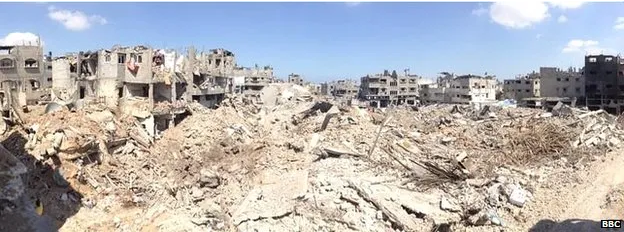
One of the things everyone knows about Gaza is that the Israeli attack is just creating more violence, as the next generation of Palestinians watches the bombs fall. Inevitably, the story goes, the young are learning hate and rage, and will pay it forward. Here’s the upscale think tank version of the argument, under the headline, “Israel risks creating a newly traumatized and radicalized generation of Palestinians”:
What will remain of Gaza’s population, and among Palestinians elsewhere in the occupied West Bank and East Jerusalem and inside Israel proper, will be a newly traumatized and radicalized generation of youth, none of whom were born or of voting age when Hamas was elected … As a result, Hamas’s self-declared raison d’etre — “resisting the [Israeli] occupation with all means and methods” — will only grow in the minds of Palestinian youth. This will render unsuccessful Israel’s attempts to eliminate Hamas militarily.
Here’s an example of the Twitter rando version, which you’ll see over and over again if you engage with social media at all:
But is that true? Without advocating for brutality, I find myself looking for historical examples and mostly coming up with the opposite. To start managing the “yes, but” up front, there are many ways of waging war, and the extractive nation-building warfare of an imperial constabulary — low-grade fighting, prolonged counterinsurgency without decisive violence — does seem to often lead to more violence and “blowback” over time. But what Israel is doing now in Gaza seems like something else entirely.
If this violence will create “the next generation of Hamas”, then the children of the Germans who were firebombed in Dresden and Hamburg should be constantly strapping on suicide vests and attacking Ramstein air base. After the Wounded Knee massacre, it shouldn’t be safe for white settlers to live near the Lakota, and South Dakota should be a hellscape. Or consider North Vietnam, which won its war: “The US carried out more than a million bombing raids during the 20-year conflict, dropping some 5 million tonnes of ordnance on the Southeast Asian country.” After the war, a substantial Vietnamese population resettled in California. Violence trains the next generation to hate, right? So the Vietnamese must constantly attack Orange County.
The horror of total war has mostly not seemed to produce more violence. It seems to have mostly left later generations brutalized and horrified, and highly unlikely to go on fighting. Waging war decisively seems to be historically … decisive? The experience of crushing defeat seems to be a cycle-breaker, and even a horrifyingly costly victory — as for the North Vietnamese — seems to limit the appetite of next generations for more war.
Japan nurtured a profoundly violent warrior culture for a long time, with the nation’s soldiers serving as brutal invaders and horrible occupiers, then faced a ghastly campaign of firebombing and two nuclear bombs. Japan no longer has a brutal martial culture; the next generations didn’t become the new warriors. The currently popular theory says that they had to: the children witnessing this horror will be the next generation of militants, because trauma teaches violence. Tomorrow’s Hamas comes from today’s JDAMs. The people who lost World War II don’t seem to prove that theory.
Someone is going to say in the comments that I have blood on my fangs, but the point isn’t to cheerlead for the killing in Gaza. The point is to consider evidence about what comes next, and to ask what the comparable examples are. Is it factually true that youth, traumatized by war, become the violent next generation? We ran this experiment a lot in the twentieth century, and I think we have some strong hints at a consistent answer.

As Robert Heinlein had retired Lt. Col. Jean V. Dubois say to his History and Moral Philosophy class in Starship Troopers:
Anyone who clings to the historically untrue — and thoroughly immoral — doctrine that “violence never settles anything” I would advise to conjure the ghosts of Napoleon Bonaparte and the Duke of Wellington and let them debate it. The ghost of Hitler could referee, and the jury might well be the Dodo, the Great Auk and the Passenger Pigeon. Violence, naked force, has settled more issues in history than has any other factor, and the contrary opinion is wishful thinking at its worst. Breeds that forget this basic truth have always paid for it with their lives and their freedoms.
October 29, 2023
The Battle of Leyte Gulf – WW2 – Week 270 – October 28, 1944
World War Two
Published 28 Oct 2023This is it — the big showdown between US and Japanese Navies, and the largest naval battle ever fought in terms of total tonnage. American landings on Leyte itself are still in progress, and the Soviets’ Debrecen Operation comes to its end.
(more…)
October 28, 2023
Smith versus Smith: US Army/Marine relations in 1944
World War Two
Published 27 Oct 2023When Marine Corps General Holland “Howling Mad” Smith removed Infantry General Ralph Smith from command in 1944 during the Battle of Saipan, it began a controversy that soon snowballed, threatening to sabotage Army-Marine relations at a time when cooperation was the key to victory.
(more…)
October 24, 2023
See Inside The M3 Grant | Tank Chats Reloaded
The Tank Museum
Published 30 Jun 2023With a crew of six and a chaotically crowded interior, the Grant was a US-produced WW II tank more used by the British and Indian Armies than anyone else. Join Chris Copson as he explores probably the best preserved example of this rare vehicle – and listen out for the cheese sandwich …
(more…)
October 22, 2023
SS Commando Coup in Hungary – WW2 – Week 269 – October 21, 1944
World War Two
Published 21 Oct 2023The Germans engineer a coup in Hungary to keep the Hungarian army in the war, but the Allies have finally entered Germany in force, taking Aachen in the west. The Soviets liberate Belgrade in the east, and launch new attacks in Baltics, and at the other end of the world come American landings in the Philippines, and the recall of Vinegar Joe Stilwell from China.
00:00 Intro
01:00 Recap
01:21 Raids on the Philippines
04:42 The Invasion of Leyte
06:11 Joe Stilwell is recalled from China
08:12 The Battle of Aachen
12:24 Battle of the Scheldt
14:03 Soviet attacks in the Baltics
16:23 Horthy’s fall- a coup in Hungary
19:45 Germans close in on Slovakia
21:55 Belgrade Liberated
24:47 Summary
25:01 Conclusion
(more…)
“Grandpa Nambu” Japanese Pistol
Forgotten Weapons
Published 15 Nov 2016The 1902 “Grandpa” Nambu is one of the first wave of successful military automatic pistols, developed by Kijiro Nambu and his team over the course of five years, from 1897 to 1902. It was the first automatic pistol to be used by the Japanese military, although it was a private-purchase sidearm for officers and not formally purchased or issued by the military. It took several design cues from the C96 Mauser, in the form of a pivoting locking block and a bottlenecked cartridge.
The Grandpa was only made from 1902 until 1906, with less than 2400 examples produced in total — many of which were sold to Thailand. In 1906 a series of improvements were made to the gun, including increasing the size of the trigger and trigger guard, a swiveling lanyard ring, a slightly larger grip, new magazine, and deletion of the shoulder stock slot that had been standard on all previous Nambu pistols. The formal Japanese designation (Type A) did not change as a result, but in American collector parlance the new model became the “Papa” Nambu.
Cool Forgotten Weapons Merch! http://shop.bbtv.com/collections/forg…
October 21, 2023
QotD: The US Army’s Korean War blooding
For his own sake and for that of those around him, a man must be prepared for the awful, shrieking moment of truth when he realizes he is all alone on a hill ten thousand miles from home, and that he may be killed in the next second.
The young men of America, from whatever strata, are raised in a permissive society. The increasing alienation of their education from the harsher realities of life makes their reorientation, once enlisted, doubly important.
Prior to 1950 they got no reorientation. They put on the uniform, but continued to get by, doing things rather more or less. They had no time for sergeants.
As discipline deteriorated, the generals themselves were hardly affected. They still had their position, their pomp and ceremonies. Surrounded by professionals of the old school, largely field rank, they still thought their rod was iron, for, seemingly, their own orders were obeyed.
But ground battle is a series of platoon actions. No longer can a field commander stand on a hill, like Lee or Grant, and oversee his formations. Orders in combat — the orders that kill men or get them killed, are not given by generals, or even by majors. They are given by lieutenants and sergeants, and sometimes by PFC’s.
When a sergeant gives a soldier an order in battle, it must have the same weight as that of a four-star general.
Such orders cannot be given by men who are some of the boys. Men willingly take orders to die only from those they are trained to regard as superior beings.
It was not until the summer of 1950, when the legions went forth, that the generals realized what they had agreed to, and what they had wrought.
The Old Army, outcast and alien and remote from the warm bosom of society, officer and man alike, ordered into Korea, would have gone without questioning. It would have died without counting. As on Bataan, it would not have listened for the angel’s trumpet or the clarion call. It would have heard the hard sound of its own bugles, and hard-bitten, cynical, wise in bitter ways, it would have kept its eyes on its sergeants.
It would have died. It would have retreated, or surrendered, only in the last extremity. In the enemy prison camps, exhausted, sick, it would have spat upon its captors, despising them to the last.
It would have died, but it might have held.
T.R. Fehrenbach, This Kind of War: A Study in Unpreparedness, 1963.


