Celina discusses the wrenching social changes Germany went through as the First World War ended, the Kaiser abdicated, and the Versailles terms were imposed on a still-young nation that didn’t think it had been defeated on the battlefield (it had been, decisively, but the truth was not revealed or understood on the home front):
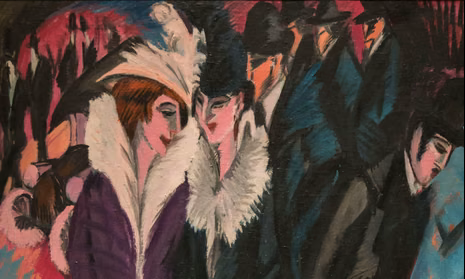
To understand the death of a civilisation, one must first walk through its ruins. The scene is Berlin, sometime in the mid-1920s, beneath the blinding, electric glare of neon and the suffocating, narcotic haze of the Berliner Luft, an atmosphere that locals gleefully described as an amphetamine-like air that made hearts race, pupils dilate, and morals evaporate until dawn.1 In the shadowed, labyrinthine alleys of a shattered empire, the streets of the capital have been entirely surrendered to a bacchanalia of unprecedented depravity. Prostitutes in various stages of undress crowd the cobblestones. They are openly aggressive, their ranks swollen by pregnant mothers, desperate war widows, and adolescents, all selling their flesh for the price of a meal.2 On every street corner, hawkers peddle cocaine, morphine, and opium to passersby, while newsstands prominently display nudist magazines dedicated exclusively to the exhibition of children.3
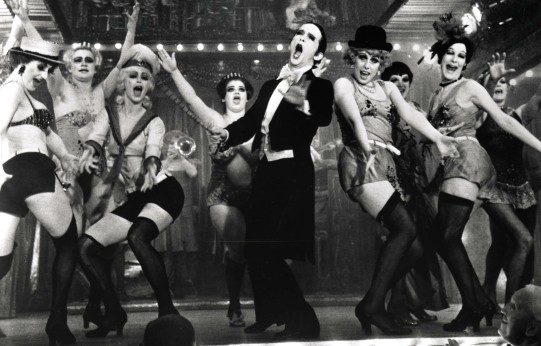
Push past the heavy, smoke-stained velvet curtains of the subterranean cabarets, and the full, suffocating scope of the abyss reveals itself. Here, glittering shows parade acres of sweaty, perfumed flesh to the applause of an audience intoxicated by a potent mixture of ecstasy, terror, and moral decay. Cross-dressing men perform grotesque pantomimes of traditional womanhood, while tuxedo-clad women mock the remnants of patriarchal authority, puffing cigars and sneering at the ghosts of their fathers.
Cabaret
For the modern, liberal apologists of the era, this explosion of libertinism is often retroactively celebrated as a vibrant, avant-garde renaissance, a brief, shining moment of progressive emancipation before the darkness of fascism fell. It is romanticised in our modern cinema and theatre as a glorious rebellion against the stuffy confines of tradition. But to the ordinary, rooted citizens of the German nation, the truth was far darker and far more evident.
The normalisation of perversion was not an expression of human flourishing, it was an aggressive, deliberate assault on the family, faith, nation, and the natural order itself. It was the deliberate dismantling of the moral architecture that had sustained European civilisation for a millennium. This was not liberation. This was civilisational suicide and the German people knew it.
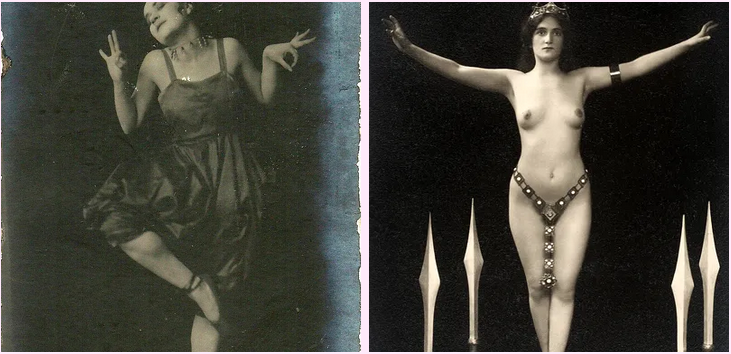
Left: Valeska Gert, Dance in Orange, Munich (1918). Right: Olga Desmond performing the ‘Sword Dance’ (1908). Photo by Otto Skowranek.
The Shattered Fatherland: Versailles and the Death of Order
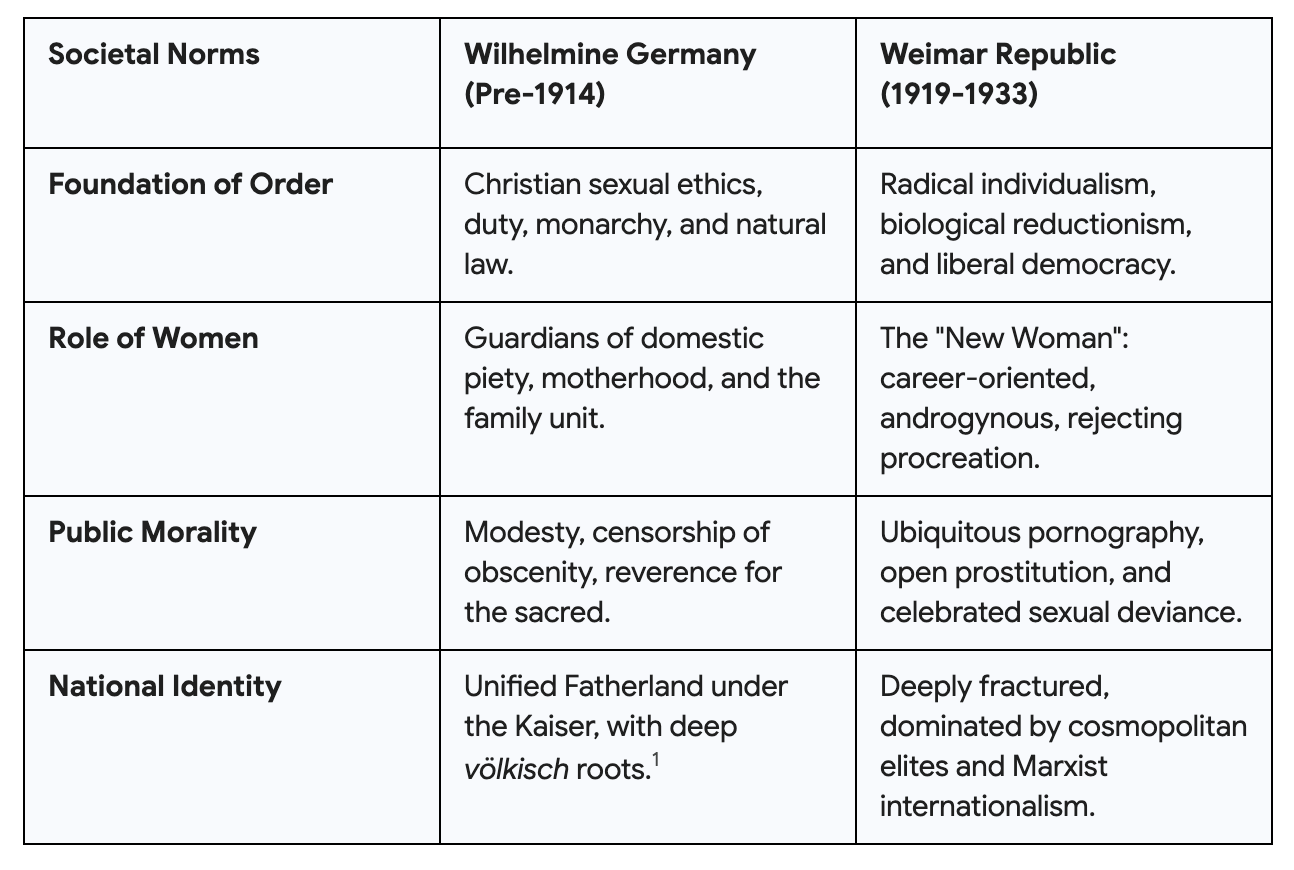
The tragedy of the Weimar Republic cannot be understood without first grasping the significant psychological and spiritual trauma that birthed it. Before 1914, Wilhelmine Germany was a society defined by structure, piety, and an organic connection to history. It was a nation grounded in Christian sexual ethics, where the family was revered as the inviolable bedrock of the state, and where duty, honour, and natural law governed public life.4 Men were expected to be providers and protectors; women were the venerated guardians of the hearth and the moral educators of the next generation.5
The cataclysm of the First World War shattered this world completely. The defeat of the German Empire brought not only physical devastation, millions of young men fed to the meat grinder of the trenches, but an unprecedented spiritual crisis. The humiliating terms of the Treaty of Versailles, specifically the “War Guilt Clause” and the crippling imposition of 130 billion marks in war reparations, stripped the nation of its dignity and its sovereignty.6 The collapse of the monarchy left a gaping void where the Fatherland had once stood, and the pervasive Dolchstoßlegende, the widely held belief that the military was stabbed in the back by domestic traitors, socialists, and cultural subversives festered in the national consciousness.7
- https://www.salon.com/2000/11/22/weimar/
- Ibid
- Ibid
- https://verso.uidaho.edu/view/pdfCoverPage?instCode=01ALLIANCE_UID&filePid=13308274540001851&download=true
- Ibid
- https://theoldshelter.com/weimar-republic-and-the-rise-of-anti-semitism/
- https://verso.uidaho.edu/view/pdfCoverPage?instCode=01ALLIANCE_UID&filePid=13308274540001851&download=true