
I’m not a trained historian, so I don’t know if it’s a guild requirement for modern historians to ostentatiously avoid using traditional “BC” and “AD” to denote historical dates or if it’s just another sop to the easily offended like so many other things:
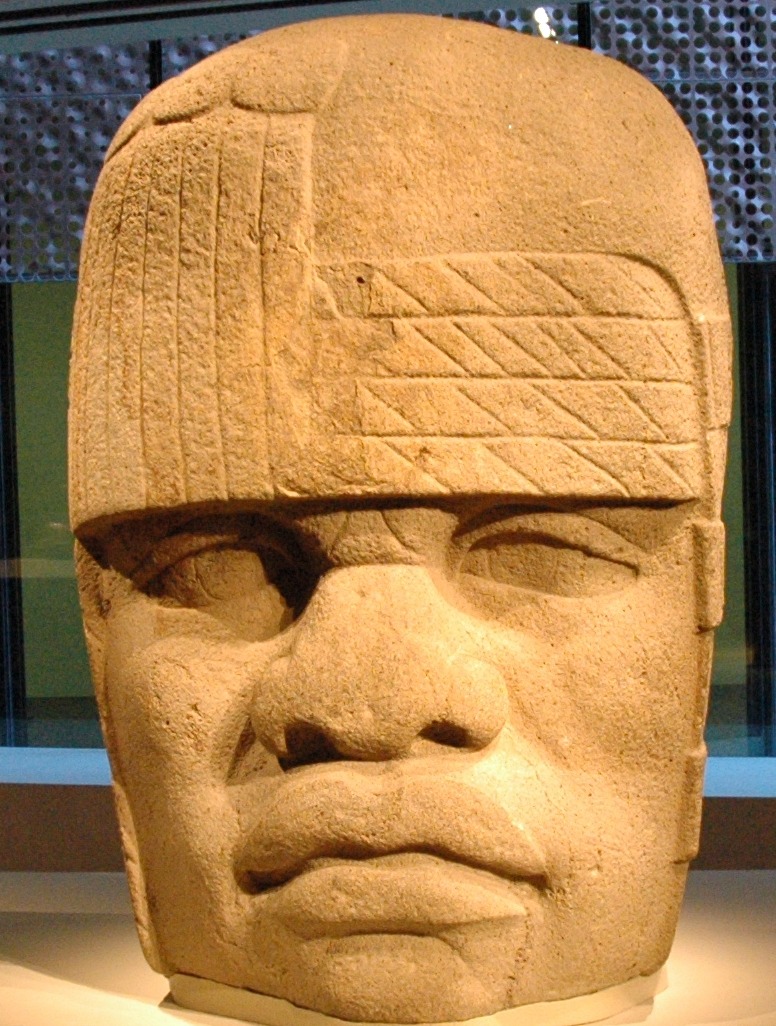
An Olmec head, By Marshall Astor (Life on the Edge), CC BY-SA 2.0, https://commons.wikimedia.org/w/index.php?curid=19349056
Although I work primarily as a computer programmer, my college degree is in History. Over the years, I have retained a high level of interest in history, both recent and ancient.
A few months ago I listened to a Great Courses presentation about the Olmecs — one of the lesser known Central American civilizations — given by Dr. Ed Barnhart. The course lived up to its name and taught much about the history and society, as well as the giant heads, of the Olmecs. However, one thing bothered me about Dr. Barnhart’s presentation.
Dr. Barnhart generally uses CE and BCE for dates. CE stands for “common era” and BCE stands for “before common era”. Other than that fact, CE perfectly coincides with the previous AD and BCE perfectly coincides with BC.
Perhaps Dr. Barnhart should not be singled out. He is not alone in the use of these terms. In fact, the majority of historical presentations these days employ CE and BCE. And it may be that using these terms is not a personal decision; rather, it may be that a department-wide or even university-wide convention.
However, in my view, using CE and BCE instead of AD and BC is not okay. As an (amateur) historian, I believe that it’s bad for history. And as a Christian, I find it a bit offensive. I will probably never have the opportunity to tell Dr. Barnhart why he should not use CE/BCE, but if I did, here’s what I would tell him:
1) The prime commitment of a historian should be to history. A historian should be careful that the information presented is the most accurate, the most complete, and most contextually grounded. CE/BCE fails to be most accurate because it takes an obviously true historical fact — that the currently used Julian/Gregorian calendar is based on the birth of Christ — and obscures that fact. It is not the most complete because there is no way on its own to understand that CE/BCE means to present the same system as AD/BC. To truly understand the system, the AD/BC system would need to be explained. The AD/BC system can stand on its own, but the CE/BCE can only be understood along with AD/BC.
And it lacks context because the terms “common era” and “before common era” give no indication as to what exactly is the demarcation between the two eras. Since CE/BCE gives no referent, a student could reasonably conclude that the dating system is entirely arbitrary. For these reasons, using CE/BCE leaves students or listeners knowing less than they should and perhaps even having a wrong understanding of the dating system. AD/BC preserves important historical information. CE/BCE does not. On the basis of that alone, CE/BCE should not be used by historians who want to be as accurate and complete as possible.
2) Using AD/BC does not require anyone to profess Christianity. Some might say that AD/BC unfairly burdens non-Christians, but the terms Anno Domini and Before Christ are clearly not confessional statements. There is no serious historical dispute that Jesus Christ existed in approximately the time and place given in the Scriptures, and AD/BC merely recognizes that this is the basis for the year numbering system. Anno Domini, or year of the Lord, doesn’t require the user to say “my Lord” or otherwise confess Christianity, just to recognize that the calendar was created by people who did confess Christianity. That is an important fact, not something to be hidden.
The fact is that every calendar starts dating from something, generally from an important event. Some examples are:
- Roman dating: years counted from the traditional founding of Rome, Ab Urbe Condita, conventionally placed in 753 BC.
- Hebrew calendar: years are traditionally counted from a calculated date for the creation of the world.
- Islamic calendar: years are counted from the Hijra, Muhammad’s journey from Mecca to Medina in AD 622.
- French Republican calendar: years were counted from the establishment of the French Republic in AD 1792.
To use a particular calendar says nothing about one’s religious beliefs.


