Quotulatiousness

September 7, 2023

J.R.R. Tolkien was completely at odds with the literati of his day

Filed under: Books, Britain, History — Tags: , , , , , — Nicholas @ 03:00

In The Critic, Sebastian Milbank marks the 50th anniversary of the death of J.R.R. Tolkien:

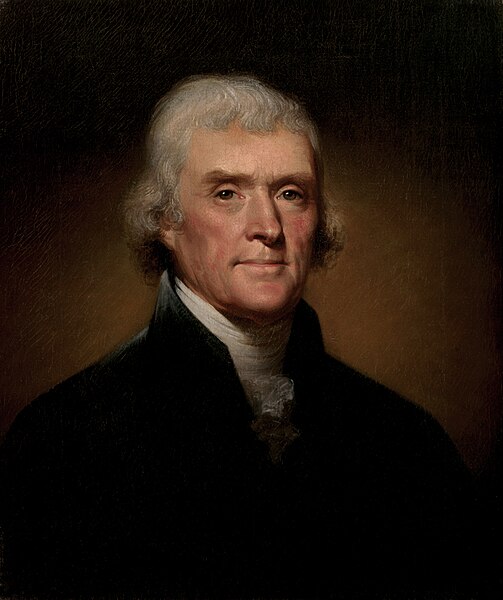
J.R.R. Tolkien

A romantic Edwardian, steeped in Northern European folklore and Victorian literature, Tolkien was and is despised by large parts of the fashionable literary establishment. I have known very few neutral reactions to his work. People either love or loathe Lord of the Rings, which seems doomed to eternally inspire adoration or ire, and nothing much in between.

The often ferocious response of many critics perhaps stemmed from the apparent anachronism of the book, combined with its massive popularity. It was published in 1954, at a time when literary modernism was dominant and pervading the academy. Modernist writers were obsessed with interiority, broke with prior literary convention, and traded in irony, ambiguity and convoluted psychology. Literary critics of the time were taking up the “New Criticism”, which dispensed not only with the previous generation’s fascination with historical context in favour of close reading, but also with the traditionalist concerns for beauty and moral improvement, which were regarded as subjective and emotionally driven. Spare, complex prose, focused on the darker side of society, was in vogue. Into this context dropped 1,200 pages of dwarves, elves and hobbits in a grand battle of good and evil. They were greeted with the sort of enthusiasm one can imagine.

Edmund Wilson called the books “balderdash”, a battle between “Good people and Goblins”. The book’s morality was a sticking point even for the most sympathetic critics, with Edwin Muir lamenting that “his good people are consistently good, his evil figures immovably evil”. As his work travelled into the 60s, political problems cropped up, with one feminist critic writing a book-length attack on the series to denounce it as “irritatingly, blandly, traditionally masculine”.

The mystery of how a book can so sharply divide opinion is answered perhaps by how profoundly original and unusual The Lord of the Rings and Tolkien’s wider legendarium are. They are shamelessly moralistic, written on the basis of exhaustive literary theory, linguistics, geography and world-building, and quite devoid of social commentary or Empsonian irony. Yet they are as much a radical departure from prior literary forms as modernist literature itself is, making the book doubly at odds with prevailing style and doubly original.

The moralism of Tolkien’s work is not, as some critics seem to suppose, the product of schoolboy simplicity. It is far too rigorous for that. So morally charged and orchestrated is the novel, that it would be numbered amongst the small number of works that might have passed Plato’s test for literature. Not only is this in respect of its exacting honouring of good characters and depreciation of wicked ones within its narrative framework, but equally in Tolkien’s utter refusal of allegory, thus meeting Plato’s challenge that poets are dangerous imitators of the world.

September 3, 2023

“This is the world of the Spring and Autumn Annals, and the Zuozhuan

Filed under: China, History, Military — Tags: , , , , — Nicholas @ 03:00

Another anonymous book review at Scott Alexander’s Astral Codex Ten considers the Zuozhuan, a commentary and elaboration of the more bare-bones historical record of the Spring and Autumn Annals:

The first page of the Li Yuanyang edition of Zuo zhuan (16th century).
Wikimedia Commons.

To tell the story of the fall of a realm, it’s best to start with its rise.

More than three thousand years ago, the Shang dynasty ruled the Chinese heartland. They raised a sprawling capital out of the yellow plains, and cast magnificent ritual vessels from bronze. One of the criteria of civilization is writing, and they had the first Chinese writing, incising questions on turtle shells and ox scapulae, applying a heated rod, and reading the response of the spirits in the pattern of cracks. “This year will Shang receive good harvest?” “Is the sick stomach due to ancestral harm?” “Offer three hundred Qiang prisoners to [the deceased] Father Ding?” The kings of Shang maintained a hegemony over their neighbors through military prowess, and sacrificed war captives from their campaigns totaling in the tens of thousands for the favor of their ancestors.

But the Shang faced growing threat from the Zhou, a once-subordinate people from west beyond the mountains. Inspired by a rare conjunction of the planets in 1059 BC, the Zhou declared that there was such a thing as the Mandate of Heaven, a divine right to rule—and while the Shang had once held it, their misrule and immorality had forced the Mandate to pass to the Zhou. Thirteen years later, the Zhou and their allies defeated the Shang in battle, seized their capital, drove their king to suicide, and supplanted them as overlords of the Central Plains.

If the Shang were goth jocks, the Zhou were prep nerds. In grave goods, food-serving vessels replaced wine vessels. Mass human sacrifice disappeared, while bureaucracy expanded. The Shang lacked the state power to administer their surrounding subject peoples so much as intimidate them into line; the Zhou, galvanized by a rebellion not long after the conquest, put serious thought into consolidating their control. While the king remained in the west to rule over the original Zhou lands, he sent relatives and allies east into the conquered territories to establish colonies at strategically important locations, anchoring Zhou rule in a sprawling network of hereditary regional lords bound together by blood, marriage, custom, and ancestor worship of the Heaven-blessed founding Zhou kings.

For generations, the system worked, ensuring military successes at the borders and stability in the interior. The first reigns of the dynasty became a golden age in the cultural imagination for thousands of years. But by the dynasty’s second century, barbarian incursions were putting the state on the defensive, and surviving records hint at waning control over the regional lords and power struggles at court. 771 BC marked a breaking point, when barbarians allied with disgruntled nobles to overrun the royal domain and kill King You of Zhou.

Legend has it that the king was bewitched by his new consort, a melancholy beauty born from a virgin impregnated by the touch of a black salamander. Desperate to make her laugh, the king pranked his lords by lighting the beacon fires intended to summon them in case of invasion. When she delighted at the sight, he kept playing the same trick until the lords got sick of him and stopped coming, which doomed him when the barbarians actually invaded.

But the historical reality seems to be the usual sordid political struggle around a new consort — and heir — threatening the power of the old one. The original queen’s powerful father allied with barbarians to root out the upstart, only to get maybe more than he bargained for. Sure, he put his grandkid on the throne in the end, but the royal house had been devastated. It would never regain the ancestral lands it had lost to the barbarians, the direct holdings that filled its treasury and provided for its armies. The king retreated east into the Central Plains, playing ground of lords that were now more powerful than him. While the royal line remained symbolically important, as holder of the Mandate of Heaven from which all the states derived their legitimacy, the loss of central authority in every other sense would unleash centuries of intensifying interstate warfare and upheaval.

This is the world of the Spring and Autumn Annals, and the Zuozhuan.

The Spring

“Spring and Autumn Annals” is a bit of a redundant translation, since “spring and autumn” was just an old way of saying “year”, and thus, “annals”. And technically, there were multiple Spring and Autumn Annals — every state kept, in addition to court and administrative documents, its own laconic record of each year’s wars, diplomacy, natural phenomena, major rites, and notable deaths. But the state of Lu’s is special, because Confucius was from Lu. He’s said to have personally edited and compiled the extant version of its 242-year-long Spring and Autumn, loading each character with weighty yet subtle moral deliberation. This ensured it a place in the Confucian canon, and its survival where every other state’s annals have been lost to time. The era that it covers is named the Spring and Autumn period after the text, not the other way around.

Taken on its own, though, the Annals is little more than a list of dry facts. For example, the first year reads:

    The first year, spring, the royal first month.

    In the third month, our lord and Zhu Yifu swore a covenant at Mie.

    In summer, in the fifth month, the Liege of Zheng overcame Duan at Yan.

    In autumn, in the seventh month, the Heaven-appointed king sent his steward Xuan to us to present the funeral equipment for Lord Hui and Zhong Zi.

    In the ninth month, we swore a covenant with a Song leader at Su.

    In winter, in the twelfth month, the Zhai Liege came.

    Gongzi Yishi died.

Who is Zhu Yifu? Who’s Duan? What’s all this about “overcoming”? Where does the moral deliberation come in? This canon badly needs meta, and the most notable of the ancient commentaries written for the Spring and Autumn Annals is the Zuozhuan. Ten times as long as the text it’s for, the Zuozhuan is the flesh on the Annals‘ bare bones, one of the foundational works of ancient Chinese literature and history-writing in its own right.

While tradition attributes the text’s authorship to Zuo Qiuming, a contemporary of Confucius, most modern historians date its compilation to the century after. In its extant form, it’s presented interleaved with the Annals, so that after the Annals’ account of each year, with entries such as …

    In summer, in the sixth month, on the yiyou day (26), Gongzi Guisheng of Zheng assassinated his ruler, Yi.

… you have the Zuozhuan’s account of the year, mostly composed of elaborations upon the above entries, such as:

    The leaders of Chu presented a large turtle to Lord Ling of Zheng. Gongzi Song and Gongzi Guisheng were about to have an audience with the lord. Gongzi Song’s index finger moved involuntarily. He showed it to Gongzi Guisheng and said, “On other days when my finger did this, I always without fail got to taste something extraordinary.” As they entered, the cook was about to take the turtle apart. They looked at each other and smiled. The lord asked why, and Gongzi Guisheng told him. When the lord had the high officers partake of the turtle, he called Gongzi Song forward but did not give him any. Furious, Gongzi Song dipped his finger into the cauldron, tasted the turtle, and left. The lord was so enraged that he wanted to kill Gongzi Song. Gongzi Song plotted with Gongzi Guisheng to act first. Gongzi Guisheng said, “Even with an aging domestic animal, one is reluctant to kill it. How much more so then with the ruler?” Gongzi Song turned things around and slandered Gongzi Guisheng. Gongzi Guisheng became fearful and complied with him. In the summer, they assassinated Lord Ling.

    The text says, “Gongzi Guisheng of Zheng assassinated his ruler, Yi”: this is because he fell short in weighing the odds. The noble man said, “To be benevolent without martial valor is to achieve nothing.” In all cases when a ruler is assassinated, naming the ruler [with his personal name rather than his title] means that he violated the way of rulership; naming the subject means that the blame lies with him.

There’s a few too many mythological creatures and just-so stories for the Zuozhuan to be taken entirely at face value, but it’s clear that its creator(s) had access to diverse now-lost records for the era portrayed. For example, some of the events show a two-month dating discrepancy — one of the states used a different calendar, and most likely the creator(s) overlooked the difference when borrowing from sources from that state. While the overall level of historical rigor versus 4th century BC authorial invention remains under heated debate, the Zuozhuan is undeniably the most comprehensive written source on its era that we have.

And importantly, it’s enjoyable.

You can think of the Zuozhuan as the Gene Wolfe of ancient historical works. It’s not an easy read, especially in translation, where names that are visibly distinct in the original (e.g. 季, 急, 姬, etc.) all get unhelpfully collapsed into one transliteration (Ji). The work drops you into a whirl of nouns and events, some of them one-off asides, others part of long-running narrative threads that might only surface again decades of entries later. While a casual readthrough still offers plenty of rewards, putting together all the subtext, references, and connections between entries is an endeavor that’s occupied readers for millennia. Your unreliable narrator remains enigmatic on most of the events he presents, leaving interpretation as an exercise for the reader; when he does speak, either directly or in the voice of the “noble man”, he can raise more questions than he answers. For one, the rule about the naming of an assassinated ruler largely holds in the Annals, but seems to have some notable exceptions.

But if you’re willing to plunge in, the work offers an experience unlike anything else.

August 24, 2023

There Will Be ⚡️Pain⚡️(A Book Update)

Filed under: Books, Business, Humour, Media — Tags: , — Nicholas @ 02:00

Jill Bearup
Published 15 May 2023

I’m just saying, One Crisis at a Time is our motto as well as our title. Have a Fantasy Heroine book update for your delectation and delight.

#fantasyheroine #onecrisisatatime

August 9, 2023

QotD: The “Merry Pranksters”

Filed under: Books, History, Liberty, Quotations, USA — Tags: , , , , — Nicholas @ 01:00

Ken Kesey, graduating college in Oregon with several wrestling championships and a creative writing degree, made a classic mistake: he moved to the San Francisco Bay Area to find himself. He rented a house in Palo Alto (this was the 1950s, when normal people could have houses in Palo Alto) and settled down to write the Great American Novel.

To make ends meet, he got a job as an orderly at the local psych hospital. He also ran across some nice people called “MKULTRA” who offered him extra money to test chemicals for them. As time went by, he found himself more and more disillusioned with the hospital job, finding his employers clueless and abusive. But the MKULTRA job was going great! In particular, one of the chemicals, “LSD”, really helped get his creative juices flowing. He leveraged all of this into his Great American Novel, One Flew Over The Cuckoo’s Nest, and became rich and famous overnight.

He got his hands on some extra LSD and started distributing it among his social scene – a mix of writers, Stanford graduate students, and aimless upper-class twenty-somethings. They all agreed: something interesting was going on here. Word spread. 1960 San Francisco was already heavily enriched for creative people who would go on to shape intellectual history; Kesey’s friend group attracted the creme of this creme. Allan Ginsberg, Hunter S. Thompson, and Wavy Gravy passed through; so did Neil Cassady (“Dean Moriarty”) Jack Keroauc’s muse from On The Road. Kesey hired a local kid and his garage band to play music at his acid parties; thus began the career of Jerry Garcia and the Grateful Dead.

Sometime in the early 1960s, too slow to notice right away, they transitioned from “social circle” to “cult”. Kesey bought a compound in the redwood forests of the Santa Cruz Mountains, an hour’s drive from SF. Beatniks, proto-hippies, and other seekers – especially really attractive women – found their way there and didn’t leave. Kesey and his band, now calling themselves “the Merry Pranksters”, accepted all comers. They passed the days making psychedelic art (realistically: spraypainting redwood trees Day-Glo yellow), and the nights taking LSD in massive group therapy sessions that melted away psychic trauma and the chains of society and revealed the true selves buried beneath (realistically: sitting around in a circle while people said how they felt about each other).

What were Kesey’s teachings? Wrong question – what are anyone’s teachings? What were Jesus’ teachings? If you really want, you can look in the Bible and find some of them, but they’re not important. Any religion’s teachings, enumerated bloodlessly, sound like a laundry list of how many gods there are and what prayers to say. The Merry Pranksters were about Kesey, just like the Apostles were about Jesus. Something about him attracted them, drew them in, passed into them like electricity. When he spoke, you might or might not remember his words, but you remembered that it was important, that Something had passed from him to you, that your life had meaning now. Would you expect a group of several dozen drug-addled intellectuals in a compound in a redwood forest to have some kind of divisions or uncertainty? They didn’t. Whenever something threatened to come up, Kesey would say — the exact right thing — and then everyone would realize they had been wrong to cause trouble.

Scott Alexander, “Book Review: The Electric Kool-Aid Acid Test”, Slate Star Codex, 2019-07-23.

June 5, 2023

QotD: The four types of college papers for English Majors – 4. The Old Switcheroo

Filed under: Education, Humour, Quotations — Tags: , — Nicholas @ 01:00

Only superstars write the Old Switcheroo. But if you pull this off, the sky is the limit. You might end up as a Senator or in the Cabinet, or have a prominent byline in a newspaper of record.

That’s because the Old Switcheroo turns everything into its opposite. If you master this technique, you can prove anything, no matter how implausible. Water isn’t wet. War is Peace. We have always been at war with Eastasia. You name it.

Everybody thinks that Shakespeare’s King Lear is a tragedy, but for the Old Switcheroo, you prove that it’s actually a comedy. Everybody thinks that Mozart is a great composer, but you prove that he stole everything he wrote from Salieri’s butler. Frankenstein wasn’t a monster, but a respected scientist. Etc. etc.

Up is down. Black is white. Fire is ice.

Make no mistake, the Old Switcheroo is A+ work, and no fooling. Even more, it’s a surefire path to career success. There’s just one tiny problem: The people who master the Old Switcheroo are batshit crazy and have a psychological profile dangerously close to that of a serial killer. They might end up in the White House, but you wouldn’t trust them to house-sit your chia pet.

Ted Gioia, “The 4 Types of College papers for English Majors”, The Honest Broker, 2023-02-27.

June 4, 2023

QotD: The four types of college papers for English Majors – 3. The DIM

Filed under: Education, Humour, Quotations — Tags: , — Nicholas @ 01:00

We are now trying to impress the professor and get an A. So we can’t just write about what’s happening at the surface level — we must identify the Deep Inner Meaning (DIM) that others don’t see.

Those bozos think that Moby Dick is a novel about a great white whale. But we know there’s a Deep Inner Meaning to the book — that whale is actually a stand-in for the author’s annoying mother-in-law. Or maybe it’s a surrogate for the President of the United States. Or a displaced sex object.

Let your imagination run free. It really doesn’t matter which you choose. It just can’t be anything obvious. And then you need to talk a good game, and not pay too much attention to facts and plausibility.

And who said you don’t learn useful job skills as an English major?

If you spread the B.S. thick enough, and never let on that you even sniff the stench, you have better than even odds of getting a top grade. It helps, by the way, if you show up in class dressed in something unseemly and having omitted several steps in your morning grooming routine — which are seen as signs of incipient genius in the School of Humanities.

Ted Gioia, “The 4 Types of College papers for English Majors”, The Honest Broker, 2023-02-27.

June 3, 2023

QotD: The four types of college papers for English Majors – 2. The TWIT (They Were Idiots Then)

Filed under: Education, Humour, Quotations — Tags: , , — Nicholas @ 01:00

Back in the old days, everybody was a fool — They Were Idiots Then (TWIT).

We know that unfailingly, for the simple reason that they didn’t think like us. They were stupid and stodgy and superstitious and held all sorts of irritating views.

And it’s true. You can take absolutely any book from a hundred years ago, and find infractions on almost every page. The past is a different country, where everybody is a knucklehead.

Here’s how to write a TWIT: You take a yellow marker and highlight every time somebody in the book makes a blunder, according to our current rules of decorum this week. Trust me, you won’t even have to read the whole book. Within a chapter or two, your book will have more yellow highlights than Nicki Minaj’s hairdo.

Now you’re ready to roll.

You write up the infractions like it’s a district attorney’s indictment. But here’s the key — you must give it some fancy name. You can’t just call a twit a twit in your TWIT paper; you have to refer to your harangue as a critique or an exegesis or a deconstruction, starting with the title — which should be something like “A Critique of Phallogocentrism in Henry James’s Turn of the Screw“.

Once you get the hang of this, it’s as easy as shooting fish in a barrel. There’s just one problem — everyone else in the class is also writing TWIT papers. It’s the most popular thing on campus since the invention of the senior admin job. So you only get a B on these. Or maybe B+ if you throw in a few French words (for example, inserting différance whenever you’d normally say difference).

Ted Gioia, “The 4 Types of College papers for English Majors”, The Honest Broker, 2023-02-27.

June 2, 2023

QotD: The four types of college papers for English Majors – 1. The Reliable C&C

Filed under: Education, Humour, Quotations — Tags: , — Nicholas @ 01:00

This is the “compare and contrast” paper, and is about as simple as they come. You take two things that aren’t exactly like each other. It’s just like Sesame Street, but with books.

Then you list 5 ways they are similar and 5 ways they are different. Voilá — you’ve written a college paper!

    Ernest Hemingway and Jane Austen are both writers who share the same language: English. But Hemingway is an American who liked bullfighting and drinking martinis. Jane Austen is English and never fought a bull. She probably drank tea, because the martini wasn’t invented until 1863, some 47 years after her death …

You can write this stuff in your sleep, provided you dream about Wikipedia entries. But be forewarned: the reliable C&C probably only gets you a reliable C grade.

Ted Gioia, “The 4 Types of College papers for English Majors”, The Honest Broker, 2023-02-27.

May 12, 2023

QotD: Great (but young) Romantic poets

Filed under: Britain, Education, History, Media, Quotations — Tags: , , , , — Nicholas @ 01:00

History being the study of human beings and how they do, you need a baseline grasp of how humans are. It doesn’t matter how smart you are — if you don’t have a good baseline grasp of human nature, History, the discipline, will always elude you.

[This is true of any Humanity, of course. Shelley and Keats have to be in the conversation for “greatest English poet,” right up there with Shakespeare. One or both of them might’ve been more naturally talented than the Bard. But Shakespeare was clearly a man of long, deep experience, whereas the Romantics … weren’t. For every “Ozymandias” or “To a Nightingale”, there’s at least one reminder that these guys died at 29 and 25, respectively. To call “The Masque of Anarchy” sophomoric is an insult to sophomores. “Like lions after slumber, In unvanquishable number.” Ugh. Good God, y’all].

Which is why that “social construction” stuff is so popular. Yeah yeah, it has some real (though really limited) explanatory power, but mostly it’s an excuse for kids who believe themselves clever to avoid contrary evidence. Calling, say, “masculinity” “just a social construction” frees you of the burden of entering the headspace of men who do things as men, because they’re men. To stick with a theme: Shakespeare could’ve written something like “the Masque of Anarchy” — probably as a wicked bit of characterization in Hamlet: The Wittenberg Years — but Shelley never could’ve written MacBeth’s “sound and fury” soliloquy. Shakespeare had obviously seen violent death; Shelley obviously hadn’t.

Knowledge of human nature is almost nonexistent in the Biz.

Severian, “How to Teach History”, Rotten Chestnuts, 2020-12-23.

April 28, 2023

Field Marshal Slim’s secret vice – he also wrote articles and short stories under pseudonym

Filed under: Books, Britain, History, India, Military — Tags: , , , , — Nicholas @ 05:00

It’s no secret that I have a very high regard for Field Marshal William Slim, so I’m quite looking forward to reading some of Slim’s pre-WW2 writings that have just been gathered together by Dr. Robert Lyman in a three-volume set:

Few people during his lifetime, and even fewer now, know that the man who was to become one of the greatest British generals of all time – and I’m not exaggerating – was in fact a secret scribbler. Now, many people know that he was the author of at least two best selling books. In 1956 he wrote his account of the Burma campaign, Defeat into Victory, described by one reviewer, quite rightly in my view, as “the best general’s book of World War II”. Then, in 1959, he published, under the title of Unofficial History, a series of articles about his military experience, some of which had been published previously as articles in Blackwood’s magazine. This was the first indication that there was an unknown literary side to Slim. The fact that he was a secret scribbler, or at least had been one once, was only publicly revealed on the publication of his biography in 1976 by Ronald Lewin – Slim, The Standard Bearer – which incidentally won the W.H. Smith Literary Award that same year. Lewin explained that Slim had written material for publication long before the war. In fact, between 1931 and 1940 he wrote a total of 44 articles, extending in length between two and eight thousand words – a total of 122,000 words in all – for a range of newspapers and magazines, including Blackwood’s Magazine, the Daily Mail, the Evening Express and the Illustrated Weekly of India. According to Lewin, he did this to supplement his earnings as an officer of the Indian Army. He didn’t do it to create a name for himself as a writer, or because he had pretensions to the artistic life, but because he needed the money. As with all other officers at the time who did not have the benefit of what was described euphemistically as “private means” he struggled to live off his army salary, especially to pay school fees for his children, John (born 1927) and Una (born 1930). Accordingly, he turned his hand to writing articles under a pseudonym, mainly of Anthony Mills (Mills being Slim spelt backwards) and, in one instance, that of Judy O’Grady.

With the war over, and senior military rank attained, he never again penned stories of this kind for publication. With it died any common remembrance of his pre-war literary activities. Copies of the articles have languished ever since amidst his papers in the Churchill Archives Centre at the University of Cambridge, from where I rescued them last year. They have been republished this week by Richard Foreman of Sharpe Books.

During the time Slim was writing these the pseudonym protected him from the gaze of those in the military who might believe that serious soldiers didn’t write fiction, and certainly not for public consumption via the newspapers. He certainly went to some lengths to ensure that his military friends and colleagues did not know of this unusual extra-curricular activity. In a letter to Mr S. Jepson, editor of the Illustrated Times of India on 26 July 1939 (he was then Commanding Officer of 2/7 Gurkha Rifles in Shillong, Assam) he warned that he needed to use an additional pseudonym to the one he normally used, because that – Anthony Mills – would then be immediately “known to several people and I do not wish them to identify me also as the writer of certain articles in Blackwood’s and Home newspapers. I am supposed to be a serious soldier and I’m afraid Anthony Mills isn’t.”

What do these 44 articles tell us of Slim? He would never have pretended that his writings represented any higher form of literary art. He certainly had no pretensions to a life as a writer. He was, first and foremost, a soldier. His writing was to supplement the family’s income. But, as readers will attest, he was very good at it. They demonstrate his supreme ability with words. As Defeat into Victory was to demonstrate, he was a master of the telling phrase every bit as much as he was a master of the battlefield. He made words work. They were used simply, sparingly, directly. Nothing was wasted; all achieved their purpose.

The articles also show Slim’s propensity for storytelling. Each story has a purpose. Some were simply to provide a picture of some of the characters in his Gurkha battalion, some to tell the story of a battle or of an incident while on military operations. Some are funny, some not. Some are of an entirely different kind, and have no military context whatsoever. These are often short adventure stories, while some can best be described as morality tales. A couple of them warned his readers not to jump to conclusions about a person’s character. Some showed a romantic tendency to his nature.

The stories can be placed into three broad categories. The first comprises seventeen stories about the Indian Army, of which the Gurkha regiments formed an important part. The second group are eleven stories about India, with no or only a passing military reference. The third, much smaller group, contains seventeen stories with no Indian or military dimension.

December 30, 2022

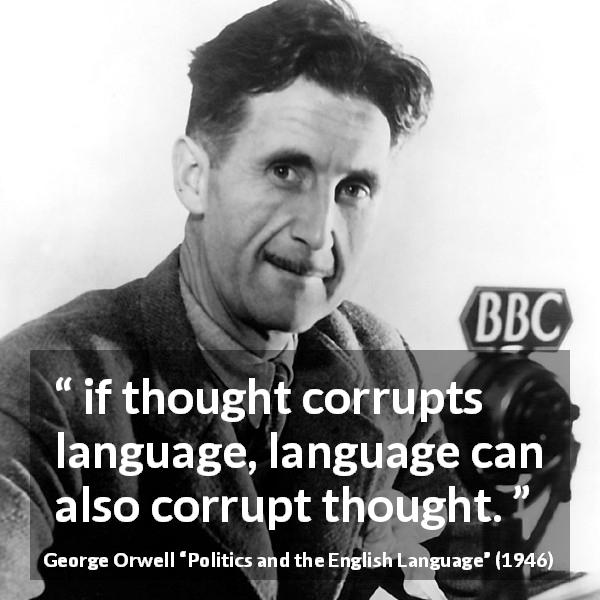
The continued relevance of Orwell’s “Politics and the English Language”

Filed under: Books, Britain, History, Politics — Tags: , , , , — Nicholas @ 03:00

In Quillette, George Case praises Orwell’s 1946 essay “Politics and the English Language” (which was one of the first essays that convinced me that Orwell was one of the greatest writers of the 20th century), and shows how it still has relevance today:

George Orwell’s “Politics and the English Language” is widely considered one of the greatest and most influential essays ever written. First published in Britain’s Horizon in 1946, it has since been widely anthologized and is always included in any collection of the writer’s essential nonfiction. In the decades since its appearance, the article has been quoted by many commentators who invoke Orwell’s literary and moral stature in support of its continued relevance. But perhaps the language of today’s politics warrants some fresh criticisms that even the author of Nineteen Eighty-Four and Animal Farm could not have conceived.

“Politics and the English Language” addressed the jargon, double-talk, and what we would now call “spin” that had already distorted the discourse of the mid-20th century. “In our time,” Orwell argued, “political speech and writing are largely the defence of the indefensible. … Thus political language has to consist largely of euphemism, question-begging and sheer cloudy vagueness. … Political language — and with variations this is true of all political parties, from Conservatives to Anarchists — is designed to make lies sound truthful and murder respectable, and to give an appearance of solidity to pure wind.” Those are the sentences most cited whenever a modern leader or talking head hides behind terms like “restructuring” (for layoffs), “visiting a site” (for bombing), or “alternative facts” (for falsehoods). In his essay, Orwell also cut through the careless, mechanical prose of academics and journalists who fall back on clichés — “all prefabricated phrases, needless repetitions, and humbug and vagueness generally”.

These objections still hold up almost 80 years later, but historic changes in taste and technology mean that they apply to a new set of unexamined truisms and slogans regularly invoked less in oratory or print than through televised soundbites, online memes, and social media: the errors of reason and rhetoric identified in “Politics and the English Language” can be seen in familiar examples of empty platitudes, stretched metaphors, and meaningless cant which few who post, share, like, and retweet have seriously parsed. Consider how the following lexicon from 2023 is distinguished by the same question-begging, humbug, and sheer cloudy vagueness exposed by George Orwell in 1946.

[…]

Climate, [mis- and dis-]information, popular knowledge, genocide, land claims, sexual assault, and racism are all serious topics, but politicizing them with hyperbole turns them into trite catchphrases. The language cited here is largely employed as a stylistic template by the outlets who relay it — in the same way that individual publications will adhere to uniform guidelines of punctuation and capitalization, so too must they now follow directives to always write rape culture, stolen land, misinformation, or climate emergency in place of anything more neutral or accurate. Sometimes, as with cultural genocide or systemic racism, the purpose appears to be in how the diction of a few extra syllables imparts gravity to the premise being conveyed, as if a gigantic whale is a bigger animal than a whale, or a horrific murder is a worse crime than a murder.

Elsewhere, the words strive to alter the parameters of an issue so that its actual or perceived significance is amplified a little longer. “Drunk driving” will always be a danger if the legal limits of motorists’ alcohol levels are periodically lowered; likewise, relations between the sexes and a chaotic range of public opinion will always be problematic if they can be recast as rape culture, hate, or disinformation. This lingo typifies the parroted lines and reflexive responses of political communication in the 21st century.

In “Politics and the English Language”, George Orwell’s concluding lesson was not just that parroted lines and reflexive responses were aesthetically bad, or that they revealed professional incompetence in whoever crafted them, but that they served to suppress thinking. “The invasion of one’s mind by ready-made phrases … can only be prevented if one is constantly on guard against them, and every such phrase anaesthetizes a portion of one’s brain”, he wrote. He is still right: glib, shallow expression reflects, and will only perpetuate, glib, shallow thought, achieving no more than to give an appearance of solidity to pure wind.

December 28, 2022

QotD: Collective guilt

Filed under: Germany, Humour, Quotations — Tags: , , — Nicholas @ 01:00

As for the concept of collective guilt, I personally think that it is totally unjustified to hold one person responsible for the behaviour of another person or a collective of persons. Since the end of World War Two I have not become weary of publicly arguing against the collective guilt concept. Sometimes, however, it takes a lot of didactic tricks to detach people from their supersitions. An American woman once confronted me with the reporach, “How can you still write some of your books in German, Adolf Hitler’s language?” In response, I asked her if she had knives in her kitchen, and when she answered that she did, I acted dismayed and shocked, exclaiming, “How can you still use knives after so many killers have used them to stab and murder their victims?” She stopped objecting to my writing books in German.

Viktor Frankl, Man’s Search for Meaning, 1946.

December 20, 2022

A true behind-the-scenes look at George Orwell’s Nineteen Eighty-Four

Filed under: Books, Britain, History — Tags: , — Nicholas @ 05:00

In Spiked, Alexander Adams reports on a new, limited edition of the surviving portion of George Orwell’s manuscript for the novel:

A photo from SP Books’ web page showing the reproduction of Orwell’s manuscript.
SP Books, https://www.spbooks.com/150-1984-9791095457114.html

Published by SP Books, this is Nineteen Eighty-Four as you’ve never seen it before. It reproduces, in colour facsimile, the 197 surviving pages of Orwell’s manuscript, held by the John Hay Library at Brown University, Rhode Island. We see Orwell’s work in fountain pen and ballpoint (complete with ink blots), as well as 14 typewritten sides. We are even given his doodles and pen tests. Readers will remember how Winston also marvels at the beauty of the paper and binding of a blank book he buys from a junk shop.

This edition contains what amounts to 44 per cent of the text of the published novel. It is in a jumbled state, with pages missing and drastic changes made. There are many crossings out and additions. The handwriting can be a little tricky to decipher – Orwell had a habit of using cursive joining lines between words and using abbreviations. Added to that, the script can be somewhat crabbed, especially where Orwell adds text between existing lines. With a little patience, though, the reader can adjust to Orwell’s writing, especially if familiar with the text, and glimpse this most familiar of novels anew.

This version includes an introduction by Orwell scholar DJ Taylor. He tells us that although Orwell usually wrote quickly, he took five years to complete Nineteen Eighty-Four. Taylor details the difficult conditions that explain the novel’s long gestation. The death of Orwell’s first wife in 1945, the effort of raising their young son alone and the toll of tuberculosis all slowed work and drained the author’s energy (tuberculosis would kill him in 1950, only months after the novel’s publication). There are indications that Orwell let the book go to publication even though he thought it was not properly finished.

Looking at this draft, we can see Orwell revising heavily as he wrote. Some revisions are minor, such as Trotsky-figure Goldstein’s description of the workings of the Party and his description of the geopolitics of Oceania, Eurasia and Eastasia. Other changes are more significant. Here, in the propaganda film described by Winston at the start of his diary, there is a graphic passage about the lynching of a pregnant black woman. Orwell seems to have cut these lines on grounds of decency. He also reduced the references to race overall, perhaps uncomfortable about the implications of speaking so generally about groups and types. Orwell’s background as a policeman in Burma no doubt made him sensitive to racial issues.

December 18, 2022

QotD: Citation systems and why they were developed

For this week’s musing I wanted to talk a bit about citation systems. In particular, you all have no doubt noticed that I generally cite modern works by the author’s name, their title and date of publication (e.g. G. Parker, The Army of Flanders and the Spanish Road (1972)), but ancient works get these strange almost code-like citations (Xen. Lac. 5.3; Hdt. 7.234.2; Thuc. 5.68; etc.). And you may ask, “What gives? Why two systems?” So let’s talk about that.

The first thing that needs to be noted here is that systems of citation are for the most part a modern invention. Pre-modern authors will, of course, allude to or reference other works (although ancient Greek and Roman writers have a tendency to flex on the reader by omitting the name of the author, often just alluding to a quote of “the poet” where “the poet” is usually, but not always, Homer), but they did not generally have systems of citation as we do.

Instead most modern citation systems in use for modern books go back at most to the 1800s, though these are often standardizations of systems which might go back a bit further still. Still, the Chicago Manual of Style – the standard style guide and citation system for historians working in the United States – was first published only in 1906. Consequently its citation system is built for the facts of how modern publishing works. In particular, we publish books in codices (that is, books with pages) with numbered pages which are typically kept constant in multiple printings (including being kept constant between soft-cover and hardback versions). Consequently if you can give the book, the edition (where necessary), the publisher and a page number, any reader seeing your citation can notionally go get that edition of the book and open to the very page you were looking at and see exactly what you saw.

Of course this breaks down a little with mass-market fiction books that are often printed in multiple editions with inconsistent pagination (thus the endless frustration with trying to cite anything in A Song of Ice and Fire; the fan-made chapter-based citation system for a work without numbered or uniquely named chapters is, I must say, painfully inadequate.) but in a scholarly rather than wiki-context, one can just pick a specific edition, specify it with the facts of publication and use those page numbers.

However the systems for citing ancient works or medieval manuscripts are actually older than consistent page numbers, though they do not reach back into antiquity or even really much into the Middle Ages. As originally published, ancient works couldn’t have static page numbers – had they existed yet, which they didn’t – for a multitude of reasons: for one, being copied by hand, the pagination was likely to always be inconsistent. But for ancient works the broader problem was that while they were written in books (libri) they were not written in books (codices). The book as a physical object – pages, bound together at a spine – is more technically called a codex. After all, that’s not the only way to organize a book. Think of a modern ebook for instance: it is a book, but it isn’t a codex! Well, prior to codex becoming truly common in third and fourth centuries AD, books were typically written on scrolls (the literal meaning of libri, which later came to mean any sort of book), which notably lack pages – it is one continuous scroll of text.

Of course those scrolls do not survive. Rather, ancient works were copied onto codices during Late Antiquity or the Middle Ages and those survive. When we are lucky, several different “families” of manuscripts for a given work survive (this is useful because it means we can compare those manuscripts to detect transcription errors; alas in many cases we have only one manuscript or one clearly related family of manuscripts which all share the same errors, though such errors are generally rare and small).

With the emergence of the printing press, it became possible to print lots of copies of these works, but that combined with the manuscript tradition created its own problems: which manuscript should be the authoritative text and how ought it be divided? On the first point, the response was the slow and painstaking work of creating critical editions that incorporate the different manuscript traditions: a main text on the page meant to represent the scholar’s best guess at the correct original text with notes (called an apparatus criticus) marking where other manuscripts differ. On the second point it became necessary to impose some kind of organizing structure on these works.

The good news is that most longer classical works already had a system of larger divisions: books (libri). A long work would be too long for a single scroll and so would need to be broken into several; its quite clear from an early point that authors were aware of this and took advantage of that system of divisions to divide their works into “books” that had thematic or chronological significance. Where such a standard division didn’t exist, ancient libraries, particularly in Alexandria, had imposed them and the influence of those libraries as the standard sources for originals from which to make subsequent copies made those divisions “canon”. Because those book divisions were thus structurally important, they were preserved through the transition from scrolls to codices (as generally clearly marked chapter breaks), so that the various “books” served as “super-chapters”.

But sub-divisions were clearly necessary – a single librum is pretty long! The earliest system I am aware of for this was the addition of chapter divisions into the Vulgate – the Latin-language version of the Bible – in the 13th century. Versification – breaking the chapters down into verses – in the New Testament followed in the early 16th century (though it seems necessary to note that there were much older systems of text divisions for the Tanakh though these were not always standardized).

The same work of dividing up ancient texts began around the same time as versification for the Bible. One started by preserving the divisions already present – book divisions, but also for poetry line divisions (which could be detected metrically even if they were not actually written out in individual lines). For most poetic works, that was actually sufficient, though for collections of shorter poems it became necessary to put them in a standard order and then number them. For prose works, chapter and section divisions were imposed by modern editors. Because these divisions needed to be understandable to everyone, over time each work developed its standard set of divisions that everyone uses, codified by critical texts like the Oxford Classical Texts or the Bibliotheca Teubneriana (or “Teubners”).

Thus one cited these works not by the page numbers in modern editions, but rather by these early-modern systems of divisions. In particular a citation moves from the larger divisions to the smaller ones, separating each with a period. Thus Hdt. 7.234.2 is Herodotus, Book 7, chapter 234, section 2. In an odd quirk, it is worth noting classical citations are separated by periods, but Biblical citations are separated by colons. Thus John 3:16 but Liv. 3.16. I will note that for readers who cannot access these texts in the original language, these divisions can be a bit frustrating because they are often not reproduced in modern translations for the public (and sometimes don’t translate well, where they may split the meaning of a sentence), but I’d argue that this is just a reason for publishers to be sure to include the citation divisions in their translations.

That leaves the names of authors and their works. The classical corpus is a “closed” corpus – there is a limited number of works and new ones don’t enter very often (occasionally we find something on a papyrus or lost manuscript, but by “occasionally” I mean “about once in a lifetime”) so the full details of an author’s name are rarely necessary. I don’t need to say “Titus Livius of Patavium” because if I say Livy you know I mean Livy. And in citation as in all publishing, there is a desire for maximum brevity, so given a relatively small number of known authors it was perhaps inevitable that we’d end up abbreviating all of their names. Standard abbreviations are helpful here too, because the languages we use today grew up with these author’s names and so many of them have different forms in different languages. For instance, in English we call Titus Livius “Livy” but in French they say Tite-Live, Spanish says Tito Livio (as does Italian) and the Germans say Livius. These days the most common standard abbreviation set used in English are those settled on by the Oxford Classical Dictionary; I am dreadfully inconsistent on here but I try to stick to those. The OCD says “Livy”, by the by, but “Liv.” is also a very common short-form of his name you’ll see in citations, particularly because it abbreviates all of the linguistic variations on his name.

And then there is one final complication: titles. Ancient written works rarely include big obvious titles on the front of them and often were known by informal rather than formal titles. Consequently when standardized titles for these works formed (often being systematized during the printing-press era just like the section divisions) they tended to be in Latin, even when the works were in Greek. Thus most works have common abbreviations for titles too (again the OCD is the standard list) which typically abbreviate their Latin titles, even for works not originally in Latin.

And now you know! And you can use the link above to the OCD to decode classical citations you see.

One final note here: manuscripts. Manuscripts themselves are cited by an entirely different system because providence made every part of paleography to punish paleographers for their sins. A manuscript codex consists of folia – individual leaves of parchment (so two “pages” in modern numbering on either side of the same physical page) – which are numbered. Then each folium is divided into recto and verso – front and back. Thus a manuscript is going to be cited by its catalog entry wherever it is kept (each one will have its own system, they are not standardized) followed by the folium (‘f.’) and either recto (r) or verso (v). Typically the abbreviation “MS” leads the catalog entry to indicate a manuscript. Thus this picture of two men fighting is MS Thott.290.2º f.87r (it’s in Det Kongelige Bibliotek in Copenhagen):

MS Thott.290.2º f.87r which can also be found on the inexplicably well maintained Wiktenauer; seriously every type of history should have as dedicated an enthusiast community as arms and armor history.

And there you go.

Bret Devereaux, “Fireside Friday, June 10, 2022”, A Collection of Unmitigated Pedantry, 2022-06-10.

November 27, 2022

Aleksandr Solzhenitsyn and One Day in the Life of Ivan Denisovich

Filed under: Books, History, Russia — Tags: , , , , , , — Nicholas @ 03:00

In Quillette, Robin Ashenden discusses the life experiences of Aleksandr Slozhenitsyn that informed the novel that made him famous:

The book was published less than 10 years after the death of Joseph Stalin, the dictator who had frozen his country in fear for nearly three decades and subjected his people to widespread deportation, imprisonment, and death. His successor Nikita Khrushchev — a man who, by his own admission, came to the job “elbow deep in blood” — had set out on a redemptive mission to liberalise the country. The Gulags had been opened and a swathe of prisoners freed; Khrushchev had denounced his predecessor publicly as a tyrant and a criminal and, at the 22nd Party Congress in October 1961, a full programme of de-Stalinisation had been announced. As for the Arts, previously neutered by the Kremlin’s policy of “Socialist Realism” — in which the values of Communism had to be resoundingly affirmed — they too were changing. Now, a new openness and a new realism was called for by Khrushchev’s supporters: books must tell the truth, even the uncomfortable truth about Communist reality … up to a point. That this point advanced or retreated as Khrushchev’s power ebbed and flowed was something no writer or publisher could afford to miss.

Solzhenitsyn’s book told the story of a single day in the 10-year prison-camp sentence of a Gulag inmate (or zek) named Ivan Denisovich Shukhov. Following decades of silence about Stalin’s prison-camp system and the innocent citizens languishing within it, the book’s appearance seemed to make the ground shake and fissure beneath people’s feet. “My face was smothered in tears,” one woman wrote to the author after she read it. “I didn’t wipe them away or feel ashamed because all this, packed into a small number of pages … was mine, intimately mine, mine for every day of the fifteen years I spent in the camps.” Another compared his book to an “atomic bomb”. For such a slender volume — about 180 pages — the seismic wave it created was a freak event.

As was the story of its publication. By the time it came out, there was virtually no trauma its author — a 44-year-old married maths teacher working in the provincial city of Ryazan — had not survived. After a youth spent in Rostov during the High Terror of Stalin’s 1930s, Solzhenitsyn had gone on to serve eagerly in the Red Army at the East Prussian front, before disaster struck in 1945. Arrested for some ill-considered words about Stalin in a letter to a friend, he was handed an eight-year Gulag sentence. In 1953, he was sent into Central Asian exile, only to be diagnosed with cancer and given three weeks to live. After a miraculous recovery, he vowed to dedicate this “second life” to a higher purpose. His writing, honed in the camps, now took on the ruthless character of a holy mission. In this, he was fortified by the Russian Orthodox faith he’d rediscovered during his sentence, and which had replaced his once-beloved, now abandoned Marxism.

Solzhenitsyn had, since his youth, wanted to make his mark as a Russian writer. In the Gulag, he’d written cantos of poetry in his head, memorized with the help of matchsticks and rosary beads to hide it from the authorities. During his Uzbekistan exile, he’d follow a full day’s work with hours of secret nocturnal writing about the darker realities of Soviet life, burying his tightly rolled manuscripts in a champagne bottle in the garden. Later, reunited with the wife he’d married before the war, he warned her to expect no more than an hour of his company a day — “I must not swerve from my purpose.” No friendships — especially close ones — were allowed to develop with his fellow Ryazan teachers, lest they take up valuable writing time, discover his perilous obsession, or blow his cover. Subterfuge became second nature: “The pig that keeps its head down grubs up the tastiest root.” Yet throughout it all, he was sceptical that his work would ever be available to the general public: “Publication in my lifetime I must put out of my mind.”

After the 22nd Party Congress, however, Solzhenitsyn recognised that the circumstances were at last propitious, if all too fleeting. “I read and reread those speeches,” he wrote later, “and the walls of my secret world swayed like curtains in the theatre … had it arrived, then, the long-awaited moment of terrible joy, the moment when my head must break water?” It seemed that it had. He got out one of his eccentric-looking manuscripts — double-sided, typed without margins, and showing all the signs of its concealment — and sent it to the literary journal of his choice. That publication was the widely read, epoch-making Novy Mir (“New World”), a magazine whose progressive staff hoped to drag society away from Stalinism. They had kept up a steady backwards-forwards dance with the Khrushchev regime throughout the 1950s, invigorated by the thought that each new issue might be their last.

« Newer PostsOlder Posts »

Powered by WordPress