Quotulatiousness

October 11, 2023

“It’s our first-ever live-streamed pogrom”

Filed under: Media, Middle East, Military — Tags: , , , , , — Nicholas @ 05:00

In The Line, Matt Gurney recounts (some of) the opening atrocities of the terror attacks on Israel by Hamas terror squads:

As I write this, Israel seems close to clearing out its invaded southern areas. In the coming hours, we will be presented with more scenes of horror and atrocity as new killing sites are found. Israel’s counterattack into Gaza will almost certainly be massive, far beyond any of the campaigns we’ve seen in recent years, and we’ll see all the awful carnage that causes from close up, too. Hamas has already said they will respond to these retaliatory actions by killing their hostages one by one and sharing the video and audio of the killings for the world to see. I believe that they will indeed do exactly that. You should all prepare yourselves for that.

For me, though, as we wait for the future to arrive, I’ve been thinking about the books on my shelf and what they tell us about the past. Books about the Holocaust and Sept. 11, and how the world grappled with truly evil regimes in eras past. There are lessons there, in simple black and white. What I saw on my phone wasn’t that. It was visceral, and awful, but in its own way, usefully clarifying.

But how many people saw what I did?

[…]

During that time, and I’m limiting my summary here to reasonably verified videos, I’ve seen an Israeli family forced to watch the apparent execution of one of their children/siblings; a man having his head either smashed in or chopped off with what looked like a garden tool of some kind (the video was a bit grainy); I’ve seen what looks like some kind of shelter that was breached, with all the occupants inside gunned down. A terrorist steps inside into ankle-deep blood and corpses and puts a few rifle rounds into bodies that are still moving.

I’ve seen a shocked looking woman being dragged out of a vehicle, her pants soaked with blood flowing from between her legs, and I know what that is. (See first photo, above.) I’ve also seen a video that I’m not sure, but that I think, happened to catch a glimpse of a rape in progress. I didn’t have the stomach to go back and watch that one again, though, so I can’t be totally sure. Whatever it was, the woman was terrified and the men around her were delighted. They enjoyed her fear and torment.

How many others have seen these things? I would bet a bunch, but not a majority, or even close to a majority. Most news savvy people are probably aware that there is a conflict, and may even know the outlines of it, but if they aren’t well-plugged into the online ecosystem for news and don’t know where to look and have hepful media contacts in the region to help filter out the garbage sources, what they’ve seen of it is sanitized and curated by well-meaning news editors whose default assumption is that graphic detail is to be avoided lest the reader or viewer be traumatized and send in a complaint.

I glanced throughout the weekend and again this morning at the major Canadian news websites, and the photos are mostly what you’d expect. Evocative, but not graphic. The most graphic ones shown aren’t a fraction of what’s available. The presentation of this story looks familiar because of all the other times we’ve seen some version of it: rockets flying up atop their exhaust trails, tanks manoeuvring over desert sand, troops looking grim as they put on their equipment, clouds of smoke and dust over Gaza. This is all bulked out by the odd tasteful photo of a grieving family member, from either side. Or perhaps even both sides, for balance.

This situation completely inverts the truism that many of us overly online people have had to cling to in recent years: this time, Twitter is real life. It’s the rest of the presentation of reality that is distorting your understanding of what’s happening. Twitter is a tire fire these days, full of bots and deliberate disinformation accounts, but for those with local sources and who’ve taken the time to curate their trusted sources — and again, Ukraine has been what forced me to do that — it can still be an invaluable tool.

But you’ve got to work at that. How many do? There is a very good chance that many of the people forming and expressing opinions about this right now are doing so with only a pretty basic understanding of what’s actually happened. The coverage they’re seeing of it looks familiar, so they’ll assume it’s basically the same as ever, if maybe slightly worse. They won’t bother assessing it or wondering if they should tweak their usual prior default response to The Latest Middle East Violent Flare Up. They see a headline on the CBC and Reuters and simply man their usual culture war battlestation. It’s a reflex by now.

That’s a mistake this time. This is one is different. Not exactly unprecedented; Lord knows Israel has suffered defeats and intelligence failures before. But none like this in 50 years, and never in an age when the simple act of seizing a victim’s phone allowed the raping and butchering to be uploaded onto the Facebook pages of the victims for their families and friends to watch. It’s our first-ever live-streamed pogrom, and I can’t be the only one who spent part of the long weekend warily glancing at some of the history books on my shelf, remembering scenes described therein that many of us have now seen happen live from our homes.

October 8, 2023

Can we get back to de mortuis nil nisi bonum any time soon?

Filed under: Media, Politics, USA — Tags: , , , , , , — Nicholas @ 05:00

The Latin phrase refers to speaking nothing but good of the (recently) deceased, but as partisan passions rise, the urge to wave the bloody shirt and denigrate the dead overwhelms decency and common sense:

Of all the vices that can contribute to the collapse of civil society, a special place of honor surely needs to be reserved for mocking the newly murdered.

I don’t mean mocking the newly dead. The somewhat mawkish view that no ill should be spoken of the recently departed has always seemed rather priggish to me. It would, in fact, be absurd if we decided that in the wake of, say, Mitch McConnell’s or Noam Chomsky’s death, we couldn’t criticize their lives, careers, and beliefs. “If they’d given him an enema, they could have buried him in a matchbox” was my old friend Christopher Hitchens’ comment on the passing of Jerry Falwell. Rude, surely. Too soon, sure. But a swipe, not a gloat. And on Fox News. To Ralph Reed.

What crosses the line of what Orwell prized as “common decency” is using the occasion of someone’s untimely death to say they deserved it. “The homosexuals have declared war on nature, and now nature is exacting an awful retribution” was Pat Buchanan’s charming response to the outbreak of the AIDS epidemic. In the same vein today, on the other side as it were, there’s a “Herman Cain Award” subreddit with half a million members, devoted to naming and mocking vaccine skeptics who subsequently died of Covid. A giant, unified chorus of “ha-ha”s across the decades.

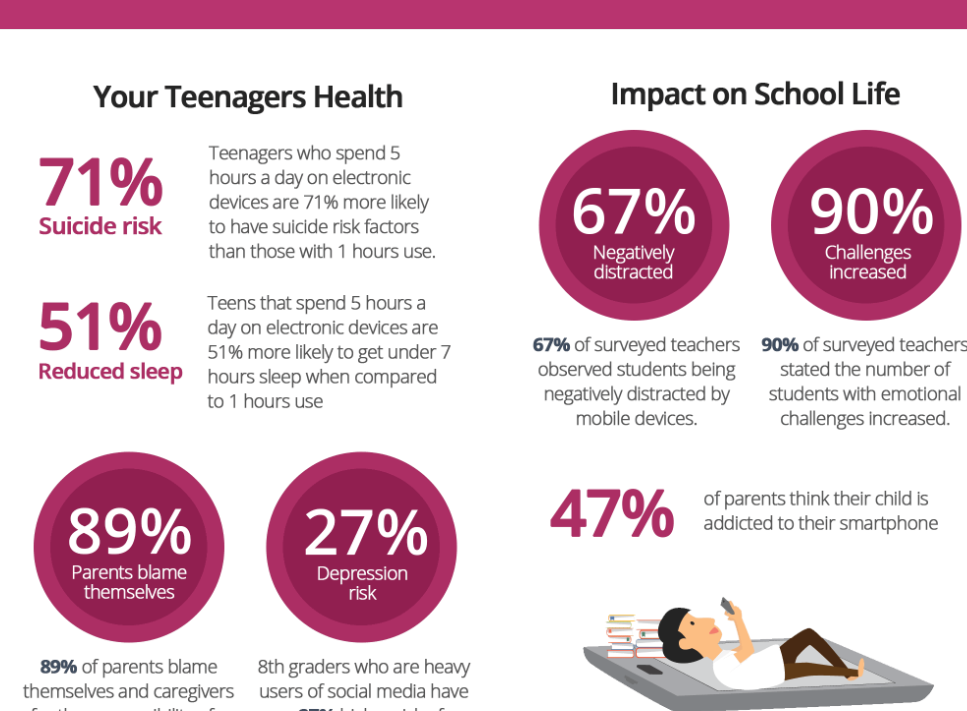
Social media and CCTV cameras have made the schadenfreude more visceral. This past week, a young “social justice” activist, Ryan Carson, was knifed to death on the street by a deranged 18-year-old assailant, as Carson’s girlfriend, paralyzed with shock, looked on. We might once have just heard of or read about this attack. Now we see it as it happens. Its reach might once have been limited by media gatekeepers. Now it can reach millions in a matter of hours on social media. And if you’re Elon Musk and your strategy for Twitter is to make it a more visual, visceral, sticky site, it’s gold. Within hours of Carson’s death, his last, terrifying moments were accessible to millions: a snuff video in all but name, now available to be monetized by gawkers.

And indecent gawkers. “It’s good to make fun of people who support criminals when they get murdered by criminals,” commented one on Twitter. “Ryan Carson took the phrase ‘bleeding heart liberal’ way too literally,” said another. (Carson’s actual heart was pierced by the murder weapon.) Other virtual tricoteuses went after the traumatized bystander: “Ryan Carson’s girlfriend is the Douche of the Week. 1. Showed almost no concern as her guy was murdered. 2. Expressed zero concern as he lay on the ground dying. Didn’t even bend down. 3. Refused to give police the murderer’s description. Soulless Marxist.” Another: “WHAT??? Ryan Carson’s girlfriend … started a GoFundMe page to make money off his death. I would tell her to eat trash but that’s cannibalism.” Or this: “She didn’t react when he was stabbed but she sure didn’t hesitate to raise $50k on go fund me. Makes you wonder.”

Makes you wonder what exactly? Twitter reminds me of Trump: you can’t believe it can go lower — until it always does.

I should stipulate, I suppose, that I doubt I would have been one of Ryan Carson’s favorite writers. His views on crime and policing were, to my mind, hopelessly naive and deeply counter-productive for real social justice. He also once tweeted upon news of Rush Limbaugh’s death — “lmao hell yeah” — and called himself, presumably with a wink, “COO of Antifa.” But many of us have lost our moral bearings in this cold civil war. And Carson was a human being, son of a mother and father, murdered senselessly, traumatizing a whole host of others. In that context, nothing else matters but his humanity. Lambaste his views; but don’t delight in his death even as millions can see his final, deeply vulnerable moments of panic and fear.

The same should be said to the online trolls who went after Josh Kruger, a lefty Philly journalist (and Dish reader) killed in his home this week, and Pava LaPere, a BLM-touting entrepreneur in Baltimore murdered brutally the week before. (I’ll spare you the Twitter comments.) The impulse to use anything to advance a narrative: this is how far we’ve sunk into bitter, vicious tribalism.

And is it me or is Musk’s Twitter obviously making all this worse, putting out more and more videos of street crime, bar fights, robberies, and brawls, often with racial tension fueling them? In our collective psyche there is the problem of mentally ill people committing crimes on the streets, and there is also the problem of everyone constantly seeing videos of mentally ill people committing crimes on the streets. It distorts our judgment; it privileges the vivid and violent over the lucid and peaceful. It normalizes and numbs us to violence and can incentivize it. And this emotive tribal priming makes us more likely to react to the deaths of our political opponents with glee.

QotD: Internet – pro and con

Filed under: Media, Quotations, Technology, USA — Tags: , , , , , , , — Nicholas @ 01:00

I hate to say “it’s a generational thing”, but it’s a generational thing.

Those of us who came of age before Endless September still regard the Internet as a tool. I can do online in two minutes what used to take me two hours in meatspace. For instance, when I first started working full time, I’d have to waste my entire lunch break on the first Monday of every month taking my physical paycheck down to the brick-and-mortar bank, where I’d fill out a bunch of paper to move money around, which I’d hand to a real person who took her sweet goddamn time filing it, and so on. Fight traffic all the way there, fight traffic all the way back, and yeah, that’s a full hour, even when the bank is relatively close. If that bank is closed, or there’s road construction or something, I’d have to spend all Saturday morning doing it, because banks kept bankers’ hours and so I’d better get there and get it done during the three-hour window the brick-and-mortar place was open. And since everyone else on earth was in the same situation …

These days, I’m hard pressed to remember the last time I stepped a real foot inside a physical bank. There’s simply no need. Everything is automatic. Which is convenient, no doubt, but that’s ALL it is: I’ve saved X minutes / hours in my day, which I can use to do other stuff. Other stuff like “see my friends” or “take a walk” or “read a book”. You know, real person stuff. I might read the book online; I might check my email if there’s nothing else to do; but there too the Internet is just a boredom-alleviation tool; something conveniently to hand that passes the time when there’s no other easily accessible way to pass the time.

I would find it inconvenient, sometimes extremely so, to throw the Pocket Moloch in the nearest lake, but the thought doesn’t fill me with dread. Oh, the Net’s down? Shrug.

Not so with the younger generations. I have friends I haven’t seen in weeks, months, years, but when we get together again, it’s like we were never apart, because we met in meatspace and have so much real, personal interaction to fall back on. Younger generations have “friends” they’ve never met in the flesh. Not once. Tell me “Hey, you’re not going to be able to see Tim for a few months” and it’s no big thing. I can still call Tim, or write Tim a letter, or just catch up with him when he gets back, to hear all the cool stories he has. Tell the younger folks “Tim is offline” and they freak the fuck out. Tim is inseparable from the Pocket Moloch in a way we oldsters can only dimly grasp.

They would, I’m sadly sure, prefer to interact with Tim entirely digitally. If you haven’t done it yet, try to find some young people hanging out in a group. It’s actually not the easiest thing to do – which should tell you something right there – but if you manage it, you’ll notice that they spend more time texting than they do talking to each other. And here’s the real kicker: Half the time, they’re texting each other. The same people who are physically right there.

That’s a mentality I can’t begin to grasp. I wonder if it can be broken. I’m not optimistic.

Severian, “Friday Mailbag”, Founding Questions, 2023-07-07.

September 29, 2023

Bored? Lonely? No girlfriend? Mister, you want an AI Girlfriend!

Filed under: Health, Media, Technology — Tags: , , , , , — Nicholas @ 03:00

As discussed earlier, GenZ men live in a sexual hellscape unless they meet statistically unlikely criteria. Many of them turn to alternatives like online gaming and porn … but some are apparently paying for AI Girlfriends:

Apparently ads for AI girlfriends have been all over TikTok, Instagram and Facebook lately. Replika, an AI chatbot originally offering mental health help and emotional support, now runs ads for spicy selfies and hot role play. Eva AI invites users to create their dream companion, while Dream Girlfriend promises a girl that exceeds your wildest desires. The app Intimate even offers hyper-realistic voice calls with your virtual partner.

This might seem niche and weird but it’s a fast growing market. All kinds of startups are releasing romantic chatbots capable of having explicit conversations and sending sexual photos. Meanwhile, Replika alone has already been downloaded more than 20 million times. And even just one Snapchat influencer, Caryn Marjorie, makes $100,000 a week by charging users $1 a minute to chat with the AI version of herself.

Of course most people are talking about what this means for men, given they make up the vast majority of users. Many worry about a worsening loneliness crisis, a further decline in sex rates, and ultimately the emergence of “a new generation of incels” who depend on and even verbally abuse their virtual girlfriends. Which is all very concerning. But I wonder, if AI girlfriends really do become as pervasive as online porn, what this will mean for girls and young women? Who feel they need to compete with this?

Most obvious to me is the ramping up of already unrealistic beauty standards. I know conservatives often get frustrated with feminists calling everything unattainable, and I agree they can go too far — but still, it’s hard to deny that the pressure to look perfect today is unlike anything we’ve ever seen before. And I don’t think that’s necessarily pressure from men but I do very much think it’s pressure from a network of profit-driven industries that take what men like and mangle it into an impossible ideal. Until the pressure isn’t just to be pretty but filtered, edited and surgically enhanced to perfection. Until the most lusted after women in our culture look like virtual avatars. And until even the most beautiful among us start to be seen as average.

September 25, 2023

Something, something “sins of the fathers”, something, something Elon Musk

Chris Bray provides an example of how “mainstream psychosis” has become the new normal, at least among academics and our so-called “elites”:

My argument is not “the news media lies”, or “there’s a lot of misleading discourse”. My argument is that whole overlapping layers of high-status America — in academia, in media, and in politics — are psychotic, fully detached from reality and living in their own bizarre mental construction of a fake world. I don’t mean this figuratively, or as colorful hyperbole. I mean that the top layers of our most important institutions are actually, literally populated by people who are insane, who have cultivated a complete mental descent through the looking glass.

So: Jill Lepore.

Lepore is as high-status as it’s possible to be. She holds an endowed chair at Harvard, she has a Bancroft, and she’s been on the masthead at the New Yorker for almost two decades. She has about as much institutional validation as an academic historian can get. And she just published an essay that wouldn’t be out of place in foot-high crayon letters on the wall of a mental institution.

“What happened to antisemitic rants before social media”, is the actual subhed. You see, before Twitter, people who said that Jews were bad were very marginal, and no one ever listened to them. At the risk of giving away too much personal information, I’m writing this in a bar, and the bartender is giving me some fairly aggressive side-eye over the burst of nervous laughter that I just dropped. Musk’s grandfather was named J.N. Haldeman, and he wrote a lot about how much he didn’t like Jews, and here’s what Lepore has to say about that:

    But Haldeman’s legacy casts light on what social media does: the reason that most people don’t know about Musk’s grandfather’s political writings is that in his lifetime social media did not exist, and the writings of people like him were not, therefore, amplified by it. Indeed, they were very unlikely to circulate widely, and are now quite rare.

Jill Lepore has a PhD in history, and she thinks that antisemitic speech was quite rare before social media. Here’s a link to a non-paywalled version of the essay, and I encourage you to go read it. Otherwise you’re going to struggle to believe me. See for yourself, and then come back and I’ll talk about it.

How, if you want to argue that negative statements about Jews had little reach before social media, do you explain … Jewish history? Why didn’t they have time for the bread to rise, Jill? Before Twitter, screeds against Jews “were very unlikely to circulate widely,” except for, I don’t know, Mein Kampf? We dip the parsley in the salt water to remember the bitter tears of our ancestors, who never faced any antisemitism because it was very marginal and never allowed to circulate widely.

It gets better, though, because Haldeman was born in Minnesota, then raised in Canada, and then moved to South Africa two years after the formal implementation of apartheid. He wrote white supremacist tracts in apartheid South Africa, and Lepore maintains that the reach of his racist literature was sharply limited by the absence of social media. See, it was very rare to be able to read racist views in apartheid South Africa.

Ted Gioia explains why he loves writing for Substack

Filed under: Media, Technology — Tags: , , , , — Nicholas @ 03:00

It’s much easier to reach the audience he wants to share with using his Substack than either Twit-er, er, I mean “X”, or Facebook:

Below I look at some surprising ways Substack has changed the media (and social media) landscape.

This gives me a good excuse to recommend the new Substack app. It’s now my go-to source for informed writing — providing access to a smarter and more diverse group of authors, thinkers, and creators than I’ve found anywhere else.

I’ve now been on Substack for 30 months, and the improvements in the platform during that time have far exceeded my expectations. I didn’t know any music writers on Substack back when I launched, but it now boasts a better roster of critics than any newspaper or magazine. By the way, I’m also subscribing to writers in a dozen or so other fields (culinary arts, economics, literature, finance, technology, psychology, etc.).

I’m a heavy user. I must have signed up for almost a hundred Substacks.

Substack has also added a lot of new features during those 30 months. I especially like Notes, which is similar to Twitter but with extra IQ points. And I’ve also benefited from cross-posting, recommendations, and many other new features. I also applaud options I don’t currently use (like chat and podcasts), because they empower writers and readers.

The reality is that Substack is innovating faster than I can keep up with. But I like it that way. It’s creating an interconnected and independent media ecosystem here.

Best of all are the core values behind all this:

  • Substack supports writers — who receive almost 90% of subscription revenues. This is the exact opposite of the traditional publishing model, where royalty rates of around 10% are typical.
  • I don’t need to attract advertisers, and this frees me from the conflicts-of-interest advertising brings to other platforms.
  • There’s no surveillance or selling of users’ private information here.
  • I share my articles directly with readers, and no algorithm or gatekeeper intervenes to prevent our direct connection.

For these and other reasons, I’ve been an advocate for the platform. And that’s a good introduction to my subject today.

September 20, 2023

“Future Edward Gibbons’ [will] have no problem piecing together precisely how our society went down the toilet”

Filed under: Cancon, Media, Politics — Tags: , , , , — Nicholas @ 04:00

In The Line, Andrew MacDougall finds something good to say about social media:

“Automotive Social Media Marketing” by socialautomotive is licensed under CC BY 2.0

Say what you will about social media, but one unalloyed good is the future Edward Gibbons’ of this parish are going to have no problem piecing together precisely how our society went down the toilet.

Future historians will not only know what happened as we cratered, but, thanks to our ubiquitous digital sketch pads, they will have all of the horrific micro detail. They will know how many times we circled the bowl, what we were saying about circling the bowl as we were circling it and which streaks we were or weren’t arguing about as we went down. Social media is an infinite canvas home to a limitless number of voices and — while we might not be richer for it in the present — our future societal homicide detectives will be forever grateful that we left so many stains to analyze.

For example, when historians consider — as they surely will — whether the moment Canada truly began to crumble was when a WestJet cabin crew allowed Conservative leader Pierre Poilievre to grab the conch and address a planeload of (mostly) Conservative Party of Canada delegates on his way back from a successful party convention, we will have a panoply of voices to consult. From all walks of life and social stations, too. What, for example, did a famous singer like Jann Arden have to say about the whole episode?

Well, thanks to our good friend ex-Twitter we don’t have to guess; we know. And what Arden said was: “Hey @WestJet you and I will not be doing business ever again. This is so ridiculously disappointing.”

In life, I try my best not to be insensitive, but imagine having so little going on that this is considered a good use of your time? Imagine possessing such a delicate constitution that you would rather chain yourself [to] the be-vomited reclining seats of Air Canada than ever fly WestJet again. When you live in Calgary. And what has to be going on to then quote-tweet a bunch of nasty replies and joust with a network of digital cretins, as Arden went on to do. Dozens of them. Who stirs the sewage and then pins the best turds to their page?

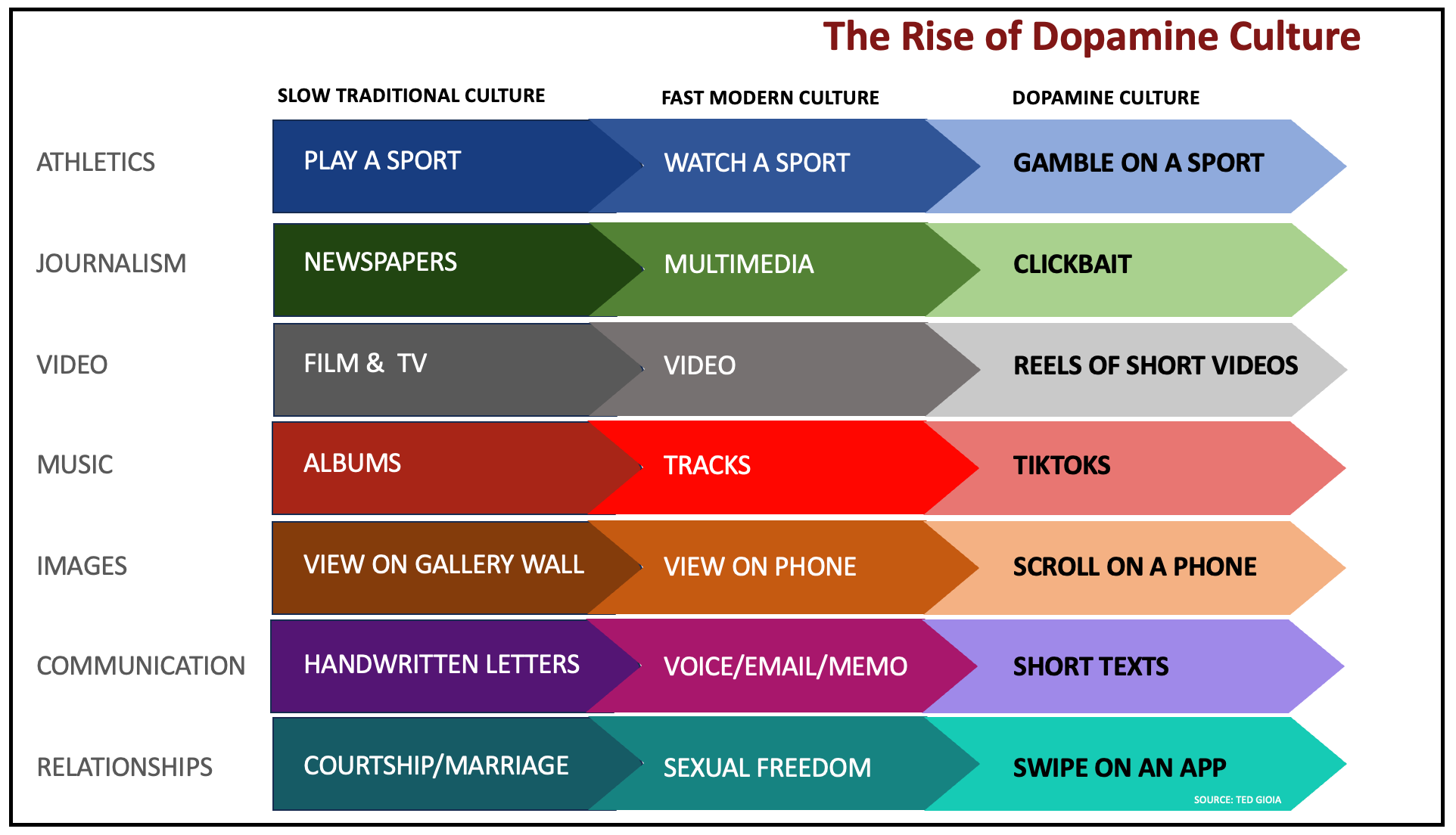
As someone who has spent (far) too much time wasting time on platforms like ex-Twitter, I feel I speak from experience. I’ve picked a fair few fights I didn’t need to pick. Both with randoms, and rock stars. I have fed the trolls and I have done performative tweeting. And you know what I’ve learned? The only people who win are our algorithmic overlords. People like Arden are the modern-day Olds-and-Milner lab mice hammering the dopamine reward button — look at me get likes and retweets! — until they (metaphorically) die.

September 17, 2023

How much mis-, mal-, and dis-information do you encounter on an average day on the internet?

Filed under: Media, Politics, Technology, USA — Tags: , , , , , — Nicholas @ 05:00

I don’t know the answer to that question … although I suspect it’s a pretty big proportion of what you’ll see, especially if you stick to legacy media sites who regularly indulge in cover-up, state propaganda, and outright lies while condemning other media as “conspiracy theorists”. Chris Bray, on the other hand, thinks there are hopeful signs that we’ve passed peak disinformation as the pandemic lockdowns get further behind us:

I’ve been trying to come up with a count: If you consume a typical amount of news media and social media product, how many individual pieces of dishonest, misleading, and calculatedly or ignorantly unreal “information” do you take on board over the course of a typical day?

Walter Kirn’s one-sentence summary of contemporary media is stuck in my head: “This is a world-concealing layer of diversionary and illogical and internally inconsistent noise, under which the world exists somewhere.” How much noise do you have to purge to merely get to zero, not at all informed but not not deeply misinformed? And if you encounter the deep thoughts of Ruth Ben-Ghiat, does the deficit merely double, or is it much worse than that?

Democracy means you must not question or oppose the head of state

I’ve been reading on The Site Formerly Known as Twitter this week that Elon Musk’s refusal to activate the privately owned Starlink network over Crimea is a violation of the Geneva Conventions, which now apparently apply to corporate product, and also high treason, for which Elon Musk should be executed. At the risk of mixing metaphors, it’s like the Internet allows strangers to use your brain as a toilet. Although, as the Twitter randos always end up explaining, I just feel this way because I’M PUTIN’S NAZI BUTTBOY.

All day, every day, 24/7/365 — well, maybe with some breaks for sleep, but only if you stop looking at your phone at night — you take on garbage. Your brain is loaded with information barriers, dressed up as information. You read and hear sentences that are designed to prevent understanding.

September 15, 2023

The old “war of the sexes” has been won decisively by women … and the aftermath won’t be pretty for any of us

Filed under: Education, Health, Media, USA — Tags: , , , , , — Nicholas @ 04:00

I saw an article earlier today in The Free Press on the plight of young men in the dating scene these days (discussed earlier this month here and in July here). In short, men who don’t meet certain arbitrary minimums will have almost no chance with modern women in their age cohort. If you’re not at least six feet tall (males average 5’9″ worldwide), earn at least six figures (US men average under $60K per year), and have a penis at least six inches long (official estimates say American men average 5.1″ to 5.5″), you might as well give up on the dating scene.

Tom Knighton links all that from the Free Press article with some advice for young men on the off-chance they ever do have a date:

First, let’s look at this from Fox News, where a mother laments some of the issues at college with regard to Title IX and rape accusations.

    If my two sons were starting college this Fall I would tell them this: be doubly sure you get consent — for her sake and yours. Maybe even record that consent (how romantic!). Your education and future may depend on it.

    Under Biden’s proposed Title IX rules, if a college student is accused of sexual assault or harassment, he will no longer have the right to a live hearing, to cross-examine his accuser and witnesses, or to be represented by an attorney. Instead, a school administrator can decide to forgo a hearing and weigh the “credibility” of each party on his own, acting as investigator, judge, and jury in the case.

    The standard for determining guilt will also be weakened from “clear and convincing” to a “preponderance of the evidence” — in other words, that there’s a 50.1 percent or greater chance an assault occurred. Not great odds in what are often “he said, she said” cases.

    College students — mainly young men — should be worried. Biden’s Title IX changes are a reversal of rules implemented by the Trump administration in 2020, and a return to the “believe all women” attitude laid out in the Obama administration’s 2011 “Dear Colleague” letter.

This suggests a fraught landscape for young men, many of whom might just decide not to risk it.

As it is, our educational system actually favors women in many ways.

The primary, middle, and high school classrooms are constructed in a way that actually favors the way girls typically learn as opposed to how boys do. As a result, girls tend to get better grades and a leg up on getting into college.

Further, as a protected class, even before the recent Supreme Court ruling, women had a bit of an edge at being accepted to college under affirmative action guidelines, though race did tend to play a larger factor.

Now you’re favoring women’s position in a “he said/she said” environment of sexual assault allegation, even when there’s no other evidence. I say this because I’ve covered these stories off and on for years now. That’s how it happens in a surprising number of cases.

It’s a situation where young men are disfavored and operating at a disadvantage from day one, then it gets worse from there.

Schools often have all kinds of support services for female students on top of the support services open to all students. Guys, however, get no such help.

With all that in mind, it’s not surprising that women graduate college at a much higher rate than men.

The relationship between graduating university and earning a higher salary isn’t as robust as it used to be, but it’s still financially advantageous to have a degree in most careers. More and more women do and fewer and fewer men do. That means more higher-income women are competing for fewer high-status men. That tiny proportion of men benefit disproportionally from their increasing rarity in the dating pool.

Men aren’t graduating college at a similar rate to women? Well, who cares? At least women aren’t being kept out of education.

Men can’t find romantic partners and instead, turn to online porn? Well, who cares? At least women are empowered enough to be picky.

I’m not saying we should dictate anything to do with people’s personal choices, but we could at least start to realize that young men are in crisis mode and that we might want to do something about that before we have real problems.

Then we have the potential decrease in the population as fewer and fewer families are starting and I just don’t see good things happening going forward.

Large numbers of angry young men with no chance at forming relationships with women and generally under- or unemployed? This is not a scenario for a happy or stable future.

September 5, 2023

QotD: “Karl Marx was right after all”

Alas, as my fictional namesake said somewhere, time has a habit of turning all our lies into truths. It turns out Karl Marx was right after all. Who, I ask you, is more cartoonishly evil, more like the caricature capitalist of paranoid Communist fantasies, than Jeff Bezos? Mark Zuckerberg? Tim Cook? Jack Dorsey? Sundar Pichai?

We’re actually living, comrades, in the class-warfare world Marx preached in the 1840s. Everything Marx said about the factory owners of the First Industrial Revolution, that seemed so luridly absurd that even other Socialists criticized him for it, is true of the tech fascists of the Biden-Harris Revolution. Solzhenitsyn cites Russian writers from the late nineteenth century noting that Marxian socialism would end up as nothing more than dialectically-constructed feudalism, and lo, here we are. America in 2021 looks almost exactly like the USSR looked upon Lenin’s death …

… that was 1924, gang, and in case you’ve forgotten, what happened next was a vicious intra-Party civil war, in which Stalin crushed his enemies. AOC makes a pretty unlikely Trotsky, but it’s no less ludicrous than the thought of Nancy Pelosi as Koba … but that’s just the thing, isn’t it? We’ve been noting here for years that the modern Left is dedicated to being the Hollow Men in all things. They’re Revolutionaries without a Revolution — they go on and on (and on and on and on) about fighting the power and sticking it to the Man, even though they, themselves, have been the Man since at least 1974. They’re moralizers without morality — you’ll be scolded for not being as perverse as humanly possible. And, of course, their politics is a cult of personality without the personality — not even Orwell or Kafka could’ve come up with the Party installing an obvious dementia patient as its figurehead, not even if you’d dropped LSD in their tea.

As always — and yes, even in the depths of Stalin’s terror — the real rulers are the nomenklatura, the apparatchiki. Not even Koba the Dread can be everywhere. Being Hollow Men, our Postmodern Leftist masters have decided to dispense with the whole Kremlin thing. Who needs the NKVD, the gulag, the dreaded Lubyanka? The Junior Volunteer Thought Police “fact checking” everything on social media will do it for free, and much more efficiently, at which point their fellow travelers in the banking system will simply cut the badthinkers off. The only reason the gulag persisted after Khrushchev’s “secret speech” was that the Soviets, those fools, wanted to exploit their natural resources themselves, to build things themselves; labor camps were thus integral to the Soviet economy. Our masters don’t care about that, and their masters, the Chinese, certainly don’t. Much more efficient, and psychologically effective, to let the unperson simply starve in the middle of the town square, pour encourager les autres.

But hey, at least we’ll have some fun figuring out who the new Trotsky is. Again, my money’s on AOC — she’s so stupid that she’s bound to do something irrecoverably dumb sooner or later, after which she gets the digital icepick. That’ll be a hoot. Enjoy what parts of the spectacle you can, comrades – if you’re a student of human folly, you’re going to love the next few decades, because Marx was right about that too, the bastard — second time as farce.

Severian, “Marx Was Right After All (on ongoing series”, Rotten Chestnuts, 2021-01-12.

September 3, 2023

Online dating apps

Filed under: Health, Media, Technology, USA — Tags: , , , , , , — Nicholas @ 05:00

The modern dating scene is evidently catastrophic for the majority of men:

After all, dating apps digitally castrate 85 percent of men.

On Bumble, sixty percent of women say they’re looking for a six-foot-tall or taller man. Just 30 percent will drop their requirements one inch lower. Just 15 percent of women would consider a man just one inch shorter than the average 5’9 man. Shorter than that? Your chances fall with each descending inch. Understandably, 80 percent of men lie about their height. Why? Dating apps are merciless, Latin American economies. Most women on dating apps like Tinder and Bumble seek the top 20 percent of men, leaving the rest to compete for a small portion of the dating pool. Reader, I’m not bearing a tall grudge from a short height, I’m six-foot-two.

When I was younger, we used to meet people in person. This antiquated exercise was meritocracy in action.

For the genetically ungifted, that is, the ordinary 80 percent of men, this was the great leveller.

No matter how short or aesthetically unblessed, meeting in person gave all a fair hearing. As the great Christopher Hitchens once wrote, there’s a good reason why men employ humour and why women tend to value a man’s mastery of humour.

Dating apps are anti-merit. Essentially, they provoke a biological feudalism that determines your prospects before you escape the womb.

The 5’9 guy with good humour, high intelligence, seasoned wit, and good manners? Nope.

Social media mutates the ideal into the ordinary. Every man is six-foot-plus. Every woman resembles a Reality TV star: big lips, ballooning bum, bouncing boobs.

In this strange, digital landscape, some porn-addled men use dick pics as a greeting. Three-quarters of women have endured such “greetings”.

Dating apps are a primitive world in which some men say “hello” by showing you their rather ugly organs.

Offline, leery weirdoes masturbating vigorously (Is there any other way?) on the night Tube often end up in jail or in the newspaper. Endearingly, the Daily Telegraph still calls this “performing a sexual act” as if on a stage before a ticket-waving audience and a shrivel of critics.

Reader, I’m no reactionary prude — I’m spiritually French — the only people on earth a majority of whom think adultery is an invigorating hobby rather than a grave sin.

The business of life works better without a screen and an algorithm.

Unsurprisingly, presenting oneself as a product on the “dating marketplace” degrades self-esteem, afflicts mental health, and corrodes our sense of reality. I’m no philosopher, but maybe our burgeoning mental health crisis has something to do with our living as if products on a shelf to be thumbed over by complete strangers.

As Rob Henderson reported last year, the world of dating apps is a hellscape for everyone but the tiny minority of men who get a “swipe right” from vast numbers of women:

Some findings on dating apps:

  • 18 to 25 percent of Tinder users are in a committed relationship.
  • Women aged 23 to 27 are twice as likely to swipe right (“liked”) on a man with a master’s degree compared with a bachelor’s degree.
  • Men swipe right (“liked”) on 62 percent of the women’s profiles they see; women swipe right (“liked”) on only 4.5 percent of the men’s profiles they see.
  • Half of men who use dating apps while in a committed relationship reported having sex with another person they met on a dating app. All women who used dating apps while in a committed relationship reported having sex with another person they met on a dating app.
  • 30 percent of men who use Tinder are married.
  • In terms of attractiveness, the bottom 80% of men are competing for the bottom 22% of women and the top 78% of women are competing for the top 20% of men.

September 2, 2023

The 4% non-solution

Filed under: Business, Cancon, Law, Media — Tags: , , , , , — Nicholas @ 03:00

Michael Geist updates us on the Canadian government’s latest blunder in the Online News Act saga:

The government is releasing its draft regulations for Bill C-18 today and the chances that both Google and Meta will stop linking to news in Canada just increased significantly. In fact, with the government setting an astonishing floor of 4% of revenues for linking to news, the global implications could run into the billions for Google alone. No country in the world has come close to setting this standard and the question the Internet companies will face is whether they are comfortable with the global liability that would see many other countries making similar demands. The implications are therefore pretty clear: there is little likelihood that Meta will restore news links in Canada and Google is more likely to follow the same path as the Canadian government establishes what amounts to 4% link tax from Bill C-18 on top of a 3% digital services tax and millions in Bill C-11 payments.

The estimated revenues from Bill C-18 or the Online News Act have always been the subject of some debate. The Parliamentary Budget Officer set the number at $329 million, using a metric of 30% of news costs for all news outlets in Canada. Under that approach, over 75% of the revenues would go to broadcasters such as Bell, Rogers, and the CBC. The Canadian Heritage estimates were considerably lower, with officials telling a House of Commons committee last December that they expected about $150 million in revenue:

    I won’t speak to the PBO report which is the source of the numbers that you cited. That was not a department-led initiative. The internal modelling that we did when we tabled the bill and mentioned in our technical briefings was more around $150 million impact. That was based again in terms of how this played out in Australia and making some assumptions about how it might play out here. With respect to the PBO report, any questions about that particular number would have to be directed towards them.

By the time the bill reached the Senate several months after that, the number had grown to $215 million.

With the release of the draft regulations, the government has established a formula with an even bigger estimate. The creation of a formula is presumably designed to provide some cost certainty to the companies and represents a change in approach in Bill C-18, given that the government had previously said it would not get involved private sector deals but it is now setting a minimum value of the agreements. Officials told the media this morning that it believes Google’s contribution would be $172 million and Meta’s would be $62 million, for a total of $234 million. However, that may understate the revenues by focusing on search revenues alone. If based on total revenues, with a 4% minimum floor, the requirement would exceed C$300 million for Google. Either way, the number is more than 50% higher than the $150 million estimate the department gave the Heritage committee just eight months ago.

The draft regulations will also provide some additional clarity on several issues. The standard for a digital news intermediary has been fleshed out to include $1 billion in global revenues and 20 million Canadian users. As for the process, those companies subject to the rules are required to conduct a 60 day open call for negotiations. To meet a fairness standard, the resulting deals must be within 20% of the average and cover a wide range of news outlets. Contributions can include non-monetary items but it seems unlikely the resulting deals would grant links significant value. The CRTC would then pass judgment on the deals and determine whether the companies are exempt from a final offer arbitration process. The timing on this includes a 30 day consultation process on the regulations, before they are finalized prior to the December deadline. But with the CRTC not having established a bargaining framework before 2025, the liability issues start arising well before any deals are concluded or approved.

August 24, 2023

“Facebook has made a calculated business decision about the value of its fucks. These fucks are expensive. So they won’t give any.”

In The Line, Jen Gerson fought the good fight as long as she could, but finally had to load up the old shotgun and share both barrels with the participants in the ongoing clusterfarce over the Online News Act (the artist formerly known as Bill C-18):

Look, I’ve largely said my piece on the Online News Act: it’s poorly conceived legislation that risked terrible outcomes. It’s pointless, now, with those terrible outcomes unfolding, to say “I told you so”.

But the response to the news that Meta has decided to continue blocking news — even in the face of devastating wildfires in B.C. and the Northwest Territories — has been such disingenuous dumbfuckery from every corner that I have failed to bestill my cursed fingertips.

Let’s start with this quote from Prime Minister Justin Trudeau, who at a recent press conference, said: “Right now in an emergency situation where up-to-date local information is more important than ever, Facebook’s putting corporate profits ahead of people’s safety, ahead of supporting quality local journalism … This is not the time for that”.

Wait, a major global corporation that has been labelled as actually literally evil by both progressives and conservatives in recent years is putting its own profits and self-interest ahead of the priorities and values of politicians and pundits?

Sir, surely thou art in jest.

Is this government only now figuring out that major global corporations exist to extract profits; that whatever social corporate responsibility roles they may choose to enact, they aren’t a public service? Is Trudeau shocked — shocked, I say! — to just this very moment discover that Meta isn’t actually some combination of the Red Cross and Reuters?

I mean … welcome to the adult world, I guess, and please leave your copy of Adbusters near the coat check at the door.

But if Meta is as evil as all that, why did so few politicos or pundits anticipate that the company would follow through on its explicit threat to block news if C-18 were passed? This is like watching an Allied general who says: “I think these Nazi fellows are the baddies!” and then gets flustered when the guys with skulls on their caps pull out their guns and start shooting in the midst of afternoon trench tea. “Well, I never. That’s hardly sporting!” This is some Black Adder comedy, friends, and we may be on the side of the angels, but our angels also happen to be a little slow in the head.

Oh, but surely Meta wouldn’t block news to put their own self interest “ahead of people’s safety”, hmmmm?

With advance apologies, but is our antipathy toward Meta so intense that we’re going to straight-face pretend that AM radio, FM radio, emergency text alerts and broadcasts, municipal and provincial emergency websites, formal and informal social media networks and chat groups, and local news broadcasts with websites that can be accessed directly through web browsers all just ceased to exist, simultaneously, the very moment that CBC stopped being able to post news links to Instagram?

If Facebook is actually putting lives in danger, that’s an admission of impotence and incompetence from our entire communications infrastructure, including government, private and public media. It is an incredible and embarrassing self-own.

August 19, 2023

“Twitter used to work well, but now he receives negative comments, which means that it has stopped working”

Filed under: Media, Politics, Technology, USA — Tags: , , , — Nicholas @ 03:00

Chris Bray on the claims that Twitter, er, I mean “X” is broken from people who are suddenly being exposed to unfriendly opinions that the old platform used to kindly keep out of their very comfortable bubbles:

The Democratic Party’s go-to election lawyer, Marc Elias, is disturbed by the decline of Twitter:

Twitter used to work well, but now he receives negative comments, which means that it has stopped working. People can criticize him and express disagreement, so the platform is broken. If it worked, he would only be praised.

“Epistemic closure” had its pet rock moment in 2010, as the news media looked back on the George W. Bush years and the Iraq War and concluded that American neoconservatives had simply lost their ability to think.

[…]

It was supposed to mean this:

    It’s rather about information, and what counts as evidence about the real world … if one only gets information from a narrow set of sources that feed back into each other but do not engage beyond themselves, that one will have a closed mind … regardless of what one does with that information.

And this:

    Epistemic closure is a fancy term for the practice of defining – or redefining – reality in ways that support your pre-existing ideological preferences. Most of us think of it as “creating and living in a bubble”.

It was a fair enough point, as Bush watched sectarian brutality continue in post-Saddam Iraq and kept drawing the conclusion that everyone everywhere really yearns for democratic pluralism, honest elections, and a free press.

But that era’s epistemic closure is bush-league — sorry — compared to the sealed-in-a-jar-in-a-closed-box-in-a-deep-cave closure of the “mainstream” mind in 2023. If you’ve been on social media since roughly the night of November 8, 2016 and you’ve expressed disagreement with a politician, academic, or media figure, you’ve been a Russian bot, and Putin told you to say that. Criticism of institutions can’t simply arise from authentic grievances, or even from an authentically felt but misperceived grievance; rather, criticism is an op, a calculated string-pulling effort by manipulative forces. The far-right Putin-aligned Nazi grifters are tricking you into believing that you’re unhappy with the Biden administration. Your brain has been fooled by cognitive warfare, see?

August 13, 2023

Don’t worry about losing all your news links, citizen! The Liberal government’s Ministry of Propaganda will tell you everything you need to know!

Filed under: Business, Cancon, Government, Law, Media, Politics — Tags: , , , , — Nicholas @ 05:00

The federal government still seems shocked and a little bit hurt that the “tech giants” are carefully obeying the letter of their new Online News Act instead of pumping millions of dollars into government-favoured media outlets. How dare Alphabet and Meta obey the law we wrote? We wanted to soak them for bribes subsidies to give to legacy corporations who can be depended upon to cheerlead our agenda!

Blocking of news links on Facebook and Instagram in Canada has becomes increasingly widespread in recent days, leading to a growing number of public comments from media outlets and reporters expressing surprise or shock about the scope of the link blocking. Indeed, outlets with blocked links include university student newspapers, radio stations, and foreign news outlets. While there may have been some errors (Facebook has a page to seek review of any blocked link decision), the inclusion of a very wide range of Canadian and foreign news outlets is no accident. Rather, it reflects the government’s Bill C-18 approach, which effectively covers all news outlets worldwide whose links are accessed in Canada. The Canadian government could have adopted a more targeted approach – for example, limiting the scope to news links from those news outlets eligible to negotiate agreements with Internet platforms under the law – but it instead went for the broadest possible approach that includes foreign news outlets with little or no connection to Canada.

Understanding why Bill C-18 covers news links from outlets who are not “eligible news businesses” under the law requires unpacking several provisions. First, start with the definition of a “digital news intermediary”, which states:

    digital news intermediary means an online communications platform, including a search engine or social media service, that is subject to the legislative authority of Parliament and that makes news content produced by news outlets available to persons in Canada. It does not include an online communications platform that is a messaging service the primary purpose of which is to allow persons to communicate with each other privately.‍ 

This definition is critical since the only companies that are subject to Bill C-18’s requirement to negotiate agreements with news outlets are (1) those that qualify as DNIs under this definition and (2) meet the requirements found in Section 6 on a significant bargaining power imbalance. The absence of significant bargaining power imbalance is why companies such as Twitter, Microsoft or Apple are not subject to the law. That leaves Google and Meta, provided that they qualify as DNIs. The key phrase in the qualification requirement is that the companies “make news content produced by news outlets available to persons in Canada”. If the companies do not make news content produced by news outlets available to persons in Canada they are not DNIs and are not subject to the law.

[…]

… the government’s choice was to try to bring Meta and Google into the scope of the law by virtue of any news links to any news outlet anywhere in the world, even if those outlets have nothing to do with Canada or with the Bill C-18 system. Given Meta’s stated goal of complying with Bill C-18 by removing links to news content that would render it a DNI, the government’s legislative choice of covering all news links from all news outlets therefore effectively requires it to block all of those news links.

It takes a lot to make Google, of all companies, a sympathetic victim … yet Canada’s awesomely awful Liberal government aced it. Bananada strikes again!

« Newer PostsOlder Posts »

Powered by WordPress