
The problem with most politicians is when they enact a law, they seldom ask, “Then what?” They assume a world of what economists call zero elasticity wherein people behave after a tax is imposed just as they behaved before the tax was imposed and the only difference is that more money comes into the government’s tax coffers. The long-term effect of a wealth tax is that people will try to avoid it by not accumulating as much wealth or concealing the wealth they accumulate.
Walter E. Williams, “Let’s Not Waste a Crisis”, Townhall.com, 2020-05-12.
October 15, 2025
QotD: Taxes in a zero elasticity world
Comments Off on QotD: Taxes in a zero elasticity world
October 14, 2025
QotD: The trade in fake doctor’s notes
A reporter for the Daily Telegraph newspaper managed to obtain a certificate from the company to excuse him from work for five months, because he claimed (falsely) to be suffering from the long-term effects of COVID. He obtained the note without providing any medical evidence whatsoever.
The only thing that surprised me about this was that anyone thought that it was necessary in Britain to buy or pay for such a certificate. I thought of the famous lines of Humbert Wolfe, the otherwise all-but-forgotten England man of letters:
You cannot hope
to bribe or twist,
thank God! the
British journalist.
But, seeing what
the man will do
unbribed, there’s
no occasion to.The same might almost be said of British doctors, many of whom, I suspect, issue such certificates incontinently, for one of two reasons: fear of their patients, and sentimentality.
Not surprisingly, doctors do not like unpleasant scenes in their consulting rooms, and refusal of requests for time off sick can easily lead to such scenes, and occasionally to threatened or actual violence.
Naturally, no doctor likes to think of himself as a coward, the kind of person who caves in to such threats. The best way to avoid so humiliating a thought is never to risk having to think it, that is to say by granting the patients’ wishes in this matter immediately.
But in order to do this without feeling self-contempt, it is necessary to rationalize, that is to say to find supposed reasons for why everyone who wants a certificate should be given one. The English philosopher F.H. Bradley once said that metaphysics is the finding of bad reasons for what we believe on instinct, adding however that it was a human propensity to do so. In like fashion, we could say that doctors find bad reasons for giving sick certificates when they suspect that not to do so might lead to a confrontation with a patient.
Thus they convince themselves that if a person tells them that they are unfit for work, for whatever reason, it would be wrong to question it. No one would make a claim to be unable to work unless he were in some way discontented, unhappy, depressed, anxious, stressed, in a word suffering, and it is the object of doctors to reduce human suffering.
The doctor is aided in this train of thought by the looseness of psychiatric diagnosis, so that practically all forms of distress can be fitted into the procrustean bed of diagnosis. Even outright faking can now be construed as an illness or disorder, provided only that it goes on for long enough or is deceptive enough.
Does this mean that the patients seeking sick notes are all faking it? The matter is more complex than this would suggest. There is, of course, conscious, outright fraud, but this is comparatively rare. Just as doctors don’t like to think of themselves as cowards in the face of their patients, so patients don’t like to think of themselves as frauds.
Distress can be conjured out of almost anything and is not necessarily proportional to whatever causes it. Dwelling on the ill treatment one has suffered — and who has not suffered ill treatment at some time in his life? — can magnify something minor into something major, to the point at which it seems almost to have ruined one’s life. And it is certainly capable of rendering a person unfit for work in his own estimation — though in fact continuing at work would be a remedy for, rather than an exacerbation of, the problem.
However, where economic loss is not too severe when stopping work on medical grounds is possible, medical grounds will be both sought and found. In the days of the Soviet Union, the workers had a saying: “We pretend to work, and they pretend to pay us.” In our kinder and more enlightened societies, we pretend to be ill, and they pretend to treat us — except that the word “pretend” does not quite capture the subtlety of the transactions between doctor and patients.
Theodore Dalrymple, “Make Me Sick”, New English Review, 2025-07-04.
Comments Off on QotD: The trade in fake doctor’s notes
October 12, 2025
QotD: Male privilege revealed
Vincent described herself as a “bull dyke” and held strong feminist views. She expected, throughout the course of the experiment to uncover the secrets of male privilege and the societal advantages that, she was sure, are afforded to men. She anticipated that living life as a man would validate her beliefs that men lead easier lives and wield unchecked power. She figured that, at the very least, she could enjoy a couple of years as a powerful male.
Vincent disguised herself as a man by getting a new hair style and giving herself a fake five o’clock shadow, among other things. She had always been considered rather masculine in her usual feminist and lesbian circles, so she figured she could pass rather easily as a man, if perhaps a slightly effeminate one. She was right.
Her initial assumptions changed when Vincent discovered that men, contrary to her expectations of power and privilege, face their own unique set of pressures and struggles. Men, she discovered, were expected to suppress any signs of vulnerability. This quickly led to feelings of extreme isolation that she did not expect. Nobody “had her back” because, as far as they knew, she was just a man, and should “man up”. She quickly realized that men do not have inherently easier lives. Her preconceived notions of in-born male advantage evaporated. She was getting worried.
She realized that women do not have empathy for the struggles of men.
Norah, as Ned, experienced the behavior of women toward men firsthand. At one point, she tried dating women as a man. She figured this would be incredibly easy for her. Not only was she a woman herself and knew how women think, but she was also a lesbian and already liked women. She worried at first that she’d be too good at it and would have to tell interested women that she was a woman to stop them from pursuing her.
The reality was sharply different from her expectations. Her apparent femininity came across as her simply being an effeminate man. This caused women to be disinterested in her and their rejections were dismissive, cold, and often extremely brutal. Women would sometimes treat her with suspicion or outright hostility as they assumed her intent was negative.
These interactions eventually led Vincent to start developing misogynistic thoughts. That’s right: women treated her so poorly when they believed her to be a man that she started to develop misogynistic thoughts.
Interestingly, many of the supposedly straight women she had attempted to date, even those who had been brutal and cold toward her, immediately expressed interest in a lesbian “hook-up” when she told them she was a woman who had been disguised as a man for the sake of journalism.
Perhaps there’s no such thing as a “straight woman”. Is there even a such thing as a lesbian?
CTCG, “UNDERCOVER: A Feminist’s Year Living as a Man”, Codex Trivium Cosmic Genesis, 2025-06-16.
Comments Off on QotD: Male privilege revealed
October 7, 2025
An unexpected Gen Z “influencer” – Shakespeare
Ted Gioia describes the plight of a young man who had to move home after college and falls into a state of depression thanks to his hopeless situation and his dysfunctional home and social life. His name is Hamlet:
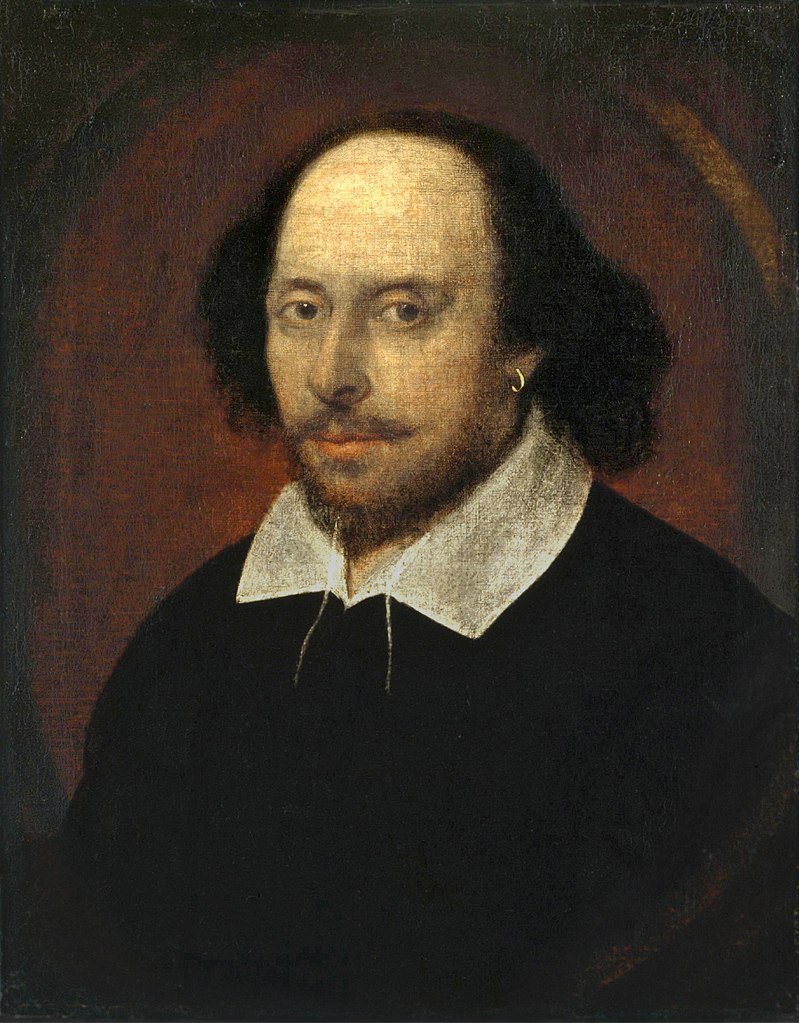
This was long thought to be the only portrait of William Shakespeare that had any claim to have been painted from life, until another possible life portrait, the Cobbe portrait, was revealed in 2009. The portrait is known as the “Chandos portrait” after a previous owner, James Brydges, 1st Duke of Chandos. It was the first portrait to be acquired by the National Portrait Gallery in 1856. The artist may be by a painter called John Taylor who was an important member of the Painter-Stainers’ Company.
National Portrait Gallery image via Wikimedia Commons.
It’s almost uncanny how relevant it feels right now.
So if I were directing Hamlet in the current moment, I’d give the title character an iPhone and game console. I’d have the characters onstage share photos on Instagram — and put up a big screen so the audience could see them posted in real time.
Hamlet could add pithy captions to his social media images. What a piece of work is a man! or maybe The lady doth protest too much!
Yes, Hamlet is many things, but one of them is, perhaps, a failed influencer.
Along the way, we may have answered the classic question about this play. For generations, critics have wondered why Hamlet wastes so much time, and can’t be bothered to take action.
Maybe he’s just too busy gaming and scrolling.
Okay, it sounds ridiculous. But is it really? Shakespeare possessed tremendous insight into the human condition — perhaps more than any author in history. So maybe he really did grasp the dominant personality types of our own time.
The Prince of Denmark still walks in our midst. And maybe — just maybe — careful attention to this play might help us, in some small degree, to heal the Hamlets all around us. Their number is legion.
Of course, the larger reality is that Shakespeare has proven himself relevant to every time and place. We can see that easily be examining how other generations viewed this same play.
Hamlet‘s original audience, four hundred years ago, clearly enjoyed the spectacle of violence and adultery. Nine key characters die during the course of the play — most of them murdered. Audiences loved these kinds of dramas back then, and Shakespeare always knew how to please the crowd.
But more sophisticated viewers, circa 1600, would have seen Hamlet as a political commentary — a reflection of all the tensions and rivalries of Elizabethan England. Nobody knew better than Shakespeare that monarchy is a dangerous game, and he always looked for opportunities to refer to current events in roundabout ways.
But two hundred years later, the Romanticists were in ascendancy, and they saw Hamlet as a very different kind of play. They ditched the politics, and embraced the Prince of Denmark for his pathos and personality. They tapped into the intense emotional currents of Shakespeare’s heroes — and the plays seemed perfectly suited for this kind of interpretation.
It’s no exaggeration to say that Hamlet continued to change for each new generation. He always feels timely and relevant.
A hundred years ago, critics began grappling with psychology and the unconscious — and Hamlet was a perfect character for these kinds of interests. In his 1900 book The Interpretation of Dreams, Freud focused on Hamlet as a case study in repression.
And who could disagree?
But fifty years later, Hamlet changed again. It now was the perfect play for those who had survived World War II. Jan Kott insists, in his book Shakespeare, Our Contemporary, that these old plays were more relevant than ever during the Cold War — just as timely as Beckett or Sartre or Brecht or Ionesco.
Comments Off on An unexpected Gen Z “influencer” – Shakespeare
October 4, 2025
Rapid onset gender dysphoria (ROGD)
At Woke Watch Canada, Igor Stravinsky tells the story of “Jane and John”, a distressing tale of rapid onset gender dysphoria:
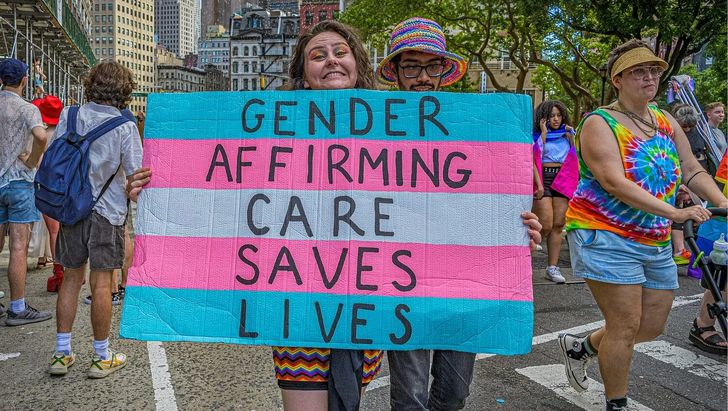
Image via the Boston Medical Center
In Ontario elementary schools, students are taught that whether you’re a boy or a girl is not determined by your physical body. Kids are encouraged to “explore their identity”. You may have a girl’s body. But how do you feel about it?
These kinds of discussions are going on because schools have accepted what rational people call “gender ideology”, but I prefer the term “gender mythology” because an ideology usually has to do with political systems. In my view the idea that a person’s sex is unrelated to their physical body, that they have a kind of soul sex, if you will, is clearly a myth.
[…]
Jane and John
This is a true story. The names have been changed to protect the privacy of this person.
Jane was a happy, clever, talented, and expressive girl who always wanted to help others. She displayed precocious empathy and enjoyed teaching younger kids various skills. Jane became socially conscious at an early age and was bothered by the fact that she enjoyed a middle-class, Western quality of life while so many others were clearly struggling. As an elementary student, she canvassed her neighbourhood collecting donations for disadvantaged kids. She came to identify with groups she saw as persecuted or oppressed.
Her school was very racially diverse, but she did not observe much racial discrimination. What she did notice was a fair bit of homophobia. She quickly took every opportunity to be an ally to the LGBT cause. In her middle school, there was an LGBT club, which she joined. Jane would often arrive home from school in an angry state because another student had said something that upset her, like, “being gay is a sin”, for example.
Jane’s parents were progressives who made it clear that she would be loved and accepted if she were a lesbian. Jane laughed at that and replied that she “dreamed about boys”.
Jane was a high achiever who was active in athletics and music. At 16, she became a vegan. She was in most ways a typical high school student, but her allyship with LGBT people gradually moved towards activism.
At university she quickly gravitated towards Indigenous and Gender Studies. Her close friends were all LGBT people. Her best friend was a transwoman (a man who identified as a woman). Jane came out as “bisexual” but her main romantic relationship was with a man.
Then, abruptly at the age of 20, she announced to her parents that she was to be called “John” and that she was going to transition to male.
By her own admission, Jane had been perfectly happy as a girl/woman for 20 years- “until I wasn’t”. This does not fit the Gender Mythology narrative. There is simply no way you can reasonably argue that she had, at this late age, suddenly realized what she truly was. She herself did not even claim that. So, what happened?
[…]
It was pretty obvious to me that Jane’s “transition”, like [trans-race activist Rachel] Dolezal, was the result of a combination of personal qualities and social influences. All the stars aligned to point her in that direction. She desperately wanted to be part of the community she had connected with and was tired of just being an ally. Claiming to be bisexual did not really cement her position as an insider. But becoming trans was her ticket.
Due to the extreme nature of taking on that identity — lifelong drug regimens and a number of surgeries, all of which presented serious health risks, going down that road reflected a true commitment and not only made her a part of the LGBT tribe but catapulted her to the top of the hierarchy.
What Jane experienced is known as Rapid Onset Gender Dysphoria (ROGD) and was first identified by the physician/researcher Lisa Littman. Learn more about it here. If you want to get a 2SLGBTQ++ (plus whatever other letters and numbers they’re using now — I can’t keep up) activist spitting mad mention ROGD. The phenomenon proves beyond a reasonable doubt that gender dysphoria can be induced in vulnerable people by social circumstances and aligns well with the research and clinical practice of Dr. Kenneth Zucker from the Centre for Addiction and Mental Health (CAMH) in Toronto.
Zucker ran the clinic for some 20 years and was pushed out due to his refusal to accept “affirmative care” as the only acceptable treatment for gender dysphoria. Zucker found that about 80% of kids would eventually grow out of their dysphoria and thus did not believe in affirming kids’ identities but rather focused on helping them cope with their condition.
Since affirmative care (an oxymoron!) has been adopted, we thus know that 80% of the kids who have been put on the road to gender transitions (and most carry through to the end) would have seen their gender dysphoria dissipate naturally over time. But once the first step — puberty blocking drugs, is taken, kids almost always go on to cross sex hormones and many continue with various surgeries.
Gender clinics do not do follow up nor do they support de-transitioning, but it is clear that the number of young people out there who have seriously harmed themselves through “affirmation” treatments is significant, and more harm is being done day by day as long as affirmative care remains the standard treatment for gender dysphoria.
Comments Off on Rapid onset gender dysphoria (ROGD)
September 29, 2025
Screen addiction – “No drug cartel makes as much money as the screen-and-app companies”
Ted Gioia on the eight things about screen addiction that David Foster Wallace tried to warn us about before he took his own life in 2008:

Those same youngsters are now showing up on college campuses, and we can begin to gauge the societal impact of a screen-driven life. It ain’t pretty.
So this is a good time to revisit what Wallace tried to warn us about thirty years ago. He was ahead of his time in the worst possible way, experiencing firsthand all the debilitating symptoms that now plague millions.
That’s why his writings feel so eerily contemporary. They read like commentaries on what’s happening right now.
Of course, Wallace knew very little about the Internet — he deliberately avoided it. He also refused to own a television. He understood how susceptible he was to screen addiction, and took drastic steps to reduce his exposure to all screens.
But he wrote about it — most tellingly in his huge novel Infinite Jest. The title refers to a film that is so addictive that people who watch it can’t stop. They literally watch it to death. It’s an infinite diversion, much like the endless scrolls on today’s social media apps.
He returned to the topic in his final book The Pale King, and also discussed it in interviews and essays. I’ve read through all of these including more than thirty interviews with the author. These allow me to put together a point-by-point summary of what Wallace tried to tell us.
We ignore his warnings at great risk.
(1) Screen technology will cause a crisis of loneliness, especially among young people.
In almost every interview, Wallace eventually talks about loneliness. It was a looming crisis, he insisted. But he was one of the first to link this to the ways we divert ourselves via screens. […](2) This will lead to widespread depression.
Wallace also knew this firsthand. He suffered intensely from depression. His inability to find a suitable treatment led to his suicide in 2008. […](3) This will also happen at a larger scale. Society will grow more fragmented and disconnected.
As each person falls into an isolated relationship with a screen, larger communities begin to fray. Wallace anticipated a “new vision of the U.S.A. as an atomized mass of watchers and appearers”. […](4) Screen technology promises to liberate us, but the reality is that it controls us for the benefit of others.
The most dangerous part of the screen entertainment is the illusion that it serves us. But the reality is that we actually serve tech platforms and their advertisers. […](5) The people who control the technology work to hide their purposes and goals.
“They’re trying to lock us tighter into certain conventions, in this case habits of consumption,” Wallace told Larry McCaffery in 1993. “This is McLuhan right? ‘The medium is the message’ and all that? But notice that TV’s mediated message is never that the medium is the message.” […](6) Our survival will depend on our ability to remain independent of these forces.
If we abandon ourselves completely to the tech (as many now do), we become pawns in the corporate agenda to monetize us — at a tremendous cost in loneliness, depression, and social disconnection. […](7) We don’t have many tools, but kindness and compassion will be the starting point.
We need to replace irony, sarcasm, and cynicism — which have contributed to our self-debasement — with softer, gentler attitudes. Cynicism is useful in criticizing, but is impotent when we need to build something better. Irony only destroys, never builds. […](8) Art can help us heal.
He wrote his big books with the hope that they would help us find a way back to a more caring and connected world — but connected via people, not screens. […]
Comments Off on Screen addiction – “No drug cartel makes as much money as the screen-and-app companies”
September 26, 2025
QotD: Men and women
H.L. Mencken, In Defense of Women, 1918.
Comments Off on QotD: Men and women
September 25, 2025
“Intentionally elevating strangers above ourselves, xenophilia, is artificial”
In Aporia, Spaceman Spiff explains the function and value of what are called “dead man’s switches” both for railway locomotives and societies:
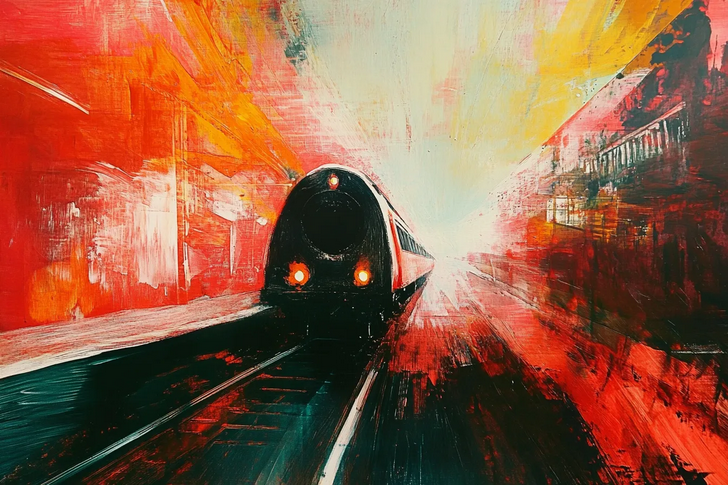
Image from Aporia
A dead man’s brake is a safety feature found in dangerous machines such as lifts or trains. With this mechanism, a brake is always on, preventing action or movement. A conscious choice or effort must be made to override it.
On a train, a human driver must be present to depress a foot pedal that disengages the brake so the train can move at all. If he is absent the train cannot move. If he withdraws his foot while the train is in motion — if he dies, for instance — the train stops. Hence the name.
The key feature of a dead man’s brake is that it requires energy to operate. Its default zero-energy position is OFF; only with energy can it go to ON.
Wariness of strangers, xenophobia, is the default position for most human beings. This is a hardwired evolutionary response to protect us. It served us well. It requires no energy to operate. Children quickly point out people who seem different.
Intentionally elevating strangers above ourselves, xenophilia, is artificial. We must be educated to make it happen, and explicitly taught to overlook differences. It must be reinforced to remain in operation as our instincts typically push against it.
This requires energy. In parts of the world not subject to Western educational norms, they do not teach it to children. Consequently, they do not usually adopt policies like mass immigration or asymmetric multiculturalism.
It is worth noting that xenophobia denotes a wariness of strangers, not hatred or disdain of them. In practice, our working assumption is people different from us may be a threat, and our actions should reflect this until proven otherwise.
Xenophobia is not the racial animosity the propaganda wishes us to believe, such as harming others based on visible differences like skin colour. Such extreme views are in fact rare. The underlying drive of xenophobia is caution, not aggression. Xenophilia attempts to ignore this sensible restraint, which is why it often fails without external pressure.
These instincts are deeply embedded within us because a cautious approach is a strong foundation upon which to preserve our lives and our cultures. It is the reason we have a nation and a culture in the first place.
Xenophilia, then, is a dead man’s brake. It requires energy applied to something that would not typically occur in nature. It makes us ignore differences in order to get along. Or so the theory goes.
Update, 26 September: Welcome, Instapundit readers! Please do have a look around at some of my other posts you may find of interest. I send out a daily summary of posts here through my Substack – https://substack.com/@nicholasrusson that you can subscribe to if you’d like to be informed of new posts in the future.
September 22, 2025
Materially well-off but downwardly mobile
Rob Henderson considers the plight of an entire generation of kids raised in privilege, but economically incapable of improving or even barely maintaining their material condition … the downwardly mobile children of wealthy parents:

“Free Palestine/Anti-Israel protest” by Can Pac Swire is licensed under CC BY-SA 2.0 

 .
.
For generations, Americans assumed that their children would live better than they did. Today, that assumption no longer holds. In fact, the higher your parents’ income, the less likely you are to match it.
According to The Pew Charitable Trusts, fewer than four in 10 children born into the richest fifth of households stay there; more than one in 10 fall all the way to the bottom fifth. Similarly, a 2014 study in The Quarterly Journal of Economics found that while 36.5 percent of children born to parents in the top income quintile remain there as adults, 10.9 percent fall to the bottom quintile.
Sociologist Musa al-Gharbi, in his 2024 book, We Have Never Been Woke, argues that this downward mobility of children born into wealth is the psychological engine of contemporary politics. This may look like a trivial problem — the petty disappointments of a small slice of America — but the unhappiness of this group, raised to expect the world and denied it, has outsize consequences.
To be clear, this cohort has never faced genuine poverty. Still, they have experienced the sting of loss: They came of age after the Great Recession, watched job security fade as the digital economy made their skills obsolete, and learned that highly coveted jobs in academia, media, and politics were far fewer than promised. These disappointments, al-Gharbi writes, helped power the Great Awokening. Many disillusioned strivers aimed their anger at the system they believed had failed them, and at the lucky few who did manage to retain or enhance their class position.
Unlike the working classes they so often claim to represent, these downwardly mobile elites remain armed with the tools of their upbringing: degrees, contacts, cultural fluency. They may no longer have the bank accounts their parents did, but they retain platforms in media, academia, and politics through which to broadcast their grievances. Given these advantages — or perhaps the right word is privileges — it should come as no surprise that their concerns, which seem to the average American profoundly niche, have dominated the cultural conversation.
Some of this downward mobility is voluntary. Al-Gharbi notes that many young, college-educated people would prefer “to be a freelance writer or a part-time contingent faculty member rather than work as a manager at a Cheesecake Factory”. The dream is artistic freedom and flexible work. The reality is disillusionment when prosperity does not follow.
Such disappointment isn’t totally new. George Orwell’s Keep the Aspidistra Flying follows a Cambridge-educated poet who abandons his advertising career, squanders his inheritance, and slides into genteel poverty. HBO’s Girls replayed the same theme for a new generation: Brooklynites with cultural capital but precarious incomes, simultaneously privileged and resentful. The details change, but the shape of the story remains the same — raised in affluence, buoyed by expectation, they discover too late that their choices and the system cannot sustain them.
What is different today, however, is how the disillusion now manifests itself. When reality disappoints those raised in privilege, the gap between expectation and outcome produces rage. Behavioral economics has long recognized this dynamic: Satisfaction depends less on objective conditions than on whether outcomes match or exceed expectations. And today, those expectations are far from being met.
Two years before Girls ended, sociologist Lauren Rivera, in her book Pedigree, found that graduates of lesser-ranked colleges who landed jobs at elite firms were far happier than Harvard and Stanford graduates who landed the same jobs. The reason was simple: Those jobs exceeded the expectations of the former, while for the latter they fell short. The higher the expectation, the sharper the disappointment. The harsh reality, then, is that privilege itself can encourage feelings of decline. When you’re born to — and surrounded by — overachievers, even respectable achievements can feel second-rate.
In a 2018 study, Duke sociologist Jessi Streib explored why many middle-class kids falter in school and work. Her finding was counterintuitive: Entitlement often dragged them down.
It’s not too hard to see why. Success in school requires showing up, meeting deadlines, and tolerating authority. Success at work requires completing projects on time, absorbing criticism, and cooperating with colleagues. Yet the downwardly mobile, Streib found, were often convinced such requirements were beneath them. Their grandiosity and defiance hastened their slide.
Elite overproduction is real, and has real world ramifications …
Comments Off on Materially well-off but downwardly mobile
September 21, 2025
QotD: Herbert Hoover, an epitaph
But he won anyway. He started from a measly few million dollars and beat out Rockefellers and Carnegies to become the most successful philanthropist in early 20th century history. Whyte’s estimate of 100 million lives saved seems much too high; there were only 100 million people in Europe total during the relevant period. But even during his own time, people universally credited him with saving millions. And he did it again and again and again. I didn’t even have space to talk about the time he saved the Southern United States from a giant flood, or half a dozen other impressive accomplishments. Maybe the rules are wrong. Maybe all of this stuff about how authoritarian approaches never work, and you need to let the people you are helping lead the way, is all just modern prejudices, and putting a brilliant and very rich engineer in charge of a hypercentralized organization is just as good as any other way of doing things.
But even this I find less interesting than his psychology. He combined a personal callousness with a love for all humanity. When he was inspecting mines in Australia, he fired the worst-performing X% of workers. One worker begged him to reconsider – he had a family to support. Hoover raised $300 for the man’s family – a lot of money at the time! Probably more than Hoover made in a month! – but fired him anyway. In 1932, when the Bonus Army marched on Washington, Hoover was adamant that he would not give these men – poor, starving veterans – a single cent more than they were entitled to by their existing benefits. But he also instructed his staff to go around to their encampments and give them food and supplies in secret.
Sometimes his stubborness calls to mind the fictional Inspector Javert, who refuses to bend the law for any reason. In this model, Hoover sympathizes with everybody, but his honor forbids him to bend the rules in favor of underperforming employees or protesters who want more than their contracts entitle them to. But this picture of a hyper-honorable Hoover crashes into his constant willingness to lie, cheat, and bend the rules in his own favor. Sometimes his lies are for the greater good, like when he tells Britain that Germany is preparing to feed Belgium. Other times they seem entirely selfish, like his various Chinese mining scams. The best that can be said about Hoover is that if he decides a principle is involved, he sticks to it.
And this is actually really good! Again and again through the book, Hoover feels like the only person with a moral compass. When it is in everyone’s strategic interest to let Belgium starve, Hoover is the only one who is able to keep fixated on the potential human toll. When it is in everyone’s interest to let the USSR starve, only Hoover – despite his fanatical anti-communism – is able to stick to the frame where the Russians are human beings and politics is beside the point. When Americans are starving during the Great Depression …
… okay, Hoover totally dropped the ball on that one. In fact, one of his Democratic opponents wrote something about how maybe if unemployed American workers pretended to be Belgians, they could get Hoover’s sympathy. I don’t have a great explanation for this. But Hoover’s weak and inconsistent sympathies are often enough to let him outdo everyone else. Or at least, he is uncorrelated with everyone else and succeeds when they fail. Again and again Hoover is accused of treating people like numbers on a piece of paper. But if this is true, it seems to be linked to the reverse talent – the ability to remember that numbers on a piece of paper represent people, even when other people would rather forget.
I’m equally confused about Hoover’s politics, although it’s not really his fault. The whole era confuses me. The Progressives, Hoover’s own faction, seem clearly related to modern progressives. But they also give me more of a technophile, rationalist feel than their modern counterparts. Am I imagining things? If not, where did this go?
And how did Hoover so deftly merge authoritarian centralizing technocratic engineer side with his small-government individual-freedom pro-capitalism side? Maybe it wasn’t that deft? Maybe he started his life as a centralizing technocrat, then made a 180 after becoming a small-government individualist helped him dunk on FDR more effectively? But it didn’t feel that way. It felt like all of it was coming from some central set of core beliefs throughout his life.
[…]
I get the impression that Kenneth Whyte is a bit of a revisionist historian, too sympathetic to his subject to tell his story the way everyone else does. But at least in Whyte’s telling, the Hoover presidency was a great missed opportunity, or at least a fulcrum of history. If a few key economic events had been a few months off in one direction or the other, FDR might have been a footnote to history, and a four-term President Hoover might have left an indelible mark on America. Instead of a New Deal, we might have gotten a optimistic small-government technocratic meritocracy that was able to merge the best aspects of a dying frontier America with the best aspects of the industrial age.
In one of the most poignant passages in the book, Commerce Secretary Hoover fires back at his socialist critics. He points out that of the top dozen US officials – the President, VP, and ten Cabinet Secretaries – eight, including himself, had begun as manual laborers and worked their way up. That was the America Hoover was working to defend. He lost, and now we have this shitshow. But it’s hard to begrudge him the attempt.
Scott Alexander, “Book Review: Hoover”, Slate Star Codex, 2020-03-17.
Comments Off on QotD: Herbert Hoover, an epitaph
September 13, 2025
Lorenzo Warby on the “conspiracy error”
Note that this piece was published before the assassination of Charlie Kirk the next day, and it does not directly address issues stemming from that crime.
On Substack, Lorenzo Warby explains why conspiracy theories spring up so readily:
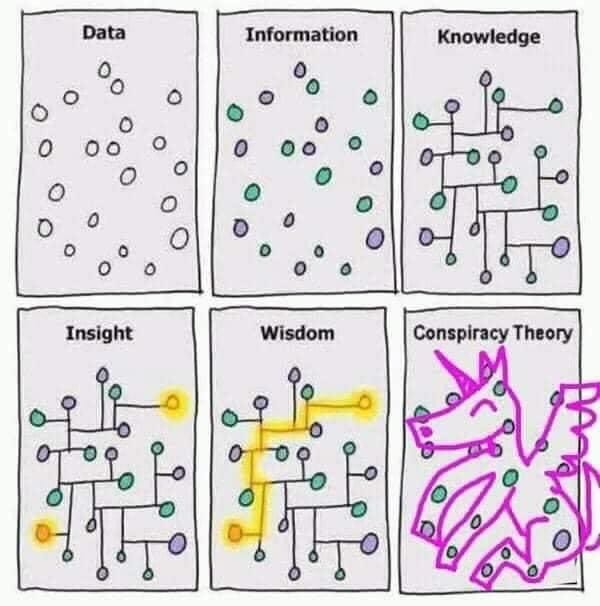
Analysis of events abhors an analytical vacuum. That is, if your mental architecture lacks certain key analytical tools or framing, then you will be driven to mischaracterise — potentially seriously mischaracterise — events.
Given the human propensity for identifying patterns, and awareness of human intentionality, what can very easily fill in an analytical gap is some form of conspiracy theory. A conspiracy theory alleges that there are centrally organised people operating in secrecy — usually in a malign way — controlling events.
A conspiracy theorist is someone who advances such an idea. The term can also be used as a term of abuse for anyone who inconveniently notices patterns — such as folk advancing claims and beliefs that suit people like themselves — or simply advances claims that people find inconvenient or awkward.
There are actual conspiracies. We know there are actual conspiracies, because they have been exposed.
The question is whether the claimed level of coordination and control over events, and the required level of continuing secrecy, is what is happening. The more restricted one’s analytical tools, the more conspiracy is likely to seem the default explanation for any coordinated pattern of behaviour.
Something that people do openly is not a conspiracy. Nor is conspiracy the only way for people to coordinate. It is perfectly possible to coordinate via mutual signalling, for instance. This is particularly true if people are engaged in shared status games. It is even more true if networks share common interests, common information sources and are playing shared status games.
Among us Homo sapiens, much of the point of status is to generate currencies of cooperation. We are a very status-driven species because we are very social beings, so prestige (conspicuous competence) and propriety (conspicuous conformity to norms) have been currencies of cooperation for our highly cooperative subsistence and reproduction strategies that developed across hundreds of thousands of years.
In thinking about the dramatic changes brought about by the Sexual Revolution of the 1960s, it became clear to me that there were always sexual outliers, there are always folk trying different life strategies. Due to the Pill and legally available abortion, which life strategies worked suddenly changed, so folk shifted to them and the norms that enabled them.
Thinking seriously about the mechanisms by which sexual mores changed leads to considering networks, signalling, life strategies. Once you grasp the power of these social mechanisms, you are in a much better situation to see how much conspiracy theories are a product of a lack of analytical breadth and depth. Conspiracy theories are a mechanism to “explain” events, one that occurs naturally to our pattern-seeking minds aware of human intentionality. They do so, however, in the absence of analytical alternatives, if we do not have better operational mechanisms to explain events — and especially observed social coordination — by.

Comments Off on Lorenzo Warby on the “conspiracy error”
September 7, 2025
The BEF and the German Sichelschnitt of May, 1940
Dr. Robert Lyman rebuts the common-since-the-1950s adulation of the Wehrmacht‘s attacks of May-June, 1940 through the Low Countries that drove the British Expeditionary Force off the continent and destroyed the flower of the French army prior to the surrender of France in June:
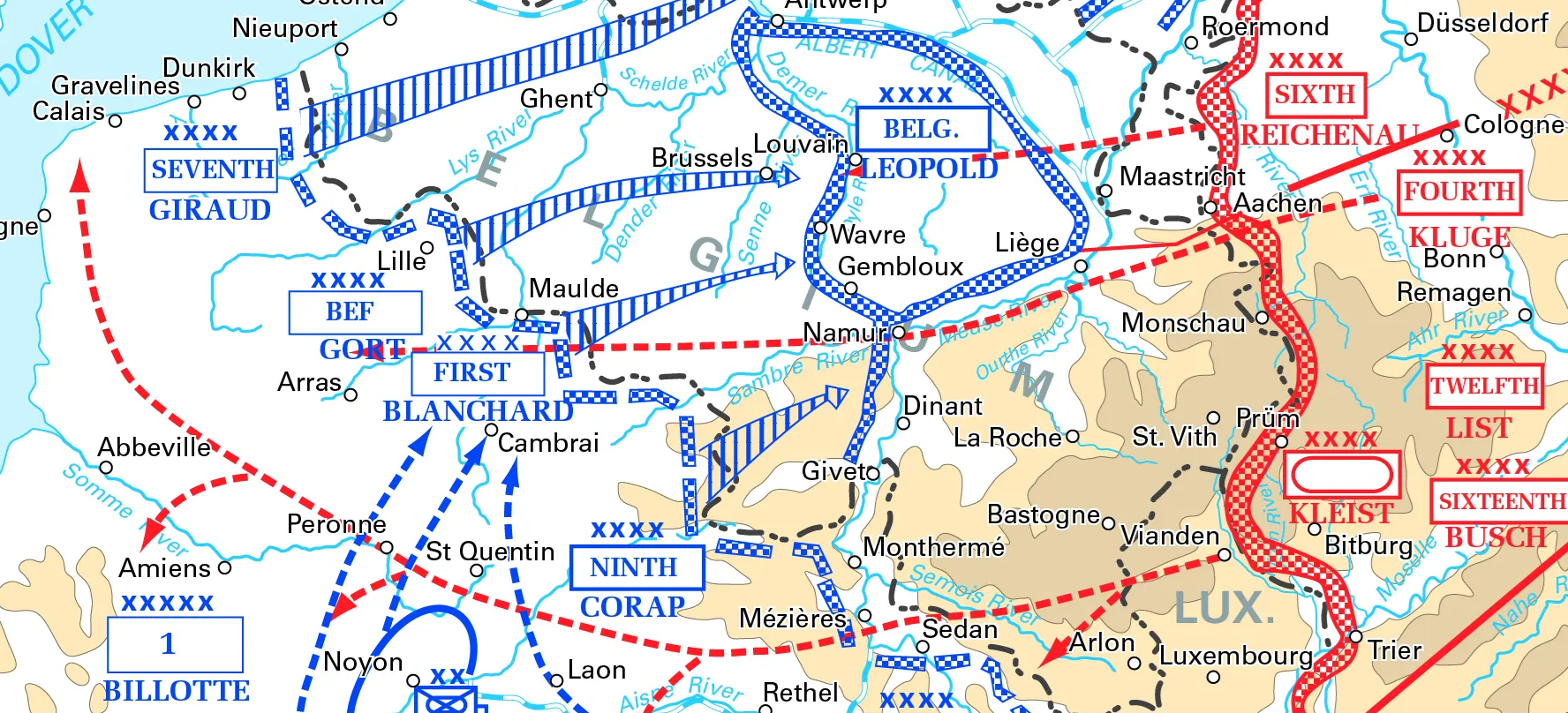
Detail from the West Point Military Atlas map of the “Campaign in the West, Disposition and Opposing Forces, 1940”
Full map.
The world has largely remembered Sichelschnitt as a brilliant German operation of war, but it was one that was fundamentally enabled by Allied ineptitude. Indeed, Blitzkrieg wasn’t particularly new, innovative or even a warfighting doctrine. It is best described, in the context of France 1940, as an event. It was simply the way that the Wehrmacht exerted its tactical and operational superiority over its more pedestrian enemies in 1940. In fact, it was the 1940 extension of what the German Army had first demonstrated in Flanders in March 1918, this time with tanks and Stukas. It was the Panzerwaffe (“tank force”) – combined with a tactical air force – which in 1940 would create the breakthrough that Ludendorff had been unable to achieve in 1918. Where it was applied, by Army Group A, it concentrated fast-moving armoured vanguards co-ordinated with tactical air power, such as 400 Ju 87 Stuka dive-bombers, to so overwhelm the enemy in both time and space that they were unable to respond quickly enough to the changing and challenging battlefield. In 1940 the panzer came into its own, the sound of clattering tracks on French cobblestones a new feature in the sound of battle and a key element in how France remembers its defeat in 1940.
It wasn’t the type of tank in the German inventory which mattered, but the way in which these tanks were employed. Only about 10 per cent of the army comprised tanks, the remainder relying on horse and wagons and the raw, painful feet of the marching infantry. Of the 2,539 tanks the Wehrmacht deployed in 1940, only 916, or 36 per cent were battleworthy, the remainder being clattering tin cans with machine guns (the obsolete Panzer Mark Is and Mark IIs). The only modern tanks were 683 Panzer Mark IIIs and Czech T38 tanks armed with a 37mm gun, and 278 of the larger Mark IVs with a short 75mm gun. But it was enough. The German operational strategy was to use this mass of armour not to fight a large confrontational tank battle, but to achieve breakthrough and breakout, bursting through the enemy’s linear defences. It was surprise and shock action that so discomforted the Allies, who had lazily and, given what we know of British failure to understand 1918, ignorantly assumed that the war would progress against a 1914 rather than a 1918 pattern. The armoured vanguard would surge through the outer skin of the enemy defences, concentrating heavy effort in one place, before driving hard into the heart of enemy territory. With an enemy intent on fighting a linear battle, the rear areas, behind this outer crust, would be weakly defended and full of rear-echelon, administrative and supply troops managing the lines of communication up to the front, not expecting to have to fight. It was by driving hard and fast behind the enemy front line, breaking the cycle of Allied battlefield decision-making, that Blitzkrieg was to achieve its psychological effect.
In contrast the Allies remained concerned about retaining the integrity of their defensive lines. The diaries of Major General Henry Pownall, for instance, are replete with concerns as the days spun past about the widening frontages on one defensive line or another. British concern was misplaced. It was to spread the ever-decreasing butter of the British infantry across ever-widening stretches of French and Belgian bread, without realising that the Germans were concerned not with rolling up a front line, but with driving hard to the rear. By so doing they would take risks with their flanks, but the discombobulatory effect on the enemy was considered to far outweigh any worry about the risk of counter- attack from an increasingly battered and disorganised enemy. Of course this operational concept was risky, but the risks taken were carefully calculated given what the German General Staff knew about British and French tactical doctrine, or the lack of it.
These German tactics were psychologically disconcerting for those not trained to expect them. As was demonstrated on the Meuse, artillery would batter a position in co-ordination with armoured columns bypassing fixed defences and attacking those it needed to clear from the flanks and the rear. The infantry accompanying the advancing armour – Panzergrenadiers (mechanised infantry) – arrived in tandem with the Stukas, which could drop their bombs from a screaming dive. Each Stuka seemed to those at the receiving end to be diving directly at them, personally. For untrained troops it was a terrifying experience. The panzers would sweep on while the truck-borne infantry would turn up to deal with survivors of this storm of fire and movement. By this time, of course, the disorientated French and British would now consider themselves cut off, behind their front line, with no prospect of being relieved. Surrender or a disorganised escape to the rear would seem to be a more sensible option than the forlorn hope of continued resistance when the surrounding fields were dotted with the grey-green uniforms and coal-scuttle helmets of their enemy. The psychological effect of Blitzkrieg was considerable. This wasn’t how their fathers had told them war was fought. How did the Germans manage to discomfort them on the battlefield so comprehensively? Were they inadequate soldiers, unable to meet the standards of campaigning set by the previous generation? Or was it that their tactics were simply not able to cope with the shock of a comprehensive assault by German infantry, armour and air power all descending on them at once? This was the battlefield that the British had entirely dominated, by virtue of their tactical innovations, in 1918. It was now Germany’s turn, a direct result of the failure of the British Army to develop its doctrine and approaches to warfighting at the end of the Great War. Brave men in 1940 did their duty, but against a battle-winning concept of their enemy, they were out-thought rather than out-fought. And critically, when an army thinks it is beaten, it is indeed beaten.
Comments Off on The BEF and the German Sichelschnitt of May, 1940
QotD: Generation X
The concept of “selling out” — and the degree to which that notion altered the meaning and perception of almost everything — is the single most nineties aspect of the nineties. The complexity, nuance, and application of the term sellout was both ubiquitous and impossible to grasp. Nothing was more inadvertently detrimental to the Gen X psyche.
Or, as I like to put it, we were so obsessed with “authenticity” that we took as our guru an exquisitely sensitive longhaired goof who fronted a band named after spooge. […] But Klosterman does have genuine insights sometimes:
The detail always noted in remembrances of the Bronco chase is the throngs of bystanders cheering for Simpson as the car rolled down the freeway, congregating on overpasses and holding makeshift cardboard signs proclaiming, “The Juice Is Loose”. It seemed perverse then and still seems perverse now. Yet this can also be understood as the primordial impulse of what would eventually drive the mechanism of social media: the desire of uninformed people to be involved with the news, broadcasting their support for a homicidal maniac not because they liked him, but because it was exhilarating to participate in an experience all of society was experiencing at once.
Sailer thinks that’s clever and perceptive, and I agree. Too bad you have to read some masturbatory bullshit about Zima to get to it.
Sadly, he doesn’t take that out a step (or, at least, he doesn’t get quoted doing so in Sailer’s review). Here’s Klosterman’s verdict on why Gen X, for all its faults, wasn’t so bad:
The enforced ennui and alienation of Gen X had one social upside: Self-righteous outrage was not considered cool, in an era when coolness counted for almost everything. Solipsism was preferable to narcissism. The idea of policing morality or blaming strangers for the condition of one’s own existence was perceived as overbearing and uncouth. If you weren’t happy, the preferred stance was to simply shrug and accept that you were unhappy.
True enough, but look: Of all the things that made the Boomers so fucking insufferable, right near the top was their utter inability to let go of their youth. Instead of seeing Forrest Gump as a metaphor so unsubtle, an anvil to the head seems sneakier, they thought it was a lighthearted celebration of a simpler, more innocent time. We knew better. Since they couldn’t let go of their youth, we made “being old and jaded long before our time” into our signature thing.
But where, my fellow alterna-dudes, is that attitude now, when it matters? We’re in the same position in 2022 as our parents were in 1992: Staring down the barrel of middle age, teeing off on life’s back nine, pick your metaphor. It’s time to put away childish things. Grow the fuck up already, the way we wish our parents would’ve done for us back in 1992. Instead, we’re letting our lunatic children smear their pathologies all over what’s left of America, because … ?
I know why Klosterman does it: That’s what they pay him for. What’s our excuse?
Severian, “A Meta-Review”, Founding Questions, 2022-02-24.
Comments Off on QotD: Generation X
September 2, 2025
Too much empathy can be more dangerous than too little
Spaceman Spiff explains why boundaries matter, in so many different areas of modern life:
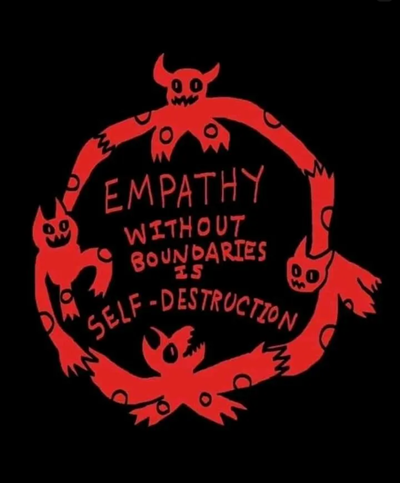
Empathy is a virtue many strive to demonstrate. But few will discuss its downsides. Why it is not universally good or useful. How it can be misdirected.
In some situations it is lethal. It can reflect a suicidal urge we now see in Western nations.
Much empathy in society is in fact sentimentality, which is dangerous. Sentimental ideas about mixing cultures, elevating poor performers through quotas, or tinkering with traditional gender roles have real world effects.
With such an emphasis on empathy, which many think of as niceness, we overlook the need for boundaries to maintain a functioning society.
This is the issue at the heart of much that is damaging us today.
Individual rights
We live in an era that champions individual rights to an almost autistic degree. This is a product of Western liberalism, which now seems to be entering its terminal phase as its effects ultimately destroy what made Western societies strong.
Since an individual’s rights trump everything we cannot easily enforce boundaries our ancestors could take for granted. Try challenging a gay pride parade or transgender material in schools on the grounds of public decency and the least you can expect is to lose your job.
Profound changes have happened just in the last few decades and all in the name of individual rights. The erosion of boundaries on behaviour is one of the most visible aspects of this.
Physical boundaries
The concept of boundaries is almost universal and spans everything from the mundane to the spiritual.
Most countries recognize the right to private property and inherent within this is the notion of boundaries. My car is mine and no one else’s, for example.
This is applied to our homes and gardens. These are ours and defendable from theft. Ultimately this in turn includes a neighbourhood or locale, even a region or state. All these things have visible boundaries that demarcate where they begin and end.
Most famously this applies to national borders, a traditional form of boundary in use for thousands of years. Failing to enforce this barrier is national suicide. The world is not like us and if it comes to us we will look like the world in return. Borders keep the barbarians out.
Everyone instinctively grasps these kinds of boundaries. We close our windows and have locks on our doors because of this understanding.
Using boundaries to exclude others feels natural.
Cultural boundaries
Less explicitly visible are cultural boundaries, often transmitted via tradition and convention. We have spent the last century attacking many of these as old fashioned, with little pause to consider why tradition emerges in the first place.
Marriage between men and women. Complementary gender roles. Sexual mores kept private. The sanctity of childhood, its innocence protected from intrusion.
As we removed constraints in the name of progress we destroyed much of the glue that held our societies together. We are now watching things unravel as people marry less and produce fewer children. We see widespread mental illness and anguish as the few basic certainties of life are destroyed in the name of progress.
People don’t know who or what they are when cultural boundaries are deleted. Women, men, natives, newcomers, the working class. Who are we really without some certainties in life?
Comments Off on Too much empathy can be more dangerous than too little
August 29, 2025
The dangers of joining the online hive mind of social media
At The Freeman, Nicole James discusses the experience of being immersed in a social media swarm or hive mind phenomenon:
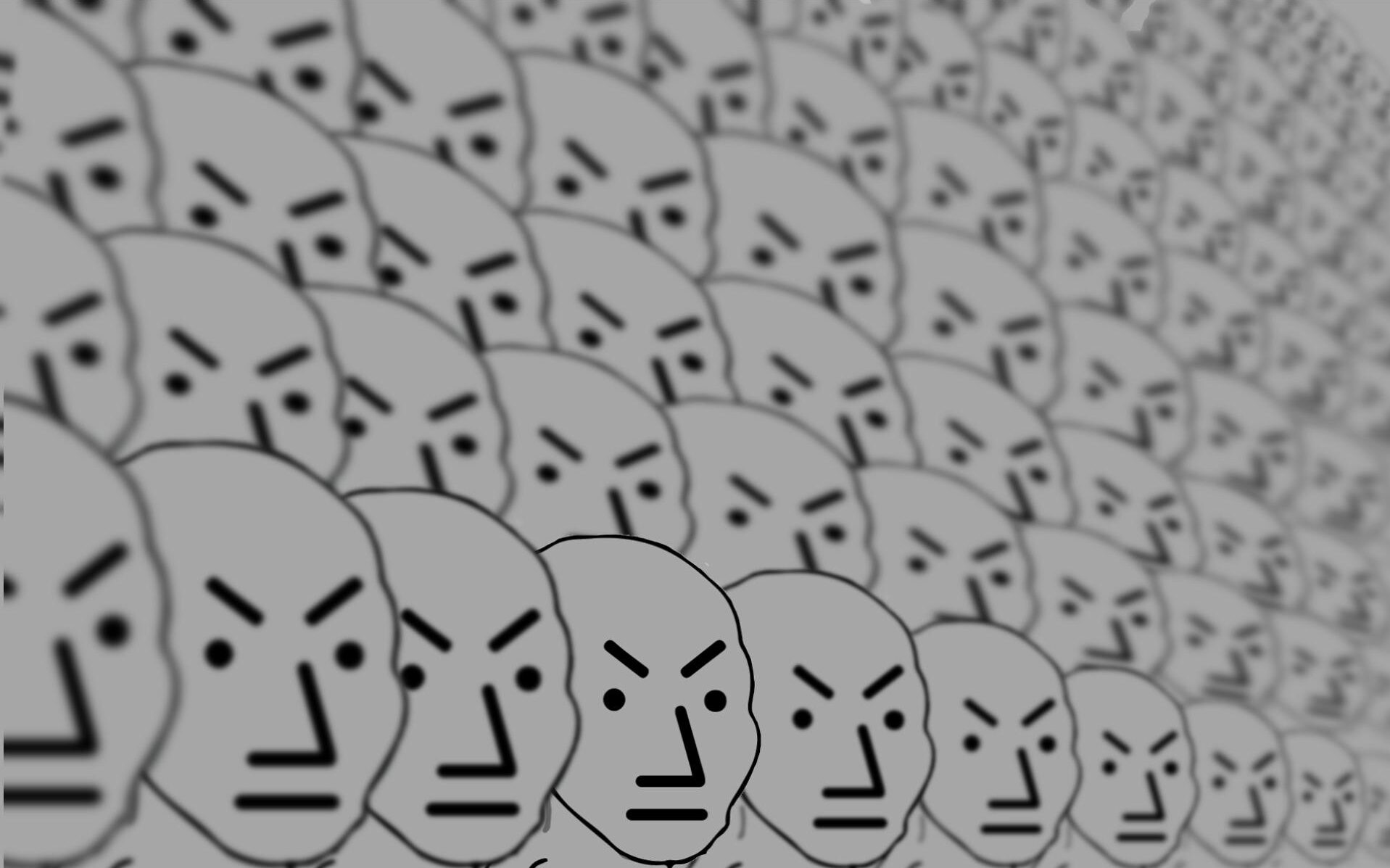
Ever noticed how your social media feed doesn’t sound like “independent thought” so much as a stadium of people chanting, “Yaasss, queen!” in matching sequins? One minute you’re scrolling idly, the next you’ve been recruited into a sect with better lighting filters and the odd ironic dog meme. All it takes is clicking on one video of a dachshund in a raincoat, and suddenly you’ve been ordained High Priest of Sausage Dogs, condemned to a lifetime of puddle-splash reels and algorithmic sermonizing. That’s the hive mind. It’s the Internet’s favorite parlor trick, turning ordinary humans into synchronized swimmers thrashing about in a soup so murky it makes the Hudson on a hot July afternoon look like Perrier.
Bees and ants nailed this millennia ago: buzzing, working in lockstep, worshipping a terrifying queen—basically the Kardashians of the insect world. But instead of honey, humanity now churns out TikTok dances, Reddit debates about whether Die Hard was a Christmas movie (it wasn’t), and Facebook is where your uncle accidentally joins a cult.
Yet this collective buzz can tip into something darker. Collaboration can harden into groupthink, flattening individuality like a raccoon on the New Jersey Turnpike.
Cristina Dovan, a life coach based in the UK, calls the hive mind “group decision-making where individuals meld into one big throbbing consciousness”. Which sounds noble, and also like the worst hangover imaginable.
Collective intelligence can shine. Wikipedia (on a good day), Reddit’s problem-solving posters, Kaggle competitions, GitHub fixes. It’s a brainstorming session without the burnt office coffee and stale biscuits.
But history, and the Internet, remind us there’s a darker wing.
Psychologist Irving Janis, who coined “groupthink,” pointed to the Bay of Pigs invasion as Exhibit A.
Let’s return to 1961 where JFK is young, popular, and surrounded by Very Serious Men in suits. The CIA pitches a plan to topple Fidel Castro that went roughly like this:
- Train a ragtag bunch of Cuban exiles.
- Drop them on a swampy stretch of coastline actually called the Bay of Pigs (because nothing says “stealth” like announcing your arrival in Pork Bay).
- Hope the Cuban people spontaneously rise and overthrow Castro, preferably in a neat anti-communist conga line.
Everyone in the room knew it sounded dodgy. The beaches were wrong, the surprise was nonexistent, Castro’s army was enormous and very much awake. But instead of saying, “Excuse me, Mr. President, this is bananas”, the advisors all nodded along as if they were trapped in a corporate retreat exercise called Let’s Pretend We’re Bold Visionaries.
The result? A fiasco. Castro’s forces crushed the invaders in three days flat. America looked ridiculous, Kennedy was humiliated, and “Bay of Pigs” became shorthand for “the world’s worst team-building activity”. In short, a textbook case of groupthink, or as we’d call it today, “watching as your drunk mate climbs onto the shed roof, yells that he can backflip, and you cheer instead of calling an ambulance”.
Comments Off on The dangers of joining the online hive mind of social media


