Quotulatiousness

August 22, 2020

Debra Soh’s new book is “a cancel-culture grenade”

Filed under: Books, Health, Media, Politics — Tags: , , , , , , — Nicholas @ 05:00

Jen Gerson knows that any positive mention of Debra Soh’s The End of Gender: Debunking Myths About Sex and Identity has a strong resemblance to square-dancing in a minefield. Cancellations may fall like raindrops on the career of anyone so unenlightened as to even acknowledge the existence of such a work:
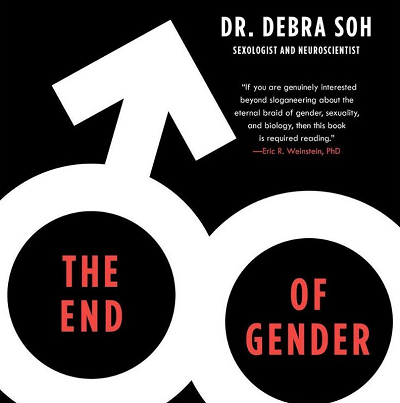
For that, at its heart, is what Soh’s book is: a lucid discussion of the best science we have to date on the nature of gender and sex, written for a lay audience. What gives the title its sizzle is not the content, but rather the cultural climate in which it is being published.

It maps the depth, scope and scale of current Culture War trenches in this particular theatre of battle. The End of Gender stomps on tripwires like the gender binary, whether transgender women are women, autogynephilia, Rapid Onset Gender Dysphoria, bathroom bans, and more.

It’s a cancel-culture grenade.

That’s not because these subjects ought to be contentious. Soh’s approach and tone are largely neutral. Rather, the controversy the book will inevitably incite is a reflection of a culture that has been warped into a state of existential terror by the very notion that these ideas can be responsibly discussed.

Soh begins by defining her terms.

So much of the debate around the most difficult topics of sex and gender stem from the simple fact that we are misusing the basic language. For example, sex and gender are not interchangeable concepts, even though they are often treated as such.

Sex is a term of biology. One’s sex, Soh argues, is determined by his or her gametes. With the exception of rare intersex disorders, 99 per cent of the population has a clearly defined biological sex that slots into one of two dimorphic categories: male or female.

Gender is more complicated. It’s now popular to state that there are more than two genders, but Soh disputes this. She argues that gender — or the set of characteristics that signal one’s sex to society — is also dimorphic. For 99 per cent of the population, gender correlates with sex. Further, even when expressions of gender are at odds with one’s biological sex, this, too, is mediated by biology. Whether one presents as gender typical or gender atypical is the result of prenatal testosterone exposure.

Soh notes that claiming to be gender non-binary, or gender fluid — or any one of a thousand variations that transcend the limiting concepts of male and female — is increasingly trendy, especially among teenagers and young adults. It seems to be the latest form of identity experimentation.

There are two reasons for this trend.

The first is that seeing the world through an intersectional framework encourages progressives to reverse the traditional hierarchies of race, sex and power. Therefore, claiming a marginalized identity — like genderqueer non-binary unicorn — accrues status within progressive peer circles.

The second is that the culture has undergone a massive awakening to transgender rights over the past decade. This has contributed expressive categories and vocabularies for people who otherwise might have struggled to find the language to explore their most authentic selves. As the cues, like cosmetics and dress, that we used to signal our gender are socially constructed, gender expression is limited only by our creativity.
August 21, 2020

Virtuesplaining Blazing Saddles

Filed under: History, Humour, Media, Politics, USA — Tags: , , , , , , — Nicholas @ 03:00

Paul du Quenoy says that Mel Brooks is cancelled after all:

It seems like only yesterday that HBO Max, the financially troubled American cable television network’s new film streaming service, signalled its virtue by removing Gone With The Wind from viewing so that the classic film could be properly “contextualised” as what presenter and University of Chicago film professor Jacqueline Stewart calls “a prime text for examining expressions of white supremacy in popular culture”. She believes this is useful for the “re-education” of audiences who might otherwise stray into thoughtcrime.

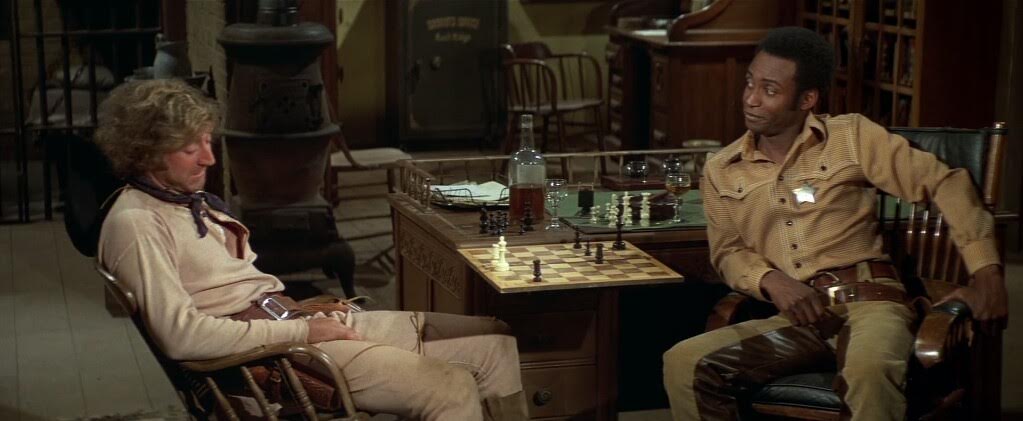
Mel Brooks’s smash hit 1974 comedy Blazing Saddles, which seems to have been added to HBO Max since the Gone With The Wind dust up and is known for its liberal use of the feared and loathed “n-word”, arrived with a similarly patronising disclaimer already installed. In a three-minute introduction that apparently cannot be skipped over, Stewart is there again, this time to inform viewers that “racist language and attitudes pervade the film”, while instructing them that “those attitudes are espoused by characters who are portrayed here as explicitly small-minded, ignorant bigots … The real, and much more enlightened, perspective is provided by the main characters played by Cleavon Little and Gene Wilder”.

Thanks, Aunt Jacqueline. If you have not seen Blazing Saddles – and if you are under the age of forty there is an excellent chance some prudish authority figure sanitised it out of your cosseted millennial existence – it stands as one of the greatest, and the certainly the funniest, anti-racist films of all time. Based on a story by Andrew Bergman, Brooks conceived it as a scathing send-up of racism and the hypocrisy that still enabled it after the great civil rights victories of the 1960s. Brooks’s idiom was a parody of the classic Western, by then an exhausted genre that had, among other flaws, become inanely predictable and was much criticised for leaving out minorities. A landmark of American film, Blazing Saddles was selected in 2006 for inclusion in the US National Film Registry, which recognises “culturally, historically, or aesthetically significant films” worthy of preservation.

Drenched in hilarity – and by my count using the “n-word” 17 times in its 93-minute run – the plot involves a conspiracy by an avaricious U.S. state attorney general who wants to drive white settlers off land he needs to complete a profitable railroad project. After having outlaws wreak mayhem on the townspeople, he recommends that the governor appoint a black sheriff to restore law and order, cynically assuming that their racism will cause them to reject the new lawman and give up. Despite a rough initial reception, the sheriff outwits attempts to get rid of him and, with the help of a washed up but sympathetic alcoholic gunslinger, leads the townspeople to victory, winning their love and respect before moving on to other brave deeds.

While HBO no longer wants to risk having its paying customers think for themselves (and what stale corporate outfit uneasily transitioning to a crowded new market wouldn’t?), it could rightly be said that anyone dumb enough to miss the film’s message might be a recent product of Anglo-American higher education. I do not mean this at all facetiously. Decaying and run by a self-important clerisy whose demands to be taken seriously only become shriller as it declines in reach and vitality – and from which any participant can be dismissed for even the slightest speech or behavioural infraction – academia naturally discourages humour. Jokes, which can almost always cause some kind of offence, are simply too risky to be told or laughed at, even in private. Finding the wrong thing funny can invite career-hobbling accusations that one has demeaned a student or colleague and thereby made them feel unacceptably “uncomfortable” or even physically “unsafe”. Perceived flippancy bruises sanctified “professional seriousness” in a way tantamount to sacrilege. The only tolerated exceptions are a kind of solemn irony that offers comfort in coping with academia’s increasing irrelevance and a resigned gallows humor about its ever more limited prospects.

August 18, 2020

Political polarization, or why Liberals and Conservatives really don’t understand each other

Filed under: Media, Politics, USA — Tags: , , , , — Nicholas @ 05:00

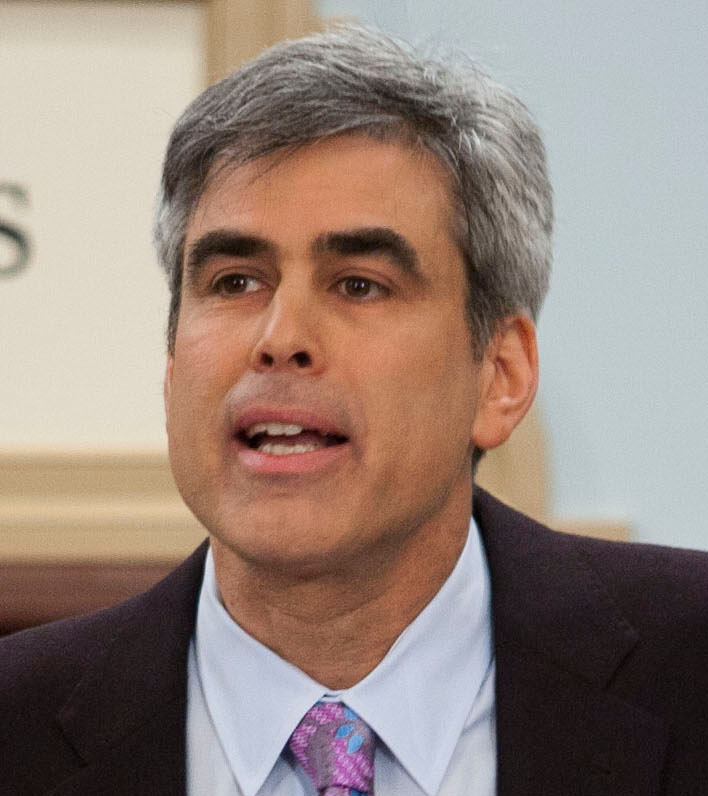
John Miltimore discusses the findings of Jonathan Haidt on the differences in moral worldviews of conservative and liberal Americans which seem to explain why communication across the political “aisle” is so difficult:

Jonathan Haidt at the Miller Center of Public Affairs in Charlottesville, Virginia on 19 March, 2012.
Photo via Wikimedia Commons.

During a TED talk a number of years ago, Haidt shared his discovery that contrary to the idea that humans begin as a blank slate — “the worst idea in all psychology,” he says — humans are born with a “first draft” of moral knowledge. Essentially, Haidt argues, humans possess innate but malleable sets of values “organized in advance of experience.”

So if the slate is not blank, what’s on it?

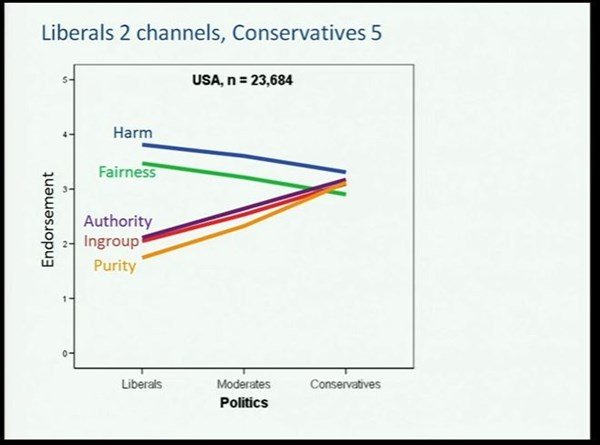
To find out, Haidt and a colleague read the most current literature on anthropology, cultural variations, and evolutionary psychology to identify cross-cultural matches. They found five primary categories that serve as our moral foundation:

  1. Care/harm: This foundation is related to our long evolution as mammals with attachment systems and an ability to feel (and dislike) the pain of others. It underlies virtues of kindness, gentleness, and nurturance.
  2. Fairness/reciprocity: This foundation is related to the evolutionary process of reciprocal altruism. It generates ideas of justice, rights, and autonomy. [Note: In our original conception, Fairness included concerns about equality, which are more strongly endorsed by political liberals. However, as we reformulated the theory in 2011 based on new data, we emphasize proportionality, which is endorsed by everyone, but is more strongly endorsed by conservatives.]
  3. Loyalty/betrayal: This foundation is related to our long history as tribal creatures able to form shifting coalitions. It underlies virtues of patriotism and self-sacrifice for the group. It is active anytime people feel that it’s “one for all, and all for one.”
  4. Authority/subversion: This foundation was shaped by our long primate history of hierarchical social interactions. It underlies virtues of leadership and followership, including deference to legitimate authority and respect for traditions.
  5. Sanctity/degradation: This foundation was shaped by the psychology of disgust and contamination. It underlies religious notions of striving to live in an elevated, less carnal, more noble way. It underlies the widespread idea that the body is a temple which can be desecrated by immoral activities and contaminants (an idea not unique to religious traditions).

[…]

What Haidt found is that both conservatives and liberals recognize the Harm/Care and Fairness/Reciprocity values. Liberal-minded people, however, tend to reject the three remaining foundational values — Loyalty/betrayal, Authority/subversion, and Sanctity/degradation — while conservatives accept them. It’s an extraordinary difference, and it helps explain why many liberals and conservatives in America think “the other side” is bonkers.

August 12, 2020

Defending Sir John A.

In his latest post for The Dominion, Ben Woodfinden attempt to defend that horrible racist, sexist, homophobe, transphobe, non-intersectional, dead, white, cis-gendered male monster, Sir John A. Macdonald:

Statue of Sir John A. Macdonald that formerly stood in front of City Hall in Victoria, British Columbia.
Wikimedia Commons.

The way you’re supposed to begin a piece like this is with a sort of penitential act. I should begin a discussion of Sir John A. Macdonald with a confession of his various sins and crimes, before offering an apology, and a reluctant defence of our first prime minister that essentially boils down to “history matters,” without actually explaining what that history is or why it matters.

If you do this you’ve already lost the historical fight, because you’ve willingly ceded the narrative to Macdonald’s detractors, and fallen back to a defence of history in some abstract sense, instead of a defence of Macdonald himself. This kind of Girondin impulse is far too common amongst many liberals and conservatives now, especially in elites institutions and fields like journalism and academia.

[…]

No one, including me, claims that Macdonald was a saint, and Canada’s treatment of Indigenous people and migrants in the early days of Confederation was racist, and wrong. I doubt any serious person would deny this. But even on these questions, Macdonald’s record is complex. Tristin Hopper, wrote an excellent and accessible piece in the National Post simultaneously laying out both the bad things Macdonald was responsible for, and also Macdonald’s paradoxically ahead of his times views on Indigenous voting rights, and recognition of the terrible plight of Indigenous peoples.

But this is only part of the story of Macdonald, and the crucial role he played in our history. Too often this is all that gets discussed, ceding the narrative to Macdonald’s detractors and dooming him to inevitable damnatio memoriae. This is why, in the name of defending our history, we cannot simply defend capital H History, we have to defend the substance of our actual history.

Macdonald’s central role as the key architect of Confederation, and our country, is not well known because Canadian history, especially the history that led to confederation, is not well known by Canadians. It’s a national embarrassment, and in this vacuum it is easy to build incomplete and partial narratives about what Canada is and what Canada means.

Macdonald is best described as “the indispensable politician.” Confederation was not inevitable, it took adept figures like Macdonald to make it happen. Macdonald was not an ideologue, and his political career was defined by his masterful ability to forge coalitions and working compromises between seemingly intractable groups. He was an important political figure in the United Province of Canada (the union of Upper and Lower Canada), and proved adept at balancing and forging coalitions with the warring and disparate factions from Upper and Lower Canada forced into an uncomfortable union. He resisted, but worked and ultimately partnered with uncompromising reformers in the province like George Brown, while ultimately laying the groundworks for constitutional reform that Brown, though principled, could almost certainly never have achieved.

August 9, 2020

Canadian Art magazine’s “woke suicide pact”

As a cultural barbarian and all-around Neanderthal, it will come as little surprise to both my readers that I’d never even heard of Canadian Art magazine. As a result, the recent decision to cease publication due to the unresolved (and almost certainly unresolvable) issues of needing to be funded by rich white people:

These evils were explained in a long article published by Canadian Art‘s former editor-in-chief, David Balzer (self-describedgay, fag, queer. Ambivalent Libra“), in which he complains that the progressive agenda of the magazine he edited was forever being undercut by the need to solicit funds from wealthy white donors. Or, as he describes it, the pursuit of: “white, liberal money — the champagne socialists.”

Shockingly, these donors are not especially fond an incessant slew of articles with titles such as Drop the Charges and Defund the Police, Says New Artists’ Letter for Black Lives, Give Us Permanence — Ending Anti-Black Racism in Canada’s Art Institutions, and A Crisis of Whiteness in Canada’s Art Museums.

Balzer’s analysis of the growing tension between establishment donor and do-good editor is spot on:

    Most boards, which are also majority white, are [interested] in going to where they believe the money is. So the argument goes: It takes a certain talent, panache, to be president, director, or CEO, to open those pocketbooks, and without these skills, culture cannot run. This argument implies that culture cannot run if its backrooms are not white … Many corporate partners make possible the lavish, yearly fundraising galas that cultural organizations host: ostentatious displays of whiteness and wealth that are the public-facing versions of the aforementioned work done by white presidents, directors and CEOs.

It’s a problem that every charity, art outlet, and activist organization in Canada will face. Supporting the arts is rarely an act of pure altruism. It has always been a status flex by the well-connected barons and baronesses of privilege. At its most cynical, arts funding is a high-class game of reputation laundering.

August 3, 2020

QotD: History or “Her” story?

In another land, a long, long time ago, I was a student of languages. It was there that I came across the American left’s obsession with corrupting the language.

In my last year in college, I had American Literature taught by a Fullbright exchange professor. I will never forget the moment the poor man — talking to a class of 36, all women as such classes often are — let slip the innocent word “him” to mean an indeterminate gender. He paused, went white, his eyes widened, and he said, “I mean, I mean, he or she.”

Meanwhile, the class of 36 was staring at him in puzzlement. It took us a while to take it all apart and realize he thought we’d be offended by the use of “he” to mean someone generic, of indeterminate gender.

I think we patted him kindly on the shoulder and told him that no, really, we weren’t offended. The usage was the same in Portuguese and we’d been told it was the same in most Indo-European languages. And who on Earth would get offended over semantics? The language was the language. It meant nothing about us personally.

This was of course before I married, came to the U.S. and found that for the American woman circa 1985, the language was not just personal, it was personally offensive.

I remember standing in horror underneath a bookstore section proudly labeled Herstory.

Of course the etymology of the word history is not his + story, the sort of pseudo-clever deduction about language that I was used to from the near-illiterate elderly people in the village. (It would be too complex and involve Portuguese, but there was this old farmer who had somehow deduced from the Portuguese word for farmer that farmers were the only ones who would be saved at the end of time.)

History, of course, is not originally an English word. It comes from the Latin historia — meaning a relation of events — by way of the French estoire, meaning story. Note please that in neither of those languages does “his” mean “belonging to him.” And that making the same sort of illiterate assumptions about the French word, we’d get “It is oire.”

I thought that the store must have hired an illiterate employee, but no, over the next ten years, in various circumstances, and possibly still except for the fact that I’ve learned to silence such fools with a death glare, I’ve come across the same smug-idiot assumption and “corrections” of the English word, so as to “fight against the patriarchy.”

That this is done by people who paid more money than I make in a couple of years for a college degree, and who, doubtlessly, think that etymology is a dish made with onions, or perhaps a conspiracy of the patriarchy fills me with a sort of dull rage that has no outlet.

Sarah Hoyt, “The Semantic Whoredom of the Left”, PJ Media, 2018-05-11.

August 2, 2020

Words are verbal tools, but tools can be weaponized

In this week’s newsletter, Andrew Sullivan analyzes the roots of wokeness:

In the mid-2010s, a curious new vocabulary began to unspool itself in our media. A data site, storywrangling.org, which measures the frequency of words in news stories, revealed some remarkable shifts. Terms that had previously been almost entirely obscure suddenly became ubiquitous — and an analysis of the New York Times, using these tools, is a useful example. Looking at stories from 1970 to 2018, several terms came out of nowhere in the past few years to reach sudden new heights of repetition and frequency. Here’s a list of the most successful neologisms: non-binary, toxic masculinity, white supremacy, traumatizing, queer, transphobia, whiteness, mansplaining. And here are a few that were rising in frequency in the last decade but only took off in the last few years: triggering, hurtful, gender, stereotypes.

Language changes, and we shouldn’t worry about that. Maybe some of these terms will stick around. But the linguistic changes have occurred so rapidly, and touched so many topics, that it has all the appearance of a top-down re-ordering of language, rather than a slow, organic evolution from below. While the New York Times once had a reputation for being a bit stodgy on linguistic matters, pedantic, precise and slow-to-change, as any paper of record might be, in the last few years, its pages have been flushed with so many neologisms that a reader from, say, a decade ago would have a hard time understanding large swathes of it. And for many of us regular readers, we’ve just gotten used to brand new words popping up suddenly to re-describe something we thought we knew already. We notice a new word, make a brief mental check, and move on with our lives.

But we need to do more than that. We need to understand that all these words have one thing in common: they are products of an esoteric, academic discipline called critical theory, which has gained extraordinary popularity in elite education in the past few decades, and appears to have reached a cultural tipping point in the middle of the 2010s. Most normal people have never heard of this theory — or rather an interlocking web of theories — that is nonetheless changing the very words we speak and write and the very rationale of the institutions integral to liberal democracy.

What we have long needed is an intelligible, intelligent description of this theory which most people can grasp. And we’ve just gotten one: Cynical Theories: How Activist Scholarship Made Everything About Race, Gender and Identity, by former math prof James Lindsay and British academic, Helen Pluckrose. It’s as deep a dive into this often impenetrable philosophy as anyone would want to attempt. But it’s well worth grappling with.

What the book helps the layperson to understand is the evolution of postmodern thought since the 1960s until it became the doctrine of Social Justice today. Beginning as a critique of all grand theories of meaning — from Christianity to Marxism — postmodernism is a project to subvert the intellectual foundations of western culture. The entire concept of reason — whether the Enlightenment version or even the ancient Socratic understanding — is a myth designed to serve the interests of those in power, and therefore deserves to be undermined and “problematized” reason whenever possible. Postmodern theory does so mischievously and irreverently — even as it leaves nothing in reason’s place. The idea of objective truth — even if it is viewed as always somewhat beyond our reach — is abandoned. All we have are narratives, stories, whose meaning is entirely provisional, and can in turn be subverted or problematized.

During the 1980s and 1990s, this somewhat aimless critique of everything hardened into a plan for action. Analyzing how truth was a mere function of power, and then seeing that power used against distinct and oppressed identity groups, led to an understandable desire to do something about it, and to turn this critique into a form of activism. Lindsay and Pluckrose call this “applied postmodernism”, which, in turn, hardened into what we now know as Social Justice.

July 29, 2020

The Equity, Inclusivity, and Diversity Industrial Complex

In The Dominion, Ben Woodfinden comments on a Ross Douthat column on the “antiracist” demands of our modern protestariat (the hordes of un- or under-employed university-educated young liberals and socialists):

University College, University of Toronto, 31 July, 2008.
Photo by “SurlyDuff” via Wikimedia Commons.

… the most interesting aspect of this lockdown-induced outpouring of collective rage hasn’t been the protests, or the cancellations, but the woke job creation that is going on. The ideology behind things like “white fragility” is increasingly being transformed into what can be described as an equity-inclusivity-diversity (EID) industrial complex that might end up being the most significant long term structural change that emerges out of the protests.

One of the most common responses in elite institutions as they promise to address systemic racism has been the creation of new jobs and positions that will supposedly help to do so. For instance, the Washington Post created a set of new positions that will be focusing on racial issues. This included hiring a “Managing Editor for Diversity and Inclusion.” At Princeton, the administration announced, like many other elite universities, new courses (which means new teaching opportunities) focused on racial injustice, as well as new projects and funding for research to explore and address racial issues. Stanford has created a new Centre for Racial Justice at its law school.

This direct job creation is just the tip of the iceberg. The real EID industrial complex is in the creation of a vast number of new jobs dedicated to the promotion and advancement of the basic tenets of this ascendant ideology through the expansion of human resource departments to deal with these issues, the creation of new EID bureaucrats and administrators in universities, corporations, government departments, the rise of EID consulting and mandatory courses and workshops for employees, new jobs and potential litigation for lawyers, as well as courses and modules in law schools to teach aspiring lawyers about these things.

In the bestselling Ibram X. Kendi book How To Be An Antiracist, one of Kendi’s central solutions is to pass an anti-racist amendment to the U.S. Constitution and permanently establish and fund a Department of Anti-racism. This department:

    would be comprised of formally trained experts on racism and no political appointees. The DOA would be responsible for preclearing all local, state and federal public policies to ensure they won’t yield racial inequity, monitor those policies, investigate private racist policies when racial inequity surfaces, and monitor public officials for expressions of racist ideas. The DOA would be empowered with disciplinary tools to wield over and against policymakers and public officials who do not voluntarily change their racist policy and ideas.

The radical tendencies of the bourgeois bolsheviks in the streets might make them seem like true revolutionaries, but what this movement seems to actually want to create, with remarkable success, is new employment opportunities for true believers in the new anti-racist creeds. Racism won’t so much be solved by tearing society down, but by massively expanding new professional and managerial jobs that can guarantee full employment for the credentialed class of true believers.

O’Boyle’s thesis is that the revolutions that swept across European cities in 1848 were because a large surplus of resentful and overeducated men felt society was denying to them what they were rightfully owed. O’Boyle looks at Germany, where university education was cheap, and was “emphasized as an avenue to wealth and power.” This ending up producing an excess of ambitious, but resentful and frustrated men who felt society was not allotting them the status and comfort they deserved. The same was true in France. But in Britain, the opportunities produced by industrialization that had yet to fully materialize on the continent kept this excess surplus of overeducated men much smaller, and helped insulate Britain from revolution.

What if the EID industrial complex actually helps to reduce the scarcity of opportunities in elite fields and institutions that will put a lid on the unrest that overproduction breeds? The EID industry is worth billions of dollars, and in a way it might be the solution liberalism offers to both the radical progressivism of this ideology, and to the challenge posed by elite overproduction.

July 22, 2020

How the left lost its sense of humour

Filed under: History, Media, Politics, USA — Tags: , , , — Nicholas @ 03:00

Matt Taibbi outlines the way “the right” used to be the humourless scolds and omnipresent busybodies demanding the government trample the rights of people they didn’t like, then points out that the progressives have become exactly the people they used to poke fun at:

The old Republican right’s idea of “humor” was its usual diatribes against Bad People, only with puns thrown in (are you ready for “OxyClinton”?). As a result the Fox effort at countering the Daily Show, the 1/2 Hour News Hour — a string of agonizing “burns” on Bush-haters and Hillary — remains the worst-rated show in the history of television, according to Metacritic. The irony gap eventually spelled doom for that group of Republicans, as Trump drove a truck through it in 2016. However, it’s possible they just weren’t as committed to the concept as current counterparts.

Take the Smithsonian story. The museum became the latest institution to attempt to combat racism by pledging itself to “antiracism,” a quack sub-theology that in a self-clowning trick straight out of Catch-22 seeks to raise awareness about ignorant race stereotypes by reviving and amplifying them.

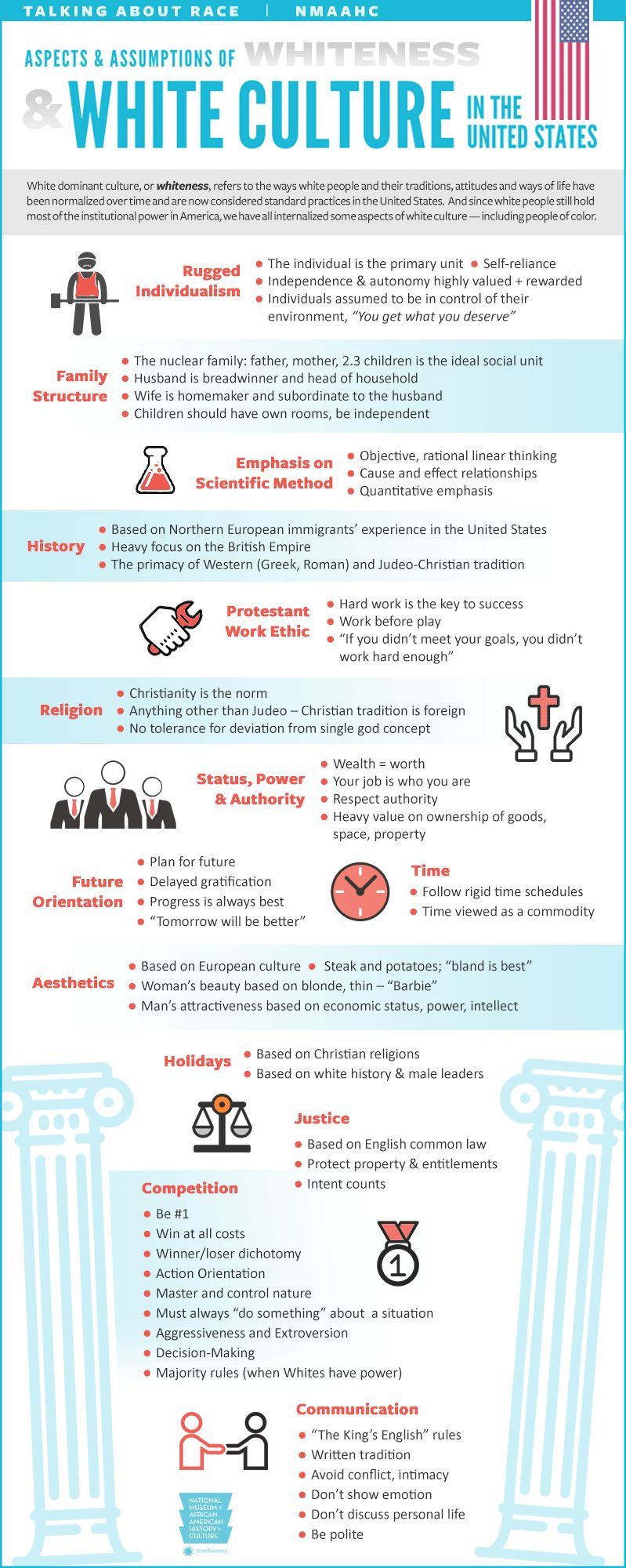
The National Museum of African American History and Culture created a graphic on “Aspects and Assumptions of White Culture” that declared the following white values: “the scientific method,” “rational, linear thinking,” “the nuclear family,” “children should have their own rooms,” “hard work is the key to success,” “be polite,” “written tradition,” and “self-reliance.” White food is “steak and potatoes; bland is best,” and in white justice, “intent counts.”

The astute observer will notice this graphic could equally have been written by white supremacist Richard Spencer or History of White People parodist Martin Mull. It seems impossible that no one at one of the country’s leading educational institutions noticed this messaging is ludicrously racist, not just to white people but to everyone (what is any person of color supposed to think when he or she reads that self-reliance, politeness, and “linear thinking” are white values?).

The exhibit was inspired by white corporate consultants with Education degrees like Judith Katz and White Fragility author Robin DiAngelo, who themselves echo the work of more consultants with Ed degrees like Glenn Singleton of Courageous Conversations. Per the New York Times, Courageous Conversations even teaches that “written communication over other forms” and “mechanical time” (i.e. clock time) are tools by which “whiteness undercuts Black kids.”

The notion that such bugbears as as time, data, and the written word are racist has caught fire across the United States in the last few weeks, igniting calls for an end to virtually every form of quantitative evaluation in hiring and admissions, including many that were designed specifically to combat racism. Few tears will be shed for the SAT and ACT exams, even though they were once infamous for causing Harvard to be overpopulated with high-scoring “undesirables” like Jews and Catholics, forcing the school to add letters of reference and personal essays to help restore the WASP balance.

The outcry against the tests as “longstanding forces of institutional racism” by the National Association of Basketball Coaches is particularly hilarious, given that the real problem most of those coaches are combating is the minimal fake academic entry requirement imposed by the NCAA to help maintain a crooked billion-dollar business scheme based on free (and largely Black) labor. The tests have been tweaked repeatedly over the years to be more minority-friendly and are one of the few tools that gave brilliant but underprivileged kids a way to blow past the sea of rich suburbanites who feel oppressed by them … But, fine, let’s stipulate, as Neon Bodeaux put it, that “them tests are culturally biased.” What to make of the campaign to end blind auditions for musical positions, which the New York Philharmonic began holding in the early seventies in response to complaints of discrimination?

Before blind auditions, women made up less than 6 percent of orchestras; today they’re half of the New York Philharmonic. But because the change did not achieve similar results with Black and Hispanic musicians, the blind audition must now be “altered to take into fuller account artists’ backgrounds and experiences.” This completes a decades-long circle where the left/liberal project went from working feverishly to expunge racial stereotypes in an effort to level the playing field, to denouncing itself for ever having done so.

This would be less absurd if the effort were not being led in an extraordinary number of cases by extravagantly-paid white consultants like DiAngelo and Howard Ross, a “social justice advocate” whose company billed the federal government $5 million since 2006 to teach basically the same course on “whiteness” to agencies like NASA, the Treasury, the FDIC, and others.

It’s unsurprising that in the mouths of such people, the definitions of “whiteness” sound suspiciously like lazy suburban white stereotypes about Black America, only in reverse. They read like a peer-reviewed version of Bill de Blasio’s infamous joke about “CP Time.”

July 15, 2020

Wilfred Laurier University – from university to indoctrination centre

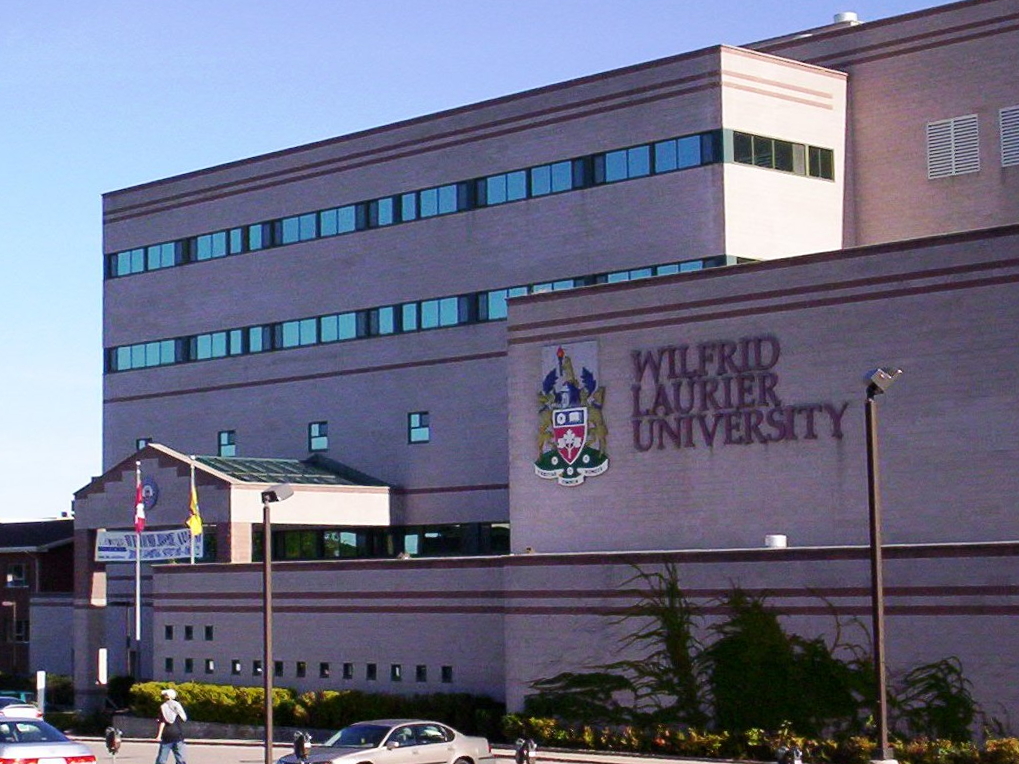
In the National Post, Barbara Kay notes how things are changing from general support of freedom of speech to cracking down on “dissent” of any nature, with WLU being a leading example:

Wilfred Laurier University in Waterloo, Ontario. This photo taken from University Avenue shows the Maureen Forrester Recital Hall and John Aird Centre, 23 September, 2005.
Photo by Radagast via Wikimedia Commons.

My editor, a man in his prime, recently tweeted bemusement that his older readers often preface their emails to him with allusions to their age (“as a 75-year old man …” “I’m an 82-year old woman …”).

I know these readers. Or others like them.

When my oldie readers introduce generation markers in their emails, it’s generally a semaphore signifying bewilderment at a cultural landscape so utterly changed from their youth, they cannot find their bearings. I empathize with these readers because, an oldie myself, I share their anxiety at the continual erosion of classic liberal principles we took for granted as permanent. Especially the freedom to dissent from popular views.

[…]

If you had told us in our youth that one day students would be screaming obscenities and blaring horns to prevent presentations by visiting speakers whose opinions they dislike, as happens frequently in American universities and occasionally in Canada, we would have been shocked. If you had told us that someday a graduate student who exposed her class to a range of opinions on a controversial subject — the norm in my university experience — would be officially censured for including the views of a conservative commentator because his views might “harm” students, we would have been gobsmacked.

Lindsay Shepherd’s 2017 recording of her disciplinary session at Wilfrid Laurier University for the crime of exposing her students to Jordan Peterson’s views on compelled speech brought her to national attention. (Peterson was compared to Hitler by one interrogator. A defamation lawsuit by Peterson against WLU is in progress.) The broadcast of the ruthless performance that reduced Shepherd to tears was a pivotal teaching moment in the illiberalism that governs academia in the name of diversity, equity and inclusion.

Shepherd was the only adult in that room. But she was already an exception to the rule in her cohort, and the chances of another such act of dissidence by a WLU graduate student are slim to vanishing.

July 14, 2020

Then they came for the nursery rhymes

Filed under: Humour, Politics, USA — Tags: , , , — Nicholas @ 03:00

James Lileks illustrates just how easy it is to construct a case to cancel a children’s song:

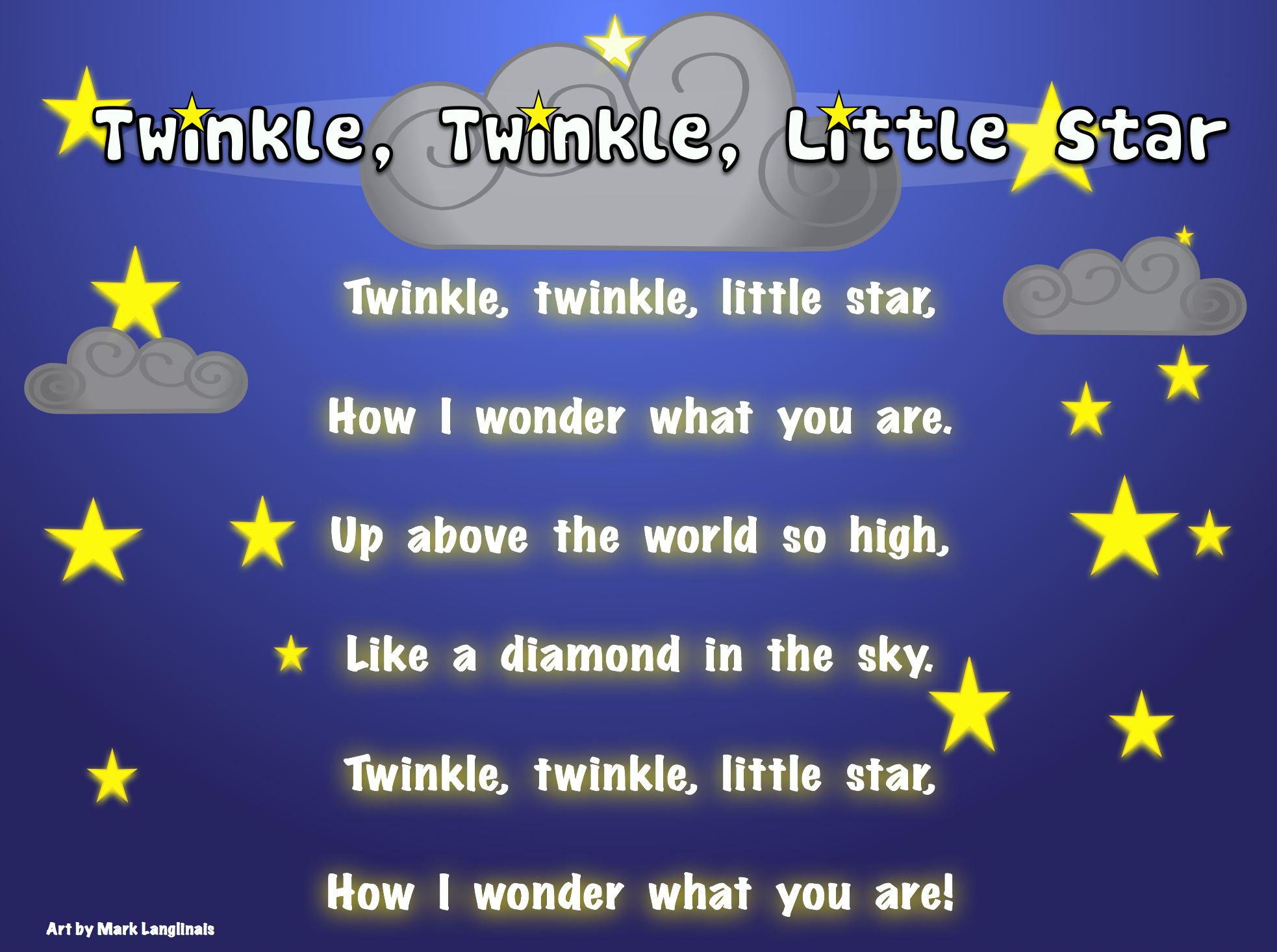
Image from The Kindergarten English Blog, https://markblogsfromjapan.wordpress.com/page/4/

At some point the mob will run out of things to cancel. All the low-hanging fruit1 will have been plucked to make smoothies for the commune. Wrongthink professors, authors, movies, newspaper columnists — easy enough. After that? Well, if you’re really going to root out systematic systemism, everything has to go. This means someone will eventually be tasked with canceling children’s songs, or recasting them for the new era. Pity the person who has to find the problematic problems in “Twinkle, Twinkle, Little Star.”

It’s not that hard. Take the first line: The very idea that stars are supposed to twinkle locks them into a societally prescribed mode of behavior. Expecting a star to twinkle is like telling a strange woman on the subway to smile. Strong, troublemaking stars explode! The very idea that we want “little” stars to engage in performative “twinkling” negates the life experience of massive gas giants like Betelgeuse. In fact “twinkling” itself strips the star’s identity and expresses it through the eyes of the beholder, who mistakes the effect of the atmosphere on star observation for the star’s true nature.

Okay, now we’re getting somewhere. Whew! Turns out there’s a lot to unpack.

How I wonder what you are.

Well, you wouldn’t if there weren’t racism in STEM that kept people out, but no, that’s not right. STEM is bad because it uses the Western empirical model to determine “facts.” Better: The speaker’s questions about the star arise from the suppression of the rich history of Arab astrological knowledge. So it’s a lesson in the ways Islamophobia prevents a greater understanding of the world. Next!

Up above the world so high, like a diamond in the sky . . .

Hold on, hold on … okay, got it. The star’s remoteness is a metaphor for the entrenched power system and encourages a sense of powerlessness. The choice of a “diamond” is intentional, reminding the child of the commodification of natural resources and the brutal economies of the industries that extract them …

1. Just this morning, I saw a call to cancel the expression “low-hanging fruit” because it might remind people of lynching.

July 11, 2020

The “Puritan Moment” of The Current Year

Filed under: Britain, History, Liberty, Politics, Religion — Tags: , , , , — Nicholas @ 05:00

Nigel Jones on the long history of struggle between British puritans and libertarians:

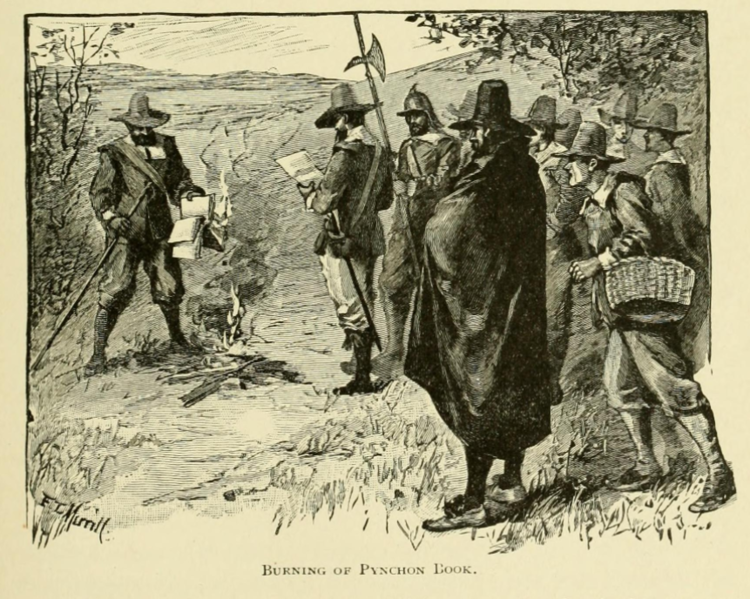
Portrayal of the burning of copies of William Pynchon’s book The Meritous Price of Our Redemption by early colonists of the Massachusetts Bay Colony, who saw his book as heresy; it was the first-ever banned book in the New World and only 4 original copies are known to survive today.
Engraving by F.T. Merrill in The History of Springfield for the Young by Charles Barrows, 1921.

Behind the wave of Wokeism that has swept and is now swamping Anglo-American Culture, is a pattern that has recurred throughout British History since the early 17th century. This is the pendulum that regularly swings between periods of joyful Libertarianism and purse lipped Puritanism.

Puritanism takes its name from the Calvinist religious movement that arose during the Protestant Reformation, partly in reaction to the explosive cultural Renaissance of the Elizabethan era – the age of Shakespeare, Marlowe, Ralegh and John Donne.

The Puritans exported their austere doctrines to America aboard the Mayflower, where they eventually became one of the building blocks of the USA, and briefly achieved political power in England after the Civil War in the forbidding guise of Oliver Cromwell’s Commonwealth.

We all have a mental picture of the Puritans in action. Sombrely dressed in black and grey, smashing the statues of saints, preaching their varied versions of the scriptures, and policing and banning anything when they suspected people of enjoying themselves, from Christmas festivities, to theatres, to fornicating for pleasure rather than reproduction. The Puritans endeavoured to dictate what people could think, speak and write. If this rings any bells with Wokeism, that is surely not coincidental.

There was an inevitable vengeful reaction to this po-faced culture of control and repression, and it soon came with the Restoration of the monarchy in 1660. King Charles II exemplified in his own libidinous person, with his myriad mistresses and tribe of illegitimate children, the loose culture of license that spread out from his court like a stain. This was the easy going Age of Lord Rochester and Nell Gwynn, so disapprovingly, if hypocritically, frowned on in the diaries of Samuel Pepys and John Evelyn. More darkly, the Puritan Regicides who had beheaded Charles’s father were hung, drawn and quartered along with Cromwell’s exhumed corpse.

The Libertarianism ushered in by the Restoration had a much longer run than the initial rule of Puritanism had enjoyed. It lasted through the Georgian Age of the 18th century, culminating in the decadence of the Regency bucks and Queen Victoria’s “wicked uncles”. Puritanism made its comeback with the accession of Victoria herself, with her eponymous reign infamous for its crinolines, covered piano legs, cruel persecution of that supreme Libertarian Oscar Wilde, and its massive hypocrisy – a constant adjunct of Puritanism when it comes up against the incontrovertible facts of life and human nature.

Neatly coinciding with the reign of Victoria’s despised eldest son, Libertarianism returned in the portly shape of Edward VII in the opening decade of the 20th century to which he gave his name. As during the Restoration, the ruling elite again set the tone of the Edwardian era with their shooting and hunting, their discreet adultery at country house weekends, and their lavish clubs and parties.

July 10, 2020

Freedom of speech – a tool to be discarded when your opponents try to use it

Filed under: Liberty, Politics, USA — Tags: , , — Nicholas @ 05:00

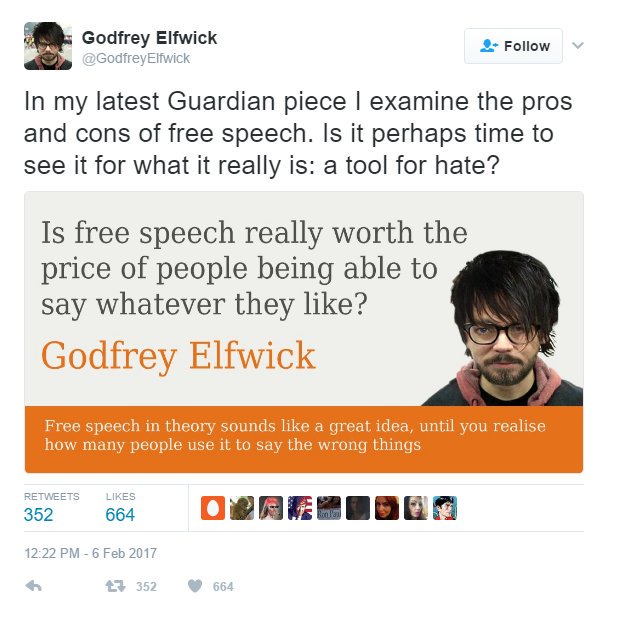
Arthur Chrenkoff discusses the recent uproar among progressives over an open letter calling for respect for free speech … when the “wrong kind of people” started signing on:

Godfrey Elfwick’s disturbingly accurate summary of free speech support among the woke.

So how did it come to this on a meta-level – how did the left, which for a long time championed ideas like freedom of speech, come to be the new censors and book burners?

The answer is short and simple: power.

Thanks to its Marxist heritage, the left is all about power. Who has it, who doesn’t (Lenin’s famous ur-question “who whom?”), how to get it. Power and power relationship is the ultimate touchstone and lodestar, the prism through everything else is seen and judged. Everything, including morality – what’s right, what’s wrong – flows from the position in this binary system (and with power it is a zero-sum game: you either have it all or you have none).

Turkish Islamist president Recep Erdogan has once famously said “Democracy is like a streetcar. When you come to your stop, you get off.” The stop – the end – is power; democracy is the mean to the end.

So it is with the left and freedom. The left was pro-freedom when it was on the way up. Being pro-freedom helped them achieve their objectives. Freedom of speech, for example, was important because it guaranteed them the ability to spread their ideas.

Now the left has the power, if not in all respects and in equal measure, certainly as far as culture is concerned, where it enjoys near hegemony. Being on top it doesn’t need freedom of speech anymore. Quite the contrary: freedom of speech now enables its critics to challenge their ideas and their position. Debate is a waste of time and effort, much better and more efficient is to silence any dissenting voices.

It’s never about principle – it’s about the side (yours) and power (yours to gain and keep).

July 7, 2020

L. Neil Smith on the Progressive agenda

Filed under: Economics, Media, Politics, USA — Tags: , , , , , , — Nicholas @ 05:00

His latest article in the Libertarian Enterprise:

For the full length of the last century, Western culture has been commanded by the blind, deaf, but never speechless entities who see things stubbornly as they prefer to see them, and “dream the impossible dream”, rather than see them as they really are. This mental habit has led to various messes that we find ourselves in today. To any extent that it might help us to get out of those messes, it might help to understand how we got into them.

Don’t look to the wrong assistance. Psychology, for example, is nothing at all like a science and those who practice it are nothing at all like scientists. Mostly they’re hyper-opinionated liberals. No two shrinks ever agree on a diagnosis, and official definitions of various mental illnesses are a grammatical and logical laugh riot. The great truth of life is that understanding character is an art, best left to master novelists and story-tellers.

Although they’ll seldom admit it, even to themselves, so-called Progressives know by now that they are wrong, that they have always been wrong. You might say that their wrongness has stood the test of time. So what is it that they really want? Their high-flown theories and values having failed them embarrassingly — a good example of that is the minimum wage, which destroys employment for entry-level and minority youth — rather than seeking new theories and values that might serve them and everybody better, they have turned to a kind of bitter nihilism. They hate and fear the society that has stubbornly refused to bend to their wills, and so it must die. Every single policy recommendation that they make — like the $15 minimum wage, for example, or defunding the police — is directed to that purpose.

Another good example would be “gun control”, which its opponents correctly label “victim disarmament”. As unconstitutional political pressures on private gun ownership increased, and self-defense culture was forced to organize itself (contrary to liberal belief, gun companies and the National Rifle Association were followers in this, not leaders) existing gun laws were gradually weakened. It became easier to obtain and carry a weapon — and necessary, in the view of those of us “delorables” who were constantly being threatened by left-wing political figures. During the Obama-Biden regime, at least 100 million guns were sold. And as they were, violent criminality began to decrease in double digits.

Today, except for many liberal-dominated hell-holes like Chicago, New York, San Francisco, Atlanta, Baltimore, Detroit, and a dozen others, Americans are headed to 19th century crime levels. Did Progressives ever notice or admit that crime had diminished? They did not. The process conflicted with their erroneous belief system, so they still call today for various measures punishing firearms manufacturers and retailers, and disarming individuals who have solved the problem that the politicians and the police have only made much worse for decades.

And so it goes, in all such matters as economics, education, the environment, nutrition, and everything else. Psychologists (who, like a broken clock, are right just this once) call the phenomenon projection: if Progressives can’t run their own lives (and very largely, judging from the kids they raise, they can’t), naturally that makes them and the rest of the bizarre menagerie that was typical of the Obama-Biden Administration qualified to run everybody else’s lives. And because Progressive policies are (at least one hopes) unconsciously suicidal, the rest of us are in for a rough ride.

July 6, 2020

QotD: The special moral insight of children

Filed under: Liberty, Politics, Quotations, USA — Tags: , , , , — Nicholas @ 01:00

The idea that children, in their innocence, have special moral insight goes back a long way in Western culture — perhaps to the biblical injunction that, “Except ye be converted, and become as little children, ye shall not enter into the kingdom of heaven.” It has, of course, always warred with some variant of the belief that “children should be seen and not heard” — that children are not yet ready to hold up their end in adult conversations.

So when does the special moral insight of children manifest itself? When they are telling us that algebra is a stupid waste of time and the drinking age should be 14? No, funnily enough, children are only gifted with these special powers when they agree with the adults around them. Our long-standing cultural dichotomy lets adults use them strategically in political arguments, to push them forward as precious angels speaking words of prophecy to make a point, and then say, “hush, they’re just kids” when the children mar that point by acting like, well, children.

Adult organizations helped organize the walkouts, while casting them as a pure expression of youthful insight. Liberal communities proudly enabled the walkouts; liberal parents posted gushing accounts of their children’s protests on Facebook; liberal elite universities rushed to assure kids that walking out wouldn’t hurt them on college applications. Conservative communities, meanwhile, threatened to enforce the rules against disrupting class time. So the protests often ended up a better reflection of adult priorities than childish wisdom.

[…]

That is not to say that gun-control advocacy is stupid. But if you wouldn’t be swayed by a 17-year-old’s passionate advocacy for a lower drinking age — or for that matter, their ideas about Federal Reserve policy — then you should probably apply those same cautions to their other views, especially when they’re under so much pressure to conform. There’s nothing particularly wrong with Wednesday’s mass walkouts. But there’s nothing especially right about them either.

Megan McArdle, “The student walkout said more about adults than kids”, Washington Post, 2018-03-15.

« Newer PostsOlder Posts »

Powered by WordPress