Quotulatiousness

November 13, 2021

QotD: Boris Johnson as Billy Bunter, the “Fat Owl of the Remove”

Filed under: Books, Britain, Humour, Politics, Quotations — Tags: , , — Nicholas @ 01:00

One can only suspect some insidious intent – or trolling, if one wishes to call it by its proper name – when the Scottish police force had to rename the operation designed to protect Boris Johnson in his current visit to the country. It now rejoices in the unexceptional title of “Operation Aeration”, but until it attracted adverse publicity, its original name was “Operation Bunter”.

Although a spokesman for the Scottish police said, with tongue so far in cheek that it was astonishing they could speak, “Operational names are auto-generated by computer and can be changed if they are deemed to be inappropriate”, the comparison between the Prime Minister and Frank Richards’ legendary creation Billy Bunter, the “Fat Owl of the Remove” is a far from flattering one.

In Richards’ stories, Bunter is a gluttonous, lazy, dishonest and academically negligible student at Greyfriars School in Kent, forever attempting to obtain loans from his fellow schoolboys on the promise that a non-existent postal order is going to arrive from his wealthy relatives at “Bunter Court”. It is made clear that, for all his fantasies of wealth and success, Bunter’s home is in fact the considerably more modest “Bunter Villa”, which possesses merely one maid and one cook. Richards therefore invites his readers to condemn Bunter as an arriviste to the English public school system, amongst his many other sins. He is repulsive in appearance, significantly overweight, perpetually dirty and often given to thoughtless instances of racism and xenophobia. And his famous catchphrases – “I say, you fellows!” and, when he is being beaten, kicked or otherwise abused, “yarooh!” – are irritating, rather than witty or charming.

Needless to say, the books that featured him as their lead character were hugely successful for decades, but now, in our more censorious and self-aware image, have fallen into obscurity. None of them are currently in print, and the last time that any of the novels were reissued was in the early Nineties. When the news story about Operation Bunter broke, many papers had to explain exactly who the character was, and why the allusion was apposite. While the milder likes of Jennings and William continue to be much loved by parents and grandparents of a certain generation, Bunter and his fellow denizens of Greyfriars have found themselves condemned to a kind of literary Siberia, and show few signs of coming in from this particular cold. Is there any hope that some literary-minded minister will intervene and aid the Fat Owl’s rehabilitation? Or are the books simply too outrageous and un-PC for our contemporary tastes?

Alexander Larman, “Boris Bunter”, The Critic, 2021-08-09.

November 10, 2021

When the police get posh – “The ruling class needs a woke paramilitary vanguard for when the people revolt”

Filed under: Britain, Environment, Law, Liberty, Politics — Tags: , , , , , , — Nicholas @ 03:00

In The Critic, Harry Miller decries the comfortable middle- and upper-middle-class wokesters who can posture and protest and cause mass disruptions to the workers and lower-middle-class with impunity, because on the very few occasions they are brought to court, the judiciary demonstrate that their hearts are with the posh protest movements, not with the people:

Of course, there is a risk when elected leaders burn up the air miles to feast with the Bacchanalian elite, whilst simultaneously preaching that climate armageddon will only be avoided if the hoi polloi ditch their cars and, once a week, take the peasant wagon to Lidl. When “let them eat cake” becomes “let them eat insects and plant based mash”, there is a heightened risk that the working class will take to the streets to sing “One Day More” with a spare rib in one hand a pitchfork in the other. And it is the working class which poses the threat as the middle class can afford to make a virtue of its suffering. Trading in the Discovery Sport for a hybrid Mini Countryman and a bag full of social bragging rights is substantially different from having to choose between putting on the heating and a week on the beer in Faliraki.

In anticipation of the backlash the government has turned a blind eye to the politicisation of the police and is now recruiting exclusively from the middle class. Why else do you suppose a career in the police is now only open to those with a degree? The ruling class needs a woke paramilitary vanguard, well versed in the etiquette of uncritical obedience, for when the people revolt.

When the police embrace a political cause, there is no expression of support that is too extreme. Humberside Police endorsed a lunatic with connections to organised crime who once told Julie Burchill, a writer of Jewish heritage, that Hitler had the right idea. And the national lead on Hate Crime, Paul Giannasi OBE, recently introduced the concept of laudable hate, provided it serves middle class preoccupations such as gender identity or preserving the tundra.

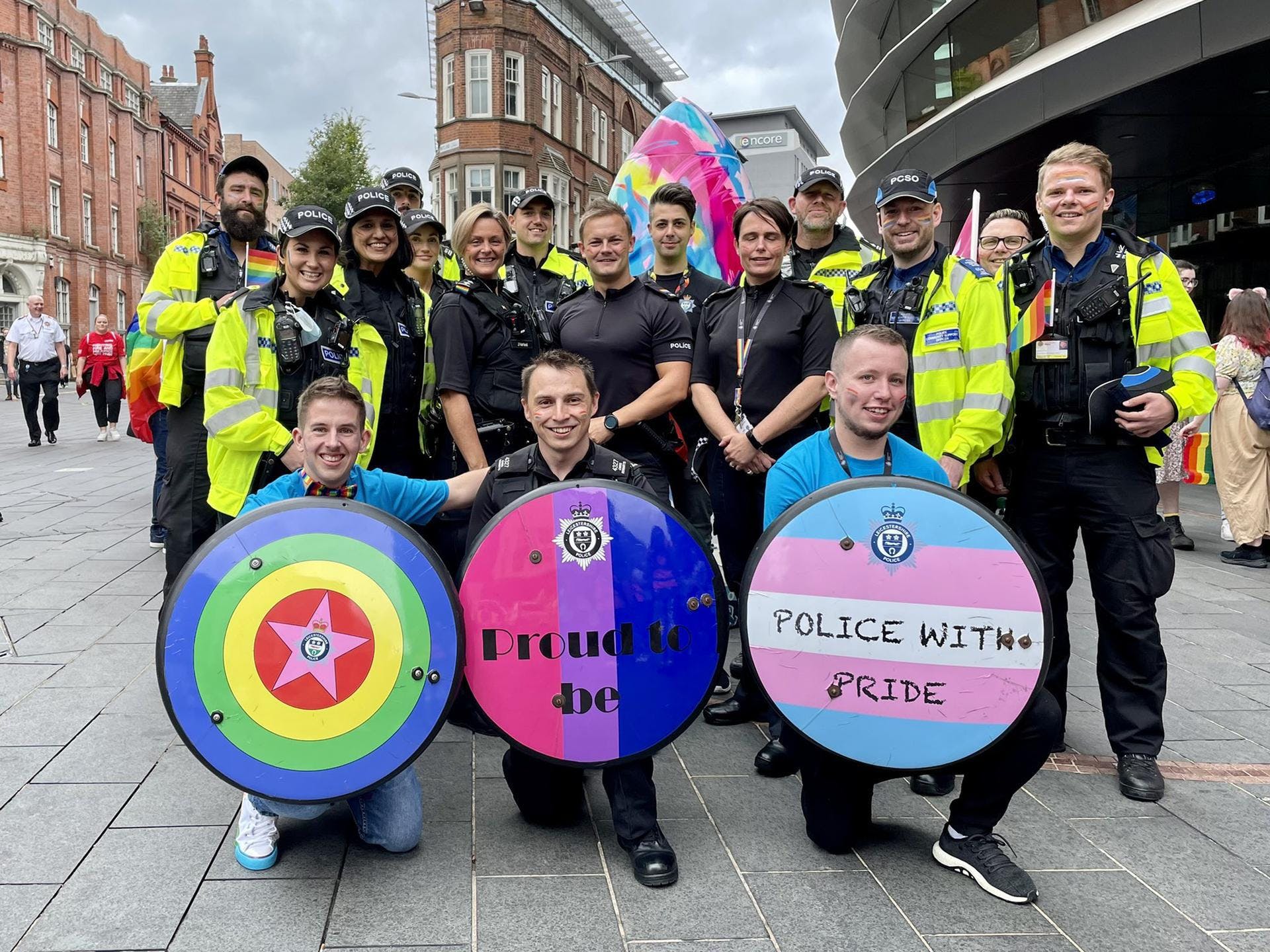
And then there is the obscene spectacle of politically sponsored riot shields being paraded by the police through the streets of Leicester. We are meant to swallow the lie that this is a benign display of support for a marginalised community when, in reality, it is an emblematic reminder to the working class to Remember The Battle Of Orgreave. On the 18th of June, 1984, ordinary working people lent their support to the picketing miners and were met with a baton charge, preceded by the pounding of riot shields, in scenes reminiscent of Zulu. Lest they forget.

Photo from The Critic

The crimes of the woke middle class, where they are prosecuted at all, come with the safety net of a judiciary that is also in on the racket. When six XR zealots found themselves in the dock for progressing the cause of Greta Thunberg by taking hammers to the glass frontage of Shell’s London Headquarters, Judge Gregory Perrin advised that their actions had no defence at law. Nevertheless, he offered gratitude for the care and diligence taken by the jury when it returned a not-guilty verdict. Last week, three activists were found guilty of criminal damage for graffitiing “Lies, lies, lies” on the Westminster Office of the Global Warming Policy Foundation in response to its sin of climate scepticism. Before being slammed with peppercorn fines, the criminals — Clare, Jessica and Rupert — were praised by the bench for their openness and honesty. It is yet to be seen whether similar leeway will be afforded to working class criminals who, in pursuit of Net Zero, begin half inching insulation from Travis Perkins.

October 22, 2021

Explaining why British police clearly favour road-blocking protestors over the rights of ordinary Britons

Filed under: Britain, Law, Liberty, Politics — Tags: , , , — Nicholas @ 03:00

In The Critic, Andrew Tettenborn believes it can be traced back to a change in the oath that new police constables take and the changed emphasis in police training to support that change:

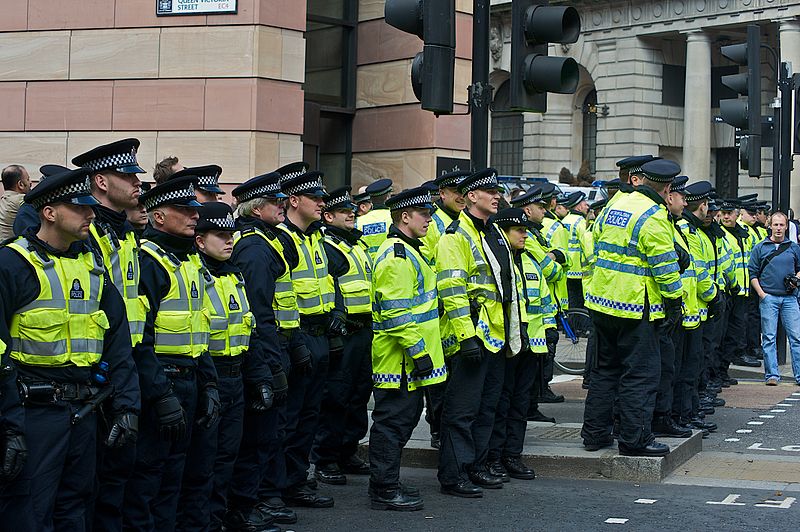
Metropolitan Police at G20 protests in London, 2009-04-01
Photo via Wikimedia Commons

Last week Insulate Britain magnanimously announced it would suspend its forcible road-blocking campaign. Apart from noting the impudence of this announcement (remember the IRA sanctimoniously calling its Christmas ceasefires, as if this were something we should be grateful for?), commentators on Twitter, the tabloid press and indeed many of the general public, have found another question troubling. Why, in the face of deliberate criminality aimed at discommoding ordinary people (most of whom will have been less well-off than many of the protesters), did the police hold back, at times apparently chatting with the obstructionists and threatening with arrest any exasperated driver who tried to take steps to remove them? We aren’t told, but we can make some educated guesses.

[…]

Nearly twenty years ago in 2002, there was a subtle, little-reported but very symbolic change in the oath sworn by all constables on appointment. Instead of the 19th century undertaking to serve the Queen “without fear or favour, malice or ill-will” in the course of keeping the peace and preventing crime, there is now a much more tendentious promise preceding the duty to keep the peace: namely, to act with “fairness, integrity, diligence and impartiality, upholding fundamental human rights and according equal respect to all people”. This requirement, thoroughly reflected as it is in police training today and imbued in policing culture, has two effects.

One is that all officers must keep at the front of their minds not only the law of the land but also two other guidelines: considerations of fairness and equality (whatever those mean), and human rights laws — something peculiarly complex and frequently opaque, even to lawyers. Human rights laws involve a subtlety well beyond the average constable called out to police a tense situation. Put yourself in the position of a policeman, faced with a choice whether to intervene in a case involving illegality and an intent to inconvenience people, but where no-one is actually engaging in violence — exactly the situation with Insulate Britain or Extinction Rebellion. You might well think that, if you wish to avoid future trouble and possible complaints of discrimination or unfairness, discretion and inaction would be the better part of valour.

Thanks to the pervasiveness of human rights culture, the constable’s traditional function of upholding the law ceases to be a black-and-white matter, and becomes a potential mire of conflicting duties. Even if the letter of the law says you should arrest a middle-aged protester or at least drag them off the M25 to prevent them obstructing it, there is always a possibility that someone somewhere will hold that this was contrary to their human rights. Once again, a cautious police officer intent on avoiding disciplinary hearings and a possible black mark, may well conclude that it is better to let sleeping dogs lie (at least for the moment), condone the illegality and avoid possible violence.

The police constable on the scene is extremely well advised to avoid doing anything that might possibly be construed as infringing on the human rights of everyone at the scene, for fear of becoming the scapegoat if clever lawyers convince a judge or jury that the police acted contrary to their revised oath.

September 25, 2021

QotD: The 2nd Amendment is obsolete because … the government has nukes?

Filed under: Government, Law, Liberty, Quotations, USA, Weapons — Tags: , , , , — Nicholas @ 01:00

Last week a congressman embarrassed himself on Twitter. He got into a debate about gun control, suggested a mandatory buyback — which is basically confiscation with a happy face sticker on it — and when someone told him that they would resist, he said resistance was futile because the government has nukes.

And everybody was like, wait, what?

Of course the congressman is now saying that using nuclear weapons on American gun owners was an exaggeration, he just wanted to rhetorically demonstrate that the all-powerful government could crush us peasants like bugs, they hold our pathetic lives in their iron hand, and he’d never ever advocate for the use of nuclear weapons on American soil (that would be bad for the environment!), and instead he merely wants to send a SWAT team to your house to shoot you in the face if you don’t comply.

See? That’s way better.

Larry Correia, “The 2nd Amendment Is Obsolete, Says Congressman Who Wants To Nuke Omaha”, Monster Hunter Nation, 2018-11-19.

September 7, 2021

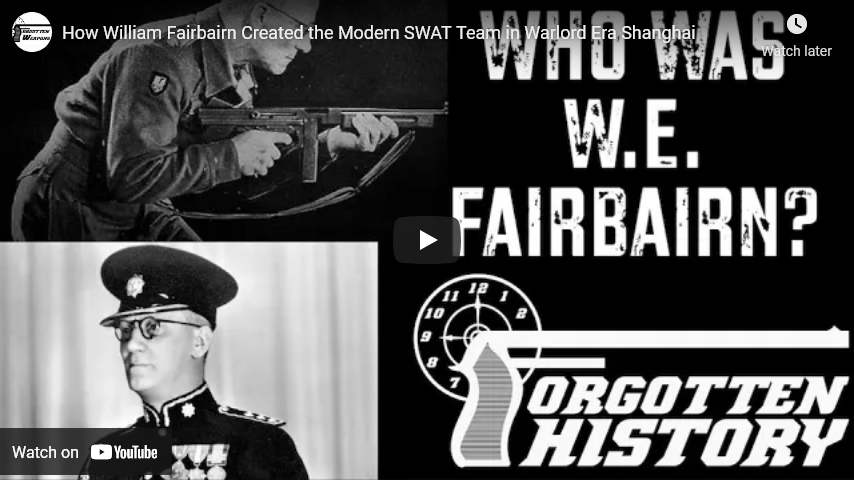
How William Fairbairn Created the Modern SWAT Team in Warlord Era Shanghai

Forgotten Weapons
Published 1 Jun 2021

William E. Fairbairn is best known for his work with Eric Sykes and their “Commando” knife design during World War Two. However, Fairbairn spent some 33 years in the Shanghai Municipal Police, working his way up from a beat constable to Assistant Commissioner. There he was responsible for the SMPD adopting truly forward-thinking fighting methods, and he essentially invented the modern SWAT team (the “Reserve Unit”, which Fairbairn led for 10 years). He combined expertise in formal marksmanship, instinctive practical shooting, and hand-to-hand combat schools (including jiu-jitsu and judo) into a comprehensive training program like no other on earth at the time.

Book references:
The World’s First SWAT Team, by Leroy Thompson:
https://amzn.to/2TrYiNv

Gentleman & Warrior, by Peter Robins:
https://amzn.to/3vuODn9

http://www.patreon.com/ForgottenWeapons

https://www.floatplane.com/channel/Fo…

Cool Forgotten Weapons merch! http://shop.forgottenweapons.com

Contact:
Forgotten Weapons
6281 N. Oracle 36270
Tucson, AZ 85740

September 1, 2021

Larry Elder’s campaign for governor hit with accusations of “white supremacism”

In City Journal, Heather Mac Donald looks at the recent hysterical attacks on gubernatorial hopeful Larry Elder based on the notion that he is somehow a kind of stalking horse for white supremacists:

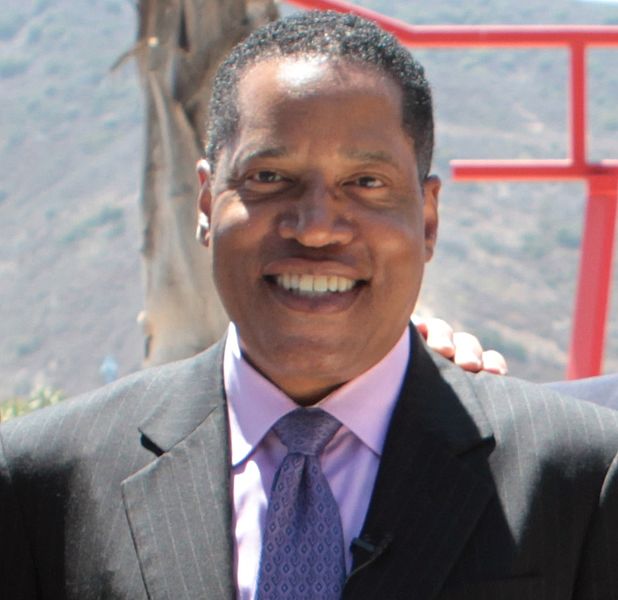
Larry Elder at Camp Pendleton for the ceremony presenting the Congressional Gold Medal posthumously to his father, Staff Sergeant Randolph Elder, U.S.M.C., 16 August, 2013.
US Government photo in the public domain via Wikimedia Commons.

The possibility that Larry Elder may win California’s recall election against Governor Gavin Newsom is generating acute anxiety in the mainstream media and among the activist Left. Elder’s foes are responding with their favored means of destruction: by playing the race card. Never mind that the nationally syndicated talk show host is black. A series of opinion columns and editorials have accused him of being a white supremacist, or at the very least a shill for other white supremacists. Elect Elder and California will reinstate Jim Crow, state senator Sydney Kamlager, a Democrat from Los Angeles, has warned.

The media have focused particularly on Elder’s views about crime and policing. The self-described “Sage from South-Central” maintains that criminals, not the police, are the biggest threat in the black community. According to Elder, the false narrative about lethal police racism has only led to more black homicide deaths. “When you reduce the possibility of a bad guy getting caught, getting convicted and getting incarcerated, guess what? Crime goes up,” he said recently at a campaign event in Orange County.

Elder also rejects the charge that white civilians are gunning down blacks, as LeBron James maintained in a tweet during the George Floyd riots: “We are literally hunted everyday, every time we step outside the comfort of our homes.” Elder has a different take. If a “young black man is eight times more likely to be killed by another young black man than [by] a young white man,” Elder told the Orange County Republicans, then “systemic racism is not the problem.”

Such statements are anathema to the establishment Left, deeply invested as it is in the idea that blacks have little agency in the face of ubiquitous white racism. Few subjects are more taboo in elite discourse than the elevated rate of crime among blacks, as it suggests cultural pathologies that — at the very least — complicate the victim narrative. To the Left, black crime is little more than a racist fiction. Los Angeles Times columnist Jean Guerrero claims that the crime statistics Elder has cited “over the decades to support his views and policy proposals are misleading, if not outright false, casting Black people as unusually crime-prone.” Black people are not “more inclined toward violent crimes,” nor do blacks “disproportionately victimize whites,” Guerrero wrote, citing Columbia law professor Jeffrey Fagan and other criminal experts. (Fagan was the plaintiff’s expert in a trilogy of lawsuits against the New York Police Department in the 2010s.) Fellow Times columnist Erika Smith sneered that Elder “keeps trotting out statistics that purport to show that Black people are particularly prone to murdering one another.”

Unfortunately for Elder’s critics, the statistics showing vastly disproportionate rates of black crime and victimization come from some of the Left’s favorite sources. CDC data show that in 2015, for example, the homicide victimization rate for blacks aged 10–34 (37.5 per 100,000) was 13 times the rate for whites (2.9 per 100,000). That disparity is undoubtedly much greater now, given the record-breaking increase in homicides since the George Floyd riots — an increase disproportionately affecting blacks.

Those black victims of homicide are not being killed by cops or whites. They are being killed by other blacks. In Los Angeles, blacks this year have committed 46 percent of homicides whose offender is known, even though they are just 9 percent of the Los Angeles population. Whites make up 28 percent of the Los Angeles population but have committed 4 percent of homicides, mostly involving domestic violence. These data, reported by the Los Angeles Times, mean that a black Angeleno is 35 times more likely to commit a homicide than a white Angeleno. Homicide data are the gold standard for crime statistics. Alas for Jeffrey Fagan and the Los Angeles Times‘s other experts, the statistical conclusion that blacks are “more inclined toward violent crimes” is indisputable.

August 30, 2021

Mark Steyn on chocolate soldiers, tutti-frutti generals, and the ice-cream commander-in-chief

Filed under: Government, Media, Military, Politics, USA — Tags: , , , , , — Nicholas @ 03:00

When all that matters is not performance but performance art:

On the day that twelve US Marines and some 150 civilians were blown apart by suicide bombers, it was heartening to learn what real heroism is.

Until January 6th, the highlight of Michael Byrd’s “law-enforcement” career was leaving his loaded Glock in a congressional men’s room and paying no price. He “serves” with the grotesquely misnamed “Capitol Police”, which is not a police department but a praetorian guard – a personal security team for the praetors of Congress. Lieutenant Byrd shot and killed Ashli Babbitt, a 5’2″ unarmed woman, because “she was posing a threat to the US House of Representatives”.

All that has been known for months by anyone who wanted to know. The only real news in NBC’s Byrd exclusive was the level of his self-congratulation:

    I believe I showed the utmost courage on January 6.

His interviewer, Lester Holt, did not respond: “Er, hang on, isn’t that the kind of thing you’re meant to leave for someone else to say about you?”

And did he have to say “utmost”? Even in as unutterably vulgar an age as ours, is even Michael Byrd incapable of imagining any “courage” greater than his own?

Ah, well, don’t over-think it; it’s just one of those phrases, half-remembered by Byrd from some Rose Garden medal ceremony he caught on TV: “utmost” goes with “courage” like “white” goes with “supremacist” and “domestic” goes with “terrorist”.

America is a land that tends to the utmost in all things. At the end of the nineteenth century, Bernard Shaw popularized the term “chocolate soldier” — the dashing hussar who is useless in battle but looks good in a uniform. We have the tutti-frutti generals: Thoroughly Modern Milley and his chums, whose diversity ribbons from shoulder to scrotum advertise their own utmostness even as they explain why everything going wrong merely demonstrates how everything is going right.

The tutti-frutti generals report to the ice-cream commander-in-chief melting all over the lectern every afternoon. His predecessor was on telly all day every day; Mr Biden was sold to head-in-the-sand Americans as the quiet-life guy who wouldn’t be in your face. Unfortunately, when your countrymen get blown up by government blunders, the citizenry expects him to be in their faces at least every now and then. Across the Atlantic, Boris and the EU chaps were on the screen responding to an all too predictable atrocity. But in the White House Joe Biden’s meds hadn’t yet kicked in — or, conversely, they’d shot him the juice too early and it had worn off. So, as has become familiar, the melting waffle cone was hours late in tottering across the room, squinting into the camera and reading with woozy and wooden defiance. This time he gave it the full Corn Pop:

    To those who carried out this attack, as well as anyone who wishes America harm, know this: We will not forgive. We will not forget.

But Joe, a man who cannot reliably name his own Defense Secretary, has already forgotten.

July 18, 2021

A different kind of “tone policing”

Filed under: Law, Politics, USA — Tags: , , , , — Nicholas @ 03:00

John McWhorter on a recent study on interactions between the police and the general population:

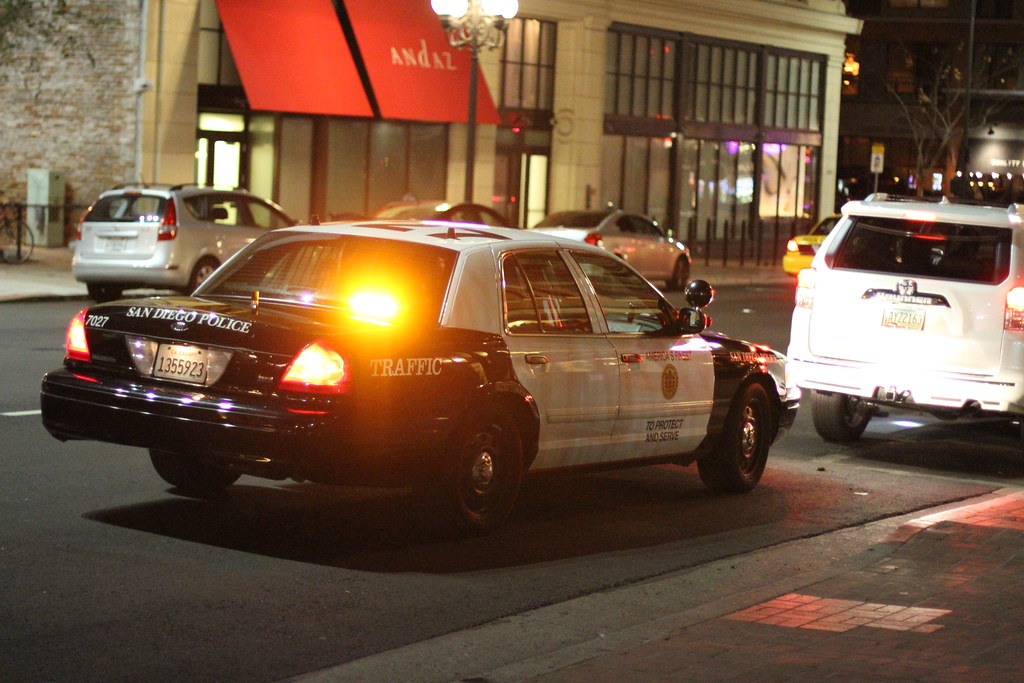
“Police stop” by San Diego Shooter is licensed under CC BY-NC-ND 2.0

A fascinating, and depressing, new study will be celebrated as revealing the subtle but powerful operations of racism. It also reveals, however, the pitfalls in the way we are taught to address that racism these days.

The study shows that police officers tend to talk in a less friendly way to black people they stop than white ones. People were played slivers of body-cam audio of the officers talking to citizens, with the content of the exchange disguised. People could tell with dismaying regularity what color person the officer was speaking to simply by the tone of voice. It wasn’t that officers outright sneer at black people. Rather, their tone with whites tends to be more pleasant, to have a hint of cheer, whereas with black people it is more impersonal, flat, unwarm.

The study also shows how these things fashion a vicious cycle. People tested who had negative experiences with cops and/or less trust in them processed even the exchanges the cops had with white citizens as less positive than other people tested did. That is, their life experience has implanted in them a distrust of the cops, that can anticipate actual interactions with them – and certainly, of course, unintentionally pollute them.

* * *

This study reminds me of something else that goes in the other direction. To whites, subtle things about black communication, including vocal tone, can come off as threatening when no threat is intended.

I once happened to hear two 30-something black men talking about a misunderstanding one of them had had at work. They were just unwinding, but there was what many might process as a tinge of impending battle in their voices, inflections and gestures. “Man, I wanted to ‘Mmmph!’ [jab of the arm, click of the tongue] Gimme a break! An’ I was like … [putting on a challenging glare] don’t even start.”

No black listener would assume these guys actually meant the hints at violence literally. However, outside listeners can hear this way of talking as edgy. Kelefa Sanneh’s term for this twenty years ago, writing about rap and its lyrics, was perfect: a certain “confrontational cadence”.

Yes, all people trash-talk. But this particular way of talking has a special place in black American culture. No, that’s not stereotyping: sympathetic black academics have documented it. CUNY’s Arthur Spears, today one of the deans of the academic study of black American speech, has written about what he calls “directness”. Speech “that may appear to outsiders to be abusive or insulting is not necessarily intended to be nor is it taken that way by audiences and addressees,” Spears noted. He then quoted a father-child exchange: Father: “Go to bed!” Little boy: “Aw, Daddy, we’re playing dominoes.” Father: “I’m gonna domino your ass if you don’t go to bed now.” Notice how awkwardly this, or Eddie Murphy’s routine about the mother throwing the shoe in Delirious, would translate into the world of Modern Family.

This “confrontational cadence” can inflect even casual exchanges between black and white people. Aspects of black intonation, steeped in a lifetime’s experience in a language culture that values performative aggression as a kind of communal élan, can sound cranky, disrepectful, and even aggressive to a white person. It is all but impossible that this does not color encounters between black people and white cops; I highly suspect a study like the first one I mentioned would reveal it.

July 17, 2021

QotD: “Magic” bullets

Filed under: Business, Humour, Quotations, Technology, USA, Weapons — Tags: , , , — Nicholas @ 01:00

As I write this, another wave of ballistic hyperbole is sweeping across the Internet. There’s a new bullet out! It sets the paradigm on its ear! Gun owners are drooling for this, the last bullet you’ll ever need! Blah, blah, blah, yakkity-shmakkity.

Stick around long enough and you’ll notice this phenomenon happen every few years. You’re sitting there, minding your own business, and the next thing you know, friends from work or church or the book club who know you as “The Gun Expert” are coming up to you and asking about this bullet that’s being hyped in the mainstream media as either the surest felon-stopper since Wyatt Earp or the biggest menace to society since John Dillinger.

It’s rare for something as esoteric as a projectile design to come to the attention of the non-gun press. Generally, for that to happen, it takes one of two things: either a mainstream manufacturer made an unusually poor PR choice in the bullet naming *cough*BlackTalon*cough*, or someone has launched a buzzword-laden press release with all the discrimination of a desert island dweller putting notes in bottles.

[…]

When a new Magic Bullet is launched and makes media waves, I always apply two filters as to whether it’s worth chasing down. The first filter is “Are the police using this?” This is not necessarily because I think that the police are all-that-and-a bag-of-chips in the gear-selection department, but they’ve generally been okay with bullets for the last 15 or 20 years and, should I ever have to justify my choice of rounds in a courtroom, it would be nice to be able to say “You, alright! I learned it by watching you!” like the kid in the commercial.

The second filter? The second filter is “Is this cartridge sold in six-round blister packs with pictures of explosions and rappelling ninjas on them?” Because if it is, well, I’m just not Operator enough.

Tamara Keel, “No Magic Bullet”, GunsAmerica Digest, 2018-11-27.

July 7, 2021

The “Squirrel!” distractions will end when it’s convenient for certain people and groups

Jay Currie considers the constant barrage of distractions that appear to be preventing most people from noticing what is actually going on in Canada:

Kamloops Indian Residential School, 1930.
Photo from Archives Deschâtelets-NDC, Richelieu via Wikimedia Commons.

The remarkable thing about all of these little snippets of news is that they seem to be regarded as business as usual. Being taxed by an inflation rate which is well into the double digits does not cut through the COVID hype. Vandalism and arson purportedly in rage over residential school deaths which we have known about for decades attracts very little comment – though many First Nations people are not very happy that reservation churches which have served their communities for years are being burnt. People seem to shrug off the heat wave deaths and ambulance delays.

I expect very little from government at any level. A reasonably sound currency, a degree of public order and emergency services which can deal with the inevitable surges in demand.

The emergency services issue is probably the most easily fixed. Yes, having more para-medics is part of the solution but planning a reponse to these sorts of surge emergencies which tries to avoid the need for an ambulance in the first place is important too. Most of the dead were old, in many cases, very old. It should not be impossible to identify those older people and have a plan for these sorts of emergencies. Something as simple as a “Helpful Neighbour” program on a voluntary basis would be a good first step.

Restoring public order is more complicated. First, you have to have the political will to actually take on the problem. As we saw a couple of years ago, when it comes to people purporting to act on behalf of First Nations/environmental causes that will is absent. But even if the politicians decided that enough was enough there needs to be an investigation and an understanding of how the “spontaneous” vandalism and arson and blockades are driven. That is going to require rooting around in the activist community which will be, to say the least, difficult. The people who are actually creating the public disorder pay close attention to operational and communications security. Suffice to say this stuff is not being organized on a Facebook page.

Restoring order is also going to require a look at who benefits from disorder. To take an example: was it co-incidence that the sad fact of the Kamloops residential school graveyard came up just as the inquiry into Canada’s Winnipeg Lab’s connection to the Wuhan virology lab was heating up? The fact of there being a graveyard had been know for decades. The ground radar was being used to determine the boundaries so a new fence could be built. Yet, somehow, the number of bodies became headline news. I suspect, but cannot prove, that this was no accident. Public order will be restored when disorder is no longer in anyone’s interest.

June 21, 2021

“The public are getting a little bit fed up of virtue-signalling police officers when they’d really rather we just locked up burglars”

Filed under: Britain, History, Law, Politics — Tags: , , , — Nicholas @ 05:00

Gawain Towler on the sudden, unexpected — and undoubtedly unwelcome to self-appointed guardians of the official narrative — appearance of what sounds surprisingly like common sense from a top police officer in Britain:

“A Safe Escort” by Harry Payne (1858-1927), first published in August 1911 but possibly painted a few years earlier. From the back of the card: “Among the hundred and one duties of the London Policeman he is here depicted as a kindly protector, halting the traffic as he escorts a Lady across the congested streets. This is essentially a London incident, and has no parallel in any other Police Force in the world.”
Photo of the Tuck’s Oilette by Leonard Bentley via Wikimedia Commons.

Has Robert Peel been reincarnated as the Chief Constable for Manchester?

“But officer, if you are not on your knee, and wearing a rainbow lanyard, how do we know that you are on the side of the oppressed, the intersectional, the poor, downtrodden graduates of minor universities?”

“I’m sorry madam, may I call you madam? I am on the side of the law.”

The promotion of Stephen Watson as the new Chief Constable for Manchester comes as a shaft of light cutting through the murk of muddled thinking. He has said two things that will resonate with millions and will cause consternation amongst thousands:

    I would probably kneel before the Queen, God and Mrs Watson, that’s it … The public are getting a little bit fed up of virtue-signalling police officers when they’d really rather we just locked up burglars.

It sounds like the first blast of the trumpet, but not only does it strike an astonishingly different note than the honky tonk tunes played by other constabularies. Stentorian and self confident it also marks a huge departure in that he makes a very public statement that he would kneel before God. A very courageous statement in the current climate in itself. But it is his approach to policing that strikes the eye.

One almost feels that as was once the case, each new officer in the Manchester Metropolitan Area will be issued with Sir Robert Peel’s 1829 Nine Principles of Policing. It is worth our while looking at those principles and deciding whether or not to accept that they should remain at the core of policing, or be junked as impossibly dated.

What is clearly apparent is that Peel’s principles are at heart about consent. Famously it described the police as merely the citizens in uniform, or that “the police are the public and that the public are the police, the police being only members of the public who are paid to give full time attention to duties which are incumbent on every citizen in the interests of community welfare and existence”.

Underlying this basic thought is an understanding that the police rely, entirely on the goodwill of the populace, if they wish to carry out their basic duties. In order to fulfil their functions and duties they are “dependent on public approval of their existence, actions and behaviour and on their ability to secure and maintain public respect”.

March 27, 2021

“Unfortunately for the RCMP, obstruction of justice and tampering with evidence is very much a criminal offence and it looks like the boys in red should lawyer up”

Filed under: Cancon, Law — Tags: , , , , — Nicholas @ 03:00

An investigation into the conduct of the Royal Canadian Mounted Police (RCMP) shows an organization that firmly believes — and acts — as though it is above the law:

To its credit, RCMP leadership accepted the findings of the CRCC [Civilian Review and Complaints Commission]. But the rank and file membership, the actual police officers who interact with the public, and their union, have rejected the report, calling it biased.

All of this is a stain on Canada’s top law enforcement agency, and part of a deeper failure by the RCMP to meaningfully address its own reluctantly acknowledged systemic racism toward Indigenous peoples, but it is far from criminal misconduct.

Unfortunately for the RCMP, obstruction of justice and tampering with evidence is very much a criminal offence and it looks like the boys in red should lawyer up.

In the course of the CRCC investigation, the commission requested all recordings, transcripts, and radio communications from the day of the shooting. These communications would have undoubtedly been important to the investigation and could have provided a window into why the RCMP engaged in illegal and discriminatory conduct.

But the RCMP destroyed those records. They claimed that it was part of a routine procedure and that records with no evidentiary value have a shelf life of two years. Except the RCMP knew that there was an ongoing CRCC investigation and a civil lawsuit by the Boushie family when they destroyed the records.

If you or I destroyed relevant records, while staring down a barrel of a civil lawsuit or investigation, we would end up before a judge on charges.

Every time I ask the RCMP to destroy records relating to my clients who have been acquitted at trial, even after years have passed, I am met with a wall of resistance. So it seems a bit convenient when relevant documents are so easily destroyed when it is the RCMP who are being investigated.

The CRCC report also discloses that the RCMP conducted a parallel investigation into the Boushie incident — with officers questioned and evidence gathered. This RCMP investigation not only potentially contaminated the CRCC inquiry, but the RCMP kept their investigation a secret and failed to disclose the fruits of their internal investigation to the CRCC.

This all reeks of a cover up and an attempt to obstruct justice.

March 23, 2021

The Beretta PM-12S Submachine Gun

Filed under: Europe, History, Italy, Military, Weapons — Tags: , , , — Nicholas @ 02:00

Forgotten Weapons
Published 22 Apr 2017

For several decades, the Beretta company’s handguns and submachine guns were nearly all designed by the very talented Tulio Marengoni … but nothing can last forever. After World War 2, Beretta engineer Domenico Salza began working on a new SMG design, one which would be more compact and more controllable that the M38 family. At roughly the same time, Beretta changed its naming convention to avoid looking like it was still marketing old guns; the Model 38/49 become the Model 1. Each new design took the next number, until in 1958 the Model 12 was introduced.

The Model 12 (and this improved Model 12S) has both forward and rear pistol grips, and a bolt which wraps around the barrel well forward of the chamber. This movement of the reciprocating mass forward helps reduce the gun’s tendency to climb, and makes the Model 12 a quite capable design. It is still in common use with a variety of military and police forces today — including being a common sight in the hands of security guards in Italy today.

http://www.patreon.com/ForgottenWeapons

Cool Forgotten Weapons merch! http://shop.bbtv.com/collections/forg…

If you enjoy Forgotten Weapons, check out its sister channel, InRangeTV! http://www.youtube.com/InRangeTVShow

November 28, 2020

Showdown at the O.K. BBQ joint

Filed under: Business, Cancon, Government, Health, Law — Tags: , , , , — Nicholas @ 03:00

Toronto police reacted with overwhelming force to a rebellion centred on a small business in Etobicoke, intending to overawe any more potential lockdown opponents on Thursday. Jay Currie is of the “worse before better” school on this particular flare-up of public sentiment:

Well over 100 Toronto police officers and at least ten horses shut down Adamson’s BBQ today. They arrested the proprietor for “trespass” on his own property.

His sin was, of course, opening when Toronto is under “lockdown”. And then opening again and then, today, getting around the changed locks on his premises and opening again.

Now there will be plenty of people who will say, “Well, it’s the law and necessary if we are going to ‘stop the spread'”. But I suspect there will be a strong minority who will say, “Lockdowns don’t work and Costco is in full operation a block away.” Have at it, my interest is in the show of force.

For the City of Toronto and the Province of Ontario, Adamson’s was a point of rebellion which had to be crushed. At any cost. If Adamson’s was able to open the entire pandemic lockdown regime would collapse. So out came 100+ cops and the horses. (I was surprised there was not a tactical vehicle or two.)

Given that there were all of about a hundred people at the BBQ spot today this was more than sufficient force to ensure Adamson’s would not be able to open. No doubt Mayor Tory and Premier Ford are pretty sure the job is done. Adam Skelly, the owner, is cooling his heels in custody pending a bail hearing. (If that hearing goes as I expect, there will be compliance conditions attached to his bail, namely no re-opening.)

Big government relies upon the general complacency of its citizens. A couple of hundred people showing up to a BBQ joint can be handled with a large police presence. A couple of thousand? Much more difficult. 20,000, not a chance.

I keep saying to my very worried wife, “Worse before better.” Which means that before there is any chance that reason, moderation and good government is restored, things have to get a lot worse. On the left, groups like BLM and Antifa work very hard to create martyrs for their narrative. So far with limited success. Adam Skelly may have set in motion the process which will make him a living martyr for common sense and a degree of justice.

As of Friday morning the GoFundMe campaign for Skelly had reached $130,000 (I’m expecting it to be shut down for “reasons” any time soon … but it was still online and accepting donations when I checked at 10am).

October 9, 2020

Speaking in code and public health

Filed under: Government, Health, Technology, USA — Tags: , , , , , , , — Nicholas @ 03:00

In The Line, Joshua Hind relates the tragedy that forced US emergency services to wean themselves off their many confusing (and sometimes conflicting) spoken codes and use plain language to help reduce tragic misunderstandings among different emergency response organizations:

“First responders on site of the Lac-Megantic train derailment” by TSBCanada is licensed under CC BY-NC-ND 2.0

In the beginning, it was standardized, and the best-known codes, like “10-4,” were consistent from town to town or state to state. But it didn’t take long for newer codes to emerge, which often meant different things depending on where you were. Efforts to reorganize the codes every 20 years or so only compounded the problem. On a local level, in any one town, it wasn’t a problem. But when cops or firefighters from different towns had to work together it could lead to disaster.

In 1970, a particularly severe wildfire season in California killed 16 people in a 13-day period and laid bare the cost of bad interagency communication. The rat’s nest of codes, abbreviations, and jargon prevented firefighters from different towns from communicating with the speed and clarity a major disaster demands. To address the problem, the U.S. Forest Service created FIRESCOPE, the first complete system for organizing and managing major incidents. One of the primary principles of this new system was to “develop standard terminology.”

Despite this effort, which later went national and then international (the province of Ontario has its own version, the “Incident Management System”) coded language continued to proliferate. Nearly 30 years after FIRESCOPE was launched, on September 11th, incompatible technology, lack of protocols, and a refusal to harmonize terminology likely contributed to the deaths of 121 firefighters who were caught in the collapse of the North Tower because they either didn’t hear or couldn’t understand the warnings that the building was about to fail.

Which brings us back to 2006, and FEMA’s notice to first responders. After decades of asking agencies to stop using coded language, the federal government made funding contingent on compliance. “The use of plain language in emergency response is a matter of public safety,” the memo’s introduction read. “There simply is little or no room for misunderstanding in an emergency situation.” From that point forward, all interdepartmental communication would have to be un-coded. A fire would be called “fire.” A shooting would be “a shooting.” And if you needed help, you’d say “HELP!”

Police, fire departments and paramedics slowly but surely got on board and started using some form of the incident management system which included plain language. As use of the system spread, other sectors, like large music festivals and other live events, began adopting the concepts to better synchronize public safety programs with the first responders who support them. Today it’s not unusual for producers, technicians and event security staff to attend training at the police college right next to fire captains and police officers.

Then COVID-19 happened, and we realized that no one had told Public Health.

« Newer PostsOlder Posts »

Powered by WordPress