
toldinstone
Published 10 Jun 2022In the early seventh century, a generation-long war exhausted and virtually destroyed the Roman Empire. This video explores that conflict through the lens of an Armenian cathedral built to celebrate the Roman victory.
(more…)
October 18, 2022
The War That Ended the Ancient World
Comments Off on The War That Ended the Ancient World
October 15, 2022
QotD: Spartan strategic and diplomatic blunders during and after the Peloponnesian War
… we have already noted that year after year Sparta would invade Attica with hoplite armies which were singularly incapable of actually achieving the strategic objective of bringing Athens to the negotiating table. The problem here is summed up in the concept of a strategic center of gravity – as Clausewitz says (drink!), it is the source of an enemy’s strength and thus the key element of an enemy’s force which must be targeted to achieve victory. The obvious center of gravity for the Athenians was their maritime empire, which provided the tribute that funded their war effort. The Corinthians saw this before the war even started. So long as the tribute rolled in, Athens could fight forever.
It takes Sparta years of fighting Athens to finally recognize this – an effort in 413/2 to support revolts from Athens is pathetically slow and under-funded (Thuc. 8, basically all of it) and it isn’t until Sparta not only allies with Persia but entrusts its fleet to the mothax Lysander that they seriously set about a strategy of cutting Athens’ naval supply lines. This isn’t a one-time affair: Sparta’s inability to coordinate ends and means shows up again in the Corinthian war (e.g. in Argos, Xen. Hell. 4.7), where they are pulled into a debilitating defensive stalemate because the Corinthians won’t come out and fight and the Spartans have no other answers.
This is compounded by the fact that the Spartans are awful at diplomacy. Sparta could be the lynch-pin of a decent alliance of cities when the outside threat was obvious and severe – as in the case of the Persian wars, or the expansion of Athenian hegemony. But otherwise, Sparta consistently and repeatedly alienates allies to its own peril. Spartan leadership at the end of the Persian wars had been so arrogant and hamfisted that leadership of the anti-Persian alliance passed to Athens (creating what would become the Athenian Empire, so Spartan diplomatic incompetence led directly to the titanic conflict of the late fifth century). And to be clear, Athenian diplomacy does not score high marks either, but it is still a far sight better than the Spartans (Greek diplomacy, in general was awful – rude, arrogant and focused on compulsion rather than suasion – so it is telling that the Spartans are very bad at it, even by Greek standards).
In 461, Spartan arrogance towards an Athenian military expedition sent to help Sparta against a helot revolt utterly discredited the pro-Sparta political voices at Athens and in turn set the two states on a collision course. Sparta had ejected the friendly army so roughly that it had created an outrage in Athens.
During the Peloponnesian War, Spartan diplomatic miscalculations repeatedly hurt their cause, as with the destruction of Plataea – the symbol of Greek resistence to Persia. Later on in the war, terrible Spartan diplomacy repeatedly derails efforts to work with the Persian satrap Tissaphernes, who has the money and resources Sparta needs to defeat Athens; it is the decidedly un-Spartan actions first of Alcibiades (then being a traitor to Athens) and later Lysander who rescue the alliance. After the end of the Peloponnesian War, Sparta promptly alienated its key allies, ending up at war first with Corinth (the Corinthian War (394-386) and then with Thebes (378-371), both of which had been stalwarts of Sparta’s anti-Athenian efforts (Corinth was itself a member of the Peloponnesian League). This led directly to the loss of Messenia and the breaking of Spartan power.
In short, whenever Sparta was confronted with a problem – superior enemy forces, maritime enemies, fortified enemy positions, the need to keep alliances together, financial demands – any problem which could not be solved by frontal attack with hoplites, the traditional Spartan leadership alienated friends and flailed uselessly. Often the Spartans attempted – as with Corinth and later Thebes – to compel friendship with hoplite armies, which worked exactly as poorly as you might imagine.
It is hard not to see both the strategic inflexibility of Sparta and the arrogant diplomatic incompetence of the spartiates as a direct consequence of the agoge‘s rigid system of indoctrination. Young Spartiates, after all, were taught that anyone with a craft was to be despised and that anyone who had to work was lesser than they – is it any surprise that they disdained the sort of warfare and statecraft that depended on such men? The agoge – as we are told – enforced its rules with copious violence and was designed to create and encourage strict, violent hierarchies to encourage obedience. It can be no surprise that men indoctrinated in such a system – and thus liable to attempt to use its methods abroad – made poor diplomats and strategic thinkers abroad.
Bret Devereaux, “Collections: This. Isn’t. Sparta. Part VII: Spartan Ends”, A Collection of Unmitigated Pedantry, 2019-09-27.
Comments Off on QotD: Spartan strategic and diplomatic blunders during and after the Peloponnesian War
September 29, 2022
The Byzantine Empire: Part 5 – The Death of Roman Byzantium, 568-628 AD
seangabb
Published 21 Jan 2022In this, the fifth lecture in the series, Sean Gabb discusses the progressive collapse of Byzantium between the middle years of Justinian and the unexpected but sterile victory over the Persian Empire.
Between 330 AD and 1453, Constantinople (modern Istanbul) was the capital of the Roman Empire, otherwise known as the Later Roman Empire, the Eastern Roman Empire, the Mediaeval Roman Empire, or the Byzantine Empire. For most of this time, it was the largest and richest city in Christendom. The territories of which it was the central capital enjoyed better protections of life, liberty and property, and a higher standard of living, than any other Christian territory, and usually compared favourably with the neighbouring and rival Islamic empires.
The purpose of this course is to give an overview of Byzantine history, from the refoundation of the City by Constantine the Great to its final capture by the Turks.
Here is a series of lectures given by Sean Gabb in late 2021, in which he discusses and tries to explain the history of Byzantium. For reasons of politeness and data protection, all student contributions have been removed.
(more…)
Comments Off on The Byzantine Empire: Part 5 – The Death of Roman Byzantium, 568-628 AD
August 30, 2022
How did Rome defend its empire? ⚔️
HistoryMarche
Published 29 Apr 2022🚩 In this video we analyze the three defensive strategies the Roman Empire deployed from c.27BC to 350 AD, as described in Edward Luttwak’s book The Grand Strategy of the Roman Empire.
(more…)
Comments Off on How did Rome defend its empire? ⚔️
May 5, 2022
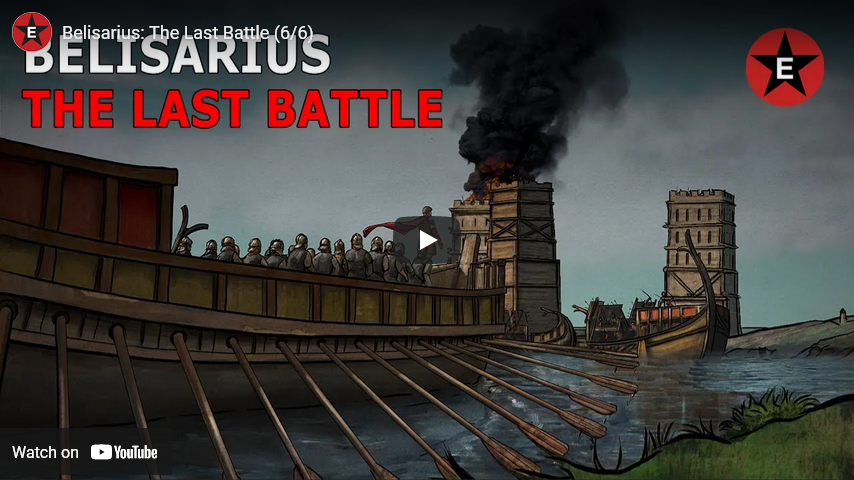
Belisarius: The Last Battle
Epic History TV
Published 29 Apr 2022Thank you to our video sponsor Displate. Get exclusive discounts on metal posters, including original EHTV artwork, using this link:
https://displate.com/epichistorytv?ar…Big thanks to Legendarian for Total War: Attila gameplay footage, check out his YouTube channel here: https://www.youtube.com/channel/UCOI2…
Big thanks also to our series consultant Professor David Parnell of Indiana University Northwest, who you can follow on Twitter here: https://twitter.com/byzantineprof
Total War: Attila gameplay footage used with kind permission of Creative Assembly – buy the game here: https://geni.us/qDreR
Support Epic History TV on Patreon from $1 per video, and get perks including ad-free early access & votes on future topics https://www.patreon.com/EpicHistoryTV
🎨 Original artwork by Miłek Jakubiec https://www.artstation.com/milek
📚Recommended reading (as an Amazon Associate I earn from qualifying purchases):
📖 Procopius, History of the Wars https://geni.us/L3Pgc
📖 The Wars of Justinian by Michael Whitby https://geni.us/Xxrd3
📖 Rome Resurgent by Peter Heather https://geni.us/ZFoU1
📖 The Armies of Ancient Persia: the Sassanians by Kaveh Farrokh https://geni.us/jMQo3z
📖 Late Roman Cavalryman AD 236–565 (Osprey) by Simon MacDowall https://geni.us/XMGl👕 Buy EHTV t-shirts, hoodies, mugs and stickers here! teespring.com/en-GB/stores/epic-histo…
🎶Music from Filmstro: https://filmstro.com/?ref=7765
Get 20% off an annual license with this exclusive code:EPICHISTORYTV_ANN“Rites” by Kevin MacLeod https://incompetech.filmmusic.io/song…
License: https://filmmusic.io/standard-license#EpicHistoryTV #RomanEmpire #EasternRomanEmpire #Justinian #Belisarius #ByzantineEmpire
Comments Off on Belisarius: The Last Battle
May 3, 2022
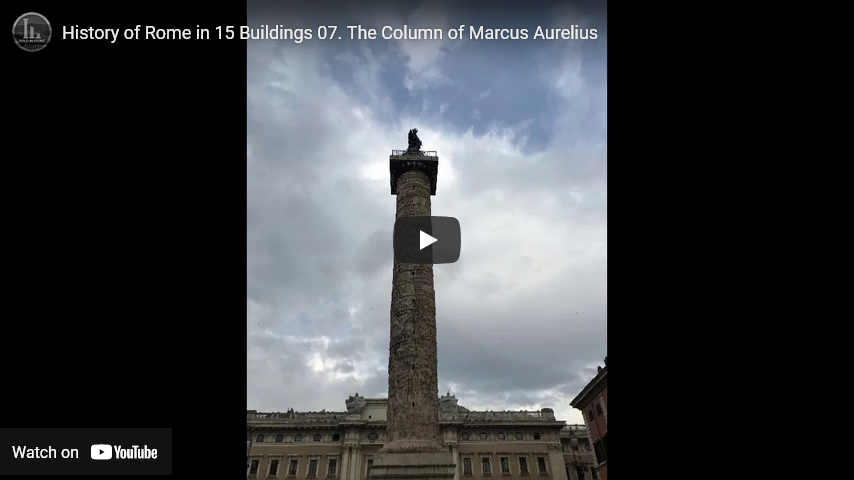
History of Rome in 15 Buildings 07. The Column of Marcus Aurelius
toldinstone
Published 27 Sep 2018Roman troops file in neat lines over raging rivers and trackless mountains. They crush barbarian forces in battle after battle, leaving fields of corpses in their wake. Villages burn, captives weep – and the lonely figure of the philosopher-emperor leads his legions to victory. So the spiraling reliefs of the Column of Marcus Aurelius, subject of the seventh episode in our History of Rome, represent the brutal conflict that turned back the first wave of the barbarian invasions.
If you enjoyed this video, you might be interested in my book Naked Statues, Fat Gladiators, and War Elephants: Frequently Asked Questions about the Ancient Greeks and Romans. You can find a preview of the book here:
https://toldinstone.com/naked-statues…
If you’re so inclined, you can follow me elsewhere on the web:
https://www.reddit.com/r/AskHistorian…
https://www.instagram.com/toldinstone/To see the story and photo essay associated with this video, go to:
https://toldinstone.com/the-column-of…Thanks for watching!
Comments Off on History of Rome in 15 Buildings 07. The Column of Marcus Aurelius
April 19, 2022
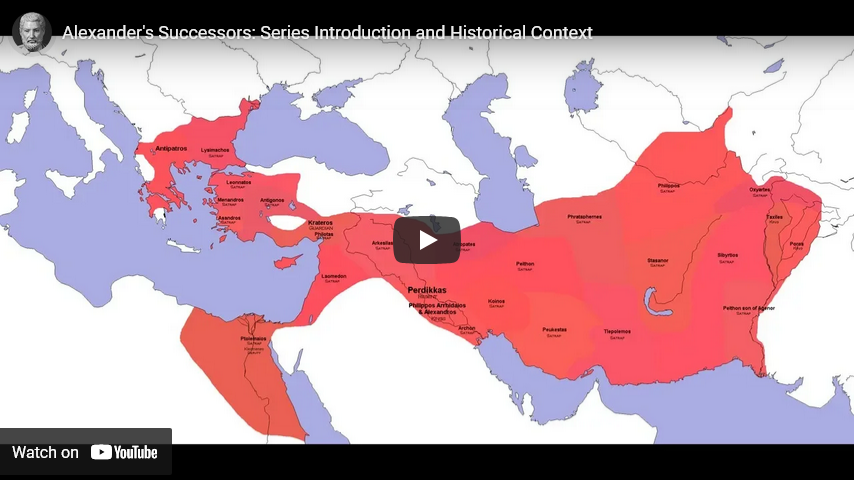
Alexander’s Successors (the Diadochi): Series Introduction and Historical Context
Thersites the Historian
Published 24 Nov 2018This video introduces my series on Alexander’s Successors by talking about what the series will be like and by going through the historical context that the viewer might need to understand the age of the Successors.
Patreon link: https://www.patreon.com/thersites
PayPal link: paypal.me/thersites
Twitter link: https://twitter.com/ThersitesAthens
Minds.com link: https://www.minds.com/ThersitestheHis…
Steemit/dtube link: https://steemit.com/@thersites/feed
Backup Channel: https://www.youtube.com/channel/UCUrD…
Comments Off on Alexander’s Successors (the Diadochi): Series Introduction and Historical Context
March 28, 2022
Republic to Empire: Catiline, Cicero, Crassus, Pompey, Caesar the Death Spiral
Update 6 Feb 2024: Dr. Gabb replaced the original part 7 which discussed the cultural impact of Ancient Greece on the rising Roman Republic.
seangabb
Published 20 Feb 2021
In 120 BC, Rome was a republic with touches of democracy. A century later, it was a divine right military dictatorship. Between January and March 2021, Sean Gabb explored this transformation with his students. Here is one of his lectures. All student contributions have been removed.Here is the seventh lecture, which discusses the Catiline Conspiracy and the rise and disintegration of the First Triumvirate of Caesar, Pompey and Crassus. There is a digression on Eastern politics and the Parthian Empire.
(more…)
Comments Off on Republic to Empire: Catiline, Cicero, Crassus, Pompey, Caesar the Death Spiral
March 25, 2022
QotD: Herodotus as Spartan propagandist
Herodotus seems to be at the start of it, at least in our sources – he relates a story where, after an embarrassing failure in an effort to reduce tiny Tegea to helotage (the Tegeans kicked the Spartans’ asses) in the mid-sixth century, the Spartans supposedly stole the bones of the hero Orestes. Consequently, Herodotus notes, the Spartans were from that point on able to always beat Tegea and subdued the Peloponnese (Hdt. 1.68), resulting in the creation of the Spartan-led Peloponnesian League. The unbeatable Spartans thus appear. It’s possible the Spartan reputation predated this, but – as we’ll see – Herodotus will be the one who codifies that reputation and cements it.
Except, hold on a minute – how hard was it to subdue the Peloponnese? It seems to have been done with a fairly adept mix of diplomacy and military force (champion one side in a local dispute, beat the other, force both into your alliance, repeat, see Kennell (2010), 51-3 for details). But it is little surprise that Sparta would be dominant in the Peloponnese. Messenia and Laconia together was around 2,600 square miles or so. This is – if you’ll pardon the expression – flippin’ massive by the standards of Greek poleis. More than twice as large as the next largest polis in all of Greece (Athens). Sparta is fully one-third of the Peloponnese (the peninsula Sparta is located on). The remaining two-thirds is home to many other poleis – Corinth, Argos, Elis, Tegea, Mantinea, Troezen, Sicyon, Lepreum, Aigeira and on and on. Needless to say, Sparta was several times larger than all of them – only Corinth and Argos came even remotely close in size. The population differences seem to have roughly followed land area. Sparta was just much, MUCH larger and more powerful than any nearby state by the start of the fifth century.
Sparta thus spends the back half of the 500s as the teenager beating up all of the little kids in the sandbox and making himself leader. When you are upwards of three times larger (and in some cases, upwards of ten times larger) than your rivals, a reputation for victory should not be hard to achieve. And, in the event, it turns out it wasn’t.
Which brings us back to Herodotus […] because he isn’t just observing the Spartan reputation, Herodotus is manufacturing the Spartan reputation. Herodotus is our main source for early Greek history (read: pre-480) and for the two Persian invasions of Greece. Herodotus’ Histories cover a range of places and topics – Persia, Greece, Scythia, Egypt – and contain a mixture of history, ethnography, mythology and straight up falsehoods. But – as François Hartog famously pointed out in his The Mirror of Herodotus (originally in French as Le Miroir d’Hérodote), Herodotus is writing about Greece, even when he is writing about Persia – those other cultures and places exist to provide contrasts to the things that Herodotus thinks bind all of the fractious and fiercely independent Greek poleis. And he is perfectly willing to manufacture the past to make it fit that vision.
Sparta has a role to play in that narrative: the well-governed polis, a bastion of freedom, ever opposed to tyranny, be it Greek or Persian. We’ll come back to Sparta’s … let’s say relationship … with Persian “tyranny” next week. But for Herodotus, Sparta is the expression of an ideal form of “Greekness” and in Herodotus’ logic, being well-governed (eunomia is the Greek term) results primarily in military excellence. For the story Herodotus is telling to work, Sparta – as one of the leading states resisting Persia – must be well governed and it must be militarily excellent. That’s what will make a good story – and Herodotus never lets the facts get in the way of a good story.
(Sidenote: Athens – at least post-Cleisthenic Athens – gets this treatment too. Athens ends up embodying a different set of “Greek” virtues and where Sparta shows its prowess on land, the Athenians do so at sea.)
And so, Herodotus – the myth-maker – talks up the Spartiates at Thermopylae (you know, the brave 300) and quietly leaves out the other Laconians (who, if you scrutinize his numbers, he knows must be there, to the tune of c. 900 men), downplaying the other Greeks. Spartan leadership is lionized, even when it makes stupid mistakes (Thermopylae, to be clear, was a military disaster and Spartan intransigence nearly loses the battle of Plataea, but Herodotus represents this as boldness in the face of the enemy; even more fantastically inept was the initial Spartan plan to hold on the Isthmus of Corinth as if no one had ever seen a boat before).
Bret Devereaux, “Collections: This. Isn’t. Sparta. Part VI: Spartan Battle”, A Collection of Unmitigated Pedantry, 2019-09-20.
Comments Off on QotD: Herodotus as Spartan propagandist
March 19, 2022
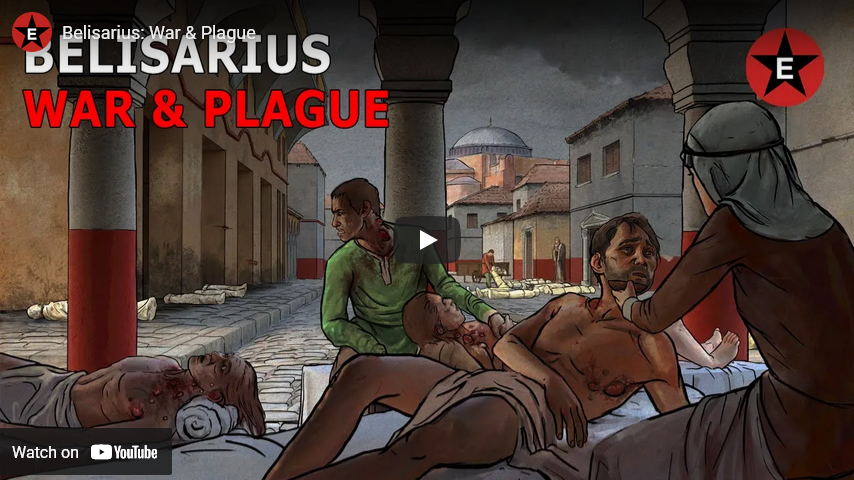
Belisarius: War & Plague
Epic History TV
Published 18 Mar 2022Download Endel here, first 100 downloads get 1 week of free audio experiences!
https://app.adjust.com/b8wxub6?campai…Big thanks to Legendarian for Total War: Attila gameplay footage, check out his YouTube channel here: https://www.youtube.com/channel/UCOI2…
Big thanks also to our series consultant Professor David Parnell of Indiana University Northwest, who you can follow on Twitter here: https://twitter.com/byzantineprof
Total War: Attila gameplay footage used with kind permission of Creative Assembly – buy the game here: https://geni.us/qDreR
Support Epic History TV on Patreon from $1 per video, and get perks including ad-free early access & votes on future topics https://www.patreon.com/EpicHistoryTV
🎨 Original artwork by Miłek Jakubiec https://www.artstation.com/milek
📚 Recommended reading (as an Amazon Associate I earn from qualifying purchases):
📖 Procopius, History of the Wars https://geni.us/L3Pgc
📖 The Wars of Justinian by Michael Whitby https://geni.us/Xxrd3
📖 Rome Resurgent by Peter Heather https://geni.us/ZFoU1
📖 The Armies of Ancient Persia: the Sassanians by Kaveh Farrokh https://geni.us/jMQo3z
📖 Late Roman Cavalryman AD 236–565 (Osprey) by Simon MacDowall https://geni.us/XMGl👕 Buy EHTV t-shirts, hoodies, mugs and stickers here! teespring.com/en-GB/stores/epic-histo…
🎶Music from Filmstro: https://filmstro.com/?ref=7765
Get 20% off an annual license with this exclusive code:EPICHISTORYTV_ANN“Rites” by Kevin MacLeod https://incompetech.filmmusic.io/song…
License: https://filmmusic.io/standard-license#EpicHistoryTV #RomanEmpire #EasternRomanEmpire #Justinian #Belisarius #ByzantineEmpire #Romans #Ostrogoths
Comments Off on Belisarius: War & Plague
February 11, 2022
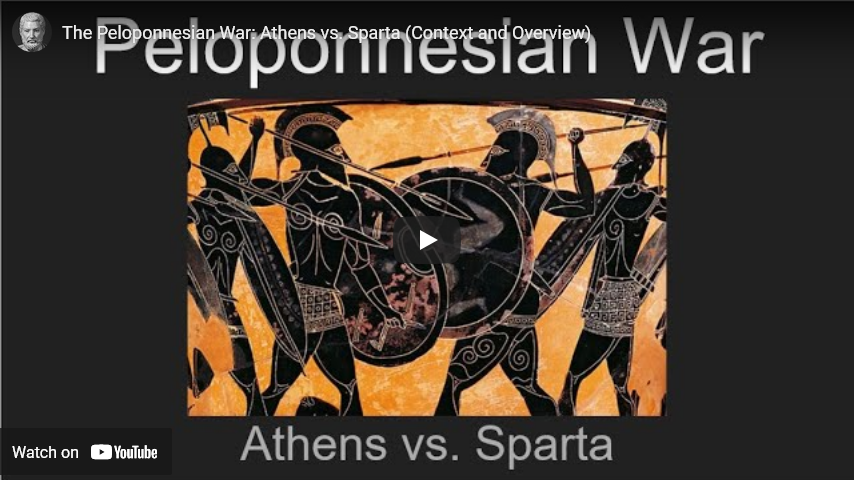
The Peloponnesian War: Athens vs. Sparta (Context and Overview)
Thersites the Historian
Published 28 Oct 2021In this lecture, I cover Greek history from 478-404 BCE with an emphasis on the Peloponnesian War. This is intended as a primer on the topic and I devote more time to establishing the context and causes of the war than I do going through the details of conflict itself.
Patreon link: https://www.patreon.com/thersites
PayPal link: paypal.me/thersites
Discord: https://discord.gg/QCaXXFr
Brave Browser: https://brave.com/noa557
Twitter link: https://twitter.com/ThersitesAthens
Minds.com link: https://www.minds.com/ThersitestheHis…
Steemit/dtube link: https://steemit.com/@thersites/feed
BitChute: https://www.bitchute.com/channel/jbyg…
Comments Off on The Peloponnesian War: Athens vs. Sparta (Context and Overview)
February 7, 2022
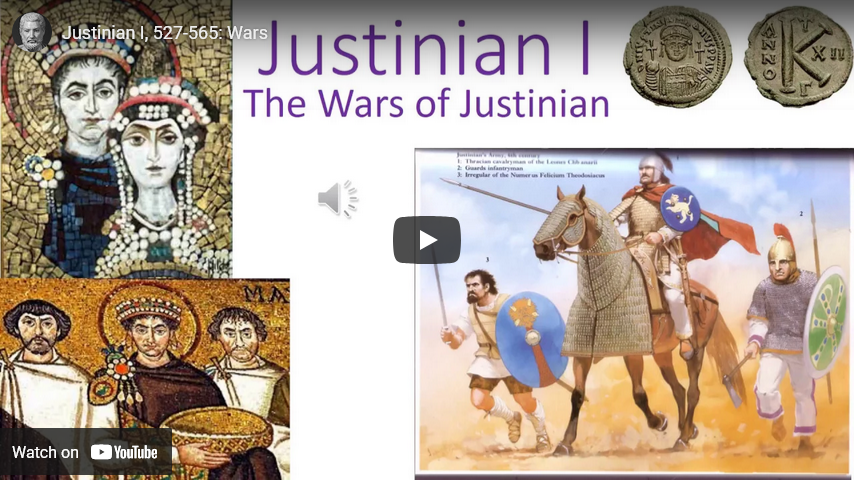
Justinian I, 527-565: Wars
Thersites the Historian
Published 21 Sep 2017In this video, I look at the wars of conquest waged by the Emperor Justinian and explore whether or not these conflicts advanced the long-term interests of the Byzantine state.
Comments Off on Justinian I, 527-565: Wars
November 3, 2021
Halikarnassos: The Birthplace of History
Thersites the Historian
Published 24 Feb 2020A Greek polis which became the capital city of a Persian satrapy, Halikarnassos is best known as the birthplace of Herodotos and the site of the Mausoleum. A monarchy in a sea of aristocratic and oligarchic governments, Halikarnassos was one of the more unique places in the wider Greek world.
Patreon link: https://www.patreon.com/thersites
PayPal link: paypal.me/thersites
Twitter link: https://twitter.com/ThersitesAthens
Minds.com link: https://www.minds.com/ThersitestheHis…
Steemit/dtube link: https://steemit.com/@thersites/feed
BitChute: https://www.bitchute.com/channel/jbyg…
Backup Channel: https://www.youtube.com/channel/UCUrD…

Comments Off on Halikarnassos: The Birthplace of History
October 18, 2021
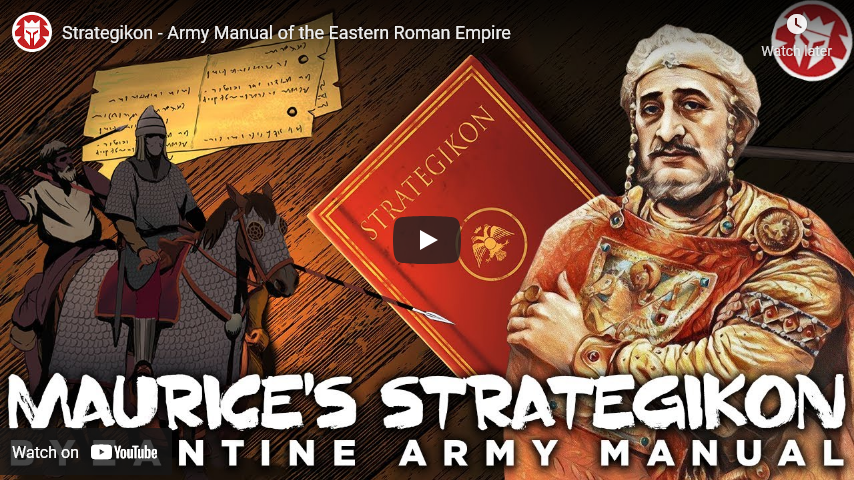
Strategikon – Army Manual of the Eastern Roman Empire
Kings and Generals
Published 30 Mar 2021The Kings and Generals animated historical documentary series on the evolution of the Roman Army continues with the second episode of the series on the Army of the Eastern Roman Empire – the Byzantine Empire. In this episode, we’ll focus on Strategikon of Maurice – the army manual that defined the structure, training and tactics of the Byzantine army.
Support us on Patreon: http://www.patreon.com/KingsandGenerals or Paypal: http://paypal.me/kingsandgeneral
We are grateful to our patrons and sponsors, who made this video possible: https://docs.google.com/document/d/1o…
The video was made by Arb Paninken http://bit.ly/2Ow3oC8, while the script was developed by Matt Hollis. This video was narrated by Officially Devin (https://www.youtube.com/user/OfficiallyDevin)
✔ Merch store ► https://teespring.com/stores/kingsand…
✔ Patreon ► https://www.patreon.com/KingsandGenerals
✔ Podcast ► Google Play: http://bit.ly/2QDF7y0 iTunes: https://apple.co/2QTuMNG
✔ PayPal ► http://paypal.me/kingsandgenerals
✔ Twitter ► https://twitter.com/KingsGenerals
✔ Instagram ► http://www.instagram.com/Kings_GeneralsProduction Music courtesy of Epidemic Sound: http://www.epidemicsound.com
#Documentary #Byzantines #Romans
Comments Off on Strategikon – Army Manual of the Eastern Roman Empire
October 5, 2021
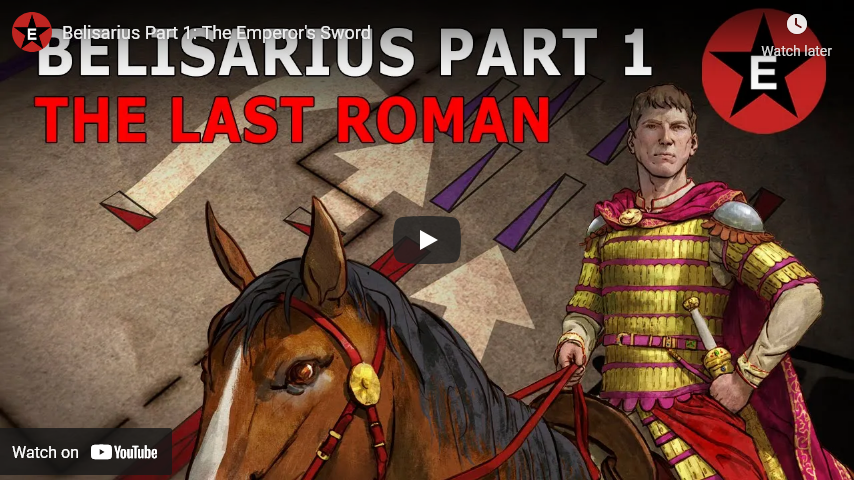
Belisarius Part 1: The Emperor’s Sword
Epic History TV
Published 30 Sep 2021Thank you to our sponsor Brilliant – the first 200 to sign up to their Premium service get 20% off: https://brilliant.org/epichistory
Big thanks to Legendarian for Total War: Attila gameplay footage, check out his YouTube channel here: https://www.youtube.com/channel/UCOI2…
Total War: Attila gameplay footage used with kind permission of Creative Assembly — buy the game here: https://geni.us/qDreR
Thanks also to the 555 mod crew for modding support, find out more about their mods here: https://steamcommunity.com/sharedfile…
🎨 Original artwork by Miłek Jakubiec https://www.artstation.com/milek
🎨 Thanks to Igor Dzis for permission to use his painting, Battle of Dara.📚Recommended reading (as an Amazon Associate I earn from qualifying purchases):
📖Procopius, History of the Wars https://geni.us/L3Pgc
📖The Wars of Justinian by Michael Whitby https://geni.us/Xxrd3
📖Rome Resurgent by Peter Heather https://geni.us/ZFoU1
📖The Armies of Ancient Persia: the Sassanians by Kaveh Farrokh https://geni.us/jMQo3z
📖Late Roman Cavalryman AD 236–565 (Osprey) by Simon MacDowall https://geni.us/XMGlSupport Epic History TV on Patreon from $1 per video, and get perks including ad-free early access & votes on future topics https://www.patreon.com/EpicHistoryTV
👕 Buy EHTV t-shirts, hoodies, mugs and stickers here! teespring.com/en-GB/stores/epic-histo…
🎶Music from Filmstro: https://filmstro.com/?ref=7765
Get 20% off an annual license with this exclusive code:EPICHISTORYTV_ANN#EpicHistoryTV #RomanEmpire #EasternRomanEmpire #Justinian #Belisarius #ByzantineEmpire
I first discovered the Eastern Roman Empire in Robert Graves’ brilliant novel Count Belisarius which I read nearly 50 years ago and still re-read every few years. If the raw history isn’t your bag, try the historical fiction — closely based on the works of Procopius — heartily endorsed by pre-teen me.
Comments Off on Belisarius Part 1: The Emperor’s Sword


