Logistics is more than just ensuring that the bullets and beans get sent forward to the infantry companies … it encompasses the whole business of manufacturing, stockpiling, shipping, handling and delivering everything the sailors, soldiers and air force members need, on time and to the right place. It is a complex science, and, when bombs are falling and bullets are whizzing about, a bit of an art, too. As I mentioned a couple of days ago, […] the administrative and logistics services are always “soft targets” for cuts when admirals and generals don’t want to cut their own pet components. The admirals and generals who always try to cut too much of the support “tail” before pulling a few teeth are always wrong.
When we consider logistics and training we should consider then both, together, as part of Support ~ with a capital S. Support also includes keeping facilities (barracks and training areas and workshops and supply depots) up to date.
Training is not just teaching selected skills; it involves planning on how many people will be needed, each with specific skill sets, to crew ships, to serve in regiments and battalions, to fly airplanes and to repair and maintain ships and tanks and trucks and aircraft over the long haul. Training also involves ensuring that teams know how to work together … training is how we prepare for war.
The capital S Support base […] must be properly staffed, properly funded (which means funding must be stable, over the years and decades) and properly organized and managed. Supporting our troops and fleets of ships, vehicles and aircraft requires a mix of civil and military people: some in uniform, some civil servants and some on contract from the private sector. There is no perfect model … most modern, Western states, including America, Australia, Britain, Canada, Denmark and so on, use a mix of military, civil service and contractor support service. each trying to get the right mix of operational effectiveness and economy. The key, as I mentioned above, is stability. The support system need to be properly staffed and funded year in and year out, decade after decade. Those elements ~ dockyards and depots and workshops and schools and agencies comprise the firm base upon which the nation’s war-fighting (combat) powers depend.
Ted Campbell, “My Plan (3)”, Ted Campbell’s Point of View, 2018-09-15.
April 19, 2021
QotD: Logistics and training
April 13, 2021
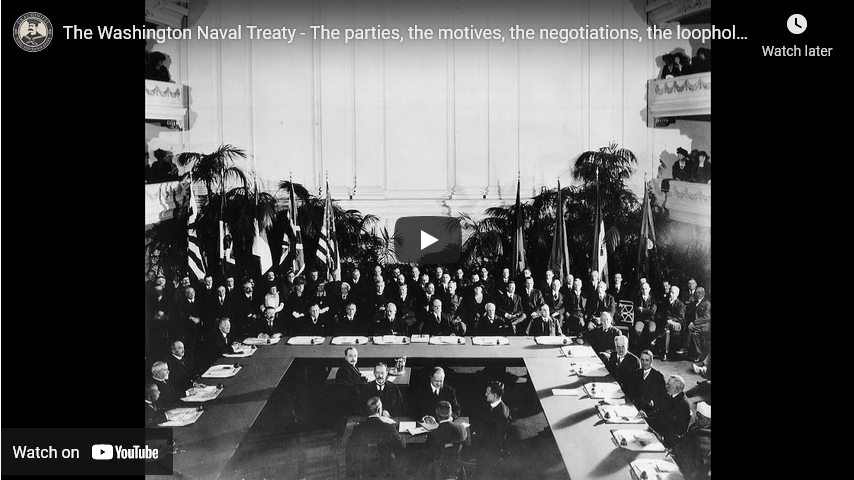
The Washington Naval Treaty – The parties, the motives, the negotiations, the loophole abuse…
Drachinifel
Published 10 Feb 2021Today we look at the Washington Naval Treaty, why it came to be, the broad aspects of negotiation, what it meant and how people turned it into a legal pretzel.
Sources:
http://www.ibiblio.org/pha/pre-war/19…
www.amazon.co.uk/dp/B00KIXWLE2
www.amazon.co.uk/Kaigun-Strategy-Technology-Imperial-1887-1941-ebook/dp/B01DRYEMH2
www.amazon.co.uk/Treaty-Cruisers-RE-ISSUE-International-Competition/dp/1526748509
www.amazon.co.uk/Naval-Policy-Between-Wars-Anglo-American/dp/1473877407Free naval photos and more – www.drachinifel.co.uk
Want to support the channel? – https://www.patreon.com/Drachinifel
Want a shirt/mug/hoodie – https://shop.spreadshirt.com/drachini…
Want a poster? – https://www.etsy.com/uk/shop/Drachinifel
Want to talk about ships? https://discord.gg/TYu88mt
Want to get some books? www.amazon.co.uk/shop/drachinifelDrydock
Episodes in podcast format – https://soundcloud.com/user-21912004
From the comments:
Gamebook
2 months ago (edited)
The Americans didn’t want to build the ships, but could have afforded to do so.
The Japanese did want to build the ships, but couldn’t have afforded to do so.
The French wanted other people to think that they wanted to build the ships and could afford to do so, but in fact they didn’t want to and couldn’t have afforded to do so.
The Italians did not want the French to build the ships, and thought they had prevented them from doing so, but in fact see above. The Italians themselves could not afford to build the ships any more than the French could.
The British sort of wanted to build the ships, and could sort of have afforded to do so, but would rather everyone just restrained themselves as that would leave the Royal Navy in a better position than they could have paid for in the event of another naval arms race.
April 11, 2021
HMCS Warrior (R31) – Colossus-class Light Aircraft Carrier
canmildoc
Published 30 Mar 2013HMS Warrior (R31) was a Colossus-class light aircraft carrier which served in the Royal Canadian Navy from 1946 to 1948 (as HMCS Warrior). She was transferred to the Royal Canadian Navy, commissioned as HMCS Warrior and placed under the command of Captain Frank Houghton. She entered Halifax harbour on 31 March 1946, a week after leaving Portsmouth. She was escorted by the destroyer HMCS Micmac and the minesweeper HMCS Middlesex. The RCN experienced problems with the unheated equipment during operations in cold North Atlantic waters off eastern Canada during 1947. The RCN deemed her unfit for service and, rather than retrofit her with equipment heaters, made arrangements with the Royal Navy to trade her for a more suitable aircraft carrier of the Majestic class which became HMCS Magnificent (CVL 21) on commissioning. [Original text from Wikipedia]
Tags: Colossus Class Light Aircraft Carrier, HMCS Warrior, HMCS, RCN, Royal Canadian Navy, aircraft carrier, CV, Halifax
From the Wikipedia description of HMCS Warrior:
Warrior was a Colossus-class light aircraft carrier that was 630 feet 0 inches (192.0 m) long between perpendiculars and 695 feet 0 inches (211.8 m) overall with a beam at the waterline of 80 feet 0 inches (24.4 m) and an overall width of 112 feet 6 inches (34.3 m). The ship had a mean draught of 23 feet 3 inches (7.1 m). Warrior had a standard displacement of 13,350 long tons (13,560 t) when built and a full load displacement of 18,300 long tons (18,600 t). The aircraft carrier had a flight deck 690 feet 0 inches (210.3 m) long that was 80 feet 0 inches (24.4 m) wide and was 39 feet 0 inches (11.9 m) above the water. The flight deck tapered to 45 feet (14 m) at the bow. For takeoffs, the flight deck was equipped with one BH 3 aircraft catapult capable of launching 16,000-pound (7,257 kg) aircraft at 66 knots (122 km/h). For landings, the ship was fitted with 10 arrestor wires capable of stopping a 15,000-pound (6,804 kg) aircraft, with two safety barriers rated at stopping a 15,000-pound aircraft at 40 knots (74 km/h). Warrior had two aircraft elevators located along the centreline of the ship that were 45 by 34 feet (13.7 by 10.4 m) and could handle aircraft up to 15,000 pounds on a 36-second cycle. The aircraft hangar was 275 by 52 feet (83.8 by 15.8 m) with a further 57 by 52 feet (17.4 by 15.8 m) section beyond the aft elevator, all with a clearance of 17 feet 6 inches (5.3 m). The hangar was divided into four sections by asbestos fire curtains. The hangar was fully enclosed and could only be entered by air locks and the lifts, due to the hazardous nature of aviation fuel and oil vapours. The vessel had stowage for 98,600 Imperial gallons (448,244 l; 118,414 US gal) of aviation fuel.
The ship was powered by steam created by four Admiralty 3-drum type boilers driving two Parsons geared turbines, each turning one shaft. The machinery was split into two spaces, each containing two boilers and one turbine, separated by 24-foot (7.3 m) spaces containing aviation fuel. The spaces were situated en echelon within the ship to prevent a single disabling torpedo strike. The engines were rated at 42,000 shaft horsepower (31,319 kW) and the vessel had a capacity for 3,196 long tons (3,247 t) of fuel oil, with an range of 8,300 nautical miles (15,372 km) at 20 knots (37 km/h). The ship’s maximum speed was 25 knots (46 km/h). There was no armour aboard the vessel save for mantlets around the torpedo storage area. There were no longitudinal bulkheads, but the transverse bulkheads were designed to allow the ship to survive two complete sections of the ship being flooded.
Warrior was designed to handle up to 42 aircraft. The aircraft carrier carried a wide range of ordnance for their aircraft from torpedoes, depth charges, bombs, 20 mm cannon ammunition and flares. For anti-aircraft defence, the aircraft carrier was initially armed with four twin-mounted and twenty single-mounted 40 mm Bofors guns. The original radar installation included the Type 79 and Type 281 long-range air search radars, the Type 293 and Type 277 fighter direction radar and the “YE” aircraft homing beacon. The ship had a maximum ship’s company of 1,300, which was reduced in peacetime.
After service with the RCN, Warrior was returned to the Royal Navy, and subsequently sold to Argentina, entering service as ARA Independencia until 1971 when she was struck from the Argentinian navy list and scrapped.
March 23, 2021
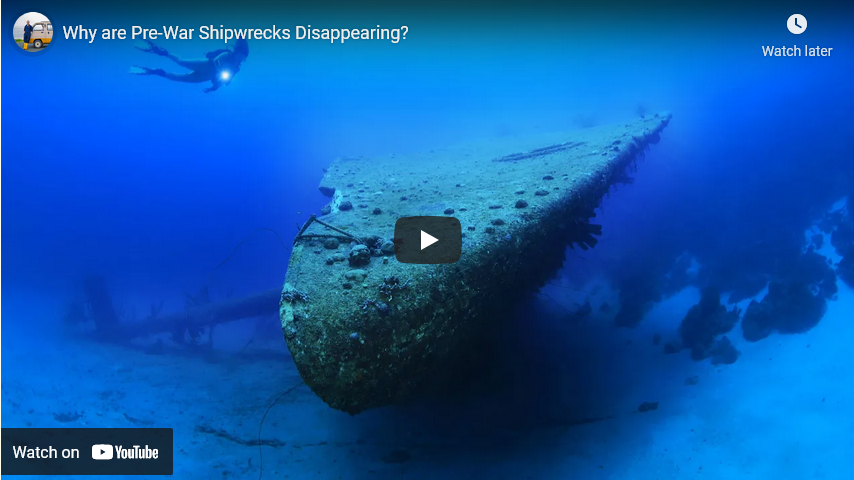
Why are Pre-War Shipwrecks Disappearing?
Calum
Published 22 Aug 2020Pre-war shipwrecks are disappearing from the seabed. Why? A look at the sad reality of illegal salvaging that is destroying numerous war graves and historical wrecks around the world, told from the site of some of the most famous shipwrecks in the world; Scapa Flow.
The Guardian has done some amazing work in documenting this problem, worth a read if you have the time:
https://www.theguardian.com/world/201…
00:00 – Introduction & History of Scapa Flow
01:00 – Scuttling & Salvaging of the German High Fleet
02:45 – The Value of Pre-War Steel
03:54 – The Disappearing Shipwrecks
06:03 – HMS Royal Oak
10:16 – Disappearing Wargraves
10:58 – OutroTwitter………………….►https://twitter.com/calumraasay
Instagram…………….►http://instagram.com/calumraasay
Website………………..►http://calumgillies.com
March 20, 2021
Iron cannon, improved celestial navigation techniques, and “race-built” galleons
In the latest Age of Invention newsletter, Anton Howes considers some of the technological innovations which helped English sailors to overcome powerful adversaries of the Spanish and Portuguese navies in the late 1500s and early 1600s:
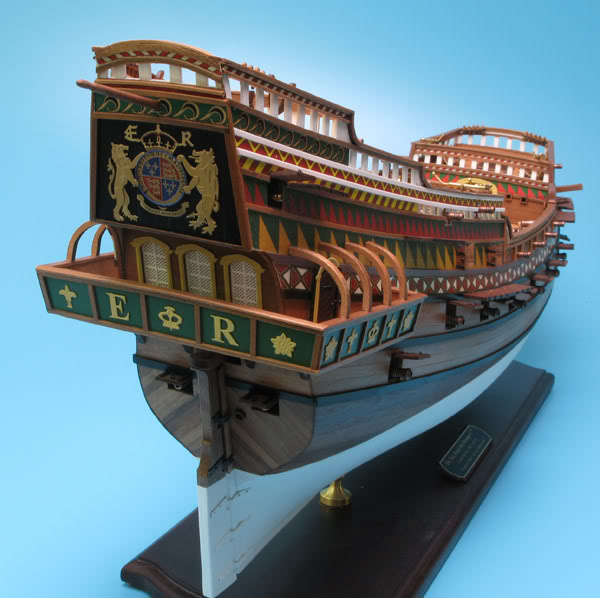
Stern view of a model of the Revenge as an example of a race-built galleon, 1577.
Image from modellmarine.de
Apart from the adoption and refinement of celestial navigation techniques, however, English seafaring capabilities also benefited from some more obvious, physical changes. In 1588, for example, on the eve of the Spanish Armada, a senior Spanish officer believed that the English had “many more long-range guns”. By the 1540s, medieval ironmaking techniques involving the blast furnace had gradually spread from Germany, to Normandy, and thence to the Weald of Sussex and Kent. Whereas in the first half of the sixteenth century England had typically imported three quarters of its iron from Spain, by 1590 it had not only quintupled its consumption of iron but was also almost entirely self-sufficient. And by allowing England to exploit its plentiful domestic deposits of iron, the blast furnace resulted in it producing many more cheap cannon.
Iron guns were in many ways worse for ships than those of bronze. They were heavier, prone to corrosion, and more likely to explode without warning. Bronze guns, by contrast, would first bulge and then split, but in any case tended to last. When the British captured Gorée off the coast of Senegal in 1758, they found a working English-made bronze cannon that dated from 1582. Yet iron was only 10-20% the price of bronze. Although the Royal Navy for decades continued to prefer bronze, cheap, medium-sized cannon of iron proliferated, becoming affordable to merchants, pirates, and privateers — a situation that was unique to England.
English ships were thus especially well-armed, allowing them to access new markets even when they sailed into hostile waters. They were soon some of the only merchants able to hold their own against the latest Mediterranean apex predator, whether it be the Spanish navy, Algeria-based corsairs, or Ottoman galleys. And they were able to insert themselves, sometimes violently, into the inter-oceanic trades — all despite the armed resistance of the Spanish and Portuguese, who had long monopolised those routes. In the 1560s, John Hawkins tried a few times to muscle in on the transatlantic Portuguese and Spanish trade in slaves. With backing from the monarch and her ministers, he captured Portuguese slave ships, raided and traded along the African coastline himself, and then sold slaves in the Spanish colonies of the Americas, sometimes having to attack those colonies before the local governor would allow them to trade. (The attempt was ultimately unsuccessful, as Hawkins’s privateering fleet was all but destroyed in 1568 and the English were not involved in the slave trade again for almost a century.)
The English hold over the hostile markets was only threatened during times of peace on the continent, when their ships’ defensiveness no longer gave them a special advantage. The Dutch usurped English dominance of the trade with Iberia and the Mediterranean, for example, during the Dutch Republic’s truce with Spain 1609-21. Their more efficient ships, especially for bulk commodities — the fluyt invented at Hoorn in the late 1580s — were cheaper to build, required fewer sailors, and were easier to handle. But these advantages only made them competitive when the risk of attack was low, as they were hardly armed. When wars resumed, the English had a chance to regain their position.
Finally, the English acquired a few further advantages when it came to ship design. Thanks to the shipwright Matthew Baker, who had been on the trial voyage Cabot dispatched to the Mediterranean, England experienced a revolution in using mathematics to design ships. Baker’s methods, seemingly developed in the 1560s, allowed him to more cheaply experiment with new forms, and by the 1570s these began to bear fruit. The old ocean-going carracks and galleons, with their high forecastles and aftercastles, became substantially sleeker. Taking inspiration from nature, Baker designed a streamlined, elongated hull modelled below the waterline upon a cod’s head with a mackerel tail. Above the waterline, too, he lowered the forecastle and set it further back, as well as flattening the aftercastle.
Starting in 1570 with his prototype the Foresight, and more fully developed in 1575-77 with the Revenge, these razed or “race-built” galleons gave the English some significant advantages. Drake even chose the Revenge as his flagship to battle the Spanish Armada in 1588, and to lead an ill-fated reprisal invasion of Portugal the following year. The higher castles of carracks and old-style galleons were suited to clearing an enemy’s decks with arrows and gunfire, as well as to defend against boarders. They were designed for combat at close quarters, in which height was an advantage. They were floating fortresses, their imposing height known to inspire terror. The race-built galleons, by contrast, by making the ship less top-heavy, could have longer and lower gundecks, with more of the ship’s displacement devoted to ordnance — especially useful when taking advantage of the cheaper but heavier cannon made of iron. Rather than killing an enemy ship’s sailors and soldiers, the race-built galleons were optimised for blasting through its hull. What they lost in “majesty and terror”, they made up for with overwhelming firepower. They aimed to sink.
March 14, 2021
China Lake 40mm Pump Action Grenade Launcher
Forgotten Weapons
Published 11 Dec 2020http://www.patreon.com/ForgottenWeapons
https://www.floatplane.com/channel/Fo…
Cool Forgotten Weapons merch! http://shop.bbtv.com/collections/forg…
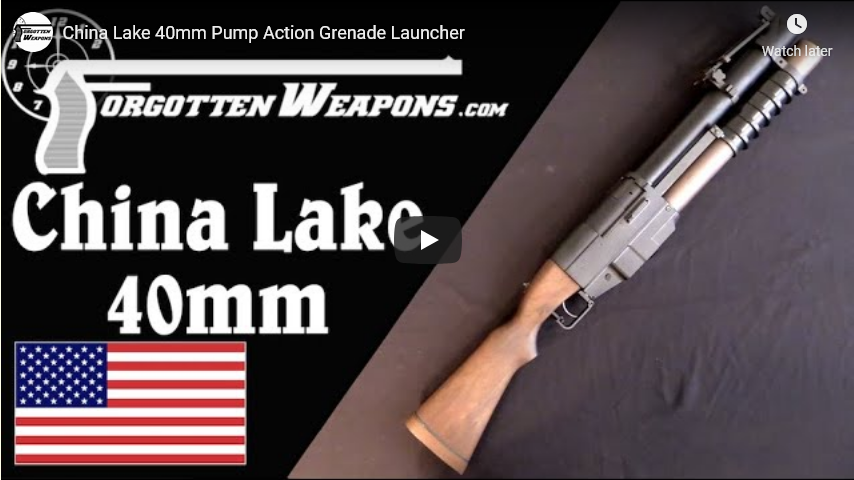
Possibly the coolest small arm used by the United States in the Vietnam War was the China Lake 40mm pump action grenade launcher. Only 24 of these were made, each fitted by hand. Of those, 2 went to MACVSOG, 2 to Army Force Recon, and the remaining 20 the the Navy SEALS. They were used as an ambush initiation weapon, with 4 rounds of rapid-fire 40mm HE grenades available.
Only five original examples survive today; four in US museums and military institutions and one in a museum in Saigon. An effort was made in 2004 to build reproductions, it is one of those used in this video. This project was not ultimately successful, but did lead to a very interesting series of events with the Airtronic company and the US Marine Corps, which will be detailed in a following video. Special thanks to Dutch Hillenburg and Kevin Dockery for making this video possible!
Contact:
Forgotten Weapons
6281 N. Oracle #36270
Tucson, AZ 85740
March 10, 2021
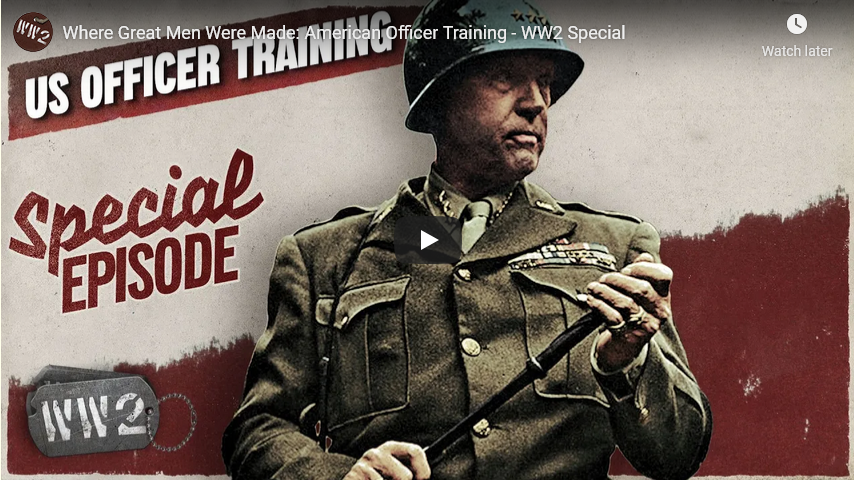
Where Great Men Were Made: American Officer Training – WW2 Special
World War Two
Published 9 Mar 2021West Point and Annapolis are two of the most iconic military academies in America — maybe even the world. The two institutions have produced the men who are leading America’s fight against the Axis powers.
Join us on Patreon: https://www.patreon.com/TimeGhostHistory
Or join The TimeGhost Army directly at: https://timeghost.tvFollow WW2 day by day on Instagram @ww2_day_by_day – https://www.instagram.com/ww2_day_by_day
Between 2 Wars: https://www.youtube.com/playlist?list…
Source list: http://bit.ly/WW2sourcesHosted by: Indy Neidell
Written by: Markus Linke & Indy Neidell
Director: Astrid Deinhard
Producers: Astrid Deinhard and Spartacus Olsson
Executive Producers: Astrid Deinhard, Indy Neidell, Spartacus Olsson, Bodo Rittenauer
Creative Producer: Maria Kyhle
Post-Production Director: Wieke Kapteijns
Research by: Markus Linke
Edited by: Karolina Dołęga
Sound design: Marek KamińskiColorizations by:
– Daniel Weiss
– Mikołaj Uchman
– Norman Stewart – https://oldtimesincolor.blogspot.com/Sources:
United States Military Academy Library Digital Collection
United States Naval Academy Digital Collections
Library of Congress
New York Public Library
West Point Museum Art Collection
Imperial War Museums: IWM NYF 19427Soundtracks from Epidemic Sound:
– “Ominous” – Philip Ayers
– “The Inspector 4” – Johannes Bornlöf
– “London” – Howard Harper-Barnes
– “Please Hear Me Out STEMS INSTRUMENTS” – Philip Ayers
– “First Responders” – SkryaArchive by Screenocean/Reuters https://www.screenocean.com.
A TimeGhost chronological documentary produced by OnLion Entertainment GmbH.
From the comments:
World War Two
20 hours ago
This episode goes back to our roots of good old-fashioned military history. It’s something we’d like to start doing more of. Of course, West Point and Annapolis are the most famous, but we think that diving into the officer training of forces like the Wehrmacht or Red Army could tell us a lot about their histories. There is also a whole bunch of options for military history topics that we’d like to get into. Let us know in the comments if you have any suggestions.
March 5, 2021
Privateering today?
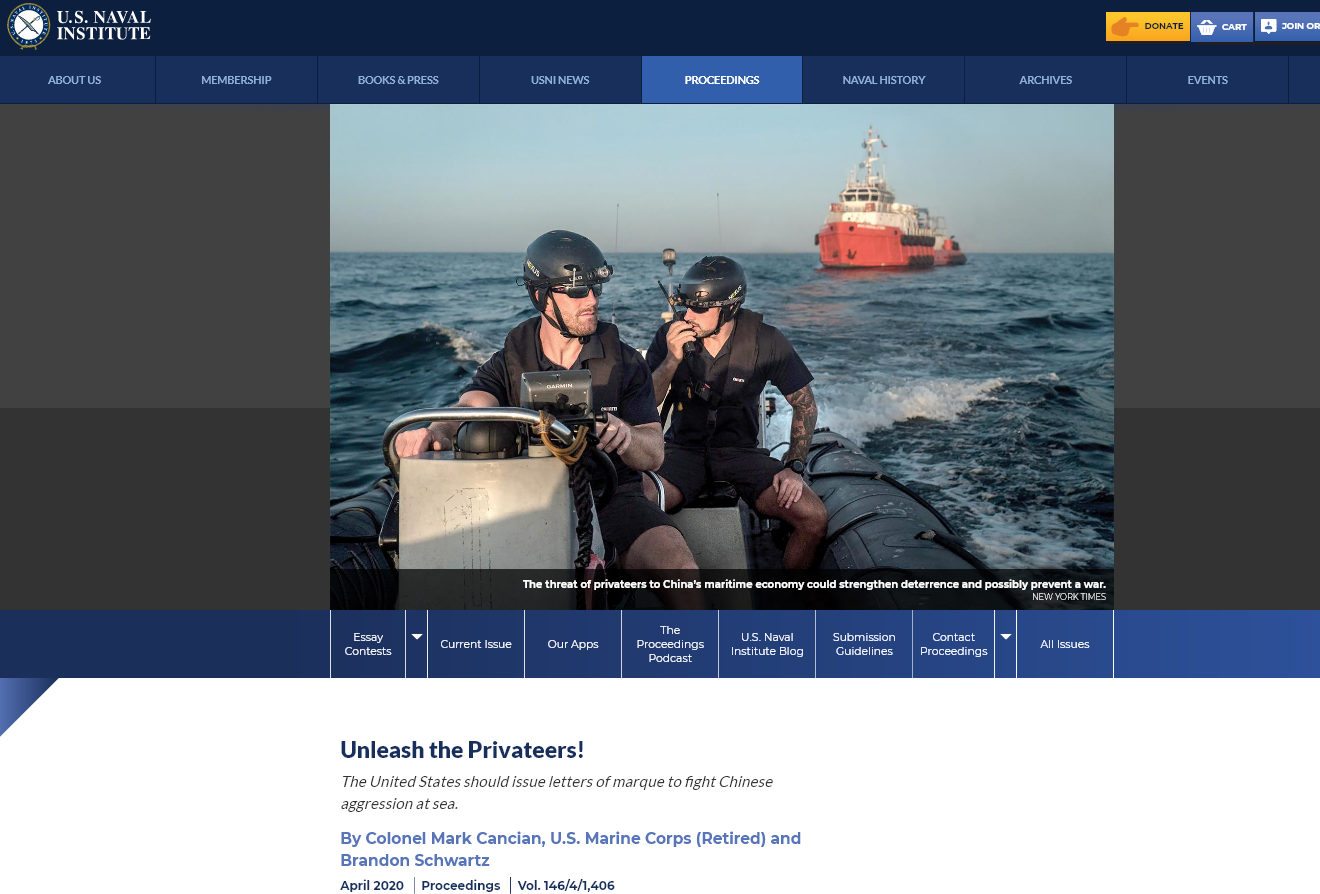
In a recent post at Astral Codex Ten, Scott Alexander posted a link to an article in the US Naval Institute Proceedings putting forward arguments for the United States issuing modern day Letters of Marque. Today he posted a few reactions from his readers to the proposal:
On the article about privateers, local naval expert Bean writes:
It’s time for the standard disclaimer any time Proceedings comes up: Proceedings is intended as a forum for discussion of matters of interest to naval officers, and it is not peer reviewed. Often very not peer reviewed. Like in this case. Please don’t judge the USNI on the basis of this stuff. They do a lot of good work.
And yes, it is that stupid. First, privateering is probably illegal today. The US didn’t sign the 1856 Paris declaration outlawing it, but the ban is almost certainly considered customary international law today, and thus binding on the US, too. (International law is very weird.)
Second, it makes no sense. It was something that people did in an era when the ability of the state to do things was sharply constrained, and it was never all that profitable. These days, the government is a lot more effective, and if it wants to hunt Chinese commerce (never mind the issues about who owns the cargo, which is rather different in the days of worldwide communications and the shipping container) it will make auxiliary commerce raiders of its own. There’s definitely no need to have a DDG sit outside a Brazilian port waiting. Take any reasonable civilian ship (big yacht, fishing boat, tug, whatever) and fit it with a couple of 40mm guns and a boarding party. Have it do the waiting instead.
And our other defense expert, John Schilling, writes:
Modern naval weapons are too good at sinking ships, whereas privateering requires capturing ships intact to be profitable. For a trivial, and in this context uncontroversial, investment, China can equip their merchant fleet with defensive weapons that will sink any privateer, unless the privateer sinks them first.
– Privateers, being incapable of surviving a fight with real warships (especially modern ones), need to be able to hide from and if necessary outrun enemy warships. That’s a lot harder to manage in a world of radio, radar, maritime patrol aircraft, and satellites. Harder still if you insist on taking prizes, which will be Lojacked beyond your ability to clear at sea. Even in a hot war with the United State, China will probably be able to spare e.g. an H-6K for a day to sink the privateer that just sank one of China’s freighters, and that’s all it will take.
– The rest of the world regards privateering as flat-out illegal, so virtually all of the ports of the world will be closed to the privateers *and their prizes*. Operating in the South China Sea directly from Hawaii, without any intermediate bases (what’s left of Guam will have its hands full), is going to be logistically challenging to say the least. And the value of that prize ship you just took is greatly diminished if it can only be used in the US coastal trade, its cargo sold only on the US domestic market never to be reexported.
This is a stupid idea that keeps coming back every year or two because somebody read too many Napoleonic sea-adventure stories and thinks they’re the only one who read those stories so their clever “obscure” idea is something the rest of us haven’t heard and rejected a dozen times already.
There’s a problem in medicine where people think doctors are trustworthy experts. While this is often true, there are about a million doctors, and some tiny fraction of them are insane. The reasonable doctors mostly keep their mouths shut, but sometimes an insane doctor will endorse some sort of terrible alternative medicine, and then people will get excited: “A doctor endorsed it! It must be real!” The fact is, you can find doctors saying pretty much any bizarre thing — I hear some of them even have Substacks.
My thought when reading that article was “this sounds crazy … but wait! It’s written by a colonel and published by the US Naval Institute! That sounds just wacky enough to make a good link!”
Now I am concerned that colonels work the same way as doctors. I wonder what else is like this.
Colonels absolutely do work the same way as doctors, lawyers, and (especially) journalists — Michael Chrichton christened this the “Gell-Mann Amnesia Effect”.
The topic is as good an excuse as I’m likely to find to post Mark Knopfler’s “Privateering”:
“Privateering”
Yon’s my privateer
See how trim she lies
To every man a lucky hand
And every man a prize
I live to ride the ocean
The mighty world around
To take a little plunder
And to hear the cannon sound
To lay with pretty women
To drink Madeira wine
To hear the rollers thunder
On a shore that isn’t mine
Privateering we will go
Privateering, yo ho ho ho
Privateering we will go
Yo ho ho, yo ho ho
The people on your man o’ war
Are treated worse than scum
I’m no flogging captain
And by God I’ve sailed with some
Come with me to Barbary
We’ll ply there up and down
Not quite exactly
In the service of the Crown
To lay with pretty women
To drink Madeira wine
To hear the rollers thunder
On a shore that isn’t mine
Privateering we will go
Privateering, yo ho ho ho
Privateering we will go
Yo ho ho, yo ho ho
Look’ee there’s my privateer
She’s small but she can sting
Licensed to take prizes
With a letter from the King
I love the streets and taverns
Of a pretty foreign town
Tip my hat to the dark-eyed ladies
As we sally up and down
To lay with pretty women
To drink Madeira wine
To hear the rollers thunder
On a shore that isn’t mine
Privateering we will go
Privateering, yo ho ho ho
Privateering we will go
Yo ho ho, yo ho ho
Britannia needs her privateers
Each time she goes to war
Death to all her enemies
Though prizes matter more
Come with me to Barbary
We’ll ply there up and down
Not quite exactly
In the service of the Crown
To lay with pretty women
To drink Madeira wine
To hear the rollers thunder
On a shore that isn’t mine
Privateering we will go
Privateering, yo ho ho ho
Privateering we will go
Yo ho ho, yo ho ho
March 2, 2021
Warship purchasing is not for the faint-of-heart
Ted Campbell talks about the way the Royal Canadian Navy plans for warship purchases … and how the best-laid plans can be derailed by ignorant political advisors:
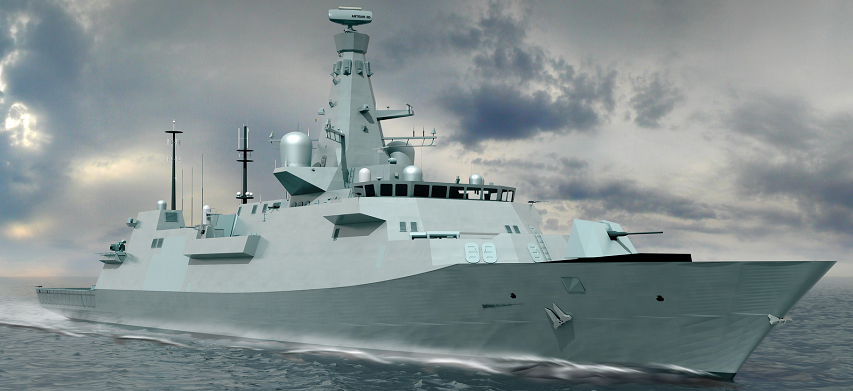
An artist’s rendition of BAE’s Type 26 Global Combat Ship, which was selected as the Canadian Surface Combatant design in 2019, the most recent “largest single expenditure in Canadian government history” (until the RCAF gets their replacement for the CF-18 Hornet).
(BAE Systems, via Flickr)
Once upon time,* about 25 to 30 years ago, in the mid 1990s, when I was the director of a small, very specialized team in National Defence Headquarters (NDHQ) in Ottawa, something like this happened: One of my colleague, who had a title like Director of Maritime Requirements or something similar said to one of his principle subordinates, “Look, now that the 280s (Canada had four Tribal Class destroyers with pennant numbers starting at 280, they were often just called ‘280s’) are finished their mid-life refit and now that the new frigates are entering service it is time to put a ‘placeholder’ in the DSP for their eventual replacements.” The DSP was (still is?) the Defence Services Programme, it is the internal document which sets out the long range spending plans (maybe hopes is a better word) for the Canadian Armed Forces.
Anyway, the Navy commander (the officer assigned to write the document, not the Commander of the Royal Canadian Navy who is nicknamed the Kraken (CRCN)) sat at his desk and consulted the most recently approved planning document which, as far as I can remember, called for a surface fleet of 25 combat vessels and four large support ships plus numerous minor war vessels (like minesweepers) and training vessels. The officer then prepared a memorandum for the joint planning staff which said that the Navy would need 25 new combat ships, to be procured between about 2015 and 2035, in five “batches” of five ships each** at a total cost of about $100 Billion, in 2025 dollars. He didn’t say much beyond that, actually, he was just intending to “reserve” some money a generation or so in the future. His memorandum sailed, smoothly, past his boss and the commodore but questions came from a very senior Air Force general: Where he asked, did the $100 Billion come from? That was an outrageous number, he said.
A meeting ensure where the Navy engineering people came and said, “$100 Billion is a very reasonable guesstimate. Our brand new frigate are costing $1 Billion each when they come down the slipway. They will each have cost the taxpayers two to three times that by the time we send them to be broken up thirty or forty years from now. Adding in the inevitable costs of new technology and inflation, which we know is higher for things like military ships and aircraft than it is for consumer goods, then a life-cycle cost of $4 Billion for each ship is very conservative. The admirals and generals huffed and puffed but they didn’t argue ~ they knew that the engineering branch insisted on using life cycle costing, even though no-one but them understood it, and they also knew that arguing with engineers is like mud-wrestling with pigs: everyone gets dirty but the pigs love it.
A decade later, when a new government was planning the National Shipbuilding Procurement Strategy, which was all about making the Canadian shipbuilding industry competitive and had very little to do with ships ~ except they would be the “product” for which the Government of Canada would pay top-dollar, the Navy was told it could have fewer ships, in two classes, and someone ~ NOT the military’s engineering branch ~ assigned a cost figure to the project which was, to be charitable, pulled out of some political/public relations staffer’s arse.
[…]
* The story is true, in general, but I was not directly involved in any of it. I learned about what happened from three main sources: 1. routine briefings that my bosses (directors-general and branch chiefs) gave, regularly, to we directors, dealing with what was going on in the HQ and in the big wide world; 2. periodic chats with my colleagues, after work on Friday afternoons, in the bar of the Officers’ Mess ~ many of us regarded 2. as a more reliable source of information than 1.; and 3. in the case of the story about the Navy engineers and the Air Force general, by a friend and colleague who was in the room.
** The idea, long before the National Shipbuilding Strategy, was to keep shipyards moderately busy on a continuous basis. The 25 ships would all be similar: the first “batch” of five would be identical, one to the other; the second “batch” would be very similar but with some improvements; the five ships of batch 3 would be similar to the ships from the second batch and those from batch 4 would be rather like their batch 3 sisters. Finally, the batch 5 ships would be product improved versions of batch 4 ~ they would still be “sisters” of the batch 1 ships, but not, in any way, twins. The idea was that about the time that the batch 5 ships were being delivered the first of the batch 1 ships would be getting ready for a mid-life refit (after 15 to 20 years of service) which would result in it being much more like the batch 5 ships … and so on.
February 28, 2021
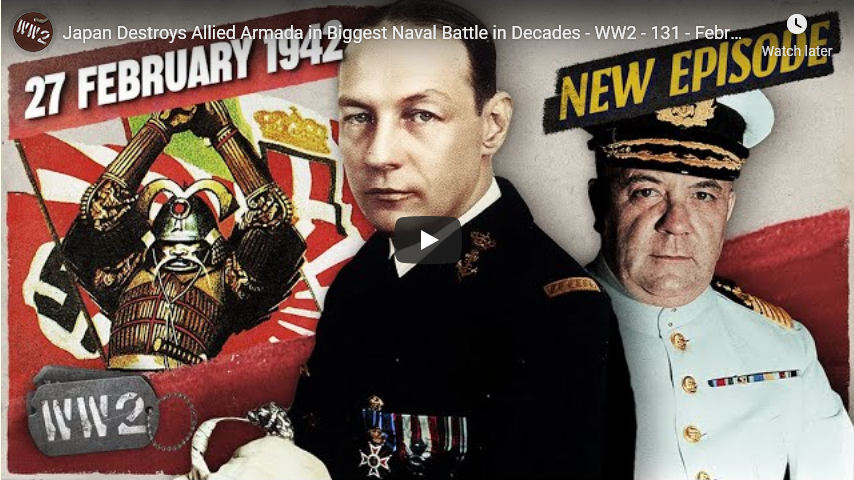
Japan Destroys Allied Armada in Biggest Naval Battle in Decades – WW2 – 131 – February 27, 1942
World War Two
Published 27 Feb 2021The Japanese are advancing in the Dutch East Indies and Burma, brushing aside defenders, but their biggest victory this week is at sea, when they not only brush aside the ABDA Fleet, but literally wipe it out of existence. Meanwhile Italian and German submarines are patrolling the Caribbean, sinking any Allied merchant shipping they find. It is yet another week of Axis successes.
Join us on Patreon: https://www.patreon.com/TimeGhostHistory
Or join The TimeGhost Army directly at: https://timeghost.tvFollow WW2 day by day on Instagram @ww2_day_by_day – https://www.instagram.com/ww2_day_by_day
Between 2 Wars: https://www.youtube.com/playlist?list…
Source list: http://bit.ly/WW2sourcesWritten and Hosted by: Indy Neidell
Director: Astrid Deinhard
Producers: Astrid Deinhard and Spartacus Olsson
Executive Producers: Astrid Deinhard, Indy Neidell, Spartacus Olsson, Bodo Rittenauer
Creative Producer: Maria Kyhle
Post-Production Director: Wieke Kapteijns
Research by: Indy Neidell
Edited by: Iryna Dulka
Sound design: Marek Kamiński
Map animations: Eastory (https://www.youtube.com/c/eastory)Colorizations by:
– Mikołaj Uchman
– Norman Stewart – https://oldtimesincolor.blogspot.com/Sources:
– National Portrait Gallery
– IWM: H 17365, A_238, CB(OPS) 5008Soundtracks from the Epidemic Sound:
– Rannar Sillard – “Easy Target”
– Howard Harper-Barnes- “Underlying Truth”
– Jo Wandrini – “Dragon King”
– Fabien Tell – “Last Point of Safe Return”
– Wendel Scherer – “Out the Window”
– Reynard Seidel – “Rush of Blood”
– Brightarm Orchestra – “On the Edge of Change”
– Craft Case – “Secret Cargo”
– Phoenix Tail – “At the Front”
– Johan Hynynen – “Dark Beginning”
– Wendel Scherer – “Growing Doubt”Archive by Screenocean/Reuters https://www.screenocean.com.
A TimeGhost chronological documentary produced by OnLion Entertainment GmbH.
February 23, 2021
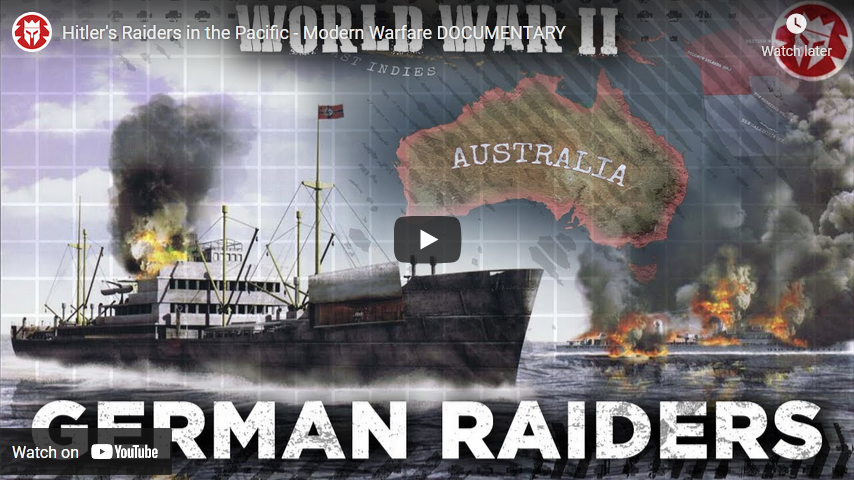
Hitler’s Raiders in the Pacific
Kings and Generals
Published 21 Feb 2021Get your free trial of MagellanTV here: https://try.magellantv.com/kingsandge…. It’s an exclusive offer for our viewers: an extended, month-long trial, FREE. MagellanTV is a new kind of streaming service run by filmmakers with 3,000+ documentaries! Check out our personal recommendation and MagellanTV’s exclusive playlists: https://www.magellantv.com/explore/hi…
Kings and Generals 3d animated historical documentary series on modern warfare continues with a video on the German naval raiding vessels which attacked Australia, New Zealand and other Allied territories in the Pacific Ocean during the early portions of World War II. This episode focuses on the exploits of Orion, Komet, Pinguin, and Kormoran, explaining how the Kriegsmarine‘s vessels attacked the targets in the Pacific Ocean, especially Nauru and its phosphate facilities.
Support us on Patreon: http://www.patreon.com/KingsandGenerals or Paypal: http://paypal.me/kingsandgenerals. We are grateful to our patrons and sponsors, who made this video possible: https://docs.google.com/document/d/1o…
The video was made by Leif Sick, while the script was developed by Ivan Moran. The video was narrated by Officially Devin (https://www.youtube.com/user/Official…)
✔ Merch store ► teespring.com/stores/kingsandgenerals
✔ Podcast ► http://www.kingsandgenerals.net/podcast/
✔ Twitter ► https://twitter.com/KingsGenerals
✔ Instagram ► http://www.instagram.com/Kings_GeneralsProduction Music courtesy of Epidemic Sound: http://www.epidemicsound.com
#Documentary #WorldWar #Raiders
February 14, 2021
German Army Surrounded: You Did Nazi That Coming! – WW2 – 129- February 13, 1942
World War Two
Published 13 Feb 2021The Soviet Red Army has managed to surround some 100,000 German soldiers in the Demyansk Pocket. The Allies are surrounded in Fortress Singapore and the Japanese spend the week breaking in. The Allies are also unable to supply Malta by ship because of continuous heavy Axis bombing of the island and its surroundings, which bodes ill for Allied operations in North Africa. The Germans also make a bold naval move this week — sending two capital ships right up the English Channel under British noses, making for German ports.
Join us on Patreon: https://www.patreon.com/TimeGhostHistory
Or join The TimeGhost Army directly at: https://timeghost.tvFollow WW2 day by day on Instagram @ww2_day_by_day – https://www.instagram.com/ww2_day_by_day
Between 2 Wars: https://www.youtube.com/playlist?list…
Source list: http://bit.ly/WW2sourcesWritten and Hosted by: Indy Neidell
Director: Astrid Deinhard
Producers: Astrid Deinhard and Spartacus Olsson
Executive Producers: Astrid Deinhard, Indy Neidell, Spartacus Olsson, Bodo Rittenauer
Creative Producer: Maria Kyhle
Post-Production Director: Wieke Kapteijns
Research by: Indy Neidell
Edited by: Iryna Dulka
Sound design: Marek Kamiński
Map animations: Eastory (https://www.youtube.com/c/eastory)Colorizations by:
– Mikołaj Uchman
– Carlos Ortega Pereira, BlauColorizations – https://www.instagram.com/blaucolorizations
– Norman Stewart – https://oldtimesincolor.blogspot.com/Sources:
– National Portrait Gallery
– IWM: FE 218, FE 312, A 9692, A 9694, HU 2765, A 9514, MH 4981, FE 222, FE 583Soundtracks from the Epidemic Sound:
– Rannar Sillard – “Easy Target”
– Jo Wandrini – “Dragon King”
– Andreas Jamsheree – “Guilty Shadows 4”
– Fabien Tell – “Break Free ”
– Fabien Tell – “Weapon of Choice”
– Wendel Scherer – “Growing Doubt”
– Johan Hynynen – “Dark Beginning”
– Gunnar Johnsen – “Not Safe Yet”
– Wendel Scherer – “Out the Window”
– Howard Harper-Barnes – “Underlying Truth”
– Philip Ayers – “Ominous”
– Johan Hynynen – “One More Thought”Archive by Screenocean/Reuters https://www.screenocean.com.
A TimeGhost chronological documentary produced by OnLion Entertainment GmbH.

February 12, 2021
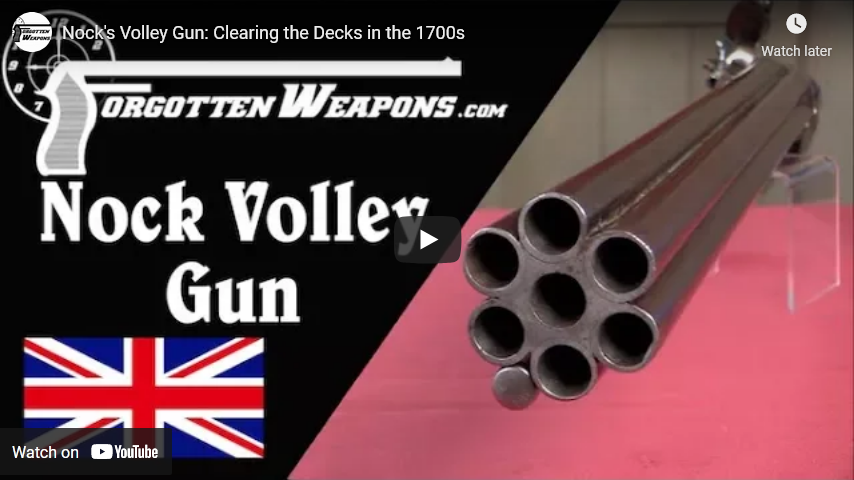
Nock’s Volley Gun: Clearing the Decks in the 1700s
Forgotten Weapons
Published 3 Mar 2018The Nock Volley Gun was actually invented by an Englishman named James Wilson in 1789, and presented to the British military as a potential infantry weapons. This was declined as impractical, but the Royal Navy found the concept interesting for shipboard use. In 1790 the Navy ordered two prototypes made by the British gunsmith Henry Nock, and finding them suitable, proceeded to oder a total of 500 of the guns (thus forever associating Nock’s name with the gun instead of Wilson’s). A further 100 or so were ordered in 1797, and the guns were in fact issued out to various ships — although accounts of their use in combat are difficult to find.
Unfortunately for Nock, the guns presented a couple of substantial problems in use. One was simply the recoil of firing. A single 32-bore (approximately .55 caliber) round ball over 40 grains of black powder is not a very impressive load, but seven of them firing simultaneously add up to a recoil comparable to 4- or 6-bore rifles, and in a volley gun weighing just 13 pounds (5.9kg). In addition, the guns did not always reliably fire all barrels, especially when dirty. This produced a conundrum: how to determine which barrels had fired and which had not? The practical result was double-loaded barrels, which could be liable to bulge or burst. For these reasons, the weapon was declared obsolete in 1805, and never appeared to play any significant military role.
The gun did receive a new wave of popular awareness in 1960, when the character of Jim Bowie was outfitted with one in the movie The Alamo (against all historical evidence). His easy handling of the weapon and the waves of men he was able to mow down with it brought the gun back into the popular consciousness.
http://www.patreon.com/ForgottenWeapons
Cool Forgotten Weapons merch! http://shop.bbtv.com/collections/forg…
If you enjoy Forgotten Weapons, check out its sister channel, InRangeTV! http://www.youtube.com/InRangeTVShow
Contact:
Forgotten Weapons
6281 N Oracle #36270
Tucson, AZ 85704
February 10, 2021
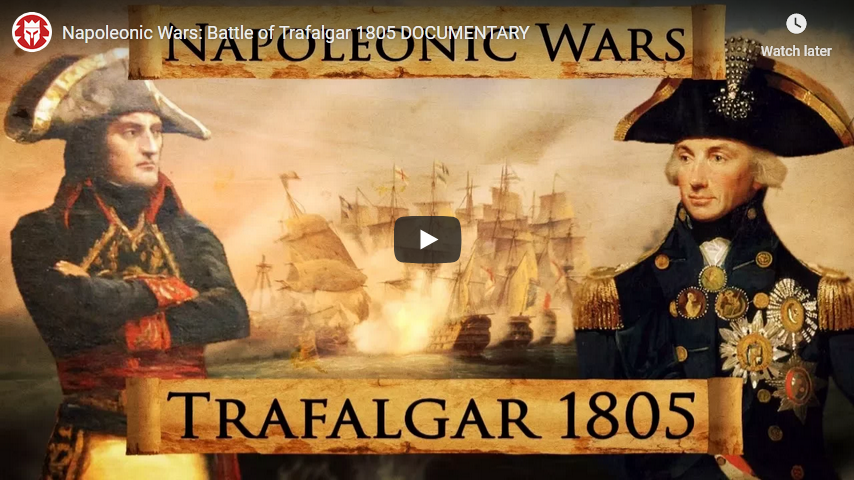
Napoleonic Wars: Battle of Trafalgar 1805
Kings and Generals
Published 5 Nov 2017Napoleon Bonaparte fought all his battles on land, but no other battle influenced his military and political decisions as the battle of Trafalgar that was fought in 1805 off the coast of Spain between the allied Franco-Spanish fleet lead by the admirals Pierre-Charles Villeneuve and Federico Gravina and the Royal Navy of the United Kingdom commanded by the admirals Horatio Nelson and Cuthbert Collingwood. This is our first video on the War of the Third Coalition and second video in this series. We hope to have much more and cover all the Napoleonic Wars.
Support us on Patreon: http://www.patreon.com/KingsandGenerals or Paypal: http://paypal.me/kingsandgenerals
We are grateful to our patrons, who made this video possible: Koopinator, Daisho, Łukasz Maliszewski, Nicolas Quinones, William Fluit, Juan Camilo Rodriguez, Murray Dubs, Dimitris Valurdos, Félix Gagné-Dion, Fahri Dashwali, Kyle Hooton, Dan Mullen, Mohamed Thair, Pablo Aparicio Martínez, Iulian Margeloiu, Chet, Nick Nasad, Jeyares, Amir Eppel, Thomas Bloch, Uri Sternfeld, Juha Mäkelä, Georgi Kirilov, Moe Mia, Daniel Yifrach, Brian Crane, Muramasa, Gerald Tnay, Hassan Ali and Richie Thierry.
This video was narrated by good friend Officially Devin. Check out his channel for some kick-ass Let’s Plays. https://www.youtube.com/user/Official…
The Machinimas for this video are created by one more friend – ltflak. Check out his channel for some great Let’s Plays and Machinimas: https://www.youtube.com/user/ltflak
✔ Twitch ► https://www.twitch.tv/nurrrik_phoenix
✔ Twitter ► https://twitter.com/KingsGenerals
✔ Instagram ► https://www.instagram.com/nurrrrrik
✔ Steam ► http://steamcommunity.com/id/nurrrikInspired by: BazBattles, Invicta (THFE), Epic History TV, Historia Civilis and Time Commanders
Machinimas made on the Napoleon Total War
Production Music courtesy of Epidemic Sound and Total War Napoleon: http://www.epidemicsound.com
Songs used:Epidemicsound:
“Slaves” – Gunnar Johnsén
“At The Front” – Johan Hynynen
“Battle Ostinato 3” – Valdemar HansenTotal War Napoleon:
Richard Beddow – “Corsica, Humble Beginnings”
Ian Livingstone – “The Battle At Arcole”
Richard Beddow – “HMS Victory”
Richard Beddow – “The End”
January 30, 2021
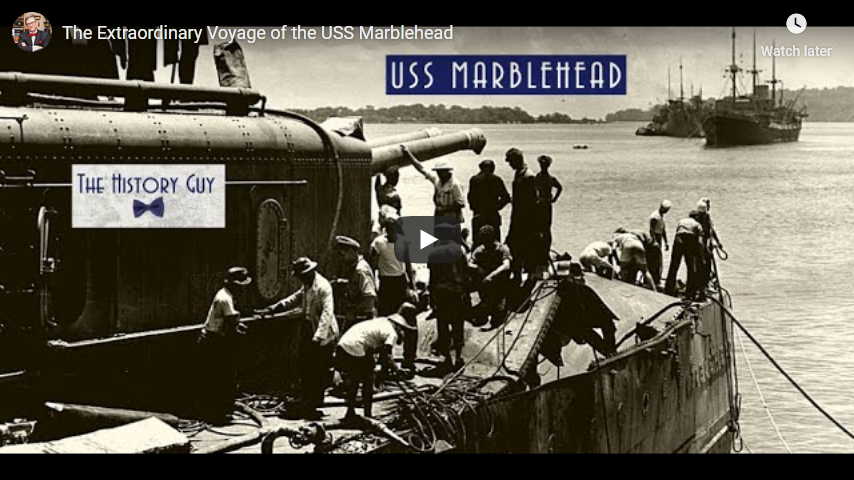
The Extraordinary Voyage of USS Marblehead
The History Guy: History Deserves to Be Remembered
Published 6 Jan 2021By May 1942, nearly half of the forty surface ships of the U.S. Asiatic fleet would be sunk, including the fleet’s largest vessel, the heavy cruiser USS Houston. But the improbable survival of one of the fleet’s vessels, the light cruiser USS Marblehead, is the stuff of legend. The extraordinary voyage of the Marblehead is history that deserves to be remembered.
This is original content based on research by The History Guy. Images in the Public Domain are carefully selected and provide illustration. As very few images of the actual event are available in the Public Domain, images of similar objects and events are used for illustration.
You can purchase the bow tie worn in this episode at The Tie Bar:
https://www.thetiebar.com/?utm_campai…All events are portrayed in historical context and for educational purposes. No images or content are primarily intended to shock and disgust. Those who do not learn from history are doomed to repeat it. Non censuram.
Find The History Guy at:
Patreon: https://www.patreon.com/TheHistoryGuy
Please send suggestions for future episodes: Suggestions@TheHistoryGuy.netThe History Guy: History Deserves to Be Remembered is the place to find short snippets of forgotten history from five to fifteen minutes long. If you like history too, this is the channel for you.
Awesome The History Guy merchandise is available at:
teespring.com/stores/the-history-guyScript by THG
#usnavy #thehistoryguy #WWII