Drachinifel
Published 1 Dec 2018Title says it all really, we look at something that was definitely worth doing, which really should have been done much sooner.

Drachinifel
Published 1 Dec 2018Title says it all really, we look at something that was definitely worth doing, which really should have been done much sooner.
Kings and Generals
Published 16 Dec 2018In our new historical animated documentary, we will cover the Russo-Japanese War of 1904-1905 with a focus on the naval engagements at Tsushima, the Yellow Sea, and Port Arthur. This conflict between Russia and Japan was unique due to the heavy usage of the battleships and its results influenced the First and Second World Wars.
Support us on Patreon: http://www.patreon.com/KingsandGenerals or Paypal: http://paypal.me/kingsandgenerals
Check out our Merch Store: teespring.com/stores/kingsandgenerals
We are grateful to our patrons and youtube members, who made this video possible: https://drive.google.com/open?id=1Tff…
This video was narrated by Officially Devin (https://www.youtube.com/user/OfficiallyDevin)
✔ Merch store ► teespring.com/stores/kingsandgenerals
✔ Podcast ► Google Play: http://bit.ly/2QDF7y0 iTunes: https://apple.co/2QTuMNG
✔ Twitter ► https://twitter.com/KingsGenerals
✔ Instagram ► http://www.instagram.com/Kings_GeneralsSources:
Robert Forczyk – Russian Battleship vs Japanese Battleship
William Koenig – Epic Sea Battles
Левицкий – Русско-японская война 1904—1905
Сорокин – Оборона Порт-Артура. Русско-японская война 1904—1905Production Music courtesy of Epidemic Sound: http://www.epidemicsound.com
#Documentary #RussoJapaneseWar #KingsAndGenerals
Drachinifel
Published 24 Apr 2019Today we look at the Dutch raid on the Medway in the 2nd Anglo-Dutch War and its after-effects.
Want to support the channel? – https://www.patreon.com/Drachinifel
Want to talk about ships? https://discord.gg/TYu88mt
Music – https://www.youtube.com/watch?v=jRQWZ…
Want to get some books? – www.amazon.co.uk/shop/drachinifel
Drydock Episodes in podcast format – https://soundcloud.com/user-21912004
From the comments:
lordmuntague
2 years ago
“On 14 December 1941 a Dutch minelayer named after Jan van Brakel, which was serving as a convoy escort on the UK eastern coast, accidentally hit the anchor buoy of one of the gate vessels which were protecting the entrance to the Medway during World War II. The commander reported this incident to the port authorities, signalling: “Van Brakel damaged boom defence Medway”. The instant reply was: “What, again?”From the RNSA Website.
Drachinifel
Published 13 Aug 2019Today we take a brief look at the various “Free” navies that operated with the Royal Navy and how that interaction played out across the years of conflict.
Want to support the channel? – https://www.patreon.com/Drachinifel
Want a shirt/mug/hoodie – https://shop.spreadshirt.com/drachini…
Want a medal? – https://www.etsy.com/uk/shop/Drachinifel
Want to talk about ships? https://discord.gg/TYu88mt
Want to get some books? www.amazon.co.uk/shop/drachinifel
Drydock Episodes in podcast format – https://soundcloud.com/user-21912004
Drachinifel
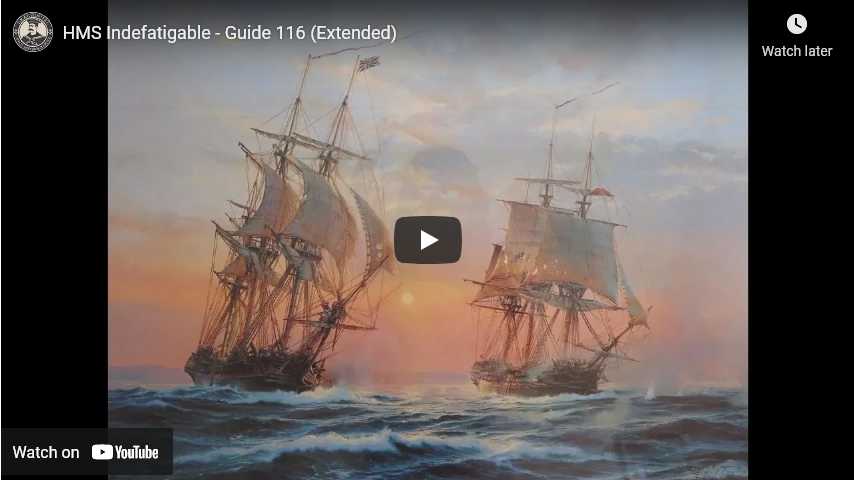
Published 6 Apr 2019HMS Indefatigable, a razee frigate of the British Royal Navy, is today’s subject.
Want to support the channel? – https://www.patreon.com/Drachinifel
Want to talk about ships? https://discord.gg/TYu88mt
Want to get some books? www.amazon.co.uk/shop/drachinifel
British Pathé
Published 13 Apr 2014English Channel.
Top shots of the guided missile destroyer
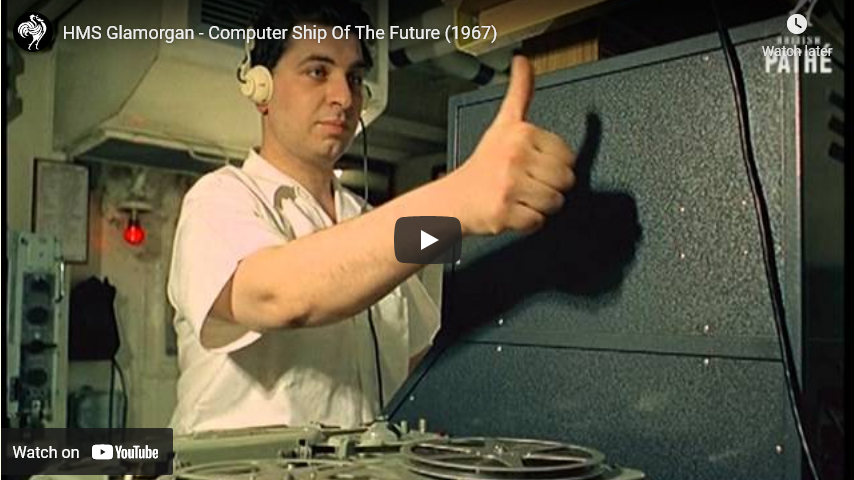
battleshipHMS Glamorgan at sea. In the control/computer room a man pulls out old-fashioned computer records [circuit packs, I believe] from a large control cupboard; officers on the bridge look at dials and through binoculars. Various shots in steering, control and engine rooms as the ship moves along. On the flight deck sailors play hockey while others watch and cheer them on. A navigator on deck looks through a sextant while another officer makes notes. A helicopter is moved from a hanger out onto the deck and prepared for takeoff; firemen in asbestos suits and helmets stand by with a hose; the chopper takes off.Three young men play guitars and banjos before a television camera in a tiny studio; we hear that the ship has its own closed circuit TV station; good shots of the filming; tape recording machines going round; picture being adjusted. Men in a mess room watch the performance on the television while they have a pint. Several shots of the sailors getting their rum rations. Various shots in the kitchens show food being prepared and served into the sailors mess tins; good canteen and catering shots (most of the food looks pretty unappetising) [the person writing the description clearly has no idea just how unappetizing British food could be in the 1960s … this looks well above average for the time]. In the sick bay a sailor gets a shot in the arm from the Medical Officer.
Several shots of the radar antennae on the ship and the men looking at the radar scanner screens in the control room. Men in protective gloves and hoods load shells in the gun turret; M/Ss of the main guns on the ship being fired. Several shots show the countdown for Seaslug missiles to be fired; men at control panels look at dials and radar screens; an officer counts down into a microphone (mute). Complicated boards of buttons show the location of the missiles, intercut with shots of the missiles moving into position by electronic instruction. The missiles move into the launchers on deck and are fired; men watch their progress on a radar screen. Another launcher moves into position; L/S of the ship as the missiles are fired.
Note: on file is correspondence and information about HMS Glamorgan. Cuts exist – see separate record. FILM ID:419.04
A VIDEO FROM BRITISH PATHÉ. EXPLORE OUR ONLINE CHANNEL, BRITISH PATHÉ TV. IT’S FULL OF GREAT DOCUMENTARIES, FASCINATING INTERVIEWS, AND CLASSIC MOVIES. http://www.britishpathe.tv/
FOR LICENSING ENQUIRIES VISIT http://www.britishpathe.com/
British Pathé also represents the Reuters historical collection, which includes more than 136,000 items from the news agencies Gaumont Graphic (1910-1932), Empire News Bulletin (1926-1930), British Paramount (1931-1957), and Gaumont British (1934-1959), as well as Visnews content from 1957 to the end of 1984. All footage can be viewed on the British Pathé website. https://www.britishpathe.com/
World War Two
Published 14 Aug 2021The Axis advance into the Caucasus is going great … except the oil towns they take have no oil, and wasn’t that the whole purpose? Meanwhile in the Pacific, the US Navy is suffering perhaps its greatest defeat ever off Savo Island, even as the Marines take Tulagi, Gavutu, and Tanambogo.
(more…)
Drachinifel
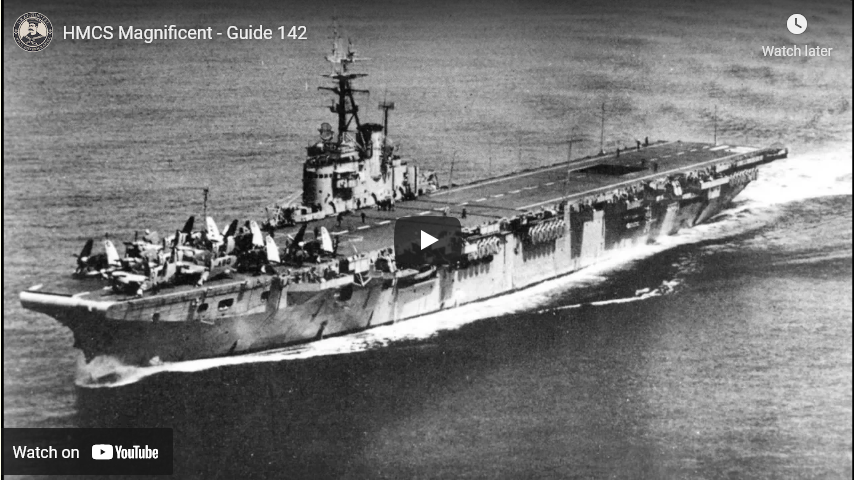
Published 14 Sep 2019The first ship of “Canada Month”, HMCS Magnificent, is the subject of today:
Want to support the channel? – https://www.patreon.com/Drachinifel
Want a shirt/mug/hoodie – https://shop.spreadshirt.com/drachini…
Want a medal? – https://www.etsy.com/uk/shop/Drachinifel
Want to talk about ships? https://discord.gg/TYu88mt
Want to get some books? www.amazon.co.uk/shop/drachinifel
Drydock Episodes in podcast format – https://soundcloud.com/user-21912004
Drachinifel
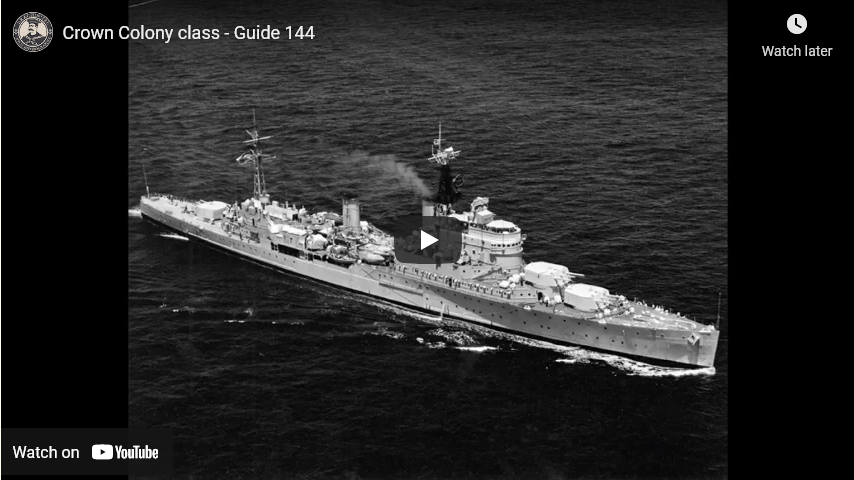
Published 28 Sep 2019The Crown Colony class cruisers of the Royal Navy, and many others, are today’s subject.
Want to support the channel? – https://www.patreon.com/Drachinifel
Want a shirt/mug/hoodie – https://shop.spreadshirt.com/drachini…
Want a medal? – https://www.etsy.com/uk/shop/Drachinifel
Want to talk about ships? https://discord.gg/TYu88mt
Want to get some books? www.amazon.co.uk/shop/drachinifel
Drydock Episodes in podcast format – https://soundcloud.com/user-21912004
Military History Visualized
Published 16 Jan 2016Patreon: https://www.patreon.com/join/mhv
The Imperial Roman Army consisted of the provincial armies, the garrison in Rome and the Roman Navy.
The brunt of the forces was in the Provincial armies that were made up by the legions and their auxiliaries in total around 240k men. The Garrison in Rome was about 15k men, although few in numbers these units were the most powerful in political terms. Finally, the Navy consisted of about 45k men.
*Sources*
Le Bohec, Yann: The Imperial Roman ArmyWebster, Graham: The Roman Imperial Army of the First and Second Centuries A.D
Nemeth, Eduard; Fodorean, Florin: Römische Militärgeschichte
Fields, Nic: The Roman Army of the Principate 27 BC – AD 117
Culham, Phyllis: “Imperial Rome at War”. In: The Oxford Handbook of Warfare in the Classical World

Drachinifel
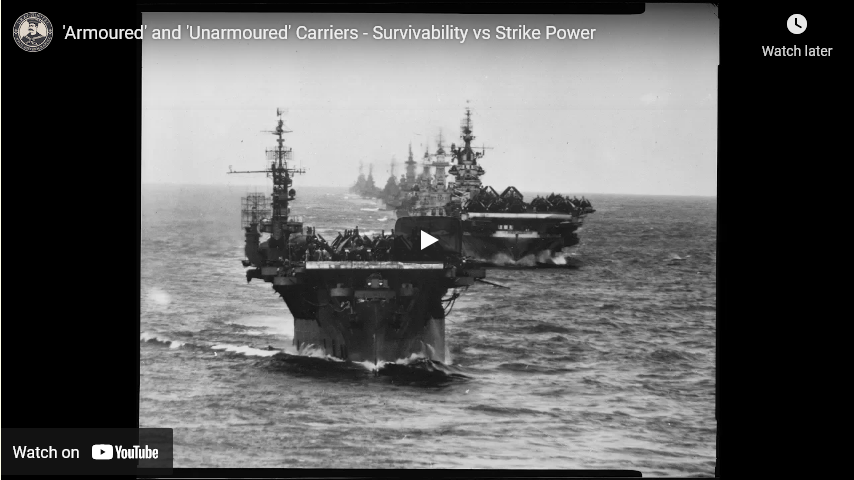
Published 2 Jan 2019In which we try to unpick the somewhat thorny issue of armoured vs unarmoured flight decks in WW2 carrier design.
Want to support the channel? – https://www.patreon.com/Drachinifel
Want to talk about ships? https://discord.gg/TYu88mt
Napoleon ought never to be confused with Nelson, in spite of their hats being so alike; they can most easily be distinguished from one another by the fact that Nelson always stood with his arm like this, while Napoleon always stood with his arms like that.
Nelson was one of England’s most naval officers, and despised weak commands. At one battle when he was told that his Admiral-in-Chief had ordered him to cease fire, he put the telephone under his blind arm and exclaimed in disgust: “Kiss me, Hardy!”
By this and other intrepid manoeuvres the French were utterly driven from the seas.
W.C. Sellar & R.J. Yeatman, 1066 And All That, 1930.
Drachinifel
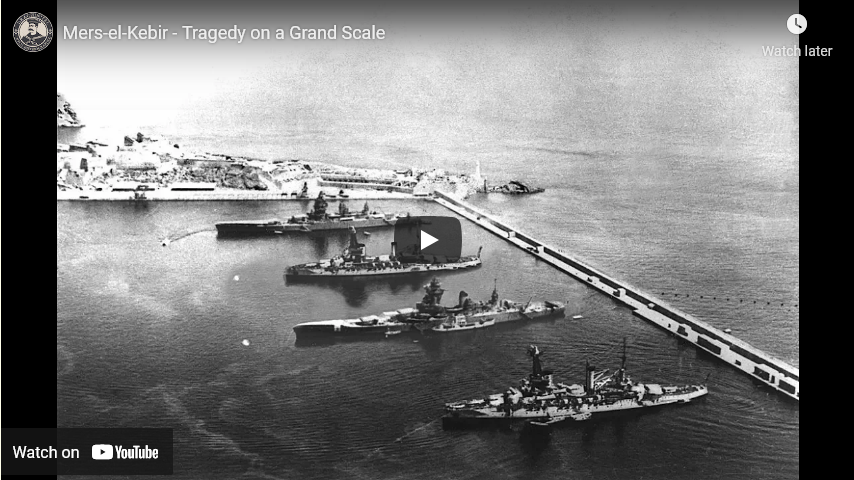
Published 30 Oct 2019Today we look at the facts and thinking behind the attack on Mers-el-Kebir, with my own take on roles and responsibilities.
Comments and Discussion welcome.
Want to support the channel? – https://www.patreon.com/Drachinifel
Want a shirt/mug/hoodie – https://shop.spreadshirt.com/drachini…
Want a medal? – https://www.etsy.com/uk/shop/Drachinifel
Want to talk about ships? https://discord.gg/TYu88mt
Want to get some books? www.amazon.co.uk/shop/drachinifel
Drydock Episodes in podcast format – https://soundcloud.com/user-21912004
capspread
Published 29 Nov 2020#LookatLife #HMSVanguard #RoyalNavy #Shipping #Battleship
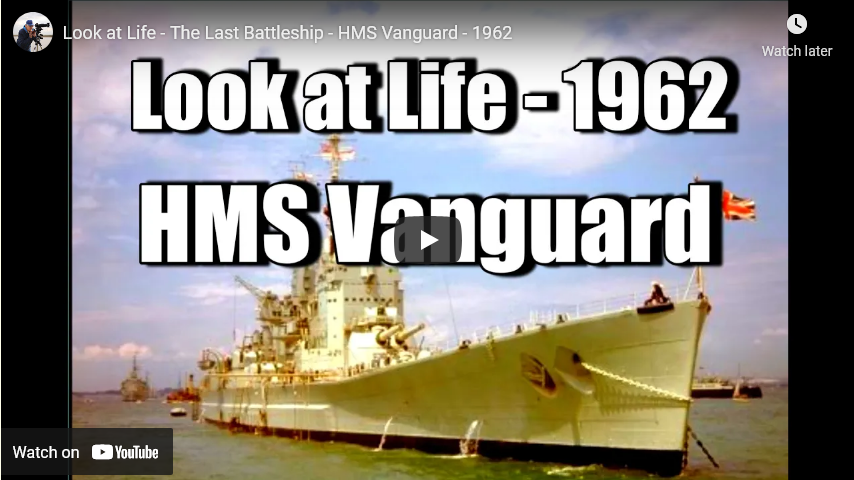
The life and death of HMS Vanguard, and the uses to which her steel will be put.
Another Look at Life Documentary from Volume 2 – Military – The Last Battleship – HMS Vanguard made in 1962.
HMS Vanguard was a British fast battleship built during the Second World War & commissioned afterwards. She was the biggest and fastest of the Royal Navy’s battleships, the only ship of her class, and the last battleship to be built. Work on Vanguard was started and stopped several times during the war and her design was revised several times during her construction to reflect war experience. These stoppages and changes prevented her from being completed before the end of the war.
Vanguard‘s first task after completing her sea trial at the end of 1946 was, early the next year, to convey King George VI & his family on the first Royal Tour of South Africa by a reigning monarch. While refitting after her return, she was selected for another Royal Tour of Australia and New Zealand in 1948. This was cancelled due to King George’s declining health & Vanguard briefly became flagship of the Mediterranean Fleet in early 1949. After her return home in mid-1949, she became flagship of the Home Fleet Training Squadron. Throughout her career, the battleship usually served as the flagship of any unit to which she was assigned. During the early 1950s, Vanguard was involved in a number of training exercises with NATO forces. In 1953 she participated in Queen Elizabeth II’s Coronation Review. While she was refitting in 1955, the Admiralty announced that the ship was going to be put into reserve upon completion of the work. Vanguard was sold for scrap and was broken up beginning in 1960.
Vanguard had an overall length of 814 feet 4 inches (248.2 m), a beam of 107 feet 6 inches (32.8 m) & a draught of 36 feet (11 m) at deep load. She displaced 44,500 long tons (45,200 t) at standard load and 51,420 long tons (52,250 t) at deep load. The ship was significantly larger than her predecessors of the class, almost 50 feet (15.2 m) longer & displaced about 6,000 long tons (6,100 t) more than the older ships at deep load. Vanguard was overweight by some 2,200 long tons (2,200 t), which magnified the difference. The ship had a complete double bottom 5 feet (1.5 m) deep & she was divided into 27 main compartments by watertight bulkheads.
The King George V-class ships had been built with almost no sheer to the main deck forwards to allow ‘A’ turret to fire straight forward at zero elevation, resulting in those ships being wet forward. Vanguard was redesigned as a result of this experience, significant sheer & flare being added to the bow. The ship was well regarded as seaworthy, able to keep an even keel in rough seas. At full load, Vanguard had a metacentric height of 8.2 feet (2.5 m).
As a fleet flagship, her complement was 115 officers and 1,860 men in 1947. Air conditioning was provided for many of the ship’s control spaces, & asbestos insulation was provided on exposed areas of the ship’s sides, decks and bulkheads. Steam heating was provided for her armament, instruments, look-out positions & other equipment to make Vanguard suitable for operations in the Arctic. An Action Information Centre was fitted below the main armour deck with facilities to track aircraft & ships around Vanguard.
Vanguard was laid down on 2 October 1941 by John Brown and Company of Clydebank, Scotland. After the Japanese invasion of Malaya in December, the ship was given an A1 priority in the hope of finishing her by the end of 1944, and construction of the light cruiser HMS Bellerophon, as well as some merchant shipping, was halted to expedite the ship’s completion. This was unsuccessful, however, due to a shortage of skilled labour. As a result, it was not until 30 November 1944 that the ship was launched. Princess Elizabeth presided over this ceremony, the first ship she ever launched, and was presented with a diamond rose brooch to commemorate the event.
The end of hostilities following Japan’s surrender reduced the need for new warships, and consequently the ship was not commissioned until 12 May 1946. By this time, a total of £11,530,503, including £3,186,868 for the modernisation of the main armament, had been spent on producing Vanguard.
On 9 October 1959 the Admiralty announced that Vanguard would be scrapped, as she was considered obsolete and too expensive to maintain. She was decommissioned on 7 June 1960 & sold to BISCO for £560,000. On 4 August 1960, the ship was towed from Portsmouth to the breaker’s yard at Faslane, Scotland. As Vanguard was being towed towards the harbour entrance, she slewed across the harbour and ran aground near the Still & West pub. She was pulled off by five tugboats an hour later, and made her final exit from Portsmouth. Five days later she arrived at Faslane, and by mid-1962 the demolition process was complete.
Drachinifel
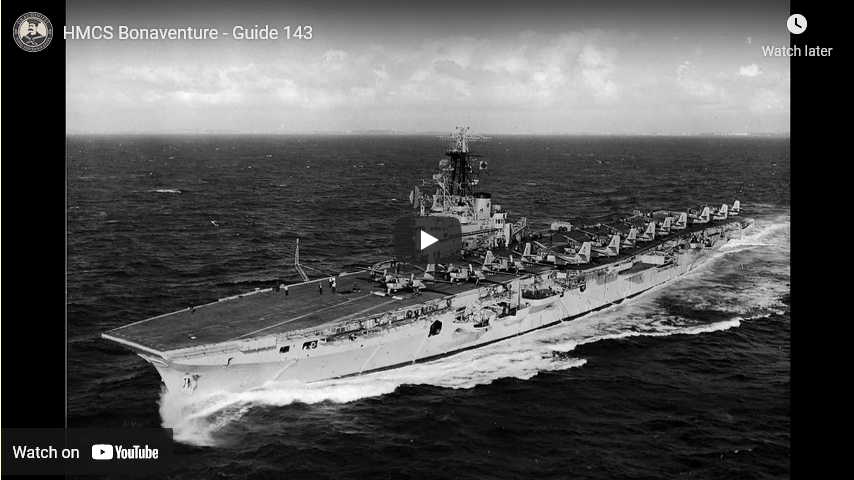
Published 21 Sep 2019Canada’s last carrier is today’s subject for discussion.
Want to support the channel? – https://www.patreon.com/Drachinifel
Want a shirt/mug/hoodie – https://shop.spreadshirt.com/drachini…
Want a medal? – https://www.etsy.com/uk/shop/Drachinifel
Want to talk about ships? https://discord.gg/TYu88mt
Want to get some books? www.amazon.co.uk/shop/drachinifel
Drydock Episodes in podcast format – https://soundcloud.com/user-21912004



Powered by WordPress