
Labour, it seems to me and to many others I’m sure, has mutated from once upon a time being the party speaking for the poor, often against the government, to being the party of government, even when they aren’t the politicians in titular charge of that government. These people are now “supportive of the state”, to quote Hartley, even when they’re not personally in charge of it. It’s the process of government, whoever is doing it, whatever it is doing, that they now seem to worship. It is, as similar people in earlier times used to say, the principle of the thing, the principle being that they’re in charge. Many decades ago, Labour spoke for, well, Labour. The workers, the toiling masses. Now they represent most determinedly only those who labour away only in Civil Service offices or their allies in the media, in academia, and in the bureaucratised top end of big business.
Anyone official and highly educated sounding who challenges whatever happens to be the prevailing supposed wisdom of this governing class, on Coronavirus or on anything else, must be scolded into irrelevance and preferably silenced. The governors must be obeyed, even if they’re wrong. In fact especially if they’re wrong, just as the soldiers of the past were expected to obey their orders, no matter what they thought of the orders or of the aristocratic asses who often gave them. Whether they were good orders was an argument that those giving orders could have amongst themselves, but that orders must be obeyed was a given. “Capitalism” isn’t worth dying for, but this new dispensation is, right or wrong.
Our new class of entitled asses, together with all those who have placed their bets for life on carrying out their orders or trying to profit from them, seems now to be the limit of the Labour Party’s electoral ambition. And who knows? The awful thing is that this class and its hangers-on could be enough, in the not too distant future, to get them back into direct command of the governmental process that they so adore.
Brian Micklethwait, “Mick Hartley on the politics of the Lockdown”, Samizdata, 2020-05-15.
August 16, 2020
QotD: Labour is now the “party of government” even when they’re not in power
August 6, 2020
Post WWII United Kingdom – Cold War Documentary
The Cold War
Published 11 Apr 2020Our historical documentary series on the history of the Cold War continues with a video on the post-World War II situation in the United Kingdom
Support us on Patreon: https://www.patreon.com/thecoldwar or Paypal: http://paypal.me/TheColdWar
✔ Merch store ► https://teespring.com/stores/thecoldwar
✔ Instagram ► http://www.instagram.com/thecoldwartv#ColdWar #UK #WorldWar
March 26, 2020
QotD: “Gammon”
Who voted Labor? Recent immigrants. University students. Urban professionals. The wealthy and the near wealthy. People who make their living by slinging words and images, not wrenches or hammers. Other than recent immigrants, the Labor voting base is now predominantly elite.
This is the Great Inversion – in Great Britain, Marxist-derived Left politics has become the signature of the overclass even as the working class has abandoned it. Indeed, an increasingly important feature of Left politics in Britain is a visceral and loudly expressed loathing of the working class.
To today’s British leftist, the worst thing you can be is a “gammon”. The word literally means “ham”, but is metaphorically an older white male with a choleric complexion. A working-class white male, vulgar and uneducated – the term is never used to refer to men in upper socio-economic strata. And, of course, all gammons are presumed to be reactionary bigots; that’s the payload of the insult.
Catch any Labor talking head on video in the first days after the election and what you’d see is either tearful, disbelieving shock or a venomous rant about gammons and how racist, sexist, homophobic, and fascist they are. They haven’t recovered yet as I write, eleven days later.
Observe what has occurred: the working class are now reactionaries. New Labor is entirely composed of what an old Leninist would have called “the revolutionary vanguard” and their immigrant clients. Is it any wonder that some Laborites now speak openly of demographic replacement, of swamping the gammons with brown immigrants?
It would be entertaining to talk about the obvious parallels in American politics – British “gammons” map straight to American “deplorables”, of course, and I’m not even close to first in noticing how alike Donald Trump and Boris Johnson are – but I think it is more interesting to take a longer-term view and examine the causes of the Great Inversion in both countries.
Eric S. Raymond, “The Great Inversion”, Armed and Dangerous, 2019-12-23.
January 17, 2020
Labour’s underlying problem
In UnHerd, James Bloodworth explains why the Labour Party will have to change to get back into power in Britain:

Jeremy Corbyn speaking at a Rally in Hayfield, Peak District, UK on 25th July 2018.
Photo by Sophie Brown via Wikimedia Commons.
George Orwell was famously contemptuous of much of the left intelligentsia. “England is perhaps the only great country where intellectuals are ashamed of their own nationality,” he wrote in his 1941 essay “England, Your England“. “In left-wing circles it is always felt that there is something slightly disgraceful in being an Englishman and that it is a duty to snigger at every English institution.”
Plus ça change, plus c’est la même chose.
There has always been a healthy suspicion of jingoism and flag-waving on the Left. However it wasn’t this that Orwell was referring to. Few wrote more damning screeds about the British empire than the former colonial policeman, who was always willing to give the “blimps” who ran Britain a good kicking. Rather, Orwell was referring to a more generalised contempt many on the Left felt towards Britain and — by extension — their fellow countrymen.
Socialism to Orwell meant bread and butter issues of higher wages and more freedom — freedom itself depending to a large extent on how much money one has. Yet the movement attracted its fair share of cranks. It was this penumbra of crankishness that prevented socialism from developing a mass following. A major hallmark of it was its anti-Britishness.
Jeremy Corbyn has been compared plenty of times over the past five years to the “vegetarian, fruit-juice drinking, Nature Cure quack, pacifist” oddballs Orwell wrote about in The Road to Wigan Pier. In Orwell’s time these types seemed to gravitate towards the socialist movement “like bluebottles to a dead cat”, as he put it. Since Corbyn became leader in 2015 something similar has occurred: the Labour Party has been flooded with conspiracy theorists, antisemites and various other subliterate fools. Uniting almost all of them is a profound contempt for Britain and in particular British foreign policy.
This is arguably a major reason Labour lost the recent election. “Such was the demonisation of Jeremy Corbyn,” wrote the Labour MP Liam Byrne, “that hundreds of voters I met thought Labour’s leader was a communist terrorist sympathiser who wouldn’t push the nuclear button or sing the national anthem.”
This isn’t so much the “demonisation of Jeremy Corbyn” as an accurate summation of the Labour leader’s views. Seumas Milne and Andrew Murray, two of Corbyn’s first appointments as advisers, are communists. Corbyn called members of Hamas and Hezbollah “honoured friends”. He fraternised with the IRA and argued for the abolition of Nato. He has obfuscated shamefully over acts of aggression directed against Britain, such as during the Skripal poisoning in Salisbury. It is not demonising someone to accurately list the things they have said and done.
December 14, 2019
Livingstone announced Labour’s defeat was at least partially down to “the Jewish vote”
Barbara Kay on the British general election results:
“Palace of Westminster” by michaelhenley is licensed under CC BY-NC-SA 2.0


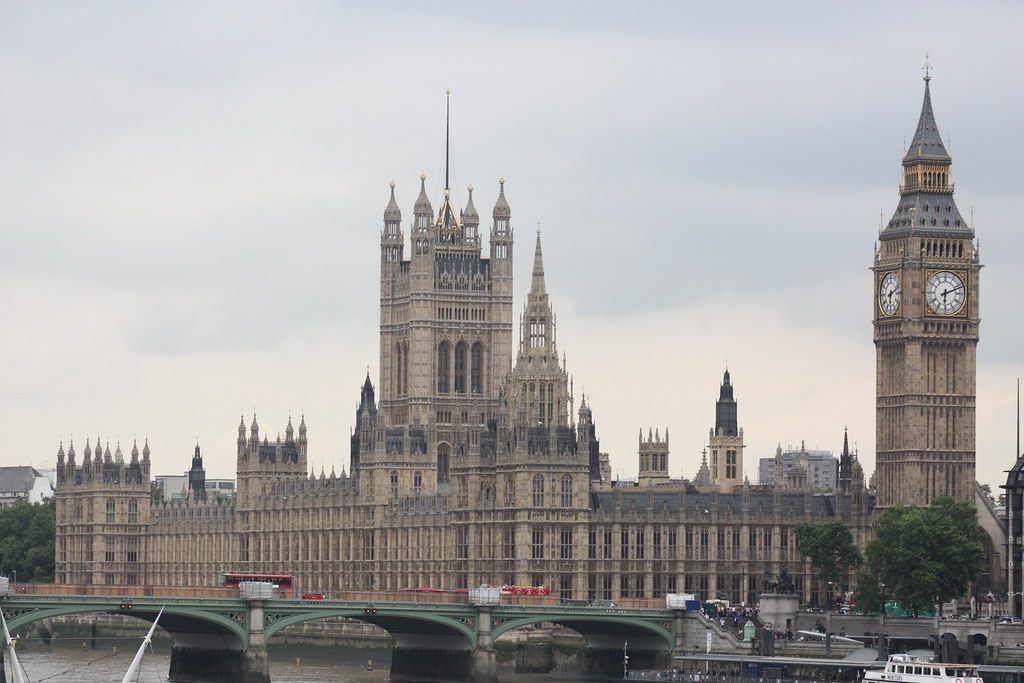
Boris Johnson’s Conservatives racked up a stunning victory in the U.K. elections, with numbers so decisive — 365 of 650 seats — we will hear no more rumblings about a “second referendum” on Brexit. You can love Boris or hate him, or struggle with mixed feelings (as I confess I do), but he now has a mandate to get Brexit done.
But I have no mixed feelings about the Labour Party’s humiliating loss, at 203 seats their lowest ebb since pre-World War Two. If ever a party leader deserved a definitive smackdown, it was Jeremy Corbyn, and a victory lap is in order for democracy doing what it does best.
On seeing the results, I said to myself, “Yay!” The second thing I said to myself was, “Who will be the first to pull a Jacques Parizeau and how long will it take?” As it turned out, not long at all, and it was former London mayor Ken Livingstone who reprised Parizeau’s infamous “money and the ethnic vote” blame-shift after the Yes side’s narrow loss in the 1995 Quebec sovereignty referendum.
As soon as it was clear the U.K. Conservatives had crossed the threshold majority number of 326 seats, Livingstone announced Labour’s defeat was at least partially down to “the Jewish vote.” In fact, a Jewish population of 260,000 could not by itself have greatly influenced the result, but it is a mark of the anti-Semitic mindset to constantly exaggerate Jewish power.
Livingstone, who has called allegations of anti-Semitism within the Labour Party “lies and smears,” was himself suspended from Labour in 2016 over an assertion that Hitler supported Zionism. It was by no means Livingstone’s only egregiously insensitive remark. In April, he reportedly told the group Labour Against the Witchhunt that “It is not anti-Semitic to hate the Jews of Israel.”
Disappointed progressives, of course, are handling the Labour defeat with calm resignation, patience, and a spot of rioting.
November 29, 2019
QotD: The progressive belief in the mind-controlling power of the press (and Facebook)
Media-bashing has resurfaced with a vengeance over the past couple of weeks. It isn’t hard to see why. The polls don’t look good for Labour. Some are predicting a wipeout, especially in Labour’s traditional working-class strongholds. And as has been the case for a good 30 years now, when political events don’t go the left’s way – or rather, when the dim public lets the left down – the knives come out for the media.
Corbynista commentators are railing against the “billionaire media”. “Billionaires control the media, and it’s undermining democracy”, say the middle-class left-wingers of Novara Media. How? Because these billionaires are “tell[ing] you what to think”. You, the gullible, ill-educated throng, that is; not us, the well-educated, PhD-owning media leftists at Novara who can see through the lies peddled by evil billionaires.
Brendan O’Neill, “The woke elitism behind the left’s media-bashing”, Spiked, 2019-11-25.
November 21, 2019
There’s nothing “confusing” about Labour’s Brexit policy
As Brendan O’Neill explains, the Labour Party knows exactly what it wants as far as Brexit is concerned:

I wish people would stop saying Labour’s Brexit policy is confusing. It is actually incredibly straightforward. Labour will kill Brexit. It will block the enactment of the largest democratic vote in UK history and ensure that we do not leave the EU in any meaningful way. It could not be clearer: Labour will betray millions of its working-class voters, its own history of Euroscepticism, and the values of Jeremy Corbyn’s own hero Tony Benn, by subverting British democracy and keeping us in the EU against the people’s will.
Anyone who doubts this – or anyone who is still, inexplicably, confused about Labour Brexit’s policy – only needed to listen to Crobyn’s comments at the Confederation of British Industry (CBI) on Monday. Corbyn first assured the assembled capitalists that he is not anti-business. Then he assured them that if he were prime minister, no harm would come to their beloved neoliberal institution, the European Union. Corbyn essentially promised the gathered bosses that he would override the stupid plebs’ democratic wishes and keep Britain entangled in the EU.
He said Labour’s policy is to get a good Brexit deal with the EU and then put it to the people in a confirmatory vote – otherwise known as a second referendum. This referendum would, in his words, be a choice between the “sensible deal” struck by Labour and fully remaining in the EU. That “sensible deal”, by the way, would include “a customs union, close Single Market relationship, and guarantees of rights, standards and protections”. So we’d have a choice between remaining and … remaining. A customs union, Single Market links, and EU-guaranteed rights and standards – that is, immovable EU regulations – do not not add up to Leave. By any stretch of the imagination. With complete contempt for the democratic will, and the basic principle of democratic choice, a Labour government would say to us: “You can stay in the EU or you can stay in the EU. It’s your choice.”
This is not confusing. Labour would pursue a backroom coup against Brexit. It would not only renege on the democratic vote to leave – it would then remove the option of leaving entirely from the ballot paper in a second referendum. It would deprive the British people of the thing that the largest number of us in the democratic history of this country called for: a break from the EU. Labour MPs, activists and bureaucrats would engage in a bloodless coup against the people’s will.
June 8, 2019
QotD: Labour’s celebration at Thatcher’s death
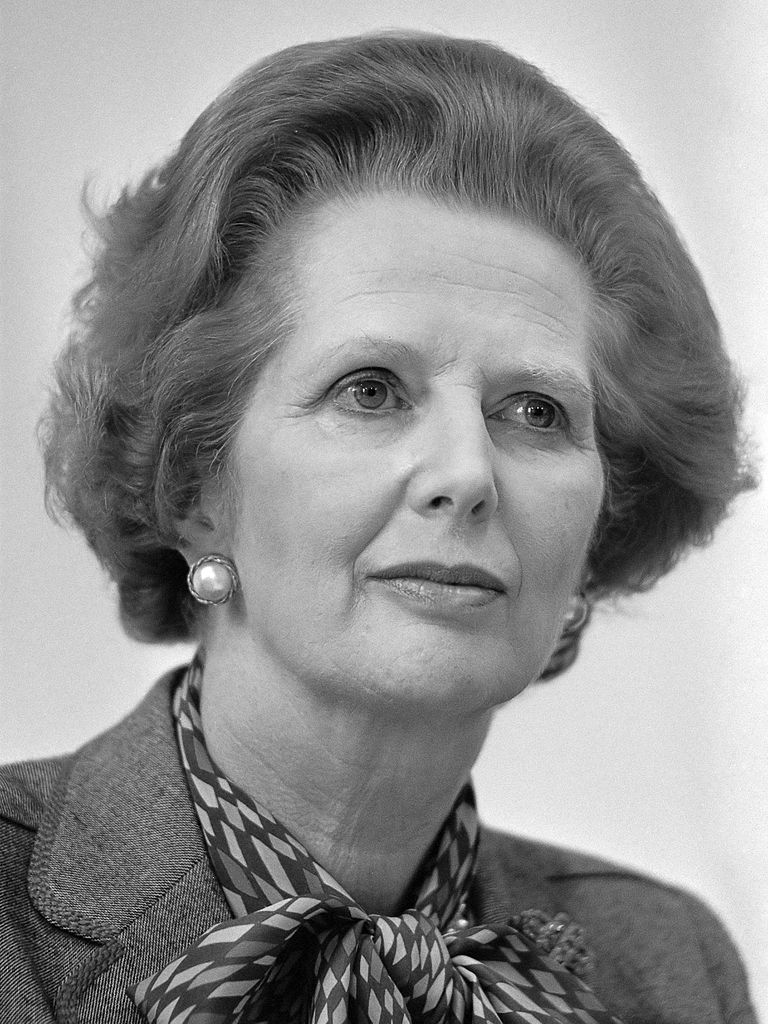
A few hours after Margaret Thatcher’s death on Monday, the snarling deadbeats of the British underclass were gleefully rampaging through the streets of Brixton in South London, scaling the marquee of the local fleapit and hanging a banner announcing “THE BITCH IS DEAD”. Amazingly, they managed to spell all four words correctly. By Friday, “Ding Dong! The Witch Is Dead”, from The Wizard of Oz, was the Number One download at Amazon UK.
Mrs Thatcher would have enjoyed all this. Her former speechwriter John O’Sullivan recalls how, some years after leaving office, she arrived to address a small group at an English seaside resort to be greeted by enraged lefties chanting “Thatcher Thatcher Thatcher! Fascist fascist fascist!” She turned to her aide and cooed, “Oh, doesn’t it make you feel nostalgic?” She was said to be delighted to hear that a concession stand at last year’s Trades Union Congress was doing a brisk business in “Thatcher Death Party Packs” – almost a quarter-century after her departure from office.
Of course, it would have been asking too much of Britain’s torpid left to rouse themselves to do anything more than sing a few songs and smash a few windows. In The Wizard of Oz, the witch is struck down at the height of her powers by Dorothy’s shack descending from Kansas to relieve the Munchkins of their torments. By comparison, Britain’s Moochkins were unable to bring the house down: Mrs Thatcher died in her bed at the Ritz at a grand old age. Useless as they are, British socialists were at one point capable of writing their own anti-Thatcher singalongs rather than lazily appropriating Judy Garland blockbusters from MGM’s back catalogue. I recall in the late Eighties being at the National Theatre in London and watching the crowd go wild over Adrian Mitchell’s showstopper, “F**k-Off Friday”, a song about union workers getting their redundancy notices at the end of the week, culminating with the lines:
I can’t wait for That great day when F**k-Off Friday
Comes to Number Ten.You should have heard the cheers.
Mark Steyn, “The Uncowardly Lioness”, SteynOnline.com, 2019-05-05.
May 29, 2019
The EU election was “the Tories’ worst result since 1678”
Mark Steyn on the results of last week’s EU parliamentary elections:
In any normal UK election, it would be inconceivable for either of the two main parties – Conservative and Labour – to attract just 23 per cent of the vote. The fact that that is all they could muster between them is hilarious, and greatly to be enjoyed. As I put it on the radio last week, the departing Theresa May has led the Tories to their worst result in two hundred years. But, really, that’s praising with faint damns. I saw Daniel Hannan on the telly extending Mrs May’s impressive feat back through the pre-Reform Act era and accounting it the Tories’ worst result since 1678. Which is kind of hard to spin. Her forced resignation last Friday morning (by which point her party had made it clear they wouldn’t stick with her past lunch) ensures that she and that election result will be yoked together for all time. And jolly well deserved it is.
When the party of government falls from favor, the beneficiary is usually the principal opposition. Instead, Jeremy Corbyn’s Labour Party saw its vote fall almost as precipitously as the Tories’. Against the Conservatives’ single-digit nine per cent, Labour could muster only fourteen per cent, its own worst result in a century – in fact, since 1910. Which would also be hard to spin, had Theresa May not done Corbyn the favor of pulling off an unbeatable record.
[…]
Instead, Mrs May in particular but also Parliament in general chose to double-down on the estrangement from the masses revealed by the referendum, and spent the next three years demonstrating that, whatever the Prime Minister had in mind when she first declared “Brexit means Brexit”, it obviously doesn’t mean leaving the European Union. Either through malice or stupidity or condescension, the political class opted to widen its breach with the people – and Nigel Farage, who is a very canny fellow, decided six weeks ago to create a party to fill the gap in a European election the UK shouldn’t have had to participate in.
Listening and/or watching to the BBC on Sunday for as long as I could stomach it, I detected a strange urge to suggest that the Brexit Party had somehow under-performed, as though it’s normal for a six-week-old party to win twenty-nine out of seventy-three seats, while the century-old Labour Party wins only ten, and the Tories four and the nearest Nigel gets to a run for his money is the second-placed Liberal Democrats with sixteen seats. Farage and the other officially pro-Brexit parties (Labour, Tory, Democratic Unionist) won 44 seats. The Lib Dems and the other officially Remainer parties (Green, Scottish Nationalists, Plaid Cymru, Sinn Féin, Alliance Party) got 29. Adding in the unelected UKIP and Ulster Unionists, the Leave share of the vote was 58 per cent.
Yes, yes, I know, that’s a bit of a simplification, in that the Tories are supposedly pro-Brexit but totally bollocksed it, and Labour is only pretending to be pro-Brexit as part of a difficult straddle between its Old Labour working-class base and the New Labour preening metropolitan Euro-luvvies. Many of the latter – including such hitherto loyal champagne socialists as actors Simon Callow and Michael Cashman and even Blair’s old Cabinet Secretary Gus O’Donnell. – flew Corbyn’s coop and voted for the Lib Dems. Even so, for those demanding a second referendum (or, as they cynically call it, a “people’s vote”), there’s not much evidence for a second-time-around sadder-but-wiser Remain majority. Among riven Tory families, Jacob Rees-Mogg’s sister stood for the new Brexit Party while Boris Johnson’s sister stood for the equally new “Change UK”, a militantly anti-Brexit party formed by a coterie of disaffected Remainer media self-promoters of the soft left and soft right. Annuziata Rees-Mogg was duly elected in the Farage surge, while Rachel Johnson flopped out because “Change UK” had barely any statistical support outside the more desperate bookers of telly current affairs shows.
March 21, 2019
Theodore Dalrymple reviews a new Jeremy Corbyn biography
It certainly doesn’t paint a pleasant picture of the man:
Jeremy Corbyn, Leader of the Labour Party speaking at a Rally in Hayfield, Peak District, UK on 25th July 2018 in support of Ruth George MP.
Photo by Sophie Brown via Wikimedia Commons.
In normal circumstances, no one would dream of writing a biography of so dreary a man as Jeremy Corbyn; but political correctness has so eviscerated the exercise of wit that dreariness is no obstacle to political advancement and may even be of advantage to it. The dreary, alas, are inheriting the earth.
Tom Bower is a biographer of eminent living persons whose books tend to emphasise the discreditable — of which he usually finds more than enough to satisfy most people’s taste for salacity. His books are not well-written but they are readable; one sometimes dislikes oneself for enjoying them. So Bower’s latest book Dangerous Hero: Corbyn’s Ruthless Plot for Power, is a bit of a surprise.
Jeremy Corbyn is not a natural subject for Bower because he, Corbyn, is not at all flamboyant and has even managed to make his private life, which has been far from straightforward, uninteresting. Corbyn, indeed, could make murder dull; his voice is flat and his diction poor, he possesses no eloquence, he dresses badly, he has no wit or even humour, he cannot think on his feet, and in general has negative charisma. His main assets are his tolerable good looks, attractiveness to women, and an ability to hold his temper, though he seems to be growing somewhat more irritable with age.
Bower has written a book that is very much a case for the prosecution. If he has discovered in Corbyn no great propensity to vice as it is normally understood, neither has he discovered any great propensity to virtue as it is normally understood, for example personal kindness. His concern for others has a strongly, even chillingly abstract or ideological flavour to it; he is the Mrs. Jellyby de nos jours, but with the granite hardness of the ideologue added to Mrs. Jellyby’s insouciance and incompetence.
[…]
His probity, cruelty or stupidity, might appeal to monomaniacs, but it presages terrible suffering for millions if ever he were to achieve real power: for no merely empirical evidence, no quantity of suffering, would ever be able to persuade him that a policy was wrong or misguided if it were in accord with his abstract principle. This explains his continued loyalty to the memory of Hugo Chavez and to his successor. What happens to Venezuelans in practice is of no interest to him whatsoever, any more than the fate of Mrs. Jellyby’s children were of no interest to her. For Corbyn, the purity of his ideals are all-in-all and their consequences of no consequence.
From a relatively privileged background, he formed his opinions early and has never allowed any personal experience or historical reading to affect them. On any case, according to Bower, he reads not at all: in this respect, he is a kind of Trump of the left. He has remained what he was from an early age, a late 1960s and 70s student radical of the third rank.
His outlook on life is narrow, joyless and dreary. He is the kind of man who looks at beauty and sees injustice. He has no interests other than politics: not in art, literature, science, music, the theatre, cinema — not even in food or drink. For him, indeed, food is but fuel: the fuel necessary to keep him going while he endlessly attends Cuban, Venezuelan, or Palestinian solidarity meetings. He is one of those who thinks that, because he is virtuous, there shall be no more cakes and ale.
October 1, 2018
Britain’s Labour Party under Jeremy Corbyn has become a “force for antisemitism”
Hugh Fitzgerald on the British Labour Party’s slide into open anti-semitic actions under Jeremy Corbyn:
Jeremy Corbyn, Leader of the Labour Party speaking at a Rally in Hayfield, Peak District, UK on 25th July 2018 in support of Ruth George MP.
Photo by Sophie Brown via Wikimedia Commons.
In Great Britain, Jeremy Corbyn and his willing collaborators in the Labour Party continue their ferocious attacks on anyone in the party who still supports Israel. In the first week of September, a vote of no-confidence against Joan Ryan, the head of Labour Friends of Israel, passed 94-92 among local party members. Frank Field, another long-serving MP and prominent supporter of Israel, resigned as whip to protest the Labour Party becoming a “force for antisemitism” and for allowing a “culture of nastiness, bullying and intimidation” to develop; he was informed that as result he was no longer a member of the Party.
As is well known, Jeremy Corbyn intensely dislikes Israel. He refers to members of Hamas and Hezbollah, on the other hand, as “friends.” They feel the same about him. In a Twitter post, Hamas wrote: “We salute Jeremy Corbyn’s supportive positions to the Palestinians.”
When first accused of having honored dead terrorists at a graveside ceremony in Tunisia in October 2014, Corbyn denied that he had been anywhere near the graves of any terrorists, and he certainly had “no memory” of any wreath laying. Then some photographs surfaced. One of them shows Corbyn holding — with others — a large wreath. And the grave they are standing over turns out to have been that of one of those who planned the murder of the Israeli athletes at the Munich Olympics in 1972.
Another photo of Jeremy Corbyn shows him posing in the same graveyard next to a convicted terrorist, Fatima Bernawi, who was given a life sentence for trying to blow up a Israeli cinema in 1967. While the attempted terror attack did not come off, Bernawi boasted that it was successful because it “generated fear.” Bernawi was later freed in a prisoner swap, and was thus able to attend the same terrorist-honoring graveside ceremony as Jeremy Corbyn.
Asked to explain what he was doing next to a convicted terrorist, Mr Corbyn’s spokesman said: “Jeremy has a long and principled record of solidarity with the Palestinian people and engaging with actors in the conflict to support peace and justice in the Middle East.”
August 1, 2018
British Labour Party continues to sideline pro-Brexit MPs
Fraser Myers on the most recent pro-Brexit Labour MP deselected by local party activists:
Labour Party activists have passed votes of no confidence in two of Labour’s Brexit-backing MPs, and called for their deselection. Frank Field and Kate Hoey were censured by their local parties for voting with the government against an amendment that would have kept the UK in a customs union with the EU after Brexit. If passed, it would have killed off any prospect of Britain having an independent trade policy after Brexit, and would have kept us under the jurisdiction of the European Court of Justice. Recognising this as a betrayal of the Leave vote, Labour Brexiteers had no other choice but to vote with the government to defeat the amendment. Now, for defending the democratic choice of 17.4million voters, Field and Hoey stand accused of ‘betraying’ the Labour movement and ‘siding with the reactionary Tory establishment’.
This sends a disastrous message to voters and pits Labour against the Leave vote, the largest democratic mandate in British history. Labour’s better-than-expected result at the 2017 General Election depended on retaining Brexit-voting seats. Two thirds of Labour MPs represent Leave-backing constituencies, with some of the largest Leave votes in Labour-held seats. Labour needs to win 64 seats at the next election to form a majority government, 42 of which are dotted around blue-collar, Leave-voting England. To attack the few Labour MPs who are on the side of the Leave majority is an astonishing act of self-harm for a party that claims to represent ordinary people.
While some Blairite MPs have long feared the prospect of deselection campaigns launched by the Corbyn-backing Momentum, the no-confidence motion against Kate Hoey was initiated by members of the Blairite pressure group, Progress. And rather than stand up for Hoey, a defender of Corbyn’s leadership, Momentum sided with its erstwhile rivals against the Brexiteer MP. As Owen Jones revealingly writes in the Guardian: ‘Self-professed Blairites, soft lefties and Corbynites were united in this vote.’ While the Blairite and Corbynite wings of the party claim to agree on very little, they appear to be united in their contempt for the electorate and for democracy.
These activists seem to forget that Labour has a long history of Euroscepticism. Labour’s much-celebrated postwar prime minister, Clement Attlee, and the architect of the NHS, Nye Bevan, were against Britain joining the EU’s predecessor, the European Economic Community (EEC). When the left-winger Michael Foot led Labour into the 1983 General Election, the party’s manifesto pledged to withdraw Britain from the EEC. Tony Benn – Corbyn’s hero – opposed the anti-democratic tendencies of the EU all his life. Would Benn, Foot and Bevan face a similar fate to Hoey and Field in Labour today?
June 8, 2018
The British political scene has all the horrific fascination of a slow-motion car crash
Colby Cosh says that anyone who claims to be shocked and appalled at the Ontario political mess need only glance across the pond to put things into proper perspective:
The one thing everyone seems to agree upon about Ontario’s provincial election is that it has been all kind of horrid, strange and exhausting; if there is another thing they agree upon, it is that Ontario politics will probably continue to be horrid, strange and exhausting for a while even when it’s over. I have one word for these people: Brexit. Try following U.K. politics for a while in the era of British secession from the European Union. You will scurry, shrieking, back to Queen’s Park soon enough.
The Brexit drama is a mesmerizing blend of jargon and impotence, frustration and confusion; it is a vivisection of democracy from which Britain cannot avert its gaze. In Ontario you still have distinguishable political parties: in Britain now, familiar entities have been altogether dissolved into underlying tendencies, shades and conspiracies. So-and-so is a “soft Brexiter.” How soft? Oh, not as soft as Mr. Whatnot, but distinctly softer than Miss How-Do-You-Do. Mysterious verbal puzzles — do you favour the “single market” or the “internal market”? — become theatres of struggle.
A bonus of Brexit-watching for us is that, over the past six months or so, you have often been able to get the brief neurochemical pop that Canadians all receive when Canada is mentioned abroad. The Canada-EU free-trade deal CETA, which you may remember being signed in October 2016 after some obscure trouble with Walloons, has turned out to be an important anchoring concept in the Brexit debate. CETA is the European Union’s most liberal and comprehensive trade deal with an offshore non-member — and that is just what Britain voted to become.
Advocates of a “hard” Brexit, with no judicial, bureaucratic or fiscal ties to the continent, began pointing to CETA as a readymade model for Britain-EU relations almost before the ink was dry. Problem: CETA broadly allows free movement of goods between Canada and Europe, but services are not included. Britain doesn’t make much physical stuff anymore, and it quit digging coal; it depends especially heavily on providing financial services to the world.
May 23, 2018
“Red Ken” leaves the Labour Party
The former Lord Mayor of London resigned from the British Labour Party earlier this week:
Ken Livingstone resigned from the Labour Party yesterday. Allegations of anti-Semitism, following his comments about Hitler supporting Zionism, had, he said, become a distraction. Indeed, his ongoing membership of the party had become a particular problem for Labour leader Jeremy Corbyn, his friend and ally, whose leadership has been dogged by the suggestion that he is soft on left anti-Semitism. Nevertheless, Livingstone’s resignation is a cruel end to a career that saw him twice govern London as mayor, earn a reputation for radicalism, and play a decisive part in the development of the policy of ‘equal opportunities’ at work.
He was elected to represent Norwood on the Greater London Council (GLC) in 1973. He became head of the GLC in 1981, until it was abolished by the Conservative government in 1986. In 2000, when the Labour government created the Greater London Authority, and a new elected mayoral position, Livingstone was blocked by the party hierarchy from standing. Instead he ran as an independent and won. Later he was re-elected as a Labour candidate and held the position until he was defeated by Boris Johnson in 2008.
In the 1980s, Livingstone was one of the left-wingers who took control of London boroughs after Labour lost control of central government. Seeing that the old alliance of trade unions and Labour was no longer successful in rallying voters, Livingstone set about mobilising other constituencies. As had been trialled in Lambeth council by Ted Knight and Herman Ouseley, Livingstone set up a race-relations unit at the GLC, with a special remit to address discrimination in the recruitment of its workforce.
With similar policies extended to women’s employment, and later to the employment of lesbian and gay employees and those with disabilities, the GLC policy formed the archetype for the equal-opportunities policies that are today ubiquitous.
[…]
Livingstone has certainly given his opponents a lot of ammunition. He defends a view of Zionism as a collaboration with Nazism that loses sight of the difference between the two. He could claim that it is not his historical thesis, but one supported by such writers as Lenni Brenner. Still, more than a few people have noticed that Livingstone seems a bit stuck on this claim, in a way that suggests he might relish provoking Jewish activists and journalists.
Nevertheless, there is a lot of bitter resentment held by more moderate Labour supporters about the way that the left of the party has berated them over questions of racial justice over the years. And so the issue of anti-Semitism has become a means for some of them to get some payback by denouncing Livingstone’s supposed anti-Semitism.
Many of those denouncing Livingstone today are seeking to paint him – and, by connection, Corbyn’s team – as hopelessly anti-Semitic. In doing so they appear indifferent to the debt they owe to Livingstone for the development of equal-opportunities policies, whose very logic they are using to denounce an enemy for his improper expressions.
May 9, 2018
Freedom of the Press … except where prohibited by (British) law
Wednesday is a critical day in the history of Britain, in the sense that a long-established freedom is at risk of being curtailed:
Press freedom is hanging by a thread in Britain. Tomorrow, the House of Commons will vote on the Data Protection Bill, and Labour MPs have added amendments to it that would effectively end 300 years of press freedom in this country.
That this profound affront to liberty had almost passed under the radar, until spiked and others began making noise about it over the weekend, shouldn’t surprise us. This vote is the culmination of a slow and covert war on the press that has been waged for the best part of a decade.
This story begins with the Leveson Inquiry, an effective showtrial of the press that sparked dozens of spurious trials of journalists and barely any convictions. Since then, press-regulation campaigners have had to find new and underhand ways to push their agenda on an industry and a public who clearly see right through it.
In the wake of Leveson, a new regulator, Impress, was established and given official recognition. It was an historic moment, in the worst possible sense: this was Britain’s first state-backed regulator since the days of Crown licensing. But it was also a stunningly bad bit of PR for the press-regulation lobby, in that Impress was staffed by tabloid-loathing hackademics and funded by tabloid-loathing millionaire Max Mosley.
No national newspaper signed up to it. And so the Hacked Off brigade has been pushing over the past few years for Section 40, a law that would force publications to sign up to a state-approved regulator, which at the moment means signing up to Impress. Those publications, like spiked, who would refuse on principle, would be required to pay the legal costs of any case brought against them, even if they win.
As such, Section 40 would be a gift to the powerful and the begrudged. It would enable anyone to launch lawsuits aimed at shutting down publications they dislike. This is an opportunity that people who have been exposed by the press would take in a heartbeat. It would undermine not only press freedom, but also natural justice.
And it isn’t just the press who are concerned about this. In 2016, the government opened a public consultation into press freedom, asking members of the public if it should implement Section 40 and commence the second part of the Leveson Inquiry. Out of a huge 174,730 responses, 79 per cent said No to Section 40 and 66 per cent said No to Leveson 2.
Update, 10 May: The vote was too damned close, but it was defeated by a nine-vote margin. Guido has the list of MPs voting in favour of muzzling the press here.


