Quotulatiousness

January 25, 2025

The stabbings will continue until morale improves

Sebastian Wang discusses the stabbing attacks in Southport, Merseyside last year:

On the 29th July 2024, a man went on a stabbing spree in Southport, Merseyside, killing three children and injuring ten others. The attacker, Axel Muganwa Rudakubana, the son of Rwandan immigrants, was arrested at the scene. By all accounts, the attack was shocking not only in its savagery, but in its attendant circumstances. Witnesses report that Mr Rudakubana shouted slogans as he killed that suggested he was an Islamic terrorist. Almost at once, social media was filled with questions and with speculation. Also, protests began in several northern cities – Manchester, Leeds, and Bradford, for example – where demonstrators blamed the Government and the ruling class for immigration policies that had made the killings both possible and likely.

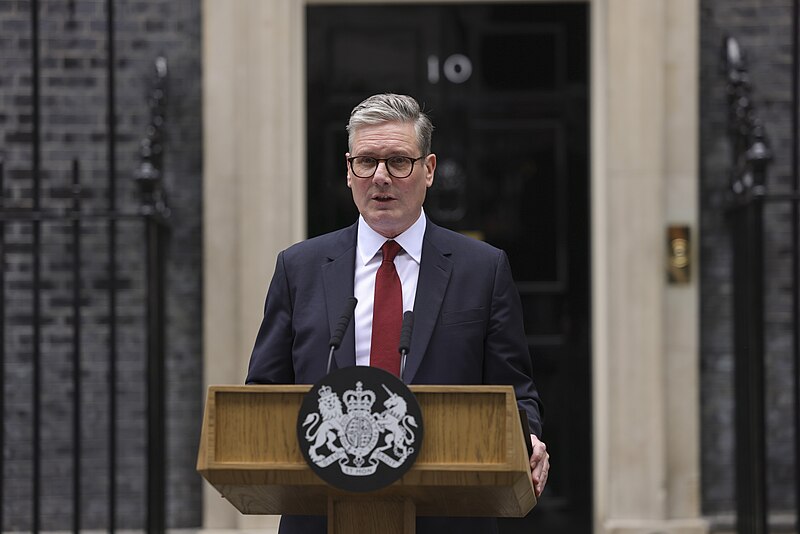
Instead of considering these protests and promising to address the causes of the crime, the British Government and the legacy media focussed on managing the narrative and silencing comment on the immigration policies that had allowed Mr Rudakubana’s family into the country. Keir Starmer, the new Prime Minister, seemed more worried about potential “violence against Muslims” than the actual brutality of Mr Rudakubana’s attack on English people. “For the Muslim community I will take every step possible to keep you safe,” he said in his first public statement on the killings. On the protests he added: “It is not protesting, it is not legitimate, it is crime. We will put a stop to it“. His focus was not on the victims, but on ensuring that no one questioned the system that had allowed this to happen.

In the days after the attack, several men were arrested for spreading what the government called “misinformation” online. Their crime? Posting details about Mr Rudakubana’s background and motivations — details that turned out to be broadly correct. Despite being right, these men were prosecuted and imprisoned under Britain’s hate speech laws. The most recently convicted, Andrew McIntyre, was sentenced earlier this month to seven and a half years in prison for postings on social media. Peter Lynch, a man of 61, was sent to prison last August for two years and eight months for the crime of shouting “scum” and “child killers” at the police. Last October, he hanged himself in prison. I am told he was seriously “mistreated” in prison. British prisons for many years have been overcrowded. Room was found for these prisoners of conscience after the Government began releasing violent criminals.

The injustice of this is glaring. These men were punished not because they lied, but because they spoke approximate truths the government wanted to suppress. Their imprisonment sends a clear message: in modern Britain, it’s better to be wrong on the side of the Government than right and against it.

A Carefully Managed Narrative

The media played its part in the cover up. At first, Mr Rudakubana was described, without name, as “originally from Cardiff“. It took days before we were told he was a child of asylum seekers from Rwanda. Even then, the coverage was carefully balanced by a picture of him as a respectable schoolboy – not at the beast in human form shown by more recent photographs.

Only much later, when the story had faded from the headlines, did the real facts emerge. Mr Rudakubana was not just a troubled individual. His phone contained materials linked to terrorism and genocide, and his actions appeared to have an ideological motivation. Yet by the time these details came out, they barely caused a ripple. The public had been moved on to the next distraction.

It’s hard not to assume that the British media was fully in on gaslighting the public about the accused murderer, when you compare the photo that almost universally was used in the time before the trial and a more recent image:

Mark Steyn:

Say what you like about Axel Rudakubana, the slaughterer of three English girls under ten years old, but — unlike the British Prime Minister, the Home Secretary, the Liverpool Police and most of the court eunuchs in the UK media — he appears to be an honest man:

    It’s a good thing those children are dead … I am so glad … I am so happy.

He has always been entirely upfront about such things, telephoning Britain’s so-called “Childline” and asking them:

    What should I do if I want to kill somebody?

Judging from his many interactions with “the authorities” (including with the laughably misnamed “Prevent” programme), the British state’s response boiled down to: Go right ahead!

It seems likely that the perpetrator of Wednesday’s Diversity Stabbing of the Day — the Afghan “asylum seeker” who killed a two-year-old boy and seriously wounded other infants in the Bavarian town of Aschaffenburg — is also “so happy”. Like Mr Rudakubana, the “asylum seeker” deliberately targeted a gathering of the very young — in this case, a kindergarten group playing in a municipal park. Like Mr Rudakubana, the “asylum seeker” did not just deliver sufficient stab wounds to kill: he plunged his knife into each target dozens and dozens of times. Like Mr Rudakubana, the “asylum seeker” was well known to the authorities: he had been detained for “violence” at least thrice.

Did these guys also enjoy it? From our pal Leilani Dowding:

For the benefit of American readers, being stabbed in Asda, Argus and Sainsbury’s is like being stabbed in Kroger, Costco and Wegman’s. As you may recall, a DC jury awarded climate mullah Michael E Mann a million bucks because someone unknown gave him a mean look in Wegman’s supermarket. No one stabbed in a UK supermarket will get a seven-figure sum: it’s increasingly a routine feature of daily life — per Sir Sadiq Khan, part of what it means to live in a great world city.

Sir Keir Stürmer and every outpost of the corrupt British state have lied to the public about every aspect of the Southport mass murder since the very first statements by the Liverpool chief constable passing off the killer as a “Cardiff man”. Her officers knew within hours that the Welsh boyo who loved male-voice choirs was, back in the real world, an observant Muslim in possession of the Al-Qaeda handbook and enough ricin to kill twelve thousand of his fellow Welshmen. But they did not disclose this information for months — not until freeborn Britons minded to disagree with Keir Stürmer’s Official Lies by suggesting that this seemed pretty obviously merely the umpteenth case of Islamostabbing had been rounded up, fast-tracked through Keir’s kangaroo courts, gaoled for longer than Muslim child rapists, and in at least one case driven to his death. Does Sir Keir feel bad about the late Peter Lynch? Or does he take the same relaxed attitude to his victims as Axel Rudakubana?

    It’s a good thing that that far-right extremist is dead … I am so glad … I am so happy.

Even now, six months on, the organs of the state are still lying — although, with all the previous lies being no longer operative, Stürmer & Co have had the wit to introduce a few new ones. For example:

    ‘A total disgrace’ that Southport killer could buy a knife on Amazon aged 17, says Cooper

That would be Yvette Cooper, the Home Secretary — which is the equivalent of what Continental governments usually call the Minister of the Interior, because that’s where the knives penetrate.

January 19, 2025

California’s wildfire plight

Theophilus Chilton on the end of California dreamin’:

Southern California has had a REALLY rough week. Wildfires, started by arsonists and driven by the Santa Ana winds, have burned thousands of acres in the city and county of Los Angeles and destroyed over $150 billion worth of property (and counting). As I write this, the fires still burn and largely remain uncontained, even as new blazes break out. It is a disaster of epic proportions, striking one of the richest and most economically and culturally relevant portions of the country.

Never ones to let a crisis go to waste, the Left responded to this disaster by … focusing on climate change. Not empty fire hydrants, not drained reservoirs, not incompetent leadership, but climate change. These fires, we have been breathlessly assured, are the result of ever-worsening climatic conditions in the region, drying it out and making it susceptible to this kind of affliction. Never mind that observers since Spanish times consistently noted the same kind of weather conditions and hazards that we see today, which suggests that maybe things aren’t actually changing all that much. Of course, those who are blaming climate change fail to recognise the fundamentally chaotic, nonlinear nature of the Earth’s biosphere and the interactions of its constituent parts, something governed by complexity (in the chaos/complexity theory sense of the term). As a result, it’s somewhat foolish to try to draw a direct, causal link between two variables (such as atmospheric CO2 content and temperature) which depend upon nonlinear interactions with hundreds of other factors. Thankfully, they don’t seem to be getting much traction with this.

So what did create the conditions that burned down Los Angeles?

First of all, there was the implementation of a number of policies driven by the state’s radical environmentalist lobby. Thanks to the fanatics, common sense policies that would help to mitigate the region’s inherent fire hazard went undone. Regular controlled burns of underbrush are a standard conservation technique in dry areas that help to thin out brush and prevent wildfires from getting out of control. Building a sufficient number of desalination plants is a good way for coastal desert areas to provide themselves with abundant fresh water for things like drinking, watering crops, filling reservoirs, and fighting fires. In fact, filling reservoirs for future needs would make a lot of sense. But all of these things are “unnatural” and might have “negative impacts” on local wildlife and whatnot.

Another contributory issue is the state’s policies towards the chronically homeless and its de facto sanctuary status for illegal aliens. The Reagan-era deinstitutionalisation of the homeless has been a nationwide disaster for years and California’s particular policies have made the situation in their state even worse. For decades, California has regularly seen wildfires caused by untended campfires started by homeless junkies getting out of control, which the state’s liberal approach to its indigent population has only made more prevalent. Likewise, California’s harbouring of illegal aliens has created a situation in which the state is flooded with masses of hostile foreign elements, some of whom have been caught starting fires all around the LA basin and creating the current catastrophe.

Then there is the fact that California has systematically implemented a set of DEI policies for its governmental workers, including its firefighters. As a result, the state’s leadership in the relevant departments is very good at “promoting inclusion,” but not so good at dealing competently with emergencies when they take place. Indeed, Los Angeles’ mayor Karen Bass and LAFD Chief Kristen Crowley presided over budget cuts for the city’s firefighting capabilities while adding layers of “diversity and inclusion” bureaucracy aimed at systematically de-white-maleing the department and depriving it of the demographic most prone to self-sacrifice and overall technical competence. That reflects trends across the board in which the state and the city have regularly spent more on gay choirs and social justice artwork than they have on necessary functions of government.

(more…)

January 1, 2025

Mark Steyn – “This is not a healthy development in world affairs”

Mark comments on the ongoing political punch-up over the US government’s H1B visa program for foreign workers:

Elon Musk and Vivek Ramaswamy as the figureheads of D.O.G.E.

As you’ll have noticed, the world’s most uniquely unique peaceful transition of power turned suddenly violent over Christmas with various of America’s super-brainy Indians beating up on each other: Nikki Haley, the Boeing board’s token Sikh, lit up Hindu monotheist Vivek Ramaswamy’s tweet like Air Canada overhead baggage in objection to Vivek’s remarks on US “mediocrity”. The offending Ramaswamy tweet was in response to MAGA objections to Trump’s appointment of Madras techie and open-borders fanatic Sriram Krishnan as his AI advisor. This was a very 2025 brouhaha: while you knuckle-draggers down in flyover country were arguing about sub-minimum-wage Hispanics turning down the sheets at Motel Six, the Hindu billionaires have been busy taking over the country.

Is everyone in this all-American punch-up an Indian? Well, no, eventually a South African weighed in. The Boers don’t like the Hindus, do they? I think I got that from Gandhi. Ah, but in this case Elon agrees with Sriram and Vivek.

A couple of very general observations:

1) The MAGA base intuits that H1B visas are a racket. Why wouldn’t they be? Everything else the federal government touches is — from presidential pardons to West Point to Jan 6 justice. America is the third largest nation on earth — a third-of-a-billion people, officially (rather more in actual reality). Why does it need to hire entry-level workers from the first and second largest nations? Yes, yes, too many Americans graduate in non-binary studies rather than any serious academic discipline but simply because you’ve bollocksed up your entire education system is no reason to (as my former National Review colleague John Derbyshire puts it) “import an overclass“.

The MAGA objections to mass immigration (ie, not just illegal immigration) are primarily cultural. They didn’t like it eight years ago when Trump would add to his wall-building promises the line about “and that wall will have a big beautiful door”, and he should have got that by now. Besides, to address the counter-argument more seriously than it merits, a nation of a third-of-a-billion that “needs” to import entry-level accountants is so structurally dysfunctional that no amount of immigration can save it. How about entry-level lawyers? Do we need more of those?

As an aside to that, for all you Constitution fetishists, I’m increasingly sceptical that a Constitution designed for an homogeneous population of two-and-a-half million people can be applied to a third-of-a-billion with a cratering fertility rate of 1.6. The only two more populous nations — China and India — are both more or less conventional ethnostates. Which is a great advantage. America is the only large-scale polity founded on a proposition — that, simply by setting foot on US soil, one becomes American. Immigration on the present transformative scale will nullify the Constitution. So the Dance of the Constitution Fetishists will get even sadder.

The Constitution is increasingly for judges rather than citizens. May be time to import more Supreme Court justices.

2) Besides, H1B is what the government calls, correctly, a “nonimmigrant” visa. One of Rupert Murdoch’s minions offered me an H1B thirty years ago. I looked up the terms and declined to sign on to indentured servitude. You’re not importing “the best and brightest”. You’re assisting well-connected corporations in advantaging themselves at the cost of the citizenry among whom they nominally live. [NR: Emphasis mine.]

3) Have you noticed that almost everyone involved in this spat is a billionaire? Today’s rich are not just rich in the old Scott Fitzgerald they-are-different sense. They approximate more to the condition articulated by Lord Palmerston in his observation that England had no eternal friends or enemies, only eternal interests. For a billionaire, friends and enemies come and go, but, like any medium-sized nation-state, he has his interests.

To most Americans, Elon was largely unknown until he started weighing in on and then buying social media; Vivek was entirely unknown until he ran for president; Sriram is still unknown. But they are far above not just the schlubs who lost their jobs to cheaper H1B types but also to the more famous political class whose poll numbers in Iowa so obsess the hamster-wheel media but which are increasingly irrelevant to anything that matters. Among Sriram Krishnan’s minor claims to “fame” is that he’s the guy who introduced Boris Johnson (remember him?) to Elon Musk — and you can bet that was after desperate wheedling and pleading from the Shagger, not because Elon had any desire for dating tips.

This is not a healthy development in world affairs.

4) Vivek Ramaswamy’s sweeping paean to American “mediocrity” as manifested by everything from prom queens to sitcoms was probably ill-advised but it was certainly entirely sincere — and would be widely shared by his fellow members of the Hindu overclass. The Indian tycoon (and David Cameron advisor) Ratan Tata, who died in October, is best remembered in the UK for his 2011 Vivek-like attack on the natives’ “work ethic“. As Sir Ratan marvelled after buying Jaguar-Land Rover:

    I feel if you have come from Bombay to have a meeting and the meeting goes till 6pm, I would expect that you won’t, at 5 o’clock, say, ‘Sorry, I have my train to catch. I have to go home.’

    Friday, from 3.30pm, you can’t find anybody in the office.

That may well be true, as Vivek’s musings re Urkel and football jocks may be true. On the other hand, as a rather precocious lad, I observed to my mum that, five years after the Gambia’s independence, nothing seemed to work as well as it did under colonial rule. True, conceded my mother, then added: “But in the end people want to be themselves, as themselves. At least it’s their chaos.”

December 28, 2024

How the H1B visa argument follows an earlier political struggle

On the social media platform formerly known as Twitter, ESR points out that the arguments over US work permits for foreigners might well have been prefigured by the now-receding tide of attempts to gut the second amendment:

    alexandriabrown @alexthechick
    It is difficult to overstate how caustic this is to public debate and public acceptance of legislation. If you give us X, we will accept restriction Y is the basis of all compromise. When a party gets X on the basis of accepting Y, then immediately undermines Y, the deal is void.

This was part of a thread about H1B abuse, correctly pointing out that the companies who lobbied for H1B didn’t hold up their end of the deal, leaving many Americans feeling betrayed — especially tech workers who were fired in favor of an imported hire, then told their severance pay would be denied if they didn’t train their replacements.

I am, however, irresistibly reminded of another betrayal. One I’ve written about before — but maybe at least part of this story needs to be told again.

Today in the 21st century most of the American gun culture is bitterly, even fanatically opposed to more “gun control” laws, and howling for all of them clear back to the National Firearms Act of 1934 to be repealed. Donald Trump earned huge support with his promise to get national concealed-carry reciprocity pushed through Congress.

We weren’t always like that. Long ago, before 1990, many of us were less resistant to new gun control measures. Sometimes major gun-rights organizations would even help lawmakers draft legislative language.

(Yes, I was a gun owner then. So I’m not going by legends, but by lived experience.)

What changed?

The quid-quo-pros we were offered were many variations of “If you will accept this specific restriction X, we will stop pushing. We will stop trying to undermine your Second Amendment rights in general. Help us save the chilllldren!”

That promise was never kept. Gradually, we noticed this. It always turned out that the minority of angry suspicious people who said “This won’t be enough, they’ll come back for another bite!” were right.

Eventually, some documents leaked out of one of the major graboid organizations that revealed a conscious strategy of salami-slicing — instead of challenging gun rights directly, they intended to gradually make owning personal weapons less useful and more onerous until the culture around them collapsed.

So nowadays we’re pretty much all angry and suspicious. Even restrictions that do little harm and might be objectively reasonable (bump stocks, anyone?) touch off tsunamis of protest.

People offering us more “deals” (just give up this one little thing, mmmkay?) now have negative credibility.

Are you paying attention, Big Tech? (Particularly you, @elonmusk, and you, @VivekGRamaswamy.) Because you’re almost there, now. Too many people see that H1B has become an indentured-servitude fraud that victimizes both the workers it imports and the Americans it displaces.

You credibility isn’t as shot as the gun-banners’ yet. You still have some room for recovery on “high-skilled immigation” in general, but it’s decreasing.

Your smart move would be to sacrifice H1B so you can keep the O-1 “genius” visas. I advise you to take it, because if you dig in your heels I think you are likely to lose both.

And on the reason so many Americans have become angry about blatant and exploitive H1B visa abuse:

Today’s big beef is between tech-success maximizers like @elonmusk and MAGA nationalists who think the US job market is being flooded by low-skill immigrants because employers don’t want to pay competitive wages to Americans.

To be honest, I think both sides are making some sound points. But I’d rather focus on a different aspect of the problem.

When I entered the job market as a fledgling programmer back in the early 1980s, I didn’t have to worry that some purple-haired harpy in HR was going to throw my resume in the circular file because I’m a straight white male.

I also didn’t have to worry that a hiring manager from a subcontinent that shall not be named would laugh at my qualifications because in-group loyalty tells him to hire his fourth cousin from a city where they still shit on the streets.

It’s a bit much to complain that today’s American students won’t grind as hard as East Asians when we abandoned meritocracy more than 30 years ago. Nothing disincentivizes working your ass off to excel more than a justified belief that it’s futile.

Right now we’re in and everybody-loses situation. Employers aren’t getting the talent they desperately need, and talent is being wasted. That mismatch is the first problem that needs solving.

You want excellence? Fire the goddamn HR drones and the nepotists. Scrap DEI. Find all the underemployed white male STEM majors out there who gave up on what they really wanted to do because the hiring system repeatedly punched them in the face, and bring them in.

Don’t forget the part about paying competitive wages. This whole H-1B indentured-servitude thing? It stinks, and the stench pollutes your entire case for “high-skill” immigration. You might actually have a case, but until you clean up that mess Americans will be justified in dismissing it.

These measures should get you through the next five years or so, while the signal that straight white men are allowed to be in the game again propagates.

I’m not going to overclaim here. This will probably solve your need for top 10% coders and engineers, but not your need for the top 0.1%. For those you probably do have to recruit worldwide.

But if you stop overtly discriminating against the Americans who could fill your top 10% jobs, your talent problem will greatly ease. And you’ll no longer get huge political pushback from aggrieved MAGA types against measures that could solve the rest of it.

Doesn’t that seem like it’s worth a try?

December 11, 2024

Canada’s current situation, as viewed by Fortissax

Fortissax recently spoke to an audience in Toronto. This is part of the transcript of his speech:

No doubt, many of you already have an idea.

The fact of the matter is this: 25% of the people in this country are, or soon will be, foreigners. Most of them are not the children of immigrants but fresh-off-the-boat migrants.

The economy? It’s in the dumps. Canada has the lowest upward mobility in the OECD for young people. One of the lowest fertility rates in the Western world. And the fastest-changing demographics in the Western world — as I’m sure you’ve all noticed here in the streets of Toronto, the old capital of Anglo-Canadians.

Think about this: approximately 4.9 million foreigners are classified as “temporary migrants.” Combine that with permanent residents, refugees, and immigrants, and that number swells to 6.2 million in just four years.


And it doesn’t stop there.

Crime is reportedly the highest it’s ever been. We have no military. The Canadian Armed Forces has faced retention issues for two decades. And what is command preoccupied with? Men’s bathrooms stocked with tampons and servicemen being “radicalized” by wearing extremist clothing like MAGA hats.


Let’s not forget foreign influence.

The Chinese Communist Party exploited the Hong Kong handover in the 1990s to infiltrate Canada, using British Columbia as their foothold. As Sam Cooper exposes in Claws of the Panda and Willful Blindness, they established a stronghold in Metro Vancouver, taking over the business community.

This “Vancouver Model”, as we Canadians ironically call it, normalizes our capitulation to foreign hostiles. Triads, working hand-in-glove with the Chinese communists, built a global drug empire. Fentanyl, mass-produced in football field-sized factories in China, is shipped to Vancouver and distributed across the entire Western Hemisphere.

Let this sink in: more Canadians have died from this economic warfare than all our soldiers lost in the Second World War.


And now, there’s India.

Intelligence agencies from the Republic of India have demonstrated their ability to conduct assassinations on Canadian soil. Recently, a Khalistani nationalist and separatist was killed — a figure I’ll leave to your sympathies or judgments. Regardless, this marks a disturbing shift.

India weaponizes its diaspora against the international community. In exchange for non-alignment with China, the West — particularly the Anglosphere — uses Indian migrants as wage-slave labor to suppress costs.

The result? A disaster.

In Canada, Australia, the U.K., and increasingly the United States, we see Indians climbing the ladders of power, pursuing their own interests — often brazenly. In Brampton, part of Greater Toronto, a 50-foot statue of the Hindu god Hanuman looms.

And let’s not forget the Punjabi Sikh population. They openly support an independent Khalistan — or remain at best indifferent to the cause. They have infiltrated Canada’s state apparatus, even reaching the Ministry of National Defense, where Harjit Sajjan prioritized rescuing Afghan Sikhs during Kabul operations over broader Canadian interests.

In Surrey, British Columbia, the trucking industry is effectively controlled by Sikhs. In online spaces, Sikh nationalists demand Brampton be recognized as a province, seemingly aware that their homeland exists more abroad than in Punjab itself. The leader of the NDP, Jagmeet Singh, serves as yet another example — barred from entering India due to his sympathies for separatism.


But foreign influence is only half the story. Among our own lies another problem: disintegration.

Decades of Western alienation and economic parasitism by the federal government are fueling separatist movements in places like Alberta and Saskatchewan. In Quebec, the Parti Québécois is polling higher than the ruling CAQ, openly advocating for secession from Confederation.

Meanwhile, the federal Conservatives court immigrant voters, alienating native Canadians and abandoning their base.


And then there’s the economic misery.

The average Canadian home costs $700,000. The median income? Just $48,000. Upward mobility is nonexistent. The managerial regime hoards wealth and power, gatekeeping opportunity through credentialism, exorbitant tuition, and crushing taxes.

55% of Canadians have post-secondary education, and yet most have nothing to show for it. The regime is not run by titans of intelligence or visionaries. It’s run by ideologues — loyal to their cause, not to competence or merit.


The final insult: demographics.

Over the next six years, British Columbia, Alberta, Saskatchewan, and Manitoba will become majority non-Canadian. The 50% threshold will be breached, with profound consequences for local politics.

Ontario will hover just above 50%, while Quebec and the Maritime provinces will remain over 70% and 80% Canadian, respectively. This is not a death sentence, but it is a profound transformation for Western Canada, which has historically been more propositional and less identitarian than the East.


This is where we are.

Our sovereignty is compromised. Our identity is eroded. But we are not yet defeated. What happens next depends entirely on us.

December 6, 2024

Victoria’s Canada through the eyes of British visitors

Filed under: Britain, Cancon, History, Railways — Tags: , , , , , , — Nicholas @ 05:00

In UnHerd, Michael Ledger-Lomas considers what earlier British visitors to Canada after Confederation wrote about their experiences:

Portrait of Rudyard Kipling from the biography Rudyard Kipling by John Palmer, 1895.
Photo via Wikimedia Commons.

… The re-election of Donald Trump, who has already daydreamed about turning Canada into his 51st state, might even rekindle Tory patriotism. After all, their Victorian ancestors created the dominion of Canada in 1867 to keep British North America from the clutches of the United States.

A longer view shows that Canada has allured but also vexed British observers ever since its creation. The Edwardian era produced an especially rich crop of writings on Canada. In 1887, the year of Queen Victoria’s Golden Jubilee, the first train from Montreal pulled into Vancouver. This completion of the Canadian Pacific Railway (CPR) had persuaded the Crown colony of British Columbia to join in the new federation. In expanding Canada, the CPR also made it easier for British people to see the country. Having crossed from Liverpool to Montreal on a fast liner, they could visit most of its major cities, which were found on or near the railway.

Literary celebrities did so in enviable conditions. The CPR’s bosses loaned the poet Rudyard Kipling his own carriage in 1907, so he could travel in comfort and at his own speed. His impressions, which appeared in newspapers and then as Letters to the Family (1908), make for particularly resonant reading today. Although a man of strong prejudices, he had seen the country up close, rather than merely retweeting allegations about it, and was prepared to be surprised as well as disappointed by it.

Kipling’s contemporaries travelled with heavier and very different ideological baggage than we carry today. It was not wokery that worried them, but irreligion and greed, two poisons that had crept north from America. When the clergyman Hensley Henson steamed into Vancouver, in July 1909, he was horrified to see its beaches plastered with “vulgar advertisements”. The further [East] he travelled, the worse things became. The Anglican clergy were “weaklings” who made no dent on a materialistic society. Winnipeg was given over to “graft”. Young people in Ontario spoke like gum-chewing Yankees. Quebeckers were despoiling their province by setting up hydroelectric dams on its waterfalls.

Kipling did not share Henson’s churchy desire to scold his Canadian hosts. He was a cheerful freethinker who considered materialism a necessary part of nation-building. Canada had “big skies, and the big chances”: he admired its railway workers and lumberjacks for their insouciant and sometimes drunken swagger. Boom towns like Winnipeg excited him: he loved to see office blocks rise and streets flare with natural gas lamps; he lost considerable sums speculating on Vancouver real estate.

What worried him was rather Canada’s fading strategic commitment to the Empire. The modern Right understands Canada as a battleground for the values of “the West”. Kipling, who had married an American and lived for some years in Vermont, naturally believed in and did much to formulate the fervent if vague sense that English-speaking peoples share a civilisation. Yet this did not weaken his overriding concern for the political cohesion of the British Empire. Canada’s failure to join as enthusiastically in Britain’s recent war against the rebellious Dutch Boers of South Africa as he would have liked weighed on him — so much so that he kept calling the prairie the “veldt”. Kipling regarded the scepticism of Liberals and Socialists at home about whether the Empire offered value for money as a “blight”: now this “rot” seemed to be spreading like Bubonic plague, “with every steamer” to Canada.

The way to draw the dominion back to the motherland was to fill it with English settlers who shared his distaste for domestic Socialism. The dilution of English Canada worried Kipling. He allowed the Francophone Catholics of Quebec their differences — he found their basilicas romantic — but the policy of settling the prairies with hardy Slavs from the Habsburg and Russian Empires appalled him. These “beady-eyed, muddy-skinned, aproned women, with handkerchiefs on their heads and Oriental bundles in their hands” could never assimilate to English Canada. Nor did he care that many were fleeing oppression: people who renounce their country have “broken the rules of the game”.

November 21, 2024

QotD: The 1965 Immigration Act

Caldwell’s account is indispensable — especially for liberals — in understanding how those resentments grew until they finally exploded under Barack Obama. The Tea Party was the first real movement of this sort; the collapse of immigration reform proposals under George W. Bush and then under Obama revealed how powerful these feelings were; Trump managed to wrap them all up into a populist fervor that was distributed geographically enough to give him a win in the Electoral College. Liberals, increasingly ensconced in their own economic and social bubble, were shocked.

Caldwell’s book is far too nuanced and expansive to cover here. But he identifies key moments and key changes. The 1965 Immigration Act was the beginning of a huge experiment in human history. It was complemented by open bipartisan-elite toleration of mass undocumented immigration across the southern border. And civil rights became something other than ending racial discrimination by the state: It became a regime of ending discrimination by individuals in economic and social life; then it begot affirmative action, in which race played an explicit part in an individual’s chance of getting into college; and it culminated in the social-justice agenda, which would meaningfully do away with the American concept of individual rights and see it replaced by a concept of racial group rights. Caldwell sees the last 50 years as a battle between two rival constitutions: one dedicated to freedom, the other to equality of outcomes, or “equity.” And I think he is right to see the former as worth fighting for.

But how do we get out of this trap? That’s where the depression sinks in. Neither Caldwell nor Klein see a way back to a common weal and a common good. Ezra offers some technical corrections — ending the Electoral College, the filibuster, and winner-takes-all voting. And they might help, although their potential unintended consequences should be carefully considered. Then he recommends meditation to control our own primal instincts — a role that Christianity traditionally held. (I don’t disagree with Ezra on the benefits of meditation, but it’s hardly a game-changer in America in 2020.) Caldwell proposes something far more drastic: a repeal of the 1964 Civil Rights Act. Yes, you read that right. The proposal’s perversity matches its impossibility — and it’s buried in one sentence on the penultimate page of the book.

So much of Caldwell’s polemical history is fresh air; but the bleakness of its reactionary mood reveals how tribal Caldwell has become. He can barely eke out a few sentences reluctantly acknowledging some of the good things that the last 50 years have brought — in the lives of many women, in the prospects for African-Americans, in the dignity of homosexuals. He never acknowledges that Obama actually stood a chance of healing racial divides, if the GOP hadn’t demonized him from the start. And as an old friend of Chris’s, I know him to be a more gracious and humane person than this polemic might, at times, suggest. But that such a good man has gotten caught up in polarization and tribalism and such a brilliant man sees no hope for a peaceful resolution merely reveals how deep our problem is.

I have a smidgen more optimism. I see in the long-delayed backlash to the social-justice movement an inkling of a new respect for individual and creative freedom and for the old idea of toleration rather than conformity. I see in the economic and educational success of women since the 1970s a possible cease-fire in the culture wars over sex. I see most homosexuals content to live out our lives without engaging in an eternal Kulturkampf against the cis and the straight. Race? Alas, I see no way forward but a revival of Christianity, of its view of human beings as “neither Jew nor Gentile, neither slave nor free, nor is there male and female, for you are all one in Christ Jesus”. This means such a transcendent view of human equality that it does not require equality of outcomes to see equal dignity and worth.

Yes, I’m hoping for a miracle. But at this point, what else have we got?

Andrew Sullivan, “America Needs A Miracle”, New York, 2020-01-31.

November 18, 2024

“The Great Canadian Lie is the claim that we’ve ‘always been multicultural'”

Filed under: Books, Britain, Cancon, Government, History — Tags: , , , , , — Nicholas @ 04:00

Fortissax thinks that the rest of Canada has lessons to be learned from Quebec:

If you are a Canadian born at any point in the Post-WWII era, you have been subjected to varying degrees of liberal “Cultural Mosaic” propaganda. This narrative exploits the historic presence of three British Isles ethnic groups (which had already been intermixing for millennia) and the predominantly Norman French settlers to justify the unprecedented mass migration of people from the Third World into Canada. This process only began in earnest in the 1990s before accelerating rapidly in the 2010s.

The Great Canadian Lie is the claim that we’ve “always been multicultural”, as though the extremely small and inconsequential presence of “Black Loyalists” or the historically hostile Indigenous groups (making up only 1% of the population at Canada’s founding in 1867) played any serious role in shaping the Canadian nation, its identity, institutions, or culture. Inspired by Dr. Ricardo Duchesne’s book Canada in Decay: Mass Immigration, Diversity, and the Ethnocide of Euro-Canadians (2017), which chronicled the emergence of two ethnic groups uniquely born of the New World, I delved into the 2021 Census data collected by the Canadian government to explore the ethnic breakdown of White Canadians in greater detail

The evidence is clear. In 2021, just four years ago, 72.7% of the entire Canadian population was not just White, but Anglo-Canadian and French-Canadian, representing an overwhelming presence compared to visible minorities and other White ethnic groups, such as the small populations of Germans and Ukrainians.

In the space last night, I highlighted this historical fact and explained to the audience the ethnogenesis of the Anglo-Canadian and its significance. While we all recognize that the Québécois are a homogeneous group descended predominantly from Norman French settlers — such as the Filles du Roi and Samuel de Champlain’s 1608 expedition, which established Quebec City with a single-minded purpose — the Anglo-Canadian story also deserves similar recognition for its role in shaping Canada’s identity.

But what is less known is that Anglo-Canadians are just as ethnically homogeneous as the Québécois, from Nova Scotia to British Columbia. Anglo-Canadian identity emerged from Loyalist Americans in the 1750s, beginning with the New England Planters in Nova Scotia — “continentals” with a culture distinct from both England and the emergent Americans. After the American Revolutionary War, they marched north with indomitable purpose, like Aeneas and the Trojans, to rebuild their Dominion. Author Carl Berger, in his influential work The Sense of Power: Studies in the Ideas of Canadian Imperialism, demonstrates that the descendants of Loyalists were the one ethnic group that nurtured “an indigenous British Canadian feeling.” The following passage from Berger’s work is worth citing:

    The centennial arrival of the loyalists in Ontario coincided with the fiftieth anniversary of the incorporation of the City of Toronto and, during a week filled with various exhibitions, July 3 was set aside as “Loyalist Day”. On the morning of that day the platform erected at the Horticultural Pavilion was crowded with civic and ecclesiastical dignitaries and on one wall hung the old flag presented in 1813 to the York Militia by the ladies of the county. Between stirring orations on the significance of the loyalist legacy, injunctions to remain faithful to their principles, and tirades against the ancient foe, patriotic anthems were sung and nationalist poetry recited. “Rule Britannia” and “If England to Herself Be True” were rendered “in splendid style” and evoked “great enthusiasm”. “A Loyalist Song”, “Loyalist Days”, and “The Maple Leaf Forever”, were all beautifully sung

The 60,000 Loyalist Americans, who arrived in two significant waves, were soon bolstered by mass settlement from the British Isles. However, British settlers assimilated into the Loyalist American culture rather than imposing a British identity on the new Canadians. The first major wave of British settlers after the Loyalists primarily consisted of the Irish. Before Confederation in 1867, approximately 850,000 Irish immigrants settled in Canada. Between 1790 and 1815, an estimated 6,000 to 10,000 settlers, mainly from the Scottish Highlands and Ireland, also made their way to Canada.

Another large-scale migration occurred between 1815 and 1867, bringing approximately 1 million settlers from Britain to Canada, specifically to Ontario, Nova Scotia, and New Brunswick. New Brunswick was carved out from the larger province of Nova Scotia to make room for the influx of Loyalists. During this time, settlers from England, Scotland, and Ireland intermingled and assimilated into the growing Anglo-Canadian culture. Scottish immigrants, who constituted 10–15% of this wave, primarily spoke Gaelic upon arrival but adopted English as they integrated.

All settlers from the British Isles spoke English (small numbers spoke Gaelic in case of Scots), were ethnically and culturally similar, and had much more in common with each other than with their continental European counterparts.

Settlement would slow down in the years immediately preceding Confederation in 1867 but surged again during the period between 1896 and 1914, with an estimated 1.25 million settlers yet again from Britain moving to Canada as part of internal migration within the British Empire. These settlers predominantly also [went] to Ontario and the Maritimes, further forging the Anglo-Canadian identity.

A common misconception among Canadians is that Canada “was a colony” of Britain, subordinate to, or a “vassal state”. This is wrong. Canadians were the British, in North America. There were no restrictions on what Canadians could or could not do in their own Dominion. From the first wave of Loyalists onward, Canadians were regularly involved in politics and governance, actively participating in shaping the nation.

Like the ethnogenesis of the English, which saw Angles, Saxons, Jutes, and Frisians converge into a new people and ethnicity (the Anglo-Saxons), Anglo-Canadians are a combination of 1.9 million English, 850,000 Irish (from both Northern and Southern Ireland), and 200,000 Scots, converging with 60,000 Loyalist Americans from the 13 Colonies. These distinct yet similar ethnic groups no longer exist as separate peoples in Canada. Anglo-Canadians are the fusion of the entire British Isles. The Arms of Canada, the favourite symbol of Canadian nationalists today, represents this new ethnic group with the inclusion of the French:

Arms of England, Scotland, Ireland and France in that order.

It’s no coincidence that, once rediscovered, the Arms of Canada exploded in popularity as the emblem of Canadian nationalists. Unlike more controversial symbols that appeal to pan-White racial unity, such as the Sonnenrad or Celtic cross, the Arms of Canada resonate as a distinctly Canadian icon, deeply rooted in the nation’s true heritage and history — a heritage that cannot be bought, sold, or traded away. This is an immutable bloodline stretching into the ancient past. If culture is downstream from race, and deeper still, ethnicity, then Canadian culture, values, and identity are fundamentally tied not just its race, but its ethnic composition. The ethnos defines the ethos. Canadians are not as receptive to the abstract idea of White nationalism for the same reason Europeans aren’t — because they possess a cohesive ethnic identity, unlike most White Americans.

November 12, 2024

Canada in the news … for all the wrong reasons

In the National Post, Tristin Hopper explains why your non-Canadian friends may be finding their opinions on the dysfunctional Dominion getting more and more sour in recent years:

… within just the last few years, multiple foreign outlets have profiled Canada for the singular purpose of asking what happened to it, and worrying if Canada’s ills will soon be their own. What’s more, these articles are not limited to a single topic; so much is going sideways in Canada right now that everything from our assisted-suicide regime to our economy to our internet legislation is attracting overseas notice like never before.

Below, a cursory guide to some of them. If you’re noticing that your non-Canadian friends suddenly have a darker picture of your home country than they used to, here’s a clue as to why.

“Justin Trudeau is killing Canada’s liberal dream”

Ever since the 2019 federal election, The Economist‘s coverage of Prime Minister Justin Trudeau has usually followed a general theme of noting that the bloom is off the rose of his photogenic ascendancy to power in 2015. But in a trio of articles published last month, the publication laid into the Canadian leader as an icon of what not to do.

Justin Trudeau is killing Canada’s liberal dream, published on Oct. 14. Canada’s Trudeau trap, published on Oct. 17. And then, just for good measure, Justin Trudeau is paying for solar panels in the cold, dark Arctic.

[…]

“Canada Is Disintegrating”

The Telegraph in the U.K. ran an entire series of essays last week on the topic of Canada taking it to the limit on progressive laws covering everything from drugs to national identity.

[…]

“Canada’s Extremist Attack on Free Speech”

The June tabling of the Online Harms Act prompted a wave of foreign coverage unlike few pieces of Canadian legislation. Although virtually every non-U.S. country has legislated controls on extreme speech, the Online Harms Act went noticeably farther than its peer countries in two respects: It prescribes a life sentence for the speech crime of “advocating or promoting genocide”, and it authorizes pre-emptive custody for anyone suspected of committing hate speech in future.

November 3, 2024

Kemi Badenoch replaces Rishi Sunak as UK Conservative leader

In the National Post, Michael Murphy discusses the new British Tory leader and why she could be a viable challenger to Two-tier Keir’s Labour government:

… in July, the Tories were ousted by Labour after 14 years in power, limping on with only 121 seats in the 650 seat House of Commons. But the honeymoon period for Sir Keir Starmer’s Labour government ended almost immediately, as its popularity plummeted faster than that of any administration in recent memory. This has made the Tories interesting once again at precisely the moment when they’ve chosen a new leader: Kemi Badenoch.

The Nigerian-raised mother of three, elected today to lead the Conservative party, threatens to be kryptonite for a Labour party wedded to identity politics. A black, female immigrant at the dispatch box is apt to leave Labour frontbenchers — particularly Sir Keir, a one-time BLM kneeler — somewhat stumped. To make matters worse, Badenoch is a persuasive speaker, commanding a charisma and eloquence that Sir Keir — a dull, po-faced lawyer — does not possess.

These qualities have given Badenoch cross-party appeal within the Tories, rallying endorsements from both the left and right. By endorsing her, however, the party has effectively signed a blank cheque, as Badenoch, unlike her opponents, has made few specific pledges. She has chosen instead to reflect on the election loss and the party’s ideological roots; she is prepared to play the long game, hoping this will allow the Tories to “earn back trust”.

On some issues, though, Badenoch is clear. “The government is doing far too much and it is not doing any of it well — and it is growing and growing,” she declared recently. “The state is too big; we need to make sure there is more personal responsibility.” These ideas are common fare among Conservatives, especially in bloated welfare states like Britain — but her zeal for them evokes, for many, memories of Margaret Thatcher. As the political commentator Simon Heffer wrote, “Mrs Badenoch is the politician who most reminds me of Mrs Thatcher since I last saw Mrs Thatcher”. He noted both women’s hard-mindedness, “deep principles”, and grasp of the “art of the possible”.

Badenoch’s Conservatism can be traced, as the writer Tom Mctague has argued elsewhere, to her beginnings in Africa. Having fled Nigeria during a 1996 military coup, she has a keen, outsider’s appreciation for Britain’s core ideals — not least the rule of law and policing by consent. She is therefore a champion of Britain, of both “the good” and “bad” of its former empire, at a time when it is fashionable to denigrate it, precisely because of her first hand experience that these norms are rare and fragile.

Like Thatcher, Badenoch studied a hard science (computing), marking them out in a Parliament filled with lawyers and humanities graduates. And the swift rise of both women, from modest beginnings through the ranks of the Conservative party, suggests that the “art of the possible” is indeed etched into their stars.

The Armchair General has a few suggestions for Badenoch’s agenda to turn the British economy around:

The new leader of the Conservative Party (image: www.kemibadenoch.org.uk)

My one reservation [about Badenoch] was that, being a software engineer, instead of espousing liberty or slashing laws and regulations, Kemi might reach for more tinkering technocratic solutions — and your humble General is surely not alone in his opinion that we have had quite enough, thank you, of technocratic governments.

However, the more that I consider the severe problems that afflict this country, the more I believe that a process-driven leader, who can focus on the details, might make the biggest difference in the short to medium term.

The immigration issue

As we know, uncontrolled immigration has seized the public imagination greatly — and, indeed, Jenrick centred his campaign around leaving the European Convention on Human Rights (ECHR). We should almost certainly do this anyway — simply because, like the Americans, we should refuse to sign any treaties that raises foreign courts above our own Parliament.

But leaving that aside, the stated problems with mass immigration can largely be divided into two halves:

  • cultural differences — these are not insignificant, and it is claimed that they lead to an increase in crime (especially sexual crimes) and an undermining of our high-trust society;
  • economic issues — the evidence shows that a massive net influx of low-skilled immigrants depresses wages at the lower end, puts a strain on public services (which cannot expand swiftly enough to accommodate the increase in demand), raises the demand for houses (of which there is a shortage) and thus pushes up prices, and, ultimately, only increases nominal GDP whilst per capita GDP has barely shifted in a decade and a half.

For the purposes of this post, I shall address only the latter issue; given where we are right now, the former is a much thornier problem — at least politically — and probably cannot be solved without radical (and some might say “authoritarian”) action.

The second problem is easier to solve because it is caused, essentially, by the single biggest drag on our economy — our planning system.

[…]

Planning: the Conservatives’ political agenda

The core of the new Conservative manifesto must be a growth agenda; it needs to set out the following core principles:

  1. if we carry on the current trajectory, the British government will be effectively bankrupt in the next 50 years — so something needs to change;
  2. therefore, in order to pay for all the goodies that we have promised ourselves (now and in the future), we need to massively accelerate economic growth;
  3. unless we can build the roads, railways, power stations, research labs, data centres, and homes that we need, then our economy will not grow at the required rate — and spending will need to be cut to the bone;
  4. given the above, the only way to grow is to reform planning laws;
  5. removing the barriers to building will lead to greater investment, lower energy prices (leading to even greater investment), greater social mobility, regeneration of all the regions (so-called “levelling up”), and vast increases in per capita GDP;
  6. where the state invests in infrastructure, then it will cost considerably less than it does currently — meaning that not only will those projects undertaken provide more value for money, but also that many more projects will be viable;
  7. this prosperity and increased mobility will remove even the perceived need for immigrants to perform low-wage jobs (including in our public services), and remove the economic pressures of those that we have already taken in;1
  8. if we do it right, then we will also be able to cut taxes without drastically cutting the size of the state.2

The argument needs to be as stark and inevitable as that.

What this means is that the Conservatives need not stand on a platform of slashing state spending — thus addressing the huge numbers of people in this country who, incredibly, still believe in the benevolent state.

Except for one caveat, there really is no downside to adopting Foundations [discussed here], in full, as the core of the next Conservative manifesto (although it should not be the full extent of said manifesto — there are many other areas that need to be addressed, which I shall write about later).


    1. As I say, the cultural issues are for another time.

    2. Obviously, as a classical liberal, I believe that the size of the state should be drastically cut — but this is not a popular argument in a country that has been raised and educated on socialist doctrine for decades.

November 2, 2024

Maxime Bernier on Canada’s immigration crisis

Filed under: Cancon, Economics, Government, Media, Politics — Tags: , , , , , — Nicholas @ 05:00

This article has been posted at the Telegraph in the UK and mailed out by the PPC here in Canada, so I guess it’s okay to share it here:

Newsflash: Canada is in the process of falling apart.

No, it’s not because Quebec is once again threatening to hold a referendum on separation, although this may happen again in the coming years.

Our country is experiencing a series of crises because of the deliberate policy of mass immigration instigated by Justin Trudeau’s Liberal government soon after its election in 2015.

Last year, Canada’s population increased by almost 1.3 million people, or 3.2 per cent. This was the fastest annual population growth rate since the post-war years. The difference however is that this was not caused by a baby boom, since 97 per cent of the growth was due to international migration, mostly from Asia and Africa.

This includes not only immigrants per se – or “permanent residents” – but also so-called temporary foreign workers, foreign students, and asylum seekers. Although supposed to be temporary, the last categories have in fact become pathways to seek permanent residency.

Because of this, housing in Canada has now become completely unaffordable. Young couples who want to have children just cannot afford to buy a home with a nice backyard where they can raise them any more, with the result that our birth rate has dropped dramatically.

Our hospitals, social services, and infrastructures are being overburdened by this massive demographic tsunami.

Immigration is often justified by its supposed positive impact on the economy. But productivity and wages have been stagnant for a decade in Canada, as cheap immigrant labour is favoured by employers over capital investment and automation.

Canadian politics has been mired for months in scandals over foreign interference, in particular China and India. India has been the largest source of immigrants to Canada for several years. Last week, Canada and India expelled diplomats over allegations by the Trudeau government that Indian diplomats have been involved in attacks against Khalistani militants in our country, including the murder last year of one that India considers a terrorist.

Because of mass immigration, Canadian politics is more and more focused not on actual Canadian issues, but on ethnic, religious, and foreign issues and wars, with establishment politicians spending an extraordinary amount of time courting the votes of minority ethnic groups in suburban marginal ridings.

The third most important national party, the New Democratic Party that has kept the Trudeau minority government in power, is headed by Jagmeet Singh. A Sikh by background, he initially declined to condemn Talwinder Singh Parmar, the mastermind responsible for the 1985 bombing of an Air India plane in which hundreds of Canadians were killed. However Singh did change his stance when a Canadian inquiry concluded that Parmar was definitely behind the outrage.

For his part, the leader of the Conservative Party and very likely our next prime minister, Pierre Poilievre, is known for donning national or religious dress as he panders to members of various communities.

In 2018, as a then Conservative Member of Parliament, I posted a series of tweets that denounced what I called Trudeau’s “cult of diversity” which, I contended, would lead to the Balkanisation of Canadian society, and potentially to violence.

Almost daily scenes of Muslims attacking Jewish institutions, Sikhs burning the Indian flag, and Ethiopian factions fighting each other in the streets of our cities, have proven me right.

Publicly attacking these woke dogmas wasn’t allowed at the time in Canada though, and it provoked a huge outcry. Even my leader and colleagues in the Conservative Party denounced me, which led me to resign and launch a populist right-wing party which is broadly the Canadian equivalent of Nigel Farage’s Reform Party.

If you believe that more diversity is always good and always enriches your society, then it’s logical and inevitable that you will end up importing lots of people with incompatible values and attitudes from around the world, including religious fanatics and even terrorists, who can’t possibly integrate in a country with a European, secular Christian heritage.

That’s what we’ve been doing for years, and that’s why everything that historically made Canada what it was is rapidly being destroyed. I know there has been a similar trend in the UK and other European countries, but Canada went way further down this road.

Canada’s demise started when what was already a very diverse country (with Indigenous, French and British founding peoples, and many different regional cultures) fell for this radical version of multiculturalism instead of tempering it with a focus on shared values and attitudes, pride in our history, and in the achievements of Western civilisation.

Now, not only are our democratic institutions, our economy, and our social peace and cohesion, falling apart, but so are our very identity and reason to exist as a country.

All these trends are so overwhelming that, unable to deny the reality any more, the Trudeau government finally announced last week that they would be gradually lowering their immigration targets in the coming years instead of continuing to increase them.

Although this is a massive U-turn for this government, it is far from being a sufficient reduction, and a lot more will need to be done to repair the damage. Otherwise, I don’t believe Canada will survive the 21st century.

October 31, 2024

Riley Donovan – “October 24th was a tragic day …”

Filed under: Cancon, Economics, Government — Tags: , , — Nicholas @ 03:00

Riley Donovan enumerates some of the most notable losers from the federal government’s belated realization that cutting immigration numbers was politically necessary:

A billboard in Toronto in 2019, showing Maxime Bernier and an official-looking PPC message. The PPC has been the only federal party against mass immigration from its founding.
Photo from The Province

October 24th was a tragic day for real estate developers, speculators, cheap labour employers, business lobbyists, slumlords, corrupt immigration consultants, and strip mall diploma mill operators. On that day, Prime Minister Justin Trudeau reluctantly caved to public opinion and announced that the Liberal government will slash permanent resident levels by 21%.

Less than one week before the October 24th announcement, an Abacus poll revealed that support for immigration restriction has reached 72% – a statistical supermajority. This includes a majority of all four major political parties and every age group. A month before the announcement, a Leger poll found that majorities of both white and non-white Canadians want lower immigration.

It is now impossible to find even one demographic subset of Canadians that registers majority support for high immigration – except perhaps if you exclusively surveyed CEOs, bank presidents, or woke university professors (politics makes for strange bedfellows).

There is no prominent, well-funded immigration restriction lobby in this country – in fact, there is a prominent, well-funded pro-immigration lobby. Columnists – with the exception of yours truly – almost never wrote the word “immigration” before the summer of 2023. The Canadian public was not goaded by public figures into opposing mass immigration by a margin of three to one; this trend was entirely grassroots.

The shift in public attitudes was the result of countless private conversations in which regular people shared worries about job lines full of international students that stretched around the block, Canadian youth outcompeted by foreign workers for positions at Tim Horton’s, seniors living in RVs because of sky-high rent, and hospitals overcrowded by an annual inflow of 1.3 million newcomers.

October 14, 2024

The reviews are in for this season of The West and it’s as bad as you think

Filed under: China, Health, Media, Politics, USA — Tags: , , , , , — Nicholas @ 04:00

Spaceman Spiff has been a longstanding fan of The West, but the current season is doing much more than giving him the sadz:

The current season of The West is a disappointing mishmash of bad writing, wooden acting and implausible plot lines.

Critics have known the show has been in decline for years although have been reluctant to say openly.

But with cancellation rumours growing it is difficult to see how it can survive. If the current season is any measure they simply don’t have the writers even if the producers hadn’t lost their minds.

The plot thickens

The West has always been known for its compelling plots. Epoch-defining inventions, new technologies and globe-spanning empires. Even grand moral crusades no one else would consider such as ending slavery or elevating women to equal status.

Just some of the storylines they said would never work and yet we were glued to our screens as they unfolded.

Unfortunately, more recent seasons have shown none of the flair of the past.

The latest drama is the threat of another plague. It is difficult to know how this got the go ahead so soon after the Covid storyline.

The original pandemic idea got off to a roaring start since it was then a novel idea. But as the drama unfolded the plot became increasingly contrived. The writers became carried away and eventually struggled to get out of the hole they had dug themselves.

It ended in absurdity with obvious conflicts between the original lockdown plot and the later mask and vaccine subplots.

It was almost as if different teams of writers were competing with each other instead of cooperating on the story arc, exactly the kind of mistake audiences are increasingly complaining about.

The latest version is a species-jumping virus and is already facing criticism for lazy writing and reheating ideas from last time. Audiences are unimpressed. Time will tell if they can pull it off again.

The second plot they seem to be exploring is even more implausible, war with China.

After the last few seasons mired in the Ukraine storyline it beggars belief the writers went in this direction.

There were rumours of production overruns and expensive reshoots as the Ukraine storyline dragged on. We will never know the full extent of their production woes but tough decisions were clearly made as well as a shakeup of the production team.

Critics had warned wars were rarely popular. People like the drama of course, but audiences quickly get bored. None of this stopped the producers and the writers dutifully did as asked.

Now it is China.

Many are saying this is just a sign the producers have been there too long. It is time for another clear out.

At least war is exciting. But after numerous attempts to sell immigration storylines they are trying it again despite its unpopularity.

Previous attempts to promote immigration plots failed to resonate with audiences although it has always been popular with a small, loud minority.

Most found it too farfetched, millions of young foreign men just wandering into Western nations as if no one would stop them. The critics had a field day.

But this season they are going with climate migration. People moving around because of the weather.

This is partly to shore up their failing climate plot. It was obvious several seasons ago this long running theme, a strong favourite with the showrunners, was no longer popular.

September 21, 2024

Statistics Canada notes significant decline in life satisfaction and hope for the future

Filed under: Cancon, Economics — Tags: , , , , — Nicholas @ 03:00

In one sense, we should be quite used to Statistics Canada giving us unwelcome economic news, given the state of the Canadian economy over the last decade. What seems less in character is that they’re connecting the dots between our obvious national financial decline and showing how directly it has impacted ordinary Canadians’ views about life in Canada and what they expect in the future:

Life satisfaction among Canadians is on the decline. Based on data from the Canadian Social Survey, levels of life satisfaction have been tracking downward since the summer of 2021, when quarterly monitoring of key Quality of Life indicators began. Less than half (48.6%) of Canadians aged 15 years and older were feeling highly satisfied with their lives in 2024, down from 54.0% three years earlier.

Not only is life satisfaction down, but so is hopefulness about the future, which dropped from 65.0% to 59.7% from 2021 to 2024. These results are based on a new study released today, “Charting change: How time-series data provides insights on Canadian well-being”, which sheds light on changes in overall life satisfaction, hopeful feelings about the future and financial well-being. It examines differences and trends across various dimensions, such as age, gender, racialized and non-racialized populations, and 2SLGBTQ+ populations.

Decline in life satisfaction more common among young adults and racialized Canadians

Life satisfaction can be considered a pulse check on Canadians’ overall well-being. While this indicator of subjective well-being has been declining for the past few years, there is nonetheless substantive variation in life satisfaction across different demographic groups. Younger adults (aged 25 to 34) had notable declines in their life satisfaction in 2024, with their proportions declining an average of 3.9 percentage points per year since 2021. By 2024, fewer than 4 in 10 (36.9%) of these adults were highly satisfied with their lives.

Meanwhile, seniors (aged 65 and older) maintained their high level of satisfaction, with 61.5% being happy with their lives in 2024. This measure of subjective well-being has remained relatively stable among senior Canadians since 2021.

In addition, racialized Canadians, who are younger on average than non-racialized Canadians, saw greater drops in life satisfaction than their non-racialized counterparts. The proportion of racialized Canadians reporting high levels of life satisfaction fell from 52.7% in 2021 to 40.6% in 2024. This decline was more than five times higher than the decrease observed for non-racialized Canadians, who experienced a decline in life satisfaction of 0.8 percentage points per year from 2021 to 2024. In 2024, over half (51.5%) of non-racialized Canadians were happy with their lives.

It really is a bad sign when the largest province in Confederation is also becoming the most disheartened by its economic prospects:

September 19, 2024

German opinions are changing on the migration question

Filed under: Germany, Media, Politics — Tags: , , , , , — Nicholas @ 04:00

On of our key European commentators is back from a brief internet vacation and reports on recent changes in official German views on mass immigration:

There are other matters too, but before I can get to any of them, I must get this piece on the changing politics of mass migration in Germany off my chest. This is the most important issue facing Europe right now – more important than the folly of the energy transition, more crucial even than the fading memory of pandemic repression.

For nearly ten years, migration has felt like one of the most intractable problems in our entire political system. However crazy the policies, however contradictory and irrational, there was always only the towering mute wall of establishment indifference. It felt like the borders would be open forever, that we would have to sing vapid rainbow hymns to the virtues of diversity and inclusivity for the rest of our lives.

Suddenly, it no longer feels like that. Over the past weeks, a perfect storm of escalating migrant violence and electoral upsets in East Germany have changed the discourse utterly.

The cynical among you will say that none of this matters, that the migrants are still coming, that our borders are still open, and of course that’s true – as far as it goes. But it’s also true that there’s an order of operations here. A lot of things have to happen before we can turn return to a regime of normal border security, and I suspect they have to happen in a specific sequence: 1) Migrationist political parties have to feel electoral pressure and taste defeat at the ballot box first of all. 2) Then, as the establishment realises they are up against the limits of their ability to manipulate public opinion, the discourse around mass migration will have to shift, to deprive opposition parties of Alternative für Deutschland of their political advantage. Specifically, the lunatic oblivious press must begin to question the wisdom of allowing millions of unidentified foreigners to take up residence in our countries. This will then open the way for 3) the judiciary to revise their understanding of asylum policies and begin to interpret our laws in more rational, sustainable ways.

In Thüringen and Saxony, we have already had the electoral defeat of 1), and we will soon have more of it in Brandenburg. As a consequence of 1), we are now seeing some powerful glimmerings of 2). This is very important, because as the press expands the realm of acceptable discourse, a great many heretofore tabu thoughts and opinions are becoming irreversibly and indelibly conceivable.

Ten years ago, diversity was our strength, infinity refugees were our moral obligation and there were no limits to how many asylees we could absorb. Since August, not only Alternative für Deutschland but also that offshoot from the Left Party known as the Bündnis Sahra Wagenknecht, the centre-right Christian Democrats, a substantial centrist faction of the Social Democrats, and many others beyond whatever “the extreme right” is supposed to be, agree that migration is in fact an enormous problem. They also agree that our moral obligations to the world’s poor and disadvantaged are finite, and that there are indeed clear limits to the number of asylees Germany can support. What is more, they are saying all of these things in the open.

« Newer PostsOlder Posts »

Powered by WordPress