Quotulatiousness

February 7, 2021

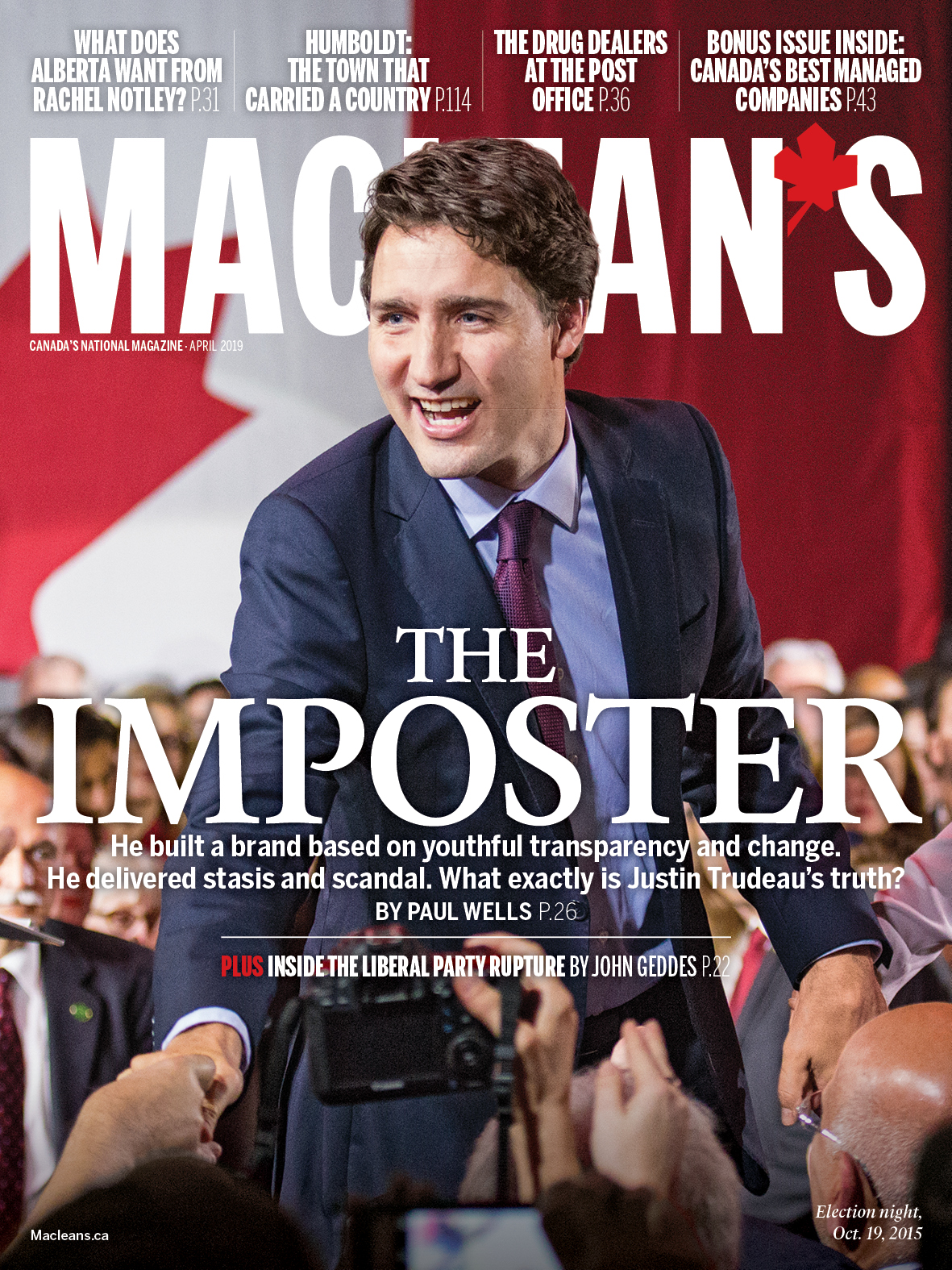
Former Liberal MP dishes on Justin Trudeau in her new book

Filed under: Books, Cancon, Politics — Tags: , , , , , , — Nicholas @ 03:00

When I moved out of Whitby, the local Member of Parliament was Liberal Celina Caesar-Chavannes. She was, we thought, a high-profile person who’d probably be quickly moved into a junior cabinet position, as Justin Trudeau sets a very high value on being seen to be supportive of women and minorities. As she quickly discovered, however, with Trudeau it’s very much the “being seen” part that matters to him and almost nothing in the way of actually being supportive:

[After a kerfuffle with opposition MP Maxime Bernier] she said she didn’t hear from most of her Liberal colleagues or the prime minister until a #hereforCelina hashtag campaign started weeks later, in response to a column that accused her of “seeing racism everywhere.” When she later confronted Trudeau about the lack of support, she said he told her, “As a strong Black woman, I didn’t think you needed help.” She said Conservative MP Michelle Rempel Garner was more supportive to her during that period than Trudeau.

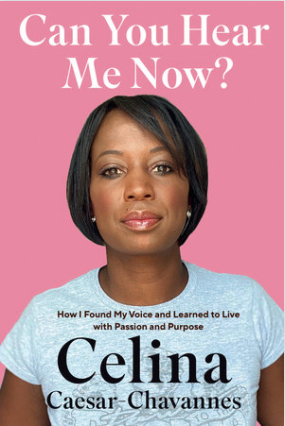
The incident is one of many allegations of racism, tokenizing, and microaggressions Caesar-Chavannes wrote about in her new memoir Can You Hear Me Now?, which came out February 2.

[…]

Caesar-Chavannes told VICE World News her experiences of being tokenized, excluded, and undervalued led her to resign from the Liberal caucus and not run again in the 2019 election. Her decision culminated in an explosive conversation with Trudeau in February 2019, during which she alleges he complained to her about being confronted about his privilege. She said he was angry that she wanted to resign on the same day then Minister of Veterans Affairs Jody Wilson-Raybould quit her cabinet role, in the midst of the SNC-Lavalin scandal, the biggest crisis the governing Liberals had faced since Trudeau’s election in 2015.

“I was met with an earful that I needed to appreciate him, that everybody talked to him about his privilege, that he’s so tired of everybody talking to him about this stuff, and that I cannot make this announcement right now,” she said. She alleges he told her “he couldn’t have two powerful women of colour leave at the same time.”

After listening to his “rant” for a while, Caesar-Chavannes said she cussed out the prime minister.

“I had to ask him, ‘Motherfucker, who the fuck do you think you’re talking to?'” she said. “I was so angry.”

She said she didn’t make out what Trudeau said after that, but it “sounded like he was crying.” She ended up delaying her resignation announcement until March 2019.

Caesar-Chavannes said the Liberal party’s treatment of Wilson-Raybould — an Indigenous woman and whistleblower — made her feel like many of her colleagues were “fake as fuck” and cemented her desire to sit as an independent.

January 22, 2021

Hypocrisy is bad (for mere humans) but ostentatious hypocrisy is reserved for the powerful

Filed under: Government, Media, Politics — Tags: , , , — Nicholas @ 03:00

David Warren notes the two very different kinds of hypocrisy on display during these fallen days:

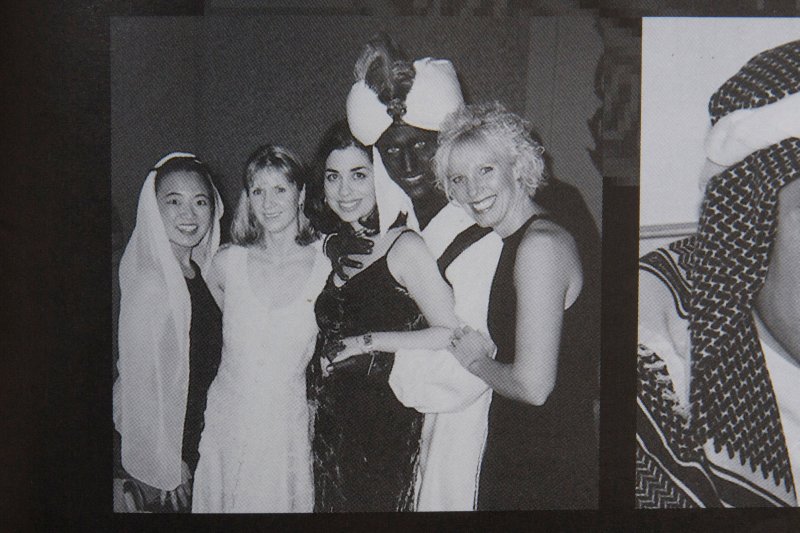
Justin Trudeau with dark makeup on his face, neck and hands at a 2001 “Arabian Nights”-themed party at the West Point Grey Academy, the private school where he taught.
Photo from the West Point Grey Academy yearbook, via Time

Hypocrisy is often dismissed as a humdrum moral vice; rather as pæderasty, or buggery, or commissioning abortions: things considered very grave in the past, but now quite acceptable among progressive persons. One feels almost cruel, or envious, to criticize the adept hypocrite. How dare we try to withdraw the air in which he lives and breathes? “Zero tolerance” is directed at more serious vices, such as having wrong opinions, or voting Republican.

As Paul Valéry said, “Power without abuse loses its charm,” and when, for instance, a governor who proclaims crippling Batflu restrictions is seen ignoring them, he is outraged. His critics are his opponents, he reasons; they really ought to be investigated first!

A milder, general criticism is sometimes made, about the lifestyles of the rich and famous. How is it that prominent environmentalists burn so much jet fuel in their travels from one conference to another, at the world’s most lavish resorts? Shouldn’t they go about in sackcloth and ashes, as they tell us to do?

This is to misunderstand their hypocrisy. We assume they are motivated by greed, and the love of pleasure, the way we would be. But why must it be piled on so thick? Many a jetsetter hardly uses the jacuzzis. He takes a quick shower, because he has another aeroplane to catch.

Yes, most people are attracted to the sumptuous, but in a fine and private way. They rarely encourage the paparazzi, or wish to be watched over their fences and walls. They hire security, to scare trespassers away. Servants, up to a point, must be endured, but in the past they could be ignored, the way we ignore appliances. I may not have a toaster, but I do have a stove, and could swear that it is staring at me. But it was manufactured in the 1960s, so I needn’t fear it has an Internet connexion. And besides, if it did, it wouldn’t be reporting to the tabloids, but to technical staff. We try to ignore them, at least so long as we can pretend they are equivalent to our maids and butlers.

November 30, 2020

QotD: Grandstanding, or more properly, cant

Filed under: Politics, Quotations — Tags: , , — Nicholas @ 01:00

A major proximate cause of the polarisation of opinion and consequent envenoming of political life is what the authors of this book call grandstanding, though a better word for it (in my opinion) is cant, a word which, oddly enough, they never use.

To cant is to utter moral sentiment far in excess of what is felt or could ever be felt. The purpose of cant is either to present the person who utters it as morally superior to others or to himself as he really is, or to shut other people up entirely. These purposes are not mutually exclusive, of course.

Cant is not new in the world, though the authors of this book offer no history of it. “Of all the cants that are canted in this canting world …” Laurence Sterne wrote more than quarter of a millennium ago, and Doctor Johnson suggested that his interlocutor should clear his mind of cant. My late friend, Peter Bauer, when elevated to the House of Lords, took “Let us be free of cant” as his heraldic motto, but far from ushering in an era free of it, subsequent years have proved a golden age of cant. The social — or antisocial — media have been a powerful catalyst of cant.

Theodore Dalrymple, “The Expanding Tyranny of Cant”, The Iconoclast, 2020-08-26.

November 21, 2020

QotD: Using a “wokescreen”

Filed under: Media, Politics, Quotations, Religion — Tags: , , , , — Nicholas @ 01:00

To better understand the era we are living through, it might help to first understand the nature of the “wokescreen”. Like those billowy emissions of dry-ice in a 1980s pop video, this device is useful if you want to hide bad and egregious behaviour from public view.

It is, essentially, a new iteration of an old rule: the one stating that the person commonly to be found complaining most vociferously about a particular vice is the one disproportionately likely to be guilty of said vice.

Through decades past, this rule applied to people who were literally in the clerical class. It was, for instance (see the late Cardinal Keith O’Brien), the priest or bishop who denounced homosexuality in the most vociferous terms who would turn out to have their own peculiar interpretation of “the laying on of hands”, tending to revolve around the knees of young male seminarians.

And there is sense in this of course. Through overt displays of moral opprobrium, the petitioner imagines that everyone’s attention will be diverted. Through stressing their virtue overmuch, however, such people raise a perceptible flag to anyone with an eye for human hypocrisy.

Today, of course, the clerical class is not the clergy. It is generally a rich, massively protected, metropolitan and often corporate or corporate-backed class which poses as the defender and then enforcer of all the easiest, least-controversial causes of the time. These shift, naturally, but today a person who wishes to cloak themselves in virtue will talk up their “anti-racism” credentials; will talk about “feminism” as though women’s rights have only just occurred to them; they will stress their green credentials; and of course they will rush to the defence of anyone who claims to identify as a tree or a hedgerow and assert that said person’s right to so identify is not just ancient and long-established but biologically incontrovertible. All give off immense warning-signs.

Douglas Murray, “Do you know what a wokescreen is?”, UnHerd, 2020-08-13.

November 20, 2020

Quebec makes Canada’s politics really weird

J.J. McCullough
Published 2 Mar 2019

Hypocrisies and blind spots stemming from the role played by French Canadians and the French language in Canada’s politics.

FOLLOW ME:

🇨🇦Support me on Patreon! https://www.patreon.com/jjmccullough
🤖Join my Discord! https://discord.gg/xQzjBRE
👾Watch me on Twitch! https://www.twitch.tv/jj_mccullough
🇺🇸Follow me on Instagram! https://www.instagram.com/jjmccullough/
🇨🇦Visit my Canada Website http://thecanadaguide.com

November 18, 2020

QotD: Feminism and gender equality

Filed under: Politics, Quotations, USA — Tags: , , , , — Nicholas @ 01:00

It takes one’s breath away to watch feminist women at work. At the same time that they denounce traditional stereotypes they conform to them. If at the back of your sexist mind you think that women are emotional, you listen agape as professor Nancy Hopkins of MIT comes out with the threat that she will be sick if she has to hear too much of what she doesn’t agree with. If you think women are suggestible, you hear it said that the mere suggestion of an innate inequality in women will keep them from stirring themselves to excel. While denouncing the feminine mystique, feminists behave as if they were devoted to it. They are women who assert their independence but still depend on men to keep women secure and comfortable while admiring their independence. Even in the gender-neutral society, men are expected by feminists to open doors for women. If men do not, they are intimidating women.

Thus the issue of Summers’s supposedly intimidating style of governance is really the issue of the political correctness by which Summers has been intimidated. Political correctness is the leading form of intimidation in all of American education today, and this incident at Harvard is a pure case of it. The phrase has been around since the 1980s, and the media have become bored with it. But the fact of political correctness is before us in the refusal of feminist women professors even to consider the possibility that women might be at any natural disadvantage in mathematics as compared with men. No, more than that: They refuse to allow that possibility to be entertained even in a private meeting. And still more: They are not ashamed to be seen as suppressing any inquiry into such a possibility. For the demand that Summers be more “responsible” in what he says applies to any inquiry that he or anyone else might cite.

Harvey Mansfield, “Fear and Intimidation at Harvard”, Weekly Standard, 2005-03-07.

October 31, 2020

Atun-Shei’s Dracula

Filed under: Books, Britain, Europe, History, Media — Tags: , , , , , — Nicholas @ 06:00

Atun-Shei Films
Published 30 Oct 2020

🎃 Get 50% OFF 👉🏻 your first 6 months of Babbel 🕰 limited time only! HERE: http://bit.ly/AtunSheiFilms

An in-depth analysis of Dracula, the original 1897 book by Bram Stoker, possibly the most influential horror novel ever written. Why has the Count enjoyed such longevity in popular culture? What made Dracula so scary for Victorian readers? And what – pray tell – makes vampires so attractive?

Support Atun-Shei Films on Patreon ► https://www.patreon.com/atunsheifilms

Leave a Tip via Paypal ► https://www.paypal.me/atunsheifilms

Buy Merch ► teespring.com/stores/atun-shei-films

#BramStoker #Dracula #Analysis

Reddit ► https://www.reddit.com/r/atunsheifilms
Twitter ► https://twitter.com/atun_shei

~REFERENCES~

[1] “Dracula Movies” (2016). IMDB https://www.imdb.com/list/ls058255047/

[2] Leslie S. Klinger. The New Annotated Dracula (2008). W.W. Norton & Company, Page xvi

[3] Klinger, Page xxi

[4] Dr. Andrzej Diniejko. “Slums and Slumming in Late-Victorian London.” The Victorian Web http://www.victorianweb.org/history/s…

[5] Gill Davies. “London in Dracula; Dracula in London” (2004). Literary London: Interdisciplinary Studies in the Representation of London, Volume 2 Number 1 http://www.literarylondon.org/london-…

[6] Klinger, xxxii-xli

[7] “An 1897 Review of Bram Stoker’s Dracula” (2019). Literary Hub https://bookmarks.reviews/an-1897-rev…

[8] “The Spectator‘s Review of Dracula, 1897″ (2012). The Spectator https://www.spectator.co.uk/article/t…

[9] olly Furneaux. “Victorian Se•ualities” (2014). British Library https://www.bl.uk/romantics-and-victo…

[10] Klinger, Page xvii-xviii

[11] Greg Buzwell. “Daughters of Decadence: The New Woman in the Victorian Fin De Siécle” (2014). British Library https://www.bl.uk/romantics-and-victo…

September 21, 2020

QotD: Prohibition and the Temperance movement

Filed under: History, Politics, Quotations, Religion, USA — Tags: , , , , — Nicholas @ 01:00

Prohibition was the culmination of nearly a century’s worth of propaganda, and repeated failed attempts to get such laws to work at the local and state level. Read J.C. Furnas’ The Life and Times of the Late Demon Rum for an overview of the pre-1919 Temperance/Prohibition movement.

… [T]he original Temperance movement started out with the very best of intentions, and was trying to deal with a real problem. In colonial and early-19th-century America, people (men, women and OH HORRORS even children!) drank enough that by modern standards we’d call them alcoholics. Modern Russians drink more, but if they were transported back to that time and place, they’d fit right on in. Part of it was because water was often not safe to drink (tea and coffee were often expensive and hard to get, while beer and other alcoholic drinks were made just about everywhere), part of it was snobbery (only really poor people drank water!) and part of it was because people back then believed that alcohol strengthened and warmed the body.

Two of the good side effects of the Temperance/Prohibition movement were the provision of safe, clean drinking water in American cities and towns, and the modern fruit-juice industry (as a lot of churches went hot-Prohibition, they got uneasy about serving wine at Communion, so they went to work and came up with non-alcoholic substitutes.) Welch’s Grape Juice was started by a pastor who wanted non-alcoholic “wine” for Communion, and caught on, real big.

Eric Oppen, posting to the Lois McMaster Bujold mailing list, 2020-06-18.

August 26, 2020

For British liberals, it’s somehow different when it happens in another country

Filed under: Britain, Europe, Liberty, Politics — Tags: , , , — Nicholas @ 05:00

At Spiked, Brendan O’Neill emphasizes the hypocrisy of some of the people lionizing the Belarussian democrats who also spent the last few years demonizing the democratic process that led to Brexit:

Protest in Minsk against Belarussian President Lukashenko, 23 August 2020.
Photo by Homoatrox via Wikimedia Commons.

British liberals are cheering on the tens of thousands of brave Belarusians who have taken to the streets to demand the enactment of their democratic vote. Which is odd, to say the least, given that the last time British liberals themselves marched in the streets, often in their tens of thousands, it was to demand the crushing of a democratic vote. It was to call upon the state to refuse to enact the democratic wishes of 17.4 million people, the largest democratic bloc in the history of the UK. The hypocrisy is staggering: the British chattering classes celebrate democracy abroad and wage war on it at home.

Belarusians are fighting tooth and nail for their democratic rights. They are marching in the streets in vast numbers – in defiance of the government’s authoritarian clampdown on public gatherings – and workers are going on strike. They are furious with the rigged outcome of the election two weeks ago, which gave their authoritarian president, Alexander Lukashenko, who has been in power for 26 years, yet another term. Lukashenko’s regime claims he won more than 80 per cent of the vote in the election on 9 August while the opposition won around 10 per cent. No one believes this. And they are right not to believe it: Lukashenko has a history of anti-democratic, tyrannical behaviour.

The Belarusians rising up against Lukashenko and demanding the meaningful right to determine who governs their country are an inspiration to democrats everywhere. They are taking enormous risks. They are breaking illiberal laws by taking to the streets of Minsk. At least four people have been killed in the protests. Some demonstrators claim they were tortured by security forces after being arrested. It is testament to people’s yearning for democratic power, for a real say in the future of their country, that so many are flooding the streets of Belarus or downing their tools at work in order to force the regime to listen to their voices. This is democracy in action.

And yet, there is something nauseating in the British chattering classes’ attempt to cosy up to the Belarusian uprising for democracy. For these are the same people who spent the past four years trying to do in the UK what Lukashenko is currently doing in Belarus – that is, silence people’s democratic cry and write off their democratic votes. Lukashenko does it with batons and torture, while our far more polite elites tried to do it with court cases, parliamentary intrigue and a relentless campaign of Project Fear. But the motive was the same: to prevent the supposedly problematic little people from having their say and screwing up political life.

[…]

The British columnists and politicos celebrating the Belarusian uprising have to face up to this fact: they have nothing in common with these brave warriors for democracy. On the contrary, their marches over the past four years were singularly devoted to stopping democracy. Who can forget those huge “People’s Vote” gatherings in which armies of middle-class Remainers would gather in London to sneer at ordinary voters, plead with the government to ignore their votes, and demand that big constitutional questions be taken out of the hands of the dangerous, reckless “low-information” masses. Guess who probably feels similarly to this? Yes, Alexander Lukashenko.

August 24, 2020

QotD: Progressive malevolent narcissism

Filed under: Media, Politics, Quotations, USA — Tags: , , , — Nicholas @ 01:00

This is what happens when malevolent narcissists don’t get slapped and thrown to the ground. The kind of psychology we’re seeing, over and over again, overwhelmingly from the left, is an exercise in bad faith, a fundamental dishonesty. It therefore isn’t amenable to correction with facts or debate, or appeals to reciprocity or some higher purpose. Tolerating such behaviour — and worse, deferring to it — will only encourage an escalation of vanity, malice and sociopathy. It may, however, be discouraged with reminders of physical consequences. Ideally, physical humiliation. A reminder that nasty little egos can be publicly broken.

These are people who will lie as readily as breathing in order to excuse their antisocial urges. They aren’t being obnoxious reluctantly, in desperation, or under duress. They harass, provoke and delight in domination because it gives them pleasure. It makes them feel important and powerful. Power being conceived solely as power over others. It’s a focus for their spite. Anything else is a fig leaf, a pretext. Among Portland’s identikit radicals, the ones exulting in the alarm and misery of others, there is no good faith. And so, you can’t engage with such creatures on their own ostensible terms.

David Thompson, “Shamelessly, He Quotes Himself”, David Thompson, 2020-08-22.

August 11, 2020

Orwell’s “Notes on Nationalism”

Filed under: Books, Britain, History, Media, Politics, WW2 — Tags: , , , , , , — Nicholas @ 03:00

In Quillette, Adam Wakeling discusses George Orwell’s essay in the postwar magazine Polemic:

In the bleak post-war Britain of October 1945, an essay by George Orwell appeared in the first edition of Polemic. Edited by abstract artist and ex-Communist Hugh Slater, the new journal was marketed as a “magazine of philosophy, psychology, and aesthetics.” Orwell was not yet famous — Animal Farm had only just started appearing on shelves — but he had a high enough profile for his name to be a boon to a new publication. His contribution to the October 1945 Polemic was “Notes on Nationalism,” one of his best and most important pieces of writing. Amidst the de-Nazification of Germany, the alarmingly rapid slide into the Cold War, and the trials of German and Japanese war criminals, Orwell set out to answer a question which had occupied his mind for most of the past seven years — why do otherwise rational people embrace irrational or even contradictory beliefs about politics?

As a junior colonial official in Burma, the young Eric Blair (he had not yet adopted the name by which he would be known to posterity) had been disgusted by his peers and superiors talking up the British liberty of Magna Carta and Rule Britannia while excusing acts of repression like the massacre of Indian protestors at Amritsar in 1919. As a committed socialist in the late 1930s, he openly ridiculed those who claimed to be champions of the working class while holding actual working-class people in open contempt. And he had watched the British Communist Party insist that the Second World War was nothing more than an imperialist adventure right up until the moment when the first German soldier crossed the Soviet frontier, at which point it instantly became a noble struggle for human freedom.

Orwell’s most personally searing experience, though, had come in Barcelona in 1937. The previous year, he had travelled to Spain to fight in the Civil War on the Republican side. His poor relationship with the British Communist Party led him to enlist in the militia of an anti-Stalinist socialist party, the POUM (Partido Obrero de Unificación Marxista, or Workers’ Party of Marxist Unification). Even while it was fighting a bitter winter campaign in the Aragon mountains, the POUM was subject to a relentless propaganda campaign by pro-Soviet Republicans who insisted it was a secret front for fascism.

Over May and June 1937, the POUM and the other independent left-wing organisations in Barcelona were brutally suppressed by the Republican Government and Soviet-backed Communists. Orwell saw his friends and comrades smeared, arrested, and in some cases shot. He only made a narrow escape back into France himself. Upon his return to Britain, he found the British Communist Party resolute in its line that the POUM was a fascist party. Admitting that there could be a difference of opinion among left-wing groups with respect to the Soviet Union, or that the Spanish Communists could have acted unjustly, was unacceptable. And when Orwell published his own account of the events in Spain, Homage to Catalonia, few were interested in reading it. The betrayal of the POUM weighed on Orwell’s mind through the Second World War, and Animal Farm provided an outlet for his anger. But those bloody spring days in Barcelona also informed “Notes on Nationalism.”

“Notes on Nationalism” is not an ideal title, as Orwell was not talking only about loyalty to country. Rather, he used nationalism as a short-hand for any type of group loyalty — to a country, but also to a religion, a political party, or an ideology itself. A nationalist may be defined by his membership of a group, or by his opposition to one, which Orwell called “negative” nationalism. Orwell used anti-Semites as an example of the latter, as well as the “minority of intellectual pacifists whose real though unadmitted motive appears to be hatred of Western democracy and admiration of totalitarianism.” He then set out to explain how everyone — no matter how reasoned and level-headed — is capable of irrational and biased thinking when our sense of group identity is challenged.

He identified three characteristics of “‘nationalistic’ thinking.” First, obsession — the ideologue’s need to filter everything through an ideological lens. Entertainment is not entertaining unless it is orthodox. Second, instability — the ability of the ideologue to go from believing one thing to quickly believing another to follow the party line. And thirdly, indifference to reality. One of the most interesting aspects of “Notes on Nationalism” is the “inadmissible fact” — something which can be proven to be true and is generally accepted but cannot be admitted by the adherents of a particular ideology. Or, if the fact is admitted, it is explained away or dismissed as unimportant.

The ideas explored in “Notes on Nationalism” run through much of Orwell’s writing, most obviously his anti-totalitarianism and hatred of hypocritical pieties. But central to his argument is how nationalistic thinking exposes our inescapable biases. “The Liberal News Chronicle,” he wrote, “published, as an example of shocking barbarity, photographs of Russians hanged by the Germans, and then a year or two later published with warm approval almost exactly similar photographs of Germans hanged by the Russians.” This anticipated the doublethink of Nineteen Eighty-Four, in which atrocities “are looked upon as normal, and, when they are committed by one’s own side and not by the enemy, meritorious.” The first step down the deceptively short road to totalitarianism is believing that our political enemies pose such a grave threat that defeating them takes precedence over truth, consistency, or common sense.

August 9, 2020

Canadian Art magazine’s “woke suicide pact”

As a cultural barbarian and all-around Neanderthal, it will come as little surprise to both my readers that I’d never even heard of Canadian Art magazine. As a result, the recent decision to cease publication due to the unresolved (and almost certainly unresolvable) issues of needing to be funded by rich white people:

These evils were explained in a long article published by Canadian Art‘s former editor-in-chief, David Balzer (self-describedgay, fag, queer. Ambivalent Libra“), in which he complains that the progressive agenda of the magazine he edited was forever being undercut by the need to solicit funds from wealthy white donors. Or, as he describes it, the pursuit of: “white, liberal money — the champagne socialists.”

Shockingly, these donors are not especially fond an incessant slew of articles with titles such as Drop the Charges and Defund the Police, Says New Artists’ Letter for Black Lives, Give Us Permanence — Ending Anti-Black Racism in Canada’s Art Institutions, and A Crisis of Whiteness in Canada’s Art Museums.

Balzer’s analysis of the growing tension between establishment donor and do-good editor is spot on:

    Most boards, which are also majority white, are [interested] in going to where they believe the money is. So the argument goes: It takes a certain talent, panache, to be president, director, or CEO, to open those pocketbooks, and without these skills, culture cannot run. This argument implies that culture cannot run if its backrooms are not white … Many corporate partners make possible the lavish, yearly fundraising galas that cultural organizations host: ostentatious displays of whiteness and wealth that are the public-facing versions of the aforementioned work done by white presidents, directors and CEOs.

It’s a problem that every charity, art outlet, and activist organization in Canada will face. Supporting the arts is rarely an act of pure altruism. It has always been a status flex by the well-connected barons and baronesses of privilege. At its most cynical, arts funding is a high-class game of reputation laundering.

QotD: The economic concept of “revealed preferences”

Filed under: Britain, Economics, Government, Media, Quotations — Tags: , , — Nicholas @ 01:00

Economists have a handy term called “revealed preferences”. In colloquial English it means “look at what people do, not what they say, and certainly never take notice of what they say others should do”.

Now, you can’t help but notice that there is a disparity between those who say that taxes should be higher and those who act as if they should be. Clearly, an individual who really believes that the Government is more effective at spending his money would voluntarily offer up more than the legal minimum of taxation. That we have fewer people acting in this manner than are to be found writing columns and making speeches calling for higher taxation shows a certain gap, does it not, between public utterances and private actions? Why, we could make such donations a litmus test for those believers in higher taxation and state spending who want to compel all of us to pay more. Only those who show their commitment by sending a cheque to the Treasury should be treated seriously.

Cheques, by the way, should be made out to “The Accountant, HM Treasury”, and sent to 1 Horse Guards Road, London SW1A 2HQ. A 2nd-class stamp is sufficient and you are encouraged to add a covering note so that your donation is spent in the way you like.

Tim Worstall, “Show us your cheques”, Times of London, quoted in Continental Telegraph, 2020-05-07.

June 22, 2020

QotD: Victimhood

Filed under: Politics, Quotations, USA — Tags: , , , — Nicholas @ 01:00

Victimhood bestows upon its legions a certain cloak of inviolability. One must remember that those who wear their victimhood like a badge of honor (and their liberal enablers) only want “one” thing: to be treated the same as everyone else is treated and to be treated special. This profound cognitive dissonance pervades their lives and defines them. They are allowed to say or believe things that would cause outrage if one of the oppressor groups said or thought the same thing. The best, most famous instance of this is Muhammed Ali’s virulent opposition to mixing the races. Ali, a man of great athletic and intellectual skills and one who had enormous courage in standing up for his principles regarding the Vietnam War, was also an appalling racist for much of his adult life. But he was insulated by his victimhood and so his odious views on miscegenation were rarely ever mentioned, let alone condemned. A more recent example was Kanye West’s infamous interruption of Taylor Swift’s award during the 2009 MTV awards. Rude and inexcusable, but no one dared to chastise him for his actions even though everyone knew that no white singer could ever interrupt a ceremony giving an award to a black singer and ever hope for continuing his career.

The irony of all this, of course, is the reluctance to hold everyone to the same standard of conduct and the same rules of discourse proves that racism is still alive and well in America. We still, as a society, refuse to treat everyone equally. It is, in fact, an insult to Ali and West that no one thought them equal enough to be chastised and condemned. In our society’s own peculiarly paternalistic and condescending way, we are saying that some people must be handled differently because they are not yet quite equal.

Joseph Mussomeli, “Victim Privilege, Cultural Appropriation, & the New Enslavement”, The Imaginative Conservative, 2018-02-09.

May 18, 2020

Safetyism

Matthew Crawford:

Safetyism is a disposition that has been gaining strength for decades and is having a triumphal moment just now because of the virus. Public health, one of many institutions that speak on behalf of safety, has claimed authority to sweep aside whole domains of human activity as reckless, and therefore illegitimate.

I suspect the ease with which we have lately accepted the authority of health experts to reshape the contours of our common life is due to the fact that safetyism has largely displaced other moral sensibilities that might offer some resistance. At the level of sentiment, there appears to be a feedback loop wherein the safer we become, the more intolerable any remaining risk appears. At the level of bureaucratic grasping, we can note that emergency powers are seldom relinquished once the emergency has passed. Together, these dynamics make up a kind of ratchet mechanism that moves in only one direction, tightening against the human spirit.

Acquiescence in this appears to be most prevalent among the meritocrats who staff the managerial layer of society. Deferring to expert authority is a habit inculcated in the “knowledge economy”, naturally enough; the basic currency of this economy is epistemic prestige.

Among those who work in the economy of things, on the other hand, you see greater skepticism toward experts (whether they make their claim on epistemic or moral grounds) and less readiness to accept the adjustment of social norms by fiat ­– whether that means using new pronouns or wearing surgical masks. I am regularly in welding supply stores, auto parts stores and other light-industry venues. Nobody is wearing masks in these places. They are very small businesses: an environment largely free of the moral fashions and corresponding knowledge claims that set the tone in large organisations. There is no HR in a welding shop.

A pandemic is a deadly serious business. But we would do well to remember that bureaucracies have their own interests, quite apart from the public interest that is their official brief and warrant. They are very much in the business of tending and feeding the narratives that justify their existence. Further, given the way bureaucracies must compete for funding from the legislature, each must make a maximal case for the urgency of its mission, hence the necessity of its expansion, like a shark that must keep moving or die. It is clearer now than it was a few months ago that this imperative of expansion puts government authority in symbiosis with the morality of safetyism, which similarly admits no limit to its expanding imperium. The result is a moral-epistemic apparatus in which experts are to rule over citizens conceived as fragile incompetents.

But what if this apparatus were revealed to be not very serious about safety, the very ideal that underwrites its authority? What then?

« Newer PostsOlder Posts »

Powered by WordPress