Quotulatiousness

August 11, 2020

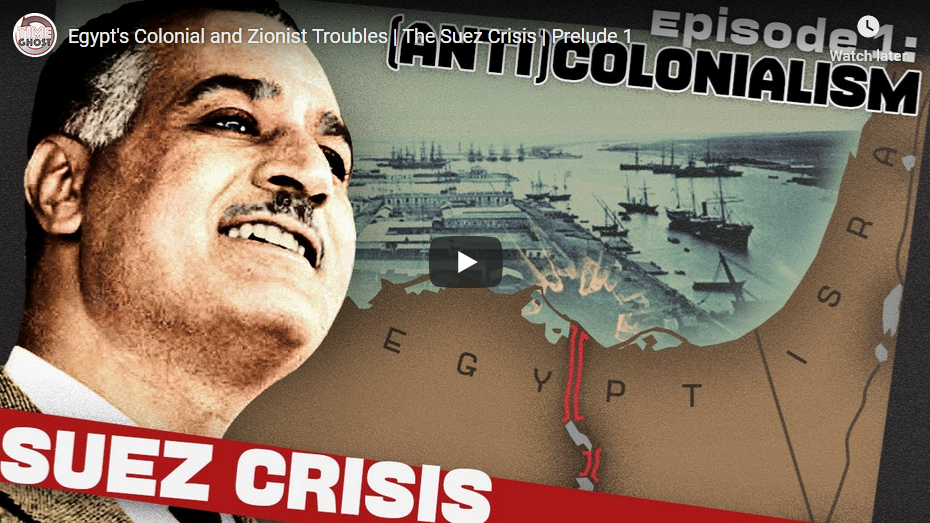
Egypt’s Colonial and Zionist Troubles | The Suez Crisis | Prelude 1

TimeGhost History
Published 10 Aug 2020

Recently independent Egypt, under President Gamal Abdel Nasser, navigates the turbulent waters of the Cold War, seeking national autonomy, while negotiating its relations with the British Empire, United States, and the Soviet Union. The question is, how will Egypt realize its self-determination with these powers vying for dominance in the region?

Join us on Patreon: https://www.patreon.com/TimeGhostHistory

Hosted by: Indy Neidell
Written by: Joram Appel and Francis van Berkel
Director: Astrid Deinhard
Producers: Astrid Deinhard and Spartacus Olsson
Executive Producers: Astrid Deinhard, Indy Neidell, Spartacus Olsson, Bodo Rittenauer
Creative Producer: Joram Appel
Post-Production Director: Wieke Kapteijns
Research by: Joram Appel
Image Research: Ian Irungu, Shaun Harrison & Karolina Dołęga
Edited by: Karolina Dołęga
Sound design: Marek Kamiński

Colorizations:
Mikolaj Uchman

Visual Sources:
National Archives NARA
Library of Congress Geography and Maps Department
Tropenmuseum
Wellcome Images
National Army Museum of New Zealand
Imperial War Museum: HU70788,
National Photo Collection of Israel
Fortepan – ID 32790
Bibliotheca Alexandrina

Music:
“Descending Mount Everest” – Trailer Worx
“Dreamless Nights” – The New Fools
“March Of The Brave 10” – Rannar Sillard
“Break Free” – Fabien Tell
“The Unexplored” – Philip Ayers
“It’s Not a Game” – Philip Ayers
“Foreign Signs” – Philip Ayers

Archive by Screenocean/Reuters https://www.screenocean.com.

A TimeGhost chronological documentary produced by OnLion Entertainment GmbH.

From the comments:

TimeGhost History
1 hour ago (edited)
Welcome to the first episode of our series on the Suez Crisis! It’s a 7-episode wild ride through secretive international collusion, clashing nations, and imperial anxieties. It’s a watershed moment in a variety of entangled histories: decolonization, the Arab-Israel Conflict, the rise of America as a superpower, the growing power of the UN, and much much more. It’s a lot to take in, but we hope that we’ve made this series as digestible (and enjoyable!) as possible. Thanks to our TimeGhost Army members for choosing this series. Want to be part of the effort that makes stuff like this happen? Join us at patreon.com/timeghosthistory or https://timeghost.tv.

Cheers,

Francis.

August 4, 2020

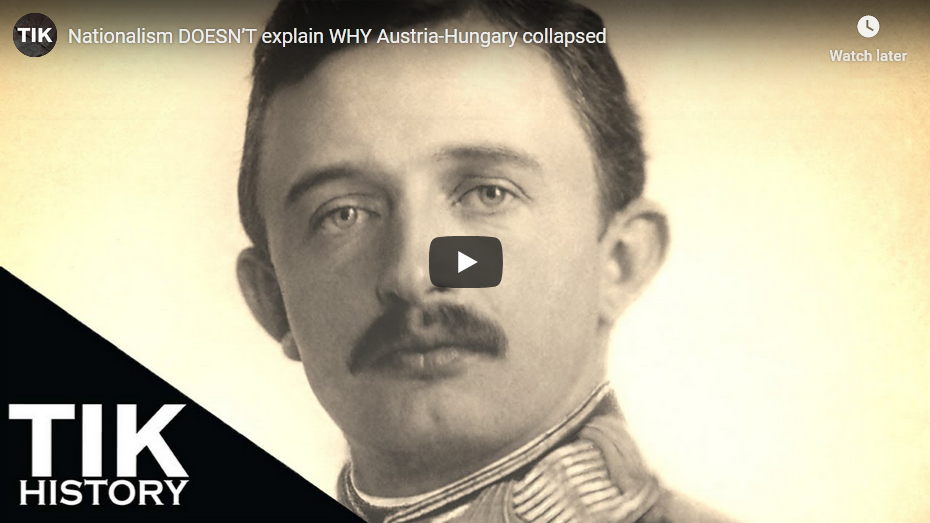
Nationalism DOESN’T explain WHY Austria-Hungary collapsed

Filed under: Europe, History, Military, WW1 — Tags: , , , , , , — Nicholas @ 06:00

TIK
Published 3 Aug 2020

The go-to answer is that national or ethnic divisions caused the collapse of the Austro-Hungarian Empire. But is this really the case? Using multiple sources, it’s time to provide YouTube with a narrative which doesn’t confirm nationalist beliefs. The Habsburgs survived the collapse, with Emperor Karl / Charles trying to reclaim his throne later on before being exiled. However, by about mid-November 1918, he had lost all power. The fact that there is no specific date when Austria-Hungary collapsed, and the fact that the “national revolutions” were met with relatively little opposition, speaks volumes. As does the fact that the new states were all multinational, which undermines the narrative that nationalism was the reason why Austria-Hungary collapsed. Leave your thoughts in the comments below.

⏲️ Videos EVERY Monday at 5pm GMT (depending on season, check for British Summer Time).

– – – – –

📚 BIBLIOGRAPHY / SOURCES 📚

Judson, P. The Habsburg Empire: A New History. Belknap Press, Kindle 2016.
Kiste, J. The End of the Habsburgs: The Decline and Fall of the Austrian Monarchy. Kindle 2019.
Macgregor, J. & Docherty, G. Prolonging the Agony: How the Anglo-American Establishment Deliberately Extended WW1 by Three-and-a-Half Years. Trine Day LLC, 2018.
Marx, K. Capital: A Critique of Political Economy: Volume III. PDF, English edition, 2010. (Originally written 1894)
Mises, L. Socialism: An Economic and Sociological Analysis. Liberty Fund, 1981. 1969 edition (roots back to 1922).
Oxford Dictionary of English, Oxford University Press, Third Edition 2010.
Rady, M. The Habsburgs: The Rise and Fall of a World Power. Perseus Books, Kindle 2020.
Watson, A. Ring of Steel: Germany and Austria-Hungary at War, 1914-1918. Penguin Books, 2015.

Cornwall, M. “Propaganda at Home (Austria-Hungary).” 1919. https://encyclopedia.1914-1918-online….
Online Latin-Dictionary http://www.latin-dictionary.net/defin…
Online Etymology Dictionary https://www.etymonline.com/word/public

Full list of all my sources – https://docs.google.com/spreadsheets/…

– – – – –

⭐ SUPPORT TIK ⭐

Want to ask a question? Please consider supporting me on either Patreon or SubscribeStar and help make more videos like this possible. For $5 or more you can ask questions which I will answer in future Q&A videos. Thank you to my current Patrons! You’re AWESOME! https://www.patreon.com/TIKhistory or https://www.subscribestar.com/tikhistory

– – – – –

ABOUT TIK 📝

History isn’t as boring as some people think, and my goal is to get people talking about it. I also want to dispel the myths and distortions that ruin our perception of the past by asking a simple question – “But is this really the case?” I have a 2:1 Degree in History and a passion for early 20th Century conflicts (mainly WW2). I’m therefore approaching this like I would an academic essay. Lots of sources, quotes, references and so on. Only the truth will do.

This video is discussing events or concepts that are academic, educational and historical in nature. This video is for informational purposes and was created so we may better understand the past and learn from the mistakes others have made.

June 14, 2020

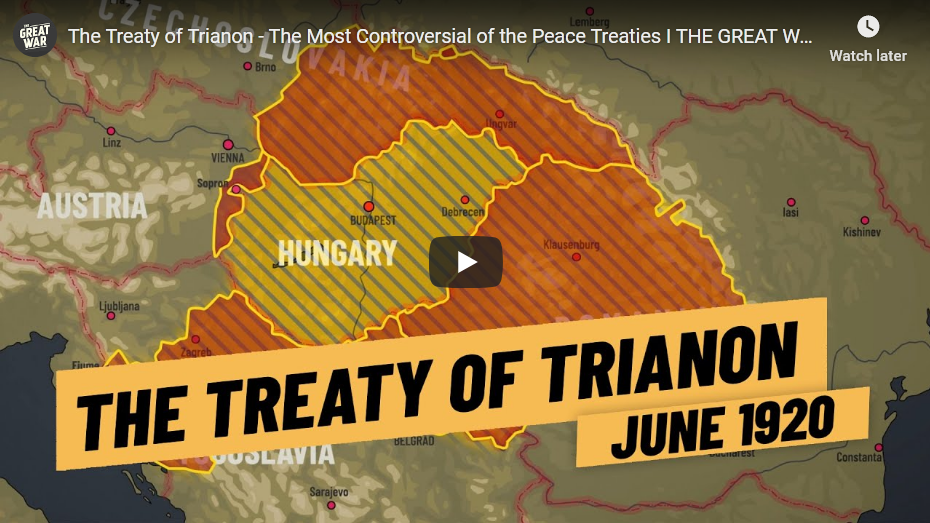
The Treaty of Trianon – The Most Controversial of the Peace Treaties I THE GREAT WAR 1920

The Great War
Published 13 Jun 2020

Sign up for Curiosity Stream and get Nebula bundled in: https://curiositystream.com/thegreatwar

The last of the big peace treaties signed in Paris that finalized the borders in Europe was the Treaty of Trianon. Even at the time, Hungarians considered it a historic injustice while nations such as Czechoslovakia, Romania and Yugoslavia were quite happy with the result. We examine how the treaty was signed and negotiated.

» SUPPORT THE CHANNEL
Patreon: https://www.patreon.com/thegreatwar
Merchandise: https://shop.spreadshirt.de/thegreatwar/

» SOURCES
Isaiah Bowman, The New World-Problems in Political Geography, (Yonkers-on-Hudson: World Book Company, 1921)

Francis Deák & Dezsó Ujváry, Paper and Documents Relating to the Foreign Relations of Hungary, Volume 1; 1919-1920, (Budapest: Royal Hungarian Ministry of Foreign Affairs, 1939)

Conan Fischer, Europe between democracy and dictatorship, 1900-1945, (Chichester: Malden, MA: Wiley-Blackwell, 2011)

Mike Gyula (ed.), Magyar Statisztikai Zsebkönyv, 1940 [Hungarian Statistical Pocket Book 1940], (Központi Statisztikai Hivatal: Budapest, 1940)

Róbert Győri & Charles W.J. Withers, “Trianon and its aftermath: British geography and
the ‘dismemberment’ of Hungary, c.1915-c.1922”, Scottish Geographical Journal, 135:1-2 (2019)

Michael Károlyi, Memoirs of Michael Károlyi: Faith Without Illusion (London: Jonathan Cape, 1956)

Jörn Leonhard, Der überforderte Frieden: Versailles und die Welt 1918-1923, (Bonn: bpp, Bundeszentrale für Politische Bildung, 2019)

C.A. Macartney, Hungary and her successors: the treaty of Trianon and its consequences 1919-1937, (London: Oxford University Press, 1937)

Margaret MacMillan, Paris 1919: Six Months That Changed the World, (London: Macmillan, 2019)

Arnold Suppan, The Imperialist Peace Order in Central Europe: Saint-Germain and Trianon, 1919–1920, (Vienna: Austrian Academy of Sciences Press, 2019)

Miklós Zeidler; Thomas J. DeKornfeld; Helen DeKornfeld, “Ideas on Territorial Revision in Hungary, 1920-1945”, East European Monographs, 717, (2010)
Miklós Zeidler, Trianon, (Budapest, Osiris, 2003.)

» SOCIAL MEDIA
Instagram: https://instagram.com/the_great_war
Twitter: https://twitter.com/WW1_Series
Reddit: https://reddit.com/r/TheGreatWarChannel

»CREDITS
Presented by: Jesse Alexander
Written by: Jesse Alexander
Director: Toni Steller & Florian Wittig
Director of Photography: Toni Steller
Sound: Toni Steller
Editing: Toni Steller
Mixing, Mastering & Sound Design: http://above-zero.com
Maps: Daniel Kogosov (https://www.patreon.com/Zalezsky)
Research by: Jesse Alexander
Fact checking: Florian Wittig

Channel Design: Alexander Clark
Original Logo: David van Stephold

A Mediakraft Networks Original Channel

Contains licensed material by getty images
All rights reserved – Real Time History GmbH 2020

May 20, 2020

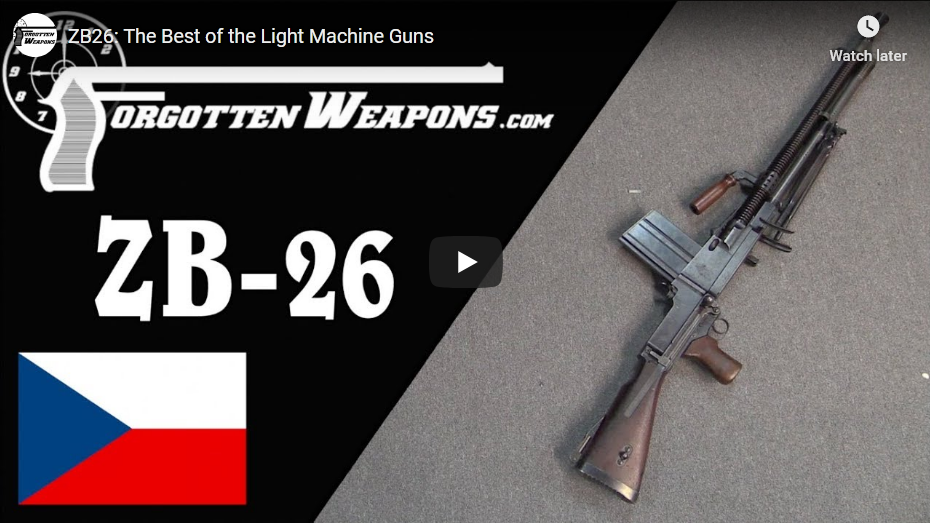
ZB26: The Best of the Light Machine Guns

Filed under: Europe, History, Military, Weapons, WW2 — Tags: , , , , — Nicholas @ 02:00

Forgotten Weapons
Published 26 Oct 2017

Sold for $34,500 (transferrable).

The ZB-26 stands as one of the best magazine-fed light machine guns developed during the 1920s and 30s – it was a very popular gun for small military forces and many countries which did not directly buy it were strongly influenced by it. The Japanese Nambu Type 96 and 99 were heavily based on the ZB, and the British Bren was a direct evolution licensed from Brno.

The design dates back to 1921, when the Czech government began searching for a modern light machine gun. They tested pretty much all the guns available on the market at the time, and also solicited guns from Czechoslovak designers. Brothers Vaclav and Emmanuel Holek submitted their I-23 light machine gun, which would become the ZB-26 (LK vizor 26 in Czech terminology) and become the official Czechoslovak light machine gun as well as a popular commercial export for the ZB factory. More than 120,000 were made in several different calibers and sold to 24 countries between 1926 and 1939.

When the Germans occupied Czechoslovakia, they seized a huge number of these guns both from the military and guns still in the factory. This particular one was part of a Spanish purchase contract, but was completed under the oversight of Heinrich Krieghoff and supplied to German forces.

Mechanically, the ZB-26 uses a tilting bolt and a long stroke gas piston, in a combination that would be copied in many later designs. It is robust, accurate, controllable, and handy – a truly excellent all-around light machine gun.

http://www.patreon.com/ForgottenWeapons

Cool Forgotten Weapons merch! http://shop.bbtv.com/collections/forg…

If you enjoy Forgotten Weapons, check out its sister channel, InRangeTV! http://www.youtube.com/InRangeTVShow

May 15, 2020

QotD: Gandhi and the rise of Hitler

Filed under: Britain, Europe, Germany, History, India, Military, Quotations, WW2 — Tags: , , , , , — Nicholas @ 01:00

Gandhi’s views on the European crisis were not entirely consistent. He vigorously opposed Munich, distrusting Chamberlain. “Europe has sold her soul for the sake of a seven days’ earthly existence,” he declared. “The peace that Europe gained at Munich is a triumph of violence.” But when the Germans moved into the Bohemian heartland, he was back to urging nonviolent resistance, exhorting the Czechs to go forth, unarmed, against the Wehrmacht, perishing gloriously — collective suicide again. He had Madeleine Slade draw up two letters to President Eduard Beneš of Czechoslovakia, instructing him on the proper conduct of Czechoslovak satyagrahi when facing the Nazis.

When Hitler attacked Poland, however, Gandhi suddenly endorsed the Polish army’s military resistance, calling it “almost nonviolent.” (If this sounds like double-talk, I can only urge readers to read Gandhi.) He seemed at this point to have a rather low opinion of Hitler, but when Germany’s panzer divisions turned west, Allied armies collapsed under the ferocious onslaught, and British ships were streaming across the Straits of Dover from Dunkirk, he wrote furiously to the Viceroy of India: “This manslaughter must be stopped. You are losing; if you persist, it will only result in greater bloodshed. Hitler is not a bad man …”

Gandhi also wrote an open letter to the British people, passionately urging them to surrender and accept whatever fate Hitler had prepared for them. “Let them take possession of your beautiful island with your many beautiful buildings. You will give all these, but neither your souls, nor your minds.” Since none of this had the intended effect, Gandhi, the following year, addressed an open letter to the prince of darkness himself, Adolf Hitler.

The scene must be pictured. In late December 1941, Hitler stood at the pinnacle of his might. His armies, undefeated — anywhere — ruled Europe from the English Channel to the Volga. Rommel had entered Egypt. The Japanese had reached Singapore. The U.S. Pacific Fleet lay at the bottom of Pearl Harbor. At this superbly chosen moment, Mahatma Gandhi attempted to convert Adolf Hitler to the ways of nonviolence. “Dear Friend,” the letter begins, and proceeds to a heartfelt appeal to the Führer to embrace all mankind “irrespective of race, color, or creed.” Every admirer of the film Gandhi should be compelled to read this letter. Surprisingly, it is not known to have had any deep impact on Hitler. Gandhi was no doubt disappointed. He moped about, really quite depressed, but still knew he was right. When the Japanese, having cut their way through Burma, threatened India, Gandhi’s strategy was to let them occupy as much of India as they liked and then to “make them feel unwanted.” His way of helping his British “friends” was, at one of the worst points of the war, to launch massive civil-disobedience campaigns against them, paralyzing some of their efforts to defend India from the Japanese.

Here, then, is your leader, O followers of Gandhi: a man who thought Hitler’s heart would be melted by an appeal to forget race, color, and creed, and who was sure the feelings of the Japanese would be hurt if they sensed themselves unwanted. As world-class statesmen go, it is not a very good record. Madeleine Slade was right, I suppose. The world certainly didn’t listen to Gandhi. Nor, for that matter, has the modern government of India listened to Gandhi. Although all Indian politicians of all political parties claim to be Gandhians, India has blithely fought three wars against Pakistan, one against China, and even invaded and seized tiny, helpless Goa, and all without a whisper of a shadow of a thought of ahimsa. And of course India now has atomic weapons, a satyagraha technique if ever there was one.

Richard Grenier, “The Gandhi Nobody Knows”, Commentary, 1983-03-01.

March 27, 2020

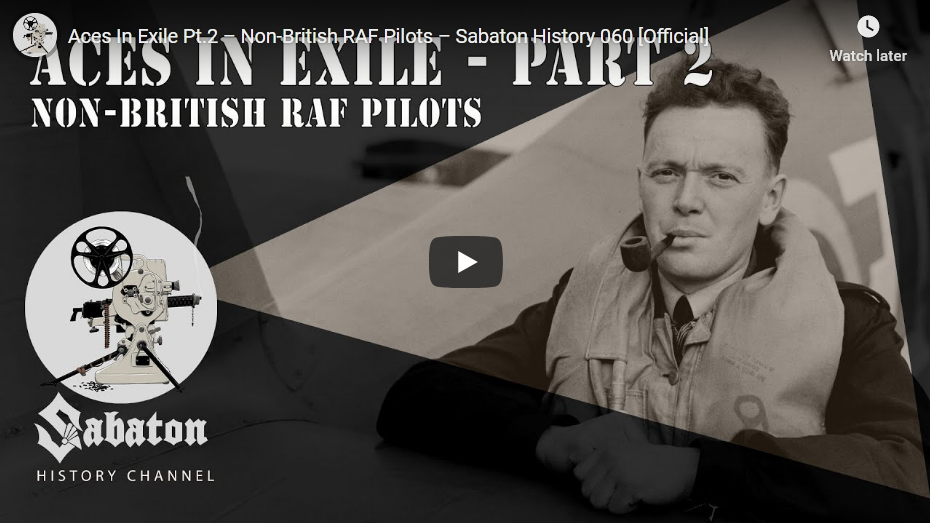
“Aces In Exile” Pt.2 – Non-British RAF Pilots – Sabaton History 060 [Official]

Filed under: Britain, Cancon, Europe, History, Media, Military, WW2 — Tags: , , , , — Nicholas @ 06:00

Sabaton History
Published 26 Mar 2020

“Aces in Exile” return! Interesting times make for interesting men. In this second part we talk about some individual stories of Czechoslovakian, Polish and Canadian pilots that all fought under the banner of the British Royal Air Force during the Second World War. How they escaped German occupation, how they traveled through war torn Europe, and how they eventually found themselves fighting in a different uniform for a different country.

We would like to thank the World of Tanks team for their contribution and help with the video filming. If you’re not yet a World of Tanks player, join the game and get your hands on cool in-game stuff for free via the link: https://redir.wargaming.net/w7fwclmx/…
Support Sabaton History on Patreon: https://www.patreon.com/sabatonhistory

Listen to “Aces in Exile” on the album Coat of Arms:
CD: http://bit.ly/CoatOfArmsStore
Spotify: http://bit.ly/CoatOfArmsSpotify
Apple Music: http://bit.ly/CoatOfArmsAppleMusic
iTunes: http://bit.ly/CoatOfArmsiTunes
Amazon: http://bit.ly/CoatOfArmsAmzn
Google Play: http://bit.ly/CoatOfArmsGooglePlay

Check out the trailer for Sabaton’s new album The Great War right here: https://www.youtube.com/watch?v=HCZP1…

Listen to Sabaton on Spotify: http://smarturl.it/SabatonSpotify
Official Sabaton Merchandise Shop: http://bit.ly/SabatonOfficialShop

Hosted by: Indy Neidell
Written by: Markus Linke and Indy Neidell
Directed by: Astrid Deinhard and Wieke Kapteijns
Produced by: Pär Sundström, Astrid Deinhard and Spartacus Olsson
Creative Producer: Joram Appel
Executive Producers: Pär Sundström, Joakim Broden, Tomas Sunmo, Indy Neidell, Astrid Deinhard, and Spartacus Olsson
Post-Production Director: Wieke Kapteijns
Edited by: Iryna Dulka
Sound Editing by: Marek Kaminski
Maps by: Eastory – https://www.youtube.com/c/eastory

Archive by: Reuters/Screenocean https://www.screenocean.com
Music by Sabaton.

Sources:
– Narodowe Archiwum Cyfrowe
– IWM: CH 1566
– Morane-Saulnier icon by Truszko from Wikimedia
– D.520 icon by PpPachy from Wikimedia
– Hurricane icon by Martin Čížek from Wikimedia

An OnLion Entertainment GmbH and Raging Beaver Publishing AB co-Production.

© Raging Beaver Publishing AB, 2019 – all rights reserved.

March 20, 2020

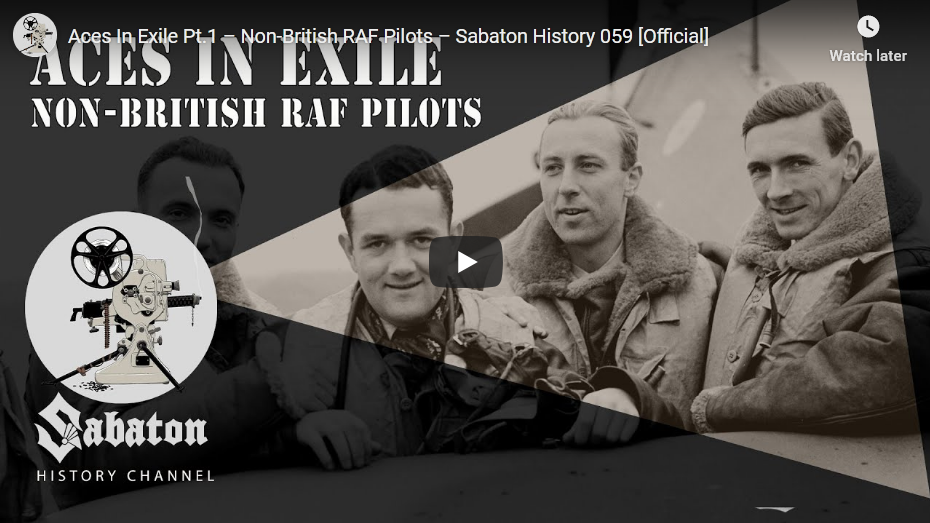
“Aces In Exile” Pt.1 – Non-British RAF Pilots – Sabaton History 059 [Official]

Filed under: Britain, Cancon, History, Media, Military, WW2 — Tags: , , , , , — Nicholas @ 04:00

Sabaton History
Published 19 Mar 2020

“Aces In Exile” prevail! Did you know that the war in the skies above Britain was not just fought by men from the British Isles alone? It was also fought by men who were forced to flee their home-countries from Nazi occupation and journey through war-torn Europe to continue the resistance. As France fell, pilots from Poland, Czechoslovakia and Canada found themselves once more in the seat of foreign fighter-planes, to fend off the German war-machine in the Battle of Britain.

Support Sabaton History on Patreon: https://www.patreon.com/sabatonhistory

Listen to “Aces in Exile” on the album Coat of Arms here:
CD: http://bit.ly/CoatOfArmsStore
Spotify: http://bit.ly/CoatOfArmsSpotify
Apple Music: http://bit.ly/CoatOfArmsAppleMusic
iTunes: http://bit.ly/CoatOfArmsiTunes
Amazon: http://bit.ly/CoatOfArmsAmzn
Google Play: http://bit.ly/CoatOfArmsGooglePlay

Check out the trailer for Sabaton’s new album The Great War right here: https://www.youtube.com/watch?v=HCZP1…

Listen to Sabaton on Spotify: http://smarturl.it/SabatonSpotify
Official Sabaton Merchandise Shop: http://bit.ly/SabatonOfficialShop

Hosted by: Indy Neidell
Written by: Markus Linke and Indy Neidell
Directed by: Astrid Deinhard and Wieke Kapteijns
Produced by: Pär Sundström, Astrid Deinhard and Spartacus Olsson
Creative Producer: Joram Appel
Executive Producers: Pär Sundström, Joakim Broden, Tomas Sunmo, Indy Neidell, Astrid Deinhard, and Spartacus Olsson
Post-Production Director: Wieke Kapteijns
Edited by: Iryna Dulka
Sound Editing by: Marek Kaminski
Maps by: Eastory – https://www.youtube.com/c/eastory

Archive by: Reuters/Screenocean https://www.screenocean.com
Music by Sabaton.

Sources:
– IWM: CH1733, Q 69697, CH1501, CH 1438, CH 1291, CH 1294, CH 12321, CH 1286, CH 1540, CH 587, CH 1538, CH 1535, CH 1137, CH 2440, HU 106457, D 1731, CH 4790
– Photo of the Battle of Britain Monument by Eluveitie from Wikimedia
– Instytut Pamięci Narodowej

An OnLion Entertainment GmbH and Raging Beaver Publishing AB co-Production.

© Raging Beaver Publishing AB, 2019 – all rights reserved.

February 27, 2020

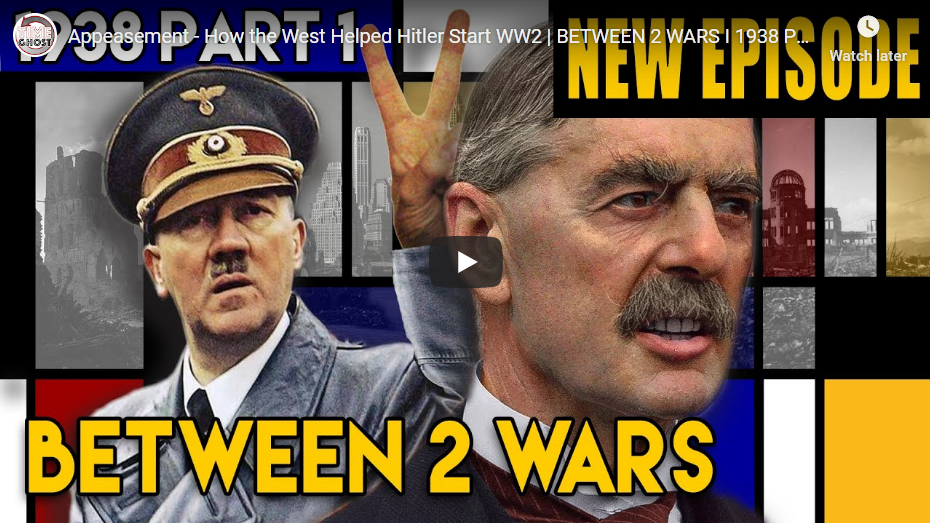
Appeasement – How the West Helped Hitler Start WW2 | BETWEEN 2 WARS I 1938 Part 1 of 4

TimeGhost History
Published 26 Feb 2020

With the increasing aggression of Italy, Japan, and Germany in the 1930s, the League of Nations is becoming increasingly ineffective in regulating international disputes. Britain and France adopt a diplomatic strategy of appeasement to hold off all-out war and buy some crucial time. But will it work, and can Adolf Hitler’s territorial ambitions be contained?

Join us on Patreon: https://www.patreon.com/TimeGhostHistory

Hosted by: Indy Neidell
Written by: Francis van Berkel and Spartacus Olsson
Directed by: Spartacus Olsson and Astrid Deinhard
Executive Producers: Bodo Rittenauer, Astrid Deinhard, Indy Neidell, Spartacus Olsson
Creative Producer: Joram Appel
Post-Production Director: Wieke Kapteijns
Research by: Tom Meaden, Izzy Wilson, and Francis van Berkel
Edited by: Daniel Weiss
Sound design: Marek Kamiński

Sources:
Bundesarchiv_Bild:
102-08806, 102-08810, 102-09042,
119-5243, 146-1970-052-24, 146-1985-108-27A,
183-1987-0922-500, 183-R03618,
Photo from color by klimbim.

Colorizations by:
– Daniel Weiss
– Norman Stewart
– Julius Jääskeläinen – https://www.facebook.com/JJcolorization/

Soundtracks from Epidemic Sound:
– “The Inspector 4” – Johannes Bornlöf
– “Last Point of Safe Return” – Fabien Tell
– “Split Decision” – Rannar Sillard
– “Death And Glory 1” – Johannes Bornlöf
– “Guilty Shadows 4” – Andreas Jamsheree
– “Disciples of Sun Tzu” – Christian Andersen
– “First Responders” – Skrya
– “Easy Target” – Rannar Sillard
– “Death And Glory 3” – Johannes Bornlöf
– “The Charleston 3” – Håkan Eriksson

A TimeGhost chronological documentary produced by OnLion Entertainment GmbH.

From the comments:

TimeGhost History
2 days ago (edited)
Hindsight is 20/20. It’s easy to look back at Anglo-French foreign policy in the 1930s and be shocked at how many mistakes politicians like Neville Chamberlain could make. This video will probably only add to that judgement, it more or less charts all the times Hitler could have been stopped but wasn’t. But put yourself in the context of the time. Memories of the Great War are only twenty years ago old, and the public has no appetite for another massive conflict. The global economy is only just showing signs of recovery after the Great Depression, and Britain and France barely have the industrial capacity to fight a modern war. So, imagine you’re Chamberlain (or any other politician of the time), are you really going to commit your country to war over a territorial disagreement between Germany and Czechoslovakia? The invasion of Poland in September 1939 shows that appeasement was a mistake. But maybe it was an understandable one? Let us know what you think in the comments.

Cheers,
Francis.

December 3, 2019

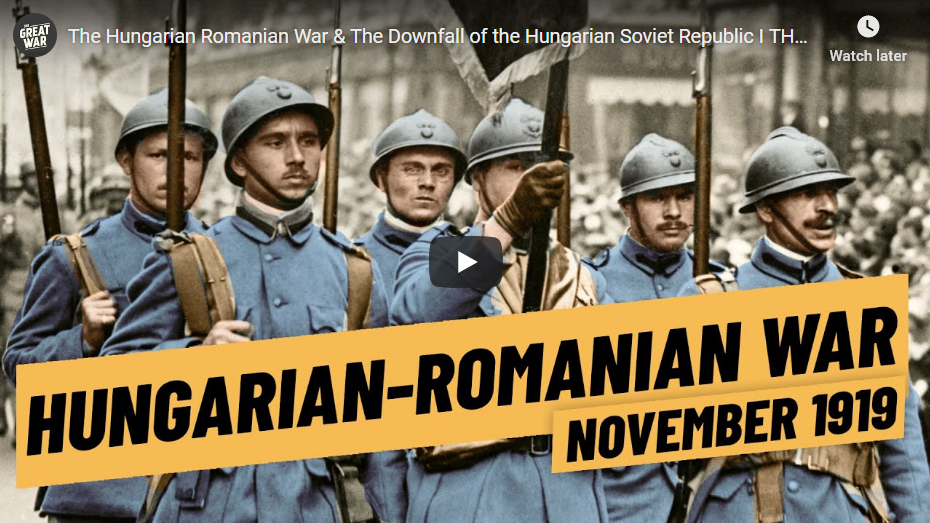
The Hungarian Romanian War & The Downfall of the Hungarian Soviet Republic I THE GREAT WAR 1919

Filed under: Europe, History, Military — Tags: , , , , — Nicholas @ 06:00

The Great War
Published 2 Dec 2019

SPONSOR: Get 20% off of your first order at Mack Wheldon. Go to https://mackwheldon.com and use promocode “greatwar” at checkout.

In early 1919 Hungary was one of the European territories that saw a communist revolution. Bela Kun and his supporters established the Hungarian Soviet Republic while the country was in great turmoil and fighting against the Romanians, the Czechoslovaks, the Serbs and within Hungary itself.

» SUPPORT THE CHANNEL
Patreon: https://www.patreon.com/thegreatwar
Merchandise: https://shop.spreadshirt.de/thegreatwar/

» SOURCES
Balogh, Eva S. “István Friedrich and the Hungarian Coup d’État of 1919: A Reevaluation” in Slavic Review, 1 June 1976, Vol.35(2): 269-286.

Borodziej, Wlodzimierz and Maciej Gorny. Der Vergessene Weltkrieg. Europas Osten 1912-1923. Band II – Nationen 1917-1923 (wbg Theiss, 2018).

Gosztony, Peter. “The Collapse of the Hungarian Red Army,” in Pastor, Peter, ed. Revolutions and Interventions in Hungary and its Neighbor States, 1918-1919 (New York: Columbia University Press, 1988): 69-80.

Hetes, Tibor. “The Northern Campaign of the Hungarian Red Army,” in Pastor, Peter, ed. Revolutions and Interventions in Hungary and its Neighbor States, 1918-1919 (New York: Columbia University Press, 1988): 55-60.

Horthy, Admiral Nicholas. Admiral Nicholas Horthy Memoirs. Simon Publications LLC, (2000).

Macmillan, Margaret. The Peacemakers: Six Months that Changed the World (London: John Murray, 2001).

Nouzille, Jean. “The July Campaign of the Hungarian Red Army as seen by France,” in Pastor, Peter, ed. Revolutions and Interventions in Hungary and its Neighbor States, 1918-1919 (New York: Columbia University Press, 1988): 81-88.

Révész, Tamás: “Post-war Turmoil and Violence (Hungary)”, in: 1914-1918-online. International Encyclopedia of the First World War, ed. by Ute Daniel, Peter Gatrell, Oliver Janz, Heather Jones, Jennifer Keene, Alan Kramer, and Bill Nasson, issued by Freie Universität Berlin, Berlin 2019-08-05.
https://encyclopedia.1914-1918-online…

Torrey, Glenn. “The Romanian Intervention in Hungary, 1919,” in Pastor, Peter, ed. Revolutions and Interventions in Hungary and its Neighbor States, 1918-1919 (New York: Columbia University Press, 1988): 301-320.

»CREDITS
Presented by: Jesse Alexander
Written by: Jesse Alexander
Director: Toni Steller & Florian Wittig
Director of Photography: Toni Steller
Sound: Toni Steller
Editing: Toni Steller
Mixing, Mastering & Sound Design: http://above-zero.com
Maps: Daniel Kogosov (https://www.patreon.com/Zalezsky)
Research by: Jesse Alexander
Fact checking: Florian Wittig

Channel Design: Alexander Clark
Original Logo: David van Stephold

A Mediakraft Networks Original Channel

Contains licensed material by getty images
All rights reserved – Real Time History GmbH 2019

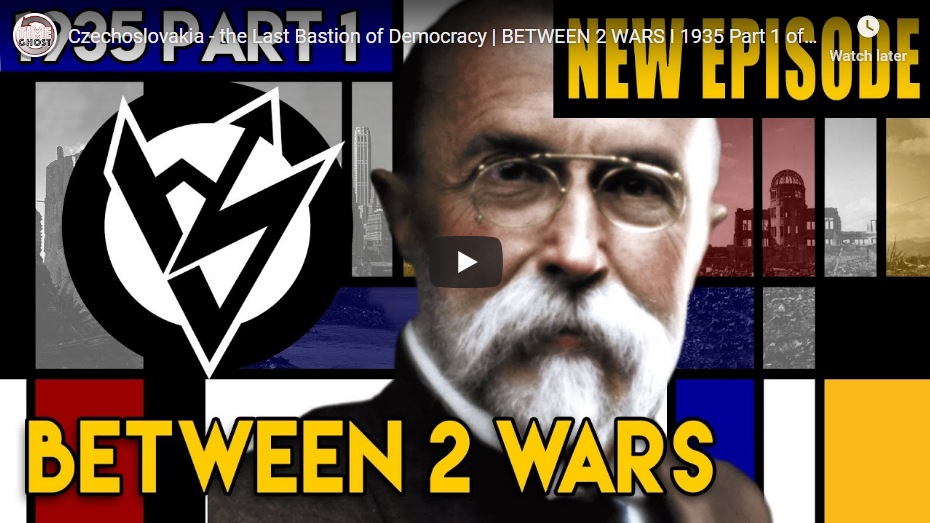
Czechoslovakia – the Last Bastion of Democracy | BETWEEN 2 WARS I 1935 Part 1 of 4

Filed under: Europe, Germany, History — Tags: , , , , , , — Nicholas @ 04:00

TimeGhost History
Published 2 Dec 2019

Czechoslovakia is holding on to democracy by a thread. It even looks like they might be able to integrate the German Czechoslovakians, but Hitler’s rise to power changes everything.

Join us on Patreon: https://www.patreon.com/TimeGhostHistory

Hosted by: Indy Neidell
Written by: Francis van Berkel
Directed by: Spartacus Olsson and Astrid Deinhard
Executive Producers: Bodo Rittenauer, Astrid Deinhard, Indy Neidell, Spartacus Olsson
Creative Producer: Joram Appel
Post-Production Director: Wieke Kapteijns
Research by: Francis van Berkel and Rune Væver Hartvig
Edited by: Daniel Weiss and Wieke Kapteijns
Sound design: Marek Kamiński

A TimeGhost chronological documentary produced by OnLion Entertainment GmbH.

From the comments:

TimeGhost History
2 days ago
The year is 1935 CE. Central Europe is entirely dominated by Authoritarians and Fascists. Well not entirely! One small country of indomitable Czechs and Slovaks still holds out for democracy. And life is not easy for the German Nazis who garrison the towns and villages in Bohemia and Moravia…

One thing in this episode might go unnoticed. It is how important it is to note that the term Sudeten German has only become widespread after WWI. It shows us how the delicate balance of ethnic groups had been upset after the Great War.

Before 1918, these same people felt comfortable called themselves Bohemian or Moravian. On the other side of the border that now divides Czechoslovakia from Germany, Austria, Poland and Hungary Czech and Slovak speakers felt comfortable calling themselves for instance Carpathian, Silesian, or Bavarian. In only 17 years this regional sense of unity has now been eradicated. It’s really easy to fall into the trap of the identity rhetoric of the time. To say that “Well, what did you expect? You forced people to be part of a country that wasn’t theirs” it’s an easy explanation for all of this conflict.

Well as we have often pointed out it wasn’t that simple. Fanned by identity politics on all sides, the borders have become fevering soars that are spreading infection into all of Europe. It is a disease that now threatens to develop into sepsis for the whole European continent. And think of this; borders are nothing but lines on maps, things invented arbitrarily in people’s minds… isn’t it remarkable how we as a species can invent our own demise?

October 28, 2019

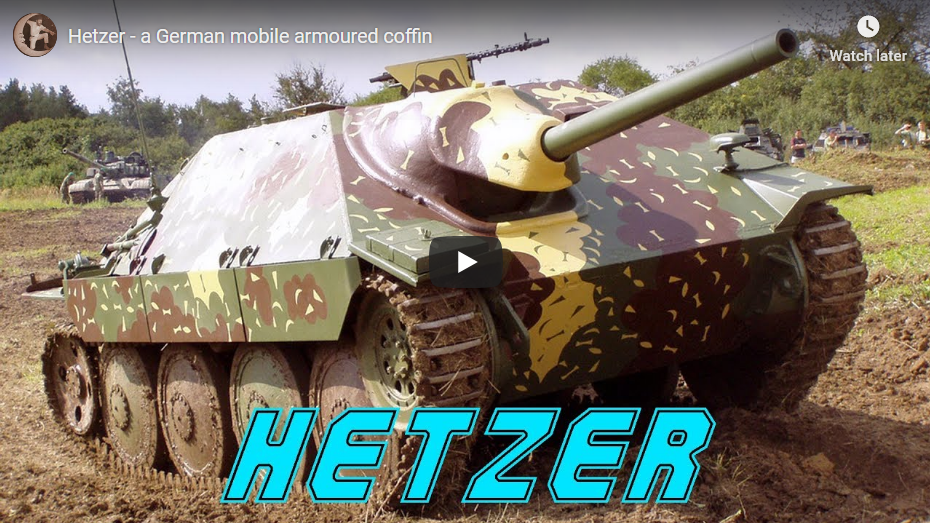
Hetzer – a German mobile armoured coffin

Filed under: Germany, History, Military, Weapons, WW2 — Tags: , , , — Nicholas @ 02:00

Lindybeige
Published 26 Sep 2019

Get your first audiobook and two Audible originals free when you try Audible for 30 days. Visit https://www.audible.com/lindybeige or text “lindybeige” to 500 500.

The Hetzer (or Jagdpanzer 38t) – it is a “cool”-looking vehicle, and a favourite with WW2 tank enthusiasts, but was it all that great to fight in?

Support me on Patreon: https://www.patreon.com/Lindybeige

Lindybeige: a channel of archaeology, ancient and medieval warfare, rants, swing dance, travelogues, evolution, and whatever else occurs to me to make.

▼ Follow me…

Twitter: https://twitter.com/Lindybeige I may have some drivel to contribute to the Twittersphere, plus you get notice of uploads.

My website:
http://www.LloydianAspects.co.uk

October 15, 2019

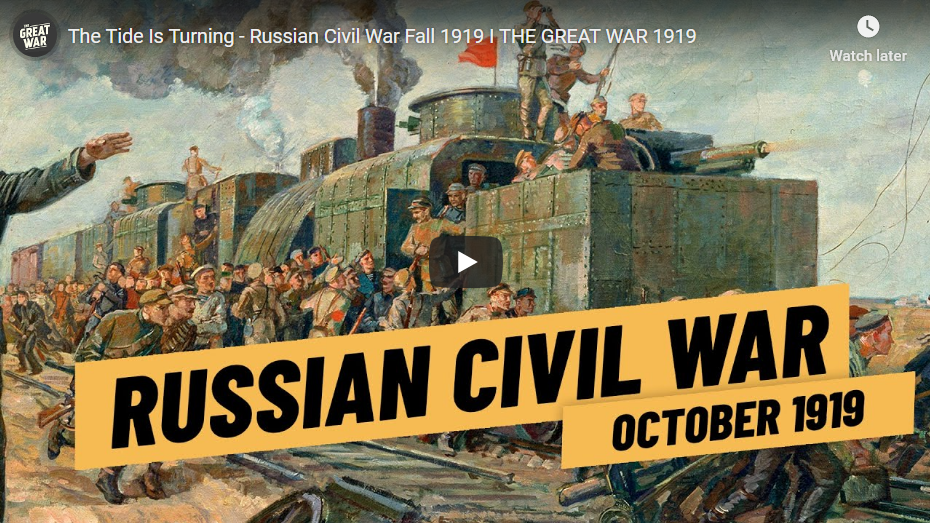
The Tide Is Turning – Russian Civil War Fall 1919 I THE GREAT WAR 1919

Filed under: History, Military, Russia — Tags: , , , , , , — Nicholas @ 04:00

The Great War
Published 14 Oct 2019

Support 16 Days in Berlin: https://realtimehistory.net/indiegogo

The White Russian advance on Moscow comes to a crashing end as the Red Army manages to turn the tide of the Russian Civil War in Fall 1919.

» SUPPORT THE CHANNEL
Patreon: https://www.patreon.com/thegreatwar
Merchandise: https://shop.spreadshirt.de/thegreatwar/

» SOURCES
Figes, Orlando. A People’s Tragedy. The Russian Revolution (London: The Bodley Head, 2017 [1996]).
Mawdsley, Evan. The Russian Civil War (New York: Pegasus Books, 2005).
Smele, Jonathan. The “Russian” Civil Wars 1916-1926 (London: Hurst, 2015).
Sumpf, Alexandre. “Russian Civil War,” in 1914-1918 online. International Encyclopedia of the First World War. https://encyclopedia.1914-1918-online.
Engelstein, Laura. Russia in Flames (Oxford University Press, 2017).

»CREDITS
Presented by: Jesse Alexander
Written by: Jesse Alexander
Director: Toni Steller & Florian Wittig
Director of Photography: Toni Steller
Sound: Toni Steller
Editing: Toni Steller
Mixing, Mastering & Sound Design: http://above-zero.com
Maps: Daniel Kogosov (https://www.patreon.com/Zalezsky)
Research by: Jesse Alexander
Fact checking: Florian Wittig

Channel Design: Alexander Clark
Original Logo: David van Stephold

A Mediakraft Networks Original Channel

Contains licensed material by getty images
All rights reserved – Real Time History GmbH 2019

September 15, 2019

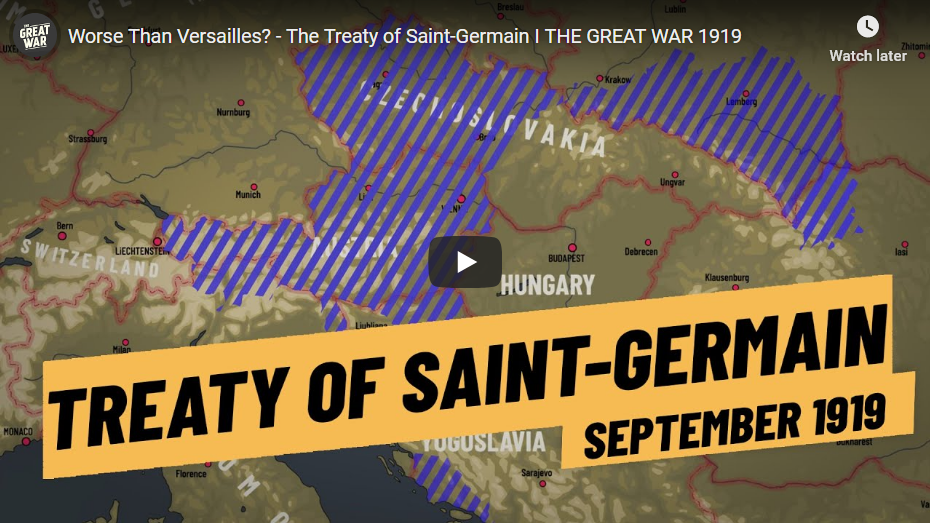
Worse Than Versailles? – The Treaty of Saint-Germain I THE GREAT WAR 1919

Filed under: Europe, History, WW1 — Tags: , , , , , , — Nicholas @ 04:00

The Great War
Published on 13 Sep 2019

Signup for your FREE trial to The Great Courses Plus here: http://ow.ly/F9LC30po9ux

The Great Courses Plus is currently available to watch through a web browser to almost anyone in the world and optimized for the US, UK, and Australian markets. The Great Courses Plus is currently working to both optimize the product globally and accept credit card payments globally.

The Treaty of Versailles between the Allies and Germany was only one of the peace treaties that followed the defeat of the Central Powers. The new Austrian republic, one of the countries that emerged from the collapse of the Austro-Hungarian Empire, also tried to get a favorable deal with the Allies in Paris in 1919. Like Versailles, the The Treaty of Saint-Germain caused an outcry across the country.

» SUPPORT THE CHANNEL
Patreon: https://www.patreon.com/thegreatwar
Merchandise: https://shop.spreadshirt.de/thegreatwar/

»CREDITS
Presented by: Jesse Alexander
Written by: Jesse Alexander
Director: Toni Steller & Florian Wittig
Director of Photography: Toni Steller
Sound: Toni Steller
Editing: Toni Steller
Mixing, Mastering & Sound Design: http://above-zero.com
Motion Design: Christian Graef – GRAEFX
Maps: Daniel Kogosov (https://www.patreon.com/Zalezsky)
Research by: Jesse Alexander
Fact checking: Florian Wittig

Channel Design: Alexander Clark
Original Logo: David van Stephold

A Mediakraft Networks Original Channel

Contains licensed material by getty images
All rights reserved – Real Time History GmbH 2019

July 5, 2019

“Far From The Fame” – Karel Janoušek – Sabaton History 022 [Official]

Filed under: Europe, History, Media, Military, WW1, WW2 — Tags: , , , — Nicholas @ 04:00

Sabaton History
Published on 4 Jul 2019

The life of Karel Janoušek is anything but ordinary. Throughout his live, he served in the militaries and air forces of multiple countries, but time and again he ends up fighting for his native Czechoslovakia. The Sabaton song “Far from the Fame” on the Heroes album describes his life, his adventures and his experiences.

Support Sabaton History on Patreon: https://www.patreon.com/sabatonhistory

Check out the trailer for Sabaton’s new album The Great War right here: https://www.youtube.com/watch?v=HCZP1…

Listen to Sabaton on Spotify: http://smarturl.it/SabatonSpotify
Official Sabaton Merchandise Shop: http://bit.ly/SabatonOfficialShop

Hosted by: Indy Neidell
Written by: Markus Linke and Indy Neidell
Directed by: Astrid Deinhard and Wieke Kapteijns
Produced by: Pär Sundström, Astrid Deinhard and Spartacus Olsson
Creative Producer: Joram Appel
Executive Producers: Pär Sundström, Joakim Broden, Tomas Sunmo, Indy Neidell, Astrid Deinhard, and Spartacus Olsson
Maps by: Eastory
Edited by: Iryna Dulka
Sound Editing by: Marek Kaminski

Eastory YouTube Channel: https://www.youtube.com/channel/UCEly…
Archive by: Reuters/Screenocean https://www.screenocean.com
Music by Sabaton.

Source:
Icon by Stephen Hutchings from iconfinder.com
IWM: 1034-4, Q 97835, Q 112704, Q 112720, D 1730, CH 15869, H 26244, CL 3333), D 10206

An OnLion Entertainment GmbH and Raging Beaver Publishing AB co-Production.

© Raging Beaver Publishing AB, 2019 – all rights reserved.

February 27, 2018

The Czechoslovak Legion’s Odyssey Through Russia I THE GREAT WAR Special

Filed under: Europe, History, Military, Railways, Russia, WW1 — Tags: , , , — Nicholas @ 04:00

The Great War
Published on 26 Feb 2018

The Czechoslovak Legion wanted to return home or continue the fight for independence even when peace on the Eastern Front was declared. But they needed to cross the whole of Civil War torn Russia for this.

« Newer PostsOlder Posts »

Powered by WordPress