National characteristics are not easy to pin down, and when pinned down they often turn out to be trivialities or seem to have no connection with one another. Spaniards are cruel to animals, Italians can do nothing without making a deafening noise, the Chinese are addicted to gambling. Obviously such things don’t matter in themselves. Nevertheless, nothing is causeless, and even the fact that Englishmen have bad teeth can tell something about the realities of English life.
Here are a couple of generalizations about England that would be accepted by almost all observers. One is that the English are not gifted artistically. They are not as musical as the Germans or Italians, painting and sculpture have never flourished in England as they have in France. Another is that, as Europeans go, the English are not intellectual. They have a horror of abstract thought, they feel no need for any philosophy or systematic “world-view”. Nor is this because they are “practical”, as they are so fond of claiming for themselves. One has only to look at their methods of town-planning and water-supply, their obstinate clinging to everything that is out of date and a nuisance, a spelling system that defies analysis, and a system of weights and measures that is intelligible only to the compilers of arithmetic books, to see how little they care about mere efficiency. But they have a certain power of acting without taking thought. Their world-famed hypocrisy – their double-faced attitude towards the Empire, for instance – is bound up with this. Also, in moments of supreme crisis the whole nation can suddenly draw together and act upon a species of instinct, really a code of conduct which is understood by almost everyone, though never formulated. The phrase that Hitler coined for the Germans, “a sleep-walking people”, would have been better applied to the English. Not that there is anything to be proud of in being called a sleep-walker.
George Orwell, “The Lion And The Unicorn: Socialism and the English Genius”, 1941-02-19.
October 20, 2021
QotD: The English
October 15, 2021
QotD: England and the English
When you come back to England from any foreign country, you have immediately the sensation of breathing a different air. Even in the first few minutes dozens of small things conspire to give you this feeling. The beer is bitterer, the coins are heavier, the grass is greener, the advertisements are more blatant. The crowds in the big towns, with their mild knobby faces, their bad teeth and gentle manners, are different from a European crowd. Then the vastness of England swallows you up, and you lose for a while your feeling that the whole nation has a single identifiable character. Are there really such things as nations? Are we not forty-six million individuals, all different? And the diversity of it, the chaos! The clatter of clogs in the Lancashire mill towns, the to-and-fro of the lorries on the Great North Road, the queues outside the Labour Exchanges, the rattle of pin-tables in the Soho pubs, the old maids hiking to Holy Communion through the mists of the autumn morning – all these are not only fragments, but characteristic fragments, of the English scene. How can one make a pattern out of this muddle?
But talk to foreigners, read foreign books or newspapers, and you are brought back to the same thought. Yes, there is something distinctive and recognizable in English civilization. It is a culture as individual as that of Spain. It is somehow bound up with solid breakfasts and gloomy Sundays, smoky towns and winding roads, green fields and red pillar-boxes. It has a flavour of its own. Moreover it is continuous, it stretches into the future and the past, there is something in it that persists, as in a living creature. What can the England of 1940 have in common with the England of 1840? But then, what have you in common with the child of five whose photograph your mother keeps on the mantelpiece? Nothing, except that you happen to be the same person.
And above all, it is your civilization, it is you. However much you hate it or laugh at it, you will never be happy away from it for any length of time. The suet puddings and the red pillar-boxes have entered into your soul. Good or evil, it is yours, you belong to it, and this side the grave you will never get away from the marks that it has given you.
Meanwhile England, together with the rest of the world, is changing. And like everything else it can change only in certain directions, which up to a point can be foreseen. That is not to say that the future is fixed, merely that certain alternatives are possible and others not. A seed may grow or not grow, but at any rate a turnip seed never grows into a parsnip. It is therefore of the deepest importance to try and determine what England is, before guessing what part England can play in the huge events that are happening.
George Orwell, “The Lion And The Unicorn: Socialism and the English Genius”, 1941-02-19.
October 11, 2021
City Minutes: The Athenian Empire
Overly Sarcastic Productions
Published 25 Jun 2021Deja Vu? Only slightly! I’m re-imaging City Minutes, and this time the plan is to *Actually Make It Good*! With MULTIPLE CITIES per episode, and HORIZONTAL VIDEO!
I heard your feedback on the first run of the shorts loud and clear — City Minutes Good, Shorts Bad — so this will be the format going forward: networks of cities, with each getting a minute of spotlight.
We’re starting where I always start, in ancient Athens (I wanted to give you the proper version of the pilot), but we’ve got tons of other City Minutes planned!
SOURCES & Further Reading: Thucydides History of the Peloponnesian War, World History Encyclopedia (https://www.worldhistory.org/Athens): “Athens”, “Piraeus”, “Sounion”, “Delos”, “Corcyra”, “The Delian League” parts 3 & 4, and my degree in Classical Studies
Cities by timestamp:
00:00 — Athens
1:00 — Piraeus
2:01 — Sounion
3:03 — Delos
4:05 — Mytilene
5:03 — Korkyra
6:03 — ConclusionOur content is intended for teenage audiences and up.
PATREON: https://www.Patreon.com/OSP
PODCAST: https://overlysarcasticpodcast.transi…
DISCORD: https://discord.gg/osp
MERCH LINKS: http://rdbl.co/osp
OUR WEBSITE: https://www.OverlySarcasticProductions.com
Find us on Twitter https://www.Twitter.com/OSPYouTube
Find us on Reddit https://www.Reddit.com/r/OSP/
From the comments:
Overly Sarcastic Productions
43 minutes ago
Fun linguistic shenanigans: The island of Korkyra (commonly spelled Corcyra when referring to the ancient city) is known today as both Kerkyra and Corfu. The name Corfu comes from an Italianized version of the Byzantine name Korufo.I use the pronunciation of “Korkyra” with an O because it reflects the more common version of the name as listed in ancient accounts — adherence to the original ancient version is also why I’m using Ks in place of any Latinized Cs.
Essentially: I’m spelling everything the ancient way, but using modern Greek phonetics to sound out those words. It’s an uncommon way to go about, but it feels like the right balance of ancient authenticity and modern linguistic continuity.
-B
October 9, 2021
October 7, 2021
Houses and Herms: Private Life in Classical Athens
Thersites the Historian
Published 6 Oct 2021In this video, I look private life in classical Athens with a focus on material culture.
Patreon link: https://www.patreon.com/thersites
PayPal link: paypal.me/thersites
Discord: https://discord.gg/QCaXXFr
Brave Browser: https://brave.com/noa557
Twitter link: https://twitter.com/ThersitesAthens
Minds.com link: https://www.minds.com/ThersitestheHis…
Steemit/dtube link: https://steemit.com/@thersites/feed
BitChute: https://www.bitchute.com/channel/jbyg…
October 6, 2021
Let’s Visit Finland (1935) – Helsinki Liinakhamari Lapland Arctic Ocean Highway
PeriscopeFilm
Published 2 Aug 2020Love our channel? Help us save and post more orphaned films! Support us on Patreon: https://www.patreon.com/PeriscopeFilm Even a really tiny contribution can make a difference.
This travelogue film shows Finland in the 1930’s. It was presented by Joseph Harris and Martin Ross. Finland is in northern Europe bordering Sweden, Norway and Russia. The capital city of Helsinki as well as the Arctic Ocean Highway running to the port of Liinakhamari which once touched the Arctic Ocean will be shown. It refers to Helsinki as Helsingfors which is the former Swedish name of the capital. The Arctic Ocean Highway was rerouted after WW2. Finland had long been a battleground due to the imperial ambitions and growing pains of Sweden and Russia. Finland was absorbed by the Russian Empire in 1807 (:32). A 1917 revolution overthrew the Czarist regime (:38). Due to wars and fires, few remnants existed of historical value in Helsinki (:47). Some of the old wooden houses have managed to remain (:53). Granite columns and entryways of the city point to early architects’ desire to use the country’s reserve of granite (1:14). Russian influence is exemplified in a Russian style church (1:35) and the cathedral of St. Nicholas (1:38). Architects sought to stray from the influences of foreign domination (1:45). The red granite railway station in the Market Square (1:59), the parliament building (2:05) and white factory buildings show no allegiance to former occupiers (2:08). A newly erected suburb consisting of flats constructed with reinforced steel (2:26) lay encircled by forests and lakes. Roads are lined with trees and intermittent flower beds (2:49). Helsinki harbor follows (2:59). Town parks and gardens were erected with artistic sculptures throughout showing Finland’s growing appreciation for the arts (3:22). The capital is also the terminus of the road leading northward for over a thousand miles to the port of Liinakhamari (3:34). A map is provided which still has USSR on it as this was before the fall of Soviet Russia (3:35). The port of Liinakhamari lay about 300 miles beyond the polar circle (3:43). The film follows this road which remains concrete for 20 miles after leaving the capitol (3:58). Land alongside had been cleared for agriculture (4:06). A farmer reaps hay with a scythe as modern farm machinery had not yet reached the area (4:34). A striking feature of the Finnish countryside are the impaled corn husks on wooden poles for drying (5:03). A double arched bridge of granite follows crossing one of the waterways along the route (5:09). A close up shot of the farm houses show they are crudely erected structures reminiscent of the middle ages (5:28). Corn fields dissipate and the countryside becomes hilly and wooded (6:03). Finland is known as the land of a thousand lakes, though it should be known as the land of 60,000 lakes (6:11). The route continues on for 300 miles until hitting another agricultural district (6:44) sprinkled with one-story windmills. It continues around the Gulf of Bothnia (6:54). The only important town along the way is Oluu where the Oulujoki River cuts the city into three (7:28). Uneven cobblestone roads (7:38) and wooden buildings with elaborate ornate facades. Rivers float timber out from the forests (8:18). Finland’s timber industry racks in 80 million pounds annually (8:28). The timber is sent to sawmills along the coast (9:35). Stacks along the road await trucks (9:40). A car heads to be taken across a river by ferry as bridges become less frequent (10:27). The pulley system is operated by the ferryman, his young daughter and by the passengers (10:45). The government auctioned the ferries to those who would operate them at the lowest cost (11:02). Further on, another farm area appears with small white wooden churches (11:33). Most of the water for homes are sourced by well (11:49). The road then re-enters the wilderness (12:03). A sign with “Arctic Circle” in four different languages (12:05) follows as the road crosses the imaginary line marking the Arctic circle. Cattle are wandering through the road (12:31), hay farms (13:08), and stacks of wood to heat the homes in the winter (13:24). A housewife washes her clothes using water from a brook (13:32). The road hits Lapland (13:54) and turns into a dirt road (14:01). Reindeer feed on the lichen in winter (15:05). A log hut has reindeer antlers placed on top (15:22). Laplanders with their colorful handcrafted headdresses and pointed toe tall boots (15:43). Vegetation becomes stunted while approaching the northern coastline (16:29). The film wraps up as the road reaches the deep-water port of Liinakhamari (16:40).
This film is part of the Periscope Film LLC archive, one of the largest historic military, transportation, and aviation stock footage collections in the USA. Entirely film backed, this material is available for licensing in 24p HD, 2k and 4k. For more information visit http://www.PeriscopeFilm.com
October 1, 2021
QotD: Raising your daughter to be “premium dating fodder”
Let’s start with the fact that apparently there are so many women getting “ghosted” (abandoned by men after brief romantic encounters) that they now constitute a demographic cohort big enough to be a presidential voting bloc.
Which is surprising, because for the last twenty years or so, American girls have been raised from birth to be premium dating fodder, primed from the first whiff of puberty to be Available for Sex on Saturday Night. So why are they being ghosted in droves? Abandoned and left to die alone, clutching their pets and Warren for President signs?
You’d think these girls would be experts at snagging a mate. Years of sex ed, birth control pills, and permission to date early and often with no judgement from the grownups should have guaranteed they’d have suitors dangling from their every finger, lines outside the door, dates every night, so many engagement rings shoved under their noses they’d be blinded by the shimmering sight of all those diamonds nestled against black velvet.
What happened?
Parenting: The New Sex Trafficking
Munchausen by proxy is a mental illness in which the mother (it’s almost always the mother) injures or sickens her own child on purpose for attention and sympathy. Grooming is a crime in which an adult nurtures a child over a long period of time to be open to receiving sexual advances.
American parenting is starting to resemble a terrifying combination of both.
How else to explain why girls are being turned out — groomed for extreme antisocial sexual behavior from a young age — not by pimps, but by their parents and teachers?
When it comes to sex ed, I believe in the screenwriting theory known as Chekhov’s gun: if you show a gun in the first act, it must be fired by the third. If you show kids the sex toys (and worse) in the first grade, the sex toys will be used by high school.
Recently, NPR published “What Your Teen Wishes You Knew About Sex Education”. In the article, we meet Electra McGrath-Skrzydlewski, who made a point of telling her fourth-grade daughter Lily, well, everything. “She was very open from the get-go, even before those were things that I needed to know about,” her daughter recounts.
Lily came out as pansexual at age 12.
At an institutional level, we are creating a cursed generation of females expert at every imaginable permutation of sex with an infinite number of partners, while largely shunning the other thing, the main thing, the only thing still emitting any heat in the cold, merciless hearth of contemporary life: the dream of forming a family.
Because the shocking truth is: No one wants to wife a sex expert.
Peachy Keenan, “Big Pimping: How American Parents Turn Their Daughters Out”, The American Mind, 2020-03-05.
September 20, 2021
QotD: English jingoism
In England all the boasting and flag-wagging, the “Rule Britannia” stuff, is done by small minorities. The patriotism of the common people is not vocal or even conscious. They do not retain among their historical memories the name of a single military victory. English literature, like other literatures, is full of battle-poems, but it is worth noticing that the ones that have won for themselves a kind of popularity are always a tale of disasters and retreats. There is no popular poem about Trafalgar or Waterloo, for instance. Sir John Moore’s army at Corunna, fighting a desperate rear-guard action before escaping overseas (just like Dunkirk!) has more appeal than a brilliant victory. The most stirring battle-poem in English is about a brigade of cavalry which charged in the wrong direction. And of the last war, the four names which have really engraved themselves on the popular memory are Mons, Ypres, Gallipoli and Passchendaele, every time a disaster. The names of the great battles that finally broke the German armies are simply unknown to the general public.
The reason why the English anti-militarism disgusts foreign observers is that it ignores the existence of the British Empire. It looks like sheer hypocrisy. After all, the English have absorbed a quarter of the earth and held on to it by means of a huge navy. How dare they then turn round and say that war is wicked?
It is quite true that the English are hypocritical about their Empire. In the working class this hypocrisy takes the form of not knowing that the Empire exists. But their dislike of standing armies is a perfectly sound instinct. A navy employs comparatively few people, and it is an external weapon which cannot affect home politics directly. Military dictatorships exist everywhere, but there is no such thing as a naval dictatorship. What English people of nearly all classes loathe from the bottom of their hearts is the swaggering officer type, the jingle of spurs and the crash of boots. Decades before Hitler was ever heard of, the word “Prussian” had much the same significance in England as “Nazi” has to-day. So deep does this feeling go that for a hundred years past the officers of the British Army, in peace-time, have always worn civilian clothes when off duty.
George Orwell, “The Lion And The Unicorn: Socialism and the English Genius”, 1941-02-19.
September 12, 2021
Small signs of positive change in the culture wars?
Andrew Sullivan is hopeful that the small signs he mentions here are not just straws in the wind, but the beginning of a real reaction against “the Successor Ideology” among the ultra-woke cultural elite:
… both The Atlantic and The New Yorker have just published long essays that push back against woke authoritarianism and cruelty. Since both magazines have long capitulated to rank illiberalism, this is encouraging. And since critical theory is an entirely elite-imposed orthodoxy, it matters when the ranks of the elite crack a little.
Anne Applebaum links the woke phenomenon to previous moral panics and mob persecutions, which is where it belongs. She too begins to notice the obliteration of due process, individual rights, and mercy among her crusader peers:
Even if you have not been suspended, punished, or found guilty of anything, you cannot function in your profession. If you are a professor, no one wants you as a teacher or mentor (“The graduate students made it obvious to me that I was a nonperson and could not possibly be tolerated”). You cannot publish in professional journals. You cannot quit your job, because no one else will hire you. If you are a journalist, then you might find that you cannot publish at all.
Applebaum’s Atlantic piece is a good sign from a magazine that hired and quickly purged a writer for wrong think, and once held a town meeting auto-da-fé to decide which writers they would permanently anathematize as moral lepers.
Similarly, it was quite a shock to read in The New Yorker a fair and empathetic profile of an academic geneticist, Kathryn Paige Harden, who acknowledges a role for genetics in social outcomes. It helps that Harden is, like Freddie DeBoer, on the left; and the piece is strewn with insinuations that other writers on genetics, like Charles Murray, deny that the environment plays a part in outcomes as well (when it is clear to anyone who can read that this is grotesquely untrue). But if the readers of The New Yorker need to be fed distortions about some on the right in order for them to consider the unavoidable emergence of “polygenic scores” for humans, with their vast political and ethical implications, then that’s a step forward.
The profile also puts the following woke heresy into the minds of the Upper West Side: “Building a commitment to egalitarianism on our genetic uniformity is building a house on sand.” And this: “Genetic diversity is mankind’s most precious resource, not a regrettable deviation from an ideal state of monotonous sameness.” The New Yorker is also telling its readers that there are around “thirteen hundred sites on the genome that are correlated with success in school. Though each might have an infinitesimally small statistical relationship with the outcome, together they can be summed to produce a score that has predictive validity: those in the group with the highest scores were approximately five times more likely to graduate from college than those with the lowest scores.”
All of this is empirically true. But if this is empirically true, critical theory, which insists that absolutely nothing but white supremacist society leads to inequalities, is dead in the water. Refuted. Proven false by reality. Finished — even as it continues to be the premise of other countless pieces The New Yorker has run in the past few years. At some point, this will require a measure of rethinking, a moderation of the left’s absolutist blank-slatism just as the evidence is finally disproving it once and for all. The Successor Ideology, remember, holds that genetics play no role in human society, and that all inequalities are a function of the environment. Take that absolute claim away — which is to say to subject it to empirical testing — and it crumbles. And The New Yorker just took it away.
And then, in the better-late-than-never category, The Economist, the bible for the corporate elite, has just come out unapologetically against the Successor Ideology, and in favor of liberalism. This matters, it seems to me, because among the most zealous of the new Puritans are the boards and HR departments of major corporations, which are dedicated right now to enforcing the largest intentional program of systemic race and sex discrimination in living memory. Money quote: “Progressives replace the liberal emphasis on tolerance and choice with a focus on compulsion and power. Classical liberals conceded that your freedom to swing your fist stops where my nose begins. Today’s progressives argue that your freedom to express your opinions stops where my feelings begin.”
The Economist also pinpoints the core tenets of CRT in language easy to understand: “a belief that any disparities between racial groups are evidence of structural racism; that the norms of free speech, individualism and universalism which pretend to be progressive are really camouflage for this discrimination; and that injustice will persist until systems of language and privilege are dismantled.” These “systems of language and privilege” are — surprise! — freedom of speech and economic liberty. If major corporations begin to understand that, they may reconsider their adoption of a half-baked racialized Marxism as good management. Maybe that might persuade Google not to mandate indoctrination in ideas such as the notion being silent on questions of race is “covert white supremacy”, a few notches below lynching.
September 11, 2021
QotD: Racism, anti-racism, and cognitive dissonance
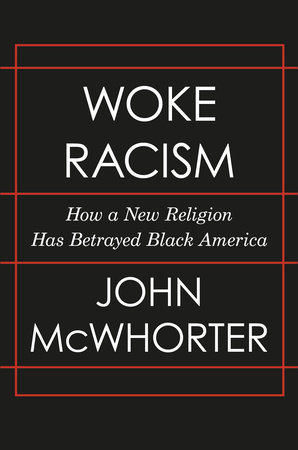
In a little while, our chattering classes are going to have a field day roasting Charles Murray over a spit for his next book, which will openly argue that it has been scientifically proven that black people are, on the average, not as cognitively nimble as other people. For about a month, the usual suspects will jostle for space condemning the very address of this subject as racism incarnate.
Okay – but any public discussion that both reviles the idea that black people are less intelligent than others while also lustily demanding that it’s “racist” to submit black people to cognitive challenges is hopelessly incoherent. We disparage rape culture, diet culture – this exemption culture is premised on a basic assumption that it’s unsavory to require serious challenge of black students Because Racism.
No. You don’t get past racism by creating new forms of it. Scrapping traditional challenges should only be on the table after black kids have mastered the challenge anyway. Zora Neale Hurston gets the final word:
It seems to me that if I say a whole system must be upset for me to win, I am saying that I cannot sit in the game, and that safer rules must be made to give me a chance. I repudiate that. If others are in there, deal me a hand and let me see what I can make of it, even though I know some in there are dealing from the bottom and cheating like hell in other ways.
The current “woke” consensus is that Hurston was wrong on this, that she was expecting too much. I would just love to see one of today’s Elect in a room with Hurston trying to tell her where she was going wrong.
John McWhorter, “Revisiting Classics at Princeton”, It Bears Mentioning, 2021-06-09.
August 30, 2021
A History of American Barbecue
The History Guy: History Deserves to Be Remembered
Published 29 Jun 2020Different cultures have been roasting meat over a fire since prehistory, but the practice took on special meaning in the United States. The History Guy remembers a brief history of American barbecue.
This is original content based on research by The History Guy. Images in the Public Domain are carefully selected and provide illustration. As very few images of the actual event are available in the Public Domain, images of similar objects and events are used for illustration.
You can purchase the bow tie worn in this episode at The Tie Bar:
https://www.thetiebar.com/?utm_campai…All events are portrayed in historical context and for educational purposes. No images or content are primarily intended to shock and disgust. Those who do not learn from history are doomed to repeat it. Non censuram.
Find The History Guy at:
Patreon: https://www.patreon.com/TheHistoryGuy
Join the History Guy for history trivia at https://www.quizando.com/TheHistoryGuyThe History Guy: History Deserves to Be Remembered is the place to find short snippets of forgotten history from five to fifteen minutes long. If you like history too, this is the channel for you.
Awesome The History Guy merchandise is available at:
teespring.com/stores/the-history-guyScript by THG
#ushistory #thehistoryguy #foodhistory
August 13, 2021
August 5, 2021
Sarah Hoyt on “scientific government”
In the latest Libertarian Enterprise (which came out a few days ago, but I’ve been very busy), Sarah Hoyt outlines the genesis of the push for “scientific government” to save us all from ourselves and set right all the ills of the world:
Look, guys, since the middle of the 19th century, the idea of “scientific government” has been running around with pants on its head screaming insults at passerbys.
I like to say we’re still suffering from the consequences of WWI, but things were if not terminal very ill before then. Kings and emperors and Lord knows what else had got the idea of “science” and “permanent progress” stuck in their pin-like heads, which frankly couldn’t retain much more than the correct fork. And there were pet “scientists” and philosophers (the distinction was sometimes arguable. I mean, after all while doing experiments on electricity the 18th century was also fascinated with astral projection and other such things, and made no distinction. And the 19th was not much better.)
By the 20th century with mechanics and the Industrial Revolution paying a dividend in lives saved and prosperity created, these men of “science” were sure that it was only a matter of time till humanity and its reactions, thoughts and governance were similarly under control. And in the twentieth they expected us to become like unto angels.
Now, is there science that saved lives and created the wealthiest society every in the 20th century. DUH. Who the hell is arguing it. Oh, wait, there’s an entire cohort of people denying it. Not so many in the US — I think it’s hard to tell the real thing from foreign idiots posing. But in any case a minuscule contingent — but in France I know there’s a ton of them. They’re running with the bit in their teeth against rationality (I swear to bog) and thought and science. And trying to rebuild the religion of the middle ages. I read them and shake my head.
You see, you have to separate rationality and science from what the government and experts TELL you is rationality and science.
Yes, I know that France built a “Temple to Reason” and you know what? That by itself tells you their revolution was self-copulating and not right in the head. But you don’t need to go that far. Anyone who says they’re “for science” and want equality of results among disparate humans is not reasonable. Or reasoning. Or rational. They are however for sure completely and frackingly insane.
But I do understand the temptation, because so much of what’s being sold as “science” in the schools is not science but the worn out dogmas of people too stupid to know science if it bit them in the fleshy part of the buttocks.
I mean, never mind 2020. Which … you know? Remember how the flu vanished? Turns out the rat bastards were using a test that diagnosed flu as COVID. No, seriously. Malice or stupidity? I don’t know. And neither do you. Probably yes in most cases, though a lot of people have a ton of “learned stupidity”.
Even before 2020 a lot of our ideas on how things worked were lies, particularly those that hinged on or supported the leftist ideas of human kind. Things like Zimbardo’s (Is he dead yet? I need to know when to mark myself safe from being kidnapped by Zimbardo for crazy experiments. No, he really did that.) prisoner experiments; or the rat habitat experiments that supposedly showed that overpopulation had all sorts of bad effects, and therefore we should stop having kids. Turns out those effects are from the loss of social role. Which honestly, anyone who has looked at a conquered country could tell them. Of course, anyone who had looked at mice would also know they’re not humans, but never mind that. […] In fact, practically everything we think we know about psychology or sociology is likely to be a load of crap, if not outright faked.
And history, which is not really a science. Oh. Dear. Lord. Like, you know, the early form of internationalism, with international supply chains and empires caused WWI and … nationalism was blamed for it. Makes perfect sense … in hell.
In fact all this “science” stuff needs to be judged on one thing only: Does it make human lives better/save them? Or is it the astral projection of economics, sociology and psychology? By their fruits, etc.
August 3, 2021
QotD: Robert Heinlein predicted the 2020s amazingly well in 1959
[High school Moral Philosophy teacher and retired Mobile Infantry Colonel Jean DuBois lecturing his class on juvenile delinquents and the permissive society that helped create them:]
“[These] unfortunate juvenile criminals were born with none, even as you and I, and they had no chance to acquire any; their experiences did not permit it. What is ‘moral sense’? It is an elaboration of the human instinct to survive. The instinct to survive is human nature itself, and every aspect of our personalities derives from it. Anything that conflicts with the survival instinct acts sooner or later to eliminate the individual and thereby fails to show up in future generations.
“But the instinct to survive can be cultivated into motivations more subtle and much more complex than the blind, brute urge of the individual to stay alive. [What one] miscalled ‘moral instinct’ was the instilling in you by your elders of the truth that survival can have stronger imperatives than that of your own personal survival. Survival of your family, for example. Of your children … of your nation. And so on up.
“[These] juvenile criminals hit a low level. Born with only the instinct for survival, the highest morality they achieved was a shaky loyalty to a peer group, a street gang. But the do-gooders attempted to ‘appeal to their better natures’, to ‘reach them’, to ‘spark their moral sense’. They had no ‘better natures’; experience taught them that what they were doing was the way to survive. The puppy never got his spanking; therefore what he did with pleasure and success must be ‘moral’.
“The basis of all morality is duty, a concept with the same relation to group that self-interest has to individual. Nobody preached duty to these kids in a way they could understand — that is, with a spanking. But the society they were in told them endlessly about their ‘rights.'”
Robert A. Heinlein, Starship Troopers, 1959, quoted by Dave Huber in “Libertarian sci-fi author predicted current progressive-induced cultural failures over 60 years ago”, The College Fix, 2021-04-03.