
That may explain the extraordinary amount of sucking up to Canada in this movie [Bowling for Columbine], which, while gratifying to insecure Canucks and self-loathing Americans, may be of less interest to third parties. Moore’s thesis, such as it is, is that America’s murder rate is the consequence not just of the country’s love of guns but of deeper currents of paranoia and fear in the American psyche. To that end, he crosses the Michigan border into Ontario, where one Canadian after another tells him that they don’t lock their doors. The level of guns per capita in Canada is similar to America but the murder rate is much, much lower. Ergo, it must be because Americans are living in fear while Canadians are much more socially progressive.
Whatever, dude. Unlike Moore, I have homes on both sides of the border and it’s the Quebec one I keep locked. By the time you read this, I’ll be in New York, but my home in New Hampshire will be unlocked, and so will my car at the airport, the key in the ignition, so I’ll know where to find it. By contrast, in Quebec it’s illegal to leave your car unlocked, even if you stop for a pee on an ice floe up by Hudson’s Bay. Pace Moore, Canada has vastly lower rates of handgun ownership. Long-gun ownership is much closer, but, statistically, Canadians are slightly more murderous than Americans in this sphere: in the US, there are 1.7 homicides per 100,000 long guns; in Canada, it’s 1.9. So European visitors to North America should be aware they’re more likely to be killed by a homicidal Canadian rifleman than an American one.
On the overall murder rate, if Moore’s interested in “cultural differences”, it seems odd that he should avoid the most obvious one. Alberta Report‘s Colby Cosh, a braver man than I, points out that black Americans are 13 per cent of the US population but commit over half the murders. Once you factor those out, non-black Americans murder at about the same rate as Canadians.
Mark Steyn, “Bowling for Columbine”, Steyn Online, 2002-11-30.
July 20, 2024
QotD: Comparing gun crime in Canada and the United States
July 13, 2024
“Canada has disclosure issues”
The recent revelations about Nobel Prize winner Alice Munro’s family have certainly roiled the turgid waters of Canada’s tiny literati community, but was the scandal actually all that well hidden beforehand?

Alice Munro accepting the 2006 Edward MacDowell Medal, 13 August 2006.
Screenshot from a video of the event via Wikimedia Commons.
The Toronto Star ran two articles last weekend revealing that Andrea Skinner, third and youngest daughter of Nobel-prize-winning author Alice Munro, was sexually assaulted as a nine-year-old by her stepfather, Gerald Fremlin, Alice’s second husband.
The assaults occurred in the 1970s. Alice learned of them in 1992 when Andrea, then twenty-five, wrote her a letter detailing the abuse. After briefly leaving Fremlin, Alice returned to him. Andrea, feeling her mother had chosen her abuser over her, eventually cut ties with Alice and went to the police. Fremlin was convicted of indecent assault in 2005.
I’m not going to dwell on the abuse. It’s all here, and it’s distressing to read. One can only hope that recognition of what she suffered as a child and the pain she’s carried throughout her life brings some solace to Andrea.
I wish that had been my first reaction to the stories, but I was too long a journalist. My first thought was sordid. Good on the Star for getting the scoop.
My second thought was, how was this not reported earlier? It’s obviously a big story, and it all played out in open court. It’s surprising that it didn’t make headlines.
In yesterday’s Star, the always interesting Stephen Marche put the blame on “a specifically Canadian conspiracy of silence” amounting to “a national pathology”. He recalls that CBC radio star Peter Gzowski’s dirty laundry wasn’t aired until he’d passed; that CBC radio star Jian Ghomeshi’s outrageous behavior was not immediately called out; that author Joseph Boyden and singer Buffy Sainte-Marie both passed as Indigenous for a long time (Boyden does, in fact, have Indigenous blood). “Everybody knew but nobody knew,” Marche writes of each of these cases, adding that the Canadian arts and entertainment community “has been a breeding ground for monsters”.
I think Stephen has a low bar for monstrosity, but I am susceptible to his broader argument. Part of the reason I was happy that the Star got the scoop (and sincere congratulations to editor Deborah Dundas and reporter Betsy Powell on landing it) was that we sometimes first read of our biggest scandals in the international press. Toronto mayor Rob Ford’s crack scandal was revealed by Gawker, Justin Trudeau’s blackface habit by Time. Canada has disclosure issues.
The more I think about those issues, however, the less it seems we’re alone with them. How long did it take Harvey Weinstein’s crimes to make headlines? Bill Cosby’s? The US has had its share of long-running identity hoaxes: Elizabeth Warren, Hilaria Baldwin, Rachel Dolezal, and Jessica Krug. We didn’t learn that Kerouac was a thug and Salinger a creep until after they were gone. And it’s especially hard to sustain Marche’s argument that Canada is an outlier when the White House has been playing Weekend at Bernie’s for the last couple of years.
Certain stories are just slow to break. People keep secrets. Others abet them. Not many journalists frequent courtrooms way out there in Goderich, Ontario, and Fremlin’s name on the docket would not have sent off flares. Most people I’ve spoken to this week couldn’t have named Mr. Alice Munro last week.
There was no conspiracy, or at least not a broad one. I’m confident that any newsroom I was a part of would have run with the Munro story had we caught a whiff of Fremlin’s conviction. It’s not impossible to imagine other newsrooms making different editorial choices, perhaps arguing that Fremlin’s assaults didn’t merit coverage: he was a nobody apart from his association with Alice Munro; the offence was minor in a criminal sense (he served no time); Alice was not a party to the assaults; publishing the story would only serve to smear her by association. But I’ve not seen any evidence that any news outlet had a whiff of this story.
Only a small circle of people knew of Fremlin’s crime, most of them in the Munro family, and they weren’t talking. I contacted a few of the best Canadian literary gossips I know and they had heard nothing until last weekend. It’s not true that “everybody knew”.
Two who did know were Alice’s publisher, Douglas Gibson, and her biographer, Robert Thacker.
Did you blink and miss Gender Empathy Gap Day?
Don’t worry, unlike so, so many other formal days (or months, or seasons …) in the calendar devoted to this or that or the other real and imagined causes, celebrations, or acknowledgements, Gender Empathy Gap Day isn’t observed anywhere:
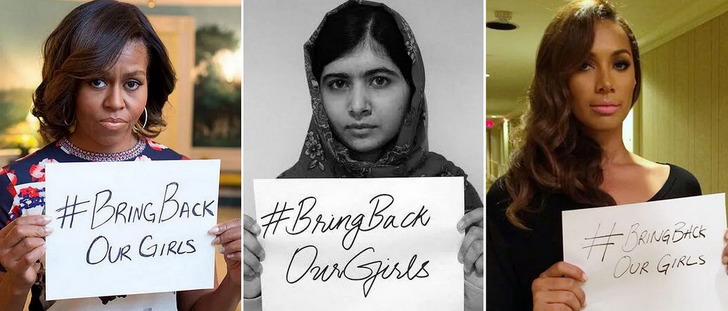
Remember these examples of virtue signalling? Can you imagine them doing the same for boys or young men?
Image from The Fiamengo File.
Few people have heard of Gender Empathy Gap Day, a day inaugurated in Germany in 2018 to raise awareness about our societies’ remarkable indifference to the suffering of men and boys. Not surprisingly, it has no official status in any country.
Most people, if asked, will insist that it is women and girls who suffer. We expect men and boys to apologize for their advantages and educate themselves about issues affecting women and girls. Animus against men is socially acceptable, even approved. “I bathe in male tears” is a popular feminist slogan, and university professors write mainstream opinion pieces with unironic titles like “Why Can’t We Hate Men?”
The Gender Empathy Gap Day doesn’t advocate a contest over which sex has it worse. It does advocate recognition of our collective inability or unwillingness to see the full humanity of men.
Academic researchers Alice Eagly and Antonio Mladinic have compiled data showing that both females and males tend to have more positive associations with women than with men. Researchers have also confirmed a much higher in-group bias amongst women, meaning that women feel more empathy towards other women than towards men, while men also feel more empathy for women.
Whether it’s homelessness (61% male), homicide (78% male victims), suicide (79% male), workplace fatalities (93% male), prison incarceration (93% male), or a host of other issues, men and boys do suffer. Yet according to the research of Dr. Tania Reynolds, we tend to associate agency with maleness and the capacity for victimhood with femaleness, seeing men and boys as active doers rather than as sufferers deserving concern.
As a result, we are tolerant of harsh punishments for male criminal offenders, but not for women. In 2012, Sonja Starr, a professor of Law, published the results of her study of discrepancies in criminal sentencing that showed a very large gender gap in the punishment of women for the same crimes committed by men. Starr’s extensive study found an average 63% sentencing gap that harshly disadvantaged men. She also discovered that “Female arrestees are […] significantly likelier to avoid charges and convictions entirely, and twice as likely to avoid incarceration if convicted”.
The gap in punishment results because we all — including prosecutors, judges, and juries — incline to the belief that women who commit crimes were led into their law-breaking by others, usually men, and had limited choices because of poverty, childhood abuse, mental illness, or addiction. We hesitate to deprive young children of the care of their mothers, while we are content to see fathers behind bars. As Starr points out, however, male offenders have also “suffered serious hardships, have mental health or addiction issues, have minor children, and/or have ‘followed’ others onto a criminal path”.
Author Glen Poole has noted that such indifference to male difficulties is built right into the stories our society tells about itself. He points out that when a large number of men are killed — whether in war, accident, or natural disaster — mainstream news sources report on people killed, making the sex of the victims invisible. It is not news when men and boys die.
When women or girls are killed or harmed, they are rarely if ever referred to as people. Their suffering is news.
July 12, 2024
The British prison system is over-capacity, and Starmer’s new government has a plan
As Ed West points out, the new Labour government’s plan is to move in a different direction than most Britons were hoping:
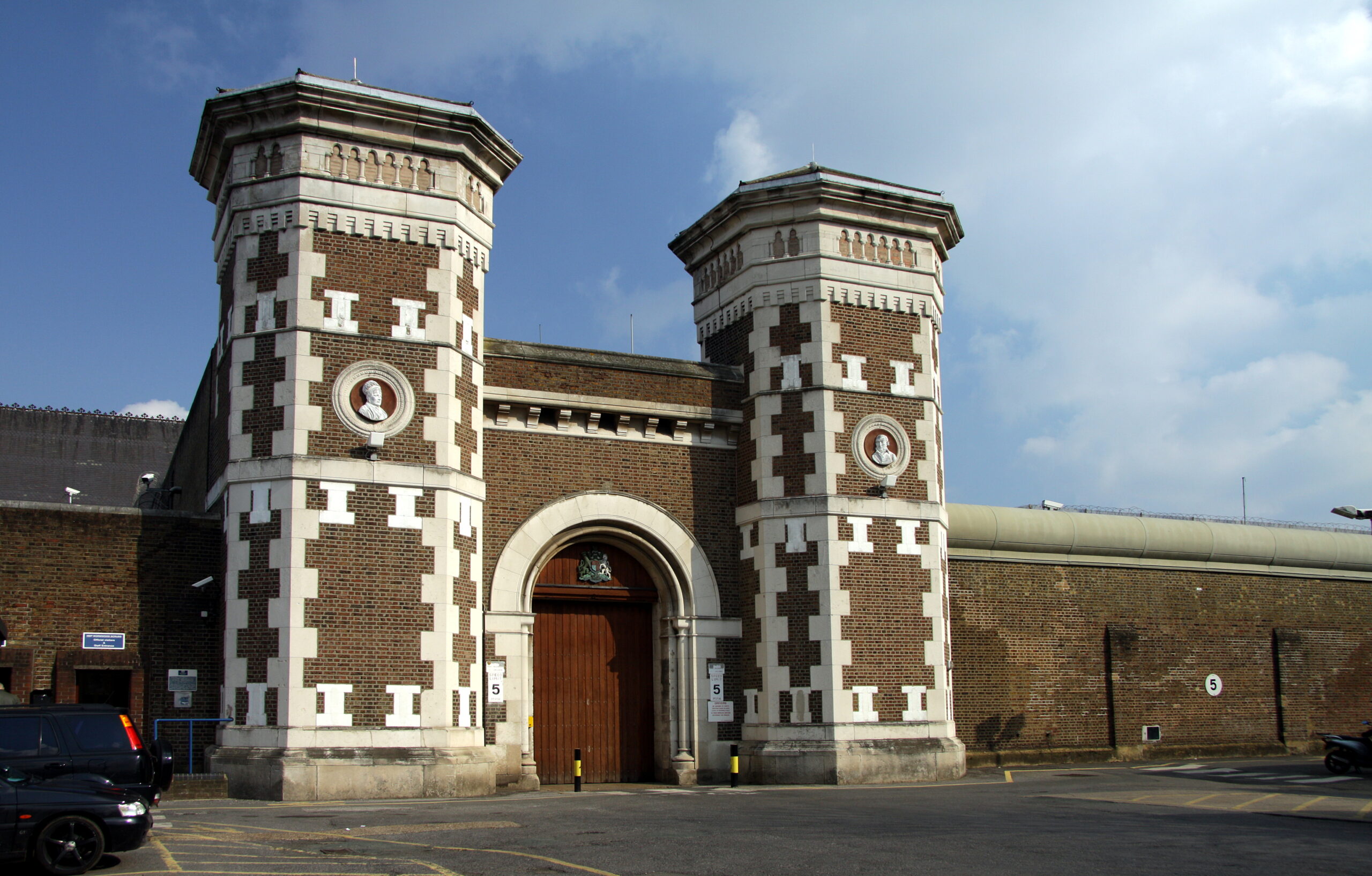
“Main gate to the HM Prison Wormwood Scrubs in spring 2013” by Chmee2 is licensed under CC BY-SA 3.0 

 .
.
Britain’s prisons are desperately overcrowded and morale among staff at an all-time low, following years of underfunding by the Conservative government and the inability of the state to build new jails against local opposition.
Now the incoming prime minister says that we have too many prisoners, while new prison minister James Timpson believes the British justice system is “addicted to punishment”, stating that only a third of inmates should be in jail.
The justice secretary, meanwhile, is considering “lowering the automatic release point for prisoners to less than 50 per cent through their sentence”. While currently prisoners serve half their sentences, or two-thirds for some sexual, violent or terror-related offences, the government plans to push the automatic release point to 40 per cent of their terms for those serving less than 4 years, benefitting 40,000 inmates — but not necessarily benefitting the rest of us.
This would be a very unwise move. The majority of prisoners are inside for sexual or other violent crimes, and even restricting early releases to those serving under four years would set free some very dangerous individuals, while previous amnesties of this type have led to huge increases in crime.
The idea that Britain “is addicted to punishment” jars with the sentences regularly handed out even for the most horrendous crimes, and the way that incorrigible criminals are allowed to offend again. This is the subject of a Twitter thread which I began six years ago, in order to highlight how the common belief in the punitive state was mistaken.
As an illustration, and bear in mind that their “sentences” are often twice what they actually served, here are a few cases:
A man who killed his wife in 1981, who was released after a few years and went on to strangle a girlfriend 12 years later, was subsequently freed — and ended up killing a third woman.
There was serial rapist Milton Brown, who was sentenced to 21 years for raping three women – one of whom took her own life – and was released early, only to rape again.
Or Joshua Carney, 28, freed on licence from prison and who just five days later brutally raped a mother and her 14-year-old daughter. He was allowed out despite 47 previous convictions, and now having been convicted of “13 charges including rape, attempted rape, actual bodily harm and theft” he is still eligible for parole in 10 years. Doesn’t sound like a country addicted to punishment.
There was John Harding, who treated a woman “like a rag-doll” when he beat and threatened to kill her after she told him she didn’t want a relationship. Despite terrorising his victim, including wrapping a sheet around her neck, and being in breach of a 30-month community order for a number of offences, including assault and threatening to kill another woman, and having other convictions for theft and criminal damage, he received a sentence of 21 months. As a result, in 2023, Harding was free to rape two women. Now convicted of rape, actual bodily harm, false imprisonment, strangulation and threats to kill, his sentence of 15 years means he could be out in 10.
If you believe that criminals only behave that way because of “systemic racism” or “poverty” or some other form of impersonal forces, you’ll likely also believe that punishment therefore serves no useful purpose and be in favour of all sorts of alternatives. At least until you or someone close to you is a victim of violent crime …
July 10, 2024
The four horsemen of cultural collapse
Chris Bray provides yet more examples of cultural decay and the collapse of law and order in America’s Trudeaupia, California under the loving care of Justin Trudeau’s spiritual twin, Gavin Newsom:

Today tells you about next year.
In a long history of murder in America, the historian Randolph Roth argued that violence follows other losses of trust and order. The murder rate surges in the face of “four distinct phenomena: political instability; a loss of government legitimacy; a loss of fellow-feeling among members of society caused by racial, religious, or political antagonism; and a loss of faith in the social hierarchy”.
Read that list carefully, because it should sound familiar.
Similarly, the originators of the theory of “broken windows policing” argued that peace and order grow from peace and order; neighborhoods are more likely to be calm when they’re “places where people are confident they can regulate public behavior by informal controls”. Crime follows crime; vandalism, for example, “can occur anywhere once communal barriers — the sense of mutual regard and the obligations of civility — are lowered by actions that seem to signal that ‘no one cares'”. The police commissioner William Bratton famously reduced all categories of crime in New York City subways by assigning officers to arrest turnstile jumpers who entered the system without paying. He sent a signal at the front gates.
“Broken windows” is a much-criticized theory: “He contended that the very notion of ‘disorder’ is subjective and racially fraught”. But the criticisms tend to reduce the complexity of the theory in order to “debunk” it.
Decay communicates. Disorder is a message.
July 5, 2024
QotD: South Africa after Apartheid
Speaking with hindsight, however, it would be charitable to suggest […] that apartheid was “simply a logical adaptation to the presence of a population that simply cannot support or sustain a First World standard of living, done by people who very much valued the First World society they had created”. While that statement is undoubtedly true, up to a point, and it could be argued that apartheid was a pragmatic solution to the chaos evident throughout the rest of Africa, it cannot be used as an excuse. Indeed, such a labeling would give, and has given rise to the notion that First World systems are inherently unjust, and a different label “colonialism” — which would include apartheid — can be applied to the entirety of Western Civilization.
The fact of the matter is that when it comes to Africa, there is no good way. First World — i.e. Western European — principles only work in a socio-political milieu in which principles such as the rule of law, free trade, non-violent transfer of political power and the Enlightenment are both understood and respected. They aren’t, anywhere in Africa, except where such adherence can be worked to temporary local advantage. Remember, in the African mindset there is no long-term thinking or consideration of consequence — which is why, for example, since White government (not just South African) has disappeared in Africa, the infrastructure continues to crumble and fail because of a systemic and one might say almost genetic indifference to its maintenance. When a government is faced with a population of which 90% is living in dire poverty and in imminent danger of starvation, that government must try to address that first, or face the prospect of violent revolution. It’s not an excusable policy, but it is understandable.
That said, there is no gain in rethinking apartheid’s malevolence […] because apartheid was never going to last anyway, and its malevolence was bound to engender a similar counter-malevolence once it disappeared. Which is the main point to my thinking on Africa: nothing works. Africa is simply a train-smash continent, where good intentions come to nought, where successful systems and ideas fail eventually, and where unsuccessful systems (e.g. Marxism) also fail, just fail more quickly.
Kim du Toit, “Tough Question, Simple Answer”, Splendid Isolation, 2019-12-05.
June 25, 2024
QotD: Progress and decline
So progress must have occurred in the intervening time, despite the pessimism that infects those who, like me, are of retrospective temperament and hypersensitive to deterioration. It is not hard to enumerate many things that have improved. They relate principally, but not only, to material conditions. My best friend when I was very young was one of the last children in Britain to suffer from polio, which paralyzed him from the waist down. The quickest form of written communication was then the telegram, and anything other than local telephone calls had to go through an operator. To call across the Atlantic required a reservation and was ferociously expensive; the resultant conversation always seemed to take place during a violent storm. In England, the food was generally disgusting, and meals were to be endured as a regrettable necessity instead of enjoyed (it puzzles me still how people could have cooked so badly). Cars broke down frequently, and every November, pollution produced fogs so thick that you couldn’t see the hand in front of your face (I loved them). Rationing continued for eight years after the war, and disused bomb shelters, present in every park, were where illicit sexual fumbles and smoking took place. Incidentally, for an adult male not to smoke was unusual (75 percent did so); we must have lived in a perpetual fog of foul-smelling tobacco, to judge by the distaste caused by even a single lit cigarette in these virtuous times. Poverty, as raw necessity, still existed. Murderers were sometimes hanged — as well as, more rarely, the innocent. Overt racial prejudice was, if not quite the norm, certainly prevalent.
Yet not everything has improved, though the deterioration has been less tangible than the progress. To give one example: by age 11, I was free to roam London, or at least its better areas, by myself or with a friend of the same age. The sight of an 11-year-old child wandering the city on his own did not suggest to anyone that he was neglected or abused. I remember, too, the evening papers piled up at newsstands; people would throw coins on top of the pile and take their copy. It never occurred to anyone that the money might get stolen; nowadays, it would never occur to anyone that the money would not be stolen. The crime statistics bear out this sea change in national character.
Theodore Dalrymple, “What Seventy Years Have Wrought”, New English Review, 2019-10-26.
June 24, 2024
June 14, 2024
Britain’s anti-gay hate crime epidemic
Andrew Doyle suggests you take the recent reports of burgeoning hate crime in Britain with a fair bit of salt, because the hate crime statistics are far from trustworthy:
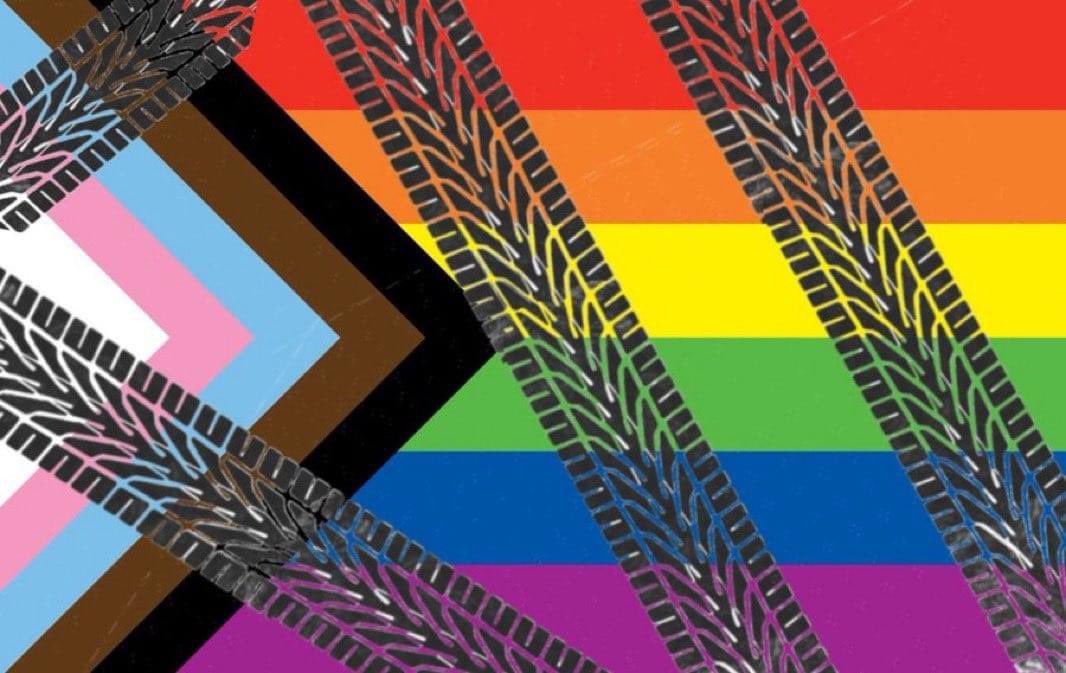
When things like this can be reported as “hate crimes”, and the definition depends on the reporter’s assumption of hateful intent, you’re going to see a lot more “hate crimes”.
We all know by now that the Metro is an activist publication masquerading as a newspaper. And so we ought to approach with some caution its article this week claiming that the UK has seen a surge in hate crime against gay people. There’s even a handy rainbow-coloured map which pinpoints the most homophobic locations in the country. Thankfully St Ives isn’t on the list, so I won’t have to cancel my holiday.
What are we to make of the article’s claim that there has been a 462% increase in homophobic hate crime and a 1,426% increase in transphobic hate crime since 2012? The source for these remarkable figures is the House of Commons Hate Crime Statistics report. If true, it would seem to confirm activists’ claims that we are living in an anti-LGBTQIA+ hellhole.
The truth is not so melodramatic. The supposed escalation of hate crimes in the UK can be accounted for by the way in which they are now recorded. Police actively trawl for complaints, inviting citizens to report offensive comments or any action – criminal or otherwise – that the “victim” perceives to have been motivated by prejudice. No evidence of “hate” is required for it to be recorded as such, other than the assumption of the complainant. With such methodology in place, it is inevitable that the statistics will rise.
And perhaps that’s the whole point. The police in the UK are just one of the many major institutions that has been captured by intersectional ideology. Police are regularly seen dancing at Pride parades, driving rainbow-coloured cars, and harassing gender-critical women for wrongthink. In February 2021 in Merseyside – a county that tops the Metro‘s list of homophobic hate spots – police were photographed next to a digital advertisement which read “Being offensive is an offence”. This belief-system can only be sustained by the narrative of widespread hate, and so we should not be surprised to see that police practice has been modified to ensure this outcome.
In fact, the College of Policing had made it clear that a fall in hate crime statistics would not be acceptable. Its operational guidance says that “targets that see success as reducing hate crime are not appropriate”. And by the Home Office’s own admission, “increases in police-recorded hate crime in recent years have been driven by improvements in crime recording and a better identification of what constitutes a hate crime”. In other words, there is no hate crime epidemic at all. It’s simply that the definitions have expanded.
Rather than rely on the Home Office statistics, we would be better turning to a source that hasn’t been corrupted by ideology. The Crime Survey for England and Wales hasn’t adopted the new police methods of recording, and shows that hate crime has been consistently dropping. Between 2008 and 2020, the number of hate crimes fell by 38%, and all the while records of hate crime kept by the police kept on rising. The disparity between the reality and the narrative couldn’t be more stark.
May 28, 2024
QotD: Women’s voting interests
“I have to vote Conservative, for his sake,” she reasonably explained.
She had compounded his characteristic error in 1968, however, and felt she owed an explanation to her son. This began by reminding me of her fragile, female sex.
“One thinks of the party leader on the analogy of going for a date.”
And true enough, the Tory leader, Mr Robert Stanfield, was the sort of man you could present to your father. He could be relied on, to get you home safely, and on time.
“But there are times when a woman does not want to get home on time,” mama added.
She, a registered nurse acquainted with the eccentricities of mental patients, called my attention to a phenomenon I had not previously noticed. Whenever a truly monstrous (male) psychopath is strapped away in gaol, the prison receives adoring letters for him, from women. These correspondents have never met him, and know him only from accounts in the yellow press. He may have been found guilty of heinously murdering a succession of wives and lovers. But they promise to be waiting for him on the steps of the penitentiary; and as the police will confirm, they are still there.
My mother had never comprehended how a woman could be so crazy. But when she realized that she had herself just voted for “Pierre” [that’s Trudeau the elder, to clarify], she suddenly understood.
David Warren, “The women’s vote”, Essays in Idleness, 2024-02-22.
May 19, 2024
QotD: Taxation and theft
An analogy: your house and your neighbour’s house are both burgled. You lose a television. He loses a DVD player, microwave, his collection of Chomsky memorabilia (it’s an inner-city house), and a unique framed Leunig depicting Mr Curly’s pedophilia arrest. Would it be unfair if police were to return all of this fellow’s belongings, and you were only to get back your 24-inch Sony?
Tim Blair, “Simplistic right-wing greed justification attempted”, Road to Surfdom, 2005-05-12.
[H/T to Samizdata, both for the link and for their title on the post, which I’ve purloined.]
May 6, 2024
QotD: Confident cultures … unlike our modern one
Only in the modern period do we feel we need black-letter law for everything. And once we’ve got formal law, of course, the very next thing we do is start carving out penumbras and emanations, because we are so far from a self-confident culture that we must constantly prove to ourselves what clever, clever boys we are …
Severian, “Barely Legal”, Rotten Chestnuts, 2021-06-21.
April 24, 2024
Australia cribs from Trudeau’s notes and tries to censor the internet outside their borders
Tim Worstall explains to the Australian federal government why their attempt to force Elon Musk to obey Australian diktats on Twit-, er, I mean “X” outside Australia is extreme over-reach and should be firmly rejected:
It’s entirely true that Elon Musk is a centibillionaire currently telling the Australian Government that they can fuck off. It’s also true that if Elon Musk were of my level of wealth — or perhaps above it and into positive territory — he should be telling the Australian Government to fuck off.
This also applies to the European Union and that idiocy called the right to be forgotten which they’ve been plaguing Google with. Also to any other such attempts at extraterritoriality. Governments do indeed get to govern the places they’re governments of. They do not get to rule everyone else — the correct response to attempts to do so is fuck off.
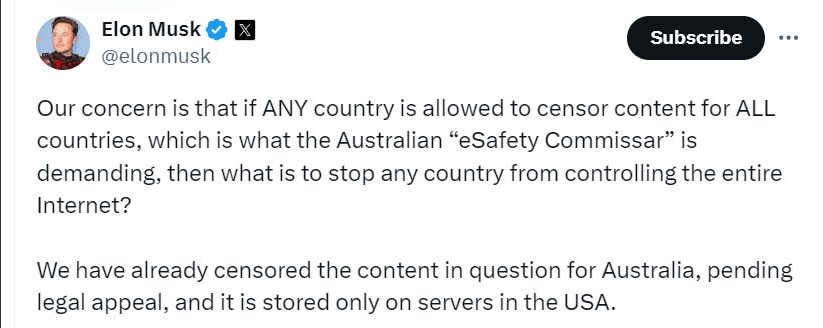
So, Musk is right here:
What this is about doesn’t really matter. But, v quickly, that attack on the Armenian Church bishop is online. It’s also, obviously, highly violent stuff. You’re not allowed to show highly violent stuff in Oz, so the Oz government insist it be taken down. Fair enough – they’re the government of that place. But they are then demanding further:
On Monday evening in an urgent last-minute federal court hearing, the court ordered a two-day injunction against X to hide posts globally….
Oz is demanding that the imagery be scrubbed from the world, not just that part of it subject to the government of Oz. Leading to:
Australia’s prime minister has labelled X’s owner, Elon Musk, an “arrogant billionaire who thinks he is above the law”
And
Anthony Albanese on Tuesday said Musk was “a bloke who’s chosen ego and showing violence over common sense”.
“Australians will shake their head when they think that this billionaire is prepared to go to court fighting for the right to sow division and to show violent videos,” he told Sky News. “He is in social media, but he has a social responsibility in order to have that social licence.”
To which the correct response is that “Fuck off”.
For example, I am a British citizen (and would also be an Irish one if that country ever managed to get up to speed on processing foreign birth certificates) and live within the EU. Australian law has no power over me — great great granny emigrated from Oz having experienced the place after all. It’s entirely sensible that I be governed by whatever fraction of EU law I submit to, there are aspects of British law I am subject to as well (not that I have any intention of shagging young birds — or likelihood — these days but how young they can be is determined not just by the local age of consent but also by British law, even obeying the local age where I am could still be an offence in British law). But Australian law? Well, you know, fu.. … .
April 19, 2024
Yet another unintended consequence of the Online Harms Act – easier deportation of non-citizens
In The Line, Kevin Wiener explains another of the hidden “gems” of the Trudeau government’s ill-considered and repressive Online Harms Act that at least will please a few anti-immigration activists:
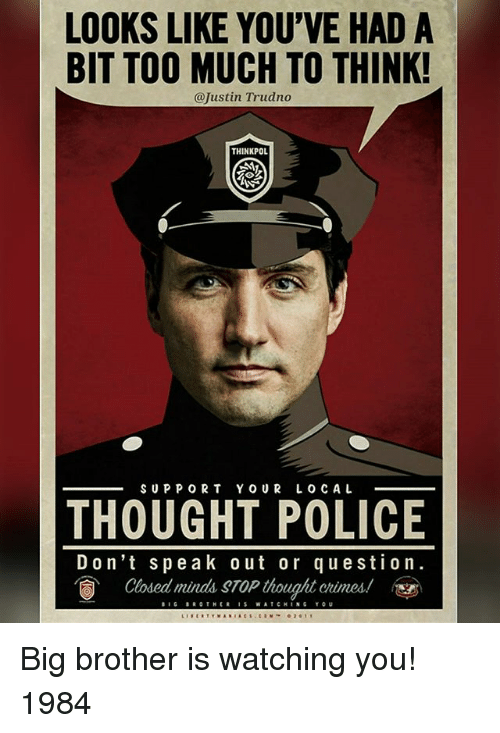
According to the Trudeau government and its defenders, the Online Harms Act is nothing to worry about. This is supposed to be a bill that will protect equity-seeking groups like racial minorities — yet one little-discussed provision will make millions of permanent residents open to deportation for even the most minor criminal offences, as long as a prosecutor can show that the crime was hate-motivated.
The resulting power to turn any crime into a deportable offence will make non-citizens — many of whom are racial and religious minorities — even more vulnerable in the criminal justice system compared to citizens.
The main focus of the Online Harms Act is regulating online platforms, but it also makes major changes to the way the criminal justice system deals with hate-motivated crimes. Under current law, if a crime is motivated by hate based on a protected characteristic, that’s considered an aggravating factor at sentencing. That means the judge can impose a higher sentence than they normally would, although they can never exceed the maximum sentence for the underlying crime. For many minor crimes, that maximum sentence is two years less a day.
The Online Harms Act uses a totally different approach to hate crimes. Rather than just being a sentencing factor, the Act would create a brand-new hate crime offence. Committing any crime, if motivated by hatred, would make someone guilty of a second crime, with a maximum sentence of life imprisonment. To counter public concern, the Trudeau government has recently sent one of its senior advisors, Supriya Dwivedi, to argue that critics of this provision are “engaging in bad faith tactics”, going so far as to make the absolutely false statement that the bill won’t allow an increased sentence unless the underlying crime already had that sentence.
That is an accurate description of the current sentencing regime, but the text and clear purpose of the new bill is to let judges go further: a serious aggravated assault that might normally attract the maximum 14-year sentence can lead to life imprisonment if the attack was hate-motivated.
Further, Dwivedi’s defence of the bill ignores that maximum sentences play an important role in Canada’s immigration policy. If someone is neither a citizen nor a permanent resident, they can only be deported if they commit a more serious (called an “indictable”) offence, or two separate less serious (or “summary”) offences.
The new hate crime provision would be an indictable offence.
April 15, 2024
El Salvador’s approach to fighting serious crime draws gasps of horror from NGOs
In Niccolo Soldo‘s weekend collection of links, he devotes some attention to the amazing success of El Salvador’s current government in driving down the murder rate and why it’s causing much pearl-clutching and dives for the fainting couches among the transnational “elites” and their media handmaidens:
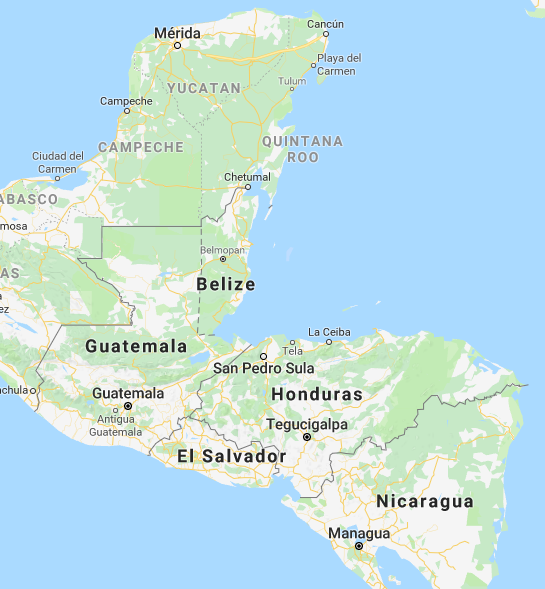
Honduras, Guatemala and El Salvador
Image via Google Maps.
We are bombarded daily with news of mass/random shootings, subway stabbings, and so on. Many of the perpetrators of these violent acts are repeat offenders who for some reason or another (politics) are allowed to roam the streets and attack innocent bystanders. The effect of these lax policies on law and order is the condition known as “anarcho-tyranny” i.e. where the state permits random acts of violence while offering/permitting no solution/resolution … until it has no option but to try and do so.
In NYC, the National Guard is now patrolling the subway. This is a band-aid solution for a problem that was largely fixed already via the policy known as “stop and frisk”. This policy was deemed “racist”, so it had to end. The price of ending this successful policy was a bit of the ol’ anarcho-tyranny. The conflict between rights and law and order continues unabated for the foreseeable future, at least in the USA.
El Salvador has taken a different approach. Since taking office, President Bukele has arrested some 77,000 gang members, locking them up in prisons throughout the country. In one fell swoop, its notoriously high homicide rate has collapsed. Bukele’s law and order policy has resolved El Salvador’s internal security issue … but at what cost? Western media and human rights NGOs insist that the cost has been El Salvador’s democracy:
Under President Nayib Bukele, El Salvador has experienced one of the most spectacular declines in violent crime in recent memory, anywhere in the world. Despite ranking among the most dangerous countries on the planet a mere decade ago, the Central American state today boasts a homicide rate of only 2.4 per 100,000 people — the lowest of any country in the Western Hemisphere other than Canada.
El Salvador owes much of its dramatic drop in crime to Bukele’s crackdown on street gangs and criminal organizations, including MS-13 and Barrio 18. Although homicide rates were trending downward before Bukele took office in 2019, violent crime declined sharply after March 2022, when his government declared a state of emergency following a spike in murders, allowing the government to suspend basic civil liberties and mobilize the armed forces to carry out mass arrests. This state of exception granted Bukele’s administration a blank check to fight gangs and detain suspects without consideration for transparency, due process, or human rights.
Bukele is wildly popular at home, and his policy is now gaining currency elsewhere in Latin America:
Bukele’s iron-fist measures and their apparent results have not only made him wildly popular in his country — earning him a landslide reelection in February 2024 — but also captured the imagination of politicians elsewhere grappling with rapidly deteriorating public safety. Members of the political elite in other states are now toying with the so-called Bukele model. In Ecuador, for instance, President Daniel Noboa has unabashedly followed in Bukele’s footsteps in response to prison riots and a major surge in homicides, declaring a state of emergency in January that gave the armed forces free rein to detain suspects and to take over control of the country’s prisons. The Bukele-style security measures appear to be succeeding there, as well: a little over a month into the crackdown, the government reported that the daily average of homicides had fallen from 28 to six. The fact that militarized public safety campaigns are proving effective outside El Salvador has only enhanced the model’s growing appeal across Latin America, which has long suffered the highest rate of violence of any region in the world.
Here’s the part where the author lodges his protest, and suggests alternative models:
But as appealing as a Bukele-style crackdown might seem, these punitive campaigns against organized crime come at a serious cost to democracy and human rights. These measures concentrate power in the hands of the executive, chipping away at other democratic institutions, such as Congress and the judiciary, that are critical bulwarks against governmental abuse. They also fail to solve the underlying problems, such as corruption and impunity, that generate such violence and instability in the first place.
There are alternatives to the Bukele model for reducing crime. In cities in Brazil, Colombia, and Mexico, politicians have managed to decrease homicides without eroding civil and human rights by making sustained investments in democratic policing, which emphasizes transparency, accountability, and civil liberties. These measures may not work as quickly, and they may not be as conspicuous. But they do not sacrifice democracy on the altar of public safety. Militarized states of emergency are no silver bullet: for any public safety measures to permanently succeed, they must not come at the expense of the democratic institutions that protect civilians from abuse at the hands of the government.
El Salvador has traded off some civil liberties for public safety, but to suggest examples from Brazil, Colombia, and especially Mexico as workable alternatives boggles the mind. This isn’t the first essay written about El Salvador that laments its “loss of democracy” … The Economist keeps pumping out this same argument over and over again. What these articles do tell us is that for many, democracy is indeed a god, and being a god, it is infallible. Not only can the openness of liberal democratic societies not be at fault for some of the crime that has plagued these countries, but Bukele’s heavy-handed approach is doomed to failure in the long run because it is not based on democratic principles. These democratic critics of Bukele are engaging faith-based reasoning, because their god cannot fail.


