Quotulatiousness

September 18, 2021

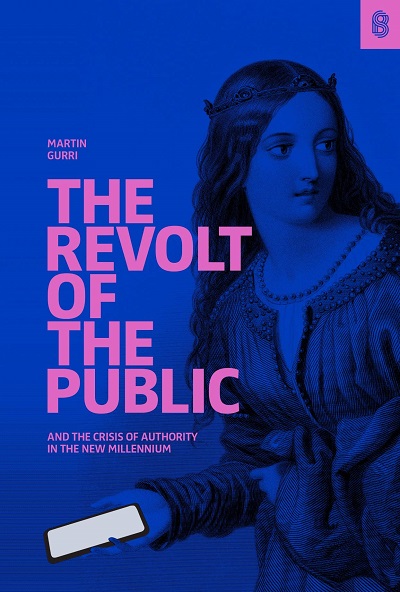
“Martin Gurri’s The Revolt Of The Public is from 2014, which means you might as well read the Epic of Gilgamesh

Filed under: Books, Media, Politics — Tags: , , , , , — Nicholas @ 03:00

In another of his interesting series of book reviews, Scott Alexander looks at a book from 2014 that seems to have done a great job of predicting the situation today, but doesn’t help in looking forward from today:

… It has a second-edition-update-chapter from 2017, which means it might as well be Beowulf. The book is about how social-media-connected masses are revolting against elites, but the revolt has moved forward so quickly that a lot of what Gurri considers wild speculation is now obvious fact. I picked up the book on its “accurately predicted the present moment” cred, but it predicted the present moment so accurately that it’s barely worth reading anymore. It might as well just say “open your eyes and look around”.

In fact, I can’t even really confirm whether it predicted anything accurately or not. Certainly everything it says is true. Anyone who wrote it in 2000 would have been a prophet. Anyone who wrote it in 2020 would have been stating the obvious. Was writing it in 2014 a boring chronicle of clear truths, or an achievement for the ages? I find my memories are insufficiently precise to be sure. It’s like that thing where someone who warned about the coronavirus on March 1 2020 was a bold visionary, but someone who warned about it on March 20 was a conformist bandwagoner — except about the entire history of the 21st century so far. Maybe the best we can do with it is read it backwards, as an artifact of the era when the public was only ambiguously revolting, to see how the knowledge of the coming age arose and spread.

We remember the Arab Spring, those few months in 2011 when revolts spread across various Arab countries and longstanding regimes were toppled by protesters with smartphones and Twitter accounts. Gurri hits the relevant beats, but doesn’t limit himself to the Middle East.

In Spain, a vague formless group called the indignados (or Real Democracy Now, or Youth Without A Future) took to the streets. For months, they filled public squares, streets, and tent cities. Some protests attracted tens of thousands of participants; a few, hundreds of thousands. Some of them were vaguely socialist, but it wasn’t exactly a socialist protest; in fact, the government they were protesting was dominated by the Socialist Workers Party. They were just sort of vaguely angry. From their manifesto:

    Some of us consider ourselves more progressive, others more conservative. Some are believers, others not. Some have well-defined ideologies, others consider ourselves apolitical … but all of us are worried and outraged by the political, economic, and social landscape we see about us. By the corruption of the politicians, businessmen, bankers …

And so on.

At the same moment, hundreds of thousands of people were marching through the streets of Israel. The apparent trigger was a 25-year-old video editor named Daphni Leef who couldn’t afford an apartment near her job. She started a Facebook page saying people should protest the cost of living, one thing led to another, and soon 300,000 people were marching through the streets of Israel and Leef was a national hero.

[…]

Gurri argues all of this was connected, and all of it was a sharp break from what came before. These movements were essentially leaderless. Some had charismatic spokespeople, like Daphni Leef in Israel or Tahrir-Square-Facebook-page-admin Wael Ghonim in Egypt, but these people were at best the trigger that caused a viral movement to coalesce out of nothing. When Martin Luther King marched on Washington, he built an alliance of various civil rights groups, unions, churches, and other large organizations who could turn out their members. He planned the agenda, got funding, ran through an official program of speakers, met with politicians, told them the legislation they wanted, then went home. The protests of 2011 were nothing like that. They were just a bunch of people who read about protests on Twitter and decided to show up.

Also, they were mostly well-off. Gurri hammers this in again and again. Daphni Leef had just graduated from film school, hardly the sort of thing that puts her among the wretched of the earth. All of these movements were mostly their respective countries’ upper-middle classes; well-connected, web-savvy during an age when that meant something. Mostly young, mostly university-educated, mostly part of their countries’ most privileged ethnic groups. Not the kind of people you usually see taking to the streets or building tent cities.

Some of the protests were more socialist and anarchist than others, but none were successfully captured by establishment strains of Marxism or existing movements. Many successfully combined conservative and liberal elements. Gurri calls them nihilists. They believed that the existing order was entirely rotten, that everyone involved was corrupt and irredeemable, and that some sort of apocalyptic transformation was needed. All existing institutions were illegitimate, everyone needed to be kicked out, that kind of thing. But so few specifics that socialists and reactionaries could march under the same banner, with no need to agree on anything besides “not this”.

September 11, 2021

QotD: Racism, anti-racism, and cognitive dissonance

Filed under: Books, Politics, Quotations, USA — Tags: , , , , — Nicholas @ 01:00

In a little while, our chattering classes are going to have a field day roasting Charles Murray over a spit for his next book, which will openly argue that it has been scientifically proven that black people are, on the average, not as cognitively nimble as other people. For about a month, the usual suspects will jostle for space condemning the very address of this subject as racism incarnate.

Okay – but any public discussion that both reviles the idea that black people are less intelligent than others while also lustily demanding that it’s “racist” to submit black people to cognitive challenges is hopelessly incoherent. We disparage rape culture, diet culture – this exemption culture is premised on a basic assumption that it’s unsavory to require serious challenge of black students Because Racism.

No. You don’t get past racism by creating new forms of it. Scrapping traditional challenges should only be on the table after black kids have mastered the challenge anyway. Zora Neale Hurston gets the final word:

    It seems to me that if I say a whole system must be upset for me to win, I am saying that I cannot sit in the game, and that safer rules must be made to give me a chance. I repudiate that. If others are in there, deal me a hand and let me see what I can make of it, even though I know some in there are dealing from the bottom and cheating like hell in other ways.

The current “woke” consensus is that Hurston was wrong on this, that she was expecting too much. I would just love to see one of today’s Elect in a room with Hurston trying to tell her where she was going wrong.

John McWhorter, “Revisiting Classics at Princeton”, It Bears Mentioning, 2021-06-09.

September 10, 2021

QotD: Prole nationalism and the globalist elite

Filed under: Politics, Quotations — Tags: , , — Nicholas @ 01:00

It is a part of the Great Unlearning of our age that today’s progressives are forgetting the hard lessons that elevated national self-determination to center stage. Visceral hostility to the national idea is nearly universal among the West’s cosmopolitan ruling elites, who conflate it with racism and bigotry and blame it for the catastrophes of the first half of the twentieth century. The upper reaches of our social strata are composed increasingly of a class of transnationals who hold a passport of convenience (or three), and seem to drift along from San Francisco to Singapore to London to Hong Kong, equally at home in each, without permanent attachment to any. Today, a banker in New York has more in common with a management consultant in Tokyo or a lawyer in Dubai than with a soybean farmer in Nebraska or an auto mechanic in Jacksonville. The transnationals share few common assumptions, beliefs, and aspirations with their geographical compatriots from the lower orders, and they have little use for the nation-state, with its flag-waving, jingoism, and other sentimental expressions of folkish unity. History, it seems, continues to mock poor Karl Marx, who proclaimed that the proletariat has no country. As the Brexit vote and Donald Trump’s election clearly show, it is in fact the haute bourgeoisie that has no country; the proles are deeply attached to theirs.

E.M. Oblomov, “The Case for National Realism: Diversity is the hallmark of empires, not democracies”, City Journal, 2019-01-02.

July 11, 2021

An “ongoing moral panic against the specter of ‘white supremacy’, which is now bizarrely regarded as an accurate description of the largest, freest, most successful multiracial democracy in human history”

From Andrew Sullivan‘s Weekly Dish free excerpt:

“What happened to you?”

It’s a question I get a lot on Twitter. “When did you become so far right?” “Why have you become a white supremacist, transphobic, misogynistic eugenicist?” Or, of course: “See! I told you who he really was! Just take the hood off, Sully!” It’s trolling, mainly. And it’s a weapon for some in the elite to wield against others in the kind of emotional blackmail spiral that was first pioneered on elite college campuses. But it’s worth answering, a year after I was booted from New York Magazine for my unacceptable politics. Because it seems to me that the dynamic should really be the other way round.

The real question is: what happened to you?

The CRT debate is just the latest squall in a tempest brewing and building for five years or so. And, yes, some of the liberal critiques of a Fox News hyped campaign are well taken. Is this a wedge issue for the GOP? Of course it is. Are they using the term “critical race theory” as a cynical, marketing boogeyman? Of course they are. Are some dog whistles involved? A few. Are crude bans on public servants’ speech dangerous? Absolutely. Do many of the alarmists know who Derrick Bell was? Of course not.

But does that mean there isn’t a real issue here? Of course it doesn’t.

Take a big step back. Observe what has happened in our discourse since around 2015. Forget CRT for a moment and ask yourself: is nothing going on here but Republican propaganda and guile? Can you not see that the Republicans may be acting, but they are also reacting — reacting against something that is right in front of our noses?

What is it? It is, I’d argue, the sudden, rapid, stunning shift in the belief system of the American elites. It has sent the whole society into a profound cultural dislocation. It is, in essence, an ongoing moral panic against the specter of “white supremacy”, which is now bizarrely regarded as an accurate description of the largest, freest, most successful multiracial democracy in human history.

We all know it’s happened. The elites, increasingly sequestered within one political party and one media monoculture, educated by colleges and private schools that have become hermetically sealed against any non-left dissent, have had a “social justice reckoning” these past few years. And they have been ideologically transformed, with countless cascading consequences.

Take it from a NYT woke star, Kara Swisher, who celebrated this week that “the country’s social justice movement is reshaping how we talk about, well, everything.” She’s right — and certainly about the NYT and all mainstream journalism.

This is the media hub of the “social justice movement”. And the core point of that movement, its essential point, is that liberalism is no longer enough. Not just not enough, but itself a means to perpetuate “white supremacy”, designed to oppress, harm and terrorize minorities and women, and in dire need of dismantling. That’s a huge deal. And it explains a lot.

June 21, 2021

“… the GOP needs an inflammatory issue to rile their racist base, and so this entire foofaraw is really just an astro-turfed, ginned-up partisan gambit about nothing”

Filed under: Education, Media, Politics, USA — Tags: , , , , — Nicholas @ 03:00

An excerpt from Andrew Sullivan’s most recent Weekly Dish looks at the burgeoning fight over the use of Critical Race Theory in public schools:

The stories in the mainstream media this past week about the broadening campaign to ban critical race theory in public schools have been fascinating — and particularly in how they describe what CRT is. Here’s the Atlantic‘s benign summary of CRT: “recent reexaminations of the role that slavery and segregation have played in American history and the attempts to redress those historical offenses.” NBC News calls it the “academic study of racism’s pervasive impact.” NPR calls CRT: “teaching about the effects of racism.” The New York Times calls it, with a straight face, “classroom discussion of race, racism” and goes on to describe it as a “framework used to look at how racism is woven into seemingly neutral laws and institutions.”

How on earth could merely teaching students about the history of racism and its pervasiveness in the United States provoke such a fuss? No wonder Charles Blow is mystified. But don’t worry. The MSM have a ready explanation: the GOP needs an inflammatory issue to rile their racist base, and so this entire foofaraw is really just an astro-turfed, ginned-up partisan gambit about nothing. The MSM get particular pleasure in ridiculing parents who use the term “critical race theory” as shorthand for things that just, well, make them uncomfortable — when the parents obviously have no idea what CRT really is.

When pushed to describe it themselves, elite journalists refer to the legal theories Derrick Bell came up with, in the 1970s — obscure, esoteric and nothing really to do with high-school teaching. “If your kid is learning CRT, your kid is in law/grad school,” snarked one. Marc Lamont Hill even tried to pull off some strained references to Gramsci to prove his Marxian intellectual cred, and to condescend to his opponents.

This rubric achieves several things at once. It denies that there is anything really radical or new about CRT; it flatters the half-educated; it blames the controversy entirely on Republican opportunism; and it urges all fair-minded people to defend intellectual freedom and racial sensitivity against these ugly white supremacists.

What could be more convenient? NBC News “reporter”, Brandy Zadrozny, even decried parents’ attempts to discover through FOIA requests just what their children are being taught — and argued this week that, “for longtime ultra conservative activists, CRT is the opportunity of a lifetime.” CRT, she explains, is not a threat at all, and there is no proof that it is even being taught. It’s “just a catch-all term repurposed as a conservative boogeyman.” She goes on: “it harnesses pushback against 2020’s racial justice movement, covid denialism, and depends on a base still energized by Trump and misinformation, looking for political power.”

I’m sure the MSM will continue to push this narrative indefinitely. They are still insisting, after all, that “white supremacy” is behind hateful attacks on Asian-Americans, and that soaring murder rates are purely a function of Covid19. And you can see why: this dismissive take is extremely helpful in avoiding what is actually happening. It diverts attention from the stories and leaks and documents that keep popping up all over the place about extraordinary indoctrination sessions that have become mandatory for children as early as kindergarten.

June 20, 2021

QotD: Cargo cult thinking in education

Filed under: Education, Politics, Quotations, USA — Tags: , , , , , , — Nicholas @ 01:00

There are a lot of things that set the groundwork for this, and I am not an expert on post-modernism and critical race theory. But one factor that is not often credited is a cargo cult mentality. Folks look at successful white people and observe they all went to college, and then infer that if we just get all the black kids into college, they will be successful too. Their resulting plan is to reduce or eliminate standards that are perceived to be keeping black kids out of college.

The problem of course is that college is not the cause of prosperity, but a marker (with prosperity) of other traits — focus on long-term goals, discipline, hard work, and yes knowing 2+2=4. This sort of woke BS just makes it worse, because it attacks the real roots of prosperity. There are real barriers to poor blacks achieving prosperity — eg how do you focus on long-term goals when you don’t know where you are sleeping tonight or when you have no role models who do so — but the purity and objectivity of math is not among these.

This sort of cargo cult thinking can be seen all the time in Progressive economic proscriptions. The government push for home ownership is another — middle class people own homes so if low income people owned homes they would become middle class. Now, this has a bit of accuracy in that, like the stock market, the elite have goosed the housing market to always go up. But leaving that aside for a moment, owning a home vs renting is a terrible decision for many people — it piles on a lot of financial risk but perhaps more importantly it limits geographic mobility which used to be critical to lower-income people improving their lot.

Warren Meyer, “Are the Woke a False Flag Operation of White Supremacists?”, Coyote Blog, 2021-02-16.

June 17, 2021

QotD: Declaring war on the Upper-Class Media

Filed under: Media, Politics, Quotations, USA — Tags: , , , , , , , , — Nicholas @ 01:00

This is your new term for “mainstream media”. Being against the “mainstream media” sounds kind of conspiratorial. Instead, you’re against the upper-class media, which gains its status by systematically excluding lower-class voices, and which exists mostly as a tool of the upper classes to mock and humiliate the lower class. You are not against journalism, you’re not against being well-informed, you’re against a system that exists to marginalize people like you. Tell the upper-class media that if they want your respect, they need to stop class discrimination.

67% of US families watch the Super Bowl — what percent of New York Times editors and reporters do? 20% of Americans go to religious services weekly — how many of those work for the New York Times? How come 96% of political donations from journalists go to Democrats? Your job is to take a page from the Democratic playbook and insist there is no reason any of this could be true except systemic classism, that any other explanation is offensive, and it’s the upper-class media’s moral duty to do something about this immediately. Until they do so you are absolutely justified in ignoring them and trusting less bigoted and exclusionary sources (I hear Substack is pretty good!)

Insist that working-class people have the right to communicate with each other without interference from upper-class gatekeepers. Make sure people know every single fact about @Jack and what a completely ridiculous person he is, and point out that somehow this is the guy who decides what you’re allowed to communicate with your Twitter friends. Every time tech companies censor social media, even if they’re censoring left-wing views, call their CEOs in for long and annoying Congressional hearings where you use the words “Silicon Valley elites” a lot.

Scott Alexander, “A Modest Proposal For Republicans: Use The Word ‘Class'”, Astral Codex Ten, 2021-02-26.

June 1, 2021

What Orwell wrote about in The Road to Wigan Pier applies just as well to the modern Labour Party

Filed under: Books, Britain, History, Politics — Tags: , , , , , — Nicholas @ 09:55

David Starkey points out that while the best contemporary analysis of the collapse of the Labour vote may come from Rod Liddle, he is in many ways just echoing the words of George Orwell in The Road To Wigan Pier:

“The first thing that must strike any outside observer,” Orwell’s analysis begins, “is that Socialism in its developed form is a theory confined entirely to the middle classes.” “The typical Socialist is not”, he explains, “a ferocious-looking working man with greasy overalls and a raucous voice. He is either a youthful snob-Bolshevik … or, still more typically, a prim little man with a white-collar job … [and] a social position which he has no intention of forfeiting.”

He — and even more it must be said she — is also likely to be odd. Here Orwell is unsparing. And spot on. “There is,” Orwell declares, “the horrible — the really disquieting — prevalence of cranks wherever Socialists are gathered together.” “One sometimes get the impression,” he continues, “that the mere words ‘Socialism’ and ‘Communism’ draw towards them with magnetic force every fruit-juice drinker, nudist, sandal-wearer, sex-maniac, Quaker, ‘Nature Cure’ quack, pacifist, and feminist in England.”

Oh and vegetarians. And beards. And “high-minded women”. And homosexuals, like the two “dreadful-looking old men”, clad “in pistachio-coloured shirts and khaki shorts into which their huge bottoms were crammed so tightly that you could study every dimple”, whom Orwell encountered on a bus in Letchworth. And so — effortlessly out-Liddling Liddle — on.

Above all, Orwell identified the same disdain for the working class. “Are these mingy little beasts,” he reflected after attending one Socialist conventicle, “the champions of the working class?”

“For every person there”, he recalled, “bore the worst stigmata of snobbish middle-class superiority. If a real working man, a miner dirty from the pit, for instance, had suddenly walked into their midst, they would have been embarrassed, angry and disgusted; some, I should think, would have fled holding their noses”.

“The truth is,” Orwell concludes, “that to many people calling themselves Socialists, revolution does not mean a movement of the masses with which they hope to associate themselves; it means a set of reforms which ‘we’, the clever ones, are going to impose upon ‘them’, the Lower Orders.”

But Orwell was writing in 1937. Not 2021. So how on earth did the Labour party, with even then such a freakish, repellent cadre at its core, survive and thrive as the great mass movement that, for a time, it became and whose passing Liddle laments?

May 28, 2021

QotD: Declaring war on college

Filed under: Business, Education, Government, Politics, Quotations, USA — Tags: , , , , — Nicholas @ 01:00

As it currently exists, college is a scheme for laundering and perpetuating class advantage. You need to make the case that bogus degree requirements (eg someone without a college degree can’t be a sales manager at X big company, but somebody with any degree, even Art History or Literature, can) are blatantly classist. Your stretch goal should be to ban discrimination based on college degree status. Professions may continue to accept professional school degrees (eg hospitals can continue to require doctors have a medical school degree), and any company may test their employees’ knowledge (eg mining companies can make their geologists pass a geology test) but the thing where you have to get into a good college, give them $100,000, flatter your professors a bit, and end up with a History degree before you can be a firefighter or whatever is illegal. If you can’t actually make degree discrimination illegal, just make all government offices and companies that do business with the government ban degree discrimination.

Stop the thing where high schools refuse to let people graduate until they promise to go to college. End draft deferment for people who go to college — hopefully there won’t be a draft, but do it anyway, as a sign that studying at college isn’t any more important than the many other jobs people do that don’t confer draft exemptions. Make universities no longer tax-exempt — why should institutions serving primarily rich people, providing them with regattas and musical theater, and raking in billions of dollars a year, not have to pay taxes? Make the bill that does this very clearly earmark the extra tax money for things that help working-class people, like infrastructure or vocational schools or whatever.

Scott Alexander, “A Modest Proposal For Republicans: Use The Word ‘Class'”, Astral Codex Ten, 2021-02-26.

May 13, 2021

Canada’s (subdued-but-real) class system

Filed under: Cancon, Economics, History — Tags: , , , , , — Nicholas @ 03:00

In The Line, Howard Anglin offers some observations on how Canada’s class system developed and how it can be very roughly delineated:

This comfortably flat image of our social hierarchy, however, belies a more complicated series of gradations that, while clearly marked, are rarely observed and almost never described accurately. Peter C. Newman mapped some of the terrain in his three volumes on The Canadian Establishment, but his account was already dated when he began it in 1975 and it was a work of history rather than social commentary by the time he finished in 1998. [Line editor Jen] Gerson’s own description of the Canadian class system explains why it can be hard for outsiders, and even insiders, to see it: “[W]e manage the cognitive dissonance presented by the haves and have-nots of housing,” she says, “by requiring our rich people to keep quiet. They should wear clothes that are well-cut and well-designed, but not flash. Buy the multi-millionaires car, but paint it in a sedate hue.”

Social sorting is intrinsic to human nature, perhaps even necessary — as the Bard has Ulysses remind us: “Take but degree away … and, hark, what discord follows!” — and it’s here in Canada too, if you look for it. Like the United States, Canadians early on replaced a class system based on titles with one based on the more easily-acquired currency of, well, currency. And, as in America, this immediately created a new opportunity for class to subtly reassert itself.

I used to joke that the only meaningful class division in Canada is whether you use “summer” as a noun or as a verb; lately I’ve developed the Starbucks test. In this analogy, Starbucks is Canada’s middle class, with Tim Hortons and fast food franchise coffee below, and specialty cafes and boutique chains (Matchstick, Phil & Sebastian, Bridgehead) above.

Unlike the crude measure of income, coffee choice better replicates a traditional class system because it carries an implicit sense of social solidarity, cultural assumptions and biases. During the days of the Harper government, Tim Hortons became a symbol to a certain sort of conservative as iconic as the Greek fisherman’s cap is to aging Marxists. The Maple Leaf red cup represented the honest values of rural and suburban working families, in contrast to the globalist elites with their overpriced green Starbucks. Starbucks was sipped at dog parks and served in board rooms; Tim Hortons got the job done on a cold winter morning: it was Don Cherry in a mug.

The Starbucks test is a silly heuristic, but it reveals something about the complex nature of class: an aristocrat may be penniless, and a billionaire may love his Tims. It also puts the middle class back in its traditional place as the uneasy middle-child of the social order.

In the old British system, there was pride in being working class. There was a bond of mutual support that grew out of the shared experience of hard labour and was reinforced by institutions like working men’s clubs, the British Legion, and the trade union movement. The middle-class striver with his airs and pretensions, his flash new car and his evolving accent, was a figure of general mockery, even more to the working men he left behind than to the upper classes he aspired to join. Class was about more than money; it was an identity. And there was nothing that gave you away as middle class more than worrying about being middle class — an anxiety exploited by Nancy Mitford in her tongue-in-cheek guide to “U” and “Non-U” language and behaviour. The Starbucks test reveals something similar, something more reflective of Canada’s reality than the Liberal vision of one big happy middle-class family.

Tim Worstall explained that the British middle class is still despised by the upper class and hated by the lower class. Not a model for encouraging aspirational working class folks to “move up”.

April 23, 2021

QotD: Why the British despise the middle class

Filed under: Britain, History, Politics, Quotations — Tags: , , , , — Nicholas @ 01:00

… any observer of that British class system will know that it is indeed a little different from that in other places.

The aristocracy have always looked down upon the middle class. That gross and inelegant disdain for trade for example. The insistence that actually doing something for a living – even professionally – just isn’t as good as doing nothing off a rent roll.

From the other end we’ve that very bolshie – in the colloquial sense – insistence that the middle class are just parasites upon the toil of the workers. This being what also informs – misinforms – that idea that we’d be better off if we had much more manufacturing. Men in flat caps doing something physical etc.

That is, much of the society dislikes the very existence of the middle class. Actually, more than dislikes, from above they’re – we’re – despised and from below hated to the point that we bourgeoisie should be eliminated as a class.

The surprise that fewer claim to be of that section of the hierarchy than are is thus, well, it’s a surprise, right?

Tim Worstall, “Sociologist Can’t Do Sociology”, Continental Telegraph, 2021-01-19.

February 28, 2021

Should the Republicans embrace “class warfare”?

Filed under: Politics, USA — Tags: , , , — Nicholas @ 03:00

Scott Alexander proffers some advice to the US Republican Party in its post-Trump doldrums, even though he admits that “I hate you and you hate me. But maybe I would hate you less if you didn’t suck. Also, the more confused you are, the more you flail around sabotaging everything.”

So here’s my recommendation: use the word “class”. Pivot from mindless populist rage to a thoughtful campaign to fight classism.

Yeah, yeah, “class” sounds Marxist, class warfare and all that, you’re supposed to be against that kind of thing, right? Wrong. Economic class warfare is Marxist, but here in the US class isn’t a purely economic concept. Class is also about culture. You’re already doing class warfare, you’re just doing it blindly and confusedly. Instead, do it openly, while using the words “class” and “classism”.

Trump didn’t win on a platform of capitalism and liberty and whatever. He won on a platform of being anti-establishment. But which establishment? Not rich people. Trump is rich, lots of his Cabinet picks were rich, practically the first thing he did was cut taxes on the rich. Some people thought that contradicted his anti-establishment message, but those people were wrong. Powerful people? Getting warmer, but Mike Pence is a powerful person and Trump wasn’t against Mike Pence. Smart people? Now you’re burning hot.

Trump stood against the upper class. He might define them as: people who live in nice apartments in Manhattan or SF or DC and laugh under their breath if anybody comes from Akron or Tampa. Who eat Thai food and Ethiopian food and anything fusion, think they would gain 200 lbs if they ever stepped in a McDonalds, and won’t even speak the name Chick-Fil-A. Who usually go to Ivy League colleges, though Amherst or Berkeley is acceptable if absolutely necessary. Who conspicuously love Broadway (especially Hamilton), LGBT, education, “expertise”, mass transit, and foreign anything. They conspicuously hate NASCAR, wrestling, football, “fast food”, SUVs, FOX, guns, the South, evangelicals, and reality TV. Who would never get married before age 25 and have cutesy pins about how cats are better than children. Who get jobs in journalism, academia, government, consulting, or anything else with no time-card where you never have to use your hands. Who all have exactly the same political and aesthetic opinions on everything, and think the noblest and most important task imaginable is to gatekeep information in ways that force everyone else to share those opinions too.

(full disclosure: I fit like 2/3 of these descriptors)

Aren’t I just describing well-off people? No. Teachers, social workers, grad students, and starving artists may be poor, but can still be upper-class. Pilots, plumbers, and lumber barons are well-off, but not upper-class. Donald Trump is a billionaire, but still recognizably not upper class. The upper class is a cultural phenomenon.

Aren’t I just describing Democrats? No. The Democrats are a coalition of the upper class, various poor minorities, union labor, and lots of other groups. It’s an easy mistake to make, because you Republicans absolutely loathe the upper class, and whenever you’re talking about Democrats you focus on this group and how much you hate them. But you make the mistake of saying you hate Democrats, and then it looks like boring old partisanship. Or saying you hate the elites, and then it looks like boring old populism. Or saying you hate rootless cosmopolitans, and then it looks like boring old anti-Semitism. Or saying you hate the government, and then it looks like boring old libertarianism.

Instead, just use the words “class” and “classism”. Say “Hey, we Republicans want to be the party of the working class. We are concerned about the rising power of the upper class, and we are dedicated to stamping out classism.”

This is what happens when nobody uses the word “class”!

February 26, 2021

Waymarkers of the American caste system

Filed under: Books, Education, USA — Tags: , , , , , — Nicholas @ 03:00

Scott Alexander reviews Paul Fussell’s Class: A Guide Through The American Status System, and finds Fussell has helpfully delineated how an outsider can guess someone’s class (or caste, as Fussell would prefer) … at least how that outsider could do so in 1983:

The upper class is old money. The people you think of as rich and famous — tech billionaires, celebrities, whatever — aren’t upper class. However privileged they started off, they still had to put in at least a smidgeon of work to get their money, which disqualifies them. Real uppers inherit. Even famous people who come from old money usually aren’t central examples of upper class; the real upper class has no need to seek fame. They mostly just throw parties — but not interesting parties, because that would imply they have something to prove, which they don’t. They live in mansions — but not awesome mansions they designed themselves with some kind of amazing gaming room or something, because that would imply they have something to prove, which they don’t. They live in meticulously boring mansions and throw meticulously boring parties. They have the best and classiest versions of everything, but it’s a faux pas to compliment any of it, because that would imply that they were the sort of people who might potentially not have had the best and classiest version of that thing. They fill their houses with Picassos and exquisite antique furniture, and none of them ever express the slightest bit of satisfaction or praise about any of it. You have never heard of any of these people, although you might recognize the last name they share with a famous ancestor (Rockefeller, Ford, etc).

The middle classes are salaried professionals, starting with the upper-middle class. Jeff Bezos, for all his billions, is only upper-middle-class at best. So are many of the other people you think of as rich and famous and successful. The upper-middle-class likes New England, Old England, yachts, education, good grammar, yachts, chastity, androgyny, the classics, the humanities, and did I mention yachts?

The middle class is marked by status anxiety. The working class knows where they stand and are content. The upper-middle class has made it; they’re fine. And the upper class doesn’t worry about status because that would imply they have something to prove, which they don’t. But the middle class is terrified. These are the people with corporate jobs who say things like “I’ve got to make a good impression at the meeting Tuesday because my boss’ boss will be there and that might determine whether I get the promotion I’m going for”. The same attitude carries into the rest of their lives; their yards and houses are maintained with a sort of “someone who could change my status might be watching, better make a good impression”. They desperately avoid all potentially controversial opinions — what if the boss disagrees and doesn’t promote them? What if the neighbors disagree and they don’t get invited to parties? They are the most likely to be snobbish and overuse big words, the most obsessed with enforcing norms of virtuous behavior, and the least interested in privacy — asserting any claim to privacy would imply they have something to hide. Their Official Class Emotions are earnestness and optimism; they are the people who patronize musicals like Annie and Man of La Mancha where people sing saccharine songs about hopes and dreams and striving, and the people who buy inspirational posters featuring quotes about perseverance underneath pictures of clouds or something.

Proles do wage labor. High proles are skilled craftspeople like plumbers. Medium and low proles are more typical factory workers. They have a certain kind of freedom, in that they don’t have status anxiety and do what they want. But they’re also kind of sheep. They really like mass culture — the more branded, the better. These are people who drink Coca-Cola (and feel good about themselves for doing so), visit Disneyland (and accept its mystique at face value), and go on Royal Caribbean cruises. When they hear an ad say a product is good, they think of it as a strong point in favor of buying the product. They feel completely comfortable expressing their opinions, but their opinions tend to be things like “Jesus is Lord!”, “USA is number one!”, “McDonalds is so great!”, and “Go $LOCAL_SPORTS_TEAM!”. They are weirdly obsessed with cowboys (Fussell says cowboys represent the idea that poorer people are freer and more authentic than rich office-worker types, plus the West is the prole capital of the USA) and with unicorns (Fussell: “I’ve spent six months trying to find out exactly why, and I’m finally stumped”). When they have unique quirks, they tend to be things like “collecting lots of Disney memorabilia” or “going powerboating slightly more often than the other proles do”. There’s also a sort of desperate prole desire to be noticed and individuated, which takes the form of lots of “Personalized X” or “Y with your name on it”, and also with making a lot of noise (see: powerboating). Fussell describes the most perfectly prole piece of decor as “a blue flameproof hearthrug with your family name in Gothic letters beneath seven spaced gold stars and above a golden eagle in Federal style”.

It’s impossible to tell when Fussell is serious vs. joking. The section on the physiognomy of different classes has to be a joke, right? But then how did he come up with the Virgin vs. Chad meme in 1983? Also, why does my brain keep telling me these are John McCain and Donald Trump?

A friend urges me to think of these not as “rich/successful people” vs. “poor/unsuccessful people”, but as three different ladders on which one can rise or fall. The most successful proles are lumber barons or pro athletes or reality TV stars. These people are much richer and more powerful than, say, a schoolteacher, but they’re still proles, and the schoolteacher is still middle class. Likewise, a very successful middle class person might become a professor or a Senator or Jeff Bezos, but this doesn’t make them even a bit upper class.

(I’m not sure it’s possible to be a more or less successful upper class person; being successful would imply having something to prove, which they don’t).

February 24, 2021

QotD: Margaret Thatcher

Filed under: Britain, History, Politics, Quotations — Tags: , , , , , — Nicholas @ 01:00

I know I’m supposed to hate Margaret Thatcher. I know that someone with my politics is meant to detest her as a union-busting, milk-snatching, women’s-lib-baiting, Belgrano-sinking, Section-28-devising, society-destroying nightmare. I know that when Gillian Anderson was cast as Thatcher in series four of The Crown, I should have played up a shudder of disgust at Gillian Anderson, who is good, playing Thatcher, who is bad.

But here’s the thing: I don’t hate Thatcher. It’s not that I’m a huge fan of her legacy or anything (although anyone who thinks that industrial relations were doing fine before her or that the Falklands were some kind of unjustified expedition is clearly a fantasist), it simply doesn’t matter whether I like her or not because she is just too interesting.

Thatcher wasn’t the first woman to lead a country, but unlike her predecessors, Indira Gandhi in India or Isabel Martínez de Perón in Argentina, she didn’t arrive sanctified by a political dynasty. She was, as Prince Phillip snobbily points out to the Queen in The Crown, a grocer’s daughter. In real life, such condescension came strongly from the Left. The Blow Monkeys, one of the bands involved in the Red Wedge tour to support Labour, released an album called She was only a Grocer’s Daughter in 1987; and even though several pop songs fantasised about her death, that never seemed quite as ugly as supposed defenders of the working class announcing that Thatcher was just too common to rule.

Sarah Ditum, “How Thatcher rejected feminism”, UnHerd, 2020-11-15.

February 11, 2021

QotD: Progressive credentials as positional goods

[Political correctness] is driven by a loathing for ordinary people. According to spiked, PC brigadiers view ordinary folks as extremely impressionable, easily excitable, and full of latent resentment. Exposure to the wrong opinions, even isolated words, could immediately awaken the lynch mob. PC, then, is about protecting “the vulnerable” from the nasty tendencies of the majority population.

But if PC was not really about protecting anyone, and really all about expressing one’s own moral superiority, PC credentials would be akin to what economists call a “positional good”.

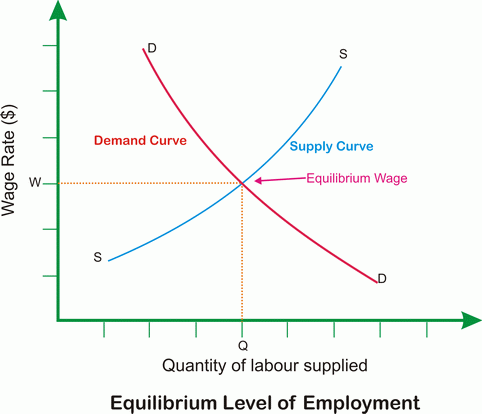
A positional good is a good that people acquire to signalise where they stand in a social hierarchy; it is acquired in order to set oneself apart from others. Positional goods therefore have a peculiar property: the utility their consumers derive from them is inversely related to the number of people who can access them.

Positionality is not a property of the good itself, it is a matter of the consumer’s motivations. I may buy an exquisite variety of wine because I genuinely enjoy the taste, or acquire a degree from a reputable university because I genuinely appreciate what that university has to offer. But my motivation could also be to set myself apart from others, to present myself as more sophisticated or smarter. From merely observing that I consume the product, you could not tell my motivation. But you could tell it by observing how I respond once other people start drinking the same wine, or attending the same university.

If I value those goods for their intrinsic qualities, their increasing popularity will not trouble me at all. After all, the enjoyment derived from wine or learning is not fixed, so your enjoyment does not subtract from my enjoyment. I may even invite others to join me – we can all have more of it.

But if you see me moaning that the winemakers/the university have “sold out”, if you see me whinging about those ignoramuses who do not deserve the product because they (unlike me, of course) do not really appreciate it, you can safely conclude that for me, this good is a positional good. (Or was, before everybody else discovered it.) We can all become more sophisticated wine consumers, and we can all become better educated. But we can never all be above the national average, or in the top group, in terms of wine-connoisseurship, education, income, or anything else. We can all improve in absolute terms, but we cannot all simultaneously improve in relative terms. And that is what positional goods are all about – signalising a high position in a ranking, that is, a relation to others. This leads to a problem. Positional goods are used to signalise something that is by definition scarce, and yet the product which does the signalling is not scarce, or at least not inherently. You can increase the number of goods which signal a position in the Top 20 (of whatever), but the number of places in that Top 20 will only ever be, er, twenty. Increasing the number of signalling products will simply destroy their signalling function. Which is why the early owners of such a signalling product can get really mad at you if you acquire one too.

Kristian Niemietz, “The economics of political correctness”, Institute of Economic Affairs, 2014-04-30.

« Newer PostsOlder Posts »

Powered by WordPress