While the popular conception was that the main problem was machine-gun fire making trench assaults over open ground simply impossible, the actual dynamic was more complex. In particular, it was possible to create the conditions for a successful assault on enemy forward positions – often with a neutral or favorable casualty ratio – through the use of heavy artillery barrages. The trap this created, however, was that the barrages themselves tore up the terrain and infrastructure the army would need to bring up reinforcements to secure, expand and then exploit any initial success. Defenders responded to artillery with defense-in-depth, meaning that while a well-planned assault, preceded by a barrage, might overrun the forward positions, the main battle position was already placed further back and well-prepared to retake the lost ground in counter-attacks. It was simply impossible for the attacker to bring fresh troops (and move up his artillery) over the shattered, broken ground faster than the defender could do the same over intact railroad networks. The more artillery the attacker used to get the advantage in that first attack, the worse the ground his reserves had to move over became as a result of the shelling, but one couldn’t dispense with the barrage because without it, taking that first line was impossible and so the trap was sprung.
(I should note I am using “railroad networks” as a catch-all for a lot of different kinds of communications and logistics networks. The key technologies here are railroads, regular roads (which might speed along either leg infantry, horse-mobile troops and logistics, or trucks), and telegraph lines. That last element is important: the telegraph enabled instant, secure communications in war, an extremely valuable advantage, but required actual physical wires to work. Speed of communication was essential in order for an attack to be supported, so that command could know where reserves were needed or where artillery needed to go. Radio was also an option at this point, but it was very much a new technology and importantly not secure. Transmissions could be encoded (but often weren’t) and radios were expensive, finicky high technology. Telegraphs were older and more reliable technology, but of course after a barrage the attacker would need to be stringing new wire along behind them connecting back to their own telegraph systems in order to keep communications up. A counter-attack, supported by its own barrage, was bound to cut these lines strung over no man’s land, while of course the defender’s lines in their rear remained intact.)
Bret Devereaux, “Collections: No Man’s Land, Part II: Breaking the Stalemate”, A Collection of Unmitigated Pedantry, 2021-09-24.
January 22, 2022
QotD: Breaking the trench stalemate with artillery
December 31, 2021
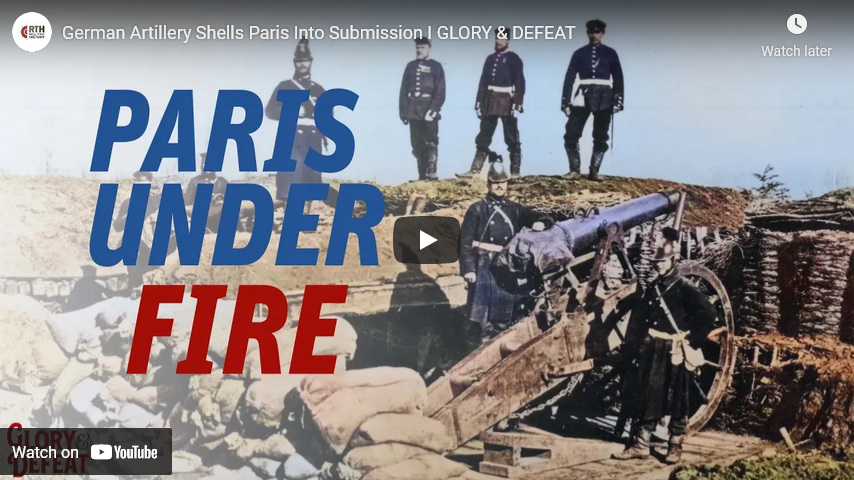
German Artillery Shells Paris Into Submission I GLORY & DEFEAT
Real Time History
Published 30 Dec 2021Sign up for Curiosity Stream and get Nebula bundled in and SAVE 26%: https://curiositystream.com/realtimeh…
The new year 1871 is about to bring upon a new German Empire. German leadership, especially Bismarck, is exceedingly frustrated with the dragged out Franco-Prussian War that the Germans have all but won for months now. The decision is finally made to bombard Paris into submission and the German guns surrounding Paris open fire.
» THANK YOU TO OUR CO-PRODUCERS
John Ozment, James Darcangelo, Jacob Carter Landt, Thomas Brendan, Kurt Gillies, Scott Deederly, John Belland, Adam Smith, Taylor Allen, Rustem Sharipov, Christoph Wolf, Simen Røste, Marcus Bondura, Ramon Rijkhoek, Theodore Patrick Shannon, Philip Schoffman, Avi Woolf,» OUR PODCAST
https://realtimehistory.net/podcast – interviews with historians and background info for the show.» LITERATURE
Arand, Tobias: 1870/71. Der Deutsch-Französische Krieg erzählt in Einzelschicksalen. Hamburg 2018Bourguinat, Nicolas and Gilles Vogt: La guerre franco-allemande de 1870. Une histoire globale. Paris 2020
Gouttman, Alain: La grande défaite. 1870-1871. Paris 2015
https://www.volksbund.de/nachrichten/… (zuletzt besucht am 21.11.2021)
» SOURCES
Allorant, Salomé u.a. (Hrsg.): La République au défi de la guerre. Lettres et carnet de lAnnée terrible (1870-1871). Amiens 2015Goncourt, Edmond de: Journal des Goncourts. II.1. 1870-1871. Paris 1890
Hérisson, Maurice d’: Journal d’un officier d’ordonnance. Paris 1885
Meisner, Heinrich Otto (Hrsg.): Kaiser Friedrich III. Kriegstagebuch von 1870/71. Berlin, Leipzig 1926
N. N. (Htrsg.): Bismarcks Briefe an seine Gattin aus dem Kriege 1870-71. Stuttgart, Berlin 1903
Pflugk-Hartung; Julius von: Krieg und Sieg 1870-71. Bd. I. Kulturgeschichte. Berlin 1896
Schikorsky, Isa (Hrsg.): “Wenn doch dies Elend ein Ende hätte”. Ein Briefwechsel aus dem Deutsch-Französischen Krieg 1870/71. Köln, Weimar, Wien 1999
Zeitz, Karl: Kriegserinnerungen eines Feldzugsfreiwilligen aus den Jahren 1870 und 1871. Altenburg 1905
» OUR STORE
Website: https://realtimehistory.net»CREDITS
Presented by: Jesse Alexander
Written by: Cathérine Pfauth, Prof. Dr. Tobias Arand, Jesse Alexander
Director: Toni Steller & Florian Wittig
Director of Photography: Toni Steller
Sound: Above Zero
Editing: Toni Steller
Motion Design: Philipp Appelt
Mixing, Mastering & Sound Design: http://above-zero.com
Maps: Battlefield Design
Research by: Cathérine Pfauth, Prof. Dr. Tobias Arand
Fact checking: Cathérine Pfauth, Prof. Dr. Tobias ArandChannel Design: Battlefield Design
Contains licensed material by getty images
All rights reserved – Real Time History GmbH 2021

November 27, 2021
Armored Vehicles of Operation Torch Pt. 2: America and Britain (and France) – by the Chieftain
World War Two
Published 26 Nov 2021Part two of Chieftain’s return to the North African campaign. Here he looks at the armored fighting vehicles of the British and Americans with a small bit on the French as well. We see the introduction of the iconic Sherman and the varied fortunes of British designs.
(more…)
November 18, 2021
When artillery became powerful enough to literally destroy castles
In Quillette, Paul Lockhart recounts one of the early artillery successes in European siege warfare, the reduction of the English-held fortifications at Odruik:

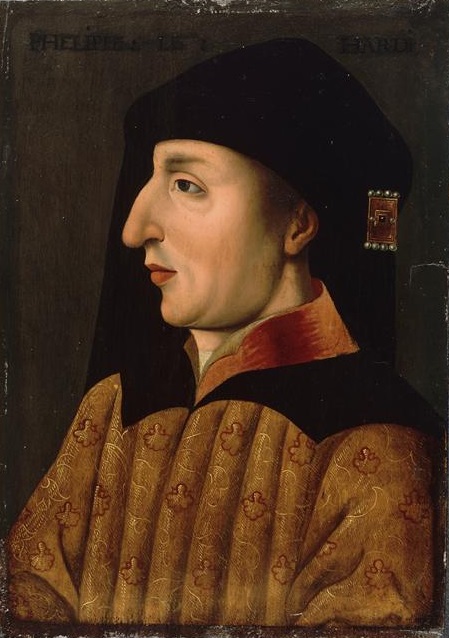
Portrtait of Philip the Bold (Philip II, Duke of Burgundy), 1342-1404.
Unknown painter of the Flemish School via Wikimedia Commons.
Philip the Bold, duke of Burgundy, was a warrior’s warrior. Hawk-nosed, ambitious, and brash, Philip had been a soldier since childhood. He was still a smooth-faced boy of 14 when he fought alongside his father, King John II of France, in the battle of Poitiers in 1356. Like King John, he was taken prisoner by the English when Edward, the Black Prince of Wales, vanquished the French on the field at Poitiers. A decade later, the duke, always looking for an advantage over the Englishmen who had invaded his country, embraced a novel technology: gunpowder.
This mysterious Asian invention had been known in Europe for more than a century, and for nearly that long European armies had used it as a weapon of war — or, more precisely, as the substance that made another recent innovation, the cannon, work. So far, gunpowder artillery had not shown great promise. Cannon had been used as siege engines in European warfare at least as early as the 1320s. But for all the trouble and effort they demanded, they had not proven themselves to be much more effective than conventional siege weapons such as catapults and trebuchets, machines that used mechanical energy to hurl projectiles at castle walls. Certainly, the early cannon did not appear to be effective enough to justify their cost, which was substantial.
But Philip the Bold saw promise in the new weapons, especially the huge siege guns that came to be known as bombards, and in 1369 he began to invest heavily in them. France and England were then locked in the on-again, off-again series of dynastic conflicts known today as the Hundred Years’ War (1337–1453). In 1377, when Duke Philip’s brother and sovereign, King Charles V of France, ordered him to attack the English in the Calais region, the duke answered the call, bringing with him more than 100 new cannon, including one monster of a gun that fired a stone cannonball weighing some 450 livres (around 485 pounds).
One of the duke’s intended targets was the English-held castle at Odruik, built with stout masonry walls and surrounded by a thick layer of outworks. Odruik would be a tough nut to crack. Its defenders seemed to think so, too, and were confident that they could hold out against Duke Philip’s army, even as the duke’s men began to put their huge siege cannon into position in full view of the castle walls.
The first few shots from Philip’s siege-battery hammered Odruik’s outer walls into dust. Soon, the stone cannonballs were sailing through the walls as if they weren’t there; soon after that, the outer walls actually weren’t there. After Philip’s guns had fired a grand total of about 200 rounds, much of Odruik’s once-proud walls lay in ruin, and before the duke could send his men through the breach and into the castle, Odruik’s defenders capitulated.
Philip the Bold’s triumph at Odruik in 1377 was a harbinger of things to come, a revealer of unsettling truths. Gunpowder artillery had been used in sieges before, but Odruik was its first overwhelming and clear-cut victory over a castle. The siege of Odruik demonstrated that — when the guns were big enough, and when there were enough of them — cannon were more powerful than any siege engine yet invented, and could knock down castles in a matter of hours. What happened at Odruik would be repeated over and over again at castles throughout continental Europe and the British Isles through the remainder of the Middle Ages and beyond.
It was one of the accepted “rules” of war that a besieged town that surrendered before the beseiging army conducted an infantry assault would be spared from sack … the theory being that once the fortifications had been overcome, the final outcome was not in doubt and the defenders lost no honour from the surrender. You can certainly understand why the citizens of the defended town would be eager to avoid the plunder and rapine of an assaulting army once the walls were breached.
November 12, 2021
Armored Vehicles of Operation Torch Pt. 1, by the Chieftain
World War Two
Published 11 Nov 2021Chieftain returns to the North African theatre to talk us through the armored fighting vehicles in action around the time of Operation Torch. This episode is part one of two with Chieftain covering the German and Italian vehicles. Here, Chieftain looks at everything from the fearsome Tiger to the nemesis of LRDG: the Sahariana.
(more…)
September 2, 2021
Tank Chats #122 | Sherman 105 | The Tank Museum
The Tank Museum
Published 9 Apr 2021The Tank Museum’s Historian David Fletcher presents a Tank Chat on the only M4 variant of Sherman in The Tank Museum’s collection. This particular example is armed with the 105mm millimetre howitzer, designed for firing High Explosive in a close support role. Join David to find out more.
(more…)
September 1, 2021
June 14, 2021
How To Defend A Star Fortress Forever
SandRhoman History
Published 13 Jun 2021Thanks to Audible for sponsoring this video! Start listening with a 30-day Audible trial. Choose one audiobook and two Audible Originals absolutely free: http://audible.com/sandrhoman or text sandrhoman to 500-500.
In this video we will provide you with the most necessary knowledge to defend a star fortress forever.
Patreon (thank you): https://www.patreon.com/sandrhomanhis…
Paypal (thank you: paypal.me/SandRhomanhistory
We also have Twitter: https://twitter.com/Sandrhoman#history #siege #sandrhoman
Sources:
Hoppe, S., s.v. “Festungsbau”, in: Enzyklopädie der Neuzeit.
Lynn, J. A., “States in Conflict 1661-1763”, in: Parker, G. (Ed.), The Cambridge History of Warfare, Cambridge 2005.
Lynn, J. A., “The trace itallienne and the Growth of Armies”, in: Rogers, C. J. (Ed.), The Military Revolution Debate. Readings on the Military Transformation of Early Modern Europe, Boulder / San Francisco / Oxford 1995.
Ortenburg, G., Waffe und Waffengebrauch im Zeitalter der Landsknechte (Heerwesen der Neuzeit, Abt. 1, Bd. 1) Koblenz 1984.
Parker, G., “The Limits to Revolutions in Military Affairs: Maurice of Nassau, the Battle of Nieuwpoort (1600), and the Legacy”, in The Journal of Military History, 71;2, 2007; S. 331 – 372.
Rogers, C.J. / Tallet F. (editors), European Warfare, 1350–1750, 2010.
Van Nimwegen, O., The Dutch Army and the Military Revolutions, 1588-1688.
May 14, 2021
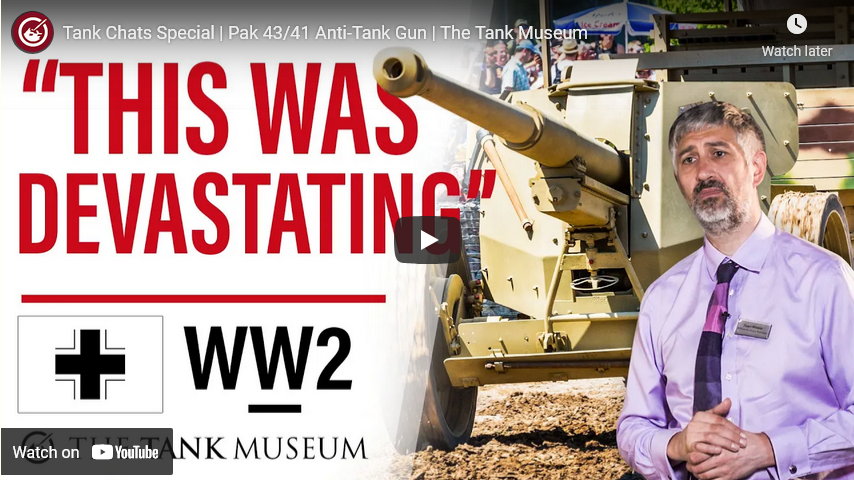
Tank Chats Special | Pak 43/41 Anti-Tank Gun | The Tank Museum
The Tank Museum
Published 18 Sep 2020The Tank Museum’s Archive and Library Manager Stuart Wheeler presents this Tank Chat Special on the Pak 43/41. Find out the history behind the infamous anti-tank gun and the story behind how it came to be in The Tank Museum’s collection — from its time as a gate-guard, to its restoration, and finally its display in the Museum.
Support the work of The Tank Museum on Patreon: ► https://www.patreon.com/tankmuseum
Visit The Tank Museum SHOP & become a Friend: ► tankmuseumshop.orgTwitter: ► https://twitter.com/TankMuseum
Instagram: ► https://www.instagram.com/tankmuseum/
#tankmuseum #tanks
May 7, 2021
QotD: Battleship gunnery in WW2
Capital ships could also only defeat their opponents’ armour IF they could find them and hit them accurately. Which was hardly a given, as only the British – with the eight WWI 15″ guns on Warspite — and Germans — with the nine modern 11″[!] guns on Scharnhorst — actually hit any moving target at 26,000 yards or more. (Both in relatively clear conditions in daylight, and both well inside the theoretical 35,000-45,000 yard full range of most battleship guns.)
[Three years later, in foul weather at night during the Battle of North Cape, the Germans had their fears that British radar had advanced far beyond theirs in gunfire direction completely confirmed, when Scharnhorst was pounded to scrap by Duke of York and a few cruisers in a battle where even the British cruisers could engage and score hits at ranges that didn’t allow Scharnhorst to reply accurately.]
No other navy came even close to hitting anything actually moving at any speed at 26,000 yards (though West Virginia managed within about 15% of it with 22,800 yards using the latest radar at Surigao Strait in late ’44). Certainly not the radar-deficient Italians and Japanese.
At night, or in bad weather, that meant radar-efficient nations had an unsurpassable advantage, particularly for fast moving targets at sea like those hit by Warspite and Scharnhorst.
[Although one USN 16″ battleship peppered stationary French targets in a port at even longer ranges, some USN engagements — like Guadalcanal — were at Jutland distances, if not closer. (5,000-8,000 yards, even though the US ships had radar … Which would have been fine if the USN had been consciously doing a Matapan-style 3,500 yard ambush, but South Dakota‘s radar and other power went down to “electrical fault”, and she accidentally wandered within 5,000 yards and was battered at close range, “leaving the ship in Lee’s words ‘deaf, dumb, blind, and impotent'”. Fortunately Washington‘s working radar allowed her to sneak up on the Japanese and win the battle.) ]
At Surigao Straits those USN battleships with more modern radar — the late war rebuilds West Virginia, California and Tennessee — spotted the enemy at over 30,000 yards, and opened fire at 22,000 yards, actually getting some hits with the opening salvos! But some ships with less effective radar — Maryland (eight 16″) — had to wait for visual sightings of shell splashes before joining in, and Pennsylvania (twelve 14″) with her older Mark III radar, failed to spot the enemy at all.
How many and how big your guns are, or what their range is, doesn’t matter a damn if you never see your opponent!
[Though please note, in every battle of the war, the navy which has the choice — either through speed in daylight, or radar superiority at night or in heavy weather — always closed the range to their maximum advantage (if not to point-blank where possible) before engaging.]
So instead of endlessly debating the value of ten or twelve 14″ versus eight 15″ or 16″ or even nine 11″ or 16″; or of 20 degree versus 30 degree or 40 degree elevation; or of heavier slower shells versus lighter faster ones: I tend to accept that most heavy guns could penetrate most armour, and just wonder whether they could only hit anything in good light and good weather, or if they were completely blind in the wrong conditions?
Nigel Davies, “Real Battleships for WWII – Part I – defining a battleship”, rethinking history, 2021-01-23.
March 20, 2021
Iron cannon, improved celestial navigation techniques, and “race-built” galleons
In the latest Age of Invention newsletter, Anton Howes considers some of the technological innovations which helped English sailors to overcome powerful adversaries of the Spanish and Portuguese navies in the late 1500s and early 1600s:

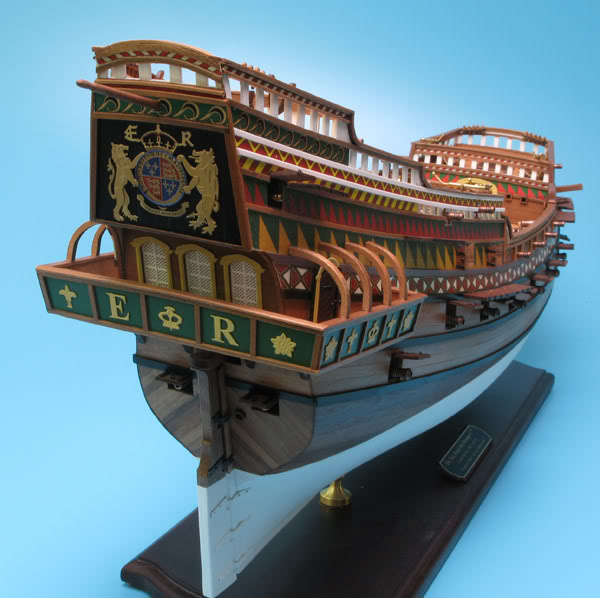
Stern view of a model of the Revenge as an example of a race-built galleon, 1577.
Image from modellmarine.de
Apart from the adoption and refinement of celestial navigation techniques, however, English seafaring capabilities also benefited from some more obvious, physical changes. In 1588, for example, on the eve of the Spanish Armada, a senior Spanish officer believed that the English had “many more long-range guns”. By the 1540s, medieval ironmaking techniques involving the blast furnace had gradually spread from Germany, to Normandy, and thence to the Weald of Sussex and Kent. Whereas in the first half of the sixteenth century England had typically imported three quarters of its iron from Spain, by 1590 it had not only quintupled its consumption of iron but was also almost entirely self-sufficient. And by allowing England to exploit its plentiful domestic deposits of iron, the blast furnace resulted in it producing many more cheap cannon.
Iron guns were in many ways worse for ships than those of bronze. They were heavier, prone to corrosion, and more likely to explode without warning. Bronze guns, by contrast, would first bulge and then split, but in any case tended to last. When the British captured Gorée off the coast of Senegal in 1758, they found a working English-made bronze cannon that dated from 1582. Yet iron was only 10-20% the price of bronze. Although the Royal Navy for decades continued to prefer bronze, cheap, medium-sized cannon of iron proliferated, becoming affordable to merchants, pirates, and privateers — a situation that was unique to England.
English ships were thus especially well-armed, allowing them to access new markets even when they sailed into hostile waters. They were soon some of the only merchants able to hold their own against the latest Mediterranean apex predator, whether it be the Spanish navy, Algeria-based corsairs, or Ottoman galleys. And they were able to insert themselves, sometimes violently, into the inter-oceanic trades — all despite the armed resistance of the Spanish and Portuguese, who had long monopolised those routes. In the 1560s, John Hawkins tried a few times to muscle in on the transatlantic Portuguese and Spanish trade in slaves. With backing from the monarch and her ministers, he captured Portuguese slave ships, raided and traded along the African coastline himself, and then sold slaves in the Spanish colonies of the Americas, sometimes having to attack those colonies before the local governor would allow them to trade. (The attempt was ultimately unsuccessful, as Hawkins’s privateering fleet was all but destroyed in 1568 and the English were not involved in the slave trade again for almost a century.)
The English hold over the hostile markets was only threatened during times of peace on the continent, when their ships’ defensiveness no longer gave them a special advantage. The Dutch usurped English dominance of the trade with Iberia and the Mediterranean, for example, during the Dutch Republic’s truce with Spain 1609-21. Their more efficient ships, especially for bulk commodities — the fluyt invented at Hoorn in the late 1580s — were cheaper to build, required fewer sailors, and were easier to handle. But these advantages only made them competitive when the risk of attack was low, as they were hardly armed. When wars resumed, the English had a chance to regain their position.
Finally, the English acquired a few further advantages when it came to ship design. Thanks to the shipwright Matthew Baker, who had been on the trial voyage Cabot dispatched to the Mediterranean, England experienced a revolution in using mathematics to design ships. Baker’s methods, seemingly developed in the 1560s, allowed him to more cheaply experiment with new forms, and by the 1570s these began to bear fruit. The old ocean-going carracks and galleons, with their high forecastles and aftercastles, became substantially sleeker. Taking inspiration from nature, Baker designed a streamlined, elongated hull modelled below the waterline upon a cod’s head with a mackerel tail. Above the waterline, too, he lowered the forecastle and set it further back, as well as flattening the aftercastle.
Starting in 1570 with his prototype the Foresight, and more fully developed in 1575-77 with the Revenge, these razed or “race-built” galleons gave the English some significant advantages. Drake even chose the Revenge as his flagship to battle the Spanish Armada in 1588, and to lead an ill-fated reprisal invasion of Portugal the following year. The higher castles of carracks and old-style galleons were suited to clearing an enemy’s decks with arrows and gunfire, as well as to defend against boarders. They were designed for combat at close quarters, in which height was an advantage. They were floating fortresses, their imposing height known to inspire terror. The race-built galleons, by contrast, by making the ship less top-heavy, could have longer and lower gundecks, with more of the ship’s displacement devoted to ordnance — especially useful when taking advantage of the cheaper but heavier cannon made of iron. Rather than killing an enemy ship’s sailors and soldiers, the race-built galleons were optimised for blasting through its hull. What they lost in “majesty and terror”, they made up for with overwhelming firepower. They aimed to sink.
March 16, 2021
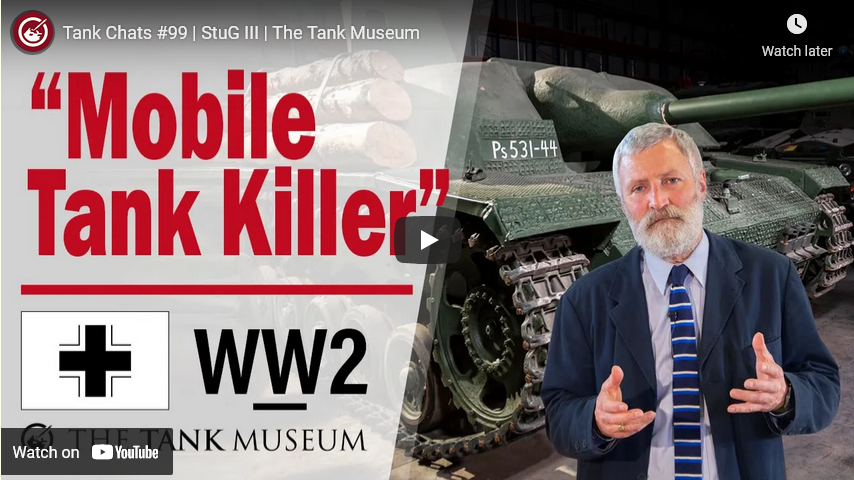
Tank Chats #99 | StuG III | The Tank Museum
The Tank Museum
Published 2 Apr 2020Here David Willey discusses the Sturmgeschütz III Self-Propelled Assault Gun, better known as the StuG III, Germany’s most numerously produced fully tracked Armoured Fighting Vehicle of the Second World War.
Support the work of The Tank Museum on Patreon: ► https://www.patreon.com/tankmuseum
Visit The Tank Museum SHOP & become a Friend: ►tankmuseumshop.org
Twitter: ► https://twitter.com/TankMuseum
Instagram: ► https://www.instagram.com/tankmuseum/
Tiger Tank Blog: ► http://blog.tiger-tank.com/
Tank 100 First World War Centenary Blog: ► http://tank100.com/
#tankmuseum #tanks #MuseumFromHome
March 8, 2021
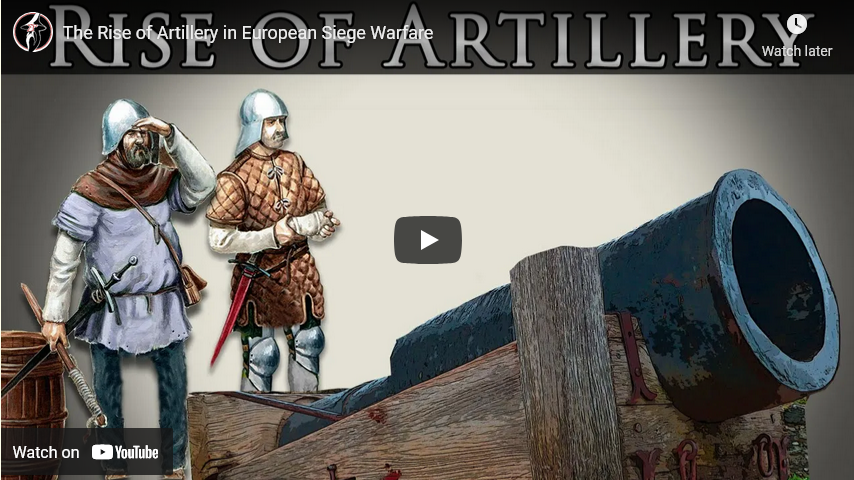
The Rise of Artillery in European Siege Warfare
SandRhoman History
Published 7 Mar 2021Get 25% off an annual membership of CuriosityStream using code
sandrhoman: https://curiositystream.com/sandrhomanAt the end of the Middle Ages, a new weapon system changed the face of 15th century European siege warfare: artillery made its appearance. It had an impressive impact best shown by one peculiar fact. Imagine a walled fortress in the 14th century. It could easily deter attackers for several months. But in the early 15th up to the early 16th century, after artillery had fully developed, the same walls fell within days. As a result, engineers had to construct much more elaborate defensive structures. By the early to mid 16th century a fortress could again withstand a siege with heavy artillery for several months. This is how modern historiography explains the rise of artillery.
Patreon: https://www.patreon.com/sandrhomanhis…
Bibliography:
Ayton, A., / Price, J. L., (Hrsg.), The Medieval Military Revolution. State, Society and Military Change in Medieval and Early Modern Europe, 199J.
Black, A Military Revolution? Military Change and European Society 1550–1800, 1991.
Devries, K., Medieval Military Technology, 1994.
Ortenburg, G., Waffe und Waffengebrauch im Zeitalter der Landsknechte (Heerwesen der Neuzeit, Abt. 1, Bd. 1) Koblenz 1984.
Rogers, C. J., “Military Revolutions of the Hundred Years War”, in: Rogers et al. The Military Revolution Debate. Reading on the Military Transformation of Early Modern Europe, 1995, p. 13-35.
Schmidtchen, V., Kriegswesen im Spätmittelalter, 1990.
February 19, 2021
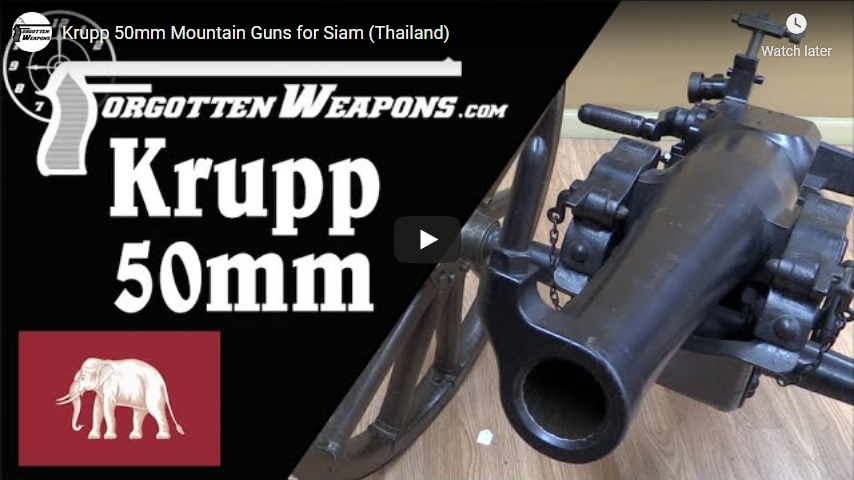
Krupp 50mm Mountain Guns for Siam (Thailand)
Forgotten Weapons
Published 16 Nov 2020http://www.patreon.com/ForgottenWeapons
https://www.floatplane.com/channel/Fo…
Cool Forgotten Weapons merch! http://shop.bbtv.com/collections/forg…
Edit: The three interlocking rings are Krupp’s logo, not a Thai property mark — sorry!
In 1906, Siam (now Thailand) purchased a batch of 50mm mountain guns from Krupp of Germany. These were simple fixed-barrel guns with steel-belted wooden wheels. Designed to be carried by elephant, mule, or even soldiers, the guns disassemble into a number of man-portable pieces. Two different styles of rear sight were used, although it is unclear when one replaced the other. Today, these guns are a great choice for the cannon enthusiast as they have been specifically exempted from the NFA and thus transfer like any simple firearm (no tax stamp required).
Contact:
Forgotten Weapons
6281 N. Oracle #36270
Tucson, AZ 85740
December 10, 2020
Tank Chats #88 | Valentine Archer | The Tank Museum
The Tank Museum
Published 15 Nov 2019David Fletcher looks at the Valentine Archer, a British self-propelled gun based on a Valentine tank chassis and fitted with a 17-pounder gun.
Support the work of The Tank Museum on Patreon: ► https://www.patreon.com/tankmuseum
Visit The Tank Museum SHOP: ► https://tankmuseumshop.org/
Twitter: ► https://twitter.com/TankMuseum
Instagram: ► https://www.instagram.com/tankmuseum/
Tiger Tank Blog: ► http://blog.tiger-tank.com/
Tank 100 First World War Centenary Blog: ► http://tank100.com/
#tankmuseum #tanks