Quotulatiousness

December 7, 2019

QotD: A “democratic” army

Filed under: Britain, Europe, France, Quotations — Tags: , , , , , , — Nicholas @ 01:00

Orwell’s press card portrait, 1943

It is probable that the nature of modern war has made “democratic army” a contradiction in terms. The French army, for instance, based on universal service, is hardly more democratic than the British. It is just as much dominated by the professional officer and the long-service N.C.O., and the French officer is probably rather more “Prussian” in outlook than his British equivalent. The Spanish Government militias during the first six months of war — the first year, in Catalonia — were a genuinely democratic army, but they were also a very primitive type of army, capable only of defensive actions. In that particular case a defensive strategy, coupled with propaganda, would probably have had a better chance of victory than the methods casually adopted. But if you want military efficiency in the ordinary sense, there is no escaping from the professional soldier, and so long as the professional soldier is in control he will see to it that the army is not democratised. And what is true within the armed forces is true of the nation as a whole; every increase in the strength of the military machine means more power for the forces of reaction. It is possible that some of our more Left-wing jingoes are acting with their eyes open. If they are, they must be aware that the News-Chronicle version of “defence of democracy” leads directly away from democracy, even in the narrow nineteenth-century sense of political liberty, independence of the trade unions and freedom of speech and the press.

George Orwell, “Democracy in the British Army”, Left, 1939-09.

December 6, 2019

QotD: The British army

Filed under: Britain, History, Military, Quotations — Tags: , — Nicholas @ 01:00

[The British army] occupies a curious place in both the emotional heart of the nation and the head of policy makers. The public if asked are usually aware of an organisation steeped in regimental tradition, know of units like the SAS, Guards and Parachute Regiment and may know a little bit about the equipment such as tanks (noting that all APCs are tanks to the layman’s eye…). They recognise it from state ceremonial, where it is an integral part of the national fabric and identity, and are proud of the perception of “our boys” serving overseas in warzones. There is often a deeper rooted, but baseless suspicion of the senior echelons, dating back to the tired cliché of “lions led by donkeys” and fed by a generation of misguided historians trying to rewrite WW1 as not the greatest victory in the history of the British army, but instead four years of class war and turgid poetry.

To policy makers the army is an institution which is central to the survival of the nation, and which carries out many vital roles to meet defence and security policy objectives, but which is also extremely good at champing at the bit to get involved in operations overseas, even when it is not necessarily in the national interest to do so.

A cursory examination of history suggests that the British army is not by itself a war winning organisation. It does not go to war alone with peer rivals and expect to win – UK policy instead for centuries has been to maintain a small (but professional) army able to either conduct colonial policing, or work as part of a larger coalition force to achieve victory. This is not to do down the efforts of the army, but to accept the reality that as an island nation, the UK has relied on the navy as the ultimate guarantor of its security.

Sir Humphrey, “How Do You Solve a Problem Like a Deployable Division?”, Thin Pinstriped Line, 2017-08-06.

November 29, 2019

“Reign of Terror” – Operation Desert Storm – Sabaton History 043 [Official]

Filed under: History, Media, Middle East, Military, Technology, USA — Tags: , , , , , , — Nicholas @ 04:00

Sabaton History
Published 28 Nov 2019

After Saddam Hussein invaded Kuwait in 1990, most of the whole world gets together to avenge this attack. This will be the basis for Operation Desert Storm — one of the largest battles since the Second World War.

Support Sabaton History on Patreon: https://www.patreon.com/sabatonhistory

Listen to Primo Victoria (where “Reign of Terror” is featured):
CD: http://bit.ly/PrimoVictoriaStore
Spotify: http://bit.ly/PrimoVictoriaSpotify
Apple Music: http://bit.ly/PrimoVictoriaAppleMusic
iTunes: http://bit.ly/PrimoVictoriaiTunes
Amazon: http://bit.ly/PrimoVictoriaAmzn
Google Play: http://bit.ly/PrimoVictoriaGooglePlay

Listen to Sabaton on Spotify: http://smarturl.it/SabatonSpotify
Official Sabaton Merchandise Shop: http://bit.ly/SabatonOfficialShop

Hosted by: Indy Neidell
Written by: Markus Linke and Indy Neidell
Directed by: Astrid Deinhard and Wieke Kapteijns
Produced by: Pär Sundström, Astrid Deinhard and Spartacus Olsson
Creative Producer: Joram Appel
Executive Producers: Pär Sundström, Joakim Broden, Tomas Sunmo, Indy Neidell, Astrid Deinhard, and Spartacus Olsson
Post-Production Director: Wieke Kapteijns
Edited by: Iryna Dulka
Sound Editing by: Marek Kaminski
Maps by: Eastory – https://www.youtube.com/c/eastory

Archive by: Reuters/Screenocean https://www.screenocean.com
Music by Sabaton.

An OnLion Entertainment GmbH and Raging Beaver Publishing AB co-Production.

© Raging Beaver Publishing AB, 2019 – all rights reserved.

November 28, 2019

It’s time for the ever-popular Game of Budget Leaksmanship for the British military

Filed under: Britain, Government, Military — Tags: , , , — Nicholas @ 05:00

Sir Humphrey wants to encourage all defence-minded readers not to panic unduly at the all-too-predictable tactics used by all sides in the next round of British government defence planning:

It’s that time again, a period theoretically seen every five years or so, but occasionally more recently than that. A group of people who it seems cordially loathe each other spend months leaking, shouting, briefing and making grandiose pledges that don’t always get fulfilled. This whole, and at times, unedifying, process is, of course, the latest iteration in a Strategic Defence Review.

The Sunday Times leads with a story today that the Army is facing cuts to its manpower, and that in return they want the Navy to be forced to lease or mothball one of the two Queen Elizabeth class carriers. The article talks about a range of debates going on, and the latest news about what may or may not be scrapped or cut in any future budget settlement. Is this something to worry about, or is it merely the opening salvos in what is likely to be a long and painful campaign of attrition?

Defence reviews are driven from the very centre of Government – they occur usually with the Prime Minister of the day’s blessing, and they are now run centrally – usually via the Cabinet Office, and not by the MOD. This reflects the fact that modern national security requirements means the need to bring all departments together in a consensus and not isolated pockets doing their own thing.

He also provides a helpful list of the specific “the-sky-is-falling!” predictions you can expect to see through all stages of any given defence review process:

What is clear is that the new season of “Game of Planning Rounds” has begun. We can expect plenty more leaks like this to a variety of sources and papers which will be intended to achieve effect. If past performance is anything to go by, you can expect to see a “greatest hits” collection of some variants of the following options leaked in the next 12-18 months:

a. Parachute regiment to merge with Royal Marines
b. White elephant carriers are all to blame
c. The nasty MOD civil service did it …
d. SAS to merge with SBS
e. RAF to take control of all F35 and scrap FAA
f. Army has more horses than tanks
g. Army to no longer have enough troops to deploy a Division
h. Cranwell, Sandhurst and Dartmouth to close / merge in one location
i. RN to scrap X number of frigates or other ships
j. Naval Infantry Division to return …
k. Army to scrap Y number of tanks
l. RAF to dispose of Z aircraft fleets

All of these have appeared in the past, but how many of them actually happened or were true? The above links are just a snapshot in time (based on a quick google) but demonstrate that in the build up to a review, we’ll see a lot more articles like this one (which predicted cuts, many of which never happened) and a lot of rumours, angst and predictions.

Humphreys honest advice is simple – DON’T PANIC! Until the review is finalised, and has gone to the Prime Minister of the day for approval, nothing is set in stone. There will be leaks aplenty, rumours aplenty and very little in the way of actionable outcomes. Until the final package of measures is approved, everything is to play for, and anything can happen. It is just not worth getting worked up about because unless you are on the inside track as part of the Review team, you don’t know what is going on.

November 26, 2019

Invasion of Poland 1939 – Fall Weiß – Case White

Filed under: Europe, Germany, History, Military, Russia, WW2 — Tags: , , , , — Nicholas @ 06:00

Military History Visualized
Published 30 Aug 2016

The German Invasion of Poland in 1939 started the Second World War in Europe. The German name of operation was “Fall Weiß” meaning “Case White”. In this video I will take a look at the major German troop movements, the Soviet invasion of Poland, the losses and a final assessment.

» HOW YOU CAN SUPPORT MILITARY HISTORY VISUALIZED «
(A) You can support my channel on Patreon: https://www.patreon.com/mhv

(B) You can also buy “Spoils of War” (merchandise) in the online shop: https://www.redbubble.com/people/mhvi…

(C) If you want to buy books that I use or recommend, here is the link to the Amazon Store: http://astore.amazon.com/ytmh-20 which has the same price for you and gives a small commission to me, thus it is a win/win.

» SOURCES & LINKS «

Maier, Klaus; Rohde, Horst; Stegemann, Bernd; Umbreit, Hans: Die Errichtung der Hegemonie auf dem europäischen Kontient. Das Deutsche Reich und der Zweite Weltkrieg (DR2WK), Band 2.

Müller, Rolf-Dieter: Hitler’s Wehrmacht, 1935-1945

Zaloga, Steven J.: Poland 1939 – The Birth of Blitzkrieg

Wettstein, Adrian: Wehrmacht im Stadtkampf

http://www.cgsc.edu/CARL/nafziger/939…

http://www.cgsc.edu/CARL/nafziger/939…

http://niehorster.org/029_poland/1939…

http://www.westpoint.edu/history/Site…

https://en.wikipedia.org/wiki/Soviet_…

» CREDITS & SPECIAL THX «
Song: Ethan Meixsell – “Demilitarized Zone”

The Counter-Design is heavily inspired by Black ICE Mod for the game Hearts of Iron 3 by Paradox Interactive
https://forum.paradoxplaza.com/forum/…

» DISCLAIMER «
Amazon Associates Program: “Bernhard Kast is a participant in the Amazon Services LLC Associates Program, an affiliate advertising program designed to provide a means for sites to earn advertising fees by advertising and linking to amazon.com.”

November 16, 2019

The British army’s “Tractable” shows the continued importance of logistics

Filed under: Britain, Europe, Military — Tags: , , , , — Nicholas @ 05:00

Sir Humphrey discusses the ongoing commitment of nearly a thousand British soldiers to Estonia, and how the logistics to get them and their equipment there illustrates a rarely discussed but critical military capability:

One of the most significant exercise commitments this year has been the British Army and “Tractable” (sometimes referred to as either “Op” or “Exercise” but without a title on the British Army website. This major undertaking has been running for some weeks now and has highlighted how the British Army continues to excel at undertaking large scale movements of units in order to be ready to conduct operations as required.

The genesis of Tractable was the need to rotate assets out of Estonia and send new vehicles from the UK in their place. It is often overlooked that the UK now has over 900 British Army personnel permanently stationed in Estonia as part of wider NATO work to help send a strong signal to deter aggression from nations like Russia – which given its recent history of attacking and invading other countries and acting in a remarkably uncivilised manner is certainly required.

[…]

This may sound an obvious and straightforward thing to say, but investment in logistical tail is rarely something that features in many peoples “fantasy Army ORBAT” threads that litter the internet. Most people focus on combat power, looking at how many tanks or self propelled guns an Army has and then considering what this means for its combat power from there.

For the British Army, the investment in heavy armour, APCs and artillery is important, but equally so is the important in assets like logistics enablers – the ability to lift by train or sealift in order to actually get the Army where it needs to be, and not stuck somewhere irrelevant. The purpose of Tractable has as much been to test that the Army can still do this well, and that the various enablers work as intended to deliver a force that can fight.

In practical terms this has meant a focus on areas that often get relatively little attention. For example the skills required to pull vehicles out of storage, conduct road and rail moves across Europe and then deliver them to Estonia are complex and perishable. There is a lot of work required to ensure that a train can be safely loaded with the right armoured vehicles and then sent through the Channel Tunnel for onwards travel.

Air, land, and sea transportation routes from the UK to Tapa, Estonia.

This work often puts significant responsibility in the hands of very junior soldiers who are responsible for ensuring that millions of pounds of equipment is safely handled and put in place properly. One slip up could have huge consequences and potentially cost lives as well. It is only by practising this activity regularly that it can be done safely and effectively for real though.

In the case of Tractable what it has demonstrated is the critical importance of the Royal Logistics Corp to the wider British Army. While logistics may not be a supremely “sexy” subject to many people, being able to ensure that the Army has the right equipment, people and training to be able to do this sort of work is essential – without it, things would rapidly grind to a halt.

Similarly, Tractable has helped focus attention on other critical capabilities like strategic sealift. The use of the “POINT” class strat ro-ro ferry force to help move vehicles across the channel and into Emden (and then onto Estonia) has helped show how key these vessels are to British Army capability. Without them it would be much harder to do the complex business of deploying overseas. Here too we are also reminded of the critical importance of units like 17 Port and Maritime Regiment, one of the most unusual (and vital) units in the Army today, responsible for co-ordinating the sealift and deployment of vehicles around the globe.

November 11, 2019

In memoriam

Filed under: Britain, History, Military, WW1, WW2 — Tags: , , — Nicholas @ 03:00

A simple recognition of some of our family members who served in the First and Second World Wars:

The Great War
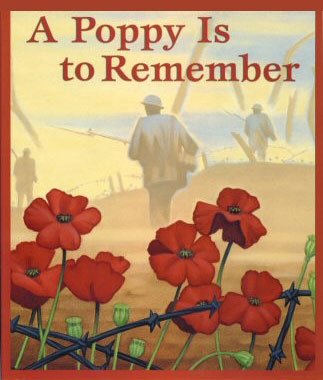
  • A Poppy is to RememberPrivate William Penman, Scots Guards, died 16 May, 1915 at Le Touret, age 25
    (Elizabeth’s great uncle)
  • Private Archibald Turner Mulholland, Argyll & Sutherland Highlanders, mortally wounded 25 September, 1915 at Loos, age 27
    (Elizabeth’s great uncle)
  • Private David Buller, Highland Light Infantry, died 21 October, 1915 at Loos, age 35
    (Elizabeth’s great grandfather)
  • Private Harold Edgar Brand, East Yorkshire Regiment. died 4 June, 1917 at Tournai.
    (My first cousin, three times removed)
  • Private Walter Porteous, Durham Light Infantry, died 4 October, 1917 at Passchendaele, age 18
    (my great uncle)
  • Corporal John Mulholland, Argyll & Sutherland Highlanders, wounded 2 September, 1914 (shortly before the First Battle of the Aisne), wounded again 29 June, 1918, lived through the war.
    (Elizabeth’s great uncle)

The Second World War

  • Flying Officer Richard Porteous, RAF, survived the defeat in Malaya and lived through the war
    (my great uncle)
  • Able Seaman John Penman, RN, served in the Defensively Equipped Merchant fleet on the Murmansk Run (and other convoy routes), lived through the war
    (Elizabeth’s father)
  • Private Archie Black (commissioned after the war and retired as a Major), Gordon Highlanders, captured at Singapore (aged 15) and survived a Japanese POW camp
    (Elizabeth’s uncle)
  • Elizabeth Buller, “Lumberjill” in the Women’s Land Army in Scotland through the war.
    (Elizabeth’s mother)
  • Trooper Leslie Taplan Russon, 3rd Royal Tank Regiment, died at Tobruk, 19 December, 1942 (aged 23).
    Leslie was my father’s first cousin, once removed (and therefore my first cousin, twice removed).

For the curious, the Commonwealth War Graves Commission the Royal British Legion, and the Library and Archives Canada WW1 and WW2 records site provide search engines you can use to look up your family name. The RBL’s Every One Remembered site shows you everyone who died in the Great War in British or Empire service (Canadians, Australians, New Zealanders, South Africans and other Imperial countries). The CWGC site also includes those who died in the Second World War.

In Flanders fields the poppies blow
Between the crosses row on row,
That mark our place; and in the sky
The larks, still bravely singing, fly
Scarce heard amid the guns below.

We are the Dead. Short days ago
We lived, felt dawn, saw sunset glow,
Loved and were loved, and now we lie
In Flanders fields.

Take up our quarrel with the foe:
To you from failing hands we throw
The torch; be yours to hold it high.
If ye break faith with us who die
We shall not sleep, though poppies grow
In Flanders fields.

Lieutenant Colonel John McCrae, MD Canadian Army Medical Corps (1872-1918)
QotD: The British army from WW1 to the end of the Cold War

Filed under: Britain, History, Military, Quotations, WW1, WW2 — Tags: , , — Nicholas @ 01:00

Before WW1 the army was optimised primarily as a colonial police force, coupled with a small expeditionary force of regular soldiers intended to deploy to the continent to work alongside the French or other allies in the event of war. WW1 was an event that really constituted three armies – the small regular/territorial force of barely 300,000 soldiers that mobilised in 1914 and was wiped out to buy time. The interim force of Territorials and Reservists that held the line in 1915-1916 while the army reconstituted, and the civilian volunteer/conscript force from 1916 onwards that saw the army grow to over 4 million men by 1918.

Rapid demobilisation followed, followed by regeneration in the 1920s and 30s to become the most mechanised army in the world by 1939, comprising some 224,000 regulars. It is often forgotten that the British army of 1940 had many more tanks and vehicles than the German Army – history is not kind to the losers. The army in WW2 grew to a citizen force of roughly 3.5 million men, before shrinking post war.

The continuation of National Service, the war in Korea and the end of empire saw the army stay at roughly 330,000 soldiers for much of the 1950s, causing significant damage to the national economy due to the cost and lack of manpower for rebuilding. By 1957 the army estimated that its regular strength was roughly 80,000 personnel (only a quarter of the whole force), many of whom were tied up training two-year National Servicemen. A major factor in the 1957 Sandys Defence White Paper was the need to reduce manpower costs and free people up for other economically important tasks.

The Sandys Review led to a reduction to 165,000 troops most of whom were focused on either colonial policing actions (it is often forgotten that in the early 1960s there were over 100,000 UK service personnel in the Far East) or deployed in Germany as part of the British Army of the Rhine (BAOR). The withdrawal from empire saw the army shrink to a strength of approximately 150,000 by the 1980s, where its role was primarily to provide a corps of four divisions in Germany in the event of general war, supported by mobilisation units from the UK which would provide further divisions to augment BAOR and conduct home defence roles.

The end of the Cold War saw the first deployment of a divisional-sized force, with an armoured division sent to the Gulf in 1990 for Operation Desert Storm. This happened just as the Options for Change review cut BAOR and reduced the army to approximately 120,000. Further deployments to Bosnia and Kosovo in the 1990s followed by the deployment of an armoured division to Iraq in 2003. Operations in Iraq and Afghanistan from 2003-2014 saw the army struggle to sustain itself on two fronts without heavy support from the RN and RAF providing extra manpower and resources.

The 2010 SDSR initially preserved the army at just under 100,000 personnel, although later reviews cut this down to 82,000 regulars supported by a target of approximately 30,000 reservists working in a far more integrated manner. Today the army is struggling to sustain itself at 82,000, with recent manpower figures showing a total of roughly 78,000 troops.

Sir Humphrey, “How Do You Solve a Problem Like a Deployable Division?”, Thin Pinstriped Line, 2017-08-06.

November 4, 2019

Canadian Army TAPV – Tactical Armoured Patrol Vehicle

Filed under: Cancon, Military, Weapons — Tags: , , — Nicholas @ 06:00

Matsimus
Published 1 Jun 2018

The Textron TAPV (Tactical Armoured Patrol Vehicle) is an armoured car currently in use by the Canadian Army. It is based on the M1117 Armoured Security Vehicle, developed for use by the military police of the US Armed Forces.

The Tactical Armoured Patrol Vehicle (TAPV) program began in 2009, and in 2012 the contract was awarded to Textron Systems, Inc. On August 16, 2016, Textron systems delivered the first Tactical Armoured Patrol Vehicle (TAPV) to the Canadian Army. An eventual 500 vehicles will be purchased, with the option to order an additional 100.

Sorry for the re-upload, thanks to those who want to make my life more difficult.

Hope you enjoy!!

Want to support my channel? Check out my Patreon Donation page! https://www.patreon.com/user?u=3081754

DISCORD IS BACK! Come hang out!
https://discord.gg/Hsg9gtS

I have Twitter…..sadly:
https://twitter.com/MatsimusGaming

November 3, 2019

Ross MkII: Sorry, We’ll Get it Right This Time

Filed under: Cancon, History, Military, Weapons, WW1 — Tags: , , , — Nicholas @ 02:00

Forgotten Weapons
Published 30 Oct 2019

http://www.patreon.com/ForgottenWeapons

Cool Forgotten Weapons merch! http://shop.bbtv.com/collections/forg…

The many significant problems with the Model 1903 / MkI Ross rifle had quickly led to the development of the improved MkII design. This strengthened many parts, including the sights, nosecap, bolt latch, and more. The receiver was made thicker, and an extra set of cams added to make the bolt throw smoother. Primary extraction was added by way of angling the locking lugs. Mk II rifles began to come off the Ross Rifle Company production line in December of 1905.

Between its introduction and its replacement by the MkIII in 1912, the MkII Ross would undergo 5 changes in type, mostly involving different rear sights. However, a distinct “long” pattern was also made, designated the MkII**. This model had a longer barrel and some mechanical changes, and was also fitted with a rear aperture sight and stripper clip guide. These would be very successful in competition shooting at the time, and helped salvage the reputation of the Ross after the problems of the MkI.

Overall, 13,700 “long” MkII Rosses were made along with 124,000 of the “short” type. They did see use in World War One, as armament for Canadian artillery units. They were also used as training rifles by the military, and the US government also purchased 20,000 of the MkII3* pattern for use training the multitudes of new US soldiers joining up to fight in Europe.

Many thanks to the private collectors who allowed me access to their rifles to make this video!

Contact:
Forgotten Weapons
6281 N. Oracle #36270
Tucson, AZ 85704

November 1, 2019

Ross MkI: Canada’s First Battle Rifle

Filed under: Cancon, History, Military, Weapons — Tags: , , , , , — Nicholas @ 02:00

Forgotten Weapons
Published 28 Oct 2019

http://www.patreon.com/ForgottenWeapons

Cool Forgotten Weapons merch! http://shop.bbtv.com/collections/forg…

Sir Charles Ross was heir to a very wealthy Scottish family, and was a talented if temperamental engineer. He took an interest in firearms and their design, and worked with American and English connections to produce a line of his own straight-pull sporting rifles. Upon returning from the Boer War he looked to expand into the military market.

At this same time, the Canadian government was looking to replenish its arms supplies after the war, and requested Enfield rifles form the British. The request was turned down, as Britain did not have enough supply to spare any for the Canadians. The Canadians were expected to construct their own factory to make rifles of he standard British pattern. Well, the Canadian government was not eager to invest that sort of capital into the project. They investigated buying arms elsewhere, but the consensus was that Canada’s armaments should come from either Britain or from within Canada itself. No good solution was apparent until Sir Charles Ross stepped in.

Ross offered to fund the construction of a factory himself, and use Canadian labor and industry to manufacture Ross rifles for the military. This seemed like an excellent solution — for zero initial cash outlay, the Canadian government would get rifles both designed and produced domestically! The rifles would be chambered for the standard .303 British cartridge, thus handling the British objections about arms compatibility (Ross pointed out that the British themselves used something like 7 different patterns of rifle at the time).

In 1902, Ross and the Canadian government signed a contract for 12,000 rifles to be made in 1903 and 10,000 per year thereafter, at the price of $25 each. In addition to the Canadian military, the Royal North West Mounted Police also adopted the new Ross rifle. Deliveries did not actually begin until 1905, and when they did plenty of disturbing problems arose. The rifles proved fragile and unreliable — and a weak bolt latch periodically allowed the bolt to fall completely out of the rifle on parade drill — not a good start!

Only 10,000 of the Mark I Ross rifles were made, and an improved Mark II pattern would follow as quickly as Ross could make it a reality.

Many thanks to the private collectors who allowed me access to their rifles to make this video!

Contact:
Forgotten Weapons
6281 N. Oracle #36270
Tucson, AZ 85704

October 26, 2019

Chassepot Needle Rifle

Filed under: France, History, Military, Weapons — Tags: , , , , — Nicholas @ 02:00

Forgotten Weapons
Published on 30 May 2015

Sold for $1,150 (with three other rifles).

The Chassepot was the French answer to the Dreyse needle rifle, and also the only other needlefire rifle to see major military service. It was adopted in 1866 and served as a primary French infantry rifle until being replaced by the 1874 Gras rifle, which was basically a conversion of the Chassepot to use self-contained brass cartridges. The concept of a needle rifle is that of a breech loading rifle using paper cartridges. A primer was set in the base of the cartridge (inside the paper), and upon firing the needle-like firing pin would pierce the paper cartridge and detonate the primer and powder charge. The system always had trouble with sealing the breech, but was still a significant improvement over muzzleloading rifles.

October 25, 2019

The World Takes Advantage of American Isolationism | BETWEEN TWO WARS | 1933 part 3 of 3

Filed under: History, Japan, Military, Pacific, USA — Tags: , , , , , , — Nicholas @ 04:00

TimeGhost History
Published 24 Oct 2019

America is very unprepared for rising tensions in the Pacific and in Europe. US President Franklin Roosevelt tries his best to re-arm the American Army and Navy, but the isolationist opposition is a fierce obstacle.

Join us on Patreon: https://www.patreon.com/TimeGhostHistory

Subscribe to our World War Two series: https://www.youtube.com/c/worldwartwo…

Hosted by: Indy Neidell
Written by: Joram Appel
Directed by: Spartacus Olsson and Astrid Deinhard
Executive Producers: Bodo Rittenauer, Astrid Deinhard, Indy Neidell, Spartacus Olsson
Creative Producer: Joram Appel
Post-Production Director: Wieke Kapteijns
Research by: Rune Vaever Hartvig, Sietse Kenter and Joram Appel
Edited by: Daniel Weiss
Sound design: Marek Kaminski

Picture colorizations by: Norman Stewart, Julius Jääskeläinen, Daniel Weiss and Joram Appel

A TimeGhost chronological documentary produced by OnLion Entertainment GmbH.

From the comments:

TimeGhost History
1 day ago (edited)
This episode is very much about the global ramifications of the US’s foreign policy. American inaction and isolationism left room for other nations to develop imperialist ambitions. There are of course a lot of other factors that influenced the rise of expansionist and militarist governments in Europe and East-Asia, many of which are explained in our other Between Two Wars episodes. In no way does this video have any connection to current-day events or our opinion on them. This is what happened, our future episodes will be about what followed. We’re historians and that’s all we want to do here.
Cheers,
Joram

QotD: Command and control in the US military

Filed under: Military, Quotations, USA — Tags: , , , — Nicholas @ 01:00

A book excerpt in Foreign Policy caught my eye. It is by Thomas E Ricks, a long time critic of the US military’s leadership, and it is about the US Army’s failed command and control (C²) system which has been adopted, holus bolus, by Canada. I’m guessing that the article was written for American military officers because it is full of the bafflegab and jargon that is characteristic of their system ~ never use a short, simple, English word when a long, fancy one, with French or, preferably, German roots will do.

The crux of the author’s complaint is that military commanders have been relegated to the status of administrators and managers because the US Army is all about process and seems to care too little about results. The author complains, with reason, that headquarters, from battalion to the highest levels, have gotten larger and larger and more and more complex but appear to actually accomplish less and less. I think the same complaints can be, validly, made about Canada.

It is not surprising that Canada, like Australia, Britain, Chile and Denmark, has adapted at least some of the US military’s system ~ the USA has, after all, the most powerful military in the world. They must be doing something right, right?

Actually, since about 1950s, the US military has been distinguished by blunders and defeats at least as often as we have seen periodic displays of operational prowess: Viet Nam, Bay of Pigs, the failed hostage rescue in Iran, the invasion of Grenada, the second Iraq War all come to mind. The American military legacy has even spawned American satirical films about (constantly failing) American military command. That’s something I though only the Brits could do.

Ted Campbell, “Military command and control”, Ted Campbell’s Point of View, 2017-09-16.

October 17, 2019

American Eagle Lugers

Filed under: Germany, History, Military, USA, Weapons — Tags: , , , — Nicholas @ 02:00

Forgotten Weapons
Published on 1 Dec 2014
Dissent This
Sold for $14,950 (9mm fat barrel) and $9,775 (7.65mm test trials).

Many people are aware of the .45 caliber Lugers made for US military field trials — but far fewer people realize that Lugers were both tested by the US military and sold commercially several years prior to the .45 tests.

In 1900, the US military put several hundred 7.65mm Luger pistols into field trials with both infantry and cavalry units. These pistols were marked with a large and elaborate American eagle crest, in an attempt by DWM to enhance the gun’s appeal to Americans. A similar tactic was used in production of Lugers for Swiss sale, with a large Swiss cross (and it worked well).

After complaints about the small caliber of the early 1900 Lugers, DWM developed the 9mm Parabellum cartridge, and attempted to sell them commercially in the US (and elsewhere). A small batch were also purchased for further military testing.

http://www.forgottenweapons.com

Theme music by Dylan Benson – http://dbproductioncompany.webs.com

« Newer PostsOlder Posts »

Powered by WordPress