Uniform History
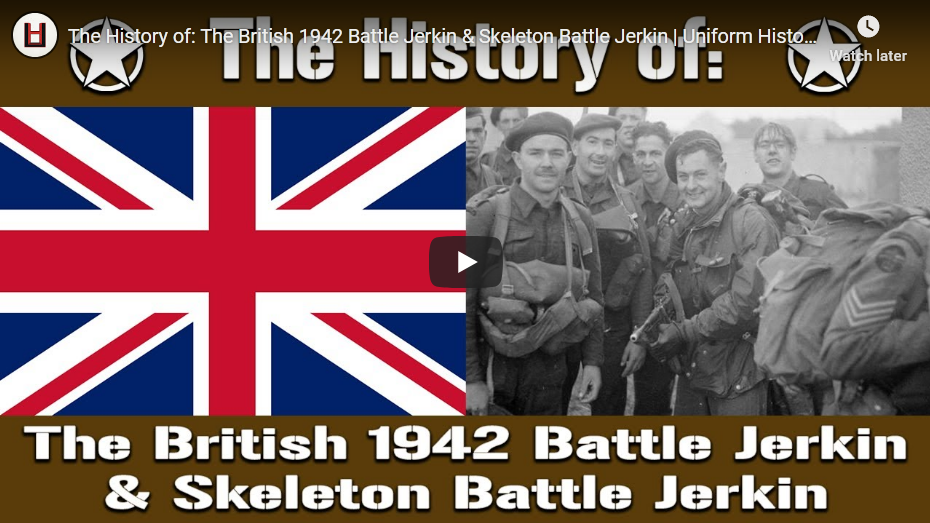
Published 24 Mar 2020The start of another two parter, in this one we cover the British Battle Jerkin family as it helped inspire the US Normandy Assault Vest’s creation.
Music by: https://www.juliancrowhurst.com/

Uniform History
Published 24 Mar 2020The start of another two parter, in this one we cover the British Battle Jerkin family as it helped inspire the US Normandy Assault Vest’s creation.
Music by: https://www.juliancrowhurst.com/
There have been better attempts at marching, and they have been made by penguins. Sergeant Jackrum brought up the rear in the cart, shouting instructions, but the recruits moved as if they’d never before had to get from place to place. The sergeant yelled the swagger out of their steps, stopped the cart and for a few of them held an impromptu lesson in the concepts of “right” and “left” and, by degrees, they left the mountains.
Terry Pratchett, Monstrous Regiment, 2003.
World War Two
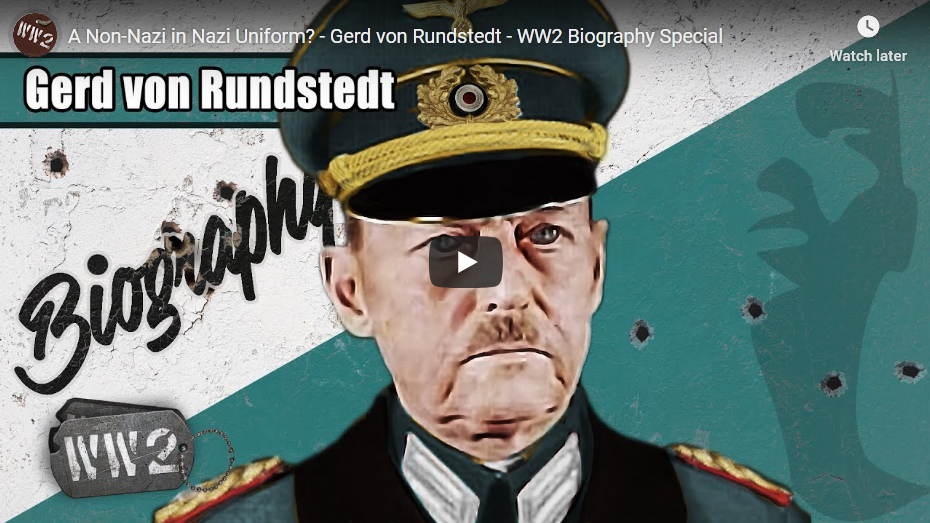
Published 30 Jun 2020Most of the German high-command are not committed National Socialists. So what were like and why did they still serve the Nazi regime?
Join us on Patreon: https://www.patreon.com/TimeGhostHistory
Or join The TimeGhost Army directly at: https://timeghost.tvFollow WW2 day by day on Instagram @World_war_two_realtime https://www.instagram.com/world_war_two_realtime
Between 2 Wars: https://www.youtube.com/playlist?list…
Source list: http://bit.ly/WW2sources
Hosted by: Indy Neidell
Written by: Francis van Berkel
Director: Astrid Deinhard
Producers: Astrid Deinhard and Spartacus Olsson
Executive Producers: Astrid Deinhard, Indy Neidell, Spartacus Olsson, Bodo Rittenauer
Creative Producer: Joram Appel
Post-Production Director: Wieke Kapteijns
Research by: Wolfgang Seitz
Edited by: Mikołaj Cackowski
Sound design: Marek Kamiński
Map animations: Eastory (https://www.youtube.com/c/eastory)Colorizations by:
Adrien Fillon – https://www.instagram.com/adrien.colo…
Dememorabilia – https://www.instagram.com/dememorabilia/
Carlos Ortega Pereira, BlauColorizations – https://www.instagram.com/blaucoloriz…
Julius Jääskeläinen – https://www.facebook.com/JJcolorization/
Cassowary Colorizations https://www.flickr.com/photos/cassowa…
Norman Stewart – https://oldtimesincolor.blogspot.com/Sources:
Map of Europe 1871, courtesy Alexander Altenhof https://commons.wikimedia.org/wiki/Fi…
Bundesarchiv
Narodowe Archiwum CyfroweSoundtracks from the Epidemic Sound:
Phoenix Tail – “At the Front”
Philip Ayers – “Trapped in a Maze”
Skrya – “First Responders”
Johan Hynynen – “Dark Beginning”
Gunnar Johnsen – “Not Safe Yet”
Farrell Wooten – “Blunt Object”Archive by Screenocean/Reuters https://www.screenocean.com.
A TimeGhost chronological documentary produced by OnLion Entertainment GmbH.
Ted Campbell looks at the state of the reserves, specifically the Army Reserve:
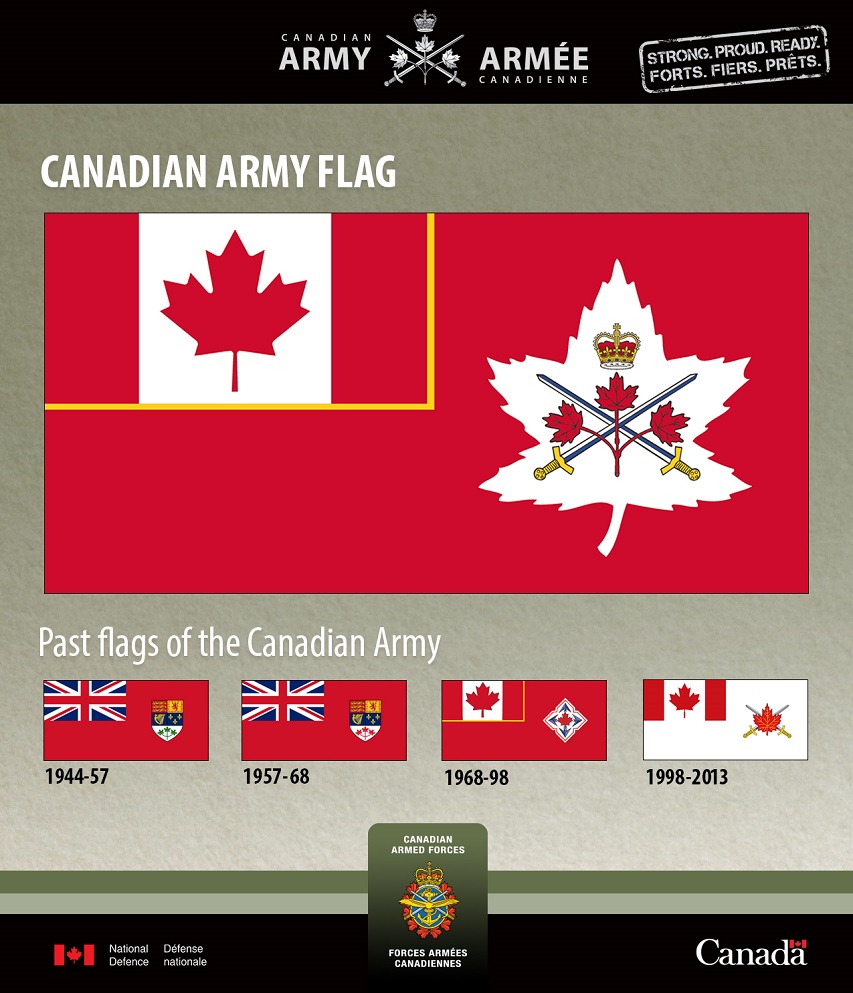
For those interested, and every thinking Canadian should have some, albeit limited interest in the subject, there is an interesting thread over on Army.ca which deals with the problems (there are a lot of them) in making Canada’s reserve Army (the militia if you’re old enough) into an effective force.
I’m going to go with what I think is the majority opinion and say that our Army reserve, in particular, is ineffective. That does not mean that it does not do yeoman service: Canada’s tiny regular Army could not have conducted sustained combat operations in Afghanistan from 2002 to 2014 unless thousands and thousands of reserve force soldiers had stepped up. They were mostly young men, many looking for some combination of a full-time job, some adventure, a faster route into the regular Army, or even a sort of “gap year” experience, but some, like Canada’s current Defence Minister Harjit Sajjan, were middle-aged senior officers when they took a year off from their civilian careers to serve. Today, as I write many reserve force soldiers are serving in a new sort of front-line: long term care facilities that have been ravaged by the COVID-19 virus. The one problem that Canada does NOT have in its Army (regular or reserve) is the quality of the people who serve ~ they are, by and large, amongst the best soldiers in the world and, equally, especially the reservists, Canada’s finest citizens.
But too many people seem to be content with the notion that reserve Army is doing enough by providing a pool of individuals to fill up or augment regular Army units in an emergency. If that’s all the country wants, if that’s the level of capability for which we are willing to settle, then I think we, as a nation, do not deserve the service of the men and women in our reserve Army units.
World War Two
Published 18 Jun 2020When the Nazi war machines tears through Poland, France, and the Soviet Union, people will call it Blitzkrieg. But what is Blitzkrieg and is it anything that unique?
Join us on Patreon: https://www.patreon.com/TimeGhostHistory
Or join The TimeGhost Army directly at: https://timeghost.tvFollow WW2 day by day on Instagram @World_war_two_realtime https://www.instagram.com/world_war_two_realtime
Between 2 Wars: https://www.youtube.com/playlist?list…
Source list: http://bit.ly/WW2sourcesHosted by: Indy Neidell
Written by: Francis van Berkel
Director: Astrid Deinhard
Producers: Astrid Deinhard and Spartacus Olsson
Executive Producers: Astrid Deinhard, Indy Neidell, Spartacus Olsson, Bodo Rittenauer
Creative Producer: Joram Appel
Post-Production Director: Wieke Kapteijns
Research by: Adam Adkins
Edited by: Mikołaj Cackowski
Sound design: Marek Kamiński
Map animations: Eastory (https://www.youtube.com/c/eastory)Colorizations by:
Jaris Almazani (Artistic Man) – https://instagram.com/artistic.man?ig… (edited)
Carlos Ortega Pereira, BlauColorizations – https://www.instagram.com/blaucoloriz…
Julius Jääskeläinen – https://www.facebook.com/JJcolorization/
Dememorabilia – https://www.instagram.com/dememorabilia/
Musvage https://commons.wikimedia.org/wiki/Fi…
Klimbim https://www.flickr.com/photos/2215569…Sources:
Portrait of Basil Liddell-Hart, courtesy National Portrait Gallery
Portrait of Douglas McGarel Hogg, courtesy National Portrait Gallery
IWM H 20697, Q 6337, D 1966
Bundesarchiv
from the Noun Project: Target by RITASYA, documents by DinosoftLab, Tank by mbok sumirna, Armored Car by Martin, Plane by Graphic Enginer, transceiver by Eucalyp
Breaking A Wall Down (With A Hammer) by scampsie https://freesound.org/people/scampsie…Soundtracks from the Epidemic Sound:
Johannes Bornlof – “Last Man Standing 3”
Reynard Seidel – “Deflection”
Fabien Tell – “Last Point of Safe Return”
Hakan Eriksson – “Epic Adventure Theme 4”
Johannes Bornlof – “The Inspector 4”
Johannes Bornlof – “Death And Glory”
Bonnie Grace – “The Dominion”
Bonnie Grace – “Imperious”Archive by Screenocean/Reuters https://www.screenocean.com.
A TimeGhost chronological documentary produced by OnLion Entertainment GmbH.

The Tank Museum
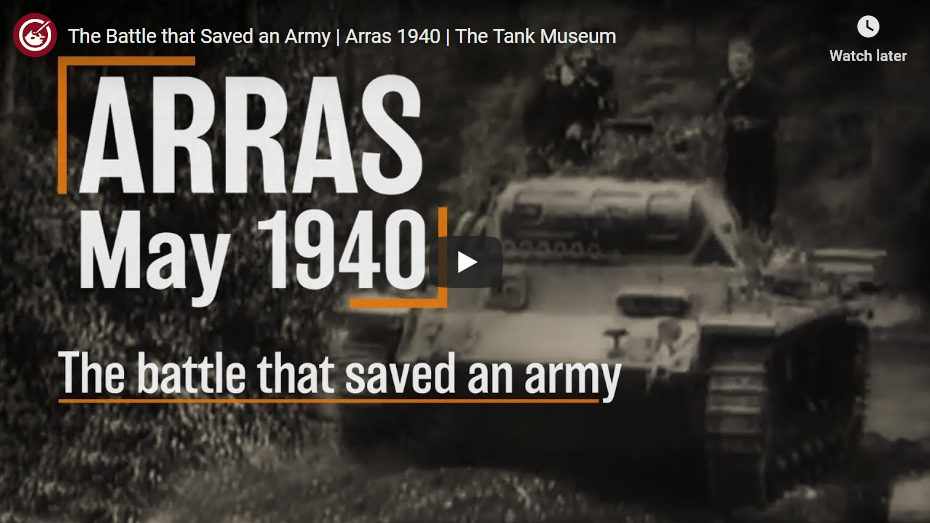
Published 17 May 2020Encircled by the Germans in North-West France, the Battle of Arras, 21st May 1940, was a successful Allied counter-attack which allowed French and British troops to be evacuated at Dunkirk. Curator David Willey, presents his talk on the WW2 Battle of Arras from home.
For more on the Blitzkrieg see David’s Tank Story Hall tour https://www.youtube.com/watch?v=eysQa…
Support the work of The Tank Museum on Patreon: ► https://www.patreon.com/tankmuseum
Visit The Tank Museum SHOP & become a Friend: ► https://tankmuseumshop.org/Twitter: ► https://twitter.com/TankMuseum
Instagram: ► https://www.instagram.com/tankmuseum/
Tiger Tank Blog: ► http://blog.tiger-tank.com/
Tank 100 First World War Centenary Blog: ► http://tank100.com/
World War Two
Published 11 Jun 2020What good is your army if you can’t supply it? As the German army prepares to invade the massive lands of the Soviet Union, it faces hefty production, logistical and supply challenges.
Join us on Patreon: https://www.patreon.com/TimeGhostHistory
Or join The TimeGhost Army directly at: https://timeghost.tvFollow WW2 day by day on Instagram @World_war_two_realtime https://www.instagram.com/world_war_t…
Between 2 Wars: https://www.youtube.com/playlist?list…
Source list: http://bit.ly/WW2sourcesWritten and Hosted by: Indy Neidell
Director: Astrid Deinhard
Producers: Astrid Deinhard and Spartacus Olsson
Executive Producers: Astrid Deinhard, Indy Neidell, Spartacus Olsson, Bodo Rittenauer
Creative Producer: Joram Appel
Post-Production Director: Wieke Kapteijns
Research by: Indy Neidell
Edited by: Mikołaj Cackowski
Sound design: Marek Kamiński
Map animations: Eastory (https://www.youtube.com/c/eastory)Colorizations by:
Carlos Ortega Pereira, BlauColorizations – https://www.instagram.com/blaucoloriz…
Julius Jääskeläinen – https://www.facebook.com/JJcolorization/
Cassowary Colorizations – https://www.flickr.com/photos/cassowa…Sources:
IWM Q 7084, Q 9333, Q 7105, Q 5238
Narodowe Archiwum Cyfrowe
Bundesarchiv
from the Noun Project: Lorry by Andrew Cameron, Train by Cipto Nur Khoir, Train by priyanka, screws by Danil Polshin, screw by ibrandify, screw by DinosoftLab
18th German Panzer Division mark, courtesy Plbcr https://commons.wikimedia.org/wiki/Fi…
Picture of the Achtung-Panzer! cover, courtesy courtesy Drrcs15 https://commons.wikimedia.org/wiki/Fi…Soundtracks from the Epidemic Sound
Phoenix Tail – “At the Front”
Hakan Eriksson – “Epic Adventure Theme 3”
Rannar Sillard – “March Of The Brave 4”
Johannes Bornlof – “The Inspector 4”
Fabien Tell – “Last Point of Safe Return”
Johannes Bornlof – “Deviation In Time”
Reynard Seidel – “Deflection”
Philip Ayers – “Trapped in a Maze”
Rannar Sillard – “March Of The Brave 10”Archive by Screenocean/Reuters https://www.screenocean.com.
A TimeGhost chronological documentary produced by OnLion Entertainment GmbH.
From the comments:
World War Two
3 hours ago
Many think of World War Two as this modern, mechanised, fast-paced, mobile Blitzkrieg war. But despite the flashy propaganda films of soldier-filled trucks and tanks charging through big open fields in Eastern Europe, the German and Soviet war effort heavily relied on horses. In fact, hundreds of thousands of horses were deployed in the German army on the forefront of Operation Barbarossa. Over 2.5 million horses would “serve” in the German army in the entirity of World War Two. Now, our entire channel relies on the hefty horsepower that our community we like to call the TimeGhost Army provides us with. Join the effort and support us on www.patreon.com/timeghosthistory or https://timeghost.tv!
Cheers, Joram

The Armchair Historian
Published 14 Sep 2018Sign up for The Armchair Historian website today:
https://www.thearmchairhistorian.com/Our Twitter: https://twitter.com/ArmchairHist
Sources:
The Rise and Fall of Prussia, Sebastian Haffner
Germans and Slavs, Arno Lubos
Frederick the Great, Tim BlanningMusic:
“Hungarian Rhapsody” by Franz Liszt“Twenty six variations on La Folia de Spagna”, London Mozart Players
Matthias Bamert, conductor*Correction 1: In 1648, Brandenburg-Prussia also acquired parts of Pomerania, which isn’t shown in the video. Pomerania is a state directly above Brandenburg.
The Tank Museum
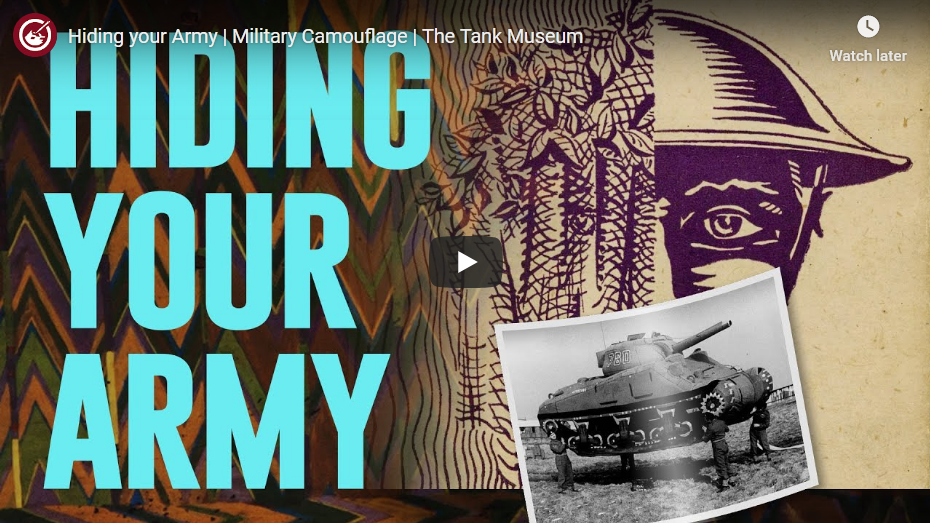
Published 10 May 2020Curator David Willey talks to you about military camouflage, from home! He takes a look at military uniform and vehicles.
Support the work of The Tank Museum on Patreon: ► https://www.patreon.com/tankmuseum
Visit The Tank Museum SHOP & become a Friend: ► https://tankmuseumshop.org/Twitter: ► https://twitter.com/TankMuseum
Instagram: ► https://www.instagram.com/tankmuseum/
Tiger Tank Blog: ► http://blog.tiger-tank.com/
Tank 100 First World War Centenary Blog: ► http://tank100.com/
Military History Visualized
Published 21 Aug 2018Join me in War Thunder for free using this link http://v2.xyz/WarThunderMilitaryHistory and get a premium tank or aircraft and three days of premium time as a bonus.
The popular view is that the Wehrmacht used a combination of Panzers and Stukas to roll over Poland, Denmark, the Netherlands, Belgium, France and later the Soviet Union. Whereas the Panzers were heavily supported by Stukas overwhelming enemy ground forces.
The problem is that the details on how this was actually done are rather scarce. As such, there are various assumptions and misconceptions around, at least I had plenty of them myself before I took a closer look. So, in this video we will take a deeper dive on how Panzers and Stukas actually coordinated their efforts in Poland 1939, France 1940 and the Soviet Union 1941 (Operation Barbarossa).
“Kommandeure der Luftwaffe” (Commanders of the Air Force) – usually called Koluft.
“Flieger Verbindungsoffiziere” (Pilot Liason Officers) – usually called Flivo.
»» SUPPORT MHV ««
» patreon – https://www.patreon.com/join/mhv
» paypal donation – https://www.paypal.com/cgi-bin/webscr…
» Book Wishlist https://www.amazon.de/gp/registry/wis…»» MERCHANDISE – SPOILS OF WAR ««
» shop – https://www.redbubble.com/people/mhvi…»» SOCIAL MEDIA ««
» twitter – https://twitter.com/MilHiVisualized
» twitch – https://www.twitch.tv/militaryhistory…
» minds.com – https://www.minds.com/militaryhistory...» SOURCES «
Corum, James S.: “The Luftwaffe’s Army Support Doctrine, 1918-1941”. In: The Journal of Military History, Vol. 59, No. 1 (Jan., 1995), p. 53-76
Murray, Williamson: “The Luftwaffe Experience, 1939-1941”. In: Cooling, Benjamin Franklin (ed.): Case Studies in the Development of Close Air Support. Office of Air Force History: Washington DC, United States (1990), p. 71-113
Citino, Robert M.: Blitzkrieg to Desert Storm. The Evolution of Operational Warfare. Kansas University Press: US (2004).
Pöhlmann, Markus: Der Panzer und die Mechanisierung des Krieges: Eine deutsche Geschichte 1890 bis 1945 (Zeitalter der Weltkriege), Paderborn 2016.
Creveld, Martin van; Canby, Steven L.; Brower, Kenneth S.: Air Power and Maneuver Warfare, Air University Press: 1994.
Brütting, Georg: Das waren die deutschen Stuka-Asse. 1939-1945. Motorbuch Verlag: Stuttgart, Germany (1984)
Stahel, David: Operation Barbarossa and Germany’s Defeat in the East. Cambridge University Press: UK (2009)
Das Deutsche Reich und der Zweite Weltkrieg, Band 2: Die Errichtung der Hegemonie auf dem europäischen Kontinent
Das Deutsche Reich und der Zweite Weltkrieg, Band 4: Der Angriff auf die Sowjetunion
Munzel, Oskar: Die deutschen gepanzerten Truppen bis 1945
Corum, James S.: The Roots of Blitzkrieg. Hans von Seeckt and German Military Reform
» DATA CHAIN «
Made with Natural Earth. Free vector and raster map data @ naturalearthdata.com.
Overly Sarcastic Productions
Published 8 May 2020Japan may well have the record for World’s Speediest Industrialization, but how did they accomplish so much so fast without falling victim to Europe’s favorite 19th century pastime of “Colonization”? And how did Japan build up a Pan-Asian empire so darn quickly? All that and more in this deep-dive into the Meiji Restoration!
SOURCES & Further Reading:
Modern Japan: A Very Short Introduction by Goto-Jones.
The Japanese Empire: Grand Strategy from the Meiji Restoration to the Pacific War by Paine.
Bushido: The Soul of Japan by Nitobe.THAT WACKY POLITICAL CARTOON: “Japan Makes Her Debut Under Columbia’s Auspicies” https://tile.loc.gov/storage-services…
This video was edited by Sophia Ricciardi AKA “Indigo”. https://www.sophiakricci.com/
Our content is intended for teenage audiences and up.
PATREON: https://www.Patreon.com/OSP
DISCORD: https://discord.gg/h3AqJPe
MERCH LINKS: https://www.redbubble.com/people/OSPY…
OUR WEBSITE: https://www.OverlySarcasticProductions.com
Find us on Twitter https://www.Twitter.com/OSPYouTube
Find us on Reddit https://www.Reddit.com/r/OSP/

World War Two
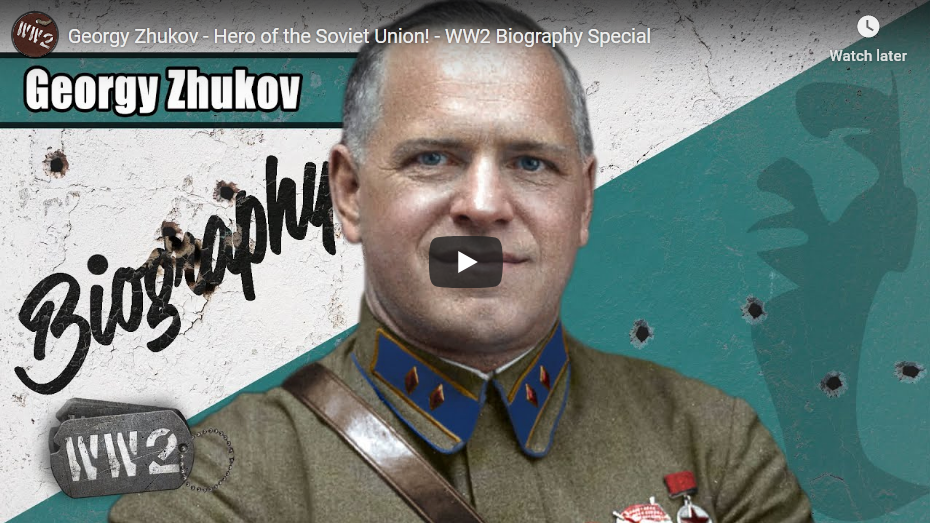
Published 5 May 2020Georgy Zhukov’s rise to one day become the Hero of the Soviet Union did not happen overnight. Instead, the son of a poor tradesman has slowly worked himself up the ranks of the Red Army using his grit, determination, and iron will.
Join us on Patreon: https://www.patreon.com/TimeGhostHistory
Or join The TimeGhost Army directly at: https://timeghost.tvFollow WW2 day by day on Instagram @World_war_two_realtime https://www.instagram.com/world_war_t…
Between 2 Wars: https://www.youtube.com/playlist?list…
Source list: http://bit.ly/WW2sourcesHosted by: Indy Neidell
Written by: Francis van Berkel
Director: Astrid Deinhard
Producers: Astrid Deinhard and Spartacus Olsson
Executive Producers: Astrid Deinhard, Indy Neidell, Spartacus Olsson, Bodo Rittenauer
Creative Producer: Joram Appel
Post-Production Director: Wieke Kapteijns
Research by: Francis van Berkel
Edited by: Mikołaj Cackowski
Sound design: Marek Kamiński
Map animations: Eastory (https://www.youtube.com/c/eastory)Colorizations by:
Carlos Ortega Pereira, BlauColorizations, https://www.instagram.com/blaucoloriz…
Jaris Almazani (Artistic Man), https://instagram.com/artistic.man?ig…
Olga Shirnina, https://klimbim2014.wordpress.com
Sources:
Mil.ru
Cross of Saint-George Issue for subaltern officers 1917, courtesy Robert Prummel
from the Noun Project: company soldiers by Andrei Yushchenko, ak 47 by TMDSoundtrack from the Epidemic Sound:
Reynard Seidel – “Deflection”
Johannes Bornlof – “The Inspector 4”
Johannes Bornlof – “Deviation In Time”
Rannar Sillard – “March Of The Brave 4”
Johannes Bornlof – “Death And Glory 2”
Phoenix Tail – “At the Front”Archive by Screenocean/Reuters https://www.screenocean.com.
A TimeGhost chronological documentary produced by OnLion Entertainment GmbH.
bigclivedotcom
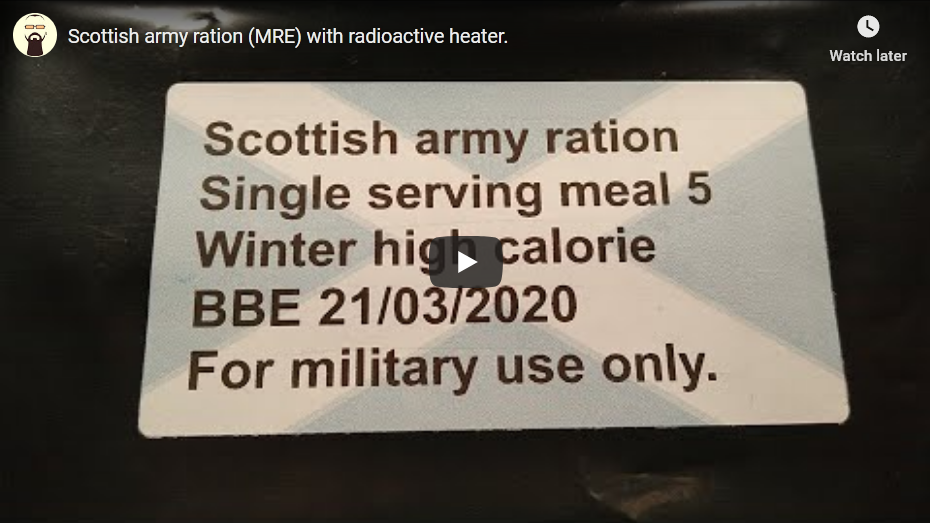
Published 17 Jan 2020A review of a VERY rare Scottish army ration. Carbohydrate-rich to match the Scottish diet and protect against the harsh cold environment of war and Scotland in general.
It appears to be made of all the key Scottish, Irish and Canadian food groups with the bonus of a slightly dangerous ration heater based on radioactive components also used by the Russian army.
It almost seems to be engineered to encourage fighting.
If you enjoy these videos you can help support the channel with a dollar for coffee, cookies and random gadgets for disassembly at:-
http://www.bigclive.com/coffee.htm
This also keeps the channel independent of YouTube’s advertising algorithms allowing it to be a bit more dangerous and naughty.
Forces TV
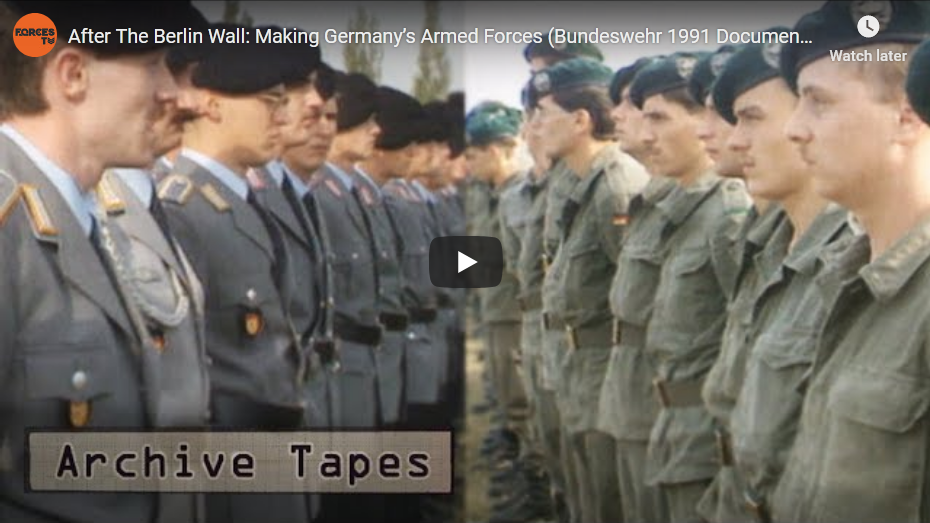
Published 5 Jan 2018It’s more than 27 years since German reunification, when East and West Germany came together again after the fall of the Berlin Wall. This documentary looks at the challenges facing the West German Army as they took over the East German National People’s Army.
Read more: http://www.forces.net/news/comment-bu…
Subscribe to Forces TV: http://bit.ly/1OraazC
Check out our website: http://forces.net
Twitter: https://twitter.com/ForcesNews
How things change … back in 1991, the Bundeswehr had a vast over-supply of military vehicles between the mass of Soviet-era equipment inherited from the DDR and the excess due to planned down-sizing of Germany’s overall military expenditure (the “peace dividend”). Earlier this year, Bild reported that German soldiers are being advised to take personal vehicles during military training exercises, due to a lack of infantry fighting vehicles and other military transport.
The History Guy: History Deserves to Be Remembered
Published 15 Sep 2018Railroads played a critical role for the United Kingdom in the Great War. But the increased burden on the nation’s railways had its cost. In the early morning hours of May 22, 1915, a crowded schedule resulted in the 1915 Quintinshill Rail Disaster, the worst railway disaster in British history. Its victims, mostly men of the 1/7 Royal Scots regiment, deserve to be remembered.
The History Guy uses media that are in the public domain. As photographs of actual events are sometimes not available, photographs of similar objects and events are used for illustration.
The episode includes historical photos involving the Great War and a 1915 railway disaster. Those photos are provided in context of the historical events. No graphic violence is shown.
Patreon: https://www.patreon.com/TheHistoryGuy
The History Guy: History Deserves to Be Remembered is the place to find short snippets of forgotten history from five to fifteen minutes long. If you like history too, this is the channel for you.
Awesome The History Guy merchandise is available at:
https://teespring.com/stores/the-hist…The episode is intended for educational purposes. All events are portrayed in historical context.
#quintinshill #wwi #thehistoryguy



Powered by WordPress