
… for the pilots and crew of one such helicopter, the law of averages caught up to them, and the helicopter, being test-flown well out over the ocean, disappeared without a trace. No mayday, no clue, just a helo and several souls gone, amidst a war that was eating both like a ravenous beast.
Enter the flexible and utilitarian morals and institutional larceny that allows the best-run military machines to cope with the insanity of war. Because a squadron, roughly comparable in size to an infantry battalion, is several hundred men, and even at 1960s prices, multiple millions of dollars worth of machines, tools, parts, equipment, and miscellany, from nuts and bolts to aircraft engines, and everything in between. Canteens, machine guns, flak jackets, toilet seats, high explosive ordnance, and everything else you can imagine, and a million things you cannot, in quantities normally only encountered at a Wal-Mart or Target store, or aboard a 100-car freight train.
And not to put the point too finely, 8000 miles away from home, in a war zone where things were destroyed daily by tons of bombs, rockets, mines, shells, bullets, and of course, the finest pilfering skills of one of the most thriving black market economies of all time. Anything not guarded 24/7 would disappear in minutes in Vietnam, up to and including entire aircraft and other major end-user items. (Think things like APCs, tanks, artillery pieces, jeeps, etc.)
And senior NCOs and junior officers are responsible for all that stuff, as well as every commanding officer having to personally sign for and accept responsibility for everything down to the last door knob and belt buckle. Which, amidst such widespread theft and combat destruction, was sheer insanity coupled with practical impossibility.
Until the helicopter went missing.
Because after a dutiful search for survivors yielded nothing whatsoever, a report had to be filed, and items accounted for. Whereupon some shifty but brilliant NCO or senior NCO pointed out to a junior officer that it would be rather convenient to cover for all the tons of things blown up, stolen, lost, pilfered, etc., to just include them on the manifest and equipment carried on that now gone-forever helicopter.
And so, in rapid order, every crew chief, maintenance shop, and officer from warrant to XO certified, in detail, the manifest of tools, spare parts, and military miscellany that had been aboard the doomed flight, and the CO signed off on it, immediately bringing the reality of property on hand into line with what was actually able to be found, touched, and wielded by that squadron.
This boon to military accounting had, of course, the obvious flaw.
Someone higher up in the hierarchy, presented with the dozens of pages of missing gear on the missing aircraft, did some napkin math, and observed deftly that the weight of the missing items would be roughly twenty times the maximum lifting capacity of the helicopter in question, and the only way a craft actually so burdened could have achieved aerial flight was if someone had detonated an explosive device under the skids in the mid-teen kiloton range. Otherwise, it would have been like trying to get an elephant off the ground using a pair of hummingbird wings.
But the military being the military, no one wanted to rock the boat, and so the obviously fraudulent work of fiction was funneled right back to the gaping maw of Pentagon reports, where it disappeared like the Ark of the Covenant at the end of Raiders Of The Lost Ark, and the cosmic scales were in balance.
Raconteur, “Squadron Property and Cultural Rubicons”, Raconteur Report, 2018-09-27.
March 16, 2021
QotD: Combat accounting
March 14, 2021
Livgardet – 500 Years in Service of the King – Sabaton History 102 [Official]
Sabaton History
Published 13 Mar 2021In 1523, Swedish King Gustav I. Vasa gathered 16 of his bravest and most loyal soldiers around him and appointed them to be his royal bodyguards. From this day on, the Swedish Royal Guards were tasked to guard the King and the royal family in their palace in Stockholm with their lives. Throughout the centuries the Royal Guard took on many names, outfits, and weapons, yet their mission remained the same. They joined the King on his military campaigns, protected him from assassins, and policed the royal estate.
Support Sabaton History on Patreon: https://www.patreon.com/sabatonhistory
Listen to Livgardet: https://music.sabaton.net/Livgardet
Watch the Official Music Video of Livgardet here: https://www.youtube.com/watch?v=Um5R_…
Listen to Sabaton on Spotify: http://smarturl.it/SabatonSpotify
Official Sabaton Merchandise Shop: http://bit.ly/SabatonOfficialShopHosted by: Indy Neidell
Written by: Markus Linke and Indy Neidell
Directed by: Astrid Deinhard and Wieke Kapteijns
Produced by: Pär Sundström, Astrid Deinhard and Spartacus Olsson
Creative Producer: Maria Kyhle
Executive Producers: Pär Sundström, Joakim Brodén, Tomas Sunmo, Indy Neidell, Astrid Deinhard, and Spartacus Olsson
Community Manager: Maria Kyhle
Post-Production Director: Wieke Kapteijns
Editor: Karolina Dołęga
Sound Editor: Marek KamińskiArchive: Reuters/Screenocean – https://www.screenocean.com
Sources:
– Försvarsmuseum Boden
– Sveriges militärhistoriska arv
– Armémuseum
– Pictures of modern Livgardet and Swedish castles courtesy of GI99pema, Manfred Werner (Tsui), Arild Vågen, Jakub Hałun, President’s Secretariat India, Holger.Ellgaard, Andreas Trepte, Jürgen Howaldt, Arild Vågen
– Photo of the changing of the guard at Stockholm Palace by CEphoto, Uwe Aranas
– Ministério da Defesa
– Gustaf II Adolf before Battle of Lützen by Nils Forsberg, courtesy of Gothenburg Museum of Art.
– Poltava History MuseumAll music by: Sabaton
An OnLion Entertainment GmbH and Raging Beaver Publishing AB co-Production.
© Raging Beaver Publishing AB, 2019 – all rights reserved.
March 10, 2021
Where Great Men Were Made: American Officer Training – WW2 Special
World War Two
Published 9 Mar 2021West Point and Annapolis are two of the most iconic military academies in America — maybe even the world. The two institutions have produced the men who are leading America’s fight against the Axis powers.
Join us on Patreon: https://www.patreon.com/TimeGhostHistory
Or join The TimeGhost Army directly at: https://timeghost.tvFollow WW2 day by day on Instagram @ww2_day_by_day – https://www.instagram.com/ww2_day_by_day
Between 2 Wars: https://www.youtube.com/playlist?list…
Source list: http://bit.ly/WW2sourcesHosted by: Indy Neidell
Written by: Markus Linke & Indy Neidell
Director: Astrid Deinhard
Producers: Astrid Deinhard and Spartacus Olsson
Executive Producers: Astrid Deinhard, Indy Neidell, Spartacus Olsson, Bodo Rittenauer
Creative Producer: Maria Kyhle
Post-Production Director: Wieke Kapteijns
Research by: Markus Linke
Edited by: Karolina Dołęga
Sound design: Marek KamińskiColorizations by:
– Daniel Weiss
– Mikołaj Uchman
– Norman Stewart – https://oldtimesincolor.blogspot.com/Sources:
United States Military Academy Library Digital Collection
United States Naval Academy Digital Collections
Library of Congress
New York Public Library
West Point Museum Art Collection
Imperial War Museums: IWM NYF 19427Soundtracks from Epidemic Sound:
– “Ominous” – Philip Ayers
– “The Inspector 4” – Johannes Bornlöf
– “London” – Howard Harper-Barnes
– “Please Hear Me Out STEMS INSTRUMENTS” – Philip Ayers
– “First Responders” – SkryaArchive by Screenocean/Reuters https://www.screenocean.com.
A TimeGhost chronological documentary produced by OnLion Entertainment GmbH.
From the comments:
World War Two
20 hours ago
This episode goes back to our roots of good old-fashioned military history. It’s something we’d like to start doing more of. Of course, West Point and Annapolis are the most famous, but we think that diving into the officer training of forces like the Wehrmacht or Red Army could tell us a lot about their histories. There is also a whole bunch of options for military history topics that we’d like to get into. Let us know in the comments if you have any suggestions.
February 20, 2021
QotD: The Infantry
The infantry (note not “infanteers” as they really hate that) are the actual troops who stand toe-to-toe with the enemy and bayonet them in the face. Boots on the ground, their job is to be pointed at the bad guys and go wreck it. They may get delivered in various ways including aircraft, boat, ship or their own vehicles, but same job: “infantry go smash”. Can be identified by neck tattoos, traditions that the Victorians would think are dated, officers wear faded red trousers and soldiers fight each other on Friday nights.
Combat Boot, “So, ‘capbadges’, what’s that all about then?”, combatboot.co.uk, 2020-11-13.
February 17, 2021
Communist Amazons – Women of the Red Army – WW2 Special
World War Two
Published 16 Feb 2021Hundreds of thousands of Soviet Women were deployed in the Red Army and Red Navy during World War Two. They served in a multitude of functions, from traditional roles like nurses to roles previously associated with men. They were pilots, snipers, tank-crews, and fought on the very front of the lines.
Join us on Patreon: https://www.patreon.com/TimeGhostHistory
Or join The TimeGhost Army directly at: https://timeghost.tvFollow WW2 day by day on Instagram @ww2_day_by_day – https://www.instagram.com/ww2_day_by_day
Between 2 Wars: https://www.youtube.com/playlist?list…
Source list: http://bit.ly/WW2sourcesHosted by: Indy Neidell
Written by: Joram Appel
Director: Astrid Deinhard
Producers: Astrid Deinhard and Spartacus Olsson
Executive Producers: Astrid Deinhard, Indy Neidell, Spartacus Olsson, Bodo Rittenauer
Creative Producer: Maria Kyhle
Post-Production Director: Wieke Kapteijns
Research by: Joram Appel
Edited by: Karolina Dołęga
Sound design: Marek KamińskiColorizations by:
– Klimbim
– Daniel WeissSources:
– National Archives NARA
– Woman and Man in 1930s Soviet Propaganda Poster courtesy of Adam Jones from Flickr
– Yad Vashem: 953
– Library of Congress
– RIA Novosti archive
– BundesarchivSoundtracks from Epidemic Sound:
– “The Inspector 4” – Johannes Bornlöf
– “London” – Howard Harper-Barnes
– “Dark Beginning” – Johan Hynynen
– “Other Sides of Glory” – Fabien Tell
– “Break Free” – Fabien Tell
– “Deviation In Time” – Johannes Bornlof
– “Ominous” – Philip Ayers
– “Moving to Disturbia” – ExperiaArchive by Screenocean/Reuters https://www.screenocean.com.
A TimeGhost chronological documentary produced by OnLion Entertainment GmbH.
From the comments:
World War Two
5 hours ago (edited)
Because of the pandemic, we have not been able to publish episodes of On the Homefront for a while. But don’t worry, we’re working on a new episode, which should arrive in your subscription box this spring. Now, we have made an On the Homefront episode which offers some great context to this episode on Women in the Soviet Armies. It is about (the myth of) Soviet Gender Equality, and you can watch it right here: https://youtu.be/zLcHbUrnl6Q

January 27, 2021
Misunderstood Moments in History – The Spartan Myth
Invicta
Published 27 Oct 2017Start your 30 day free trial here: http://ow.ly/eCd230fiZ7Q
The Spartans are immortalized in history as super soldiers bred for war. However most of what we think we know about them is a lie. Today we will unmask the truth behind the Spartan Myth.
The Great Courses Plus is currently available to watch through a web browser to almost anyone in the world and optimized for the US market. The Great Courses Plus is currently working to both optimize the product globally and accept credit card payments globally.
Documentary Credits:
Research: Dr Roel Konijnendijk
Script: Invicta
Artwork: Milek J
Editing: Invicta
Music: Total War OST, SoundnoteDocumentary Bibliography:
Paul Anthony Cartledge, The Spartans: The World of the Warrior-heroes of Ancient Greece
Nigel Kennell, Spartans: A New History (2010)
S. Hodkinson, Property and Wealth in Classical Sparta (2000)
J. Ducat, Spartan Education: Youth and Society in the Classical Period (2006)
S.M. Rusch, Sparta at War: Strategy, Tactics and Campaigns, 550-362 BC (2011)
E. Rawson, The Spartan Tradition in European Thought (1969)
S. Hodkinson & I.M. Morris (eds.), Sparta in Modern Thought (2012)
January 11, 2021
E-4 Mafia: Why The U.S. Army Has So Many Specialists | Snapshot
Battle Order
Published 3 Oct 2020Why does the U.S. Army have so many Specialists? Join us as we go over the history of the “Specialist” in the army and why so many soldiers are in the E-4 Mafia today.
Support us on Patreon and get access to a variety of exclusive perks like wallpapers, video credits, and priority in future Q&As: https://www.patreon.com/battleorder
Check out our merch shop for new prints, apparel and other stuff!: teespring.com/stores/battleorder
Check out our website for more articles, videos, and graphics on military history: https://www.battleorder.org/
Join our Discord chat here: https://discord.gg/75wfBXP
Social Media:
• Instagram: https://www.instagram.com/battle.order/Music:
• Call of Duty 2, Medal of Honor: Airborne & Pacific Asslt OSTsSources:
• “United States Army Grade Insignia Since 1776” by Preston B. Perrenot
• https://uniform-reference.net/insigni…

December 30, 2020
Operation Nordwind 1945 – The ‘Other’ Battle of the Bulge
Mark Felton Productions
Published 29 Dec 2020The stories of the last big German offensives on the Western Front in WWII — Operations Nordwind and Sonnenwende in Alsace, France, January 1945.
Dr. Mark Felton is a well-known British historian, the author of 22 non-fiction books, including bestsellers Zero Night and Castle of the Eagles, both currently being developed into movies in Hollywood. In addition to writing, Mark also appears regularly in television documentaries around the world, including on The History Channel, Netflix, National Geographic, Quest, American Heroes Channel and RMC Decouverte. His books have formed the background to several TV and radio documentaries. More information about Mark can be found at: https://en.wikipedia.org/wiki/Mark_Fe…
Help support my channel:
https://www.paypal.me/markfeltonprodu…
https://www.patreon.com/markfeltonpro…Disclaimer: All opinions and comments expressed in the ‘Comments’ section do not reflect the opinions of Mark Felton Productions. All opinions and comments should contribute to the dialogue. Mark Felton Productions does not condone written attacks, insults, racism, sexism, extremism, violence or otherwise questionable comments or material in the ‘Comments’ section, and reserves the right to delete any comment violating this rule or to block any poster from the channel.
December 17, 2020
Merrill Breechloading Conversion of the 1841 Mississippi Rifle
Forgotten Weapons
Published 9 Sep 2020http://www.patreon.com/ForgottenWeapons
https://www.floatplane.com/channel/Fo…
Cool Forgotten Weapons merch! http://shop.bbtv.com/collections/forg…
James Merrill of Baltimore had his hand in several Civil War era firearms — rifles built from scratch, conversions of the Jenks carbines, and also conversions of 1841 Mississippi rifles done by the Harpers Ferry Arsenal. Merrill’s conversion involved a knee-joint type lever which could be opened to allow loading of a rifle from the breech. The system was relatively simple, and it was one of three (the others were the Lindner and Montstorm) made in small numbers for testing by Harpers Ferry. It appears that 300 Merrill conversions were done, 100 each of the 1841 Mississippi Rifle, 1842 musket, and 1847 musketoon.
Contact:
Forgotten Weapons
6281 N. Oracle #36270
Tucson, AZ 85740

December 4, 2020
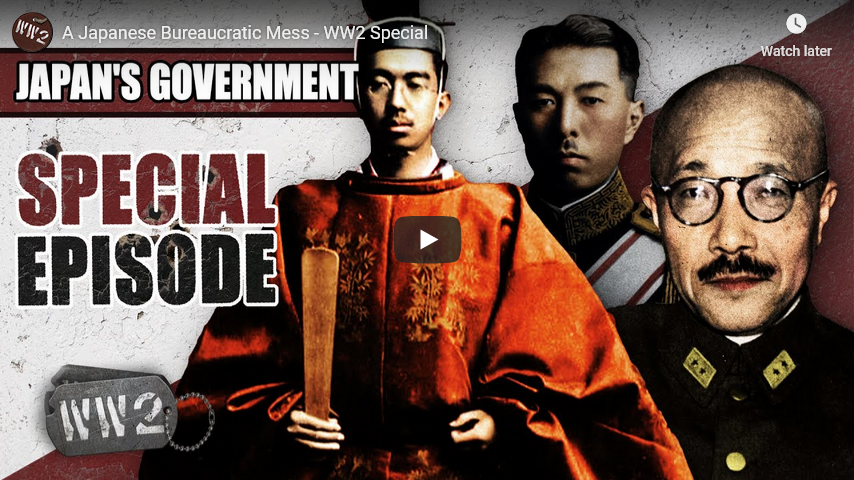
A Japanese Bureaucratic Mess – WW2 Special
World War Two
Published 3 Dec 2020Contrary to popular belief, Imperial Japan was not an absolute monarchy marching (or sailing) to war with singular vision and purpose. Rather, it was a dysfunctional government of competing factions, players and interests.
Join us on Patreon: https://www.patreon.com/TimeGhostHistory
Or join The TimeGhost Army directly at: https://timeghost.tvFollow WW2 day by day on Instagram @ww2_day_by_day – https://www.instagram.com/ww2_day_by_day
Between 2 Wars: https://www.youtube.com/playlist?list…
Source list: http://bit.ly/WW2sourcesWritten and Hosted by: Indy Neidell
Director: Astrid Deinhard
Producers: Astrid Deinhard and Spartacus Olsson
Executive Producers: Astrid Deinhard, Indy Neidell, Spartacus Olsson, Bodo Rittenauer
Creative Producer: Maria Kyhle
Post-Production Director: Wieke Kapteijns
Research by: Indy Neidell
Edited by: Michał Zbojna
Sound design: Marek Kamiński
Map animations: Eastory (https://www.youtube.com/c/eastory)Colorizations by:
Julius Jääskeläinen – https://www.facebook.com/JJcolorization/
Jaris Almazani (Artistic Man) – https://instagram.com/artistic.man?ig…Sources:
From the Noun Project: company soldiers by Andrei Yushchenko, Government by Nithinan Tatah, Shiro by Simon Child, War by Nhor, House by Eucalyp from the Noun ProjectSoundtracks from the Epidemic Sound:
“ES_Paths of a Samurai” – Mandala Dreams
“ES_Sights of the Tokyo Tower” – Sight of Wonders
“ES_The Bloom of Cherry Blossoms” – Sight of Wonders
“ES_Immovable As The Mountain” – Yi Nantiro
“ES_Pacific Shores” – Mandala DreamsArchive by Screenocean/Reuters https://www.screenocean.com.
A TimeGhost chronological documentary produced by OnLion Entertainment GmbH.
QotD: In praise of the “Old Contemptibles”
Ian Hay (Major John Hay Beith), The First Hundred Thousand: Being the Unofficial Chronicle of a Unit of “K(1)”, 1916.
November 28, 2020
QotD: Army recruit training
Ian Hay (Major John Hay Beith), The First Hundred Thousand: Being the Unofficial Chronicle of a Unit of “K(1)”, 1916.
November 22, 2020
Enfield MkI Revolver: Merwin Meets Webley (Sort Of)
Forgotten Weapons
Published 23 Aug 2018http://www.patreon.com/ForgottenWeapons
Cool Forgotten Weapons merch! http://shop.bbtv.com/collections/forg…
Adopted in 1880 to replace the Adams revolver, the Enfield MkI was based on an extraction system patented in the 1870s by Owen Jones of Philadelphia. This was similar in practice to the Merwin & Hulbert, with the barrel and cylinder hinging forward while the cartridge cases were held to the back of the frame. This system allowed empty cases to drop free (except the 6 o’clock position one, which often stuck) while retaining any unfired cartridges in the cylinder. Because the extractor star was fixed to the frame, the piece had to be loaded one round at a time through a loading gate (again, like the Merwin & Hulbert).
In 1882 a number of improvements were made to the design and lockwork, including features to prevent the cylinder from rotating freely and to disconnect the hammer when the loading gate was open. This was adopted as the MkII in 1882. A further change was made in 1887, following the death of a Royal Navy sailor whose gun fell out of its holster and discharged upon hitting the hammer. A new safety mechanism was added to prevent this from happening again, and most guns in service were retrofitted with it.
The Enfield was generally not well received, as it was heavy and a bit awkward to handle. It was issued to the Army, Navy, and RCMP, but replaced by the first adopted Webley top-break revolvers in the late 1880s (Enfield MkII production ceased in 1889). Unlike the Webleys and other private-production guns, there was never a civilian version of the Enfield MkI or MkII made, and they are scarcer to find today as a result.
If you enjoy Forgotten Weapons, check out its sister channel, InRangeTV! http://www.youtube.com/InRangeTVShow
Contact:
Forgotten Weapons
6281 N Oracle #36270
Tucson, AZ 85704

November 17, 2020
Private SNAFU “Censored” WW2 US Army cartoon
PeriscopeFilm
Published 11 Aug 2020Want to support this channel and help us preserve old films? Visit https://www.patreon.com/PeriscopeFilm
Visit our website www.PeriscopeFilm.com
Censored is one of 26 Private SNAFU (Situation Normal, All F*cked Up) cartoons made by the U.S. Army Signal Corps to educate and boost the morale of the troops. The SNAFU character was created by Theodore Geisel (Dr. Seuss) and Phil Eastman, and most were animated by Warner Brothers Animation Studios. They were voiced by actors including Mel Blanc and scored by Carl Stalling. This cartoon Censored, depicts the lengths to which Private SNAFU will go to sneak an uncensored letter in the mail — with terrifying results. Fortunately it all turns out to be a dream, but SNAFU is so shaken that he censors his own mail. The film was obviously inspired by the mass censorship of personal letters by the Army during the war, to reduce the chance that enemy spies would be able to gain intelligence by intercepting them.
Much of the military correspondence during the war took place via V-mail, short for Victory Mail. This was a hybrid mail process used as the primary and secure method to correspond with soldiers stationed abroad. To reduce the cost of transferring an original letter through the military postal system, a V-mail letter would be censored, copied to film, and printed back to paper upon arrival at its destination. The V-mail process is based on the earlier British Airgraph process
During World War II, both the Allies and Axis instituted postal censorship of civil and military mail. The largest organizations were those of the United States, though the United Kingdom employed about 10,000 censor staff while Ireland, a small neutral country, only employed about 160 censors. Both blacklists and whitelists were employed to observe suspicious mail or listed those whose mail was exempt from censorship. In the United States censorship was under the control of the Office of Censorship whose staff count rose to 14,462 by February 1943.
We encourage viewers to add comments and, especially, to provide additional information about our videos by adding a comment! See something interesting? Tell people what it is and what they can see by writing something for example: “01:00:12:00 — President Roosevelt is seen meeting with Winston Churchill at the Quebec Conference.”
This film is part of the Periscope Film LLC archive, one of the largest historic military, transportation, and aviation stock footage collections in the USA. Entirely film backed, this material is available for licensing in 24p HD, 2k and 4k. For more information visit http://www.PeriscopeFilm.com

November 15, 2020
QotD: Early successes in recruit training
(1) Marching though another platoon.
(2) Losing any part or parts of itself.
(3) Adopting a formation which brings it face to face with a blank wall, or piles it up in a tidal wave upon the verandah of the married quarters.
They could not have done that a week ago.
Ian Hay (Major John Hay Beith), The First Hundred Thousand: Being the Unofficial Chronicle of a Unit of “K(1)”, 1916.


