In England all the boasting and flag-wagging, the “Rule Britannia” stuff, is done by small minorities. The patriotism of the common people is not vocal or even conscious. They do not retain among their historical memories the name of a single military victory. English literature, like other literatures, is full of battle-poems, but it is worth noticing that the ones that have won for themselves a kind of popularity are always a tale of disasters and retreats. There is no popular poem about Trafalgar or Waterloo, for instance. Sir John Moore’s army at Corunna, fighting a desperate rear-guard action before escaping overseas (just like Dunkirk!) has more appeal than a brilliant victory. The most stirring battle-poem in English is about a brigade of cavalry which charged in the wrong direction. And of the last war, the four names which have really engraved themselves on the popular memory are Mons, Ypres, Gallipoli and Passchendaele, every time a disaster. The names of the great battles that finally broke the German armies are simply unknown to the general public.
The reason why the English anti-militarism disgusts foreign observers is that it ignores the existence of the British Empire. It looks like sheer hypocrisy. After all, the English have absorbed a quarter of the earth and held on to it by means of a huge navy. How dare they then turn round and say that war is wicked?
It is quite true that the English are hypocritical about their Empire. In the working class this hypocrisy takes the form of not knowing that the Empire exists. But their dislike of standing armies is a perfectly sound instinct. A navy employs comparatively few people, and it is an external weapon which cannot affect home politics directly. Military dictatorships exist everywhere, but there is no such thing as a naval dictatorship. What English people of nearly all classes loathe from the bottom of their hearts is the swaggering officer type, the jingle of spurs and the crash of boots. Decades before Hitler was ever heard of, the word “Prussian” had much the same significance in England as “Nazi” has to-day. So deep does this feeling go that for a hundred years past the officers of the British Army, in peace-time, have always worn civilian clothes when off duty.
George Orwell, “The Lion And The Unicorn: Socialism and the English Genius”, 1941-02-19.
September 20, 2021
QotD: English jingoism
August 23, 2021
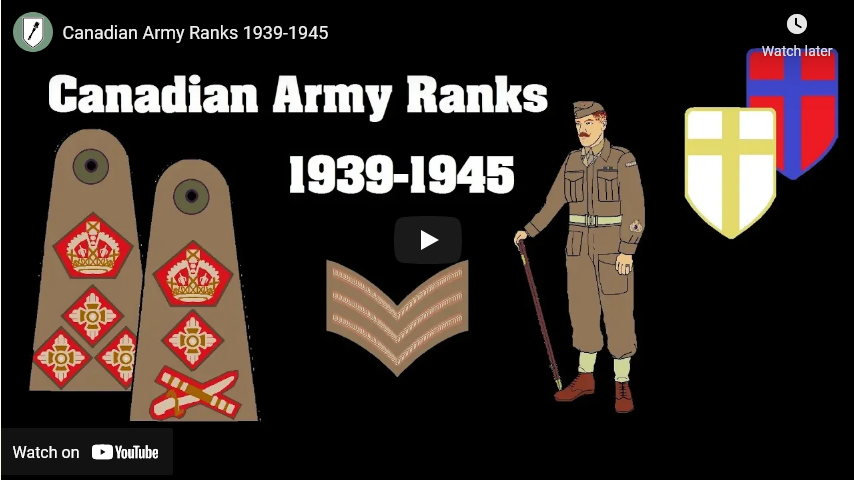
Canadian Army Ranks 1939-1945
HandGrenadeDivision
Published 6 Sep 2019A brief video describing the ranks used by the Canadian Army in the Second World War, with an equally brief introduction to the General Staff system.
Further reading and resources regarding the Canadian Army of the Second World War:
Service Publications
canadiansoldiers.com
http://www.canadiansoldiers.com
Department of National Defence Directorate of History and Heritage
August 18, 2021
The Conscripts and Conscientious Objectors of World War Two – WW2 Special
World War Two
Published 17 Aug 2021In keeping with their ideals of personal liberty, Britain and the United States have historically maintained relatively small armies made up of volunteer soldiers. When Germany and Japan mobilize huge numbers of well-trained conscripts and sweep across Europe and Asia, the democratic allies devote huge resources to closing the gap, while respecting the rights of those who object to fighting on moral grounds.
(more…)
August 17, 2021
QotD: The “Crisis of the Third Century”
If you’ve read much about (or especially by) them, you know that the Romans were, for lack of a better term, paranoid. It was simply incompatible with the Roman psyche to have any large, organized group of non-Romans anywhere near the Empire’s borders … so the Empire kept expanding, first reducing, then Romanizing, every conceivable threat. They kept doing this long past the point of negative returns, such that the Empire collapsed under the strain of trying to hold itself together.
Stop me if this sounds familiar: A “government” whose only claim to legitimacy is naked force. A large, increasingly rapacious, increasingly class-conscious military with no obvious enemies to fight, and no ability to subdue the ones it settles for. A large, increasingly rapacious, increasingly caste-conscious bureaucracy that views the whole “Imperial” project as one big tax farming operation. Massive, ever-increasing wealth disparities that can only be very temporarily alleviated by debasing the currency, because structural reform is culturally impossible from above, and physically impossible from below. And to top it all off, a weird, apocalyptic religious cult totally destroying the few pan-imperial cultural institutions, including the military.
The history of the Third Century is insanely complex, not well understood in many respects even by field specialists, but the gist of it is clear enough: Some general somewhere decides he’d like to have a crack at emperorizing, so he gets his troops to throw a purple toga on him and proceeds to take on the incumbent. Some other general thinks that’s a pretty nifty idea, so he does the same thing, taking on both the incumbent and the pretender. Not wanting to be left out of the fun, the incumbent’s main general murders the incumbent and takes the crown for himself, fighting whoever’s left, plus whichever of his subordinate commanders decide they want a shot at the big chair. The Senate rubber-stamps one of these clowns, or some other general who decides he’d like to throw his toga into the ring, and civil war follows civil war until one of them temporarily triumphs … only for the same thing to happen again once the shine is off the new guy (usually in less than a year or two).
They called ’em the “Barracks Emperors” for a reason, y’all. And it’s actually worse than that, since lots of times the rebel generals didn’t bother going for the big prize back in Italy. Lots of them decided they’d do just fine ruling, say, Britain, or parts of Gaul, or Asia Minor or Egypt or what have you, while the other guys slugged it out for the increasingly marginalized, if not totally meaningless, “official” title. Declare yourself the Emperor of ___, issue some slapped-together coins with your picture on them, and go nuts. The “Gallic Emperors” had a run of nearly half a century like that — not bad at all for Late Antiquity.
Severian, “The Crisis of the Third Decade”, Rotten Chestnuts, 2021-03-18.
August 8, 2021
QotD: Clausewitz’s concept of “friction” in war
Everything in war is very simple, but the simplest thing is difficult. The difficulties accumulate and end by producing a kind of friction that is inconceivable unless one has experienced war.
[Military theorist Carl von] Clausewitz’s most enduring and insightful idea in On War is friction.
Friction explains why a general can have a plan for battle that looks perfect on paper, but falls apart in real life. Friction torpedos morale and slows down action.
Friction isn’t just one thing. It’s the accumulation of a bunch of little things. Says Clausewitz:
Countless minor incidents — the kind you can never really foresee — combine to lower the general level of performance, so that one always falls far short of the intended goal.
To help his readers understand friction in warfare, he gives an analogy from everyday life in the 19th century that we can still imagine parallels to today:
Imagine a traveler who late in the day decides to cover two more stages before nightfall. Only four or five hours more, on a paved highway with relays of horses: it should be an easy trip. But at the next station he finds no fresh horses, or only poor ones; the country grows hilly, the road bad, night falls, and finally after many difficulties he is only too glad to reach a resting place with any kind of primitive accommodation.
As the complexity in any endeavor increases, friction increases as well, because there are simply more opportunities for things to get mucked up. The bigger and more complicated the endeavor, the larger the amount of friction.
A factor that increases complexity, and thus friction, more than any other, is the inclusion of other human beings. Humans are the ultimate friction creators. Clausewitz notes that a battalion, by its very nature, will experience plenty of friction, because it’s made up of many different individuals who can interact with each other in a multiplicity of problem-producing ways. One soldier gets scared and runs, resulting in other soldiers catching the fear contagion and running. Before you know it, you’ve got an unplanned, chaotic retreat. Damn you, friction!
[…]
Thus, Clausewitz says, the first step to getting a handle on friction is to recognize its reality, and inevitability:
An understanding of friction is a large part of that much-admired sense of warfare which a good general is supposed to possess. … The good general must know friction in order to overcome it whenever possible, and in order not to expect a standard of achievement in his operations which this very friction makes impossible.
To keep friction from throwing you for a loop, you have to manage your expectations; you have to account for friction in assessing what you’re realistically going to be able to accomplish. Making this assessment, accurately gauging how much friction you’ll encounter, Clausewitz says, is a matter of instinct, honed over time and field-testing:
As with a man of the world instinct becomes almost habit so that he always acts, speaks, and moves appropriately, so only the experienced officer will make the right decision in major and minor matters — at every pulsebeat of war. Practice and experience dictate the answer: “this is possible, that is not”.
Even though it’s crucial to accept the inevitability of friction, this needn’t be a matter of resentful resignation. If friction is normal in any endeavor, then it is something to embrace, and even take a kind of pride in — a sign that you’re doing something, taking action, engaging in life’s heroic struggle.
Brett and Kate McKay, “Clausewitz on Overcoming the Annoying Slog of Life”, The Art of Manliness, 2021-04-27.
August 2, 2021
QotD: Western military superiority
Victor Davis Hanson, Carnage and Culture, 2001.
July 30, 2021
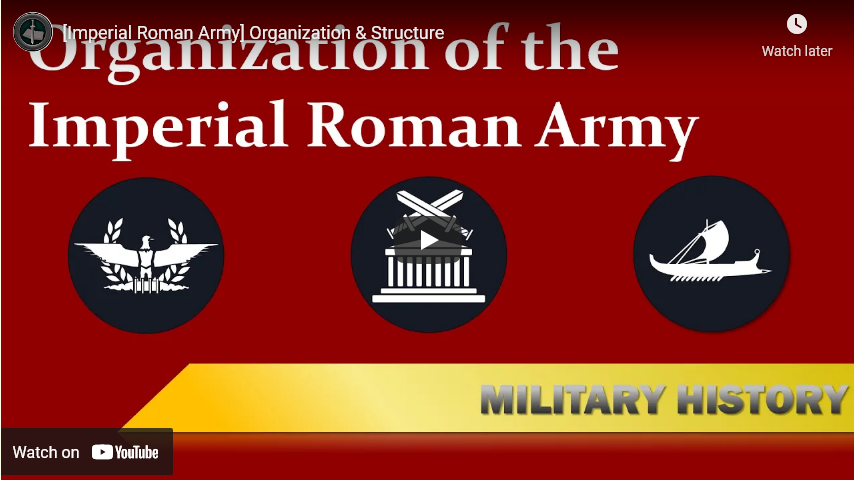
Imperial Roman army organization & structure
Military History Visualized
Published 16 Jan 2016Patreon: https://www.patreon.com/join/mhv
The Imperial Roman Army consisted of the provincial armies, the garrison in Rome and the Roman Navy.
The brunt of the forces was in the Provincial armies that were made up by the legions and their auxiliaries in total around 240k men. The Garrison in Rome was about 15k men, although few in numbers these units were the most powerful in political terms. Finally, the Navy consisted of about 45k men.
*Sources*
Le Bohec, Yann: The Imperial Roman ArmyWebster, Graham: The Roman Imperial Army of the First and Second Centuries A.D
Nemeth, Eduard; Fodorean, Florin: Römische Militärgeschichte
Fields, Nic: The Roman Army of the Principate 27 BC – AD 117
Culham, Phyllis: “Imperial Rome at War”. In: The Oxford Handbook of Warfare in the Classical World
July 26, 2021
QotD: British Expeditionary Force (BEF) leadership in France, 1940
Gort was not a lone offender in Alanbrooke’s opinion. The latter believed that most of his fellow senior officers lacked Conceptual Skill. He suggested that the lack of strategic ability amongst British senior commanders was due to the best thinkers of his generation being lost in the Great War. Alanbrooke’s theory is questionable, for the Germans also lost many talented officers in the Great War, yet between the wars, actively promoted intellectual stimulation amongst its officer corps. Amongst the leading thinkers were Heinz Guderian, often regarded as the father of Blitzkrieg, although in his own book, Panzer Leader, is the first to admit that he took British ideas and developed them into something that worked. The British, it seems, were less stimulated by their own initial thinking on modern war.
This does not imply the Germans were unequivocal masters of big thinking. Many German army commanders were as locked into traditional thinking as their Allied opposite numbers. Guderian asserts that the sole reason the BEF was allowed to escape from Dunkirk was because the German Army High Command issued repeated halt orders to Guderian’s panzer corps, allowing the British the breathing space needed to avoid total defeat.
Both sides suffered in this area [interpersonal skills], and the problems arose mainly at senior level. Despite many British commanders speaking good French, the respective commanders on each side of this coalition had radically different opinions of how operations should be conducted and coordinated. There was virtually no attempt to ensure interoperability before May 1940 and the Anglo-French coalition was, at best, a well-mannered but reluctant partnership which did not stand the test of high-tempo operations well.
The lack of trust between the Allies ultimately drove Gort to contradict direct orders and use his last reserves to shore up the BEFs northern flank, rather than fritter them away in a joint counter-attack with the French that was dead in the water before it was launched. By the 25th May, just two weeks after the opening of combat operations, the Anglo-French coalition was crumbling. Bizarrely, this decision by Gort to abandon the French actually testifies to his one great moment of Conceptual Skill. He realised he was essentially committing career suicide when he ordered his troops towards the coast, but he also had the foresight to realise that the battle for France was already lost and that his sole duty from then on was to save Britain’s army.
Andy Johnson, “Dunkirk: Leadership Lessons in a Hard School”, The Wavell Room, 2017-08-01.
July 24, 2021
History Hijinks: Rome’s Crisis of the Third Century
Overly Sarcastic Productions
Published 23 Jul 2021Local Empire Too Stubborn To Die — Field Historian Blue is here at the scene of Ancient Rome with more on the Crisis of the Third Century.
SOURCES & Further Reading
https://www.britannica.com/place/anci… + Aurelian, Postumus, Zenobia
The Great Courses The Roman Empire: From Augustus to The Fall of Rome lectures 13 14 and 15, “From Commodus to Caracalla”, “The Crisis of the Third Century” and “Diocletian and Late Third-Century Reforms”, by Gregory Aldrete
The Enemies of Rome Chapter 20 “Parthia, Persia, Palmyra” by Stephen KershawPartial Tracklist: “Scheming Weasel”, Sneaky Snitch”, “Marty Gots A Plan” Kevin MacLeod (incompetech.com)Licensed under Creative Commons: By Attribution 4.0 License
http://creativecommons.org/licenses/b…Content is intended for teenage audiences and up.
PATREON: https://www.Patreon.com/OSP
PODCAST: https://overlysarcasticpodcast.transi…
DISCORD: https://discord.gg/osp
MERCH LINKS: http://rdbl.co/osp
OUR WEBSITE: https://www.OverlySarcasticProductions.com
Find us on Twitter https://www.Twitter.com/OSPYouTube
Find us on Reddit https://www.Reddit.com/r/OSP/
From the comments:
Facundo Cadaa
2 hours ago
Thumbnail: “Rome’s big crisis”Do you have any idea how little that narrows it down?
July 6, 2021
History Summarized: The Wild West
Overly Sarcastic Productions
Published 7 Sep 2018This video was commissioned by Patron Matthew Ritter. Thanks Matthew! If you would like to support the channel and earn special rewards, check out our Patreon page: www.patreon.com/OSP
Articles referenced — Because Gun Control and Black Cowboys sound incredulous on paper so I can see why you wouldn’t believe me but it’s real and there’s tons of proof:
Gun Control in the West: https://www.smithsonianmag.com/histor…
Black Cowboys: https://www.smithsonianmag.com/histor…MERCH LINKS:
Shirts – https://overlysarcasticproducts.threa…
All the other stuff – http://www.cafepress.com/OverlySarcas…Find us on Twitter @OSPYouTube!
Another article covering gun control in the “Wild West” says:
… enforcement of the anti carry ordinances in Tombstone and Dodge City and other frontier towns like Deadwood, South Dakota that had them were highly selective. In Tombstone, those friendly with the Earps and their buddies got a pass. In Dodge City those friendly with the powers that be and or the Dodge City Gang — which included Wyatt when there — got a pass too on the side of Dodge with the carry ban. That “side” is a rarely mentioned fact. […] The famous sign reading “The Carrying of Firearms Strictly Prohibited” so often used to promote similar laws today was at the entrance to the North incorporated portion where the “decent” Dodge permanent residents sought to exclude riffraff like the drovers and maintain a somewhat puritan lifestyle. Women were not allowed in saloons and singing or dancing was against the law.
The cowboys and other undesirables were supposed to stay below the Deadline according to Wyatt Earp in the book The Old West in Fact and Film: History Versus Hollywood: “Below the deadline, as far as the marshals force was concerned, almost anything went, and a man could get away with gunplay if he wasn’t too careless about lead. North of the railroad, gun toting was justification for shooting on site, if an officer was so inclined, and meant certain arrest.”
Sounds like cut no slack enforcement, but there are simply too many accounts of gun carry on the North side to believe Earp’s account was anything other than his famed self promoting hyperbole. One example is the 1879 gunfight in the Long Branch Saloon between gamblers Frank Loving and Levi Richardson. Loving killed Richardson and a magistrate ruled the killing justifiable self defense. Even so, why was he not charged with illegal gun carry? Possibly because Dodge’s no carry laws and others like it else- where were not put on the books purely for public safety reasons as anti-Second Amendment activists claim …

May 19, 2021
Racism of the US Army – Fighting for Freedom? – WW2 Special
World War Two
Published 18 May 2021While the US was fighting for freedom and liberty across the globe, their home country and armies are still deeply segregated, causing minority groups in the USA to fight not one but two wars.
(more…)
May 13, 2021
Were There Really BLACK CONFEDERATES???!!!
Atun-Shei Films
Published 24 Dec 2020Checkmate, Lincolnites! Debunking the Lost Cause myth that tens of thousands of black men served as soldiers in the Confederate army during the American Civil War.
Support Atun-Shei Films on Patreon ► https://www.patreon.com/atunsheifilms
Leave a Tip via Paypal ► https://www.paypal.me/atunsheifilms
Buy Merch ► teespring.com/stores/atun-shei-films
#CheckmateLincolnites #CivilWar #AmericanHistory
Original Music by Dillon DeRosa ► http://dillonderosa.com/
Reddit ► https://www.reddit.com/r/atunsheifilms
Twitter ► https://twitter.com/atun_shei~REFERENCES~
[1] “Black Confederate Movement ‘Demented'” (2014). AmericanForum https://youtu.be/fYFIWlGJhjM
[2] Sam Smith. “Black Confederates: Myth and Legend.” American Battlefield Trust https://www.battlefields.org/learn/ar…
[3] “25th USCT: The Sable Sons of Uncle Abe.” National Park Service https://www.nps.gov/articles/25-usct.htm
[4] Justin A. Nystrom. New Orleans After the Civil War (2010). Johns Hopkins Press, Page 20-27
[5] Kevin M. Levin. Searching for Black Confederates (2019). University of North Carolina Press, Page 45
[6] James Parton. General Butler in New Orleans (1864). Mason & Hamlin, Page 516-517
[7] Levin, Page 12-15
[8] Levin, Page 34-35
[9] Myra Chandler Sampson & Kevin M. Levin. “The Loyalty of ‘Heroic Black Confederate’ Silas Chandler” (2012). HistoryNet https://www.historynet.com/loyalty-si…
[10] Levin, Page 82-83
[11] James G. Hollandsworth, Jr. “Looking for Bob: Black Confederate Pensioners After the Civil War” (2007). The Journal of Mississippi History, Vol. LXVIX, Page 304-306
[12] Lewis H. Steiner. An Account of the Operations of the U.S. Sanitary Commission During the Campaign in Maryland, September 1862 (1862). Anson D. F. Randolph, Page 19-20
[13] Levin, Page 32-33
[14] Charles Augustus Stevens. Berdan’s United States Sharpshooters in the Army of the Potomac (1892). Price-McGill Company, Page 54-55
[15] Levin, Page 44
[16] Andy Hall. “Frederick Douglass and the ‘N*gro Regiment’ at First Manassas” (2011). Dead Confederates Blog https://deadconfederates.com/2011/07/…
[17] Jaime Amanda Martinez. “Black Confederates” (2018). Encyclopedia Virginia https://www.encyclopediavirginia.org/…
[18] Levin, Page 58-61
[19] Levin, Page 39
[20] Levin, Page 46

May 4, 2021
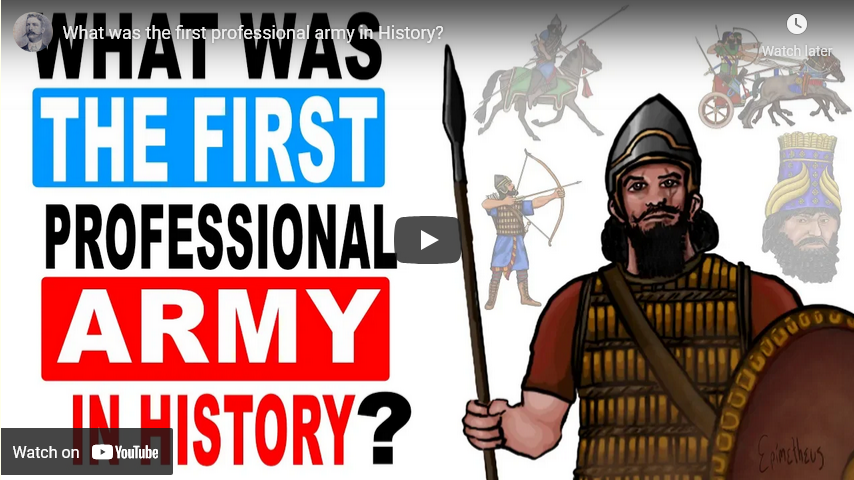
What was the first professional army in History?
Epimetheus
Published 3 Aug 2019The First Professional Army in History, The Ancient Assyrian Army
Sources:
The Ancient Assyrians by Mark Healy
Warfare in the Ancient World by John Hackett
A History of the Ancient Near East by Marc Van Der MieroopVideo on History of the Assyrian Empire From the Old Empire to the Neo-Assyrian Empire
https://youtu.be/aT57dnlo-TwThis video is sponsored by my Patrons over on Patreon
https://www.patreon.com/Epimetheus1776
April 19, 2021
QotD: Logistics and training
When we consider logistics and training we should consider then both, together, as part of Support ~ with a capital S. Support also includes keeping facilities (barracks and training areas and workshops and supply depots) up to date.
Training is not just teaching selected skills; it involves planning on how many people will be needed, each with specific skill sets, to crew ships, to serve in regiments and battalions, to fly airplanes and to repair and maintain ships and tanks and trucks and aircraft over the long haul. Training also involves ensuring that teams know how to work together … training is how we prepare for war.
The capital S Support base […] must be properly staffed, properly funded (which means funding must be stable, over the years and decades) and properly organized and managed. Supporting our troops and fleets of ships, vehicles and aircraft requires a mix of civil and military people: some in uniform, some civil servants and some on contract from the private sector. There is no perfect model … most modern, Western states, including America, Australia, Britain, Canada, Denmark and so on, use a mix of military, civil service and contractor support service. each trying to get the right mix of operational effectiveness and economy. The key, as I mentioned above, is stability. The support system need to be properly staffed and funded year in and year out, decade after decade. Those elements ~ dockyards and depots and workshops and schools and agencies comprise the firm base upon which the nation’s war-fighting (combat) powers depend.
Ted Campbell, “My Plan (3)”, Ted Campbell’s Point of View, 2018-09-15.
March 19, 2021
Did Soviet Soldiers Ever Get Time Off? – WW2 – OOTF 021
World War Two
Published 18 Mar 2021Ever wonder if the Kriegsmarine saw any action in the Pacific Ocean? Or if the average Soviet soldier ever got a vacation from the most destructive conflict in the history of humanity? You can find out the answers in this episode of Out of the Foxholes!
Join us on Patreon: https://www.patreon.com/TimeGhostHistory
Or join The TimeGhost Army directly at: https://timeghost.tvFollow WW2 day by day on Instagram @ww2_day_by_day – https://www.instagram.com/ww2_day_by_day
Between 2 Wars: https://www.youtube.com/playlist?list…
Source list: http://bit.ly/WW2sourcesHosted by: Indy Neidell
Written by: Lewis Braithwaite and Dennis Stepanov
Director: Astrid Deinhard
Producers: Astrid Deinhard and Spartacus Olsson
Executive Producers: Astrid Deinhard, Indy Neidell, Spartacus Olsson, Bodo Rittenauer
Creative Producer: Maria Kyhle
Post-Production Director: Wieke Kapteijns
Research by: Dennis Stepanov and Lewis Braithwaite
Edited by: Miki Cackowski
Sound design: Marek Kamiński
Map animations: Eastory (https://www.youtube.com/c/eastory)Colorizations by:
Daniel WeissSources:
David Rumsey Map Collection, David Rumsey Map Center, Stanford Libraries
Bundesarchiv
Portrait of Robert Eyssen, courtesy of Gareth Collins
Komet schematics, courtesy of Rama https://commons.wikimedia.org/wiki/Fi…
Narodowe Archiwum Cyfrowe
State Library of QueenslandSoundtracks from the Epidemic Sound:
Phoenix Tail – “At the Front”
Johannes Bornlof – “The Inspector 4”
Howard Harper-Barnes – “Prescient”
Jo Wandrini – “Puzzle Of Complexity”Archive by Screenocean/Reuters https://www.screenocean.com.
A TimeGhost chronological documentary produced by OnLion Entertainment GmbH.