
The Tank Museum
Published 30 Dec 2022Let’s go inside Panzer IV with another episode of Tank Chats Reloaded. Chris Copson takes a detailed look inside the tank which was considered the backbone of the Wehrmacht‘s Panzer force, uncovering the reality of what it might’ve been like to serve as a Panzer crew member in WW2.
(more…)
April 17, 2023
Tank Chats Reloaded | Panzer IV | The Tank Museum
Comments Off on Tank Chats Reloaded | Panzer IV | The Tank Museum
April 5, 2023
PTRS 41: The Soviet Semiauto Antitank Rifle (aka an SKS on Steroids)
Forgotten Weapons
Published 14 Dec 2022Prior to World War Two, the Soviet Union had a rather lackluster interest in antitank rifles — a series of guns were developed, but slowly and without all that much success. The Barbarossa invasion gave a very immediate need for just this sort of weapon, however, to give Soviet infantry units an organic anti-armor capability. Two star Soviet designers were tasked with designing AT rifles, Degtyarev and Simonov. The cartridge they were to use was the new 14.5x114mm, a high-velocity monster using a tungsten carbine cored projectile.
After a shockingly fast development period, the guns from both design bureaus were accepted. The Degtyarev became the PTRD-41, a single-shot auto-ejecting design that was extremely cheap and fast to produce. The Simonov design became the PTRS-41, a 5-shot semiauto offering more firepower but also taking longer to produce. The Degtyarev entered service first, with the first substantial deliveries of PTRS rifles arriving in 1942.
Both designs would serve through the war, with hundreds of thousands being made. Many were put into storage in 1945, and they are still seen today in Ukraine periodically. The PTRS would go on to be the basis for Simonov’s 7.62x39mm infantry rifle, adopted as the SKS.
(more…)
Comments Off on PTRS 41: The Soviet Semiauto Antitank Rifle (aka an SKS on Steroids)
April 4, 2023
Tank Chats Reloaded | Challenger 1 | The Tank Museum
The Tank Museum
Published 16 Dec 2022In the first episode of Tank Chats Reloaded we hear from Major General Patrick Cordingley who both commanded Challenger 1 during the First Gulf War and was involved in its design. Also introducing our new presenter Chris Copson, host of the new Tank Chats Reloaded series — where we’ll be revisiting old favourites from Tank Chats.
(more…)
Comments Off on Tank Chats Reloaded | Challenger 1 | The Tank Museum
March 29, 2023
Anti-Tank Chats #7 | Panzerschreck | The Tank Museum
The Tank Museum
Published 2 Dec 2022Join Historian Stuart Wheeler as he details another anti-tank weapon, the Panzerschreck.
(more…)
Comments Off on Anti-Tank Chats #7 | Panzerschreck | The Tank Museum
March 19, 2023
Inside An M4 Sherman Tank With Historian James Holland
History Hit
Published 21 Nov 2022‘Inside An M4 Sherman Tank With Historian James Holland’
In this video, military historian James Holland gets inside the most iconic tank of the Second World War — the ubiquitous US M4 Sherman Tank.
With over 50,000 having produced between 1942 and 1945, the Sherman was the most widely used medium tank by the United States and Western Allies in World War II.
Easily produced, maintained and equipped with a 75mm gun as well as a single hatch-mounted .50 caliber machine gun (plus two lighter .30 cals positioned in the turret and forward hull), the Sherman proved extremely effective against soft targets. It still lacked the range and firepower of the German Panther and Tiger tanks, but its speed, manoeuvrability and fast rate of fire made it ideal wartime workhorse.
More recently, the M4 Sherman has risen to stardom with the release of Hollywood blockbuster Fury (2014), starring Brad Pitt and Shia LaBeouf.
(more…)
Comments Off on Inside An M4 Sherman Tank With Historian James Holland
March 10, 2023
Tank Chats #168 | Vixen & Fox | The Tank Museum
The Tank Museum
Published 18 Nov 2022Join David Fletcher as he takes a look at the Vixen and Fox armoured cars.
(more…)
Comments Off on Tank Chats #168 | Vixen & Fox | The Tank Museum
March 2, 2023
Anti-Tank Chats #6 | The Panzerfaust | The Tank Museum
The Tank Museum
Published 4 Nov 2022Historian Stuart Wheeler is back with another anti-tank chat. In this episode, he is looking at the development and use of the legendary panzerfaust.
(more…)
Comments Off on Anti-Tank Chats #6 | The Panzerfaust | The Tank Museum
February 25, 2023
One year into Vladimir Putin’s “Three-Day War”
Tsar Vlad launched his short, victorious war a full year ago, expecting to have the troops home by spring if not sooner. It hasn’t worked out to his timetable at all. Ukraine still stands, although it’s taken one hell of a battering in the process and drawn in more and more vocal support in the west, which has belatedly been followed by actual military supplies and equipment to replace those expended holding back the Russian forces. CDR Salamander follows up his predictions from last year on how things looked to him at that moment in time:
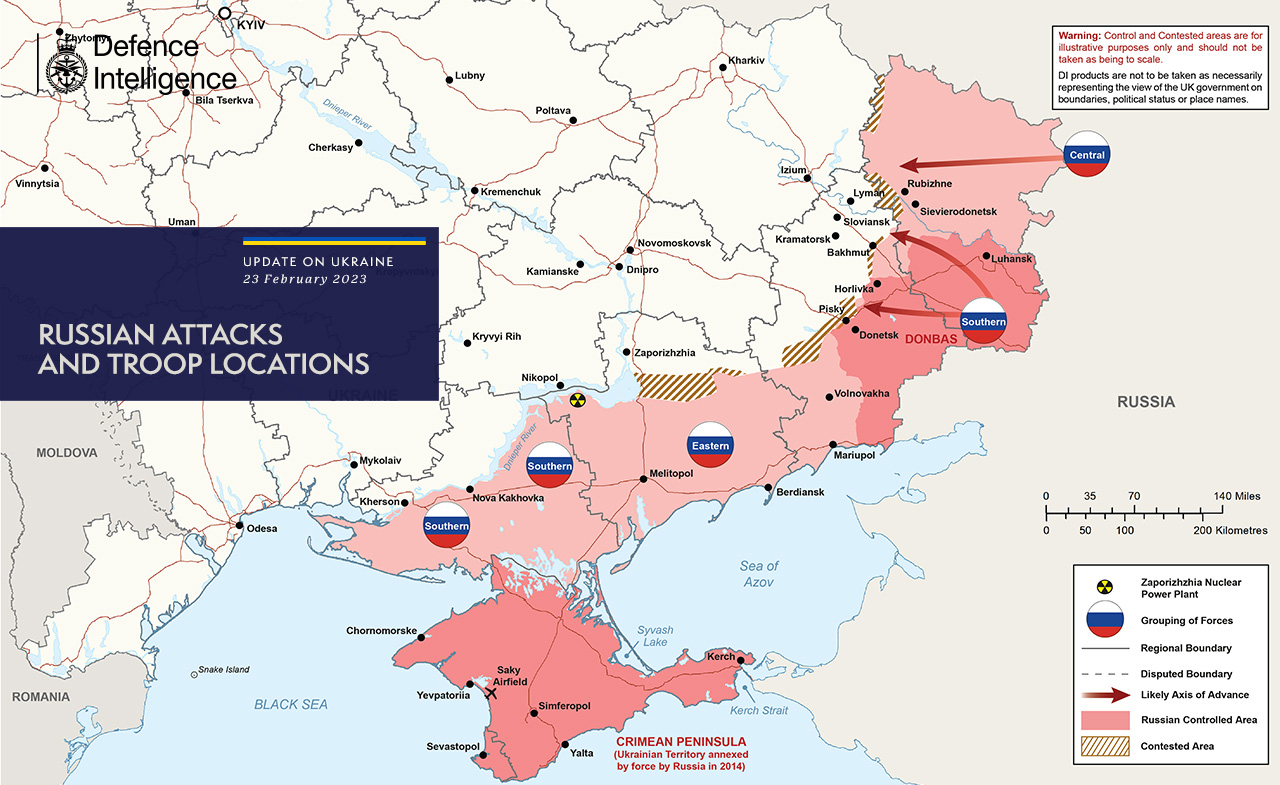
On the day the war started I made 7-points. Let’s review them and see how I did back on 24 FEB 22.
1. The remaining delusions about the post-Cold War security arrangements in Europe should be firmly buried. History is back and she has her Festivus pole front and center. She has some issues with us, and we’re going to hear about it.
This continues to get firmer and displayed in stark relief. All the “offsets” and “transformations” and “war is new” snake oil sold the last few decades really should not be allowed to have any public space besides to say, “I was wrong.” Rest assured, that won’t stop them — but the issues we raised over the almost 18-yrs of this blog and 14-yrs of the Midrats Podcast remain true. From the shallow magazines to the fact you never have enough large caliber guns to no war is short … we — and a lot of other people tut-tut’d for years — were correct.
2. NATO has a German problem. While all the “right people” will not shut up about how wonderful former Chancellor Angela Merkle was, people need to be very clear eyed about what a complete disaster she and the German political class have been over the last two decades. They have starved what should be continental European NATO’s most potent military into irrelevance. Her disastrous feel-good, ethno-masochistic immigration policy weakened European cohesion and fed the worst parts of European political subcultures. Yes, she made a lot of well meaning Germans feel good about themselves, but it was a sugar-high that rotted the teeth and poisoned the national metabolism. While willing to defend Europe to the last Pole and Germany to the last American, she decided to preen in her neo-pagan EuroGreen superiority onomastic politics by ditching clean nuclear power and through the complete corruption of her elite, shacked herself to Russian energy oligarchs and thus the Kremlin. Germany needs to fix herself, and NATO needs to work around her and punish her until she starts to behave like a constructive 21st Century security partner.
Germany has made great progress, but is being dragged kicking and screaming in to the 21st Century.
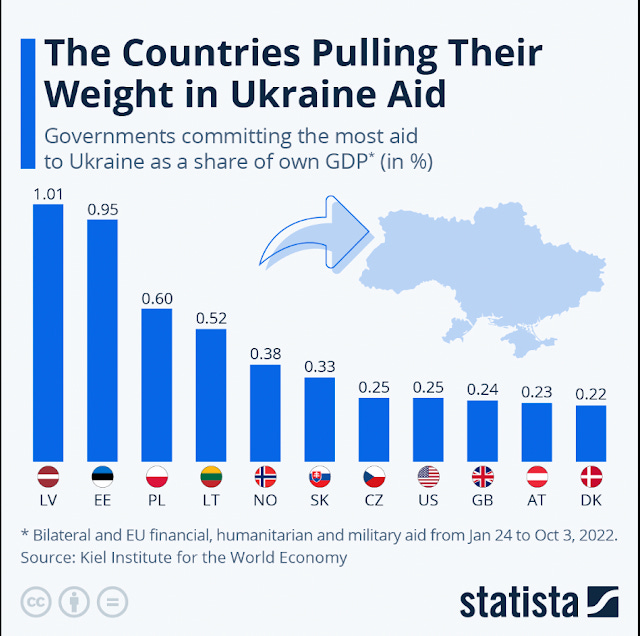
3. As our friend Jerry Hendrix pointed out yesterday, the moral leaders in NATO right now are the Baltic Republics and I would add Visegrad nations. You can throw Romania in there too. France will go hot and cold as she fights her desire to do the right thing for European security while at the same time nurse her 1,000 year old drive to be the premier leader of Western Europe. Serious but weaker nations will lean on a reluctant USA and limited United Kingdom … simply because — to be frank — much of the rest of the alliance is not that capable.
I think this graph tells that story well;
The front-line nations are putting their money where their existential threat is.
4. In line with #1 above, it is time for Finland at least, and probably Sweden, to join NATO. They both have a long and bloody history with the Russians and should see clearly what time it is.
Another check.
5. Ukraine waited too long to rearm. Weakened and distracted by a corrupt elite, the good parts of her nation could not get ready fast enough. After the first Russo-Ukraine war of 2014 she should have modeled the armed neutrality of Switzerland with a civilian populace trained and armed to the teeth. As we’ve discussed here before with the former Soviet republics and Warsaw Pact nations, every village needs a few ATGM militia teams trained to slow any advance through their patch of land. If Ukraine can, in whole or part, survive without vassalhood, perhaps they could get there. They can only get there if they build a nation people are willing to fight and die for.
Everyone is rediscovering the utility of a good military-industrial complex that can quickly grow to scale. Amazing what the green-eye-shade accounts forced those who actually are supposed to study war to believe.
A few days ago, Dominic Sandbrook explained that the Ukraine-Russia conflict “is not complicated”:
A year ago, as Vladimir Putin launched his so-called “special military operation” to seize the Ukrainian capital, kill Volodymyr Zelenskyy and wipe much of the latter’s country from the map of Europe, who’d have imagined that the third week of February 2023 would begin with Joe Biden strolling around the streets of Kyiv in sunglasses? For that matter, who would have predicted that Mr Zelenskyy, only recently returned from his own trip to London, would be at his side — still the president of a free country, and still very much alive?
Sometimes it’s nice to be wrong. Like many, probably most Western observers, I held out little hope for Ukraine once the drums of war began to beat in earnest. A couple of days after Mr Putin’s brutal invasion began, I wrote a bullish essay looking back at Ukraine’s history of suffering and resilience. But even as I was agonising over my prose, the bleak news continued to pour in. “Now, while I have been writing, Russian tanks are rolling into the suburbs,” I wrote at one stage. Did I think they would be driven back? I didn’t. “Kyiv will rise again,” I wrote at the end. Stirring words, or so I hoped. But the person I was really trying to persuade was myself, and I didn’t succeed.
In truth, I underestimated the Ukrainian people’s resilience, their courage, their love of country. And I was wrong, too, about the Western alliance. After more than a decade of drift and inaction, from the shameful failure to respond to the seizure of Crimea to the near-criminal indifference to the suffering in Syria, I doubted whether any major Western leader would make more than a token protest about the first full-scale European invasion since the Forties. I never expected to see Finland and Sweden jump off the fence and apply for Nato membership. Nor did I imagine that Joe Biden would be so unswerving in his commitment, or so generous with US military aid. Above all, I never anticipated that Kyiv would hold out, that Kharkiv would stand or that Kherson would be retaken. As I say, it’s nice to be wrong.
It’s often said that the war in Ukraine feels like a throwback, returning us to an age when nationalistic strongmen nursed atavistic dreams of conquest, sending thousands of men to die so that they might scratch new frontiers into the soil of Europe. For all the drones and social media gimmicks, the fighting certainly feels old-fashioned: reading David Patrikarakos’s harrowing dispatch from the front line in Bakhmut, it’s impossible not to think of Passchendaele or Verdun. But for a child of the Seventies, perhaps the most old-fashioned thing of all is the spectacle of a genuinely clear-cut conflict, an unambiguous clash of right and wrong, that feels closer in spirit to the struggle against Hitler’s Germany than to most of the wars in my lifetime.
Andrew Sullivan is convinced that the war is just, but worries whether it is prudent — and he calls it not Ukraine’s but “the West’s defensive war against Russia”:
It is right and just to defend a sovereign country from attack by a much larger neighbor; to fight back against an occupying force committing war crimes on a massive scale; to oppose the logic of dictatorships and defend the foundations of democracy; to uphold a post-Cold War international order which forbids the redrawing of borders by force; to unite democratic countries in Europe against a resurgence of imperial Russia; to defang and defeat a poisonous chauvinism that despises modern freedoms for women and gay people.
It is indeed right and just. But is it prudent?
That’s the question I’m still grappling with, in a week which saw the conflict deepen and the two sides entrench their positions further. President Biden’s trip to Kyiv and his speech in Poland have heightened the stakes, turning this into a more obvious proxy war between the United States and Russia … edging gingerly but relentlessly toward something more direct.
He’s all in now: declaring that Ukraine “must triumph” and that Russia cannot win a war that the Russian leader deems existential. NATO armaments are pouring into Ukraine at an accelerating rate. The training of Ukrainian troops is happening across the Continent. Germany is sending tanks. Pressure is building on Britain to send fighter jets.
The US is ratcheting up arms production as fast as it can, while seriously depleting our own Stinger surface-to-air missiles, 155mm howitzers and ammunition, and Javelin anti-tank missile systems. These are good times for arms producers:
The Army is planning a 500% increase in artillery shell production, from 15,000 a month to 70,000, according to Army acquisition chief Doug Bush … and intends to double the production of Javelin anti-tank missiles, make roughly 33% more Guided Multiple Launch Rocket Systems surface-to-surface medium-range missiles a year, and produce each month a minimum of 60 Stinger anti-aircraft missiles — which were “almost not in production at all”, according to Bush.
When Ukraine’s effective military is made up almost entirely of NATO equipment, and trained by NATO forces, there surely comes a point at which claiming NATO is not actually at war with Russia gets fuzzy.
Comments Off on One year into Vladimir Putin’s “Three-Day War”
February 11, 2023
Tank Chats #167 | French Panhard EBR | The Tank Museum
The Tank Museum
Published 28 Oct 2022How much do you know about the Panhard EBR? Join David Willey for this week’s Tank Chat as he covers the development, design and use of this French armoured car.
(more…)
Comments Off on Tank Chats #167 | French Panhard EBR | The Tank Museum
February 5, 2023
This 1970s tank simulator drives through a tiny world
Tom Scott
Published 17 Oct 2022At the Swiss Military Museum in Full, there’s the last remaining example of a 1970s tank-driving simulator. But there’s no virtual worlds here: it’s connected to a real camera and a real miniature model. ■ More about the museum: https://www.festungsmuseum.ch/
(more…)
Comments Off on This 1970s tank simulator drives through a tiny world
February 3, 2023
Tank Chats #166 | SOMUA S35 | The Tank Museum
The Tank Museum
Published 14 Oct 2022Join David Willey in this week’s Tank Chat as he details the history of the SOMUA S35, a French cavalry tank of the Second World War.
(more…)
Comments Off on Tank Chats #166 | SOMUA S35 | The Tank Museum
February 1, 2023
What’s the Greatest Machine of the 1980s … the FV107 Scimitar?
Engine Porn
Published 19 Jan 2015Light, agile and very fast on all types of terrain, the fabulous Scimitar FV107 armoured reconnaissance vehicle was developed by car manufacturer Alvis, who were asked to build a fast military vehicle that was light enough to be airdropped — simply not an option for full sized battle tanks at the time, which averaged around 13 tonnes. [NR: I think they mean “light tanks” here, as MBTs of the era would have been more like 50+ tons.]
Alvis got the weight down to under 8 tonnes by using a new type of aluminium alloy and minimising armour rating in favour of speed. They built the Scimitar around a 220 horsepower, six cylinder, 4.2 litre Jaguar sports car engine with ground-breaking transmission that allowed differential power to each set of tracks. The result was a sports car of the the military world that might not be the toughest in the field, but could race its way out of trouble at speeds of up to 70 miles an hour.
What makes it great: A revolutionary armoured vehicle that brought the very best of British sports car performance to the battlefield.
Time Warp: The Scimitar was the only armoured vehicle to be used by the British Army in the Falklands War.
This short film features Chris Barrie taking the Scimitar for a spin.
(more…)
Comments Off on What’s the Greatest Machine of the 1980s … the FV107 Scimitar?
January 26, 2023
Ukraine to receive Challenger II, M1 Abrams, and Leopard 2 tanks … both a solution and a new set of problems
In The Line, Matt Gurney outlines some of the benefits Ukraine will receive with this new transfusion of AFVs … and also the new and exacerbated set of practical problems that goes along with fielding so many different makes and models of tanks:
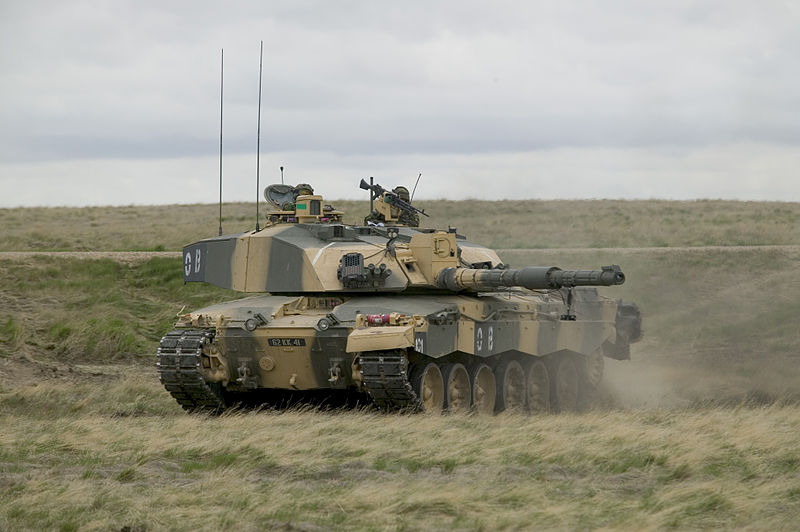
A British army Challenger Main Battle Tank, of 1 Royal Regiment of Fusiliers (1RRF), is shown returning to base after completing a firing mission as part of Exercise MedMan.
1RRF Battle group were based at the British Army Training Unit Suffield (BATUS) in Canada.
MOD photo by Mike Weston via Wikimedia Commons.
A column getting into all the details of why [the German government] were withholding said blessing would be several times longer than this one will be. Suffice it to say this is just the latest manifestation of Germany’s extreme discomfort with this war. Some of it relates to the lingering fallout of Germany’s blood-soaked history. But we would be naïve not to attribute at least some of the reluctance to Russia’s deep influence among some segments of the German ruling elite.
Germany has contributed to the defence of Ukraine, and it would be unfair to deny that. It would not be unfair to note that Germany has typically only done so later than the other allies, and under enormous pressure.
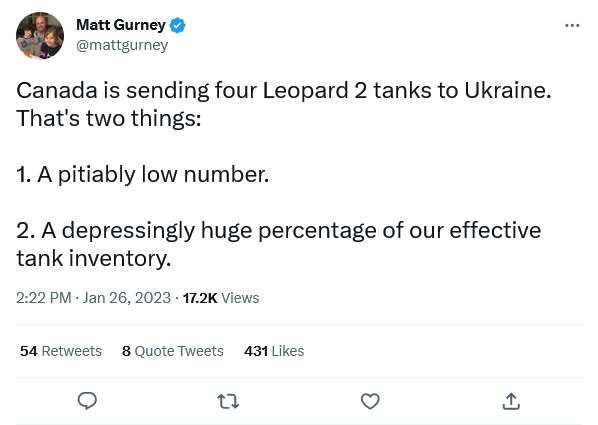
As part of the deals being announced, the United States will be sending several dozen of its M1 Abrams tanks, and Germany will send Leopards. Berlin will also allow other allies to send further Leopards. (Canada hasn’t committed to sending any of ours yet, but our few remaining Leopards are reported to be in poor shape, and are also all the way across an ocean, so we might not even be asked.) The British will send the Challengers. This gives Germany the ability to claim, with a reasonably straight face, that it has not chosen to escalate the conflict. Heavens, no! It’s simply moving in lockstep with its allies! As fig leaves go, it’s a pretty small and transparent one, but for the purposes of diplomacy and maintaining the appearance of allied solidarity, it’ll do.
And this brings us to the problem that the plan is exacerbating. A year ago, the Ukrainian military was largely armed and equipped along Russian lines — both militaries were, after all, descendants of the Soviet Red Army. Since then, much of its original equipment has been destroyed or lost, but this has generally been offset by an influx of Western weapons into the country as the allies empty their arsenals and get their production lines running again. This has allowed Ukraine to keep fighting, far more effectively than the Russians, among many others, expected. Despite huge losses of manpower, the Ukrainian military seems to actually have grown stronger as the war has gone on, thanks to the power of its new weapons.
Sending news is good news to that extent. It will make Ukraine stronger still. But it is also producing a situation where the Ukrainians are armed with an absurdly unwieldy mix of weapon systems. This is laying the groundwork for a future logistics disaster.
Any individual soldier can learn to use any specific piece of equipment. That’s just a matter of training and experience. Soldiers are smart. The longer they serve, the quicker they’ll get at picking up new pieces of equipment and kit. The challenge is more on the backend. The logistics of sustaining an arsenal of completely mixed weapon systems is a nightmare. Not only must Ukraine procure a huge variety of calibers of ammunition, it must also procure, sort, and then distribute a bewildering array of spare parts to keep all these weapons running. It’s not that this is impossible. The fact that Ukraine fights on is proof that it is not. But it adds tremendous cost and complexity, and requires a much larger effort to sustain than would be the case if Ukrainian units were equipped with standard weapons across comparable units.
The numbers of NATO tanks are initially small enough that only a few battalions can be re-equipped with the donated AFVs, but each different “brand” needs its own specialized support in the way of maintenace, repair, and re-supply. Ukraine is going to have to have at least a company-sized, fully trained maintenance unit for each battalion of NATO tanks and the logistics system will have to ensure that the different types of ammunition and ordinary wear-and-tear maintenance spares are delivered quickly enough to keep those battalions combat-ready. Some NATO nations with much better facilities sometimes struggle to do this for a single type of AFV, never mind for several different types.
Update: Can’t help but agree with Matt here.
Comments Off on Ukraine to receive Challenger II, M1 Abrams, and Leopard 2 tanks … both a solution and a new set of problems
Tank Chats #165 | Striker | The Tank Museum
The Tank Museum
Published 30 Sept 2022In this weeks video, David Fletcher discusses the development and features of Striker, another vehicle from the CVRT family.
(more…)
Comments Off on Tank Chats #165 | Striker | The Tank Museum
January 24, 2023
An alternative theory about German Chancellor Olaf Scholz’s hesitation to allow Ukraine access to Leopard 2 tanks
I’ve been going on the assumption that the German government was terrified of Russian reaction if they allowed some Leopard 2 tanks to be donated to the Ukrainian forces, but eugyppius points out there’s another strong contending explanation:
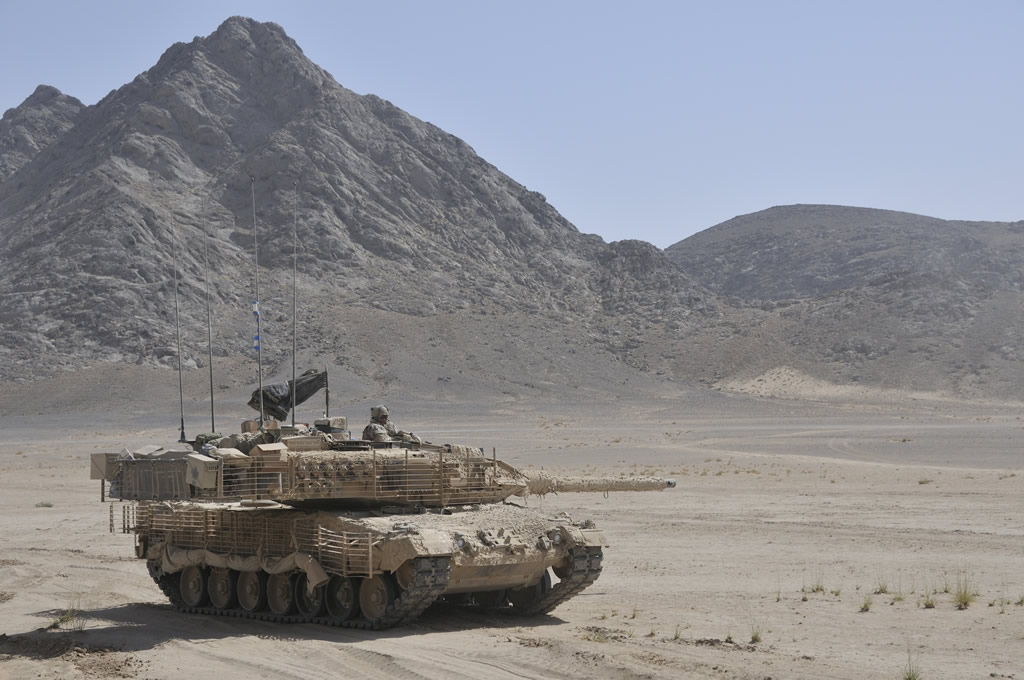
Leopard 2A6M in Afghanistan
Years of peace in Europe, an ageing population and a corresponding focus on expensive social programmes have caused Germany to put its defence industry into near-hibernation. Only a little over 2,000 Leopard 2s have ever seen the light of day. Each one is a hand-built machine that takes two years to make. If Germany permits the export of the European supply of Leopard 2s to Ukraine, the Russians will grind them to nothing within months, and then Europe will have no tanks except the tanks that the Americans sell them:
Defence industry representatives, who wish to remain anonymous, report that the Americans are offering their own used tanks as replacements to [European] countries able to supply Leopard 2s to Ukraine, together with a long-term industrial partnership. Any country that accepts the American offer would be hard to win back for the German tank industry. Berlin’s influence in armament policy would decrease correspondingly.
Tanks are driven by men, who have to be trained in the operation of specific models. Their use moreover requires a whole supply chain of munitions and especially spare parts, which the Americans are eager to offer. The upshot is that, once Europe opts into American armour, it will never switch back, and Germany will be out of the game for good. Nor should we lend much credence to the idea that our very few tanks will make any difference either way for Ukraine’s prospects. The insistence that Scholz release the Leopard 2s is simply an attempt to edge Germany further out of the European arms industry and into a position of lesser political and economic influence in Europe, so that the United States can fill the gap.
Noah Carl, over at the Daily Sceptic, drew attention last week to remarks by the French intellectual Emmanuel Todd that “this war is about Germany“:
After the collapse of the Soviet Union, Zbigniew Brzezinski called Eurasia the new “great chessboard” of world politics … The Russian nationalists and ideologues like Alexander Dugin indeed dream of Eurasia. It is on this “chessboard” that America must defend its supremacy – this is Brzezinski’s doctrine. In other words, it must prevent the rapprochement of Russia and China. The financial crisis of 2008 made it clear that with reunification Germany had become the leading power in Europe and thus also a rival of the United States. Until 1989, it had been a political dwarf. Now Berlin let it be known that it was willing to engage with the Russians. The fight against this rapprochement became a priority of American strategy. The United States had always made it clear that they wanted to torpedo [Nord Stream 2]. The expansion of NATO in Eastern Europe was not primarily directed against Russia, but against Germany. Germany, which had entrusted its security to America, became the Americans’ target [in the destruction of the pipeline]. I feel a great deal of sympathy for Germany. It suffers from this trauma of betrayal by its protective friend — who was also a liberator in 1945.
After the anti-Russian sanctions regime and its clear deindustrialising effects on the German economy, followed by the attack on the Baltic Nord Stream pipelines, and even smaller things, such as the high-profile anti-industry protests by the American-funded activist group Letzte Generation, I am willing to believe many conspiratorial things about the Ukraine war.
Comments Off on An alternative theory about German Chancellor Olaf Scholz’s hesitation to allow Ukraine access to Leopard 2 tanks


