Quotulatiousness

May 14, 2023

Garbage data informs the Canadian government’s approach to gun control issues

Filed under: Cancon, Government, Law, Weapons — Tags: , , , , — Nicholas @ 05:00

In The Line, Tim Thurley points out the (totally expected) bias of the data being considered by the federal government:

A selection of weapons (mostly restricted or prohibited in the hands of most Canadians) displayed by Toronto police after confiscation.
Screencap from a CTV News report in 2018.

The Mass Casualty Commission’s firearm recommendations were, rightly, overlooked in the initial phase after the report’s release. They have become relevant these past weeks as gun control groups, the NDP, the Bloc, and the Liberals used them to advocate for sweeping changes to Bill C-21, the government’s controversial gun-control proposals. The Liberals have thus far declined to adopt the MCC’s recommendations, at least in whole, and that’s encouraging. Our lawmakers should be careful. The Mass Casualty Commission’s concluding recommendations on guns and homicide share a problem common to any data analysis. If you use the wrong data, you get a bad output.

Or, to be blunt: garbage in, garbage out.

R. Blake Brown, a professor who contributed a commissioned report to the MCC, suggested that the MCC got all the best research together and simply found the arguments made by gun control groups to be more convincing.

He’s wrong. While the MCC could have been a completely neutral panel objectively weighing the evidence before it, the nakedly selective choice of data inputs and slanted interpretation meant that no unbiased outcome was possible. Indeed, the MCC inputs seem heavily weighed to advance a pro-control agenda, and do so in such an obvious way that the resulting flaws should be immediately clear to those with even a passing knowledge of the study of firearms and firearm homicide.

[…]

Dr. Caillin Langmann is a well-known name in Canadian firearms research, and by far the most prolific author using rigorous statistical methods to examine the effects of gun control on Canadian firearm mortality. No serious analysis of Canadian firearm mortality is possible without his work, and yet his work does not appear on its own and is not cited in the Negin Report. Indeed, his and other critical research does not seem to have informed the final Commission report or recommendations at all.

I asked Dr. Langmann about his exclusion. He told me he offered to appear to present his research but the Commission declined.

It may not be a coincidence that the exclusion of Langmann and other researchers without explicit gun-control agendas was due to the fact — the fact — that the Canadian and comparable research substantively contradicts the Negin Report and the MCC recommendations on firearms. An examination of already-implemented Canadian gun laws including various factors such as prohibition of “paramilitary style” rifles and magazine capacity restrictions all found no impact on mass shootings or mass homicide overall in Canada or on associated fatalities. Instead, mass homicide by both firearm and non-firearm causes gradually declined on its own. The lack of association between gun control and decreased mortality is replicated multiple times in Canadian research.

Guess what? It is also replicated in a detailed statistical analysis of Australian data not mentioned by the Negin Report.

The core research inputs to the Mass Casualty Commission were commissioned from parties with well-established and acknowledged positions on firearms. Written by literal gun control advocates without substantial input from other sources, the contrary research is either ignored or not treated with due academic respect. This damages the credibility of the Commission findings, giving the perception that they were gathering conclusions in search of evidence.

Again, it must be made clear that this wouldn’t have been a problem if the MCC had treated the Negin Report as just one part of the firearm policy research puzzle. It was their failure to do so and the consequent lack of neutrality, lack of engagement with solid research, and complete disregard for engagement with different academic perspectives despite obvious relevant expertise, that taints the Mass Casualty Commission firearm recommendations and severely limits any useful policy conclusions we can gather from their report.

Victory at Sevastopol! – WW2 – Week 246 – May 13, 1944

World War Two
Published 13 May 2023

The Soviets push the Axis out of the Crimea this week once and for all. In Italy, the Allies launch a major offensive, and the French make a breakthrough there by week’s end. In China, the Japanese are aiming at Luoyang, but in India at Kohima they’re slowly being pushed back.
(more…)

The life of the publishing world, fifty years ago

Filed under: Books, Britain, Business, History — Tags: , , , , , , — Nicholas @ 03:00

I point out things that prove that the past is a foreign country often enough that I have a blog tag for that purpose. When I first entered the work force, the conditions Ken Whyte describes for employees and managers at a publishing company weren’t all that uncommon (although they were already edging toward the endangered species list):

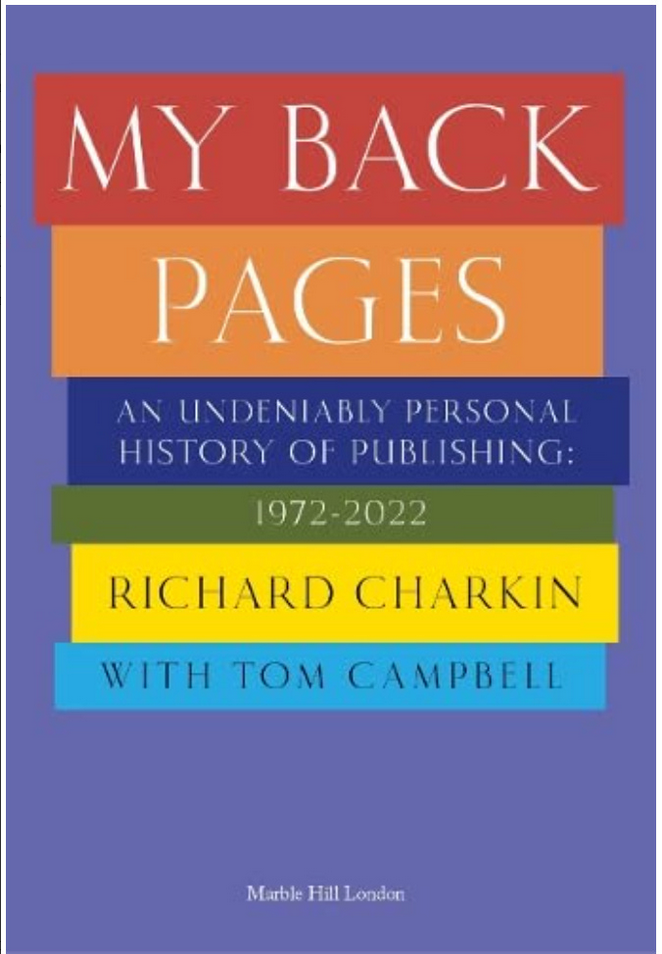
Fifty years ago, when Richard Charkin […] began his career in the book trade, telephones were wired to desktops and editors (male) wrote their letters and memos in longhand, turning them over to women in the typing pool who knocked them out on carbon paper because the publishing world was slow to photocopiers.

Employees smoked at their desks and drank at lunch. Men wore suits and ties and hats; women long skirts. Living wages were paid and even mid-level jobs came with a car. It was not uncommon for people to spend their whole careers at a single company.

Charkin started at Pergamon Press, an Oxford-based scientific publisher. It held an annual Miss Pergamon contest, essentially a beauty pageant for female employees. The winner received a titled sash, cloak, crown, and the opportunity to greet VIP visitors at company events. Pergamon was considered a progressive company for its time. Needless to say, this was before the dawn of the HR department. Also before marketing and IT departments, but publishers did have guilds, members of which met to discuss business at the pub.

In the mid-1970s, Charkin moved from Pergamon to Oxford University Press, which had traditions of its own. For instance, fortnightly editorial conferences were held at 11 a.m. on Tuesdays (but not in summer when everyone was off on extended vacations). Editors attended in robes and sat around an enormous table. In front of them were inkwells filled with fresh ink.

Charkin worked out of OUP’s Ely House offices in Mayfair. Tea ladies pushed trolleys down the corridors once in the morning and again in the afternoon, dispensing drinks and biscuits. There were three dining rooms on the premises: “one in the basement for all staff, which provided hearty and generously subsidized fare, while on the second floor there was an officers’ dining room, reserved for editors and middle managers, where meals were prepared by a fine chef and the drinks were free. At the very top of the building was the publisher’s dining room, which was exclusively for the use of the head of the London office … and his guests. The food here was sourced from Jackson’s of Piccadilly and the wine list was excellent, with the cellar being overseen by a senior manager at OUP whose job involved spending at least a month in France every year researching and ordering directly from vignerons.”

Class distinctions were rigid enough that two sets of bike racks were required, one for editors, the other for printers. There were a lot of printers: OUP still manufactured its own books and made its own paper, that very thin but indestructible variety once common in Bibles.

You’ll be shocked to learn that Oxford University Press, in operation since 1478, was in deep financial trouble by the 1980s.

In Toronto, this sort of thing was common in the bigger, long-established firms like banks, insurance companies, and even the major grocery chains (the Dominion head office facilities were reportedly top-notch in their day). I imagine it was even more the case in places like New York and Chicago.

Arming God’s Battalions: a Papal States Rolling Block

Filed under: Europe, France, History, Italy, Military, Religion, Weapons — Tags: , , , , , — Nicholas @ 02:00

Forgotten Weapons
Published 13 Feb 2023

The Remington Rolling Block was a very popular rifle in the 1860s and 1870s, and probably would have been a better choice than the Trapdoor Springfield for the US military. But among the nations that did adopt is were the Papal States. While Vatican City is a tiny sovereign enclave today in Rome, in the 1800s the Pope directly controlled a much larger area, roughly the size of Switzerland early in the 1800s.

Three different models of Rolling Block were adopted by the Papal States in the effort to rebuild their military after a serious defeat in 1860 — rifles, carbines, and musketoons — the latter being what we have today. All three were made by the Nagant Brothers in Liege and can be identified by the Papal crest (the crossed keys of St Peter) on the top of the barrel. Westley Richards in the UK also produced 5,000 rolling block rifles, but these had serious quality problems.

The Nagant Brothers rifles began to arrive in the fall of 1868. They saw service for only a few years, as the departure of French forces in the fall of 1870 (to take part in the Franco-Prussian War) allowed the Italian Army to seize Vatican City without much difficulty. A few survived in the hands of the Pope’s personal guard, but most of these rolling blocks were taken into Italian Army service. They would serve until being replaced by Vetterli rifles, and were eventually sent to Ethiopia as military aid to Emperor Menelik II in the 1880s.
(more…)

QotD: The original tabloid journalist

Filed under: Britain, History, Media, Quotations — Tags: , , , , , — Nicholas @ 01:00

Tabloid journalism begins with W.T. Stead, who as editor of the Pall Mall Gazette in the 1880s brought news and scandal to the newly literate masses, transforming public culture and politics with it.

The son of a Congregationalist preacher, Stead grew up in a strict religious household in Northumberland, in a home where theatre was “the Devil’s chapel” and novels “the Devil’s Bible”. Taught to read by his father, the newsman’s nonconformism would inform his campaigns after he moved from the Northern Echo to the Gazette in London.

Stead was most of all famous for the first great newspaper investigation, in 1885, “The Maiden Tribute of Modern Babylon“, on the scandal of child prostitution. Stead had bought a girl called Eliza for £5, on the premise that she was to be taken to a brothel on the continent, using quite dubious methods that got him sent to jail for three months.

Despite this, the story succeeded – a national scandal which led to a change in the law, the age of consent raised from 13 to 16. The idea of English girls being trafficked into sex outraged and horrified the public, Stead’s story imprinted itself deeply into the public psyche, to the extent of influencing George Bernard Shaw’s Pygmalion — thus, Eliza Doolittle.

On the continent it helped to inspire a genre of vaguely pornographic literature about the sexual perversion rife in England, a fantasy that belied the fact that late Victorian London was not a nest of vice, relatively speaking. Most measures of squalor and child abuse had declined in the 19th century and a teenage girl by the end of the century was relatively safe, compared to a predecessor in almost any era; public moral outrage offered protection, even if it could be unforgiving for those same girls who transgressed.

Stead would become the most famous journalist of the era, so renowned that in 1912 he was invited to New York by the US President to attend a conference — and so booked a ticket on a famously unsinkable new liner. He was last seen helping women and children trying to get on to lifeboats, and, true to the chapel ethos of his parents, gave away his lifejacket. He was among the 1,500 who lost their lives on the Titanic.

Ed West, “Our Modern Babylon”, Wrong Side of History, 2023-02-11.

May 13, 2023

What was the First Modern War?

Filed under: History, Military, Technology — Tags: , , , , , — Nicholas @ 04:00

Real Time History
Published 12 May 2023

The question about the first modern war has caused lively debates among historians and YouTube comment sections alike. In this video we take a look at a few candidates and some arguments why they are or aren’t modern wars.
(more…)

The original cargo cults

Filed under: History, Pacific, Politics — Tags: , , , — Nicholas @ 03:00

Theophilus Chilton on the origins of the term “cargo cult” and how it mirrors the thinking of so many progressives about “white privilege”:

Ceremonial cross of John Frum cargo cult, Tanna island, New Hebrides (now Vanuatu), 1967.
Photo by Tim Ross via Wikimedia Commons.

Many of us are familiar with the metaphor of the “cargo cult”. The term itself was coined by the famous physicist Richard Feynman (who, ironically, didn’t actually use the term the way he had described it) in a speech he gave about transparency and integrity in science. Briefly, the phenomenon of the cargo cult was observed in the South Pacific during World War II. Pacific Islanders would observe the Americans building runways and control towers, and soon after airplanes full of supplies would land and disgorge their contents of goodies. The islanders would build their own bamboo mockups – runways, towers, even bamboo headsets for the “controllers” – expecting that planes full of food and medicines would come to them as well. Of course, none ever did.

Ultimately, cargo cults rested on a form of magical thinking, on the failure to understand the fundamental reasons for why a phenomenon was taking place. This led to a miscomprehension about how one could obtained the desired benefits. It’s essentially a crude form of philosophical nominalism, where the form and appearance exist without grasping any of the underlying fundamental reality.

This misunderstanding is almost predictable when dealing with a culture that practices some form of primitive polytheism. In most cultures, the ritual — the outward performance of gesture/action/song to petition the gods — must be done exactly the same way as the last time … or the magic doesn’t work. For the islanders whose lives were thrown into utter chaos by the arrival of allied troops on their island, because they could see for themselves that the foreigners’ rituals worked: the food, clothing, trade goods, unfamiliar artifacts just poured on to the island once the ritual airfield was constructed. This is a vastly powerful magic that the islanders would be willing — and were willing — to devote vast efforts to learn for themselves. I quoted Bret Devereaux at length on this point.

In many ways, the current progressive obsession with “white privilege” is essentially the same kind of thinking. For progs and professional PoCs, white “privilege” – access to the benefits of high civilisation obtained through high trust civil society, philosophy, science, technology, and all the rest – is just something that happened, something which white people lucked into without any merit or ability on their part. It could just as easily have happened to anyone else, hence it’s “unfair” that whites get all the benefits of what their ancestors laboured to build.

The cargo cult aspect is essentially what the leftist appropriation of Western history and the invasion of our societies is about – because anyone could have done the West, anyone can keep the West going. White, western Europeans and Anglos aren’t really necessary and since people (like runways and bamboo control towers) seem superficially similar, they can be considered interchangeable so that more pliable replacement populations can be brought in to keep the lights on while yet going along with the globalist program.

The plight of Africa in post-colonial times was discussed here.

Arnold Ridley – “Private Charles Godfrey” – a real story from Dad’s Army

Filed under: Britain, History, Humour, Media, WW1, WW2 — Tags: , , , , , — Nicholas @ 02:00

The History Chap
Published 1 Feb 2023

The story of Arnold Ridley — Private Charles Godfrey — Dad’s Army

After my last video all about Lance Corporal Jones in Dad’s Army I have been inundated by requests for the real story of another character from the classic comedy series: Private Godfrey.

Private Charles Godfrey, played by Arnold Ridley, is an ageing and slightly doddery member of the Walmington-on-Sea Home Guard platoon. His comrades are somewhat surprised and concerned when he announces that he was a conscientious objector during the First World War. However, thanks to his sister, the platoon learn his real (well, fictitious as it is a TV comedy show) story. Godfrey was indeed a conscientious objector but like many others he did volunteer to serve his country – just not to kill. Many men who felt likewise, joined the Army Medical Corps. Whilst not fighting they not only served their country and played a valuable role in the war effort but they also put themselves in harm’s way. Many of them became stretcher bearers, going out into no man’s land to fetch the wounded to safety. And many were decorated for their bravery.
William Coltman, became the most decorated NCO in the entire British army during the First World War … and he never fired a shot in anger!

I will be telling the story of William Coltman VC in the near future.

Private Charles Godfrey was awarded the Military Medal for bravery during the battle of the Somme.

What makes Godfrey’s character all the more fascinating is that his actor, Arnold Ridley, was no conscientious objector but a volunteer in World War One. he was severly injured at the battle of the Somme in 1916 and discharged the following year.

Indeed, his injuries would influence how he played his character in Dad’s Army.

After the war, Ridley became a play writer. Arnold Ridley penned over 30 pays, the most famous of which was The Ghost Train written in 1923.

At the outbreak of the Second World War he once more volunteered to serve his country. Following the battle of Boulogne in 1940, he was evacuated to Britain, having been injured, once more, he was again given a medical discharge.

For the rest of the war he worked for ENSA – the forces entertainment organisation — and was a member of his local Home Guard. He continued his acting career through the 1940’s and 50’s before landing the role of Private Charles Godfrey in Dads Army in 1968. He was ever-present until the show ended in 1977. By then he was 81 years old.

Arnold Ridley died in 1984 and is buried in Bath Abbey.
(more…)

QotD: The inherent absurdity of “Canadian content”

Filed under: Bureaucracy, Cancon, Government, Media, Politics, Quotations — Tags: , , , , , — Nicholas @ 01:00

Lately some have reminded us of the inherent difficulties in defining Canadian content, especially where a work is the product of several collaborators. Is a movie Canadian by virtue of its actors? Director? Crew? Location? Theme? Even as applied to individuals: Should citizenship be the criterion? Birthplace? Residency? Subject matter?

But the real folly of CanCon is not that it is impractical, or prone to abuse, or even unnecessary, though it is all of those things. It is rather that it is nonsensical at its root, in its very purpose – again, so far as anyone can define it. Is the point, after all, artistic or political? But it cannot be artistic: there is no theory of aesthetics that prefers that Canadian artists should make Canadian art that teaches Canadians how Canadian they are.

It is, rather, a political project: the inculcation of national feeling in the public, for the purpose of creating a political community, separate and distinct from the colossus to the south. Without the Maginot Line of CanCon quotas, it is suggested, we would be overwhelmed: first the artists, then the country.

But note the assumptions built into this emotive appeal: that a separate nationality cannot be maintained without cultural difference; that our cultural differences with the Americans are both sufficient in themselves to justify our statehood and yet so fragile as to be washed away in an instant; that, left to their own choices, Canadians would unhesitatingly choose the products of an incomprehensibly alien culture over their own; and that, by virtue of this diet of foreignism, we would no longer be Who We Are as Canadians. Therefore we must not be left to our own choices.

Which is nonsense, because we would still be Who We Are, even in that hypothetical dystopian future: it might not be Who We Were, but so what? The Who We Are we are now at such pains to preserve is itself vastly different from Who We Were before.

And who, in the end are we? As the comedian Martin Short once put it: “we’re the people who watch a lot of American TV”. The wholesale ingestion of a foreign culture – albeit much of it made by expat Canadians – is an integral part of our distinct national identity, an irony that must forever elude our cultural nationalists.

Andrew Coyne, “The concept of CanCon is pure folly. That’s the problem at the heart of Bill C-11”, The Globe and Mail, 2023-02-08.

May 12, 2023

Dispatch from the front lines of the Imperial History Wars

Filed under: Africa, Britain, History — Tags: , , , , , , — Nicholas @ 04:00

In Quillette, Nigel Biggar recounts how he was conscripted into the Imperial History Wars:

It was December 2017, and my wife and I were at Heathrow airport, waiting to board a flight to Germany. Just before setting off for the departure gate, I could not resist checking my email one last time. My attention sharpened when I saw a message in my inbox from the University of Oxford’s Public Affairs Directorate. What I found was a notification that my “Ethics and Empire” project, organized under the auspices of Oxford’s McDonald Centre for Theology, Ethics & Public Life, had become the target of an online denunciation by a group of students; followed by reassurance from the university that it had risen to defend my right to run such a thing.

So began a weeks-long public row that raged over the project, which had “gathered colleagues from Classics, Oriental Studies, History, Political Thought, and Theology in a series of annual workshops to measure apologias and critiques of empire against historical data from antiquity to modernity across the globe.” Four days after I flew, the eminent imperial historian who had conceived the project with me abruptly resigned. Within a week of the first online denunciation, two further ones appeared, this time manned by professional academics, the first comprising 58 colleagues at Oxford, the second, about 200 academics from around the world. For over a fortnight, my name was in the press every day.

What had I done to deserve all this unexpected attention? Three things. In late 2015 and early 2016, I had offered a partial defence of the late-19th-century imperialist Cecil Rhodes during the Rhodes Must Fall campaign in Oxford. Then, in late November 2017, I published a column in the Times, in which I referred approvingly to Bruce Gilley’s controversial article “The Case for Colonialism”, and argued that the British (along with Canadians, Australians, and New Zealanders) have reason to feel pride as well as shame about their imperial past. Note: pride, as well as shame. And a few days later, third, I finally got around to publishing an online account of the “Ethics and Empire” project, whose first conference had in fact been held the previous July.

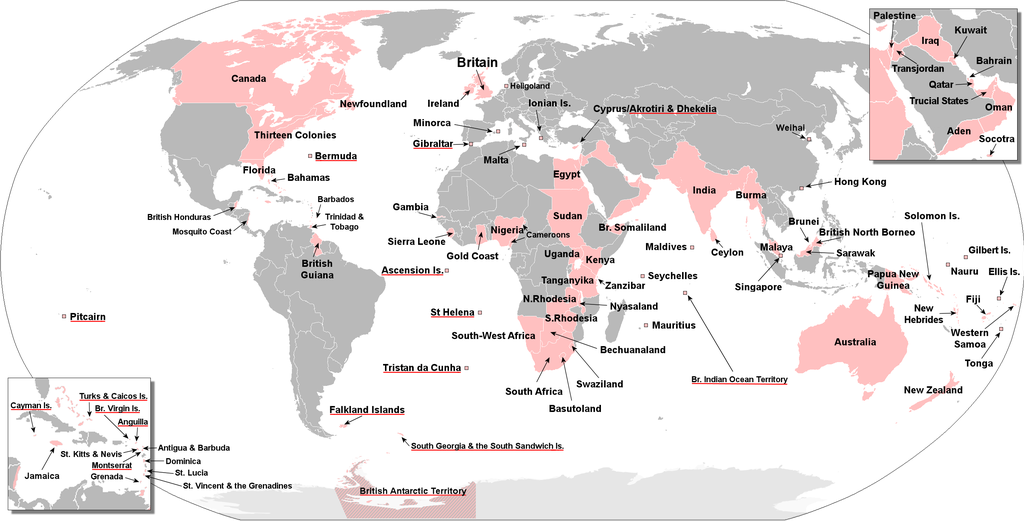
Contrary to what the critics seemed to think, the Ethics and Empire project is not designed to defend the British Empire, or even empire in general. Rather, it aims to select and analyse evaluations of empire from ancient China to the modern period, in order to understand and reflect on the ethical terms in which empires have been viewed historically. A classic instance of such an evaluation is St Augustine’s The City of God, the early-fifth-century AD defence of Christianity, which involves a generally critical reading of the Roman Empire. Nonetheless, Ethics and Empire was conceived with awareness that the imperial form of political organisation was common across the world and throughout history until 1945; and so does not assume that empire is always and everywhere wicked; and does assume that the history of empires should inform — positively, as well as negatively — the foreign policy of Western states today.

The territories that were at one time or another part of the British Empire. The United Kingdom and its accompanying British Overseas Territories are underlined in red.
Composed by “The Red Hat of Pat Ferrick” via Wikimedia Commons.

Thus did I stumble, blindly, into the Imperial History Wars. Had I been a professional historian, I would have known what to expect, but being a mere ethicist, I did not. Still, naivety has its advantages, bringing fresh eyes to see sharply what weary ones have learned to live with.

One surprising thing I have seen is that many of my critics are really not interested in the complicated, morally ambiguous truth about the past. For example, in the autumn of 2015, some students began to agitate to have an obscure statue of Cecil Rhodes removed from its plinth overlooking Oxford’s High Street. The case against Rhodes was that he was South Africa’s equivalent of Hitler, and the supporting evidence was encapsulated in this damning statement: “I prefer land to n—ers … the natives are like children. They are just emerging from barbarism … one should kill as many n—ers as possible.” As it turns out, however, initial research discovered that the Rhodes Must Fall campaigners had lifted this quotation verbatim from a book review by Adekeye Adebajo, a former Rhodes Scholar who is now director of the Institute for Pan-African Thought and Conversation at the University of Johannesburg. Further digging revealed that the “quotation” was, in fact, made up from three different elements drawn from three different sources. The first had been lifted from a novel. The other two had been misleadingly torn out of their proper contexts. And part of the third appears to have been made up.

There is no doubt that the real Rhodes was a moral mixture, but he was no Hitler. Far from being racist, he showed consistent sympathy for individual black Africans throughout his life. And in an 1894 speech, he made plain his view: “I do not believe that they are different from ourselves.” Nor did he attempt genocide against the southern African Ndebele people in 1896 — as might be suggested by the fact that the Ndebele tended his grave from 1902 for decades. And he had nothing at all to do with General Kitchener’s concentration camps during the Second Boer War of 1899–1902 (which themselves had nothing morally in common with Auschwitz). Moreover, Rhodes did support a franchise in Cape Colony that gave black Africans the vote on the same terms as whites; he helped to finance a black African newspaper; and he established his famous scholarship scheme, which was explicitly colour-blind and whose first black (American) beneficiary was selected within five years of his death.

The crusade against (insert scare quotes here) Ultra-Processed Food

Filed under: Europe, Food, Health, Politics — Tags: , , , — Nicholas @ 03:00

In The Critic, Christopher Snowden traces the orthorexist journey from warning about the dangers of saturated fat, to protesting against sugar content in foods, through an anti-carbohydrate phase to today’s crusade against “Ultra-Processed Food”:

It is barely ten years since Denmark repealed its infamous “fat tax”. It was supposed to be a world-leading intervention to tackle obesity but it proved to be hugely unpopular and lasted just 15 months.

It seems almost strange now that it targeted saturated fat. In hindsight, it was the last gasp of the crusade against fat before all eyes turned to sugar. The anti-sugar crusade seemed to come out of nowhere in 2014 with the emergence of the tiny but phenomenally successful pressure group Action on Sugar. Within three years, the British government had announced a tax on sugary drinks, but by then the anti-sugar movement was morphing into a campaign against carbohydrates. That began to run out of steam a couple of years ago when many of the leading anti-carb personalities found that they could get more attention — and, dare I say, money — from being “sceptical” about COVID-19 vaccines.

They come and go, these food fads, but they all rely on the belief that there is something in the food supply that is uniquely dangerous, something hitherto unknown that only independent free thinkers can see is the cause of all our problems.

The new dietary villain is “ultra-processed food” (UPF), a concept that didn’t even exist until a few years ago but is now everywhere. There have been two books about UPF published in recent weeks and a third — Henry Dimbleby’s Ravenous — dedicated a lot of space to it.

The simple definition of ultra-processed food as used by those who are concerned about them (I am not making this up to make them sound silly) is anything that is “wrapped in plastic and has at least one ingredient you wouldn’t find in a home kitchen”. Since you probably don’t have emulsifiers, preservatives and artificial sweeteners in your kitchen, this rules out a lot of products.

The argument is that these products make you fat and should be avoided. The evidence for this comes from a study published in 2019. In a randomised controlled trial, ten people were given an ultra-processed diet and ten other people were given an unprocessed diet. Both diets were similar in their overall sugar, fat, protein and salt content, although the meals themselves were very different.

The participants were given all the food for free and they could eat as much as wanted. The people on the ultra-processed diet ended up eating 500 calories per day more than the other group and, after two weeks, had put on nearly a kilogram of weight. By contrast, the people on the unprocessed diet lost weight.

If you look at the food that was offered to the two groups, the explanation is obvious. The meals and snacks available to the UPF group were delicious whereas the food given to the other group was rather Spartan and was unlikely to make anybody ask for a second helping. If you give people tasty food for free, they will tend to eat more of it.

TL;DR Edition Of All 66 Books Of The Bible

Filed under: Books, Humour, Religion — Tags: , — Nicholas @ 02:00

The Babylon Bee
Published 3 Feb 2023

With The TL;DR Edition of the Bible, you can forget about reading through the Bible in a year — now you can read through the Bible in about five minutes!
(more…)

QotD: Great (but young) Romantic poets

Filed under: Britain, Education, History, Media, Quotations — Tags: , , , , — Nicholas @ 01:00

History being the study of human beings and how they do, you need a baseline grasp of how humans are. It doesn’t matter how smart you are — if you don’t have a good baseline grasp of human nature, History, the discipline, will always elude you.

[This is true of any Humanity, of course. Shelley and Keats have to be in the conversation for “greatest English poet,” right up there with Shakespeare. One or both of them might’ve been more naturally talented than the Bard. But Shakespeare was clearly a man of long, deep experience, whereas the Romantics … weren’t. For every “Ozymandias” or “To a Nightingale”, there’s at least one reminder that these guys died at 29 and 25, respectively. To call “The Masque of Anarchy” sophomoric is an insult to sophomores. “Like lions after slumber, In unvanquishable number.” Ugh. Good God, y’all].

Which is why that “social construction” stuff is so popular. Yeah yeah, it has some real (though really limited) explanatory power, but mostly it’s an excuse for kids who believe themselves clever to avoid contrary evidence. Calling, say, “masculinity” “just a social construction” frees you of the burden of entering the headspace of men who do things as men, because they’re men. To stick with a theme: Shakespeare could’ve written something like “the Masque of Anarchy” — probably as a wicked bit of characterization in Hamlet: The Wittenberg Years — but Shelley never could’ve written MacBeth’s “sound and fury” soliloquy. Shakespeare had obviously seen violent death; Shelley obviously hadn’t.

Knowledge of human nature is almost nonexistent in the Biz.

Severian, “How to Teach History”, Rotten Chestnuts, 2020-12-23.

May 11, 2023

This 100 Year Old Bench Should Have Fallen Apart

Filed under: Tools, Woodworking — Tags: , , — Nicholas @ 04:00

Rex Krueger
Published 10 May 2023

This old bench changes everything I thought I knew about building furniture.
(more…)

London’s return to normality after Coronation Day

Filed under: Britain, Cancon — Tags: , , — Nicholas @ 03:00

In The Line, Matt Gurney recounts his third and final day in London covering the Coronation, the rather impressive clean-up efforts afterwards and the damp squib of the third day, “The Big Help Out”:

Monday was a holiday in the U.K., too, it’s important to note. A “bank holiday”, in the local jargon, which had been declared as part of the official period of celebration. There were still lots of people working, of course. Restaurant staff and taxi drivers and all the rest. But there were a lot of people who could have been volunteering. And I didn’t see any. Not a one.

I’d gone looking, too. There was a website for the so-called Big Help Out, where you could put in your address and what kind of volunteering you were interested in, and find local opportunities. I used my hotel address and selected every possible category of volunteerism, and was offered … not much. I broadened the search area and … still not much. I could download a few kits to collect some signatures for petitions. I was invited to pick up some trash in my local park, whichever park that was, and just as a solo effort. I was asked to fill out some surveys about nature and wildlife for some local conservation groups. And that all sounds … uhh … worthwhile. But this wasn’t what I had in mind, I admit. No group activities? No community activism?

It seemed odd especially because the entire point of Sunday’s events, the Big Lunches, had been bringing people together. To celebrate. It seemed fitting and appropriate for those same people to then get together the next day and contribute something. But no. No one seemed interested. I didn’t have as much time to wander the city on Monday as I’d had on Sunday, but I still had a few hours, and I didn’t see anything. It was quiet.

This had been foreseen as being a problem. Even before I’d flown over, as part of my research, I’d come across this article in The Guardian, warning three weeks ago that volunteerism was at a crisis point in the U.K., was trending further down, and had been for years. It’s not that anyone seemed to think that the idea of the Big Help Out was bad. It’s just that no one seemed to think many people would actually show up.

Some events certainly seemed to go off as planned. Mainly the ones where royals or other VIPs attended. The BBC reported that the Prince and Princess of Wales, and their children, helped improve a Scouts facility. The prime minister and his wife prepared and served food to the elderly. The BBC also reported that 55,000 events were planned across the U.K. I truly and sincerely hope they did well, and that good things were accomplished in communities and for people that needed the help. But I can only tell you what I saw, as I’ve done in my other dispatches, and I didn’t see anything in London on Monday. I asked around a bit, and people either just shrugged it off and went about their day or hadn’t heard of The Big Help Out at all. They’d sure as hell heard of The Big Lunches, though.

Again, probably not a shock that an invitation to party got a better response than an invite to help out. But still.

He also considers the monarchy as an institution from a Canadian constitutional perspective and I find I largely agree with his conclusions:

If I was starting a country from scratch, I would never decide that the logical thing to do would be to invest our notion of sovereignty and much of our government’s powers in an old man who lives in a castle on an island across the ocean. No one would. It’s absurd. But … it works? And, more to the point, I have zero faith — absolutely zero — that we’d ever be able to replace what we currently have with something that functioned at least as well. That has to be the minimum bar. And look around, at the state of things in Canada right now, and for the foreseeable future. Does anyone think we’re going to be in a place to design a new Canadian republic from scratch without just epically screwing it up? Julie Payette, President of Canada, anyone? David Johnston, Eminent President?

We all know that’s exactly who we’d end up with, right? Would we just skip a lot of fuss and bother and just make the president whomever happens to be the youngest (or oldest, or median) member of the Trudeau Foundation board of directors at any given moment? Alternate between astronauts and retired Supreme Court justices? Tack it on as a side gig for whomever happens to be hosting The National that week?

If you think I’m being unduly flippant or sarcastic, I beg you: imagine the president we’d end up with if we locked Justin Trudeau, Pierre Poilievre and Jagmeet Singh in a room together until they could sort it out. If ever. And then tell me you don’t find yourself reconsidering whatever thoughts you may have re: Charles over in Blighty.

I’m a pretty luke-warm monarchist, to be honest, but the thought of the great and the good of Canada running a republic has me singing “God Save the King” at a high volume. His Majesty King Charles III will almost certainly never achieve the personal popularity of her late Majesty Queen Elizabeth II, and that’s okay. As long as he manages to follow the model of his mother and keep his trap shut about political matters in any of his various realms, the better we’ll all feel about keeping the monarchy going a bit longer.

« Newer PostsOlder Posts »

Powered by WordPress