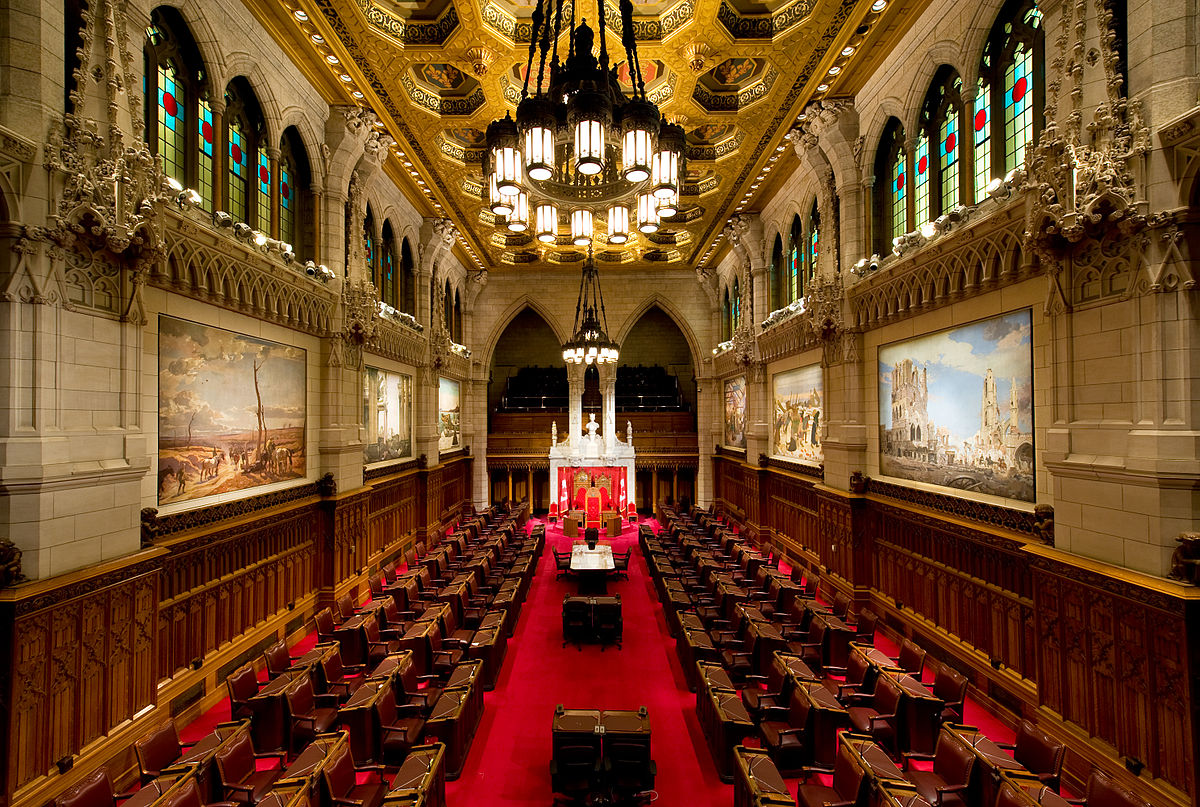
Eventually, the deeply impoverished language of Bauhaus or Corbusian architecture became evident even to architects, possibly the most obtuse professional group in the world (though educationists are not far behind). But their turning away from the dreariness of what Professor Curl calls Corbusianity has hardly improved matters. They discovered the delights — for themselves — of originality without the discipline of even a reduced vernacular, of giving buildings outlandish shape simply because it was possible to do so, the more outlandish the more attention being drawn to themselves. Thus the skyline of the City of London has been adorned with Brobdingnagian dildoes and early mobile telephones, turning the city into a damp, overcrowded cut-price Dubai; and Paris — the City of Light — has been the dubious distinction of having built three of the worst buildings in the world, the Centre Pompidou, the Musée du Quai Branly and the Philaharmonie, the latter two by the architect who dresses like a fascist thug, Jean Nouvel. I cannot pass these buildings without thinking au bagne!; and indeed, I have a French book whose title, Faut-il pendre les architectes?, asks whether it is necessary to hang the architects.
Professor Curl’s is a very painful book to read. In one sense his targets are easy for, as the photos amply demonstrate, modernist architecture and its successors are so awful that it scarcely requires any powers of judgment to perceive it. It is like seeing a TV evangelist and knowing at once that he is a crook. Yet modernist architecture, despite its patent hideousness and inhumanity, still has its defenders, especially in the purlieus of architectural schools. Moreover, the population has been browbeaten into believing that there was never any alternative, and it is obvious that to undo the damage would take decades, untold determination and vast expenditure. Removing the Tour Montparnasse alone would probably cost several billion. No one is prepared to make this colossal effort.
What Walter Godfrey wrote in 1954 is debatable:
It is not an exaggeration to say that nine men out of ten have lost all sensitiveness to an art that was once a matter of common interest.
If this is true, it is because they have learned to accept, or swallow what they are given. The epidemiology of graffiti, however, suggests to me that, at least subliminally, men still take notice of their surrounding and are affected by them: defacement is overwhelmingly of hideous Corbusian surfaces, that is to say on what Corbusier called “my friendly concrete”.
As for the architects and their acolytes, the architectural commentators, they hide behind the claim that most people do not “understand”. They claim that modernist architecture is better than it looks or functions, that it is “honest”, a weaselly word in this context. The architects cannot recognise the obvious for the same reason that Macbeth could not stop murdering once he had started:
I am in blood
Stepped in so far that should I wade no more
Returning were as tedious as to go o’reProfessor Curl has written an essential, uncompromising, learned, sometimes slightly densely, critique of one of the worst and most significant legacies of the 20th century. He offers a slight glimmer of hope in the existence of architects who, bravely, have resisted the blandishments of celebrity status and the approbation of their corrupted peers. His book has a wonderful bibliography, the fruit of a lifetime of reading and reflection, that will give me occupation for a long time to come. It is a loud and salutary clarion call to resist further architectural fascism.
Theodore Dalrymple, “Architectural Dystopia: A Book Review”, New English Review, 2018-10-04.
April 13, 2024
QotD: Architects and modern architecture
April 12, 2024
When it comes to media coverage of environmental issues “bad news sticks around like honey, while good news dries up like water”
In Spiked, Matt Ridley debunks the attitude — universal among climate activists — that humanity’s mere existence is “bad for the planet”:

A 16 foot high sculpture of a polar bear and cub, afloat on a small iceberg on the River Thames, passes in front of Tower Bridge on 26 January 2009 in London, England.
Spiked
Over the past few years, we have been subject to endless media reports on the devastating impact humanity is having on the global bee population. “Climate change is presenting huge challenges to our bees”, claimed the Irish Times last year. “Where has all the honey gone?”, asked the Guardian earlier this year.
The news from last week may come as a shock to some, then. It turns out that America actually has more bees than ever before, having added a million hives in just five years. The Washington Post, which reported these facts, was certainly surprised given what it calls “two decades of relentless colony-collapse coverage”.
Some of us, however, have been pointing out for more than a decade that the mysterious affliction called “colony collapse disorder”, which caused a blip in honey-bee numbers in the mid-2000s, was always only a temporary phenomenon. Globally, bees are doing better than ever. The trouble is that bad news sticks around like honey, while good news dries up like water.
Honey bees are a domesticated species, so their success depends partly on human incentives. In the case of America, the Texas state government’s decision to reduce property taxes on plots containing bee hives has boosted the popularity of beekeeping. When bees were in trouble, they were seen as a measure of the health of the environment generally. So their recovery can be regarded as a sign of good environmental health.
Why do stories of environmental doom, like this one about collapsing bee colonies, linger in the public consciousness, despite being outdated and wrong? The media are partly to blame. For environmental reporters, bad news is always more enticing than good. It’s more likely to catch the attention of editors and more likely to get clicks from readers. Good news is no news.
So I have a simple rule of thumb to work out when an environmental problem is on the mend: it drops out of the news. (The same is true of countries, by the way. When I was young, Angola and Mozambique were often in the news because they were torn by war; not today, because they are at peace.)
Take whales. In the 1960s, they were the (literal) posterboys of environmental alarm. There were just 5,000 humpback whales in the whole world and they seemed headed for extinction. Today, there are 135,000 humpback whales, which represents a 27-fold increase. For the first time in centuries they sometimes gather in groups of over a hundred. I have even seen them several times myself, which I had assumed as a boy I never would.
Most other whale species are doing almost as well: blue, fin, right, bowhead, sperm, grey, minke – all are increasing steadily in numbers (though certain subpopulations, such as North Atlantic right whales, are still struggling). But the story of whales’ resurgence just doesn’t make the news.
Or take polar bears. Just a few years ago, greens were constantly claiming that they were facing imminent extinction. In 2017, National Geographic published a video of a starving polar bear, with the tagline, “This is what climate change looks like”. It was viewed 2.5 billion times. No climate conference or Greenpeace telly advert was complete without a picture of a sad polar bear on an ice floe. Today, that’s a less common sight, because it is harder and harder to deny that polar bears are less and less rare. Despite heroic efforts by environmentalists to claim otherwise, there is now no hiding the fact that polar-bear numbers have not declined and have probably increased, with some populations having doubled over the past few decades. So much so that some environmentalists and researchers no longer think that polar bears are suitable symbols of man’s threat to the planet.
The refusal of polar-bear numbers to conform to the eco-pessimists’ narrative should not be a surprise. In 2009, Al Gore claimed that the Arctic polar ice cap could disappear in as little as five years. A decade on, that is still nowhere near happening yet. Besides, polar bears have always taken refuge on land in late summer in regions where the ice does melt, such as Hudson Bay.
Another Arctic species, the walrus, is doing so well now that it sometimes turns up on beaches in Britain. It’s the same story for fur seals, elephant seals and king penguins. A few years ago, I visited South Georgia in the Antarctic and saw thousands upon thousands of all three species, when little over a century ago they would have been very rare there.
These whales, seals, penguins and bears are booming for a very simple reason: we stopped killing them. Their meat could not compete with beef. And, above all, their fur and blubber could not compete with petroleum products. Or to put it another way, fossil fuels saved the whale.
Greek History and Civilization, Part 6 – The Search for Stability
seangabb
Published Apr 7, 2024This sixth lecture in the course deals with the period of Greek history between the end of the Persian Wars and the assassination of Philip II of Macedon.
(more…)
Busybody Alberta cabinet minister claims cheap booze is not in “compliance with … the spirit of Albertans”
Chris Selley points and laughs at Dale Nally, Alberta cabinet minister with responsibility for the regulation of gambling, booze, and cannabis:

Lauren Boothby on Twit, er, I mean “X” – https://twitter.com/laurby/status/1776437318435422493/photo/1
The latest prude eruption comes from Alberta — Canada’s freedom capital, by some accounts. Over the weekend, Edmonton Journal reporter Lauren Boothby quite rightly informed her social-media followers of an extraordinary bargain she had discovered at Super Value Liquor in Edmonton’s Mill Woods neighbourhood: $49.99 for four litres of store-brand “Value Vodka”, produced at the T-Rex distillery in St. Albert, sold in a clear plastic jug, and labelled roughly as you might label a jug of vinegar or bleach (appropriately, per the vodka snobs on X).
“Alberta rules”, Boothby reported, and in many respects I agree.
Alas, a very Canadian scene then unfolded. Dale Nally, the minister responsible for Alberta Gaming, Liquor and Cannabis (ALGC), declared himself not OK with these vodka jugs. Not even slightly tolerant was Nally of these jugs; no sirree, Bob. He conceded the vodka was perfectly legal to sell — a minor but important detail — but claimed the jugs were somehow not in “compliance with … the spirit of Albertans”.
That’s not bad as an accidental pun, but you’ll notice that it’s absolutely meaningless as an explanation or justification for a policy. (Ironically, Nally is also Alberta’s minister responsible for eliminating red tape.) In my experience, when a politician or activist tells you something is against your society’s values or “spirit”, chances are they’re somewhere between 30 and 180 degrees wrong about it. I certainly tend to trust a distillery, a liquor store chain and the people of Alberta over a government minister on the question of whether there’s a market for cheap vodka.
Now to be fair, by any Canadian standard at least, Super Value Liquor is selling some astonishingly cheap hooch. Had someone other than a credible journalist posted that photo on X, I would have disbelieved my eyes. You can’t legally sell a four-litre vessel of vodka in Ontario for less than $144, and in practice it will cost you considerably more than that.
Ontario will always be the capital of Canadian prudery, but that’s almost three times as much! Canadian provinces have their policy and pricing discrepancies, but not many that big.
I’m all for reasonably cheap booze and a wide-open market in pretty much everything that doesn’t inherently harm other people. But in the wrong hands, certainly, alcohol does harm other people, in addition to its consumer. I wish it weren’t true, but it is. Curbing excessive alcohol consumption is a reasonable public-health goal that every serious government and opposition party in the developed world shares to some extent. And the simplest, most efficient and therefore most lucrative way for governments to accomplish that goal is through pricing.
(We’ll leave aside for now the howling conflict of interest inherent in governments selling alcohol — and casino gambling, lottery and sportsbooks, for heaven’s sake — while officially trying to dissuade people from partaking.)
FURY – How a Museum with a Sherman Made a Movie
The Tank Museum
Published Jan 5, 2024If you enjoyed the 2014 movie FURY, watch this and get the inside scoop behind The Tank Museum’s role in David Ayer’s Hollywood production. Ten years on from its release, David Willey describes how one of The Tank Museum’s Shermans and Tiger 131 took starring roles alongside Brad Pitt, Shia LaBeouf, Logan Lerman, Michael Peña, and Jon Bernthal. From initial discussions to the red carpet, David reveals every inch of the process, the lessons learned and the impact it has had on The Tank Museum.
Let us know what you thought of FURY and our tank’s performance in it in the comments below… What else would you like to know?
00:00 | Intro
00:50 | Fury – The Beginning
02:48 | Tiger Inquiries
05:00 | Insurance & Contracts
08:06 | Hollywood in Dorset
09:51 | On Set & Filming
14:55 | Was it worth it?
16:34 | Fury’s Longevity
(more…)
QotD: Prepper fantasy versus prepper reality
… note that this is also a bit of a rebuke to the dominant strain of prepper fantasies, such as those I began this review with. Prepper fantasies are most fundamentally fantasies of agency, dreams that in the right crisis the actions you take could actually matter, and that in the wake of that crisis you could return to a Rousseauian condition of autonomous activity freed from the internal conflicts engendered by societal oppression (whether that oppression takes the form of stifling social convention or HRified bureaucratic fiat). It’s obvious how the prepper fantasies relate to the great survival stories like Robinson Crusoe, or to the pioneer dramas of the American Westward expansion. It’s a little less obvious, but just as deeply true, that they’re connected to stories of rogues, rascals, and reavers like those by Robert E. Howard or Bronze Age Pervert. All of these stories, fundamentally, are about how a man freed from external restraint and internal conflict can apply himself to better his condition.
The thing is these stories are totally ahistorical — the best that solitary survivors have ever managed was to survive, none of them have rebuilt civilization. As Jane notes in her review of BAP, the sandal-clad barbarians have generally been subjected to a “tyranny of the cousins” even more intrusive and meticulous than the gynocratic safetyism that Bronze Age Lifestyle offers an imaginative escape from. And as for the pioneers, Tanner Greer notes that:
Many imagine the great American man of the past as a prototypical rugged individual, neither tamed nor tameable, bestriding the wilderness and dealing out justice in lonesome silence. But this is a false myth. It bears little resemblance to the actual behavior of the American pioneer, nor to the kinds of behaviors and norms that an agentic culture would need to cultivate today. Instead, the primary ideal enshrined and ritualized as the mark of manhood was “publick usefuleness”, similar, if not quite identical, to the classical concept of virtus. American civilization was built not by rugged individuals but by rugged communities. Manhood was understood as the leadership of and service to these communities.
It would be too easy to end the review here, with the implication that the prepper identity is a fantasy of radical individualism and like all such fantasies, kinda dumb. But the thing is, the prepper world has by and large absorbed this critique and incorporated it into its theorizing. In contrast to the libertarian fantasies of the 1970s, second-wave prepperism (reformed prepperism?) is constantly talking about community, the importance of having friends you can trust, of cultivating deep social bonds with your neighbors, etc.
What Yu Gun reminds us is that this is still totally ahistorical, but this time in a way that indicts not only the preppers, but also a much broader swathe of our society. A man without a community is unnatural, but so is a community without leadership, hierarchy, and order. The prepper version of community is a vision of freely contracting individuals respecting each others’ autonomy while cooperating because it’s in their best interests. This is also the folk version of community that motivates much of our economic and legal regime. Scratch an American “communitarian”, and underneath it’s just another individualist.
If you hang out on prepper forums, a recurrent mantra is to “practice your preps”, that is to start living on the margin as if the apocalypse had already occurred. The purpose of this is to gain experience in the skills you’ll need after the end, and to work out the kinks in your routine now, while it’s still easy to make adjustments. Originally this meant practicing getting lost in the woods, using and maintaining your weapon of choice, eating some of your food stockpile, or whatever. In second-wave prepperism it means all that, plus a bunch of new stuff like hanging out with your neighbors, attending community barbecues, and whatever else it is that freely contracting individuals like to autonomously do while temporarily occupying the same space.
But for we third-wave preppers, it has to take on a very different meaning. Greer’s essay that I quoted above is mainly about how leadership and service in local-scale organizations served as training for leadership and service in much larger groups aimed at problems with much higher stakes. In other words, they were practicing their preps. One of the great secrets of leadership is that following and leading are actually closely related skills, and that practice at one of them transfers well to the other. This is difficult for we Americans to see, because an aversion to hierarchy is built into our national character, and consequently we operate with impoverished models of what it means to be in a position of authority or of subordination.
Long ago I read an article contrasting Western and Korean massively-multiplayer online role-playing games (MMORPGs). Even if you know nothing about computer games, you probably know that in most of them you are the hero, the chosen one, the child of destiny. Talk about fantasies of agency! MMORPGs thus have a tricky needle to thread — somehow all the thousands and thousands of players need to simultaneously be the chosen one, the child of destiny, etc., etc. And they mostly accomplish this by just rolling with it and asking everybody to suspend disbelief. But this article claimed that Korean MMORPGs are different — when players join these games, they’re randomly assigned a role. A tiny fraction might become kings or generals or children of destiny, with the power to decide the fates of peoples and kingdoms, but most are given a role as ordinary soldiers or porters or blacksmiths, and toil away at their in-game mundane tasks, without much ability to affect anything at all.
We like to imagine that after the bombs fall and the smoke clears we will emerge as the new Yu Gun, apportioning merit and assigning tasks. And perhaps you will indeed be called upon to do that, so you should prepare yourself to step up and do it. That preparation will involve some practice commanding others and some practice obeying others’ commands, because the two are inextricably bound together. But in life as in Korean video games, there’s isn’t very much room at the top. Far more likely, when the stage of history is set, we will be cast in a supporting role, like the Korean gamer assigned to role-play as a peasant or like Yu’s followers standing in orderly ranks. Let us not turn our noses up at this vocation, the poorly-behaved seldom make history.
John Psmith, “REVIEW: Medieval Chinese Warfare, 300-900 by David A. Graff”, Mr. and Mrs. Psmith’s Bookshelf, 2023-06-05.
April 11, 2024
All the ways A few of the ways Canada is broken
In The Line, Andrew Potter outlines some of the major political and economic pressures that prompted the formation of the Dominion of Canada in 1867, then gets into all the ways some of the myriad ways that Canada is failing badly:
It is useful to remember all this, if only to appreciate the extent to which Canada has drifted from its founding ambitions. Today, there are significant interprovincial barriers to trade in goods and services, which add an estimated average of seven per cent to the cost of goods. Not only does Canada not have a free internal market in any meaningful sense, but the problem is getting worse, not better. This is in part thanks to the Supreme Court of Canada which continues its habit of giving preposterously narrow interpretations to the clear and unambiguous language in the constitution regarding trade so as to favour the provinces and their protectionist instincts.
On the defence and security front, what is there to say that hasn’t been said a thousand times before. From the state of the military to our commitments to NATO to the defence and protection of our coasts and the Arctic to shouldering our burden in the defence of North America, our response has been to shrug and assume that it doesn’t matter, that there’s no threat, or if there is, that someone else will take care of it for us. We live in a fireproof house, far from the flames, fa la la la la. Monday’s announcement was interesting, but even if fully enacted — a huge if — we will still be a long way from a military that can meet both domestic and international obligations, and still a long way from the two per cent target.
As for politics, only the most delusional observer would pretend that this is even remotely a properly functioning federation. Quebec has for many purposes effectively seceded, and Alberta has been patiently taking notes. Saskatchewan is openly defying the law in refusing to pay the federal carbon tax. Parliament is a dysfunctional and largely pointless clown show. No one is happy, and the federal government is in some quarters bordering on illegitimacy.
All of this is going on while the conditions that motivated Confederation in the first place are reasserting themselves. Global free trade is starting to go in reverse, as states shrink back from the openness that marked the great period of liberalization from the early 1990s to the mid 2010s. The international order is becoming less stable and more dangerous, as the norms and institutions that dominated the post-war order in the second half of the 20th century collapse into obsolescence. And it is no longer clear that we will be able to rely upon the old failsafe, the goodwill and indulgence of the United States. Donald Trump has made it clear he doesn’t have much time for Canada’s pieties on either trade or defence, and he’s going to be gunning for us when he is returned to the presidency later this year.
Ottawa’s response to all of this has been to largely pretend it isn’t happening. Instead, it insists on trying to impose itself on areas of provincial jurisdiction, resulting in a number of ineffective programs — dentistry, pharmacare, daycare, and now, apparently, school lunches — that are anything but national, and which will do little more than annoy the provinces while creating more bureaucracy. Meanwhile, the real problems in areas of clear federal jurisdiction just keep piling up, but the money’s all been spent, so, shrug emoji.
What to do? We could just keep going along like this, and follow the slow-mo train wreck that is Canada to its inevitable end. That is is the most likely scenario.
Disney: go woke, go broke?
spiked
Published Apr 10, 2024
The Walt Disney Company has gone from being an international treasure to an international laughing stock. Its films are flopping at the box office and fans are fuming. All because it has gone ridiculously woke, to an almost comical degree. No Disney film, franchise or TV series is now complete without clunky “progressive” messages about diversity, feminism and gender. The company has even started picking fights with anti-woke politicians. Here, Lauren Smith documents Disney’s Great Awokening – and the fan revolt against it. Watch, share and let us know what you think in the comments.Support spiked:
https://www.spiked-online.com/support/
Sign up to spiked’s newsletters: https://www.spiked-online.com/newslet…
Check out spiked’s shop: https://www.spiked-online.com/shop/
The CIA would “brief the press on matters of national importance … when ‘we, the CIA, wanted to circulate disinformation on a particular issue'”
Jon Miltimore outlines the fascinating revelations from 1983 about how the CIA directly manipulated American journalists to propagandize certain issues in the way the Agency desired:
One of Snepp’s many jobs at the Agency was to brief the press on matters of national importance. Or in Snepp’s words, when “we, the CIA, wanted to circulate disinformation on a particular issue”.
Snepp made this statement in a 1983 interview (see above) that I’d encourage readers to watch. In the video, the former CIA analyst discusses how the CIA manipulates journalists with lies and half-truths in pursuit of its own agendas.
For instance, if we wanted to get across to the American public that the North Vietnamese were building up there force structure in South Vietnam, I would go to a journalist and advise him that in the past 6 month X number of North Vietnamese forces had come down the Ho Chi Minh Trail system through southern Laos. There is no way a journalist can check that information, so either he goes with that information or he doesn’t. Usually the journalist goes with it, because it looks like some kind of exclusive.
What Snepp was describing was one of the most simple tactics the CIA has used for decades to control information. He said the success rate of planting these stories in the media was 70-80 percent.
“The correspondents we targeted were those who had terrific influence, the most respected journalists in Saigon,” Snepp said.
Snepp even offered the names of the journalists he successfully targeted: Bud Merrick of US News and World Report; Robert Chaplin of the New Yorker; Malcom Brown of the New York Times; and others.
Snepp worked his way into these journalists’ trust exactly as one would expect.
“I would be directed to cultivate them, to spend time with them at the Caravel Hotel or the Continental Hotel, to socialize with them, to slowly but surely gain their confidence,” Snepp said.
All of this sounds sleazy, but it gets worse.
SVT-40: The Soviet Standard Semiauto from WW2
Forgotten Weapons
Published Jan 10, 2024The Red Army was interested in developing a semiautomatic rifle clear back to the mid 1920s, and they spent about 15 years running trials and development programs to find one. First in 1930 a Degtyarev design was adopted, followed by the Simonov AVS-36, and then Tokarev won out in 1938 with the SVT-38. Combat experience in the Winter War led to an upgrade program to reduce the weight of the rifle, and that created the SVT-40. Between April 1940 and mid 1942, about 1.4 million SVT-40s were produced in three different factories. They were supposed to be the new standard infantry rifle and also the sniper’s rifle — although they ultimately failed to really be either.
In 1942, production shifted to the AVT-40, identical to the SVT-40 but with a trigger group capable of fully automatic fire. Another roughly 500,000 of these were produced by the end of the war, but the focus of small arms issue had changed to Mosins and submachine guns — options that were a lot cheaper to produce.
(more…)
QotD: North America will never be a “bicycle” culture
Regarding bicycles, they, like motorcycles, have long since transformed from “a means of locomotion” to “a lifestyle”. Note that I’m only talking about AINO here. Everyone has heard that “more bicycles than people in the Netherlands” factoid, and Euros do seem to love them some bikes, but I haven’t spent enough time over there to say much about it. Here in the Former America, though, anyone who rides a bicycle past age 16 falls into one of two broad groups: 1) they’re nature lovers who want to be out in the countryside but for various reasons can’t take up hiking, or 2) they’re preening, posturing, virtue-signaling, passive-aggressive assholes. The latter outnumber the former about 5,000 to 1.
I’m deliberately discounting bicycles as a means of locomotion, you’ll notice, because look: America is a car society. Our cities are designed for cars. Indeed, given the vast distances involved over here, cars are what make our lifestyle possible. Europeans who haven’t been here, or who only visit the big tourist pits like NYC and LA, don’t get this. Even if you’ve seen the maps, it doesn’t really register until you experience it. I’m just guessing here, for purposes of explanation, but it really does seem to be the case that if it were possible to hop in your car and drive two hours due east from downtown Paris, you’d pass through three or four countries. There are lots of American cities where, if it were possible to hop in your car and drive two hours straight from downtown, you’d still be in that same city. The continental US is just mind-bogglingly huge; only Russians and maybe Australians share our mental maps. When you’ve got daily commutes that run an hour, hour and a half on freeways, setting anything up with bicycles in mind is just ludicrous.
Severian, “Cars, Bikes, Motorcycles”, Rotten Chestnuts, 2021-07-25.
April 10, 2024
We can expect to see a lot more commercial bankruptcies in future
Although Tim Worstall is talking specifically about commercial properties in the UK, I suspect the same basic mechanism is in place here in Canada, the US, and many other countries and the outcomes will be broadly similar: declining retail sales intersecting with rising rents do not result in healthy retail markets.
The specific point is something that has become common to near universal in commercial property leases in the decades since the War. This is that rents can only ever be revised upwards.
So, the standard thing about commercial property is that it’s not so much rented as leased. The difference is not wholly clear but, roughly enough, you can leave a rental and you can’t leave a lease. That is, if you’ve a 21 year lease and you want to leave before the 21 years are up then it’s up to you to find another tenant. Not the landlord — and if that tenant that you do find then leaves/goes bust/doesn’t pay the rent then you have to. At least a rental you can leave.
OK — but that’s all pretty standard. The UK has one more thing. Obviously, there are rent reviews during the period of the lease. Inflation taught landlords that this was something they needed to do after all. OK — but the standard, and it really is standard in UK commercial leases, rent review is upwards only. Now, for most of this past 70 years this hasn’t been a problem. The country has been getting richer, inflation has persisted, retail’s been ever more of the economy, rents have been going up.
Ah, but now, eh? Firstly, we’ve the internet eating retail.
About, and roughly, 1% of the total market each year moves online. We all thought that the lockdown boom was going to persist and it didn’t. This caused all sorts of problems for all sorts of people — Boohoo ended up terribly overstocked. Made.com was able to come to market and then went bust as the right hand end of that chart happened and we returned to trend after the blip. Revolution Beauty had its own problems but the overvaluation was at least partly to do with this and so on.
But this had already been happening — Intu went bust well before the pandemic, as we know. It’s now about true that 15% or more of UK retail space is empty. Because sales are moving online. This — naturally enough — means that prices, rents, of retail are falling. Well, OK.
But now this meets upwards-only rent reviews. If you’re a new retailer looking for space then the High Streets are your mollusc of choice. You can probably get in on low rents, substantial rent-free periods and even get the landlord to pay your fitting out costs (landlords would much rather give rent-free periods, pay costs of moving in, than let at low rents. Because the terms of their own mortgages and loans make it better for them to keep headline rents stable whatever the hell the truth of the real value is). But if you’re a long established retailer paying high street rents then you’re screwed.
Your new competition might be able to get in by paying half the rent you are. And yes, rent is a really, really, big part of retail in the UK. You are, in fact, fucked and right royally.
Saving Our Democracy watch – “[Trump] has to do at least ten years, or everybody will hate the navy”
Chris Bray suggests that reading the full linked document may be hazardous to your mental health, so he’s helpfully highlighted a few of the key points that may have you scratching your head and saying something like “The Fuh? What??”
I have a mixed view of Donald Trump’s argument about presidential immunity, which you can read here. But an amicus brief filed with the Supreme Court today by retired flag officers and service secretaries is so bizarre that reading it may permanently alter the structure of my face.
You can read the whole amicus brief here, but treat it like a solar eclipse and don’t stare at it directly. As a first sign of how much good faith the thing contains, one of the amici is Michael Hayden.
The first argument is that Trump has to go to prison or else civilians won’t control the military anymore. You think I’m kidding.
“Amici are deeply interested in this case because presidential immunity from criminal prosecution would threaten the military’s role in American society, our nation’s constitutional order, and our national security.” See the connection? If Donald Trump doesn’t go to prison, “the military’s role in American society” will be damaged. He has to do at least ten years, or everybody will hate the navy.
The prevailing feature of the entire brief is an essence of flattening. Every issue is very simple. There are no competing examples. None of this has ever come up before: The brief deals with questions of presidential immunity around Obama drone-killing a 16 year-old US citizen, or Lincoln unilaterally suspending habeas corpus and using the military to arrest critics of the war, by not mentioning any of it, or any other historical example. Everything is a surface. I’ve graded undergraduate essays, so the tone and depth of the effort feels familiar.
Third argument: Donald Trump has to be prosecuted, because America promotes democracy all over the world, and Trump not being prosecuted is against democracy, so it will be harder for us to promote democracy if we don’t prosecute him. Authoritarian regimes say that American democracy doesn’t work, so: “Presidential immunity from criminal prosecution feeds those false and harmful narratives. Unless Petitioner’s theory is rejected, we risk jeopardizing America’s standing as a guardian of democracy in the world and further feeding the spread of authoritarianism, thereby threatening the national security of the United States and democracies around the world.”
We have to imprison the leader of the political opposition, or people won’t think we’re a democracy, and then there will be more authoritarianism, like when regimes imprison the political opposition.
CDR Salamander says it’s “time to drag LCS out of the gimp box again”
CDR Salamander has never held back on his dislike of the Little Crappy Ship (Littoral Combat Ship) design(s) the US Navy settled on nearly 20 years ago:
As promised yesterday, time to drag LCS out of the gimp box again, because it fits in well with last week’s 3×8 Grid of Shame, flavored in no small part with the Navy’s decision to pull its head inside its shell and cancel its ship briefings.
To solve the many problems we have created for ourselves, we must have a foundational change in our culture. Expecting a different result without changing that, I’m not sure how we get any headway.
From our FITREPs to our shipbuilding plans to the testimony by our leadership to Congress. We spin, mindlessly drone talking points and carefully scripted PAOisms, and from our FITREP to awards system, we willfully share untruths, obscure, hope things just blow up on someone else’s PCS cycle.
[…]
Now, let’s take a look at this second pic. On its face it demonstrates that LCS is a direct byproduct of an institutional habit of not being honest with the American people, their elected representatives, and hell … even ourselves.
Besides both this pic and the first one showing the USN ship being the most out of formation, what catches you eye?
The ship furthest away in formation should look the smallest … but there is nothing “small” about an LCS in the visual spectrum.
In an age where satellites with multi-spectral surveillance capability matched with artificial intelligence, look at that first pic. Is there any way to hide that wake?
Of course not.
Then look at the LCS’s weapons capability compared to the other ships. Is she ready for combat in the littorals against an enemy that will bring modern air, surface, and subsurface threats to her?
Should people only realizing this in the third decade of the 21st Century be taken seriously?
No. I don’t buy any of what they are selling. Either they are lying to my/our face, or they lack the critical thinking skills to see what this kludge was/is/will be.
Three Joints, a Handful of Tools | Paul Sellers
Paul Sellers
Published Jan 5, 2024It was almost 35 years ago when I was about to teach my first woodworking class, and I struggled because what could be taught in a one-day workshop that would have any value? I agonised for two weeks, and one day it came to me; with three joints and a handful of hand tools, you can make just about any furniture piece you care to name.
Since then, I have used this basic tenet to teach and train hundreds of thousands of woodworkers, just like you. It’s still working!
——————–
(more…)