
Tasting History with Max Miller
Published Apr 2, 2024Cornmeal cakes and the bacon in whose fat they were fried
City/Region: Oregon Trail
Time Period: 1856The Oregon Trail was tough. It was gruelling, food could become scarce, and even the drinking water was mostly unpalatable (not to mention the threat of dysentery). Emigrants packed well over 1,000 pounds of food into their wagons, staples like flour, bacon, coffee, sugar, rice, and hardtack (clack clack). They also relied on finding food like edible plants, fish, and game along the way.
These cornmeal cakes went by many names, including johnny cakes and hoe cakes. The ingredients are simple, but they’re surprisingly delicious. Without anything to leaven them, they’re a bit dense, but they taste great. The flavor is a combination of cornbread, sweet molasses, and bacon, kind of like a 19th century McGriddle. This is a great recipe to play around with. You could add some spices for a fancier version, swap out some of the water for milk, or use other fats or sweeteners.
(more…)
July 15, 2024
What Pioneers ate on the Oregon Trail
QotD: Sticking it to “the Man” in Collegetown, USA
Back in College Town, it was as predictable as sunrise: Every election year, a group of Leftie goofs would picket Republican Party headquarters. It was an exercise in futility, of course — since College Town was exactly that, and it totally dominated its surrounding county, no Republican had bothered even making a whistle stop there since the 1950s. A Republican couldn’t get elected dog catcher; the token county headquarters was, no fooling, located in an all-but-abandoned strip mall next to a thrift store.
But it made a certain type of college kid, and of course xzhyr professors, feel good about themselves, sticking it to The Man like that, so they kept on keepin’ on. In the grand tradition of puerile student protest, they’d routinely chalk up the parking lot and sidewalk in front of the building with catchy slogans like “this sidewalk brought to you by socialism!” Yes, they really thought that, and if you’ve followed my “inside the ivory gulag” posts, you can easily suss out why: Sidewalks are public services; public services are paid for by taxes; “conservatives” are against taxes; “conservatives” are also against socialism; therefore sidewalks are socialist.
No, really — I’ve heard more than one professor make a version of that “argument”. If it’s a public service of any kind — police, trash pickup, whatever — it’s by definition “socialist”, because it’s paid for by taxes, and “conservatives” think all taxes, everywhere, are totally illegitimate.
College these days runs about $20K per year on average, by the way. What a deal, huh?
Severian, “Caveat Emptor”, Rotten Chestnuts, 2021-06-16.
July 14, 2024
Japan’s New Defense plan, 100 million dead – WW2 – Week 307 – July 13, 1945
World War Two
Published 13 Jul 2024Japan is aware that soon enough the Allies will invade the Home Islands, and they will mobilize absolutely everything and everyone they can for their defense plan, “The Glorious Death of the 100 Million”. In the meantime, Allied carrier forces keep hitting them, the Australian advance on Borneo continues, the Chinese advance on Guilin continues, the Allied rebuilding of Okinawa continues, and American preparations are nearly complete for a test detonation of an atomic bomb.
(more…)
When the Ontario Progressive Conservatives backed away from LCBO privatization
In the National Post, Terence Corcoran posts an excerpt from last year’s The Harris Legacy: Reflections on a Transformational Premier edited by Alister Campbell:

“LCBO at Parkway Mall” by Xander Wu is licensed under CC BY-SA 4.0 

 .
.
Almost 30 years ago, in 1995, the Ontario Progressive Conservative government led by Mike Harris promised to privatize the Liquor Control Board of Ontario (LCBO). “We will sell off some assets, such as the LCBO,” said the party’s famed election document, the Common Sense Revolution (CSR). The LCBO could have been a true privatization — a full-fledged divestiture of a government monopoly into a new open and competitive market, but it never happened.
The failure to privatize the LCBO, lamentable from a consumer and economic perspective, remains a significant lost opportunity to demonstrate the benefits of privatization. If Harris had successfully de-monopolized the alcohol market, the whole concept of privatization would have been given a major boost. Instead, the government backed away from privatization of the alcohol market, preferring instead to allow the corporation to substitute modern marketing and retail razzle-dazzle to give the false impression it was offering the public the best of all worlds.
The LCBO failure is also a demonstration of the degree to which the Common Sense Revolution’s starting principles fell short in grasping the essential benefits of private versus public ownership and control. Neo-liberalism isn’t exactly a fine science. The Wikipedia entry on “Neo-liberalism” is a 30-page effort (including 400 footnote links to hundreds of warring academic papers), reflecting an economic and ideological scramble that dates back more than a century. But when the Harris government came to power, major elements of the free-market model were often overshadowed by fiscal policy objectives. With the LCBO, the Harris government veered off the neo-liberal course in pursuit of standard political objectives.
In 1995, the LCBO was a government owned and operated province-wide corporation that controlled liquor and wine wholesale and retail markets. Another private monopoly player, the Beer Store chain, while owned and operated by the brewing industry, was also essentially a government-sanctioned beer monopoly. The CSR neo-liberal objective should have been to privatize the alcohol market by selling the LCBO, deregulating the Beer Store monopoly and allowing beer sales through supermarkets and even corner stores. More importantly, dismantling the LCBO would allow other corporations to enter the alcohol retail business and provide consumers much more choice, which has been the Alberta experience. Notably, Alberta achieved a successful and deregulated approach without sacrificing provincial revenues.
The neo-liberal objective of privatization is to benefit consumers and enhance economic productivity through competition. Instead, the Harris government fell into the fiscal policy trap that routinely captures politicians, bureaucrats and corporate insiders. Instead of aiming to benefit consumers, the objective soon became how to maximize the fiscal return to government. Never mind the consumer and the market. The objective became preserving — and enhancing — government revenues.
At the time, anti-privatization advocates frantically pointed at the Alberta experience of privatization of their provincial liquor monopoly, which (briefly) generated a lot of retail horror stories that Ontario newspapers gleefully republished (and, likely, emphasized out of proportion to the actual Alberta market). You can still hear Ontarians casting aspersions on the Alberta market as if nothing at all had changed after the initial rough patch. From what I’ve heard from Albertans, they have far wider choices of alcoholic beverages in stores much more conveniently sited with better open hours than anyone in Ontario enjoys. The Alberta government still gets at least as much in tax revenues from alcohol sales without needing to be in the distribution or retail business. It doesn’t seem to be the utter disaster that Ontario media portrays it to be … rather the contrary.
Britain’s First Naval Defeat in 100 years – Coronel 1914
Historigraph
Published Sep 26, 2020
QotD: Method acting
Mark Steyn, “Charlie and the Chocolate Factory”, The Spectator, 2005-07-30.
July 13, 2024
“Canada has disclosure issues”
The recent revelations about Nobel Prize winner Alice Munro’s family have certainly roiled the turgid waters of Canada’s tiny literati community, but was the scandal actually all that well hidden beforehand?

Alice Munro accepting the 2006 Edward MacDowell Medal, 13 August 2006.
Screenshot from a video of the event via Wikimedia Commons.
The Toronto Star ran two articles last weekend revealing that Andrea Skinner, third and youngest daughter of Nobel-prize-winning author Alice Munro, was sexually assaulted as a nine-year-old by her stepfather, Gerald Fremlin, Alice’s second husband.
The assaults occurred in the 1970s. Alice learned of them in 1992 when Andrea, then twenty-five, wrote her a letter detailing the abuse. After briefly leaving Fremlin, Alice returned to him. Andrea, feeling her mother had chosen her abuser over her, eventually cut ties with Alice and went to the police. Fremlin was convicted of indecent assault in 2005.
I’m not going to dwell on the abuse. It’s all here, and it’s distressing to read. One can only hope that recognition of what she suffered as a child and the pain she’s carried throughout her life brings some solace to Andrea.
I wish that had been my first reaction to the stories, but I was too long a journalist. My first thought was sordid. Good on the Star for getting the scoop.
My second thought was, how was this not reported earlier? It’s obviously a big story, and it all played out in open court. It’s surprising that it didn’t make headlines.
In yesterday’s Star, the always interesting Stephen Marche put the blame on “a specifically Canadian conspiracy of silence” amounting to “a national pathology”. He recalls that CBC radio star Peter Gzowski’s dirty laundry wasn’t aired until he’d passed; that CBC radio star Jian Ghomeshi’s outrageous behavior was not immediately called out; that author Joseph Boyden and singer Buffy Sainte-Marie both passed as Indigenous for a long time (Boyden does, in fact, have Indigenous blood). “Everybody knew but nobody knew,” Marche writes of each of these cases, adding that the Canadian arts and entertainment community “has been a breeding ground for monsters”.
I think Stephen has a low bar for monstrosity, but I am susceptible to his broader argument. Part of the reason I was happy that the Star got the scoop (and sincere congratulations to editor Deborah Dundas and reporter Betsy Powell on landing it) was that we sometimes first read of our biggest scandals in the international press. Toronto mayor Rob Ford’s crack scandal was revealed by Gawker, Justin Trudeau’s blackface habit by Time. Canada has disclosure issues.
The more I think about those issues, however, the less it seems we’re alone with them. How long did it take Harvey Weinstein’s crimes to make headlines? Bill Cosby’s? The US has had its share of long-running identity hoaxes: Elizabeth Warren, Hilaria Baldwin, Rachel Dolezal, and Jessica Krug. We didn’t learn that Kerouac was a thug and Salinger a creep until after they were gone. And it’s especially hard to sustain Marche’s argument that Canada is an outlier when the White House has been playing Weekend at Bernie’s for the last couple of years.
Certain stories are just slow to break. People keep secrets. Others abet them. Not many journalists frequent courtrooms way out there in Goderich, Ontario, and Fremlin’s name on the docket would not have sent off flares. Most people I’ve spoken to this week couldn’t have named Mr. Alice Munro last week.
There was no conspiracy, or at least not a broad one. I’m confident that any newsroom I was a part of would have run with the Munro story had we caught a whiff of Fremlin’s conviction. It’s not impossible to imagine other newsrooms making different editorial choices, perhaps arguing that Fremlin’s assaults didn’t merit coverage: he was a nobody apart from his association with Alice Munro; the offence was minor in a criminal sense (he served no time); Alice was not a party to the assaults; publishing the story would only serve to smear her by association. But I’ve not seen any evidence that any news outlet had a whiff of this story.
Only a small circle of people knew of Fremlin’s crime, most of them in the Munro family, and they weren’t talking. I contacted a few of the best Canadian literary gossips I know and they had heard nothing until last weekend. It’s not true that “everybody knew”.
Two who did know were Alice’s publisher, Douglas Gibson, and her biographer, Robert Thacker.
The BBC – the Biased Broadcasting Corporation
Like Canada’s CBC, the BBC considers itself to be more than just a TV, Radio, and online broadcaster. From its founding in the early 1920s, the BBC has taken upon itself the role of teacher, moral example, and moulder of public opinion. The BBC has always been more progressive in most senses than the British public (as the CBC has been in Canada), but over the last few decades, the BBC has been hurtling leftward on gender issues faster than ever before:

Complaints about BBC impartiality are nothing new. The state broadcaster has a kind of constitution in the form of its Royal Charter, by which it is required to maintain due impartiality in its news reporting and when it comes to controversial subjects. But does it succeed?
In holding politicians from the left and the right to account in its reporting, accusations of bias are always likely to occur. Some people claim the BBC is inherently left-leaning, others claim it is inherently right-leaning. It really depends on your perspective. For my part, I believe that BBC does a generally good job — with a few notable lapses — when it comes to political impartiality.
However, where I think it clearly fails is in regard to its ideological impartiality. When it comes to the ideology of Critical Social Justice, what has become known colloquially as the “woke” movement, the BBC in my view clearly suffers from an extreme bias. This explains why so many people no longer trust its reporting.
I know from personal anecdotes from employees at the BBC that there is a kind of internal struggle going on to overcome the problem, but nobody I have yet spoken to denies that the organisation is ideologically captured. And we can all see it for ourselves. You might have seen the educational film by the BBC called Identity – Understanding Sexual and Gender Identities, aimed at 9 to 12 year-olds, which claimed that there are “over 100 gender identities”.
Where is the balance there? Why is the BBC making pseudo-religious proclamations to children as though they were uncontested fact?
[…]
But perhaps most damning of all is the question of the WPATH Files. In March of this year, a series of internal documents and videos from the World Professional Association for Transgender Health were leaked to journalist Michael Shellenberger. As Mia Hughes’s report for the Environmental Progress think tank revealed, these leaks showed that members of the world’s leading global authority in gender treatment were engaging in medical malpractice.
There are messages proving that surgeons and therapists are aware that a significant proportion of young people referred to gender clinicians suffer from mental health problems. They reveal that some specialists associated with WPATH are proceeding with treatment in the knowledge that no consent has been secured from either the children or those directly responsible for their wellbeing. They have also withheld from patients details of potential lifelong complications, or continued down this path knowing that the children do not understand the implications. And the WPATH Standards of Care are the go-to policies for gender treatment throughout the world, and have been influential in our own NHS.
[…]
And yet if you search for the WPATH Files on the BBC News website, what do you find? Precisely nothing.

Did you blink and miss Gender Empathy Gap Day?
Don’t worry, unlike so, so many other formal days (or months, or seasons …) in the calendar devoted to this or that or the other real and imagined causes, celebrations, or acknowledgements, Gender Empathy Gap Day isn’t observed anywhere:
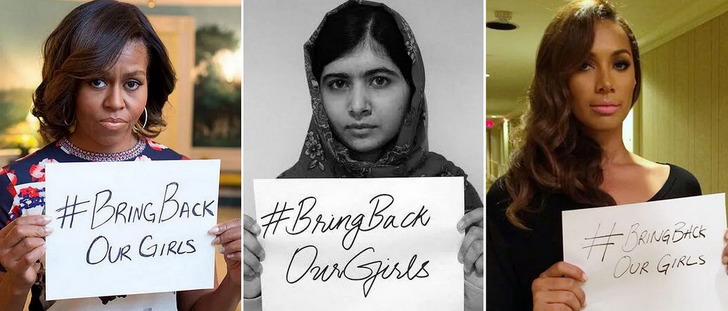
Remember these examples of virtue signalling? Can you imagine them doing the same for boys or young men?
Image from The Fiamengo File.
Few people have heard of Gender Empathy Gap Day, a day inaugurated in Germany in 2018 to raise awareness about our societies’ remarkable indifference to the suffering of men and boys. Not surprisingly, it has no official status in any country.
Most people, if asked, will insist that it is women and girls who suffer. We expect men and boys to apologize for their advantages and educate themselves about issues affecting women and girls. Animus against men is socially acceptable, even approved. “I bathe in male tears” is a popular feminist slogan, and university professors write mainstream opinion pieces with unironic titles like “Why Can’t We Hate Men?”
The Gender Empathy Gap Day doesn’t advocate a contest over which sex has it worse. It does advocate recognition of our collective inability or unwillingness to see the full humanity of men.
Academic researchers Alice Eagly and Antonio Mladinic have compiled data showing that both females and males tend to have more positive associations with women than with men. Researchers have also confirmed a much higher in-group bias amongst women, meaning that women feel more empathy towards other women than towards men, while men also feel more empathy for women.
Whether it’s homelessness (61% male), homicide (78% male victims), suicide (79% male), workplace fatalities (93% male), prison incarceration (93% male), or a host of other issues, men and boys do suffer. Yet according to the research of Dr. Tania Reynolds, we tend to associate agency with maleness and the capacity for victimhood with femaleness, seeing men and boys as active doers rather than as sufferers deserving concern.
As a result, we are tolerant of harsh punishments for male criminal offenders, but not for women. In 2012, Sonja Starr, a professor of Law, published the results of her study of discrepancies in criminal sentencing that showed a very large gender gap in the punishment of women for the same crimes committed by men. Starr’s extensive study found an average 63% sentencing gap that harshly disadvantaged men. She also discovered that “Female arrestees are […] significantly likelier to avoid charges and convictions entirely, and twice as likely to avoid incarceration if convicted”.
The gap in punishment results because we all — including prosecutors, judges, and juries — incline to the belief that women who commit crimes were led into their law-breaking by others, usually men, and had limited choices because of poverty, childhood abuse, mental illness, or addiction. We hesitate to deprive young children of the care of their mothers, while we are content to see fathers behind bars. As Starr points out, however, male offenders have also “suffered serious hardships, have mental health or addiction issues, have minor children, and/or have ‘followed’ others onto a criminal path”.
Author Glen Poole has noted that such indifference to male difficulties is built right into the stories our society tells about itself. He points out that when a large number of men are killed — whether in war, accident, or natural disaster — mainstream news sources report on people killed, making the sex of the victims invisible. It is not news when men and boys die.
When women or girls are killed or harmed, they are rarely if ever referred to as people. Their suffering is news.
The real story of Henry Hook, VC – Zulu
The History Chap
Published Nov 23, 2023Henry Hook, VC, 1850-1905. Zulu — the Battle of Rorke’s Drift.
Henry Hook was one of 11 defenders at the mission station at Rorke’s Drift (battle of Rorke’s Drift, Anglo-Zulu War 1879) who were awarded the Victoria Cross. Controversially, his character was misrepresented in the 1963 film Zulu. His character, played by James Booth (1927-2005), was depicted as an insubordinate barrack-room lawyer, a drunk and a malingerer. This was far from the truth.
Hook was actually a model soldier, who was teetotal, and who would serve as a regular and volunteer for over 40 years. His family were upset by the film, although contrary to popular stories, there is no evidence that Henry Hook’s daughters walked out of the [movie’s] premiere.
Nevertheless, in this video I aim to share his real story. Not just of his service in the army (and at Rorke’s Drift) but of a humble man from Gloucestershire, who returned home to find his wife had run off with another man, who found love for a second time and who worked in the British Museum.
Where is Henry Hook buried? Henry Hook’s grave can be found at St. Andrew’s church in the hamlet of Churcham, Gloucestershire. it is about five miles west of Gloucester.
0:00 Introduction
1:26 Early Life
3:10 Rorke’s Drift
3:56 Zulu
5:00 Defending The Hospital
7:45 Assegai wound
9:47 Making Tea
10:23 Victoria Cross
11:07 After Rorke’s Drift
13:11 Failing Health
15:10 The History Chap
(more…)
QotD: The need for social status
It seems reasonable to think that the downtrodden might be most interested in obtaining status and money. But this is not the case. Inhabitants of prestigious institutions are even more interested than others in prestige and wealth. For many of them, that drive is how they reached their lofty positions in the first place. Fueling this interest, they’re surrounded by people just like them — their peers and competitors are also intelligent status-seekers. They persistently look for new ways to move upward and avoid moving downward. The French sociologist Émile Durkheim understood this when he wrote, “The more one has, the more one wants, since satisfactions received only stimulate instead of filling needs.” And indeed, a recent piece of research supports this: it is the upper class who are the most preoccupied with gaining wealth and status. In their paper, the researchers conclude, “relative to lower-class individuals, upper-class individuals have a greater desire for wealth and status … it is those who have more to start with (i.e., upper-class individuals) who also strive to acquire more wealth and status”. Plainly, high-status people desire status more than anyone else.
Furthermore, other research has found that absolute income does not have much effect on general life satisfaction. An increase in relative income, on the other hand, has a positive effect. Put differently, making more money isn’t important. What’s important is making more than others.
Rob Henderson, “Thorstein Veblen’s Theory of the Leisure Class — A Status Update”, Quillette, 2019-11-16.
July 12, 2024
The British prison system is over-capacity, and Starmer’s new government has a plan
As Ed West points out, the new Labour government’s plan is to move in a different direction than most Britons were hoping:
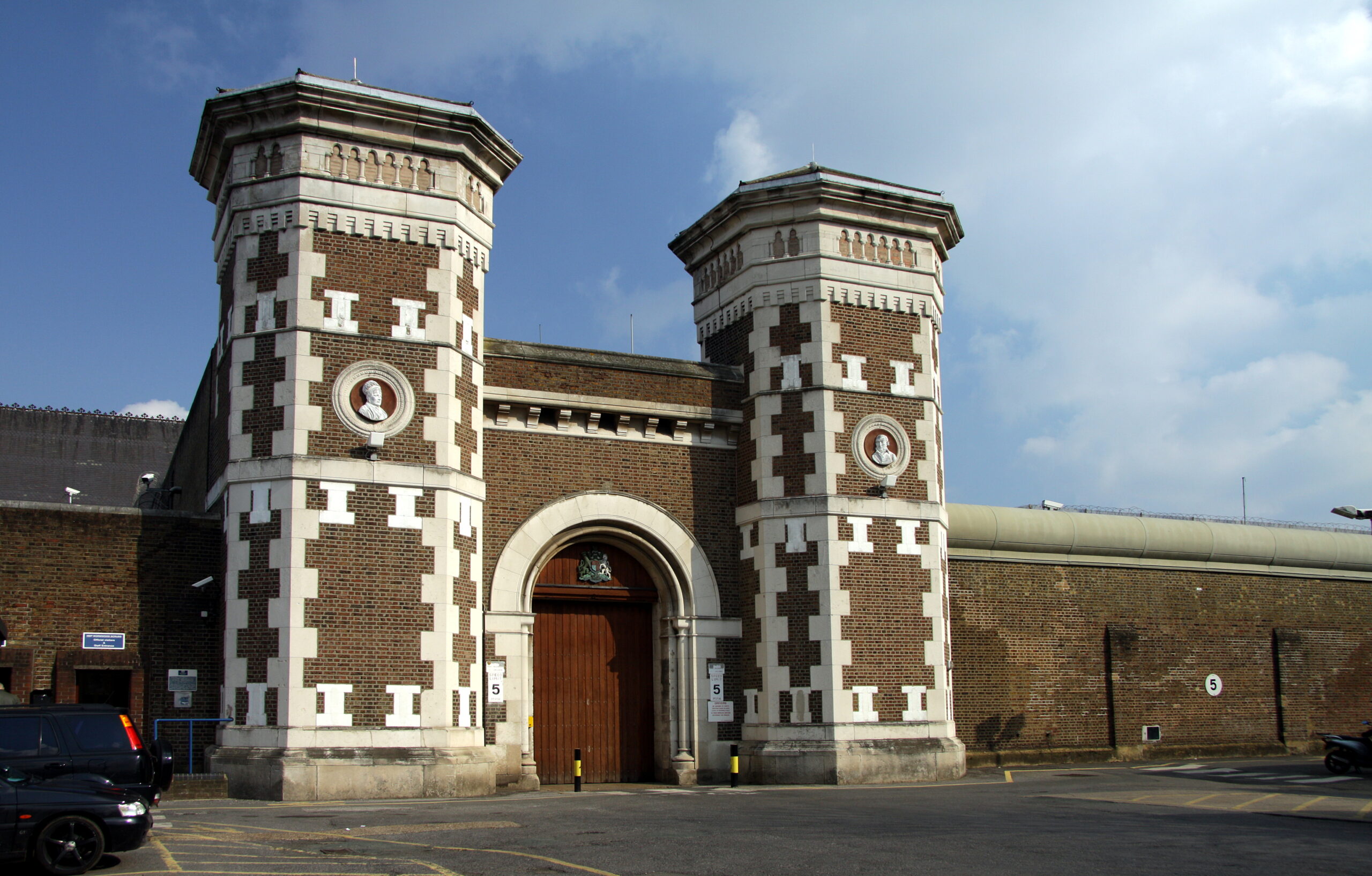
“Main gate to the HM Prison Wormwood Scrubs in spring 2013” by Chmee2 is licensed under CC BY-SA 3.0 .
Britain’s prisons are desperately overcrowded and morale among staff at an all-time low, following years of underfunding by the Conservative government and the inability of the state to build new jails against local opposition.
Now the incoming prime minister says that we have too many prisoners, while new prison minister James Timpson believes the British justice system is “addicted to punishment”, stating that only a third of inmates should be in jail.
The justice secretary, meanwhile, is considering “lowering the automatic release point for prisoners to less than 50 per cent through their sentence”. While currently prisoners serve half their sentences, or two-thirds for some sexual, violent or terror-related offences, the government plans to push the automatic release point to 40 per cent of their terms for those serving less than 4 years, benefitting 40,000 inmates — but not necessarily benefitting the rest of us.
This would be a very unwise move. The majority of prisoners are inside for sexual or other violent crimes, and even restricting early releases to those serving under four years would set free some very dangerous individuals, while previous amnesties of this type have led to huge increases in crime.
The idea that Britain “is addicted to punishment” jars with the sentences regularly handed out even for the most horrendous crimes, and the way that incorrigible criminals are allowed to offend again. This is the subject of a Twitter thread which I began six years ago, in order to highlight how the common belief in the punitive state was mistaken.
As an illustration, and bear in mind that their “sentences” are often twice what they actually served, here are a few cases:
A man who killed his wife in 1981, who was released after a few years and went on to strangle a girlfriend 12 years later, was subsequently freed — and ended up killing a third woman.
There was serial rapist Milton Brown, who was sentenced to 21 years for raping three women – one of whom took her own life – and was released early, only to rape again.
Or Joshua Carney, 28, freed on licence from prison and who just five days later brutally raped a mother and her 14-year-old daughter. He was allowed out despite 47 previous convictions, and now having been convicted of “13 charges including rape, attempted rape, actual bodily harm and theft” he is still eligible for parole in 10 years. Doesn’t sound like a country addicted to punishment.
There was John Harding, who treated a woman “like a rag-doll” when he beat and threatened to kill her after she told him she didn’t want a relationship. Despite terrorising his victim, including wrapping a sheet around her neck, and being in breach of a 30-month community order for a number of offences, including assault and threatening to kill another woman, and having other convictions for theft and criminal damage, he received a sentence of 21 months. As a result, in 2023, Harding was free to rape two women. Now convicted of rape, actual bodily harm, false imprisonment, strangulation and threats to kill, his sentence of 15 years means he could be out in 10.
If you believe that criminals only behave that way because of “systemic racism” or “poverty” or some other form of impersonal forces, you’ll likely also believe that punishment therefore serves no useful purpose and be in favour of all sorts of alternatives. At least until you or someone close to you is a victim of violent crime …
New Canadian submarines and icebreakers promised at NATO Summit
Under reportedly intense pressure from NATO allies, Canadian Prime Minister Justin Trudeau grudgingly promises to begin the (usually decades-long) process of purchasing new submarines for the Royal Canadian Navy:
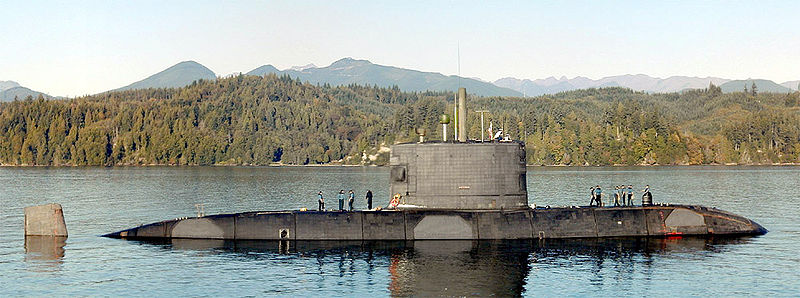
HMCS Victoria
Image via Wikimedia Commons.
The Canadian government announced today it is “taking the first steps” towards buying 12 conventionally-powered, under-ice capable submarines — a massive acquisition with numerous shipbuilders from the around world already eyeing the program reported to be worth at least $60 billion Canadian dollars.
“As the country with the longest coastline in the world, Canada needs a new fleet of submarines — and today, we’ve announced that we will move forward with this acquisition,” Bill Blair, minister of national defence, said in a statement published during the NATO Summit being held this week in Washington, DC. “This new fleet will enable Canada to protect its sovereignty in a changing world, and make valuable, high-end contributions to the security of our partners and NATO allies.”
Canada has been eyeing the acquisition of a new class of submarines to replace its four aging Victoria-class boats since at least April 2023, and Blair himself was the target of criticism earlier this year after he included language about the acquisition in a major defense policy document that critics labeled as “wishy washy”.
In an op-ed for Breaking Defense published ahead of the NATO summit, Blair said that Canada was still pursing the submarine plan, and emphasized that the investment would help his nation cross the 2 percent GDP target.
The government’s press release does not include a price estimate for the program, but the Ottawa Citizen has previously reported that the Royal Canadian Navy tagged the acquisition at $60 billion Canadian dollars ($44 billion USD).
Another item from Breaking Defence details a new trilateral agreement with Finland and the United States to develop a joint design for a “fleet” of icebreakers:

Originally ordered in 2008 for delivery in 2017, the CCGS John G. Diefenbaker is now expected to enter service in 2030.
Canadian Coast Guard conceptual rendering, 2012.
The US, Canada and Finland announced today a new trilateral effort, dubbed the Icebreaker Collaboration Effort or “ICE Pact”, to work together on the production of a “fleet” of new polar icebreakers, in what a US official said was a “strategic imperative” in the race of dominance of the high north.
The initiative, to be formalized in a memorandum of understanding by the end of the year, calls for better information sharing on ship production, collaboration on work force development — including better allowing workers and experts to train at each other’s yards — and an “invitation” to other allies and partners to buy icebreakers from ICE Pact members.
“Due to the capital intensity of shipbuilding, long-term, multi-ship orderbooks are essential to the success of a shipyard,” the White House said in its announcement. “The governments of the United States, Canada, and Finland intend to leverage shipyards in the United States, Canada, and Finland to build polar icebreakers for their own use, as well as to work closely with likeminded allies and partners to build and export polar icebreakers for their needs at speed and affordable cost.”
Ahead of the announcement, White House Deputy National Security Advisor for International Economics Daleep Singh framed the partnership as a commercial and industrial boon, but also one with national security implications: It is, in part, a message to Russia and China that the US and its partners “intend … to project power into the polar regions to enforce international norms and treaties that promote peace and prosperity in the arctic and Antarctic.”
They’ll confidently claim they’re merely “anti-Zionist“
James Pew on the disturbing rise of antisemitism in all western nations that got turbocharged by the October 7 atrocities by Hamas terrorists against Israeli civilians on the Gaza border:

“Student encampments – UofT – Camping at the university” by Can Pac Swire is licensed under CC BY-SA 2.0 .
Jew hatred in this country, and around the world, is something I completely miscalculated. Like so many others, including many Jewish people, I naively thought that antisemitism was a thing of the past. Or at least, it was something that had been greatly diminished to the extent that it ceased to be much of a problem. Tragically, I was wrong about this.
The global expansion of Islamo-fascism and the mixing of pro-Jihadism with leftist critical social justice activism, is something I also, similarly, underestimated.
When I think of October 7th I am overcome with disgust and sadness. The world should be aligned with Israel, and aggressively opposed to Palestine/Hamas (Hamastinians) and the corrupt United Nations Relief and Workers Agency (UNRWA). That in many cases it appears to be the other way around, that many political leaders, media, and insufferable celebrities support Hamas’ terrorist aspirations, their evil nonsensical movement to wipe Israel off the face of the planet, is something that is incomprehensible to me.
In one of the late Rex Murphy’s final National Post columns, he proclaimed that “Hatred of Israel is the great moral disorder of our time”. Placing the blame for the “red-ignorant core” of the post-October 7th rise in antisemitism on “woke campuses”, Rex wrote the following concerning the legitimacy of the state of Israel:
Dear Israel is but a spit of earth on a huge globe. Three years after six million Jews were put to torture, humiliation, whippings, rape, medical experiment, starvation, and vile death, was it not surely time — time for all the nations of the Earth who had reached some moral understanding of life and government — to allow Jewish people time to rest, time to mourn, time to see what and who might be left of them.
While I’m the first to admit that no nation, including Israel, is beyond criticism, I feel there is both a time and place, and an appropriate proportionality that should be reflected in a fair critical analysis of any nation. When Douglas Murray made the point at the recent Munk debate that no serious person ever questions the legitimacy of the nation of Pakistan — a nation founded in a way similar to Israel — like they question and challenge the legitimacy of Israel, so-called anti-Zionists claimed that the audiences’ embrace of Murray’s logic was simply evidence of their Islamophobia.
Murray expanded on his Pakistan/Israel comparison by asking the audience to imagine someone who feels that Pakistan is not legitimate and therefore should not exist at all. Imagine also, that this person holds no antipathy directed at the Pakistani people. Preposterous! Yet the anti-Zionists ask us to believe this in regards to Israel. The anti-Zionist will look you straight in the eyes, and with all the sincerity in the world, express their belief that Israel should not exist, and absurdly, implore this does not mean they hate Jews (the majority of Israelis). Why in the case of an analogy where Pakistan is at stake, is it so clear which position is the correct and moral one? Alternatively, why are such questions involving Israel so difficult to answer?
In Canada, the increase in antisemitism has been going on for years. Record levels of antisemitism were recorded in 2021, with dramatic increases in Quebec and British Columbia.1 B’nai Brith Canada reported the number of antisemitic incidents across the nation more than doubled from 2022 to 2023, now reaching an unprecedented high.2
In February of 2024, Global Media reported that “Homes, businesses, schools, places of worship, neighbourhoods and institutions have all been targeted in what community leaders are calling an unparalleled spike in hate crimes against Jews”. And the Toronto Police warned the following month that “56% of reported hate crimes in 2024 have targeted Jewish people”.3
None of this distracts Canadian Islamists, like Younus Kathrada, from what they feel are the important social issues. Kathrada has been known to the government’s Integrated Terrorism Assessment Centre since at least 2020.4 He preaches to his Islamic followers in British Columbia, “I want our children to understand this well: the non-Muslims are the enemies of Allah, therefore they are your enemies”.5
Loading An Ore Ship – The Massive Mesabi Miner
SD457500
Published Jan 15, 2024The Twin Ports is home to a bustling array of shipping, and industry by both rail and water. The massive iron ore docks see huge ships coming and going, while being loaded with taconite. This video has unique, and rare views seldom seen!
In this video, we’ll see how the MASSIVE Mesabi Miner gets loaded, how the taconite gets unloaded, and an aerial view of the large Canadian National Dock 6 in Duluth. This is a neat operation, complete with the unloading of taconite cars — something rarely seen!
(more…)


