
World War Two
Published 22 Jul 2023This week, Adolf Hitler is blown up and Hideki Tojo steps down. In the Pacific, the Americans land on Guam and prepare for hard fighting. In France, the Americans take Saint-Lô and British and German armored forces clash around Caen. In the East, the Red Army enters Latvia, tears a gap in Army Group North, and reaches the gates of Lvov.
(more…)
July 23, 2023
Sayonara Tojo – WW2 – Week 256 – July 22, 1944
Comments Off on Sayonara Tojo – WW2 – Week 256 – July 22, 1944
Tom Whipple’s history of radar development during WW2
In The Critic, Robert Hutton reviews The Battle of the Beams by historian Tom Whipple, who retells the story of the technological struggle between Britain and Germany during the Second World War to find ways to guide RAF or Luftwaffe pilots to their targets:
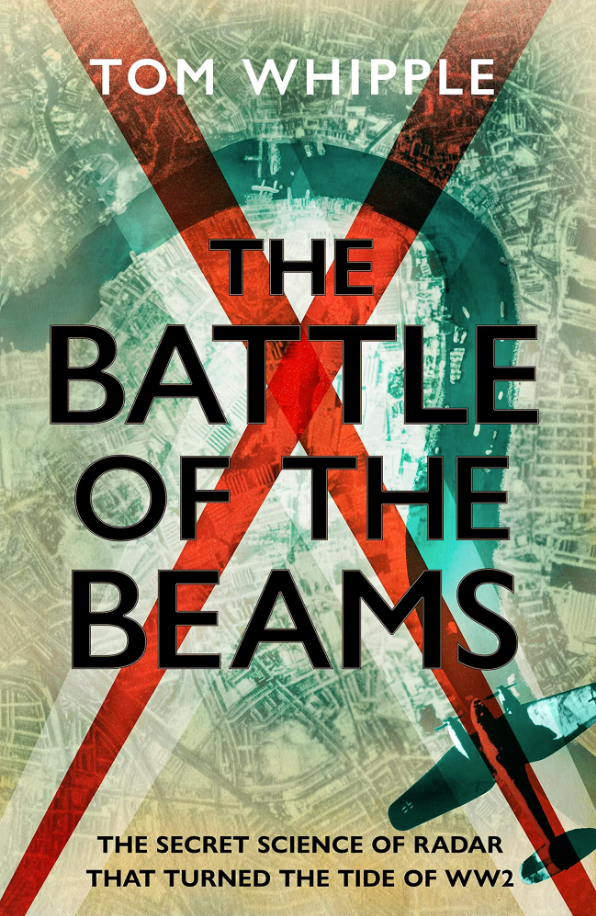
In an age when my phone can tell me exactly where I am and how to get where I’m going, it’s hard sometimes to imagine a time when navigation was one of any traveller’s great challenges. At the outbreak of the Second World War, the advice to Royal Air Force pilots trying to find their way was, more or less, to look out of the window and see whether anything on the ground looked familiar. The Luftwaffe, though, had a rather more sophisticated means of finding their targets.
As Britain braced herself for the bomber onslaught of 1940, there was comfort in knowing that radar would give Hurricanes and Spitfires advance warning of where the attack was coming. As soon as the sun went down, so did the fighters: at night, relying on their eyeballs, they simply couldn’t find the enemy.
That wasn’t so bad, as long as the German pilots had the same problem, but one young British scientist began to suspect that the Luftwaffe had developed a technology that allowed them to find their way even in the dark, guided by radio beams. In June 1940 he found himself explaining to Winston Churchill that German bombers could accurately reach any spot over England that they wanted, even in darkness.
Reg “RV” Jones was the original boffin: a gifted physicist who was recruited to the Air Ministry at the start of the war to help make sense of intelligence reports that offered clues about enemy technology. It was a role to which he was perfectly suited: a man who liked puzzles, with the ability to absorb lots of information and see links, as well as the arrogance to insist on his conclusions, even when his superiors didn’t like them.
The story of the radio battle has been told before, not least by Jones himself. His 1978 memoir Most Secret War was a bestseller and remains in print. It is 700 pages long, though, and it assumes a lot of knowledge about the way 1940s radios worked that readers probably had 50 years ago. Since few people under 50 have much clue why a radio would need a valve or what you might do with a slide rule, there is definitely room for a fresh telling.
Comments Off on Tom Whipple’s history of radar development during WW2
July 21, 2023
The Führer Adolf Hitler is Dead!?
World War Two
Published 20 Jul 2023Stauffenberg, Olbricht and the plotters launch Operation Valkyrie. The army moves in to seize power, troops surround the government quarter in Berlin, and Joseph Goebbels is arrested. But things start going wrong pretty much immediately and far away in East Prussia the Nazi fightback begins.
(more…)
Comments Off on The Führer Adolf Hitler is Dead!?
July 20, 2023
The Fights for Assoro & Leonforte with Mark Zuehlke
OTD Military History
Published 19 Jul 2023Join me as I have Mark Zuehlke back on the channel to discuss the fights for Assoro and Leonforte during the campaign in Sicily.
(more…)
Comments Off on The Fights for Assoro & Leonforte with Mark Zuehlke
July 19, 2023
Diplomats Fight the Nazis in Budapest – War Against Humanity 104
World War Two
Published 18 Jul 2023Hungary’s Jews are facing a Holocaust machine in overdrive. The deportation trains are arriving in such volume that even the extermination factory of Auschwitz can barely keep up with the pace. The entire country swiftly becomes Judenfrei and the Jews of Budapest sit helplessly as Adolf Eichmann and his Hungarian collaborators tighten the noose around them. Admiral Miklós Horthy is one of the few who can save them, but so far he has done nothing. Will that change?
(more…)
Comments Off on Diplomats Fight the Nazis in Budapest – War Against Humanity 104
July 16, 2023
Mass Suicide on Saipan – WW2 – Week 255 – July 15, 1944
World War Two
Published 15 Jul 2023Japanese troops and civilians commit mass suicide rather than surrender to the Americans in the Marianas; in Normandy, Caen has finally fallen to the Allies though the fight for St. Lo is not over; the Soviet offensives in the north take Vilnius and the fighting continues up in Finland, but the big eastern front news is the mighty new Soviet offensive in Western Ukraine. (more…)
Comments Off on Mass Suicide on Saipan – WW2 – Week 255 – July 15, 1944
July 15, 2023
Sherman Firefly – What were those wavy lines for?
Armoured Archives
Published 8 Mar 2023This video is going to take a quick look at those wavy lines you might see on some tank barrels, what did they do, and why? And was this ever an officially sanctioned project?
(more…)
Comments Off on Sherman Firefly – What were those wavy lines for?
July 14, 2023
How Hitler Approved His Own Assassination – WW2 Documentary Special
World War Two
Published 13 Jul 2023So far, the German resistance haven’t had much luck with their attempts to kill the Führer, Adolf Hitler. But now, the German war hero Claus von Stauffenberg, together with Friedrich Olbricht and Henning von Tresckow, drives the resistance forward. It’s time to kill Hitler. It’s time for Operation Valkyrie.
(more…)
Comments Off on How Hitler Approved His Own Assassination – WW2 Documentary Special
Bread rationing in the United States during WW2
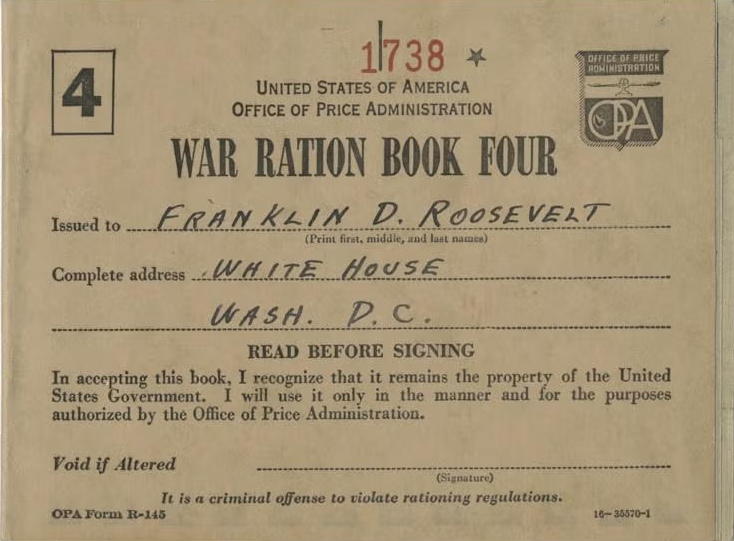
I haven’t studied the numbers, but I strongly suspect that most US government food rationing during the war was effectively theatre to encourage more support of the war effort: except in a very few areas, the US was more than self-sufficient in most foodstuffs. At the Foundation for Economic Education, Lawrence W. Reed recounts one of the least effective government moves in food rationing:
According to an old joke from the socialist and frequently underfed Soviet Union, Stalin goes to a local wheat farm to see how things are going. “We have so many bags of wheat that, if piled on top of each other, they could reach God himself!” the farmer told Comrade Stalin.
“But God does not exist,” the dictator angrily replied. “Exactly!” said the farmer. “And neither does the wheat.” Nobody knows what happened to the farmer, but at least Stalin died in 1953.
Soviet socialism, with its forced collectivism and ubiquitous bread lines, gave wheat a bad name. Indeed, it was lousy at agriculture in general. As journalist Hedrick Smith (author of The Russians) and many other authorities noted at the time, small privately owned plots comprised just three percent of the land but produced anywhere from a quarter to a half of all produce. Collectivized agriculture was a joke.
America is not joke-free when it comes to wheat. We are a country in which sliced bread was both invented and banned, and a country in which growing wheat for your own consumption was ruled to be an act of “interstate commerce” that distant bureaucrats could regulate. No kidding.
On this anniversary — July 7 — of both the birth in 1880 of sliced bread’s inventor and of the day in 1928 that the first sliced bread from his machine was sold, it’s fitting to recall these long-forgotten historical facts.
The Iowa-born jeweler and inventor Otto Rohwedder turned 48 on the very day the first consumer bought the product of his new slicing machine. The bread was advertised as “the greatest forward step in the baking industry since bread was wrapped” and it quickly gave rise to the popular phrase, “the greatest thing since sliced bread.” Before 1928, American housewives cut many a finger by having to slice off every piece of bread from the loaves they baked or bought. Sliced bread was an instant sensation.
Rohwedder earned seven patents for his invention. The original is proudly displayed at the Smithsonian Institution in Washington, D.C. He likely made a lot more money from the bread slicing machine than he ever did as a jeweler. He died in 1960 at the age of 80.
Enter Claude Wickard, Secretary of Agriculture under Franklin Roosevelt from 1940 to 1945. On January 18, 1943, he banned the sale of sliced bread. Exactly why seems to be in dispute but the most likely rationale was to save wax paper and other resources for war production. He rescinded the ban two months later, explaining then that “the savings are not as much as we expected.”
I’m sure Hitler and Hirohito were relieved.
Comments Off on Bread rationing in the United States during WW2
MG-3: Germany Modernizes the Classic MG-42
Forgotten Weapons
Published 7 Apr 2023When the Bundeswehr was formed, it chose to simply continue using the MG42 as its standard GPMG. This was initially done by converting older MG42s to 7.62x51mm NATO as the MG1 (adopted in 1958), but progressed to production of a brand new version of the gun by Rheinmetall (adopted in 1968). The MG3 included improvements to the belt feed system, added integral antiaircraft sights, and allowed a rate of fire between 700 and 1300 rpm depending on the choice in bolt, buffer and booster. It was the standard German MG until finally being replaced by the MG5 in 2012 — and it is/was in use by nearly 4 dozen other countries as well. Today we are going to compare this transferrable, C&R MG3 to an original MG42 to see the improvements that were made.
(more…)
Comments Off on MG-3: Germany Modernizes the Classic MG-42
July 13, 2023
Bill Slim’s plan for the Battle of Meiktila in March 1945
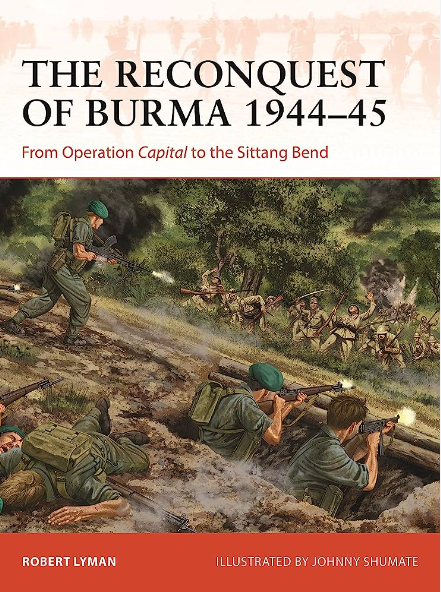
Dr. Robert Lyman on the subject of his most recent book, The Reconquest of Burma 1944-45: From Operation Capital to the Sittang Bend:
When I was writing my latest book with General Lord Dannatt he said to me, “Rob, if I’ve got one criticism of A War of Empires it’s that you don’t emphasise enough the role of Bill Slim in coming up with the plan for victory in 1945, and executing it perfectly.” Fair. As Slim’s military biographer, I told Richard that I didn’t want to be accused of rewriting that book again. I was conscious of this problem as I was writing A War of Empires.
But it is fair criticism. It may be that I underplayed Slim’s role when I was considering all the other critical features in this great campaign. The idea behind the dramatic victory by 14th Army in Burma in 1945 was Slim’s and Slim’s alone. He pursued his own plan through to its remarkable conclusion.
[…]
Slim’s original plan was to fight the main strength of the Japanese army on the Shwebo Plain, a dry, flat plain between the loops of the Chindwin and Irrawaddy. Not only would the terrain be well suited to the deployment of armour, for which the Japanese had little effective reply, but the Japanese would be trapped with the river-line at their back. Slim had assumed that the Japanese would be unprepared to make a voluntary withdrawal. The scene was set for Slim to be able to deploy his superior mobility and firepower to destroy the main Japanese army in Burma.
By the end of the year, however, it became apparent that the Japanese were not going to conform to Slim’s plan for the battle, and General Kimura had seen the trap which his forces would be caught in if they attempted to stand and fight in the Shwebo Plain. Showing unusual flexibility and moral courage Kimura promptly withdrew his reconstituted 15th Army behind the Irrawaddy. Kimura hoped, not without reason, to be able to smash Slim’s army as it attempted to cross the river, which in itself presented an immense obstacle to the British. He would then counter-attack and destroy Slim as the British withdrew during the monsoon to the Chindwin.
Kimura’s move behind the Irrawaddy destroyed at a stroke Slim’s plan. Undaunted, and recognising the supreme importance of destroying Kimura’s army rather than taking ground for its own sake, Slim came up with another plan. In basic outline, his new plan (Operation Extended Capital) entailed crossing the Irrawaddy and fighting the decisive battle in February in the plain around Mandalay and the low hills around Meiktila, the key enemy air and supply base in Central Burma. Both the road and rail links between Mandalay and Rangoon ran through Meiktila. If Meiktila fell, the whole structure of the Japanese defence of Central Burma would collapse.
Comments Off on Bill Slim’s plan for the Battle of Meiktila in March 1945
July 12, 2023
Nazi drone war begins – War Against Humanity 103
World War Two
Published 11 Jul 2023Bombing enemy civilians does nothing to advance a nation’s war effort. But now, Adolf Hitler believes that the V-1 flying bomb, the first of the Vengeance Weapons, will bring London to its knees and unite the German population behind the war effort as never before. The missiles are ready for launch and thousands more civilians will die to satisfy the Führer’s
delusions.
(more…)
Comments Off on Nazi drone war begins – War Against Humanity 103
July 10, 2023
Echoes of War: Accounts of Operation Husky and the Allied Landings in Sicily
OTD Military History
Published 9 Jul 2023On July 9/10 Allied forces launched Operation Husky, the invasion of Sicily. This video presents accounts from various Allied military personnel who were there that day.
(more…)
Comments Off on Echoes of War: Accounts of Operation Husky and the Allied Landings in Sicily
July 9, 2023
The Destruction of Army Group Center – Week 254 – July 8, 1944
World War Two
Published 8 Jul 2023Operation Bagration continues, smashing the armies of German Army Group Center and taking ever more territory including the prize of Minsk; on Saipan the Americans have taken most of the island when the Japanese resort to a huge suicidal banzai charge to try and turn the tide; and in Normandy new attacks begin try to finally take Caen and St. Lo.
(more…)
Comments Off on The Destruction of Army Group Center – Week 254 – July 8, 1944
July 8, 2023
The Perfect D-Day That History Forgot
Real Time History
Published 7 Jul 2023The summer of 1944 saw the Allies land in France not once but twice. Two months after Operation Overlord, the Allies also landed in Southern France during Operation Dragoon. It was “the perfect landing” and opened up the important ports of Marseille and Toulon for Allied logistics.
(more…)
Comments Off on The Perfect D-Day That History Forgot


