Quotulatiousness

November 2, 2019

Sir Charles Ross was a Jerk: The Martello Tower

Filed under: Cancon, History, Military, Weapons, WW1 — Tags: , , , , — Nicholas @ 02:00

Forgotten Weapons
Published 29 Oct 2019

Note: These towers were built by the British, not the French. Sorry!

http://www.patreon.com/ForgottenWeapons

Cool Forgotten Weapons merch! http://shop.bbtv.com/collections/forg…

Sir Charles Ross was really a jerk sometimes. Not the sort of guy you would want to go into business with.

Contact:
Forgotten Weapons
6281 N. Oracle #36270
Tucson, AZ 85704

Here are the Wikipedia pages on Sir Charles Ross, Bart. and Martello towers.

November 1, 2019

Ross MkI: Canada’s First Battle Rifle

Filed under: Cancon, History, Military, Weapons — Tags: , , , , , — Nicholas @ 02:00

Forgotten Weapons
Published 28 Oct 2019

http://www.patreon.com/ForgottenWeapons

Cool Forgotten Weapons merch! http://shop.bbtv.com/collections/forg…

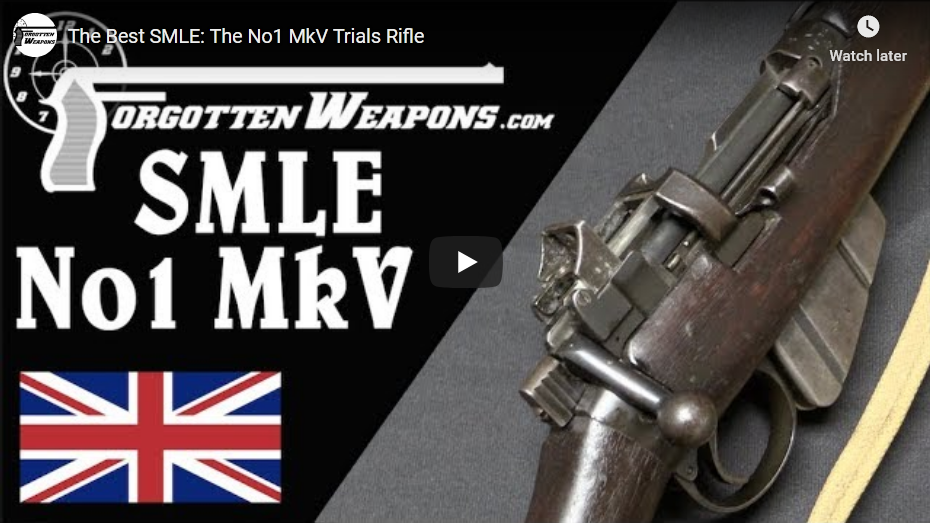
Sir Charles Ross was heir to a very wealthy Scottish family, and was a talented if temperamental engineer. He took an interest in firearms and their design, and worked with American and English connections to produce a line of his own straight-pull sporting rifles. Upon returning from the Boer War he looked to expand into the military market.

At this same time, the Canadian government was looking to replenish its arms supplies after the war, and requested Enfield rifles form the British. The request was turned down, as Britain did not have enough supply to spare any for the Canadians. The Canadians were expected to construct their own factory to make rifles of he standard British pattern. Well, the Canadian government was not eager to invest that sort of capital into the project. They investigated buying arms elsewhere, but the consensus was that Canada’s armaments should come from either Britain or from within Canada itself. No good solution was apparent until Sir Charles Ross stepped in.

Ross offered to fund the construction of a factory himself, and use Canadian labor and industry to manufacture Ross rifles for the military. This seemed like an excellent solution — for zero initial cash outlay, the Canadian government would get rifles both designed and produced domestically! The rifles would be chambered for the standard .303 British cartridge, thus handling the British objections about arms compatibility (Ross pointed out that the British themselves used something like 7 different patterns of rifle at the time).

In 1902, Ross and the Canadian government signed a contract for 12,000 rifles to be made in 1903 and 10,000 per year thereafter, at the price of $25 each. In addition to the Canadian military, the Royal North West Mounted Police also adopted the new Ross rifle. Deliveries did not actually begin until 1905, and when they did plenty of disturbing problems arose. The rifles proved fragile and unreliable — and a weak bolt latch periodically allowed the bolt to fall completely out of the rifle on parade drill — not a good start!

Only 10,000 of the Mark I Ross rifles were made, and an improved Mark II pattern would follow as quickly as Ross could make it a reality.

Many thanks to the private collectors who allowed me access to their rifles to make this video!

Contact:
Forgotten Weapons
6281 N. Oracle #36270
Tucson, AZ 85704

October 29, 2019

1918 Mauser Tank Gewehr

Filed under: Germany, History, Military, Weapons, WW1 — Tags: , , — Nicholas @ 02:00

Forgotten Weapons
Published on 23 Aug 2015

http://www.patreon.com/ForgottenWeapons

Cool Forgotten Weapons Merch! http://shop.bbtv.com/collections/forg…

Hammer price: $4,750

Germany was the first country to produce a purpose-built antitank rifle, in response to the major Entente tank attack at Cambrai. The design was pretty simple, basically a scaled-up Mauser 98 with 4 locking lugs chambered for the massive 13.2mm TuF cartridge. It would perforate about 20mm of armor plate at 100m, which was nicely effective on WWI tanks. By the end of the war more than 15,000 had been made. Interestingly, a bunch of them ended up at Springfield Armory, where they were used in the development of the .50 BMG cartridge.

October 28, 2019

Hetzer – a German mobile armoured coffin

Filed under: Germany, History, Military, Weapons, WW2 — Tags: , , , — Nicholas @ 02:00

Lindybeige
Published 26 Sep 2019

Get your first audiobook and two Audible originals free when you try Audible for 30 days. Visit https://www.audible.com/lindybeige or text “lindybeige” to 500 500.

The Hetzer (or Jagdpanzer 38t) – it is a “cool”-looking vehicle, and a favourite with WW2 tank enthusiasts, but was it all that great to fight in?

Support me on Patreon: https://www.patreon.com/Lindybeige

Lindybeige: a channel of archaeology, ancient and medieval warfare, rants, swing dance, travelogues, evolution, and whatever else occurs to me to make.

▼ Follow me…

Twitter: https://twitter.com/Lindybeige I may have some drivel to contribute to the Twittersphere, plus you get notice of uploads.

My website:
http://www.LloydianAspects.co.uk

October 26, 2019

Chassepot Needle Rifle

Filed under: France, History, Military, Weapons — Tags: , , , , — Nicholas @ 02:00

Forgotten Weapons
Published on 30 May 2015

Sold for $1,150 (with three other rifles).

The Chassepot was the French answer to the Dreyse needle rifle, and also the only other needlefire rifle to see major military service. It was adopted in 1866 and served as a primary French infantry rifle until being replaced by the 1874 Gras rifle, which was basically a conversion of the Chassepot to use self-contained brass cartridges. The concept of a needle rifle is that of a breech loading rifle using paper cartridges. A primer was set in the base of the cartridge (inside the paper), and upon firing the needle-like firing pin would pierce the paper cartridge and detonate the primer and powder charge. The system always had trouble with sealing the breech, but was still a significant improvement over muzzleloading rifles.

October 25, 2019

Tank Chats #53 Matilda Canal Defence Light | The Funnies | The Tank Museum

Filed under: Britain, History, Military, Weapons, WW2 — Tags: , — Nicholas @ 02:00

The Tank Museum
Published on 6 Jul 2018

Another episode in the Tank Chats Funnies Specials, looking at the weird and wonderful vehicles of 79th Armoured Division led by Major General Percy Hobart.

The idea of the CDL was to use a light of such power that it would dazzle the opposition, leaving them temporarily blind and disorientated.

Support the work of The Tank Museum on Patreon: ► https://www.patreon.com/tankmuseum
Or donate http://tankmuseum.org/support-us/donate

Visit The Tank Museum SHOP: ► https://tankmuseumshop.org/

Twitter: ► https://twitter.com/TankMuseum
Tiger Tank Blog: ► http://blog.tiger-tank.com/
Tank 100 First World War Centenary Blog: ► http://tank100.com/ #tankmuseum #tanks

October 23, 2019

The Guns of John Pedersen

Filed under: History, Military, USA, Weapons — Tags: , , , , — Nicholas @ 02:00

Forgotten Weapons
Published on 10 Apr 2015

Sold for:
$34,500 (Pedersen Device)
Failed to sell (Model 10 shotgun)
(Model 12 in a later auction)
$1,610 (Model 14 carbine, with one other rifle)
(Military Ithaca 37 in a later auction)
$2,588 (Remington 51 pistol with one other pistol)
(Irwin-Pedersen M1 Carbine in a later auction)
$16,100 (Vickers-Pedersen rifle)
$74,750 (Pedersen GY rifle)

John Pedersen was one of the more prolific and successful gun designers in American history, having even been described by John Moses Browning as “the greatest gun designer in the world”. And yet, many people only know about Pedersen from his unsuccessful toggle-locked rifle or his WWI Pedersen Device that never saw action. In truth, Pedersen’s work included a number of very successful sporting rifles and shotguns that many shooters would still recognize today. While looking through the guns at Rock Island on my most recent trip there, I realized that they had examples of virtually every one of Pedersen’s guns — so I figured I should do an overview of the man’s work.

October 22, 2019

Papers Behind the Pistol: Mauser’s Archives on the Model 1910

Filed under: Business, Germany, History, Weapons — Tags: , , , , — Nicholas @ 04:00

Forgotten Weapons
Published 21 Oct 2019

http://www.patreon.com/ForgottenWeapons

Cool Forgotten Weapons merch! http://shop.bbtv.com/collections/forg…

Courtesy of the Paul Mauser Archive, we have a very cool opportunity to look at the documentation and paperwork behind a production pistol design, from beginning to commercial sales. This sort of documentation is rare for pre-WW1 German small arms in general, and the Mauser Model 1910 pistol is a very rare example of a complete set of archival papers surviving. So, what we can look at is the whole development process from behind the scenes at Mauser. Initial design drawings, blueprints, glass-plate photography, internal assembly instructions, costing, corporate-level final approval, marketing, and final print manuals. Thanks to Mauro Baudino for supplying these original documents for me to show you!

The Paul Mauser Archive (http://www.paul-mauser-archive.com/in…) is a wealth of information for researchers, and make sure to check out the recent book on Mauser coauthored by Mauro Baudino and Gerben van Vlimmeren:

https://amzn.to/2LIXH3p

Contact:
Forgotten Weapons
6281 N. Oracle #36270
Tucson, AZ 85704

October 20, 2019

Webley Model 1904

Filed under: Britain, History, Military, Weapons — Tags: , , , — Nicholas @ 02:00

Forgotten Weapons
Published on 24 Feb 2015

Sold for $109,250.

The Model 1904 was basically the first working automatic pistol made by Webley (there was a 1903 toolroom experiment, but it didn’t really work). Like all the Webley automatic that would follow, it was designed by William Whiting. The 1904 was the company’s first effort at making a semiautomatic sidearm for the British military, so it was chambered for the .455 cartridge (a special rimless version made by Kynoch, after early experiments using the .455 rimmed revolver ammunition caused lots of problems stacking in magazines). It is a rather huge handgun, and uses a short recoil mechanism with two separate locking blocks. This particular one is s/n 23 – very few were made before it was rejected in military trials and Webley redirected its efforts toward smaller commercial pistols.

http://www.forgottenweapons.com

Theme music by Dylan Benson – http://dbproductioncompany.webs.com

October 17, 2019

American Eagle Lugers

Filed under: Germany, History, Military, USA, Weapons — Tags: , , , — Nicholas @ 02:00

Forgotten Weapons
Published on 1 Dec 2014
Dissent This
Sold for $14,950 (9mm fat barrel) and $9,775 (7.65mm test trials).

Many people are aware of the .45 caliber Lugers made for US military field trials — but far fewer people realize that Lugers were both tested by the US military and sold commercially several years prior to the .45 tests.

In 1900, the US military put several hundred 7.65mm Luger pistols into field trials with both infantry and cavalry units. These pistols were marked with a large and elaborate American eagle crest, in an attempt by DWM to enhance the gun’s appeal to Americans. A similar tactic was used in production of Lugers for Swiss sale, with a large Swiss cross (and it worked well).

After complaints about the small caliber of the early 1900 Lugers, DWM developed the 9mm Parabellum cartridge, and attempted to sell them commercially in the US (and elsewhere). A small batch were also purchased for further military testing.

http://www.forgottenweapons.com

Theme music by Dylan Benson – http://dbproductioncompany.webs.com

October 14, 2019

Krupp 50mm Mountain Gun (Thai Model 1902)

Filed under: Asia, Germany, History, Military, Weapons — Tags: , , — Nicholas @ 02:00

Forgotten Weapons
Published on 27 Jul 2014

http://www.forgottenweapons.com

Theme music by Dylan Benson – http://dbproductioncompany.webs.com

Taking a look at another artillery piece today, a 50mm mountain gun made for Siam (now Thailand) by the German Krupp company. It is a relatively simple (and thus relatively inexpensive at the time) design, with no recoil mechanism or adjustable traverse.

October 11, 2019

Bethlehem Steel 37mm Cannon – WWI Era

Filed under: France, History, Military, USA, Weapons, WW1 — Tags: , , — Nicholas @ 02:00

Forgotten Weapons
Published on 6 Jul 2014

http://www.forgottenweapons.com

Theme music by Dylan Benson – http://dbproductioncompany.webs.com

The 37mm gun was found in many guises during World War One – that caliber was the smallest allowed to use exploding projectiles by the 1899 Hague accords. Every nation in the world, it seems, used 37mm guns of one type or another. Well, one particular version I had the chance to look at was built by Bethlehem Steel in Pennsylvania for the French Army. Chambered for the same 37x136mm Hotchkiss Heavy cartridge used in US naval service, 200 were purchased in 1916. Only 15 were actually shipped before the US Army seized the bulk of the order in 1917 – but they were never put into any sort of service by the US military. The French tested the guns for suitability as an infantry gun, anti-tank gun, anti-aircraft gun, and naval landing gun – and found it unsuitable for all roles. It was probably tested only as a backup in case the redesign of the Mle 1916 Tir Rapid ran into problems.

At any rate, the 15 guns sent to France were sent back at the end of the war, and the guns remained in US Army inventory until 1921, when they appear to have been distributed out the National Guard units.

I think this is a very cool gun for the present-day enthusiast. In addition to the historical links to WWI, it has the practical benefits of being relatively light and using ammunition relatively inexpensive to reload. And, of course, the free mount and shoulder rest and iron sights give it more the feel of a shoulder rifle than later light artillery that use precisely adjusted mounts. This one is just more fun to shoot! Alas, there are very few still in existence. Perhaps an opportunity for someone who wants to make a reproduction Big Boy’s Toy?

October 8, 2019

Big Iron: Development of the Colt 1848 Dragoon Revolver

Filed under: History, Military, USA, Weapons — Tags: , , , , , — Nicholas @ 02:00

Forgotten Weapons
Published on 23 Aug 2019

RIA on YouTube: https://www.youtube.com/user/RockIsla…
RIA on Instagram: https://www.instagram.com/rockislanda…

Sam Colt’s first foray into firearms manufacturing did not end well — after 6 years, he went broke and shut down production of Paterson revolvers and revolving long guns. His guns were too expensive, too fragile, and too underpowered to become a commercial success. They did make an impression on some people, however, and a few years later Colt would work with Captain Samuel Walker of the Texas Rangers to develop a much larger and more robust revolver. The US military purchased 1,000 of these Model 1847 “Walker” revolvers, and this set Colt back on the path to financial success.

Colt contracted with the Whitneyville Armory to produce his Walkers, and part of the contract was that Colt would own any tooling developed for the manufacturing process. The Walker was successful enough that it spurred a second 1,000-pistol order form the government, and Colt used the Walker tooling along with his newfound capital to set up shop in Hartford CT producing guns himself. He immediately made a number of changes to the Walker pattern, primarily making is a bit shorter and lighter (4lb 2oz, with a 7.5 inch barrel), reducing the powered charge to 50 grains (the Walker had used 60 grains), and improving the loading lever retention latch. This would become known as the Model 1848 Dragoon revolver.

Between 1848 and 1860, a total of 20,700 Dragoons were made, 8,390 of them for the US military. There would be three main variations, called the first, second and third types today. In today’s video, I will show you all three and explain how they differed from each other — and we will also take a look at a rare long-barreled version as well as one with an original shoulder stock.

http://www.patreon.com/ForgottenWeapons

Cool Forgotten Weapons merch! http://shop.bbtv.com/collections/forg…

Contact:
Forgotten Weapons
PO Box 87647
Tucson, AZ 85754

October 5, 2019

Dreyse Model 1835 Needlefire Breechloading Pistol

Filed under: Germany, History, Technology, Weapons — Tags: , , , — Nicholas @ 02:00

Forgotten Weapons
Published on 19 Aug 2019

RIA on YouTube: https://www.youtube.com/user/RockIsla…
RIA on Instagram: https://www.instagram.com/rockislanda…

Johann Nicolaus Dreyse, later promoted to the aristocracy as Nicolaus von Dreyse, designed the first mainstream military breechloading rifle. His rifle was adopted by Prussia and changed military history, but this was not his only work. Dreyse also endeavored to sell guns commercially, both rifles and handguns. This is an example of one of his first, the Model 1835. It is a single shot breechloader, with the chamber consisting of a rotating tumbler. The firing mechanism is identical in concept to that of his Model 1841 rifle, just scaled down for the smaller pistol. The piece uses a power charge of just 6 grains, but its breechloading action was quite advanced for the 1830s!

http://www.patreon.com/ForgottenWeapons

Cool Forgotten Weapons merch! http://shop.bbtv.com/collections/forg…

Contact:
Forgotten Weapons
PO Box 87647
Tucson, AZ 85754

October 3, 2019

Toronto’s gun problem

Filed under: Cancon, Law, Media, Politics, Weapons — Tags: , , , , — Nicholas @ 03:00

The city of Toronto has a gun problem, and politicians are lining up to offer variations of the same idea as the solution. You see, unlike every other city in North America, all of the gun crime in Toronto is committed by legal owners of AR-15 and AK-47 “assault weapons”. They’re all fully registered with the federal government, and have taken all the required training courses and keep their weapons under the strict storage and transportation rules, never taking them anywhere but to the legally designated shooting range and always on the permitted route to and from that range (and they’re all life-members of the NRA, of course). This is why, unlike every other city in North America, a ban on “assault weapons” will eliminate 100% of the gun-related crime in Toronto.

In the real-world version of Toronto, however, the proposed ban will have almost no impact on the crime rates, because almost none of the gun-related crimes committed in Toronto involves any kind of “assault weapon”, most being turf disputes involving illegal handguns between drug dealers and personal grudges among “young aspiring rappers who are just about to turn their lives around”:

Colt Canada’s model SA20, a commercial version of the Canadian C7A2 rifle.
Image from the Colt Canada website.

If Liberals are re-elected to a second term in government, their plan to tackle gun violence includes a ban on high-velocity, semi-automatic rifles like the AR-15, and gun marketing bans that evoke America’s favourite action figure.

“There are sometimes advertisements and videos that appear (on social media) … to imply that we can be GI Joe on our main street,” Public Safety Minister Ralph Goodale said about the Liberal platform’s vague reference to “limit the glorification of violence by changing the way firearms are advertised marketed and sold in Canada.”

During a Q&A with reporters in Ottawa on Sunday, where Goodale fielded questions about their incumbent government’s election promises, the minister attempted to qualify freedom of expression implications with the types of promotional material that could be targeted.

“(It) depicts a kind of behaviour that is simply inappropriate and some people would find it quite threatening … and it leads to the impression of military assault weapons is something you just do, every day,” explained Goodale.

I’m not a big consumer of advertising, but I can’t recall the last time I saw any kind of ad for firearms in Canada that wasn’t in a gun magazine (and there are not many of those sold in typical corner stores). Scary black guns in Hollywood movie ads, sure … they’re everywhere … but that’s not in any way related to the advertising, sale, or use of guns in Canada.

« Newer PostsOlder Posts »

Powered by WordPress