Quotulatiousness

October 6, 2020

⚜ | The Great Tank Destruction Myth ft. The Chieftain

Filed under: Britain, Germany, History, Military, Russia, USA, WW2 — Tags: , , , , — Nicholas @ 02:00

Military Aviation History
Published 24 May 2018

Planes kill tanks in the thousands, Sir! Why, do they really? Lets find out.

You can support my Channel with Patreon: https://www.patreon.com/Bismarck

Get a tanker’s perspective from ‘The Chieftain’: https://www.youtube.com/watch?v=AirRX…

⚜ Official Merchanidizing ⚜
[Teepublic] Click here – https://goo.gl/e2PMXu

⚜ Find Me On Social Media ⚜
– Twitch: http://www.twitch.tv/bis18marck70
– Twitter: https://twitter.com/Bis18marck70

⚜ Sources ⚜
Ian Gooderson, Air Power at the Battlefield
Amazon US (Affiliate): https://amzn.to/2GLsRkR
Amazon UK (Affiliate): https://amzn.to/2IJc08g

Tank Encyclopedia.org,

Zeller, “Estimates concerning the effectiveness of some contemporary American fighters in
defeating a defended and undefended IS-III tank”,

⚜ Music ⚜
Music and Sfx from Epidemic Sound

⚜ DISCLAIMER ⚜
Amazon Associates Program (US): “Bismarck is a participant in the Amazon Services LLC Associates Program, an affiliate advertising program designed to provide a means for sites to earn advertising fees by advertising and linking to amazon.com.”

Amazon Associates Program (UK): “Bismarck is a participant in the Amazon EU Associates Program, an affiliate advertising program designed to provide a means for sites to earn advertising fees by advertising and linking to amazon.co.uk.”

#CAS #GroundAttack #Typhoon

October 5, 2020

Letters to a Young Contrarian was fundamentally a twentieth-century work by a man who thought of himself as a sixties radical”

Filed under: Books, History, Liberty, Politics, USA — Tags: , , — Nicholas @ 03:00

In The Critic, Roland Elliott Brown considers the work of Christopher Hitchens, and particularly his Letters to a Young Contrarian from 2001:

The book is now nearly twenty years old. Hitchens wrote it in late 2000 and early 2001 for Perseus Books’ Rilke-inspired “Art of Mentoring” series, and it was published a month or so after 9/11. In view of this timeline, it occupies an eerily-placid DMZ between the “acceptable” 1990s Hitchens, whose only big sin against the political left had been to hound the centrist Bill Clinton, and the ostensibly-more isolated one post-2001, who took heart at the prospect of America using its military might against jihadis and Baathists. The book was largely a post-mortem on the intellectual battles of the twentieth century, and a lesson in writerly integrity. Today, it reads as a riposte to the new “populism” and the “awokening”.

Since Hitchens’s death from oesophageal cancer in 2011, his presence has been missed on major subjects. In a counterfactual world, it seems likely that Syria, ISIS, and the Iran nuclear negotiations (all entangled) would have occupied him in the first half of the 2010s, and that the potential unravelling of the American republic would have worried him in the second. Part of what his admirers miss, too […] is his performative flair. Though new media weren’t his passion, he owes much of his legacy to his YouTube archive, wherein his long-form lectures, debates, and C-span interviews seem, in hindsight, to have provided a model for the popularity of long-form podcasts.

The Letters can be read as a guide to giving an authentic performance as a political actor. Hitchens begins by selling an imagined student his lifestyle; in one good month, he writes (with some perhaps-inauthentic modesty), he has given evidence against Mother Teresa at the Vatican, taken pride in his arguments over Bosnia as Slobodan Milosevic went to the Hague, and had the thrill of being sued by Henry Kissinger. What the world needs now, the book implies, is for the young to find their appetite for the takedown. (One wonders to what extent his search for successors may have emerged from early intimations of mortality: in one C-span interview about the book, he also urged the youth not to take up smoking.)

[…]

But to reiterate, Letters to a Young Contrarian was fundamentally a twentieth-century work by a man who thought of himself as a sixties radical. Other sixties people like Noam Chomsky and Gore Vidal, with whom Hitchens would later fall out over the War on Terror, figure here in heroic roles. Radicals, he argues in the third chapter, are needed to force major issues. Would slavery have ended in America, he asks, if not for the fanaticism of John Brown? Many of his mentors — Peter Sedgwick, E.P. Thompson — were sometime British communists (and long-time socialists) who had ditched the Party after the Soviet invasion of Hungary (what a pity, then, that he never got to debate “the left” with Jordan Peterson).

Of course, Hitchens was not the only sixties radical to court influence in the 2000s, nor was he the most influential. Much of the radicalism he valued now comes to us — via less subtle mentors — in parody form: as sixties-worship gone sour, as a morbid focus on immutable characteristics, as a desire to short-circuit debate, as the unclean spirit that possesses young journalists to misrepresent their subjects so that they can gloat about the takedown. East of the old Iron Curtain, Alexander Lukashenko borrows a page from the dissidents of ’89 by carrying on “as if” there had been no pandemic, “as if” he had won a presidential election, and “as if” NATO was getting ready to invade Belarus. In such times, it seems worth living “as if” the cigarette-smoking ghost still had an eye on the scene.

Winchester Lever Action Development: Model 1866

Filed under: Business, History, USA, Weapons — Tags: , , , , — Nicholas @ 02:00

Forgotten Weapons
Published 7 Jun 2017

While the Henry Repeating Rifle had been an serious leap forward in firearms capability, it was not without problems. The biggest single weakness of the Henry was its magazine. The tube magazine was open to dirt and debris, the follower could easily come to rest on the shooter’s hand or anything used as a rest and stop the weapon from feeding, and the while system was rather prone to being damaged.

These problems would all be addressed with the addition of Nelson King’s new loading gate idea, which allowed Winchester to omit the exposed follower entirely, solving a bunch of complaints all at once. The new system was more durable, more reliable, and allowed the rifle to be loaded without the awkward manipulation required by the Henry. The King improvement also allowed the addition of a wooden handguard, which was a welcome addition — it does not take very many black powder rounds for a barrel to become uncomfortably hot to the touch.

At the same time that these improvements were being made, company politics were taking shape to end Benjamin T. Henry’s involvement with the company. Henry attempted to take over ownership of the company because he felt he was not profiting as much as he should, but he had assigned his patent rights to Oliver Winchester in exchange for his contract to manufacture the guns. As a result, Winchester was able to create a new company (the Winchester Repeating Arms Company) with full rights to the design patents and sideline Henry.

The 1866 rifle, which was formally called simply the Winchester Repeating Rifle would continue to use the .44 Henry Rimfire cartridge, but would be made in a wider variety of configurations than the Henry had been, including carbine, rifle, and musket barrel lengths. It would prove to be a very popular rifle, and opened the path to further improvement, as it put the Winchester company on excellent financial footing.

Cool Forgotten Weapons merchandise! http://shop.bbtv.com/collections/forg…

http://www.patreon.com/ForgottenWeapons

If you enjoy Forgotten Weapons, check out its sister channel, InRangeTV! http://www.youtube.com/InRangeTVShow

QotD: Language changes to accord with critical studies theory

A Canadian Broadcasting [Corporation] program also debuted a new term this past week: “non-straight cisgender people.” This is the newly approved newspeak for gay people, parsed through the language of critical queer studies. The proponents of this new language seem eager to retire familiar terms like “gay men” or “lesbians” — perhaps because they suggest that the homosexual experience is rooted in basic human nature and can exist outside the parameters of structural oppression. So they find ways to define us in terms of queer theory, insisting there are only oppressed LGBTQ+ people. That’s also why, for example, so many on the left insist that gay white men had very little to do with Stonewall, which was led, we’re told, by trans women of color, subsequently betrayed by white men, who stole the movement from them. That this is untrue is irrelevant. It’s a narrative which serves to dismantle structures of oppression. And that’s all that matters.

Leading progressive maternity and doula organizations now deploy and encourage a whole array of “gender-neutral language” with respect to sex, birth, labor, and parenting. And so we now have the terms “chest-feeding,” “persons who menstruate,” “persons who produce sperm,” and “birthing person” for breastfeeding, women, men, and mothers, respectively. And instead of a butthole, we have a “back-hole”; instead of a vagina, we have a “front hole.” “Ovaries” and “uterus” are now rendered as “internal organs,” which may strike you as somewhat vague. These may sound completely absurd now, but given the choke hold critical gender theory has on almost all elite organizations, you can be sure you’ll hear them soon enough. They’ll likely be mandatory if you want to prove you’re not a transphobe. It was an objection to one of these terms — “people who menstruate” — that got J.K. Rowling tarred again as a bigot.

Those of us who oppose this abuse of the English language, who try to abide by Orwell’s dictum to use the simplest, clearest Anglo-Saxon words to describe reality, are now instantly suspect. Given the fear of losing your job for resisting this madness, most people will submit to this linguistic distortion. As you can see everywhere, the stigma of being called a bigot sweeps away all objects before it. But the further this goes — and there is no limiting principle in critical theory at all — the less able we are to describe reality. Which is, of course, the point. Narratives, only narratives, exist. And power, only power, matters.

Andrew Sullivan, “China Is a Genocidal Menace”, New York, 2020-07-03.

October 4, 2020

QotD: What everyone always suspected about Washington, D.C.

Filed under: Government, Quotations, USA — Tags: , , — Nicholas @ 01:00

A study shows that the greatest concentration of psychopaths is in Washington, DC. This is a contest in which it isn’t even close, as Politico informs us. But then again, you knew that, right?

Ryan Murphy, an economist at Southern Methodist University, “matched up the ‘constellation of disinhibition, boldness and meanness’ that marks psychopathy with a previously existing map of the states’ predominant personality traits, he found that dense, coastal areas scored highest by far – with Washington dominant among them. ‘The District of Columbia is measured to be far more psychopathic than any individual state in the country,’ Murphy writes in the paper.”

That explains an awful lot, now doesn’t it?

Justin Raimondo, “Washington, D.C. – The Epicenter of Crazy”, AntiWar.com, 2018-06-25.

October 3, 2020

History Summarized: Hawai’i

Overly Sarcastic Productions
Published 2 Oct 2020

To learn more about the Native Hawaiian community and their culture, visit: https://www.hawaiiancouncil.org/about

This year, to celebrate Indigenous People’s Day, we’re taking a look at the history of Hawai’i, from its early history in the Polynesian maritime culture to its forming a Kingdom to its annexation by the United States. Beyond simply a special case in the story of American expansion, Hawai’i has a deep history that deserves to be better known.

SOURCES & Further Reading: Great Courses Lecture “Lifeways of Australia and the Pacific” by Craig Benjamin, Britannica Hawai’i, “The Navigators: Pathfinders of the Pacific” By Low & Estus, Lonely Planet Hawai’i History, and lots of discussion with a native Islander (see discord section below).

This video was edited by Sophia Ricciardi AKA “Indigo”. https://www.sophiakricci.com/

Our content is intended for teenage audiences and up.

DISCORD: https://discord.gg/kguuvvq — Come to the #New-Video-Discussion channel to chat about this video, and ask questions about Hawai’i to my friend Lady Eris#9175, a native Islander!

PATREON: https://www.Patreon.com/OSP

MERCH LINKS: http://rdbl.co/osp

OUR WEBSITE: https://www.OverlySarcasticProductions.com
Find us on Twitter https://www.Twitter.com/OSPYouTube
Find us on Reddit https://www.Reddit.com/r/OSP/

October 2, 2020

The “Catch-22” in RBG’s majority opinion in City of Sherrill V. Oneida Indian Nation of N.Y.

Filed under: Government, History, Law, USA — Tags: , , , — Nicholas @ 03:00

In The Line, Meaghie Champion outlines the awkward position the Oneida First Nation found itself in after their case made it to the US Supreme Court:

Panorama of the west facade of United States Supreme Court Building at dusk in Washington, D.C., 10 October, 2011.
Photo by Joe Ravi via Wikimedia Commons.

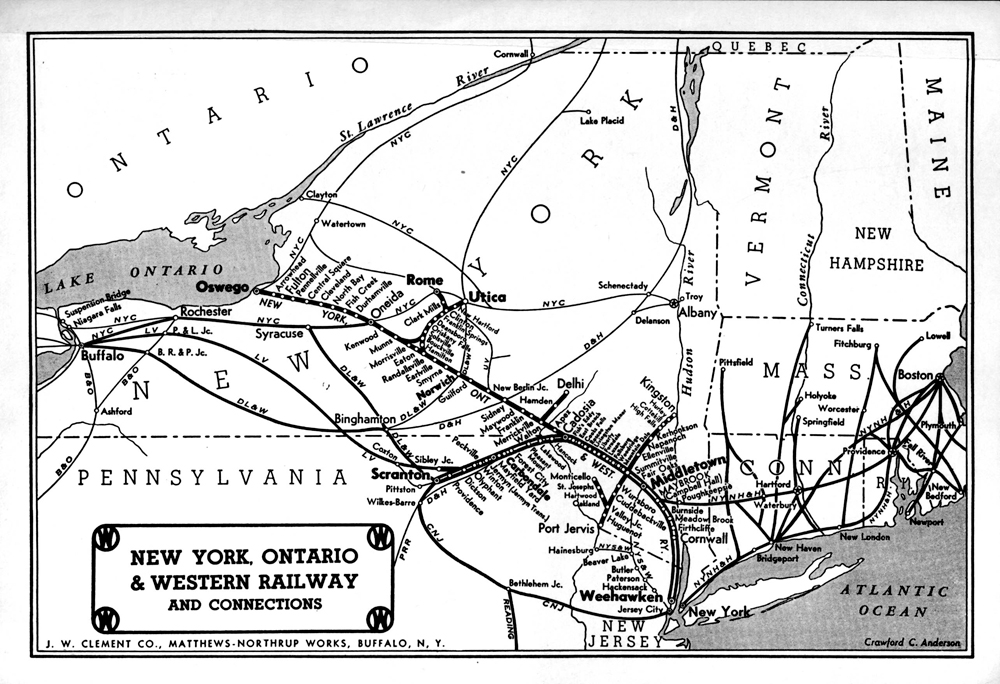
In 2005, in the case of the City of Sherrill V. Oneida Indian Nation of N.Y., the U.S. Supreme Court ruled against the Oneidas, after the nation had attempted to assert sovereignty in traditional land they had to re-purchase after it had been illegally acquired.

Writing the majority position was the late liberal figurehead now being lionized in U.S. media — Ruth Bader Ginsburg.

Granted, she fought for women’s rights and accomplished a lot. She was a law school professor and a judge. She was one of the leaders of the American Civil Liberties Union. She was the second woman to ever serve on the United States Supreme Court. She was influential in a lot of cases on the Supreme Court, including a labour law case that inspired a law to be passed, and an environmental case that set new standards for who could be heard in court on environmental issues. Since her recent death, the news coverage has been singing her praises like hagiography.

But study history and you will find lots of villains, and no saints. Many First Nations people in North America look on Ginsburg’s reification with a much more skeptical eye.

Meanwhile, the sovereignty of many Indigenous nations in B.C. has never been extinguished. Many First Nations here are being corralled into signing treaties that give up lands, rights and sovereignty. They may look to the Oneida as a cautionary tale. When it comes to sovereignty, you must use it or lose it. Don’t look to courts to give it back later. Not even when you have a social justice saint for a judge.

Ginsburg ruled that Indian land in central New York acquired in violation of U.S. federal law, a treaty, and the U.S. Constitution, could not be reintegrated into the ancestral lands of the Oneida Indian Nation — that the Oneidas would be required to pay property taxes to the local government of the City of Sherill. That is, unless the Oneidas sacrificed that land and allowed the federal government to administer it as a trust.

Justice Ginsburg wrote that 200 years had passed since the initial illegal acquisition, the land had passed hands between jurisdictions multiple times over the period, and that the Oneida had just waited too long. (Even though the U.S. Supreme Court acknowledged in 2005 that there was no specific time limit on this kind of case.) She claimed in her opinion that it would just be “unfair” to the non-natives in this case. If the Oneida had sued in court sooner, then it would have been different.

In the long and fraught web of relationships between First Nations and the United States government, it’s hard to pick a time before the late 20th century or early 21st where a First Nations case might be given full and fair hearing by any federal court, which shows Ginsburg’s opinion to be … lacking in historical sensitivity.

Winchester Lever Action Development: 1860 Henry

Filed under: History, Military, USA, Weapons — Tags: , , , , — Nicholas @ 02:00

Forgotten Weapons
Published 5 Jun 2017

The Henry Repeating Rifle was a truly revolutionary development in firearms technology. It was not the first repeating rifle, but it was the best of a emerging class of new arms, reliable in function and very fast to shoot (much faster than the contemporary Spencers). The Henry used a simple toggle lock locking system, with a single throw of its lever performing all the elements necessary to reload and recock the action.

The Henry’s quick action was coupled with a 15-round magazine, more than double what the Spencer offered. It fired the .44 Henry rimfire cartridge, which threw a 216 grain bullet at about 1125 feet per second (this would change to 200 grains at 1200 fps within a few years). This was substantially less powerful than a heavy muzzleloader charge, but the volume of fire more than made up for it. Within 200 yards, the Henry could produce a devastating volume of fire.

The Henry was only produced for about 5 years (1862 – 1866), with about 12,000 manufactured in total. The Henry was made almost exclusively in a standard rifle pattern, with a 24 inch barrel. Some were later cut down into carbines, though. While the US military rejected the Henry for a variety of reasons, nearly all of the guns produced before the end of the war did actually see military service, with state units or individuals who supplied their own arms. In the few engagements where Henry rifles were present in substantial numbers, they proved to be a significant force multiplier.

Cool Forgotten Weapons merchandise! http://shop.bbtv.com/collections/forg…

http://www.patreon.com/ForgottenWeapons

If you enjoy Forgotten Weapons, check out its sister channel, InRangeTV! http://www.youtube.com/InRangeTVShow

October 1, 2020

Supreme Court Shenanigans!

Filed under: Government, Law, Politics, USA — Tags: , , , — Nicholas @ 06:00

CGP Grey
Published 30 Sep 2020

Historical Breakdown of A Bridge Too Far – Planning and Failure of Market Garden I RHINELAND 45

The Great War
Published 30 Sep 2020

Support our brand new World War 2 documentary about The Battle of the Rhineland (not to be released on YouTube): https://realtimehistory.net/rhineland45

After last year’s Downfall video (with over 1 million views!) we thought we look at another classic WW2 movie and give you a breakdown about the historical figures and background. Our pick this time: A Bridge Too Far.

» SUPPORT THE CHANNEL
Patreon: https://www.patreon.com/thegreatwar

» OUR PODCAST
https://realtimehistory.net/podcast – interviews with World War 1 historians and background info for the show.

» BUY OUR SOURCES IN OUR AMAZON STORES
https://realtimehistory.net/amazon *
*Buying via this link supports The Great War (Affiliate-Link)

» SOURCES
A. Beevor, Arnhem: The Battle for the Bridges (2018)
B. Horrocks, Escape to Action (1960)
R. Neillands, The Battle for the Rhine 1944 (2005)
Builder, Bankes, Nordin, Command Concepts (1999)
www.pegasusarchive.org
www.nam.ac.uk/explore/market-garden
www.iwm.org.uk/history/the-story-of-operation-market-garden-in-photos

» MORE THE GREAT WAR
Website: https://realtimehistory.net
Instagram: https://instagram.com/the_great_war
Twitter: https://twitter.com/WW1_Series
Reddit: https://reddit.com/r/TheGreatWarChannel

»CREDITS
Presented by: Jesse Alexander
Written by: Jesse Alexander
Director: Toni Steller & Florian Wittig
Director of Photography: Toni Steller
Sound: Toni Steller
Editing: Toni Steller
Motion Design: Philipp Appelt
Mixing, Mastering & Sound Design: http://above-zero.com
Maps: Daniel Kogosov (https://www.patreon.com/Zalezsky)
Research by: Matthew Moss
Fact checking: Florian Wittig

Channel Design: Alexander Clark
Original Logo: David van Stephold

Contains licensed material by getty images
All rights reserved – Real Time History GmbH 2020

From the comments:

The Great War
6 hours ago
Support our brand new World War 2 documentary about The Battle of the Rhineland (not to be released on YouTube): https://realtimehistory.net/rhineland45 *

*We know that some of you don’t like the fact that we upload non-Great War content once in a while. But here are a few fun facts: Last year’s video about THAT scene from Downfall has been one of our most successful videos ever produced. It helped us spreading the word about our crowdfunding campaign last year and it also brought new subscribers to The Great War that hadn’t heard about it. And in the cut-throat world of the YouTube attention economy this is really important for our continued existence. Another “fun” fact: Both this video and the Downfall video were both claimed for copyright violation even though they clearly fall under fair use. We disputed and lost and now there is nothing we can do about the fact that someone else is earning money through our work. Just one of the reasons why it’s increasingly frustrating working with YouTube and why we are exploring other avenues for The Great War and our other projects.

September 30, 2020

“The culture war is the ‘New Normal'”

Filed under: Books, Britain, Media, Politics, USA — Tags: , , , , — Nicholas @ 05:00

Andrew Doyle discusses the debate over the culture war in Spiked:

The phrase that probably best characterises the events of 2020 is the “New Normal”. Although it’s typically used to describe our changed circumstances under lockdown, it could just as easily be applied to the way in which we have all grown accustomed to the worst excesses of the social-justice revolution.

News stories that only five years ago would have been dismissed as asinine aberrations now recur with a quotidian certainty. Recent notable examples include: Princeton University confessing to “systemic racism”, leading to an investigation by the Department of Education on the grounds that racism is a violation of civil-rights law; the Royal Academy of Dramatic Arts making a similar admission, thereby emboldening some of its students to produce a 100-page document full of demands so entitled that it would make Veruca Salt blush; and an academic and novelist stating that debate is “an imperialist capitalist white supremacist cis-heteropatriarchal technique that transforms a potential exchange of knowledge into a tool of exclusion and oppression”. Yes, the culture war is the “New Normal”.

Yet with all the evidence before our eyes, certain commentators persist with their view that the culture war is a right-wing myth advanced by those who are resistant to change. “There’s no actual ‘culture war’, is there?”, writes LBC’s James O’Brien: “It’s just a new way of describing disagreements between people who hate racism and discrimination and people who love it.” Then there is the Guardian‘s Owen Jones, who maintains that “a lot of what’s called ‘the culture war’ is just younger people trying to assert their different social and moral values over older generations who run most of the media”. Nesrine Malik has argued that the culture war has been manufactured by the right, although it will not have escaped most people’s attention that the majority of salvos come from the left side of the battlefield.

It’s this kind of gaslighting – to borrow the language of social-justice activists – that we have already seen from writers who insist that “cancel culture” doesn’t exist, in spite of abundant and incontrovertible evidence that it does.

This is because, as Helen Pluckrose and James Lindsay have so clearly outlined in their seminal book Cynical Theories, the ideology of social justice has its origins in postmodernism, a school of thought which favours “lived experience” and multiple “ways of knowing” over objective truth. It doesn’t matter, for instance, that JK Rowling has never said or written anything transphobic — her new novel must be denounced for advancing an anti-trans agenda, even though it contains no actual references to trans people. These activists have apparently taken their cues from Humpty Dumpty in Lewis Carroll’s Through the Looking Glass (1871). “When I use a word”, he says to Alice, “it means just what I choose it to mean – neither more nor less”.

America First – Patriots or Nazis? – WW2 Special

Filed under: History, Media, Politics, USA — Tags: , , , , — Nicholas @ 04:00

World War Two
Published 29 Sep 2020

In 1941, the question of whether America should join the European War still isn’t settled. Different groups whip up opposition to it, and those such as the America First Committee seem suspiciously sympathetic to Hitler’s message and cause.

Join us on Patreon: https://www.patreon.com/TimeGhostHistory
Or join The TimeGhost Army directly at: https://timeghost.tv

Follow WW2 day by day on Instagram @ww2_day_by_day – https://www.instagram.com/ww2_day_by_day
Between 2 Wars: https://www.youtube.com/playlist?list…
Source list: http://bit.ly/WW2sources

Hosted by: Indy Neidell
Written by: Francis van Berkel and Indy Neidell
Director: Astrid Deinhard
Producers: Astrid Deinhard and Spartacus Olsson
Executive Producers: Astrid Deinhard, Indy Neidell, Spartacus Olsson, Bodo Rittenauer
Creative Producer: Joram Appel
Post-Production Director: Wieke Kapteijns
Research by: James Newman
Edited by: Miki Cackowski
Sound design: Marek Kamiński
Map animations: Eastory (https://www.youtube.com/c/eastory)

Colorizations by:
Daniel Weiss
Norman Stewart – https://oldtimesincolor.blogspot.com/

Sources:
from the Noun Project: people by ProSymbols

Soundtracks from the Epidemic Sound:
Reynard Seidel – “Deflection”
Johannes Bornlof – “The Inspector 4”
Philip Ayers – “Trapped in a Maze”
Johannes Bornlof – “Deviation In Time”
Phoenix Tail – “At the Front”

Archive by Screenocean/Reuters https://www.screenocean.com.

A TimeGhost chronological documentary produced by OnLion Entertainment GmbH.

New Orleans History 101

Atun-Shei Films
Published 2 Apr 2019

A brief crash course in the history of the city, from the founding in 1718 to the 20th century.

Support Atun-Shei Films on Patreon ► https://www.patreon.com/atunsheifilms

#NewOrleans #Louisiana #AmericanHistory

Watch our film ALIEN, BABY! free with Prime ► http://a.co/d/3QjqOWv
Reddit ► https://www.reddit.com/r/atunsheifilms
Twitter ► https://twitter.com/alienbabymovie
Instagram ► https://www.instagram.com/atunsheifilms
Merch ► https://atun-sheifilms.bandcamp.com

September 29, 2020

The Lamprey Party of America

Filed under: History, Politics, USA — Tags: , , , , , — Nicholas @ 05:00

In the latest Libertarian Enterprise, L. Neil Smith suggests that we need a modern Thomas Nast to add to the political menagerie of elephants and donkeys:

“The Third-Term Panic”, by Thomas Nast, originally published in Harper’s Magazine on 7 November 1874.

A braying ass, in a lion’s coat, and “N.Y. Herald” collar, frightening animals in the forest: a giraffe (“N. Y. Tribune”), a unicorn (“N. Y. Times”), and an owl (“N. Y. World”); an ostrich, its head buried, represents “Temperance”. An elephant, “The Republican Vote”, stands near broken planks (Inflation, Repudiation, Home Rule, and Re-construction). Under the elephant, a pit labeled “Southern Claims. Chaos. Rum.” A fox (“Democratic Party”) has its forepaws on the plank “Reform. (Tammany. K.K.)” The title refers to U.S. Grant’s possible bid for a third presidential term. This possibility was criticized by New York Herald owner and editor James Gordon Bennett, Jr.
Image and caption via Wikimedia Commons.

The 19th century political caricaturist and editorial cartoonist Thomas Nast (1840-1902) is famous for identifying Republicans as elephants and Democrats as donkeys. He also created the Tammany tiger, and Santa Claus as we know him today.

Mr. Nast was a handsome and clever fellow, a Bavarian immigrant, to whom we all owe a great deal, but I have long thought that more animals need to be added to America’s political menagerie, none of them as wholesome and savory as elephants and donkeys. Lampreys are eel-like fish, sort of vertebrate leeches or underwater vampires, that attach themselves to larger fish with their circular, tooth-lined mouths, hitching a free ride, punching a hole through the legitimate fish’s flesh, and feeding on its blood. They look and feel (I am informed) slimy and disgusting. The freedom movement needs a cartoonist (I can think of one or two) capable of rendering a cartoon lamprey in all of its horrifying malevolence.

What party would be represented by a lamprey? Well, it has gone by several names, and it’s filled with familiar and despicable figures. Alaska Senator Lisa Murkowski, described as “to the left of all Republicans, except Susan Collins, and … Democrat Senator Joe Manchin” is a lamprey, riding along on the Republican party, parasitically sucking its lifeblood, never contributing anything to advance its progress. She voted with Obama a stunning 72.3% of the time. I could say Murkowski is a “never-Trumper”, but she was a lamprey long before the Donald ever came along. My wife Cathy, first made aware of Murkowski’s malevolent role in American politics, exclaimed, “Alaskans! What the hell is wrong with you?”

Another well-known lamprey is Willard “Mitt” Romney, who viciously opposes all of Trump’s undertakings, foreign and domestic, and whose father George was a leader of the cabal in 1964 who betrayed fellow-Republican Presidential candidate Barry Goldwater and helped Democrats and the media stab him in the back, electing that murderous gangster Lyndon Baines Johnson. George Romney would have called Barry a “deplorable” if the term had been current back then, for the same reasons the political elites despise President Trump today. They believe only they are fit to determine how to live your life. The delusion seems to be hereditary.

Light Fifty: the Barrett M82A1

Filed under: History, Military, USA, Weapons — Tags: , — Nicholas @ 02:00

Forgotten Weapons
Published 10 Aug 2016

Sold for $6,900.

The story of the development of the Barrett M82 .50 BMG semiauto rifle is really a neat story — much more interesting than most people probably expect, and reminiscent of many firearms development stories of the 1800s. Ronnie Barrett was working as a photographer in the late 70s, and became interested (perhaps obsessed?) with the idea of a semiauto .50 caliber rifle after a photo session with a Vietnam War jungle patrol boat (which was armed with a pair of M2 .50 caliber machine guns). At the time, the only civilian options for the .50 BMG cartridge were conversions of WWII antitank rifles like the Boys and PTRD.

Barrett, with basically no formal engineering background, sketched up a design and approached some machine shops for advice and assistance. He started working in his garage, and after a couple years had a functioning prototype completed. He sold the rifles commercially at gun shows and through publications like Shotgun News until making his first military sale in 1989, to the Swedish government. The following year he received an order from the US military, and sales took off from there.

Contrary to common expectation, the Barrett M82A1 is not really a “sniper” rifle — as a semiautomatic design with a recoil-operated action it’s potential accuracy is much less than that of a bolt action precision rifle — and this is amplified by the lack of a precision .50 BMG cartridge in US military service. In practice, the M82A1 will shoot about 3 MOA with normal ball ammunition, and about 1.5-2 MOA with good handloads. It is used primarily as an EOD rifle to detonate heavy-walled unexploded shells at a safe distance, and as an anti-material rifle to attack light vehicles and infrastructure at a long distance. These are relatively large targets, which require the large payload of a .50 BMG projectile but not the extreme accuracy of a true “sniper’s” rifle.

« Newer PostsOlder Posts »

Powered by WordPress