
World War Two
Published 16 Apr 2022The Allies have one chance left to catch the Axis forces in Tunisia before they can reach the Tunis defences; in the USSR both the Axis and Soviets are making plans for a fight near Kursk; and in the skies, in the South Pacific a Japanese aerial offensive ends and Yamamoto himself flies off to congratulate his pilots.
(more…)
April 17, 2022
Kursk – The Next Great Battle? – WW2 – 190 – April 16, 1943
Comments Off on Kursk – The Next Great Battle? – WW2 – 190 – April 16, 1943
April 16, 2022
How much of teenagers identifying as transgender is “social contagion and the development of a new youth subculture”?
The sheer number of children and teens who are deciding that they are “trans” is far in excess of previous generations. How much of this phenomena may be accounted for by social contagion?

My teenage daughter has decided that she is “trans”. So have all her friends. Not some of them. Not most of them. Every. Single. One.
She had never heard of trans, and had no signs of gender dysphoria, until she was moved to a new, cool trans-friendly school by her unsuspecting, politically liberal parents. There she met a group of geeky (or dare I say nerdy?), smart, slightly (but not very) gender nonconforming, artsy kids. As I understand it, they all discovered “trans” together. The old “cis” friends were swiftly discarded in favour of this exciting new peer group.
Exploring “trans stuff” online with friends is a source of great interest and excitement — a real social event. What’s not to love about 245 gender identities, complete with their own unique flags? Then there are those cool neo-pronouns. Forcing your out-of-touch old parents to refer to you as “ze” or “ey” (how do you pronounce that again??) in the name of “inclusivity” is just too delicious to resist. The manga, the cute avatars in computer games, the blue or pink hair — all part of the fun as well. Mocking the outgroup (in this case so-called “cis” people in general and the dreaded TERFs in particular) is also good for a laugh — especially if they happen to be your parents as well.
There is even a special vocabulary with lots of new terms — deadnaming, misgendering, sex assigned at birth, and much more. If these concepts need to be explained to your uncool parents (accompanied by eye rolls of course), so much the better.
Bonding with friends, searching for their identity and place in life, working out their sexuality, separating from family — these are all normal developmental tasks for teens. For many, youth subcultures can be a natural part of that. Some are harmless. Some, like drug use and extreme dieting, not so much. But in the case of the latter, sensible adults usually intervene to help steer the young people in the right direction. Not in the case of trans. Here we have adults steering kids down a dangerous path, which involves permanent, life altering drugs and surgeries for which there is no good evidence base.
For many of these kids, LGBTQ+ is a youth subculture. It really is as simple as that. Recent surveys have been identifying skyrocketing rates of “trans” or “queer” identification in young people. One found that an astonishing 39% of young adults in the US aged between 18-24 identified with the label LGBT — the figure for teens <18 may well be even higher. Of course this figure includes gay and lesbian people as well as those identifying as trans. Another poll, which looked only at gender, found that nearly 10% of US high schoolers identified as “gender diverse”. Yet another survey gives a lower figure of 1.8%. Whichever figure is correct, this is a huge explosion in numbers over a very short period of time. As endocrinologist Dr Will Malone asks; “How do we reconcile these numbers with 2013 data reporting the prevalence of adult gender dysphoria to be a rare 2-14 in 100,000?”
Social contagion and the development of a new youth subculture, that’s how.
H/T to Blazing Cat Fur for the link.
Comments Off on How much of teenagers identifying as transgender is “social contagion and the development of a new youth subculture”?
April 15, 2022
QotD: Men without hobbies shouldn’t ever retire
I took an older guy somewhere during my early-morning Uber shift, and we got to chatting about retirement. He was in his early sixties and was thinking about retirement in the next couple of years or so — he’d reached all the retirement “qualifications” in terms of his age, length of service, and so on — and when I asked him what he was going to do after retirement, he said quite simply, “I don’t know.” He had no outside interests other than his work, he said, and had no hobbies or anything to keep him occupied when he would quit working.
This set off all sorts of alarm bells in my head, because I’d confronted the very same thoughts when I planned on retiring back in 2016 on reaching age 62 (which seems to be the “killer” age discovered by the researchers).
Worse than that, I either know men personally or have heard of many instances of men who have died soon — very soon — after retiring early. (When men retire at a later age, they paradoxically seem to live longer, as the study shows.) Sometimes, men die within six months of getting their gold watch, after many decades of working with little or even no time off for illness. Where I differ from the study is that I think I know the real reason why this happens.
We’re working dogs.
As long as men have work to do, we do fine. We have a purpose in life, we get up in the mornings with a day’s work ahead of ourselves, and this gives us a reason to live. It’s all tied up, I believe, in our inherent nature as providers and all that goes with it. When that activity stops earlier than expected — at 62, most of us have at least fifteen or even twenty more years to live — subconsciously we still feel that we are capable of working, providing and in short contributing to ourselves and others.
But when that ends, it’s as though a switch is turned off somewhere and our brains simply say, “Oh well, that’s it,” and we die. It may be that illness has been kept at bay through our industry and now given an empty playing field, so to speak, it takes over; or it may be that we do things that are more dangerous (the study mentions driving more as one activity), or perhaps we working dogs just feel useless and our existence, pointless.
Kim du Toit, “Working Dogs”, Splendid Isolation, 2018-02-15.
Comments Off on QotD: Men without hobbies shouldn’t ever retire
April 14, 2022
“This might just be the dumbest, most ill-advised and lethally consequential thing Biden has said since taking office”
Brendan O’Neill on Joe Biden’s most recent maybe official/maybe “Joe being Joe” moment on the Russia-Ukraine conflict:

Once considered a gaffe, Biden doing this again might have been a good move.
Bumbling Joe Biden isn’t funny anymore. It might be amusing when your crazy uncle blurts out something unexpected at a family dinner. But when the most powerful man on Earth does it? Not so much. Yesterday, “in passing”, as the Guardian put it, President Biden referred to Russia’s war in Ukraine as a “genocide”. This might just be the dumbest, most ill-advised and lethally consequential thing Biden has said since taking office.
The circumstances in which he uttered the g-word, in which he made the most serious accusation you can make against a nation state, were bizarre. He was in Iowa, at a public discussion on the use of ethanol in petrol, of all things. Then – “in passing” – he said: “Your family budget, your ability to fill up your tank, none of it should hinge on whether a dictator declares war and commits genocide half a world away.” And so did an announcement about the lifting of restrictions on ethanol use in order to reduce the price of fuel turn – “in passing” – into the United States of America accusing the Russian Federation of committing the most heinous crime known to man.
It is unclear whether accusing Putin of genocide is White House policy now, or if Biden was just running his mumbling mouth, as is his wont. Pressed by reporters as to whether he really meant to say “genocide”, Biden said: “Yes, I called it genocide because it’s become clearer and clearer that Putin is just trying to wipe out the idea of even being Ukrainian.” Not surprisingly, other world leaders were a tad alarmed. French president Emmanuel Macron rebuked Biden for his “verbal escalations”. We need to be “careful” with our terminology, he said, rightly.
It remains to be seen whether this is the White House consciously upping the ante or just Biden having another senior moment. He has form, after all. At the end of March – again in passing – he called for regime change in Russia. “This man cannot remain in power”, he said about Putin in an “off the cuff” remark at the end of March. Most of us make jokes off the cuff or express exasperation off the cuff – Biden expands America’s war aims off the cuff. The White House swiftly walked back this unscripted declaration of regime-change hostilities. Before that, Biden made a blunder that suggested US troops had been deployed to Ukraine. The White House walked that back, too. “[We] are not sending US troops to Ukraine”, a spokesman clarified.
Maybe the White House will walk back the “genocide” thing as well. Though it might be too late. The word’s out there now. And not just from the mouths of those irritating liberal commentators and laptop bombardiers who think every war is a genocide (except the ones they support, of course, like Iraq, Afghanistan, Libya), but from the mouth of the American president himself. Make no mistake – this is incredibly dangerous war talk. It transforms Ukraine from an undoubtedly bloody conflict that has global implications into a possible site of further external intervention and fighting. Indeed, the United Nations’ policy on “The Responsibility to Protect” expressly obliges the Security Council to take action – ideally diplomatic action, but if that fails, then military action – in order to “protect populations from genocide”. If Russia is committing genocide, then the US and its allies have a responsibility to stop it somehow. This is the dire, destabilising situation Biden has either blunderingly or consciously pushed the world towards.
Comments Off on “This might just be the dumbest, most ill-advised and lethally consequential thing Biden has said since taking office”
Chris Bray contra Jonathan Haidt’s belief in a former, more unified body politic
Jonathan Haidt wrote at some length about what Chris Bray contends was an imaginary period of American history when people were less divided:
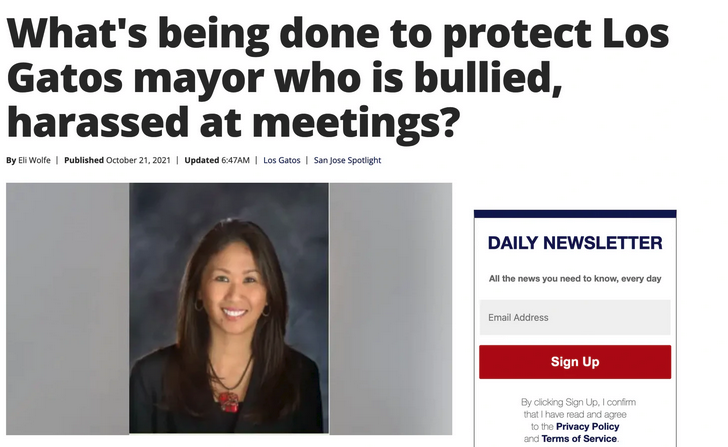
First, I think that this maneuver is the political strategy of a mediocre elite, with varying degrees of consciousness. The limit to which this may be true has to do with the spectacular loss of historical knowledge, which leaves a big part of the population feeling pretty sure that they’re the first people in the history of the universe who have ever encountered meanness. But the constant recourse to the language of “bullying” in the face of ordinary disagreement is a tell:
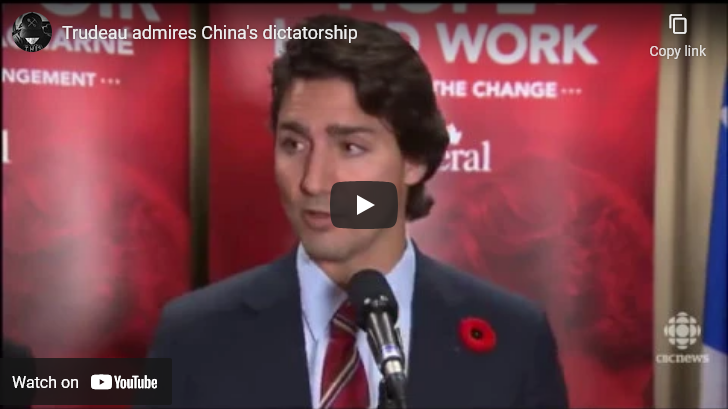
If you disagree with someone and only get the response that you’re vicious and a bully, you’re talking to an asshole; currently, it’s close to being the whole argument of the American governing class. The point of this kind of rhetoric is to win an argument by not allowing the other side to have it, and this seems like not really a mystery. See Jonathan Haidt’s reference to the high levels of trust in countries run by a “stable, competent autocracy”. Political elites all over the free world keep panting and sighing about how much they admire China’s dictatorship, and get a room, man.
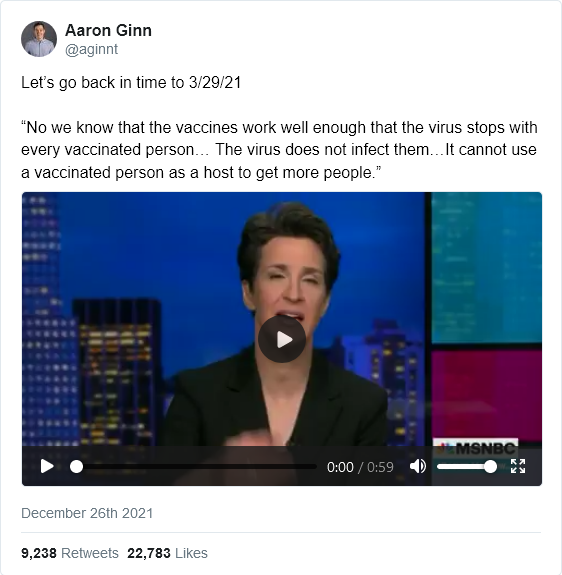
A related diversionary strategy is the constant recourse to the argument that people who disagree are victims of disinformation, the pivot in which “I disagree with this policy” is met with horror that the peasants have been tricked by the Internet. For example, did you know that some people have fallen for the lie, spread by Russian bots, that the Covid-19 vaccines aren’t as safe and effective as Pfizer and Dr. Fauci said? It’s hard to believe how far we’ve fallen.
But the biggest problem in Haidt’s essay is a giant omission: While Haidt writes at length about what the psychology of social media has done to the public — how it’s eroded our trust, how it’s fomented tribalism and point-scoring behavior, how it’s trapped us in the pattern of confirmation bias, “making it far easier for people to find evidence for absurd beliefs and conspiracy theories,” and so on — he never mentions the possibility that the psychology of social media has had the same effect on our institutions and the people who run them.
Comments Off on Chris Bray contra Jonathan Haidt’s belief in a former, more unified body politic
Winchester M2 Rifle
Forgotten Weapons
Published 29 Jul 2016http://www.patreon.com/ForgottenWeapons
In the previous video, we looked at the Winchester G30M rifle as it was submitted to Marine Corps trials in 1940. When the trial result came back with the G30M in last place, Winchester immediately assigned David Williams to work on adapting it to resolve the problems found in testing. What Williams did was to replace the tilting bolt with a virtual duplicate of the Garand’s two-lug rotating bolt. Williams also worked to reduce the weight of the gun, and was able to bring it down to a remarkable 7.5 pounds (3.4kg).
This prototype of the rifle (which Winchester optimistically designated the M2, implying that it would supercede the M1 Garand) was actually made largely from M1 Garand forgings, as Winchester was by this time building M1 rifles on contract. The receiver, bolt, and operating rod in this rifle was converted from Garand parts. Clearly it is not a finished product, and shows many signs of being a shop prototype — but it was in this state when it was shown to Rene Studler of the Ordnance Department in early 1941. Studler was impressed by the design, but knew that it would not replace the M1 at that point. However, he urged Winchester to scale the gun down to the .30 Carbine cartridge (which Winchester had themselves developed) and submit it in the second round of the Light Rifle testing which was to happen soon.
Does a two-lug rotating bolt, short stroke gas tappet, and Garand-style operating rod sound like a familiar set of features? Well, there is good reason … Winchester took Studler’s advice, and the scaled-down version was developed in just a few weeks and proved to be the best gun in the trials. It would be developed quickly into the M1 Carbine, and become the most-manufactured semiauto rifle of WWII.
At that point Winchester would set aside the .30-06 side of this rifle design for a little while, as they had plenty of work now with M1 Garand and M1 Carbine production. But we will see the M2/G30M/G30 come back in new form in the next episode …

Comments Off on Winchester M2 Rifle
April 13, 2022
QotD: Architectural arrogance
What is most telling, however, is the vitriolic response the op-ed triggered in Aaron Betsky. Called “one of the 21st century’s architectural power brokers,” Betsky is the former head of the Cincinnati Art Museum, and was director of the 2008 Venice International Architecture Biennale, the most important architecture show in the world. An architectural priest and patrician, he is to the profession what The New York Times is to the chattering classes: a voice of the high-status quo. Indeed, he writes for Architect, the official magazine of the AIA.
Betsky rained down on Bingler and Pedersen with ridicule and scorn: Their piece was “so pointless and riddled with clichés as to beggar comprehension.” He summarized their position: “we have three of the standard criticisms of buildings designed by architects: first, they are ugly according to what the piece’s authors perceive as some sort of widely-held community standard (or at least according to some 88-year old ladies); second, they are built without consultation; third they don’t work.”
Yet Betsky then admitted, “All those critiques might be true.” They are irrelevant, he claims, since architecture must be about experimentation and the shock of the new. (Why this should be the case he does not say.) And sometimes designers must stretch technology to the breaking (or leaking) point: “The fact that buildings look strange to some people, and that roofs sometimes leak, is part and parcel of the research and development aspect of the design discipline.” Ever brave, he is willing to let others suffer for his art.
At no point did Betsky consider the actual human beings, the unwilling guinea pigs who live in the houses. He implicitly says of the poor residents: Do their roofs leak? Let them buy buckets. And as for sickness-inducing mold, there’s Obamacare for that. Betsky also does not consider what a leaky roof means to people whose prior homes were destroyed by water. The architects, having completed their noble experiments, effectively say like the arrogant King Louis XV of France: “Après moi, le deluge” [After me, the flood]. No wonder architects have an image problem.
Justin Shubow, “Architecture Continues To Implode: More Insiders Admit The Profession Is Failing”, Forbes, 2015-01-06.
Comments Off on QotD: Architectural arrogance
April 12, 2022
Last War Patrol of HMS Terrapin
The History Guy: History Deserves to be Remembered
Published April 11, 2022On her seventh war patrol, in the south Java Sea, the T class British submarine HMS Terrapin and her crew had faced the terror of battle and barely survived. Badly damaged and far from home, sometimes the drama of war is not just in the battle, but in the voyage home.
Check out our new community for fans and supporters! https://thehistoryguyguild.locals.com/
This is original content based on research by The History Guy. Images in the Public Domain are carefully selected and provide illustration. As very few images of the actual event are available in the Public Domain, images of similar objects and events are used for illustration.
You can purchase the bow tie worn in this episode at The Tie Bar:
https://www.thetiebar.com/?utm_campaign=BowtieLove&utm_medium=YouTube&utm_source=LanceGeigerAll events are portrayed in historical context and for educational purposes. No images or content are primarily intended to shock and disgust. Those who do not learn from history are doomed to repeat it. Non censuram.
Find The History Guy at:
New community!: https://thehistoryguyguild.locals.com/
Please send suggestions for future episodes: Suggestions@TheHistoryGuy.netThe History Guy: History Deserves to Be Remembered is the place to find short snippets of forgotten history from five to fifteen minutes long. If you like history too, this is the channel for you.
Awesome The History Guy merchandise is available at:
https://teespring.com/stores/the-history-guyScript by THG
#history #thehistoryguy #WWII
Experimental video embed from Rumble.com. Please let me know if you have problems viewing this video.

Comments Off on Last War Patrol of HMS Terrapin
Calvin Coolidge: The Silent President
Biographics
Published 27 Sep 2021Simon’s Social Media:
Twitter: https://twitter.com/SimonWhistler
Instagram: https://www.instagram.com/simonwhistler/This video is #sponsored by Squarespace.
Source/Further reading:
Miller Center, in-depth overview: https://millercenter.org/president/co…
History Today, overview: https://www.historytoday.com/archive/…
New Yorker, “The case for Coolidge” (cached): https://webcache.googleusercontent.co…
NY Times, “Coolidge, the great refrainer”: https://www.nytimes.com/2013/02/17/bo…
NY Times, 1933 obituary for Coolidge: https://archive.nytimes.com/www.nytim…
Atlantic, “Coolidge and depression”: https://www.theatlantic.com/magazine/…
Politico, “How Coolidge survived the Harding-era scandals”: https://www.politico.com/magazine/sto…
History, “Boston Police Strike of 1919”: https://www.history.com/this-day-in-h…
Coolidge letter written after death of his son: https://www.shapell.org/manuscript/pr…

Comments Off on Calvin Coolidge: The Silent President
April 11, 2022
Ours is a fundamentally unserious culture, two examples
Chris Bray provides some examples of just how decayed western culture has become in our headlong flight toward total unseriousness:
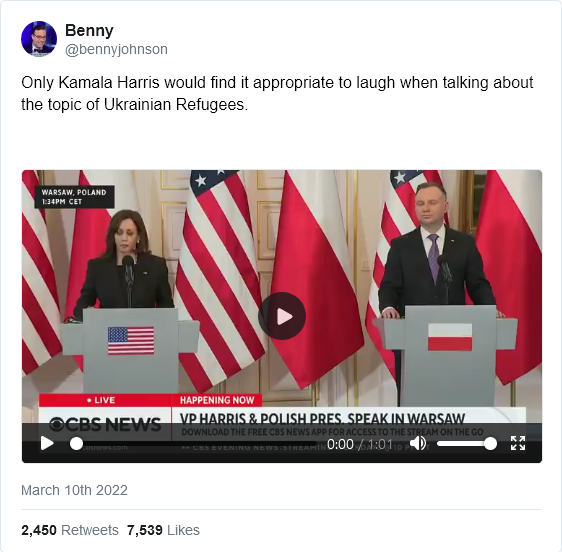
In Europe this month to lead the diplomatic response to a war, the Vice-President of the United States responded to a question about refugees by giggling and cackling and babbling in typical form:
And then the “fact-checkers” at Reuters explained that she actually didn’t giggle and cackle and babble, because, okay, she did cackle and giggle and babble, but she didn’t cackle and giggle and babble specifically about the refugees, so it doesn’t count: “It is clear from viewing the longer video in context that Harris and Duda laughed at the awkwardness of not knowing who should speak first. There is no evidence that Harris was laughing at the refugees or the crisis in Ukraine.” The question was about refugees, and she laughed — she laughed a lot — right after the question, but Reuters apparently called no tagbacks before the play, so no points accrue.
So we have an awkward and ineffective playactor who occupies the position of a political leader, but lacks the stature or ability to go along with it, and we have journalists who labor to protect people in powerful political positions from the possibility that people will notice who they really are and what they really do. We have political leaders who aren’t political leaders, and journalists who aren’t journalists: the form without the substance.
Meanwhile, a recent debate on the topic of free speech at Yale Law School — the nation’s top-ranked law school, which produces presidents and Supreme Court justices — began with law students screaming abuse (“I’ll fight you, bitch”) at one of the panelists, before walking out as a group and continuing to shout and pound on the walls of the adjacent hallway.
Now: The students were angry at the panelist, the bitch they wanted to fight, because she’s an anti-trans social conservative, and couldn’t you just die? But the thing that law students are learning to do is be lawyers — advocates for a position in a formalized exchange of competing views, in controversies that play out in open court. They’re training at the profession of making an argument. The point of sitting through an argument made by a person whose views you despise is that you can learn about something you want to fight against; you can see what the enemy says, and how she says it, and so do a part of the work of preparing yourself to advance a different position. So we have law students, people training for a debate-and-exchange-centered profession, who don’t want to hear things they don’t agree with. It’s like a minor league baseball player saying he refuses to touch a baseball, because baseballs offend him, but anyway, when are you assholes sending me up to the major leagues? We have people who want to occupy the profession of the law without preparing for the substance of professional engagement with competing positions: the form without the substance.
(Doing what journalists do, now, the fact-checkers explain that none of this puts points on the anti-free-speech scoreboard: “The students made their point at the very start of the event and walked out before the conversation began.” It is precisely the point that 1.) law students 2.) walked out before the conversation began. In ten years, oral argument before the Supreme Court will be that Woke lawyers stand up and scream I’M NOT GONNA LISTEN TO THIS SHIT, YOU ASSHOLES at the justices, then storm out and descend into a long round of day-drinking while waiting for the court to rule in their favor, because oh my god they CAN’T EVEN.)
Comments Off on Ours is a fundamentally unserious culture, two examples
April 10, 2022
Mussolini is Tired of War – WW2 – 189 – April 9th , 1943
World War Two
Published 9 Apr 2022Adolf Hitler meets with Benito Mussolini to hopefully restore his flagging morale and convince him that the Axis can hold out in North Africa, but the situation there grows more precarious and this week there the Allies advancing from the west and the east link up for the first time. The Axis are also holding out in the Caucasus, as new Soviet attacks to take Krymskaya begin.
(more…)
Comments Off on Mussolini is Tired of War – WW2 – 189 – April 9th , 1943
April 9, 2022
“Woke Disney” is far from a new thing
Geoff Shullenberger points out that Disney’s reputation for family-friendly media rests rather uneasily on the corporation’s actual products:

“Disney is the worst enemy of family harmony.” You’d be forgiven for thinking those words were uttered yesterday, given the number of conservative politicians and pundits castigating Disney for “grooming children” following its criticism of the “Don’t say gay” bill.
In fact, the statement appeared just over 50 years ago, in a polemical analysis of Disney cartoons written by two Marxist militants, the Chilean writer Ariel Dorfman and the Belgian sociologist Armand Mattelart. How to Read Donald Duck: Imperialist Ideology in the Disney Comic was published in Chile during the brief rule of Salvador Allende as part of an attempt by Allende’s leftist allies to push back against American cultural influence. The book became a bestseller, but after Augusto Pinochet’s 1973 coup, it was banned and publicly burned.
The Right’s current lament for the betrayal of “traditional families who want to hold onto innocent entertainment for their kids” proceeds from the premise that this “woke Disney” is a deviation from the company’s benevolent past. But Dorfman and Mattelart, all the way back in 1971, contested this assumption of innocence. Although their methodology is Marxian and their aims overtly anti-capitalist, their allegations foreshadow the American Right’s current concerns in surprising ways.
[…]
How to Read Donald Duck contains many of the expected Left-wing criticisms of patriarchy and gender roles, but it also includes observations that might be surprising to ideologues today. Notably, as one illustration of the propaganda functions taken on by Disney in the Global South, the authors remark that the US Agency for International Development has circulated films featuring Disney characters promoting contraception. They reinforce this association with the title of their chapter on Disney family dynamics: “Uncle, buy me a contraceptive …”
Like many radicals at the time, Dorfman and Mattelart saw the US state’s growing interest in controlling fertility in the developing world as consistent with a broader campaign to suppress the value placed on family in the subject nations of its economic empire; this was deemed to be in tension with values such as efficiency, productivity, individualism, and competition. Disney’s exclusion of references to reproductive sexuality, in this light, looks less like an attempt to protect childhood innocence, than part and parcel of the larger modern decoupling of sex from reproduction.
It all suggests that the supposed sexual innocence of Disney’s dreamscapes was never aligned with “family values” in the first place and the Right’s current war on Disney isn’t about family — it is simply the latest phase of its realisation that corporate America has now largely aligned itself with the values of the cultural Left.
For, in fact, Disney’s vast influence on the imaginations of children has been enabled by market society’s weakening of the authority of the family. With parents overburdened by the demands of work, important aspects of child-rearing are entrusted to the entertainment industry. Disney has capitalised on this exploding demand more than any other company. If we take “grooming” to simply mean instilling values alien to the family into children, Dorfman and Mattelart would suggest that Disney has never been innocent of this charge.
Comments Off on “Woke Disney” is far from a new thing
It wasn’t the Wuhan Coronavirus that crippled the world economy — it was government reaction to the pandemic
Dan Sanchez points out the undeniable truth that most of the economic damage we’ve sustained over the last two years wasn’t due to the pandemic itself, but to the incredibly disruptive public health measures almost every western government implemented in response (with huge connivance on the part of the legacy media and the social media companies):
… it will not be the coronavirus making us poorer, but the fallacy, embraced by officials from Beijing to DC, that central planners can manage society-wide problems, like “healing” a global pandemic or “fixing” a global supply chain.
As the great economists Ludwig von Mises and F.A. Hayek explained, societies and economies are inconceivably complex, and it is literally impossible for anyone to centrally plan something so far beyond their comprehension. To think otherwise is, as Hayek called it, a “fatal conceit”.
The fatal conceit of central planners is manifest in the very term “global supply chain”. The metaphor of a “chain” portrays the economy as something static and linear: something simple enough for a single mind to “fix”.
But, as Leonard Read vividly showed in his classic essay “I, Pencil”, even a seemingly simple good like a pencil is not the product of a single supply chain. Every good in the economy is descended from a vast “family tree” of innumerable factors of production. And all the family trees of all goods are intricately interconnected, making the economy, not a “chain”, but as economist Murray Rothbard depicted it, “a highly complex, interacting latticework of exchanges”.
This vast, dynamic latticework is self-healing and self-fixing: through the actions and interactions of its constituent individuals. Blundering, arrogant central planners only get in the way and make things worse.
That has been the lesson of free-market economists and social theorists going back to Adam Smith. The western world partly embraced that lesson, and it flourished as a result, becoming a beacon to the world. Starting in the 1970s, even Communist China emulated its example, opening up its markets. This was a humanitarian miracle for the Chinese people and a boon for us all. If not for Chinese manufacturing being integrated into the global division of labor, it is hard to imagine the west having the modern high-tech living standards and super-comfortable working conditions we enjoy (however precariously) today.
Whereas once China liberalized in emulation of the west, now the leaders of the “free world” are emulating (and, in the case of Canada’s prime minister, openly admiring) the authoritarianism of the CCP. As crises continue to mount, it is clear that this turn toward tyranny is putting our future at risk.
Comments Off on It wasn’t the Wuhan Coronavirus that crippled the world economy — it was government reaction to the pandemic
April 7, 2022
Alberta’s recall law
Recall laws are not common in Canada, with Alberta’s new law being only the second example:

The Recall Act, which was part of a 2019 UCP platform pledge to “strengthen democracy and accountability in Alberta” mirrors the terms of the recall law enacted in B.C. after the 1991 election that swept a scandal-plagued Social Credit party out of power (and, a few years later, out of existence). Like Alberta’s law, the B.C. law requires the signatures of 40 per cent of eligible voters in a constituency gathered within a 60-day period to trigger a by-election. In B.C., this barrier has not yet been cleared despite 26 recall initiatives (although, in a few cases, politicians have resigned rather than fight).
Recall laws are not unique to Canada. The United Kingdom has had recall legislation since 2015, but it differs from the Alberta and B.C. laws in that it is triggered not by disgruntled voters but by MP wrongdoing, including being convicted of expense fraud, suspended from the House of Commons or sentenced to prison. Despite this extra requirement, the apparent criminal propensity of U.K. politicians plus a low threshold of 10 per cent of voters to trigger a by-election mean that the law has already been used successfully twice.
You may also remember the California vote last summer, in which the oleaginous Governor Gavin Newsom comfortably survived a state-wide recall. After some early uncertainty, California’s fit of popular pique ended in exactly the same place as the gubernatorial election three years earlier — literally, to the decimal place — with 61.9 per cent support for Newsom. After 18 months and half a billion dollars, all the process proved was that the period of appointed military governors from 1847-1850 remains the high-water mark for good governance in California.
The argument against recalls starts with the fact that they bear the same relationship to democracy that a mulligan does to the rules of golf. We already have regular elections to vote out unpopular politicians. A recall is for people who can’t wait four years to admit their own mistake. It is an impetuous power for impatient people. Besides, voting the bums out is the chief joy of democracy — surely we can wait a few years to savour the moment.
Some elected politicians are unworthy of the trust placed in them. But that is our fault as voters. Venting our frustrations at the people we elected is a cop out. Mencken infamously wrote that “Democracy is the theory that the common people know what they want, and deserve to get it good and hard.” He was right. In an hereditary aristocracy, you can blame the bad luck of the genetic lottery, and in an autocracy you can fume about the injustice of might making right. But in a democracy, we have no one to blame but ourselves. We voted ’em in, and now we deserve to get it good and hard … for four years at least.
Comments Off on Alberta’s recall law
QotD: The KonMari message without Marie Kondo
In more fanciful moments, I think about decluttering the KonMari method itself, stripping it of the middle-class respectability its exoticism confers. In place of Kondo herself, I imagine a tired maid (maids are always tired) using her years of “tidying” to counsel a family on managing their too-abundant stuff. She appeals to her experience both in cleaning and in life – invoking, say, that time she had to downsize from a double-wide trailer to a single-wide. (Long before the “tiny house movement” – another pop-culture fascination for those suffocated by their own stuff – many people already lived in tiny homes, and these are called trailers.) My sage maid uses her organisational competency, hard-earned from years of picking up after others, and her long practice in the art of making do without the new or the shiny. Most of all, she is full of plain good sense. But what she will not promise, cannot promise, is that cleaning house will bring you contentment. Nor will she suggest that you discard belongings that don’t “spark joy”. And that really is the rub.
My wise maid will forgo soft talk of joy, and use instead a harder, plain-speaking language to assess all that stuff: does it still have use in it? Most of it probably does, and what does not was probably pretty useless to begin with. After all, usefulness is not the prime criterion for many people’s buying habits. But finding that you have a house overstuffed with things useful but never used would promise its own kind of wisdom. It won’t spark joy to see it, but then the quest to find joy in all that stuff was never a good strategy to begin with. This, too, is about everything all at once.
Amy Olberding, “Tidying up is not joyful but another misuse of Eastern ideas”, Aeon, 2019-02-18.
Comments Off on QotD: The KonMari message without Marie Kondo


