
World War Two
Published on 15 Sep 2018When the Wehrmacht and the SS continue devastating Poland and her people in the first weeks of September, her last chance is her western allies.
Join us on Patreon: https://www.patreon.com/TimeGhostHistory
Or join The TimeGhost Army directly at: https://timeghost.tvWritten and Hosted by: Indy Neidell
Produced and Directed by: Spartacus Olsson and Astrid Deinhard
Executive Producers: Bodo Rittenauer, Astrid Deinhard, Indy Neidell, Spartacus Olsson
Research by: Indy Neidell
Edited by: Spartacus OlssonA TimeGhost chronological documentary produced by OnLion Entertainment GmbH
September 16, 2018
Poland on Her Own – WW2 September 15 1939
Comments Off on Poland on Her Own – WW2 September 15 1939
Early Arab Conquests | 3 Minute History
Jabzy
Published on 13 Dec 2015Covering the conquests during the Rashidun Caliphate. I will probably do a separate video on the First Fitna.
Thanks for the 15,000 subs. And thanks to Xios, Alan Haskayne, Lachlan Lindenmayer, Derpvic, Seth Reeves and all my other Patrons. If you want to help out – https://www.patreon.com/Jabzy?ty=h
Comments Off on Early Arab Conquests | 3 Minute History
September 15, 2018
Battle of Saipan – Suicide Island – Extra History – #2
Extra Credits
Published on 13 Sep 2018This series is brought to you by World of Tanks PC. Check out the game at the link below and use the invite code FORAGER for extra goodies. https://redir.wargaming.net/r06pve1j/…
As the ruthless clash of the Saipan invasion drags on into the second week, a unique and unlikely hero emerges. Marine scout Guy Gabaldon can speak Japanese. He deserts his post, not once but twice, to reach out to the enemy soldiers and civilians.
Comments Off on Battle of Saipan – Suicide Island – Extra History – #2
September 14, 2018
The Battle of Saint-Mihiel I THE GREAT WAR – Week 216
The Great War
Published on 13 Sep 2018The American First Army joins the fray on the Western Front with the Battle of Saint-Mihiel. All along the Western Front, the Allies are attacking or planning new attacks. The situation for the Germans looks dire even as the first war reparations from Russia arrive.
Comments Off on The Battle of Saint-Mihiel I THE GREAT WAR – Week 216
September 13, 2018
The Canadian Forces are suffering from obesity … in leadership and staff
Ted Campbell responds to requests to explain what he feels the Canadian Forces should do about our far-too-large military headquarters buttprint:
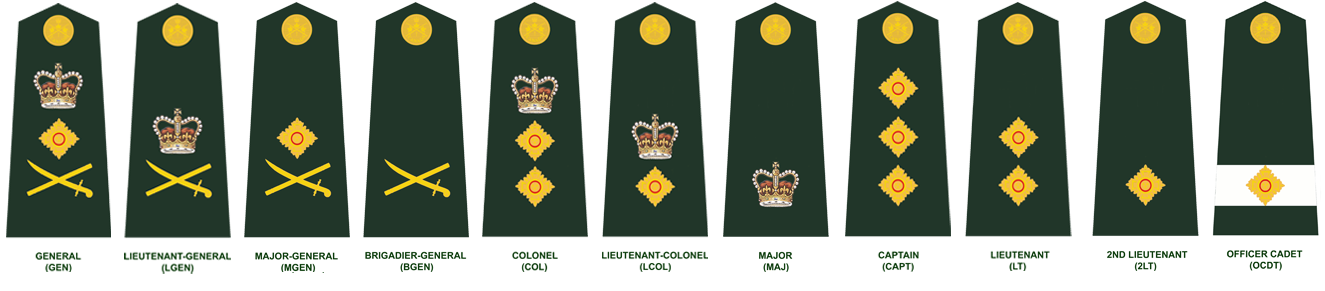
… let’s consider the command and control (C²) superstructure. I’m going to continue to argue that it is beyond “fat,” it is, now, morbidly obese and that condition actually poses a danger to our national defence. Too many cooks do spoil the broth and Canada has too many admirals and generals […] without enough real ‘work’ to keep them all productively busy; so they send each other e-mails and fabricate crises for their own HQ to solve and, generally, just make a nuisance of themselves. Fewer admiral and generals (and Navy captains and Army and RCAF colonels) will be busier and more productive and less dangerous.
I have a couple of concrete suggestions:
Start by reducing the rank of the Chief of the Defence Staff from four stars (admiral or general) to three stars, vice admiral or lieutenant general. We only have something like 65,000 regular force military members and 25,000 reserve force members. In about 1960 the Canadian Army, alone, had nearly 50,000 regular force members and something like 30,000 in the militia (reserve army) and it was commanded by one lieutenant general. Now, some will argue that times have changed and increased complexity means that higher ranks are needed. I call bullsh!t! The Israeli Defence Forces, today, has over 175,000 full time members and over 400,000 in reserve. Gadi Eizenkot, the Chief of Staff of the IDF holds the rank of Rav Aluf ~ lieutenant general, and he is the only Israeli officer to hold that high a rank. Now, let’s play a little mind game … suppose you are (four star) General Joseph Dunford of the United States Marine Corps, the Chairman of the Joint Chiefs of Staff, the most senior officer in the world’s most powerful military; now suppose, also, that your phone is ringing off the hook for some reason and your aide calls in on the intercom and says, “I have (four star) General Vance of Canada on line 1 and (three star) Rav Aluf Eizenkotof Israel on line 2, sir.” Which line does General Dunford pick up? Of course he isn’t impressed by Canadian General Jonathan Vance’s four stars; but he is mightily impressed by the size and power of the force that answers to three star Lieutenant General Eizenkot.
The argument that we need a four star CDS just because everyone else has one is specious … it’s rubbish. The Americans have several four star admirals and generals, they also have over 1¼ million active duty military personnel and 10 aircraft carriers and over 4,000 nuclear weapons. India has has a few four star officers, the Indian Army, with over 1 million regular, professional troops and with almost 1 million reserve soldiers, has one, only one, four star general. Canada does not need any four star officers on a regular basis … our lieutenant generals, vice admirals, rear admirals and so on, including Navy captains and Army colonels may all need generous pay raises but they do not need more gold on their shoulders and sleeves. Canada got its first four star officer back during World War II, when we had over 1 million men and women under arms. The rank returned in 1951, after our main allies, America (in 1947) and Britain (in 1939) established unified Chiefs of Staff committees to coordinate joint operations, when General Charles Foulkes was appointed to the post, which he would hold for almost a decade. Lowering the rank to three stars (vice admiral or lieutenant general) and raising the pay, would set a good example for the rest of the military and, indeed for all of government, in setting senior executive compensation, including perquisites, and status at reasonable levels.
Another thing, which I have mentioned before, is that back in the 1960s, when Defence Minister Paul Hellyer was upsetting every apple cart he and his team decided that the best way to set ranks and pay was to “benchmark” some military jobs with civil service equivalents. Now, in the civil service the appointment of “director” is, usually, the lowest level of executive ~ it is the point where technical expertise meets up with broader government wide responsibility and accountability, ‘ranks’ below that are specialists, ranks above it are, increasingly generalists. Now, anyone who knows much of anything about the military will agree that the first executive level in the Canadian Armed Forces is the captain of a major warship (a frigate, say) or the commanding officer of an Army regiment or battalion or of an Air Force squadron. Those ships and units are commanded by officers in the rank of commander or lieutenant colonel but for some reason, in the mid 1960s, the Hellyer team decided, probably just an error made in haste, that Navy captain and Army colonel and RCAF group captain were the appropriate ranks for directors and some very serious rank inflation was embedded inside the Canadian Armed Forces’ command and control (C²) superstructure … it’s an easy enough problem to fix although it will cause some short term disruption, and it means that the officers’ pay scales probably need to be reformed all the way down to the very bottom.
It has always seemed to me that the hallmark of a great army, of a great defence staff, especially, is a culture of excellence. The ranks of the staff don’t matter much, the staff act of behalf and in the name of the commander they serve. In fact, in a really good staff system the chain of command is always crystal clear because the senior staff are always, without fail, lower in rank (occasionally equal to) than the subordinate commanders. Thus, in an army corps (three or four divisions, perhaps 100,000 soldiers) the corps commander is a lieutenant general (three stars) and the subordinate commanders of divisions and of the corps artillery, are major generals (two star officers); in a proper corps the chiefs of staff of the operations and logistics branches, who control operations on behalf of the corps commander, are one star officers ~ brigadier generals. Ditto in the division (20,000+ soldiers) where the major general is the division commander and brigadier generals are the brigade commanders, the two chiefs of staff (operations, which includes intelligence, and logistics, which includes administration and personnel) are colonels … in each case the subordinate commanders outrank the senior staff officers. But the senior staff are listened to with great regard because they are excellent at their job and because they speak for the superior commander.
September 12, 2018
Forgotten History: The Americans Take Blanc Mont Ridge, October 1918
Forgotten Weapons
Published on 11 Sep 2018http://www.patreon.com/ForgottenWeapons
Cool Forgotten Weapons merch! http://shop.bbtv.com/collections/forg…The German army captured Blanc Mont Ridge in the early months of World War One and occupied it throughout the years of fighting, fending off repeated French assaults throughout 1915 and 1916. While the ridge looks far from imposing, it is a piece of high ground which overlooks a large part of the front in the Champagne region of France, and was a very valuable outlook for artillery observation. Its continuous occupation allowed it to be heavily fortified by the Germans as a major strong point in their defensive lines.
In October of 1918, the task would fall to the American Expeditionary Force to take the ridge as part of the ongoing offensive that was finally pushing the Germans back all along the front lines. Years of war had gradually sapped the strength of the German forces, and the last gasp spring offensive earlier in the year had destroyed the last remaining units of elite German troops. And yet, they still had their fortifications here, armed with more than 350 machine guns on this ridge alone.
On the morning of October 3rd, 1918, a combined force of US Army and Marines (the 2nd and 36th Infantry Divisions) set off on an attack up the gradual slope towards the ridge. The attack was preceded by only a few minutes of artillery fire and then a creeping barrage behind which the men advanced. A thick layer of ground fog was perhaps their best ally, as they began the assault of the German position. A fierce fight left the positions on the front of the ridge in American hands by the end of the day, although the fighting would be tenacious for several days, as the Americans advanced well beyond the supporting French units on their flanks, and were left exposed on the reverse slope of the ridge.
By October 7th, the ridge position was consolidated, and the French and American forces continued their advance towards the next objective, the town of Saint-Étienne-à-Arnes. American casualties in the assault would come to approximately 7,800 men – this was not a position relinquished easily by the Germans. The battle was considered a major accomplishment at the time, although it has been largely forgotten in the century since.
Today, the summit of the ridge is the site of a major American war memorial:
https://www.abmc.gov/cemeteries-memor…
Thanks to Military History Tours for making this video possible! https://www.miltours.com
If you enjoy Forgotten Weapons, check out its sister channel, InRangeTV! http://www.youtube.com/InRangeTVShow
Comments Off on Forgotten History: The Americans Take Blanc Mont Ridge, October 1918
September 11, 2018
Unleashing The Tank’s Full Potential – 1918/1919 Tank Tactics I THE GREAT WAR On The Road
The Great War
Published on 10 Sep 2018Support The Tank Museum: https://www.patreon.com/tankmuseum
Indy and David Willy from the Tank Museum sit inside a Mark V tank to talk about the evolution of tank tactics and how the Allies started to properly use tanks during and after the battle of Amiens.
Comments Off on Unleashing The Tank’s Full Potential – 1918/1919 Tank Tactics I THE GREAT WAR On The Road
September 10, 2018
American Handguns of World War 1 I THE GREAT WAR Special feat. C&Rsenal
The Great War
Published on 8 Sep 2018Check out Othais’ channel: youtube.com/candrsenal
Indy and Othais take a look at the US service pistols of World War 1.
Comments Off on American Handguns of World War 1 I THE GREAT WAR Special feat. C&Rsenal
HMS Victorious Receives New Strike Force (1966)
British Pathé
Published on 13 Apr 2014Full title reads: “Moray Firth. ‘Victorious’ Receives New Strike Force”.
Moray Firth, Scotland.
Air view Royal Navy warship, the aircraft carrier HMS Victorious at sea refuelling from tanker. Air view ditto. Angle shot as Buccaneer fighter jets flies overhead. LV Interior of bridge. SV The Captain DL Davenport talking to Senior Officer. CU The Captain.
LV As Buccaneer comes in and lands on Victorious. LV As wings fold up. GV As it moves to side of ship. Air view as another plane comes in and lands. LV As it misses the arrester wire and overshoots. SV Men watching. Air view as the plane comes in again. CU As it hooks the arrester wire. LV As the plane comes to a halt. CU The arrester wire comes back for next plane. LV Next plane coming in. CU As it hooks wire. LV As it comes to halt.
LV The FDO (Flight Deck Officer) signalling for catapult mechanism to be fixed to aircraft. LV The aircraft preparing for take off. SV As the plane is hooked up. LV Firemen standing ready. Steam is rising from catapult mechanism. CU Firemen. CU FDO signals for take off. LV As the aircraft takes off. SV Buccaneer with wings folded on deck. GV The deck packed with Buccaneers.
(Original Neg.)
FILM ID:1795.16A VIDEO FROM BRITISH PATHÉ. EXPLORE OUR ONLINE CHANNEL, BRITISH PATHÉ TV. IT’S FULL OF GREAT DOCUMENTARIES, FASCINATING INTERVIEWS, AND CLASSIC MOVIES. http://www.britishpathe.tv/
Comments Off on HMS Victorious Receives New Strike Force (1966)
September 9, 2018
World War Two Begins – WW2 September 8 1939
World War Two
Published on 8 Sep 2018The German-Polish war is the match that ignites the flames that finally burn British Prime Minister Neville Chamberlain’s appeasement efforts to the ground.
Between 2 Wars: https://www.youtube.com/playlist?list…
Join us on Patreon: https://www.patreon.com/TimeGhostHistory
Or join The TimeGhost Army directly at: https://timeghost.tvWritten and Hosted by: Indy Neidell
Produced and Directed by: Spartacus Olsson and Astrid Deinhard
Executive Producers: Bodo Rittenauer, Astrid Deinhard, Indy Neidell, Spartacus Olsson
Research by: Indy Neidell
Edited by: Spartacus OlssonA TimeGhost chronological documentary produced by OnLion Entertainment GmbH
Comments Off on World War Two Begins – WW2 September 8 1939
September 8, 2018
British tabloids try to stir up trouble with Argentina … again
Sir Humphrey tries to talk the tabloid press in off the ledge over some terrible reporting from the Falkland Islands:
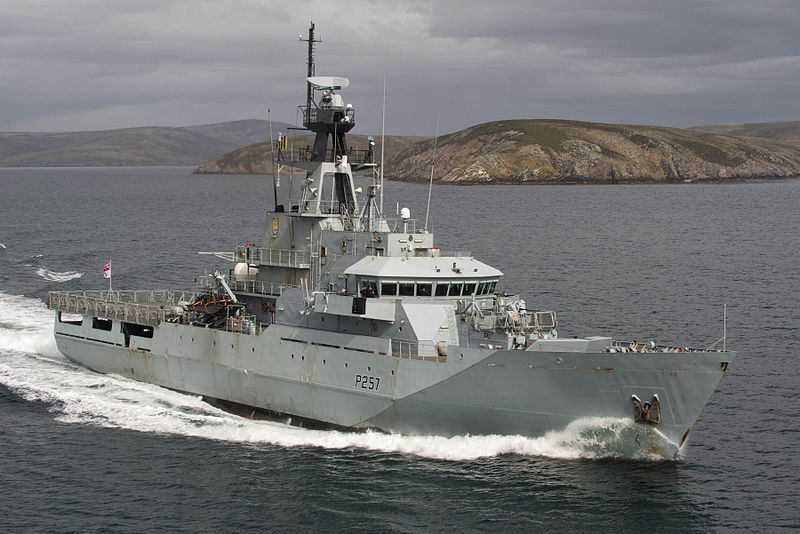
River Class Patrol Vessel HMS Clyde is pictured exercising at sea. HMS Clyde patrols the territorial seas and monitors the airspace around the Falkland Islands whilst conducting routine visits and reassurance to the many small settlements found throughout the islands.
Photo via Wikimedia Commons.
This week it was revealed that an Argentine survey vessel had been reported near the Falkland Islands, and that the local patrol ship HMS Clyde had reportedly been sent to investigate. This simple story led to a barrage of negative news suggesting that the RN had ‘confronted’ the vessel which was apparently looking for oil.
One of the greatest success stories in the last few years for British foreign policy has been the way a formerly tense and difficult relationship with Argentina has so rapidly been reset to become a genuinely productive one. Under the Kirchner regime, which used foreign policy gripes as a means of distracting attention from domestic woes, the relationship between Argentina and the UK was far less productive and strong than it could, or should, have been.
[…]
It is therefore immensely depressing to see some utter rubbish being spouted in the newspapers about what may or may not have happened off the Falkland Islands. The reality is far more simple than is being reported – the vessel in question was a scientific research ship conducting operations near the Burwood bank. Extremely bad weather forced a course change, which brought the vessel closer than planned to the Falkland Islands. (Full source can be found HERE).
The UK and Argentina operate a sensible arrangement to notify each other of movements in certain areas to reduce concerns and maintain effective communications. This agreement means that both nations provide 48hrs notice when a naval vessel will be within 15nm of the others coast line (noting territorial waters usually extend out to 12nm). Usually vessel movements and operational plans are known well in advance, and it is possible to communicate this in a timely fashion. Sometimes though, this doesn’t always go to plan – for instance when a vessel is changing course unexpectedly due to the weather.
On this occasion, it appears to have been the case that the Argentine authorities notified the UK of the vessels course and presence as soon as they were aware of its situation. The vessel herself is not one that is normally covered by these notification arrangements anyway (being a civilian research vessel).
What may have happened is that the UK may have identified an unknown vessel in the local area that they were not expecting to see (noting these waters are reasonably quiet) and began the process of sending HMS Clyde to investigate. As soon as it was clear that in fact this was an entirely legitimate presence, she returned to her normal duties. It is not even clear that HMS Clyde sailed, let alone went close to the Argentine vessel. As the Argentines themselves made clear, no overflight or challenge was made, and normal business continued as the weather improved.
Comments Off on British tabloids try to stir up trouble with Argentina … again
Battle of Saipan – Steel and Coral – Extra History – #1
Extra Credits
Published on 6 Sep 2018The battle of Saipan would decide the fate of the Pacific War. On a tiny island, just five miles wide, thousands died under advanced artillery and amphibious tanks. This series is brought to you by World of Tanks PC. Check out the game at the link below and use the invite code FORAGER for extra goodies. https://redir.wargaming.net/r06pve1j/…
Support us on Patreon! http://bit.ly/EHPatreon
Comments Off on Battle of Saipan – Steel and Coral – Extra History – #1
September 7, 2018
Red Terror in Soviet Russia I THE GREAT WAR Week 215
The Great War
Published on 6 Sep 2018After an almost successful attempt on Lenin’s live, the Tscheka under Felix Dzerzhinsky responds with a terror campaign to consolidate Soviet power through fear. At the same time, a supposed Allied plot is unveiled that would get Russia back into the war.
Comments Off on Red Terror in Soviet Russia I THE GREAT WAR Week 215
Suomi m/31 – Finland’s Excellent Submachine Gun
Forgotten Weapons
Published on 17 Aug 2018More info: https://www.forgottenweapons.com/suomi-m-31-finlands-excellent-submachine-gun/
http://www.patreon.com/ForgottenWeapons
Designed by Aimo Lahti, the Suomi m/31 submachine gun is in my opinion one of the standout submachine guns of the World War Two era. Despite its hefty weight (10.4lb / 4.7kg) and lack of a good pistol grip stock, it still manages to be tremendously controllable and accurate, with a very high rate of fire (about 900 rpm).
For a detailed written description of the history and development of the weapon, I would refer you to the excellent article by Jaeger Platoon: http://www.jaegerplatoon.net/MACHINEP…
If you enjoy Forgotten Weapons, check out its sister channel, InRangeTV! http://www.youtube.com/InRangeTVShow
Comments Off on Suomi m/31 – Finland’s Excellent Submachine Gun
September 6, 2018
Feature History – Chinese Civil War
Feature History
Published on 25 Jul 2017Hello and welcome to Feature History, featuring a civil war that done happened in China.
Help me recognise Taiwan (or not)
https://www.paypal.me/FeatureHistory
Patreon
https://www.patreon.com/FeatureHistory
Discord
https://discord.gg/Zbk4CvR
———————————————————————————————————–
I do the research, writing, narration, art, and animation. Yes, it is very lonely
Comments Off on Feature History – Chinese Civil War


