Lindybeige
Published 19 Jul 2013Re-enactment is a form of experimental archaeology.

Lindybeige
Published 19 Jul 2013Re-enactment is a form of experimental archaeology.
The Great War
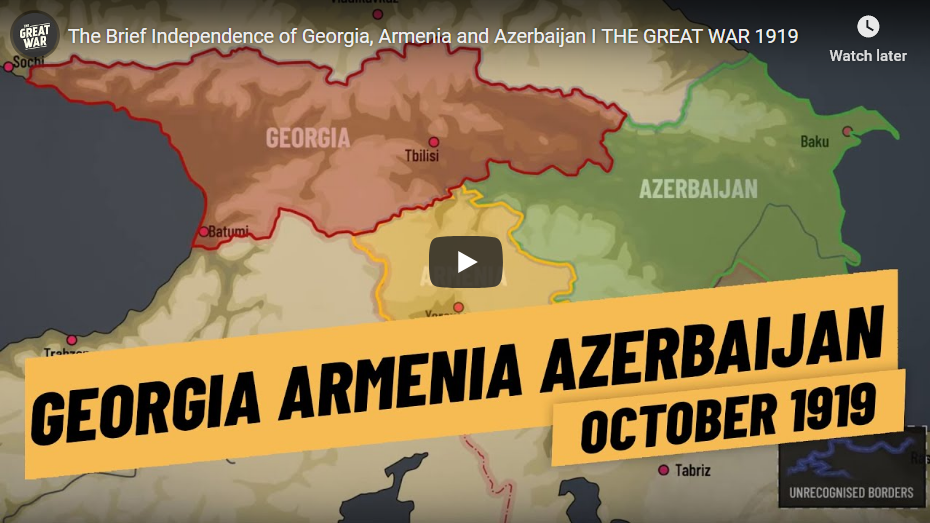
Published 11 Nov 2019Georgia, Armenia and Azerbaijan used the power vacuum after the 1917 revolution in Russia and after the collapse of the Central Powers in 1918 to gain their independence. But the Caucasus region was of vital strategic importance to the new Russian regime, to the British and to the Turks.
» SUPPORT THE CHANNEL
Patreon: https://www.patreon.com/thegreatwar
Merchandise: https://shop.spreadshirt.de/thegreatwar/» SOCIAL MEDIA
Instagram: https://instagram.com/the_great_war
Twitter: https://twitter.com/WW1_Series
Reddit: https://reddit.com/r/TheGreatWarChannel»CREDITS
Presented by: Jesse Alexander
Written by: Jesse Alexander
Director: Toni Steller & Florian Wittig
Director of Photography: Toni Steller
Sound: Toni Steller
Editing: Toni Steller
Mixing, Mastering & Sound Design: http://above-zero.com
Maps: Daniel Kogosov (https://www.patreon.com/Zalezsky)
Research by: Jesse Alexander
Fact checking: Florian WittigChannel Design: Alexander Clark
Original Logo: David van StepholdA Mediakraft Networks Original Channel
Contains licensed material by getty images
All rights reserved – Real Time History GmbH 2019
Curious Droid
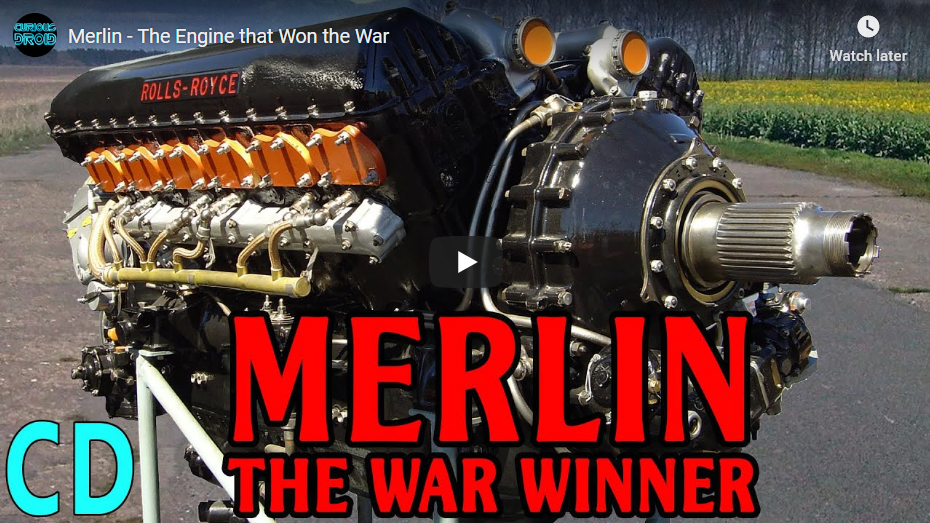
Published 28 Sep 2019Sounds like a bit of a bold claim that one engine helped change the course of WW2 but when you see the evidence it has a lot of validity but how did one little engine change the course of world events and become the engine that won the war?
I would like to thank David Irwin of Historic Aero Engines not only for the generous use of his footage but as in checking over the script and finished video for technical accuracy.
Historic Aero Engines display team :
https://www.youtube.com/channel/UCtE_…Patreon https://www.patreon.com/curiousdroid
Paypal.me https://www.paypal.me/curiousdroidSponsored by
Craig Fleming, Florian Hesse, Peter BarberPresented by Paul Shillito
Written and Researched by Paul Shillito with assistance from David Irwin.
Images and Footage:
Historic Aero Engines, Rolls Royce, USAF, RAF, Boeing, Packard,
Joel TrickMusic From the Youtube library
“Magical Gravity” by Asher Fulero
“Saving the World” by Aaron Kenny
“Adrift” by ELPHNT
“Oceans, Rivers, Canyons” by ELPHNT
“The Story Unfolds” by Jingle Punks
Bob Oldfield
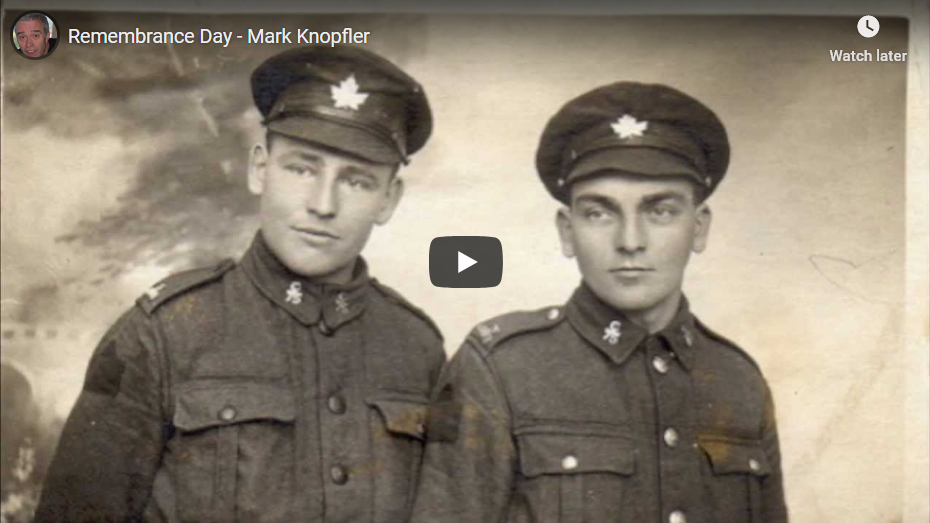
Published on 3 Nov 2011A Remembrance Day slideshow using Mark Knopfler’s wonderful “Remembrance Day” song from the album Get Lucky (2009). The early part of the song conveys many British images, but I have added some very Canadian images also which fit with many of the lyrics. The theme and message is universal… ‘we will remember them’.
A simple recognition of some of our family members who served in the First and Second World Wars:
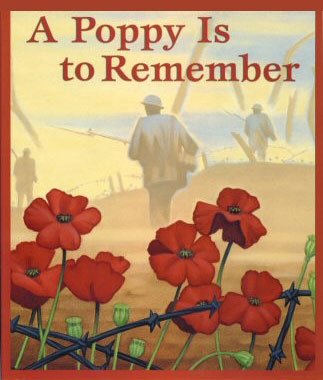 Private William Penman, Scots Guards, died 16 May, 1915 at Le Touret, age 25
 For the curious, the Commonwealth War Graves Commission the Royal British Legion, and the Library and Archives Canada WW1 and WW2 records site provide search engines you can use to look up your family name. The RBL’s Every One Remembered site shows you everyone who died in the Great War in British or Empire service (Canadians, Australians, New Zealanders, South Africans and other Imperial countries). The CWGC site also includes those who died in the Second World War.
In Flanders fields the poppies blow
Between the crosses row on row,
That mark our place; and in the sky
The larks, still bravely singing, fly
Scarce heard amid the guns below.We are the Dead. Short days ago
We lived, felt dawn, saw sunset glow,
Loved and were loved, and now we lie
In Flanders fields.Take up our quarrel with the foe:
To you from failing hands we throw
The torch; be yours to hold it high.
If ye break faith with us who die
We shall not sleep, though poppies grow
In Flanders fields.Lieutenant Colonel John McCrae, MD Canadian Army Medical Corps (1872-1918)
Forgotten Weapons
Published on 12 Sep 2019http://www.patreon.com/ForgottenWeapons
Cool Forgotten Weapons merch! http://shop.bbtv.com/collections/forg…
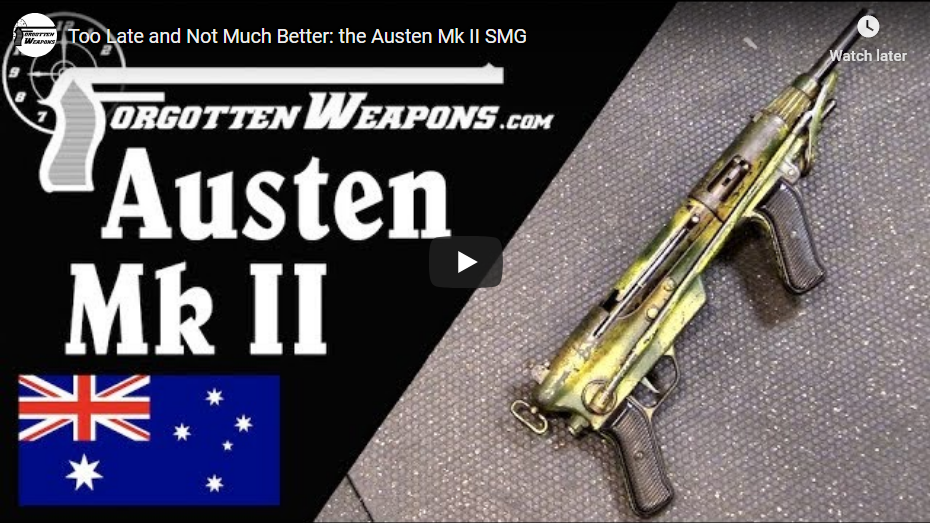
The story of the Austen submachine gun did not end when the Mk I guns were pulled from combat service in 1944. The manufacturer continued to work on an improved version, which would be ready in 1946, after the end of World War Two. Only 200 were made total, and they were both adopted and declared obsolete in August of 1946.
The changes made to the MkII Austen mostly involved increasing the use of die cast components, which fit the manufacturer’s tooling and experience. The front grip and magazine well casting was enlarged, and the whole rear assembly was made into a second cast part integrating the rear sight, stock mounting and latch, and fire control group. The one significant internal change was to remove the firing pin from the telescoping recoil spring assembly and make it an integral feature of the bolt face.
Many thanks to the Royal Armouries for allowing me to film this very rare artifact! The NFC collection there – perhaps the best military small arms collection in Western Europe – is available by appointment to researchers:
https://royalarmouries.org/research/n…
You can browse the various Armouries collections online here:
https://royalarmouries.org/collection/
Contact:
Forgotten Weapons
PO Box 87647
Tucson, AZ 85754
Before WW1 the army was optimised primarily as a colonial police force, coupled with a small expeditionary force of regular soldiers intended to deploy to the continent to work alongside the French or other allies in the event of war. WW1 was an event that really constituted three armies – the small regular/territorial force of barely 300,000 soldiers that mobilised in 1914 and was wiped out to buy time. The interim force of Territorials and Reservists that held the line in 1915-1916 while the army reconstituted, and the civilian volunteer/conscript force from 1916 onwards that saw the army grow to over 4 million men by 1918.
Rapid demobilisation followed, followed by regeneration in the 1920s and 30s to become the most mechanised army in the world by 1939, comprising some 224,000 regulars. It is often forgotten that the British army of 1940 had many more tanks and vehicles than the German Army – history is not kind to the losers. The army in WW2 grew to a citizen force of roughly 3.5 million men, before shrinking post war.
The continuation of National Service, the war in Korea and the end of empire saw the army stay at roughly 330,000 soldiers for much of the 1950s, causing significant damage to the national economy due to the cost and lack of manpower for rebuilding. By 1957 the army estimated that its regular strength was roughly 80,000 personnel (only a quarter of the whole force), many of whom were tied up training two-year National Servicemen. A major factor in the 1957 Sandys Defence White Paper was the need to reduce manpower costs and free people up for other economically important tasks.
The Sandys Review led to a reduction to 165,000 troops most of whom were focused on either colonial policing actions (it is often forgotten that in the early 1960s there were over 100,000 UK service personnel in the Far East) or deployed in Germany as part of the British Army of the Rhine (BAOR). The withdrawal from empire saw the army shrink to a strength of approximately 150,000 by the 1980s, where its role was primarily to provide a corps of four divisions in Germany in the event of general war, supported by mobilisation units from the UK which would provide further divisions to augment BAOR and conduct home defence roles.
The end of the Cold War saw the first deployment of a divisional-sized force, with an armoured division sent to the Gulf in 1990 for Operation Desert Storm. This happened just as the Options for Change review cut BAOR and reduced the army to approximately 120,000. Further deployments to Bosnia and Kosovo in the 1990s followed by the deployment of an armoured division to Iraq in 2003. Operations in Iraq and Afghanistan from 2003-2014 saw the army struggle to sustain itself on two fronts without heavy support from the RN and RAF providing extra manpower and resources.
The 2010 SDSR initially preserved the army at just under 100,000 personnel, although later reviews cut this down to 82,000 regulars supported by a target of approximately 30,000 reservists working in a far more integrated manner. Today the army is struggling to sustain itself at 82,000, with recent manpower figures showing a total of roughly 78,000 troops.
Sir Humphrey, “How Do You Solve a Problem Like a Deployable Division?”, Thin Pinstriped Line, 2017-08-06.
World War Two
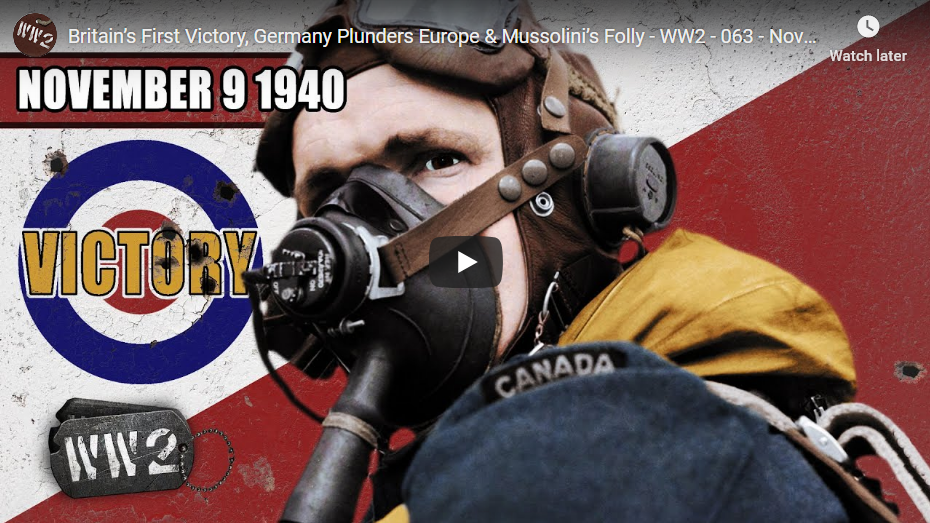
Published 9 Nov 2019The Battle of Britain is finished, but the war is far from over. New German plans are being made for the Balkans and Greece, where the Italian offensive is not as successful as planned.
Join us on Patreon: https://www.patreon.com/TimeGhostHistory
Or join The TimeGhost Army directly at: https://timeghost.tvFollow WW2 day by day on Instagram @World_war_two_realtime https://www.instagram.com/world_war_t…
Join our Discord Server: https://discord.gg/D6D2aYN.
Between 2 Wars: https://www.youtube.com/playlist?list…
Source list: http://bit.ly/WW2sourcesWritten and Hosted by: Indy Neidell
Produced and Directed by: Spartacus Olsson and Astrid Deinhard
Executive Producers: Bodo Rittenauer, Astrid Deinhard, Indy Neidell, Spartacus Olsson
Creative Producer: Joram Appel
Research by: Indy Neidell
Edited by: Iryna Dulka
Map animations: EastoryColorizations: Julius Jääskeläinen https://www.facebook.com/JJcolorization/
Thumbnail Colorization: Julius JääskeläinenEastory’s channel: https://www.youtube.com/channel/UCEly…
Archive by Screenocean/Reuters https://www.screenocean.com.Sources:
– Money and factory icons by Adrien Coquet, ship icon by Edward Boatman, all: from the Noun Project
– IWM: HU 1915, ZZZ 1811C, IND 3595, E 1227, E 1107, E 1242, E 1239
– San Demetrio crew by Arranj on Wikimedia Commons
– Narodowe Archiwum CyfroweA TimeGhost chronological documentary produced by OnLion Entertainment GmbH.
From the comments:
World War Two
2 days ago (edited)
Now that the new Greek offensive has been launched a week ago, more troops are moving and more terrain is changing hands. We are very lucky to have Eastory make maps for our episodes, allowing us to visualize movements and geographicial locations. Furthermore, Eastory is a historian who is very skilled in researching the exact locations and movements of fighting units. For these episodes, he has had some help from our loyal community member Avalantis. This really shows how much this channel is a team effort and how important our community is to us and our videos. If you want to contribute as well, you can start with supporting us on https://www.patreon.com/timeghosthistory or https://timeghost.tv. Every dollar counts!
Cheers, the TimeGhost team
Forgotten Weapons
Published on 11 Sep 2019http://www.patreon.com/ForgottenWeapons
Cool Forgotten Weapons merch! http://shop.bbtv.com/collections/forg…
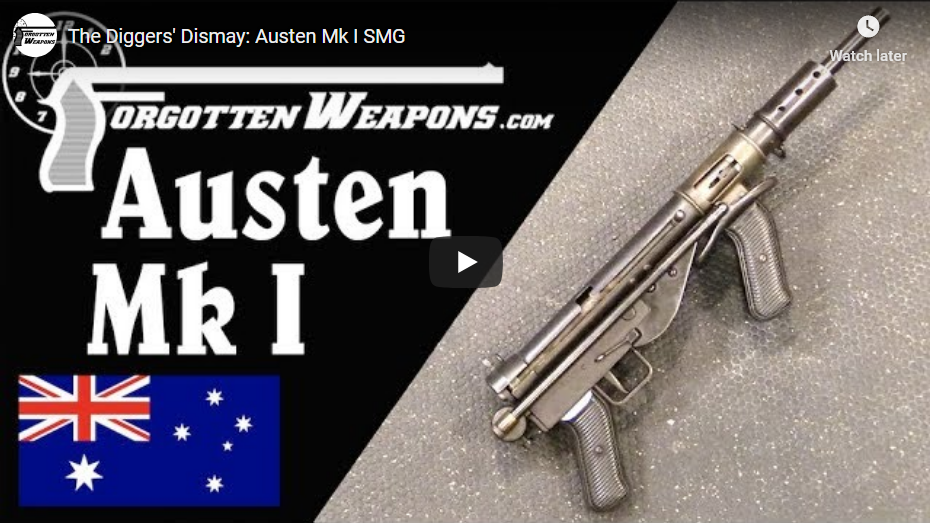
When World War Two began, Australia saw little threat of invasion from Germany (obviously), and sent a substantial number of firearms to Britain to help arm the Home Guard there, which was seriously concerned about the possibility of a German invasion. When Japan and Australia declared war in December 1941, the situation immediately became much more serious for Australia, and the government began looking for arms.
At the start of the war, there were effectively no submachine guns at all on the continent — just a couple examples. These included an MP38 somehow confiscated by Australian customs, which would take on a significant role. Australia looked to Britain for arms, and they were sent a technical data package to produce the Sten MkII — but found the design pretty underwhelming. Australian manufacturers decided to make their own improvements to it, using elements of the MP38 — specifically the sealed telescoping recoil spring system and underflowing stock. They also gave the gun a pair of pistol grips for improved handling.
The Owen SMG was going into production at this time, and had been in development for a while under private civilian supervision. The Australian Sten, called the Austen, lacked that developmental track record and it went into production without passing proper trials. It faced significant manufacturing delays and reliability problems, and was not well liked by troops — in contrast to the excellent Owen. The Austen was ultimately made in smaller numbers than the Owen (19,914 of the MkI guns) and pulled from combat use in August of 1944.
Many thanks to the Royal Armouries for allowing me to film this rare artifact! The NFC collection there — perhaps the best military small arms collection in Western Europe — is available by appointment to researchers:
https://royalarmouries.org/research/n…
You can browse the various Armouries collections online here:
https://royalarmouries.org/collection/
Contact:
Forgotten Weapons
PO Box 87647
Tucson, AZ 85754
Sabaton History
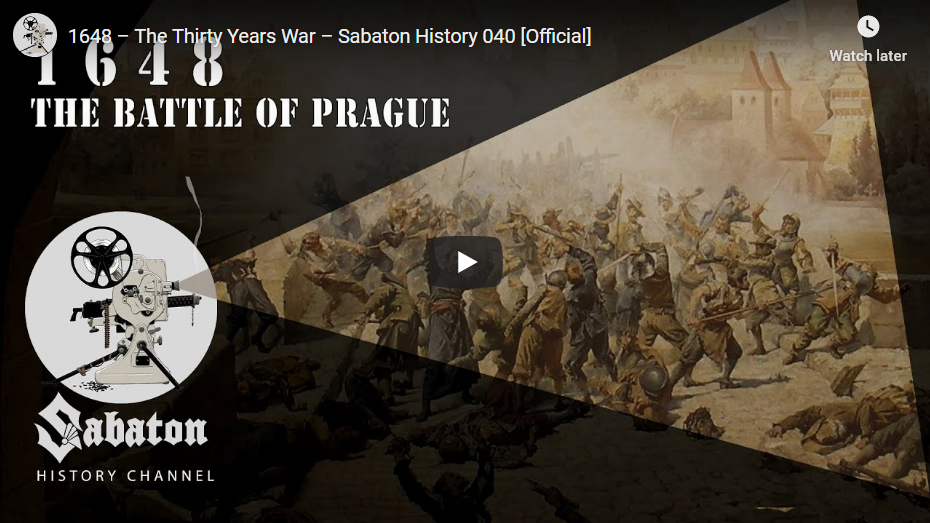
Published 7 Nov 2019Europe had grown weary of war by the summer of 1648 and after much deliberation, peace talks in Westphalia had reached their final stages. Warlords across the entire continent were preparing for peace but not all of them agreed. The exceptionally ruthless German-Swedish General Königsmarck advanced into Bohemia to lay siege to Prague.
Support Sabaton History on Patreon: https://www.patreon.com/sabatonhistory
Listen to Carolus Rex (Where “1648” is featured):
CD: http://bit.ly/CarolusRexStore
Spotify: http://bit.ly/CarolusRexSpotify
Apple Music: http://bit.ly/CarolusRexAppleMusic
iTunes: http://bit.ly/CarolusRexiTunes
Amazon: http://bit.ly/CarolusRexAmz
Google Play: http://bit.ly/CarolusRexGooglePlayListen to Sabaton on Spotify: http://smarturl.it/SabatonSpotify
Official Sabaton Merchandise Shop: http://bit.ly/SabatonOfficialShopHosted by: Indy Neidell
Written by: Markus Linke and Indy Neidell
Directed by: Astrid Deinhard and Wieke Kapteijns
Produced by: Pär Sundström, Astrid Deinhard and Spartacus Olsson
Creative Producer: Joram Appel
Executive Producers: Pär Sundström, Joakim Broden, Tomas Sunmo, Indy Neidell, Astrid Deinhard, and Spartacus Olsson
Maps by: Eastory
Edited by: Iryna Dulka
Sound Editing by: Marek KaminskiEastory YouTube Channel: https://www.youtube.com/channel/UCEly…
Archive by: Reuters/Screenocean https://www.screenocean.com
Music by Sabaton.Sources:
– Thumbnail image: Petri Krohn, CC BY-SA 3.0.
– Les misères et les malheurs de la guerre – The British Museum
– “Germania: dos mil años de historia alemana” series from Fondo Antiguo de la Biblioteca de la Universidad de Sevilla
– The peace of Munster painting courtesy of Amsterdam Museum
– RijksMuseumAn OnLion Entertainment GmbH and Raging Beaver Publishing AB co-Production.
© Raging Beaver Publishing AB, 2019 – all rights reserved.
From the comments:
Sabaton History
2 days ago
This episode about “1648” is about peace and about a devastating and deadly siege to Prague. We enjoy doing these episodes as we usually only make episodes about more modern topics. Now, we have to do without film and photo material, and be creative with paintings and sketches. Kudos to the editor Iryna who makes that work brilliantly! If you agree and want to support our work, you can do so by going to our Patreon page: https://www.patreon.com/sabatonhistoryCheers, the Sabaton History team.
History Matters
Published 1 Jan 2018Twitter: https://twitter.com/Tenminhistory
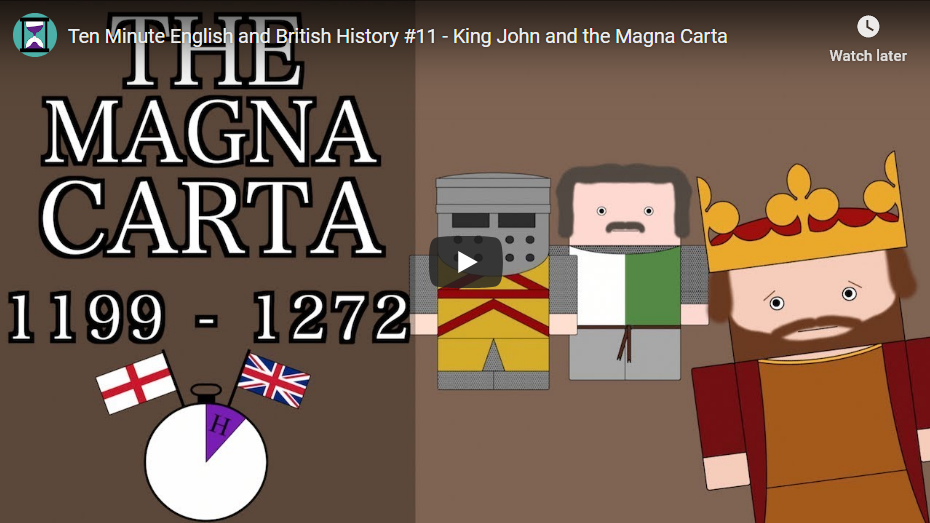
Patreon: https://www.patreon.com/user?u=4973164This episode covers the reign of King John and the problems he had securing the Angevin inheritance and the subsequent issues his barons posed. These problems culminated in the signing of the Magna Carta in 1215 which severely limited the strength of John and his son, Henry III, whose reign was overshadowed by the document.
Ten Minute English and British History is a series of short, ten minute animated narrative documentaries that are designed as revision refreshers or simple introductions to a topic. Please note that these are not meant to be comprehensive and there’s a lot of stuff I couldn’t fit into the episodes that I would have liked to. Thank you for watching, though, it’s always appreciated.
Forgotten Weapons
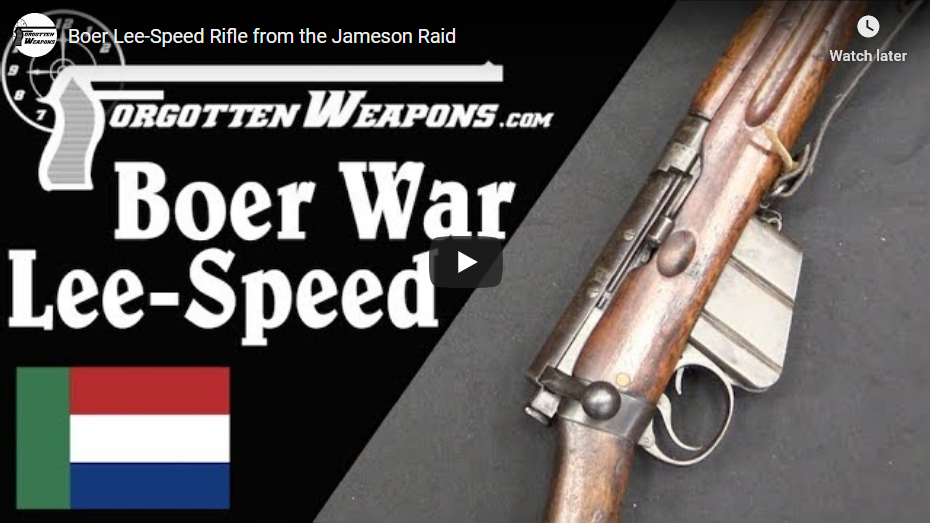
Published on 29 Aug 2019The Jameson Raid in December 1895 was one of the key events in the lead to the second Boer War. Leander Jameson took a force of about 600 men on December 1895 to make a surprise attach on Johannesburg, incite support for the multitude of British miners who felt oppressed by the Boer government, and ultimately bring in British forces to take over. The plan failed in a complete and public manner, though, as Boer forces knew about it from the very beginning. The raiding party was ambushed at Doornkop outside Johannesburg and forced to surrender. It was a tremendous public relations setback for supporters of British intervention.
In addition, the Boers captured a nice selection of very modern arms, including half a dozen artillery pieces, a dozen Maxim machine guns, and about 500 Lee rifles. This Lee-Speed is one of them, given to a Boer burgher who used it in the war that eventually broke out in 1899. He carved his name into the stock, as was common for the Boers. This is one of only two known and documented surviving rifles from the Jameson Raid, and it is both a very cool piece of history for that reason as well as a great time capsule of the Lee-Metford MkI pattern of rifle. Most of the early Lees in British military service were updated and repurposed over the decades, and finding them in original configuration is quite difficult today.
http://www.patreon.com/ForgottenWeapons
Cool Forgotten Weapons merch! http://shop.bbtv.com/collections/forg…
Contact:
Forgotten Weapons
PO Box 87647
Tucson, AZ 85754
World War Two
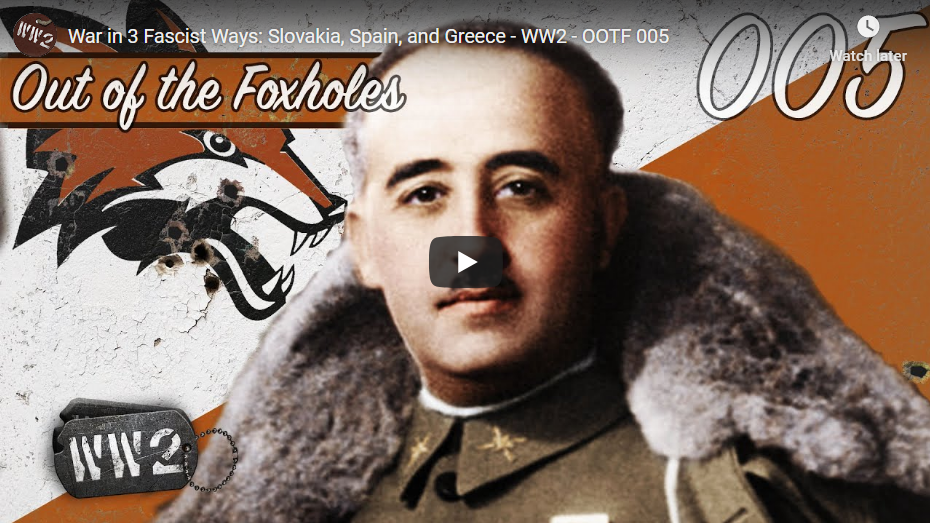
Published 5 Nov 2019What role did Slovakia play during the invasion of Poland? How did Franco view the war in Europe? And did Greece see an invasion coming? We answer all of this in this episode of Out of the Foxholes.
Submit your own question: https://community.timeghost.tv/c/Out-…
Join us on Patreon: https://www.patreon.com/TimeGhostHistory
Or join The TimeGhost Army directly at: https://timeghost.tvFollow WW2 day by day on Instagram @World_war_two_realtime https://www.instagram.com/world_war_t…
Join our Discord Server: https://discord.gg/D6D2aYN.
Between 2 Wars: https://www.youtube.com/playlist?list…
Source list: http://bit.ly/WW2sourcesHosted by: Indy Neidell
Produced and Directed by: Spartacus Olsson and Astrid Deinhard
Executive Producers: Bodo Rittenauer, Astrid Deinhard, Indy Neidell, Spartacus Olsson
Creative Producer: Joram Appel
Post Production Director: Wieke Kapteijns
Research by: Rune Vaever Hartvig
Edited by: Mikołaj Cackowski
Map animations: EastoryColorisations by Norman Stewart and Julius Jääskeläinen https://www.facebook.com/JJcolorization/
Eastory’s channel: https://www.youtube.com/channel/UCEly…
Archive by Screenocean/Reuters https://www.screenocean.com.A TimeGhost chronological documentary produced by OnLion Entertainment GmbH.
Overly Sarcastic Productions
Published 5 Nov 2019Watch an entirely avoidable succession crisis spill out over the course of a whole century.
PATREON: https://www.Patreon.com/OSP
MERCH LINKS: https://www.redbubble.com/people/OSPY…
OUR WEBSITE: https://www.OverlySarcasticProductions.com
Find us on Twitter https://www.Twitter.com/OSPYouTube
Find us on Reddit https://www.Reddit.com/r/OSP/
Matsimus
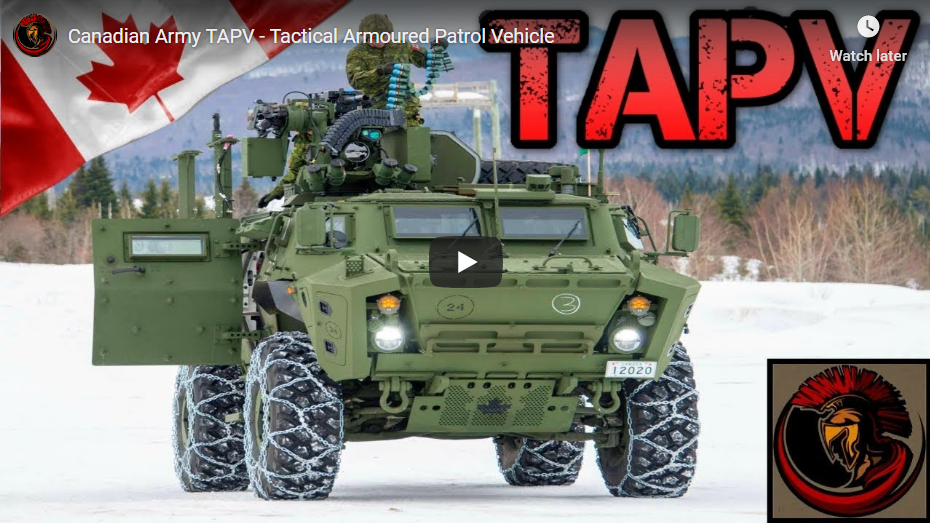
Published 1 Jun 2018The Textron TAPV (Tactical Armoured Patrol Vehicle) is an armoured car currently in use by the Canadian Army. It is based on the M1117 Armoured Security Vehicle, developed for use by the military police of the US Armed Forces.
The Tactical Armoured Patrol Vehicle (TAPV) program began in 2009, and in 2012 the contract was awarded to Textron Systems, Inc. On August 16, 2016, Textron systems delivered the first Tactical Armoured Patrol Vehicle (TAPV) to the Canadian Army. An eventual 500 vehicles will be purchased, with the option to order an additional 100.
Sorry for the re-upload, thanks to those who want to make my life more difficult.
Hope you enjoy!!
Want to support my channel? Check out my Patreon Donation page! https://www.patreon.com/user?u=3081754
DISCORD IS BACK! Come hang out!
https://discord.gg/Hsg9gtSI have Twitter…..sadly:
https://twitter.com/MatsimusGaming



Powered by WordPress