As your body staggers down the winding road to death, user interfaces that require fighter pilot-grade eyesight, the dexterity of a neurosurgeon, and the mental agility of Derren Brown, are going to screw with you at some point.
Don’t kid yourself otherwise — disability, in one form or another, can strike at any moment.
Given that people are proving ever harder to kill off, you can expect to have decades of life ahead of you — during which you’ll be battling to figure out where on the touchscreen that trendy transdimensional two-pixel wide “OK” button is hiding.
Can you believe, people born today will spend their entire lives having to cope with this crap? The only way I can explain the web design of many Google products today is that some wannabe Picasso stole Larry Page’s girl when they were all 13, and is only now exacting his revenge. Nobody makes things that bad by accident, surely?
Dominic Connor, “Is tech the preserve of the young able-bodied? Let’s talk over a fine dinner and claret”, The Register, 2014-04-17
April 17, 2014
QotD: User interface design for all ages
April 16, 2014
Thought experiment – in media reports, replace “scientist” with “some guy”
Frank Fleming makes an interesting point:
Our society holds scientists in high esteem. When scientists say something — whether it’s about the composition of matter, the beginning of the universe, or who would win a fight between a giant gorilla and a T. Rex — we all sit up and listen. And it doesn’t matter if they say something that sounds completely ridiculous; as long as a statement is preceded with “scientists say,” we assume it is truth.
There’s just one problem with that: There are no such things as scientists.
Okay, you’re probably saying, “What? Scientists are real! I’ve seen them before! There’s even a famous, blurry photo of a man in a lab coat walking through the woods.” Well, yes, there are people known as scientists and who call themselves such, but the word is pretty much meaningless.
[…]
Which brings us back to our problem. So much of science these days seems to be built on faith — faith being something that doesn’t have anything to do with science. Yet everyone apparently has faith that all these scientists we hear about follow good methods and are smart and logical and unbiased — when we can’t actually know any of that. So often news articles contain phrases such as, “scientists say,” “scientists have proven,” “scientists agree” — and people treat those phrases like they mean something by themselves, when they don’t mean anything at all. It’s like if you wanted music for your wedding, and someone came up to you and said, “I know a guy. He’s a musician.”
“What instrument does he play?”
“He’s a musician.”
“Is he any good?”
“He’s a musician.”
You see, when other occupations are vaguely described, we know to ask questions, but because we have blind faith in science, such reason is lost when we hear the term “scientist.” Which is why I’m arguing that for the sake of better scientific understanding, we should get rid of the word and simply replace it with “some guy.”
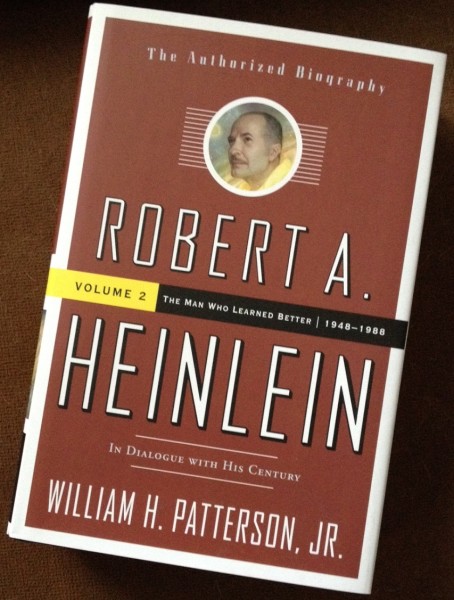
It’s not exactly a new phenomenon: Robert Heinlein put these words in the mouth of Lazarus Long, “Most ‘scientists’ are bottle washers and button sorters.” It was true then, and if anything it’s even more true now as we have so many more people working in scientific fields.
Handel’s Messiah – the Live Aid of 1750
In the Telegraph, Michael White explains why Handel’s Messiah really was the 18th century equivalent of Live Aid:
Every year, his masterpiece reliably comes round, filling musicians’ diaries with unending renditions of the Hallelujah Chorus and “Surely he hath borne our griefs” (or “worn our briefs” as choirboys have it), like a tonic for the flagging bank balance. And it will be the same this week, with a performance of some kind or other guaranteed to come your way, unless you’re living in the Outer Hebrides without a choir in sight or sound.
But for good measure, there’s also a BBC TV programme on Saturday in which the historian Amanda Vickery is looking at Messiah’s back story. And it seems her interest isn’t in the piece as a gift to musicians but as a gift to the poor — focusing on a London performance in 1750 that was, as she says, an 18th-century precedent for Live Aid.
This performance took place at the Foundling Hospital in London, which these days is a museum but was then a children’s home attracting the support of celebrated figures in the arts world. Painters including Hogarth gave it canvases to exhibit; composers such as Handel gave it music to perform. And the funds raised helped keep it going — in something like the manner of that other famous children’s home, the Ospedale della Pietà, Venice, where Vivaldi gave his services.
[…]
The only problem was that Handel depended for commercial success on operatic ventures that proved disastrously expensive and went sour when public tastes changed (as they always do). Hence his interest in writing English oratorios: they were cheaper to produce than opera, avoided over-priced Italian singers and attracted decent audiences.
Hence Messiah, which was written not for London but for Dublin, where it was premiered in April 1742. A large crowd was clearly expected because notices published in advance begged gentlemen to leave their swords at home and ladies to attend “without Hoops”. The critical information on those notices, though, was that making room for more people would “greatly increase the Charity”; because even this initial Dublin try-out was a fundraiser, designed for the relief of prisoners and an infirmary.
So it was good causes that helped swell the turnout. And from what we know of how it went, the audience was high-minded, entering into the spirit of an entertainment that was happening in a concert hall but none the less used sacred texts.
Jonathan Swift, the Dean of Dublin’s Anglican Cathedral, had initially tried to stop his choir being involved, on the grounds that a concert hall wasn’t the right place for such things, and that one of the soloists, Susannah Cibber, was a woman of loose morals. But when she sang “He was despised” she did so with such beauty that another clergyman in the audience stood up and shouted “Woman, thy sins be forgiven”: the kind of engagement you might wish of modern audiences, if only they could be distracted from their iPhones.
April 13, 2014
Ephemeral apps and the NSA
Bruce Schneier on the rising popularity of apps that only leave your content visible briefly and then automatically removes it:
Ephemeral messaging apps such as Snapchat, Wickr and Frankly, all of which advertise that your photo, message or update will only be accessible for a short period, are on the rise. Snapchat and Frankly, for example, claim they permanently delete messages, photos and videos after 10 seconds. After that, there’s no record.
This notion is especially popular with young people, and these apps are an antidote to sites such as Facebook where everything you post lasts forever unless you take it down—and taking it down is no guarantee that it isn’t still available.
These ephemeral apps are the first concerted push against the permanence of Internet conversation. We started losing ephemeral conversation when computers began to mediate our communications. Computers naturally produce conversation records, and that data was often saved and archived.
[…]
At best, the data is recorded, used, saved and then deliberately deleted. At worst, the ephemeral nature is faked. While the apps make the posts, texts or messages unavailable to users quickly, they probably don’t erase them off their systems immediately. They certainly don’t erase them from their backup tapes, if they end up there.
The companies offering these apps might very well analyze their content and make that information available to advertisers. We don’t know how much metadata is saved. In SnapChat, users can see the metadata even though they can’t see the content and what it’s used for. And if the government demanded copies of those conversations — either through a secret NSA demand or a more normal legal process involving an employer or school — the companies would have no choice but to hand them over.
Even worse, if the FBI or NSA demanded that American companies secretly store those conversations and not tell their users, breaking their promise of deletion, the companies would have no choice but to comply.
That last bit isn’t just paranoia.
Reason.tv – Glenn Reynolds on the Future of Higher Education
Published on 10 Apr 2014
“It’s kind of a weird thing that’s happened with American society — this idea that you have to have a college degree to be a respectable member of the middle class,” says Glenn Reynolds, professor of law at the University of Tennessee and purveyor of the popular Instapundit blog. Reynolds’ latest work, The New School: How the Information Age Will Save American Education From Itself, looks at the higher education bubble and how parents, students, and educators can remake the education system.
Reynolds sat down with Reason TV‘s Alexis Garcia to discuss why Americans are spending more for a college education and how students are responding to increasing tuition costs. “Given how expensive it is to go to college, there has to be a return sufficient to make it worth the time and especially the money,” Reynolds states. “You’re seeing declining enrollment in some schools and you’re seeing much more price resistance on the part of both parents and students.”
The discussion also includes Reynolds’ take on school choice, the upcoming elections, the current state of the blogosphere, and whether or not both political parties are necessary. Nearly a decade after Reynolds published An Army of Davids: How Markets and Technology Empower Ordinary People to Beat Big Media, Big Government, and Other Goliaths, the blogfather still remains optimistic about technology’s ability to empower the individual and inspire grassroots movements.
April 11, 2014
April 10, 2014
QotD: Confirmation bias for thee but not for me
The last few days have provided both a good laugh and some food for thought on the important question of confirmation bias — people’s tendency to favor information that confirms their pre-existing views and ignore information that contradicts those views. It’s a subject well worth some reflection.
The laugh came from a familiar source. Without (it seems) a hint of irony, Paul Krugman argued on Monday that everyone is subject to confirmation bias except for people who agree with him. He was responding to this essay Ezra Klein wrote for his newly launched site, Vox.com, which took up the question of confirmation bias and the challenges it poses to democratic politics. Krugman acknowledged the research that Klein cites but then insisted that his own experience suggests it is actually mostly people he disagrees with who tend to ignore evidence and research that contradicts what they want to believe, while people who share his own views are more open-minded, skeptical, and evidence driven. I don’t know when I’ve seen a neater real-world example of an argument that disproves itself. Good times.
Yuval Levin, “Confirmation Bias and Its Limits”, National Review, 2014-04-09
New poll shows PCs leading Liberals in Ontario
As always with polls, take a big pinch of salt before you take them too seriously:
A new poll suggests Ontario’s Progressive Conservatives have taken the lead in popular support over the Liberals in the wake of the gas plant scandal, according to a published report.
A Forum Research poll conducted for the Toronto Star suggests Tim Hudak’s Tories have 38 per cent of support, versus 31 per cent for the Liberals. Andrea Howarth’s New Democrats are at 23 per cent.
Two weeks ago, Premier Kathleen Wynne’s Liberals led with 35 per cent of support, while the Tories were at 32 per cent and the NDP at 25 per cent.
The surge is attributed mainly to the simmering gas plants scandal.
“It’s almost all due to the scandal over the deletion of those emails concerning the gas plants,” Forum president Lorne Bozinoff told 680News.
The poll also reveals that 45 per cent of those surveyed believe Wynne knew about the alleged deleting of emails related to the gas plants.
It also found that 47 per cent believe she ordered deletions.
“We did ask was the premier aware — a lot of people believe the premier was aware,” Bozinoff said.
“We also asked if people think a crime has been committed and a lot of people also think a crime has been committed.”
Of course, as long as Horwath’s NDP continue to prop up the Liberals, there won’t be a provincial election … and I doubt Horwath sees much chance of improvement over the current poll numbers. The only way the Ontario NDP will topple the government is if the scandal gets worse: the NDP can get more of their agenda passed by the Liberals than they could in a Conservative legislature, but the NDP can’t afford to look as though they’re in any way complicit in covering up wrongdoing — that would offend their base even more than it would offend undecided voters.
Update: This is one of the reasons you need to take poll numbers with a degree of skepticism:
Ooookay. Forum poll of ON, today: PC 38 Lib 31 NDP 23. Ekos, *yesterday*: Lib 32 NDP 29 PC 27. http://t.co/RdS4ZBaTmt http://t.co/DKnC1rEwH0
— Andrew Coyne (@acoyne) April 10, 2014
Erasing the 49th parallel? Not so fast…
Froma Harrop reviews the latest hare-brained scheme geopolitical notion of Diane Francis:
What country do Americans overwhelmingly like the most? Canada.
What country do Canadians pretty much like the most? America.
What country has the natural resources America needs? Canada.
What country has the entrepreneurship, technology and defense capability Canada needs? America.
Has the time come to face the music and dance? Yes, says Diane Francis, editor-at-large at the National Post in Toronto. Her book Merger of the Century: Why Canada and America Should Become One Country is both provocative and persuasive.
“The genius of both societies is that they are very good at assimilating people from all over the world,” Francis told me. “So why can’t they do it themselves?”
Relatively small differences are why. Canadian intellectuals have long portrayed the United States as their violent, unruly twin. Many conservatives in this country, meanwhile, deride Canada as the socialistic land of single-payer medicine, gun control and other heavy regulation.
“I don’t buy the narrative of American exceptionalism or Canadian superiority,” says Francis, a dual citizen (born in Chicago). “Both have good points and bad points.”
Americans close to the border already think a lot like Canadians, she notes. Some northern states actually have more liberal laws and lower crime rates than Canada’s. “They are more Canadian than Canadians.”
We have a set of alliances that ensure continental security is underwritten by the world’s most powerful military. We have a free trade arrangement between the two countries that also includes Mexico. Our respective intelligence services co-operate (along with the UK, New Zealand, and Australia) at a very deep level — both for good (shared military surveillance, analysis, and security) and for ill (very significant individual privacy concerns).
Our economies are strongly inter-linked, but both are still subject to outside forces and inside stresses that affect each country differently.
In other words, aside from the minor convenience of not having to carry passports when moving from one country to the other (and the way the US is moving, that may no longer be true for Americans travelling domestically in a few years), we already have most of the benefits of a merger with none of the drawbacks: the American legal system is a terrifying beast to behold, US federal and state governments are far more intrusive and undemocratic in practice despite the legal framework of the Constitution and the Bill of Rights, and the US political system is if possible even more terrifying than their legal system.
Canada’s legal system could benefit from a few key reforms (getting rid of the human rights tribunals would be a good one, for example), but seem to work in a manner that is both faster and more visibly fair than their American counterparts. Our form of government looks (to American eyes) to be dictatorial, yet yields to democratic pressure from the voters most of the time (most recent example: Quebec). Our head of government is just a politician … and that’s all we expect of a Prime Minister. Our head of state doesn’t even live here, and we’re totally okay with that, too. Of course, if such a merger did take place, the head of state still wouldn’t live here…
A merger? I don’t think so.
April 9, 2014
Palin – “A lot of Python was crap, it really was”
The funny bits were very funny indeed, but we tend to forget the never-ending interminable repetitive repetitiveness of a lot of the other material:
Michael Palin has finally admitted what many of us have known in our hearts for some time: a lot of Monty Python‘s material was “crap.”
“People forgive you the things that don’t work. A lot of Python was crap, it really was,” said Palin, yesterday, at the launch of a tour called “Travelling To Work” announced at the London Book Fair.
“We put stuff in there that was not really that good, but fortunately there were a couple of things that everyone remembers while they’ve forgotten the dross,” he said.
Palin is dead right, of course. As a child in the 1970s I remember sitting stony-faced through entire episodes of Monty Python’s Flying Circus. But at the time, and ever since, there has existed a powerful omerta whereby no one can admit to finding Monty Python unfunny for fear of being thought humourless or not part of the gang.
Monty Python‘s inflated reputation derives as much as anything, I think, from a combination of obsessive repetition and peer pressure. That is, a lot of their sketches are not particularly funny in and of themselves, but have been conferred the status of classics as a result of being endlessly repeated by drunken students who brandish their knowledge of Python sketches as a way of acquiring cult credibility.
I know this because it’s exactly what I did myself at university in the mid-Eighties.
Yeah, well, on that last bit all I can say is “All right, it’s a fair cop, but society is to blame”.
April 4, 2014
“Why do these bigots still have jobs? Let’s go get them”
In Slate, Will Saletan digs through the data to find the next set of targets:
Some of my colleagues are celebrating. They call Eich a bigot who got what he deserved. I agree. But let’s not stop here. If we’re serious about enforcing the new standard, thousands of other employees who donated to the same anti-gay ballot measure must be punished.
More than 35,000 people gave money to the campaign for Proposition 8, the 2008 ballot measure that declared, “Only marriage between a man and a woman is valid or recognized in California.” You can download the entire list, via the Los Angeles Times, as a compressed spreadsheet. (Click the link that says, “Download CSV.”) Each row lists the donor’s employer. If you organize the data by company, you can add up the total number of donors and dollars that came from people associated with that company.
The first thing you’ll notice, if you search for Eich, is that he’s the only Mozilla employee who gave to the campaign for Prop 8. His $1,000 was more than canceled out by three Mozilla employees who donated to the other side.
The next thing you’ll notice is that other companies, including other tech firms, substantially outscored Mozilla in pro-Prop 8 contributions attributed to their employees. That includes Adobe, Apple, Google, Microsoft, Oracle, Sun Microsystems, and Yahoo, as well as Disney, DreamWorks, Gap, and Warner Bros.
Thirty-seven companies in the database are linked to more than 1,300 employees who gave nearly $1 million in combined contributions to the campaign for Prop 8. Twenty-five tech companies are linked to 435 employees who gave more than $300,000. Many of these employees gave $1,000 apiece, if not more. Some, like Eich, are probably senior executives.
Why do these bigots still have jobs? Let’s go get them.
Free Speech NOW!
sp!ked launches a new project:
Every man should think what he likes and say what he thinks.’ It is 350 years since Spinoza, the great Dutchman of the Enlightenment, wrote those simple but profound words. And yet every man (and woman) is still not at liberty to think what he or she likes, far less say it. It is for this reason that, today, spiked is kicking off a transatlantic liberty-loving online magazine and real-world campaign called Free Speech Now! — to put the case for unfettered freedom of thought and speech; to carry the Spinoza spirit into the modern age; to make the case anew for allowing everyone to say what he thinks, as honestly and frankly as he likes.
It is true that, unlike in Spinoza’s day, no one in the twenty-first century is dragged to ‘the scaffold’ and ‘put to death’ for saying out loud what lurks in his heart — at least not in the Western world. But right now, right here, in the apparently democratic West, people are being arrested, fined, shamed, censored, cut off, cast out of polite society, and even jailed for the supposed crime of thinking what they like and saying what they think. You might not be hanged by the neck anymore for speaking your mind, but you do risk being hung out to dry, by coppers, the courts, censorious Twittermobs and other self-elected guardians of the allegedly right way of thinking and correct way of speaking.
Ours is an age in which a pastor, in Sweden, can be sentenced to a month in jail for preaching to his own flock in his own church that homosexuality is a sin. In which British football fans can be arrested for referring to themselves as Yids. In which those who too stingingly criticise the Islamic ritual slaughter of animals can be convicted of committing a hate crime. In which Britain’s leading liberal writers and arts people can, sans shame, put their names to a letter calling for state regulation of the press, the very scourge their cultural forebears risked their heads fighting against. In which students in both Britain and America have become bizarrely ban-happy, censoring songs, newspapers and speakers that rile their minds. In which offence-taking has become the central organising principle of much of the political sphere, nurturing virtual gangs of the ostentatiously outraged who have successfully purged from public life articles, adverts and arguments that upset them — a modern-day version of what Spinoza called ‘quarrelsome mobs’, the ‘real disturbers of the peace’.
[…]
The lack of a serious, deep commitment to freedom of speech is generating new forms of intolerance. And not just religious intolerance of the blasphemous, though that undoubtedly still exists (adverts in Europe have been banned for upsetting Christians and books in Britain and America have been shelved for fear that they might offend Muslims). We also have new forms of secular intolerance, with governmental scientists calling for ‘gross intolerance’ of those who promote quackery and serious magazines proposing the imprisonment of those who ‘deny’ climate change. Just as you can’t yell fire in a crowded theatre, so you shouldn’t be free to ‘yell “balderdash” at 10,883 scientific journal articles a year, all saying the same thing’, said a hip online mag this week. In other words, thou shalt not blaspheme against the eco-gospel. Where once mankind struggled hard for the right to ridicule religious truths, now we must fight equally hard for the right to shout balderdash at climate-change theories, and any other modern orthodoxy that winds us up, makes us mad, or which we just don’t like the sound of.
Kurt Cobain’s legacy, twenty years on
In sp!ked, Tom Slater reflects on the life and work of Kurt Cobain:
… it’s impossible to separate the man from the music. Cobain was widely hailed as the last great rock icon — someone whose life, work and time coalesced to form one totemic legend. Any claim that pop music, in and of itself, can attain some level of immortality, as if, like the great works of antiquity, we can easily separate the work from the man and the myth, is ludicrous. Popular culture is always intertwined with the conditions, and often the person, that helped create it and make it cool. The question, two decades on, is what do we make of it all; of Nirvana, Generation X and Cobain himself.
The slacker generation marked a clear decline in rock youth culture, the point at which all that once made it vital, exuberant and exciting collapsed. Generation X was not about young teenagers railing against an unjust society but cutting themselves off from it and sneering at all the bigoted sheeple. On the day that Bikini Kill frontwoman Kathleen Hanna famously spray-painted the words ‘Kurt Smells Like Teen Spirit’ on the walls of Cobain’s flat, giving birth to the name of an anthem, Cobain, Hanna and a gaggle of their mates had been out spraying ‘God is gay’ on religious centres. In the scrawled liner notes to Nirvana’s 1992 compilation Incesticide, Cobain wrote: ‘If any of you in any way hate homosexuals, people of a different colour, or women, please do this one favour for us — leave us the fuck alone! Don’t come to our shows and don’t buy our records.’ Of course, it’s unlikely many Nirvana fans were card-carrying bigots or fundamentalist Christians — but that didn’t matter. Teenage rebellion had given way to putting the fucked up world to rights in the confines of your box bedroom.
[…]
Cobain disdained his own success, mainly because it meant people he didn’t like might like him. ‘Smells Like Teen Spirit’ and Nirvana’s platinum-selling second LP, Nevermind, sent his band into the rock stratosphere, but the idea the jocks he hated in high school might be buying his music sickened him. Their follow-up, In Utero, which enlisted lo-fi legend Steve Albini as producer, was an attempt at culling the unenlightened from their fanbase. The original mixes, before their record label softened them up, were vicious, lacking the more tuneful accessibility of Nevermind that helped catapult the band from Seattle basement bars to suburban minivan tape-decks. It was a calculated move, and one that, to Cobain’s chagrin, didn’t come off.
An almost visceral misanthropy runs through Cobain’s work. In Utero’s ‘Scentless Apprentice’ was inspired by the odourless antihero of Patrick Süskind’s Perfume, who is disgusted by the stink of mankind: ‘I can relate to that’, quipped Cobain in an interview. But this disgust for humanity went both ways: as Chuck Klosterman remarks in Eating The Dinosaur, ‘overt self-hatred defined the totality of [Nirvana’s] being’.
[…]
Cobain’s place in rock history is well earned. He left behind a sadly truncated canon of hard-edged, fraught and often beautiful songs. And like no other of his peers, he embodied the spirit of navel-gazing disaffection that defined Generation X. That is, rightly, his most salient legacy; forget the gory details of his death and his fraught personal life. But while Nirvana’s music stays with us, a stalwart resource for teens to listen to and thrash out their angst, we should hope that the sentiment he so perfectly articulated has all but faded away.
April 3, 2014
ESR reviews Jeremy Rifkin’s latest book
The publisher sent a copy of The Zero Marginal Cost Society along with a note that Rifkin himself wanted ESR to receive a copy (because Rifkin thinks ESR is a good representative of some of the concepts in the book). ESR isn’t impressed:
In this book, Rifkin is fascinated by the phenomenon of goods for which the marginal cost of production is zero, or so close to zero that it can be ignored. All of the present-day examples of these he points at are information goods — software, music, visual art, novels. He joins this to the overarching obsession of all his books, which are variations on a theme of “Let us write an epitaph for capitalism”.
In doing so, Rifkin effectively ignores what capitalists do and what capitalism actually is. “Capital” is wealth paying for setup costs. Even for pure information goods those costs can be quite high. Music is a good example; it has zero marginal cost to reproduce, but the first copy is expensive. Musicians must own expensive instruments, be paid to perform, and require other capital goods such as recording studios. If those setup costs are not reliably priced into the final good, production of music will not remain economically viable.
[…]
Rifkin cites me in his book, but it is evident that he almost completely misunderstood my arguments in two different way, both of which bear on the premises of his book.
First, software has a marginal cost of production that is effectively zero, but that’s true of all software rather than just open source. What makes open source economically viable is the strength of secondary markets in support and related services. Most other kinds of information goods don’t have these. Thus, the economics favoring open source in software are not universal even in pure information goods.
Second, even in software — with those strong secondary markets — open-source development relies on the capital goods of software production being cheap. When computers were expensive, the economics of mass industrialization and its centralized management structures ruled them. Rifkin acknowledges that this is true of a wide variety of goods, but never actually grapples with the question of how to pull capital costs of those other goods down to the point where they no longer dominate marginal costs.
There are two other, much larger, holes below the waterline of Rifkin’s thesis. One is that atoms are heavy. The other is that human attention doesn’t get cheaper as you buy more of it. In fact, the opposite tends to be true — which is exactly why capitalists can make a lot of money by substituting capital goods for labor.
These are very stubborn cost drivers. They’re the reason Rifkin’s breathless hopes for 3-D printing will not be fulfilled. Because 3-D printers require feedstock, the marginal cost of producing goods with them has a floor well above zero. That ABS plastic, or whatever, has to be produced. Then it has to be moved to where the printer is. Then somebody has to operate the printer. Then the finished good has to be moved to the point of use. None of these operations has a cost that is driven to zero, or near zero at scale. 3-D printing can increase efficiency by outcompeting some kinds of mass production, but it can’t make production costs go away.
Dave Barry – Rob Ford supporter
David Harsanyi talks to Dave Barry about various topics:
In his new book, You Can Date Boys When You’re Forty: Dave Barry on Parenting and Other Topic He Knows Very Little About, America’s leading humorist takes on parenting, world affairs, pets, Justin Bieber and a slew of others topics that shouldn’t be this funny. We asked him about politics, libertarianism and God:
A lot of people are worried that we’re overprotective of children these days; making sure they never scrape a knee or have their feelings hurt. Would you consider yourself more of a helicopter parent or a free-range parent?
I’m free-range most of the time. I realize I’m being stereotypical, but I usually leave it up to my wife to keep track of most the details of my daughter’s life, such as is she eating, does she receive medical care, how old is she, etc. The exception is when boys come around, at which point I become more of a helicopter parent. Actually, I become a Predator Drone.
[…]
If you had to pick one politician that reflects everything that’s awful about politics today who would it be? And is there any politician that you’d feel good voting for?
I’d go with Anthony Weiner for part one of that question, and Rob Ford for part two.